The issue roiled French politics for years before resulting recently in legislation allowing adults with incurable illnesses to receive lethal medication.
The issue roiled French politics for years before resulting recently in legislation allowing adults with incurable illnesses to receive lethal medication.
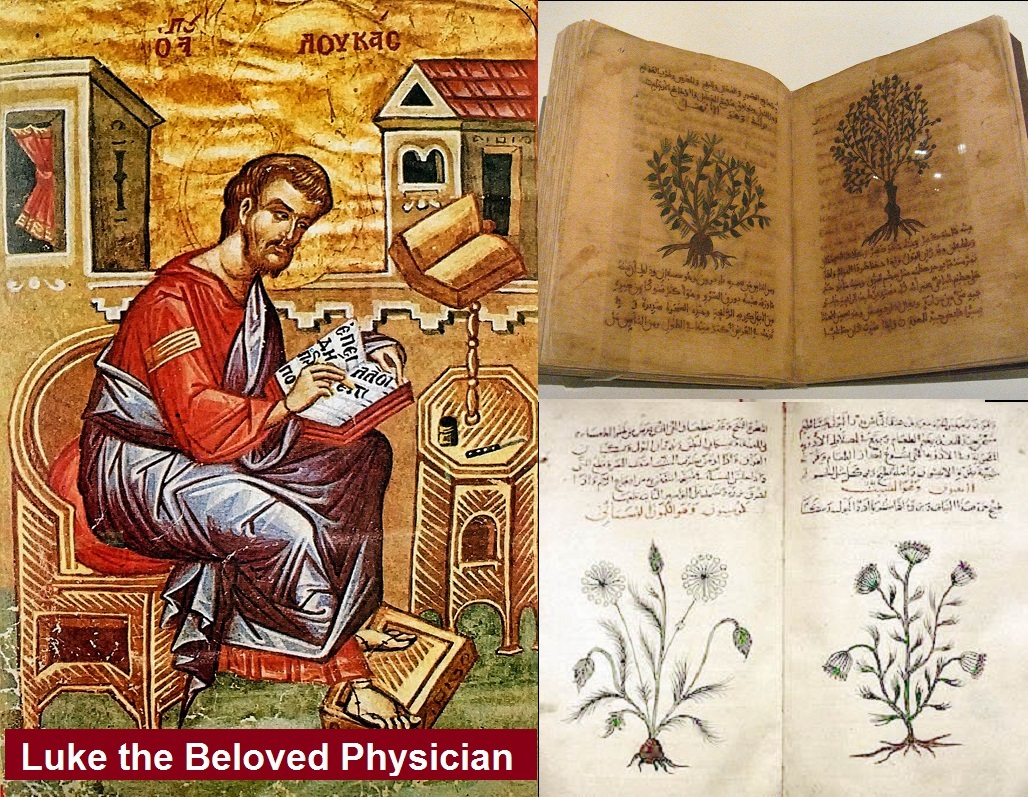
Left Image: Saint Luke the Evangelist 1450 – Source. Top Right: De materia medica in Arabic 12th–13th century – Source. Bottom Right: Cumin and dill from an Arabic book of simples 1334 – Source.
by Brian Shilhavy
The word “physician” mostly has a negative meaning in the Bible.
In the thirty-ninth year of his reign Asa was afflicted with a disease in his feet. Though his disease was severe, even in his illness he did not seek help from the LORD, but only from the physicians. (2 Chronicles 16:12)
A woman who had had a hemorrhage for twelve years, and had endured much at the hands of many physicians, and had spent all that she had and was not helped at all, but instead had become worse— after hearing about Jesus, she came up in the crowd behind Him and touched His cloak.
For she had been saying to herself,
“If I just touch His garments, I will get well.”
And immediately the flow of her blood was dried up; and she felt in her body that she was healed of her disease. (Mark 5:25-29)
However, the word “physician” is used positively in the New Testament portion of the Bible when it refers to Jesus Christ:
When the scribes of the Pharisees saw that He was eating with the sinners and tax collectors, they said to His disciples,
“Why is He eating with tax collectors and sinners?”
And hearing this, Jesus said to them,
“It is not those who are healthy who need a physician, but those who are sick; I did not come to call the righteous, but sinners.”
(Mark 2:16-17)
As I have previously written over the years, the Jewish people had their own system of healing as prescribed by the Law of Moses, and it involved the Levitical Priests. They were not supposed to rely on the “pagan doctors”, and hence the criticism of King Asa who apparently did not follow the Law of Moses, but went to pagan doctors instead during the Old Testament days.
In the New Testament, Jesus Christ established himself as the Messiah who had the authority to heal people from their diseases.
There is one exception in the New Testament, however, of one of the disciples of Jesus being referred to as “the beloved physician”, which is how the apostle Paul referred to Luke, who is believed to be the only non-Jewish author in the New Testament portion of the Bible. He wrote the Gospel of Luke, as well as the Acts of the Apostles.
He was a frequent traveling companion with Paul, who referred to him as “the beloved physician”.
Luke, the beloved physician, sends you his greetings, and Demas does also. (Colossians 4:14)
Historical evidence outside of the Bible has led some people to believe that Luke was originally from Antioch, and attended a famous medical school in Philippi, part of the Roman empire at that time.
Since Luke is not referred to as a “former physician”, it is reasonable to believe that he may have retained some of his “medical” knowledge and perhaps even continued to use it as a disciple of Jesus.
However, to understand how the English word “physician” (ἰατρός – iatros in the Greek) was used over 2000 years ago in the Greek/Roman world, we need to look at some history of Greek-Roman medicine as it was practiced back then, which is very different from how the terms “doctor” and “medicine” are used today in the 21st Century.
During the First Century when the authors of the New Testament portion of the Bible lived, the practice of medicine was highly influenced by ancient Greek medicine, and the Greek physician Hippocrates. Much of Hippocrates’ work was compiled into The Hippocratic Corpus.
During the time the New Testament was being written, the city of Tarsus, where the apostle Paul lived, had a major medical school practicing Greek medicine.
Pedanius Dioscorides – The Father of Pharmacognosy
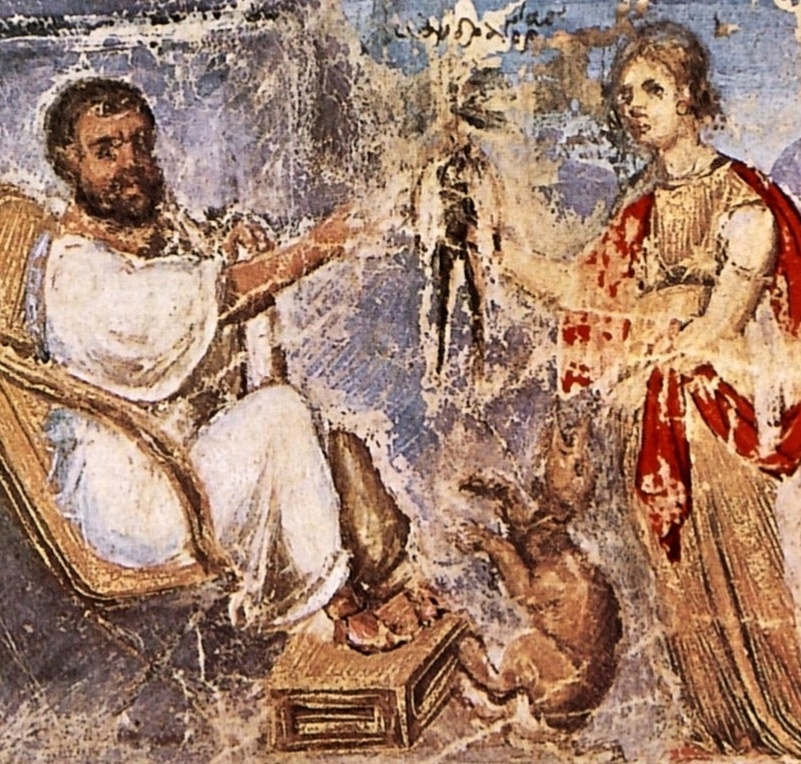
Dioscorides receives a mandrake root, an illumination from the 6th century (c. 512) Greek Juliana Anicia Codex. Source.
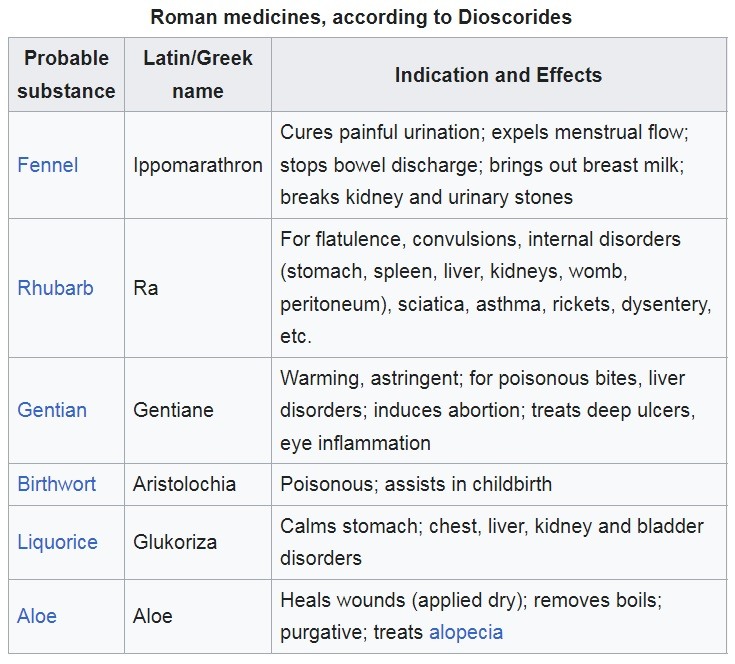
One of the most famous students to study at this school was Pedanius Dioscorides, a pharmacologist, physician, botanist, and author of De materia medica (“On Medical Material”). He was a military physician in Nero’s Army
Dioscorides was known as “the father of pharmacognosy“, but all of his “medicines” were plants, not the patented chemical medicines that we think of today when we hear the term “medicines.”
Plant “medicines” were also the foundation of other non-Western sources of ancient medical systems, such as Chinese Traditional Medicine, and the Indian Ayurveda system of medicine, both of which have been around for 4000-5000 years. (Source.)
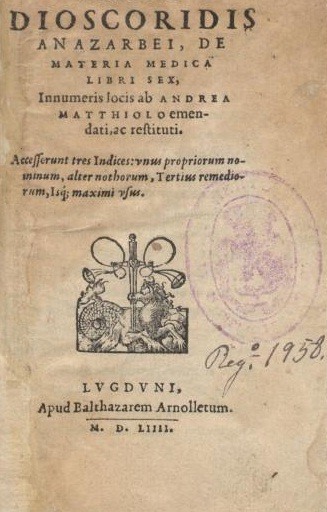
Cover of an early printed version of De materia medica, Lyon, 1554. Source.
Dioscorides wrote a five-volume book De materia medica (“On Medical Material”), which became the precursor to all modern pharmacopeias, (Source: Rooney, Anne 2012. The History of Medicine. The Rosen Publishing Group. p. 121), and was widely read for more than 1,500 years.
It was translated into Arabic in the 13th Century by Ibn al-Bayṭār, an Andalusian Arab physician, botanist, pharmacist and scientist.
He systematically recorded additions made by Islamic physicians in the Middle Ages, which added between 300 and 400 types of medicine to the one thousand previously known since antiquity. He was a student of Abu al-Abbas al-Nabati. (Source.)
Famous Roman Physicians
Here are the bios of a couple of other famous Roman physicians who were alive during the time the New Testament was being written, from Wikipedia’s entry on Medicine in ancient Rome.
Asclepiades of Bithynia
Asclepiades studied to be a physician in Alexandria and practiced medicine in Asia Minor as well as Greece before he moved to Rome in the 1st century BC. His knowledge of medicine allowed him to flourish as a physician. Asclepiades was a leading physician in Rome and was a close friend of Cicero.
He developed his own version of the molecular structure of the human body. Asclepiades’ atomic model contained multi-shaped atoms that passed through bodily pores.
These atoms were either round, square, or triangular. Asclepiades noted that as long as the atoms were flowing freely and continuously, then the health of the human was maintained. He believed that if the atoms were too large or the pores were too constricted, then illness would present in multiple symptoms such as fever, spasms, or in more severe cases paralysis.
Asclepiades strongly believed in hot and cold baths as a remedy for illness; his techniques purposely did not inflict severe pain upon the patient. Asclepiades used techniques with the intent to cause the least amount of discomfort while continuing to cure the patient.
His other remedies included music therapy to induce sedation, and consuming wine to cure headaches and a fever. Asclepiades is the first documented physician in Rome to use massage therapy.
Aulus Cornelius Celsus
Celsus (25 BC–AD 50) was a Roman encyclopaedist who wrote a general encyclopaedia about many subjects. His exact place of birth as well as when he lived are unknown; however, it is known he lived during the reigns of Augustus and Tiberius.
The only surviving work from his larger encyclopaedia is De Medicina. This work contains eight volumes, two of which are on surgery.
De Medicina provides some of the best accounts of Roman medicine during his time.
Its contents proved to be valuable even into the 15th century after Pope Nicolas V rediscovered it, becoming the first medical book to be published in 1478. It is still debated if he practiced medicine himself or just compiled the works of the time, much of it from Greek sources. This is important because at the time Greeks were looked down upon by the Romans and thus so was the work of doctors.
In his book he discussed the two different schools of thought at the time relating to medicine he calls “Empirics” and “Dogmatics”.
Empirics followed empirical observation while Dogmatics needed to understand the theory behind how a treatment works.
Celsus is also credited with writing on four of the five characteristics of inflammation, redness (rubor), swelling (tumour), heat (calor), and pain (dolor). Galen would write about the fifth, loss of function (functio laesa).
The Role of “Elders” in Ancient Greek-Roman Medicine
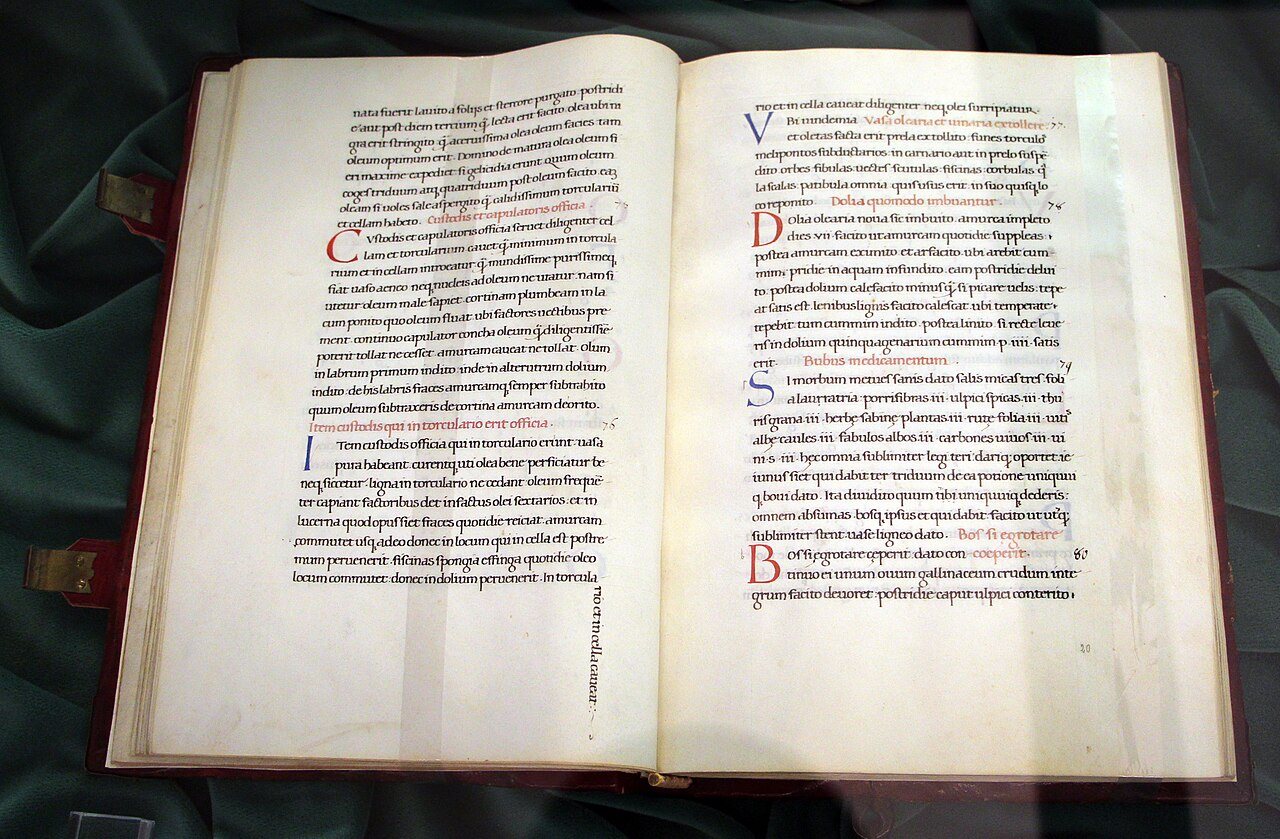
De agri cultura, also known as On Farming or On Agriculture, is a treatise on Roman agriculture by Cato the Elder. It is the oldest surviving work of Latin prose. Source.
Cato the Elder was a Roman soldier, senator, and historian who lived about 200 years before the New Testament was written, but his influence on Roman culture and medicine would have certainly been felt by those living in the First Century when the authors of the New Testament were living.
Cato the Elder despised every aspect of Greek society the Romans decided to mimic including sculptures, literature and medicine. He regarded the welcome given in Rome to Greek medicine and physicians as a major threat.
In Rome, before there were doctors, the pater familias (head of the family) was responsible for treating the sick. Cato the Elder himself examined those who lived near him, often prescribing cabbage as a treatment for many ailments ranging from constipation to deafness.
He would issue precise instructions on how to prepare the cabbage for patients with specific ailments. He also used cabbage in liquid form.
For example, a mixture of cabbage, water, and wine would be embedded in a deaf man’s ear to allow his hearing to be restored. Cato would treat fractured or broken appendages with two ends of a cut reed that were bandaged around the injury. (Source: “Household Medicine in Ancient Rome“. The British Medical Journal. 1 2140: 39–40. 1902.)
This context may help us understand the “medical advice” given by James, the half-brother of Jesus, in the 5th chapter of his letter recorded in the New Testament:
Is any one of you sick? He should call the elders of the congregation to pray over him and anoint him with oil in the name of the Lord.
And the prayer offered in faith will make the sick person well; the Lord will raise him up. If he has sinned, he will be forgiven.
Therefore confess your sins to each other and pray for each other so that you may be healed. The prayer of a righteous man is powerful and effective. (James 5:14-16)
Medicine in the 21st Century
The next time you read about “Luke the beloved physician” in the Bible, hopefully you will have a better understanding now about “physicians” and “medicine” in the Roman Empire during the time the Bible was being written, which bears no resemblance to doctors and medicines today.
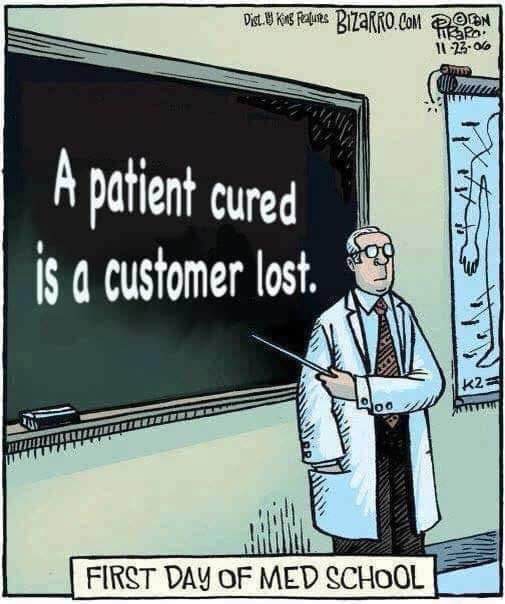
The Western form of “medicine” today is dependent on repeat customers, and is a disease management system, NOT a “health care” system. To actually cure patients would cause them to go out of business! See:
Natural remedies, which used to be called “medicine” in ancient times, cannot be patented, and are therefore a threat to the pharmaceutical industry here in the 21st Century.
I learned this firsthand myself, back in 2005 when we were selling Virgin Coconut Oil and publishing customer testimonials about the health benefits of consuming coconut oil, as well as publishing peer-reviewed literature showing how the medium chain fatty acids in coconut oil can fight diseases.
The FDA came after us and threatened to shut down our business, seize our inventory, and put me in jail for selling “unapproved drugs.”
Why in the world do Americans continue to give money to campaigns to “help find a cure for cancer” as they have done for decades, when MANY cures for cancer already exist, but are banned from being used here in the U.S. forcing people to go to Mexico or Europe to find those cures?
Money given to charities to “find a cure for cancer” usually just goes into the pockets of drug companies to develop more drugs.
We need more “beloved physicians” like Luke, who know the power of Jesus to bring about REAL healing, and we need “Elders” who can also tap into the power of Jesus to heal without the need of modern doctors and medicines. See:
5-year sunset of price caps draws criticism. Atrium deal for WakeMed still needs approval from NC attorney general, Federal Trade Commission.
Wrinkles remain in Atrium takeover of WakeMed is a story from Carolina Public Press, an award-winning independent newsroom. Our breakthrough journalism shines a light on the critical overlooked and under-reported issues facing North Carolina’s more than 11 million residents. Please consider making a contribution to support our journalism.
The European Parliament has backed calls for an EU-wide strategy to tackle worsening shortages of healthcare professionals, including an ambition to increase the health workforce by one million, as doctors, nurses, pharmacists and dentists urged the European Commission to turn the recommendations into concrete action.
The own-initiative report, led by MEPs Loucas Fourlas (EPP, Cyprus) and Ruggero Razza (ECR, Italy), warns that shortages of doctors, nurses, carers and other professionals are becoming structural, driven by ageing populations, rising demand for care and persistent burnout...
The European Commission unveiled its EU Kids Act on Thursday (17 September), proposing sweeping restrictions on children’s access to social media and new obligations on technology companies to address growing concerns over young people’s mental health and online safety.
The proposal would prevent children under 13 from accessing social media, while 13- and 14-year-olds could use restricted “mini accounts” under parental supervision. From the age of 15, teenagers would be able to open their own social media accounts. The legislation also requires platforms to prove their services are safe for minors, reversing the burden of proof from regulators to technology companies....
How two fields that never talk to each other arrived at the same answer.
The same protocol, two fields
ACLS (Advanced Cardiovascular Life Support) and ATLS (Advanced Trauma Life Support) are the gold standard frameworks for managing physiological crise: systems built to keep trained professionals functional when every instinct says to react without thinking. Special Educational Needs support sits, professionally speaking, at the opposite end of healthcare, in the sustained work of accompanying children through dysregulation and meltdown, through the disorientation of a nervous system that won't reliably self-regulate. Different setting, different literature, different culture of practice.
But according to Dr. Adaugo Ijeoma Nwauwa, a physician who has instructed ACLS and ATLS and also worked directly supporting children with diverse learning and behavioural needs, the two fields are running the same protocol without knowing it.
Cognitive regulation, not just medicine
The claim is more precise than it first sounds. ACLS and ATLS are not, at bottom, medical protocols. They are cognitive regulation systems for the clinician, not only the patient. Under extreme stress, cognition degrades in predictable ways: attention narrows, sequencing collapses, and emotional reactivity overrides trained procedure. Resuscitation medicine doesn't assume a clinician's competence will survive that pressure intact; it's built around the assumption it won't.
The response is to remove the need for real-time judgement wherever possible: convert decisions into automatic sequences, spread cognitive load across a team, and give each person one narrow role so no single mind holds the entire crisis.
“This isn’t an accident of medical history,” Nwauwa says. “It’s applied psychology, and it works.”
Dysregulation is dysregulation
The same architecture, she argues, is needed and largely absent in SEN support because it's the same underlying problem. A child in sensory overload meltdown is not being difficult; the prefrontal cortex, the seat of language, reasoning, and sequence, has gone functionally offline, leaving the limbic system to run threat detection and fight-flight-freeze on its own. A trauma patient in haemorrhagic shock is a different system in a different kind of overwhelm, but the logic doesn't change: the environment has to supply, from the outside, what the person's own system currently cannot generate.
In both cases, the worst thing a responder can do is the thing that feels most natural under stress: escalate. Raise the voice. Add complexity to the demand. Let their own anxiety enter the room as a signal the other person's nervous system will pick up before any words do.
What works instead is almost boringly consistent: reduce arousal, impose sequence, communicate through calm rather than instruction, and wait for the window in which re-engagement becomes possible.
Calm Is a trained skill, not a trait
This is where the argument does its most useful work, not in the parallel itself, which is intuitive once stated, but in what she does with the word "calm". Calm, in her account, is not a personality trait or an emotional state the responder happens to be in. It's a trained physiological and behavioural posture, produced deliberately, that signals safety to everyone in the room regardless of what the responder actually feels.
Emergency medicine trains this explicitly and treats it as a technical skill worth simulating and rehearsing. SEN support demands the identical output, a support worker staying regulated through a full meltdown, with a fraction of the training infrastructure and almost none of the professional recognition that it is a skill at all rather than a personality quirk.
“A support worker who stays regulated while a child is in full meltdown isn't 'being patient'," she says. “They’re performing a skilled intervention.”
The distinction matters practically: naming it as a technical skill is what makes it teachable through simulation, scenario repetition, and deliberate practice under controlled stress, the same methods that already work in resuscitation training.
The shared failure mode
The two fields also share a failure mode, the same one emergency medicine spent decades designing its protocols around: skipping assessment in favour of immediate action. Faced with visible distress, the instinct is to do something. ACLS treats that instinct as dangerous enough to override by rule: assessment before intervention, every time, no exceptions for how urgent the moment feels, because acting on a wrong read during a cardiac arrest kills the patient.
The stakes in a classroom are different, but the mechanism is identical. A worker who responds to visible distress without first identifying its source — sensory overload, pain, an unmet need, a communication breakdown — will frequently intervene in ways that escalate the very thing they're trying to calm.
“The assessment step isn’t a delay,” she says. “It is the intervention.”
The missing cross-pollination
What she finds most frustrating is not that the parallel exists but that almost nobody has acted on it. The literature on acute crisis intervention and the literature on neurodiverse behavioural support don't cite each other, don't share conferences, and largely don't share a vocabulary, despite, in her assessment, running on the same underlying mechanism.
The traffic could move in both directions: emergency medicine has the deeper evidence base and decades of simulation science to offer SEN training, while SEN support has made real advances in co-regulation and trauma-informed practice with obvious, unexplored applications in the emergency room, where patients in crisis are often just as dysregulated, just as unreachable by instruction, as a child mid-meltdown.
Training programmes that treat physiological crisis response and behavioural dysregulation as categorically separate disciplines, she argues, are training people for a version of the nervous system that doesn’t exist. It doesn't draw that line. Neither, she'd argue, should the curriculum.
Japan's Health and Welfare Ministry statistics show that the country now has 107,677 centenarians, up 7,914 from the previous year. 88 per cent of them are women.
Japan's Health and Welfare Ministry statistics show that the country now has 107,677 centenarians, up 7,914 from the previous year. 88 per cent of them are women.
MEPs give overwhelming backing to a new EU cardiovascular strategy, placing alcohol, food and tobacco policy at the heart of a wider drive to tackle Europe’s biggest killer
The European Parliament has given overwhelming backing to a new EU cardiovascular diseases strategy, with 545 MEPs voting in favour of a report that places prevention at the centre of Europe’s response to its biggest cause of death.
The vote marks a significant political endorsement of a broader approach to cardiovascular health, addressing not only diagnosis and treatment but also the major lifestyle and consumer-related risk factors associated with cardiovascular disease.
Three sectors feature prominently in that debate: alcohol, food and tobacco and nicotine products.
Rather than relying on a single regulatory approach, Parliament’s position points towards a combination of education, consumer information, prevention, proportionate regulation and measures targeted at clearly identified health risks.
Cardiovascular diseases remain the leading cause of mortality in the European Union, accounting for around 1.7 million deaths every year. Around 62 million people are living with cardiovascular disease in the EU, while close to 13 million new cases occur annually.
An estimated 80% of cardiovascular disease, including many cases of heart disease and stroke, is considered preventable.
Those figures have transformed cardiovascular disease from primarily a healthcare issue into a much broader European policy challenge.
The adopted report therefore addresses prevention alongside screening, early detection, treatment and care.
Alcohol: focusing on harmful consumption
Alcohol is one of the major modifiable risk factors identified in cardiovascular prevention.
A central issue in the European debate is how to distinguish between policies aimed at harmful alcohol consumption and measures that treat all drinking patterns in essentially the same way.
That distinction matters in a European Union where national traditions, consumption patterns and regulatory approaches vary considerably.
Measures under discussion include greater public awareness of alcohol-related health risks and better consumer information.
The cardiovascular debate consequently reinforces a wider movement towards giving consumers clearer information about the possible health consequences associated with excessive alcohol consumption.
At the same time, Parliament’s approach leaves room for the principle of proportionality.
The policy challenge is not simply whether alcohol consumption can contribute to cardiovascular risk — the scientific relationship is well established — but which regulatory measures are most effective in reducing harmful consumption without imposing measures that are disproportionate to the objective.
That distinction is likely to remain important as the EU develops its wider strategy on non-communicable diseases.
Food: healthier choices rather than simplistic classifications
Food and nutrition represent another major strand of cardiovascular prevention.
Obesity, excessive salt intake, poor diet and high consumption of certain highly processed foods can all contribute to cardiovascular risk.
That has inevitably placed the food industry at the centre of the debate.
But regulating food is fundamentally different from regulating products whose consumption is inherently associated with health risk.
Individual foods form part of much broader diets, while quantity, frequency of consumption, nutritional composition and lifestyle all influence health outcomes.
The Parliament report therefore places considerable emphasis on enabling Europeans to make better-informed choices.
Public-health education and clearer nutritional information are among the principal tools available.
Front-of-pack food labelling is also part of the wider European discussion over how consumers can be given easily understandable nutritional information.
However, that issue remains politically sensitive.
Any European system must operate across very different national diets and food traditions while avoiding labels that oversimplify nutritional science or inadvertently discourage otherwise balanced eating patterns.
The economic implications are equally significant.
Europe’s food and agricultural sectors are major employers and central components of the Single Market.
Future cardiovascular policy therefore has to reconcile public health, consumer information, agricultural interests, competitiveness and Europe’s diverse food cultures.
Tobacco and nicotine: prevention alongside risk differentiation
The third major area covered by the cardiovascular debate is tobacco and nicotine.
Smoking is a significant preventable contributor to cardiovascular disease, and Parliament’s report supports measures aimed at reducing smoking and preventing young people from beginning to use tobacco and nicotine products.
There is particularly strong emphasis on protecting minors.
The report supports effective enforcement of minimum-age-of-sale requirements and appropriate identification checks whether products are purchased in physical shops or online.
At the same time, Parliament has introduced an important element of differentiation into the debate.
The adopted approach recognises that different nicotine products may have differentiated risk profiles, rather than automatically treating every tobacco and nicotine product as presenting an identical risk.
The supplied policy material also records Parliament’s support for appropriate and differentiated excise taxation between different product categories. It combines calls for tighter rules with an explicit nod to the idea that regulation need not be one-size-fits-all across the nicotine market.
That distinction could have consequences beyond cardiovascular policy.
The European Commission is already examining the future of the Tobacco Products Directive (TPD) and Tobacco Advertising Directive (TAD), meaning EP’s approach to differentiated risks is likely to be closely watched as the EU considers regulation of cigarettes, heated tobacco products, electronic cigarettes, nicotine pouches and other products.
But the cardiovascular report simultaneously makes clear that protecting children and young people remains an overarching objective irrespective of the particular product involved.
The question of consistency
The debate will not end with the cardiovascular vote.
Parliament is simultaneously considering other major health-policy files, particularly those associated with Europe’s Beating Cancer Plan (BECA).
That creates an important question of policy consistency.
Alcohol, food and tobacco appear repeatedly in European strategies dealing with non-communicable disease.
Positions adopted in one parliamentary report will inevitably therefore be compared with those adopted in another.
The briefing accompanying the cardiovascular debate already highlights this issue, arguing that potentially contradictory approaches between the cardiovascular and cancer files could create uncertainty about Parliament’s wider regulatory direction.
That discussion is likely to intensify as Parliament and the Commission move from broad public-health strategies towards individual regulatory measures.
For the alcohol, food and tobacco sectors alike, the key question will be whether Europe develops policies that are evidence-based, proportionate and tailored to the particular risks involved, rather than attempting to impose identical regulatory solutions across fundamentally different industries.
After two clear defeats, the TED opinion and the CVD Report, the EC is seeking a comeback through BECA, despite the EP's opposition to extreme prohibitionist measures. With EP’S SANT Committee vote due on 28 September, BECA is rapidly becoming the next political battleground.
Prevention becomes mainstream EU policy
Cardiovascular disease imposes immense human and economic costs on Europe through premature deaths, long-term illness, disability, hospital treatment and lost productivity.
Reducing that burden will require healthcare systems to diagnose and treat disease earlier.
But Parliament’s vote also sends a wider message.
Improving cardiovascular health will require action long before people reach hospitals or doctors’ surgeries.
The debate over alcohol, food and tobacco is therefore part of a much larger European question: how public authorities can help citizens reduce preventable health risks while preserving proportionality, informed consumer choice and regulatory coherence.
Some want NC courts to strike down certificate-of-need law, legislative repeal or partial reforms. Hospital lobby likes things as they are.
Fixing NC’s troubled hospital approval system is a story from Carolina Public Press, an award-winning independent newsroom. Our breakthrough journalism shines a light on the critical overlooked and under-reported issues facing North Carolina’s more than 11 million residents. Please consider making a contribution to support our journalism.
This year's European Society of Cardiology (ESC) Congress showed just how quickly cardiology is changing. Late-breaking trials, new scientific data and major guideline updates all pointed to a field that is becoming both more crowded and more complex.
A central question the conference sought to address was how effectively the two main types of ATTR-CM treatment work. Stabilizers are designed to prevent the transthyretin protein from breaking apart, while silencers reduce its production. The debate centered on whether silencers offer enough additional benefit over established stabilizers in this significant rare disease market.
One of the clearest lessons was that the challenge is no longer simply bringing more treatments to market. It is increasingly about finding the right patients earlier, understanding how different therapies compare and deciding where each option fits as standards of care improve. ATTR-CM was one of the strongest examples of that shift, with the conference data sharpening the debate over whether silencers offer enough additional benefit over established stabilizers. The same pattern could also be seen in new guidelines and in the growing role of digital monitoring.
Alnylam ($ALNY) faces new questions over Amvuttra in ATTR-CM
Alnylam Pharmaceuticals came to ESC looking to strengthen the case for Amvuttra in ATTR-CM, but the data arguably leave some important questions unanswered. While the drug is already approved, the estimated benefit appeared more modest than many investors and clinicians may have hoped, particularly given the growing expectation that newer therapies will need to demonstrate clear advantages over established treatments. The key question is whether ATTR-CM silencer treatments offer enough additional benefit on top of stabilizers that are already delivering meaningful clinical outcomes.
In light of this, there remains uncertainty around the extent of Amvuttra's value and whether it will be sufficient to secure a strong position in an increasingly competitive market. The FDA's decision earlier this year to challengeAlnylam's survival claims based on an open-label extension of HELIOS-B only adds to the need for caution. It is, therefore, perhaps unsurprising that Alnylam's share price has come under pressureand that questions are being raised about the long-term commercial viability of Amvuttra in ATTR-CM.
Rather than definitively strengthening the case for Amvuttra, Alnylam's participation at ESC suggests that important questions remain about the true scale of its advantage and whether the evidence is sufficient to establish a clear benefit over existing treatments.
AstraZeneca ($AZN) casts further doubt on silencers in ATTR-CM
In perhaps a similar spirit, AstraZeneca and Ionis used ESC to revisit the results of the Phase 3 CARDIO-TTRansformtrial of Wainua (eplontersen), another potential treatment for ATTR-CM. They faced a somewhat different challenge, however, as the trial had already failed its primary endpoint, with Wainua unable to significantly reduce cardiovascular mortality and recurrent cardiovascular events in the overall study population.
The companies sought to contextualize the findings, but the presentation arguably highlighted one of the trial's central challenges. If the apparent benefit is less clear among patients already receiving stabilizer therapy, the data raise broader questions about how much additional value silencers can deliver beyond treatments that are already producing meaningful clinical outcomes. The broader question, however, is what this means for an ATTR-CM market that is becoming increasingly competitive. As new treatments emerge, should attention shift towards newer therapies, or remain focused on established stabilizers that may already be providing much of the available benefit?
New ESC guidelines and Huawei point to a prevention first approach
ESC also saw the release ofnew guidelinesthat could change how cardiovascular patients are identified and managed. The updated heart failure guidance simplifies how patients are classified and puts more focus on prevention and earlier intervention. In practice, that means clinicians may be looking for risk earlier and across a broader group of patients, rather than waiting until disease is more advanced.
That change is creating more room for digital tools. Huawei used ESC to preview its Watch D3, a wrist-based ambulatory blood pressure monitor designed to track blood pressure in everyday settings. It is one example of how wearables are moving beyond basic wellness tracking and towards data that could help identify risk earlier, monitor patients more closely and support treatment decisions.
Reflecting on ESC 2026, ATTR-CM emerged as a key area of focus. The AstraZeneca and Alnylam data raised questions about whether silencers can offer enough benefit over established stabilizers, while new guidelines and digital tools highlighted the importance of identifying risk earlier and monitoring patients more closely. The key question now, arguably, is which approaches can genuinely improve on what is already available, and which patients are most likely to benefit.
NC awards certificates of need for new healthcare facilities to qualified providers. Legal squabbles keep holding up those hospital beds.
Needed hospital beds across NC delayed by industry appeals is a story from Carolina Public Press, an award-winning independent newsroom. Our breakthrough journalism shines a light on the critical overlooked and under-reported issues facing North Carolina’s more than 11 million residents. Please consider making a contribution to support our journalism.
One of the chapters of this book, which can also be read as a single article here, is titled The Concept of the American Christian Family is a Myth and is NOT Found Anywhere in the Bible (The title of the book is from this chapter).
In this chapter I show how the “perfect Christian family” does not exist anywhere in the pages of the Bible, as even all the “heroes of the faith” had very difficult and troubled families which today would probably be called “broken families” because they did not meet the standards of today’s Judeo/Christian values for families in Western Culture.
One of those families in the Old Testament that we have quite a bit of text on is the family of King David.
King David fathered many children from many different wives, and one of his children, his son Absalom, completely betrayed him and almost overthrew David from his throne, temporarily taking over the city of Jerusalem.
In the end the people in David’s household who remained loyal to him prevailed, and defeated Absalom in a very bloody battle.
And yet even with this victory, David very nearly lost the entire kingdom, because he idolized Absalom in his heart as his biological son, by loving him more than he loved God.
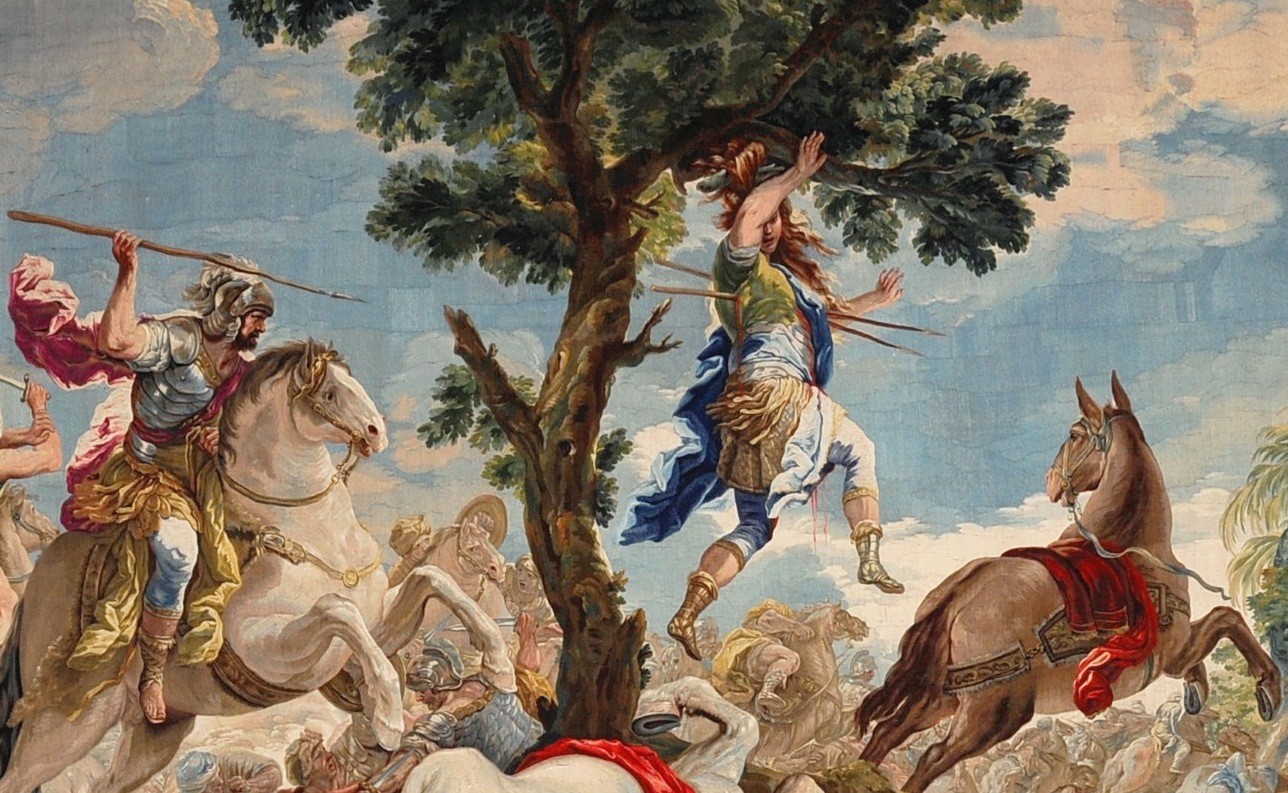
Death of Absalom by Corrado Giaquinto, 1762. Source.
David’s Failure as a Father and Not Disciplining his Son for Committing Rape had Disastrous Consequences
The story of Absalom’s betrayal against his father and nearly taking over the Kingdom of Israel, starts with one of King David’s other sons who raped the sister of Absalom, and was never punished for it.
The story is recorded in the Bible in 2 Samuel chapter 13.
In the course of time, Amnon son of David fell in love with Tamar, the beautiful sister of Absalom son of David.
Amnon became frustrated to the point of illness on account of his sister Tamar, for she was a virgin, and it seemed impossible for him to do anything to her.
Now Amnon had a friend named Jonadab son of Shimeah, David’s brother. Jonadab was a very shrewd man. He asked Amnon,
“Why do you, the king’s son, look so haggard morning after morning? Won’t you tell me?”
Amnon said to him,
“I’m in love with Tamar, my brother Absalom’s sister.”
“Go to bed and pretend to be ill,” Jonadab said.
“When your father comes to see you, say to him, ‘I would like my sister Tamar to come and give me something to eat. Let her prepare the food in my sight so I may watch her and then eat it from her hand.'”
So Amnon lay down and pretended to be ill.
When the king came to see him, Amnon said to him,
“I would like my sister Tamar to come and make some special bread in my sight, so I may eat from her hand.”
David sent word to Tamar at the palace:
“Go to the house of your brother Amnon and prepare some food for him.”
So Tamar went to the house of her brother Amnon, who was lying down. She took some dough, kneaded it, made the bread in his sight and baked it. Then she took the pan and served him the bread, but he refused to eat.
“Send everyone out of here,” Amnon said.
So everyone left him. Then Amnon said to Tamar,
“Bring the food here into my bedroom so I may eat from your hand.”
And Tamar took the bread she had prepared and brought it to her brother Amnon in his bedroom.
But when she took it to him to eat, he grabbed her and said,
“Come to bed with me, my sister.”
“Don’t, my brother!” she said to him.
“Don’t force me. Such a thing should not be done in Israel! Don’t do this wicked thing. What about me? Where could I get rid of my disgrace?
And what about you? You would be like one of the wicked fools in Israel. Please speak to the king; he will not keep me from being married to you.”
But he refused to listen to her, and since he was stronger than she, he raped her.
Then Amnon hated her with intense hatred. In fact, he hated her more than he had loved her.
Amnon said to her,
“Get up and get out!”
“No!” she said to him.
“Sending me away would be a greater wrong than what you have already done to me.”
But he refused to listen to her. He called his personal servant and said,
“Get this woman out of here and bolt the door after her.”
So his servant put her out and bolted the door after her. She was wearing a richly ornamented robe, for this was the kind of garment the virgin daughters of the king wore.
Tamar put ashes on her head and tore the ornamented robe she was wearing. She put her hand on her head and went away, weeping aloud as she went.
Her brother Absalom said to her,
“Has that Amnon, your brother, been with you? Be quiet now, my sister; he is your brother. Don’t take this thing to heart.”
And Tamar lived in her brother Absalom’s house, a desolate woman.
When King David heard all this, he was furious.
Absalom never said a word to Amnon, either good or bad; he hated Amnon because he had disgraced his sister Tamar. (2 Samuel 13:1-22)
While the text states that King David was “furious” over the rape, no legal action or punishment was apparently ever started as would be required by the Law of Moses for raping a virgin.
David clearly gave preferential treatment to his own biological children that he probably would not have given to non-family members in the Kingdom of Israel.
This allowed the anger and spirit of revenge to foster in Absalom for two years.
Two years later, when Absalom’s sheepshearers were at Baal Hazor near the border of Ephraim, he invited all the king’s sons to come there.
Absalom went to the king and said,
“Your servant has had shearers come. Will the king and his officials please join me?”
“No, my son,” the king replied.
“All of us should not go; we would only be a burden to you.”
Although Absalom urged him, he still refused to go, but gave him his blessing.
Then Absalom said,
“If not, please let my brother Amnon come with us.”
The king asked him, “Why should he go with you?”
But Absalom urged him, so he sent with him Amnon and the rest of the king’s sons.
Absalom ordered his men,
“Listen! When Amnon is in high spirits from drinking wine and I say to you, ‘Strike Amnon down,’ then kill him. Don’t be afraid. Have not I given you this order? Be strong and brave.”
So Absalom’s men did to Amnon what Absalom had ordered.
Then all the king’s sons got up, mounted their mules and fled.
While they were on their way, the report came to David:
“Absalom has struck down all the king’s sons; not one of them is left.”
The king stood up, tore his clothes and lay down on the ground; and all his servants stood by with their clothes torn.
But Jonadab son of Shimeah, David’s brother, said,
“My lord should not think that they killed all the princes; only Amnon is dead. This has been Absalom’s expressed intention ever since the day Amnon raped his sister Tamar. My lord the king should not be concerned about the report that all the king’s sons are dead. Only Amnon is dead.”
(2 Samuel 13:23-33)
Absalom lived as a refugee for three years after this, staying away from his father and Jerusalem.
When he finally came back to Jerusalem, he began his conspiracy to kill his father and take over his throne, by slandering his father and gathering together his enemies.
In the course of time, Absalom provided himself with a chariot and horses and with fifty men to run ahead of him. He would get up early and stand by the side of the road leading to the city gate.
Whenever anyone came with a complaint to be placed before the king for a decision, Absalom would call out to him,
“What town are you from?”
He would answer,
“Your servant is from one of the tribes of Israel.”
Then Absalom would say to him,
“Look, your claims are valid and proper, but there is no representative of the king to hear you.”
And Absalom would add,
“If only I were appointed judge in the land! Then everyone who has a complaint or case could come to me and I would see that he gets justice.”
Also, whenever anyone approached him to bow down before him, Absalom would reach out his hand, take hold of him and kiss him.
Absalom behaved in this way toward all the Israelites who came to the king asking for justice, and so he stole the hearts of the men of Israel.
At the end of four years, Absalom said to the king,
“Let me go to Hebron and fulfill a vow I made to the LORD. While your servant was living at Geshur in Aram, I made this vow: ‘If the LORD takes me back to Jerusalem, I will worship the LORD in Hebron.'”
The king said to him,
“Go in peace.”
So he went to Hebron.
Then Absalom sent secret messengers throughout the tribes of Israel to say,
“As soon as you hear the sound of the trumpets, then say, ‘Absalom is king in Hebron.'”
Two hundred men from Jerusalem had accompanied Absalom. They had been invited as guests and went quite innocently, knowing nothing about the matter.
While Absalom was offering sacrifices, he also sent for Ahithophel the Gilonite, David’s counselor, to come from Giloh, his hometown.
And so the conspiracy gained strength, and Absalom’s following kept on increasing. (2 Samuel 15:1-12)
It is important to note that before all these things happened to King David, God made a Covenant with David, promising him that he would never lack a descendant to sit on his throne and rule Israel. This promise was about the coming Messiah, Jesus Christ, who was a descendant of David.
This is recorded in 2 Samuel chapter 7.
“Now then, tell my servant David, ‘This is what the LORD Almighty says:
I took you from the pasture and from following the flock to be ruler over my people Israel. I have been with you wherever you have gone, and I have cut off all your enemies from before you.
Now I will make your name great, like the names of the greatest men of the earth. And I will provide a place for my people Israel and will plant them so that they can have a home of their own and no longer be disturbed.
Wicked people will not oppress them anymore, as they did at the beginning and have done ever since the time I appointed leaders over my people Israel.
I will also give you rest from all your enemies.
The LORD declares to you that the LORD himself will establish a house for you: When your days are over and you rest with your fathers, I will raise up your offspring to succeed you, who will come from your own body, and I will establish his kingdom.
He is the one who will build a house for my Name, and I will establish the throne of his kingdom forever. I will be his father, and he will be my son.
When he does wrong, I will punish him with the rod of men, with floggings inflicted by men. But my love will never be taken away from him, as I took it away from Saul, whom I removed from before you.
Your house and your kingdom will endure forever before me; your throne will be established forever.'” (2 Samuel 7:8-16)
The person from David’s family line that would be next to take the throne was not Absalom. While it is recorded in 2 Samuel 14:27 that Absalom fathered three sons and a daughter, his sons apparently died, according to 2 Samuel 18:
During his lifetime Absalom had taken a pillar and erected it in the King’s Valley as a monument to himself, for he thought, “I have no son to carry on the memory of my name.”
He named the pillar after himself, and it is called Absalom’s Monument to this day. (2 Samuel 18:18)
David’s other son, Solomon, who was born to the woman David originally committed adultery with, Bathsheba, was the one who became the next King after David died. David had also murdered Bathsheba’s first husband, Uriah.
What the Old Testament Scriptures actually teach, therefore, is that God uses imperfect families to accomplish his purpose on earth.
Not only is Bathsheba in the family line of the Messiah, Jesus Christ, so is a non-Israelite, the prostitute of Rahab from Jericho:
A record of the genealogy of Jesus Christ the son of David, the son of Abraham: Abraham was the father of Isaac, Isaac the father of Jacob, Jacob the father of Judah and his brothers, Judah the father of Perez and Zerah, whose mother was Tamar, Perez the father of Hezron, Hezron the father of Ram, Ram the father of Amminadab, Amminadab the father of Nahshon, Nahshon the father of Salmon, Salmon the father of Boaz, whose mother was Rahab, Boaz the father of Obed, whose mother was Ruth, Obed the father of Jesse, and Jesse the father of King David.
David was the father of Solomon, whose mother had been Uriah’s wife… (Matthew 1:1-6)
David and those loyal to him had to flee Jerusalem before they were all murdered by Absalom, and after regrouping their forces, they met with the forces loyal to Absalom in battle, and Absalom himself was killed along with about 20,000 other Israelites.
David mustered the men who were with him and appointed over them commanders of thousands and commanders of hundreds. David sent the troops out—a third under the command of Joab, a third under Joab’s brother Abishai son of Zeruiah, and a third under Ittai the Gittite.
The king told the troops,
“I myself will surely march out with you.”
But the men said,
“You must not go out; if we are forced to flee, they won’t care about us. Even if half of us die, they won’t care; but you are worth ten thousand of us. It would be better now for you to give us support from the city.”
The king answered,
“I will do whatever seems best to you.”
So the king stood beside the gate while all the men marched out in units of hundreds and of thousands. The king commanded Joab, Abishai and Ittai,
“Be gentle with the young man Absalom for my sake.”
And all the troops heard the king giving orders concerning Absalom to each of the commanders.
The army marched into the field to fight Israel, and the battle took place in the forest of Ephraim. There the army of Israel was defeated by David’s men, and the casualties that day were great—twenty thousand men.
The battle spread out over the whole countryside, and the forest claimed more lives that day than the sword.
Now Absalom happened to meet David’s men. He was riding his mule, and as the mule went under the thick branches of a large oak, Absalom’s head got caught in the tree.
He was left hanging in midair, while the mule he was riding kept on going. When one of the men saw this, he told Joab,
“I just saw Absalom hanging in an oak tree.”
Joab said to the man who had told him this,
“What! You saw him? Why didn’t you strike him to the ground right there? Then I would have had to give you ten shekels of silver and a warrior’s belt.”
But the man replied,
“Even if a thousand shekels were weighed out into my hands, I would not lift my hand against the king’s son. In our hearing the king commanded you and Abishai and Ittai, ‘Protect the young man Absalom for my sake.’ And if I had put my life in jeopardy—and nothing is hidden from the king—you would have kept your distance from me.”
Joab said,
“I’m not going to wait like this for you.”
So he took three javelins in his hand and plunged them into Absalom’s heart while Absalom was still alive in the oak tree. And ten of Joab’s armor-bearers surrounded Absalom, struck him and killed him.
Then Joab sounded the trumpet, and the troops stopped pursuing Israel, for Joab halted them. They took Absalom, threw him into a big pit in the forest and piled up a large heap of rocks over him.
Meanwhile, all the Israelites fled to their homes. (2 Samuel 18:1-17)
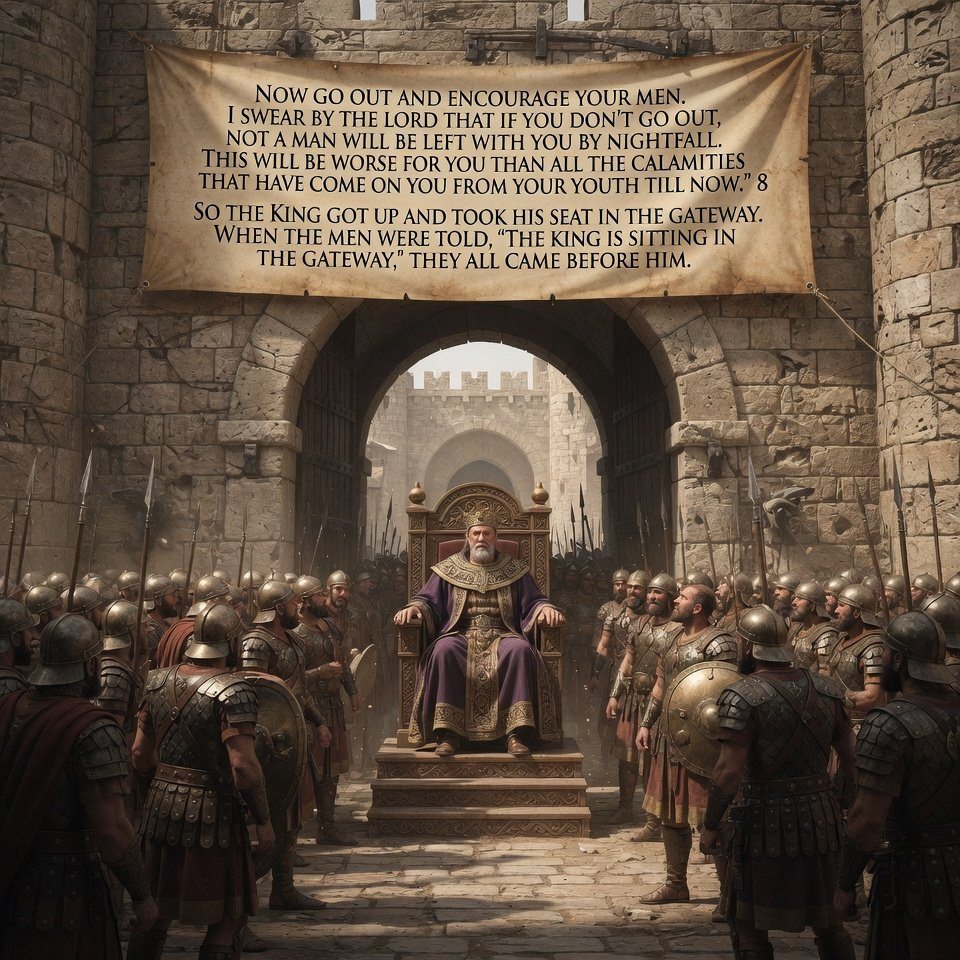
Image source unknown. Appears to be AI generated.
Joab, the head of David’s military, and the only one who was powerful enough to defy the king’s orders, did what he had to do to protect the Kingdom.
He knew full well what David’s response would be, but he also knew full well what the consequences would be if Absalom was allowed to live, so he acted in the best interests of the Kingdom.
What happened next was an event that if David had made the wrong choice, he would have lost everything.
Joab was told,
“The king is weeping and mourning for Absalom.”
And for the whole army the victory that day was turned into mourning, because on that day the troops heard it said,
“The king is grieving for his son.”
The men stole into the city that day as men steal in who are ashamed when they flee from battle. The king covered his face and cried aloud,
“O my son Absalom! O Absalom, my son, my son!”
Then Joab went into the house to the king and said,
“Today you have humiliated all your men, who have just saved your life and the lives of your sons and daughters and the lives of your wives and concubines.
You love those who hate you and hate those who love you. You have made it clear today that the commanders and their men mean nothing to you.
I see that you would be pleased if Absalom were alive today and all of us were dead.
Now go out and encourage your men.
I swear by the LORD that if you don’t go out, not a man will be left with you by nightfall.
This will be worse for you than all the calamities that have come upon you from your youth till now.”
So the king got up and took his seat in the gateway.
When the men were told, “The king is sitting in the gateway,” they all came before him. Meanwhile, the Israelites had fled to their homes. (2 Samuel 19:1-8)
David came within hours of losing everything, simply because he loved his biological son more than he loved God, and the Kingdom of God of which he was appointed King.
If you put your Loyalty to Jesus and the Father Above your Loyalty to Family, the World will Hate You
Loyalty to family members and bloodlines above all else is Satanic and worldly. Jesus made this very clear during his time on earth, stating to the Jews that their bloodlines back to Abraham were meaningless, unless they actually knew God, and recognized that he came from God and was the Messiah.
Jesus also clearly demanded loyalty to him above our loyalty to family members, and he himself was persecuted by his own family members as I have recently written. See:
As a result of Jesus’s loyalty to his Heavenly Father above his earthly family, the world hated him. And he stated that the world would hate us also if we walked this same path.
If the world hates you, keep in mind that it hated me first.
If you belonged to the world, it would love you as its own.
As it is, you do not belong to the world, but I have chosen you out of the world. That is why the world hates you.
Remember the words I spoke to you: ‘No servant is greater than his master.’
If they persecuted me, they will persecute you also. If they obeyed my teaching, they will obey yours also. (John 15:18-20)
This principle applies not only to our own biological families, but also to the fake believers in the “Household of God”, or those who claim to be part of “God’s family.”
Being part of a group of believers does not give anyone a “free pass” if they do not know God, and are betraying the faith.
Paul made this very clear in his writings:
It is actually reported that there is sexual immorality among you, and of a kind that does not occur even among pagans: A man has his father’s wife.
And you are proud! Shouldn’t you rather have been filled with grief and have put out of your fellowship the man who did this?
Even though I am not physically present, I am with you in spirit. And I have already passed judgment on the one who did this, just as if I were present.
When you are assembled in the name of our Lord Jesus and I am with you in spirit, and the power of our Lord Jesus is present, hand this man over to Satan, so that the sinful nature may be destroyed and his spirit saved on the day of the Lord. (1 Corinthians 5:1-5)
Timothy, my son, I give you this instruction in keeping with the prophecies once made about you, so that by following them you may fight the good fight, holding on to faith and a good conscience.
Some have rejected these and so have shipwrecked their faith. Among them are Hymenaeus and Alexander, whom I have handed over to Satan to be taught not to blaspheme. (1 Timothy 1:18-20)
It is often a very lonely journey as we walk through this life as aliens and pilgrims, knowing that this is not our home, as we reject the ways of the world and then suffer for it, often by being rejected by our own families or so called “believers” and “brothers”.
But it is worth it, knowing where our loyalties lie, just like the true believers who walked that same lonely path before us!
All these people were still living by faith when they died. They did not receive the things promised; they only saw them and welcomed them from a distance.
And they admitted that they were aliens and strangers on earth.
People who say such things show that they are looking for a country of their own. If they had been thinking of the country they had left, they would have had opportunity to return. Instead, they were longing for a better country—a heavenly one.
Therefore God is not ashamed to be called their God, for he has prepared a city for them.
I do not have time to tell about Gideon, Barak, Samson, Jephthah, David, Samuel and the prophets, who through faith conquered kingdoms, administered justice, and gained what was promised; who shut the mouths of lions, quenched the fury of the flames, and escaped the edge of the sword; whose weakness was turned to strength; and who became powerful in battle and routed foreign armies.
Women received back their dead, raised to life again. Others were tortured and refused to be released, so that they might gain a better resurrection. Some faced jeers and flogging, while still others were chained and put in prison.
They were stoned; they were sawed in two; they were put to death by the sword. They went about in sheepskins and goatskins, destitute, persecuted and mistreated:
 Login