 Login

Senegal's Youth Olympics makes Olympics in Africa 'logical'
The Youth Olympics are to be hosted in Africa for the first time ever. The edition in Senegal is also a chance to prove the continent can host a full Olympics in the future.


Not to be disheartened by adversity or elated by happiness—
that is the mark of a strong spirit and a mighty power.
Niccolò Machiavelli
Should we expect the future to be worse than before? As trivial as this might sound, it all depends on us. No matter how complex and confused, the international environment can be apprehended and adjusted, as well as managed. All the elements forming today’s global palette are obvious, and they existed before. Today, they have manifested themselves in a new quality (with greater intensity) and in a different sequence with everything happening all at once.
The accumulated experience must be treated as a guideline rather than a dogma, including negative experiences, which teach us what we should not do. The last three decades have been a case in point. There can be different ways of evaluating the intentions of those who shaped history in late 20th century, but the results that are visible today demonstrate that this stage in the development of international relations cannot and should not be replicated.
Instead of crowning global political development, this era was marked by the post-WWII model falling into crisis. In itself, this is not a tragedy since no system has ever been nor will be set in stone. Even the most outstanding projects have a limited lifespan.
 Will the future be better for those living in today’s world compared to those who preceded them? Not necessarily. After all, future is always a set of probabilities that come to fruition to various degrees. There are specific patterns defining the way developments unfold, but it all depends on how responsible we are in our approach.
The expectation that the “end of history” would address all the challenges and lead us towards a brighter future for the so-called “last man” failed to materialise, which was to be expected.
If becoming the last man is not what people really want, they should realise that charting the future is not the apanage of neither natural forces, nor social development patterns, nor sophisticated robots, nor AI. It is in their hands. Taking responsibility for the future is not a slogan but a behavioural imperative. Over the course of history, humankind has invented so many effective ways of destroying itself ranging from physical annihilation to moral destruction. These are the fruits of progress too. We do not need a future that would be better than the past. We need a future that will not be worse. Overall, having a future is what matters the most.
Authors: Oleg Barabanov, Anton Bespalov, Timofei Bordachev, Fyodor Lukyanov, Andrey Sushentsov, Ivan Timofeev.
You can download the report here.

Four years ago, I read Roberto José Andrade Franco’s ESPN story about Tess Mata, one of the students killed in the Robb Elementary School shooting in Uvalde, and I’ve never forgotten an image in it: a determined Tess outside in the Texas heat, aiming her softball pitches at a target on a tree in her family’s yard. That’s what Franco does so well. He creates moments that linger—about sports, Texas, loss, and identity and in-betweenness—and makes me care about the people he puts on the page.
Franco grew up on the El Paso-Juárez border. In a 2020 National Magazine Award-nominated essay that he wrote one year after the El Paso massacre, he reflects on the lifelong pull to this paradox of a place: “It’s where things make the most sense. Where it’s easy to love, even if it’s difficult to live.” I love that he writes from this borderland even when he’s somewhere else. During Mexico’s first World Cup match earlier this summer, he was in Woodburn, Oregon, a small town where Latinos make up more than 60 percent of the population and own nearly every business downtown. Residents had been shaken by last fall’s ICE raids, but they showed up to watch and celebrate. There, thousands of miles from El Paso, Franco found something familiar: a hardworking, resilient community with deep Latino roots and a fierce sense of pride.

I also credit Franco with piquing my interest in wrestling stories, including his piece on WWW star Eddie Guerrero, which also explores family and legacy. Whether he’s writing about sports heroes or ordinary people, or tracing the history of Texas or his own, Franco never fails to move me.
Below, he explains why enrolling in community college at 28 was the most meaningful journey he’s taken, tells us his favorite meal (and the ideal season to eat it), and recognizes a fellow sports writer who inspires him. When asked to name three publications he enjoys reading, he gives a shout-out to Texas Highways, a magazine we love—and it just so happens that he’s the guest editor of its October 2026 issue, focused on El Paso. After spending time with Franco here, read his feature on the city’s historic Smelter Cemetery, and then explore the rest of the magazine.
Several places, but mostly on the El Paso-Juárez border.
I was born in Chicago, but we lived in Juárez, Mexico, until I was about 6. Then we moved across the border to El Paso, Texas, before my father joined the Army. That’s when we lived in Chicago for a short time, then Colorado and Germany before we briefly returned to Juárez. I was about 13 when we moved to El Paso again.
Anywhere I hear the Spanish of the US-Mexico border. These areas are often ignored and underserved so it’s a working-class Spanish. Because of its location, some words are a mix of English and Spanish that other parts of Mexico don’t use.
The decade between graduating high school and enrolling at El Paso Community College. I spent most of it working in construction and bouncing around between El Paso and Phoenix, along with a few bad months in Tucson.
The early morning when everyone is asleep and the sun’s yet to rise. And it’s so quiet that, almost always at the exact same time, I can hear my neighbor’s footsteps as they walk out of their home, open and close their car door, start it, and then drive away, presumably on their way to work.
Building things. I find it almost therapeutic to do some sort of work with my hands as I sweat and listen to music. I also enjoy the feeling of seeing something finished within a few hours.
I don’t remember who I got the idea from, but years ago I heard or read a suggestion to interview your children during different phases of their lives. Just take out the voice recorder and ask them basic questions. When they’re younger, you can ask about their favorite animal, color, movie, etc. As they get older, the questions can be more about their friends, hobbies, and aspirations.
I’ve been doing this every few months with my now 9-year-old daughter. Occasionally, I’ll listen to the first recordings from when she was 3, and I can hear how much she’s changed—from her voice and interests to the clarity of her words and thoughts. It’s like a short visit with a different version of who your child once was.
That suggestion to interview your children has been the best gift.
My mom’s pozole. It’s a Mexican pork and hominy stew accompanied with radishes, cabbage, and bolillo bread. She’ll sometimes make it in late October, on the Saturday closest to my birthday. The weather will be colder by then and a college football game will be on in the background—both of those make it even better. Then a good cigar afterwards.
It’s become silence. I used to write with music in the background. It almost didn’t matter what kind, and sometimes it’d be the same song on repeat for hours. That was also when I’d do most of my writing during the day and into the early evening. But now, I’ve fallen into a routine where I do most of my writing early. Sometimes I’ll wake up naturally as early as three in the morning. With that change, I now write in silence.
But maybe it’ll change back to music one day.
It just happens so there’s no specific place. And so long as I’m not on deadline, whenever I feel like I can’t think anymore I just try to do something else for that day.
I’ve gotten ideas while driving, listening to podcasts and music, or in the middle of watching a movie. I’ve even woken up during the middle of night with a thought that helps unlock something that I had been stuck on.
Earning an associate degree.
I was a nontraditional student who first enrolled at El Paso Community College at 28 years old. It had been about a decade since I was in school. I was full of self-doubt and worry that I was too old or not a good enough student to be there. With that, I also worried that I might be wasting my time.
But I quickly realized I was a much better student in college than I’d ever been in high school. I was motivated, disciplined, and having worked in construction for the decade before then, I had a different perspective of what college could be. Whenever I felt like complaining, I’d remind myself (as I’ll still occasionally do) that reading and writing is a lot easier than doing manual labor outdoors, especially during the summers.
I ultimately transferred and graduated from a four-year university, and later even finished a PhD program. But that associate degree was the most meaningful because it’s where I started to find outlets for my intellectual curiosities and people who encouraged me.
I don’t have any specific place. At home it’s usually in my office, bed, or on the couch. Away from there, I’ll read while waiting. I’m an anxious flyer, so I’ve also recently found myself saving longer reads for when I’m at the airport or on a plane. It lets me focus on something else while also helping pass the time.
The World Cup.
Texas Highways to read about the parts of Texas that aren’t chaotic or depressive. De Los to keep up with some of what’s happening with Latinos outside of where I live. The Good Fight to stay current with boxing.
Michael Paterniti’s “The House that Thurman Munson Built.” It’s got everything that interests me as a reader and writer: tragedy, memory, and examining what athletes mean to us at different ages.
Divided Soul: The Life of Marvin Gaye. It’s an excellent book.
I don’t know if “proud” is the right word for it since it’s such a heartbreaking story. But “‘She made us happy’: The all-star dreams of Uvalde’s biggest José Altuve fan” is the first thing that comes to mind.
Go for a walk or drive. Either of those help me get away from what I’m doing without completely separating me from it.
Wright Thompson, who I’m fortunate to call a colleague.
I’ll sometimes listen to a chapter or two from The Cost of These Dreams on audiobook before I start writing a story. Wright is among the best sports writers ever, but the story of his that I’ll most often return to is the one he wrote for The Atlantic, “His Name Was Emmett Till.” The small part where one of the main characters says he doesn’t think of the past but has a dog named Dixie is perfect.
“Practically,” “essentially,” “actual(ly),” “that,” “even.”
And in first drafts, I start too many sentences with “so,” “because,” and “since.”
Watching mindless, and at times dumb, dating shows with my wife.
The ability to not get distracted by my phone.
Stray dogs who largely mind their own business and hang out in the same general area without terrorizing it.
If it’s early in the day, I’ll take a nap.
My phone full of photos and videos, a drawing from my daughter, my box full of sports cards, my voice recorder, and a Dallas Cowboys Super Bowl XXX champions hat because I increasingly fear that’ll be the last one they’ll win.
I’ve turned a room in our house into my office. It has a wall-to-wall bookcase. On the opposite side of it is my desk. It has plenty of space, a filing cabinet attached to it, and a shelf for my speaker and printer. Yes, a printer. It’s nothing fancy, but practical.
On the wall above the desk is a dry-erase board where I’ll write reminders and a few words that are story ideas. Once those ideas become a story, I have a corkboard, on the wall to the left of where I sit, for the three-by-five cards I use to outline and organize sections. Above the corkboard are reminders of what I need to focus on when I write. Below it is a calendar for deadlines and travel dates. To the right of where I sit is a small couch. The walls have framed boxing fight posters, work of local artists, photos of my wife and daughter, and random things that mean something to me, like mini football helmets from the University of Texas-El Paso.

Roberto José Andrade Franco is a feature writer with ESPN and a Writer-at-Large with Texas Highways. His work has been anthologized four times in The Year’s Best Sports Writing and nominated for the National Magazine Award. He’s also a four-time finalist for the Dan Jenkins Medal for Excellence in Sportswriting.
A new drone collaboration by Cessna owner Textron and autonomy provider Merlin Labs aims to offer the U.S. military a hot production line and a familiar platform for uncrewed aerial logistics, including in contested environments.
The product is SkyCourier UX, a drone version of the Cessna 408 SkyCourier that has flown for FedEx, foreign special operations forces and small remote commercial airlines during its six years of active service. TWZ previously covered how the SkyCourier would likely end up taking on military applications when it was first announced, which you can read here.
A partial full-size model on the show floor at the Air & Space Forces Association’s Air, Space & Cyber Conference in Washington, D.C., this week showed a nose that opened with hydraulics to a cargo bay in lieu of a cockpit. We have seen this same front door conversion concept for uncrewed cargo-carrying helicopters as of late. This allows for easy loading of outsized cargoes without specialized equipment, according to the company, though it does not increase the payload. Like the original SkyCourier, it’s good for about 6,000 pounds, or three standard containers.
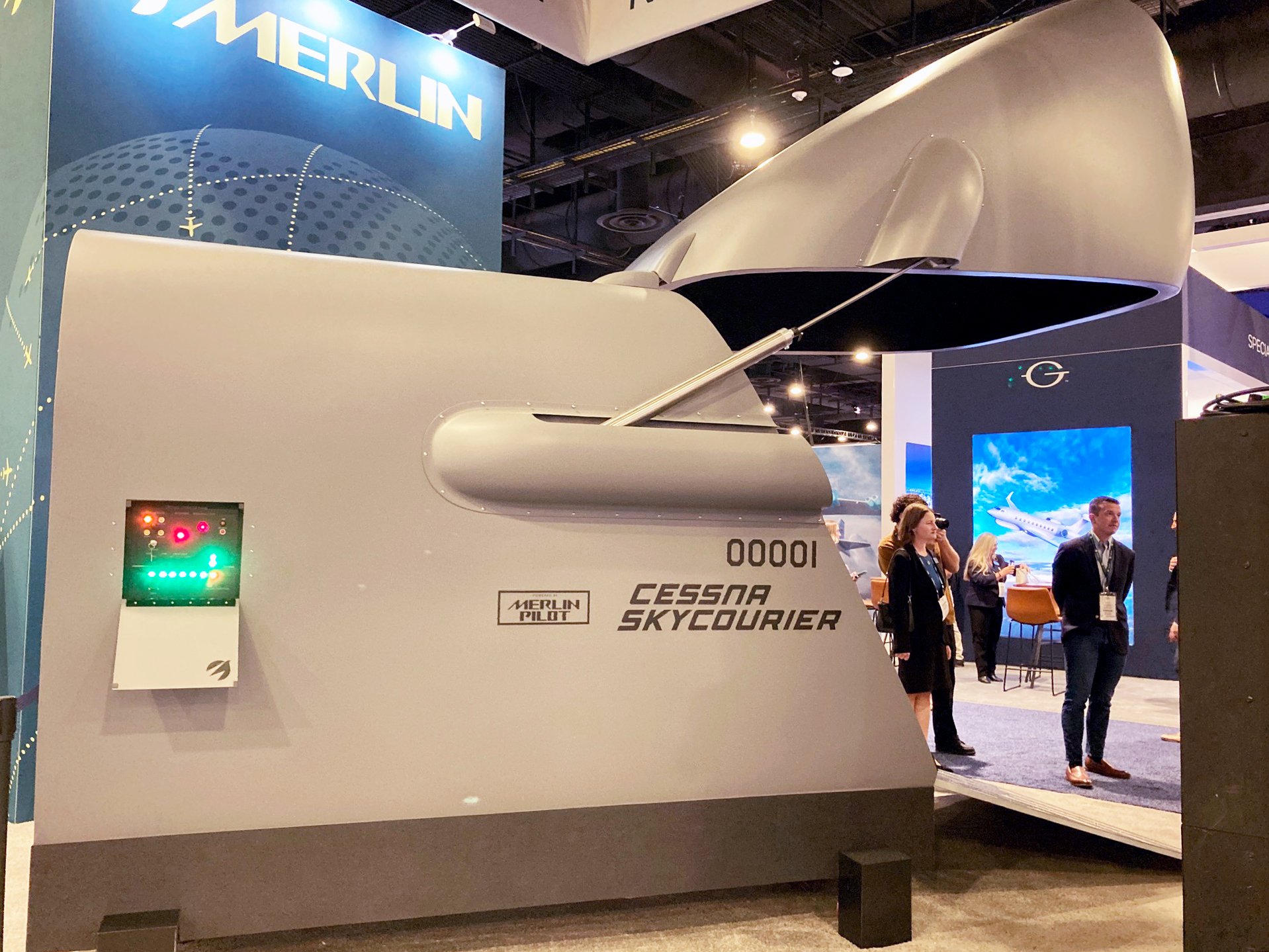
The form factor of the uncrewed SkyCourier variant is otherwise identical to its crewed counterpart, with twin turboprops, a high-wing configuration and an aluminum body.
As with the base SkyCourier, a major advantage of the aircraft is its optimization for loading and carrying standard pallets. This means that cargoes don’t necessarily have to be downloaded, broken up and repackaged for movement to forward positions. This is a big logistical advantage and can speed the flow of critical supplies to where they are needed most.
The aircraft’s range is about 900 nautical miles, which the makers say suits it well for Pacific island-hopping, allowing for refueling stops on austere runways. It can take off on runways as short as 3,300 feet and land in just 2,500 feet, according to a spec sheet.

The Textron/Merlin collaboration aims to differentiate itself with proven capability in the missions it intends to fulfill, along with the ability to roll out a new drone variant fast and one it can sustain consistently. Bob Gibbs, Textron’s vice president of special missions sales, told reporters in a Monday briefing that the conventional SkyCourier was now fulfilling new orders, not previously announced, to deliver modified aircraft to foreign nations for medical evacuation, casualty evacuation and environmental protection.
“The aircraft’s being operated literally from the Arctic to the Amazon,” Gibbs said. “There are three different island nations in the Pacific that have airline fleets of them. We support our aircraft in 170 countries around the world. So, just like a Cessna Caravan or a Beechcraft King Air, they’re ubiquitous. You find them anywhere, and we support them anywhere in the world.”
While the 900-mile range can’t take the loaded-up aircraft the nearly 2,000-mile stretch between the first and second island chains, Merlin and Textron executives said they don’t need to accomplish that to make it effective.
“This is the ability to disperse the forces among the second island chain … to do the island-hopping to be able to get to, whether it’s Palau, Tinian, Saipan, pick your various islands there,” Kyle Kremer, a retired Air Force major general who now advises Merlin, said. “With the range that it has, it has the ability to agilely move through there” and connect logistics pipelines.

The autonomy package, Merlin Pilot, is already in use under a $105 million U.S. Special Operations Command contract to develop autonomy for the C-130J Super Hercules transport aircraft. It’s been flown aboard four different single and multi-engine airframes, the company says. A promotional web page for Merlin Pilot shows tanker-class and commercial cargo applications with developing and future capabilities.
Merlin has also teamed with the Air Force to develop an AI copilot for KC-135 tankers that can decrease crew workload and even possibly fly the aircraft on its own in the future. TWZ reported on planned tests for these autonomy-enabled tankers in 2024, with the flights set to begin the following year.
However, the Air Force has not confirmed the completion of any flight tests for the effort since. And on Wednesday, Lt. Gen. Daniel Tulley, commander of Air Force Mobility Command, appeared to confirm that the tests had never taken place.
“There’s some companies out there who have offered to develop things where they can bring a carry-on kit onto old KC-135s and other aircraft, but we haven’t seen them test those successfully,” he said.
He added that autonomy technology may lack the maturity needed for tanker missions.
“An optionally manned or an unmanned tanker at range, [at] the ranges we needed to operate at. It’s a very large aircraft, and we’re not yet to where we’re employing fully autonomous large aircraft. But the technology, I would say, is there and rapidly getting there,” he said.
Tulley did stress that the Air Force saw a need for unmanned aircraft in the last-tactical-leg delivery.
“I’m wrestling with that as we develop an AMC strategy,” he said. “There is absolutely room for some sort of autonomous or other small light lift capability, and that’s just one domain in the air, right? This could be by sea, could be by land, but there is absolutely some requirement for distribution from those major points of debarkation.”
In addition to autonomous takeoff, landing and navigation, and protection of the flight envelope, Merlin Pilot, the company says, has digital copilot human-machine teaming characteristics that include pilot health monitoring, gaze tracking and fatigue detection; pilot incapacitation and contingency response; and flight monitoring and assistance.

Some of Textron’s new features are making light steps toward autonomy already. Gibbs pointed out that the company’s Cessna Citation Gen3 business jets now include standard Garmin auto-land technology.
“Obviously, it’s a different scale than what Merlin’s doing as far as automation,” he said. “But … as we develop new products, we try to future-proof them, and so that’s where you get this nice transition between us.”
The SkyCourier can cost up to $8.5 million, depending on modifications, and while the SkyCourier UX sports GPS-denied navigation and the ability to seek different flight paths to avoid danger, it doesn’t have other built-in defenses. For contested logistics missions, it’s not clear how much risk the services are willing to tolerate for a relatively small logistics payload capability. Kremer maintained, though, that a drone of this size could be a mission-saving capability when dispatched to austere locations. And, in a Pacific conflict, it may reduce demand on already-stretched C-130 transports, now the smallest platform capable of carrying standard containers and long overtasked.
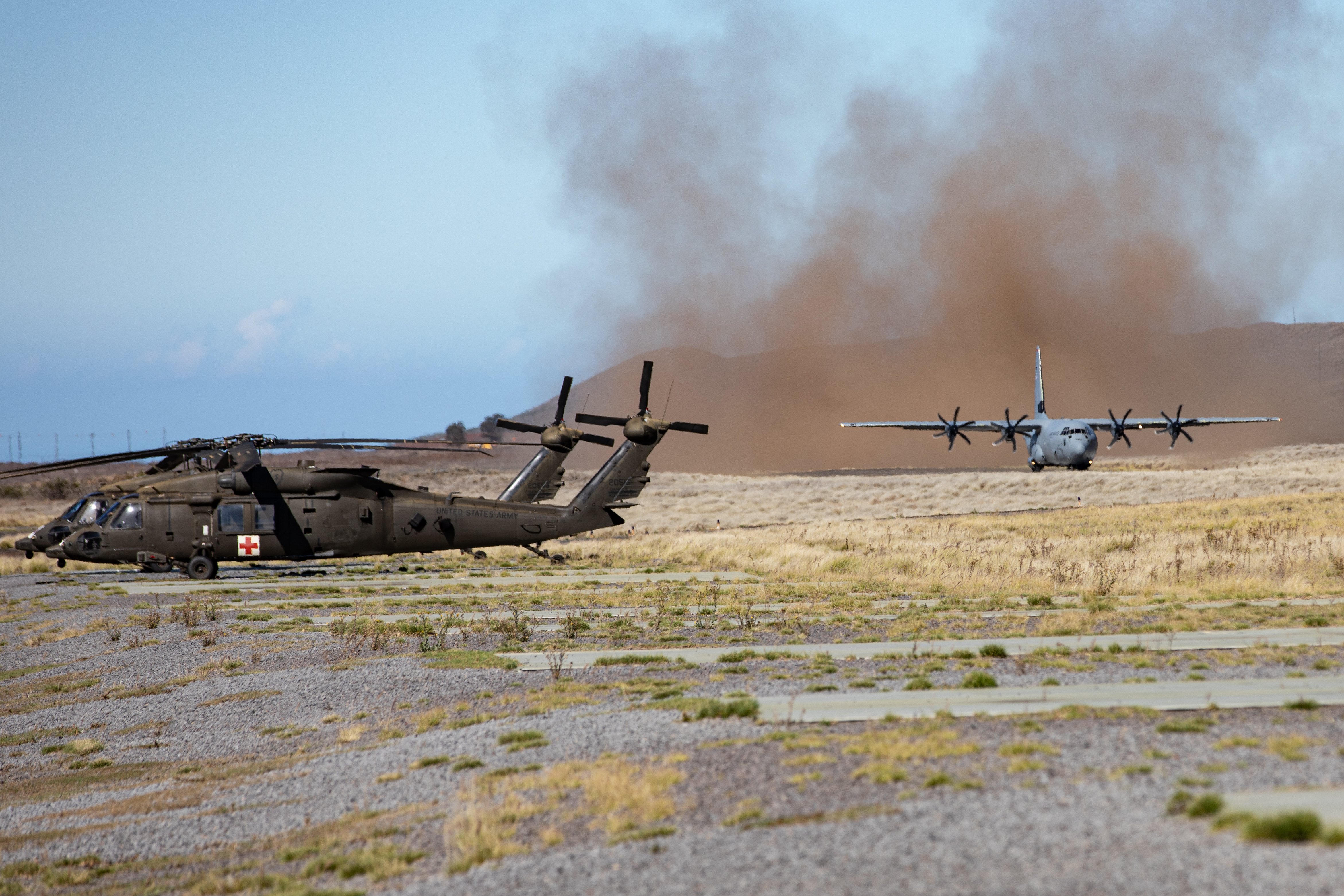
“If you can’t get the spare tire, if you can’t get the component, that small thing where you need it in these dispersed operations, they don’t keep the big logistic supply chain built up in these locations,” Kremer said. “You have to be able to get it where you need it, when you need it, and that’s what this provides.”
Nonetheless, the Air Force has a clear appetite for a capability like this. Last year, it signed a $17.5 million contract to put a Reliable Robotics autonomy package on a Cessna 208B Caravan.
On Monday, Air Force Chief of Staff Gen. Ken Wilsbach reiterated the Air Force’s interest in unmanned aerial logistics platforms.
“We’re doing testing on them,” he said in response to an audience question. “We believe that there’s some value in that as well. It certainly could be valuable in the Pacific with the ranges that we’re talking about, and so we’re looking at several different options and evaluating them. But I would say nothing, no program of records just yet, but [we’re] certainly taking a look at some demonstrators and the like to see what’s available to us.”
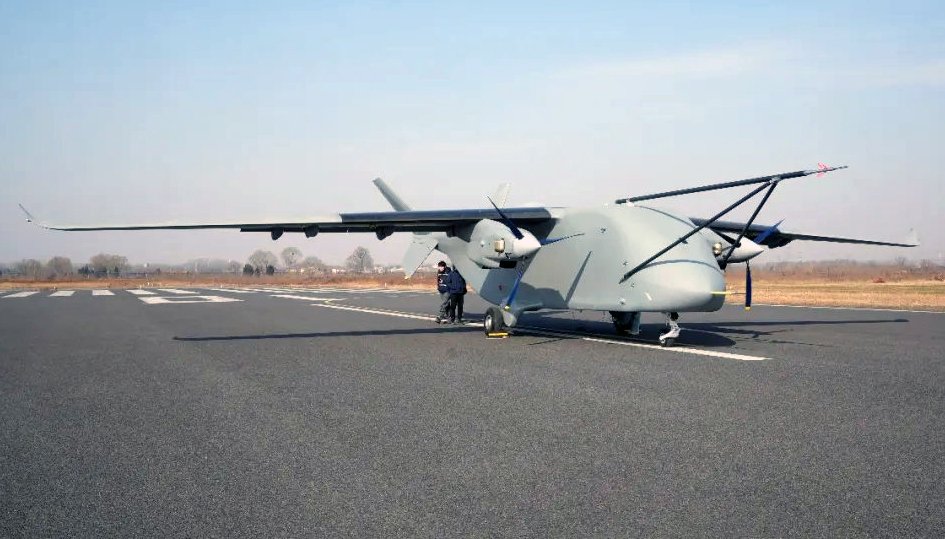
Notably, China has made significant advancements in developing logistic drone capabilities, with reported successful flight tests of massive heavy-lift uncrewed aircraft, including a 7-ton cargo plane that’s currently the world’s largest uncrewed freighter to take flight. Among them is China’s CH-YH1000, a medium-altitude cargo drone developed by the China Academy of Aerospace Aerodynamics that boasts, like SkyCourier UX, a hatch in lieu of a cockpit for ease of flat-pallet loading up to a weight of 1.2 tons. These are just some of an increasing number of similar systems being developed in China that aim to take the crew out of lower-end logistical missions over short, medium and long distances.
Though Textron and Merlin have yet to build a SkyCourier UX prototype, Merlin CEO Matt George emphasized that the company had chosen to partner with Textron because they could start delivering aircraft fast.
“You’ll see over the course of the show a lot of concept aircraft. You’ll see a lot of renders. You’ll see a lot of people who have big empty factories all around the country,” he said. “But I also want to be very clear about the fact that none of this matters without production … There’s 14,000 Americans working in Wichita, Kansas, on a production line where these aircraft, at least in the crewed configuration, are coming off the production line. So when we talk about capability, we’re talking about that capability and bringing that capability to bear soon, rather than in the future.”
Next in the development process, executives say, will be an optionally piloted version of SkyCourier that will allow users to develop comfort with the platform and open the door to further iteration.
The Textron/Merlin team is also leaving its options open in terms of which U.S. military customer might find its platform most useful.
“I hope [the Army and Air Force] fight over it,” Gibbs said.
Contact the editor: Tyler@twz.com
The post Cessna Cuts Cockpit Out Of SkyCourier Cargo Hauler For Uncrewed Logistics appeared first on TWZ.

The U.S. Air Force has been taking a new look at the feasibility of restarting production of the C-17 Globemaster III cargo plane as part of its still-evolving next-generation airlift plans. The service also continues to explore a wide range of next-generation aerial refueling concepts, including new stealthy and/or uncrewed tankers, but a firm vision for the way forward there has yet to emerge.
Air Force Lt. Gen. Daniel Tulley, head of Air Mobility Command (AMC), shared new details about future airlift and aerial refueling efforts, with TWZ and other outlets at a roundtable at the Air & Space Forces Association’s (AFA) 2026 Air, Space & Cyber Conference.
On the airlift side, the Air Force’s stated plan to date is to replace both the C-17A and C-5M Galaxy with a single Next-Generation Airlift (NGAL) platform, starting in the mid-2040s. Separately, the service is pursuing what could be a family of future aerial refueling capabilities under what is now called the Advanced Tanker Systems (ATS) program. Very broadly speaking, ATS presents a path toward what might come after the retirement of the aging KC-135 tanker fleet, though those aircraft are still expected to keep flying for years to come. The Air Force is also moving to further expand its fleet of newer KC-46A tankers in the interim, but persistent technical and other issues with that design continue to present hurdles.
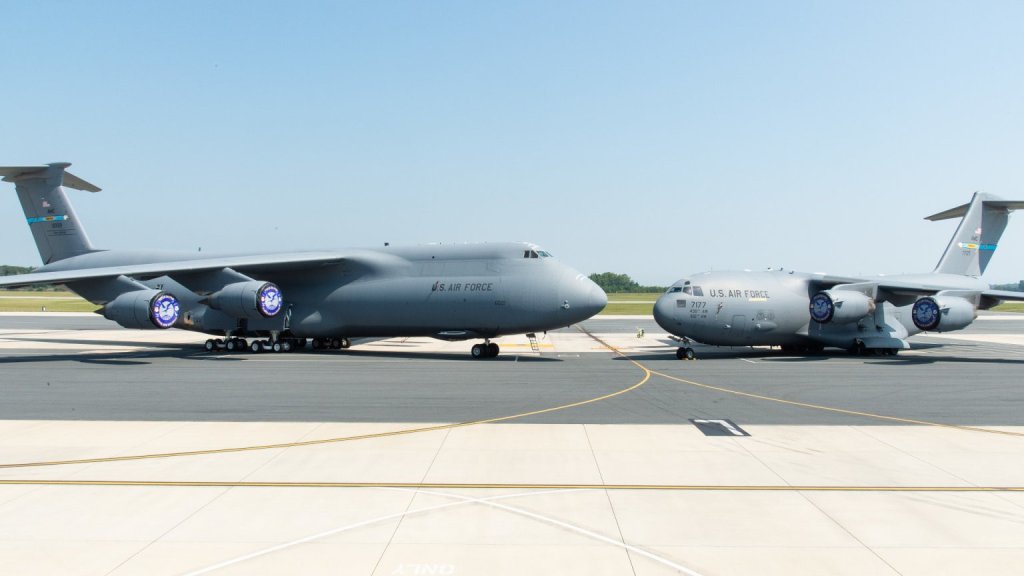
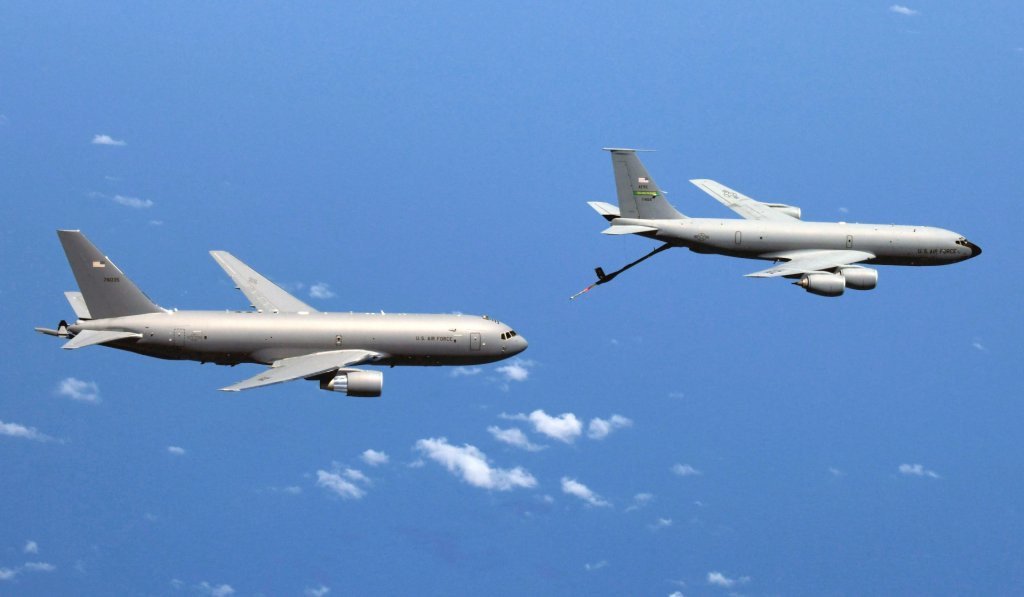
At the roundtable today, Lt. Gen. Tulley was asked explicitly about restarting C-17 production. The manufacturer of those aircraft, Boeing, shuttered that line in 2015. The company also just marked the 35th anniversary of the design’s first flight yesterday.
“Heck yeah, but with a caveat, right?” Tulley said in response. “So we were just asking this question over the course of last week, and it’s in the context of next-generation airlift. So we are about to embark on the Analysis of Alternatives to replace the C-17 and replace the C-5. All options are on the table.”
“There’s always the option to service life extend the C-17, but the [production restart] question came up,” he continued. “I’ve heard this my entire career. Once we terminate an assembly line, can we ever bring it back? Does somebody store all the machinery and the dies and whatnot, and can you bring that out? So we’re asking that question.”
“But then whatever that answer is from the vendors, what will be the price tag associated with that?” he added. “You have to ask yourself, okay, is rebuilding a C-17 even if you make improvements – and there’s a loose analogy with the C-130J, [a] much more modern, capable variant of the C-130E [author’s note: the C-130J evolved more directly from the C-130H variant] I first learned to fly – if you do that with the C-17, is that the best move? Or are there new technologies that we can incorporate into it so that it can defend itself, so that it’s connected, it’s networked, it does all the things that maybe the current C-17 doesn’t do?”
“We’re looking into it as part of the Analysis of Alternatives. I’m hopeful that we’ll get to answer that question.”
In June, the House Armed Services Committee also directed the U.S. Air Force to prepare a formal briefing on the matter of new C-17 production in a report accompanying a draft of the annual defense policy bill, or National Defense Authorization Act (NDAA), for Fiscal Year 2027.
The RAND Corporation did conduct a detailed, independent analysis more than a decade ago that assessed the costs and complexities that could come from Boeing building more C-17As, as well as other variants and derivatives of the design. RAND’s conclusion was that any of the courses of action would require billions of dollars of new investment and entail risks, as you can read more about in more detail here.
Foreign participation in a new C-17 production run could help at least defray costs. Australia, Canada, India, Kuwait, Qatar, the United Arab Emirates, and the United Kingdom all currently fly Globemaster IIIs. The Strategic Airlift Capability (SAC) initiative, a multinational arrangement with several European members, as well as the United States, also operates three of these aircraft.
Boeing told TWZ directly in June that unnamed C-17 operators had been reaching out about the prospect of restarting the production line, and that the company was “encouraged” by those discussions.
As Lt. Gen. Tulley stressed, there are significant questions about whether buying new-production C-17s, even with substantial improvements, is not only feasible, but a good use of resources. The Air Force’s Globemaster III fleet today continues to prove itself to be critical to the U.S. military’s ability to project power globally, and is in very high demand right now, especially amid the ongoing conflict with Iran.
The Air Force’s desire to replace both the C-17 and C-5, which are very different aircraft in form and function, could still easily lead the service down a different route. Boeing is not the only one looking at future NGAL opportunities. Another company, Radia, has been very actively pitching a clean-sheet design that is physically bigger than either the C-17 and the C-5, and that is geared toward greater operational flexibility, at the Air Force. Radia is targeting a first flight of its aircraft, called Windrunner, by the end of the decade, but it is still in a very aspirational stage at present.
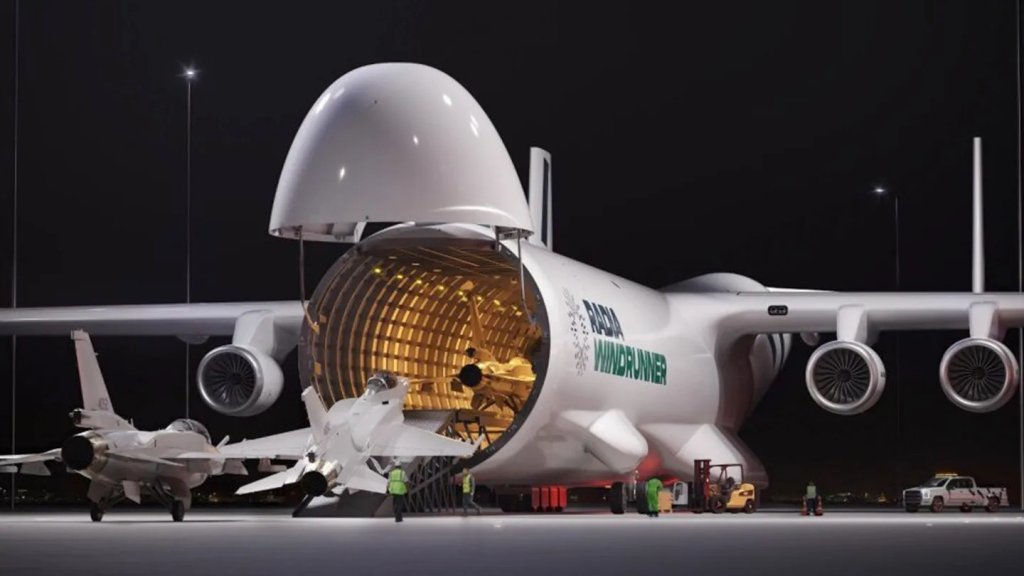
Many questions also still remain about how the Air Force will ultimately proceed on the next-generation aerial refueling front.
“So thinking beyond the current KC-46 buy and the program extension, whatever that next tanker looks like, our Advanced Tanker System, it’s got to be connected. It’s got to be able to defend itself,” Lt. Gen. Tulley said at the roundtable. “But it begs the question: does it need to be manned? Could it be optionally manned? Could it be autonomous? Or is there a family of solutions maybe that would answer that question? So I do not believe that it has to be manned.”
The AMC head was responding to a specific question about how autonomy could play into the Air Force’s future aerial refueling plans, which included a reference ot the U.S. Navy’s MQ-25 Stingray tanker drone. The Navy just announced its first low-rate initial production contract for MQ-25s on Monday.
“I think you’re seeing that with the MQ-25 and the Navy’s work, but then, how do we, the U.S. Air Force, bring that to bear in scope, scale, and range?” Tulley continued. “An optionally manned or an unmanned tanker, at range, the ranges we need to operate at, it’s a very large aircraft. And we’re not yet to where we’re employing fully autonomous large aircraft, but the technology, I would say, is there and rapidly getting there if it’s not.”
The MQ-25 is another Boeing product, and that company has shown a rendering of a larger, land-based derivative in the past. Lockheed Martin’s Skunk Works has also put forward several advanced tanker concepts in the past, including stealthy and potentially uncrewed designs.
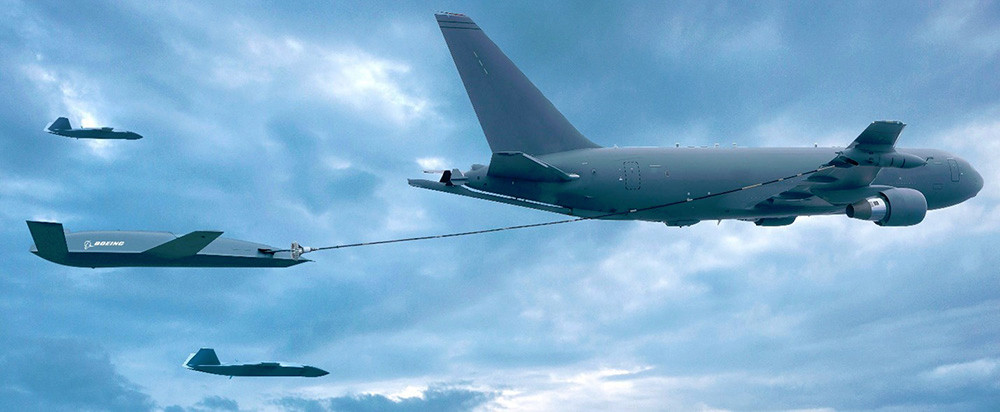

“We will be going after how to make the tanker survive,” William Bailey, the Air Force official currently performing the duties of the Assistant Secretary of the Air Force for Acquisition, Technology and Logistics, had also told TWZ and other outlets at a separate roundtable at the Air, Space & Cyber Conference yesterday. Bailey was responding to a direct question about whether the service was moving away from the idea of a stealthy tanker as part of the ATS plan.
“So, lots of work around what do we do in the future for our tankers, and we spent a pretty dedicated effort to go through and look at what do we think those design solutions could look like,” Bailey also said. “We looked internally. We went out to industry, had those guys come back with their thoughts on how to provide a more survivable aircraft.”
“The stuff that was coming in for me might have been an incremental improvement, but [it was] not clear that that represented the next step, the next phase,” he added. “What you’ll see is we’ll take our efforts, and we’ll look at, hey, if the real question is tanker access, then let’s not constrain ourselves to just the aircraft itself and trying to make a stealthy tanker. We need a tanker to have access, so we’ll talk about all those systems that it would take to protect that tanker.”
Bailey said the question of operational “access” applied to next-generation discussions, as well.
As is the case with the Air Force’s airlift fleets, the service tankers are in high demand due to the conflict with Iran and other current operational requirements. Stress on the existing tanker force, compounded by the ever-advancing age of the KC-135s, has been a steadily growing point of concern for years now. U.S. military officials have long been drawing attention to the limits of available aerial refueling capacity to meet even routine peacetime demands. The Air Force, as well as the U.S. Navy, have also expanded their use of contractor-owned and operated tankers to perform certain non-combat aerial refueling missions to help ease this strain.
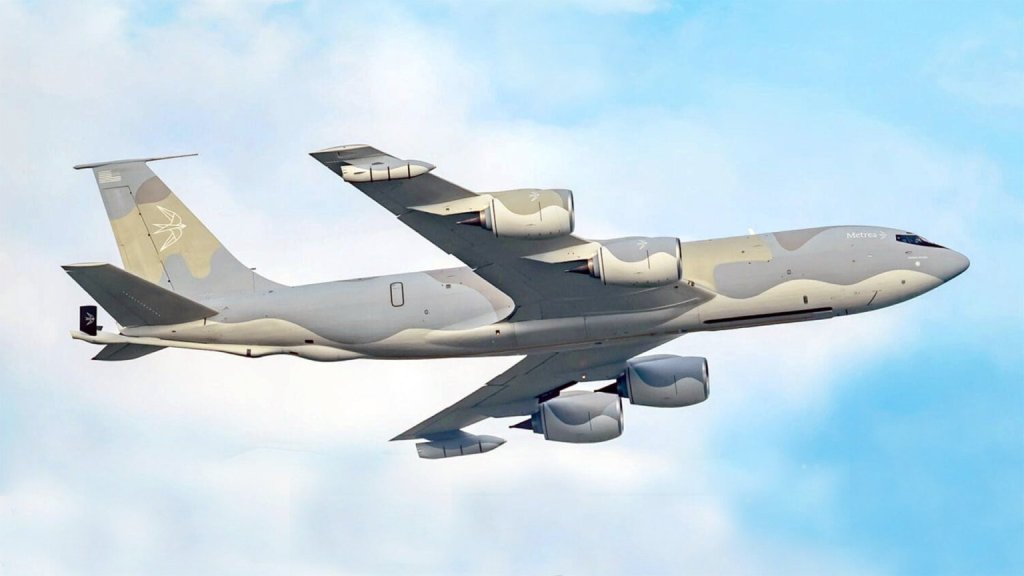
In the meantime, the Air Force is still pursuing upgrades for its existing airlift and tanker fleets, with heavy focus on increased network connectivity and improved self-protection capabilities.
Greater connectivity “can be a game changer, and it has been a game changer in Operation Epic Fury [against Iran],” Lt. Gen. Tulley said at today’s roundtable. “The ability for air crews to communicate, to coordinate tanker orbits and rendezvous, to pass threat information, to save lives and save aircraft has been everything we expected it to be and more.”
“We have MAF NEXUS that we’re pursuing. The goal is to have this on all mobility aircraft, whether they’re future-built and it’s incorporated, or it’s an add-on capability to existing aircraft,” he continued. “It brings edge compute, the ability to then employ AI [artificial intelligence] and much more computing core power forward on the aircraft, and it does network with the rest of the joint force and the Air Force’s battle management system.”
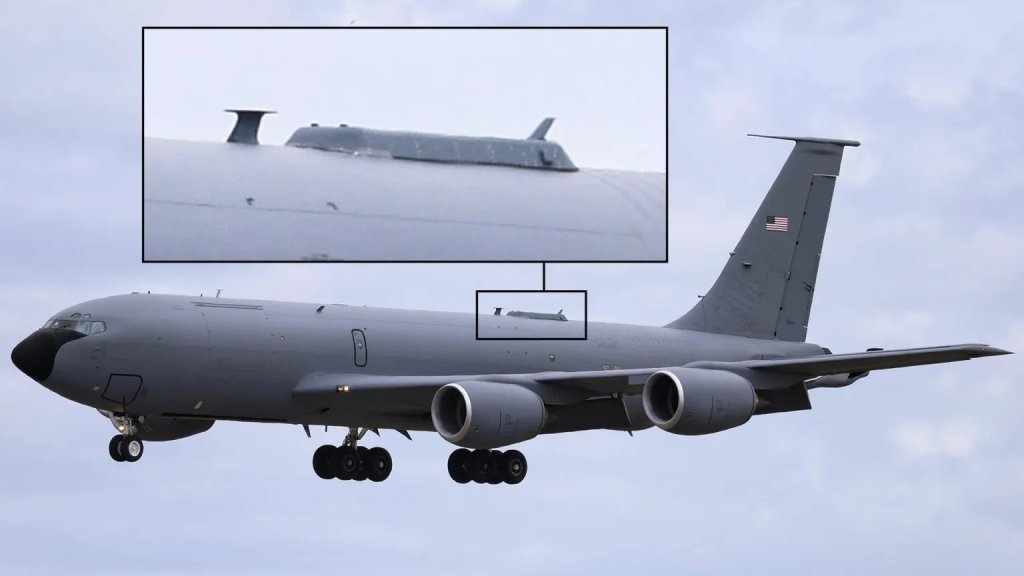
When it comes to new options for protecting existing tankers, “nothing’s off the table,” the AMC boss added. “Whether it’s [in the] electromagnetic spectrum, whether it’s kinetic self-defense, a layered approach, we’re looking at everything to come up with what might be the best system. But it’s got to be a system that we can afford, and it’s got to be one that we can put on all the aircraft we have and the ones we’re about to build.”
Using Collaborative Combat Aircraft (CCA) or other types of drones to help provide localized defense for airlifters and tankers could be another option. The Air Force has already experimented with this, at least to a degree.
The Air Force is otherwise still clearly continuing to shape its future airlift and aerial fueling visions. As part of that work, the service is now at least considering the possibility of rebooting C-17 production.
Contact the author: joe@twz.com
The post USAF Assessing Feasibility Of Restarting C-17 Production As Part Of Its Future Airlift Vision appeared first on TWZ.
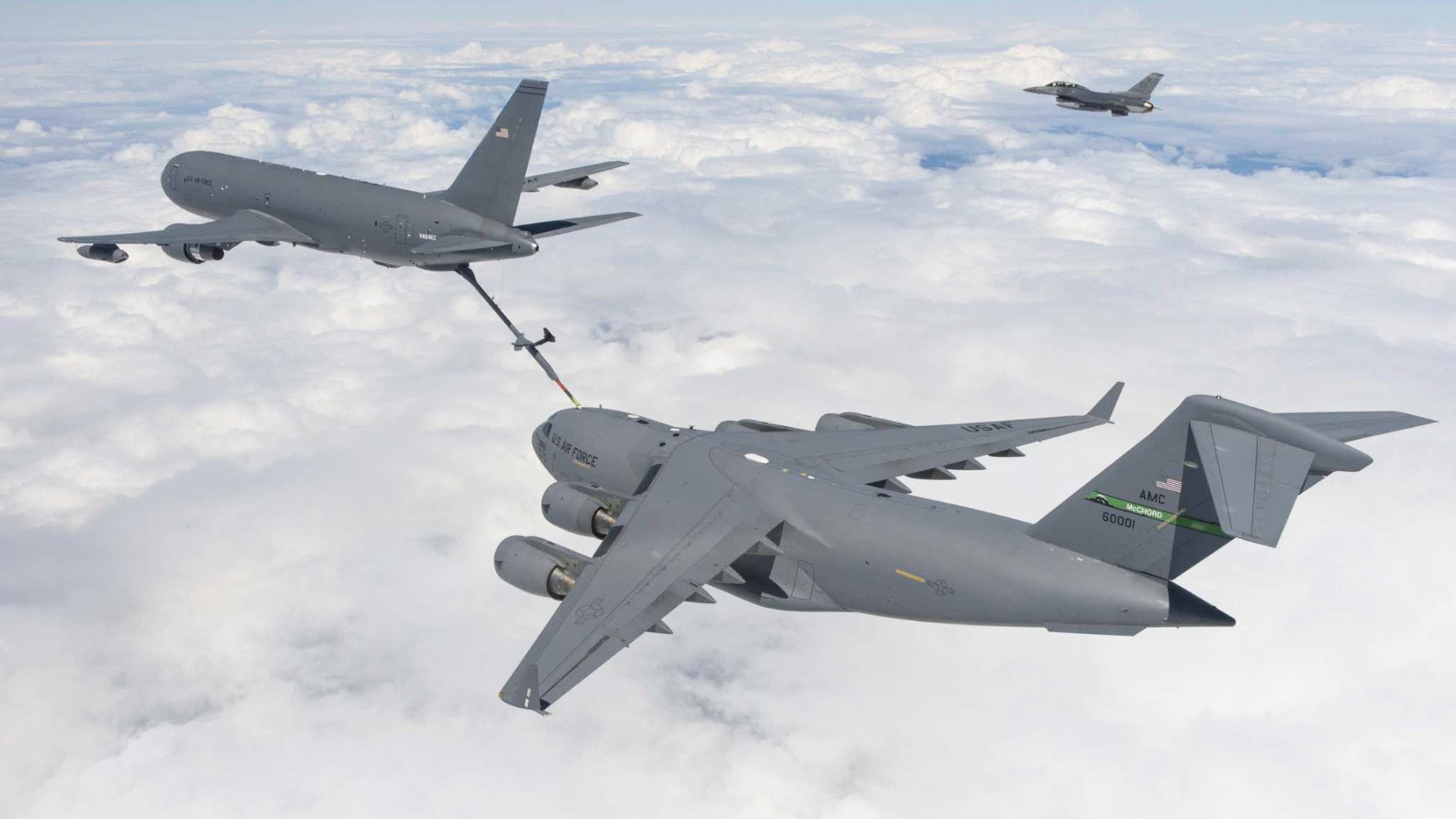
Trade Commissioner Maroš Šefčovič and MEP Dirk Gotink (EPP, Netherlands) Photographer: Mathieu Cugnot © European Union
The European Parliament has approved a major overhaul of the EU’s customs system, tightening requirements on e-commerce platforms, introducing a new handling fee for goods ordered from outside the bloc and creating a central EU customs authority.
“This is the biggest reform of European customs since 1968, supporting trade and the enforcement of EU rules,” said MEP Dirk Gotink, (EPP, Netherlands) who steered the legislation through Parliament. Gotink said European customs authorities had been overwhelmed by a “tsunami of Chinese parcels” and that the reform would give customs officers stronger tools to enforce EU standards.
Under the new rules, e-commerce platforms and sellers shipping goods directly from non-EU countries to European consumers will be treated as importers. That will make them responsible for providing customs data, handling applicable charges and ensuring products comply with EU law.
The reform also introduces an EU-wide handling fee on goods ordered directly from non-EU countries, with member states required to begin collecting it no later than 1 November, 2026. The European Commission will determine the amount and review it every two years.
Companies that repeatedly breach EU customs rules could face fines ranging from at least 1% to as much as 6% of the value of goods they imported into the EU during the previous 12 months.
The overhaul will also establish an EU Customs Data Hub, designed to replace at least 111 existing customs IT systems. A new EU Customs Authority, based in Lille, France, will manage the hub and coordinate customs cooperation and risk management across the EU.
The Council has already given the reform its final formal approval, making Parliament’s vote the final step in the legislative procedure.


This story originally appeared in Truthdig on Sep. 15, 2026, and is shared with permission.
During the national anthem of the first three 2016 NFL preseason games, San Francisco 49ers quarterback Colin Kaepernick sat down on his team’s bench between two Gatorade coolers. Few noticed, and nobody made mention of the gesture until a Black reporter for NFL Network named Steve Wyche asked him about it following the third exhibition tilt, a home game against the Green Bay Packers. Wyche’s interview with Kaepernick put the quiet protest on newsfeeds across the country. Then, shortly after police shot and killed Alton Sterling and Philando Castile within a 48-hour period — Kaepernick and a teammate, safety Eric Reid, went a step further before the final preseason game on Sept. 1. Instead of sitting on the bench during the anthem, they took a knee. The rest is civil rights and sports history.
The story of Kaepernick’s life before and after that fateful stand is the subject of his new memoir, “The Perilous Fight,” co-written with Pulitzer Prize-winning journalist and author Nick Chiles. Kaepernick’s journey from a shy adoptee of color to white parents uninterested in exploring his Black experience, to a boldfaced protest icon is a singular American story, whose hinge moment came at the cusp of the Trump era. The book, which comes out tomorrow, will be available at most places where books are sold — but not Target. Kaepernick is boycotting the retailer over the company’s anti-diversity, equity and inclusion initiatives. I spoke with the author in late August. Our conversation has been edited for length and clarity.
Truthdig: Beginning where the book begins, have you thought about what it means to be a public face for adopted children?
Colin Kaepernick: It’s interesting, I didn’t actually hear much about adoption prior to the 2016 protest, which is when I got a surprising amount of letters and feedback from adoptees. It wasn’t immediately on my radar because being adopted is just life for me; like a regular Tuesday, right? But as more and more people reached out over the years, I’ve become mindful and intentional about showing the positive elements of it, but also the realities, and what it requires to work through all of it. Looking back, it’s natural this position came into my realm. I try to represent our community appropriately.
How were you able to grow as a person at the University of Nevada-Reno?
I was fortunate to find the right relationships early on. Some I stumbled into, like the one with my roommate-teammate Virgil Green. He invited me to attend Second Baptist Church, which became a second home for me because Reno wasn’t overly welcoming to its small Black population either. The town’s historical nickname is “The Mississippi of the West.” Later on in college, another teammate, future Super Bowl champion Brandon Marshall, introduced me to the Kappas, an esteemed Divine Nine Black fraternity, which I didn’t even know we had because the campus population was so small.

One of the funniest moments in the book is your dad getting all worked up and questioning you because he thinks it’s an “Animal House” situation.
Yeah, Dad. Not the same thing at all. The Kappas gave me a great sense of community, and I’ll add one more to the mix. The Center is a multicultural campus spot where if you weren’t white, you could go hang out and relax. I made a lot of friends there as well. I had these three safe spaces where I could have conversations I never had [growing up] back in Turlock [California]. I explored ideas and concepts I hadn’t been exposed to previously, so even with the demands of football, college allowed me to grow and develop in important ways.
I revisited your NFL highlight reels and will confess to forgetting how ahead of your time you were. Lamar Jackson and Josh Allen were certainly watching. Do you hope to reclaim yourself as a quarterback, because in many ways it’s been overshadowed and even memory-holed?
I became the 49ers’ starter in 2012, which is when you start to see a broader shift in the style of quarterback play towards what we see today. Mobile with a lot of movement, beat defenses with your arm and your legs. I’m proud of what I accomplished, but the league’s response to the protest itself is the reason my career isn’t remembered in the way it should be. The NFL did significant work to delegitimize the on-field performances to justify blackballing me.
Delegitimizing is an evenhanded way of describing it.
Yes, it’s a very kind word. There was a lot of work done on that front by the NFL, but what gets missed in all of it is that if I wasn’t the caliber of quarterback that I was, nobody would’ve cared. I know how good I was because a backup QB would’ve just been shuffled off the sidelines and it would’ve been the end of it. My success as a quarterback is precisely why the protest drove the NFL crazy.
To me, the biggest surprise in “The Perilous Fight” is that your first protest in Houston was impromptu. What was it that hit you when the national anthem played?
“We’re consistently seeing Black men killed by multiple cameras.”
At that point in time, there’d been a wave of police killings, year after year on a regular basis. By then, we’re also in a different era with social media. Historically, you look at the L.A. riots, which erupted only because someone happened to shoot video of Rodney King being beaten by LAPD. One person with a VHS camera. Today, we’re consistently seeing Black men killed by multiple cameras everyone carries around. These killings coincided with the reading and research I’d been doing to understand the historical context of police brutality. Walking onto the field for that 2016 game, playing “The Star-Spangled Banner” hadn’t crossed my mind. When I heard it I asked myself, what does this actually mean to you?
Having a better understanding of the historical systems of oppression, as opposed to ‘one-off’ incidents, gave me a realization in that moment. What the United States purports to represent doesn’t represent me or a significant portion of the population. Why am I supposed to show pride in this? Steve Wyche caught me sitting in a third game, inquired, and I told him why. By the next day, the story had blown up well beyond sports media.
I joked at the time that you should offer to stand for “The Star-Spangled Banner” in exchange for playing the never-mentioned third verse.
Right, dig a little deeper and the question becomes: What is the actual intention of the national anthem? Why would I ever stand up for that? Absurd. To your point though, sure, if we’re going to ring it out in stadiums, play the full thing. Get it all out there.
There’s a major public misconception about when you changed tactics in the final preseason game and decided to take a knee. The oft-told tale is that former Green Beret and NFL preseason player Nate Boyer convinced you and teammate Eric Reid to do so, but that isn’t what happened at all. How did Boyer become part of the narrative?
The story came out that way because Nate Boyer positioned it that way. It obviously wasn’t the case, it was Eric and I. As I note in the book, I was a Black guy in a national firestorm and, supposedly, I reached out to a white guy I didn’t know to come and advise me on what to do during the national anthem? Laughable. It was Reid’s idea. The really telling part is that nobody in the media questioned Boyer’s version of events. Why? Well, if it’s Boyer’s idea, it’s a more palpable narrative to make a lot of football fans nominally comfortable.
“He was supposed to take a knee with us and then at the last minute decided not to.”
Eric and I had spoken to Nate beforehand, and he was supposed to take a knee with us and then at the last minute decided not to, which is its own situation altogether. It became a big decision for Eric and I. Should we combat this bogus story in real time, or do we stay with the protest message we’re trying to send? If the thing with Boyer becomes the focal point, then we’ve lost the impact we’re trying to achieve. We didn’t love seeing that narrative run rampant, but Eric and I decided it wasn’t the battle worth fighting.
It’s a no-win situation, but Boyer’s story did steer the conversation in public circles to one of free speech, rather than police brutality, which are two very different topics.
Very different, indeed. How the protest is talked about through those two lenses was revealing then and remains so today. People who recognize what Eric and I were doing, see it as a protest against police killing Black people, the serious need to address that and systemic oppression more broadly. The free speech piece of it was always a deflection from the core issues at hand.
Do you feel there’s a connective tissue from taking a knee to the mass public protests over the last decade, both the righteous ones following George Floyd’s murder, and opposite ones like Jan. 6?
I’ve never thought about it that way. I mainly look at the anthem protest in terms of the wins we’ve had and the progress we’ve made, but also how much more work there is to do, especially given all the resistance to creating a fair and equitable society. How loud and vocal the other side of it has gotten over the last 10 years is both surprising and not at the same time. We’ve taken major steps back, but I’d rather have it all out in the open so we know what we’re up against. It’s valuable to know where it lies.
Have you found the last decade disheartening?
At times for sure, but my hope is that the awful politics are part of a last-ditch effort. As far as where we’re at as a society, there’s a strong growing undercurrent of people saying “enough’s enough.” We’re heading in the right direction, but you have to weather the hard times. Keep playing offense in the storm.
One savvy author’s move on your part is mentioning President Donald Trump as little as possible. I thought there would be more pronounced score-settling and was sincerely hoping you’d “motherfuck” the big man once or twice. Did you go back and forth at all about your impressive restraint?
Look, that man had a direct impact, working with NFL owners to blackball me. That exists, that’s real, so there is plenty I could say about him personally—
Wouldn’t it feel good just saying it out loud?
Maybe, but I know in many ways that’s what they want. They want to be the center of the story and have relevance and influence in that way. Him in particular. There’s obviously a level of power and influence that comes with his position, but I don’t have to lean into that or accept it. I’m trying to stay focused on what’s most important. He doesn’t fit the bill.
Given the nightmare CTE report that came out this week combined with distance from your playing days, does your brain thank you for missing out on a decade of head shots, even if your heart says otherwise?
It’s a both/and answer. There’s my love of playing football, nothing else like it, with its competitive nature, the camaraderie of a group of guys coming together to win. You put yourself through so much it makes success incredibly rewarding in ways you can’t find anywhere else. And yet, there are serious consequences. I haven’t even read this week’s report yet, but I remember the one where they had more than a hundred players and every single one of them had CTE except for one, a kicker I think. If you want to play, be a kicker.
“In football, CTE is not an if, it’s a when.”
The physical consequences of football are real. My wife, Nessa Diab, and I have asked the question so many families are asking. If we have a son, will we let him play football? As a parent who knows the undeniable impact, I would like him to play other sports. In football, CTE is not an if, it’s a when. You don’t want to put your child in that situation.
On a personal level, I played football for 20-plus years, so time will tell the damage done, but am I glad I saved myself some hits? Yes. Would I love to get back out on the field? Absolutely.
You write about Jay-Z, who supported you on “Saturday Night Live,” then ignored you, later tried to co-opt you after Roc Nation partnered with the NFL, and then last summer, after the book was finished, called you out at Yankee Stadium. Do you think these will be the tabloid headlines to emerge out of “The Perilous Fight?”
I’m not sure, because there are so many different topical pieces in the book. Like the Nate Boyer story isn’t known, hasn’t been talked or written about, so I think there will be a good amount there. On the Jay-Z side, this is repetitive behavior that there’s been conversations about for quite a while. There may be some surprise around specific details, but Jay-Z’s overall actions won’t be shocking to anyone who has paid attention.
As noted in “The Perilous Fight,” you do not watch the NFL at all, but I’m curious if you’ve seen clips of Eminem taking a knee during the halftime show of Super Bowl LVI?
I had friends text me about it, but I’ve never seen it because I don’t engage. I hope solidarity is the case. And if so, while I don’t love anyone who is now doing the Super Bowl show because of the Jay-Z deal, I appreciate the sentiment.
Finally, looking back, can you believe how the last 10 years have played out? How you became a monumental public figure — and all of the fallout that came along with it — for a generally mild act of protest against an ongoing life-and-death problem for communities of color? It’s mind-blowing, no?
It really speaks to the fragility of a certain portion of society. In basic form, I’m protesting police killing Black people. The flip side of resistance to this simple human concept is — what? Police should be killing Black people? Yes, I’ve been in the center spotlight, but I’m also part of a larger movement of people publicly screaming, “Hey, you shouldn’t be killing us!”
It’s the lowest of bars to get over.


“I don’t understand enjoying something without caring about it,” Andre Agassi tells Lizzy Goodman midway through her thoughtful character study. Goodman shadows the former tennis great as he tries to get comfortable in his pickleball years, detailing the dynamic interplay of Agassi’s moods: Fun Andre, Philosopher Andre, Dark Andre. Many of the best athlete profiles extend the narrative of a legend beyond the court, making more complicated human meaning once a subject has set the game aside. Here, Goodman and Agassi achieve a gratifying volley, the journalist turning over the athlete’s challenging interiority and sending it back to him to consider.
The made-for-TV version of the Andre 2.0 story might go something like this: A retired, middle-aged tennis great takes up a goofily named, hugely popular new sport and is finally able to exorcise the demons that haunted him throughout his tennis career. This seemed to be the story Agassi was beginning to tell after the watch event, as he sat on an ottoman at the bar of his hotel, holding a dry Belvedere martini with extra olives. He talked about his love of pickle, how it challenged him mentally, how suited his body felt to its movements. He shifted around in his seat, trying to keep his perpetually embattled back from seizing up. “I was on a tennis court today,” he said. “What the [expletive] was I doing on a tennis court?”
But it became apparent, over the months that followed, that it would take more than a new sport to resolve the central question that all three of Agassi’s personas have been wrestling with for a long, long time. He summarized it, wryly, as he ordered another cocktail: “Why do I end up doing so many things that I actually don’t want to do?”

VENRAY and Pleenbergen, Netherlands, 4-6 September 2026 – The World Championship for Akhal-Teke Horses brought together breeders, scientists, equestrian professionals, cultural figures and international media in the Netherlands for a celebration of one of the world’s oldest and most renowned horse breeds. The event attracted worldwide attention, with extensive coverage by international media and the participation of delegations from numerous countries.
A day before the official championship events, on 4 September, the International Scientific and Practical Conference "The Akhal-Teke Horse: Turkmen Art of Universal Horse Breeding" was held at the Asteria Hotel in Venray. The conference brought together leading experts, researchers and equestrian specialists from Europe, North America and Turkmenistan to discuss the historical significance, breeding traditions and future preservation of the Akhal-Teke horse.
The conference was opened by Kakamyrat Rejebov, Editor-in-Chief of the newspaper Türkmenistan. Among the distinguished speakers were Chynar Rustemova, Executive Secretary of the National Commission of Turkmenistan for UNESCO; Antonio Jariola, head of the Italian cultural and show company Proeventi; Neda Berger, head of the Austrian-Turkmen Association; Alexandre Gro, national technical expert of the French Equestrian Federation; Jean-Philippe Camboulives, Director of the FEI Solidarity Department; Patricia Johnson, President of the Akhal-Teke Horse Foundation of the United States; Julio Bendezu-Sarmiento, senior researcher at the French National Centre for Scientific Research (CNRS) and the National Museum of Natural History; and Saragt Babayev, senior lecturer at the State Academy of Arts of Turkmenistan and a distinguished representative of Turkmen culture.
Participants discussed the unique genetic characteristics of the Akhal-Teke horse, its historical role in the civilizations of Central Asia, and the importance of safeguarding a breed often described as a living symbol of Turkmen heritage. The conference highlighted growing international cooperation in breeding, research and cultural promotion of the breed.
The following day, attention turned to the World Championship itself, which was attended by National Leader of the Turkmen People Gurbanguly Berdimuhamedov. The championship showcased some of the finest Akhal-Teke horses from around the world, reflecting decades of international efforts to preserve and promote the breed.
Often referred to as the "golden horse" because of its distinctive metallic sheen, the Akhal-Teke is widely regarded as one of the oldest purebred horse breeds in existence. Originating in the Akhal Oasis at the foot of the Kopet Dag Mountains, the breed has been preserved for centuries by the Turkmen people and remains one of Turkmenistan's most cherished national symbols.
The championship formed part of a broader programme dedicated to the international promotion of Turkmen equestrian traditions and cultural heritage. Throughout the event, participants attended exhibitions, cultural presentations and meetings devoted to the history and development of the breed.
The celebrations concluded with a spectacular gala dinner and fireworks display featuring horse-themed visual motifs and the Turkmen national flag. The finale carried particular symbolism as Turkmenistan prepares to mark the 35th anniversary of its independence, underlining the close connection between national identity and the legendary Akhal-Teke horse.
The successful organization of both the international scientific conference and the world championship demonstrated the growing global interest in the Akhal-Teke horse and reinforced its status as a unique cultural treasure whose legacy continues to captivate horse enthusiasts around the world.
