As Japan marks the anniversary of the 1945 atomic bombs, its leaders are pushing for a renewed debate on nuclear weapons in a challenge to the nation’s long-time pacifist stance.
Japan’s constitution renounces offensive military force, and successive governments have maintained a decades-old pledge not to possess nuclear weapons, produce them or permit their introduction into the country.
That commitment is now under pressure as East Asian neighbors — notably China — boost their military capabilities, while doubts persist about the reliability of Tokyo’s biggest security backer, the United States.
Prime Minister Sanae Takaichi has refused to clarify whether she will maintain the stance known as the three non-nuclear principles, and Defence Minister Shinjiro Koizumi called last month for a “discussion without a taboo” on the subject.
In December, an unnamed senior administration official told local media in an off-the-record session suggesting that Japan should possess nuclear weapons.
The remark was widely reported by major Japanese outlets including national broadcaster NHK and Asahi Shimbun, sparking public criticism.
“If I look at it cynically, I can’t help but think that maybe she really wants to change” Japan’s anti-nuclear commitment, 82-year-old Satoshi Tanaka, a campaigner who survived the 1945 attack on Hiroshima, told AFP.
The country marked the 81st anniversary of the Hiroshima bombing on Thursday and will do the same on Sunday to commemorate the attack on Nagasaki.
The August 1945 assault by the United States killed more than 210,000 people, including many from the effects of radiation exposure.
It remains the only time that atomic weapons have been used in warfare, and was one of the last major acts of World War II.
The Takaichi administration is undertaking a major update of the national defense strategy this year in the face of China’s expanding military ambitions.
The prime minister has already lifted Japan’s self-imposed ban on weapons exports and expanded defense spending, while pushing to amend the constitution.
Those policies have drawn rebukes from China, which accuses Japan of “new militarism” and Takaichi of bending to the whims of the far right.
They have also unnerved survivors of the 1945 bombings, who have long helped shape Japan’s post-war pacifist political culture.
Tanaka, the Hiroshima survivor, expressed frustration that current political leaders like Takaichi are focusing on military capacity at the expense of diplomacy.
“There is so much talk about national security. What about building peace through diplomacy?” he said.
Despite winning the 2024 Nobel Peace Prize for their efforts, they are debating whether to continue their national association as their members grow older.
As of March, Japan recognized just over 91,000 survivors of the Hiroshima and Nagasaki attacks, down from over 164,000 a decade ago. Their average age is 86.7.
US President Donald Trump (R) looks on as Japan’s Prime Minister Sanae Takaichi speaks in front of US Navy personnel on board the US Navy’s USS George Washington aircraft carrier at the US naval base in Yokosuka on October 28, 2025. (Photo by ANDREW CABALLERO-REYNOLDS / AFP)
The Big Worry
The focus has turned firmly towards the future of the non-nuclear principles, which date to 1967.
Takaichi’s supporters argue that the final clause needs to be changed to allow the United States to bring nuclear arms to Japan and ensure regional deterrence.
Hirofumi Yoshimura, head of the Japan Innovation Party, a coalition partner of Takaichi’s government, said the principle deserved discussion in the context of the US-Japan security alliance.
“Of course, we need to work toward building a world without nuclear arms,” Yoshimura told reporters on the anniversary of the Hiroshima bombing.
“But when considering how to ensure the effectiveness of extended nuclear deterrence within the framework of our alliance with the United States, I believe we should…continue to adhere to the principle of ‘neither possessing nor producing’ nuclear weapons,” he said.
“As for ‘not allowing them to be brought in,’ I do think there is some room for discussion on that point.”
Critics argue that Takaichi’s hawkish approach to defense increases the danger for Japan.
After Takaichi attended the annual ceremony in Hiroshima on Thursday, she sat down for a televised meeting with survivors.
When pressed, Takaichi declined to offer clarity on whether she might change the country’s nuclear course.
“Our nation currently adheres to the ‘three non-nuclear principles,'” she said in response to a direct question from Tanaka, without discussing what she might do next.
“That,” Tanaka told AFP on Friday, “only explains the current situation. It says nothing about the future.
Australia is poised to become the first international buyer of the AIM-260 Joint Advanced Tactical Missile (JATM), one of the US Air Force’s (USAF) best-kept secrets and unarguably its longest-range air-to-air missile.
Speaking at the ongoing multi-national military drills, Exercise Pitch Black, Australian Defense Minister Richard Marles said the country will invest “almost” $736 million AUD, or about $518 million USD, to acquire “up to 450” missiles for the Royal Australian Air Force (RAAF).
The missiles would be acquired through the Foreign Military Sales (FMS) route.
“This announcement is the latest milestone in the delivery of long-range, high‑tech capabilities for our Defense Force,” Marles said in Darwin. “The Albanese government continues to deliver critical capabilities that will allow the ADF to strike at a longer range, deter any adversary, and protect our national interests. It is fitting to make this announcement at Exercise Pitch Black, which is an important demonstration of Australia’s commitment to the peace, stability, and security of our region.”
The AIM-260 is apparently designed to succeed the AIM-120 Advanced Medium-Range Air-to-Air Missile (AMRAAM), which is already extensively used by the RAAF.
The missile will initially be integrated on the F/A-18E/F Super Hornet and later fielded on the F-35A and EA-18G Growler, according to the Australian Defense Department. However, there is speculation that the missile may eventually be fitted to the MQ-28 Ghost Bat, which has already test-fired an AIM-120 AMRAAM.
With this acquisition, Australia will officially become the first export customer of the JATM, even before allies like Israel.
Interestingly, the AIM-260 JATM purchase continues a pattern in which Australia serves as an early or exclusive partner for advanced US systems. For example, Canberra was the first international customer for the Super Hornet, the first and the only export customer for the EA-18G Growler, the first international buyer of the AGM-158 JASSM and AGM-158C LRASM long-range missiles, the first non-US customer for the MH-60R military helicopter, and only the second country (after the UK) approved to buy Tomahawk cruise missiles.
Australia is also the only nation outside the United States assembling GMLRS rockets, and one of only two countries (alongside the UK) granted access to highly restricted U.S. nuclear propulsion technology for submarines under AUKUS.
Moreover, the Australian Shadow ministers are proposing the purchase of the B-21 Raider bomber from the US to fill the capability gap until the AUKUS submarines arrive, a possibility first publicly examined by Marles in 2022 and referenced in the 2023 Defense Strategic Review, as previously reported by EurAsian Times.
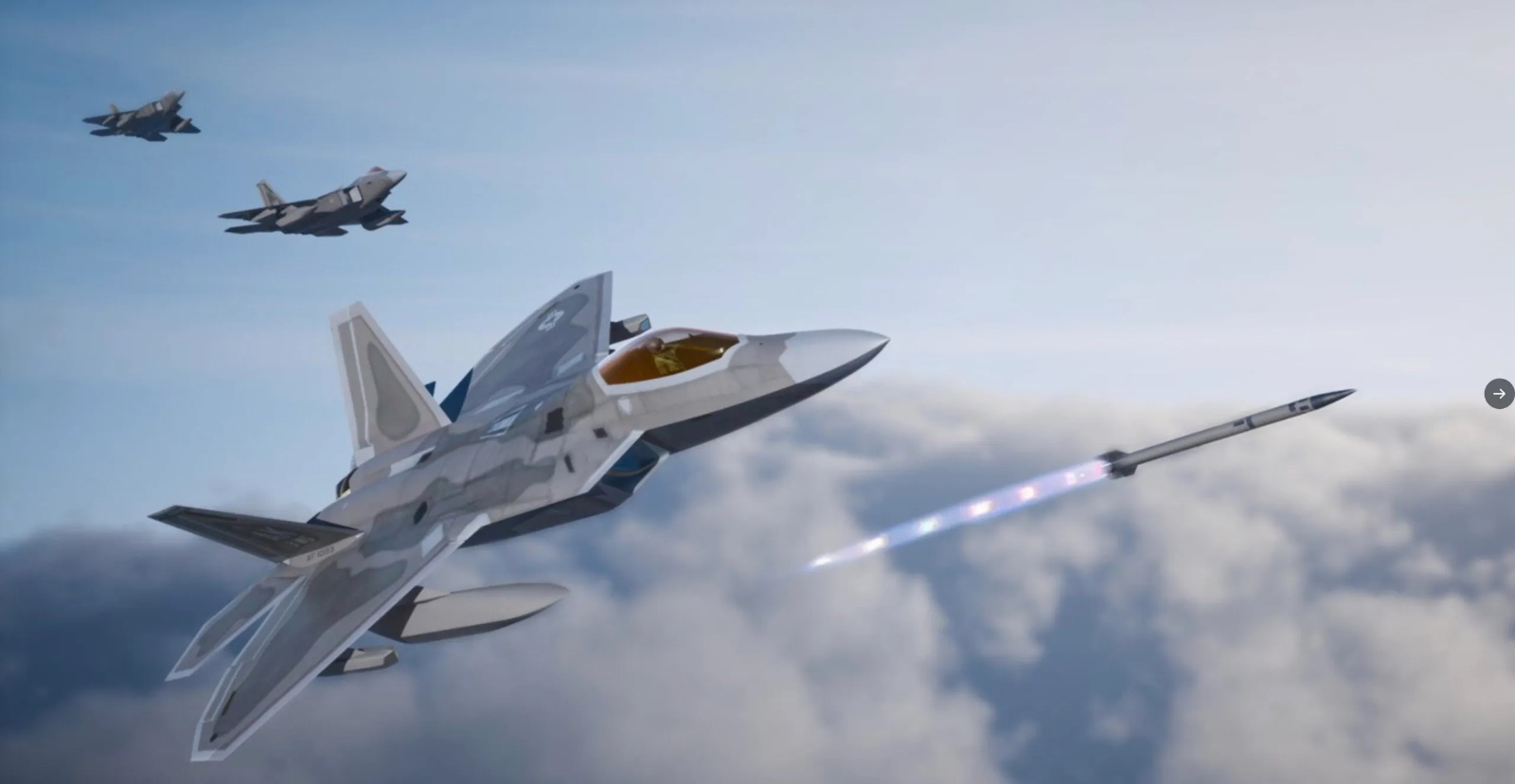
AIM-260 JATM seen in a US Navy rendering published in 2025
Australia’s official announcement to purchase the AIM-260 JATM once again validates the strength of these strategic ties. “The acquisition of the AIM-260 JATM will provide Air Force platforms with a credible deterrent against airborne targets, complementing existing air-to-air missile capabilities and other surface-based missile capabilities across the Australian Defense Force (ADF). It will also further enhance Australia’s interoperability with the United States,” the Australian Department of Defense said in a statement.
More significantly, though, it marks a major improvement in the RAAF’s combat capacity in the face of China’s growing Indo-Pacific security threat.
AIM-260 JATM
AIM-260 JATM Against China
Although the announcement did not name China, Australian strategic documents and officials consistently identify Beijing’s rapid military expansion as the primary security challenge in the Indo-Pacific.
The 2023 Defense Strategic Review described China’s build-up as “the largest and most ambitious of any country since the end of the Second World War,” conducted “without transparency or reassurance,” and noted that Chinese actions in the South China Sea undermine the rules-based order in ways that affect Australian interests.
Australian leaders have repeatedly flagged China’s coercive behavior in territorial disputes, unsafe intercepts of ships and aircraft, and growing Chinese influence in the South Pacific, which Canberra has historically considered its own sphere of influence.
Experts have also suggested that Australia may get dragged into a US-China conflict in the future. Although Canberra has never officially confirmed that it would join forces with the US military in a military contingency, it hosts several US military facilities that may come under attack by Chinese long-range missiles, as explained in detail by a previous EurAsian Times report.
Although ties between Australia and China have stabilized in recent times, Canberra has committed billions of dollars to acquire advanced, high-tech missiles as part of a broader strategy to safeguard the nation, deter potential adversaries, and defend national interests.
Marles had earlier highlighted that this involves turning Australia into a “porcupine island,” fully armed with deadly weapons to thwart any attacking nation. The acquisition of the AIM-120 JATM aligns with this approach, especially given that China has developed an array of long-range air-to-air missiles in recent years.
The AIM-260 JATM is considered a response to the Chinese PL-15 air-to-air missile. China has purportedly produced and deployed at least 500 J-20 fighter jets, each capable of carrying up to 8 PL-15 missiles that have a range of 200 to 300 kilometers.
Additionally, the Chinese People’s Liberation Army (PLA) is developing very long-range air-to-air missiles (VLRAAM) that can strike targets. A previous Pentagon report stated that China already has the PL-17 VLRAAM and is working on a more advanced long-range missile, PL-XX or PL-21.
In contrast, the existing AIM-120 AMRAAM in the RAAF arsenal has a range of about 150-160 kilometers, even in its most advanced iteration.
With long-range, greater kinematic performance and improved guidance, the AIM-260 JATM will allow Australian fighters to engage threats earlier and from safer distances. Moreover, it could be integrated on multiple RAAF jets, giving the service a common advanced air-to-air weapon across its main combat aircraft.
The AIM-260 JATM Is Coming
The existence of the AIM-260 JATM was initially confirmed in 2019 during an Air Force Life Cycle Management Center industry conference. Due to its sensitivity, the AIM-260 JATM is classified as a Special Access Program (SAP), and details about the missile remain scarce.
In 2022, General Mark Kelly, the head of the United States Air Force’s Air Combat Command, shared an artist’s concept of the Lockheed Martin F-22 firing an AIM-260 JATM.
More recently, the US Navy publicly revealed the rendering of the missile in February 2025. At the time, experts inferred that it was comparable in appearance to the AIM-120 medium-range air-to-air missile, including in size.
Nonetheless, the AIM-260 appears to have a larger rocket motor section and no mid-body surfaces, unlike the AIM-120.
Although little is known about the covert missile, reports suggest it will be powered by dual-pulse rocket motors or ramjets to increase its range and performance.
Experts anticipate that the AIM-260 will have an advanced multi-mode seeker system that may include infrared imaging and active radar. They claim that the dual-seeker system will improve resilience to electronic warfare countermeasures and increase accuracy.
Like the AIM-120D-3 AMRAAM derivative, the AIM-260 is anticipated to have a two-way datalink. This feature would greatly increase the missile’s efficacy in networked battle by enabling mid-course targeting upgrades or re-targeting.
The missile is intended to keep valuable airborne assets, such as tankers and AEW&C aircraft, safe deep into contested airspace. It would also be designed, according to analysts, to combat stealth aircraft and to operate in disputed areas with heavy electronic jamming, thereby increasing its effectiveness against enemies such as China and Russia.
The US is purportedly advancing work on this missile because the fire-and-forget strike advantage is often decisive in modern combat.
The JATM “is the number-one air-delivered weapon priority for both the Air Force and the Navy, and out-prioritizes other weapon system improvements and modernization efforts on any fielded aircraft,” the USAF earlier stated.
After initially being introduced with the USAF’s Raptor, the missile will eventually be fitted to the F-35 and the Navy’s F/A-18E/F. In fact, the AIM-260 JATM will also likely arm the US Navy’s F-47 sixth-generation combat aircraft, which is currently under development.
Contact the author at sakshi.tiwari13 (at) outlook.com
For decades, the US has maintained an unassailable lead in aircraft carriers.
The US currently operates 11 flattops, all of them nuclear-powered. China is a distant second with three aircraft carriers, none of them nuclear-powered.
The US operates roughly half of the world’s true aircraft carriers. However, for years, the security analysts in Washington have been wargaming for a nightmarish scenario.
What if the US’s carrier fleet is not a force multiplier, but a strategic vulnerability? Or, to put it another way, can Beijing sink the US Navy’s aircraft carriers?
These questions have assumed significance ever since China claimed to have developed anti-ship ballistic missiles (ASBMs), the DF‑21D and DF‑26B, also known as “carrier-killers.”
These ASBMs are part of China’s broader A2/AD (Anti-Access and Area Denial) architecture intended to push U.S. carrier strike groups (CSGs) beyond the first island chain.
In the last decade, several wargames, research studies, think‑tank reports, and opinion columns have wondered whether carriers are becoming obsolete, the new battleships – large, complex, and expensive systems – but vulnerable to cheap, long‑range missiles.
But a new Center for Strategic & International Studies (CSIS) research paper has flipped the script: if US carriers are vulnerable, why can’t Washington also hold China’s new carriers at risk?
Are Aircraft Carriers Becoming Obsolete?
In 2023, the South China Morning Post reported that researchers at North University of China claimed that it took an average of only 24 hypersonic missiles to sink the USS Gerald R. Ford and its five escort ships across 20 simulated battles.
From an economic point of view, that would imply that for every $1 China spends on new classes of low-cost hypersonic missiles, it could destroy $10,858.59 worth of U.S. capital ships.
A British study published in 2024 found that their carriers – the HMS Queen Elizabeth and HMS Prince of Wales – were similarly at risk.
Not just think tanks, even senior US government figures have expressed similar fears.
US Secretary of War Pete Hegseth said in a recent podcast interview: In wargames against China, ‘We lose every time.”
The secretary went further, linking US defeat to the vulnerability of aircraft carriers: “We know what our real capability [is]…If our whole power projection platform is aircraft carriers and the ability to project power that way strategically around the globe . . . and if 15 hypersonic missiles can take out our 10 aircraft carriers in the first 20 minutes of a conflict, what
does that look like?”
But if US carriers are so vulnerable, why can’t Washington bring China’s expanding carrier fleet within its firing range?
China’s Expanding Carrier Fleet
After the US, China has the world’s second-largest carrier fleet.
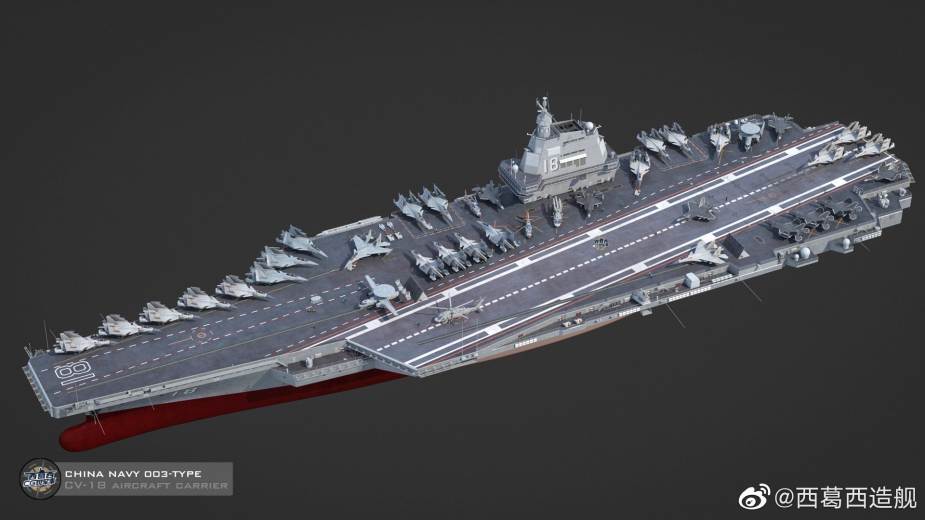
Beijing currently operates a fleet of three aircraft carriers. China launched its third carrier, Fujian (Type 003), an 80,000‑ton supercarrier capable of launching a mix of over 50 fourth- and fifth-generation fighters, and key enablers such as KJ-600 airborne early warning and control aircraft.
China also launched Sichuan (Type 076), a 40,000‑ton amphibious assault ship also suspected of serving as a drone carrier capable of using an electromagnetic (EM) catapult to launch GJ-11 stealth unmanned combat aircraft.
A fourth carrier (Type 004) is undergoing construction. Satellite imagery suggests that this will likely be China’s largest and first nuclear-powered carrier.
The Fujian is more technically advanced than the other Chinese carriers.
China plans to construct six additional aircraft carriers by 2035, bringing its total carrier force up to nine, according to the Department of War (DOW).
China’s growing carrier fleet is a force multiplier; however, it could also become a strategic vulnerability.
The Vulnerability of the US Aircraft Carriers
China recognized early that the US ability to project force globally rests on its fleet of 11 nuclear-powered aircraft carriers. It also recognized that it would be decades before it could match Washington in carrier fleet strength.
Therefore, China focused its energy on developing weapons systems that could negate the US advantage and developed anti-ship ballistic missiles (ASBMs).
Recent pieces have argued that Chinese hypersonic and ballistic missiles, supported by an increasingly sophisticated space‑ and AI‑enabled “kill web,” could force US and allied carriers so far offshore that their air wings become operationally irrelevant.
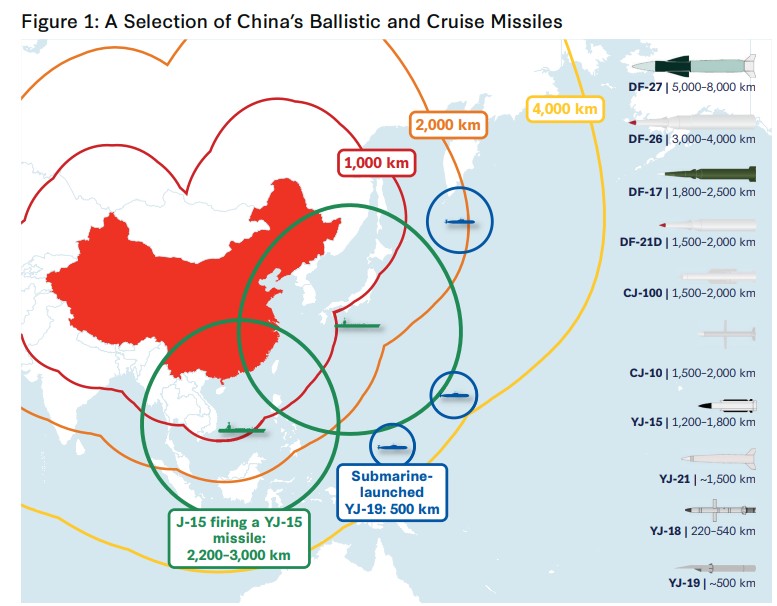
For example, the YJ-21 is a Chinese air-launched medium-range ballistic missile specifically designed to strike high-value assets such as carriers. This missile can be launched from fighters and unmanned combat aerial vehicles (UCAVs) and uses redundant guidance systems that make it difficult to jam; a variant can be fired from Type 055 destroyers, though this may have been the YJ-20.
Source: Adapted from CSIS Missile Defense Project, “Missiles of China,” CSIS, last modified March 18, 2026. Credits CSIS.
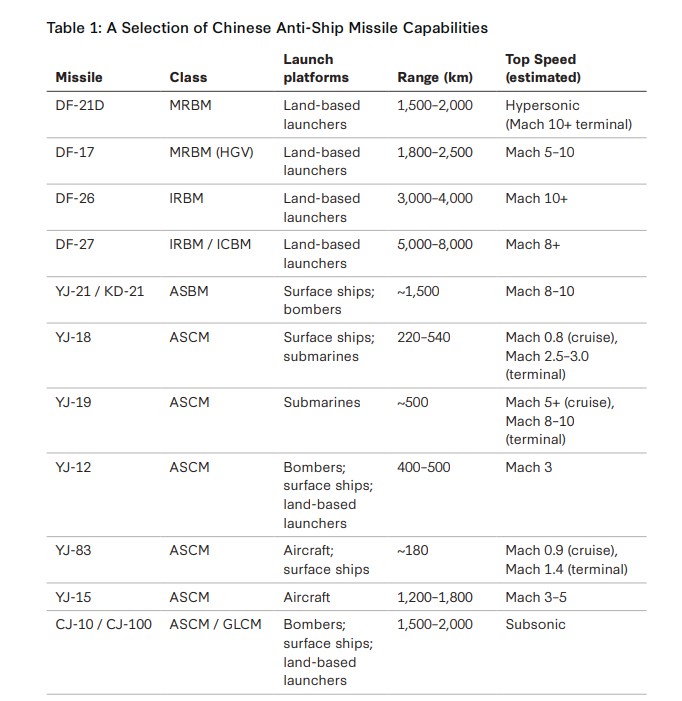
Combined with older missiles such as the DF-26, colloquially known as “carrier-killers” with a range of up to around 4,000 kilometers (km), and the DF-17, which has a shorter range of up to around 2,500 km but is designed to strike high-value assets and evade US interceptors (e.g., THAAD and Patriot), China has an arsenal of systems capable of hypersonic speeds that can hold carriers at risk up to 2,500 miles away.
A Selection of Chinese Anti-Ship Missile Capabilities. Credits CSIS.
However, the current discussion in Washington often frames carriers as unique to the United States and uniquely vulnerable, while underplaying the fact that China is now building its own large-deck, network‑enabled capital ships that are at least as targetable as the U.S. ships China aims to threaten.
How the U.S. Can Make China’s Carriers Vulnerable?
According to the CSIS paper, Washington could follow a five-pronged strategy to make China’s growing carrier fleet vulnerable.
“Despite various improvements, PLAN surface ASW, fixed‑wing ASW, and undersea sensing are still patchy compared with U.S. and Japanese capabilities, particularly in noisy littorals and chokepoints,” it said.
A cost‑effective way to threaten China’s carriers is through a layered subsurface screen built around the following assets:
■ U.S. nuclear attack submarines (SSNs) operating at range.
■ Allied diesel-electric submarines from Australia, Japan, South Korea, and potentially the Philippines, including submarines equipped with air-independent propulsion where available.
■ Shared undersea sensing networks and common heavyweight torpedoes, enabling coordinated ambush of PLAN carrier groups in transit corridors rather than near the Chinese coast.
■ Shared unmanned undersea vehicles (UUVs) capable of both conducting intelligence collection and limited strike missions against PLAN ships.
The key is to turn the “undersea domain into a continuous threat envelope that forces Beijing to invest heavily in escorts, ASW aviation, and fixed sensors simply to move carriers out of its home waters.”
Further, this approach also leverages existing areas of production and operational excellence from various U.S. allies, making implementation faster and cheaper than more novel approaches.
(2) Land-based maritime strike networks: China’s A2/AD system is, in part, a land‑based missile problem. The United States and its regional partners can mirror that logic by building a distributed, multinational anti‑ship missile network on land from Japan through the Philippines and, where politically feasible, into the South Pacific and even around key maritime terrain globally, including the following:
■ U.S. Marine Corps and Army units fielding Navy-Marine Expeditionary Ship Interdiction System (NMESIS) missile systems, Mid‑Range Capability (i.e., Typhon batteries), and Precision Strike Missiles (PrSMs) adapted to strike ships and a host of information warfare systems (e.g., cyber, space, electronic warfare, and inform/influence activities) stationed as a
littoral rotational force.
■ Australian, Japanese, and potentially Philippine coastal missile batteries (e.g., upgraded Type 12, BrahMos, and naval strike missiles) integrated into common fire control and ISR architectures.
■ Pre‑negotiated access, dispersal sites, and logistics arrangements to ensure these units can survive Chinese Air Force and Rocket Force (PLAAF/PLARF) strikes and continue to generate maritime fires.
Such a network can threaten PLAN carriers during deployment, not just at the point of conflict.
Moreover, “the mere expectation that upon entering the Philippine Sea, carriers such as the Fujian or Sichuan will face dense, land‑based anti‑ship fires backed by allied ISR raises the perceived risk of using them as front‑line tools of coercion.”
(3) Long-range air and space-enabled fires: The United States and its allies can conduct long-range strikes using a mix of bombers, fighters, and maritime patrol aircraft:
■ U.S. Air Force bombers and Navy aircraft armed with anti-ship missiles, such as LRASM and future hypersonic anti-ship weapons, connected to a complex battle network that both supports the attack and degrades enemy sensors.
■ Allied F‑35 fleets (from Australia, Japan, and South Korea) using low‑observable sensors to contribute to the maritime picture and deliver their own long‑range anti‑ship munitions.
■ A mix of kinetic and non-kinetic attack vectors with a conscious emphasis on mission kills, specifically by degrading flight‑deck operations, destroying aviation fuel and ordnance handling, or disabling key escorts and logistics ships supporting the carrier, rather than only aiming for catastrophic hull loss.
This approach is particularly suited to large military powers such as the United States but can be partially adopted by states with smaller budgets by investing in a limited number of fifth‑generation or advanced fourth‑generation aircraft plus modern anti‑ship missiles.
(4) Cyber-electromagnetic disruption: PLAN CSGs are nodes within a broader battle network. Their combat value depends on complex links to off‑board ISR, satellite navigation, command networks, and electromagnetic attack and defense platforms.
By disrupting the carriers’ connections to this broader network, the United States and its allies can deny the PLAN access to the enablers that make its forces more combat-capable.
Rather than treating ships solely as physical targets, U.S. and allied planners should prioritize EM and cyber operations.
(5) Unmanned swarm and port-denial campaigns: The Ukraine war has shown how even a state with a modest navy can use unmanned surface vessels (USVs), unmanned aerial vehicles, and shore‑based missiles to attrite a larger fleet.
Ukraine has successfully forced Russia to pull major units out of Sevastopol and turned the Black Sea into a contested battlespace.
While the terrain of the Pacific is not identical to the Black Sea, a similar logic can be applied to PLAN carriers, especially in the first island chain.
Swarms of relatively low‑cost USVs and loitering munitions can attack ships in port, logistic hubs, and fixed defenses, driving carriers to relocate to more distant, less convenient bases.
The central idea is to make a carrier’s routine employment around Taiwan, the South China Sea, or beyond the first island chain appear prohibitively risky.
By following these steps, the U.S. and its allies could blunt the advantage of China’s growing carrier fleet.
While China has for years invested in AA/AD vectors to make the U.S. carriers vulnerable, Washington could flip the script and make Beijing’s own carriers equally vulnerable.
Sumit Ahlawat has over a decade of experience in news media. He has worked with Press Trust of India, Times Now, Zee News, Economic Times, and Microsoft News. He holds a Master’s Degree in International Media and Modern History from the University of Sheffield, UK.
He can be reached at ahlawat.sumit85 (at) gmail.com
China’s state broadcaster recently released the first footage showing multiple DF-17 hypersonic missiles in a single frame, in what appears to be a deliberate power-projection message. The display comes at a time when hypersonic weapons have proven their lethality and ability to penetrate air defenses in the Ukraine and Iran wars.
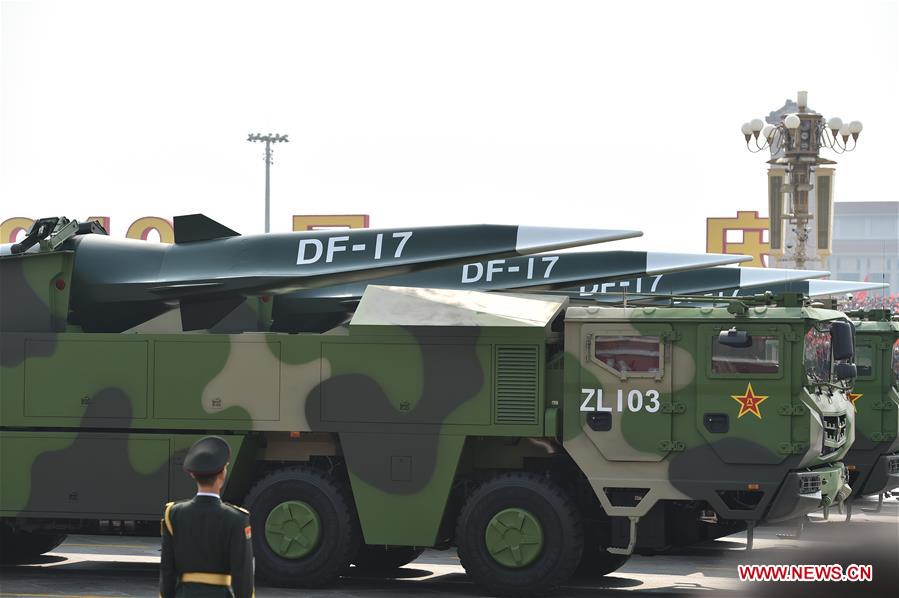
On August 3, state-owned CCTV aired video from the PLA documentary series Zhìshèng (“Victory”) featuring at least six DF-17 transporter-erector-launchers (TELs) of the People’s Liberation Army Rocket Force (PLARF) together.
Military affairs expert Zhang Junshe told the Global Times that the display indicates the system has been mass-deployed and is reliably placed on combat duty.
Zhang emphasized that the DF-17 is a vital weapon that can alter the rules of modern air defense warfare, as it can precisely hit adversary forward air defense installations and strategic command targets by leveraging its hypersonic penetration advantage.
Typically, hypersonic weapons are very hard to intercept by conventional missile defense systems due to two main reasons: 1) these weapons travel faster than Mach 5, or five times the speed of sound, equivalent to approximately 100 kilometers (60 miles) per minute; 2) these are highly maneuverable weapons that follow an unpredictable trajectory.
Only a few countries have developed and combat-deployed hypersonic weapons, including China, Russia, and sanctioned countries like Iran and North Korea.
Of these, both Russia and Iran have used these weapons in combat with Ukraine and the United States, respectively.
On its part, Ukraine has intercepted some Russian Kinzhal hypersonic missiles with Patriot batteries.
However, these hypersonic missiles have been wreaking havoc on Ukrainian cities in recent weeks, as earlier reported by the EurAsian Times. Moscow purportedly exploits a gap in its air defense coverage and launches Kinzhal and Tsirkon hypersonic missiles to cause devastation in the embattled country. Additionally, Moscow has struck Ukraine with the Oreshnik hypersonic missile, which Ukraine has been unable to shoot down so far.
Meanwhile, Iran claimed to have fired hypersonic missiles (Fattah-class) on Israeli cities and US military bases across the Middle East during the hostilities earlier this year.
However, independent verification of claimed terminal speeds, maneuver performance, and interception rates remains limited. Previous video footage from Tel Aviv and other Israeli cities showed Iranian missiles dodging as many as 10 interceptor missiles and hitting their targets at hypersonic speeds.
Six DF-17 hypersonic missile launch vehicles of the PLARF appeared together in the same frame in footage broadcast by CCTV (Photo Courtesy of Global Times)
Notably, the latest footage comes more than a month after CCTV published footage of a DF-17 hypersonic glide vehicle missile launch in June 2026. At the time, analysts noted that China was sending a deterrence message by emphasizing its strike capability to the United States, particularly amid tensions in the Taiwan Strait, the First Island Chain, and the South China Sea.
The same argument may apply to the latest footage, particularly since the DF-17 is the world’s first medium-range missile to field a hypersonic glide vehicle (HGV).
China has amassed a variety of deadly hypersonic missiles, including the DF-17, DF-27, YJ-21, and YJ-20. These weapons are part of the formidable Chinese A2/AD (Anti-Access/Area Denial) network along its coastline.
Chinese experts believe that even the most advanced missile defenses in the US, including the THAAD (Terminal High Altitude Air Defense) and PAC-3 Patriot, are not effective against hypersonic weapons.
“Existing US missile defenses can theoretically intercept some hypersonic weapons in their final stage, but high speed, maneuverability, and stealth make it very difficult,” read a previous Chinese paper titled “Tactical Missile Technology” on the ability of US missile defense systems to intercept hypersonic weapons.
The US and allied forces are developing countermeasures, including improved sensors, the Glide Phase Interceptor, SM-6 variants, and other technologies, but substantial challenges remain in tracking and engaging maneuvering hypersonic vehicles at scale for now.
Chinese experts have noted that the DF-17 is a potent strategic deterrent because it is a conventional, medium-range missile capable of reaching important targets in the first island chain—stretching from the Japanese archipelago through Taiwan to the Philippines—including strategic sites in Japan and other areas.
Chinese experts have previously noted that the missile may reach as far as parts of the Second Island Chain, extending from Japan through Guam, Micronesia, and Palau. They believe that coordinated multi-vehicle salvo launches may play a crucial role in both launch site security and strike effectiveness—compounding the threats faced by the US military forces in the Indo-Pacific region.
DF-17’s Mass Deployment
The DF-17 is China’s first operational road-mobile medium-range ballistic missile (MRBM) equipped with a hypersonic glide vehicle (HGV).
With a range of 1,800–2,500 kilometers, it is Beijing’s most operationally mature hypersonic strike system and is widely regarded as capable of penetrating nearly any missile defense network worldwide.
Like ICBMs, hypersonic glide weapons are launched by rockets high into the atmosphere. However, unlike ICBMs, whose warheads rely primarily on gravity once they begin their descent, hypersonic glide weapons dive back toward Earth sooner, then flatten their flight path. They make continuous course corrections to stay on target while traveling at speeds up to 12 times the speed of sound, using onboard navigation systems, making them much harder to detect by the adversary and allowing them to suppress enemy missile defenses at an early stage, clearing the way for follow-on strikes.
China’s DF-17 hypersonic missiles. (Image: China Military Online)
The DF-17 made its public debut in October 2019 at a military parade that marked the 70th anniversary of Communist Party rule in China.
In 2021, the PLA conducted its first known hypersonic test involving the DF-17 glide vehicle, rattling the United States. Later, the Pentagon published the China’s Military Power 2022 report, referring to the DF-17 as a critical threat in the Western Pacific.
“The DF-17 passed several tests successfully and is deployed operationally. While the DF-17 is primarily a conventional platform, it may be equipped with nuclear warheads,” the report added.
Zhang pointed out that the DF-17 can avoid adversary targeting and reconnaissance because it does not depend on fixed launch silos.
Moreover, DF-17’s powerful anti-jamming and precision strike capabilities greatly increase its battlefield survivability and make it well-suited for a variety of complex field combat scenarios, as it is difficult for adversary satellites to detect its operational patterns.
“In addition to a longer vehicle body and more wheels [of the TEL], the biggest change in the DF-17 is the shape of the missile itself. Unlike the cone-shaped warhead we are familiar with from past models, the DF-17’s warhead has undergone significant changes and now features four wings and a tail fin,” Gong Chunyu, a training staff officer from the DF-17 conventional missile formation, was quoted as saying by CCTV earlier.
“This design reflects a more scientific and advanced concept, with the missile capable of flexible and varied flight trajectories and greatly enhanced penetration capabilities,” he added.
It may be noted that China’s public releases of multiple TELs in formation and field launches demonstrate that the system is no longer experimental or small-scale, and it signifies distributed, mobile, ready forces that could hunt US-based targets quickly.
The missile’s range and penetration capability are repeatedly linked to targets in the western Pacific. Analysts interpret this as reinforcing China’s ability to hold at risk U.S. and allied bases, airfields, command nodes, and surface ships in a Taiwan or regional contingency—raising the cost of a US intervention.
Contact the author at sakshi.tiwari13 (at) outlook.com
The United States and South Korea have joined hands to locate the wreckage of two World War-era aircraft that crashed into the sea more than seven decades ago, during the height of the Korean War.
The two allies began a combined underwater excavation project on August 3 in waters off South Korea’s eastern coast in an effort to locate the wreckage of American aircraft that went down during the 1950–53 Korean War, Seoul’s Ministry of Defense (MoD) stated.
The effort, which involves the US Defense POW/MIA Accounting Agency (DPAA) and the ministry’s Agency for KIA Recovery & Identification, will be carried out in Gangneung and Yangyang in Gangwon until August 28.
The MoD noted that about 40 people would be sent for the project, including members of the Korean Navy’s First Fleet and the Air Force’s 18th Fighter Wing, as well as American underwater planners and divers.
The divers will try locating the wreckage of a US F4U Corsair fighter that reportedly crashed in waters off Yangyang County in February 1952 while escorting another damaged attack aircraft.
Following this, the research team will focus on recovering the wreckage of the Curtiss C-46 Commando, a US military transport aircraft that crashed twice in the Gangneung area in October and November of 1952, as reported by Yonhap News Agency.
In the first instance, the plane crash left 17 people missing, while in the November incident, two people were found dead and seven were reported missing.
It is noteworthy that the F4U Corsair played a major role as a fighter-bomber and close air support (CAS) aircraft for the US Navy and Marine Corps during the Korean War, despite being a piston-engine design in the early jet age. Corsairs scored a modest number of aerial victories—around 10 total credited to Navy and Marine pilots—according to some accounts. However, the Corsairs also unfortunately suffered significant losses, primarily due to intense anti-aircraft fire at low altitude during their CAS role.
According to some sources, a F4U-4B Corsair of the Fighter Squadron 53 crashed into the sea on 21 February, 1952 while escorting a flak-damaged US aircraft toward Sokcho-ri Airfield (K-50). The pilot was purportedly flying through a snowstorm, which caused disorientation, and the aircraft suddenly swerved and crashed into the sea, killing the pilot.
Vought F4U-4 Corsair fighters of U.S. Navy fighter squadrons VF-114 Executioners (V-4XX) and VF-113 Stingers (V-3XX, on the catapult), assigned to Carrier Air Group 11 (CVG-11), on the aircraft carrier USS Philippine Sea (CV-47) during the Korean War in 1951/52- Wikimedia Commons
Separately, the Curtiss C-46 Commando—a twin-engine, heavy-lift cargo and troop carrier that had already proven itself in World War II—was extensively used to transport men and materiel during the Korean War.
Although the reports did not identify the exact aircraft the researchers are looking for, some sources note that a C-46D-10-CU (serial 44-77538) crashed into the sea a few kilometers offshore on October 16, 1952, shortly after takeoff from Kangnung (K-18) en route to Pohang. Meanwhile, a second C-46D-15-CU (serial 44-78114) crashed approximately 200 yards past the end of the runway on November 15, 1952, after an engine failure during a courier flight on the same route.
The EurAsian Times, however, could not verify the exact aircraft the US and South Korean teams are searching for or the cause of their crashes.
The combined survey team will use maritime unmanned systems and underwater detection equipment to carry out the search. Once potential sites are identified, divers or remote sensing technology will examine the locations, the Korean media reported.
The initiative to find the old relics is significant but not rare.Several archaic World War II aircraft, aircraft carriers, and ship wrecks lost in combat have been recovered by US entities, including the US Navy, the DPAA, Project Recover, and private American recovery groups.These efforts often focus on accounting for missing aircrew, in line with the US military’s motto—“Leave no one behind.” However, some recoveries are meant for historical preservation or museum restoration.
Discoveries In Recent Years
Earlier this year, a team of maritime and naval conservation organizations embarked on a quest to recover a World War II torpedo bomber—TBD-1 Devastator— from the sea floor, where it has rested for more than 80 years.
The US Naval History and Heritage Command partnered with the Air and Sea Heritage Foundation to recover the aircraft that ditched off Jaluit Atoll in the Marshall Islands in February 1942 from the USS Yorktown aircraft carrier.
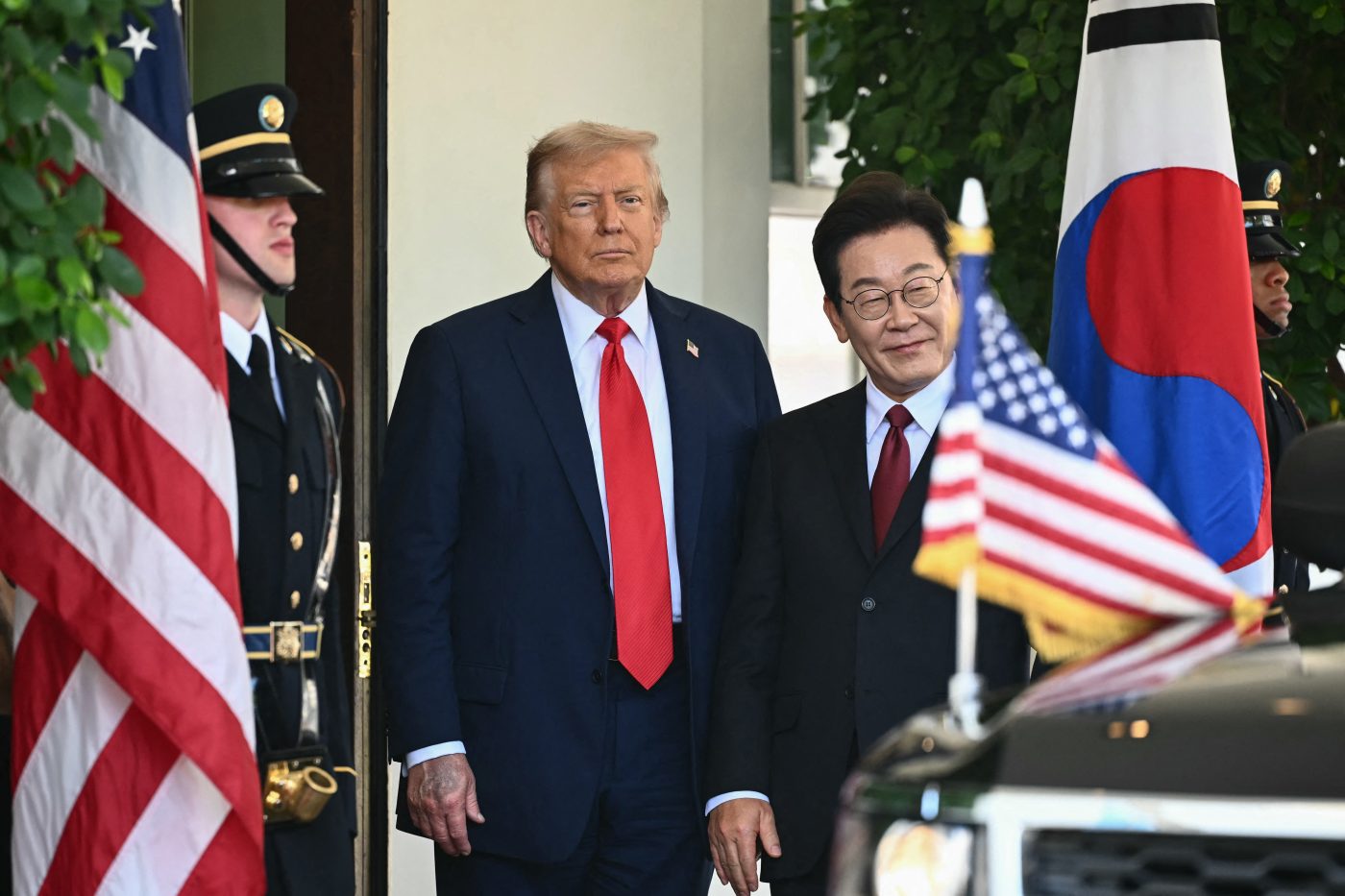
US President Donald Trump greets South Korean President Lee Jae Myung as he arrives at the West Wing entrance of the White House in Washington, DC, on August 25, 2025. Trump on Monday suggested that a “purge or revolution” was underway in South Korea, hours before new President Lee Jae Myung was due at the White House. He did not specify to what he was referring but said he would bring it up with Lee. (Photo by Mandel NGAN / AFP)
Similarly, a B-17 Flying Fortress that went down in the Baltic Sea in 1943 during intense fighting against the Nazis was located and recovered by researchers from Texas A&M University near Denmark in February 2026.
In 2017, Project Recover located the debris of the B-24 bomber that was shot down by anti-aircraft fire in 1944 near Hansa Bay, Papua New Guinea. In 2023, DPAA conducted its deepest underwater recovery mission to date, with elite US Navy divers descending about 200 feet underwater in a pressurized bell. They recovered some remains, dog tags, a bombardier’s ring, and other items, according to reports.
In 2019, researchers managed to locate the final resting place of the USS Hornet, the World War II aircraft carrier sunk in a 1942 battle with the Japanese Navy. The research ship R/V Petrel reportedly discovered the carrier in waters off the Solomon Islands at a depth of about 17,500 feet. The carrier was seen lying upright and almost undamaged on the deep and barren ocean below in overhead sonar photos
In 2018, a search team headed by Microsoft co-founder Paul Allen discovered wreckage from the USS Lexington, an aircraft carrier that sank during World War II, in the Coral Sea. The R/V Petrel, the team’s research vessel, discovered the wreckage approximately 800 kilometers off the eastern coast of Australia, at a depth of 3,000 meters.
More recently, the USmanaged to find the wreckage of a civilian aircraft, Pan Am “Clipper Endeavor”, which mysteriously crashed in Puerto Rico in 1952, killing 52 people. The operation was led by the Air/Sea Heritage Foundation, in partnership with others, including Discovery Channel’s “Expedition Unknown.”
It is worth noting that these are just a few of many notable discoveries that the US has made in collaboration with other agencies and partners from sea beds far from its own shores, and do not encapsulate the whole picture of these efforts.
Contact the author at sakshi.tiwari13 (at) outlook.com
Japan must reinforce and transform its defense capabilities with a stronger “sense of urgency and crisis” than ever before, Defense Minister Shinjiro Koizumi said Tuesday, as Tokyo released its annual white paper that once again flags risks from China, North Korea and Russia.
In the preface to the 598-page Defense of Japan report, Koizumi wrote that the security environment surrounding the country is now the most severe and complex since the end of World War II.
He pointed to the rapid military build-ups by Beijing and Pyongyang, their expanding cooperation with Moscow, and the new forms of warfare demonstrated by Russia’s invasion of Ukraine, warning that a serious crisis capable of shaking the postwar order cannot be ruled out in East Asia.
Japan is already accelerating its military modernization. Defense spending has been pushed higher, with the budget for the current fiscal year exceeding 9 trillion yen for the first time, while Tokyo deepens security partnerships across the Indo-Pacific.
Missile launchers are being stationed on remote southwestern islands closer to potential flashpoints, the Self-Defence Forces are moving to field longer-range “counterstrike” weapons that could hit targets beyond Japanese territory, and rules restricting arms exports have been loosened to allow greater transfers of equipment and technology to like-minded partners.
In the Indo-Pacific, “not only are China and North Korea further strengthening their military capabilities, China-Russia and Russia-North Korea are also reinforcing their cooperation,” he also added.
The new white paper said China was “intensifying its activities” in the region around Japan, “extending beyond the so-called first island chain to the second island chain”.
It listed a series of incidents in 2025, including activities by Chinese aircraft carriers and the “unusual close approach” by Chinese aircraft to Japanese planes in two incidents in June and July.
Japanese jets scrambled 595 times in the year to March 31, 2026, including 366 sorties against Chinese aircraft and 214 for Russian planes. This compares to 704 the previous year and was the fewest since at least 2021.
Japan decided in April to lift its self-imposed ban on weapons exports, but the white paper highlighted issues in the country’s production base that could jeopardize procurement and innovation.
Koizumi also said that he and US counterpart Pete Hegseth had “exchanged candid views” on the “unwavering” US-Japan alliance, while also increasing security cooperation with the Philippines, Australia and South Korea to realize a “Free and Open Indo-Pacific”.
“As the security environment becomes increasingly and rapidly severe, what is required now is to strengthen resilience against crises all across the entire Indo-Pacific region,” Koizumi said.
“In order to do so, Japan will build and expand multilayered networks among allies and like-minded countries, and enhance interconnectivity with like-minded countries and others in every area.”
Meanwhile, China has repeatedly voiced concern at what it sees as a return to “new militarism” by Tokyo.
After World War II, Japan adopted a pacifist constitution in 1947, with Article 9 renouncing war as a sovereign right and prohibiting the maintenance of military forces, seeking a peaceful global order.
“Aspiring sincerely to an international peace based on justice and order, the Japanese people forever renounce war as a sovereign right of the nation and the threat or use of force as a means of settling international disputes. In order to accomplish the aim of the preceding paragraph, land, sea, and air forces, as well as other war potential, will never be maintained. The right of belligerency of the state will not be recognized,” reads Article 9 of the Japanese Constitution.
Japan, the only victim of a nuclear attack in history, also adopted the “Three Non-Nuclear Principles” of non-possession, non-production, and non-introduction of atomic weapons. Even though all five victors of the Second World War built their nuclear weapons.
Japan relinquished wars of aggression, militaristic societies, and the production of nuclear weapons. In the post-war era, Tokyo directed the nationalistic impulses of its country toward becoming an economic powerhouse and technology leader.
Japan became the world’s second-largest economy in 1990 after the disintegration of the Soviet Union.
China’s military muscle-flexing in the South China Sea, North Korea’s missile proliferation, and Japan’s strained ties with Russia, especially after the Ukraine invasion, are forcing Japan to shed its post-war inhibitions and adopt a more assertive defense role.
Former Prime Minister Shinzo Abe played a critical role in Japan’s transformation. Abe had raised the prospect of the country hosting US nuclear weapons facilities on Japanese soil, boosted defense spending, and called for a strong foreign and security policy.
Under Abe, Japan passed legislation allowing the Japan Self-Defense Forces to engage in overseas combat missions. Essentially, this bill allows Japan’s armed forces to help defend its allies, like America, even if Japan itself isn’t under attack. The Japanese Constitution, following the devastation from the war, previously limited Japan’s forces to self-defense within its borders.
In December 2024, Japan approved a 9.4% increase in defense spending for FY2025. This marked another record figure for the 11th year in a row for Japan’s national defense budget. Japan, which has historically spent less than 1% of its GDP on defense, has also promised to raise it to 2% of its GDP by 2027.
This defense spending hike was part of the Defense Buildup Program, which outlines US$273 billion in defense spending over the five-year period through FY2027.
Japan is also building alliances with China’s competitors. It has developed and promoted military ties with several countries in and beyond the Indo-Pacific region. It has strengthened security cooperation with Australia and India—both members of Quad alongside Japan and the USA—through high-level dialogues, joint military exercises, intelligence sharing, and mutual access to each other’s military facilities.
In December 2022, Japan announced a joint program with Italy and the United Kingdom to develop a new sixth-generation combat aircraft—the Global Combat Air Program (GCAP).
Japan is developing two hypersonic weapon concepts: the Hypersonic Cruise Missile (HCM) and the Hyper Velocity Gliding Projectile (HVGP), as well as long-range missiles.
Japan’s Ministry of Defense (MOD) also conducted flight tests for its island defense hypersonic glide vehicle (HGV). Four test launches were conducted at a site in California, with one launch in August 2024, two in November 2024, and one in January 2025.
Japan’s new 10kW-class high-power laser electronic warfare (EW) vehicle recently entered service to counter aerial and missile threats, including hostile unmanned aerial vehicles (UAVs) and low-altitude missile systems.
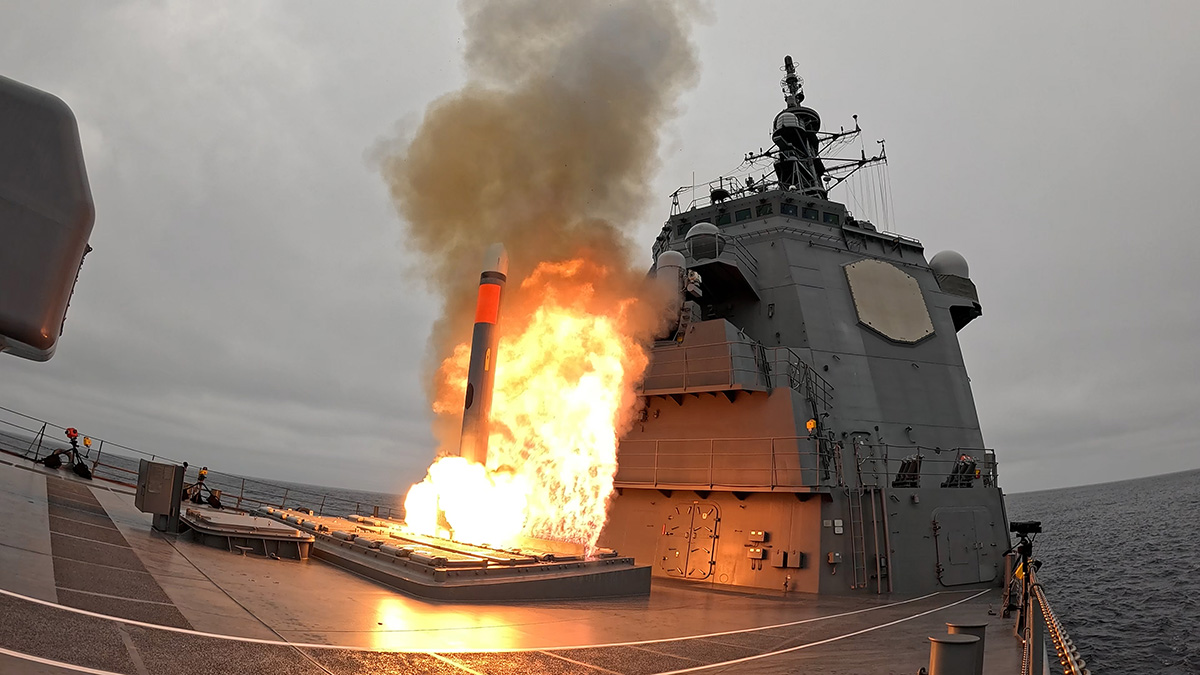
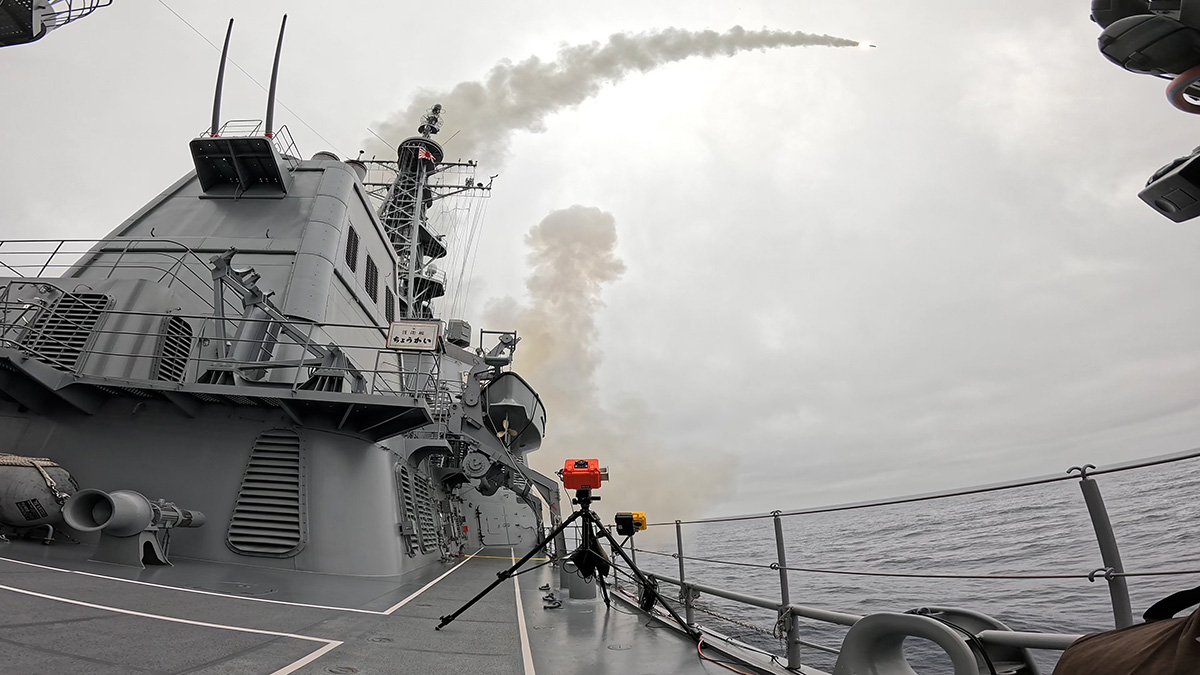
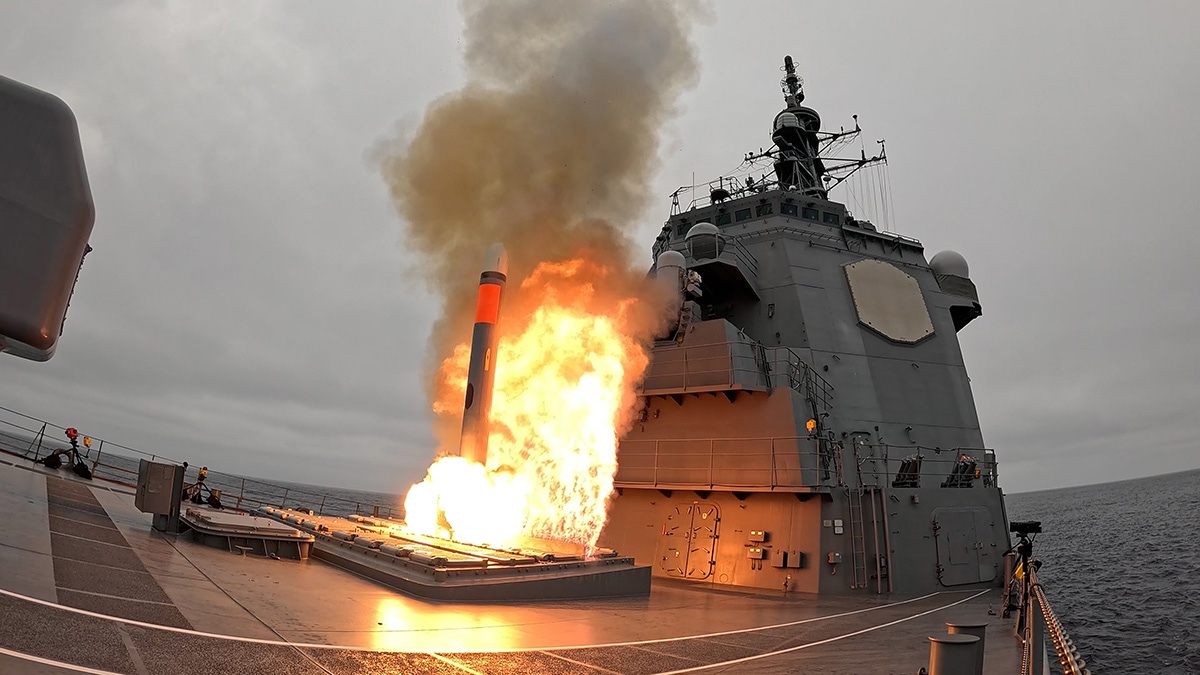
Meanwhile, Tokyo announced on July 30 that it had test-fired a Tomahawk land-attack cruise missile from one of its warships, the Aegis guided-missile destroyer JS Chokai (DDG-176), for the first time.
Additionally, Tokyo fielded the Type 25 Hyper Velocity Gliding Projectile, its first indigenous hypersonic boost-glide weapon, following successful California flight tests and domestic deployment drills that included loading launchers onto ships and aircraft.
In late July, an F-2 fighter conducted the first captive-carry flights of the air-launched Improved Type 12 (Type 25) long-range missile at Gifu Air Base, validating integration ahead of planned service in 2027.
Separately, a 100 kW-class shipboard laser system began sea trials aboard the test ship Asuka in late 2025, targeting drones and projectiles. Japan also conducted its first anti-ship missile live-fire on domestic soil in June 2025, firing a Type 88 from Hokkaido.
These developments highlight Tokyo’s push for stand-off strike and layered defenses amid regional tensions.
China released the teaser footage of the fifth prototype of its sixth-generation fighter jet, the J-36. The big question is: has Beijing leapfrogged the U.S. F-47 aircraft?
China Military Bugle, the official press account of the People’s Liberation Army, published a four-minute video on July 26, marking the 10th anniversary of China’s first heavy transport aircraft, the Y-20, entering service.
In the video’s last scene, one of the Y-20 co-pilots asks his captain: “Who are we refueling today?”
“First the ‘Master Six’, then the ‘Little Six’,” the captain replies.
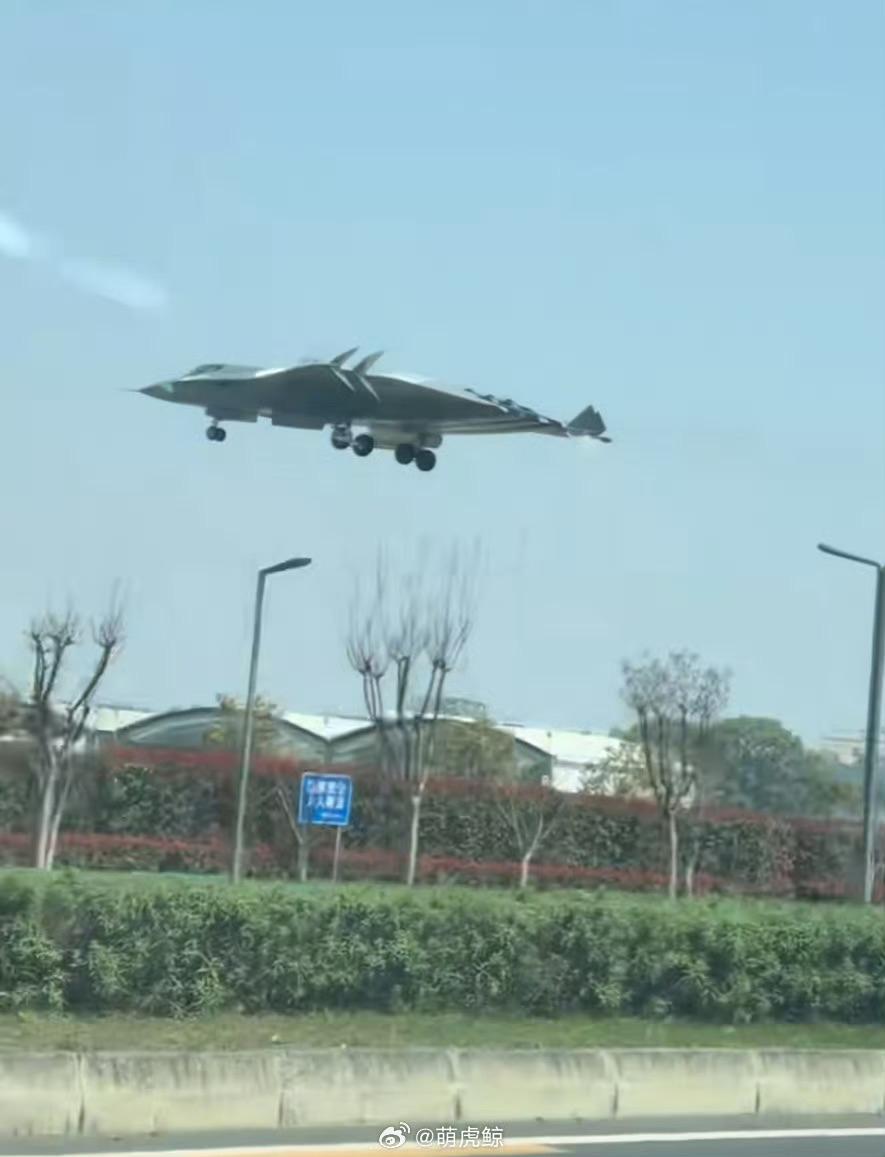
The final shot clearly shows the now familiar three-engine tailless J-36 flying next to the Y-20.
In Chinese defense circles, “Master Six” is an informal nickname for the H-6 strategic bomber, and “Little Six” is a reference to the sixth-generation fighter.
PLA just hinted at the 6th-gen fighter in the video Y-20's 10th anniversary service!
"Captain, who are we refueling today?"
"First 'Sixth Master' (H-6), then 'Little Six' (6th-gen)."
Notably, while there have been multiple videos and pictures of the J-36, this is the first time that the video of the unusual, three-engine fighter jet has been released in official Chinese media.
This is seen as China’s first official acknowledgment of the existence and flight testing of the next-generation fighter jet.
Online videos and pictures of the J-36 have been circulating since December 2024, when China simultaneously unveiled two next-generation stealth aircraft, dubbed J-36 and J-50, during flight tests near Chengdu, Sichuan.
The J-36’s trijet design, featuring a blended double delta wing structure, was immediately documented. However, those videos were shot from the ground, and China’s government, military officials, or aviation companies did not make any comment on the new fighter jet.
Nearly three months later, in March 2025, the J-36 made a second appearance over Chengdu. This time, it flew solo, and the videos gave clear views of the aircraft’s trijet configuration, dorsal intake, and control surfaces.
The J-36. File Image.
Since then, the aircraft has been sighted multiple times flying over Chengdu.
The latest video, featuring the J-36 flying next to the Y-20, also makes it clear that the aircraft is equipped with air-to-air refueling capacity.
Song Zhongping, a military commentator and former PLA instructor, told Hong Kong-based SCMP that the video indicated that the sixth-generation fighter was almost certainly equipped with air-to-air refueling capability.
“And it is highly likely that it has already conducted air-to-air refueling tests during flight testing,” he said.
Air-to-air refueling capacity is crucial to navigate the long distances of the Pacific theatre.
“If a tactical aircraft’s endurance and combat radius approach those of a medium-range strategic bomber, it would be capable of carrying out patrol missions of strategic significance,” Fu Qianshao, a military analyst and former PLA Air Force officer, said.
The latest images appear to show further significant changes to the aircraft’s design and underscore its rapid evolution.
According to experts, this might be the fifth prototype of the J-36.
China’s decision to officially acknowledge the J-36 in the Y-20 anniversary video, while simultaneously flying what appears to be a fifth prototype within just 19 months of the first sightings, marks a significant acceleration in its sixth-generation fighter program.
The aircraft’s large airframe, evolving stealth features, and confirmed aerial-refueling capability suggest Beijing is prioritizing long-range, high-endurance operations across the Pacific. If the current pace of flight testing continues, China could field an operational sixth-generation platform earlier than many Western programs currently project — a development that would reshape the airpower balance in the Indo-Pacific.
Andreas Rupprecht, an aviation analyst and expert on China’s air force, said the structural differences between the earliest and latest examples made it unlikely the sightings simply showed a single aircraft being repeatedly modified.
“It is still difficult to assess this with any certainty,” he said. “But if one takes the reports from reliable sources as a basis, there is indeed some strong evidence to support it.”
According to Rupprecht, the J-36 program appeared to have progressed through at least three distinct configurations since December 2024.
The first aircraft featured caret-shaped air intakes, tandem main landing gear and box-shaped engine nozzles.
A revised configuration introduced diverterless supersonic air intakes, side-by-side landing gear and redesigned exhausts that might improve stealth and maneuverability.
The latest aircraft appears to retain many of those changes while introducing a modified nose section, suggesting continued refinement of the design as testing progresses, Rupprecht explained.
Experts are divided on why China is testing three different design configurations simultaneously.
Rupprecht suggested that one possibility was that China was testing three different models to analyze which design performed best in real flight conditions, rather than drawing conclusions solely from wind tunnel testing.
“There is simply no experience yet in this regard for such a type of ‘fighter’,” he said.
Rupprecht also suggested that another possibility was that design changes were necessitated by the shift from the earlier WS-10C engine to China’s more powerful WS-15 powerplant; however, there was no confirmation.
He also noted that the appearance of the fifth prototype within 19 months highlighted that the program was progressing rapidly.
Comparisons with the J-20 stealth fighter suggest the J-36 has reached key milestones faster.
“So yes, the program does appear to be relatively mature and progressing quickly,” Rupprecht said.
However, he cautioned that faster flight testing of the J-36 might not translate into quicker operationalization of the fighter aircraft into the PLA Air Force (PLAAF).
Rupprecht suggested that he expected China to deliver the first pre-production batch to the PLA Air Force before 2030, with operationalization of the final production model some years later.
He also suggested that the J-36’s unusually large size meant the aircraft was more likely to serve as a heavily armed command platform capable of directing armed loyal wingman drones and other fighter jets, aided by its powerful sensors and long-range weapons.
“I am more convinced that the J-36 is something entirely distinct,” he said, describing it as an “aerial air-defense node” comparable in concept to an Aegis-equipped US warship coordinating a wider combat network.
In Rupprecht’s view, these different roles and designs make J-36’s comparisons with the F-47 misleading. In fact, he suggested that it will be more fruitful to compare the F-47 with J-50.
Regardless of the substantial differences in design and possibly in their roles, it can not be denied that China’s J-36 is progressing much faster than the US’s next-generation fighter jet.
While the J-36’s fifth prototype is flying, there is no publicly available picture of the F-47 flying.
The first flight of the F-47 is expected sometime in 2028.
In fact, according to the latest reports, the F-47 is expected to initially fly with an interim engine, as the US’s Next Generation Adaptive Propulsion (NGAP) program could be ready for integration onto an actual aircraft only by 2030.
This means that at least the F-47 prototype, and possibly the first operational F-47s, will have to fly with a different engine before the NGAP engine is integrated into the F-47 around 2030-2031.
Meanwhile, the GCAP, the UK, Italy, and Japan’s combined tri-nation sixth-generation fighter jet program, is expected to enter operational service around 2035.
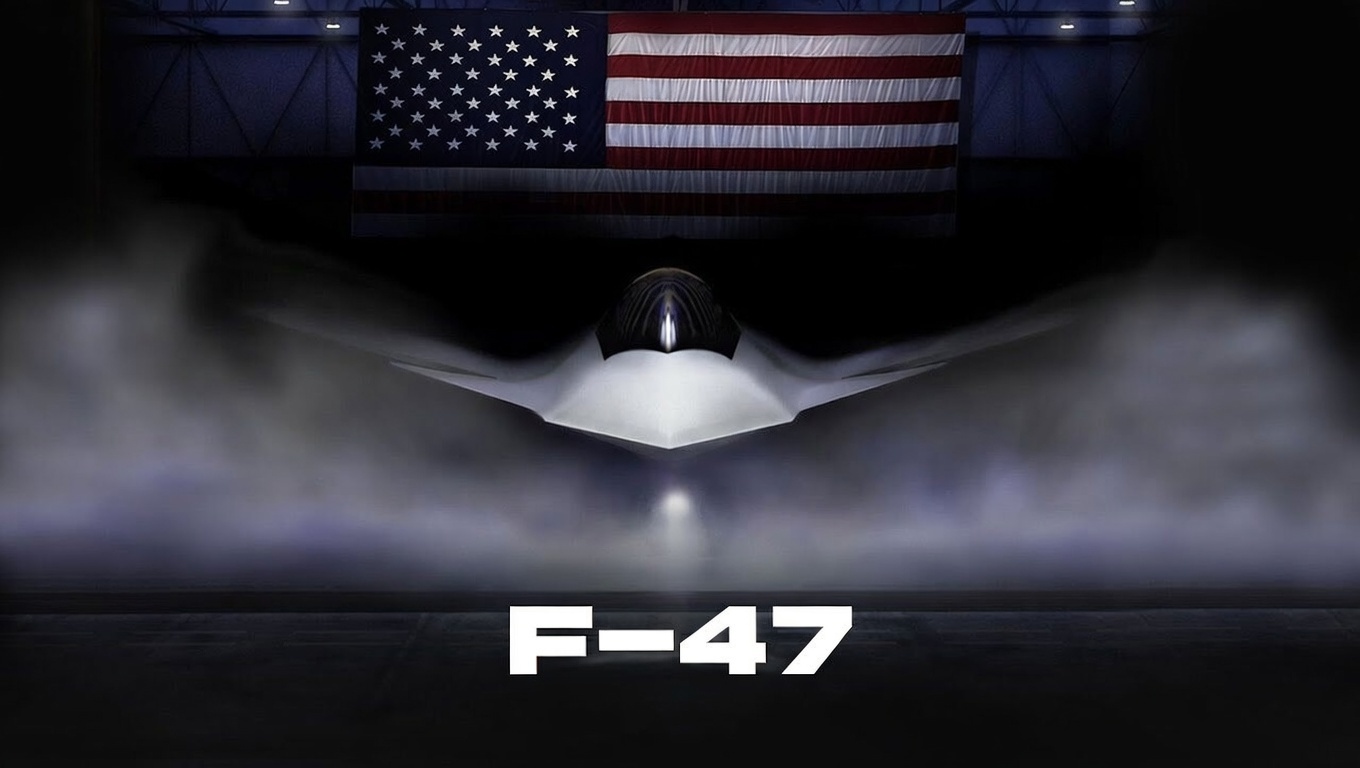
F-47.
The FCAS, Germany, Spain, and France’s sixth-generation fighter jet program has already collapsed.
Fu Qianshao, a military analyst and former PLA Air Force officer, said that China’s program was progressing much faster than comparable efforts in the US, Russia and Europe.
“In my view, China’s fighter development … is now ahead of its competitors,” he said.
These timelines suggest that for the first time in history, China might beat the US and Europe in integrating a next-generation fighter jet in operational service, which could have far-reaching consequences for the balance of power, particularly in the Pacific theatre.
Furthermore, the J-36’s aerial refueling capability, combined with its unusually large size and greater fuel capacity, would give it exceptional range, an advantage that could prove decisive in the contest for air superiority across the Pacific theater.
“The aircraft could potentially operate beyond the western Pacific and, in some cases, reach the Indian Ocean, which would have significant strategic implications,” Fu added.
Nitin J Ticku holds a double master’s degree in Journalism and Business Management from the University of Glasgow. He has over 20 years of global experience in MARCOM, Journalism, and Digital Marketing, and has worked & traveled widely across Europe, the Americas, and Asia. Nitin is the Editor of the EurAsian Times.
He can be reached at editor (at) eurasiantimes.com
Japan has become the latest entrant to the exclusive club of countries that possess the Tomahawk cruise missile.
Japan’s Ministry of Defense (MoD) announced on July 30 that the Japan Maritime Self-Defense Force (JMSDF) had test-fired a Tomahawk land-attack cruise missile from one of its warships, the Aegis guided-missile destroyer JS Chokai (DDG-176), for the first time.
The test was conducted on June 29 in the Pacific Ocean with US Navy’s support. It followed the March 2026 announcement by the Acquisition, Technology & Logistics Agency that Chokai had completed the necessary upgrades to fire long-range standoff missiles.
With the launch, Japan became the third nation (apart from the United States) to fire a Tomahawk from a surface combatant—after Australia and the Netherlands—and the fourth overall, following the United Kingdom, which has launched the missile only from submarines. The successful test marks a major step in Tokyo’s effort to field a credible long-range conventional strike capability.
The MoD verified that the missile reached its intended target and that the ship and crew successfully carried out the launch sequence. It did, however, conceal certain information, such as the precise location in the Pacific, the number of missiles fired, the range attained, the target’s specifics, and the missile variant used.
Historic moment as JS Chokai becomes the first JMSDF warship to live-fire a Tomahawk Land Attack Missile. We can expect a torrent of state media commentaries from you-know-who proclaiming the impending end of the world with Japan’s remilitarism. https://t.co/zXXalHYluWpic.twitter.com/wT1rHAP2V7
Chokai is expected to return to Japan around September 2026, indicating that the Tomahawk capability will be deployed in the volatile Indo-Pacific region.
Japan plans to equip all eight of its Aegis destroyers—two Kongō-class, two Atago-class, and two Maya-class— with Tomahawks. Modifications will be carried out gradually on ships based at Yokosuka and Sasebo.
Additionally, Japan is also building two Aegis System Equipped Vessels (ASEVs), due to enter service in fiscal years 2027 and 2028, respectively. Officials have stated that these ships will not have Tomahawk launch capability upon entry into service, though they are designed for future integration.
File: JS Chokai launched a Tomahawk cruise missile
Japan announced the purchase of 400 Tomahawk missiles in 2024, including 200 Block IV and 200 Block V variants, along with 14 Tactical Tomahawk Weapon Control Systems and associated support, training, maintenance, and spares. The original plan had called for acquiring up to 400 of the newer Block V missiles starting in fiscal 2026. However, to accelerate deployment, Tokyo advanced the timeline by a year and substituted half the order with the Block IV variant.
However, the US Secretary of War, Pete Hegseth, told his Japanese counterpart, Shinjiro Koizumi, in May 2026 that the delivery could be delayed.
Tomahawk forms a central part of Japan’s effort to develop “standoff defense capabilities” in response to a more demanding regional security environment vis-à-vis China, which is widely seen as a potential aggressor amid unprecedented military expansion.
Moreover, it aligns with Japan’s 2022 National Security Strategy, which officially recognized “counterstrike capabilities” as a self-defense measure.
Japanese officials consider the Tomahawk as a deterrent: by holding an aggressor’s launch sites and supporting infrastructure at risk, Japan aims to make any attack on it far more costly and less likely to succeed.
Having said that, the Tomahawk missile is viewed by experts as an interim solution adopted by Japan until indigenously developed options, such as the Type 12 and other long-range missiles, are ready for induction.
Defense By Offense: Japan’s Tomahawks are Here
Japan’s test-firing of Tomahawk has formally heralded the country’s transition from a purely defensive posture to one that includes credible long-range counterstrike stand-off capabilities. This aligns with Japan’s push to strengthen its long-range strike capabilities to deter China, which has steadily expanded its military presence in the East China Sea.
Tokyo regards China’s rapid buildup of missile forces and naval power, together with its assertive actions around the Senkaku Islands (administered by Japan but claimed by China and Taiwan), as Japan’s greatest strategic challenge. Moreover, the Japanese leadership fears that the country could get dragged into a China-Taiwan conflict triggered by the PLA’s invasion of Taiwan, due to its geographic proximity.
Speaking at a news conference earlier, Japanese Defense Minister Shinjiro Koizumi exclaimed that the new capability would be “of great significance for reducing the possibility of an armed attack on Japan itself,” potentially referring to regional rivals such as China. “To defend against incoming missiles while preventing further armed attacks, Japan must possess the capability to launch an effective counter-attack – a counterstrike capability. Long-range missiles can be used for this counterstrike capability.”
The Tomahawk cruise missile is primarily designed to strike high-value, heavily defended land targets, such as command centers, airfields, and critical infrastructure.
With a range of approximately 1,600 kilometers, Tomahawks launched from the western Pacific or waters around Japan can cover all of North Korea and reach deep into eastern China, as well as parts of Russia’s Far East. This essentially gives Japan the ability to strike missile launch sites, air bases, command-and-control nodes, logistics hubs, and amphibious staging areas from outside an adversary’s defensive envelope.
File: JS Chokai launched Tomahawk
Unlike fixed land-based platforms, sea-based launch platforms are mobile, making missiles more difficult to preempt. The Tomahawk features in-flight retargeting via data links, enabling more adaptive responses during a potential conflict.
With the integration of Tomahawk, Japan can impose costs on the aggressor’s rear-area infrastructure rather than solely defending against the first wave of missiles or ships. This supports “deterrence by denial”, making invasion or sustained attack harder, and “deterrence by punishment”, threatening meaningful retaliation—both of which were earlier missing from the Japanese military’s inventory and philosophy.
Tomahawks will operate alongside ground-launched systems such as upgraded Type 12 missiles and Hyper Velocity Gliding Projectiles, as well as air-launched weapons including the Joint Strike Missile carried by F-35s.
Together, these systems will form a layered, distributed long-range fires network that complicates adversary planning and raises the cost of aggression.
Fielding the Tomahawk will deepen interoperability with the United States while reducing Japan’s exclusive reliance on US forces for deep-strike missions, thereby enhancing Tokyo’s self-reliance as a security actor, which it has been desperately seeking for some time.
China is likely to be wary of Japan’s possession of Tomahawk, particularly since the missile has already proved its efficacy in combat multiple times, most recently in the Iran war. Previous reports suggested that the US military fired over 850 Tomahawk missiles, a number that may have swollen by now as hostilities continue
Beijing has consistently opposed Japan’s defense buildup as provocative and had strongly criticized the deployment of the Mid-Range Capability system in Japan, which can also launch Tomahawks, earlier this year.
Contact the author at sakshi.tiwari13 (at) outlook.com

 Login







 (@CollinSLKoh)