❌

Reading view

Israeli Soldiers Abduct At Least 22 Across Occupied West Bank

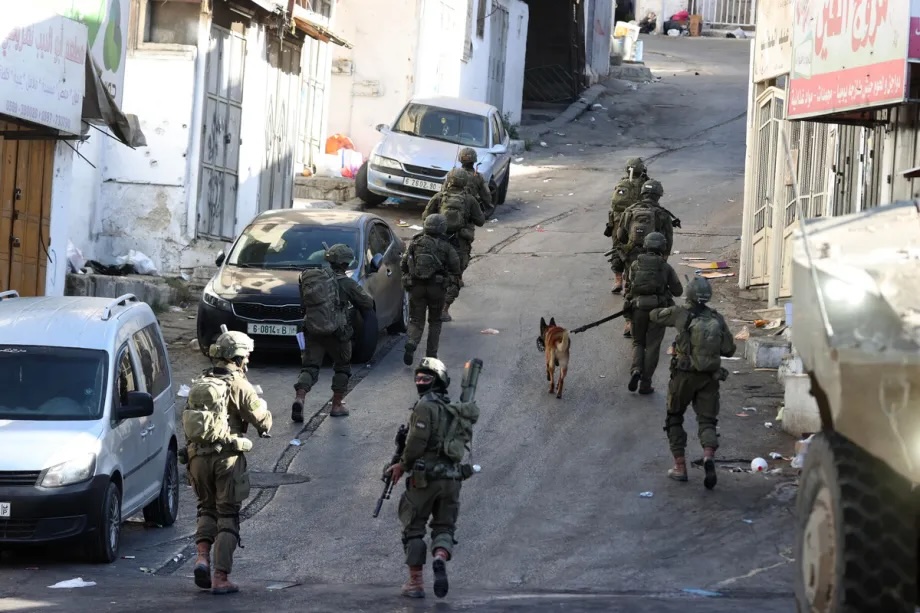
Israeli soldiers invaded communities across the West Bank on Wednesday, abducting at least 22 Palestinians, including 3 children and 2 employees of the Islamic Association for Orphan Care. Soldiers also broke into homes, assaulted residents, & fired gas bombs

💾

💾

  •  

BOMBSHELL! Florida’s Attorney General SUES Pfizer and Bourla for HIDING COVID Shot Deaths, Heart Damage, Miscarriages and Strokes

by Nicolas Hulscher, MPH – originally published on Focal Points substack

VERSIONE SINTETICA IN ITALIANO

All links to previous Gospa News posts have been added in the aftermath by virtue of the ties with topics covered

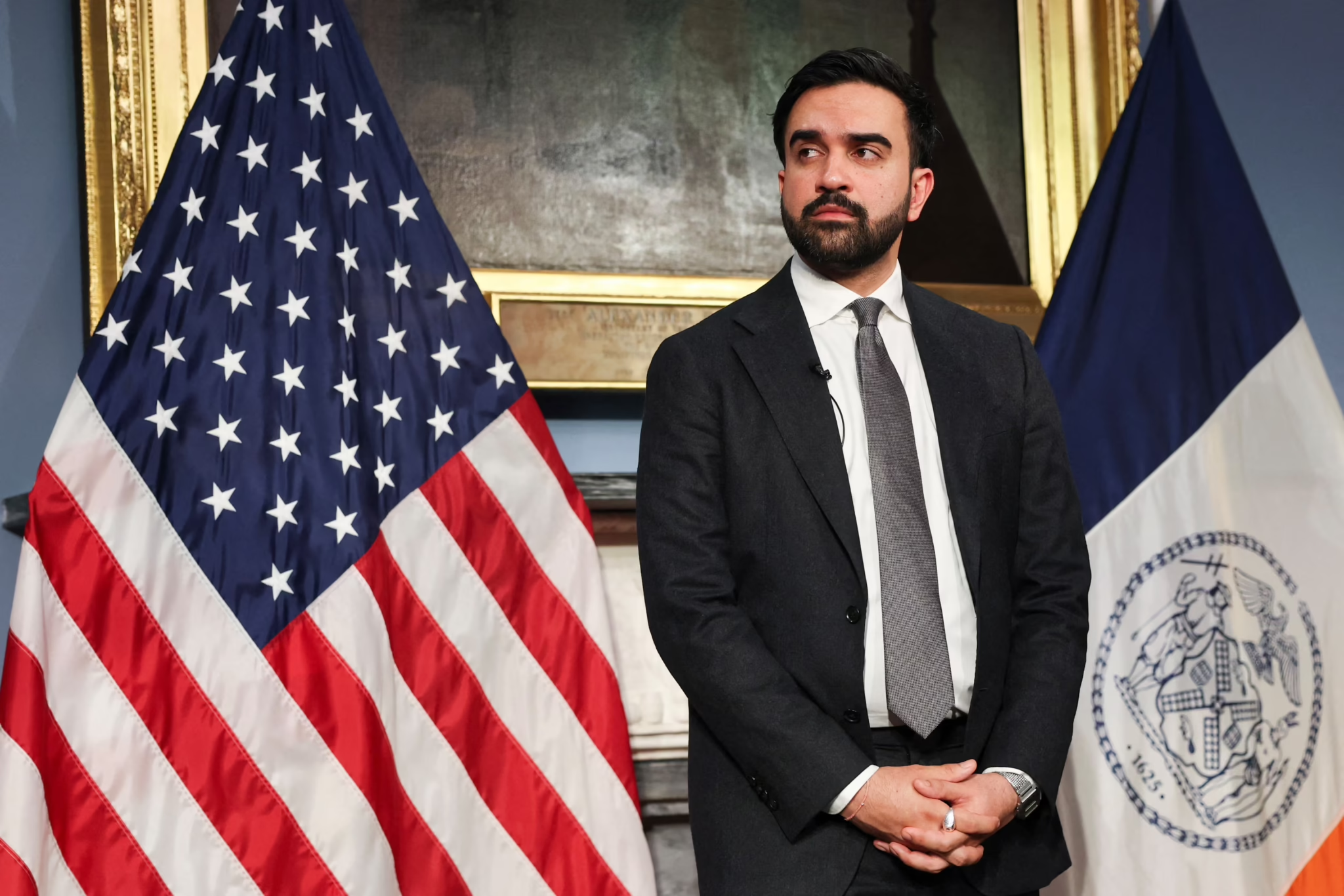
Florida Attorney General James Uthmeier has filed a sweeping lawsuit against Pfizer and its CEO, Albert Bourla, accusing them of deceiving the public about the safety and transmission-prevention capabilities of Pfizer’s COVID-19 mRNA injection.

The 49-page complaint was filed on October 1, 2026, in St. Lucie County, Florida, and targets Pfizer and Bourla personally under Florida’s Deceptive and Unfair Trade Practices Act.

The complaint opens with a striking line: “Those people are criminals.”That is how Bourla described people who publicly raised safety concerns about Pfizer’s COVID-19 injection.

After COVID-19 Vaccination 85-Million-Person Study Finds Increased Risks of Stroke, Heart Attack, Coronary Artery Disease, and Arrhythmia

At the center of the case is an explosive allegation: Pfizer publicly assured Americans that its COVID shot was safe while the company possessed internal and external safety information involving myocarditis, miscarriages, strokes, adverse events, and deaths.

158,893 adverse events in just 10 weeks

According to the complaint, Pfizer’s own adverse-event database contained 158,893 adverse events from 42,086 case reports by February 28, 2021—only about 10 weeks after the vaccine received emergency authorization.

The cover of the complaint (link in the sources)

Yet in January 2023, Bourla publicly stated that Pfizer had seen “not a single [safety] signal” despite billions of doses having been administered.

Florida argues that statement was fundamentally incompatible with information already known about myocarditis and pericarditis.

Myocarditis: Massacre after mRNA Vaccines! Other 28 Deaths Confirmed by Autopsies (Study), 18,000 Adverse Reactions, 10,000 Mysterious Heart Attacks

1,223 reported deaths

The complaint also states that Pfizer’s database contained 1,223 reported fatalities following vaccination as of February 28, 2021.

76,253 Dead Recorded in Europe and US Following COVID Vaccines. 4,358 Fetal Deaths: Pfizer Hid Disturbing Data on Pregnant Women Risks

Florida argues that the existence of this volume of serious adverse-event information undermined Pfizer’s sweeping public safety messaging.

The volume of reports became so large, according to the filing, that Pfizer hired 600 additional full-time employees and expected to hire another 1,800 workers to process adverse-event reports.

Pregnancy and miscarriages

Another major section of the lawsuit concerns pregnancy.

The complaint states that by February 28, 2021, Pfizer had reports involving 458 pregnant women exposed to its COVID vaccine. Of those reports, 248 involved an adverse event and 52 involved miscarriage, according to the filing. Nearly all of the reported miscarriages occurred during the first trimester.

The lawsuit also points to Pfizer’s planned clinical trial involving pregnant women.

Pfizer initially sought approximately 4,000 participants, but the complaint states that only 348 mothers and 335 infants were ultimately enrolled and that the study was terminated early. The women vaccinated in that study were 24–34 weeks pregnant, meaning the trial did not directly provide first-trimester vaccination data.

FAUCI & CDC KNEW THAT COVID VACCINES COULD TRIGGER MISCARRIAGE (5 videos). As Denounced by Gospa News in 2021 on 3,573 Cases of Fetal Death among Vaccinated Women

The complaint further cites the Comirnaty package insert as stating that there are no available data on use before 24 weeks sufficient to inform risks for major birth defects and miscarriage.

Pfizer pushed transmission claims without testing transmission

The second enormous pillar of Florida’s case concerns transmission. Pfizer and Bourla repeatedly told the public that vaccination would protect other people.

In December 2021, for example, Pfizer said that getting as many people vaccinated and boosted as possible remained the best course of action to “prevent the spread of COVID-19.”

But according to the complaint, Pfizer’s pivotal clinical trial did not test whether vaccination prevented person-to-person transmission.

The FDA itself stated in December 2020 that there was no evidence at that time that the vaccine prevented SARS-CoV-2 transmission from one person to another, and transmission was not an objective of Pfizer’s trial protocol.

COVID: THE HUGE LIE! During EU Hearing Pfizer Director Admits Vaccine was Never Tested on Preventing Transmission

A Pfizer executive later publicly acknowledged that the vaccine had not been tested for stopping transmission before entering the market.

Florida alleges that Pfizer nevertheless used the idea of protecting loved ones as a powerful marketing tool to increase vaccine uptake.

More than $80 BILLION in COVID vaccine revenue

The financial stakes were enormous. The complaint states that Pfizer turned approximately $1.5 billion in research and development spending into more than $80 billion in COVID vaccine revenue.

Pfizer’s vaccine captured nearly 70% of the U.S. and European COVID vaccine markets, according to figures cited in the complaint.

Meanwhile, Bourla received approximately $101.8 million in compensation from Pfizer between 2020 and 2023.

PFIZER VACCINE, THE HUGE BINGE! Inside Big Pharma Board Boss of Coca-Cola, Reuters, Gates Foundation, Goldman Sachs, FDA & FB

Florida’s complaint goes beyond safety claims and accuses Pfizer of engaging in broader unfair business practices to dominate the COVID vaccine market.

Florida wants the money back

Florida is seeking far more than a symbolic judgment. The Attorney General is asking the court for civil penalties, a permanent injunction against deceptive or unfair representations concerning Pfizer’s COVID vaccine, attorneys’ fees and other relief.

Most significantly, Florida is also seeking disgorgement—legal language meaning Pfizer could be forced to hand back profits connected to conduct the court ultimately determines violated Florida law.

FOUR other US STATES in Lawsuits vs “BIDEN’s VACCINE (Pfizer)”. None against the PENTAGON-FAUCI’s One (Moderna)

Finally, a government is attempting to hold Pfizer and Albert Bourla accountable by at least some degree for their gross deception.

For years, the company’s false safety and transmission claims helped drive mass vaccine uptake. Now those fraudulent claims are headed to court.


Nicolas Hulscher, MPH

Epidemiologist and Foundation Administrator, McCullough Foundation

Support our mission: mcculloughfnd.org

Please consider following both the McCullough Foundation and my personal account on X (formerly Twitter) for further content.


MAIN SOURCE

ATTORNEY GENERAL LAWSUIT DOCUMENT

Attorney General James Uthmeier Files Lawsuit Against Pfizer and its CEO Dr. Albert Bourla

  •  

AIM-260 JATM Missile Spotted On Australian Super Hornet

A Royal Australian Air Force F/A-18F Super Hornet has been photographed carrying an inert AIM-260 Joint Advanced Tactical Missile (JATM) during a major U.S. Navy test event in California. The development comes weeks after Australia announced that it would buy the new missile, with its Super Hornets being the first RAAF aircraft to receive it.

The photograph was released by the U.S. Navy and shows an RAAF F/A-18F assigned to No. 1 Squadron taking off from Naval Base Ventura County Point Mugu on September 11 during Gray Flag 2026. The loadout also includes a CATM-9X — the inert training variant of the AIM-9X — and a CATM-120, the inert training version of the AIM-120 AMRAAM, three external fuel tanks, an AN/ASQ-228 ATFLIR targeting pod, and a Tactical Combat Training System (TCTS) pod.

A Royal Australian Air Force F/A-18F Super Hornet assigned to No. 1 Squadron takes flight at Naval Base Ventura County Point Mugu during Gray Flag 2026, Sept. 11, 2026. Gray Flag is the naval aviation test community’s premier large-force test event, providing unique venues for large-scale integration of new capabilities across services and platforms. Working with the Joint Force, industry and our nation’s allies to ensure integration and interoperability is key to ensuring warfighters have a decisive advantage in the field. (U.S. Navy photo by Dana Rene White)
An AIM-260 JATM is seen on station 7, the “cheek” station, of a Royal Australian Air Force F/A-18F Super Hornet during Gray Flag 2026. U.S. Navy photo by Dana Rene White

Gray Flag is the naval aviation test community’s flagship large-force test event, providing opportunities for large-scale integration of new capabilities across services, platforms, industry, and allied forces. Gray Flag 2026 was the largest edition of the exercise to date. According to the Navy, more than 3,000 personnel from over 150 organizations participated, flying more than 750 sorties and logging over 2,000 flight hours across hundreds of multi-domain test objectives.

Previous iterations of Gray Flag have been used to test new and still-developmental weapons in increasingly complex, operationally representative scenarios, including actual missile engagements against realistic targets. Making use of the sprawling Point Mugu Sea Range, the event has also become an important opportunity for working out how sensors, weapons, aircraft, and networks interact as part of larger kill chains and kill webs. A new, longer-range air-to-air missile is especially relevant when it comes to developing tactics, techniques, and procedures within a broader, networked air-combat architecture.

Beyond being the first apparent glimpse of an Australian JATM in any context, integration of the weapon onto Australia’s Super Hornet fleet has already progressed to the point of carrying the missile — in inert form — during a major U.S.-based test and integration exercise.

A close-up look at an AIM-260 test round on the same station of a U.S. Navy Super Hornet. Jonathan Tweedy/@flightline_visuals

As TWZ reported in August, Australia is set to become the first country outside the United States to operate the AIM-260 following a roughly $480-million procurement through the U.S. Foreign Military Sales program. The Australian government said at the time that the missile would first be integrated onto the RAAF’s F/A-18F fleet, before being fielded on the F-35A and EA-18G Growler. Looking further ahead, the RAAF’s MQ-28 Ghost Bat collaborative combat aircraft (CCA) could also emerge as a candidate for integration with JATM.

Australia’s announcement did not provide a delivery schedule or specify when JATM would enter Australian service.

The overall proportions and external configuration of the AIM-260 were revealed when an example appeared on a U.S. Navy F/A-18F in May of this year. That aircraft, operated by Air Test and Evaluation Squadron 31 (VX-31), provided the first publicly known photographic view of the highly classified missile.

An F/A-18F from VX-31 carrying the AIM-260. Jonathan Tweedy/ @flightline_visuals

The AIM-260’s exact specifications remain classified. It is intended to provide substantially greater range than the AIM-120 AMRAAM while retaining a broadly similar form factor. That compact configuration is important because the missile is designed not only for external carriage but also for internal carriage by aircraft such as the F-22 and F-35.

The weapon has been developed as a response to the increasingly long-range air-to-air threat posed by China’s PL-15 and other advanced missiles. Official range figures have not been released, although previous reporting has pointed to an intended range of at least 120 miles and potentially considerably more.

Close-up of a J-20 fighter carrying four inert examples of the PL-15 in its main ventral bays. via Chinese internet

The Australian procurement therefore represents an important expansion of the JATM program beyond the U.S. fleet.

The timing of the Point Mugu photograph is particularly interesting. Gray Flag is specifically intended to bring together large numbers of aircraft, weapons, sensors, networks, and other systems for demanding integration and test activities. An Australian Super Hornet carrying JATM at such an event would be entirely in line with the purpose of the exercise.

Ground crew members stand by an EA-18G Growler on the flight line at Naval Base Ventura County Point Mugu, Sept. 30, 2026. Gray Flag is the naval aviation test community’s premier large-force test event, providing unique venues for large-scale integration of new capabilities across services and platforms. Working with the Joint Force, industry and our nation’s allies to ensure integration and interoperability is key to ensuring warfighters have a decisive advantage in the field. (U.S. Navy photo by Katie Archibald)
Ground crew members stand by an EA-18G Growler on the flight line at Naval Base Ventura County Point Mugu, during Gray Flag, on September 30, 2026. U.S. Navy photo by Katie Archibald

It is not clear, however, what role the missile was playing. The photograph does not establish whether it was an Australian-owned operational weapon, a U.S. test asset, or a missile being used for a particular integration activity. Blue bands on the missile body confirm that it’s a training missile with an inert rocket motor and/or warhead.

Public evidence of an Australian aircraft carrying the AIM-260 is another important milestone in the weapon’s transition from a closely guarded U.S. development program toward allied service.

It also underscores the most interoperability aspect of the Australian acquisition. Canberra is buying into a U.S. long-range air-to-air weapon program at a time when the Royal Australian Air Force and U.S. forces are increasingly expected to operate together across the Indo-Pacific.

A Royal Australian Air Force E-7A Wedgetail, two EA-18G Growler jets and two F-35A Lightning II aircraft fly in formation with two United States Air Force B-2 Bombers and two F-22 Raptor fighter jets. *** Local Caption *** A Bomber Task Force consisting of United States Air Force B-2 Spirit stealth bombers, aviators and equipment from the 509th Bomb Wing and 131st Bomb Wing, are operating out of Royal Australian Air Force (RAAF) Base Amberley in Queensland. This deployment provides an opportunity for Australia and the United States to deepen air-to-air integration as part of the Enhanced Air Cooperation. RAAF and the United States Air Force have a longstanding shared history of military-to-military ties and regularly train together to improve interoperability.
A Royal Australian Air Force E-7A Wedgetail, two EA-18G Growlers, and two F-35As fly in formation with two U.S. Air Force B-2 bombers and two F-22 Raptors. Australian Department of Defense

The exercise also comes as the U.S. moves to accelerate development and future production of the AIM-260. In September, the Pentagon and Lockheed Martin reached a framework agreement laying the groundwork for a future multiyear procurement deal, while the Air Force Test Center confirmed that the missile is already undergoing both ground and airborne testing. The agreement is intended to give Lockheed Martin and its suppliers the demand signal needed to expand production capacity, although the number of missiles, costs and delivery schedule remain undisclosed.

The development should also be seen in the context of broader U.S.-Australian cooperation on air-launched weapons. RAAF F/A-18Fs are also being integrated into the U.S.-Australian Hypersonic Attack Cruise Missile (HACM) effort under the Southern Cross Integrated Flight Research Experiment (SCIFiRE), with Australia providing test infrastructure for the weapon’s flight-test program. You can read more about this program here.

The video below shows a hypersonic test conducted at Woomera in 2016 under the U.S.-Australian Hypersonic International Flight Research Experimentation (HiFIRE) program.

Australia said its F/A-18Fs would be the first RAAF aircraft to receive JATM, and an Australian Super Hornet has now been photographed carrying one during a major U.S. Navy test event. For the RAAF, getting JATM onto its frontline fighters is consequently an increasingly urgent requirement, giving its Super Hornets a credible long-range counter to the weapons they could face in a future high-end fight.

Contact the author: thomas@thewarzone.com

The post AIM-260 JATM Missile Spotted On Australian Super Hornet appeared first on TWZ.

  •  

Amazon is deploying AI to spy on its workers and bust unions before they form

A worker walks inside Amazon's LCY3 Fulfillment Centre in Dartford, east of London, on June 4, 2026, on the second day of company's 'Delivering the Future EMEA '26' event. Photo by JUSTIN TALLIS / AFP via Getty Images

This article was originally published by Truthout on Sept. 30, 2026. It is shared here under a  Creative Commons (CC BY-NC-ND 4.0) license.

The 18th-century notion of the panopticon — a circular prison design with a guard station in the middle, allowing a single officer to enforce discipline by keeping watch over all the prisoners — has become real in the 21st century through AI-driven surveillance against workers: It’s the Amazon warehouse.

It should be no surprise that the company that harnessed technology to create a vast, $2.7 trillion empire would employ the same sophistication to enforce workplace discipline and tamp down insurgent unionization efforts. A recent disclosure of Amazon’s internal “employee relations” documents reveals just how extreme Amazon’s methods of warehouse surveillance and control have become.

Amazon employs what it calls the “Atlas” model, inputting into a computerized model a staggering amount of information on workers, their thoughts and behaviors, the workplace environment, and myriad other factors — “hundreds of data points,” according to the company. Atlas produces not just a granular measurement of ongoing worker unrest, worksite by worksite around the world, but also a prediction model for future organizing. It’s like the “precrime” police in the film Minority Report who use psychic powers to identify and apprehend would-be criminals before they act — except in this case, it’s an AI-driven tool used by the billionaire owners of one of the richest companies in history to head off rebellion among its low-wage workforce. And this is not Tom Cruise play-acting; it’s very real.

Workers anywhere who have endured anti-union campaigns can relate to stories of overbearing surveillance by management; the Atlas model, however, takes the spying to an entirely new level.

Details of the Atlas model came to light recently as a result of a legal dispute between Amazon and Unifor, the Canadian private sector union. Last year, British Columbia’s Labour Relations Board awarded union certification to Unifor at Amazon’s YVR2 warehouse outside Vancouver, finding that the company had broadly interfered in the union drive. It was the second union certification at Amazon in North America — the other being the 2022 union win at JFK8 in Staten Island, New York. But in contrast to the U.S., where Amazon has managed to stall bargaining for four and a half years because of weak labor laws, the B.C. Labour Relations Board ordered Amazon to recognize the union and negotiate. Contract bargaining commenced last December.

Not surprisingly, Amazon has dragged its feet in negotiations, prompting the union to file unfair labor practice charges with the Labour Board. Following a series of hearings earlier this year, the Labour Board found that Amazon violated provincial law. In August it ordered a remarkable step — first-contract arbitration at YVR2. That fight remains in play, but as a result of the legal proceedings, Amazon was required to turn over documents to the Labour Board and Unifor. Unifor has shared them with Truthout, and they can be viewed here.

Atlas produces not just a granular measurement of ongoing worker unrest, worksite by worksite around the world, but also a prediction model for future organizing.

In addition to the Atlas model revelation (beginning on Page 19 of the document), the material includes more than 100 pages that reveal in great detail how Amazon trains its frontline managers in union-busting. My colleague at the Center for Work and Democracy, Ben Fong, has written about this other portion of the disclosed material.

“Amazon’s own documents pull back the curtain on what workers have been telling us for years,” said Justin Gniposky, Unifor’s organizing director. “Behind the friendly PR, Amazon sees workers as property and treats their fundamental right to unionize as a threat to be managed and then eliminated.”

Amazon did not respond to Truthout’s request for comment on the Atlas model.

The documents describe the Atlas model as “a labor risk framework to clarify how Amazon evaluates emerging workforce issues, labor union targets, and internal or external labor threats.” The Atlas model ingests hundreds of data points: employee trainings completed; health and safety incidents, from simple first-aid cases to serious injuries; feedback from workers on management; worker tenure and turnover; the proximity of a warehouse to another workplace experiencing union activity; local minimum wage rates and other area economic conditions; and even the temperatures inside and outside of the warehouse.

Amazon seems especially thorough about scraping data from worker communications channels to plug into the Atlas model — the company’s internal “Voice of the Associate” (VOA) electronic bulletin board, the answers to digital questions posed daily to workers, and externally, forums including Reddit — “to understand the tenor of the discussion at the site level,” according to the documents.

“Behind the friendly PR, Amazon sees workers as property and treats their fundamental right to unionize as a threat to be managed and then eliminated.”

Atlas uses AI to identify phrases and “common keywords” to allow managers to do a “deep dive into the worker population driving the discussion.” Atlas also looks at the upvotes or other responses — positive, negative, or neutral — that the comments elicit, and the volume of those worker reactions. All of these data points go into Atlas and let managers “look around corners to identify developing themes” so they can “tailor strategic responses for addressing emerging risk.”

Amazon also tracks and documents all organizing activities that managers detect, and records them under the category of “employee relations events.” Each activity is assigned a severity score. “High severity” events include employees signing union cards, delegations of workers approaching management with demands, protests, sickouts, and work stoppages.

Atlas uses mathematical modeling to create a point system for all these data points, assigning a “labor score” to each workplace. The scale is further broken down into tiers, with the Tier 5 designation applied to facilities with high scores, where there is “no immediate perceived risk,” and Tier 1 applied to facilities where “future activity is imminent.” Amazon’s union busters focus largely on Tier 1 and 2 facilities.

Atlas produces extensive spreadsheets ranking different facilities and looking not just at raw “labor scores” but also at monthly trends. In 2024, the year the documents date from, Amazon was most concerned about union activity at 16 warehouses it had ranked as Tier 1. For instance, at LDJ5, a Staten Island sortation center across the street from JFK8, Atlas noted that leading issues of worker concern were “bathroom breaks, equipment, rest breaks, leadership/management, temperature.” The spreadsheet noted that “internal activists” — workers — were organizing, and that by looking at month-over-month trends, LDJ5 was experiencing “Risk Increase,” with the phrase placed inside a bright red box. At four of these Tier 1 facilities, the spreadsheet noted, the threat of union activity was sufficiently high to justify deploying Amazon’s “rapid response” team: union busters who travel to hotspots of organizing throughout Amazon’s global network.

Union organizing at Amazon is not just a battle over economics; it’s also a fight for basic freedom and democracy.

But the main value of Atlas seems to be predictive. For the Tier 2 worksites (“future activity is highly probable”), the spreadsheet poses these questions: “Which sites are showing the most future risk that are not Tier 1 sites yet?” and “What is the risk in each business line and which has the most risk, is it increasing or decreasing? What is driving the risk?” Tier 2 spreadsheets in the document look at the number of investigations of workers that management has handled in the last month, whether that number is trending up or down, the number of worker appeals of those investigations, and — notably — the percentage of negative worker comments on internal bulletin boards.

Voice of the Associate and other internal bulletin boards are key focal points. Charts in the document track how often workers raise particular topics, like weather, time off, breakroom amenities, management treatment, and restroom cleanliness. They also analyze the “vector” of each issue: “What are the top drivers of negative Sentiment and change MoM [month over month]?” is one question posed in the document. “What Sites are spiking MoM in negative sentiment? What themes are driving the sentiment? What anecdotes can we pull?”

Atlas is not strictly a North American tool. One chart analyzes trends for warehouses globally, documenting “employee relations events” — worker organizing — and cataloguing the number of worker comments on Voice of the Associate and the percentage of those comments that were negative. Two warehouses in the English Midlands where workers have been organizing with the GMB union — both Tier 1 sites in Atlas’ taxonomy — showed high volumes of negative VOA posts. A warehouse in Melbourne, Australia, also showed mostly negative Voice of the Associate posts, while posts were mostly not negative in some of the warehouses in Poland, Germany, and Italy.

All this is surely a tiny sliver of Atlas’s output. The former head of Amazon’s HR platforms, Bud Cashatt, boasted on LinkedIn recently about how his department created “predictive site-risk ML touching every building in Amazon’s global network.” (“ML” stands for machine learning, where programmers train AI to learn patterns and build predictions based on analyzing vast quantities of data.)

Did Jeremy Bentham, the 18th-century British philosopher who dreamed up the panopticon, anticipate Atlas? Nearly 250 years ago, he imagined his panopticon as a useful tool for prisons, “madhouses,” and also “to the business of manufactories,” the industrialized manufacturing plants then just emerging in England. Speaking of his watchman in the center of the operation — the human Atlas of his time — Bentham wrote, “The concealment of his person will be of use.”

The documents uncovered at the B.C. Labour Board shine a light on Amazon’s concealed watchman. Atlas illustrates just how far Amazon will go to try to rule the warehouse floor. And its scope also underscores just how terrified Amazon’s masters are of their own workforce rising up and claiming their due.

Bentham theorized that the panopticon would facilitate social control: He imagined that incarcerated people would behave, not knowing at any moment whether they were being watched by the guard. It was, he wrote, “A new mode of obtaining power of mind over mind.”

But what happens when prisoners — or workers — resist such attempts at social control? There’s no level of AI sophistication that can erase the reality that Amazon’s workers move millions of packages every day, and without their labor, the Amazon supply chain collapses.

Peter B. Olney, the retired organizing director of the International Longshore and Warehouse Union, calls Atlas “a promethean tool for union busting and the thwarting of any employee organizing.”

To fight back against this “existential threat” to basic worker rights and unions, Olney says, “we have to get real about deploying massive resources towards organizing the workforce and finding their serious vulnerabilities and choke points.”

Today we see emerging fights everywhere against a billionaire class intent on harnessing AI and technology to undermine basic democracy and impose authoritarianism, both in the workplace and throughout society: in revolts against the algorithmically driven content we are force-fed on the internet; protests against and sabotage of the Flock cameras on neighborhood lampposts; and resistance against the replacement of workers with bots and computers. The Atlas model places Amazon workers at the center of this global fight against the AI billionaires. And it highlights that union organizing at Amazon is not just a battle over economics; it’s also a fight for basic freedom and democracy.

  •  

Trump’s plan to swing Brazil’s election for Bolsonaro | Ep. 15

A supporter of far-right lawmaker and presidential candidate for the Social Liberal Party (PSL), Jair Bolsonaro, wears a mask of US President Donald Trump as he celebrates after Bolsonaro won Brazil's presidential election, in Sao Paulo, Brazil, on October 28, 2018. Photo by Miguel SCHINCARIOL / AFP via Getty Images
https://www.spreaker.com/show/5958129/episodes/feed

Brazil votes this Sunday, and the Trump administration has spent months trying to tilt the outcome toward far-right presidential candidate Flávio Bolsonaro. Tariffs. Terrorist designations. Revoked visas. Frequent meetings with the Bolsonaro family. Taken alone, each move looks random. Put the pieces together, and a picture emerges: U.S. interference in Brazil’s 2026 elections. 

Over the last year, Trump has met frequently with members of the Bolsonaro family. In June, the State Department put two Brazilian gangs on the terrorist list. Just a few weeks later, Trump shared an article on Truth Social that said Brazil was his next big challenge. Less than a month later, in July, Trump imposed new 25% tariffs on Brazilian goods. In August, Trump revoked the U.S. visa of the Brazilian ambassador.

The Brazilian Intelligence Agency recently raised the risk of external influence and interference by the United States in Brazil’s 2026 elections to a quote, “critical level.”

This is Episode 15 of Under the Shadow, Season 2. 

Under the Shadow is an investigative narrative podcast series that walks back in time, telling the story of the past by visiting momentous places in the present. Season 2 responds in real time to the Trump administration’s onslaught on Latin America.

Follow Under the Shadow on Spotify and Apple Podcasts.

Hosted by Latin America-based journalist Michael Fox.
This podcast is produced in partnership between The Real News Network and NACLA.
It is supported, in part, by Global Exchange.

VOTE by October 15: Under the Shadow has been nominated for three podcast Signal Awards. Please consider voting for Under the Shadow and The Real News:

Panamerican Dispatch

You can check out Michael Fox’s new reporting project on Brazil. 

It’s called Panamerican Dispatch. It’s a project of The Real News in partnership with Global Exchange. The website is www.panamericandispatch.org

You can also follow us on social media below

Bluesky https://bsky.app/profile/padispatch.bsky.social
X x.com/PAdispatch
IG instagram.com/padispatch
Tiktok www.tiktok.com/@padispatch

Theme music by Michael Fox’s band, Monte Perdido. Monte Perdido’s 2024 album Ofrenda is available on Spotify, Deezer, Apple Music, YouTube or wherever you listen to music.

Other music from Blue Dot Sessions and Epidemic Sound.

Script editing by Heather Gies. Hosted, written, produced, mixed, and edited by Michael Fox.

Guests: 

Resources: 

Support Under the Shadow

Please consider supporting this podcast and Michael Fox’s reporting on his Patreon account: patreon.com/mfox. There you can also see exclusive pictures, video, and interviews.

You can subscribe to Michael Fox’s new free speech podcast, The Battle for Free Speech on Spotify, Apple Podcasts, or wherever you get your podcasts.

Transcript

The following is a rushed transcript and may contain errors. It will be updated.

Michael Fox:

Hi folks. This is your host, Michael Fox. Before I get started, I wanted to let you know that I have big news. First, this season of Under the Shadow has been nominated for three podcast Signal Awards. It’s really exciting, and you can help us by heading over to signalaward.com and voting for Under the Shadow. I’ll add direct links in the show notes that will take you straight there. Second, last week I launched a new website called Pan American Dispatch. It’s a project of the Real News. We’re translating daily articles from Portuguese and Spanish into English for a US audience. Over the next two months, we’ll be exclusively focused on covering the Brazilian elections and Trump’s attempts to sway them. That is what this entire episode is about. And if you want to get all of the news about what’s happening in real time, please consider subscribing to our Substack.

You can find us at panamericandispatch.org. We’re also on X, Blue Sky, Instagram, and TikTok. Our handle is @PAdispatch. Okay, that’s it. I hope you enjoy the show. On May 26th, 2026, a 45-year-old Brazilian senator named Flavio Bolsonado met with US President Donald Trump at the White House. Flavio is the presidential candidate for the far right in Brazil in the upcoming elections in October. This is what he had to say at the annual conservative political action committee meeting in Texas earlier this year.

Flávio Bolsonaro:

And let me look you in the eyes and tell you, we will win.

Michael Fox:

Flavio is the son and political heir of the former far right president Jair Bolsonado, a close ally of the US president. In the meeting at the Oval Office in May, Flavio Bolsonado reportedly asked Trump to designate the Brazilian drug gangs, Primero Commando de Capital and the Commando Vermelio as foreign terrorist organizations. After the meeting, Flavio spoke to the press.

He said, “I asked President Trump emphatically to designate as soon as possible the PCC and the Commando Vermelio as foreign terrorist organizations.” This might not seem like such a big deal, but it is. The United States has sometimes used that very designation as the pretext to invade or interfere in foreign countries. The US placed the Venezuelan gangs, Trende Aragua and Cartel de los Soles on the list back in 2025, and fighting those alleged terrorists was one of the excuses the United States used for invading Venezuela and kidnapping President Nicholas Maduro on January 3rd of this year. In other words, this designation carries weight.

Trump agreed to Flavio’s request. Just three days after meeting with Flavio Bolsonaro, US Secretary of State Marco Rubio announced that those two Brazilian gangs would be added to the list of foreign terrorist organizations. Flavio responded in a letter to Rubio, thanking him for the classification and offering to place his transition team at the disposal of the White House if he’s elected. For months, the United States has been escalating the pressure on Brazil in the lead up to the presidential elections with the goal of helping to lift Flavio Bolsonaro to the top office. Just a few weeks after the State Department put the Brazilian gangs on the terrorist list, Trump shared an article on Truth Social that said Brazil was his next big challenge. Less than a month later in July, Trump imposed new 25% tariffs on Brazilian goods. In August, Trump revoked the US visa of the Brazilian ambassador.

It was an apparent tit for tat after Brazil denied visas to two US State Department officials who planned to travel to Brazil to meet with former President Jair Bolsonaro. I could go on. The point here, as many people have pointed out, is that there isn’t just one thing that Trump is doing to try and sway the vote in favor of Bolsonaro. It’s a whole combination of moves, like a jigsaw puzzle with many pieces taken alone, and it’s just a random assortment of colors and shapes. But when you start to put the pieces in place, a picture begins to emerge. See, Trump allies have won big elections across Latin America. In recent years, right-wing candidates have taken back or held onto power in Argentina, Chile, Colombia, Ecuador, Honduras, Bolivia, and Peru. And they’ve done so with the help of US President Donald Trump, who’s thrown his weight around to boost right-wing candidates, and also with the support of bot farms and shady electoral campaign practices linked to Washington and Mar-a-Lago, as we looked at in the last episode.

Donald Trump:

But on this historic day, we come together to announce a brand new military coalition to eradicate the criminal cartels plaguing our region.

Michael Fox:

Many of those countries have now joined forces in Trump’s shield of the America’s alliance, but there are a few holdouts, and Brazil is one of the most important.

Alexander Main:

The upcoming election in Brazil is really going to be extremely consequential for the entire region.

Michael Fox:

Alexander Main is the director of international policy at the Center for Economic and Policy Research.

Alexander Main:

Brazil is the country with the largest economy, biggest population in Latin America, and it’s also one of the few countries that is still holding out against US pressure, pressure to align with the Trump administration’s agenda in the region.

Michael Fox:

The first round election is on October 4th in just a couple of days, and the runoff will take place three weeks later on October 25th. Bolsonaro is facing off against the longtime workers’ party icon, Luis Ignacio Lula de Silva. He’s the current president and he’s running for reelection. I have been covering the campaigns here in Brazil in recent weeks. I’ve attended rallies for both Lula and Bolsonaro. Today, I’m going to walk you through what’s at stake, and most importantly, how Trump is exerting underhanded pressure on the country ahead of the vote. As a leak document showed last week, the Brazilian Intelligence Agency has raised the risk of external influence and interference by the United States and Brazil’s 2026 elections to a “critical level.” According to the report, there is a trend of escalating pressure on Brazil and a quote, “selective intensification and reconfiguration of the pressure exerted by the United States.” It’s a textbook example of foreign election interference today, a multifaceted jigsaw.

People are concerned, but they’re also standing up, and that’s what makes this episode so interesting. It’s happening in real time. You have Trump attempting to sway the vote, and you also have people pushing back.

Like Lula’s recent speech at the United Nations where he told the US president that Brazil will not be the backyard of any country.

Or this woman, a small farmer who I spoke with at a Lula rally in Southern Brazil. “We’re not afraid of Trump, “she said. “We know what he wants to do and we’re not going to let him. We are the resistance. We’re not afraid of him, just like Lula isn’t afraid. Lula showed us that we are not less than any country,” she said. That and so much more in a minute. This is Under the Shadow, an investigative narrative podcast series that looks at the role of the United States abroad in the past and the very present. This podcast is a co-production in partnership with The Real News and NACLA. I’m your host, Michael Fox, longtime radio reporter, editor, journalist, the producer and host of the podcast’s Brazil on Fire: Stories of Resistance and my new series, The Battle for Free Speech. I’ve spent the better part of the last 20 years in Latin America.

I’ve seen firsthand the role of the US government abroad, and most often sadly, it is not for the better. Invasions, coup, sanctions, support for authoritarian regimes. Politically and economically, the United States has cast a long shadow over Latin America for the past 200 years. It still does. This is season two of Under the Shadow Trump’s attack. Episode 15, election meddling in Brazil.

Okay, before we dive into the allegations of election interference, let me set the scene. To do that, I want to take you back to a month and a half ago to the launch of the campaigns here in Brazil. I was in Sao Paulo covering Lula’s kickoff. Some of this section of the episode is based off of reporting I did at the time for the world and the real news. It’s August 16th, 2026. Tens of thousands of supporters of President Luis Idnacio Lula de Silva are packed into May 1st stadium in Sao Paulo. Among them is Sida Maya. She’s the secretary of women’s public policies in the nearby municipality of Maua.

“This is living history,” she says. “I’m participating in a historic moment. It’s a great feeling and we’re going to elect Lula.” Next to her, her husband Valmirmaya holds back tears. “It’s emotional, “he says. Lula’s campaign chose this stadium to kick off his run for a fourth and final term as president. This is where Lula got his start. In 1979, Lula was a young leader at the ABC Medal Workers Union. He led an iconic strike and rally at this same stadium. The workers won and it marked the beginning of the end of the country’s military dictatorship. Valmir Maya was there then and he’s here now.

“We wanted what we got,” he says, “to transform Brazil into a democratic country. That was our struggle, and Lula was the expression of this.” Inside the stadium, President Lula strode onto a long stage wearing a Panama hat and a white shirt. From the bleachers, he seemed to float above the sea of supporters in red, the color of Lula’s workers’ party. Lula’s top campaign promise has always been about battling hunger. Over the years, he’s lifted millions from poverty, increased access to education, health, and infrastructure, in particular in impoverished Northeastern Brazil. Lula told the crowd that there was much work left to be done, that they had to think of the future. He said they had to invest even more in education, that he wanted to continue to develop jobs and industry for Brazil. 300 miles to the east, Lula’s challenger, Flavio Bolsonaro, launched his campaign on Copacabana Beach in his hometown of Rio de Janeiro.

“Come with me and rescue our nation,” he said, “God above everyone, Brazil above all.” Flavio Bolsonaro has attacked the left and promised to fight crime and insecurity, cut bureaucracy, promote private business and privatizations, and develop close ties with the United States. Much of his rhetoric and that of his supporters is wrapped in a religious language of good versus evil.

“You are the son of hope,” said a pastor at his campaign launch. “You are the first born. You received the legacy of representing your father, and now for everything that is sacred on the face of the earth, honor your father. “The savior trope goes over well with his evangelical supporters, an important base for Bolsonaro and other far-right politicians in Brazil, as we looked at in depth in my 2022 podcast, Brazil on Fire. Blase Narujo is a youth pastor at an evangelical church in a working class neighborhood of Sao Paulo. He joined others on the streets in mid-August to promote Bolsonaro and other far-right candidates running for local office.

He said,” I believe that Flavio Bolsonado is the only viable candidate who can beat Lula and the workers’ party. “I’m a Christian here,” he told me. “I behave as a Christian, but I’m also a political activist here on the streets to defend my beliefs,” he said. Flavio Bolsonado also has powerful support in high places, in particular, as we heard earlier from Donald Trump. If you remember, the US president is a longtime ally of Flavio’s father, Jair Bolsonado. Jair is currently on house arrest. He was first barred from running for office for spreading lies about the country’s electoral system. Last year, the Supreme Court convicted him of plotting a coup to return to power. Before his rise as the leader of Brazil’s far right, Jair Bolsonaro was a backbench congressman for decades, outlandish, but mostly obscure. And then he ran for president.

Speaker 5:

There are a few things that drew inspiration for you.

Jair Bolsonaro:

Very special guy. Turned out to be a great friend of mine.

Michael Fox:

Bolsonaro fashioned himself after Trump. In fact, in Jair Bolsonaro’s electoral campaign in 2018, international media often called him the Trump of the tropics. He and Trump met a number of times while they were both president.

Jair Bolsonaro:

And I think we can say that Brazil and the United States are as close or closer as they’ve ever been.

Michael Fox:

Last year, Trump imposed 50% tariffs on Brazil in part because of the country’s criminal trial against the former president.

Donald Trump:

They’re treating President Bolsonaro very unfairly. He’s a good man. I know him well. I negotiated with him.

Michael Fox:

And let me be honest, there are many supporters of Bolsonaro who look up to Trump and want him to use his leverage to help their candidate, Jair Bolsonaro’s son and protege Flavio Bolsonaro. On September 7th, members of the far right in Brazil hit the streets across the country to rally for Flavio. I covered the march in the southern Brazilian city of Florianopolis. There, numerous people told me how much they admired Trump and how grateful they were for his support. Adalberto Luis de Santos is marching with a blue hat with the insignia of the United States. He and his wife are draped in Brazilian flags. “We’re hoping for support from the United States,” he said. “I believe Trump can help us. All Brazilians need the support of someone from abroad. “. “Trump is really important,” another man in the march told me. “The external pressure is very important.

“. A woman in the march carrying a flag and a yellow hat told me,” Just the simple fact that Trump is in power and acts democratically in favor of freedom makes all of the difference for our people. “.

“We don’t want Brazil to turn into another Venezuela,” she said. “I’ve heard that narrative countless times in Brazil and during elections in countries across Latin America for years. It’s the ever-present boogeyman of so-called communist Venezuela, but fear of the Venezuelan fate took on an even more serious dimension after the US invasion of Caracas earlier this year. The sentiments of so many Bolsonaro supporters are a sign of just how polarized the political debate is and how much the far right in Brazil looks up to the US president. Two weeks later, I covered another rally in the same city, this one in support of President Lula.

People had a lot to say about Trump and his efforts to influence their presidential decisions. I asked them, “Are you afraid of what Trump and the United States could do during this election to try and support Bolsonaro?” “Yes, I’m really afraid of that, “said one man carrying a Lula flag. “They want to take away our sovereignty. They want to invade our lands. They want to take what is ours and let Brazil be a colony of another country.” “Of course we’re afraid, “said someone else,” but we believe that Lula is well ahead in the election and we won’t allow Trump to destroy the election. “What do you think about Trump and are you concerned that Trump might try and do something with the elections here in

Speaker 7:

Brazil? Yeah, we’ve seen a lot of his work here in Latin America that we are very scared. Venezuela, Peru, Colombia, Argentina. So we are very scared because Latin America is being contaminated by him and his work, so it’s very scary and we don’t want him in here or anything with him.

Michael Fox:

People have a lot to be concerned about. When I was in Sao Paulo in August, I sat down with Igor Fusser at a cafe near Palista Avenue. We’ve known each other for years. He’s a professor of foreign relations at Brazil’s ABC Federal University. I asked him how he sees the US actions against Brazil at this moment.

He said, “This is not just about the United States trying to remove the government of a left-wing party, the workers’ party, or a left-wing leader, which is Lula. It’s about subjecting Brazil to the policies of the United States, and Brazil being the largest country in Latin America is precisely the biggest obstacle to the American project of global dominance of the Western hemisphere,” he said. Remember, over the last year, as we’ve looked at throughout this podcast, Trump has pushed the United States into a new era of dominance over Latin America, the likes of which the region has not seen in decades. Boat strikes in the Caribbean, the US invasion of Venezuela, and the kidnapping of President Nicolas Maduro, the oil blockade on Cuba, and Trump throwing his weight around and meddling in elections across Latin America. It’s all justified by a renewed Monroe doctrine. Here’s Secretary of War, Pete Hegseth, underlining that point.

Pete Hegseth:

President Trump has established the Trump corollary of the Monroe Doctrine, the Don Roe doctrine, and the war department is implementing it as fast as we can.

Michael Fox:

Brazil is the latest battleground. It’s playing out in the open and behind the scenes. It’s early August. The Brazilian Association of Investigative Journalism is meeting in Sao Paulo. At the meeting circulating in the crowd are staff from the US Consulate in Sao Paulo, their mission to woo Brazilian journalists into conversations about the country’s electoral process and the state of “freedom of expression” in the country. This was reported by several independent journalists at the conference and then published by independent journalist Leandro DeMori, the former executive editor of The Intercept Brazil. According to Demorti, three journalists at the event confirmed the actions of the consular officials. Two journalists said they were offered assistance with US visas if they needed them, even though the meetings with the officials about the country’s elections were to be held in Sao Paulo.

Washington has leaned on two key narratives to demonize Brazil in recent years. One, that freedom of expression is under attack in Brazil because of its attempts to reign in social media disinformation, and two, that the country’s electoral system is faulty and prone to errors. Both of those claims are false. Brazil has long held certified free and fair elections, and freedom of speech is alive and well, although Brazil embraces a more inclusive harmonious definition of how the freedom of speech fits into the country’s other laws. Episode 12 of this series goes deeper into those claims and their fallout. DiMorti’s reporting about the recent journalism forum brings up more questions than answers. What were the consular officials trying to achieve? Did some journalists take the bait? If so, how will this be weaponized? We don’t have answers, but it’s another piece of the scrambled jigsaw puzzle.

Here’s another, and it’s just one example of how the meddling campaign has been building. In mid-September, less than two weeks ago, Flavio Bolsonaro’s brother, Eduardo, met with President Donald Trump at the White House. As we looked at in the last episode, Eduardo is a former congressional representative who now lives in the United States. The Brazilian Supreme Court sentenced him earlier this year to four years in prison for his actions in the US, lobbying the Trump administration to intimidate the Brazilian judiciary amid the trial against his father. According to reports, Eduardo traveled to Washington to ask Trump to impose sanctions on members of the Lula government and the Supreme Court, including Justice Alexandre Morais. If you’ve been following Brazil or my reporting, you might remember that Morais was the justice that led the trials against the dissemination of fake news in the country and also against Jair Bolsonaro.

Jair Bolsonaro:

Also developing this morning, the Trump administration placing sanctions on a Brazilian Supreme Court justice over concerns of human rights violations and politicized prosecutions.

Michael Fox:

Last year, the US sanctioned Mordice for supposedly carrying out human rights abuse, including arbitrary detention. Those sanctions were lifted four months later, but they were a thinly veiled retaliation for the trial against Bolsonaro and also Morais’s fight with ex-owner Elon Musk, which we looked at in depth in episode 12. There is no question the battle over Brazil right now is also taking place online and Silicon Valley is playing its part.

On Wednesday, September 23rd, Meta, the parent company of Facebook and Instagram, took down President Lula’s Facebook page and blocked his campaign from running political ads. The platform gave no justification for the move. Lula’s workers’ party and his electoral coalition demanded answers. Lula’s campaign asked for the immediate return of the account. The campaign’s lawyers told the platform that the restriction “poses a serious risk to the candidate’s level playing field in the election.” The head of the Workers’ Party national communications team, Eden Valadaris, said they hadn’t ruled out taking the case to the superior electoral court. He wrote on X, “Brazil’s electoral contest, its campaigns, and its vote cannot be left to the mercy of the political preferences of the big tech companies whose supposed programming errors only hit and harm one campaign and one candidate.” One candidate, meaning Lula. By the next morning, the page was back up, but Lula’s electoral coalition said Meta’s actions harm the presidential campaign.

Remember that Meta was founded and is run by Mark Zuckerberg. He’s a close ally of President Donald Trump.

Jair Bolsonaro:

Thank you very, very much.

Michael Fox:

In fact, he was at Trump’s inauguration for his second term alongside the heads of Apple, Google, Amazon, and of course, Tesla and ex – CEO, Elon Musk. I want to talk about something important today because it’s time to get back to our roots around free expression on Facebook and Instagram. Zuckerberg got rid of fact-checking at Meta in early 2025, just before Trump came into power last year, and that’s important because there are now fewer constraints on the spread of fake news or misinformation on the platform. In late August, Amnesty International tested this lack of guardrails in Brazil. It sent 15 different AI-generated election-related political disinformation ads to Facebook to see if the platform could discern between truth and falsehood. Meta failed to block most of them. A similar test run by the eco movement in Brazil in mid-September showed that nearly 90% of the disinformation ads it attempted to run on Meta were approved, including “AI ads depicting execution style threats against lawmakers and calling for a stop the steal style coup.” And I want to say one more thing about the role of Silicon Valley’s big tech platforms.

They are paying attention to what’s happening in Brazil. Here’s just one example. Last year, lawmakers and a congressional committee in Brazilia were discussing a bill on AI regulation. According to the fact-checking agency, Ausfatos, big tech lobbyists visited committee members more than 80 times over a five-month period. The tech company that met with members in Brazilia the most was Meta, which made more than a third of those visits.

There’s another layer to all of this, another puzzle piece if you like. In the last episode of this podcast, I took an in-depth look at the work of the Argentine political strategist, Fernando Cerimedo. Remember, Serimedo has led right-wing digital campaigns across Latin America, and he did so with the help of Washington and Trump’s former campaign manager and digital strategist, Brad Parscali. This is what he had to say earlier this year in Mar-a-Lago when he was presented an award for best Hispanic Political Consultant of the Year.

Jair Bolsonaro:

I want to say something in English. Thank you to Brad Parscale for believing me all the time and give me your technology and Tim Don for the fighting in Latin America against socialism. Thank you, Brad.

Michael Fox:

Serimedo is now in prison on charges that he tried to kill his girlfriend. According to her, he hired the hitman to silence her. Serimedo also faces charges of illicit enrichment and other crimes, but his digital campaigning and the bot farms that he’s deployed in elections up and down the hemisphere haven’t necessarily gone away, nor have his deep ties to the right in the region. Remember who presented that award to Cerimedo? It was Eduardo Bolsonaro, the brother of Flavio Bolsonaro. They reportedly have known each other for more than 15 years. Now, just this week, Washington sanctioned Bolivian Attorney General Roher Mariaka, who is prosecuting the Serimero case,

He defended his country sovereignty and vowed to continue the investigation despite the apparent attempt to intimidate him. I mention all of this to say that just because Serimedo is now in jail, it doesn’t mean that these types of digital influence campaigns heavily fueled by an inter International far right aren’t happening. As I mentioned last time, Serimedo is just one piece in a puzzle, a cog and a wheel, albeit one very important cog. But actions pushing disinformation online are still happening. We just don’t necessarily know from who or where. Here’s one example. About a week ago, the Brazilian journalistic outlet Ajencia Publica reported in conjunction with Aos Fatos that AI farms were fueling the far right agenda in the lead up to the elections. The bots had created 255 profiles and made over a thousand posts. Agencia Publica reported that the network had “achieved 58 million views, expanding the reach of posts supporting the Bolsonaro family and attacking the Supreme Court.” It’s a strategy known as astroturfing, using artificial engagement to give the impression of a real surge in grassroots support.

All of this happened over one month between August and September. According to the investigation, one of the main nodes of this AI campaign was linked to the Instagram account Leo Indio Bolsonaro. That is managed by Leonardo Rodriguez de Jesus. He is Flavio and Eduardo Bolsonaro’s cousin. He was investigated by Brazilian officials for his role in the 2023 attempted coup. A warrant for his arrest was ordered in 2025. He fled the country. He’s reportedly now in Argentina. The point is this, these campaigns are happening. We often just don’t hear about them until after the fact.

Maria Marta Bruno:

Well, I’ve been voting since 1998 and I have never seen such level of interference of foreign interference in Brazilian elections.

Michael Fox:

Maria Marta Bruno is a journalist with Agencia Publica, the outlet I mentioned earlier. If you remember, I spoke with her in the last episode as well about Serimedo.

Maria Marta Bruno:

It reminds me a lot of what I have read in history books and what I have learned on the Brazilian dictatorship and the very clear role that the US developed from 1964 to 1985 when the military dictatorship in Brazil took place. There was never since the end of the dictatorship such open intervention.

Michael Fox:

Maria says there have been a lot of headlines lately mentioning diplomatic tension between Brazil and the United States, but she says what we’re seeing goes far beyond that.

Maria Marta Bruno:

Because given the gravity and the timing of the recent facts, I would say that it constitutes a clear interference in our process.

Michael Fox:

She highlights Trump’s tariffs on Brazil both last year and this year, which she says are wrapped into defending former President Jair Bolsonaro. She points to the numerous meetings between Flavio and Eduardo Bolsonaro with top officials in Washington over the last year, the US sanctions against Supreme Court Justice Alexandre Morais and so much more. And she says there are two other big reasons why the United States is so interested in Brazil. The first is China.

Maria Marta Bruno:

The US intentions to reduce China influence in Latin America. We all know that China, it’s a key partner for Brazil and for other countries in the region.

Michael Fox:

The second is rare earth minerals, stuff like neodymium, dysprosium, or terbium. Yeah, I don’t know what they look like either, but they’re used in EV motors, green energy technologies, military equipment, and other industries. Brazil is home to somewhere between a fifth and a quarter of the total rare earth reserves in the world. It’s second only to China. In April, a US company bought up the Brazilian firm Ceja Vergi, which mines rare earth minerals in Brazil. After his meeting with Trump in May, Flavio Bolshinaro promised to work with the United States on mineral extraction. “We are the only real alternative to China for a free world,” Flavio Bolsonaro said. “Under my government, there will be long-term strategic partnership with the United States in this sector with protected investment and shared reindustrialization between the two countries. Flavio also promised that if he is elected in his first month, Brazil would join President Trump’s Shield of the America’s regional coalition.

Brazil will join the shield of the Americas together with the United States, “he said,” and countries across the region, forming a great hemispheric alliance against terrorism and organized and transnational crime. “This is Brazil’s place. It is the protagonist of the security of the Americas side by side with free and sovereign nations, he said.

Maria Marta Bruno:

And we know that the US is very interested in what we have and the reserves that we have. So it’s very significant, it’s very important, and we know that the US is following closely the development of the presidential elections here because they will certainly determine what will be the future of the diplomatic relation between US and Brazil in the upcoming years.

Michael Fox:

In the face of all of this, Brazilians are responding none louder than President Luis Idnacio Lula de Silva.

Jair Bolsonaro:

The assembly will now hear and address by his excellency, Luis Inacio Lula Da Silva, president of the Federated Republic of Brazil.

Michael Fox:

The day is September 22nd, 2026, New York City. Brazilian President Luis Idnacio Lula de Silva walks to the podium at the United Nations to kick off the 81st General Assembly meeting. Without mentioning him, Lula speaks directly to US President Donald Trump. “Brazil does not fit into anyone’s backyard,” he says. Lula denounces Trump for attacking democracy, interfering in elections and using military force to acquire material resources across Latin America. He closes his speech with a nod to the upcoming high stakes elections in Brazil. On October 4th, he says, “Millions of Brazilians go to the polls to decide their future. They will not just elect the president of the republic, state governors, and representatives of the legislative power. They will decide between democracy and denialism, between if Brazil is going to move toward a future of more opportunities or return to a past of exclusion.”. He says Brazil will have free and transparent elections as it always has with broad freedom of speech.

He denounces the spread of disinformation online, in particular coming from outside the country, which he says is an attempt to “disrupt the debate.”.

“We have a modern and robust electoral system,” he says. “We have a plural citizenship and a free press. We will not allow the enemies of democracy, both internal and external, to attack the popular will. Brazilian democracy belongs to Brazilians. Brazil will continue to be a sovereign country. No one, no one will take us away from this path, “he says. It’s Lula’s response to Trump and the world as the country faces incredibly important elections, elections that Trump and the United States have been attempting to influence. Brazilians have been vocal online and in the streets against Washington’s pressure, and recently they actually got some support from a group of lawmakers on Capitol Hill. On September 24th, just last week, Senator Bernie Sanders and 30 Democratic members of the US House of Representatives sent a letter to Secretary of State Marco Rubio. They accused the Trump administration of waging a pressure campaign against Brazil ahead of the first round vote.

Illinois Congresswoman Delia Ramirez led the congressional effort. They write, “We are writing to express our grave concern regarding the administration’s coordinated effort to threaten our strategic alliance with Brazil and undermine the Western Hemisphere’s second largest democracy ahead of its upcoming presidential election in October 2026. Over the course of President Trump’s second term,” they write, “We have seen US officials engage in a sustained multifaceted campaign of interference and destabilization in Brazil. They point to the shocking 50% tariffs Trump levied on the country last year amid the country’s trial against Jair Bolsonaro. They also underscored Trump’s appointment last year of Darren Beattie as a senior advisor on Brazil issues in the State Department. Beattie, a noted far-right extremist and white supremacist,” they write, “came into this post with a clear record of public statements signaling an overt ideological commitment to undermining Brazil’s democratic institutions.” The congressional representative singled out Trump’s current tariffs, his meeting with Flavio Bolsonaro at the White House, and his designation of the Brazilian drug gangs as foreign terrorist organizations.

They write, “Given the Trump administration’s repeated military strikes in the region, justified in part by alleged foreign terrorist organization threats to US security, the designation has also fueled fears of potential US military intervention.” They recall comments from White House Press Secretary Caroline Levitt last year that threatened Brazil could potentially face the United States’ military might.

US military action in Brazil isn’t likely, but it’s not out of the question. Nothing is under Trump’s Dunro doctrine. The lawmakers highlight that Brazil is just the latest in a quote, deeply troubling pattern of interference by the United States in foreign elections, including in Argentina, Honduras, and Columbia. Rather than helping defend democracy, they write, the United States is acting as an agent of interference and destabilization using diplomatic economic and political pressure in ways that risk weakening the country’s democratic institutions, undermining confidence in Brazil’s electoral process and inflicting further damage on our relationship with a strategic US ally and trading partner. They demand that Washington commit to recognizing the certified election results. Here’s the thing, the stakes are high. Remember Igor Fusser? He’s the professor I met at the Sao Paulo Cafe. He told me, “It’s clear that the United States is doing everything and will do everything possible to prevent the reelection of Lula in the next elections.” And Igor told me there was a reason for that, because if Flavio Bolsonaro wins, he will bow to Trump and the United States.

Igor says, “Brazil will become a country under the tutelage of the United States, a colony or almost a colony of the US as already happened with Argentina, Columbia, Venezuela, and many others. And if Lula is victorious in these elections, we will live a very intense period of confrontation between the two countries,” he says. And Igor has a really interesting analysis here. He says, “The US dominance over Latin America imposed by Trump is analogous to the control of the Soviet Union over the Eastern block countries during the Cold War under a Russian foreign policy imposed by Soviet leader Leonid Brezniv in 1968.” He says, “Czechoslovakia, Hungary, Poland, Bulgaria, all of those countries were formally independent nations with their own government, their own laws, their own representation in the United Nations, but these countries were not autonomous. They didn’t have sovereignty. Any movement that they made that clashed with the interests of the Soviet Union was repressed.

Some of them were even invaded,” he says. “So we’re living in Latin America, a Breznev doctrine, capitalist, imperialist, dictated by Donald Trump. “That is why this election is so important. Brazil is the outlier, the counterweight to the United States and the region, and the US is fighting hard to bring it to heel.

We’re going to see this all unfold not in a couple of months or weeks, but in just a few days. The first round of the election is on October 4th. Brazilians are voting for their president and vice president. They’re also voting for all of the country state governors, all 513 members of the Chamber of Deputies, two-thirds of senators, and more than a thousand state assembly seats. Lula is ahead in the race, but he appears shy of the 50% needed to win outright. If no presidential candidate wins more than half of the vote, it’ll go to a second round. There, polls show the margin between Lula and Bolsonaro even tighter, and it will undoubtedly be a tough campaign. The second round, if it’s needed, is on October 25th.

That is all for this episode of Under the Shadow. Things are going to get intense in the coming days. Please consider following our new website, Pan-American Dispatch and our social media accounts for ongoing reporting on Brazil and these elections. Some of the reporting in this episode was based off of stories I produced recently for the world and The Real News. Many thanks to those outlets for all that they do. Let me remind you that if you’re craving even more backstory here, you can always go back and listen to episode 12 of the second season of Under the Shadow about Brazil’s fight against fake news in the country and the US attempt to roll it back. And please also consider checking out my 2022 podcast about Brazil under Bolsonaro. It’s called Brazil on Fire. It’s still totally relevant today. You can find that wherever you listen.

As always, you can find me at patreon.com/mfox.

There you can also support my work, become a monthly sustainer, or sign up to stay abreast of all the latest on this podcast and my other reporting across Latin America. You can find a ton of content there exclusively also for my supporters. If you’re looking for more information, news and reporting on Trump’s onslaught, both in communities within the United States and abroad, please check out The Real News and NACLA. Both of them are publishing daily indispensable reporting. The theme music is by my band, Monte Perdido. You can find us on Spotify or wherever you stream music. This closing song playing right now is off our 2024 album, Ofrenda. I hope you check it out. Under the shadows of co-production of The Real News and NACLA, it’s produced in partnership with Global Exchange. This episode was written, researched, reported, and produced by me, Michael Fox. The script was edited by Heather Geis.

Thanks for listening. See you next time.

  •  

[Interview] Le Pen and Mélenchon are ‘economically illiterate’ and weaponising migration, says French scholar ahead of 2027 race

“Marine Le Pen has reinvented herself. Her style now is more moderate,” reckons Jacques Rupnik, a French political scientist, ahead of the country’s widely anticipated battle for the presidency.

Many voters in France will vote for the candidate they see as having the best chance of defeating the far-right leader, Rupnik explains.

“All polls show that if the far-left Jean-Luc Mélenchon faced Marine Le Pen in the second round of France’s presidential election, Marine Le Pen would win,” he says, explaining that many French votes are unwilling to back Mélenchon.

In his interview with Denník N, Rupnik claims Mélenchon is the first French presidential candidate to seek support from immigrants so explicitly.

Find out:

  • How Marine Le Pen and Jean-Luc Mélenchon have used the migration debate for their campaigns.
  • Why the presidential frontrunners do not understand economic issues.
  • Rupnik’s assessment of Emmanuel Macron’s two presidential terms.
  • Who does Marine Le Pen look up to?

Polls suggest that if France held a presidential election now, far-right Marine Le Pen and far-left Mélenchon would make the second round. What does this tell us about France?

France is divided and polarised. Young people in particular tend to lean towards more radical parties. Establishment parties are old and worn; they have lost their appeal. They have little to say, except for claiming that others are dangerous or worse. But you must bring something new to an election. But after ten years of Macron, that is very difficult.

And it is not entirely true that all polls predict Mélenchon will reach the second round; they often place former prime minister Edouard Philippe ahead of him. Mélenchon is powering ahead in polls because he has launched his campaign and is very good at it. But, nothing is decided.

In French presidential elections there are two rounds. In the first round, you vote for your preferred candidate; in the second, you vote for the lesser evil. So, for most voters, the question will not only be whom they prefer, but also who has the best chance of defeating Le Pen in the second round.

And that is very important. All polls say that if Mélenchon faced Le Pen in the second round, he would lose. Many people are not willing to vote for Mélenchon. A centrist candidate has the best chance of defeating Le Pen, so for now it looks like former prime minister Philippe.

But only if another former prime minister, Gabriel Attal, withdraws his candidacy.

Yes. We have two strong parties at the extremes, and the space in the centre has shrunk. The narrower it becomes, the more candidates appear within it. Every week, another politician tells media: “You know what, I would give it a go.”

Attal, of course, wants to win over Macron supporters — that is, voters on the centre left. The fact he is in the race matters even if he withdraws and endorses another candidate. That may prove a good strategy.

If Le Pen and Mélenchon reach the second round, many would vote Le Pen. Why?

Marine Le Pen has reinvented herself. Not in the sense that she has been thinking about what new ideas to bring forward, but now her style now is more moderate. It is no longer the brash style associated with her father.

Perhaps she took her cue from Italian prime minister Giorgia Meloni, seeing a candidate whom everyone feared, but no radical changes followed her election because she adapted quickly to European realities.

Le Pen points out that in several European countries, including Finland and Sweden, the far right has been in government and nothing has happened.

At the same time, Marine Le Pen managed to break through a certain barrier, and some moderate rightwing voters have shifted to her side.

How did that happen?

Previously, the moderate right was stronger and Le Pen’s camp was weaker. The type of rightwing voters who voted for Jacques Chirac have now shifted their weigh behind more radical options. The balance has shifted, and right-wing voters are saying: “Why should we, the right, be excluded from politics simply because Macron has failed and the Le Pen has grown stronger?”

Immigration is another reason behind growing support for Le Pen. Mélenchon is also capitalising on the immigration debate, but in the opposite way to her.

Please explain that.

Mélenchon opposes Le Pen’s position by arguing that immigrants integrate. The Le Pen camp says: “No, they have come from a different culture and their attitude is anti-French.” Le Pen’s camp says that integration works poorly, that immigrants do not even want to integrate instead preferring to live in their own communities.

“Mélenchon has therefore adopted the theory of grand remplacement, but instead of presenting it as a threat, he has turned it into a huge opportunity.”

And Mélenchon argues that it is fine for immigrants to remain in their own communities, practise their own religions, for women to wear headscarves and so on.

The great replacement conspiracy theory (“grand remplacement“) should be mentioned since the far right embraced it long ago. It is the idea that the native French population will gradually be replaced by new immigrants.

And Mélenchon now says: “What great replacement? On the contrary, it is an opportunity for France. He says: “The more of us there are, the better.”

Mélenchon has therefore adopted the theory of grand remplacement, but instead of presenting it as a threat, he has turned it into a huge opportunity. Of course, everyone knows what he is aiming for. It is an election campaign, and he is appealing to voters who are themselves immigrants.

Previously, no one focused on immigrants in elections except Le Pen who used them as a bogeyman. And now Mélenchon says: “We are appealing to Muslims.” He says Muslim headscarves are fine and religious symbols are fine. He says anyone who opposes this is racist.

In August, Le Pen announced her intention to ban headscarves in public spaces. Will her anti-Islamic agenda help her win?

On the contrary, such statements mainly play into Mélenchon’s hands. Of course, calling a referendum on the issue in France is not so simple since such laws already exist. The law states clearly that you can do what you want at home, but if you work in the public sector you must refrain from displaying your religion. There are laws covering this, and there is absolutely no need to devise new ones. Le Pen’s ideas in this regard seem to be mere campaign slogans; we cannot take them literally.

Yet, a major Le Monde poll shows the French are more concerned about the economy than immigration. Immigration ranks fourth, after social issues and ecology.

That is true, but other polls show that, for many voters, the issues of migration and safety overlap considerably.

So, as concerns about security become increasingly prominent, people are more concerned about security and often link it to migration. Marine Le Pen will certainly try to make it one of the key issues, alongside the economy.

This article continues, but the full version is available only to EUobserver.com subscribers. Visit account.euobserver.com/membership

  •  

Legacy Media Weep as Trump Axes Biden’s Fuel Economy Diktat

The New York Times and the rest of the legacy media are in mourning after President Trump axed Biden's pro-EV fuel economy standards. But real fuel efficiency shouldn't need a mandate, says Dr Tilak Doshi.

The post Legacy Media Weep as Trump Axes Biden’s Fuel Economy Diktat appeared first on The Daily Sceptic.

  •  

Mamdani releases plan to combat antisemitism and hate crimes in New York City

Pandering to Israel partisans above the needs of other New Yorkers, NY mayor increases security funding for synagogues, will focus on folding Jewish history into public school education, and pledges to highlight important Jewish cultural and religious sites in the mayor’s day-to-day governance of the city

  •  

Want to save the world? Start by unionizing your workplace

TOPSHOT - People raise picket signs during the "Fight Starbucks' Union Busting" rally and march in Seattle, Washington on April 23, 2022. Photo by JASON REDMOND/AFP via Getty Images
https://www.spreaker.com/show/2952221/episodes/feed

“We are living in a pivotal moment in labor history,” Cole Rockarts writes in their new book Fired Up About Unions. “At a time when corporations have more power, profit, and political influence than ever before, workers are leading inspiring union organizing campaigns and taking on bosses to win big… Their struggles reveal that everyday people can unite, change their conditions, and build better workplaces and a better world.” In this episode of Working People, we speak with a panel of labor organizers across the USA and Canada about why labor unions are more important now than ever, and how workers organizing collectively can change their workplaces, their lives, and the world.

Panelists include: Hassan Husseini of the Public Service Alliance of Canada and Labor for Palestine – Canada; Tina Oh of SEIU Local 2 in Hallifax, Canada; Alex Raymond of Teamsters 322 in Virginia, USA, and Cole Rockarts, veteran labor educator and organizer and author of the new book Fired Up About Unions.

Additional links/info:

Featured Music:

  • Jules Taylor, Working People Theme Song

Credits:

  • Audio Post-Production: Jules Taylor
Transcript

The following is a rushed transcript and may contain errors. It will be updated.

Maximillian Alvarez:

All right. Welcome everyone to Working People, a podcast about the lives, jobs, dreams, and struggles of the working class today. My name is Maximillian Alvarez, and today we are talking about labor unions, why they are important, why they have always been important for working people, and why they are more important now than ever, and why you should be part of one. In their new book, Fired Up About Unions, veteran labor educator, organizer, and writer Cole Rockharts writes, “We are living in a pivotal moment in labor history. At a time when corporations have more power, profit, and political influence than ever before, workers are leading inspiring union organizing campaigns and taking on bosses to win big. These workers are fighting not just for themselves, but for their communities too. Their struggles reveal that everyday people can unite, change their conditions, and build better workplaces and a better world.” So this is what we’re going to be talking about today, and we’re really basing this conversation on Cole Rockhart’s great new book, which everyone should go read.

You can find it using the links in the show notes for this episode. And I’m really grateful to have Cole Rockarts themselves joining us on the show today. So Cole, welcome. Congratulations on this important book. Could you tell our listeners a little bit about the book and where it came from?

Cole Rockarts:

Absolutely. Thanks, Maximillian. It’s really exciting also to hear someone else read it because it’s just been in the ether for such a long time, so thanks for that. It’s very cool. So Fired Up About Unions, which again, you can get at BTL between the lines in Canada or AK Press in the US or your local library, give it an order there, really examines what unions are, demystifies the myths around unions, that we don’t need them, that they’re outdated, that young workers can’t be organized or different types of workers can’t be organized, and really lays the groundwork of why unions have become so weak in our respective countries in Canada and the US, and talks about why young people can be the antidote to all of the problems facing work and really unions themselves. Unions aren’t perfect, but if we take the view that unions are made up of people and we recognize that our coworkers are just regular people and we all ultimately want the same things, and that’s higher wages, protections at work, health and safety on the job, and better, that’s the great place where we can start to come together and change not only our individual situations, but as I say in the book, our communities and even beyond.

Maximillian Alvarez:

Hell yeah. And we’re going to be talking about how to do that, how to do better, get better, and fight better from the shop floor and beyond. And I’m so grateful with Cole’s help that we’ve pulled together an incredible panel of folks here, union organizers and members from across Canada and the US. And we’re going to dig into all this now, but first I wanted to ask if y’all could introduce yourselves to our listeners.

Hassan Husseini:

My name is Hassan Husseini. My day job is a national negotiator with the Public Service Alliance of Canada, which is the largest federal public sector union in Canada. As such, I’m also unionized member of Unifor Local 2025. Unifor is a merger of a couple of private sector unions in Canada, one of them being the Canadian Auto Workers that split from the American Auto Workers Union back in the 80s. And I am also a member of the National Steering Committee of Labor for Palestine Canada. I’ve been active in social justice and labor movement for 30 plus, maybe more years. Happy to be here. Thank you.

Tina Oh:

Hi folks. My name is Tina Oh. My pronouns are she/her. I’m joining in from Halifax, Nova Scotia here in Eastern Canada. My role is organizing coordinator with Service Employees International Union Local two. We’re the only national SEIU division in Canada, but I also have a role as vice president for Eastern Canada. So the region is all of Atlanta, Canada, Newfoundland, PI, New Brunswick, and Nova Scotia. Really happy to be here.

Alex Raymond:

Hey y’all, I’m Alex Raymond. I am a mental health worker out of Richmond, Virginia, United States, and I am just a regular worker organizer, very new to the labor space, but very fired up to be here.

Cole Rockarts:

My name is Cole Rocker. My pronouns are they/them, and I am a longtime union staffer, although the veteran brand doesn’t sit well when Hassan’s in the room. I’ve been working for labor unions for the past 10 years, and that’s been in Canada and the US. And I’m now a labor educator at a healthcare union in Los Angeles. And I am the author of the forthcoming book, Fired Up About Unions, which is about why young people can change the working world and the labor movement.

Maximillian Alvarez:

Oh yeah. So maybe we need an updated taxonomy. We got veterans here and then we got legends with Hassan. So we got the full spectrum here, baby. And I’m so grateful to have all of you on and to hear all of your perspectives on this important subject. So I want to dive right in and ask y’all, what have unions meant to you over your lifetime? What did you know or not know about unions before being part of one? And I’m asking that as someone who does a labor show now, but knew jack shit about unions for most of my life.

Alex Raymond:

I kind of want to just directly responding to that, that was sort of my experience, that labor organizing in mental health, that’s really not a thing. But over the years that I’ve been in this industry, almost 15 years coming up this November, we just see wages decrease the amount of patients or clients that we are responsible for increase expectations going up while benefits go down. And a lot of us just silently accept that. We get into this line of work because we care and it almost feels like a betrayal to the work that we’re so committed to, to even think that better is possible. But it had always been a discussion. And growing up, my dad, he was an organizer with SEIU in Boston during his residency, and he would always tell me this story when he was laid off for labor organizing, that it was just the proudest moment of his professional life when all of his coworkers came to his shitty Boston apartment and they essentially shut the hospital down.

There was a lot of anxiety about what that would do to patients, but there was a lot of camaraderie and that’s something that’s missing nowadays. We’re struggling to get by and we deserve better. And I think that sort of bubbled up over the last couple of years. And a group of us got together a couple years back and we started organizing from the ground up, literally Googling how to make union. And we came into contact with a lot of people that have a lot of expertise and thank God because we needed all the help we can get. And we went from zero union density to more than zero and growing each and every month. And we formed a union here in Richmond, Virginia with Teamsters Local 322. And now there are unions with United Automotive Workers within our industry as well as National Union of Healthcare Workers and United Food and Commercial Workers.

And we’ve had to learn what all those acronyms mean and what they can mean for people in our field. And it’s been a huge thing. But from my perspective growing up, I’d always thought that was such an important thing to do, but just never really knew how to go about doing it.

Hassan Husseini:

From my experience way back when I first became unionized, and I think it’s still with us today, the thinking about unions is that it’s only about money. It’s only going to put more money in your pocket by increasing your wages from what you had before you were unionized. And to me, the thing that struck me, and I think it’s still with me today and in the organizing campaigns that I was involved in, it is really important for us to recognize and talk to workers about the fact that it’s about increasing your power in the workplace. It is about working class empowerment, and it is about some of the things that Cole just rhymed off with respect to health and safety, with respect to being valued in the workplace, giving your voice on so many different committees, and taking away the power, the exclusive power that bosses have without a union.

So I didn’t know that at the beginning. I came in, I though, okay, my wage will go up a little bit, not knowing that it’s going to give me so much more empowerment both individually and as a collective within the workplace. And that is something that opened my eyes to huge possibilities for that particular workplace I was in, but for the working class generally. And that lesson is still with me up to this point. I think things are getting even worse in terms of capitalist bosses propaganda that we can give you a little bit of a bump in your wages. You don’t have to go to unions because they know that when you unionize, you have more power in the workplace and that’s what scares the shit out of them.

Tina Oh:

Hasan, I’m just going to piggyback off that because I think that last point you just mentioned about how non-union workers are still gaining and benefiting off the winds of union workers is so relevant and I think that’s how I want to answer this question. It’s going to take me a second to get there, but I’ll get there. So my family moved to Edmonton, Alberta when I was two years old. My sister was five and it was just my mom and my dad. There was no other kind of family support systems that my parents had in Canada nor in Edmonton. So that like many non-economic migrants, that meant working traditionally low wage service jobs.

My parents have never worked a union job in their working careers in this country. And one of my dad’s longest held jobs was as a housekeeper and a janitor at the Western Hotel, and that was a non-union job. But the reason why that’s relevant is that that job, even though it was non-union, it was the first job that my dad had that gave us health benefits. It was the job that ended up getting us permanent residency so that we could stay in the country. And the reason why, of course, that connects to unions is because the work of the private sector hotel unions that have raised the industry standards to the point that these non-union hotels cannot recruit workers without offering health benefits, without offering them a pathway to permanent residency. And so I think about that job, especially now that I work for a janitor’s union, SEIU Local two, half of our membership is janitors, private sector contracted out janitors.

And now that I’m in this role and I think back to my childhood and the horrors really that my parents had to face in their working careers, I know absolutely without a doubt in my mind that our lives would’ve been better had my dad had a union at that hotel or any union really. And at the same time, I also can see how our lives still greatly benefited from the wins of the working class that have progressed the labor movement to the point where non-union jobs are still offering health benefits and whatnot. So I just wanted to leave that there.

Cole Rockarts:

I think for me, it’s a bit of a combination of all these things. As my co-podcasters have just said, a union can be the difference between having healthcare or not, having benefits or not. When I was younger, I didn’t realize that my mom was unionized. She was a teacher for many years before she retired, and it wasn’t until I started getting involved in my student movement. And in Canada, the student union system is quite different than in the US, and I think the US should absolutely steal this idea from Canada. But many of our student organizations that fight for lower tuition fees or free tuition or more rights for international students or different campaigns of equity on campuses are unionized. So my first foray into having a union was starting to work at the student union and run all these campaigns as a student organizer.

And so it wasn’t until I started getting involved that I had this conversation with my mom about, “Oh, there’s this union.” And I was told to go to a meeting because there’s free pizza and I wanted free pizza. And she said, “Oh yeah, I’ve been involved in my union. I was a shop steward.” I was like, “What the hell is a shop steward? What does that even mean? And it’s essentially the person that represents the workplace while they’re actually working in there, and you can go to them with questions about your contract or different issues you’re having.” And I said, “What? You were a shop steward?” She was like, “Yeah, I used to carry the book and the book is the contract.” And I said, “I didn’t know that.” She said, “Yeah, I’ve been out on strike. I’ve been on the picket line.” And so it was years later that I realized like, “Oh my God, my parent has been a union member, has fought for these things, and it’s because of her that I have the life that I have.”

Maximillian Alvarez:

It’s always so fascinating to me to hear stories like yours and the stories that folks have shared with me on this show for the past nine seasons. I always tell folks that I am endlessly fascinated in the stories of our fellow workers who take that step to do something, to change their conditions, because I lived most of my life not knowing that that was an option. Like most people in this country, I’m talking about the US here, when I had crappy jobs, whether they were in service or factories, warehouses, retail, I thought I only had two options. If the job sucked, I could either just stay, grin and bear it, or leave and try to find something better. I didn’t know there was a secret third thing you could do and band together with your coworkers and fight back and stay and fight to improve things.

And so to me, anyone who takes that step, especially in a country where working people are so routinely reminded and conditioned to believe that we are powerless, anyone who says otherwise and does otherwise to me is a hero. And not just that, but the way it changes your perspective on things to take that step, to organize, to bring your boss to the bargaining table, that really changes a lot of the ways that you look at the world and yourself and the work that you do. And I wanted to turn that into a question for y’all. You talked about this a bit in the first round, but I wanted to ask if you could go a little deeper and say how it changes your life at work and beyond when you become part of a union or join a union drive. Did it change the way that you guys all look at your own work in life when you did that?

Tina Oh:

For me as a young person that started labor work, I think I was 21 at the time when I first got my union job. And of course, previous to that, I was part of the student union like Cole was. And we’re living in a time where obviously we can talk about all these crises that are happening, global crises to mention that, and union work really helped make the world make more sense, if that makes sense. And I think a lot of young people, and when I reflect back to what I was thinking through when I was 21, and I’m not saying obviously I’ve got it all figured out now, certainly don’t, but I think a lot of young people are probably really confused and puzzled by all these kind of disparate crises when obviously they’re all interconnected. And maybe we could even say that they are interconnected, but it wasn’t really until I really immersed myself and understood how power works and the history of the gains that workers have made to really push the needle to where we are today.

Things really just started to click. And now when a new crisis happens in the world, it’s just less confusing for me. And I think that’s relevant because that feeling of hopelessness I think really gets reined in when you are in a fighting union because that fighting union is then about solutions and it’s about optimism and it’s about hope. And it’s also about, yeah, we might lose, but we’re just going to get back up the next day and fight again. And so that clarity really became clear when I was part of a union drive and helping workers form unions at their workplace. And seeing the transformation happen to them was so transformative for me because I’m seeing it in real time, ordinary people coming together to do extraordinary things.

Alex Raymond:

Yeah. Tina, hearing you say that, especially that piece about hopelessness was something that was deeply more so than I think I’ve even been aware of in my personal experience of work and working up until the idea that there could be something better came up in my working with this organizing that we’ve done recently. Meeting people across the country that are fighting for change and are in the exact same position. We are inexperienced, we are outnumbered, we are dealing with a very effectively organized managerial group that wants nothing more than to see us lose. And then seeing people like Sean and Noah out in Massachusetts, workers out in California coming together, Jane and Colin out in Marilyn, all these different people that I would not have met had not been for this organizing work changed a lot of that hopelessness into a deep sense of optimism that’s going to be really, really hard to lose.

And that I think is the most important way my life has changed since participating in organizing. And I see it at home, at work. We have this current style of people coming in and out of care work and healthcare, and it’s hard on us. We’re job hopping a lot, but it’s really, really hard on the clients that we serve. We work predominantly for little kids and somebody comes in, they build a relationship with you, and then you can’t afford to work the job anymore, you get burned out. And that’s devastating for those young people, and we want to change that. And since we’ve started organizing, we’re seeing turnover rates decrease. These people believe that better is possible and that possibility is brought into existence through our collective action. We alone can’t formulate what a solution might look like, but collectively we’ve found answers and we’ve put them into practice, not just in one location, but in lots of other locations.

And we’re seeing people pick up the banner with us, and it’s just been one of the most inspiring, if not the most profound experiences of my life. And hearing you speak on that just reminds me why I’m part of this fight.

Hassan Husseini:

This is a really good segue because most of you have done the organizing part, which is the hard part to organize workers into unions. My role as a national negotiator is that I come in to work with these newly organized group of workers to get in place a first collective agreement, which is challenging in and of its own, but it’s during the negotiations for a collective agreement. Well, actually it is during the organizing drive that you see their power and a recognition of the power that they have really come into fruition. But it is also a different kind of a very, very rewarding process when you’re working collectively with workers, trying to get a new collective agreement and seeing the bosses push back to put language in collective agreements that gives them more rights, more powers, more protections, more provisions. This is where you see that they are solidifying their power in the workplace and there’s nothing like it because at times when we’re negotiating new terms, and I’ve negotiated terms in the new collective agreement in the university sector, in the gaming industry, right now I have a group of firefighters in an indigenous community in Southwestern Ontario that I just came back from starting negotiations with them.

And you’ll see that their questions is that, “What do you mean we can put language in the collective agreement that is better than the minimum standards?” It’s like, yes, you are organized in order to do that. Minimum standards, you’re protected by it anyway, but your collective agreement, it relies on your power in the workplace, your power in the community, and you’ll see the relationship with their coworkers, their relationship with the boss, their relationship within the community completely changes. It gives them the confidence, it gives them the power, it gives them the power that comes with the fact that when they’re sitting at the bargaining table, no matter what, they’re equals to that boss. And of course, when the boss goes back to the workplace, they try to play games, but you cannot put back, what is that expression, the genie in a bottle or something?

They’ve recognized their power and they’re willing to take that extra steps in order to keep building on it and to demonstrate it in the workplace and outside the workplace. And there’s nothing, nothing, absolutely nothing like it when work is recognized, I want to go Tina’s original point, recognize the power that they have in the workplace and in the community. And I’m privileged, I feel, that I get to work with workers to try to put together collective agreements that give them that extra power.

Cole Rockarts:

Yeah, I’ll just pick up on something Hassan said in his current negotiations about raising the minimum standards. And as organizers and workers, we talk about expectations a lot and great folks have written about raising expectations, so I won’t go into too much of that. But when people realize that not only can they raise the floor at their job, like Alex said, that he could change the mental healthcare industry and the ability for him to have consistency with his clients, with the kids that he’s trying to serve, that’s very mission-driven work. And we see all the time workers in organizing drives, particularly in healthcare, but lots of places, education where they say, “Well, I don’t know if I could do this because I would put the kids or the patients or whoever it is at risk.” But a lot of these campaigns are about connecting, “Well, this would actually make things way more sustainable for the work that I’m trying to do.

This would make me stay. This would help raise my wage so I can provide for my family.” All of these things go back to that question of power. And so when I think about how it changed the way I look at work and life, particularly now coming from Canada and the US, there is an entire industry that is dedicated to crushing workers’ ability to do this. And it has a lot of money behind it. It has a lot of politicians behind it. I mean, the US, we look at right to work states. We look at what is going on in Alberta, Canada right now and the attacks on trying to privatize our healthcare, which is a big no-no in Canada.

We workers, workers historically fought for all these things to get a public healthcare system to get funding. And so I think this’ll go to a little bit about the power that we’re up against, but we also talk about how we don’t have, and it’s because of people crushing unions, we don’t have a lot of money. We don’t have the ability to match dollar for dollar what our bosses are doing, but what we do have is people power. And so I think I was lucky enough to get into it at 20, but since moving here, even in the past few years, I’ve completely changed the way that I see power and what workers are up against as well.

Maximillian Alvarez:

Yeah, man. I mean, in the good old US of A, I mean, we have many rights on paper, but not in reality. And I’m constantly telling folks that you have a right to be a part of and form a union and collectively bargain in your workplace in this country. But in this country, that’s basically saying that Frodo Baggins has a right to go into Mordor, right? I mean, the opposition that you’re going to face, the pain that you’re going to be put through, the system that’s going to chew you up and spit you out just for exercising that right is going to take a lot from you and your coworkers, and you need to be prepared for that. And that’s what I wanted to talk about here in this round. Let’s talk about the hard stuff because we’ve seen over the past few years, over the course of me doing this show, I’ve heard it in the stories we’ve reported, this boom in energy around new labor organizing from the Starbucks workers to the Amazon workers, to the independent union movements, to the revivals within the established unions like the UAW, the Teamsters, some of the historic strikes that have happened in Canada in the past five years.

A lot is clearly happening, but at the same time, I think a lot of folks who got swept up in that energy over the past five years have also come to the hard kind of realities of unions aren’t perfect. Labor law is stacked against you. There’s going to be a whole lot of crap that you’re going to have to go through, but it is worth it. And so I want to talk about that with you guys and sort of address head on these real issues that folks have had or will face when trying to organize. So let’s talk about what people are really going to be up against when they try to unionize today in the US or Canada. And if someone’s listening to this, what do they do when their union sucks or union officials break their heart and screw them over?

Hassan Husseini:

You’re right. There are a lot of unions that, to put it in your words, can break your heart. But I always say having a union, even a shitty union is better than not having a union at all. Because even with a shitty union, there are mechanisms that you can do internally within your union in order to challenge those leaderships that are not willing to fight a good fight on your behalf, but collectively on behalf of all the workers and the community. So definitely I think we’re all on the same page or should be on the same page that unions are better than no unions whatsoever. But we also need to recognize that there are a lot of sellout unions or leaderships within unions that are no longer willing to fight a good fight. They’ve become part of the institutionalized capitalist system. They’ve lost the vision and they don’t advance anything more than protecting their careers.

And they have forgotten that unions are, after all, also political organizations of the working class. And they’ve lost that. And that’s where you see some unions or some leadership within unions making decisions that end up harming workers that they’re supposed to represent. But it’s not the end of the world because I always say that what you need to do as workers, the union is yourself. So you organize internally, you organize in order to bring democracy back into your union and your workplace. And you organize to take over, to take back those unions from those careerist elements within the union movement. Those who are willing to and understand and have class consciousness and they are fighting a class war to go back to the classics. This is the reality of it. And they’re not going to advance a lot of workers if they compromise with the employer on some fundamental issues.

And so our work is premised on the fact that we believe in the power of workers, but we also need to be very realistic about what kind of unions we’re dealing with. And also in my work in organizing in solidarity with the Palestinian liberation struggle and Palestinian workers, I’ve realized that the connection between those unions who are taking better positions in solidarity with international workers around the world is very much connected to how much they’re willing to fight for their own members and for the working class in Canada or the US. And those who have sold out when it comes to the class struggle in their own workplaces and communities and in Canada and the US, you find them that they’re not willing to actually be in solidarity internationally. They may pay lip service, but they don’t do anything concretely to honor that global picket line of the Palestinian people.

And as it was before, the people of South Africa that fought against apartheid. So they’re connected. Good fighting working class unions that have clarity of purpose are also clear on the local, on the national and on the international issues. And we have no choice but to continue to fight a good fight internally to make sure that they stay on the straight path or the left path rather.

Tina Oh:

I want to hear from you, Alex.

Alex Raymond:

Yeah, I’m itching to jump in on this one. So what you’re up against, you hear, especially when you’re new to this, “Hey, there’s the NLRB, you have these rights and the NLRB will adjudicate if there’s any unfair action taken against you by your employer.” But my boss, Lindsay Thompson straight up fired me in writing for labor organizing and that’s still in NLRB hell. And we’re expecting a ruling any decade now, probably 2035, 2045, my grandkids will get a decision passed down. So I mean that’s the reality of it. And I’ve got some comrades that have similarly experienced pretty nefarious dealings from their employer because who’s going to stop them? They fire you, you’re kind of done for. And then on the heels of that, my union internally was going through a little bit of drama precisely when I got fired. And that happened to create a really perfect storm that weakened our bargaining unit and set us up for a lot of trouble going into 2026.

But what is the solution? To quote the adage, don’t mourn, organize. And I remind myself that these things, these institutions that exist today were built by the literal blood of people that were massacred and organizing in significantly more difficult conditions today. I lost a job, I got a new job. I wasn’t brutalized in the ways that you encounter in the history book. So not discounting the struggles that people are facing today, it’s just that the solution remains the same, which is you organize. And my union, we organize internally, brought it up to the local president. They got it fixed. He’s out there on the line with us, every opportunity he’s got. And they’ve done an incredible amount to organize with us. And not just Brian Payton with Teamsters Local 322 and a huge chunk of amazing UPS workers, Jennifer Hancock, those folks coming out, making sure that we’re all right and that this group of workers gets represented fairly.

But the International Brotherhood of Electrical Workers, especially their caucus of rank and file electrical workers, it’s an internal caucus that has come together and shown up for workers in Richmond and across the country in really profound ways. If there’s a worker struggle in town, there’s going to be hard hats there. And I think it’s that kind of ethos that we need to really embrace. One worker’s struggle is my struggle and it’s been really hard. There was an understandable amount of almost desperation when we did everything right and the employer is just able to break every rule and get away with it. But I think it taught us a very valuable lesson, which is that you don’t just win a vote and then you’re all done. You organize not just to win a contract, but then to enforce it and then to be able to have the capacity to show up for other workers because there’s not just one fight and then you’re done.

This is a global fight. The cause of every member of the working class is our cause. So this is the fight of a lifetime, not just for a contract or a vote or some particular grievance. So I think it’s been hard, but we’ve learned a lot of lessons and we’re continuing to learn. And a lot of that is because of the very cool people that are on this panel today. So shout out to y’all.

Maximillian Alvarez:

Well, and obviously the fact that we have such an incredible panel of folks from Canada and the US, and Cole, you came from Canada to the US. I was wondering if you could also wrap into this question the differences of the situations and the things that folks are going to face in the US versus Canada while we’re answering this question.

Cole Rockarts:

Absolutely. I think I have two different parts to this answer. The first is that I think in Canada we have a different history when it comes to not only our labor movement, but our political parties. I think in the US, you folks are locked into the two party hell, that is the Democrats and the Republicans. Our system in Canada is multi-party and we had a labor movement that formed a political party that became the new Democratic Party, the NDP. And those were the folks I mentioned earlier that led to Medicare, healthcare being public in this country. And I say that not to give a knighthood to politicians because we know that everything that we’ve won in any country has come from workers pushing for that and pressuring that and always will be, always has been. And so I think that’s one of the big differences.

And obviously in the negotiation realm, when you don’t have to think about Medicare or healthcare being part of the contract and you can instead think about the things in Canada that haven’t gotten into that system like drug care, prescriptions, it changes the negotiation landscape for sure. I think the other big difference is the matter of density. And I mentioned the word density earlier, but that is how many workers percentage-wise are unionized within a given population. So in Canada, that is much, much higher. In the US, it’s brutal and it shows all of the things that have –

Maximillian Alvarez:

We’re below 10% now, I believe. That’s

Cole Rockarts:

Correct. And I’ll just say to your listeners, the Economic Policy Institute put out this amazing report about what would change if union density in the US was higher. And the reality is we would have healthcare. We would have about, give or take, 7,000 extra dollars a year in your pocket. And I don’t know about anyone else on this call, but I think people could use 7,000 plus dollars a year.

Maximillian Alvarez:

And that’s $7,000 a year that you would get in your contract versus the kind of fantastical fake $5,000 that President Trump is promising you if you just believe him and vote the way he wants in the midterms.

Cole Rockarts:

Exactly. And I’ll just say quickly on that, studies have shown that in countries where there are strong labor movements, there are more democracies. Even if we look at the US, we see that in right-to-work states, there are more attacks right now on the voting system than there are in states with higher union density. And so that’s kind of the first part of the answer to my question. But the second part is how is Canada and the US different? They’re not. Workers in Canada and workers in the US coming from both places, they’re not that different. They want the same things. They want higher wages, they want benefits, they want good jobs, and they want clean air and for the AI overlords to not ruin the planet and put a data center in their backyard. And so same as it ever was, workers, no matter the country, if they can get enough power, they can change things and make things better.

Tina Oh:

Everything yes, that Cole just said, a thousand percent. I just want to say genuinely, SEIU, it’s a giant of a union, one of the biggest in the US. And so when I look at my comrades in the US, not just in SEIU, but US unions in general, I really don’t have a problem in saying, I genuinely think it is harder to organize in the US than it is in Canada. And I don’t mean to say that as good or bad, as simple as that. But I think where in Canada workers have made gains like card check, which is a one-step unionization system. All you have to do is sign a union card. There’s no vote. Where there’s successor rights in the three biggest provinces of our country. So Quebec, Ontario, BC, the most populated provinces have successor rates. That means contracted workers when there’s contract flip that the new employer has to hire them on and keep their contract.

Those are two really sizable, genuinely… Those are huge wins, legislative wins that workers have made in this country. And it has, for maybe a less sophisticated word, I think it does actually produce some lazy organizing when I compare it to my comrades in the US who have to strike for recognition or right to work states where the dues aren’t guaranteed. And part of that lazy organizing is it can get dangerous, of course, because we know, just as Cole said, the bosses are the same. The power that they have will absolutely crush us. Our dollars can’t compete. Our legal can’t compete. And so when organizers on the ground, whether it’s a member organizer, worker organizer, staff organizer, is taking these shortcuts, we know we’re going to get hit by those shortcuts down the road because a fight is coming guys. A fight is always coming. And so I think it’s a really important, I think, moment for Canada-based organizers where even though we’ve made those gains like card check-in successor, that we do the right thing, which is to develop and recruit the best leaders we can in our organizations and keep it a fighting organization.

And that means yes, there might be shortcuts, but we’re actually going to do the really rigorous spade work that is required to build a fighting union.

Maximillian Alvarez:

Hell yeah. I thought that was all beautifully and powerfully put, y’all. And it bears mentioning that you could say the same thing about unions here just a little farther back in our history. I mean, the union density in this country at its height was around 30% or a little over. I mean, unions built the middle class, they gave us the weekends. We know all the talking points, but then that middle class gave up on the struggle. They cared more about their middle class existence, their specific contracts. They lost that sense of working class solidarity. And here we are 40, 30 years later with the results. Union density below 10%, wages have been stagnant or declining, cost of living has been going up, power has been shifting to the top away from the bottom. So I think the real takeaway message from Canada to the US to everywhere is don’t get complacent.

The struggle has to continue, and I could genuinely talk to you guys for hours about how to continue that struggle. And I’m so grateful for the conversation that we’ve had, but I know we have to wrap up here. And so I wanted to finish with a big picture question that y’all have touched on in this conversation, but for folks who are listening to this right now and saying, “Yeah, that all sounds great, but why should I care about unions now in the year of our Lord 2026 when the world is on fire and everything sucks and these oligarch nut jobs are taking over everything and destroying the planet?” So what would you say to folks in closing who are still in that head space?

Alex Raymond:

Yeah, what I would say is why you should care about a union now is because things have already gotten to a point where we’re feeling the everyday economic ramifications of those decisions. And whatever inertia is kind of keeping us moving in this direction, if we can overcome that, if we can come together, we can identify any solutions that need to be found and start putting them into practice so that we can build a future that we want to be part of. And I know that sounds like fanciful language, but every small step in the right direction is also a step we’re not taking in the wrong direction. And it feels difficult. It feels impossible. It feels exhausting when you think about it individual terms, but you’re not alone. People like me don’t know a ton. I’m sitting on a panel today with Hassan, Cole, Tina, and you, Max, and there’s a lot of expertise out there and you’re not alone.

So nothing weaker than the feeble strength of one. We got this together.

Hassan Husseini:

Very briefly, I think that for all the reasons that you spoke about Maximilian, it’s for all these reasons, because the world is run by not oligarchs, it’s for the reason that they’re destroying the planet, the reason that we have Trump in the White House and Mark Carney in Ottawa that are governing on behalf of banks and corporations and the super rich. It’s for all these reasons that we need unions if for nothing else to equalize things, to make sure that they fight for working people on the shop floor, but also they continue to fight for better society, for all the working class. And also they continue to make sure that international solidarity is not just a performative thing, but a real element of the work of unions. And without unions and without organizing and without that kind of mass democratic organizations that we value so much, that we will fall back even more.

And so from that perspective and because of that, unions are a lot more critical today than in my opinion, they were 50 years ago or 60 or 70 years ago. And we finish on the adage again that an injury to one is an injury to all. So this is not about individual protection, it’s about a collective work, a collective organizing and collective protection and collective empowerment.

Tina Oh:

I think a good union organizer knows how to answer any question with the answer being union. And so to me, it’s why should people care about unions? Well, it’s less about why people should care about unions, more about do you want a better life for you and your family and your loved ones? If so, the only answer is union. And I believe that. We just talked about the trickle down effects of increasing union density is that we live in a better society. There’s healthcare improvements, education improvements, life expectancy, I’m sure. And so I think that question that Cole talked about, workers in US, Canada, across any border, they want a better life for themselves and their families. I don’t know a single ordinary working person that doesn’t. And the answer to that question is going to be union.

Cole Rockarts:

Couldn’t agree more. I think the answer is unions. If we look at the world being on fire, what’s going to protect workers that are going out in increasingly record-breaking heat working outside if they’re postal worker, construction laborer, what is going to do that? Is the boss going to say, “Oh, I’m recognizing it’s a bit hot and unsafe out there. This doesn’t need to get built today. This work doesn’t need to get done.” No, bosses are going to continue to try and extract as much as they can. So that’s one example. If we look at this mass global movement in many countries, unionized dock workers have stopped the ports and refused to unload Israeli cargo.

The struggle of the anti-war movement, the struggle for basic protections of not dying on the job, and yes, the individual and materialistic thing of wanting more money in your bank account so you can pay your rent, so you can buy food, so you can get the basic necessities, all comes from having a strong resourced infrastructure. And the only thing that working people have in this country right now is a union. And so that would be my answer. Why should you care about unions now? It is literally the only thing that working people have on our side. And that’s not big you union, that’s you and your coworkers coming together to push for more and to fight the boss and to hopefully win.

Maximillian Alvarez:

All right, gang, that’s going to wrap things up for us today. I want to thank our guests, Hassan Husseini of the Public Service Alliance of Canada and Labor for Palestine Canada, Tina Oh of SEIU Local two in Halifax, Canada, Alex Raymond of Teamsters Local 322 in Virginia, and Cole Rockhart’s veteran labor educator and organizer and author of the excellent new book, Fired Up About Unions, which everyone should go read. And you can learn more about the book using the links that we provided in the show notes for this episode. And of course, I want to thank you all for listening, and I want to thank you for caring about this. We do this work for you, but we cannot do it without you. Working People is brought to you in partnership with In These Times Magazine and the Real News Network. This show is produced by the great Jules Taylor and is a proud member of the Labor Radio Podcast Network.

We’ll see y’all back here next time for another episode of Working People. And in the meantime, go explore all the great work that we’re doing weekly at the Real News Network, where we do grassroots reporting that lifts up the voices and stories of people on the front lines of struggle around the US and across the world. Subscribe to our YouTube channel. Check out our great podcasts like Under the Shadow and The Marc Steiner Show, and connect with us on social media and get updates on our reporting there and help us do more work like this by going to therealnews.com/donate and becoming a supporter today. It really, really makes a difference. I’m Maximillian Alvarez. Take care of yourselves. Take care of each other. Solidarity forever.

  •  

US Senate blocks resolution seeking report on Americans killed by Israel

The resolution called for a report within 30 days of adoption. It would have detailed investigations into the deaths of the Americans (see the details on each), the treatment of US citizens held in Israeli prisons, and the conditions of Palestinian children in Israeli prisons

  •  

Massacre at Minab: The School That Became a Grave

The bombing of an Iranian school, killing 120 children, is one of the worst U.S. war crimes since Vietnam – part of a war started at Israel’s request. Drop Site spoke to survivors, first responders, parents, and witnesses. This is their story.

💾

  •  

Scrapping Triple Lock Could Save Nothing, Warns IFS

Scrapping the triple lock might not raise any money at all, the Institute for Fiscal Studies has warned, threatening Andy Burnham’s plan for a 'National Care Service' and raising the prospect of huge tax hikes.

The post Scrapping Triple Lock Could Save Nothing, Warns IFS appeared first on The Daily Sceptic.

  •  

Trump, Rúbio and the Bolsonaros’ electoral fraud and cyber attacks

Supporters of the ruling party hold huge signs against former president Jair Bolsonaro and US President Donald Trump during a demonstration during the Independence Day commemoration, at the Praça da Republica, in Sao Paulo, Brazil, on September 7, 2025. Photo by MIGUEL SCHINCARIOL/AFP via Getty Images

This story originally appeared in Panamerican Dispatch on Sep. 29, 2026, and is shared here with permission.

The close relationship between the Bolsonaro family and key figures in the international far right like Steve Bannon and U.S. President Donald Trump has been public knowledge for over eight years. In this article, tech specialist Miguel Manso looks at the state of that relationship, right now, just days before Brazil’s first-round presidential elections. – ed.

Just days before the first round of Brazil’s presidential election, a confidential report from the Brazilian Intelligence Agency (Abin) warns that the United States is influencing the country’s electoral process. Titled “Threats to the 2026 Electoral Process,” the report was sent in late August to the presidency, the Superior Electoral Court and the Justice Ministry, warning that U.S. interference has reached a “critical” level.

Sen. Flávio Bolsonaro’s campaign has become the target of legal action over claims that it benefited from paid ads and mass messaging originating in the United States.

The coalitions backing Luiz Inácio Lula da Silva of the Workers’ Party and Renan Santos of the Missão party asked the Superior Electoral Court and the Supreme Federal Court to investigate the senator for economic and political abuse of power and foreign interference.

The court filings allege the following:

Foreign amplification: U.S.-based right-wing profiles and influencers, including American political figures, allegedly ran paid campaign content on X in support of Flávio Bolsonaro.

Paid partnerships: The posts, labeled “paid partnership,” cited figures from the foreign betting platform Polymarket to claim that Bolsonaro was the favorite, distorting the actual state of Brazilian polling.

Prohibited financing: The parties allege that this amounts to the use of funds from outside the official campaign structure and financed from a foreign source, both of which are strictly prohibited under Brazilian electoral law.

The lawsuits ask for the immediate removal of the posts, a Federal Police investigation, and, if the irregularities are confirmed, the loss of candidacy and ineligibility for those involved.

Trump’s Shield of the Americas and the Fernando Cerimedo Case

The attempted murder of Nadia Beller has drawn investigators toward Fernando Cerimedo and a web of other connections, including drug-trafficking flights and Bolivia’s top anti-narcotics police official, who allegedly identified the hitmen. Cerimodo is known for his work with far-right political leaders in Latin America.

On August 17, 2026, two gunmen on a motorcycle shot Nadia Beller, a Bolivian lawyer and Cerimedo’s girlfriend, outside a hotel in Santa Cruz de la Sierra, Bolivia. She survived but was wounded in the neck, chest and arm.

Bolivian police have identified Colombian national Aldúbar Henry Silva Peña as the lead shooter. He fled immediately after the attack, then released a video in September 2026 admitting his role in planning the crime, though he claimed the original plan was only to “scare” Beller. He led a group of five, including four other operatives — two Colombians and two Brazilians — whose identities have not been released by investigators. All four remain at large.

Police detained Víctor Hugo C.Z. and formally charged him as an accomplice who worked directly with the gunmen. They arrested Róger Aguilera on charges of supplying the .32 caliber weapon used in the attack, and arrested Paola Andrea Vargas on charges of hiding and storing it.

Bolivian authorities arrested Argentine political consultant Fernando Cerimedo, known for his work with Trump’s MAGA movement and Beller’s former partner, at Viru Viru International Airport. Bolivia’s public prosecutor’s office accuses him of masterminding the attempted femicide.

A forensic review of Cerimedo’s phone revealed real-time messages with Erik Correa González, the Bolivian government’s head of intelligence, confirming that the shooting took place at the exact moment the two were exchanging messages. Beller has said publicly that the attack was ordered to silence her before she could expose corruption, money laundering and illicit dealings involving Cerimedo and local government officials.

Investigators found two key pieces of evidence: a text note written six days before the attack that used the phrase “La Nadia” alongside an intent to “eliminate” the victim, and a message sent at 8:54 p.m. on August 17 to a contact identified as “E.C.G.,” reading, “Brother, they just shot her.”

The investigation also dug into Cerimedo’s finances. On his phone, police found a note referring to a “virtual wallet” that had moved about $66,000 over the previous 11 months across more than 320 transfers, and a larger “pass-through wallet” that had moved $1,386,997. In searches, police seized about $400,000 in cash, along with 500,000 Bolivian bolivianos, weapons, vehicles and equipment for a “bot farm” — automated accounts used to manipulate social media and elections.

The Earthquake Caused by Survivor Nadia Beller

Beller’s allegations against her former partner are shaking the governments of Rodrigo Paz in Bolivia, Javier Milei in Argentina, José Antonio Kast in Chile, Nasry Asfura in Honduras and Colombia’s Abelardo De La Espriella, along with their ties to the Bolsonaro family. Her account has helped expose a techno-fascist network aimed at manipulating and interfering in elections in Argentina, Bolivia, Chile and Colombia — and even in Mexico’s upcoming election — through bot and troll farms that Cerimedo’s team ran from Argentina and Santa Cruz de la Sierra in Bolivia.

The goal, investigators say, was to install leaders who would serve U.S. and Israeli interests, backed by the Shield of the Americas alliance, promotion from the outlet La Derecha Diario, and financing from Trump and his allies channeled through Milei. Cerimedo has been described as a CIA and Mossad asset.

Fernando Cerimedo, known as the “king of bots” for the Latin American far right, is also under investigation for money laundering and alleged ties to drug trafficking. Prosecutors are trying to determine whether he was part of a network that facilitated irregular flights carrying up to 500 kilograms of cocaine per trip and returning with large amounts of cash.

Searching properties tied to Cerimedo in Bolivia, authorities seized large sums of cash and found evidence of a technical setup built to automatically create fake online accounts — commonly known as a “bot farm.”

Fernando Cerimedo’s Ties to Donald Trump, Marco Rúbio and the Bolsonaro Family

It was already known that a global network links Donald Trump’s MAGA movement with right-wing leaders across Latin America, funded through an international web of businesspeople and drug traffickers and operating through artificial intelligence manipulation and integrated data networks used for cyberattacks.

These groups organize at high-profile political events and forums, such as Mar-a-Lago and the Conservative Political Action Conference (CPAC), where strategists and data operatives share methods for digital engagement and fundraising.

Cerimedo has said in interviews that no one formally introduced him to Eduardo Bolsonaro. The two say they met by chance at Harvard University in 2010. But when news outlets asked Harvard directly, the university said it had no record that either Eduardo Bolsonaro or Fernando Gabriel Cerimedo had ever been enrolled there. Confronted with this, Cerimedo later claimed he had only taken open, non-degree classes.

As part of the Federal Police investigation into the attempted coup in Brazil, investigators found that in 2022, military officers and aides brokered Cerimedo’s ties to the hardline core of the Bolsonaro movement, producing false reports attacking the integrity of Brazil’s voting machines.

Reports based on the plea-deal testimony of Mauro Cid identify Army Col. Ângelo Denicoli as the officer who contacted Cerimedo and coordinated the technical details needed to carry out broadcasts and attacks on Brazil’s electoral system.

The Federal Police obtained electronic records showing that Cerimedo’s phone number and contact information were passed directly to Denicoli. Forensic analysis of seized phones showed that Denicoli became the main point of contact with the Argentine consultant, coordinating the materials sent to him.

Cid formally confirmed in testimony that Denicoli was the direct link between the criminal organization and Cerimedo, saying Denicoli was part of the group tasked with gathering data to support claims that the electronic voting machines had failed.

Technical evidence linked Denicoli, Cerimedo and technology entrepreneur Eder Balbino. Balbino and Denicoli compiled reports containing false arguments and data based on outdated voting-machine models, then passed the files to Cerimedo, who used them as visual material for his broadcasts.

Digital cross-referencing by the Federal Police showed that the data Cerimedo presented in his broadcasts from Argentina contained the same mathematical inconsistencies and formatting as the documents manipulated by the Liberal Party’s technical committee in Brazil. Investigators concluded that Cerimedo had not discovered the material independently, but received it from the structure Denicoli managed.

Investigators also found that Denicoli was part of what they called the Disinformation and Electoral System Attack Unit. The Federal Police traced digital records linking Denicoli directly to fake ballot-audit files stored in a public Google Drive folder belonging to Cerimedo, with Denicoli listed as the folder’s original owner and editor.

Denicoli coordinated the technical compilation of false reports with Balbino. The material was passed to Cerimedo, who used it in the “fraud livestream” broadcast from Argentina in November 2022 and amplified in Brazil by Eduardo Bolsonaro.

In a trial concluded by the Supreme Court, Denicoli received the harshest sentence among the defendants in his group: 17 years in a closed prison regime, on charges of attempting a coup, seeking the violent overthrow of Brazil’s democratic order, and participating in an armed criminal organization.

Billion-dollar Technology Infrastructure Serving Lies and Fraud

The connection between U.S. Secretary of State Marco Rúbio and Argentine digital strategist Fernando Cerimedo took shape starting in 2023, with lobbyist and political consultant Damián Merlo acting as the intermediary.

Merlo, who owns the Miami-based Latin America Advisory Group, serves as a link between conservative Latin American politicians and power centers within the U.S. MAGA movement. According to filings under the U.S. Foreign Agents Registration Act, Merlo used his relationship with Viviana Bovo, a senior adviser to Rúbio, to introduce Cerimedo and his data tools directly to the office of the then senator, who is now secretary of state.

Cerimedo founded the agency Numen and the outlet La Derecha Diario, specializing in “bot farms” and algorithm manipulation to shape social media trends. In Chile, he worked on the campaign that defeated the 2022 constitutional referendum. In Brazil, he helped the Bolsonaro family spread disinformation about voting machines after the 2022 election. And in Argentina, he led the digital strategy behind Javier Milei’s election in 2023.

Brad Parscale, the top digital strategist for Donald Trump’s U.S. presidential campaigns, became Cerimedo’s business partner at the political consulting firm Numen, based in Buenos Aires.

Through that partnership, Cerimedo took over managing the Latin American operations of tools such as Campaign Nucleus and Eyes Over — data-mining and artificial intelligence platforms created or linked to Parscale. The partnership combined Parscale’s expertise in U.S. data operations with the infrastructure Cerimedo had built across Argentina, Brazil, Chile and Bolivia.

Brad Parscale, Peter Thiel and the Data Ecosystem

Brad Parscale earned the trust of the Trump family and went on to design websites for their businesses, before being chosen to lead the digital strategy for Donald Trump’s 2015 presidential campaign.

In 2016, as the campaign’s digital media director, he led a data operation called Project Alamo, directing much of the budget toward highly targeted social media ads and producing as many as 60,000 different Facebook ad variations a day.

In February 2018, Trump named Parscale campaign manager for his 2020 reelection bid.

Parscale’s ties to Big Tech and to Peter Thiel’s Palantir Technologies span strategic data cooperation, political alignment and technology supply.

Thiel, a Palantir cofounder, was one of the major Silicon Valley billionaires who directly backed and funded Trump’s 2016 campaign. Palantir builds surveillance and analytical intelligence software for governments and defense agencies.

Parscale created Campaign Nucleus, a platform meant to build a communications structure and data ecosystem. The data-mining and AI model it uses mirrors the mass-processing and information-control concepts associated with Palantir.

The ecosystem functions as an integrated chain: Thiel’s Palantir develops surveillance and data-intelligence technology, which feeds into political software such as Parscale’s Campaign Nucleus, and Parscale in turn distributes that technology across Latin America through Cerimedo’s Numen.

The Link between U.S. and Israeli Companies

These companies’ ties to Israel and its government center on two main areas: artificial intelligence for military targeting, and cyberwarfare and digital influence operations.

In January 2024, Palantir signed a direct strategic agreement with Israel’s Defense Ministry to supply advanced AI technology supporting “war-related missions.”

In July 2026, international journalistic investigations revealed that Parscale was registered as a foreign agent of Israel in the United States. The Israeli government hired Parscale’s main firm, Clock Tower X, through a $46.5 million contract to carry out a digital influence operation.

According to the reporting, the company built a network of pro-Israel propaganda websites and blogs while also producing search-optimized content designed to shape the databases artificial intelligence systems draw on.

Cerimedo’s Numen is described as the Latin American link in that network, applying Campaign Nucleus data concepts and bot infrastructure through La Derecha Diario.

The relationship is described as symbiotic: Israel provides public contracts, Palantir supplies data technology, Clock Tower X uses that funding for digital influence operations, and Numen carries out the messaging and bot infrastructure in Latin America.

The Use of Artificial Intelligence and “AI Poisoning”

The tactics have evolved from spreading disinformation on social media to manipulating institutional digital ecosystems.

Generative Engine Optimization, or GEO, is described as a technique meant to flood the internet with doctrinal texts and fake academic research centers, so that the crawlers used by systems such as ChatGPT, Gemini and Claude absorb that propaganda as factual information. As a result, when people ask artificial intelligence systems about geopolitical topics or elections, those systems can end up repeating narratives that this network planted beforehand.

The dismantling of Cerimedo’s structures in Bolivia also revealed the use of tens of thousands of automated phones running AI software designed to simulate human behavior, making it harder for social media platforms to detect and block them.

Trump’s MAGA strategists, working with Eduardo and Flávio Bolsonaro, continue trying to interfere in Brazil’s election despite Cerimedo’s arrest — evidence of a powerful alliance working jointly to manipulate and defraud the political landscape and bring Latin America under U.S. control. The question is: for how long?

This article was originally published in Brasil 247. It has been translated to English by Panamerican Dispatch and can be read in its original Portuguese, here.

  •  

The Babies Left Behind in America

The United States is deporting parents without their children, creating a whole new family-separation crisis. Caitlin Dickerson, whose coverage of family separation during the first Trump administration won her a Pulitzer Prize, spends time with parents desperate to be reunited with their kids, ad hoc caretakers stretched to the breaking point, and lawyers working non-stop to mitigate the trauma Trump 2.0 is inflicting on families. And then there are the children themselves:

A father named Edwin said that after three years of meticulously following the government’s requests to further his family’s asylum case, his wife, Sarah, was thinking about going into hiding; she didn’t want to be picked up by ICE and have to leave her children alone.

When I went to visit Sarah in May, in a Dallas suburb, her 4-year-old son, Johnny, answered the door and asked me: “Do you know when my dad is coming home?”

Before I could answer, Johnny continued: “Do you know what happened to him?” He repeated versions of these questions over the two days of my visit. “Do you know where my dad is? Do you know if he’s okay?”

When the questions would start, Johnny’s 12-year-old sister, Katie, tried to distract him with coloring books and screens. Recently, he’d had an hours-long meltdown when Sarah tried to donate some of Edwin’s work clothes that were crowding the closet. Every afternoon he sits at the front window waiting for his dad’s truck to pull up outside.

  •  
❌