❌

Reading view

EUconomy closing event: ”Cohesion is not a luxury. It is necessary.” 

EU cohesion policy becomes tangible when people learn, work, access public services and cooperate across borders. This was one of the key messages of the closing event of EUconomy – Partnerships4Prosperity, a 12-month media initiative by dpa-Custom Content, co-funded by the European Union. 

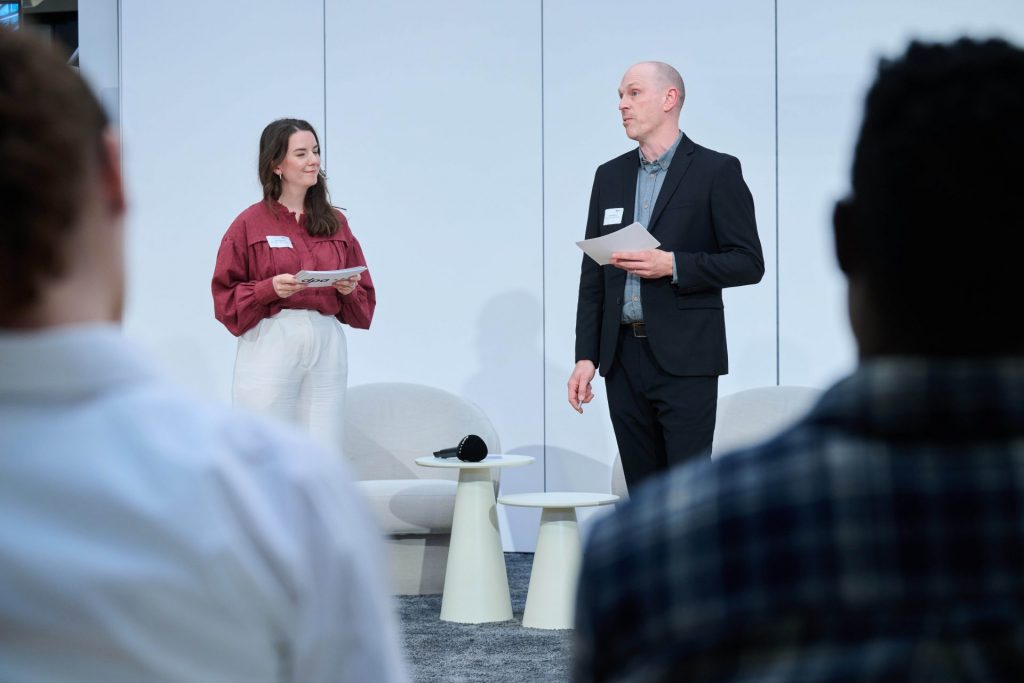
The event took place at the Berlin newsroom of Deutsche Presse-Agentur (dpa) and was streamed live via LinkedIn. Journalists, Interreg project coordinators, students, communication professionals and other stakeholders in European regional cooperation discussed how the impact of EU cohesion policy can be made more visible to regional audiences. 

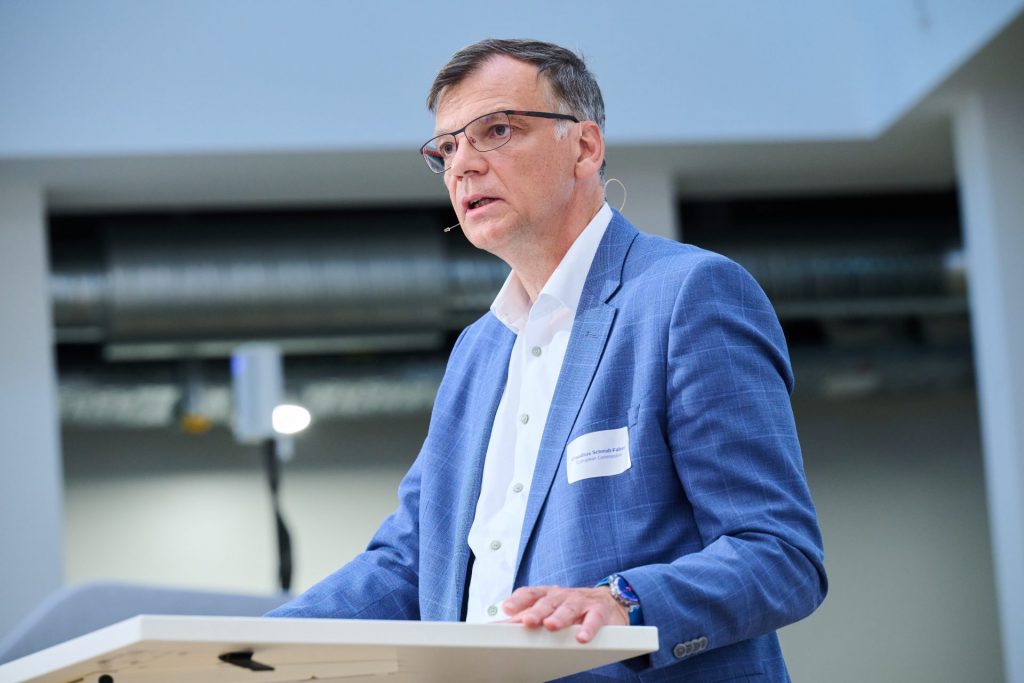
Claudius Schmidt-Faber, Senior Economic Expert at the European Commission in Germany, placed cohesion policy in the context of European integration and future regional development. Looking ahead to the EU’s next Multiannual Financial Framework from 2028, he also addressed the future architecture of cohesion policy. 

“When we speak about cohesion policy, we are speaking about one of the most concrete promises of the EU: that integration should benefit all regions, territories and citizens,” Schmidt-Faber said. Europe cannot be resilient if entire regions are left behind, or united if borders remain barriers. “Cohesion is not a luxury. It is necessary.” 

Interreg builds cooperation and trust 

A central topic of the panel discussion was why the impact of cohesion policy is often difficult for citizens to see. Dr Kai Böhme, an expert in European regional policy and territorial development, as well as founder and director of Spatial Foresight, offered a simple explanation: “You don’t see things when they work well.” When cross-border transport, healthcare or education function smoothly, the cooperation behind them often remained invisible. The absence of obstacles could itself be a result of successful cohesion policy, Böhme added. 

Izabela Glišić, Head of the Joint Secretariat of the Interreg VI A Brandenburg-Poland 2021-2027 Cooperation Programme, emphasised that Interreg was fundamentally about funding cooperation between regions and countries. A central focus was building trust, creating relationships that can continue beyond individual funding projects. 

Interreg supports regions in addressing challenges in areas including innovation, mobility, healthcare, climate adaptation, emergency services and education. “Interreg is not only about funding projects. It is about building habits of cooperation,” said Schmidt-Faber. “It creates trust – and in today’s Europe, trust is a strategic asset.” 

TRAIL: Cohesion policy in higher education 

Pinar Hepperle, Coordinator of the Sustainable Business Development Master’s programme at Offenburg University, contributed the project perspective. The Interreg-funded TRAIL project connects universities in Offenburg, Strasbourg and Basel. Students gain international and practical experience and prepare for a sustainable, cross-border working environment. 

TRAIL shows how EU cohesion policy can connect students, universities, companies and the regional labour market. Hepperle also highlighted a key communication challenge: projects need to be explained differently to different audiences – including students, companies interested in cooperation, the wider public and administrative stakeholders. Effective communication therefore requires different approaches and formats rather than one single message, she said. 

The discussion underlined that reporting on EU-funded projects should go beyond funding figures and institutional language. The key questions are concrete: Who benefits? What has changed? Which regional challenge is being addressed? And why was cross-border cooperation necessary? 
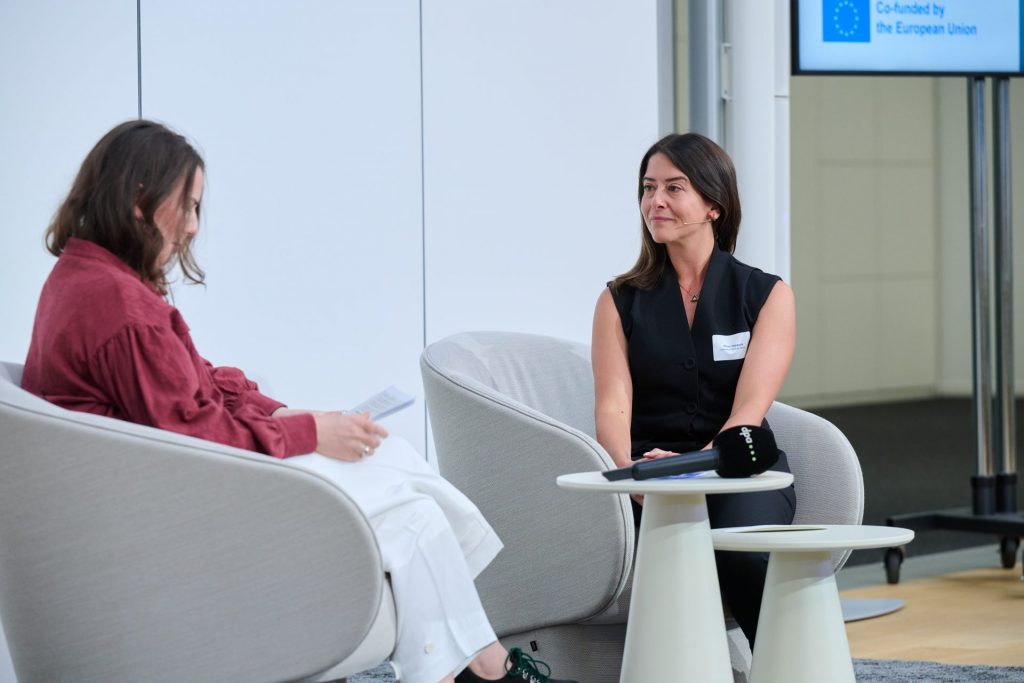
© Annette Riedl

About EUconomy 

EUconomy – Partnerships4Prosperity is a 12-month media initiative by dpa-Custom Content, co-funded by the European Union. The project produces free multimedia content packages – including videos, images and social media material – documenting EU-funded cross-border projects in Germany’s border regions with Austria, Poland, the Czech Republic, France and Denmark. All content is made available free of charge to media outlets across Germany and beyond.  

dpa is the lead agency coordinating the European Newsroom (enr), a network of European news agencies.  

Press contact: euconomy-pressevent@dpa.com 

  •  

“Climate change is here, and it hurts” — interview with the European Environment Agency’s Executive Director  

The hottest summer ever recorded, rivers and lakes drier than ever, and wildfires burning thousands of hectares of nature to the ground – Europe is experiencing it all. 

The Executive Director of the European Environment Agency (EEA), Leena Ylä-Mononen, said that climate adaptation is no longer optional as the impact of climate change is already visible. “Severe droughts have disrupted agriculture, our transport, and even energy infrastructure. And we have seen intense heatwaves across many parts of Europe that have had huge impacts on the infrastructure, health and well-being of people,” she told the European Newsroom (enr) in an interview. 

She urged European politicians to look beyond the next election and plan for the climate risks already foreseeable over the next decade. “This kind of short-termism is not going to help us,” she said. 

Ylä-Mononen warned that these extreme conditions could fundamentally change agriculture in parts of Europe, with some crops no longer viable in the driest areas of the Mediterranean. 

She also underlined that accelerating the uptake of renewables is key to reducing dependence on imported fossil fuels and limiting Europe’s exposure to volatile energy prices. The EEA chief pointed to the need for greater flexibility and storage capacity to help protect households and businesses when prices rise. 

According to the EEA, gas price fluctuations in early 2026 cost the EU €13 billion by mid-April, while renewable energy generated €29 billion in consumer savings, highlighting its role in stabilising the energy system. 

The interview was conducted by journalists from European Newsroom partner agencies dpa Deutsche Presse-Agentur GmbH and Czech News Agency (CTK) on behalf of the entire network. 

Read some of our network’s coverage here: 

  •  

To enter the EU, or not to enter the EU? Interview with Migration Commissioner Magnus Brunner

Migration policy is high on the European Union’s agenda. But one month after the bloc’s new rules – known as the Pact on Migration and Asylum – came into force, is the EU beginning to see the desired results?

For Magnus Brunner, European Commissioner for Internal Affairs and Migration, the answer was yes. In an interview with the European Newsroom (enr) published on Thursday, he said that member states have begun implementing the rules and that illegal border crossings into the EU already dropped by 37% in the first half of 2026 compared to the previous year.

In light of these figures and the new rules, the Austrian politician said it is now time to “gradually” abolish internal border controls between EU member states, such as ongoing controls in Germany and Austria. He argued that the EU’s external borders were now better protected and reiterated that the number of irregular border crossings had fallen dramatically.

Journalists also quizzed Brunner about the Entry/Exit System, a new digital entry and exit procedure for people who are not from the EU, Iceland, Liechtenstein, Norway or Switzerland. While admitting concerns from member states and critics that the system is still causing trouble in some member states, he said that it is generally performing as expected.

A major issue, however, remains for professional truck drivers from countries in the Western Balkans, who need to enter the EU to deliver goods. Currently, they can only stay in the EU for a maximum of 90 days within any 180-day period. As a solution, Brunner proposed to EU member states and Western Balkan countries to negotiate long-term visas bilaterally.

The interview was conducted by journalists from European Newsroom partner agencies dpa, APA, and CTK, on behalf of the entire network.

Read some of their coverage here:

More impressions from the interview. Photos: Michael Brandt/dpa/European Newsroom

  •  

Bridging the Atlantic: US and German journalists discuss EU reporting at the European Newsroom

The European Newsroom (enr) welcomed a group of journalists from the United States to its offices in Brussels as part of their two-week exchange programme with the RIAS Berlin Kommission.

The visitors came from New York, Massachusetts, Washington, D.C., Missouri, Georgia, North Carolina, and Arizona and represented various media outlets such as Semafor, WCVB, NPR, CNN, KTVI/KPLR, WSOC Charlotte, Spectrum News, ABC, The Dispatch, and CBS.

What followed was a lively exchange about the state of journalism, news coverage and press freedom in the United States and Europe, how to get information from crucial sources, as well as the similarities and differences between the daily press briefings in the White House and the European Commission.

Tim Kohnen presented the European Newsroom’s work as a Brussels-based network of European news agencies. He was accompanied by Katharina Redanz and Niklas Treppner from the German press agency dpa Deutsche Presse-Agentur GmbH, who gave more insight on how to report on EU affairs as a correspondent in Brussels.

The RIAS Berlin Commission organises exchange programmes several times per year, primarily for radio and television journalists from the US and Germany. It is dedicated to improving German-American understanding in broadcast journalism, for example through immersive study trips and newsroom visits.

This time around, the journey took the journalists to Munich, Dresden, Berlin, Cologne, and Brussels. They were accompanied by Christoph Jumpelt, RIAS Executive Director.

  •  

From Dublin to Brussels: European Newsroom meets upcoming Irish EU Presidency

Ireland will take over the rotating Presidency of the Council of the European Union on July 1, 2026.

In a background briefing for the European Newsroom (enr) at the Permanent Representation of Ireland to the European Union in Brussels, journalists got an early glimpse of what the presidency will be working on in the months ahead.

Correspondents from several European Newsroom member agencies spoke with Eoin Flavin (Spokesperson Coreper II ) and Peadar Ó hÚbáin (Spokesperson Coreper I). 

They engaged in a lively Q&A on a range of topics – from competitiveness, security, and defence to EU enlargement, support for Ukraine and online safety. 

The talk brought together journalists from enr partner agencies dpa (Germany), CTK (Czech Republic), APA (Austria), and UKRINFORM (Ukraine).

More impressions from the briefing. Photos: Tim Kohnen/European Newsroom

  •  

Can money keep pace with Europe’s defence ambitions? Interview with European Investment Bank chief Nadia Calviño

In an interview with the European Newsroom (enr), the President of the European Investment Bank (EIB), Nadia Calviño, told journalists that the bank is on track to meet and possibly exceed this year’s target of allocating 5 percent of its EU financing to security and defence. According to the EIB, this amounts to around €4.5 billion.

According to EIB figures, the world’s largest multilateral development bank already quadrupled its financing for security and defence projects last year to €4 billion, reflecting Europe’s response to an increasingly volatile geopolitical environment.

The enr spoke with Calviño on the sidelines of the EIB’s annual Board of Governors meeting, as well as a meeting of EU ministers responsible for economic affairs, finance and the EU budget , in Luxembourg on Friday.

The interview was conducted by journalists from European Newsroom partner agencies dpa Deutsche Presse-Agentur GmbH and ANSA on behalf of the entire network.

Read some of their coverage here:

dpa (Germany): EU development bank continues to expand defence investment

ANSA (Italy): Calvino (EIB), ‘on track to exceed 5% target for defense financing’

  •  

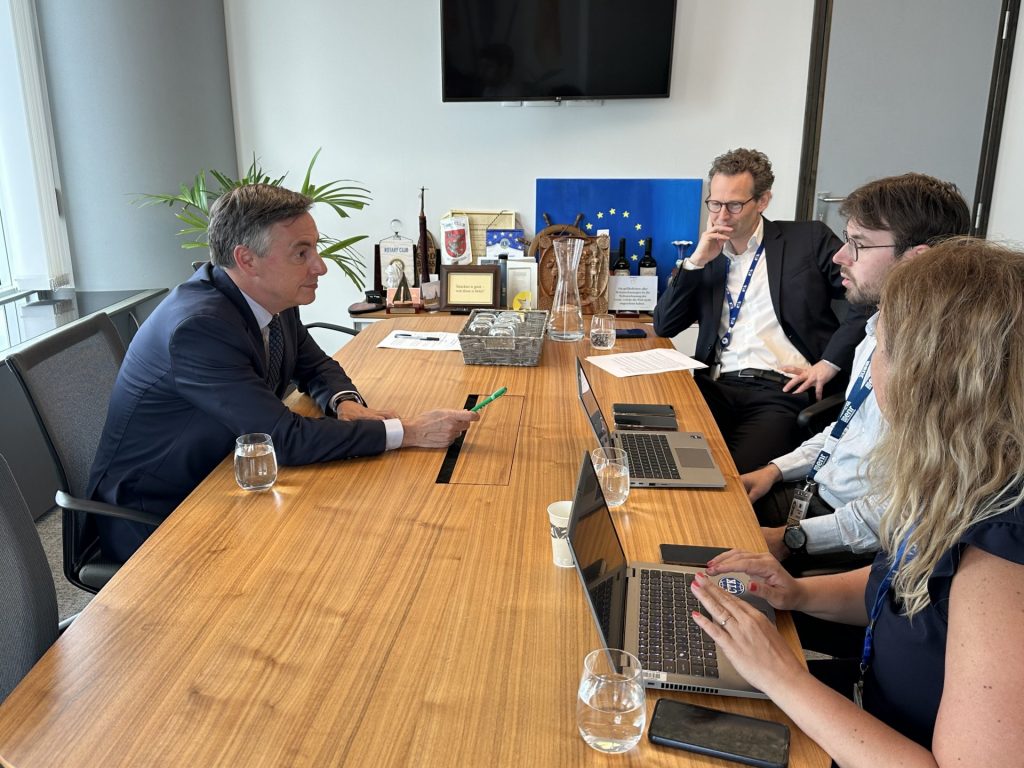
Ukraine, the Western Balkans and the EU’s Enlargement agenda: Interview with MEP David McAllister 

In an interview with the European Newsroom (enr), the leading German foreign policy politician in the European Parliament, David McAllister, urged Ukraine to accept a recent proposal by German Chancellor Friedrich Merz for an “associate membership” in the EU.

McAllister, who sits with the European People’s Party (EPP) and chairs the European Parliament’s Committee on Foreign Affairs (AFET), told the enr he is in favour of enhanced, step-by-step integration of Ukraine into the EU in order to make the benefits of the EU visible to the Ukrainian people. One example was for Ukraine to enter the European Parliament as an observer.

Kyiv had previously rejected the idea of an “associate membership”. In a letter to EU leaders, President Volodymyr Zelenskyy wrote that it would be unfair for Ukraine to have a presence in the EU but remain without a voice. Instead, he urged the EU to move faster and not keep Ukraine in a waiting room.

Ukraine is not the only country in line for EU membership. Eight other European nations are currently also recognised candidates to join the bloc: Albania, Bosnia and Herzegovina, Georgia, Moldova, Montenegro, North Macedonia, Serbia, Türkiye.

McAllister told the enr that enlargement policy is at the top of the EU agenda and that the Western Balkan countries are at the heart of Europe. As such, a stable region is an investment in peace and security, he said. 

At the same time, the German politician advocated for an individual approach to each country in the region based on merit, rather than grouping them together as one. He explained that the countries of the Western Balkans are individually at very different stages of progress. As an example, he pointed out that Montenegro is a clear frontrunner, while North Macedonia’s EU path remains blocked due to a political deadlock with Bulgaria.

The interview was conducted by journalists from European Newsroom partner agencies dpa (Germany), CTK (Czech Republic), and Tanjug (Serbia) on the behalf of the entire network.

Read some of the coverage from our network here:

MEP David McAllister (Germany, EPP) speaks to journalists from European Newsroom partner agencies dpa (Germany) and CTK (Czech Republic). Photo: © Ivan Ilic/Tanjug/European Newsroom
  •  

Fact-checking in the age of AI: a European Newsroom workshop on verification

What is disinformation? What principles drive the spread of fake content online? And what role does artificial intelligence play in this context?

On May 27, the European Newsroom continued its series of webinars with one of the most highly relevant topics for journalists and media professionals: the surge in disinformation and fake news on social media and other online platforms. The webinar aimed to strengthen participants’ ability to identify misleading content quickly and apply verification techniques in their daily reporting.

The systematic, interest-driven dissemination of disinformation poses significant challenges for mass-media audiences and users of digital information ecosystems. This includes false and divisive narratives that influence public opinion, AI-generated images that cause irritation and outrage as well as manipulated content in high-reach social media channels. Against this backdrop, the fundamental principles of journalistic due diligence have gained considerable importance.

Julian Bohne, Verification Specialist at dpa-Custom Content in Hamburg, equipped participants with tools, tips and techniques to identify and debunk such material in the digital space. Starting with the basics, he demonstrated how manipulated content is created and explained the principles behind its dissemination. The key message: verification, source criticism and contextualisation are more crucial than ever for distinguishing authentic content from manipulated material.

To put theory into practice, he used examples from the daily editorial work of Germany’s largest news agency, dpa, to demonstrate fundamental verification methods and tools. Throughout the webinar, participants tried their hands in analysing and verifying images and videos, determining whether and why they were fabricated or AI-generated.

Participants came from several European Newsroom agencies, including ANSA (Italy), AMNA (Greece), BTA (Bulgaria), PAP (Poland), EFE (Spain), and FENA (Bosnia and Herzegovina).

  •  

How AI is changing SEO: a two-part European Newsroom workshop 

Why is my website not appearing as a top search result on Google? How do I adapt my content to make it more visible online? And how is the rise of Artificial Intelligence (AI) changing the way digital content finds its way to the intended audience?

On April 10 and 21, the European Newsroom (enr) organised a series of two webinars on Search Engine Optimization (SEO) and Generative Engine Optimization (GEO) – exploring how newsrooms can make their content more visible on search engines like Google, as well as in the context of the emerging online world driven by AI.

Participants came from European Newsroom member agencies PAP (Poland) CTK (Czech Republic) EFE, Europa Press (both from Spain), BTA (Bulgaria) STA (Slovenia), and MIA (North Macedonia).

Part I: SEO and AI

During the first session of the workshop, participants were introduced to the fundamentals of SEO and how the focus is shifting due to the use of artificial intelligence. 

Ubiquitous AI tools such as ChatGPT, Claude, and Google Gemini are increasingly changing user behavior and often replacing traditional search engines. To remain visible with your own content, classic SEO principles alone are no longer sufficient. 

The main takeaway? SEO is not dead – to the contrary, it remains the most important foundation for GEO and search engines will continue to be highly relevant.

Part II: EEAT factors

The second and final session focused on so-called E-E-A-T factors, demonstrating the steps needed to be recognised as a reliable source by both search engines and AI systems.

The acronym E-E-A-T stands for a Google quality concept covering Experience, Expertise, Authoritativeness, and Trustworthiness. It is used to assess the quality and credibility of website content. E-E-A-T factors are a standard in search engine optimization. 

  •  

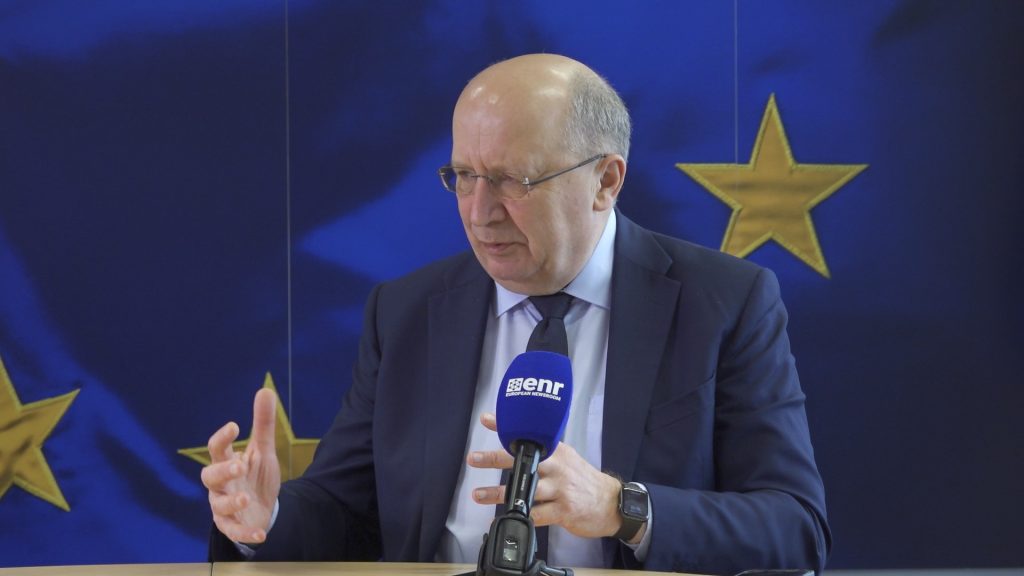
From defence reliance to resilience: Interview with European Commissioner Andrius Kubilius

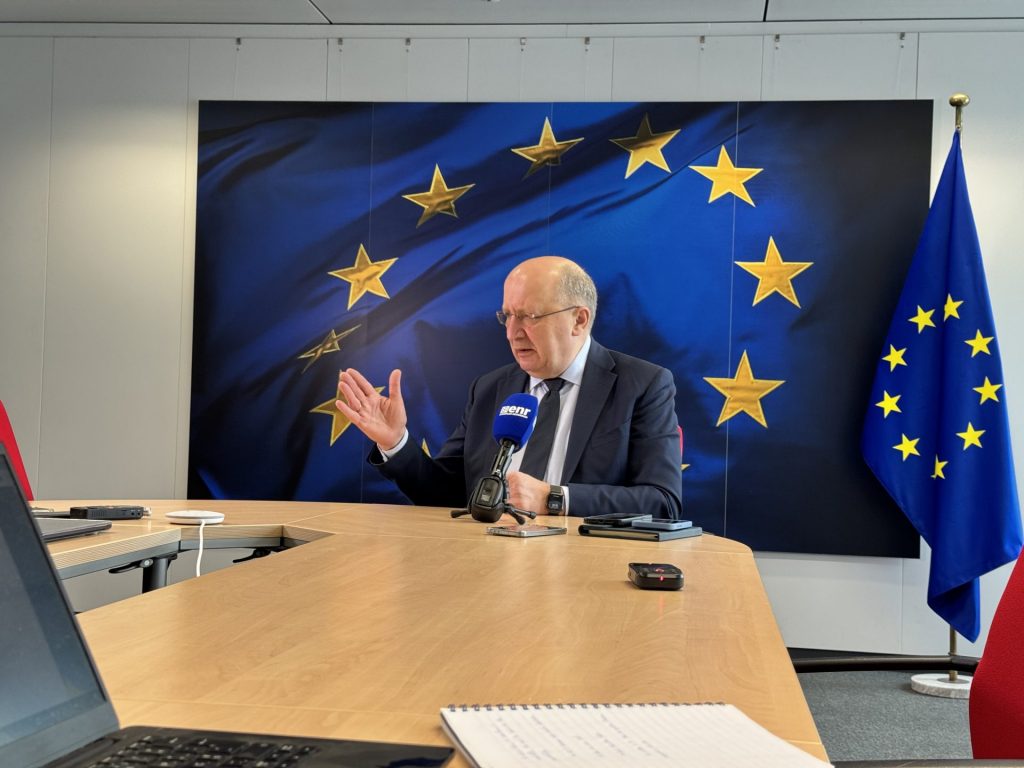
The EU has a defence clause. But does it have a plan? That was among the questions raised during an interview with Andrius Kubilius, European Commissioner for Defence and Space, for the European Newsroom (enr) in Brussels.

Kubilius urged the European Union to strengthen its domestic defence capabilities and reduce reliance on external suppliers – particularly the United States – for critical military equipment and technologies.

He also cautioned that the EU prepare for a potential reduction of US military presence in Europe, underscoring the urgency of building greater strategic autonomy. At the same time, the former Lithuanian prime minister warned that Washington may struggle to sustain its level of military support for Kyiv, as global attention is shifting from Russia’s war against Ukraine to the war in Iran.

The EU defence chief also called for a stronger role of the EU’s mutual defence clause – known as Article 42.7 of the Treaty on European Union – which stipulates that when activated by an attacked EU country, all other member states must respond to provide assistance. According to Kubilius, the bloc needs a “playbook” to make the clause more workable and effective in practice.

The Commissioner also acknowledged the importance of EU enlargement as a strategic investment in Europe’s security and defence. Recalling the example of his home country Lithuania, which became an EU member state in 2004, he said that joining the EU enables economic and social development, prosperity, and stability, which he considered essential for the future of European defence.

The interview was conducted by journalists from European Newsroom partner agencies dpa (Germany), ANSA (Italy), EFE, Europa Press (both Spain), Lusa (Portugal), and STA (Slovenia.) Audiovisual support was provided by TotalEU Production.

More impressions from the interview. Photos: ANSA/European Newsroom (left) / Iván Zambrano/Europa Press (right)

  •  

Towards a safer online space for kids: interview with European Commission Executive Vice-President Henna Virkkunen

Across every corner of the internet, EU kids deserve a safe digital playground. That was the message of Henna Virkkunen, European Commission Executive Vice-President for Tech Sovereignty, Security and Democracy during an interview with the European Newsroom (enr) in Brussels focusing on the protection of minors online.

The European Commission has taken aim at some of the world’s biggest adult websites, announcing preliminary findings that Pornhub, Stripchat, XNXX and XVideos breach the EU’s landmark Digital Services Act (DSA). After opening proceedings in May last year, Brussels now says the platforms are failing to shield minors from explicit content, pointing in particular to weak or ineffective age verification systems that leave underage users exposed.

The Commission also turned its attention to Snapchat, opening an investigation to determine whether the social media platform is complying with the DSA. The probe comes amid concerns that minors could be exposed to serious risks on the app, including grooming and the illegal sale of drugs, vapes, and alcohol.

Journalists from European Newsroom partner agencies ANSA (Italy), CTK (Czech Republic), dpa (Germany), EFE (Spain), TT (Sweden), and other media were given an exclusive first look, getting the chance to quiz Virkkunen directly about her latest announcements on child safety and online platform regulation under the DSA. 

In addition, journalists also asked questions about the EU’s age verification app – which is currently in a testing phase – as well as broader issues including addictive platform design, the responsibility of social media companies to protect minors, and the proposed “chat control” measures, which have raised significant privacy concerns across Europe.

  •  

The EU “is a champion of international rules-based order”: Interview with European Council President António Costa

“The European Union is a champion of international rules-based order,” European Council President António Costa told the enr in an interview with European news agencies on Monday.

Journalists from Lusa (Portugal), CTK (Czech Republic), EFE, Europa Press (both Spain), STA (Slovenia), dpa (Germany), and TT (Sweden) had the opportunity to ask Costa questions on behalf of the entire network, which currently includes more than 20 news agencies.

Europe is feeling the impact of the US-Israeli war with Iran in the Middle East as disruptions to the flow of oil are causing energy prices to spiral across the globe. At the same time, the EU is poised to provide Ukraine with a 90 billion Euro loan to finance its defence against Russia’s war of aggression.

On the Middle East, Costa noted “that the United States and Israel decided to launch this initiative without any information to their allies,” referring to the US-Israeli attacks on Iran on February 28, 2026. “We express our deep concern about the consequences of this war on the international rules-based order, on the humanitarian consequences and also on the impact of energy costs in the global economy,” he said, while also condemning the Iranian attacks on its neighbours.

The former Portuguese Prime Minister also told the enr that the EU should prepare for possible talks with Russia. “It will come one day. But not now,” he said, adding that the EU should not interfere with the ongoing efforts of US President Donald Trump for peace in Ukraine.

Ahead of the meeting of EU leaders in Brussels on Thursday, the European Council chief called on Hungarian Prime Minister Viktor Orbán to lift his government’s blockade on the 90 billion  Euro loan for Ukraine. Slamming Budapest’s position as “completely unacceptable,” Costa recalled that all EU member states, including Hungary, approved the loan last December.

At the same time he criticised Ukrainian President Volodymyr Zelenskyy for openly threatening Orbán in earlier statements. “We cannot accept when, even in an emotional moment, that someone addresses in a non-proper way a leader of a European Union member state.”

Finally, Costa said that “enlargement is a main priority” for the EU, but that countries hoping to join the bloc must first implement reforms. When asked whether he supports an option for new members to join without veto rights, Costa said: “We need to manage this enlargement process with a lot of creativity and not giving up in our criteria, in our merit basis, but with a huge sense of urgency”.

Photos: Markus Lenhardt/dpa-ENR Pool/dpa

  •  

From local action to EU strategy: Interview with the President of the European Committee of the Regions and the Chair of the Special Committee on the Housing Crisis of the European Parliament

On Wednesday, the European Newsroom (enr) sat down with Kata Tüttő, President of the European Committee of the Regions, and Irene Tinagli, MEP and Chair of the Special Committee on the Housing Crisis of the European Parliament to talk about the EU’s plans for more affordable housing.

Europe faces a crisis driven by rising house prices and increasing housing costs, affecting virtually all EU citizens and especially younger generations looking to move out of their parents’ home and live an independent life.

In an interview with the European Newsroom and Agence Europe, Tüttő and Tinagli laid out the challenges and sketched possible solutions, drawing on both their personal perspectives and institutional realities in their roles.

Journalists asked a range of questions from who does what — locally, nationally and on the EU level — in fixing the housing crunch, to the Commission’s Affordable Housing Plan and the high-pressure negotiations over the EU’s next long-term budget (2028–2034).

Housing policy is primarily a national and local responsibility, but the EU influences the sector through funding, regulation and coordination. EU rules on state aid, energy efficiency, public procurement and financial markets, as well as cohesion policy and recovery funds, all shape how and where affordable housing can be built.

In response to growing public pressure, the European Commission has put affordable housing higher on its political agenda, including through an Affordable Housing Plan. The initiative aims to boost housing supply, mobilise public and private investment and support member states and regions in expanding social and affordable housing.

More impressions from the interview. Photos: Ivan Ilic/Tanjug/European Newsroom

  •  

Days Disrupted

The war in Iran began five months ago. Headline news about the conflict tends to focus on when and how it might end. In the meantime, the impacts of the conflict are felt worldwide—by drivers, farmers, business owners, and families. The Associated Press shares the stories of seven people suffering because of the war. Among them is Edgar Funelas, a jeepney driver in the Philippines who lives with his ten-year-old daughter:

He uses laundry soap—harsher, but cheaper—to wash his body and his clothes in the same motion, stretching what little money he has. Even before the war in Iran, he was living on the margins. A fire took their home and their belongings, forcing them to move into the brightly colored minibus he drove.

He’d hoped to be able to rent a room by now. Then diesel prices surged, and he could no longer afford the fuel to run his jeepney.

He hasn’t earned a single peso in days. There will be no breakfast. Hunger gnaws, but it’s the small rituals of privacy that he misses most: to be able to wash out of sight, to sleep behind walls, to keep his desperation from being laid bare.

  •  

A Teen Reporter Searched for His Community in the Epstein Files. Adults Freaked Out.

Every adult who purports to care about a free press should read at least one story about the frustrating hurdles and bad-faith nitpicking confronted by student journalists (and their advisors). Earlier this year, a young reporter for the Redwood High School Bark found a few local references in the US Department of Justice’s public files concerning Jeffrey Epstein, the sex offender who died in 2019 while awaiting trial on sex-trafficking charges. Soon, the high school faced legal threats, and administrators grew concerned that students had published inaccurate information. Ara Rosenthal tells the story of the steady, diligent young journalists who weathered the worries and pressures of the adults around them—and kept their story intact.

  •  
❌