❌

Reading view

AIM-260 JATM Missile Spotted On Australian Super Hornet

A Royal Australian Air Force F/A-18F Super Hornet has been photographed carrying an inert AIM-260 Joint Advanced Tactical Missile (JATM) during a major U.S. Navy test event in California. The development comes weeks after Australia announced that it would buy the new missile, with its Super Hornets being the first RAAF aircraft to receive it.

The photograph was released by the U.S. Navy and shows an RAAF F/A-18F assigned to No. 1 Squadron taking off from Naval Base Ventura County Point Mugu on September 11 during Gray Flag 2026. The loadout also includes a CATM-9X — the inert training variant of the AIM-9X — and a CATM-120, the inert training version of the AIM-120 AMRAAM, three external fuel tanks, an AN/ASQ-228 ATFLIR targeting pod, and a Tactical Combat Training System (TCTS) pod.
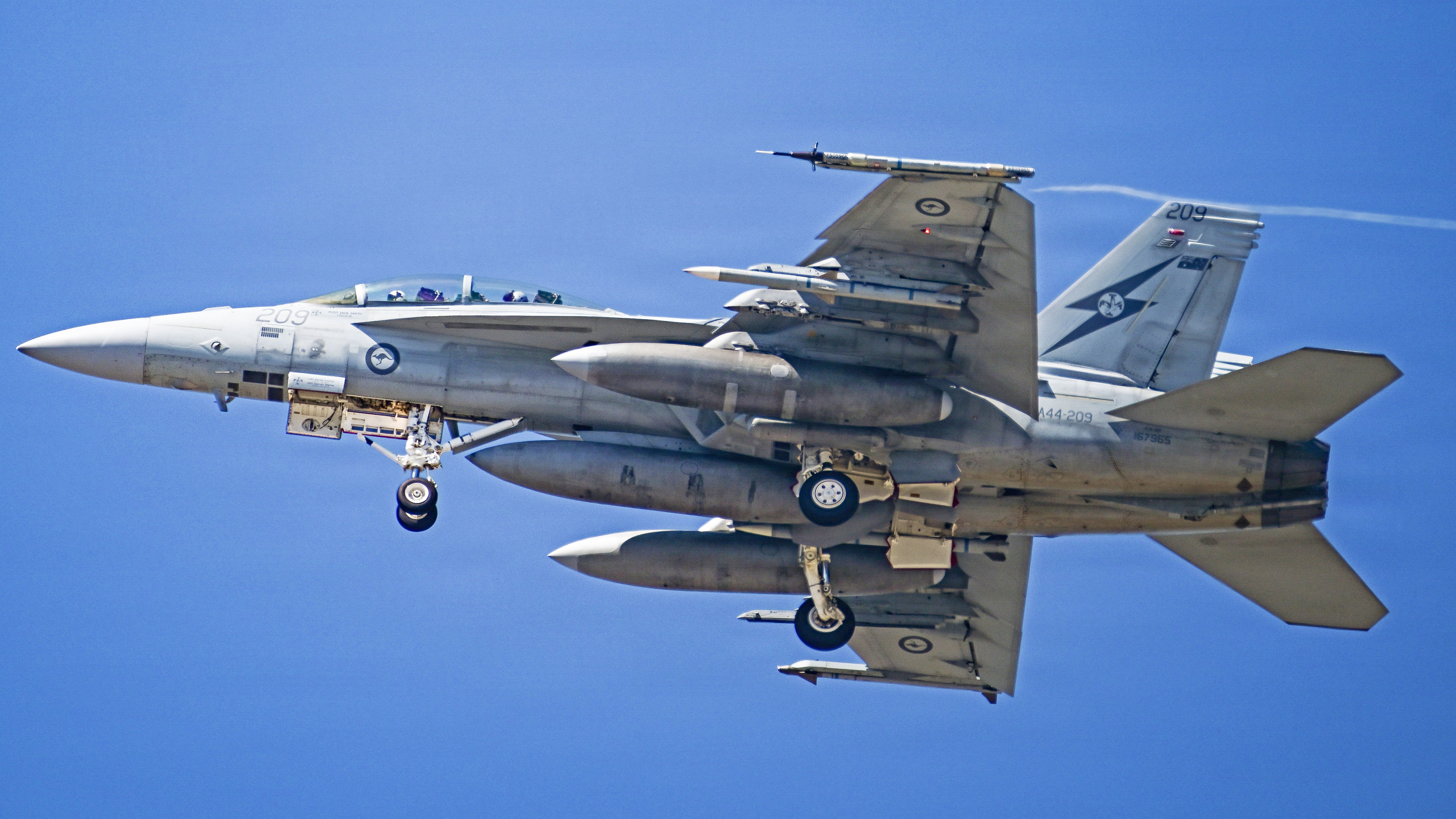
A Royal Australian Air Force F/A-18F Super Hornet assigned to No. 1 Squadron takes flight at Naval Base Ventura County Point Mugu during Gray Flag 2026, Sept. 11, 2026. Gray Flag is the naval aviation test community’s premier large-force test event, providing unique venues for large-scale integration of new capabilities across services and platforms. Working with the Joint Force, industry and our nation’s allies to ensure integration and interoperability is key to ensuring warfighters have a decisive advantage in the field. (U.S. Navy photo by Dana Rene White)
An AIM-260 JATM is seen on station 7, the “cheek” station, of a Royal Australian Air Force F/A-18F Super Hornet during Gray Flag 2026. U.S. Navy photo by Dana Rene White

Gray Flag is the naval aviation test community’s flagship large-force test event, providing opportunities for large-scale integration of new capabilities across services, platforms, industry, and allied forces. Gray Flag 2026 was the largest edition of the exercise to date. According to the Navy, more than 3,000 personnel from over 150 organizations participated, flying more than 750 sorties and logging over 2,000 flight hours across hundreds of multi-domain test objectives.

Previous iterations of Gray Flag have been used to test new and still-developmental weapons in increasingly complex, operationally representative scenarios, including actual missile engagements against realistic targets. Making use of the sprawling Point Mugu Sea Range, the event has also become an important opportunity for working out how sensors, weapons, aircraft, and networks interact as part of larger kill chains and kill webs. A new, longer-range air-to-air missile is especially relevant when it comes to developing tactics, techniques, and procedures within a broader, networked air-combat architecture.

Beyond being the first apparent glimpse of an Australian JATM in any context, integration of the weapon onto Australia’s Super Hornet fleet has already progressed to the point of carrying the missile — in inert form — during a major U.S.-based test and integration exercise.
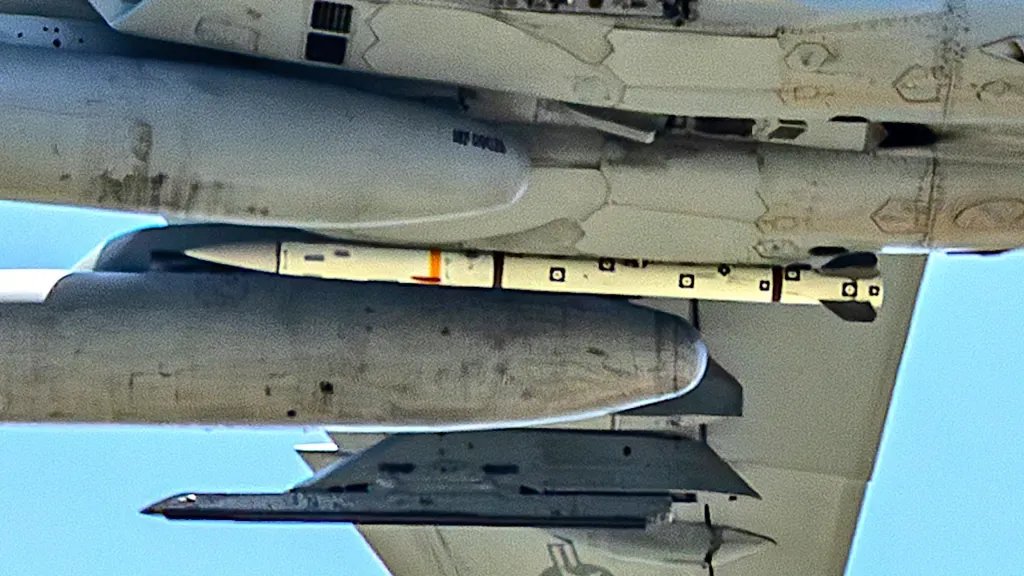
A close-up look at an AIM-260 test round on the same station of a U.S. Navy Super Hornet. Jonathan Tweedy/@flightline_visuals

As TWZ reported in August, Australia is set to become the first country outside the United States to operate the AIM-260 following a roughly $480-million procurement through the U.S. Foreign Military Sales program. The Australian government said at the time that the missile would first be integrated onto the RAAF’s F/A-18F fleet, before being fielded on the F-35A and EA-18G Growler. Looking further ahead, the RAAF’s MQ-28 Ghost Bat collaborative combat aircraft (CCA) could also emerge as a candidate for integration with JATM.

Australia’s announcement did not provide a delivery schedule or specify when JATM would enter Australian service.

The overall proportions and external configuration of the AIM-260 were revealed when an example appeared on a U.S. Navy F/A-18F in May of this year. That aircraft, operated by Air Test and Evaluation Squadron 31 (VX-31), provided the first publicly known photographic view of the highly classified missile.
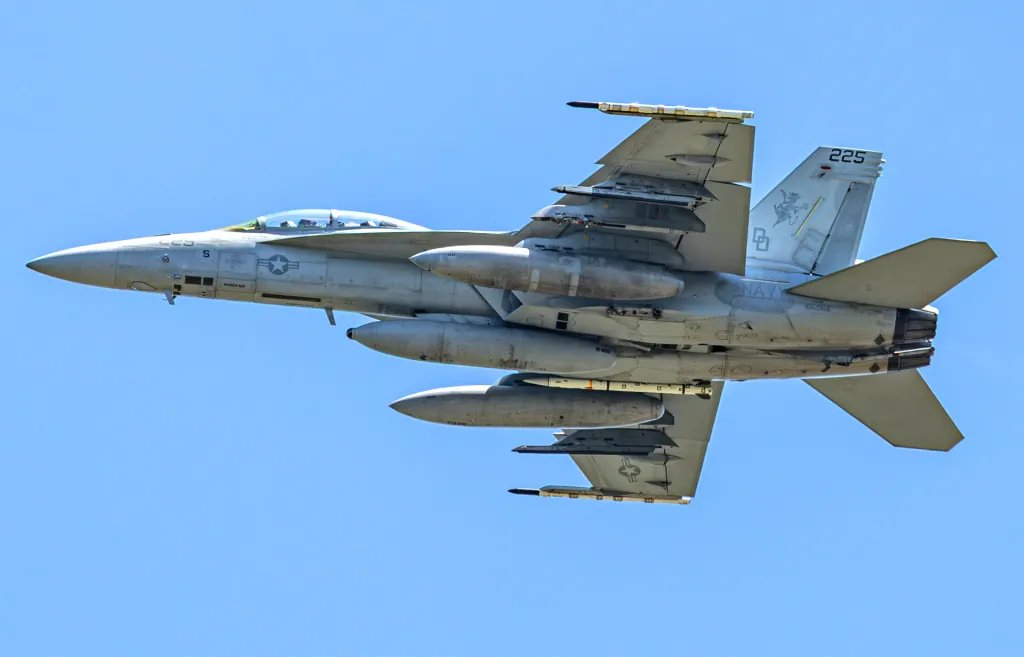
An F/A-18F from VX-31 carrying the AIM-260. Jonathan Tweedy/ @flightline_visuals

The AIM-260’s exact specifications remain classified. It is intended to provide substantially greater range than the AIM-120 AMRAAM while retaining a broadly similar form factor. That compact configuration is important because the missile is designed not only for external carriage but also for internal carriage by aircraft such as the F-22 and F-35.

The weapon has been developed as a response to the increasingly long-range air-to-air threat posed by China’s PL-15 and other advanced missiles. Official range figures have not been released, although previous reporting has pointed to an intended range of at least 120 miles and potentially considerably more.
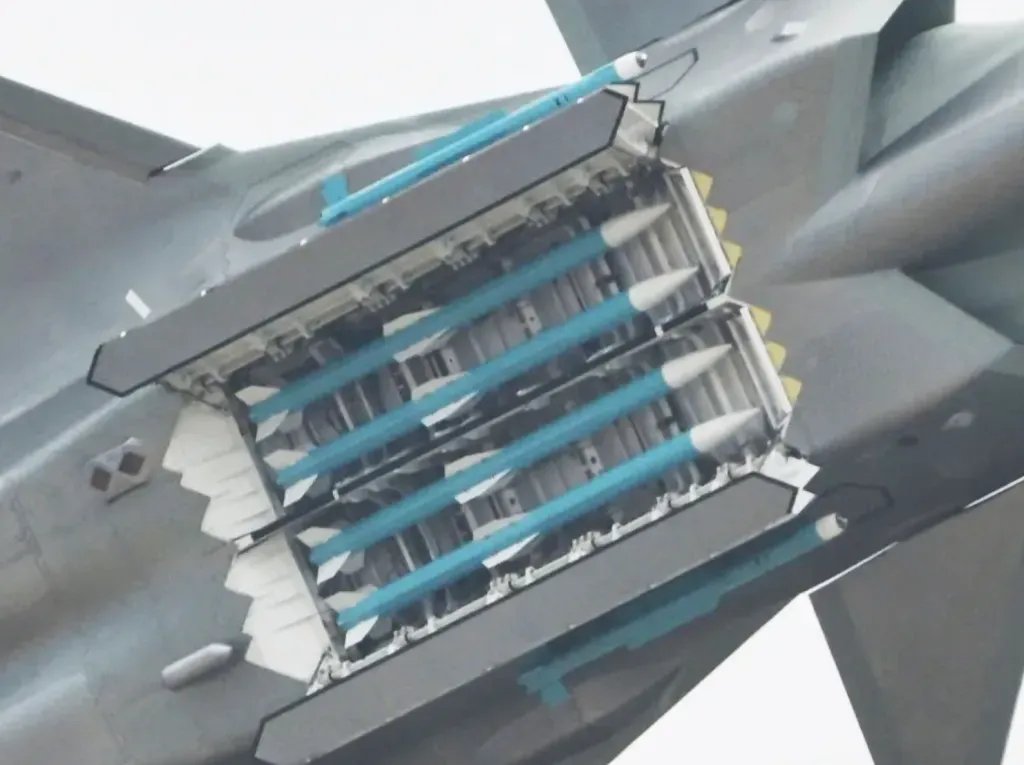
Close-up of a J-20 fighter carrying four inert examples of the PL-15 in its main ventral bays. via Chinese internet

The Australian procurement therefore represents an important expansion of the JATM program beyond the U.S. fleet.

The timing of the Point Mugu photograph is particularly interesting. Gray Flag is specifically intended to bring together large numbers of aircraft, weapons, sensors, networks, and other systems for demanding integration and test activities. An Australian Super Hornet carrying JATM at such an event would be entirely in line with the purpose of the exercise.
Ground crew members stand by an EA-18G Growler on the flight line at Naval Base Ventura County Point Mugu, Sept. 30, 2026. Gray Flag is the naval aviation test community’s premier large-force test event, providing unique venues for large-scale integration of new capabilities across services and platforms. Working with the Joint Force, industry and our nation’s allies to ensure integration and interoperability is key to ensuring warfighters have a decisive advantage in the field. (U.S. Navy photo by Katie Archibald)
Ground crew members stand by an EA-18G Growler on the flight line at Naval Base Ventura County Point Mugu, during Gray Flag, on September 30, 2026. U.S. Navy photo by Katie Archibald

It is not clear, however, what role the missile was playing. The photograph does not establish whether it was an Australian-owned operational weapon, a U.S. test asset, or a missile being used for a particular integration activity. Blue bands on the missile body confirm that it’s a training missile with an inert rocket motor and/or warhead.

Public evidence of an Australian aircraft carrying the AIM-260 is another important milestone in the weapon’s transition from a closely guarded U.S. development program toward allied service.

It also underscores the most interoperability aspect of the Australian acquisition. Canberra is buying into a U.S. long-range air-to-air weapon program at a time when the Royal Australian Air Force and U.S. forces are increasingly expected to operate together across the Indo-Pacific.
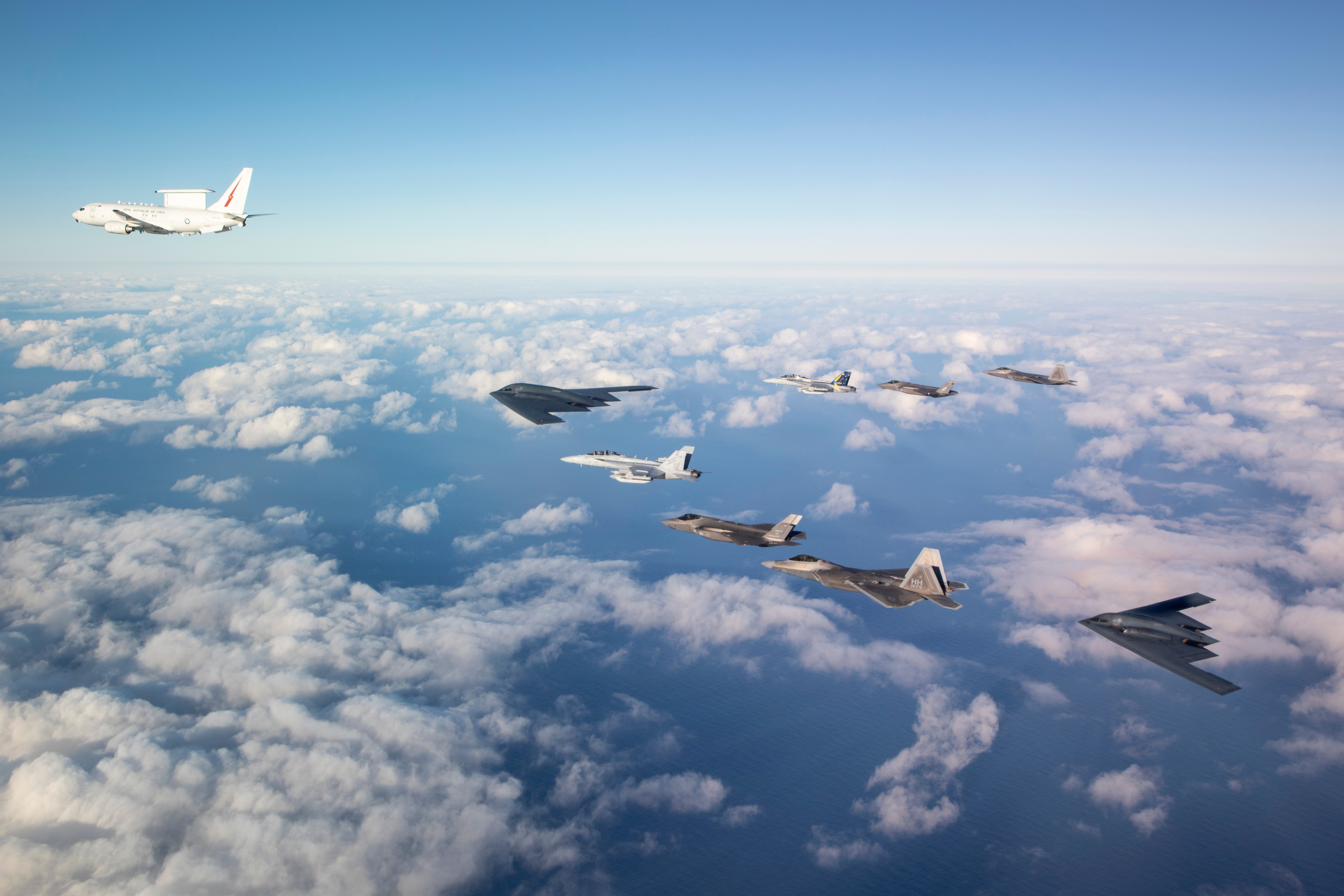
A Royal Australian Air Force E-7A Wedgetail, two EA-18G Growler jets and two F-35A Lightning II aircraft fly in formation with two United States Air Force B-2 Bombers and two F-22 Raptor fighter jets. *** Local Caption *** A Bomber Task Force consisting of United States Air Force B-2 Spirit stealth bombers, aviators and equipment from the 509th Bomb Wing and 131st Bomb Wing, are operating out of Royal Australian Air Force (RAAF) Base Amberley in Queensland. This deployment provides an opportunity for Australia and the United States to deepen air-to-air integration as part of the Enhanced Air Cooperation. RAAF and the United States Air Force have a longstanding shared history of military-to-military ties and regularly train together to improve interoperability.
A Royal Australian Air Force E-7A Wedgetail, two EA-18G Growlers, and two F-35As fly in formation with two U.S. Air Force B-2 bombers and two F-22 Raptors. Australian Department of Defense

The exercise also comes as the U.S. moves to accelerate development and future production of the AIM-260. In September, the Pentagon and Lockheed Martin reached a framework agreement laying the groundwork for a future multiyear procurement deal, while the Air Force Test Center confirmed that the missile is already undergoing both ground and airborne testing. The agreement is intended to give Lockheed Martin and its suppliers the demand signal needed to expand production capacity, although the number of missiles, costs and delivery schedule remain undisclosed.

The development should also be seen in the context of broader U.S.-Australian cooperation on air-launched weapons. RAAF F/A-18Fs are also being integrated into the U.S.-Australian Hypersonic Attack Cruise Missile (HACM) effort under the Southern Cross Integrated Flight Research Experiment (SCIFiRE), with Australia providing test infrastructure for the weapon’s flight-test program. You can read more about this program here.

The video below shows a hypersonic test conducted at Woomera in 2016 under the U.S.-Australian Hypersonic International Flight Research Experimentation (HiFIRE) program.

Australia said its F/A-18Fs would be the first RAAF aircraft to receive JATM, and an Australian Super Hornet has now been photographed carrying one during a major U.S. Navy test event. For the RAAF, getting JATM onto its frontline fighters is consequently an increasingly urgent requirement, giving its Super Hornets a credible long-range counter to the weapons they could face in a future high-end fight.

Contact the author: thomas@thewarzone.com

The post AIM-260 JATM Missile Spotted On Australian Super Hornet appeared first on TWZ.
  •  

Blackbeard Hypersonic Missile Seen Flying On F/A-18 Super Hornet For The First Time

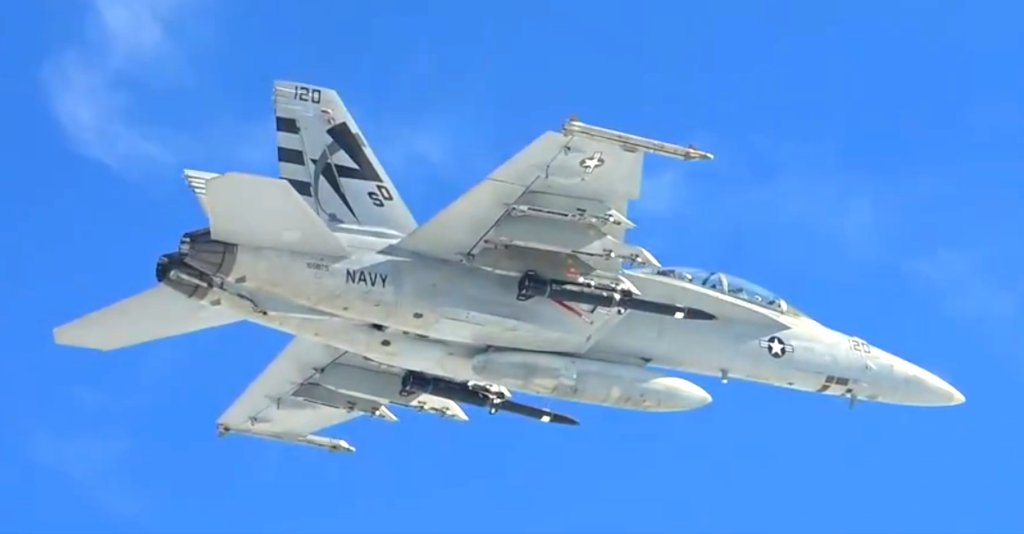
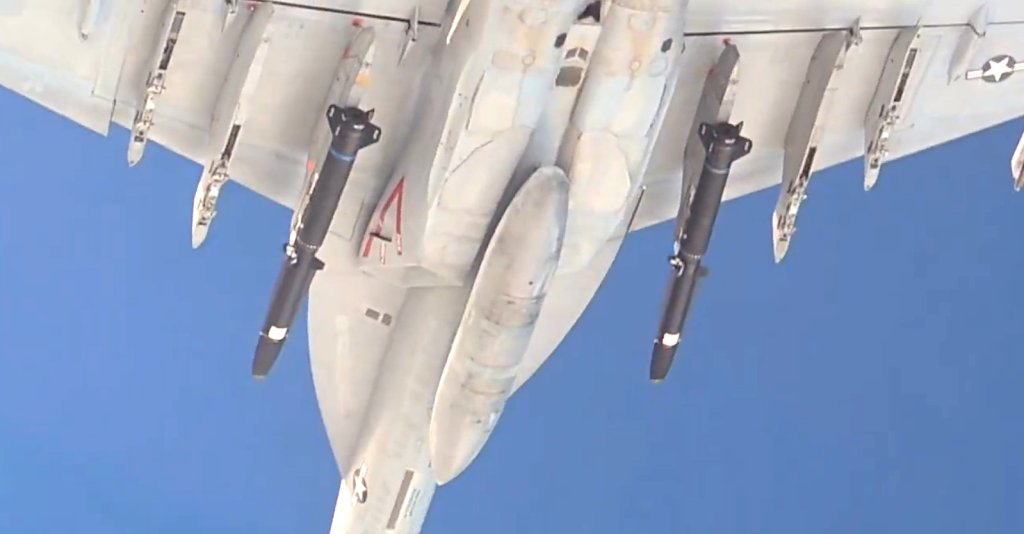
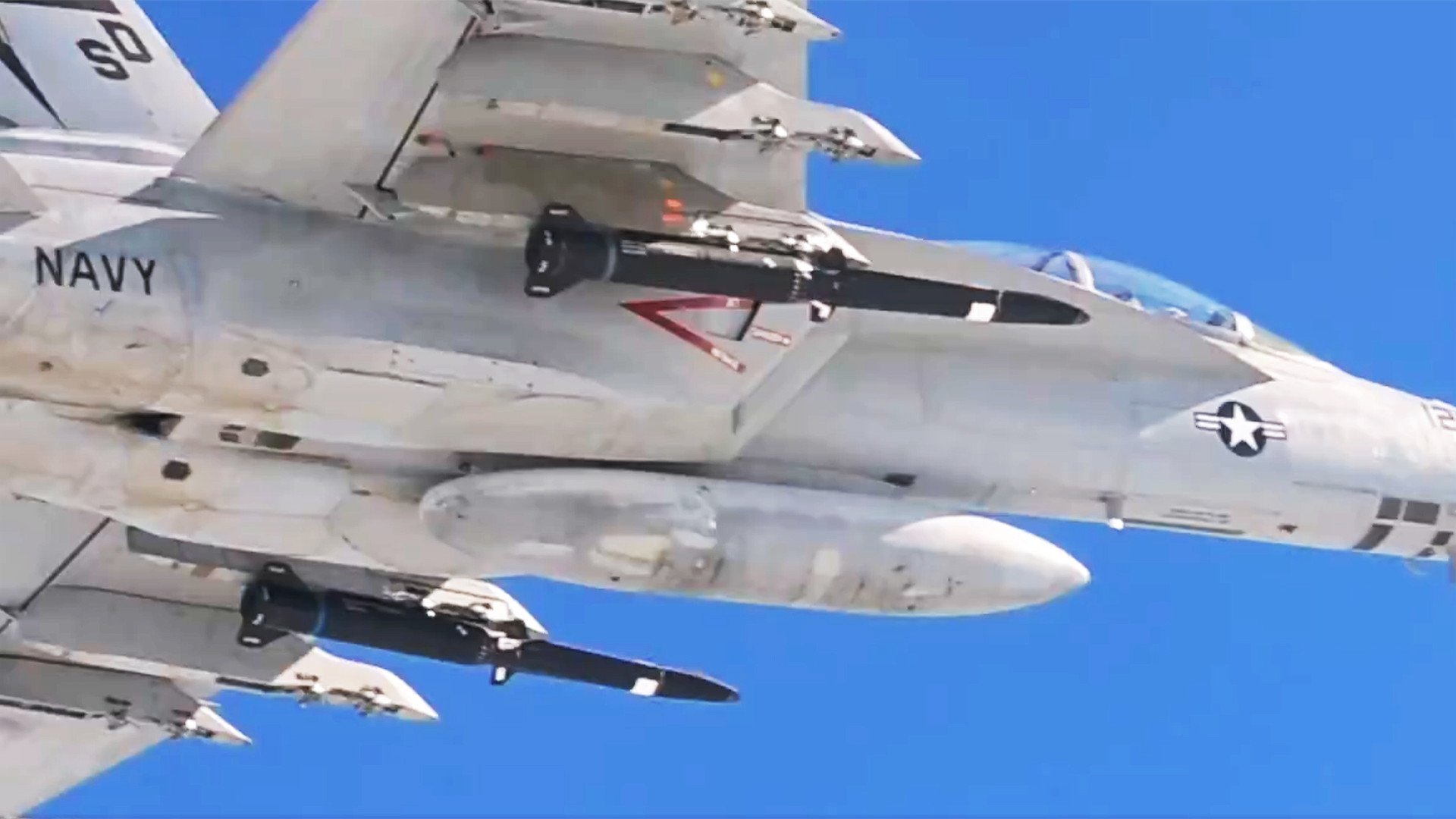
The U.S. Navy has given us the first look at Blackbeard hypersonic strike missiles under the wings of F/A-18E/F Super Hornets during actual flight testing. The Navy is hoping to have Blackbeard in at least limited service no later than 2028, giving its carrier air wings an all-new fast-flying standoff weapon, particularly for engaging enemy ships. The missile is also being designed to be relatively cheap and quick to manufacture.

The Navy’s Office of the Portfolio Acquisition Executive for Aviation (PAE-A) has released a video montage of Blackbeard undergoing flight testing, seen in the social media post below. The service confirmed that it had at least begun test-loading the missiles onto F/A-18E/F Super Hornets in a presentation at the Tailhook Association’s annual convention last month. Now we know the program has moved ahead substantially from that point.

Coming soon to a theater near you…BLACKBEARD!@USPACOM @CENTCOM @PAEAviation pic.twitter.com/KgBtIqdf8I

— NAVAIR (@NAVAIRNews) September 25, 2026

The company behind Blackbeard, defense start-up Castelion, has received several multi-million-dollar contracts from the Navy just this year explicitly to support integration of the weapon onto the Super Hornet, as well as otherwise accelerating its development. In its daily contracting on September 14, the Pentagon announced the Navy had struck yet another deal with Castelion, valued at $43.65 million, “for the manufacturing, assembly, testing, and delivery of the first production lot of 444 All-Up Rounds (AURs), defined as fully functional tactical missiles packaged within specialized shipping and storage containers.”

A screen capture from the Blackbeard flight testing video montage the Navy released today. USN capture

In terms of what we know today about Blackbeard’s design and capabilities, as we have previously written:

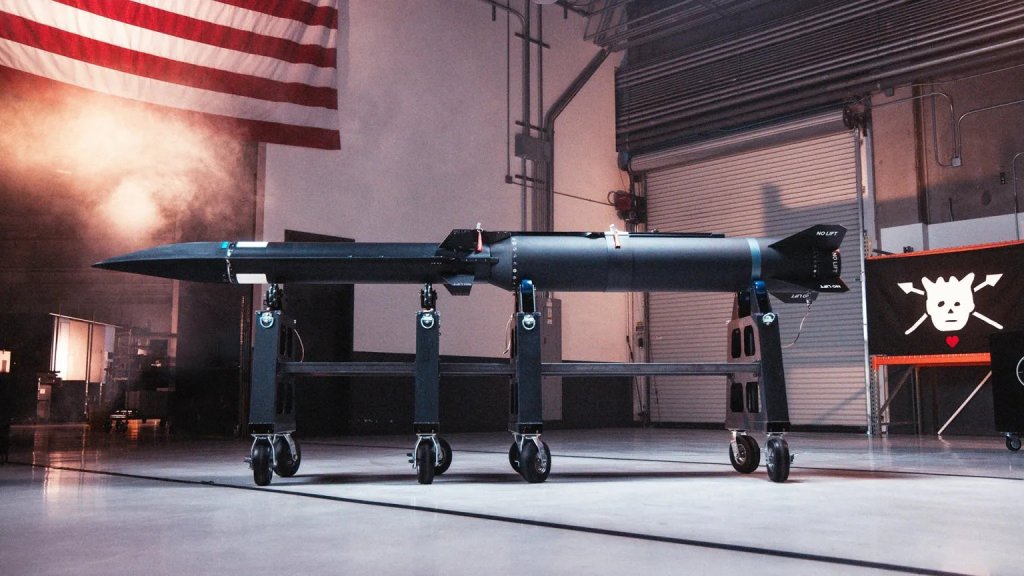
“A profile photo [seen below] at the company’s headquarters reveals a weapon with a ballistic missile-like booster, on top of which is mounted what could be an unpowered hypersonic glide vehicle (HGV). A booster brings an HGV to the desired velocity and altitude before releasing it toward its target. The concept is in contrast to air-breathing cruise missiles capable of traveling at hypersonic speeds. Hypersonic speed is generally defined as anything above Mach 5, which larger ballistic missiles also reach in the course of their flights. More precise performance figures for Blackbeard are lacking, but Castelion has previously hinted it could hit targets out to just under 500 miles. Alternatively, the second stage may also have its own motor, allowing it to continue accelerating or sustain high-speed flight. A similar arrangement has been suggested as the propulsion system for the Russian Zircon missile.”

Castelion

“Both stages of the weapon have cruciform fins, while the upper one features a prominent ‘chine’ line along the length of its body, and a slightly beaklike nose. The trolley on which the weapon is mounted provides some idea of its overall size. The blue stripes seen on each stage normally signify that a munition is an inert, non-explosive round utilized for training or tracking purposes. This would indicate a real (unarmed) missile rather than a dummy or mockup.”

A picture shown at Tailhook had also offered a new look at the front of the missile, exposing what looked to be an aperture on one side of the design’s wedge-shaped nose. As we wrote after that image emerged:

“The apparent apertures are also seen pointed up, but many air-launched munitions do flip down after release.”

“How exactly Blackbeard is guided remains unknown, but a downward-angled aperture at the nose end for a seeker system would make sense for this weapon, which the Navy is pursuing primarily as a new way to target enemy ships. In particular, a wide array of existing anti-ship and land attack missiles, as well as certain anti-air types, have variously shaped apertures in their noses for imaging infrared seekers. Imaging infrared has the benefit of being immune to radio frequency electronic warfare jamming. In addition, it is a passive capability that does not send out signals that can give an opponent advance notice of an incoming attack. Blackbeard’s full guidance package very likely also includes some means of navigating to a target area first, and it could have multiple modes of operation.”

The new flight testing footage released today also underscores the relatively small size of Blackbeard overall. While the Super Hornet is set to be the first operational launch platform, it is very likely to be integrated on other aircraft quickly thereafter. The Navy is acquiring Blackbeard under a program called the Multi-mission Affordable Capacity Effector (MACE).

Another screen capture from the new Navy video offering a different of Blackbeards under the wings of a Super Hornet, underscoring their relatively small size. USN capture

Requirements for MACE that the Navy put out previously explicitly called for a design compact enough for carrier-based F-35C (and land-based F-35A) Joint Strike Fighters to carry four of them internally. Whether that remains a goal in any way is unclear. Still, being able to carry some number of Blackbeards internally would not only give those jets a hypersonic strike weapon, but one that they could carry in the most stealthy configuration. The Navy also notably does operate the F-35A outside of the test and evaluation community, which might point to air-launched Blackbeards entering service elsewhere in the future. As an aside, the U.S. Army is pursuing a ground-launched version of this missile, as well.

Another critical aspect of Blackbeard is the emphasis on lower cost and the ability to produce the missiles readily at scale. The conflict with Iran has fully driven home long-standing concerns about the depth of U.S. stockpiles of various critical munitions, as well as its ability to replenish them quickly. Blackbeard reflects a larger push across America’s armed forces to add more cost-effective weapons that can be acquired on faster timetables to their arsenals. Bringing in new, smaller companies like Castelion to develop and build these munitions has also been a major point of focus. To put this all in immediate context, in May, the Pentagon announced a framework agreement to buy 12,000 Blackbeards over the next five years.

As mentioned, the Navy’s stated goal now is to reach an early operational capability with Blackbeard by 2028, if not sooner. What the exact fielding plan for those missiles might be is unclear. PAE-A did write “Coming soon to a theater near you” in its post on X containing the video montage, and tagged the official accounts for U.S. Central Command (CENTCOM) and U.S. Pacific Command (PACOM). CENTCOM oversees U.S. military activities in and around the Middle East, including ongoing operations against Iran. U.S. military officials have also long touted hypersonic weapons, in general, as key to success in any future conflict in the Pacific, especially a high-end fight against China.

It’s also worth noting here that U.S. military hypersonic missile programs across the services have faced repeated setbacks and delays over the years. This, in turn, has prompted discussion about a worrisome gap emerging in this arena between the United States and its chief global competitors, especially China. It is very possible now that Blackbeard could be the first operational air-launched type in American inventory, depending on how the U.S. Air Force does or does not proceed with its Hypersonic Attack Cruise Missile (HACM) program. The Air Force has said previously that it is aiming for HACM to be operational, at least on a limited level, before the end of Fiscal Year 2027, which begins next month.

If nothing else, we have clear evidence that the air-launched version of Blackbeard is now deep in flight testing for the U.S. Navy.

Contact the author: joe@twz.com

The post Blackbeard Hypersonic Missile Seen Flying On F/A-18 Super Hornet For The First Time appeared first on TWZ.

  •  
❌