It was common practice during the Cold War to exaggerate the threat from the Soviet Union. Nowadays, Russia has assumed that role. Although the circumstances have changed, some of the political methods employed to create a sense of insecurity are still remarkably similar. Europe is not formally engaging in preparations for war since it desires […]
Depuis janvier, lONU a comptabilis au moins 5700 tus ou blesss cause des violences des gangs en Hati. Le haut-commissaire de lONU a aussi point du doigt un recours excessif et disproportionn la force par les reprsentants de lordre, vendredi 2
The news of Gloria Steinem’s death on September 2, 2026, at 92, invited the familiar ritual of American remembrance. Obituaries saluted the journalist who became the most recognizable public face of second-wave feminism. Yet a serious account of Steinem’s life must begin where tributes often hesitate. Before she confronted senators, presidents, and the editors who...
Antismitisme, virilisme et conspirationnisme : le politiste dcrypte linfluence qua eue le polmiste antismite sur Jordan Bardella dans ses jeunes annes au Front national
Alors que lexamen de la proposition de loi intgrale contre les violences sexuelles et sexistes a dmarr ce jeudi 1eroctobre 2026 lAssemble nationale, la dpute du groupe cologiste Clmentine Autain a livr un discours poignant la tribune, raconta
Maleos, black-and-white birds that stand 60 centimeters (2 feet) tall with a distinctive splash of blue, orange and yellow on their faces, roam Sulawesi’s thick tropical jungles. But when it’s time to lay their eggs, they arrive at communal nesting grounds: Sandy beaches heated by the sun or the earth’s geothermal energy. There, they dig burrows with their webbed blue feet, lay their eggs and disappear. After a couple of months, the younglings hatch and, miraculously, are ready to fly within a few hours. This is an iconic bird on Sulawesi, serving as the official faunal mascot of Central Sulawesi province and of the Bogani Nani Wartabone National Park. Once considered widespread on Sulawesi, maleos (Macrocephalon maleo) are now on the brink of extinction, classified as critically endangered. Their numbers have dwindled to just 4,000-7,000 breeding pairs, mainly because their forest habitat is disappearing and they are targeted by poachers. Since 1983, the birds have lost more than two-thirds of their 149 nesting grounds as residential and commercial development takes over sandy riverbanks and beaches, and habitat is ravaged by mines and sliced by roadways. Maleo eggs are considered a delicacy, so people raid nests, and fewer chicks are born to replenish the population. But now, illegal trade in live maleos is emerging as a new and serious threat to their survival, according to a recent study published in the Journal of Asian Ornithology. These birds are trafficked to serve the booming demand for exotic pets. Researchers documented three seizures…This article was originally published on Mongabay
NPR's Michel Martin speaks to Philip Mudd, a former FBI and CIA counterterrorism official, about the investigation into the FlyDubai copilot suspected of trying to crash a plane bound for Israel.
Los estereotipos de gnero no son ideas abstractas: alimentan la discriminacin, la violencia y la exclusin, y pueden influir desde el acceso al trabajo y la justicia hasta la forma en que se desarrollan las nuevas tecnologas, advierte la Oficina
Prs dun enfant rfugi sur deux dans le monde ntait pas scolaris en 2025. Alors que laccs luniversit progresse, le passage au secondaire demeure un point de rupture majeur. Une fragilit que la contraction brutale de laide internationale menace d
La famille de Renee Good, une Amricaine de 37 ans tue par balle en janvier Minneapolis par un agent de la police de limmigration, a engag des poursuites contre ladministration Trump. Deux plaintes ont t dposes, notamment pour dcs imputable un
Female students took to the streets following the alleged gang rape of a 17-year-old girl at a park near Delhi University.This case is the latest in a string of sexual assaults and rape cases wh
“As the first casualty of the endless wars waged by the US government has without exception been the truth, with the American people perpetually receiving the greatest harm as the result of the US government’s campaign of deception, we wish to highlight some of the facts that are being withheld from the American public. After...
On a Wednesday in July, deep in a coastal restinga area of Brazil’s Paraná state, muffled footsteps broke through the chirping of manakins. Three field researchers from the conservation NGO Society for Wildlife Research and Environmental Education (SPVS) moved carefully along a trail, each carrying a small cage covered in a dark cloth. Each cage held a black-faced lion tamarin, known locally as the caissara lion tamarin (Leontopithecus caissara). Captured safely from the canopy, the three small primates — two males and one female — were carried to a makeshift tent in a forest clearing, where they would make history. Within hours, they would become the first of their species to be vaccinated against yellow fever. A team of researchers and veterinarians was waiting, quickly transferring each tamarin into a cotton bag to be weighed, starting a race against the clock to protect one of Brazil’s most threatened mammals. L. caissara is one of four lion tamarin species endemic to the Atlantic Forest; it ranks among the world’s rarest primates. First found and described by science in 1990, its wild population was estimated at just 392 individuals in a 2011 study. Most tamarins are confined to coastal restinga areas along the São Paulo-Paraná state border. A Society for Wildlife Research and Environmental Education veterinarian examines a sedated black-faced lion tamarin. Image by Gabriel Marchi. The species’ already restricted range has also been fragmented for decades. Part of the problems started with the Varadouro Canal, a 6-kilometer (3.7-mile)-long, 50-meter (164-feet)-wide artificial…This article was originally published on Mongabay
Aprs les rvlations de Mediapart sur des crits antismites dont Jordan Bardella aurait t lauteur, Marine LePen a dclar que ce mdia allait devoir enfiler son costard en Kevlar parce quil y aura videmment une rponse la manire dont ils se comporten
IRAN / ROJHILAT Bayan Salehian, une mdecin kurde de 43 ans spcialise en mdecine interne, a t arrte violemment lors dun raid des forces de scurit iraniennes son domicile et transfre vers un lieu tenu secret. Originaire de Saqqez, elle rside U
When Marhaba went to court to seek a divorce she was hoping for a quick end to years of abuse from her violent husband; instead the judge sent her to prison.

 Login


 Depuis janvier, lONU a comptabilis au moins 5700 tus ou blesss cause des violences des gangs en Hati. Le haut-commissaire de lONU a aussi point du doigt un recours excessif et disproportionn la force par les reprsentants de lordre, vendredi 2
 Antismitisme, virilisme et conspirationnisme : le politiste dcrypte linfluence qua eue le polmiste antismite sur Jordan Bardella dans ses jeunes annes au Front national
 Une ide gniale pour contourner la censure des rseaux sociaux et sensibiliser au cancer du sein le tout avec humour.
 Alors que lexamen de la proposition de loi intgrale contre les violences sexuelles et sexistes a dmarr ce jeudi 1eroctobre 2026 lAssemble nationale, la dpute du groupe cologiste Clmentine Autain a livr un discours poignant la tribune, raconta


 Los estereotipos de gnero no son ideas abstractas: alimentan la discriminacin, la violencia y la exclusin, y pueden influir desde el acceso al trabajo y la justicia hasta la forma en que se desarrollan las nuevas tecnologas, advierte la Oficina
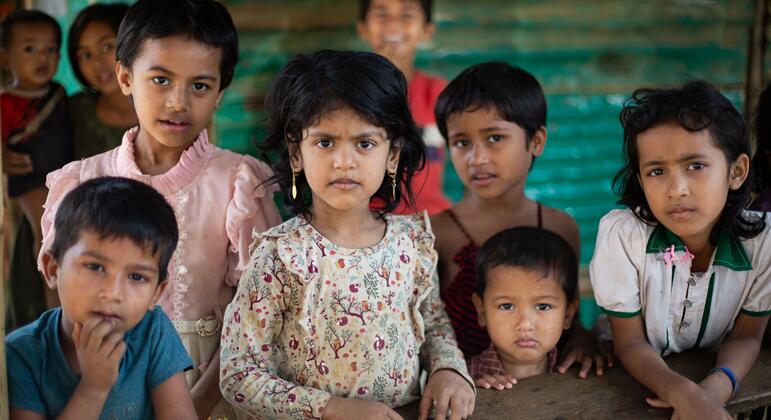 Prs dun enfant rfugi sur deux dans le monde ntait pas scolaris en 2025. Alors que laccs luniversit progresse, le passage au secondaire demeure un point de rupture majeur. Une fragilit que la contraction brutale de laide internationale menace d
 La famille de Renee Good, une Amricaine de 37 ans tue par balle en janvier Minneapolis par un agent de la police de limmigration, a engag des poursuites contre ladministration Trump. Deux plaintes ont t dposes, notamment pour dcs imputable un
 Female students took to the streets following the alleged gang rape of a 17-year-old girl at a park near Delhi University.This case is the latest in a string of sexual assaults and rape cases wh



 Aprs les rvlations de Mediapart sur des crits antismites dont Jordan Bardella aurait t lauteur, Marine LePen a dclar que ce mdia allait devoir enfiler son costard en Kevlar parce quil y aura videmment une rponse la manire dont ils se comporten
 IRAN / ROJHILAT Bayan Salehian, une mdecin kurde de 43 ans spcialise en mdecine interne, a t arrte violemment lors dun raid des forces de scurit iraniennes son domicile et transfre vers un lieu tenu secret. Originaire de Saqqez, elle rside U
 When Marhaba went to court to seek a divorce she was hoping for a quick end to years of abuse from her violent husband; instead the judge sent her to prison.
