Paramount completed its acquisition of Warner Bros Discover on Tuesday, after a bidding war against Netflix. The deal closed following federal approval of a settlement between Paramount and 12 US states that tried to block the transaction on antitrust grounds. Opponents in the movie industry warned of job cuts, while media groups said Warner-owned CNN's independence could be compromised.
The US has pulled out all its B-1B Lancer bombers from RAF Fairford in the United Kingdom,a key forward operating location used for long-range missions against Iran.
The abrupt move appears to be an attempt by the US to safeguard its long-range strategic bombers from the fate suffered by other military aircraft destroyed by Iranian attacks in the Middle East.
The B-1B bombers arrived at RAF Fairford in March 2026 as part of Operation Epic Fury. Although the US and Iran agreed to a ceasefire in April 2026, the B-1Bs remained stationed at Fairford amid sustained hostilities.
However, the US hastily withdrew all 12 B-1B Lancers from the base on October 4, 2026, amid renewed threats of an Iran-backed plot against the facility. The Pentagon confirmed the bombers have returned to their home bases.
“While operational security precluded us from confirming the movement of our assets and forces in real-time, we can acknowledge now that all US bombers that were deployed to RAF Fairford have re-deployed to their home stations in the United States,” a Pentagon spokesman reportedly said in a statement.
The pullout was extremely unusual since such actions are rarely taken so swiftly from an allied air base thousands of kilometers away from the combat zone. In fact, some of the bombers and their flight crews left RAF Fairford even as aerial refueling aircraft were still being rushed to support the missions to the United States, the New York Times reported.
These claims point towards an uncanny sense of urgency, although the US military has not officially cited a reason for this rushed exodus of bombers from RAF Fairford.
Nonetheless, the move comes days after five British men in their early 20s were arrested near RAF Fairford in Gloucestershire after reports of three suspicious vans approaching the base hosting the US bombers.
They were held on suspicion of Explosives Act offenses and preparing a terrorist act, but were released on police bail with strict conditions the next day. However, a sixth man—identified as a 25-year-old dual UK-Iranian national—was later arrested in London on suspicion of preparing terrorist acts. He was later released on bail.
An investigation into what was believed to be a sabotage operation is now underway. However, both the United States and the United Kingdom have since hinted that Iran has links to the potential attack or sabotage operation.
US President Donald Trump said the suspects had been looking to do “big damage” whereas Secretary of State Marco Rubio said it involved the “hands of a foreign actor,” without directly naming Tehran. Meanwhile, British Prime Minister Andy Burnham said there are “strong indications” that Iran played a role in the security incident at a crucial base that hosts US assets and troops.
Iran dismissed the allegations and has denied any link to the suspected security incident.
“PM Burnham says the UK Government ‘can confirm our belief that we believe Iran to have played a part’ in the RAF Fairford incident,” Iran’s Foreign Minister Abbas Araghchi wrote on X last week. “I can confirm Iran’s belief that releasing supposed terrorists working for foreign states really says it all. You’re barking up the wrong tree.”
Iranian Threats Triggered A Pullout?
The US military has not given any information on the urgent threat, whether it was an imminent strike or a sabotage- or terror-related incident. However, the threats issued by the Islamic Republic and its forces in the past may have influenced the decision to withdraw the bombers.
As the hostilities resumed between the US and Iran in July this year, the Islamic Revolutionary Guards Corps (IRGC) claimed that the US was launching bomber sorties from RAF Fairford to attack Iranian cities, adding that any base used to carry out such strikes would be a legitimate target.
“The American aggressor army, which used to launch cruise missiles from its vessels in the Indian Ocean in its aggression after the official resumption of the war, with the end of the missile reserves of the aforementioned vessels, yesterday switched to using B1 planes flying from Fairford Air Base, England,” Tasnim News Agency quoted the IRGC as saying on July 23. “As the officials of the Ministry of Foreign Affairs also stated, any base that is used to invade Iran’s territory is our legitimate goal.”
In March 2026, Araghchi told the UK Foreign Secretary, Yvette Cooper, that Iran views the UK’s decision to let the US use British bases as “participation in aggression.” Later, it fired two mid-range ballistic missiles at Diego Garcia, the Indian Ocean military outpost jointly operated by the US and the UK. Although none of the missiles reached their designated targets, the attack was launched after the UK approved the US use of its bases as launchpads for attacks on Iranian sites targeting the Strait of Hormuz.
RAF Fairford – Wikimedia Commons
RAF Fairford, for one, has been a key hub for US heavy bombers—including the B-1B and the B-52—conducting missions against Iranian missile infrastructure. Although Washington could fly long-range bombers to attack Iran from its own soil, using RAF Fairford has been significant because it enables long-range strikes and reduces flight times to Iranian targets by over 50% compared to US-based launches, allowing higher sortie rates.
According to media reports, a proxy sabotage or terror operation by Iran on RAF Fairford remains a major possibility. In the past, the United Kingdom has accused Iran of conducting cyberattacks and employing criminal networks and proxies to strike at its critics and dissidents on British soil for years.
Apart from a terror plot, it is hard to say whether Iran has the capability to strike RAF Fairford, or any other base in the United Kingdom.Iran has long claimed a self-imposed limit of about 2,000 kilometers for its ballistic missiles. However, its March 2026 attempted strike on the US-UK base at Diego Garcia demonstrated a much longer reach, and analysts have said it could potentially strike parts of the United Kingdom.
The US currently has about 45 operational B-1B bombers in its inventory, and many are aging airframes with very low readiness rates.
Therefore, losing even a single bomber would remove a scarce, high-payload platform that cannot be rapidly replaced, particularly while the B-21 Raider remains in the early stages of introduction. Additionally, a successful Iranian strike on a high-value asset at a known forward location would also carry symbolic weight, demonstrating an ability to impose costs far from the primary theater.
Vortices and moisture stream from the wings of a B-1B as it flies behind a US Air Force KC-135 Stratotanker, assigned to 506th Expeditionary Air Refueling Squadron, during a Bomber Task Force mission over the Pacific Ocean, June 25, 2022. (USAF)
Moreover, the US military has already faced a trial by fire in the Middle East during the course of this war and lost several military aircraft, many of them on the ground, a fate that it may not wish to befall its highly potent but limited bomber fleet.
On March 27, 2026, for instance, an Iranian drone struck an E-3 Sentry Airborne Warning and Control System (AWACS) aircraft during a strike at Prince Sultan Air Base in Saudi Arabia. Photos published after the strike showed that the rear fuselage of E-3 #81-0005 was completely burned out and destroyed, with debris scattered around the aircraft.
On March 2, CENTCOM reported that three F-15Es were shot down and destroyed by friendly fire over Kuwait; all six aircrew ejected safely and were recovered. The fourth F-15E was shot down by Iran during combat operations over Iran on April 5; both aircrew were safely recovered during separate search-and-rescue operations.
On March 14, media reports stated that five additional KC-135s were damaged on the ground at Prince Sultan Air Base in Saudi Arabia during an Iranian strike.
Later, Iran managed to damage an F-35A fighter jet over Iranian airspace. A recent Congressional Budget Office (CBO) report stated that replacing/repairing the aircraft would cost $120 million, without saying whether it would be written off or repaired.
On April 5, the US forces were forced to destroy two MC-130J Commando II special operations aircraft inside Iran after the planes became stuck and immobilized while supporting combat search-and-rescue efforts for a downed F-15E aircrew. Meanwhile, the US lost an HH-60W Jolly Green II combat search-and-rescue helicopter after it took damage from small-arms fire during the same operation.
In addition to these manned aircraft, the US lost several unmanned aerial vehicles, including MQ-9 Reapers and MQ-1C Tritons. The US has now lost more than 30 Reapers in the conflict with Iran, several destroyed on the ground by Iran across Middle East bases.
If Washington is preparing another round of strikes on Iran, and Tehran answers as it did against US bases in the Middle East, then RAF Fairford could be in the firing line. The IRGC has already called the base a legitimate target. The Pentagon has not said the B-1Bs left because of that threat. Moving all 12 in a day, while tankers were still being scrambled, suggests commanders were not willing to leave a scarce bomber fleet on a base they could no longer treat as safe.
Contact the author at sakshi.tiwari13 (at) outlook.com
The recent summit between US President Donald Trump and Chinese President Xi Jinping may have projected an image of renewed engagement; however, while two Presidents negotiated above the surface, their navies were preparing for a contest in which nuclear-powered attack submarines (SSNs) could play a decisive role.
The strategic rivalry between Washington and Beijing seems to be moving on a very different track—especially under the waters of the Indo-Pacific.
At the moment, the United States may have a substantial lead in the number of SSNs, technology, and operational experience, but China is rapidly catching up by expanding its undersea capabilities.
In its quest to narrow the gap with the US, China has entered a race for undersea advantage across the Indo-Pacific, which could shape deterrence, sea control, and the strategic balance of power for decades to come.
For maritime domination, both SSNs and SSBNs (nuclear-powered ballistic missile submarines) play critical roles.
SSBNs primarily provide nuclear deterrence by ensuring a credible second-strike capability, whereas SSNs are essentially designed to conduct hunter-killer missions, including tracking and, if necessary, engaging adversary SSBNs, as well as escorting carrier strike groups (CSGs) for sea control missions.
As Korean scholar Dongkeun Lee points out, in the context of the Indo-Pacific, SSN operations can be broadly classified into two primary missions: (1) countering SSBN capabilities and (2) escorting CSGs. The former is closely associated with nuclear deterrence, whereas the latter reflects the traditional sea power function of controlling and protecting key sea lines of communication (SLOCs).
Both missions are particularly important in this part of the world as its principal flashpoints, including the East China Sea, the South China Sea, and the Taiwan Strait, are all maritime domains. Maintaining credible naval capabilities, therefore, is essential to advancing both deterrence and broader strategic objectives in the region.
Incidentally, around one-third of global shipping traverses the South China Sea. The maritime gateways here are critical not only for China but also for Taiwan, South Korea and Japan.
American CSGs continue to play a major role in controlling and protecting these critical SLOCs. Consequently, SSNs play an equally crucial role in escorting CSGs. By providing lethal undersea capabilities that can silently target threats across multiple domains, including surface and subsurface targets, SSNs can effectively eliminate threats to aircraft carriers.
The United States permanently deploys an aircraft carrier to the Seventh Fleet, based in Yokosuka, Japan, and it is common for more than one CSG to be present in this region at any given time. SSNs’ presence here serves both to protect US carrier groups and to create the possibility of threatening Chinese nuclear submarines.
Likewise, the PRC is rapidly developing its own CSG capability to counterbalance that of the United States in the South China Sea. China’s Yulin naval base on Hainan Island is an important center for its nuclear submarine forces.
Until recently, the undersea dominance tilted heavily in favor of the US. But the alignments are fast changing.
Though the US Navy still leads with an all-nuclear fleet of 71 active submarines (including 51–53 SSNs/SSGNs), China has now surpassed Russia to command the world’s second-largest nuclear submarine fleet with an estimated 9 to 12 SSNs (such as the Type 093 and Type 093A/093B Shang-class) and 6 SSBNs (Jin-class Type 094), totaling roughly 32 active nuclear submarines across its entire naval forces that operate primarily in the Indo-Pacific region.
People walk past an illustration of a Chinese nuclear submarine at the Military Museum in Beijing on March 3, 2024. (Photo by GREG BAKER / AFP)
In a recent IISS assessment, China launched 10 nuclear-powered submarines between 2021 and 2025, totaling 79,000 tonnes, against America’s 7 boats at 55,000 tonnes. For the first time, China out-built the US in both numbers and tonnage in a five-year window, it is argued.
“Most significantly, this includes the seventh and eighth Type 094 (Jin) nuclear-armed ballistic-missile submarines (SSBNs), which come as part of the emergence of Beijing’s nuclear triad,” the IISS study says.
It noted that commercially available satellite imagery taken in early 2026 showed six Type 094s in total, spread between the Bohai Shipbuilding Heavy Industry Co (BSHIC) shipyard in Huludao, the 1st Submarine Base at Jianggezhuang, the Xiaopingdao test facility and the 2nd Submarine Base at Yalong Bay on Hainan Island.
“Allowing for additional boats either on deterrence patrol or under cover for refit during this period, it is almost certainly the case that China has launched a seventh and eighth Type-094 in 2024 and 2025, respectively,” the IIISS study concludes.
In addition to the Type 094s, Bohai is also producing nuclear-powered guided-missile submarines (SSGN) for the People’s Liberation Army, with the study suggesting that nine Type 093B (Shang III) boats have been launched between 2022 and this year, based on commercial satellite imagery of the facility and US government assessments.
Incidentally, in March this year, the US Navy’s intelligence chief, Rear Admiral Mike Brookes, testified before the US-China Economic and Security Review Commission (USCC) that China is undertaking a major shift toward building an all-nuclear submarine fleet as part of a broader effort to strengthen its undersea warfare capabilities and expand blue-water naval power.
According to Brookes, the People’s Liberation Army Navy (PLAN), which operates more than 60 submarines in total, including roughly 50 conventional diesel-electric boats (SSK) and a smaller number of SSNs and SSBNs, is transitioning away from conventional submarines toward a predominantly nuclear construction program to support sustained operations, strategic deterrence and sea-lane interdiction.
Brookes also pointed out that China had expanded submarine production infrastructure across three major shipyards, tripling construction hall capacity and more than doubling production capability to sustain higher output of advanced nuclear boats through the 2030s.
By 2027, China’s submarine force is projected to reach roughly 70 submarines, adding up to six SSGNs, three smaller-class SSNs, and two SSBNs while retiring older Chinese and Russian-built submarines. By 2035, continued expansion could yield up to 80 submarines, with about half nuclear-powered—a major shift in force composition—and projections for the early 2040s include around 20-30 new-class SSGNs and SSBNs.
These platforms will be designed from the keel up for blue-water operations and persistent presence beyond the first island chain, representing an evolution in PLA Navy undersea operational capabilities. China will likely field a more survivable and numerous ballistic missile submarine force equipped with longer-range, more accurate SLBMs, enabling patrols in bastions closer to home waters while holding the US homeland at risk.
A man looks at a submarine during a media tour by the PLA Naval Museum, organized by the Chinese People’s Liberation Army Navy (PLAN) ahead of the Defense Ministers’ Meeting of the Shanghai Cooperation Organization (SCO) Member States in Qingdao, in eastern China’s Shandong province on June 25, 2025. (Photo by Pedro PARDO / AFP)
Broader deployment of long-range, potentially hypersonic anti-ship and land-attack missiles from undersea platforms is anticipated, along with more sophisticated torpedoes and unmanned vehicles for ISR, mine warfare, and strike missions. Substantial investments in seabed sensors, undersea cables, and unmanned systems will enhance China’s situational awareness while creating vulnerabilities for the US and allies in crisis or conflict.
The Indo-Pacific will remain the PLA Navy’s primary focus, but by 2040 routine submarine deployments to the Indian Ocean, Arctic approaches, and possibly the Atlantic are likely, Brookes cautions.
However, as noted above, the US Navy currently has superior acoustic quieting, combat experience, and highly advanced Virginia-class SSNs. But as the EurAsian Times once explained, the US has a backlog of 12 Virginia-class submarines, in addition to three Columbia-class ballistic submarines.
Its production rate of 1.2 per year falls far short of the required 2.33 per year to meet its own needs and those of its allies (under the AUKUS pact, it is supposed to provide at least three Virginia-class submarines to Australia in the early 2030s).
Only three US shipyards can build nuclear-powered attack submarines (Groton, Connecticut; Quonset Point, Rhode Island; and Newport, Virginia). Only two of them are functional at the moment.
While the US defense industrial base is severely strained, China’s naval shipyards are said to be outperforming. With about 9 older Shang I/II boats plus an estimated 16 Type 093B hulls in service, in trials, or under construction, China is said to have the largest SSN series under construction anywhere.
The 093B reportedly features a vertical launch system for 24 YJ-12/YJ-18 anti-ship cruise missiles and six torpedo tubes, shifting China from torpedo brawls to long-range strike.
In the Indo-Pacific, the undersea race seems to change three fundamentals.
First, the era of uncontested US undersea dominance is over. US SSNs have long hunted Chinese SSBNs inside their bastion, keeping Beijing’s deterrent vulnerable. But now, China can sustain continuous at-sea deterrence patrols from Hainan’s Yalong Bay, protected by surface fleet and seabed sensors. That forces US SSNs to operate closer to Chinese waters, at higher risk, stretching ASW resources thin.
Second, the proliferation of quiet Chinese SSNs with VLS—at least six SSGN hulls launched in the past five years with vertical launch systems that could fire high-speed anti-ship missiles displayed in Beijing—means every US carrier entering the Taiwan Strait or South China Sea now faces a multi-axis underwater missile threat. The carrier’s sanctuary beyond the first island chain, once assumed, is no longer safe.
Third, China’s rapid maritime expansion has fundamentally altered the Indo-Pacific security landscape, prompting Australia and Japan to aggressively build strategic counterweights. Rather than acting in isolation, Canberra and Tokyo have pivoted toward minilateral security alliances, military modernization, and supply chain diversification to offset Beijing’s growing naval dominance.
Australia and Japan, alongside the United States and the Philippines, have formalized a security grouping explicitly designed to counter Beijing’s aggressive maneuvers in the South and East China Seas. This alliance focuses on joint maritime patrols, intelligence sharing, and military interoperability to safeguard freedom of navigation under international law.
Driven by the need to project power across its vast northern approaches, Australia has fundamentally reshaped its defense posture. This is anchored by the AUKUS pact—enabling Australia to acquire conventionally armed, nuclear-powered submarines—positioning the nation as a formidable southern anchor against Chinese naval projection.
For India, which has no SSNs in service (it previously leased from Russia and now plans indigenous production) and operates only three SSBNs (Arihant, Arighaat, and Aridhaman), the implications are significant.
Against India’s slow naval expansion, Chinese nuclear submarines, including intelligence-gathering vessels, now regularly traverse the Indian Ocean.
Overall, one could say that “the silent service” in the Indo-Pacific is becoming loud.
During the Cold War, the submarine race was primarily fought in the Atlantic. Now, it is shifting to the Indo-Pacific, raising uncertainties over whether it will remain free and open.
Author and veteran journalist Prakash Nanda is Chairman of the Editorial Board of the EurAsian Times and has been commenting on politics, foreign policy, and strategic affairs for nearly three decades. He is a former National Fellow of the Indian Council for Historical Research and a recipient of the Seoul Peace Prize Scholarship.
The author can be reached at prakash.nanda (at) hotmail.com
The Pentagon recently announced a whopping US$24.4 billion contract to defense giant Raytheon to speed up the production of “three-in-one” SM-6 missiles.
The Pentagon called the SM-6 “a critical anti-air and anti-surface warfare munition.” It said the five-year agreement, with two additional option years, “will drive faster production, increase manufacturing throughput, and deliver significant cost savings.”
The deal “provides the defense industry with the long-term predictability needed to expand workforce capacity and secure critical supply chains,” the Pentagon added.
The award lands after a year in which interceptor stocks were burned down. The US Defense Department’s inspector general reported last month that acquisition officials said: “the munitions expenditure on Operation Epic Fury has resulted in strategic inventory shortfalls and revealed industrial base bottlenecks for munitions resupply.”
A September 15 Congressional Budget Office assessment said the United States has probably used between one-half and two-thirds of its stocks of certain missile-defense interceptors since June 2025, naming the SM-6 alongside Patriot, THAAD and the SM-3.
Rebuilding those inventories would take at least five years even if production rose, the agency said, and would leave the Pentagon with fewer interceptors for a possible clash with China.
The CBO put the cost of a Patriot or an SM-6 at about $4 million a round, compared with about $12 million for a THAAD interceptor and $28 million for an SM-3. It said the weapons were used in large numbers defending Israel and then during Operation Epic Fury.
Outside estimates run higher: a table compiled by the Center for Strategic and International Studies and carried by the Financial Times in April put the SM-6 at $5.3 million a round, with a pre-war stock of about 1,160 and wartime use of 190 to 370.
The Pentagon has not published an SM-6 round count for the war.
Raytheon confirmed in a statement that its SM-6 “has been successfully fired from various US Navy ship-based platforms and launchers on land,” calling it a “combat-proven weapon.”
The weapons-maker also acknowledged increased efforts to meet demand. “By continuously investing in our operations and facilities, we are removing constraints and boosting capacity to ensure we deliver this critical capability our sailors depend on,” Raytheon President Phil Jasper said.
SM-6 Missile
The SM-6 missile was created for extended-range anti-air warfare (ER-AAW), including defense against UAVs, military aircraft, anti-ship cruise missiles, and terminal ballistic missile defense. It also acts as a high-velocity anti-ship missile.
The SM-6 is based on the earlier SM-2ER Block IV (RIM-156A) missile airframe, with the AIM-120C AMRAAM active radar-homing seeker replacing the former design’s semi-active seeker.
File Image: SM-6 fired from HMS Sydney during Exercise Pacific Dragon
The official designation is RIM-174 Standard Extended Range Active Missile, or ERAM. It is fired from the Mk 41 vertical launching system already fitted on US and allied destroyers and cruisers, so a ship does not need a new launcher to carry it.
What makes the SM-6 different from the older Standard missiles is that it does not have to rely only on the firing ship’s radar. Through Naval Integrated Fire Control-Counter Air, or NIFC-CA, it can take targeting data from an E-2D Hawkeye, another ship, or a fighter such as the F-35, and engage a target beyond the horizon of the ship that launches it.
The active seeker then finishes the intercept on its own. In plain terms, the missile can be cued by a sensor the target cannot see, and still home in the last miles.
Raytheon describes the SM-6 missile as “three missiles in one,” and says it is the only weapon that can perform anti-air warfare, anti-surface warfare, and ballistic missile defense or sea-based terminal missions.
The Block IA and IB updates improve the seeker and guidance against harder, complex targets, while the Block IB adds a larger rocket motor for more range and speed against high-end air threats. Its exact range remains classified, but it is widely believed that it could reach over 200 nautical miles and fly at roughly Mach 3.5.
That spread of roles is also why the missile is expensive, and why magazines matter. A destroyer that fills its cells with SM-6s gains reach, but it burns through a scarce inventory if it uses the same missile for aircraft, cruise missiles, ships, and terminal ballistic shots.
China has reportedly been wary of the missile because of its capabilities. US allies in the region, including Japan, Australia, and South Korea, are lined up to acquire it.
The SM-6 on the Typhon Mid-Range Capability launcher is a ship missile adapted for strikes against land and sea targets. The Army has described the battery as a “strategic” weapon system to be used against higher-value targets such as air defense facilities and command and control centers — an important weapon given the region’s prevailing tensions.
In that ground-launched form, it sits alongside the Tomahawk, giving land forces a strike option that once belonged only to ships.
The US has also developed an air-launched variant of the SM-6, known as the AIM-174B, mounted on a US Navy Super Hornet, which broke cover during RIMPAC 2024. Fired from altitude and speed, it pushes an air-to-air engagement far outside the range of a carrier group’s older missiles.
Contact EurAsian Times at admin (at) eurasiantimes.com
The US military lost three military aircraft during peacetime in September 2026 alone, highlighting that accidents continue to hit even the world’s most advanced air force. These incidents also reminded us of the mid-air collision between a KC-130J and an F-35B in September 2020 that ended in one of modern aviation’s most remarkable saves.
On September 28, 2026, two naval aviators ejected from an EA-18G Growler assigned to Electronic Attack Squadron 130 after an arresting gear failed during recovery on the USS Dwight D. Eisenhower aircraft carrier.
Both aircrew were recovered safely. It is currently unknown whether the aircraft was lost or escaped with some damage, and an investigation is underway to determine the cause of the accident.
Earlier in the month, two F-16 Fighting Falcons were destroyed in separate training accidents.
On September 17, an F-16 from the Texas Air National Guard’s 149th Fighter Wing went down in rural Michigan during training from Alpena Combat Readiness Training Center, and on September 22, a US Air Force F-16 from the 52nd Fighter Wing at Spangdahlem Air Base, Germany, crashed on approach after a routine training sortie.
In both cases, the pilot was able to eject, but the aircraft was fully destroyed.
While September was particularly painful for the US military and its prized military aircraft, it also reminds us of the time six years ago when a mid-air collision over California nearly claimed the lives of eight Marines aboard a KC-130J.
When A KC-130 Collided With an F-35B
On the afternoon of September 29, 2020, a U.S. Marine Corps F-35B Lightning II, call sign “Bolt 93,” and a KC-130J Super Hercules tanker, call sign “Raider 50,” collided at around 4:00 p.m. while conducting air-to-air refueling operations in the Kane West Military Operations Area near the Salton Sea in Southern California.
The aircraft were participating in Weapons and Tactics Instructor (WTI) Course 1-21, which is a demanding seven-week advanced training program conducted by Marine Aviation Weapons and Tactics Squadron 1 at Marine Corps Air Station Yuma, Arizona. The course reportedly emphasized integrating Marine aviation into Marine Air-Ground Task Force operations under realistic, high-tempo conditions.
The Raider, assigned to Marine Aerial Refueler Transport Squadron 352, had already refueled one F-35B and was orbiting to tank the second. The F-35B approached the hose and drogue extended from the refueling pod on the tanker’s right wing and struck the underside of that wing.
As expected, the F-35B arrived for aerial refueling. However, as it approached, the hose and drogue extended from the tanker’s right wing, and it struck the underside of the right wing.
The impact was so massive and violent that it sheared off all propeller blades on the tanker’s two right-side engines, damaged the right fuel tank and refueling pod, and caused severe structural damage, including to the landing gear compartment.
Immediately after, fuel began leaking, raising concerns about a potential onboard fire.
The F-35B that collided with the massive refueller aircraft was critically damaged, forcing the pilot to eject. The aircraft crashed in the Ocotillo Wells area near Salton City, according to reports from the time. However, the KC-130J—piloted by Capt. Michael Wolff and co-pilot Maj. Cory Jones—had a gargantuan task ahead of them. They had to land.
USMC F-35B (For Representation)
“It was a really violent collision,” Wolff later recalled, adding that everything happened within “1.2 seconds or something. Not enough time to really react and do anything.” Days after the incident, he said the collision was so violent it sent everything flying inside the aircraft. “It was pretty violent… I got my headset back on, grabbed the yoke, and I got the plane back under control,” the pilot of the unfortunate aircraft told USNI News.
After the impact, the crew discovered the collision had left a hole in the aircraft, letting in a blast of outside air as they braved glaring lights and blaring alarms in the cockpit, while the displays lit up with cascading caution and warning messages.
The collision wiped out both engines on the KC-130J’s right (starboard) side. Yet “the impact did not damage our ailerons, elevators or rudder, so we still have all of our primary flight control surfaces,” Wolff later recalled in his interaction with USNI. “At that point, I’m like, OK, let’s get figuring out what’s going on and the best course of action.” “That’s when – it’s kind of cliché – the training kicks in,” he added.
The crew drew on their deep familiarity with the KC-130J, forged through countless flight hours and simulator sessions rehearsing emergency procedures in the air and on the ground. Aircrews are well known for their rigorous adherence to detailed checklists, along with the almost automatic responses and ingrained knowledge that come from repeated practice. “We start running through everything,” Wolff told USNI News later, “and figuring out where to go and communicating to the crew and then outside” to air traffic control.
An F-35B approaching a KC-130J for refueling (Image only for Representation purposes)
The KC-130J crew declared an emergency to Los Angeles Center, reporting a mid-air collision, damage to two engines, a fuel leak, a possible fire, and an emergency descent, as later revealed in the emergency call recording. “We are declaring an emergency. We still have partial control of the aircraft,” Wolff was heard saying in a rather calm manner.
Thick black smoke streamed behind Raider 50 as flames roared from its burning fuel tanks, and the rear crew members confirmed the severity of the damage to engines No. 3 and No. 4. The crew then focused on keeping control of the aircraft and getting it safely back to the ground. “I can see the far right engine – the #4 – from my seat, but I can’t see the #3,” Wolff said. Crew members in the rear of the aircraft “gave me confirmation that [the] thing was toast, and we pulled the fire handle and [made] sure nothing got worse.”
He needed constant updates on whether the fire was dying down or if fuel was still leaking from the wing, stressing that “that communication from the back [crew] is extremely vital to get down safely.”
The crew aboard the aircraft on that fateful day had practiced for an emergency with two engines out, but never for multiple emergencies.
With the tanker still heavy with fuel and only five parachutes available for eight Marines, bailout was not a practical option. The crew committed to landing.
Determined to land safely, the pilots surveyed the surrounding terrain and found Thermal Airport—officially Jacqueline Cochran Regional Airport—a viable landing site. “We had a lot of open space between where we were and there – the Salton Sea and a lot of farmland – and we’re not worried about populated areas,” Wolff said.
However, their troubles were far from over.
A Marine KC-130 crash-landed on September 29, 2020 (Photo circulated online after the incident)
Just as the crew lined up for a runway landing, the aircraft began drifting right because of the ongoing malfunctions and the distance involved.
With only five parachutes for eight crew members and the aircraft still partially controllable on the remaining engines, they committed to a forced landing rather than a bailout.
After roughly 12–13 minutes of fighting for control—facing multiple system failures, an uncommanded right turn after dipping below minimum control airspeed, and other issues—they executed a gear-up or belly landing in a farm field near Jacqueline Cochran Regional Airport in Thermal, California.
The aircraft skidded several hundred yards and came to rest with extensive damage but intact enough for the entire crew to walk away with only mild injuries.
“It wasn’t quite like the movies where you see you have like a 747 that plows through … We came to a stop pretty quickly,” Wolf said.
Pilot sure earned that DFC
September 29, 2020: a US Marines KC-130 and an F-35 collide during mid-air refueling over California (US). Fighter crashes, pilot ejects safely, KC-130 crash-lands in a carrot field, all 8 aboard survive.
The collision, resulting fire damage, and emergency landing meant the aircraft had to be written off. After investigators finished examining the wreckage, Marine Corps teams spent roughly a week removing it from the field. They recovered the rear stabilizers and the aircraft’s tail section, set them up outside the squadron, and painted them in the unit’s distinctive Raider black as a permanent display and reminder.
For their actions, both Capt. Michael Wolff and Maj. Cory Jones received the Distinguished Flying Cross, the highest award in flying and the fourth highest award for bravery. The award recognized the skill, discipline, and crew coordination.
The collision, engine failure, and safe landing marked one of the rare incidents in which every crew member survived, including the F-35 B pilot.
Contact the author at sakshi.tiwari13 (at) outlook.com
The US honored seven airmen who piloted F-22 Raptors in combat operations in the Middle East with the “Distinguished Flying Cross” (DFC), even as the United States has relaunched a military buildup in the Region.
Of the seven airmen, six were awarded the DFC for their role in “Operation Midnight Hammer,” launched against Iran in June 2025, while one was honored for a mission in the Middle East without disclosing details.
The DFC is the fourth-highest award for gallantry in the military and honors acts of bravery or exceptional accomplishment in the air.
The USAF launched Operation Midnight Hammer in June 2025 following 12 days of intense clashes between Iran and Israel. The operation included an armada of 125 combat aircraft, including B-2 stealth bombers, F-22 and F-35 stealth fighters, F-16s, F-15Es, and several aerial tankers for refueling, as the EurAsian Times previously reported.
Although the role of the seven B-2 Spirit stealth bombers that dropped 14 bunker-buster GBU-57 MOP bombs on Iran’s underground nuclear facilities has been widely recognized, the F-22 Raptors also played a crucial role in the operation.
These air superiority stealth fighters moved ahead of the B-2 bombers along with the F-35s, conducting air superiority and air defense-suppression missions to clear the way for the B-2s to operate safely and effectively and bomb the three Iranian nuclear sites.
Of the aviators who received the DFC for Operation Midnight Hammer, four came from the Active-Duty 94th Fighter Squadron, part of the 1st Fighter Wing at Joint Base Langley-Eustis, Va., while two came from the associated Virginia Air National Guard’s 149th Fighter Squadron of the 192nd Wing.
Air Combat Command commander Gen. Adrian L. Spain presented the medals to the aviators in a ceremony at the Virginia base on August 31, 2026.
“Their job was to provide air superiority,” Spain said, referring to the F-22s. “The bombers and the rest of the support package relied on these Raptor pilots to clear the skies, shield them from surface threats, and ensure a safe route through heavily contested airspace.”
The F-22 is the USAF’s premier fifth-generation air superiority stealth fighter, allowing it to evade radar detection unlike the 4th- and 4.5th-generation fighters. In fact, the Raptor was purpose-built as an air dominance fighter, optimized to clear the skies of enemy aircraft, escort high-value assets, and operate in the most hostile environments.
Before Operation Midnight Hammer, the F-22 Raptors were also deployed against the Yemen-based Houthis in 2024, as the EurAsian Times reported at the time.
File: F-22 Raptor flying over Langley Air Force Base
Earlier this year, the F-22 Raptors were once again summoned to the region for Operation Epic Fury, launched against Iran on February 28, 2026, together with Israel’s Operation Roaring Lion.
The F-22 Raptors of the 1st Fighter Wing at Langley Air Force Base were deployed to the Ovda Air Base in Israel for the first time ahead of the operation.
During the initial days of Operation Epic Fury, F-22s reportedly suppressed advanced Iranian air defenses, such as the S-300 and Bavar-373 systems, clearing the way for B-2 bombers and other strike packages.
Flying deep into Iranian airspace, the stealth fighters reportedly carried out pinpoint strikes on high-value targets between March 1 and 9, 2026, including military sites, nuclear-related infrastructure, and IRGC (Islamic Revolutionary Guard Corps) command nodes.
The Raptors also reportedly targeted the “infrastructure connected to the Fordow Fuel Enrichment Plant and Natanz Nuclear Facility,” as US Central Command (CENTCOM) previously noted. It “also coordinated with B-2 Spirit bombers and EA-18G Growler electronic attack jets in layered strike packages designed to overwhelm Iran’s integrated air defenses,” it added.
File: U.S. Air Force Lt. Gen. Jason T. Hinds, U.S. Air Forces in Europe – U.S. Air Forces Africa commander, pins a Distinguished Flying Cross medal onto a U.S. Air Force pilot during a ceremony in Essen, Germany, Sept. 22, 2026.
The seventh F-22 pilot—whose name was withheld—received the decoration on September 22 from Lt. Gen. Jason T. Hinds, commander of US Air Forces in Europe (USAFE), for commanding a strike package during a Middle East mission in contested airspace.
The pilot faced “challenging conditions including enemy threats” and “directed the aircraft formation, making critical decisions with limited time and little margin for error,” the USAFE stated.
“For more than an hour, [the pilot] remained focused on protecting teammates” and “acted decisively to protect the larger force, and ensured the formation could safely return,” Hinds said. “Their actions helped give the strike package the time and freedom needed to accomplish its mission.”
Interestingly, the DFC was awarded and publicized by the US Air Force at a time when tensions are escalating between the United States and Iran.
US Commences Military Build-Up in Middle East
The US is deploying a third US aircraft carrier to the Middle East as part of a fresh military buildup as President Donald Trump weighs new strikes.
The USS Theodore Roosevelt carrier strike group departed its San Diego base last week on the Pentagon’s order. The USS Makin Island amphibious readiness group followed, with its two amphibious landing ships. About 9,000 sailors, 7,000 aboard the carrier and 2,000 aboard the amphibious ships, are en route to waters near Iran.
With USS Theodore Roosevelt’s arrival, three aircraft carriers would be standing guard in West Asia by late October, according to US officials who spoke to the media. As of now, the carriers USS George HW Bush and the USS George Washington, along with the USS Boxer amphibious readiness group, are in the region amid ongoing hostilities.
This would bring the overall US naval presence to more than 20,000 sailors and Marines, along with hundreds of aircraft, significantly expanding the military posture.
The USS Theodore Roosevelt (CVN-71) has left San Diego to build a three-carrier presence in the Middle East
Ahead of the U.S. midterm elections, officials confirmed the Roosevelt will join the USS George Washington and the USS George H.W. Bush, a rare trio of supercarriers,… pic.twitter.com/yisXp9TAVu
Additionally, reports citing informed sources suggest that the US military sent two additional Patriot missile batteries to protect oil and gas facilities in Saudi Arabia and Qatar in recent weeks.
Notably, the two sides have remained locked in a tense battle since July, when they started trading fire after a long lull that followed the June memorandum of understanding.
Last week, Iran proposed a new deal in which it would open the Strait of Hormuz in return for lifting the US blockade of its ports, unfreezing funds, and removing sanctions on Iranian oil. However, Trump rejected the proposal, saying Iran is seeking an agreement now because it is losing so badly.
The two sides later held indirect talks, signaling that they may be open to negotiating a fresh deal. However, Trump caused a stir again as he told Time magazine this week that the US military could ramp up bombing of Iran after the November 3 midterm elections that will be held amid continued disapproval of the war at home.
Furthermore, the President said that Iran may have something to do with the recent incident involving the FlyDubai flight, adding that it will be hit very hard if Tehran’s connection is verified.
For now, a deal between Washington and Tehran looks more elusive than ever, especially as the Pentagon is moving major military assets to the region. If Trump decides to resume the bombing, the presence of three aircraft carriers will significantly expand his options and fighter jet presence near Iran.
Contact the author at sakshi.tiwari13 (at) outlook.com
A Royal Australian Air Force (RAAF) F/A-18F Super Hornet was pictured carrying an AIM-260 Joint Advanced Tactical Missile (JATM) during a US test event in California. The development comes weeks after RAAF said it would become the first operator, outside the US, of the JATMs.
The image, clicked on Sept. 11 at Naval Base Ventura County Point Mugu and released by the U.S. Navy, shows aircraft A44-209 of No. 1 Squadron during Exercise Gray Flag 2026. However, the missile’s ownership remains unconfirmed.
The Navy caption does not name the weapon. Analysts identified the weapon as an AIM-260 training round, citing blue bands that mark an inert motor or warhead. No live firing was reported. The sortie appears to have been a captive-carry flight.
Earlier, as EurAsian Times reported, Australian Defense Minister Richard Marles said at Exercise Pitch Black on 6 August that Australia would invest almost A$736 million, about $518 million, to buy the missile through US foreign military sales.
Canberra did not say how many rounds that sum would buy. A separate U.S. notification in March covered a possible sale of up to 450 AIM-260s, plus test vehicles, estimated at $3.16 billion.
“This announcement is the latest milestone in the delivery of long-range, high‑tech capabilities for our Defense Force,” Marles said in Darwin. “The Albanese government continues to deliver critical capabilities that will allow the ADF to strike at a longer range, deter any adversary, and protect our national interests. It is fitting to make this announcement at Exercise Pitch Black, which is an important demonstration of Australia’s commitment to the peace, stability, and security of our region.”
A Royal Australian Air Force F/A-18F Super Hornet assigned to No. 1 Squadron takes flight at Naval Base Ventura County Point Mugu during Gray Flag 2026, Sept. 11, 2026. Via U.S. Navy photo by Dana Rene White.
Australia will integrate the missile first on the F/A-18F, then on the F-35A and the EA-18G Growler. Canberra said Australia would be the first country to field the AIM-260 outside the United States, and that it would complement existing air-to-air missiles.
“The acquisition of the AIM-260 JATM will provide Air Force platforms with a credible deterrent against airborne targets, complementing existing air-to-air missile capabilities and other surface-based missile capabilities across the Australian Defense Force (ADF). It will also further enhance Australia’s interoperability with the United States,” the Australian Department of Defense earlier said in a statement.
The existence of the AIM-260 JATM was initially confirmed in 2019 during an Air Force Life Cycle Management Center industry conference. Because of its sensitivity, the AIM-260 JATM is classified as a Special Access Program (SAP), and details have remained mostly classified.
In 2022, General Mark Kelly, the head of the United States Air Force’s Air Combat Command, shared an artist’s concept of the Lockheed Martin F-22 firing an AIM-260 JATM.
An F-22 Raptor firing AIM-260 JATM in a USAF rendering
More recently, the US Navy publicly revealed the rendering of the missile in February 2025. At the time, experts said it looked similar to the AIM-120 medium-range air-to-air missile.
Nonetheless, the AIM-260 appears to have a larger rocket motor section and no mid-body surfaces, unlike the AIM-120. Although little is known about the JATM, reports suggest it will use dual-pulse rocket motors or ramjets to increase range and performance.
The AIM-260 could carry an advanced multi-mode seeker system that may include infrared imaging and active radar. The dual-seeker system could improve resilience to electronic warfare countermeasures and increase accuracy.
Like the AIM-120D-3 AMRAAM derivative, the AIM-260 is anticipated to have a two-way datalink. This feature would greatly increase the missile’s efficacy in networked battle by enabling mid-course targeting upgrades or re-targeting.
The missile is intended to keep valuable airborne assets, such as tankers and AEW&C aircraft, safe deep into contested airspace. Analysts say it would be designed to combat stealth aircraft and operate in disputed areas with heavy electronic jamming, increasing its effectiveness against enemies such as China and Russia.
The JATM “is the number-one air-delivered weapon priority for both the Air Force and the Navy, and out-prioritizes other weapon system improvements and modernization efforts on any fielded aircraft,” the USAF earlier stated.
The planned US sequence has the AIM-260 entering service first on the F-22 Raptors, then the F-35s and the Navy’s F/A-18E/F. Australia intends to integrate it on the F/A-18F before the F-35A and EA-18G.
US Arms Australia
The Indo-Pacific landscape is rapidly changing, with China emerging as a global military power and intimidating its neighbors. Although not an immediate neighbor, Australia is also concerned by Beijing’s growing military might and ambitions.
Australia has emerged as one of America’s strongest military partners. At the heart of this security architecture is the AUKUS submarine pact, signed alongside the UK.
Under this pact, Australia will acquire a fleet of nuclear-powered (not nuclear-armed) submarines. Nuclear propulsion would give the Australian Navy unparalleled stealth, range, and endurance, allowing it to operate deep within contested waters without surfacing for oxygen, as conventional submarines do.
Washington is also strengthening Australia’s strike capabilities. The RAAF has also acquired F-35 stealth jets, ensuring seamless interoperability with the US military and allies like Japan.
To complement these platforms, Washington has approved the sale of advanced long-range strike weapons, including Tomahawk cruise missiles, HIMARS, and AGM-158B JASSM-ER missiles. These weapons effectively shift Australia’s military posture from territorial defense to robust power projection.
The US is boosting Australia’s capabilities to establish domestic guided-missile manufacturing, securing a resilient supply chain outside the American mainland. Increased rotations of US bombers, maritime patrol aircraft, and troops to northern Australian military bases further cement this partnership.
While Washington and Canberra frame these advancements as essential steps to maintain a “free and open Indo-Pacific,” Beijing views the militarisation as an encirclement strategy. By arming Australia with these cutting-edge capabilities, the US is ensuring that any potential conflict in the region would face a highly sophisticated and unified allied front.
Taiwan has received its first F-16V (Viper) fighter jets from the US amid serious tensions with China, which calls the island a ‘renegade province’.
The Vipers are part of an $8 billion deal for 66 F-16Vs approved during US President Donald Trump’s first term.
The two Lockheed Martin F-16 Vipers touched down at Taiwan’s Chihhangair Air Force Base in Taitung. President Lai Ching-te hailed “a major milestone in elevating Taiwan’s air defense capabilities” and thanked Washington for its “long-standing support”.
Former Air Force serviceman Eric Chan, 57, praised the F-16’s advancements over the past three decades and said the fighter jets based in Taitung will “play a very important defensive role” against China.
“The threat from the CCP has always been there, so we definitely need to strengthen our defense capabilities,” Chan told AFP, referring to the Chinese Communist Party.
F-16 vs F-16 Viper
Earlier, as EurAsian Times reported, Taiwan’s first two F-16 Vipers — serials 6727 and 6728 — were on the Pacific ferry to Taitung’s Chihhang Air Base.
Deliveries were expected to begin in 2023, and all 66 warplanes were scheduled to be delivered by the end of 2026. However, supply-line pressures due to COVID-19, followed by Lockheed Martin’s decision to shift the F-16 assembly line from Fort Worth to Greenville, pushed the timeline back.
The jet’s electronic-warfare suite has been a separate problem. The embedded AN/ALQ-254 Viper Shield, built by L3Harris, ran into production bottlenecks because it is built into the fuselage rather than carried as a pod.
Taiwanese reporting in July 2026 said the first Block 70s would be delivered without it, with the suite to be fitted later. An AESA radar without the planned internal jammer makes the aircraft thinner than the one in the brochure, and it is a capability gap, not just a reason the schedule slipped.
Lockheed later started two shifts to prioritize Taiwan’s order to deliver the combat jets. Still, the full 66-jet order is not expected to be delivered before 2028.
When Lockheed Martin delivers the 66 new jets by 2028, the Taiwanese Air Force will have more than 200 F-16 Viper fighter jets, making it the largest Viper-standard fleet in the Indo-Pacific region.
A newly purchased F-16V Block 70 fighter jet lands at Chihhang Air Base in Taitung on October 2, 2026. (Photo by CHENG Yu-chen / AFP)
F-16 vs F-16 Viper
Both the legacy F-16 and the latest F-16V jets share a common airframe shape, a single-engine layout, 9g capability, and basic flight characteristics.
The main differences are in sensors, computers, cockpit, electronic warfare, and modern weapons/data-link integration.
However, the biggest capability jump is perhaps in the radar system.
The legacy F-16A/B jets used the mechanically scanned AN/APG-66 radar. Most F-16C/D (Blocks 25–52) used the mechanically scanned AN/APG-68.
These radars have slower scan rates, more limited multi-target tracking capabilities, and poorer jamming performance.
For the F-16V, however, Lockheed Martin uses Northrop Grumman’s AN/APG-83 SABR AESA radar.
It uses electronic beam steering, supports simultaneous air-to-air and air-to-ground modes, high-resolution SAR mapping, better jamming resistance, and tracks more targets at longer ranges.
Lockheed Martin states it delivers 5th-generation radar capabilities through hardware and software commonality with F-22 and F-35 radars.
“It delivers greater situational awareness, flexibility and quicker all-weather targeting and provides pilots with unprecedented target area detail and digital map displays that can be tailored with slew and zoom features,” said Lockheed Martin in a factsheet about the Block 70/72 jets.
The new Viper standard jets also provide enhanced battlespace awareness.
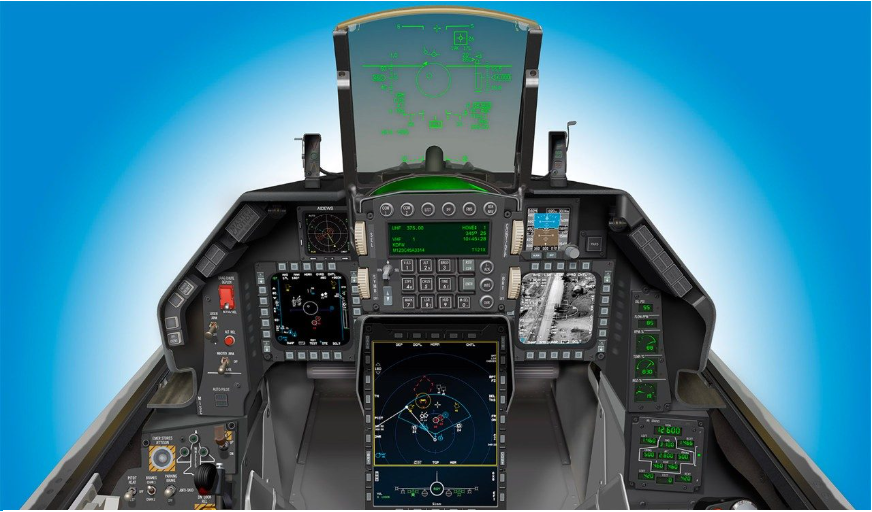
Block 70/72 features a new high-resolution Center Pedestal Display (CPD), which provides critical tactical imagery to pilots and enables them to take full advantage of AESA and targeting pod data.
The new CPD enables color moving maps, larger and easier-to-manage air-to-air Situation Displays, zoom functionality with the ability to switch information among displays, digital display of Flight Instrument Data, and a color/night helmet-mounted display.
An inside view of the F-16 Viper’s cockpit. Credits: Lockheed Martin.
The F-16V also provides better pilot protection. Lockheed Martin’s Automatic Ground Collision Avoidance System (Auto GCAS) was purpose-built to prevent deadly crashes and has already saved the lives of multiple pilots and F-16s since the system entered service with the U.S. Air Force in late 2014.
The Auto GCAS is designed to reduce incidents of controlled flight into terrain, or CFIT. According to U.S. Air Force statistics, CFIT incidents account for 26 percent of aircraft losses and a staggering 75 percent of all F-16 pilot fatalities.
The F-16V also provides extended structural capabilities.
The Block 70/72 has an extended structural life to 12,000 hours – more than 50 percent beyond that of previous production F-16 aircraft. The older F-16s had a structural life of around 8,000 hours.
According to Lockheed Martin, the F-16V could serve for 40 years without any major repairs.
The conformal fuel tanks provide increased fuel capacity and range without sacrificing the jet’s aerodynamic performance.
Furthermore, legacy F-16s relied on multiple older computers with limited processing power, whereas the F-16V has a single high-performance Modular Mission Computer (MMC) and a modernized avionics architecture. This gives far higher computing power for sensors, weapons, and data fusion.
The F-16V is certified for a very wide range of modern weapons, such as AIM-120D AMRAAM, AIM-9X, JASSM, JSOW, JDAM variants, and SDB, and uses Link 16, which provides enhanced situational awareness and enables real-time command, control, and tactical data exchange among military aircraft, ships, and ground forces.
They also have greater electrical power, cooling, and data-processing capacity to support the future integration of advanced electronic warfare equipment, weapons, and infrared search-and-track systems.
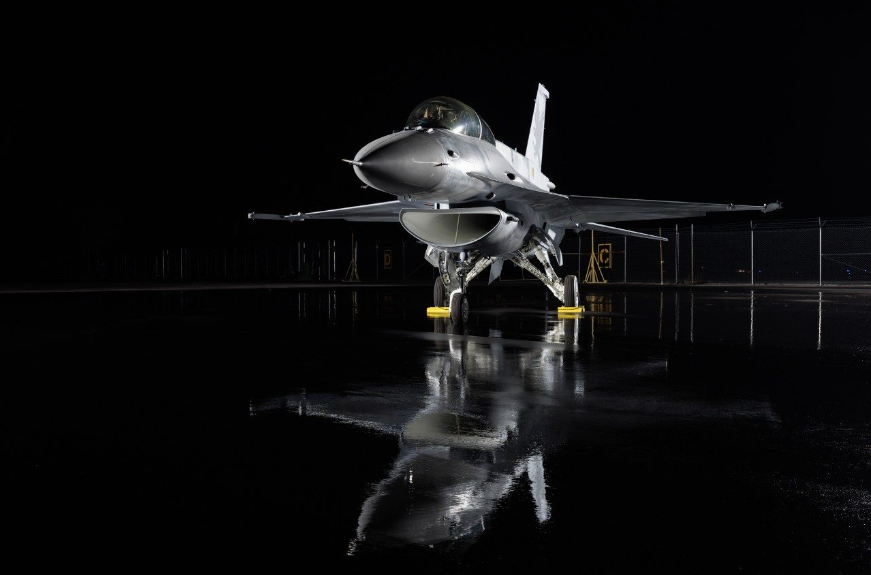
F-16 Viper. Credits: Lockheed Martin.
Because of all these capabilities, even though both the older F-16 and the latest F-16V share the same airframe design, the F-16V is a much more lethal aircraft.
Modern sensors, avionics, radars, an electronic warfare suite, Link 16, structural improvements, and an improved weapons package and ferry range mean the F-16V is a much more capable jet. That is why operators such as Taiwan, Greece, Bahrain, Slovakia, Bulgaria, and Turkey are upgrading their existing F-16 fleets.
According to Su Tzu-yun, a senior analyst at the Institute for National Defense and Security Research, the AN/APG-83 radar was designed to detect targets with small radar cross-sections and could “improve the F-16V’s chances of detecting PLA stealth aircraft such as the J-20 and J-35”.
Sumit Ahlawat has over a decade of experience in news media. He has worked with Press Trust of India, Times Now, Zee News, Economic Times, and Microsoft News. He holds a Master’s Degree in International Media and Modern History from the University of Sheffield, UK.
He can be reached at ahlawat.sumit85 (at) gmail.com
More than a year after Donald Trump unofficially offered the F-35 to India, the fighter jet debuted in India’s multinational exercise Tarang Shakti 2026.
For the first time, six US F-35 Lightning II fighter jets and more than 200 airmen joined the Tarang Shakti multinational drills in Jodhpur, western India.
Photos of the jets appeared on social media ahead of their participation in tactical exercises alongside the Indian Air Force’s stalwarts, including the Rafale, the Su-30MKI, and indigenous Tejas fighters in Jodhpur, Rajasthan.
Meanwhile, the Indian Air Force published a video on September 29, 2026, showing an F-35 and Tejas flying together.
The @usairforce F-35A Lightning IIs are making their exercise debut in India at Tarang Shakti.
Combining stealth, advanced sensors, and information-sharing capabilities, the F-35s bring new opportunities to train with the Indian Air Force and other partners, strengthening… pic.twitter.com/wGfT6OxtAc
The exercise comes more than a year after US President Donald Trump offered the F-35 to India during a meeting with Indian Prime Minister Narendra Modi in February 2025. So, while the deployment is meant to provide the IAF practical exposure to the aircraft’s operations and sensor integration in a multinational setting, it has inevitably sparked questions about whether the US is signaling its intent to sell the fighter.
F-35 for India?
“Starting this year, we will be increasing military sales to India by many billions of dollars. We are also paving the way to ultimately provide India with the F-35 stealth fighters,” Trump told reporters in February 2025.
Vice President J.D. Vance reiterated the offer during his visit to India in April 2025, saying, “We, of course, want to collaborate more. We want to work together more. And we want your nation to buy more of our military equipment, which we believe is the best in class. American fifth-generation F-35s, for example, would give the Indian Air Force the ability to defend your airspace and protect your people like never before.”
These pitches took many by surprise, but there was a catch: they were merely verbal pitches, not official offers accompanied by formal discussions.
So, Air Chief Marshal AP Singh, chief of the Indian Air Force, ultimately told reporters that India was not considering the F-35 option, adding that it had not received a formal offer. A fervent supporter of augmenting Indian air power, the IAF top boss emphasized that purchasing a fighter jet was not like “buying a washing machine or refrigerator,” implying that the appropriate process must be followed. “We haven’t examined it [F-35].”
Later that year, the Minister of State for External Affairs, Kirti Vardhan Singh, told Parliament that it had held no formal discussions with the US about acquiring F-35 fighter jets.
However, more than a year later, the deployment of the F-35s for Tarang Shakti gives the impression that the exercise may be an attempt by Washington to keep the door open or provide useful exposure that could entice the Indian Air Force (IAF).
Meanwhile, the Russian envoy to India praised the F-35 fighter jet in a rare move while arguing that it was not suitable for India.
Speaking at the NDTV Defense Forum 2026, Russian Ambassador to India Denis Alipov said, ”The US is welcome to promote its product. It’s a good aircraft, no doubt about that. But way too expensive. If India goes for that, well, that would be India’s sovereign decision. But we are offering a much better deal. Next year we are going to see hopefully many firsts at the Bengaluru air show.”
It appears the Russians might be smelling the US offer.
Russia has also been aggressively pursuing to sell India its fifth-generation Su-57, which Moscow positions as a competitor to the F-35.
It has offered New Delhi a host of options, including an off-the-shelf purchase of Su-57 fighters, full licensed production in India, technology transfer, a “two-seat variant,” and help with India’s own fifth-generation aircraft, the Advanced Medium Combat Aircraft (AMCA).
IAF veteran and commentator, Air Marshal Anil Chopra (retd), told the EurAsian Times, “IAF has trained alongside the F-35s in the past, such as in the Pitch Black exercise. The deployment is likely meant to test the waters by enticing the IAF, and probably to create conjecture, considering that no official offer was ever made. They could also be creating a deliberate distraction for India, particularly since the Russians have sustained their Su-57 campaign and expanded the scope of the initial offer to make it more and more appealing.”
“As for the cost factor mentioned by the Russian envoy, everything we buy is expensive. The Su-57 may be cheaper than the F-35 initially when looking at per-unit price, but it wouldn’t be cheap in the long term,” Chopra added.
That said, since both Su-57 and F-35 offers were made to India around the same time, the two jets have been viewed as competitors in the context of India’s acquisition of a fifth-generation fighter to augment its airpower.
As Air Marshal Chopra added: India may need a fifth-gen fighter as a stopgap solution till the AMCA arrives. If the US makes an enticing offer and meets India’s core requirements, American jets offered to the IAF are “quite possible”, but India should best avoid letting the USA get into its fighter aircraft ecosystem.
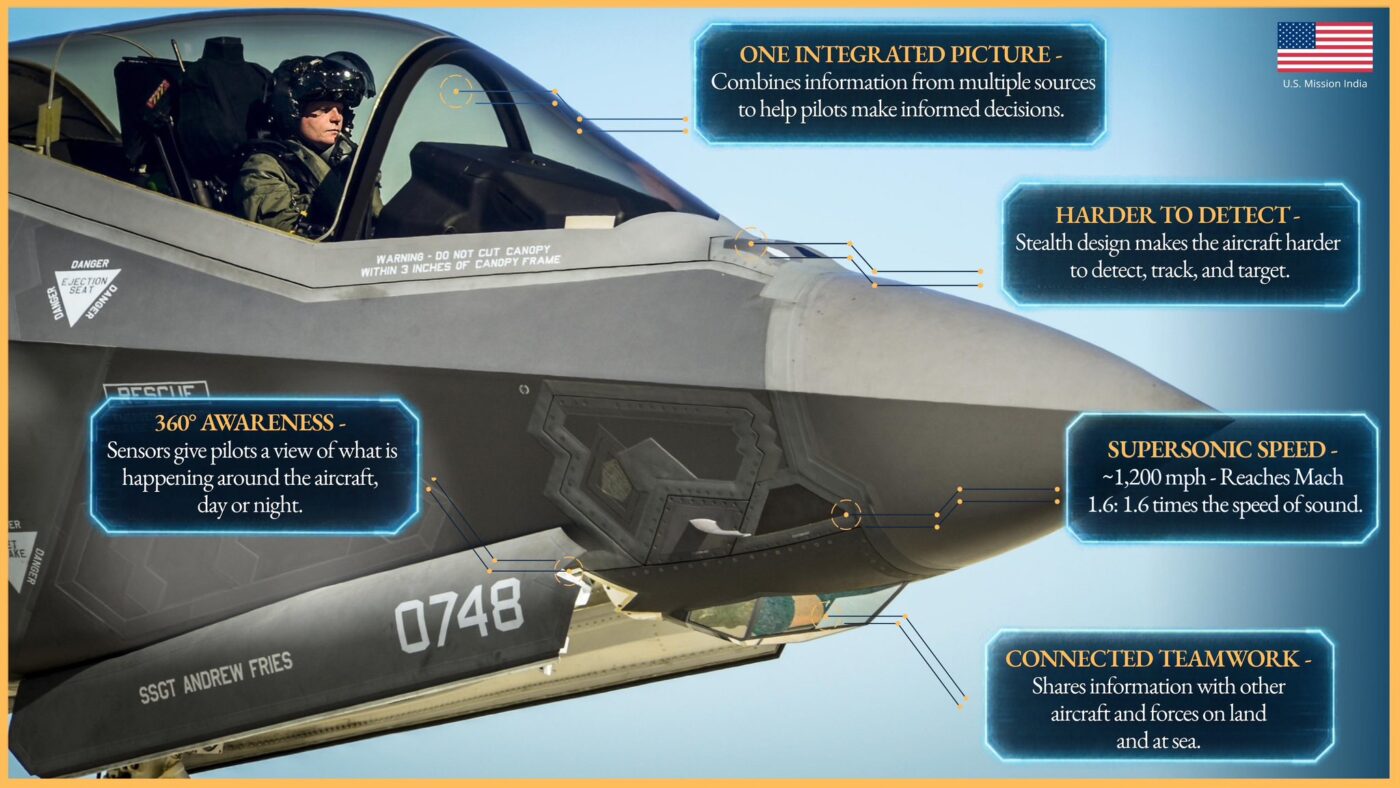
F-35: Image via US Embassy, New Delhi
F-35 vs Su-57 Showdown?
Although India is developing its own fifth-generation stealth aircraft, the AMCA, it is unlikely to be delivered to the IAF before the mid-2030s. Defense Secretary R.K. Singh recently said the first flight is targeted for September 2028, but the aircraft may take time to become operationally available to the IAF.
This means waiting for the AMCA would leave India with a glaring capability gap vis-à-vis adversaries China and Pakistan. China already operates two different fifth-generation stealth fighters: the J-20 and J-35A, and is currently testing two sixth-generation fighter prototypes. Meanwhile, Beijing could export its 5th-gen J-35A to Pakistan.
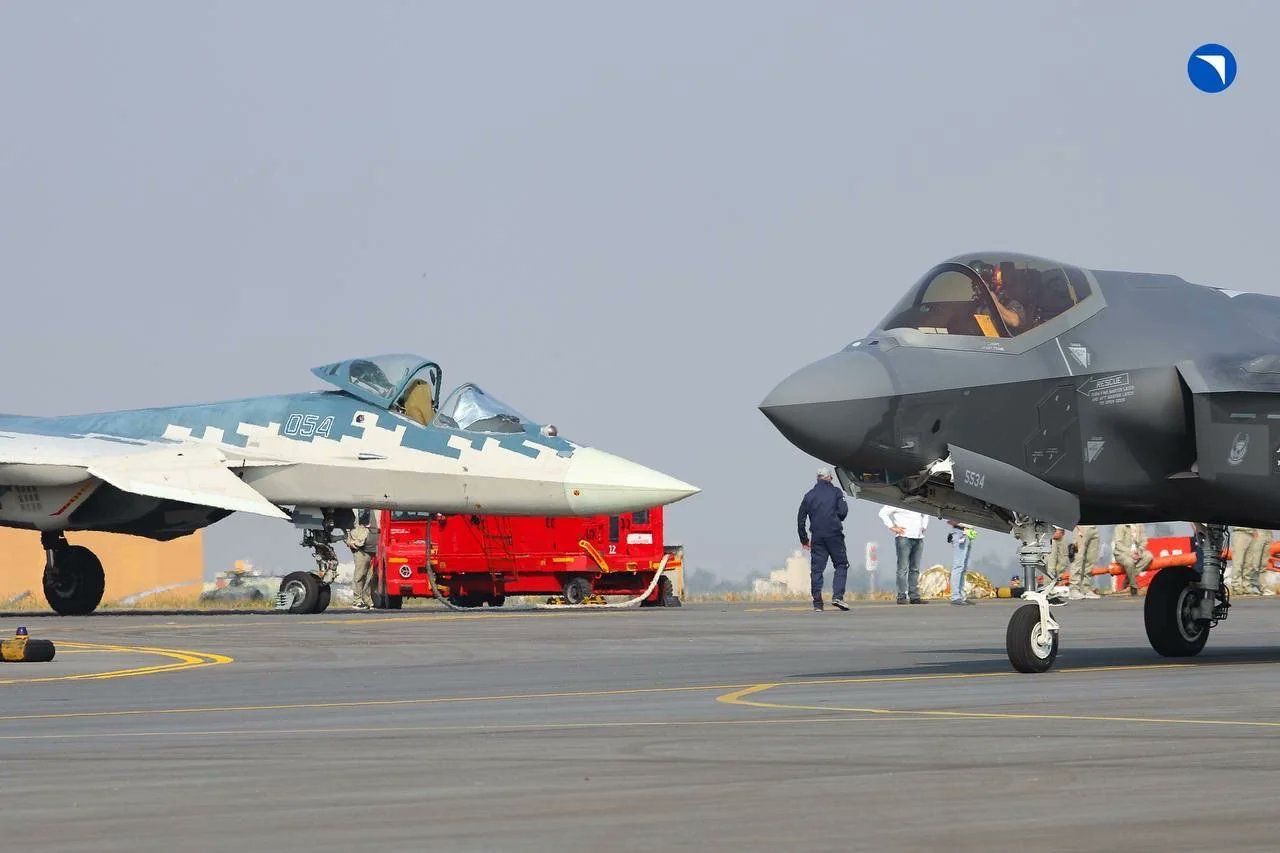
File: F-35 Lightning II and Su-57 Felon captured in the same frame for the first time in history at Aero India 2025
However, Air Marshal Chopra had earlier told the EurAsian Times that the decision not to show any interest in the Su-57 and the rhetoric about focusing on AMCA is meant to keep American ire and sanctions at bay.
For now, India’s path to bolstering its airpower includes accelerating Tejas production, advancing work on AMCA, and signing a deal for 114 Rafale fighters with France.
Observers have noted that India’s sustained disinterest in buying the F-35, arguably the best fifth-generation stealth fighter on the market, stemmed mainly from American unreliability, including painful delays in delivering F404-IN20 turbofan engines for Tejas Mk-1A jets.
So far, the US has not been able to break into the Indian fighter jet ecosystem, and has pitched multiple warplanes to the IAF, including F-15EX, F-21 (modified F-16), and F/A-18 Super Hornets. However, none of them appears to have lured the Indians. Can the F-35 do? Only time will tell.
Indians are reportedly also concerned about operational costs linked to the F-35, anxiety over introducing a complex Western platform to its fleet, Washington’s unwillingness to transfer the technology and allow local manufacturing, and potential operational restrictions on F-35 use.
Skeptics have noted that the sale may never go through, given that India operates the Russian S-400 air defense system and has integrated it into its layered air defense network.
Earlier, the US expelled Turkey from the F-35 consortium for buying the S-400 and has not yet approved the F-35 sale to it, despite Ankara’s assurances that it would never activate the system.
Meanwhile, India is also aggressively evaluating the French 6th-gen FCAS program.
Contact the author at sakshi.tiwari13 (at) outlook.com
After a long period of uncertainty and an ice-thin contest with Northrop Grumman,Boeing has won the US Navy’s F/A-XX next-generation carrier-based fighter contract, making it the sole developer of America’s crewed sixth-generation combat jets, after F-47.
On September 29, the Department of War awarded Boeing a $20 billion contract for the F/A-XX’s full-scale development phase. The contract covers multiple test aircraft for ground, airworthiness, systems, and weapons integration testing.
“The F/A-XX is a critical pillar in our commitment to maintaining peace through strength. F/A-XX will dominate contested airspace, extend operational reach, and deliver a decisive combat advantage for the warfighter,” Michael P. Duffey, Under Secretary of War for Acquisition and Sustainment, was quoted as saying in the official statement.
Boeing had already secured the Air Force’s F-47 program in March 2025, defeating Lockheed Martin—the company behind both of the service’s fifth-generation fighters, the F-22 Raptor and F-35 Lightning II.
Responding to the Navy award, Steve Parker, president and CEO of Boeing Defense, Space & Security, stated: “Delivering two advanced fighters in parallel was always our plan, and we invested accordingly. We are ready and able to build multiple concurrent future combat aircraft franchise programs.”
The decision ends nearly a year of ambiguity surrounding the F/A-XX, which will eventually replace the F/A-18E/F Super Hornets in US Navy service since the 1990s. Last year, the Pentagon said it was prioritizing the F-47 over the F/A-XX, and asked the House and Senate defense policy committees to divert $500 million from the “accelerated development” of a Navy stealth fighter to the F-47.
However, the US Navy’s leadership and Congress pushed back against the Pentagon and called for increased funding and award of the contract.
In January 2026, the House and Senate Appropriations Committees negotiated a draft defense spending bill that earmarked nearly $900 million for the F/A-XX, a stark increase from the $74 million the Pentagon sought.
File: Artist rendering of the F/A-XX (Boeing Image)
Naval officials and analysts made the case for the F/A-XX by pointing to its utility amid the burgeoning threat from China in the Indo-Pacific theatre. Rep. Ken Calvert, R-Calif., the head of the House Appropriations subcommittee on defense, said, “We need sixth-generation fighters. The US Navy needs sixth-generation fighters. I’m concerned that any hesitancy on our part to proceed with the planned procurement of the sixth-gen fighters for the Navy will leave us dangerously outmatched in a China fight.”
Meanwhile, Daniel Cheever, Commander of Naval Air Forces, was quoted saying: “I’m looking forward to [the F/A-XX] because that sixth-generation means air superiority in that timeframe in the future, which means sea control. And as long as you have air superiority, you have sea control around the globe.”
Beijing has been flying two different prototypes of sixth-generation fighters—the J-36 and the J-50—one of which could possibly evolve into a carrier-based sixth-generation fighter aircraft. This sparked concerns across the US Navy that the service that fielded the world’s first-ever carrier-capable stealth fighter may lose out on this crucial race.
“This achievement marks a new era for the US Navy,” said acting Secretary of the Navy Hung Cao. “The Sixth-Generation fighter is a generational leap in air superiority and will provide the world’s best aviators with unparalleled capabilities to fight, win, and come home safe. We are excited to partner with Boeing, and for our warfighters to continue to dominate the skies and defeat our nation’s enemies.”
Unlike the USAF NGAD program, the US Navy has released little information on a futuristic F/A-XX, although authorities have said the F/A-XX will have a longer range than current aircraft and serve as a covert tip of the spear for the carrier air wing. In addition, the F/A-XX will be interoperable with manned and unmanned platforms such as Collaborative Combat Aircraft (CCA) and increase the capability of every CCA it teams with.
However, a pressing question experts have been discussing after the award was presented to Boeing is whether the naval fighter will be a navalized variant of the F-47, or the aerospace giant will build a new fighter from the ground up.
F/A-XX vs F-47
Boeing can leverage relevant production experience, supply chains, and design work it has already completed for the F-47 program.
Many aviation enthusiasts have wondered if Boeing will produce the F/A-XX as a navalized version of the F-47; the two aircraft are built for fundamentally different environments and missions, which will influence their design differences.
The F-47 is a land-based air-superiority fighter focused on speed, altitude, long-range penetration, and counter-air roles to succeed the F-22, whereas the F/A-XX is a carrier-based multirole strike fighter to replace the F/A-18E/F Super Hornet and EA-18G Growler.
This distinction means that the naval F/A-XX next-generation fighter jet must be designed for catapult launches, arrested landings, folding wings for carrier storage, saltwater corrosion resistance, and high sortie rates in a maritime environment, while prioritizing range for Pacific operations and multirole strike capability.
F-47 artist rendering-Wikimedia Commons
Notably, several past studies examined a joint sixth-generation solution and concluded it was unworkable. For this reason, the USAF and the Navy formally split their paths and decided to pursue separate programs based on specific requirements.
The US Navy has consistently asserted that its fighter will have a separate airframe from the Air Force, rejecting the joint approach controversially used for the F-35 program for many practical reasons.
The Navy’s carrier version, the F-35C, required extensive modifications from the USAF’s F-35A baseline, including a larger wing area, stronger landing gear and structure, folding wingtips, a tailhook, corrosion-resistant materials and coatings, and revised fuel and internal arrangements. The changes added weight, cost, and complexity, contributing to schedule delays and performance compromises.
When every percentage of range, stealth, and kinematic performance matters against near-peer threats such as China, the structural and aerodynamic penalties of carrier suitability become more painful for a pure air-superiority fighter.
Boeing’s previously released concept rendering of F/A-XX (Via X)
That said, the F-47 and F/A-XX may share some basic commonalities, which may even help the US Navy’s next-generation fighter program.
The first question is how quickly a workable F/A-XX can be fielded—which really comes down to how much it draws on the already-developed F-47. If the two designs share much commonality, or were developed together, an F/A-XX could fly much sooner than expected.
Boeing released F/A-XX concept renderings, including one shown at the 2025 Tailhook Symposium and newer ones after the award,that visually resemble its F-47 concepts in areas such as cockpit shape, overall planform, and possible canard-like foreplanes.
Moreover, the two Boeing designs can share high-value subsystems, sensors, software, open mission systems, Artificial intelligence, or Collaborative Combat Aircraft (CCA) integration, and design philosophy without locking both aircraft into the same airframe.
This level of commonality could offer high cost and risk benefits while preserving optimization.
US Navy’s Fighter Program Trails Yet Again
While the F-47 is on track for its first flight, the F/A-XX has yet to receive a designation, and concerns remain about how Boeing will manage the industrial constraints of pursuing two contemporary programs at the same time.
Air Force Brig. Gen. Timothy Helfrich, the service’s Portfolio Acquisition Executive for Fighters and Advanced Aircraft, recently stated, “We’re not too far away from an F-47 production line, which will be additive to the production capacity.”
By contrast, the F/A-XX is roughly 18 months behind the F-47 in program phase and several years behind in physical hardware maturity.
Boeing has already invested heavily in expanded, secure St. Louis facilities sized for multiple advanced fighters. However, with the F/A-XX, the company will likely face significant industrial constraints developing both aircraft simultaneously while still supporting F-15EX and T-7 production. The company is likely to be constrained by a limited specialized workforce and potential supply-chain bottlenecks.
Against that backdrop, the F-47 will likely receive priority focus first so manufacturing lessons, tooling, supply-chain fixes, and digital production processes can be refined on the Air Force lines before F/A-XX ramps into full-scale assembly in the early 2030s.
Notably, the delay in awarding the F/A-XX contract somewhat mimics a historical pattern of laxity in advancing the US Navy’s fighter jet programs, giving dominant USAF programs more leverage.
The US Navy formally launched the F/A-18E/F Super Hornet program in 1992 as a lower-risk alternative. Although the aircraft made its maiden flight on November 29, 1995, its Engineering and Manufacturing Development (EMD) phase faced intense political scrutiny and budget constraints throughout the mid-to-late 1990s over its effectiveness and cost.
Meanwhile, a comparable multirole fighter for the USAF, the F-15E Strike Eagle, progressed much faster.
Selected for the Dual-Role Fighter program in February 1984, the Strike Eagle flew its first production model on December 11, 1986, and reached Initial Operational Capability (IOC) in September 1989—a full decade before the Super Hornet entered fleet service in 1999 and reached IOC in 2001.
Later, the Joint Program Office-managed F-35 program prioritized the F-35A and F-35B because of their earlier operational needs and less complex technical requirements than the F-35C. In fact, the F-35C carrier variant was the last to achieve Initial Operational Capability (IOC) in 2019, following the F-35A (2016) and the F-35B (2015).
Since both contracts are now with Boeing, whether this historical pattern will reverse or shrink remains to be seen.
Contact the author at sakshi.tiwari13 (at) outlook.com
The separatist Parti Québécois won provincial elections on Monday, but fell just short of enough seats to govern alone in Canada's French-speaking province, Quebec. The victory comes just two weeks ahead of a vote in Alberta, Canada's economic powerhouse, on whether it wants to begin the process of leaving the country.
President Donald Trump on Monday signed an executive order to ease limits on tax-free red-dyed diesel as fuel prices put pressure on Republican candidates. Trump said the move would save farmers millions of dollars and lower the cost of goods, though analysts said the change would not benefit farmers already using tax-exempt fuel.
President Donald Trump approved a firing squad execution on Monday for Nidal Hasan, the US Army psychiatrist convicted of killing 13 people at Fort Hood in 2009. Hasan's execution will be the first carried out by the US military since 1961, with the date and location yet to be set by the Army.
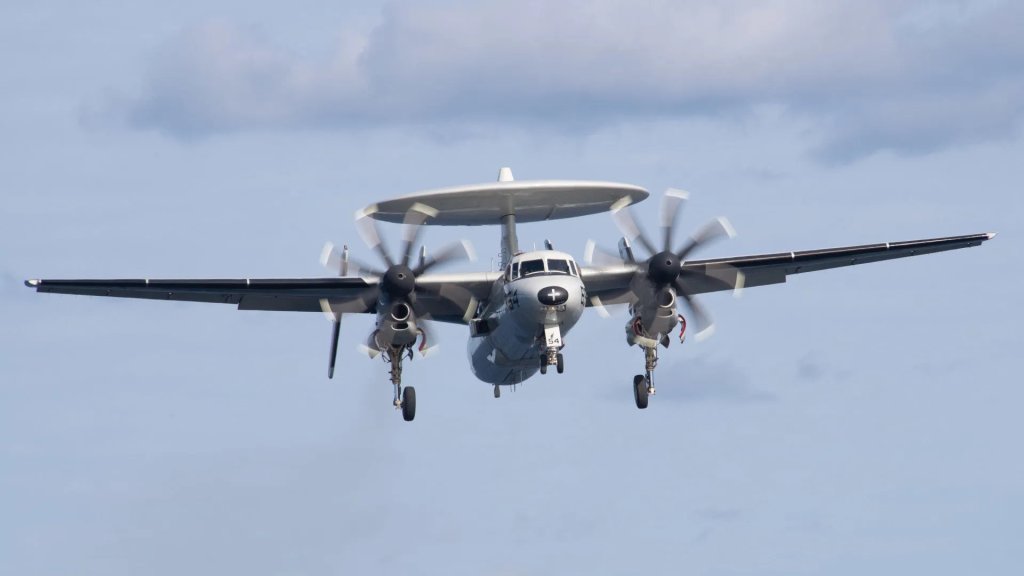
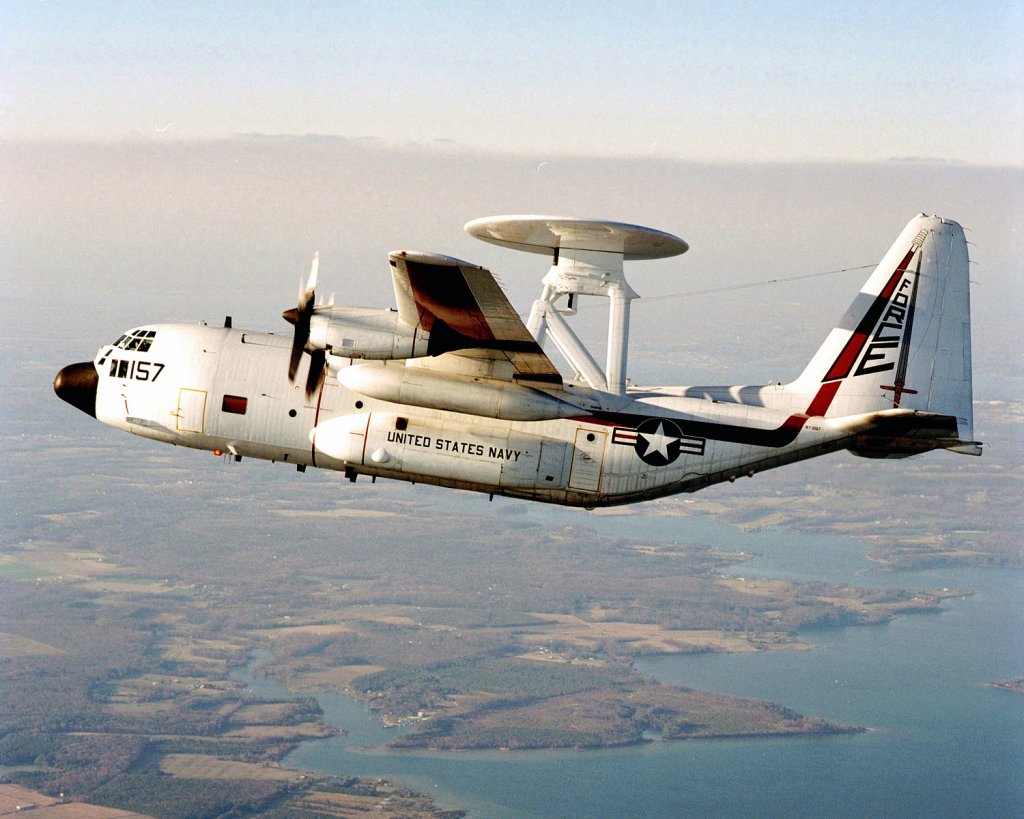
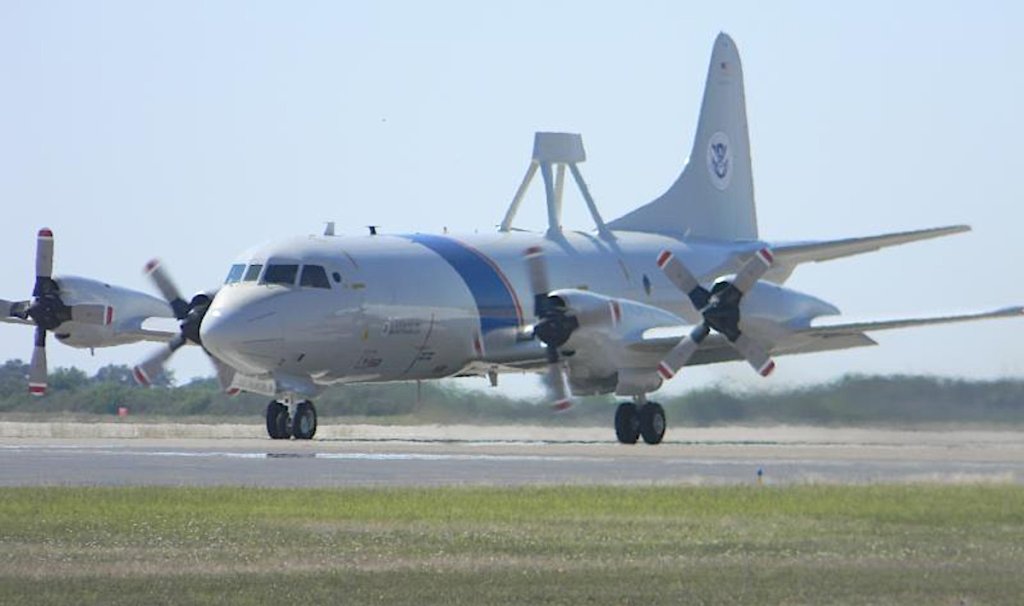
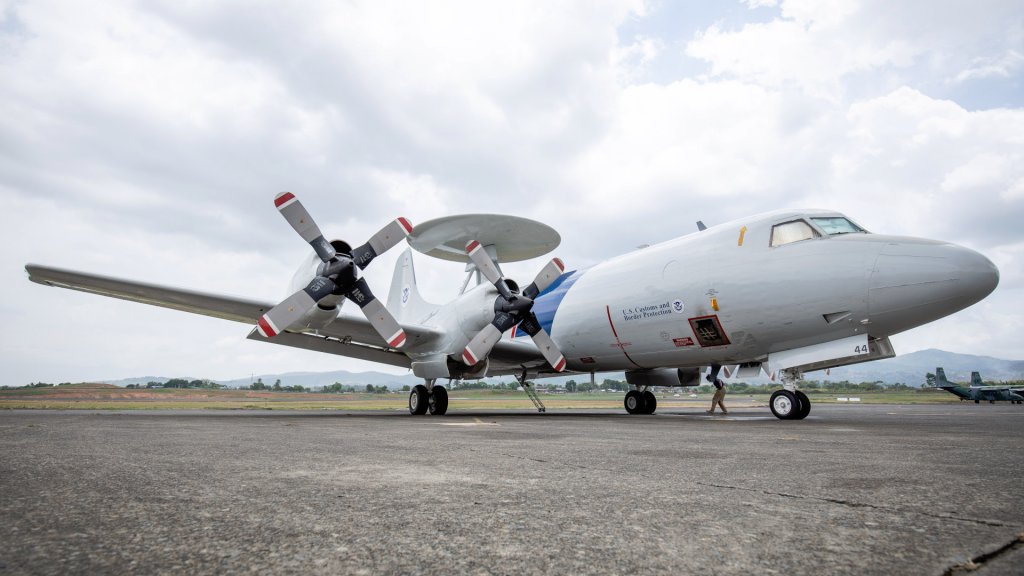
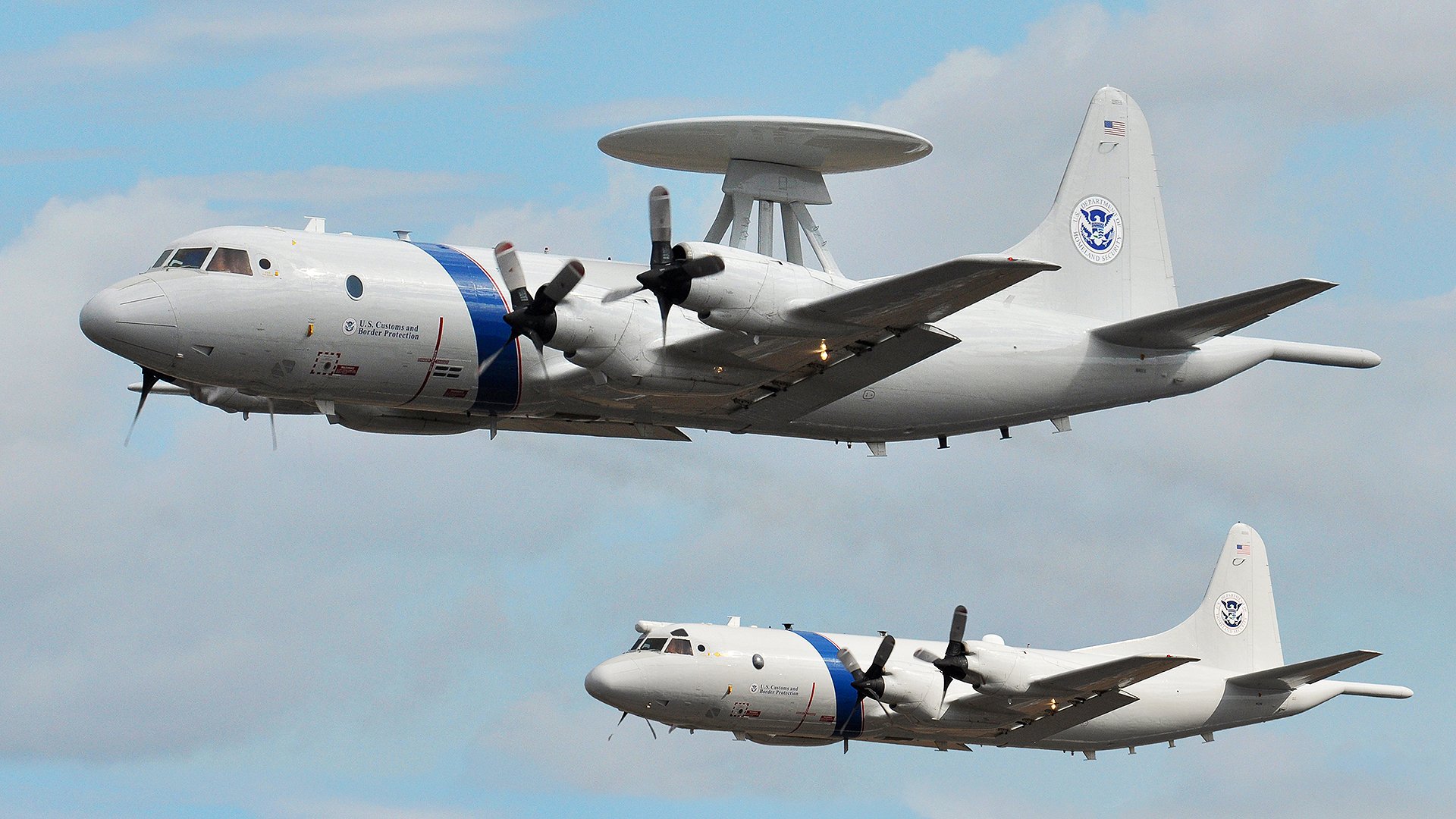
U.S. Customs and Border Protection (CBP) has retired the last of its P-3 Airborne Early Warning (AEW) aircraft. The AEW version is instantly recognizable from the saucer-like radar dome on top, as seen on other AEW types like the E-2 Hawkeye and the E-3 Sentry. CBP was the only operator of this variant of the P-3 Orion and is said to have been the only law enforcement agency to fly any kind of dedicated AEW plane. The retirement of these aircraft comes at a time when American AEW assets, in general, are under heavy strain by demands globally.
CBP officially retired its final P-3 AEW on September 30, 2026, after a final flight from National Air Security Operations Center Jacksonville (NASOC Jacksonville), in Jacksonville, Florida. CBP has also flown Long Range Tracker (LRT) variants of the P-3, configured for more traditional maritime surveillance missions. The current plans for the LRT aircraft, and whether their sunset may also be on the horizon, are not immediately clear, and TWZ has reached out for more information. Orions of all types have been steadily disappearing from service with the U.S. military and elsewhere across the U.S. government as the aging aircraft become more difficult to operate and maintain.
End of the Road: AMO’s Iconic P-3 Dome Takes Its Final Flight!
On September 30, 2026, the distinct silhouette of a four-engine turboprop carrying its massive rotating radar dome touched down for the final time at the National Air Security Operations Center in Jacksonville.
“Our Jacksonville-based P-3 AEW fleet has served as a cornerstone of America’s outer-layer border security,” according to a brief announcement from CBP about the retirement on social media. “Its crews flew far beyond our borders, providing wide-area surveillance across the Caribbean, Gulf of America [Gulf of Mexico], and the transit zones of Central and South America, helping detect and track threats before they could reach the United States.”
By all indications, including official CBP sources, the P-3 AEW fleet consisted of eight aircraft at its peak. There is a confusingly worded 2014 CBP press release that mentions an “11th and final Lockheed Martin P-3 Airborne Early Warning (AEW) aircraft overhaul,” but that figure looks to also include three of the six LRT versions. The same release says that CBP only had 14 P-3s of all types at that time.
What was then known as the U.S. Customs Service (USCS) first began operating the P-3 AEW version in the late 1980s. The aircraft were converted from second-hand maritime patrol variants of the Orion. The first example had started life as a P-3B for the Royal Australian Air Force (RAAF). Ex-U.S. Navy P-3s were also converted.
A picture of a P-3 AEW in USCS service circa the late 1980s. CBP
The initial three P-3 AEWs were equipped with the AN/APS-138 radar. The same radar was used on early E-2C Hawkeye airborne early warning and control aircraft operated by the U.S. Navy, as well as several other armed forces internationally.
“The Customs Service had previously borrowed U.S. Navy E-2Cs to meet its antinarcotics surveillance requirements, but required an aircraft with longer range and on-station time,” according to a 2006 report from Forecast International. “In June 1989, the U.S. General Accounting Office issued a report on the drug interdiction P-3B AEW aircraft. The findings indicated that the radar performance was as specified, but the P-3B (when compared to the E-2C) was less costly to operate per square mile of area covered because of the higher cruising speed and longer endurance. The P-3B had at least twice the in-flight endurance of the E-2C.”
Starting in the 1990s, USCS began the process of acquiring additional P-3 AEWs with newer AN/APS-145 radars, as also used on later model E-2Cs. The original AEW Orions were eventually refitted with APS-145s, as well. It’s worth noting here that the U.S. Coast Guard separately moved to acquire an AEW version of the C-130H, designated the EC-130V, in the 1990s, which used the AN/APS-125 radar, also used on older E-2s. Budget cuts led to the end of that program. The EC-130V that had been built was redesignated as an NC-130H and subsequently used for test purposes.
A US Navy E-2C Hawkeye. USNThe NC-130H test aircraft with its radar dome still on top. US Military
The P-3 AEWs were also equipped with a sensor turret containing electro-optical and infrared (EO/IR) video cameras, allowing the aircraft to more closely investigate targets spotted on radar. CBP regularly conducted P-3 operations that paired AEWs with LRT variants to provide an even broader array of sensor capabilities on missions. The LRTs have EO/IR sensor turrets, as well as AN/APG-66 and SeaVue radars. The pulse-doppler AN/APG-66 is primarily designed for spotting and tracking aerial targets, and was originally used on early variants of the F-16 fighter. SeaVue is a multi-function type with surface search and synthetic aperture radar (SAR) imagery modes. Images produced via SAR are highly detailed maps of the surface below, and can be captured day or night, and regardless of any cloud cover, smoke, or dust.
Beyond radars and other sensors, the P-3 AEWs also had a robust communications suite consisting of VHF and UHF radios, as well as satellite communications links by the end of their career. CBP’s entire P-3 fleet, including the AEWs and LRTs, has received various updates over the years, including new ‘glass cockpits’ starting in the early 2000s.
Though primarily employed in support of counter-narcotics interdiction operations, the airborne radar and command and control capabilities were also applied to other missions, including disaster relief and humanitarian assistance efforts at home and abroad. As an example, CBP’s P-3 AEWs helped with air traffic coordination, as well as provided other support, during relief efforts in Texas in the wake of Hurricane Harvey in 2017.
At the same time, CBP’s entire P-3 fleet, including both the AEW and LRT versions, has only been getting increasingly older and difficult to sustain. The P-3B variant first entered U.S. Navy service in the 1960s. CBP did put its P-3s through a Service Life Extension Program overhaul in the 2010s, which included “new wings and tail for each aircraft and completely strips down the aircraft to its bare metal for an inspection,” according to a 2014 press release.
A P-3 AEW seen during a test flight as part of the SLEP overhaul. The aircraft notably lacks its radar dome. CBP
A key question now is how CBP will fill any gaps left by the retirement of the final AEW version. The agency does continue to operate a mix of other crewed fixed-wing aircraft with mixtures of radars and other sensors, as well as MQ-9 drones, but none of these platforms are equipped with a sensor like the AN/APS-145. CBP also has a network of tethered aerostats with radars at fixed sites around the Caribbean. As an aside, General Atomics, together with Saab, is now working on an AEW configuration for the MQ-9B drone, but there are no known U.S. orders for that capability at the time of writing. That platform will not offer the same level of flexibility and look-down capability as modern crewed AEW aircraft, either. Look-down AEW capability is only growing in importance today amid expanding and evolving drone threats, including to the U.S. homeland.
Another look at one of CBP’s now-retired P-3 AEWs. CBP
The Air Force, in particular, is also aiming to eventually push most, if not all, air moving-target indicator (AMTI) tasks currently performed by aircraft like the E-3 and E-7 into space. The service is heavily investing to accelerate the fielding of those capabilities, which could eventually offer revolutionary constant, persistent coverage globally. The first of those satellites are still not expected to reach an early operational state until 2028. It is possible that CBP could get access to a tailored data feed from this system when it does become operational. It still does not obviate the need to have crewed or uncrewed aircraft capable of more closely investigating tracks of interest using EO/IR cameras and other sensors.
Whatever the future might now hold, CBP’s unique time as the operator of the P-3 AEW aircraft has come to an end.
New York Governor Kathy Hochul declared a statewide disaster emergency on Monday as a measles outbreak spreads through under-immunised rural communities, with 108 cases reported this year. The order expands who can administer MMR vaccines and comes as neighbouring Pennsylvania battles an outbreak that has killed five people.
Brazil’s veteran leftist President Luiz Inacio "Lula" da Silva trailed Flavio Bolsonaro, the son of his far-right predecessor, in the first-round presidential vote on Sunday. Some analysts suggest that the sweeping anti-poverty measures Lula put in place over two decades may have helped give rise to a growing lower-middle class drawn to the far right’s promise to get the government out of people’s lives.
Family members of former Brazilian president Jair Bolsonaro won big in Sunday's general election, including the right-wing lawmaker's eldest son Flavio Bolsonaro, who surpassed President Luiz Inacio Lula da Silva in the first-round presidential vote. During the campaign, Flavio Bolsonaro promised to secure amnesty for his jailed father.
Right-wing Senator Flavio Bolsonaro pulled off a surprise first-place finish ahead of President Luiz Inacio Lula da Silva in Sunday's election, which heads to a run-off vote on October 25 as neither clinched a majority.
The woman who alleged that she was drugged and raped by seven male students at a Cornell University fraternity house has been the target of threats, her lawyer told CNN on Sunday. Cornell's president earlier voiced support for an external review of the Ivy League institution facing widespread outcry over its handling of the case.
Brazilians voted Sunday in a high-stakes presidential election pitting incumbent Luiz Inacio Lula da Silva against far-right challenger Flavio Bolsonaro, following a campaign dominated by corruption scandals, economic anxiety and accusations of US meddling. The knife-edge election comes at a moment when the region is shifting to the right in line with the Trump administration.

 Login


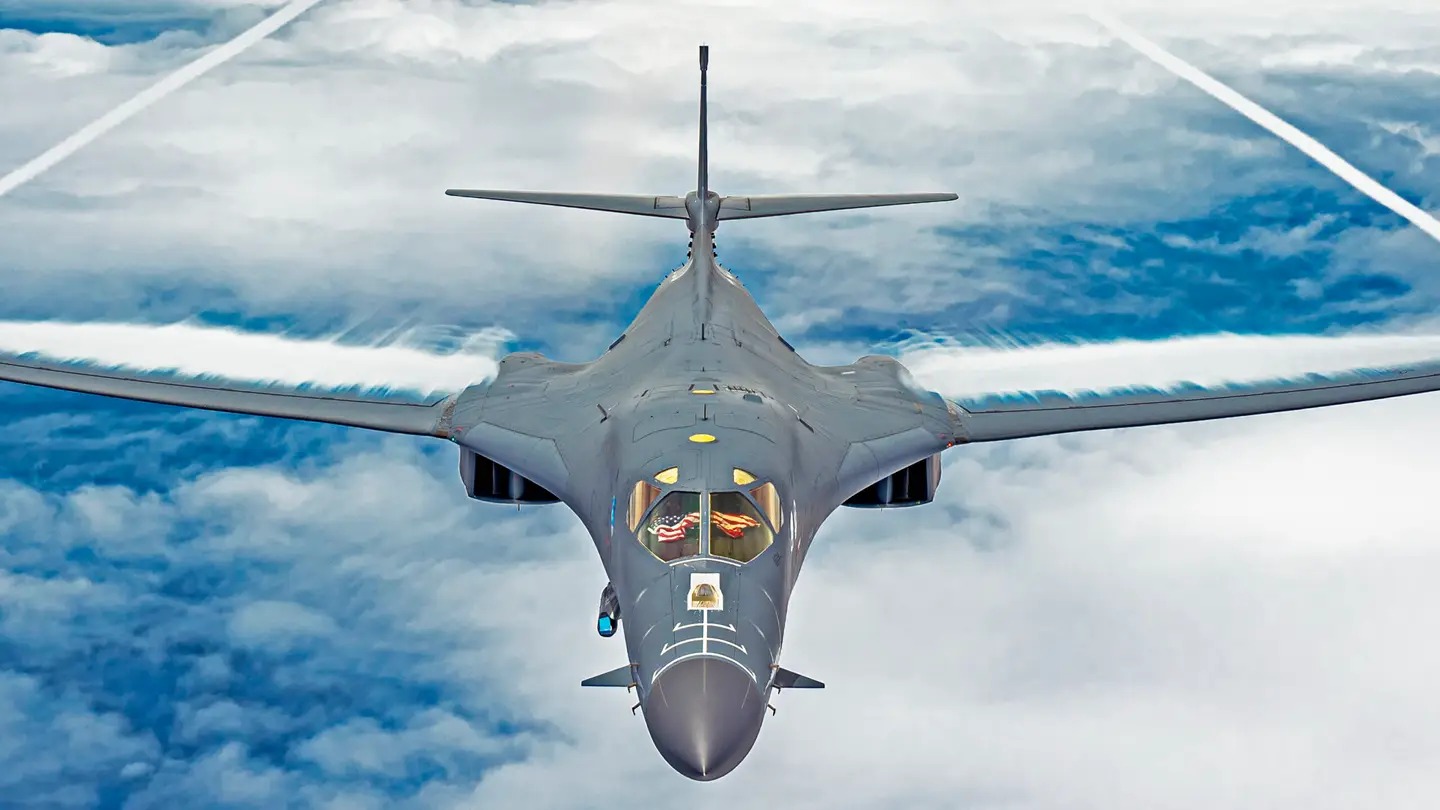
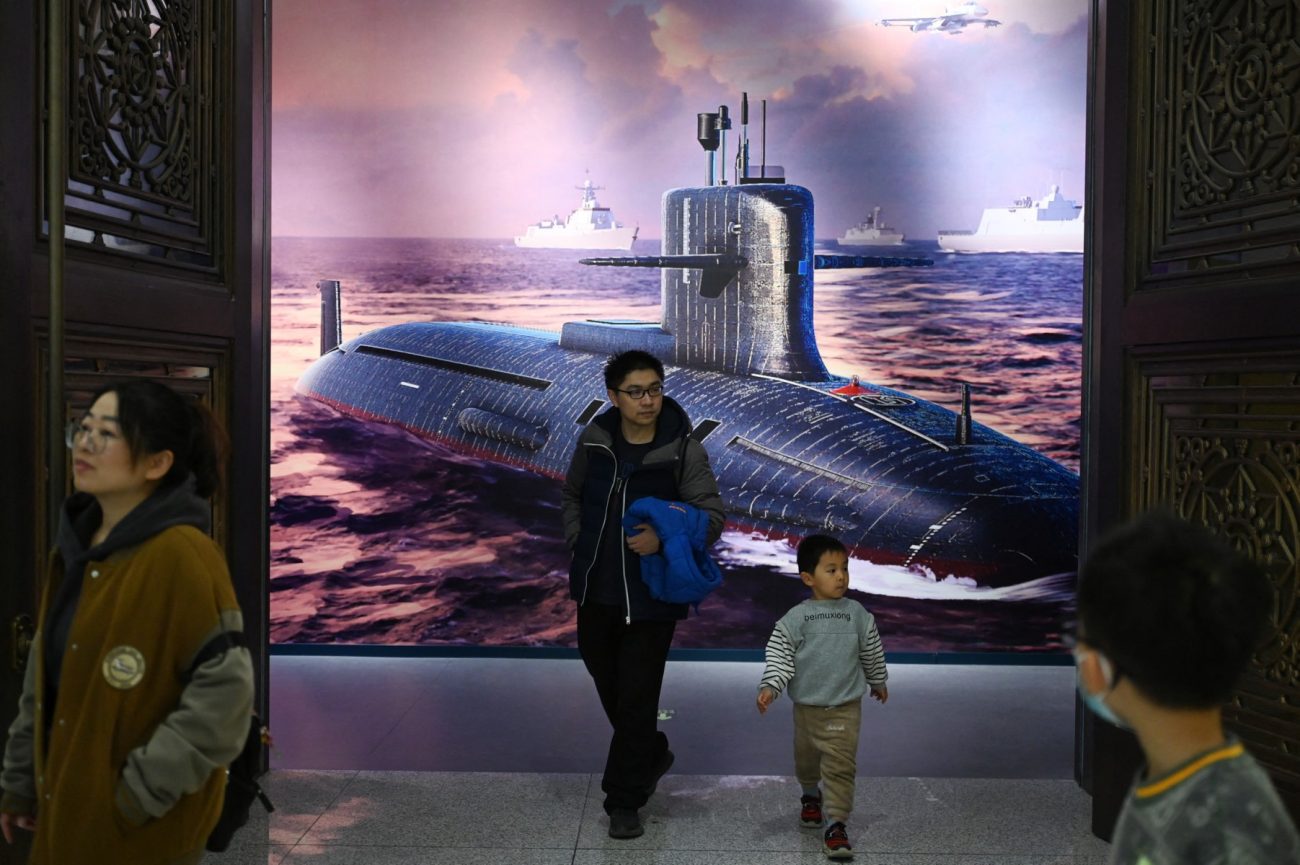
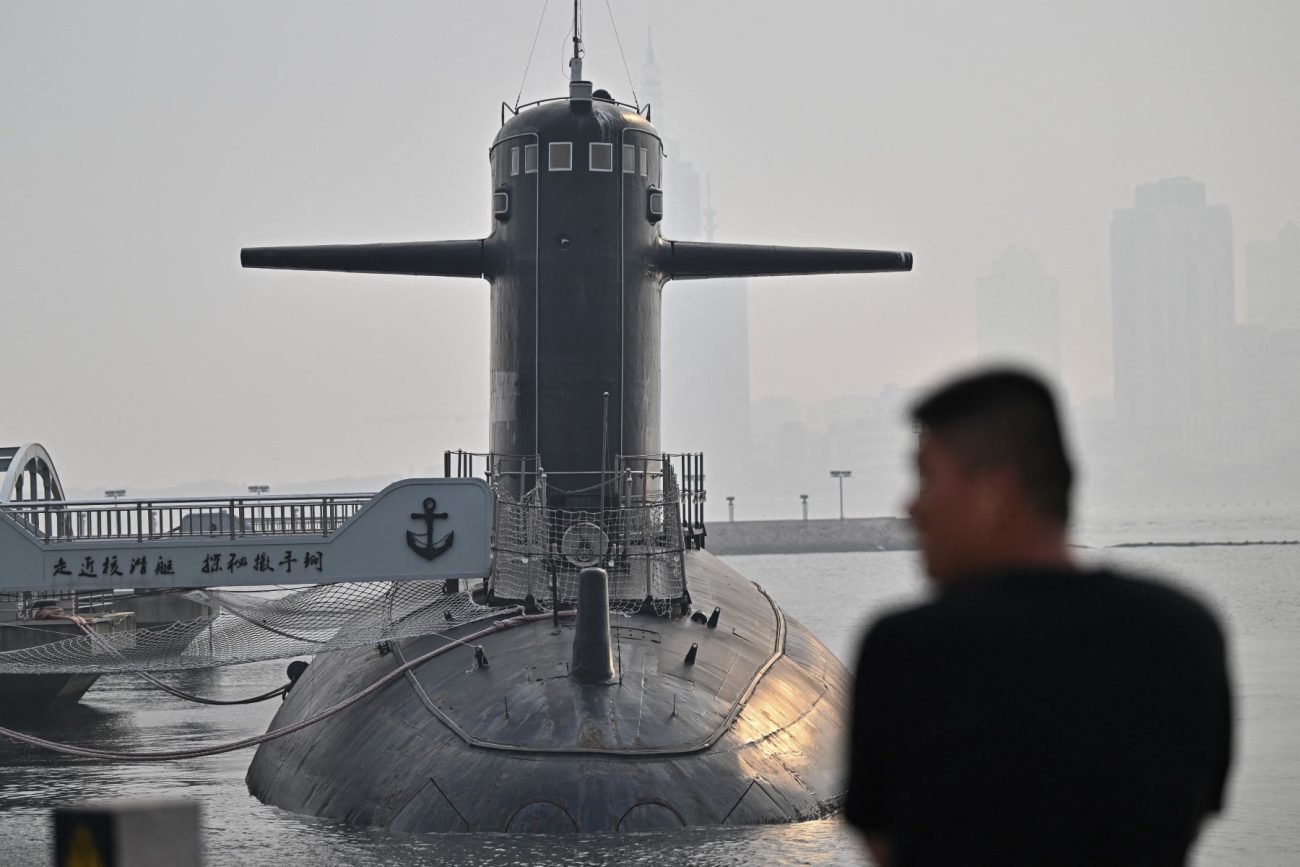
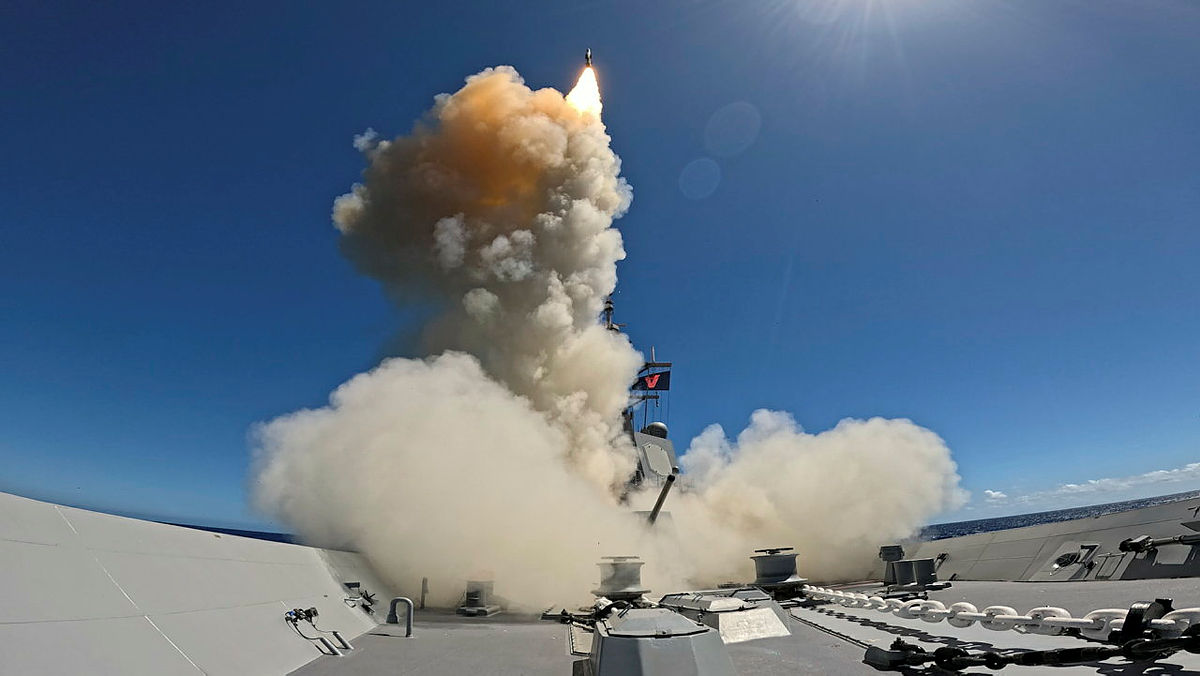


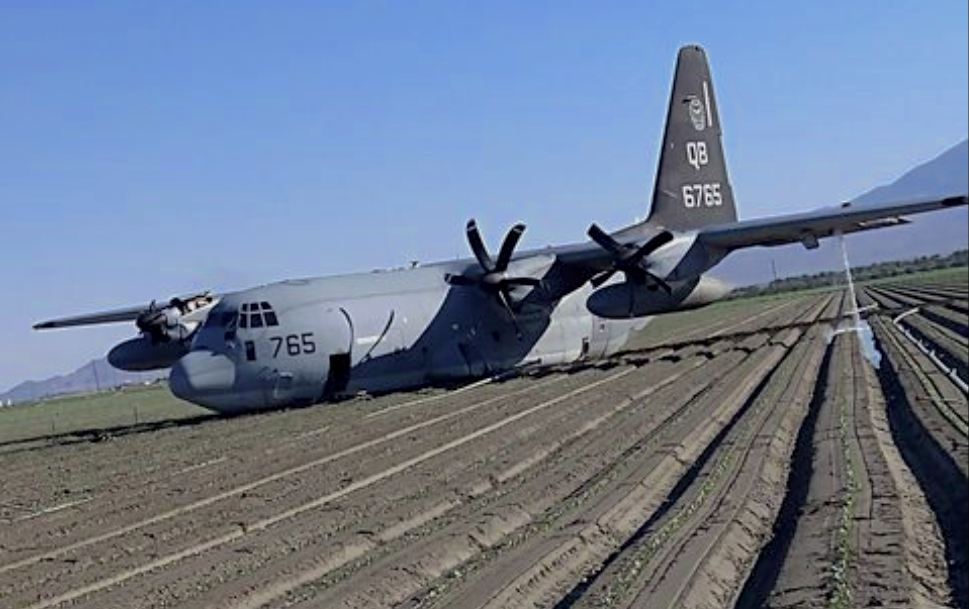
 Aviation et al (@OnDisasters)
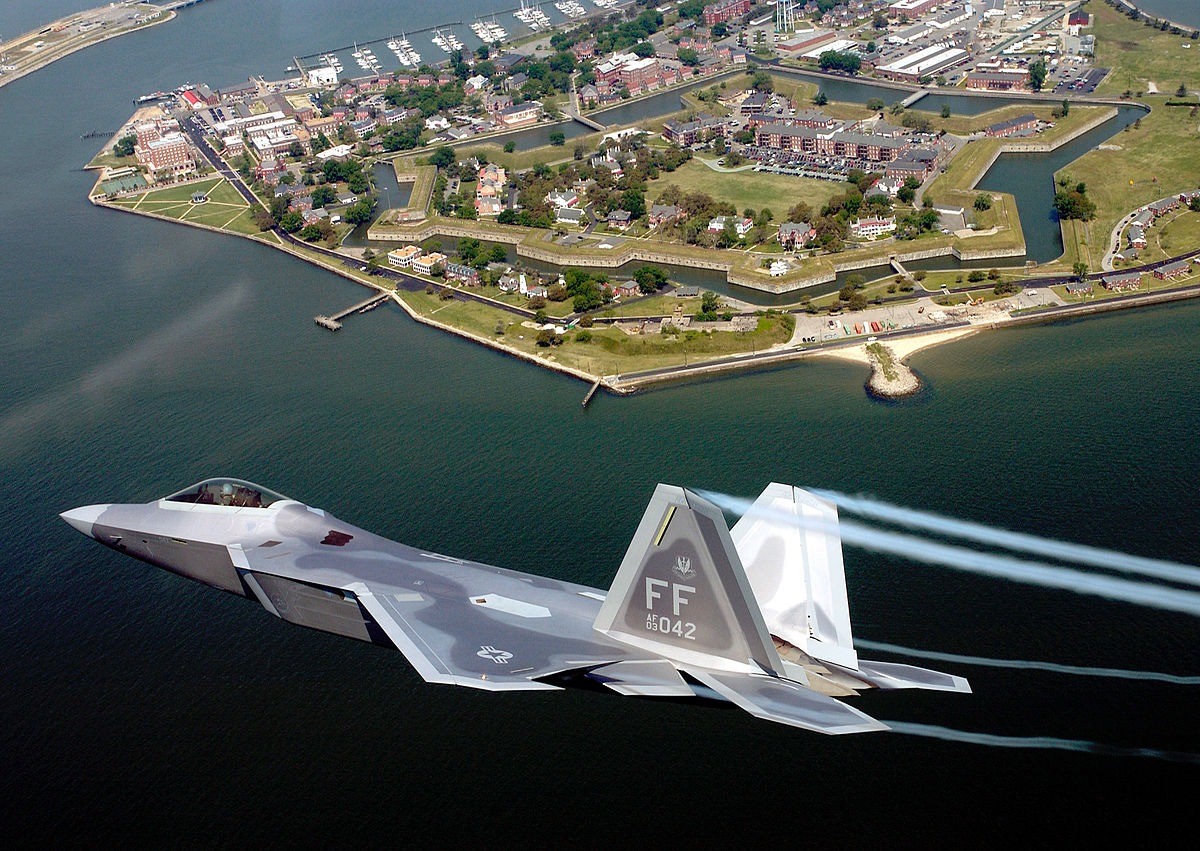
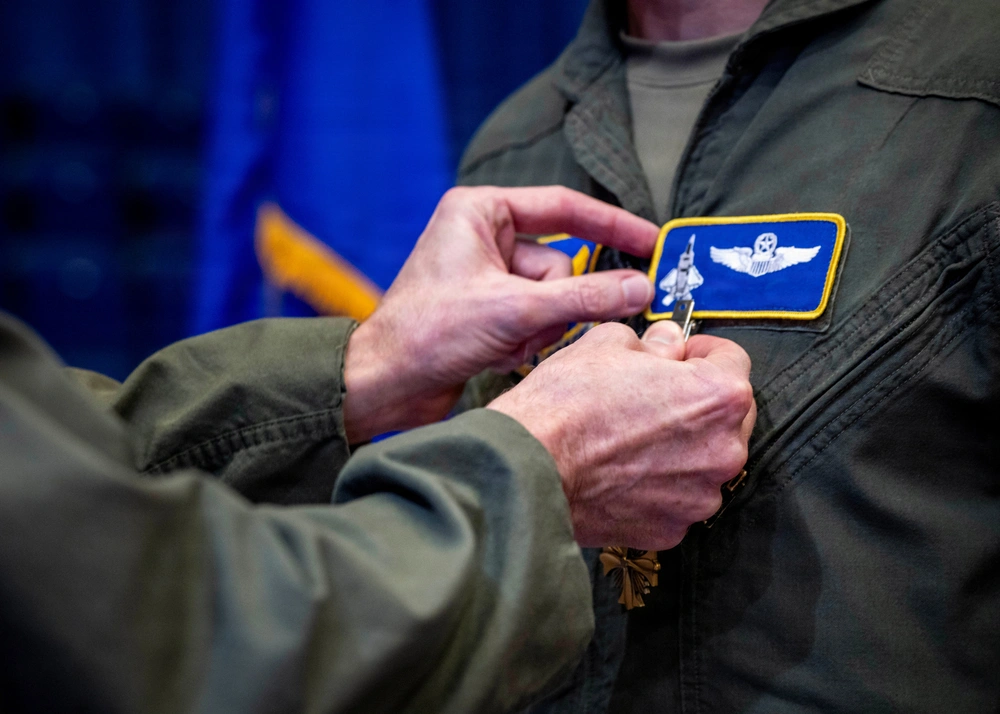
 The USS Theodore Roosevelt (CVN-71) has left San Diego to build a three-carrier presence in the Middle East
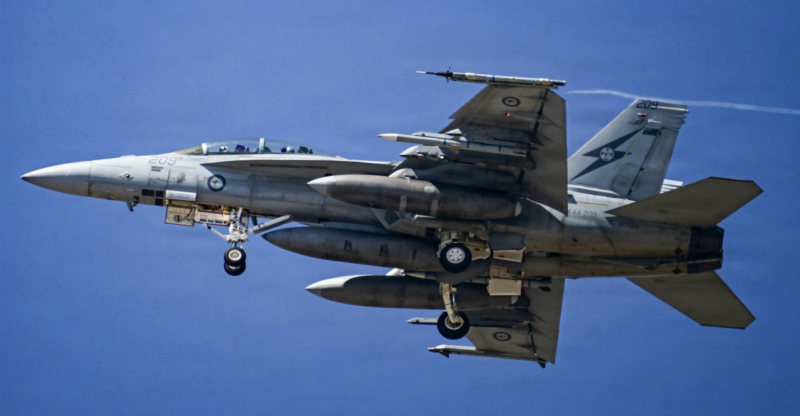
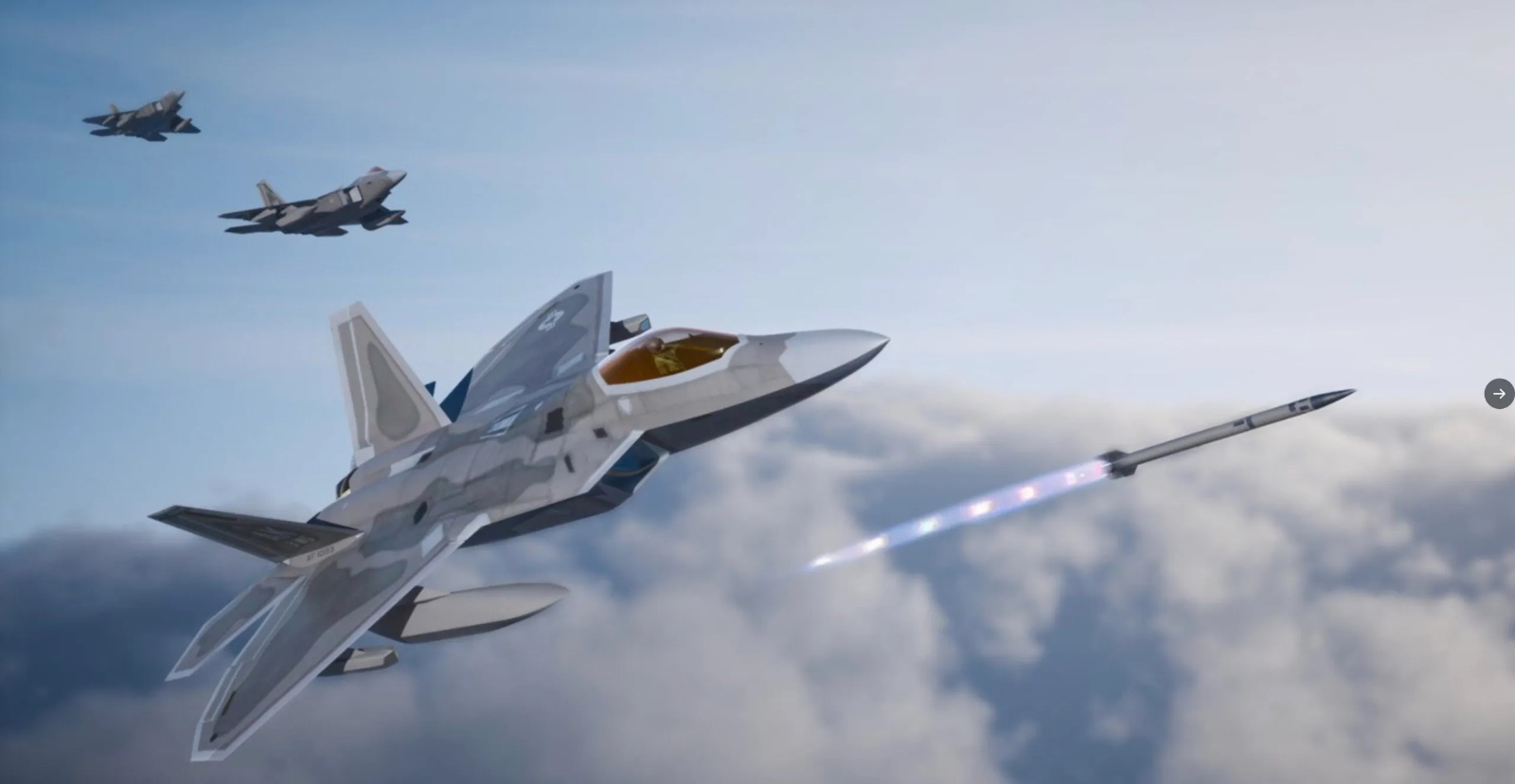
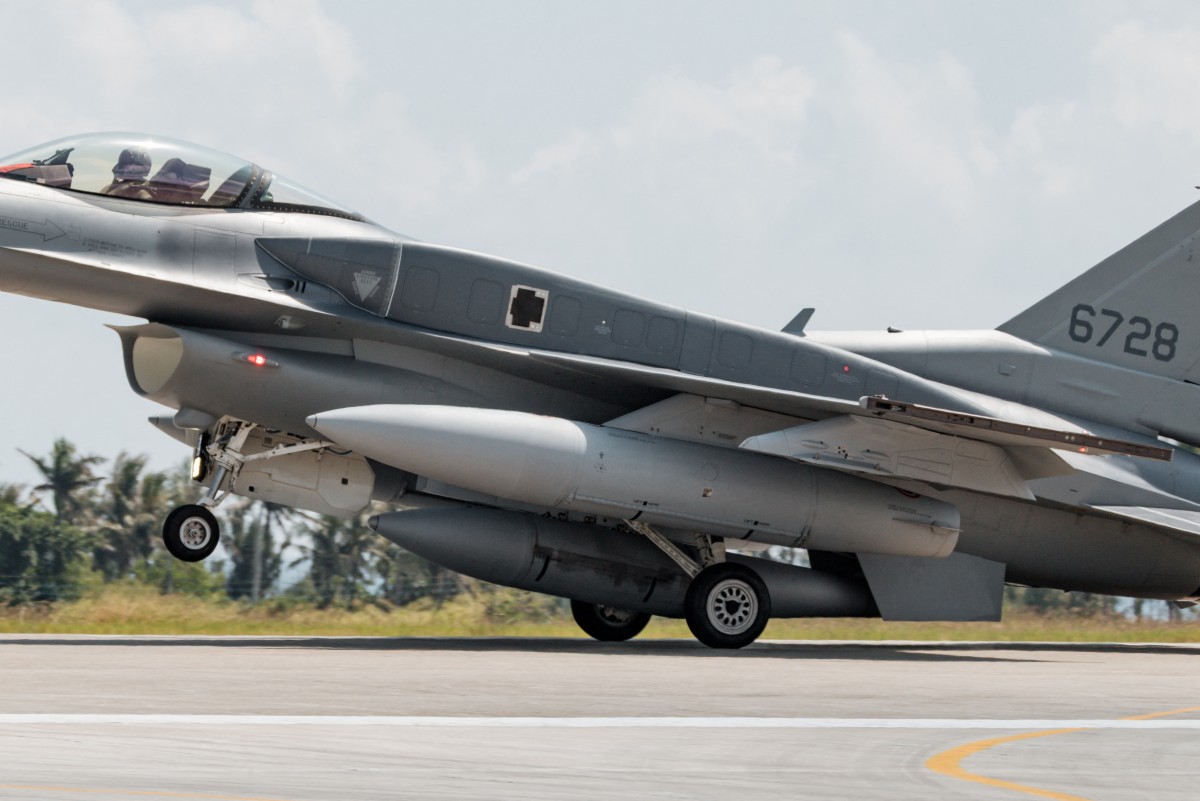
 IRST