Relics of ancient wet forests stretch across the coast of Queensland state in Australia. In a landscape made patchwork by agriculture, volunteers, community groups and Indigenous rangers in Australia’s Wet Tropics now grow more than 300,000 native plants to turn cleared pasture back into rainforest. But once the young trees shade out the weeds, some groups aren’t keeping track of the trees, a new study finds. That gap means the goals these groups care about most, such as bringing back wildlife and reconnecting fragmented forest, are poorly captured by what most groups measure. Researchers from Australia’s James Cook University and the University of Queensland surveyed 25 organizations doing rainforest restoration in northeastern Australia. The respondents included community groups, conservation land trusts, Indigenous ranger groups, nature market investors, and commercial land managers. The results were published in the journal Restoration Ecology. Australia’s Wet Tropics, a UNESCO World Heritage Site, stretches about 450 kilometers (280 miles) along Queensland’s northeast coast, and contain relics of the ancient forests that once covered the supercontinent of Gondwana, according to UNESCO. Mossman Gorge in Daintree National Park in Far North Queensland, Australia. Photo by Merryjack via Flickr (CC BY 4.0) Around 40% of Australia’s bird species live in the Wet Tropics. Of the roughly 2,800 plant species found here, about 700 grow nowhere else in the world, according to the Wet Tropics Management Authority. Rare animals living there include the southern cassowary (Casuarius casuarius), the northern bettong (Bettongia tropica), and the spotted-tailed quoll (Dasyurus maculatus). During…This article was originally published on Mongabay
Emily Fulton spends a lot of time in a small boat cruising the waters of Clayoquot Sound off the west coast of Vancouver Island in British Columbia, Canada. As the marine program manager for the nonprofit Redd Fish Restoration Society, she regularly checks on a newly created kelp nursery growing within the traditional territory of the Tla-o-qui-aht First Nation. “We have grown a lot of kelp,” Fulton told Mongabay in a phone interview. Touted by its organizers as the largest kelp restoration project on the West Coast of North America, the nursery has planted more than 4,200 square meters (45,200 square feet) of new kelp habitat since launching in early 2026. That’s the footprint of three and a half Olympic-size swimming pools. The team grows baby bull kelp (Nereocystis luetkeana) and giant kelp (Macrocystis pyrifera) on four lines; each 330 meters (1,083 feet) long, submerged below the water’s surface and away from seafloor predators such as sea urchins. As the kelp grows and matures, they’ll take some of it off the lines and transplant it to sites throughout Clayoquot Sound, to restore degraded kelp forests and also seed new ones. Getting a project of this scale up and running has cost almost a quarter of a million Canadian dollars. The funding has come from various sources, including the provincial government, the World Wildlife Fund of Canada and the Clayoquot Biosphere Trust. Managing the project alongside Redd Fish is West Coast Kelp, a business devoted to kelp restoration and the Tla-o-qui-aht…This article was originally published on Mongabay
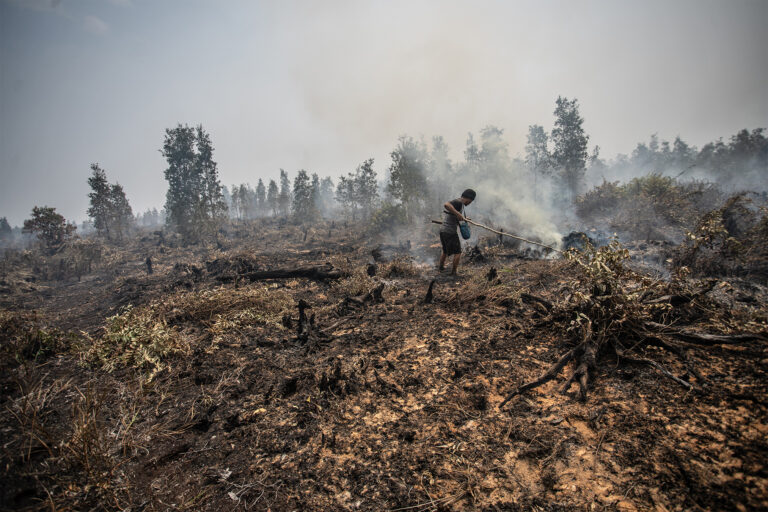
In October 2006, I was supposed to be starting my dissertation research on tropical reforestation in Indonesia. Instead, I found myself in the forests of Tanjung Puting National Park in Central Kalimantan helping locals to fight fires with brooms, backpack pumps, and hoses connected to hand-dug water wells. It was an ‘all hands-on deck’ moment for the local NGO I was working with then — Friends of Nature, People and Forests (FNPF) — including Basuki Santoso, FNPF’s Kalimantan program manager, alongside Adut and Isam, who were teenagers at the time. On our first night of firefighting, we slept in the forest on a raised platform that would later become part of a field station. I was awoken in the middle of the night by a sun bear rifling through our makeshift kitchen about 20 feet away. I sat frozen, watching this wild animal who was fleeing the fires while everyone else slept soundly. It was a surreal and humbling moment. Twenty years ago, these severe forest and peatland fires were due to a dangerous combination of El Niño-induced drought, slash-and-burn agriculture and other land clearing, and the grass-fire cycle. Much of Southeast Asia was left choking on the haze, and that was a weak El Niño year. Firefighting in Indonesia often requires resourcefulness as well as resilience and fortitude. Image courtesy of Basuki Santoso. History keeps repeating itself, and it’s hard to watch. Experts say we are now facing a Super El Niño. For the past three months, millions of…This article was originally published on Mongabay
HONG KONG — “Spiderman … Tom Holland,” two secondary school boys repeated to each other as they watched conservationist Harry Wong nimbly climb a tall tree at their school, St. Louis School, in downtown Hong Kong. On a humid September afternoon, Wong installed a nest box for yellow-crested cockatoos (Cacatua sulphurea) on a candlenut tree (Aleurites moluccanus). Equipped with a harness and ropes, he climbed up the tree, installed the box, and quickly rappelled down. Wong and Astrid Andersson, a biologist and postdoctoral researcher at the University of Hong Kong (HKU), are the dynamic duo behind HK Cockatoo Watch, a conservation project that seeks to protect the city’s feral yellow-crested cockatoos. Arborist and conservationist Harry Wong installs a nest box for yellow-crested cockatoos on a tree at St. Louis School in Hong Kong on Sept. 7, 2026. Image by Yenni Kwok/Mongabay. Yellow-crested cockatoos are considered to be critically endangered, with fewer than 2,000 individuals remaining in their native range in eastern Indonesia and Timor-Leste. However, few people know that Hong Kong is home to the largest wild population of the species outside the two Southeast Asian countries. There are roughly 200 cockatoos in the city, or about 10% of the global wild population, believed to be descendants of released or escaped pets. The number is stable, thanks to the lack of natural predators and strict legal protection. A recent DNA analysis study by Andersson and her research team found that Hong Kong’s feral cockatoos have unexpectedly high genetic diversity and…This article was originally published on Mongabay
Steve Rose investigates a catastrophic pollution incident at Furnace Brook, a fishing lake in East Sussex, where thousands of fish suddenly died and the local ecosystem collapsed. Neighbours suspect pollution from nearby Morgans Farm, and Rose examines whether their concerns are justified. In doing so, he uncovers broader national problems with water pollution, illegal waste dumping, and the limited power and resources councils and regulators have to tackle them.
He headed about half a mile up the valley to a tributary joining the stream from a neighbouring property named Morgans Farm. “You could clearly see the water upstream [of the tributary] was totally normal, a sandy colour with clay silt in it, and what was below it had gone a blue-black colour. You could see dead brook trout, wild eels, and there was a dead crow or raven, which may well have eaten something poisonous from the river.” In some places, he says, there was a thick layer of blue-grey scum on the water, which he later learned is sometimes called “bacterial cheese”. “There’s so much nutrient [sic] in the water that it allows for a bacterial colonisation explosion.” The bacteria take up all the oxygen, which causes most of the fish, especially the older, larger ones, to die.
Indonesia’s government is imposing new restrictions on access to geospatial data, raising concerns among researchers and activists that it will suppress environmental science and advocacy work in one of the world’s most biodiverse countries. For around a month, visitors to an interactive mapping platform maintained by the Ministry of Forestry have been greeted with a pop-up legal notice warning that the information is “view-only” and that anyone who “downloads” or “extracts” it without the ministry’s written permission “will be prosecuted” under the 2008 Electronic Information and Transactions, or ITE, Law. Anyone who wants to use the once freely accessible platform, known as SIGAP, must first agree to “terms and conditions” stating that the relevant articles in the ITE Law “carry penalties of up to 9 years in prison and/or a fine of up to Rp 3 billion [$170,000],” the notice says. On Sept. 21, the ministry’s Directorate General of Forestry Planning posted a video to Instagram outlining a new application process that requires prospective users to disclose their research aims and submit supporting documents. Doni Prabowo, the department’s head of forest monitoring and geospatial information, told Mongabay that restrictions were needed because geospatial data had been uncontrolled for a long time, creating opportunities for manipulation and illegal trading of the country’s precious information. “What if somebody manipulates the data and says certain areas are not protected forest [when they really are]? It could be dangerous,” Doni said by phone. He said he’d heard of the ministry’s geospatial data being listed…This article was originally published on Mongabay
Reprinted with permission from Trita Parsi‘s Substack: Michelle Brohard, head of policy and geopolitical risk at Kpler, speculated in a recent interview with energy analyst Rory Johnston (@commoditycontext) that the reason why more crude is getting through the Strait of Hormuz may be because some countries are paying Iran a toll, possibly up to 20% […]
Reprinted from John’s Substack: The Trump administration and its supporters – including the Wall Street Journal editorial page – are working overtime these days to spin the news around the Iran war to make it appear that the US is winning and Tehran had better submit to Washington’s demands before it is wrecked, maybe even […]
The government in Suriname this year said it planned to evict illegal settlers in the Amazon Rainforest, and possibly send many of them back to their home countries. But eviction has proven much more complicated than it first appeared, with settlers allegedly ignoring court orders and officials expressing confusion about which people are breaking what laws. Suriname President Jennifer Geerlings-Simons created a task force to investigate illegal settlements destroying the rainforest, many of them Mennonites moving from other countries. Officials delivered eviction notices to some of the settlers as recently as July, yet some deny receiving the notices and continue to develop the area. Lawmakers said they’re confused about the location of the new Mennonite communities, the legal process for removing them, and how they entered the country in the first place. “We got bits and pieces of information that more and more families were coming,” Rabindre Parmessar, leader of the National Democratic Party in the National Assembly, told Mongabay over the phone. “We don’t know whether immigration rules were taken into consideration, and the other rules and procedures we have here in Suriname.” Since at least 2022, agribusiness investors in the country have been trying to relocate Mennonite farming families from Bolivia, Belize and other parts of the Americas. The conservative Christian group has a track record of rapid farming growth, and would have helped develop hundreds of thousands of hectares of mostly primary rainforest. Geerlings-Simons during the press briefing Aug 4. Image courtesy of Key tv 8.2 In…This article was originally published on Mongabay
The Real News Network launches English-language Brazilian reporting project ahead of pivotal election
Panamerican Dispatch is a new journalism project created in September 2026 to produce and distribute news and analysis from Latin America, within the United States.
Brazilians are heading to the polls. The stakes for the region could not be higher.
U.S. President Donald Trump has renewed attention on Latin America as not seen in decades. There are major concerns for the future of democracy across Latin America and the legitimacy of upcoming elections in the region.
“Panamerican Dispatch is an essential site to learn about Latin American events from perspectives that go beyond the talking heads of mainstream media venues,” said Rafael Ioris, a Brazilian Latin American history professor at the University of Denver. “This is even more valuable in today’s changing and concerning landscape of the Western hemisphere.”
Most of the content published on Panamerican Dispatch is translated from other languages into English and is available free at www.panamericandispatch.org.
“In this era of mega-mergers and relentless corporate media consolidation, it’s refreshing and exciting to see an independent initiative like Panamerican Dispatch take shape, bringing us incisive and compelling reporting from a diverse group of fiercely independent journalists on the ground in Latin America,” said Alexander Main, the Director of International Policy at the Center for International and Policy Research.
Panamerican Dispatch is a project of The Real News Network, in partnership with Global Exchange.
Brazil-based journalist Michael Fox is leading the initiative. He has reported extensively across the region for PRX’s The World, DW, The Nation, Business Insider, The Intercept, AJ+, TRT World, The Real News Network, and numerous other outlets. He is a former editor of NACLA’s Report on the Americas. More recently, he is the producer and host of numerous podcasts, including Brazil on Fire and Under the Shadow. His most recent episode of Under the Shadow looks at U.S. President Donald Trump’s attempt to impact the vote in Brazil.
Michael Fox will be covering the elections from the streets of Brazil.
About The Real News Network
The Real News Network is a viewer- and listener-supported, nonprofit news organization based in Baltimore, Maryland. Free of corporate and government advertising, TRNN produces independent journalism that centers the voices of people on the front lines of struggles for justice, democracy, and dignity around the world.
To schedule an interview or request coverage, please contact:
JAKARTA — Fires burning within rainforests that contain more than half of the world’s critically endangered Bornean orangutan population have prompted scientists and experts to call for urgent action in response to the escalating fires across Indonesia. The warning comes as Indonesia faces a severe fire season fueled by strong El Niño conditions, with conservationists scrambling to rescue wildlife trapped in burning landscapes. Fires are burning in rainforests that contain 13 of the 20 largest remaining populations of Bornean orangutan (Pongo pygmaeus). Shaded and outlined areas show current IUCN Extant (resident) orangutan range in Kalimantan. Image courtesy of the Orangutan Conservation Initiative. Red circles show individual satellite detections overlapping current IUCN Extant (resident) orangutan range. As of Sept. 22, the Ministry of Forestry reported that 100 wildlife, including 53 Bornean orangutans, had been rescued. Rescuers have found some orangutans suffering severe physical injuries after escaping the fires. In Central Kalimantan, an approximately 4-year-old orangutan named Novita was found trapped in a burning area near Sebangau National Park in Central Kalimantan province with serious burns on all four hands and feet, according to local news Betahita. She was later taken to a rehabilitation center for treatment. In locations where orangutans are surrounded by fire and have nowhere to go, they can “literally burn alive,” said Borneo Nature Foundation (BNF) CEO Anton Nurcahyo. The risk may be particularly high for females with young, Anton told Mongabay. Their tendency to remain in established home ranges can be a disadvantage during fires, while females…This article was originally published on Mongabay
“The liberalization of euthanasia laws not only offends the West’s pre-modern moral and religious traditions but also cannot be justified on the uniquely modern idea that euthanasia is a rational means of enhancing the individual’s willful control over his body and life. The deeper problem, however, is that this development is best understood as an... Continue Reading
Looking across the devastated landscape of the Gaza Strip, where surviving generations now carry the permanent physical and psychological scars of war, the ultimate indictment of our era is damning: The world watched the horror unfold in real-time, possessed all the legal, political and institutional mechanisms to stop it, and did nothing. For months, then […]
QUANG NGAI, Vietnam — When diesel prices in Vietnam hit an all-time high in March, Vo Huu Viet, a fisherman with more than 30 years at sea in Quang Ngai province in Central Vietnam, did something he rarely does. He stayed on shore. “The catch is simply not enough to make up for the labor of four men,” Viet said. Docking the aging wooden boat he inherited from his father means he, his wife, his crew and their families had to do other work, such as hauling heavy goods for other people, to make ends meet. Viet was hardly alone. In fishing ports around Vietnam, thousands of boats stayed docked for months as the fuel crisis made sea-bound trips unprofitable. The hike in fuel prices, fishers told Mongabay, didn’t just raise the cost of diesel — it raised the cost of everything else that supports a fishing boat, from ice to food. From March 1 to April 21 of this year, fishing activities around Vietnam fell 18.9% compared with the same time last year, from the nonprofit vessel-tracking platform Global Fishing Watch. For energy-intensive trawlers, the drop was 31%. As fuel prices spiked in Vietnam, fishing boats spent fewer hours on the water. Graphic by Andrés Alegria/Mongabay. Fuel is not the only pressure. Declining fish stocks — the result of years of unsustainable and illegal fishing, compounded by climate change — along with international pressures to tighten fishing enforcement and the growing presence of Chinese vessels add to the strain. The…This article was originally published on Mongabay
As a heat wave settled on the Red Sea in 2022, a patch of corals in a reef 15 kilometers (9.3 miles) off the coast of Saudi Arabia reacted differently than other corals. They’d been treated with probiotics, beneficial bacteria isolated from healthy corals, and those treatments prevented the corals from bleaching, scientists now report. Corals provide habitat for about one-third of marine species but are declining at an unprecedented rate, according to the latest report from the Global Coral Reef Monitoring Network. Rising temperatures lead to coral bleaching, a breakdown of the beneficial symbiosis between corals and algae that can result in coral death. Scientists estimate that if global temperatures rise by 1.5°Celsius (2.7°Fahrenheit) above pre-industrial levels, 70-90% of corals will be at risk of severe degradation worldwide by 2100. “Corals can acclimate and adapt, but only if they are alive,” principal investigator of the new study Raquel Peixoto, a microbial ecologist at the King Abdullah University of Science and Technology (KAUST) in Saudi Arabia, told Mongabay in a video call. She and other researchers around the world are investigating how manipulating the microscopic bacteria that live on corals can help them respond to threats ranging from oil spills to infectious disease. Though Peixoto previously showed that probiotics could stave off bleaching and keep corals alive in tanks, the new results, published Sept. 3 in Cell Reports, are the first to indicate that probiotics may help protect corals in the wild from marine heat waves. “It’s one thing to…This article was originally published on Mongabay
As frozen ground thaws in the Arctic, dead plants and animals locked in soils for thousands of years start to decay, releasing methane and carbon dioxide. Those gases trap heat from the sun and warm the planet. And the more the planet warms, the more Arctic permafrost thaws. This is just one feedback loop among many that most climate modeling has largely overlooked. A recent study published in the journal Environmental Research Letters examined four sources of greenhouse gases from natural systems: permafrost, wetlands, freshwater, and wildfires. The authors estimate that greenhouse gases released by these natural systems could add another 0.2°-0.4° Celsius (0.4°-0.7° Fahrenheit) of warming by 2100. That would amplify human-caused warming since 2020 by 20-30%. Methane accounts for roughly half that warming. Natural systems such as wetlands, permafrost, and forests have always released some greenhouse gases. This study tracks only the extra emissions released after 2020, as humanity keeps heating the planet by burning fossil fuels, clearing forests, and other activities. As this increased heat revs up these natural systems, thawing permafrost exposes additional ancient organic matter to decay. Warmer wetlands and freshwater lakes speed up the growth of the microbes that make methane. Drier forests burn more often, releasing planet-warming gases. The study was the first to pull all four sources together and “quantify this amplification of anthropogenic global warming,” lead author Sam Abernethy, a climate scientist at U.S.-based nonprofit Spark Climate Solutions, told Mongabay. Degraded permafrost in northern Alaska. Permafrost thaw is considered a climate…This article was originally published on Mongabay
UNGUJA, Tanzania — Decades before they would partner to build a marine conservation organization together, Ali Thani and Lorna Slade crossed paths in Tanzania. Years later, Slade returned to the East African country researching tourism for her master’s degree when she became involved in an initiative aimed at strengthening the knowledge and rights of local resource stewards. Then came the 2008 global financial crisis. The organization backing the initiative withdrew from Tanzania, providing only a fraction of the funds it had earlier promised — $25,000 — and an idea worth pursuing. “So they said, ‘OK, well, it’s a good idea. We have $25,000, so here you are,’” Slade recalls. That modest beginning would eventually become the Mwambao Coastal Community Network, a locally rooted organization now working with coastal communities across Zanzibar and mainland Tanzania, with an annual budget of around $3.5 million. For Thani, a coastal Tanzanian who had worked in government and with larger conservation organizations, Mwambao grew from a conviction that conservation could not simply be designed elsewhere and brought to communities. People who depend on natural resources, he says, should have the knowledge, capacity, and authority to help manage them. That idea has wider resonance as countries pursue the global goal of conserving 30% of the world’s land and oceans by 2030. Local organizations and communities are expected to shoulder much of that work, even as many struggle to secure the long-term funding available to larger international organizations and intermediaries. Mwambao’s work includes supporting community fisheries management,…This article was originally published on Mongabay
HONG KONG — On a mid-September day, Wong Ping-kuong, 74, and his colleagues worked quickly to spray clean an outdoor staircase and elevator landing. It was only mid-morning, but already hot. The temperature later rose to 31°Celsius (87.8°Fahrenheit). Wong has felt the impact of climate change in the half-century that he has worked as a construction worker and later an outdoor cleaner. “It’s gotten hotter. Before, I didn’t sweat; now my back is often covered with sweat,” he told Mongabay. Wong and his colleagues consider themselves lucky. They say when temperatures are high, they can go inside their truck, turn on the AC, and cool down a little. However, heatstroke can occur quickly, setting in within 10-15 minutes. Outdoor workers like Wong are exposed to increasing risks of heat-stress-related health problems, such as dizziness, headache, nausea, heatstroke, or acutely worsening pre-existing chronic conditions such as cardiovascular and respiratory diseases. Like many places around the world, Hong Kong is suffering from extreme temperatures. Official figures show it is warming by nearly half a degree Celsius per decade. The city also experiences longer and hotter summer months, with the number of “very hot days” quadrupling since the 2000s, data from the Hong Kong Observatory (HKO) shows. On Aug. 9, HKO logged 36.9°C (98.4°F), the highest temperature at its main monitoring station since record-keeping began in 1884. In the outskirts of Hong Kong, the weather service measured even higher temperatures that day: 39.8°C (103.6°F) — another record. Unlike other developed economies, Hong Kong…This article was originally published on Mongabay
Maleos, black-and-white birds that stand 60 centimeters (2 feet) tall with a distinctive splash of blue, orange and yellow on their faces, roam Sulawesi’s thick tropical jungles. But when it’s time to lay their eggs, they arrive at communal nesting grounds: Sandy beaches heated by the sun or the earth’s geothermal energy. There, they dig burrows with their webbed blue feet, lay their eggs and disappear. After a couple of months, the younglings hatch and, miraculously, are ready to fly within a few hours. This is an iconic bird on Sulawesi, serving as the official faunal mascot of Central Sulawesi province and of the Bogani Nani Wartabone National Park. Once considered widespread on Sulawesi, maleos (Macrocephalon maleo) are now on the brink of extinction, classified as critically endangered. Their numbers have dwindled to just 4,000-7,000 breeding pairs, mainly because their forest habitat is disappearing and they are targeted by poachers. Since 1983, the birds have lost more than two-thirds of their 149 nesting grounds as residential and commercial development takes over sandy riverbanks and beaches, and habitat is ravaged by mines and sliced by roadways. Maleo eggs are considered a delicacy, so people raid nests, and fewer chicks are born to replenish the population. But now, illegal trade in live maleos is emerging as a new and serious threat to their survival, according to a recent study published in the Journal of Asian Ornithology. These birds are trafficked to serve the booming demand for exotic pets. Researchers documented three seizures…This article was originally published on Mongabay
PENUKAL ABAB LEMATANG ILIR, Indonesia — Sumanti raced her motorcycle past the rubber trees as flames spread through the dry brush. No one had picked up the phone as the wildfire continued to grow out of control on Sept. 5. “The fire is already approaching our land,” Sumanti, 30, cried out as she drove past a bystander, her voice cracking as she pressed on to find her family. Within half an hour, Sumanti’s relatives had encircled the fire with 35-liter (9-gallon) canisters of water and a sprayer, the kind the family ordinarily used to disperse fertilizer over the soil. The family of four worked together, scrambling back and forth for hours to haul water from the partially dried-out swamp among the rubber trees. For two hours, they battled to hold back the flames, but the fire kept cracking through the bamboo and brush. A paye in Tanjung Era, PALI Regency, has dried up. A paye is a source of clean water located amidst forests and plantations. Image by Muhammad Akbar/Mongabay Indonesia. Economic damage Sumanti belongs to one of six families who depend on rubber trees and latex production in Talang Turunan Gajah, a hamlet in the village of Tempirai here in South Sumatra province. As in much of Sumatra and Borneo, the six families here find themselves on the frontline of a wildfire crisis intensified by the El Niño weather phenomenon, as fires spread across the region. Smoke from Indonesia’s wildfires has crossed borders into Malaysia and Singapore, leading to…This article was originally published on Mongabay

 Login