❌

Reading view

As Trump & Xi Talk — U.S. and China’s Nuclear Submarines Race For Dominance in the Indo-Pacific

The recent summit between US President Donald Trump and Chinese President Xi Jinping may have projected an image of renewed engagement; however, while two Presidents negotiated above the surface, their navies were preparing for a contest in which nuclear-powered attack submarines (SSNs) could play a decisive role.

The strategic rivalry between Washington and Beijing seems to be moving on a very different track—especially under the waters of the Indo-Pacific.

At the moment, the United States may have a substantial lead in the number of SSNs, technology, and operational experience, but China is rapidly catching up by expanding its undersea capabilities.

In its quest to narrow the gap with the US, China has entered a race for undersea advantage across the Indo-Pacific, which could shape deterrence, sea control, and the strategic balance of power for decades to come.

For maritime domination, both SSNs and SSBNs (nuclear-powered ballistic missile submarines) play critical roles.

SSBNs primarily provide nuclear deterrence by ensuring a credible second-strike capability, whereas SSNs are essentially designed to conduct hunter-killer missions, including tracking and, if necessary, engaging adversary SSBNs, as well as escorting carrier strike groups (CSGs) for sea control missions.

As Korean scholar Dongkeun Lee points out, in the context of the Indo-Pacific, SSN operations can be broadly classified into two primary missions: (1) countering SSBN capabilities and (2) escorting CSGs. The former is closely associated with nuclear deterrence, whereas the latter reflects the traditional sea power function of controlling and protecting key sea lines of communication (SLOCs).

Both missions are particularly important in this part of the world as its principal flashpoints, including the East China Sea, the South China Sea, and the Taiwan Strait, are all maritime domains. Maintaining credible naval capabilities, therefore,  is essential to advancing both deterrence and broader strategic objectives in the region.

Incidentally, around one-third of global shipping traverses the South China Sea. The maritime gateways here are critical not only for China but also for Taiwan, South Korea and Japan.

American CSGs continue to play a major role in controlling and protecting these critical SLOCs. Consequently, SSNs play an equally crucial role in escorting CSGs. By providing lethal undersea capabilities that can silently target threats across multiple domains, including surface and subsurface targets, SSNs can effectively eliminate threats to aircraft carriers.

The United States permanently deploys an aircraft carrier to the Seventh Fleet, based in Yokosuka, Japan, and it is common for more than one CSG to be present in this region at any given time. SSNs’ presence here serves both to protect US carrier groups and to create the possibility of threatening Chinese nuclear submarines.

Likewise, the PRC is rapidly developing its own CSG capability to counterbalance that of the United States in the South China Sea. China’s Yulin naval base on Hainan Island is an important center for its nuclear submarine forces.

Until recently, the undersea dominance tilted heavily in favor of the US. But the alignments are fast changing.

Though the US Navy still leads with an all-nuclear fleet of 71 active submarines (including 51–53 SSNs/SSGNs), China has now surpassed Russia to command the world’s second-largest nuclear submarine fleet with an estimated 9 to 12 SSNs (such as the Type 093 and Type 093A/093B Shang-class) and 6 SSBNs (Jin-class Type 094), totaling roughly 32 active nuclear submarines across its entire naval forces that operate primarily in the Indo-Pacific region.
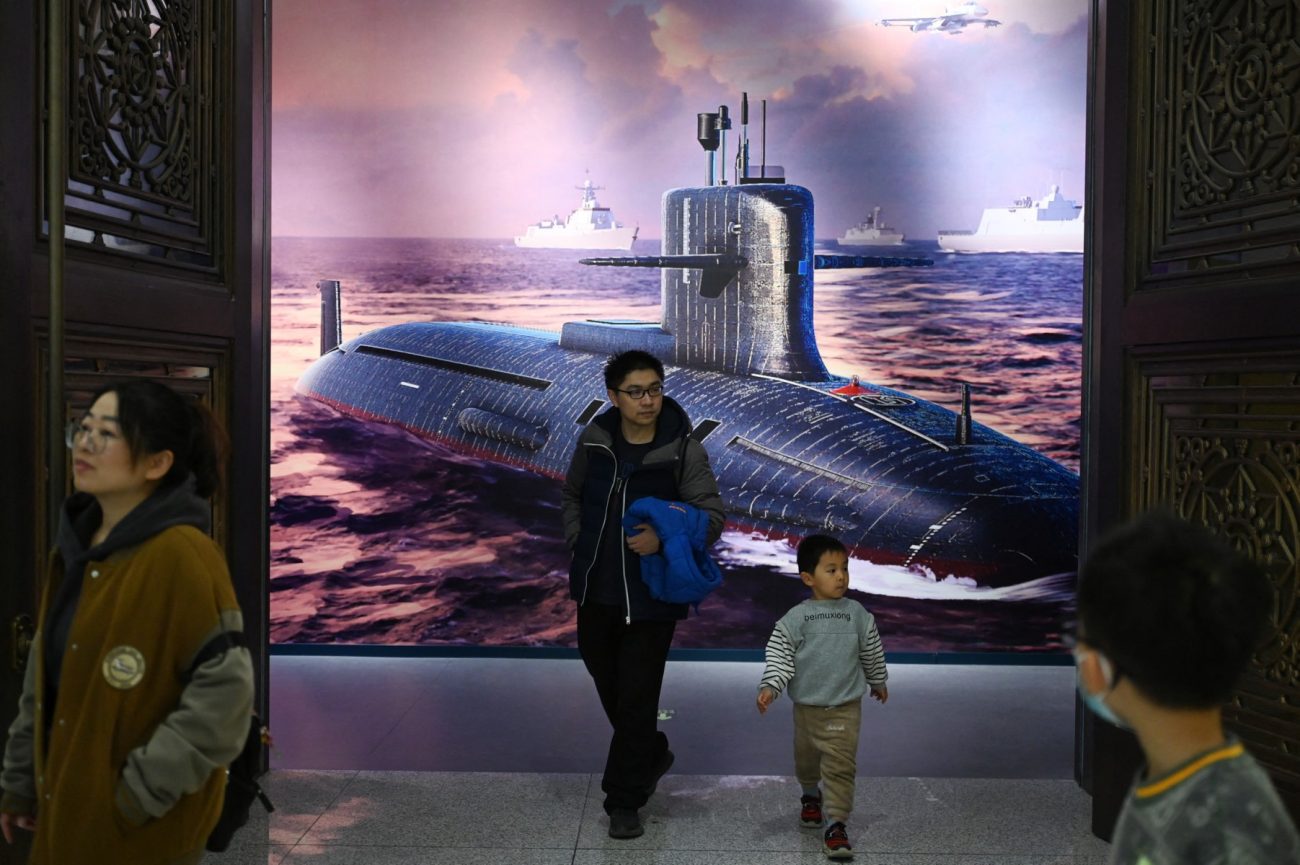
People walk past an illustration of a Chinese nuclear submarine at the Military Museum in Beijing on March 3, 2024. (Photo by GREG BAKER / AFP)

In a recent IISS assessment, China launched 10 nuclear-powered submarines between 2021 and 2025, totaling 79,000 tonnes, against America’s 7 boats at 55,000 tonnes. For the first time, China out-built the US in both numbers and tonnage in a five-year window, it is argued.

“Most significantly, this includes the seventh and eighth Type 094 (Jin) nuclear-armed ballistic-missile submarines (SSBNs), which come as part of the emergence of Beijing’s nuclear triad,” the IISS study says.

It noted that commercially available satellite imagery taken in early 2026 showed six Type 094s in total, spread between the Bohai Shipbuilding Heavy Industry Co (BSHIC) shipyard in Huludao, the 1st Submarine Base at Jianggezhuang, the Xiaopingdao test facility and the 2nd Submarine Base at Yalong Bay on Hainan Island.

“Allowing for additional boats either on deterrence patrol or under cover for refit during this period, it is almost certainly the case that China has launched a seventh and eighth Type-094 in 2024 and 2025, respectively,” the IIISS study concludes.

In addition to the Type 094s, Bohai is also producing nuclear-powered guided-missile submarines (SSGN) for the People’s Liberation Army, with the study suggesting that nine Type 093B (Shang III) boats have been launched between 2022 and this year, based on commercial satellite imagery of the facility and US government assessments.

Incidentally, in March this year,  the US Navy’s intelligence chief, Rear Admiral Mike Brookes, testified before the US-China Economic and Security Review Commission (USCC) that China is undertaking a major shift toward building an all-nuclear submarine fleet as part of a broader effort to strengthen its undersea warfare capabilities and expand blue-water naval power.

According to Brookes, the People’s Liberation Army Navy (PLAN), which operates more than 60 submarines in total, including roughly 50 conventional diesel-electric boats (SSK) and a smaller number of SSNs and SSBNs, is transitioning away from conventional submarines toward a predominantly nuclear construction program to support sustained operations, strategic deterrence and sea-lane interdiction.

Brookes also pointed out that China had expanded submarine production infrastructure across three major shipyards, tripling construction hall capacity and more than doubling production capability to sustain higher output of advanced nuclear boats through the 2030s.

By 2027, China’s submarine force is projected to reach roughly 70 submarines, adding up to six SSGNs, three smaller-class SSNs, and two SSBNs while retiring older Chinese and Russian-built submarines. By 2035, continued expansion could yield up to 80 submarines, with about half nuclear-powered—a major shift in force composition—and projections for the early 2040s include around 20-30 new-class SSGNs and SSBNs.

These platforms will be designed from the keel up for blue-water operations and persistent presence beyond the first island chain, representing an evolution in PLA Navy undersea operational capabilities. China will likely field a more survivable and numerous ballistic missile submarine force equipped with longer-range, more accurate SLBMs, enabling patrols in bastions closer to home waters while holding the US homeland at risk.
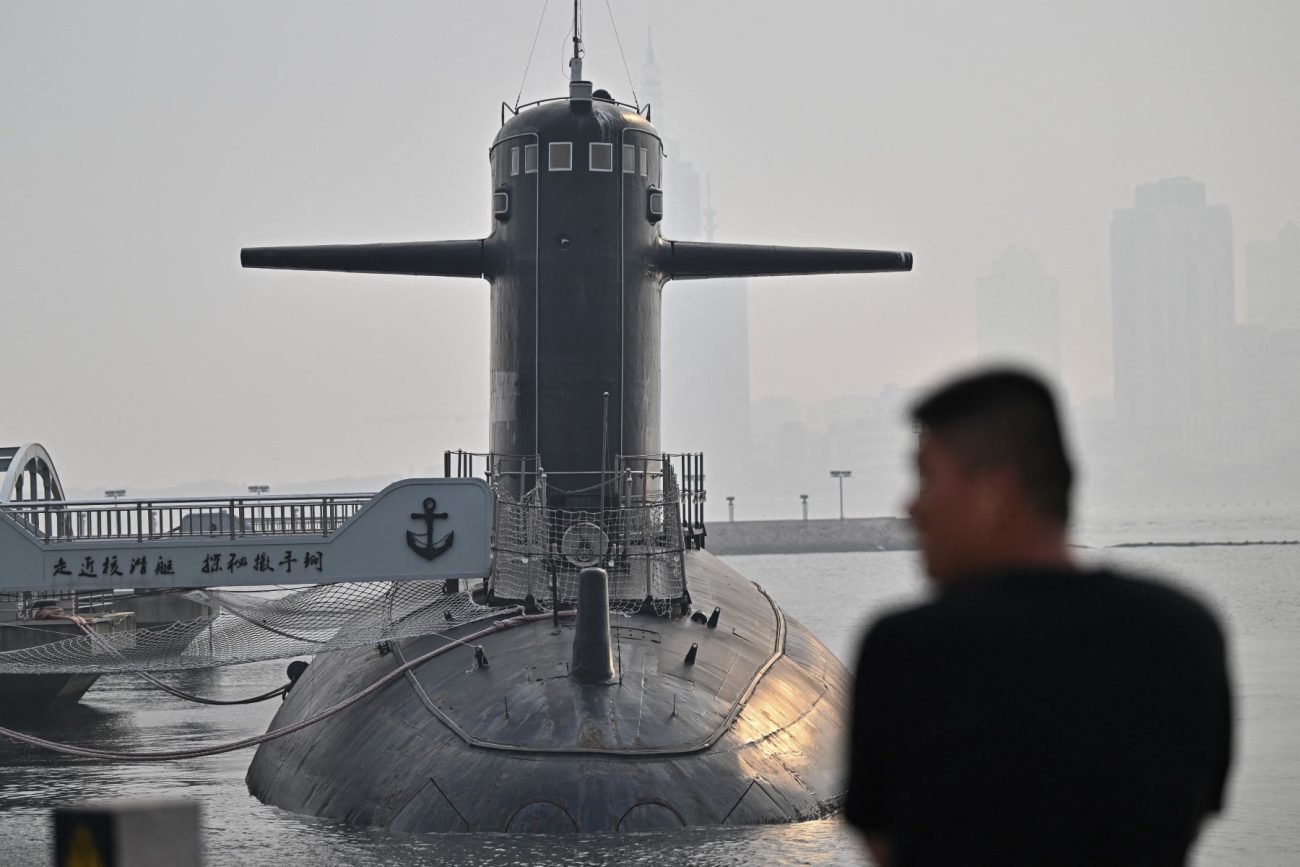
A man looks at a submarine during a media tour by the PLA Naval Museum, organized by the Chinese People’s Liberation Army Navy (PLAN) ahead of the Defense Ministers’ Meeting of the Shanghai Cooperation Organization (SCO) Member States in Qingdao, in eastern China’s Shandong province on June 25, 2025. (Photo by Pedro PARDO / AFP)

Broader deployment of long-range, potentially hypersonic anti-ship and land-attack missiles from undersea platforms is anticipated, along with more sophisticated torpedoes and unmanned vehicles for ISR, mine warfare, and strike missions. Substantial investments in seabed sensors, undersea cables, and unmanned systems will enhance China’s situational awareness while creating vulnerabilities for the US and allies in crisis or conflict.

The Indo-Pacific will remain the PLA Navy’s primary focus, but by 2040 routine submarine deployments to the Indian Ocean, Arctic approaches, and possibly the Atlantic are likely, Brookes cautions.

However, as noted above, the US Navy currently has superior acoustic quieting, combat experience, and highly advanced Virginia-class SSNs. But as the EurAsian Times once explained, the US has a backlog of 12 Virginia-class submarines, in addition to three Columbia-class ballistic submarines.

Its production rate of 1.2 per year falls far short of the required 2.33 per year to meet its own needs and those of its allies (under the AUKUS pact, it is supposed to provide at least three Virginia-class submarines to Australia in the early 2030s).

Only three US shipyards can build nuclear-powered attack submarines (Groton, Connecticut; Quonset Point, Rhode Island; and Newport, Virginia). Only two of them are functional at the moment.

While the US defense industrial base is severely strained, China’s naval shipyards are said to be outperforming. With about 9 older Shang I/II boats plus an estimated 16 Type 093B hulls in service, in trials, or under construction, China is said to have the largest SSN series under construction anywhere.

The 093B reportedly features a vertical launch system for 24 YJ-12/YJ-18 anti-ship cruise missiles and six torpedo tubes, shifting China from torpedo brawls to long-range strike.

In the Indo-Pacific, the undersea race seems to change three fundamentals.

First, the era of uncontested US undersea dominance is over. US SSNs have long hunted Chinese SSBNs inside their bastion, keeping Beijing’s deterrent vulnerable. But now, China can sustain continuous at-sea deterrence patrols from Hainan’s Yalong Bay, protected by surface fleet and seabed sensors. That forces US SSNs to operate closer to Chinese waters, at higher risk, stretching ASW resources thin.

Second, the proliferation of quiet Chinese SSNs with VLS—at least six SSGN hulls launched in the past five years with vertical launch systems that could fire high-speed anti-ship missiles displayed in Beijing—means every US carrier entering the Taiwan Strait or South China Sea now faces a multi-axis underwater missile threat. The carrier’s sanctuary beyond the first island chain, once assumed, is no longer safe.

Third, China’s rapid maritime expansion has fundamentally altered the Indo-Pacific security landscape, prompting Australia and Japan to aggressively build strategic counterweights. Rather than acting in isolation, Canberra and Tokyo have pivoted toward minilateral security alliances, military modernization, and supply chain diversification to offset Beijing’s growing naval dominance.

Australia and Japan, alongside the United States and the Philippines, have formalized a security grouping explicitly designed to counter Beijing’s aggressive maneuvers in the South and East China Seas. This alliance focuses on joint maritime patrols, intelligence sharing, and military interoperability to safeguard freedom of navigation under international law.

Driven by the need to project power across its vast northern approaches, Australia has fundamentally reshaped its defense posture. This is anchored by the AUKUS pact—enabling Australia to acquire conventionally armed, nuclear-powered submarines—positioning the nation as a formidable southern anchor against Chinese naval projection.

For India, which has no SSNs in service (it previously leased from Russia and now plans indigenous production) and operates only three SSBNs (Arihant, Arighaat, and Aridhaman), the implications are significant.

Against India’s slow naval expansion, Chinese nuclear submarines, including intelligence-gathering vessels, now regularly traverse the Indian Ocean.

Overall, one could say that “the silent service” in the Indo-Pacific is becoming loud.

During the Cold War, the submarine race was primarily fought in the Atlantic. Now, it is shifting to the Indo-Pacific, raising uncertainties over whether it will remain free and open.

  • Author and veteran journalist Prakash Nanda is Chairman of the Editorial Board of the EurAsian Times and has been commenting on politics, foreign policy, and strategic affairs for nearly three decades. He is a former National Fellow of the Indian Council for Historical Research and a recipient of the Seoul Peace Prize Scholarship.
  • The author can be reached at prakash.nanda (at) hotmail.com

The post As Trump & Xi Talk — U.S. and China’s Nuclear Submarines Race For Dominance in the Indo-Pacific appeared first on EURASIAN TIMES.
  •  

Red-Green Alliance Begins To Hurt U.S, India & Others as Left-Islamist Affinity Reshapes Global Politics: OPED

The specter of a “Red-Green Alliance” seems to be haunting the strategic elites not only in the United States but also in other parts of the world these days. 

The debate over this alliance between so-called Leftists and Islamists intensifies whenever a Muslim leader in the American Democratic Party secures an important nomination or an electoral victory.

It is not that these Muslim leaders in America are radical Islamists. They are essentially far-left in their political, economic, and global views and are being accepted as leaders within the Democratic Party. But they evoke apprehensions for their support of Islamists in all parts of the world on important global strategic issues.

The subject of the latest debate is Abdul El-Sayed, the progressive doctor and former Wayne County health director, who on August 4 won a historic victory in the Democratic primary in Michigan to join the Senatorial race in the upcoming November 2026 midterms.

If successful, he will be creating history as the first Muslim Senator in the history of the United States.

Of course, the Democratic Party has already seen elsewhere the rise of Muslim elected officials who often act as a bridge between progressives and Muslim advocacy groups. In the House of Representatives, there have been the likes of Rep. Ilhan Omar and Rep. Rashida Tlaib.

At the local and State level, cities like Minneapolis, Dearborn, Hamtramck, and parts of New Jersey/New York now have Muslim mayors, councilors, and state legislators, many elected with support from both progressive and Muslim voter blocs.

Zohran Mamdani has taken office as New York City’s first Muslim mayor. Abdullah Hammoud is now the mayor of Dearborn, Michigan. Ghazala Hashmi has won the lieutenant governorship in Virginia.

Incidentally, the rise of New York City Mayor Zohran Mamdani has been portrayed by experts as showing that democratic socialism and hardline anti-Israel politics are no longer marginal in America’s largest city.

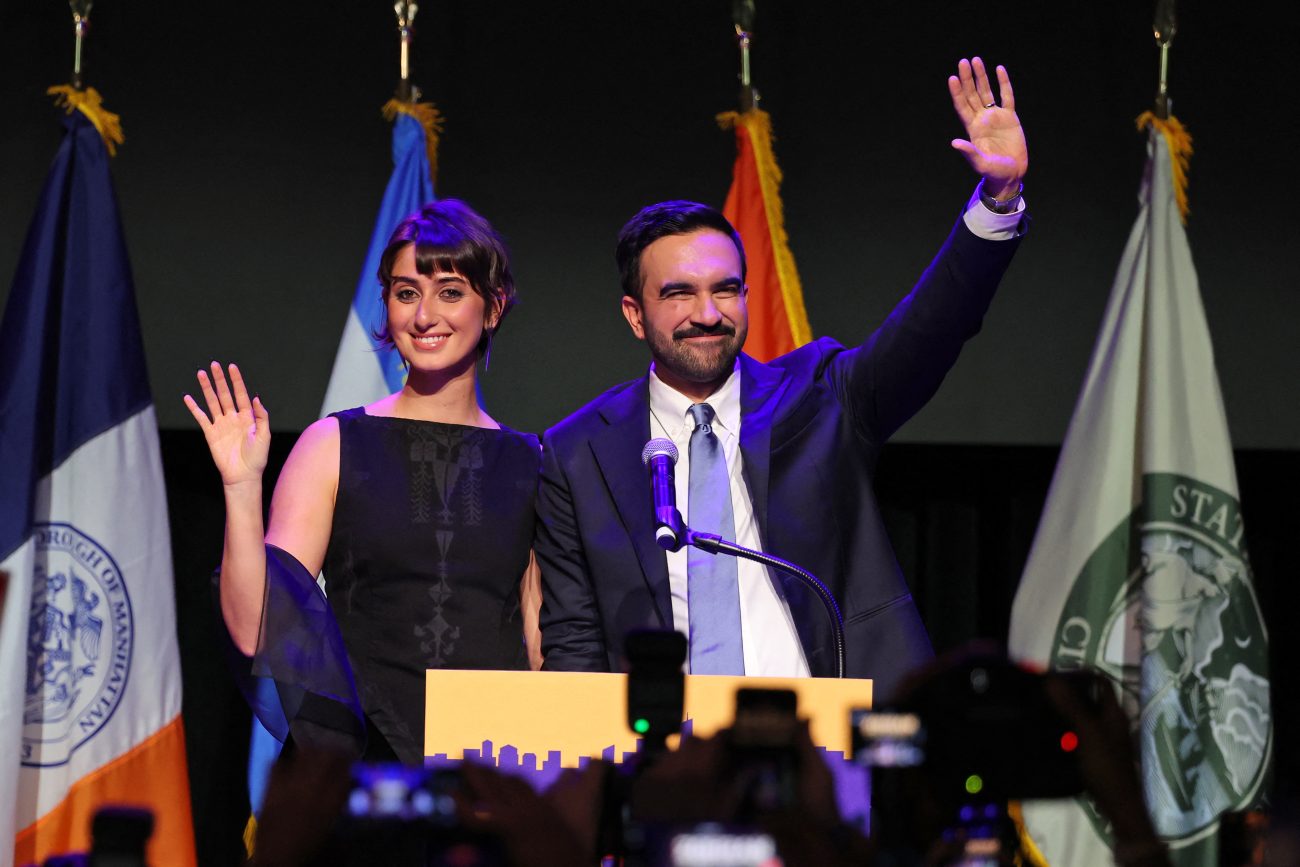
New York City Mayoral candidate Zohran Mamdani (R) celebrates alongside his wife Rama Duwaji (L) during an election night event at the Brooklyn Paramount Theater in Brooklyn, New York on November 4, 2025. New Yorkers elected leftist Zohran Mamdani as their next mayor on November 4, 2025, broadcasters projected, on a day of key local ballots across the country offering the first electoral judgment of Donald Trump’s tumultuous second White House term. (Photo by ANGELA WEISS / AFP)

His national profile, and his demand that the federal government enforce an International Criminal Court warrant against Israel’s prime minister, have forced Democrats to reconsider their traditional stance on the Middle East in general and Israel in particular.

In other words, the strategic consequences of the Leftists sharing the global outlook with that of the Islamists outfits like Hamas or countries like Iran, or rising demands of Muslims in favor of their separate legal and social systems in many European countries, seem to be reshaping Western politics, traditional national security frameworks, and geopolitical alignments.

It is worth sharing in this context the thoughts of US Army veteran and human rights activist Mansoor Hussain Laghari, who had migrated from Pakistan. He strongly warns against the “Red-Green Alliance,” characterizing it as a dangerous and underappreciated ideological convergence between the revolutionary far left and political Islamism inside Western societies.

Using his unique background as a political refugee from Pakistan and experience in the US military, Leghari says that “Political Islamism” has nothing to do with ordinary Muslims or Islam as a faith. For him, it is something that seeks to place religious authority above democratic pluralism and civil law.

Laghari notes that while the radical Left (which claims to support secularism, feminism, and LGBTQ rights) and Islamists should be natural enemies, they cooperate because they share the same targets: American power, Western democratic institutions, capitalism, traditional faith, and Israel.

As he writes, “ These movements (Leftists and Islamists)  should be natural enemies. The radical Left presents itself as secular, feminist, and supportive of LGBTQ rights. Islamists often reject those principles. Yet alliances are not always built on shared values. They are often built on shared enemies.

“Both sides portray America as an imperial project rather than an imperfect constitutional republic. Both reduce complex societies to oppressors and oppressed. Both treat Western institutions as guilty until dismantled. Israel has become a powerful mobilizing symbol, but the deeper target is the political confidence and social cohesion of the United States.

“This ideology is no longer confined to campus seminars. It is entering mainstream political life. The Democratic Party remains broad, and many Democrats reject antisemitism, revolutionary socialism and political Islamism. But an increasingly influential progressive faction now treats these ideas as legitimate components of the party’s future”.

For Laghari, more than the rise of New York City Mayor Zohran Mamdani, the concern extends to “Ideas incubated in universities and activist networks (that) eventually influence city governments, congressional offices, public agencies and national-security institutions. Americans should debate these ideas openly but stop pretending that hostility toward the country’s constitutional and strategic foundations is merely youthful idealism.”

Laghari insists that Western societies must confront this Red- Green alliance with accountability and directness rather than comfortable denial, arguing that the constitutional protections of individual liberty over tribal obedience are actively worth defending.

“As a U.S. Army veteran, I learned that readiness is not measured only by weapons, aircraft or troop numbers. It also depends on national cohesion, public trust and citizens willing to serve. A military cannot remain fully effective if young Americans are taught that patriotism is shameful, service is complicity, and their country is uniquely evil.”

Many strategic analysts not only agree with Laghari but also discern the same pattern in European democracies and even India.

The following points in this regard they make are noteworthy:

One, after Trump’s victory in  2016 in the US, Brexit in the UK, the rise of the BJP in India under Prime Minister Narendra Modi, and right-populist governments in Europe, both Left-liberals and Islamist organizations found a common adversary and used  in their parlance terms like “right-wing nationalism,” “Islamophobia,” “majoritarianism,” and “fascism.”

Their alliance uses legal and academic frameworks in these democratic countries to label valid criticism of political Islamism or extreme Leftism for promoting terrorism or anarchy as “hate speech,” effectively silencing moderate and genuinely secular reformers.

Two, by infiltrating universities, local governments, and civil society organizations, the alliance shifts institutional policies toward anti-constitutional curricula and identity-driven governance. They popularize what is called “intersectionality” — placing Muslims, Palestinians, and refugees in the same “marginalized” category as racial minorities and LGBTQ communities.

This has created institutional incentives in universities and NGOs to platform Islamist speakers under the banner of “diversity” and “anti-racism.”

As a result, antisemitism is repackaged as mainstream progressive anti-imperialism, lowering the cultural barrier to targeted violence and exclusionary politics. And universal constitutional values are being replaced with tribal, identity-based loyalty, fracturing national unity.

Three, this collusion begins in universities and then feeds into media, NGOs, and politics. Progressive NGOs, left faculty, and Muslim student groups share funding, legal aid, and media training. And, university administrations, wary of being called “Islamophobic” or “racist,” often allow protests that would be shut down for other groups.

Politically, the collusion enables the sharing of an agenda with major political parties in the name of dissent,  protecting minorities, and expanding asylum/refugee programs. And that, in turn, generates narratives of state or police oppression and dangers of military modernization at the cost of social justice.

Then it becomes normal for progressives and Muslim politicians to vote and campaign together. They hold joint press conferences and share legal teams, and write joint petitions to global human rights bodies and the United Nations.

If Islamists find an ally in the Democratic Party in the US, in Europe one witnesses how Labour, Greens, and Left parties coordinate with Muslim community organizations on Gaza, policing, and counter-terror laws.

Apparently, European intelligence agencies have flagged that jihadist networks exploit progressive and anti-war protest spaces, such as climate and pro-Palestinian demonstrations, to recruit vulnerable individuals and gain mainstream legitimacy by aligning with broader, localized grievances.

The same pattern is also noticed in India.

Here,  sections of left and liberal parties,  student unions, liberal NGOs, and Islamist organizations have coordinated since 2019 on CAA-NRC ( Citizenship Amendment Act and National Register for Citizens), abrogation of Article 370 that had accorded special status to Kashmir, hijab cases, and “bulldozer” actions ( against the properties of hardened criminals and habitual law-breakers).

That is how domestic issues in Western democracies and countries like India are getting globalized as “human rights” issues, and hardline groups are gaining legitimacy by appearing next to mainstream left/liberals.

All this complicates a nation’s defense spending and foreign policy, forces strategic distractions, and weakens important partnerships. For instance,  on Palestine, Kashmir, Afghanistan, and the “war on terror,” Left-liberals critical of US/European/Indian foreign policy found common cause with Islamist groups who also oppose those policies.

When human rights language is used to defend individuals with extremist links, preventive policing becomes harder. Europe’s “returning fighters” problem and India’s experience with banned organizations show this. And the US, EU, and Indian foreign policy on the Middle East and counter-terror is now increasingly being constrained. Any action is immediately framed as “Islamophobic” or “imperialist”.

Viewed thus, the geopolitical alliance between Left/liberal elements and the votaries of political Islam that one sees across America, Europe, and India does present distinct challenges to the national security and social cohesion of each region. Its operational methods and societal impacts may vary from region to region based on local political landscapes, but its ideological foundation remains the same – shared opposition to the existing state apparatus.

Of course, experts point out that this alliance is “ironical” and could be “unstable” in the long run, given that Leftists and Islamists differ in their views on secularism and social rights. The Left wants progressive social change, emphasizing equality, social justice, and human rights. They are driven by secular and humanitarian concerns. But for conservative Islamists, it is traditional religious values and communal loyalty that are their principal motivations. Islamists often seek to establish states governed by Sharia.

However, despite their differences, at the moment, they are together on many aspects of global politics and are collaborating in unexpected ways. And that is said to be a matter of grave concern.

As Laghari says, “The question is no longer whether this ideological struggle has reached the United States. It has. The question is whether Americans will recognize it before the next generation inherits a country that no longer recognizes itself.”

What Laghari asks of Americans seems to be equally apt a question for Europeans and Indians as well.

  • Author and veteran journalist Prakash Nanda is Chairman of the Editorial Board of the EurAsian Times and has been commenting on politics, foreign policy, and strategic affairs for nearly three decades. He is a former National Fellow of the Indian Council for Historical Research and a recipient of the Seoul Peace Prize Scholarship.
  • This is an Opinion Article
  • CONTACT: prakash.nanda (at) hotmail.com

The post Red-Green Alliance Begins To Hurt U.S, India & Others as Left-Islamist Affinity Reshapes Global Politics: OPED appeared first on EURASIAN TIMES.

  •  

Biggest Weakness Emerges in India’s Military Setup: Rank, Power & Toxic Rift Between “Babus” & Soldiers

If anything, Indian Defense Minister Rajnath Singh’s call on August 3 for greater “military-civil integration” to create “a robust defense ecosystem to tackle emerging challenges” implies that there is still a structural mismatch between generalist bureaucrats (critically called Babus) and uniformed personnel within the Ministry of Defense (MoD). 

In other words, in India’s higher defense reforms, integration between the military and civil components of the Ministry of Defense (MoD) is being seen as important as greater jointness among the three armed services (army, air force, and navy).

For decades, the relationship between civilian staff and military personnel within the MoD has been described by experts as both a strength and a fault line, particularly at the level of defense management.

Therefore, as India moves toward theatre commands, self-reliance under the “Atmanirbhar Bharat” (Self-reliant India) scheme, and faster procurement of defense components, the question is: how has this synergy worked in retrospect, and what should it look like in the future?

Addressing the 85th Armed Forces Headquarters (AFHQ) Civilian Services Day celebrations in New Delhi on Monday,  Singh emphasised that both the uniformed and civil services cannot proceed along separate paths, adding that, as joint and integrated structures develop, there will be a need for continuity and expertise across all areas – policy, administration, human resource management, financial processes, logistics, and institutional knowledge.

He highlighted the importance of further enhancing structured cross-exposure between civilian and military officers, suggesting joint training programs and developmental assignments for both sides to learn from each other’s experiences.

“Military officers bring operational experience, a command perspective, and an understanding of warfare, while civilian officers contribute through administrative continuity, policy experience, an understanding of government processes, and institutional memory. When these strengths combine, decision-making becomes more informed, balanced, and effective,” stated the Defense Minister.

As things stand today, there are nine major participating groups dealing with India’s defence – three military services, and the non-military six – Department of Defence(DoD), the Department of Military Affairs(DMA), the Department of Defence Production ( DDP), the Department of Defence Research and Development (DDR&D), the Department of Ex-Servicemen Welfare (DESW), and Defence Finance.

While these nine groups are — three military services, and the non-military six – inside the MoD, there are three others outside the domain having considerable influence on defense matters – the Ministry of Finance (controlling the defense spending), the Cabinet Secretariat (policy matters that have implications for other ministries) and the Prime Minister’s Office (which can always intervene or arbitrate selectively).

However, we will focus here only on the MoD, particularly on the integration of the military services with the non-military ones.

To begin with, one is reminded of what late Vice Admiral Verghese Koithara had said: each of the major participating groups in Indian defense is known for  “jealously guarding its turf and mistrustful of the others”.

Incidentally, the Admiral was talking of eight groups, because the DMA was a later creation. But the spirit behind his comment remains intact.

It may be noted that the total workforce under the MoD stands at approximately 2.92 million (29.2 lakh) personnel, making it the largest employer in the world. Expenditure on salaries and pensions for both civilian and non-civilian personnel is fully integrated into the official MoD budget.

The total strength encompasses active military personnel, reservists, and defense civilians. Approximately 1.43 million active-duty personnel serving across the Army, Navy, and Air Force are complemented by roughly 1 million reserve personnel.

Approximately 400,000 defense civilians are distributed across administrative services. They come mainly from the Indian Defense Accounts Service, Indian Ordnance Factories Service, Defense Research & Development Organization scientists, and the Armed Forces Headquarters Civil Service, the Defense Accounts Department (DAD), Border Roads Organization (BRO), DRDO, and top bureaucracy.

The apex bureaucratic positions like the Defense Secretary, Secretary (Defense Production), and Secretary (Ex-Servicemen Welfare) are often held by IAS officers.

The last 5 years have seen some important defense reforms in India. For the first time, a serving 4-star General became Secretary in MoD as Chief of Defense Staff. DMA handles procurement, tri-service matters, and jointness. This is said to have broken the wall between the civilian secretariat and the military.

Service HQs have been integrated with the HQ of MoD. Joint Secretaries from the military now sit in the MoD and sign files. This means operational officers are now part of the procurement and policy process.

Before this reform, the MoD was entirely dominated by generalist civilian bureaucrats under the Department of Defense (DoD), led by the Defense Secretary. The Army, Navy, and Air Force headquarters operated merely as “attached offices,” meaning military files had to be routed through junior civilian desk officers for approval.

However, there are still well-documented latent and reported mutual resentment between military and civilian personnel in the MoD, which analysts and scholars refer to as “civil-military dissonance”.

The friction does not stem from opposition to the constitutional principle of political/democratic civilian control, which the military fully accepts. Instead, the resentment focuses on “bureaucratic control,” where career civil servants are perceived to act as a barrier between the uniformed leadership and the political executive.

Indian Army Twitter
File Image: Indian Army/Twitter

A primary driver of public friction involves rank parity and protocol equivalence between military officers and civilian cadres. As Admiral Arun Prakash points out, the three Chiefs have been accorded “no locus standi in the structure of the GoI, so much so that the Secretary of the Department of Defense is deemed to represent the three Services in most forums”.

According to the “Government of India Allocation of Business Rules” (AoB Rules) and the “Government of India Transaction of Business Rules” (ToB Rules), the Secretary of DoD (a IAS officer) is allocated the responsibilities of “(a) Defence of India and every part thereof including preparation for defence and all such acts as may be conducive in times of war to its prosecution and after its termination to effective Demobilisation; (b) The Armed Forces of the Union, namely, Army, Navy and Air Force; (c) Integrated Headquarters of the Ministry of Defence comprising of Army Headquarters, Naval Headquarters, Air Headquarters and Defence Staff Headquarters”.

This looks particularly strange as, in terms of protocol, the Defense Secretary ranks at 23 in the order of preference, along with “Army Commanders/ Vice-Chief of the Army Staff or equivalent in other services”. In contrast, a Service Chief of Staff holding the rank of full General or equivalent rank is at number 12.

Even at 16, Officiating Chiefs of Staff holding the rank of Lieutenant General or equivalent rank are higher in protocol than the Defense Secretary.

Similarly, the Military officers are said to have resented the equation of lower-tier civilian administrative posts of Joint Secretary with senior military ranks like Major Generals. It is argued that a Major General has significantly more operational responsibility and seniority (often over 32 years of service) compared to an IAS officer reaching Joint Secretary level in roughly 18 years.

Military officials often point out that allowances, non-functional financial upgrades, and pension structures have favored civilian bureaucracies over the unique hazards of military service. Successive Central Pay Commission awards have frequently triggered military dissatisfaction.

In other words, there is an underlying perception of hierarchical degradation that persists within the armed forces.

Secondly, there are gaps between the military and civilian officials over what is called “Policies vs Operations”. While civilians are accused of lacking operational understanding, the military is accused of not understanding procurement rules. This really leads to delays in equipment purchase.

Perhaps, realizing these deep-seated systemic silos, Defense Minister Singh said on Monday that the military and civilian wings can no longer afford to operate in isolated silos to build an effective national defense ecosystem.

As he underscored, the civilian officials should read  Indian military history, examining it from a civilian perspective, thereby fostering fresh ideas and new perspectives. He called upon the Civilian Services to evolve into the “strategic brain” of India’s defence management architecture by developing a comprehensive understanding of the defence sector, functioning effectively in a joint environment, and continuously enhancing its expertise to face the emerging challenges.

Notably, when one talks of dissonance between the military and civilian officers, it is perhaps more to do with purely civilians like IAS and other central services within the MoD rather than the non-military technical and scientific personnel.

There has been relatively smoother synergy in areas like defense production and infrastructure building. For instance, Defence Public Sector Undertakings like the HAL, BEL, BDL and OFB, which are run with a mix of civilian managers, engineers, scientists and military users, have produced platforms and ammunition like Tejas, Arjun, BrahMos.  succeeded because civilian scientists in DRDO worked with military feedback loops.

Similarly, the BRO, a civilian-led organization with military engineers, has built highly acclaimed critical roads in the country’s northern and north-eastern border (Line of Actual Control) with China.

However, it is with the civilian officials working within the MoD that military officials have some issues, such as policy decisions, pay, and ranks.

But then, it is also to be noted that while services may all agree on their fight against the civilians,  when it comes to “promoting jointness” in military matters, they do not have the same ideas.  There is an intense rivalry amongst them. Although the situation has improved of late,  there are differences over whether the country should have theater commands, and if it will have them, then how those will be operated.

In other words, there are, overall,  challenges in building better “Civil-Military Synergy”. There seem to be merits when some experts argue that National Defense College (NDC) and the College of Defense Management (CDM) could bridge strategic and administrative silos, fostering deeper synergy, mutual understanding, and coordinated policy-making between senior civilian bureaucrats and military leadership.

There are also ideas like extending the DMA model to have military officers in all key procurement and policy wings, and civilian officers in Integrated Theatre Commands. Defense civilians should have tenures in field formations and military officers in  MoD finance and policy.

Another interesting suggestion is to extend the synergy beyond the MoD and involve the private sector, startups, academia and state governments. Of course, in a way this is happening with projects like defence corridors, and through collaboration in the space, cyber and AI  sectors.

Viewed thus, the core challenge to the synergy that the Defense Minister has talked about is removing what is said to be the “Trust Deficit” between the civilian and military wings within the MoD, due to decades of suspicion.

The synergy does not mean the dilution of civilian supremacy at the policy-making level, be it the MoD, or the Union cabinet, or the Parliament.   But it means the military’s voice is heard in policy-making.  The military does not grudge civilian control; it opposes “the bureaucratic control”.

Synergy does not imply that civilians are made into soldiers, or soldiers into ‘babus’. Its goal is to make both into “defense managers”

  • Author and veteran journalist Prakash Nanda is Chairman of the Editorial Board of the EurAsian Times and has been commenting on politics, foreign policy, and strategic affairs for nearly three decades. He is a former National Fellow of the Indian Council for Historical Research and a recipient of the Seoul Peace Prize Scholarship.
  • CONTACT: prakash.nanda (at) hotmail.com

The post Biggest Weakness Emerges in India’s Military Setup: Rank, Power & Toxic Rift Between “Babus” & Soldiers appeared first on EURASIAN TIMES.

  •  

Trump Calls It “Invasion,” Musk Says Budget “Destroyed”: Moroccan Surge in Spain Rattles U.S. & Europe and Reignites “Islamic Fear”

Nearly 50,000 of the 60,000 young Moroccans who had entered  Ceuta, Spain’s 7.5-square-mile enclave on Africa’s coast, on July 29-30, 2026, by swimming around border barriers, may have returned to their country. But the global headlines they were responsible for have had geopolitical impacts on the rest of Europe and the United States. 

Prime Minister Pedro Sanchez of Spain called the event  “a violation of Spain’s territorial integrity”. But then the fact remains that his left-wing government’s series of liberal migration policies, coupled with the Spanish Supreme Court’s ruling last month that migrants arriving by sea could not be summarily returned, prompted such a massive migration, for which the country was perhaps not ready.

Of course, this was not the first surge from Morocco. As many as 10,000 from Morocco were said to have entered Spain in 2021. But the scale on July 29-30 made it the largest not only in Spain but also in the history of the European Union(EU).

After all, Ceuta, the small Spanish exclave on the North African coast, has a permanent population of just 84,000. Obviously, swarms of 60,000 outsiders totally overwhelmed the locals.

The crisis forces 3 questions: What drove it? What does Spain’s approach mean geopolitically? And how does the debate over religion, demography and identity shape it? 

As pointed out above, the influx was possibly triggered by a ruling by Spain’s Supreme Court that a law allowing the prompt handing back of migrants who breach frontier barriers at Ceuta and Melilla, another Spanish exclave, does not apply to those who arrive by sea. (Those who swim, the court reasoned, do not technically breach frontier barriers, since there are none in the water.) Word of this got around on social media in Morocco, prompting the stream of swimmers.

It may be noted that historically, Morocco has contested Spanish sovereignty over Ceuta and Melilla, just 13 to 14 kilometers from its shores through the Strait of Gibraltar. This has led some analysts to believe that  Rabat  “deliberately did little to prevent the crossings”.

They cite the similar opening that was made in 2021. But this is a minority view, given that Morocco has already facilitated the return of 50,000 of its people and is doing so even now.

The 2021 episode was a little different. That time Morocco allowed its people to wade into Ceuta, as an expression of its anger that Spain had allowed the leader of Polisario, a group that has long fought for the independence of Western Sahara, to come to Madrid for medical treatment. Morocco, incidentally, had annexed two-thirds of Western Sahara, a former Spanish colony, in 1975.

However, over the last four years, diplomatic parleys between Madrid and Rabat have stabilized the bilateral ties. Spain now backs Morocco’s autonomy plan for Western Sahara in exchange for Rabat policing the coast and taking back illegal migrants.

In 2024,  Spain started a program to legalize 900,000 undocumented migrants already in Spain (most of them Moroccans)  to bring them into the tax and social security. It decided to issue  “Labor visas”, under which fast-track permits to address Spain’s rapidly falling population.

The Sanchez regime has tried to legalize immigration as much as possible under what it calls a “human rights and labor needs” approach that envisages expanded regularization programs, bilateral cooperation with Rabat, and faster work permits for migrants in agriculture, tourism, and elder care.

Apparently, Spain has become the EU’s largest entry point for irregular migration, overtaking Italy and Greece. The vast majority of arrivals were from Morocco and the likes of Malians and Senegalese, who crossed through  Morocco by sea. So much so that Spain now has the largest Moroccan diaspora in the EU — over 800,000 people of Moroccan origin, as per Spanish data.

Reportedly, the UN projects Spain needs 200,000 net migrants per year to maintain workforce size. And 10 million foreign-born people for the first time in Spain’s history; they now constitute a fifth of the country’s total population, about 50 million.

At 1.1 million, Moroccans happen to be the largest single nationality of all the foreign nationalities. Birth rates among Moroccan-origin residents are said to be higher than those of native Spaniards, but converge to the Spanish average of 1.6 percent by the second generation, per demographic studies.

In other words,  Spain’s population would be shrinking without immigration.

However, the geopolitical reactions to what happened in Spain are quite different, particularly on both sides of the Atlantic.

The incident provided armor to President Donald Trump and all his supporters in their fight against what they say is illegal immigration into the US.

As images spread, Trump posted that the Ceuta scenes “vindicated” his wall and deportation policies, arguing Europe was now facing what the US faced in 2019. US conservative media amplified the Ceuta footage as evidence for border closure.

“I saw Spain yesterday, and I watched the catastrophe that took place,” Trump told a meeting of his cabinet at the presidential Camp David retreat in Maryland. “It looks like an invasion of a country by hundreds of thousands of people, and that same thing’s going to happen to us if the Republicans don’t get elected, except worse, much bigger.”

Tech billionaire Elon Musk also commented on the situation in Spain, writing on X that “Spain’s entire budget will be destroyed by illegal migrants” and arguing that offering benefits to migrants would create a “forcing function” for large-scale migration.

There were similar reactions from right-wing parties and EU centrists across Europe, demanding tougher immigration policies.

Far-right Alternative for Germany (AfD) co-leader Alice Weidel claimed in an X post that “Ceuta was left in ruins overnight” by the mass influx from Morocco. She argued that Germany is “likely the destination for most of these migrants”, adding “Germany must prepare itself: borders must be secured and rejections rigorously enforced”.

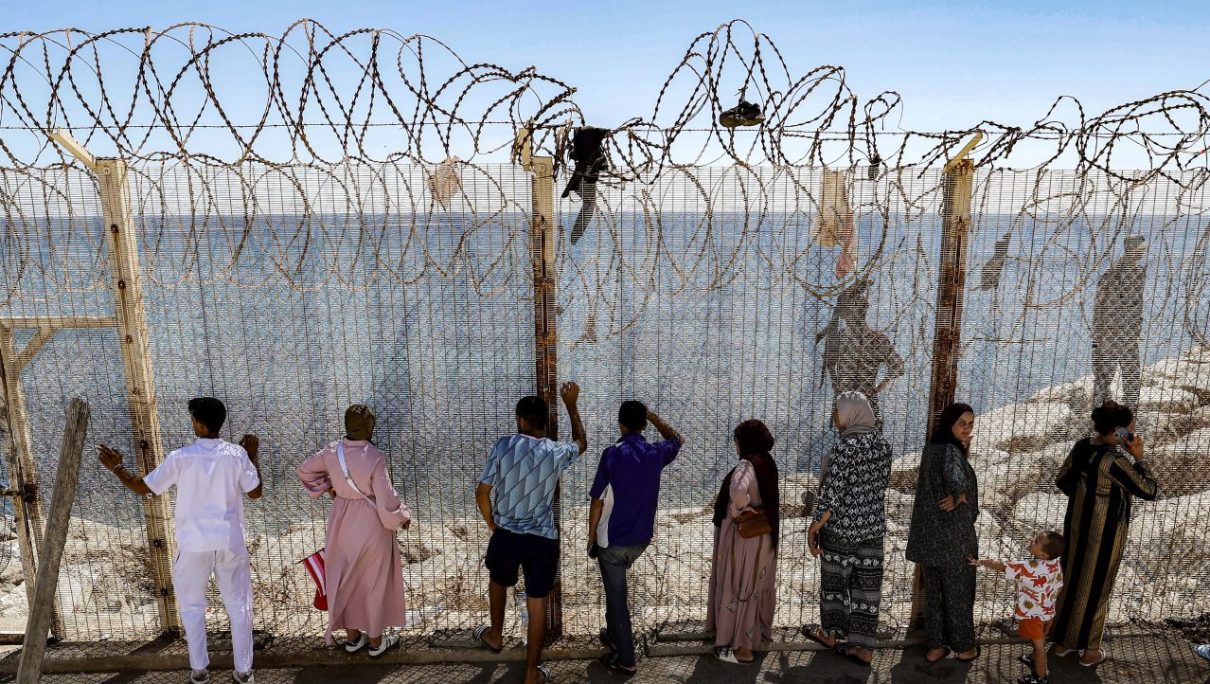
Relatives and friends wait by a fence topped with barbed wire for the return of people who had previously crossed into Spain’s North African enclave of Ceuta, at Morocco’s Bab Sebta border crossing on the outskirts of Fnideq on August 2, 2026. As many as 60,000 migrants entered Ceuta in recent days, mostly swimming around the small border post that juts into the Mediterranean Sea, in an unprecedented surge that prompted an international crisis for Spain. The mass crossing into the tiny Spanish territory resulted in at least 67 deaths, according to Spanish authorities, and led to clashes with Moroccan police on the shared border. (Photo by Abdel Majid BZIOUAT / AFP)

Italian Prime Minister Giorgia Meloni described the scenes in Ceuta as evidence that “uncontrolled illegal immigration poses a concrete threat to the security of Europe’s borders,” saying Italy was prepared to take “extraordinary measures” to defend its borders and the safety of its citizens, including the possible suspension of the Schengen Area with Spain.

The right-wing ruling coalition in Finland also called for excluding Spain from the European visa-free zone as a result of the situation. Czech Prime Minister Andrej Babis said the Ceuta situation was caused by Spain’s policy of offering hundreds of thousands of migrants already in the country a legal status.

In fact, the weekend incident in Spain is said to have accentuated the political turbulence in Europe and strengthened forces, including even conservatives and liberals, to end what was hitherto a “Liberal Consensus” on a liberal immigration policy.

That explains why on Saturday, Denmark’s Prime Minister Mette Frederiksen, German Chancellor Friedrich Merz, and Italian Premier Meloni initiated a letter that got signed by 22 member states, calling for immediate EU action.

“The bloc cannot allow uncontrolled mass crossings, the instrumentalization of migration or other hybrid threats to create the perception that illegal entry into the European Union is possible,” they wrote.

It may be noted here that for years Germany was the face of liberal asylum policy under Chancellor Angela Merkel. Now it has really reversed that under immense political pressure.

The AfD nearly doubled its vote share, especially in eastern Germany, by campaigning on immigration and crime linked to asylum seekers. As a result, the new CDU-SPD coalition started last year the policy of  “Stricter border checks” and a “de facto entry ban” for undocumented migrants,  including asylum seekers.

Even the British leadership labeled the developments in Spain deeply concerning while highlighting that the UK’s own restrictive operational measures are yielding lower overall small-boat crossing numbers compared to prior tracking periods.

Moving away from past perceptions of a liberal framework to stem the rise of populist Reform Party UK,  the ruling Labour Party is now systematically tightening rules through higher salary thresholds, bans on dependents for most students, restrictions on overseas care worker recruitment, and shorter temporary protection grants for refugees.

And still its government is facing intense but growing popular pressure for mass deportations, rigorous enforcement and digital pre-departure checks.

Incidentally, the growing fears in Europe over uncontrolled and illegal immigration seem to have an angle of the fear of “Islamisation”. It may not be the main driver of policy changes, but it is a major factor in the political turbulence around immigration, particularly in Germany, the UK, and France.

There is a growing Muslim population in these countries due to immigration and higher birth rates among the immigrants.

Reportedly,  there are 5.5 to 6.5 million Muslims in France, making it the largest Muslim minority in Western Europe. This group makes up about 8% to 10% of the country’s total population. The majority of them have roots in North Africa (Algeria, Morocco, and Tunisia), with smaller groups from Turkey and Sub-Saharan Africa.

Germany’s Muslim population is estimated to be between 5.5 and 7 million, which makes up roughly 6.5% to 8.5% of the country’s total population. The largest group has Turkish heritage, dating back to the guest worker program in the 1960s. Recent growth comes from refugees and migrants arriving from countries like Syria, Afghanistan, and Iraq.

The Muslim population in the United Kingdom is approximately 4 million people, making up about 6.0% to 6.5% of the total population. Islam is the second-largest religion in the country.

The largest share, as much as 66 percent, of British Muslims trace their family roots to the Indian subcontinent, with many arriving in waves during the 1950s and 1960s to fill postwar labor shortages. The rest came mainly from Somalia, Nigeria, Libya, Morocco, Algeria, Afghanistan, Iran, Turkey, and Cyprus.

In these three leading countries, considered to be the engines of Europe, the Muslim immigrants have created what are called economic, cultural, and political concerns over their running parallel societies, sharia law, religious schools, mosques, headscarves, and value clashes over free speech, gender, and LGBTQ issues.

Besides, there are problems relating to issues concerning economics, housing, asylum backlog, crime (the rise of extremism in Islam), and border control.

As it is, the Netherlands, Sweden, and Denmark have already passed laws on face veils, foreign funding of mosques, and “ghetto” laws. Denmark’s Social Democrats explicitly said they wanted “fewer Muslims” to protect their welfare state.

But then, as seen in Spain, these countries also face acute labor shortages, for filling up which most of these Muslims, like others, migrate. In any case, apart from the UK, in no country have Muslims become politically active to endanger the native whites. They do not have high-paying jobs like the skilled and highly educated immigrants, though they are doing very well in the sporting arena.

Therefore, if they are being seen with suspicion, it is because of the changes they have made to mainstream culture.

For many center-right and working-class voters in Europe, that includes concerns about mosques, religious schools, and values. That is why even left-wing parties like UK Labour and German SPD are now tightening controls. They have realized that if one does not address the cultural anxiety, one loses to parties who do or will.

In sum, what the weekend’s episode in Spain seems to have done is raise two questions: whether a liberal-immigration model of Europe will survive by combining open labor markets with credible borders; and whether Europe will still debate culture without dehumanizing people.

  • Author and veteran journalist Prakash Nanda is Chairman of the Editorial Board of the EurAsian Times and has been commenting on politics, foreign policy, and strategic affairs for nearly three decades. He is a former National Fellow of the Indian Council for Historical Research and a recipient of the Seoul Peace Prize Scholarship.
  • CONTACT: prakash.nanda (at) hotmail.com

The post Trump Calls It “Invasion,” Musk Says Budget “Destroyed”: Moroccan Surge in Spain Rattles U.S. & Europe and Reignites “Islamic Fear” appeared first on EURASIAN TIMES.

  •  

Thanks to India, U.S. & China Remain Neck-and-Neck in Global Popularity. 1.4B People Keep The Balance Even

There seems to be an emerging consensus among strategic circles all over the world that while the rising global popularity of China, evident from the latest survey from the Pew Research Center on July 15, may not equate to the real global strategic leverage that America still possesses, it is a critical warning signal for the U.S.  

In its survey, based on interviews with more than 42,000 people across 36 countries, Pew found that China is now viewed more favorably than the United States.

Among the 20 economies with comparable data, the median share of respondents expressing favorable views of China reached 46 percent, compared with 36 percent for the United States.

Similarly, during the first two years of his second term, President Donald Trump’s own ratings have also worsened significantly. Chinese President Xi Jinping now exceeds confidence posed in  Trump by 10 (ten)  points (31:21).

More favorable views of Xi were noticed in 22 of 36 countries. More overall now say that they have confidence in Xi than in Trump.

Pew says that more people have favorable views of China than the U.S. in 25 out of 36 countries, including Canada, Mexico, France, Germany, and Australia. Only 6 (six) countries still rate the U.S. more positively: India, Japan, South Korea, Philippines, Poland, and Israel.

And, according to Pew, there has been a “historic shift” in the sense that in 20 countries with data back to 2023, nearly “50% held a positive view of China”, while only “36% regarded the US favorably”. In 2023 it was the reverse: U.S. 58% vs China 32%.

Importantly,  Pew cites worsening views of the U.S. since Trump’s second term began, and the US-led war in Iran where “people have less confidence” that the U.S. is contributing to peace. On the contrary, Beijing portrayed itself as a “stabilizing force”.

Incidentally, Pew’s findings are far from an isolated case. Earlier this year (April), Gallup reported that global approval of China’s leadership had surpassed that of the United States by the widest margin in nearly two decades.

“China surpassed the United States in global approval ratings in 2025, with a median of 36% approving of China’s leadership, compared with 31% for the U.S. China’s five-percentage-point advantage over the U.S. is the widest Gallup has recorded in China’s favor in nearly 20 years…..At the same time, disapproval of U.S. leadership rose to a record-high 48%, while China’s disapproval rating remained flat at 37%, Gallup said.

Coming back to the Pew findings, many analysts have agreed with the think-tank that the Trump administration’s tariffs, aid cuts, disdain for allies, and his sheer transactional diplomacy are actively ceding the soft-power contest to Beijing.

In other words,  the volatility of American policy under Trump, which includes the use of force and the economic damage from tariffs,  has hardened international sentiment against the United States. This has helped China build the perception that it is a more reliable entity.

But then, the fact remains that China has also worked hard to earn its present position.

Extensive Diplomatic Work is bringing the World to Beijing. Since December 2025, Xi and his foreign minister Wang Yi have hosted the political leaders of all the permanent members of the United Nations (UN) Security Council and met with all of the candidates for the UN’s next secretary-general, among an “endless stream” of foreign leaders in Beijing.

The city hosted President Donald Trump in May, followed soon after by Russian President Vladimir Putin.

Across roughly 500 diplomatic engagements in the first half of 26 conducted by more than 20 senior officials, Beijing has seized the opportunity to make its pitch to the world. Our survey results suggest that this work is paying off.

Besides, as Arran Hope, editor of “China Brief” at the Washington-based Jamestown Foundation, observes, “at the regional level, Europe’s importance is reflected in its high volume of diplomatic engagements: no other region received as much attention between January and June, with the United Kingdom and Belarus receiving the most. ASEAN countries saw the next highest degree of engagement, which is in line with trends laid out above”.

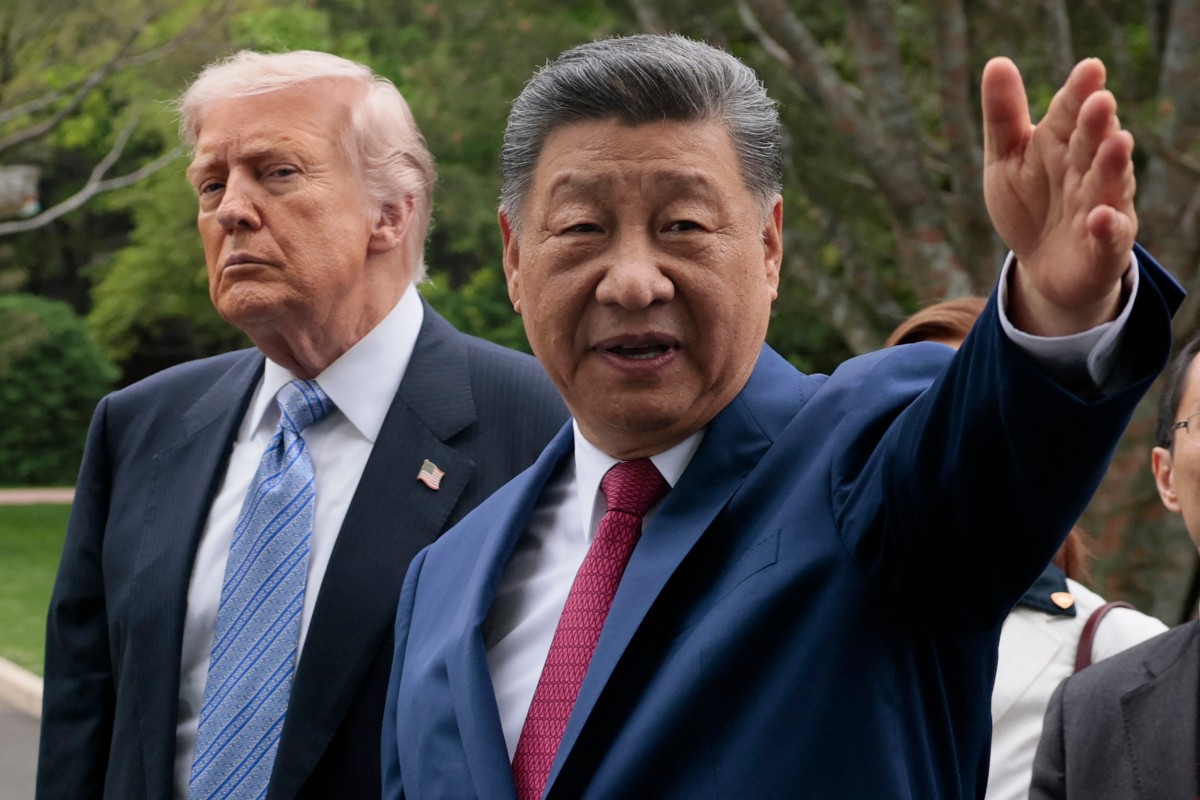
China’s President Xi Jinping (R) gestures as he meets with US President Donald Trump (L) during a visit to Zhongnanhai Garden in Beijing on May 15, 2026. (Photo by Evan Vucci / POOL / AFP)

Xi, according to Hope, has been a keen promoter of “Asian values” in the region (of China) in recent times, which for the ruling Chinese Communist Party is a byword for anti-Western and pro-authoritarian, and is linked to gaining advantage in strategic competition with the United States.

Following the Pew survey, China’s People’s Daily wrote a commentary, which says, among other reasons, that China’s growing international goodwill is fostered by the appeal of its culture.

“Chinese cultural products are reaching wider global audiences than ever before. The phenomenal international success of the animated film Ne Zha 2 and the video game Black Myth: Wukong has sparked renewed global interest in Chinese mythology and traditional culture”, the commentary says.

Scholars like Yanzhong Huang agree.

“Culturally, the “Chinamaxxing” phenomenon—a viral social-media trend in which young Westerners embrace Chinese lifestyles, from drinking hot water to riding China’s high-speed rail vicariously through influencer livestreams—has given China the kind of organic, bottom-up cachet long enjoyed by Japan and South Korea, amplified by breakout products like the video game Black Myth: Wukong, the film Ne Zha 2, and Labubu dolls”.

He adds that China’s development model has also gained prestige: its dominance in electric vehicles, batteries, and infrastructure has made “the China model” an object of emulation rather than derision—so much so that Washington itself now practices industrial policy that borrows unmistakably from Beijing’s playbook.

However, notwithstanding all this, there are some limitations of China if one takes the Pew findings under closer scrutiny.

First, Chinese popularity is not uniform, covering all parts of the world.

Pew finds favorability toward China markedly higher in the emerging economies of Africa, Latin America, and South and Southeast Asia, with record highs this year in Colombia, Indonesia, Malaysia, Mexico, Nigeria, and Turkey.

China has also gained among the United States’ Western allies—Australia, Canada, France, Germany, Italy, the United Kingdom, Sweden, the Netherlands —as well as in parts of Latin America, where several publics once viewed the United States more favorably before Trump’s second innings.

But the fact remains that the U.S. also has significant support in six countries  – India, Japan, the Philippines, South Korea, Israel and Poland. Consequently, four of these happen to be China’s neighbors, and five of them (except Poland) are in Asia.

In the Philippines, 81 percent see the United States as a reliable partner compared with 42 percent for China. It seems that proximity to Chinese power, particularly when accompanied by maritime disputes, blunts Beijing’s appeal.

Secondly, and this is a corollary of the above, in terms of numbers, people in the world supporting the U.S. and China are more or less even. The U.S. should thank India for this. Negative-leaning views of India’s 1.4 billion people completely offset the strongly positive views of China in 30 other countries.

And here, what is noteworthy is that in Trump’s favorite Pakistan, China leads the U.S. in popularity by over 75 percent, the highest in the countries surveyed. Even in Bangladesh, where the coup dislodging Sheikh Hasina had the American blessings,  China’s lead is over 30 percent.

Thirdly, Huang makes one interesting point that  “soft power”, which reflects popularity, is, by its very nature, far more mercurial than hard power. Public opinion can swing within a single year.

He quotes the  ISEAS-Yusof Ishak Institute’s annual survey of Southeast Asia to illustrate that in 2024, when asked to choose, respondents sided with China for the first time (50.5 to 49.5 percent);  in 2025, they flipped back to the United States (52.3 to 47.7 percent); and in 2026, they flipped again to China (52 to 48 percent). “Sentiment that oscillates this easily is a weathervane, not a monument”, he argues.

To buttress his argument, he adds that Soft power ultimately derives from credibility rather than propaganda—and solid, credible foundations for China’s appeal have yet to be laid. In Inside China, there are no signs of meaningful improvement in the rule of law or political freedom—if anything, the trajectory points the other way—and global publics have noticed. In only eleven of the thirty-six countries Pew surveyed do around half or more say the Chinese government respects the personal freedoms of its people.

Considering all this, the Chinese score over the U.S. in the Pew Survey does not necessarily flow from intrinsic strength, and it is most likely due to deteriorating opinions of the United States under Trump.

In other words, Washington’s loss does not necessarily translate into a commensurate lasting gain for Beijing.

Thus,  one could say that it is too soon to declare a Chinese victory.

In 2026, the world may “like” China more than America for the first time, going by the Pew survey. But does the world “love”  China more than America? Pew does not deal with this question, though in geopolitics, the difference between “like” and “love” does matter. And things can change sooner rather than later if the U.S. takes corrective measures.

  • Author and veteran journalist Prakash Nanda is Chairman of the Editorial Board of the EurAsian Times and has been commenting on politics, foreign policy, and strategic affairs for nearly three decades. He is a former National Fellow of the Indian Council for Historical Research and a recipient of the Seoul Peace Prize Scholarship.
  • CONTACT: prakash.nanda (at) hotmail.com

The post Thanks to India, U.S. & China Remain Neck-and-Neck in Global Popularity. 1.4B People Keep The Balance Even appeared first on EURASIAN TIMES.

  •  
❌