❌

Reading view

German radar already guarding Ukraine is picked to spot ballistic missiles. Its maker just signed a new deal with Kyiv

HENSOLDT's TRML-4D rada

German radar maker Hensoldt has signed a memorandum with Ukraine's Defense Ministry for more large-scale radar deliveries, the company said on 5 October. Ukrainian defense outlet Defense Express reads it as a step toward fitting Hensoldt's TRML-4D, already in Ukrainian service, into FREYJA, a planned shield against ballistic missiles.

Ballistic missiles remain the hardest threat in Russia's air war. After Russia's overnight barrage on 7 October, Ukrainian President Volodymyr Zelenskyy said Ukraine is still searching daily for Patriot missiles. The only other system Ukraine can use against them is the Franco-Italian SAMP/T, which fires Aster 30 interceptors made in small numbers. That gap is why Fire Point is reworking its FP-7 missile into a Patriot-like interceptor. Such an interceptor still needs radars to find its target first.

A memorandum signed during Merz's visit

Hensoldt CEO Oliver Dörre signed the document on the sidelines of German Chancellor Friedrich Merz's visit to Ukraine. Beyond deliveries, it covers further development of radar capabilities. The partners will also study options to deploy and jointly operate TRL-4D LR long-range radars. Hensoldt said this expands cooperation already agreed on in ballistic missile defense.

Ukraine ballistic missile program
Explore further

Russia’s air defenses can’t protect all its strategic sites once Ukraine’s ballistic missiles are ready, expert says

The TRL-4D LR is the land-based version of a long-range radar Hensoldt also builds for the German Navy, German outlet Sicherheit & Verteidigung reported. The outlet cited Germany's defense procurement office as giving the naval version a range of more than 400 km (250 miles) against air targets. That, it concluded, puts the range well beyond the TRML-4D's.

"The Ukrainian air defence forces urgently need our high-performance radars to help protect infrastructure such as bridges," Dörre said.

Defense Express, describing the same memorandum, tied both the mass deliveries and the joint-operation plan to the TRML-4D. Hensoldt's release names no model for the deliveries and links joint operation to the TRL-4D LR.

Eyes for FREYJA

Hensoldt and Fire Point signed a memorandum on FREYJA at the Eurosatory arms show in Paris in June, with the TRML-4D to play a key role, Hensoldt announced. Fire Point is set to act as prime contractor and hold design authority. Hensoldt is to produce, test, and deliver the radars.

HENSOLDT's TRML-4D rada
Explore further

Germany’s Hensoldt to supply Ukraine with six more TRML-4D radars to boost air defense capabilities

Defense Express expects any study of deployment options to focus on how well the radar detects ballistic missiles and relays that data. Hensoldt has its own unit in Ukraine to work closely with operators, the outlet noted. Earlier, the company began setting up a local hub so Ukraine can service and repair the TRML-4D itself.

Already on duty

Ukraine's military uses the TRML-4D both standalone and as the built-in radar of the IRIS-T SLM medium-range air defense system, Defense Express noted. Hensoldt lists an instrumented range of 250 km (155 miles) at altitudes up to 30 km (19 miles). Defense Express, citing the manufacturer, gives track ranges of more than 120 km (75 miles) for fighter jets and more than 60 km (37 miles) for supersonic missiles.

More radars give earlier warning of ballistic strikes, but they cannot stop them. Until the FP-7.X makes its first ballistic intercept, planned for mid-2027, that job stays with Patriot and SAMP/T missiles. Partners delivered three times fewer air defense missiles in the first half of 2026 than a year earlier, Zelenskyy said on 5 August.

  •  

The Solar System Could Fall Apart a Billion Times Sooner Than Scientists Thought

For more than three centuries, astronomers asking whether the Solar System is stable have received ever more comforting answers. Isaac Newton was not so sure. He suspected that the mutual tugs between Jupiter and Saturn would eventually wreck the planetary order, and that only divine intervention could prevent it. By the late 1700s, Laplace and […]

  •  

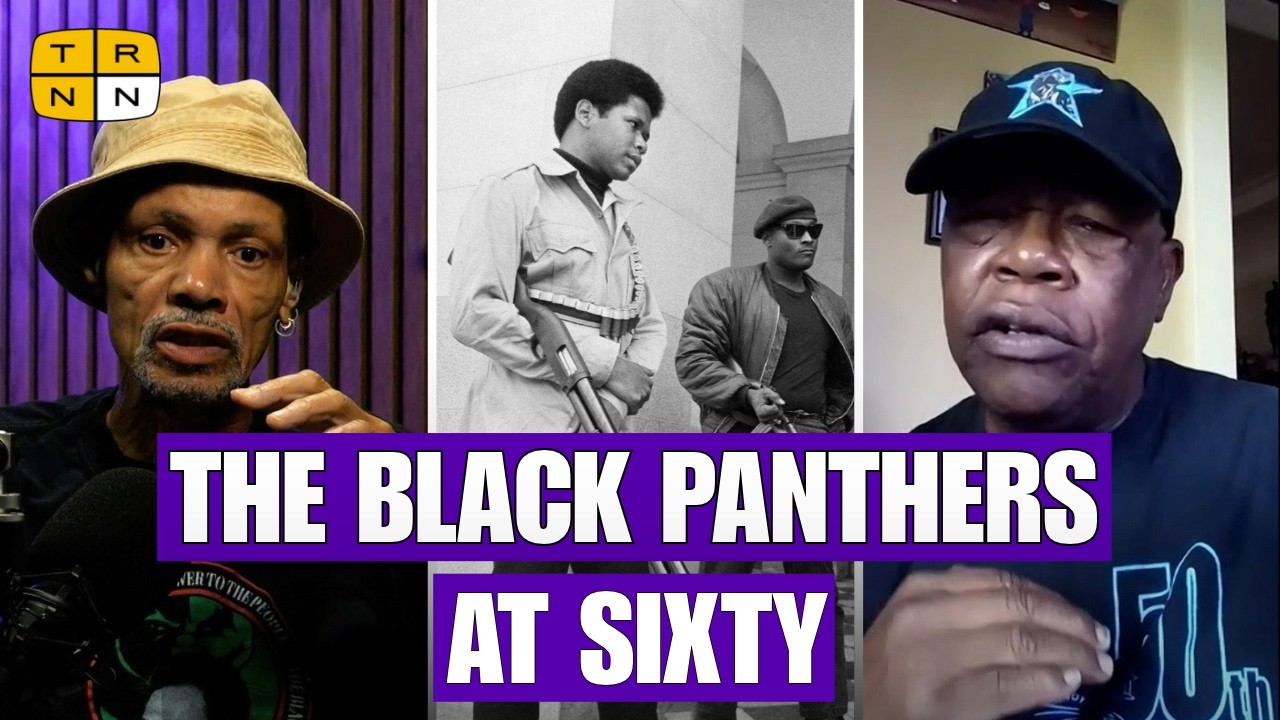
The Black Panthers at 60: A through line of resistance from the South to California

Two members of the Black Panther Party are met on the steps of the State Capitol in Sacramento, May 2, 1967, by Police Lt. Ernest Holloway, who informs them they will be allowed to keep their weapons as long as they cause no trouble and do not disturb the peace. Photo via Getty Images

In this episode of Rattling the Bars, host Mansa Musa interviews archivist, photographer, and veteran Black Panther Party member Billy X Jennings.

Joining the Party at age 17 after relocating from Hobson City, Alabama, to Oakland, Jennings managed BPP offices and served as bodyguard to Huey P. Newton. During Bobby Seale’s 1973 Oakland mayoral run, Jennings helped spearhead an unprecedented electoral effort: “…an organizing event on the highest level the parties had ever been. I mean, the party is known for organizing, but to go into electoral politics and do what we did for a first time basis, it changed over. Even though Bobby lost that election, it changed openly because it opened up so many doors. Part of his job was to kick down doors because we were the Vanguard.”

Today, Jennings operates the official Black Panther Party Alumni website and leads political education initiatives across the Bay Area for the Party’s 60th Anniversary.

Related links:

Credits:

  • Production/Post-production: Cameron Granadino
Transcript

The following is a rushed transcript and may contain errors. It will be updated.

Mansa Musa:

Welcome to the edition of Rattling the Bars. I’m your host, Mansa Musa. This year marks the 60th anniversary of the founding of the Black Panther Party, which started in Oakland in 1966. Today, I’m honored to be joined by Billy Jennings, AKA Billy X, well-known archivist in Oakland, member of the Black Panther Party, a photographer who runs the official Black Panther Party alumni website called It’s About Time. Thank you for joining me, Billy.

Billy X Jennings:

Hey, thanks for having me again. Good morning to everyone.

Mansa Musa:

And as we talked earlier, I was in different spaces and hoping I had met you while I was in Oakland. So this would more or less be like a reunion, but this is my first time meeting you. I’m really honored. I heard a lot about you. I know a lot about your work, and it’s an honor to be able to interview you about the party and some of the things and some of your experiences.

Billy X Jennings:

Okay.

Mansa Musa:

Please introduce yourself to our audience, who you are and how you came to be involved in the Black Panther Party.

Billy X Jennings:

Well, my name is Billy X. Jennings. I’m a member of the Black Panther Party. I joined in 1968 when I was 17 years old. And I came about joining the party because I’m from a historical town in Alabama in the South where most original members came from the South and migrated to California. So I came from a place called Hopson City, Alabama. And the tradition there, Hobson City have had the right to vote since 1890. And we were one of the only black municipal cities, little towns that could vote and had that right to do that. And so I came from a very strong area that had embedded that kind of thought into my mind. And when I traveled to California and I saw the Black Panther Party on TV for the first time in 1967 when they went to Sacramento, California, it blew my mind.

I was in high school at the time and I immediately changed our social… We had a social club called the Buccaneers. I changed it to the Panthers the next day. I didn’t know anything about the party with just that symbolism and how they stood up to the police and read their demands and so forth. It made a change happen in me. And it wasn’t until I graduated from high school, I decided to move to Oakland. And when I moved to Oakland, it was during the time that Huey knew the trial had just started and I was going to a college that’s two blocks away from where Huey was going on trial at the courthouse. And when the trial started, we would hear them saying Free Huey off the preg, free Huey. And I went over there one day and I was reading a book simultaneously at the same time called The Audible Malcolm X.

So what I read, I had read in the book already, but I heard Bobby Steele speak at a rally for Huey and they were saying the same thing. So it got me really interested in the party. And so I started going to the rallies to Free Huey. I met some Panthers and then they said their Panther office was going to open in my area. And when it did, I went down and joined, became a Panther in training and I’ve been working with the party ever since.

Mansa Musa:

Okay. And take us back to the party’s founding because you came in two years after its founding. And also you came in to your own observation and to what we know to be a fact, you came in at a point where they had just started to become on the radar of the feds, but more importantly, they was definitely on the radar of the Oakland police, LA police. And so talk about what was it like to be able to be in that space and ultimately find yourself in a position to be the bodyguard for Huey Newton once he got out.

Billy X Jennings:

Well, my process started at the very beginning. In 1968, there was a certain method the party employed. Before you became a Panther, you had to become a Panther in training, which requires six to eight week training. They give you a list of books that has about 35 different books, about books by Franc Fanon, Mao Saintong, Che Guevara, Pruma, and other revolutionaries to read. And you had to attend political education class on a weekly basis. Panthers at that time was required to read two hours a day. A Panther had to secure and have what we call technical equipment. Technical equipment was a firearm of some type, because at that time I joined the Black Panther Party, it was called Black Panther Party for self-defense. Later on, we dropped off the self-defense, but at that particular time, the party was engaged into patrolling

Police officers in the community, observing them and making sure they don’t beat and brutalize people. So the first six weeks is reading and studying and learning the rules of the Black Panther Party. And then you’re given a section. The city is divided into different sections. I worked in the section four in East Oakland. Section four had a section leader. They had a geographical area that they were responsible for. And so I was in section four. At that very beginning when I first started, we were theorizing about the breakfast program. It hadn’t came about, but we were still looking for geographical locations to have these breakfast programs in the future. So we did that. And every Panther is required to sell the Black Panther Party newspaper, which is the voice of the party. And at that time, the party was growing tremendously by leaps and bounds.

We had people flying into California from Kansas City, Chicago, New York, all to get this education. Before you can open up a chapter of the Black Panther Party or a branch of the Black Panther Party, you have to come to Oakland first and get educated. And you have to meet the leadership. The leadership has to eyeball you and find out your level of consciousness, what type of person you are before you can go back and represent the party. So this whole process was going on. People were flocking to the party. The party got so big that in 1969, we had put a stop on membership and we call that particular part of the party’s history the purge because the party had grown… I mean, the party was attractive. I mean, black coats, leather coats, I mean sunglasses and Afros at the same time. So this was a big thing for our culture.

At the same time, our culture level was rising even in music. James Brown had a record out in 1968 that elevated people’s social conscience, I’m Black and I’m proud. It moved people from the level of being a Negro, because that’s what the newspapers and that other people was referring us to. But in our community, we’re referring to ourselves as Black or African. And when James Brown came out with Black and I’m Proud, you could never go back to ever saying he was a Negro no more. There was different progress being made, but James Brown couldn’t sing no song like that. It wasn’t for groups like the Black Panther Party. Groups like The Shot Light Can’t Sing got to give more power to the

Mansa Musa:

People

Billy X Jennings:

Like the Black Panther Party, paving the way to educate people to lift up their consciousness. And so my role in the party, I came up as a Panther in training. I became a officer of the day, which is the person who runs the office. And from there I was transferred to central headquarters. Now, my name came about because my captain at that time was a legendary Panther called Robert Bay. Robert Bay ran the East Oakland office. Robert Bay was also an age of the central committee. And when Huey Newton got out of jail in 1970, the central committee made Robert Bay his permanent bodyguard and assistant. Now, I worked in that capacity as well after Huey got out of jail, mostly going to… I went to court with Huey on a daily basis because he was let out on appeal. He wasn’t just let out.

He had to go back to court and defend himself. And so my job became that. And also at the same time, I became to the Newton family. Mr. Newton, Mrs. Newton, I lived three or four blocks from them. I would walk over their house around the corner, mow their lawn. I’d be taken to the pharmacy, driving to doctors because they’re old people and they don’t drive so much. So that became my responsibility and me and Huey’s relationship grew behind that. So we had good personal relationship.

I worked central headquarters. Working at central headquarters was key to who I am today because I know Panthers from everywhere because every Panther had to call the central headquarters on a weekly basis or if the office gets ready or they need lawyer resources and stuff like that, I pick up the phone, write on the messages or tell them what they need to know. So I know Panthers from almost all the chapters and branches. And so I worked that group for a while. Then I was drafted into Bobby Seal’s campaign when he ran for mayor of open. I ran Bobby Seal’s campaign office in East Oakland. And it was an organizing event on the highest level the parties had ever been. I mean, the party is known for organizing, but to go into electorial politics and do what we did for a first time basis, it changed over.

Even though Bobby lost that election, it changed openly because it opened up so many doors. Part of his job was to kick down doors because we were the Vanguard. We had lead to struggle and there’s other people who follow behind us. I mean, our life was constantly in threat because we were on the front line, police department, clientele pro, all those things aimed at members of the Black Panther Party. So not only did we have the burden of dealing with the system, we had to deal with the authorities as well.

Mansa Musa:

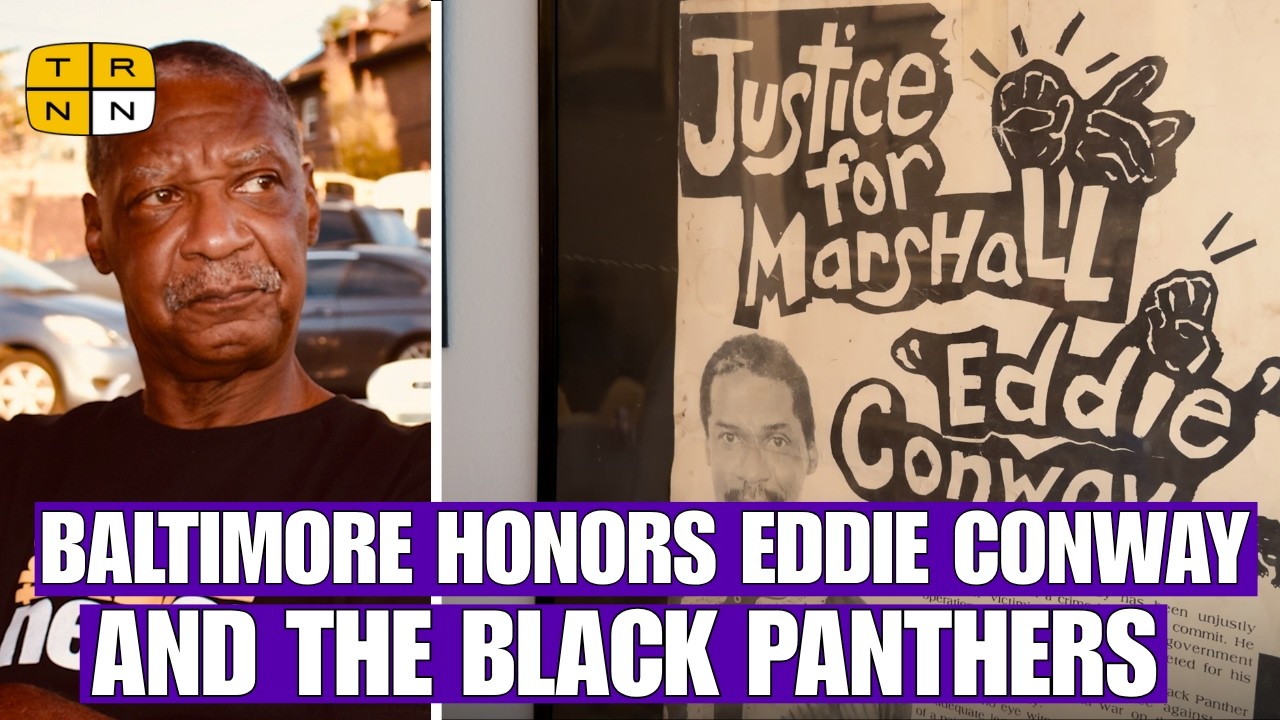
Talk about, and you’re familiar with Eddie Conway, right? And so Eddie Conway, when he got locked up, he organized a chapter for the Black Panther Party in the prison, which I became a part of. And everything you outlined, as you was talking, I was reflecting on, we had to read at least two albums. We had every aspect of the thing that you outlined as what the party was doing, Eddie had us doing the same thing. We had political education classes, we had military classes, we had first aid classes. All our class was structured around an environment that we was in, and our technic class was finding a hole to get out of prison by any means necessary. So we had that type of mentality. So Billy, as an archivist, you have a lot of distortions in terms of the images that’s being projected of the party and it’s been dubbed Panther Porn, and just to note that it’s images that’s being perpetuated by the federal government, it’s images that’s become more idolization of the party versus the images as an archivist.

What would you say is the most positive or how would you characterize the imagery of the party as from an archivist in terms of educating people and raising their conscience? I see you with a shotgun. I know you in Sacramento. I know why you in Sacramento and I know why you coming out like that. That’s a good thing. But then I turn around, I see somebody standing on the corner. They got a picture of somebody standing on the corner with their mug broke and they got a bandela on and it had nothing to do with organizing, had nothing to do with raising people’s conscience. It’s got more to do with projecting the image of a thug, for lack of a better word. Talk about that if you can.

Billy X Jennings:

Well, the party was vilified on the highest level from the government who lied on us continuously to the media that used disinformation to scare people. The big image they had was, oh, these Negroes, they have guns. They’re angry. They hate white people. That’s their basic pitch on everything. Let it be Republican New Africa or any Black group, they paint them as very threatening group. And because we had guns, I mean, there was nothing… It wasn’t against the law in California to have guns, to have them in public long as they was not loaded, which we knew that. So the images they printed of the Black Panther Party was to vilify us and to scare white people and to frighten Black people. So it was all a part of their method to control who we were. They were trying to identify who we were. We could only define that.

We defined our own selves. And so that’s why we started a Panther newspaper in 1967 to get our voices and views out. So even though we had Time, Newsweek, Life Magazine, the Black Panther Party was cranking out close to 250 to 300,000 copies of papers per week into the community to combat this disinformation about the Black Panther Party. The 10 point program outlines what the Black Panther Party was all about, what we stood for.

Only on one aspect, which is 0.97, we talk about defending ourselves with guns. Other

Than that, we’re talking about social change in all levels, in education, housing and so forth. That was a threat to them because they did not want anyone to rocking the boat and we are rocking the boat. We are waking people up from their deep sleep. I mean, we’re telling people to read. We’re showing people what books to read. We are the Vanguard. People are following us. They didn’t want that. We had people in the white community, they wanted to join in with us. We had people from the Latino community, they want to join with us. You had people from around the world reading the 10 point program and looking at the positive aspect of the Black Panther Party. And that’s how we get the New Zealand Panthers and the Panthers from Africa and Panthers from India and the UK because of our social programs, how we was dealing with the oppressor here.

And so they follow those same examples there. They started social program, they started demanding and fighting for their rights. And that’s what the oppressor hates. They hate for people to wake up. And we were waking up big time in the 60s with the music, the culture, the back to Africa, who we are. How could you be a Negro in 1970 after all has been presented before you? So those things have changed. The party was a part of that change, that

Mansa Musa:

Consciousness. Talk about, because to your point, I remember reading the paper and when United Farm Workers, the party was one of the first papers to one, educate people on what their issues were, two, organize the boycott certain wines that they was taking and exploiting their labor and not giving them equal pay. So talk about the party’s social contribution to raising people’s concept, but more importantly, the elasticity of it, because can you see some of the influences today? Oh,

Billy X Jennings:

Definitely. Definitely. I can see the influences of the Rainbow Coalition. And that was something that Fred Hampton talked about. I could see the coalition building of the Black Panther Party. We’re working with the Brown Beret, the Young Lords, the Young Patriots. We’re working with the welfare rights groups. We’re working with the BSU, the Black Student Unions on campus. We’re working with prison groups. There was a number of prison groups throughout the country that started Black Panther Party off in San Quentin, in Algeria, Raway and other prisons because the ideology of the Black Panther Party was strong. What we were talking about, there was backbone to it. Everything we did was dialectic materialism, right? We were dialectic people. We looked at things from all sides. We just didn’t look at things in one side. Black Panther Party was an international group from the very start. Dewey and Bobby were international.

You can look at our reading list, those 35 books that come from Fanon, that’s from Africa, Mao Zeitang from China. So there was all kind of influences in the party. And so it was a big job just working to educate and organize people on all levels. Because in our community, action speaks. People learn in various ways, but in our community, people relate to action. They see something, they learn from it. Just like the breakfast program. We started the breakfast program in California and within two weeks it was a national program because people said, “Hey, we can do that here. This is how they did it. We can do it here.” The party set examples that people could follow in every aspect. We were on the forefront of fighting racism on all levels.

💾

“We started the breakfast program in California, and within two weeks it was a national program because people said, 'Hey, we can do that here. This is how they did it. We can do it here.' The party set examples that people could follow in every aspect. We were on the forefront of fighting racism on all levels.”
  •  

New ‘atlas’ of respiratory infections suggests Covid is no longer just a winter virus

A comprehensive atlas of the 18 main respiratory viruses circulating in Catalonia, produced for the first time in Spain by researchers from that northeastern region, reveals that the coronavirus that caused the Covid-16 pandemic — SARS-CoV-2 — “is currently not a winter virus. In recent years, it has shown clear peaks during the spring and summer, which is different from what was initially expected.”

Seguir leyendo

© AP

Colorized electron microscope image shows cells (pink) infected by the coronavirus (orange).
  •  

The Blind King Who Rode Into the Battle of Crécy Tied to His Knights – and the Legend That Gave the Prince of Wales His Feathers

On 26 August 1346, English and French armies met at one of the most important battles of the Hundred Years’ War: Crécy. Edward III’s English army crushed the French army of Philip VI. The defeat was so complete that it allowed Edward to lay siege to Calais and tilt the whole war in his favour. […]

  •  

US bans Chinese data center gear as Beijing grounds its AI talent

The artificial intelligence (AI) race between the United States and China has accelerated in model protection, supply chains and talent controls, even as the two nations’ leaders agreed last week to open a new dialogue on AI safety. A string of moves announced or uncovered this week shows that both sides are now guarding their […]

The post US bans Chinese data center gear as Beijing grounds its AI talent appeared first on Asia Times.

  •  

Can This Independent Mass. Governor Candidate Rally a 67% Unenrolled Electorate?

Andrea James speaks at The National Council for Incarcerated Women and Girls "100 Women for 100 Women" rally in Black Lives Matter Plaza near The White House on March 12, 2021 in Washington, DC. Photo by Brian Stukes/WireImage

In this episode of Rattling the Bars, the midterms edition, we take you to the Commonwealth, where Andrea James—abolitionist, author, and organizer—is currently running for governor of Massachusetts. The countdown to November 3 is officially underway. Debates are scheduled for October, but independent and third-party candidates are being excluded from participating.

Andrea James has led national campaigns to reunite families by demanding clemency from high-level officials for incarcerated women and men. Now, she is running for governor with a platform focused on rent stabilization, lower energy costs, free childcare and stopping the construction of a new $360M women’s prison.

Related Links:

Credits:

  • Production/Post-production: Cameron Granadino
Transcript

MANSA MUSA:  Welcome to this edition of Rattling the Bars. I’m your host, Mansa Musa.

Joining me today is Andrea James, activist in every sense of the word. I want to say abolitionist, but she’s an activist in every sense of the word, organizing, and is currently running for the governor of Massachusetts.

Thank you for joining me, Andrea.

ANDREA JAMES:  Thank you for having me. It’s really great to be back in your studio, and just to have the privilege of being a part of how you disseminate information. It’s really an honor to be here, and I thank you for this opportunity.

MANSA MUSA:  And we want to go on record right now saying that here at Rattling the Bars, we recognize that it’s a so-called two-party system. And we recognize that, when you’re dealing with electoral politics, that if you’re not a traditional Democrat or Republican or so-called Independent, according to their definition, you’re not going to get the recognition. So we are here primarily to level the playing field. It’s not our endorsement of it, it’s more opportunity for her to talk about her candidacy, why she’s in this position, why she’s running, and what she expect. 

And with that being said, introduce yourself to our audience, Andrea.

ANDREA JAMES:  Well, I want to say thank you for introducing me as an abolitionist. I mean, I am an abolitionist. I have had a direct experience that causes me to understand that this country has had more than 250, but 250 recognizable years of incarceration of prison and prison building and incarcerating people in cages. And actually, I believe in direct experience and that that’s what leaders should have, some level of direct experience so that there’s an urgency around the issues that need to be worked on. And so I’ve had the experience of incarceration myself personally, and I happen to know, having lived in a women’s prison, that they only cause further harm and that they are antithetical to getting us to a place of having whole, healed, and healthy communities and people. So I am a prison abolitionist, absolutely. And thank you for referring to me in that manner.

Why I’m running has a lot to do with that experience in 15-plus years specifically. Decades prior to that in my lifetime came from a family, African American family of Civil Rights folk breaking color barriers and so forth in law, in the field of medicine. My grandmother was the first Black nurse in the city of Boston. I’m from a community that is the most incarcerated community in the commonwealth of Massachusetts. We’ve been in Massachusetts for seven generations, in the same old house in Roxbury for five generations. 

And so why I’m running is this alchemy of these life experiences that have brought me to where I am in my life today with my understanding of these issues and also who I am today. And that includes all of my life experiences, not just the highs that I’ve reached and the accomplishments that I’ve had and the academic achievements that I’ve had the privilege to be exposed to, but also my incarceration, which has been one of the most important experiences of my life that propelled me.

This was 20-plus years ago. I made a mistake in my law practice. I wound up on a prison bunk in federal prison for wire fraud. And what I received and learned from that experience after having been a criminal defense attorney, after having worked my entire adult life on ending mass incarceration and bringing attention to that issue and then having the direct experience of myself of living in a prison, I knew immediately after being surrounded by all these women, I had to survive 24 months of incarceration. I was laying next to, head to toe, head to toe, head to toe on a prison bunk next to sisters who had been in there for 24 years. I mean, I knew. 

My parents were researchers of people of African diaspora. When I was a kid, they were traveling all over the world with us, showing us different cultures of our people. And one of them was a trip to Gorée Island, where we saw where they enslaved African people, put them into caves, waited for ships to come, load them on like cargo, and take them to every single place on the planet to work as labor. And when I was in that prison, I wrote a book, a memoir called Upper Bunkies Unite. And because I was on a top bunk and I remember looking up over this sea of Black women and being like, damn, the first thing that came to mind all those years later was Gorée Island, was how they stacked us.

And so I’m running for all of that, and I’m running for more of the immediacy of creating change right now. I’ve been going to the Massachusetts state House for 15 years writing policy, writing legislation, giving of my voice, my experience, to panels and state legislative hearings and congressional hearings, and being trotted out for all of the things on the federal level policy. And enough is enough. Enough is enough. 

And I have done every piece. I’m older. I’m older. I believe in pouring into our young because they’re brilliant. They have a language now that like, what y’all talking about, but I like how it sounds. But we need to break the ceiling of the caste system that they expect us to continue to live under. And I refuse to do it any longer. I refuse to be made a chump in an electoral process that is not addressing the needs of the people that are millions, that, actually, in Massachusetts, have become the majority of people who are dissatisfied with either of the establishment parties, meaning the Democrats or the Republicans, that 67% of voters in the commonwealth of Massachusetts have become unenrolled. 

Now, does it mean that they’re all the way over here, prison abolitionists and to the left and progressives like I am? I don’t even call myself a progressive because that’s been co-opted in so many ways to help democratic socialists get into office and so forth that do not go far enough for me. However, we need to be a part of this in more ways than just being on the table. 

We need to shake up. I mean, you talk about rattling the bars, the electoral process needs to, those bars need to be rattled. We get people into office and they think the job, the hard work, was getting elected — Which is an arduous process even when you have their millions of dollars, which we don’t — But still too many of our electeds have gotten into office and they thought getting into office was the job. And then term after term after term, they’re just comfortable. It’s like, they have a job. They have a nine-to-five that they go to.

MANSA MUSA:  Let me ask you this here.

ANDREA JAMES:  Yeah.

MANSA MUSA:  OK. So, you already clarified the so-called progressive. We agree that the term in and of itself says one thing, but the behavior says something else. But you are running as an Independent. Now juxtapose that against Bernie Sanders. Bernie Sanders has ran as the longest Independent, but how do you see yourself when you say you’re Independent? Is your Independency similar to Bernie Sanders, same, or are you saying Independent in fact and not in theory?

ANDREA JAMES:  I’m Independent in fact. I mean, I’m running on issues.

MANSA MUSA:  Come on.

ANDREA JAMES:  I am not running on any party platform, and I refuse to be constricted by a party platform. I unenrolled because I was a member of the Democratic Party, I was raised by strong Black Democratic women over the generations in my family. I unenrolled because I thought it was unconscionable what the Democratic Party has become. And I believe that it is a duopoly between the Republican parties and the Democratic parties.

That being said, I wasn’t running on any party because I’ve seen the party that I expected to do, carry the water and make the noise on behalf of the issues that are affecting so many people. When they weren’t doing that term after term, elected position after elected position, I decided the party platforms are not going to carry the work that needs to be done. So I said, I’m going to work on these four issues.

Now I care about a lot of other issues, trust me. But right now in the compounded crises that people are going through, everyday people are going through in the communities like mine across the country, but specifically across the commonwealth of Massachusetts, we’re a commonwealth. It’s different when you’re a commonwealth, that means of the people. We become a corporate wealth. And our campaign is it’s the commonwealth, not the corporate wealth. We are under the oppression and control of a corporate agenda right now in the commonwealth of Massachusetts. So wealthy donors and corporations are getting the focus and the attention that working families, underemployed, unemployed, formerly incarcerated people, people who have gone through a state of struggle, the focus should be on. We’re a commonwealth. But I’m running on four issues.

MANSA MUSA:  Come on, talk about it.

ANDREA JAMES:  So that it is very clear because they’ve co-opted the term “affordability.” They’ve listened to our language and taken our language, both the Republican and the Democratic candidate, and morphed our abolitionist language into their establishment party agenda. 

So I said, I’m not dealing with none of that. I’m an Independent, meaning I am running on issues, not any sort of party platform or party identity. We don’t have an Independent party in Massachusetts. We’re just called unenrolled/Independents. So it’s not even that I’m running on a platform called Independent. I’m running on four issues: housing, universal healthcare, childcare, and equitably funded education. 

Why those issues? Because I am the voice of the people who have been just tamped down into a caste system that is only growing and widening. So before it used to be all of us, Black, Brown. We have a wealth gap in the commonwealth of Massachusetts that is astounding that nobody even wants to talk about. It’s always like, why has it got to be about race? Because everything is about race, baby [Musa laughs]. And so we’ve got to discuss that. But we’ve got an unemployment rate that is double for Black people in the commonwealth of Massachusetts. 

And so, these are things that we have to talk about, but the issues that I’m running on are issues that would create an immediate lift. I call it lifting from the bottom and closing the gaps. When you talk about unaffordability, it is at a crisis level in this state and around the country, but housing, universal healthcare, childcare, and equitably funded education immediately gives economic empowerment to the people, the millions of people just in the commonwealth of Massachusetts alone, the wealthiest state in the country, that has been completely left out of that.

So, we have nurses and firemen right now who can’t afford places to live. And so it has expanded. It’s no longer just formerly incarcerated people who got no chance in hell — That’s got no chance in finding support, I should say. We still make it, but in finding support in climbing out of that hole they tried to bury us in and get back on our feet and raise our children and bring our families back together and restitch the fabric that they’ve shredded economically, family-wise. But it’s expanded to a lot of the middle class, so to speak, who are now feeling the same level of pain, even as they still are intact and have their jobs and may have a house or may be able to figure out how to pay their rent, but really are not making a living wage themselves.

And so housing, universal health care, why universal health care that’s single payer health care. I’ve traveled the world in the work that I’ve done as an expert on women and incarceration. I’ve talked to parliaments in different countries about the issue. I’ve visited women’s prisons all over the world. And while doing that, I have had the experience of those countries and their major cities and how they address policy. Well, housing is a number one thing in many of these places, but also they have universal healthcare. They’re not beholden to what we’re stuck with, which is the CEOs who make $200 million, with a M, a year who run health care companies in the United States. And we have no benefit of it. We pay high premiums, we have deductibles, and most of the time we have to ask if they’ll fix something for us and it’s denied.

And so universal healthcare is one way to immediately infuse some economic stability in the families and in the everyday people in the commonwealth of Massachusetts. If we have single-payer health care, which means the state takes over completely — Which we are uniquely poised to do here because Massachusetts already controls its own health care market — And so the only reason we don’t have it is that because the governor and the other leadership in the commonwealth of legislature are beholden to the wealthy donors who are the CEOs and their rank and file who donate money to these campaigns. Because there is no other way to explain in the commonwealth of Massachusetts where we already control our own health care marketplace, where it does not make fiscal sense or it’s not fiscally responsible to not have single-payer health care, that we still have it, except that we will hold in place because of the lobbyists, the health care industry, and the CEOs that make us have to pay all of this money for health care that does not produce the level of health and wellness that we deserve.

MANSA MUSA:  OK. Let me ask you this here then. OK, so you already acknowledged that you got this wealth gap, and you got in terms of the political structure. So how are you managing being competitive in the sense of being able to get out and get your message out unless are you getting PAC money? Are you getting corporate money? So how are you funding your campaign? How do you see it? Because like you say, you up against, just to your own point, it ain’t commonwealth, it’s corporate wealth. If it’s corporate wealth, right?

ANDREA JAMES:  Millions and millions of dollars. Millions of dollars. The Republican candidate in this race, there’s three of us. First of all, mainstream media is beholden to the Democratic Party and they only refer to her. And in reference to the Republican candidate running against us, they only refer to one opponent running this race against our current Democratic governor. There’s three of us. There’s not just two. So mainstream media plays a huge role in completely blocking. 

Took 10,000 signatures, they didn’t think we could get it as an independent candidate. We got 13,311 certified signatures from the secretary of state — Certified at the secretary of state’s office, which means I am on the general election ballot on Nov. 3. 

Mainstream media has refused to include me in anything. We did our first mainstream media interview that aired Sunday morning, the very first one, but yet that same network is hosting one of the few debates that the current governor, Mara Healy, has agreed [to do]. They left it up to her. They let her do all the deciding. There’s three candidates, but she’s the one that got to decide where she was going to show up. Fine. They’re excluding me from the debates, the mainstream networks. I’m a candidate. I am on the ballot, and I am being excluded from being in the debate. 

When I asked the other network that I just did the interview with, why had they not invited me into the debate between the gubernatorial candidates? And they said, because the people have expressed that they only want to hear from the establishment parties. Well, that’s interesting in Massachusetts where 67% of the voter roll are currently unenrolled Independents. So who are you talking to?

And so, it doesn’t matter. What Donald Trump is doing right now with mainstream media on the national level, CNN and all them, he just kicked them out of the press [inaudible] their credentials, and they’re on the sidewalk outside of the White House trying to do an interview, being fed information from inside the press room. That’s exactly what these networks are doing to me by inviting us into the debate and allowing the voters to hear the messages, to be informed voters, and not just mainstream media being able to determine who gets to be heard and who doesn’t get to be heard. That’s violation of constitutional rights, of [the] First Amendment, there’s a plethora of wrongness with it, and that shouldn’t happen.

And so then we got to talk about the money, right? So the current governor’s a millionaire, but she also has millions of dollars that have flowed into her campaign by corporations, the CEO. And then all you got to do, it’s all public knowledge. Anybody can look at ours, they can look at theirs, and you can see where the money’s coming from. And it’s all the wealth and power in the commonwealth and people of wealth and power who want to make sure that the Democratic platform stays intact.

Now look at the Republican candidate that’s running against us. He’s got a $31 million mansion in Montana somewhere, a summer home in Montana. But he, at the start of his race, said, I’m putting $10 million into this race. So they’ve got commercials running, they’ve got all kinds of stuff that we don’t have. So the only thing that we have is an opportunity to be blessed, to be invited into opportunities like this, like what you have always provided for us at Rattling the Bars, but it’s about boots on the ground. And that’s one thing that our style of organizing didn’t change because it shifted to electoral politics.

So we know how to do this. It’s still hard because you have to pay for signs. You have to pay for, even though — Here’s an example. I don’t know if you can see it because my screen —

MANSA MUSA:  Yeah, I can see it.

ANDREA JAMES:  But throughout this entire campaign, our money has been spent on toner and paper. You know what I mean? Because we’ve been talking to Independent candidates, Kshama out in Washington State, and just talking to their campaign managers about how y’all getting this done against multi, multimillions of dollars that are just, they’re not even talking about us yet because they don’t want to give any rise to the awareness of people that there is a person like myself running. So they’re just suppressing everything else by covering everything with signs, with commercials, things that we just don’t have. 

So we’re doing our best. We’re boots on the ground. It took them two days to get 10,000 signatures to get back on the ballot. It took us months because we were grassroots. I stood outside in the rain, the heat, the snow, whatever for months, personally asking people if they would sign my ballot sheet. But also it gave me an opportunity to have conversations with people about what’s their pain points, what do they need in their lives to create joy? It’s not just about the struggle we’re going through, but where are the investments to create joy in the lives of the people of the commonwealth, all of us.

So it has been a really — And then again, Massachusetts is a blue, blue state. We got a blue governor, which is another reason why I ran because I’m like, hold up. The line in the sand for me was we went — So, Massachusetts was one of three states up until 2000 that allowed incarcerated people to vote, full access to the ballot. They took that right away from incarcerated people in 2000 because the brothers inside of a men’s prison here called Norfolk State Prison started to organize themselves. And they started to organize themselves because of the hard draconian sentences that more of these young brothers were starting to come into the prison with these real heavy sentences hanging over them, young. 

And so the Legislature was predominantly white and male was like, oh wait, you going to organize yourselves and your families on the outside? We make 7% of the population, Black folks in Massachusetts. We make up 51% of the carceral population. First of all, make that make sense. Math ain’t mathing, OK?

So they said, we’re going to strip you of the right to vote. And they did. They had to move heaven and earth. They had to change the Massachusetts Constitution to strip us of the right to vote inside.

Now, we have been fighting to reinstate that ever since. And so, they got a congressional hearing in one of the sessions, and we went and poured our hearts out. And with my testimony, I lined up the fact that this is voter suppression. This goes back to denying Black people the right to vote whenever you have a disproportionality in the numbers of Black folks in the state and the levels of incarceration, on and on. Well, they didn’t even reconvene after the hearing to discuss it. It never made it out of committee. It was what every other piece of our legislation that we have worked on over decades went to what they call “went to study.” 

That was it for me. Y’all ain’t even going to huddle and discuss this after we came in and poured our hearts out about why it’s important as people who have had direct experience with incarceration for people inside to vote. I was a mother. I had a 5-month-old little baby boy when they made me go into the prison, a 12-year-old daughter, and young adult, a son and two daughters. I had good reason to still have my right to vote.

MANSA MUSA:  Right. Answer this here, Andrea. And I want you to put yourself in this space, your candidacy in this space. So when we was at the Free Her March, I asked you about that, and this is what you said. You said when we first started this, the first time we came down here, we had a hundred people. The day that we was down there, we had blocks and blocks and blocks of people. We had Freedom Plaza flooded. So that’s one. I want you to put your candidacy in these two spaces. How do you see your candidacy in this light?

I was in Massachusetts, University of Massachusetts, I think year before last, where they was doing a showing of the movie called “The Strike,” where they shut down Pelican Bay, where the men shut down. How do you see your candidacy in terms of you was in a prison where they was treating y’all like animals, y’all made y’all minds up when y’all got out, when y’all got in a position to change the narrative, you was going to change it systematically and continuously, you changed it. Her movement. 

When I was down there where the buses was at, I ran into a lot of sisters I had dealt with and interviewed. Everybody was energized. Strike. They organized this strike throughout California under a situation where they ain’t even had the ability to communicate. So put your candidacy under that type of light.

ANDREA JAMES:  Well, we did. We started our work as incarcerated women inside of a federal prison and we were like, You know what? We don’t hear nothing about us, the separation of us from our children, whatever. So we organized ourselves in that prison, and we didn’t have no way of… We were writing letters and sending kites outside, whatever we could do to raise awareness of the issue of the incarceration of women and our separation from us from our children. But if you look at the life of a woman on a prison bunk, every issue that we are fighting for has been a factor that led them to that prison bunk. The lack of housing, the lack of health care, the lack of education, the lack of childcare, the lack of resources for the most vulnerable among us. And so that’s the first thing.

The second thing is I’m older. I’m older, and they want to create a narrative, and have created a narrative, that we have no more value and we don’t count. And the issues that we’re talking about, nobody should listen to because we have incarcerated or formerly incarcerated as part of who we are. And because of that, we just valueless now. We have no more authority. We cannot be accountable. We cannot be relied upon to run these institutions, to run these states. 

And they have these positions like Qiana Johnson, county clerk. What? Come on now. We got the first formerly incarcerated Black woman who is now the clerk in Prince George’s County. This is what we talking about. We’ve got a new Black woman mayor in Washington, D.C. because of the rallying and the intense work that Black women did, formerly incarcerated Black women did, to change that and put new leadership into that seat. 

So I want to be that. Let me break the mold. You know what I mean? It’s a win-win for us as far as I’m concerned because I’m challenging that. Yeah, they’re like, oh, now they started out only writing stories. There’d be one page of a story when I announced my candidacy a year ago and the whole page was filled up linking my case and talking about my transgression of wire fraud and went to federal prison as a lawyer and one little line that said, oh, and by the way, she’s running for governor.

So I’m like, OK, somebody has to step out and kind of be like, OK, I’m the whipping post. You know what I mean? Because I’m going to push back on that. And what? I don’t have time to talk about that. I have time to talk about why it’s important to have people with direct experience who actually know and have the urgency, the transparency, the accountability that it requires that we don’t currently have from our current legislature, from our current governor, particularly in Massachusetts. Massachusetts just received the Black Hole Award in the country. That means the least transparency in any state in the United States. The least. We have the least effective legislature in the entire country. So we have to do something different. 

And they’ve made it impossible pretty much if you have a felony conviction to run for things. You can’t be a state legislator for the felony conviction in Massachusetts, but guess what they didn’t think anybody would have the nerve to do as a formerly incarcerated person? Run for governor. But also I’m not a politician. I’m a community organizer, and I have no interest in making a career out of starting from school committee and working my way up and sitting around in the state legislature. I’m going straight to the top.

MANSA MUSA:  To the top. Yeah, that’s right.

ANDREA JAMES:  Where we can get the things moving that we need to have moving. And so if this just tills the soil, I have had so many sisters in our network across the country say, hey sis, I’m going to run for office now. You’ve inspired me. That’s what I’m talking about.

MANSA MUSA:  One thing for sure and two things for certain, you got a broad network in terms, I seen the response that you got from men and women coming out that’s in this space. So what kind of feedback, because you told me earlier that you’ve been traveling across the state. And I want to say this, because Massachusetts got the misnomer of being a progressive state, the Kennedy and whatnot, but talk about what kind of response you getting from the people that you’re talking to across the state. And I know you going everywhere, every crevice. Talk about the response you’re getting from the people that’s going to be responsible for you getting elected, because I believe you can get elected and you will get elected.

ANDREA JAMES:  Well, those are the communities that I’m in where no other politicians seem to go. The people who represent those communities go there when it’s election time and then they become the untouchables. Nobody sees them or hears from them. I’ve been in the western part of the state, which is closer to New York than it is to Massachusetts. They wear Yankees caps as opposed to Red Sox hats because they are completely disconnected. I’m talking about what’s the Springfield, Holyoke, Chicopee, these towns that… I was in Holyoke last year and this sister said to me, you came all the way out here. And I was like, of course I came out here it’s a part of Massachusetts, isn’t it? She was like, nobody comes out here. They can’t even tell you who the governor is in those parts of the state. And it’s mostly Black and Brown. Black, Brown and poor. And they’re feeling like they don’t even vote. 

And so we have this tiny, tiny base of predominantly Democrats who are holding a party platform in place. There’s not enough Republicans in Massachusetts to make that matter. And they are predominantly white. They do not have the direct experience of struggle economically, and they have co-opted the term “progressive,” and they go to things like No Kings and hold signs because that’s the only kind of way that they’re feeling like they could make a difference. They will never vote for me. And so I’m like, if you vote for me, I would love, great, you have a choice. We just want you to know that. I [inaudible] communities that are in the housing developments, you know what I mean? Up in the projects. I’m knocking doors there. I’m talking to people in towns where people are like, Don’t nobody vote out here. And I’ve never voted. But we’ve been simultaneously doing a voter registration drive along with this campaign from day one.

We have a false belief amongst the majority of formerly incarcerated Black men that I’ve found out running this race over the past year that do not even know that they can vote because they’ve been told when they leave the prison. Massachusetts, if you’re felony conviction in a state prison, they took the right to vote. But the minute you walk out of that door, if you were registered before, all you got to do is go and vote again. If you aren’t registered, you can register and vote in the next election. We can vote as formerly incarcerated people in Massachusetts as long as we are not currently serving a state prison sentence for a felony conviction.

If you’re in jail in Massachusetts, you can vote. You can vote while you are serving a misdemeanor sentence in a county jail, access to the ballot. Do they have it? No. So those are the people that we’re talking to.

And again, we live. I get it. So many people have said to me, Black people have said to me, sis, I don’t vote. I would vote for you, but I can’t vote. I’m formerly incarcerated. We correct that and say, You can. We get them registered. We tell them, you don’t have to go into the voting place. You can get a mail-in ballot. You can do all these things. The other piece of that is no matter what, too many Black and Brown folks have said to me, I don’t even believe in the process, sis. I don’t vote. 

And now my response to that is one in six Black children in the commonwealth of Massachusetts go to bed hungry. 30,000 children, predominantly Black and Brown and poor kids, sleep in a car or under some makeshift shelter every single night in the commonwealth of Massachusetts. If they still go to school, they go to schools that are woefully, unequally funded, underfunded, and they just had more teacher layoffs.

If you say to me, I’m asking you, I’m an elder Black woman running for office. We’ve never had a candidate like me. I’m asking you to get engaged just to vote. Just vote. Vote for us. Vote for our issues. If I’m wrong, I’m willing to step out of the electoral process and to do. What are you doing? When I tell you that, do you have children? Most of them tell me yes. Do you care about the Black child over here who’s going to bed hungry every night, that’s sleeping on the street? If you have a better way to approach that, I’d like to know. If you have an alternative to getting somebody like myself in the governor’s seat to create immediate significant radical change that is going to start not from a budget that they’ve created that has no transparency, that nobody knows if it’s true, if it’s not true, that we voted for an audit that we can’t get.

We don’t know how much money’s there. We don’t know who’s deciding where money should be allocated. If you don’t understand the power to not start from a budget that we don’t even know if it’s true or not, but instead start from the issues and the people that need the support the most and make that the priority for the work and where the money is being spent. Then tell me what you have as an alternative for me to make sure as a mother who raised Black children, as a grandmother who now has grand babies and is from a community that the fabric has been shredded by all of these systems, you tell me what your proposal to me is so that I’m not wasting my time any longer so I can make sure that these Black babies and these poor families, white, Black, Brown, whatever, we don’t have any more children who are hungry and sleeping on the street.

MANSA MUSA:  Andrea, tell our audience as we close out how they can get involved with your campaign or how they can get more information rather about your campaign.

ANDREA JAMES:  We don’t have millions of dollars. We barely have any dollars. Our money comes from mostly poor, formerly incarcerated Black, white, Brown women who just are urgent to create change in their own families and communities who are struggling just to feed their kids, find a place to live and the whole bit. AJFOR — That shows my age. My kids were like, Ma, why didn’t you just put the number four? Because I didn’t know — So ajforma.com, that’s our website. You go there, there’s a volunteer form, there’s a donate button. No amount is too small. We get $5, $10, $15, $20 donations, and that has carried us for whatever we’ve been able to get the signs, whatever we’ve been able to do. We’re doing lit drops right now. Lit drops are where you carve out turf and you literally drop in literature like this so that people know we’re running and knocking on doors, door knocking.

Anybody who’s run campaigns like we have to stop prison builds and so forth, you’ve door knocked with me. Come and stand with me and door knock for this campaign now. It is change. And so that’s how they can. Ajforma.com, hit us up, send us an email, whatever you want to do, ajames@ajforma.com. All the information’s on our website. And we’ve got 45 [days]maybe, I don’t know, Nov. 3 is the election day. We are in the 11th hour, and still too many people in the commonwealth of Massachusetts who want or are looking for change don’t know about this campaign because mainstream media has intentionally left us out. And so we need help. We need boots on the ground who can go do a standout for us, disseminate our lit for us, put a yard sign if you have a yard or a window sign if you have a window. We need to raise awareness and we need to do it right now.

💾

“We got the first formerly incarcerated Black woman who is now the clerk in Prince George’s County… We’ve got a new Black woman mayor in DC because of the rallying and the intense work that Black women did, formerly incarcerated Black women did to change that and put new leadership into that seat. So I want to be that. Let me break the mold.” — Andrea James, independent candidate for governor of Massachusetts
  •  

China’s disputed satellite refueling heralds new space war era

Recent disclosures about China’s purported in-orbit servicing operations have intensified a quiet revolution in space, where the mechanics of satellite sustainment are swiftly becoming the frontline of great-power counterspace rivalry. This month, the South China Morning Post (SCMP) reported that Chinese researchers claim the country carried out a pioneering in-orbit refueling operation on a high-altitude […]

The post China’s disputed satellite refueling heralds new space war era appeared first on Asia Times.

  •  

After Trump-Xi summit, Nvidia RTX PRO 5500 gains export prospects

Beijing may let its technology giants buy more Nvidia high-end chips, giving the US chip designer a fresh foothold in China and keeping Chinese artificial intelligence (AI) developers tied to its software after months of stalled trade. China’s Ministry of Industry and Information Technology (MIIT) has asked major domestic companies, including ByteDance, Alibaba and Tencent, […]

The post After Trump-Xi summit, Nvidia RTX PRO 5500 gains export prospects appeared first on Asia Times.

  •  

Last Great Cavalry Charge Wasn’t Led by Europeans — It Was Won by Indian Lancers in WWI

India calls it Haifa Day. The regiments that get the credit are the lancers of Jodhpur, Hyderabad and Mysore — cavalry units raised not by Britain directly, but by India’s semi-autonomous princely states, which supplied their own troops to the British war effort. Grouped into the 15th Cavalry Brigade and led into the final charge […]

  •  

The Era of More Junk in Orbit (Thanks, Elon)

Arch-Technocrat Elon Musk wants to go to Mars with 1 million people to establish a Technocracy in space. Everything that he has done with SpaceX enshrines that goal. Along the way, he has littered outer space with his junk. Imagine the trail of trash from Earth to Mars, and then the trash heaps on Mars itself. Didn’t his mother ever tell him to clean up his messes? ⁃ Patrick Wood, Editor.

As early as next week, the world will leave behind 69 years of space exploration and commerce and enter the age of Starship, an era that will be defined by drastically lower launch costs and a notable increase in the amount of material humans send to orbit.

SpaceX is scheduled as soon as Monday to launch its huge reusable rocket into orbit for the first time on its maiden commercial mission to deploy the company’s new V3 satellites. Although SpaceX won’t attempt to recapture either the booster or the second-stage spacecraft, the company has already demonstrated it can catch the booster, and it made a controlled landing of Starship in the Indian Ocean, paving the way for routine capture of both stages for reuse, which is the key to lower costs and more frequent launches.

The industry already got a taste of lower launch costs with SpaceX’s partially reusable Falcon 9 rocket, whose booster is retrievable. Worldwide orbital launches tripled to 329 last year from 102 in 2019. Falcon 9 accounted for half of those 2025 launches and carried more than 80% of payloads by tonnage. Starship is designed with a payload capacity of 100 metric tons, more than five times Falcon 9’s capacity to low Earth orbit.

The downside to this new era in space exploration is that humans are likely to leave much more debris floating around in orbit. It will take a concerted effort by nations and companies — from prevention to new technologies — to avoid turning space into a gigantic junkyard that puts satellites and other spacecraft at risk.

Europe and the US have taken the lead on best practices to avoid space junk, but there are no mandates nor penalties. And a worldwide effort is unlikely to coalesce. The US and Russia are responsible for the most debris in space because they’ve been launching the longest, but China is catching up quickly with its aggressive space program. And the US added new tension this month when it confirmed that it has weapons in space after warning that China and Russia are developing their own, an effort that may accelerate with the US’ push to create a Golden Dome defense system. A shooting war in space could cripple satellite communication on Earth and spread even more debris.

Regardless of weaponization, space is only going to get more crowded, especially in low Earth orbit, where countries and companies want to emulate SpaceX’s massive constellation of about 10,000 active satellites.

Even though most companies have adopted best practices to avoid leaving space debris in orbit, accidents are inevitable. For orbits that are 500 kilometers (310 miles) above Earth and lower — where SpaceX deploys almost all its satellites — the drag from the atmosphere pulls down objects in a relatively short time, and they burn up before reaching the ground. At higher altitudes with less drag, objects can stay in orbit for years and even decades.

Unfortunately, thousands of old satellites and rocket boosters are already still floating around space, and many of these were abandoned before the best practices of burning off remaining fuel and disconnecting batteries. Old fuel tanks and batteries degrade over the years and can explode spontaneously, sending debris in all directions — some of which gets caught in orbit and can linger for decades.

Just as humans continue to dump trash in the ocean even though the alarm bells have been ringing for years about the problems of floating refuse islands, space debris has been accumulating even though the threat was flagged decades ago. In 1978, a paper published by two scientists — Donald Kessler and Burton Cour-Palais — spelled out the devastating scenario in which space junk becomes so prevalent that it creates runaway crashes that spiral out of control and make certain orbits unusable.

Concern over this so-called Kessler Syndrome and large space junk, such as Skylab, spurred NASA to create its Orbital Debris Program Office in 1979 to track defunct satellites, spent rocket bodies and other debris. The first known collision by space junk was recorded in 1996, when debris from a rocket that had exploded a decade earlier hit a French military satellite. In a famous incident in 2009, an abandoned Russian military communications satellite crashed into an Iridium commercial satellite, significantly increasing space debris.

A report by the Inter-Agency Space Debris Coordination Committee this year says statistical models show tens of thousands of pieces of space junk larger than 10 centimeters (3.9 inches) and hundreds of thousands of debris objects larger than 1 centimeter. These small pieces travel at tremendous speeds and can cause significant damage, said Nilton Rennó, a professor at the University of Michigan who tracks small orbital debris.

“There are many unexplained satellite accidents that people have been blaming on debris,” he said in an interview. “But no one really knows.”

With launch activity increasing, continued fragmentation of space junk and little progress in objects leaving orbit, the report estimates the number of debris larger than 10 centimeters will more than double in less than 50 years.

SpaceX has taken steps to reduce space junk. The company said in February that in 2024 it left 13 upper stages of its Falcon 9 in orbit out of 134 successful missions and lowered that to only three out of 165 launches last year. Of those 16 upper stages left as debris, all were emptied of fuel, and six have since reentered the atmosphere. More may have left orbit since that February statement. The upper stage of a Falcon 9 that deployed lunar landers in 2025 for two companies finally crashed into the moon in August.

SpaceX runs a system to track space objects and opened it up to any entity willing to provide satellite trajectories. The system predicts when two objects are on a collision course and automatically sends alerts to the operators. The satellites’ positions can then be adjusted to avoid the collision. The downside is that satellites must burn fuel to avoid objects, which shortens their life. The International Space Station has to fire its thrusters to avoid large space junk a few times each year.

Technologies to actively remove debris are still in the experimental stage. Even if they prove successful, they will be expensive and target only large objects. The best action is prevention. It would be a shame that just as technology has made space much more accessible, the future would be cluttered by hubris and carelessness.

Space should be the final frontier — not the latest dumping ground.

Read full story here…

  •  

Yvelines : l'ARS veut fermer la maternité, la réanimation et le bloc d'un hôpital entier

Trois services vitaux d'un hôpital public rayés d'un trait de plume administratif : c'est ce que prépare l'Agence régionale de santé d'Île-de-France pour le Centre hospitalier intercommunal de Meulan-Les Mureaux (CHIMM). Maternité, réanimation, bloc opératoire : tout partirait vers Mantes et Poissy. Le 24 septembre, plus de 250 personnes ont manifesté contre ce projet, dont la décision est attendue en octobre. L’ARS estime que « des mesures structurelles s’imposent ».

Yvelines : l'ARS veut fermer la maternité, la réanimation et le bloc d'un hôpital entier
LE COURRIER
DES STRATÈGES
Restez libre !
Yvelines : l'ARS veut fermer la maternité, la réanimation et le bloc d'un hôpital entier

LA NEWSLETTER · GRATUITE

Le Courrier,
chaque matin.

L'essentiel de l'actualité, passé au crible par les cinq plumes du Courrier. Dans votre boîte, chaque jour ouvré.

Gratuit. Vous restez libre de partir quand vous voulez.

JE M'INSCRIS lecourrierdesstrateges.fr
lecourrierdesstrateges.fr
Restez libre !

Cette décision émane d’une administration qui, face au déficit de près de 20 % du budget de l’établissement et à une trésorerie quasi nulle, commande un audit à des cabinets privés et dessine des « pistes » de restructuration. L’hôpital, membre du groupement hospitalier de territoire Yvelines Nord, voit son activité baisser depuis 2019.

Yvelines : l'ARS veut fermer la maternité, la réanimation et le bloc d'un hôpital entier
LE COURRIER
DES STRATÈGES
Restez libre !

ABONNEMENT

Allez au fond
des choses.

Deux grands formats par jour. Les cinq plumes du Courrier. La série Sécession, le dimanche.

Le monde commente. Vous, vous comprenez.

S'ABONNER lecourrierdesstrateges.fr
lecourrierdesstrateges.fr
Restez libre !

Un hôpital progressivement amputé

Le dossier repose notamment sur un audit confié par l’ARS aux cabinets Capgemini et Vi-Santé durant l’hiver 2025-2026. Les premières conclusions ont été présentées le 2 juillet au conseil de surveillance du CHIMM ; le rapport définitif est attendu en octobre. Parmi les scénarios évoqués figurent la transformation de la maternité en centre périnatal sans hébergement post-natal et une évolution du dispositif de réanimation.

Hôpital de Meulan – Les Mureaux : une mobilisation ce jeudi pour dire non à la fermeture de trois services (maternité, réanimation, bloc opératoire)
Hôpital de Meulan - Les Mureaux : une mobilisation ce jeudi pour dire non à la fermeture de trois services (maternité, réanimation, bloc opératoire)

La maternité réalise environ 700 accouchements par an, contre environ 900 auparavant. Elle se situe donc sous le repère de 1 000 naissances annuelles souvent utilisé dans les restructurations hospitalières. Mais fermer un service ne supprime pas les patients : les accouchements, interventions chirurgicales et prises en charge lourdes devront être absorbés ailleurs.

Yvelines : l'ARS veut fermer la maternité, la réanimation et le bloc d'un hôpital entier
LE COURRIER
DES STRATÈGES
Restez libre !

TELEGRAM · L'INFO EN CONTINU

Entre deux éditions,
le fil.

La newsletter vous donne le matin. Le fil vous donne l'instant.

Gratuit, et en continu.

REJOINDRE LE FIL t.me/resterlibre
t.me/resterlibre
Restez libre !

L’économie administrative, une charge pour les patients

Le CHIMM appartient au GHT Yvelines Nord, avec Mantes-la-Jolie et Poissy-Saint-Germain-en-Laye. Le transfert présenté comme une réorganisation territoriale revient donc à concentrer davantage d’activité sur les deux autres établissements. Les personnels mobilisés redoutent une saturation supplémentaire et un éloignement des soins pour les habitants qui ne disposent pas d’un véhicule ou doivent accéder rapidement à une maternité ou à une réanimation.

L’été aux urgences : des patients morts après des jours sur des brancards
Cet été, dans les hôpitaux français, l’attente sur brancard a parfois dépassé 48 heures et même trois jours. Le bilan de Samu-Urgences de France fait état de décès de patients pris en charge ou en attente sur brancard, alors que la France consacre des moyens considérables à sa

La CFDT avance, de son côté, un objectif de 10,3 millions d’euros d’économies, chiffre qui n’a pas été publiquement confirmé à ce stade par l’ARS ou la direction.Le 24 septembre, syndicats, élus, soignants et habitants ont marché de l’hôpital jusqu’à la mairie des Mureaux. En 2017 déjà, la réanimation avait été menacée avant d’être maintenue sous la pression locale.

Urgences saturées: l’été où l’hôpital public a cessé de soigner
À Brest, des patients auraient attendu de nombreuses heures aux urgences selon les organisations syndicales. Ce cas n’est plus une exception : une cinquantaine de services d’urgences connaissent de graves difficultés cet été, tandis que près de 40 % des postes de médecins urgentistes demeurent vacants. Une nouvelle illustration d’

L'histoire du CHIMM n'est pas isolée : Trappes, Le Havre, Montbéliard connaissent des scénarios comparables, portés tantôt par des groupes privés, tantôt par l'ARS elle-même.

Yvelines : l'ARS veut fermer la maternité, la réanimation et le bloc d'un hôpital entier
LE COURRIER
DES STRATÈGES
Restez libre !

TIPS · SANS ABONNEMENT

Offrez-nous
un café.

Un média libre vit de ses lecteurs. Un pourboire ponctuel, sans compte ni engagement, quand le cœur vous en dit.

Vous donnez ce que vous voulez. Vous restez libre.

LAISSER UN POURBOIRE merci !
lecourrierdesstrateges.fr
Restez libre !
  •  

DSA leads the blue wave — will it bend to the thin blue line?

An NYPD officer provides security during the Inauguration for a New Era Block Party in New York City on January 1, 2026 as Mayor Zohran Mamdani takes office. Photo by Leonardo Munoz / AFP via Getty Images

What will a DSA-led state look like — will it back defund and community control of police, or bow to the powers that block affordability? Lawrence Grandpre, political commentator for Leaders of a Beautiful Struggle, explores this question in his recent Baltimore Times article, “The Dangers of ‘Law and Order’ Leftism: Toward a Black Power Public Safety,” asking whether DSA will embrace the outmoded Law and Order politics that fueled America’s prison boom. As officials like AOC and Mamdani backtrack on defunding police — one of the biggest carceral drains on housing, healthcare, and education funding — Grandpre sits down with former political prisoner and Rattling the Bars host Mansa Musa to unpack these contradictions ahead of the midterms, where Democrats hope to retake the House and Senate. Tune in for an unflinching look at the Left’s relationship to the state and to law and order.

Related Links:

Credits:

  • Production/Post-production: Cameron Granadino
Transcript

The following is a rushed transcript and may contain errors. It will be updated.

Mansa Musa:

Welcome to Rattling the Bars. I’m your host Mansa Musa. Today I’m joined by Lance Grandpre, political commentator with Leaders of a Beautiful Struggle, to discuss his recent article for Baltimore Times, “The Dangers of ‘Law and Order’ Leftism—Toward a Black Power Public Safety.” Thank you for joining me, Lance.

Lawrence Grandpre:

Thank you for having me.

Mansa Musa:

Alright, so let’s start like this here. At one point we had in 2020 where you had a push for the abolishment of prisons and to dismantle the police system as we see it during that period. But immediately you had a pushback and the pushback came in the form of saying that this was woke. Now we look at the United States and mass incarceration, armed policing, and you juxtapose that with the lack of funds for healthcare, lack of funds for education and lack of funds for housing and the fact that the criminal injustice system is in itself painful when it comes to poor and oppressed people, mainly people of color. Let’s start with your article.

Lawrence Grandpre:

So this article stems out of a protest I went to because sometimes people say if you talk about police reform or defunding police, you don’t care about victims. And this protest was the opposite. This was a Black elder, a former member of the Baltimore Black Panther Party who was assaulted by many teenagers and it was caught on film. So of course Fox News, our local Fox News is showing this over and over again saying, “Lock them up, what’s wrong with these kids?” And these were community advocates, many of them women, Queen Mother Victorious who lost her son to gun violence, Mama Gwen, who was formerly incarcerated, coming together with community and saying these young people, what they did was a problem, not because it just violated the law, because it violated our community respect for elders. And we don’t want to just throw the cops at these kids and throw away the book, but if people know who these young people are, turn them into us, the Black community, so we can make sure that they are held accountable but not railroaded by the criminal legal system.

And I though the sophistication and intelligence of that response and even Baba Ade, the elder who was hurt, saying the Black Panther’s argument was that capitalism and racism breed criminality in the community.

Mansa Musa:

Right.

Lawrence Grandpre:

And it’s not for us as the vanguard to educate ourselves and use political consciousness to eliminate criminality, not just from a material standpoint, but from a psycho-spiritual standpoint. And it was really interesting because this was a few days after AOC went on the news and said, “Nobody’s talking about defund anymore. Woke 1.0 was crazy.” So it was really interesting that the people who were supposed to be talking about social justice, Alexandra Ocasio-Cortez, some of these other so-called leftists,

Mansa Musa:

Right.

Lawrence Grandpre:

Even they were saying, “Defund—that was just people on Twitter trying to look woke. Nobody really talks about defund in real life.” And these Black elders, Black people in West Baltimore, were saying things like, “We have a $700 million police budget in Baltimore. How are we going to have that and schools and investments in the Black youth?” So these Black people who the left is telling us are conservative are actually more progressive than the DSA.

And I thought that was very telling that, in this moment, going into the midterms, there are these leftist democratic socialists who are trying to get elected, and because they want to get elected, they want to push away from radical rhetoric because they think it’s turning off voters. And I think that that goes to show you that when it comes to Black people, we need to have our own vision of public safety, because what’s being offered by even the left, the Democratic Socialists, is willing to push our issues aside, because they have a misunderstanding of our issues. They think it’s just a bunch of radicals on Twitter as opposed to Black folks been talking about Defund since the ’50s. And our visions of Defund are very different than what you saw on Twitter in 2020, but these folks wouldn’t know that.

Mansa Musa:

So how do you see the DSA in terms of how they look at the budget, just police budget and the fact that it’s undercutting the services of the very people they supposed to be representing?

Lawrence Grandpre:

It’s interesting because I think if you are a democratic socialist, it’s obvious you believe police are a tool to protect capitalism. So a world where if you’re a socialist, the idea that you wouldn’t talk about [how] protecting capitalism getting more money is a problem for you—it’s weird.

Mansa Musa:

Right.

Lawrence Grandpre:

But these folks are a particular brand of socialist. Many of them were very much pro-Bernie Sanders. So when Hillary Clinton and Kamala Harris used conversations about identity to attack Bernie, now a lot of these folks see all conversations about race as just distraction from class issues.

So, even when Black people talk about police, they say, “Well, it’s not serious. No one really talks about Defund. So you’re really just trying to attack the socialist candidates.” And it’s like, no, Black folks have been the community control of the police platform.

It wasn’t just invented by the Black Panther Party. It was talked about by Black activists in the ’40s and ’50s, in part because the understanding that if the police were seen as a solution to all social problems… it’s not just police, it’s police-ism: the idea that policing is the only solution to the problems facing all poor people, but especially Black poor people, that’s going to push money away from all the other programs we need in the Black community. So Black folks have been saying that, really, since the Northern migration.

So when we talk about community control of the police, part of that is having community control boards control the police themselves, hold them accountable. And we’ve worked on that as LBS, but it’s also community control of the institutions that produce public safety beyond police. So, housing, addiction, education. I mean, I love to point out that Bobby Seal, he was in AmeriCorps before he was a Panther. So he would be shooting dice with the Black kids trying to school them on AmeriCorps’ time. And part of his frustration is these nonprofits don’t let us actually do the training we need to do with these youth, but we got to get the money from the nonprofit because that’s the only job we got. So even the Black Panthers program was a push for Black control of resources to socialize our youth, specifically around things like violence prevention. And again, the idea that all of that is just under this large framework of “woke”… And again, the right wing hates woke, we know that, but even some of the Bernie folks—they really hate “woke,” because they associate it with the attacks on Bernie and they see all conversations about police as woke.

Mansa Musa:

Let’s unpack some more about DSA because we see upheaval of DSA type activity and we see in terms of midterm elections, some of the candidates that ran on DSA platform have made it through the primary. And so at the same token, what is their appeal? Because they vacillating when it come to social issues.

Lawrence Grandpre:

The federal government, in theory, can print money. So there’s this belief that if we just spent more money, things will get better, and the Democrats have been afraid to spend money. I think that in the DSA, it’s like, “Let’s really focus on, in theory, cut the military budget, invest in community through things like Medicare for Al”l. Now, if you don’t have the integrity to stand up for “Defund the Police,” why do you think we would believe that you have the integrity to stand up to “Cut the Military Budget? If you don’t see the connections between the violence of policing and the violence of militarism, why would we expect you to be able to push the military budget to community?” 

Lawrence Grandpre:

These are intelligent, college-educated voters who feel like the government needs to spend more money, in part, because it’s a job program for people like them. So they have an interest in fighting the austerity of the Democratic Party, in part, because they want to see conditions improve for the community, but also in part because it’s a business model for the voters of DSA. And that’s a big concern for us, because even with Medicare for All, there’s no world in which healthcare should be a for-profit enterprise. But it’s not just that doctors are racist. When you look at things like Black women get more cesarean sections than other women, So, literally, they’re getting cut open in these dangerous surgeries. Black women, if you have a child in the hospital, you are going to get a drug test. And even if you pop for that drug test from the epidural, the drugs they give you for the pain, they might take your kid away. So engagements with the medical system are not just imperfect for Black people; they are places of surveillance and violence.

So we, as Black people, need systems like a birthing center, like nutrition, upstream investments that are different than what the DSA crowd cares about. So the idea that we should just accept not talking about Defund to get Medicare for All ignores the fact that Black people—we don’t just need healthcare to not give us a bill. We need to change the vision of healthcare so we control it. And the DSA is not interested in that. They don’t really think that way. And they honestly believe the only way anything will get passed if it goes to everybody. Universal programs prevent racial backlash. Because we know any spending in America is seen as giving money to welfare queens. So we just got to give the same thing to everybody and that’ll deal with racial backlash.

And what we know is anything you do that gives out any tax money will deal with racial backlash, but also do things that don’t give Black people the power we need to build for ourselves. It will just put us in systems that really are built by other people that, even if it’s good for them, can often be violent for us.

Lawrence Grandpre:

But I think that, again, when you have a class-based vision of the world, that has become in some ways hostile to thinking about race because you had negative experiences with people weaponizing race against people like Bernie Sanders. You’re not thinking about what a political agenda would look like when you actually invest in… because we should do both. We should have a class-based redistribution of wealth, but that restribution should also be invested in community institutions that reflect the culture and history of specific communities, not just Medicare for All, but clinics that use the history and culture of the community to provide that healthcare. Nutrition that reflects the culture and the way communities like to be fed so that they can have upstream nutrition so they don’t need to go to the doctor in the first place.

These things should go hand in hand. And I think it’s concerning that it feels like, because DSA is becoming electorally viable in some spaces, that [they] only talk about affordability issues, only talk about Medicare for all, only talk about ending the war in Iran, without really thinking intelligently about a platform that would meet people’s needs for community control of public safety, broadly defined. So not just policing, but again, youth programming, schooling, getting nutrition. Our kids are literally hungry.

Mansa Musa:

Yeah.

Lawrence Grandpre:

They’re fed junk food, but they’re undernourished. So we actually do have serious nutritional needs as we have obesity in the inner city. So what does it look like to build a food sovereignty ecosystem, whether it’s Black Yield, Black Church Food Security Network that can actually feed ourselves as opposed to just the DSA, it’s like, well just make sure they get food stamps. And food stamps are cool, but food stamps are not the vision of liberation for us.

Mansa Musa:

But talk about, because when we look at DSA, and it’s misnomer even to use the name socialist because when you look at. We got examples in Cuba and when they first took over, the literacy rate in the countryside was 90%. 90% of the people could not read or write. They organized, it’s a book out called Vincent Ramos. We were trying, that’s the name of it. And they organized all the college kids, all the intelligence and made them go in the countryside and stay to educate the people, to get them to read and write.

They didn’t say, “Oh, we’re going to create a system where they can come out the country, live in a project style housing dwelling and get them public schools that’s not going to teach them nothing.” They actually educated the people and a lot of that education led to what we see today in Cuba, got best medical, despite all the things going on. So when we talk about DSA, and I think this is a danger, and maybe you want to weigh in on it. I think it’s a danger that confronts that notion that this is a socialist party and because the right wing is going to put them right in the category like communists and they can resurrect that notion.

Lawrence Grandpre:

Socialism, to me, the key word is social. You either have the market making decisions about planning for the world or you have people doing it socially. It’s clearly better to do it socially, but there are divisions within that larger social body. And my concern is that even amongst some of the people in the DSA crowd, the leftists, some of the visions of what they would socially plan may like and lean on policing partially because they are afraid of being looked at as communist. So they might, for example, even in very, very progressive Bernie Crat, DSA San Francisco, there’s this push to, well, we got people homeless, they have mental illness. So they as individuals may not be rational, so we are going to use policing to bring them into drug treatment.

Mansa Musa:

Right.

Lawrence Grandpre:

And again, this is like even Bernie people sometimes say this. So there are elements of even the less progressive mindset that are like, we as a society can’t let you be out here damn bad. We have to help you lift yourself up. And if that means we have to involuntarily commit you to treatment, and if we have to use police to do that, then we’ll do that. While one thing that we talk about here in Baltimore is, and Baltimore’s been a heroin town since the 60s and 70s. And it’s been really hard for us, but we’ve also had systems of informal community care that have been designed to address some of the worst exigencies of drug abuse. Nika Namdi from a program called Fight Light said that grandma’s basement was the first halfway house. We had systems where elders, you would be able to stay with family and you would be able to get certain stabilizing influences through your social network so you wouldn’t be out on the streets.

So in that worldview, we would look at something like making sure these abandoned homes get rehabbed and given to Black people in community. That’s partially an anti-homelessness effort.

That’s an anti-addiction effort. That’s a crime fighting effort. So it’s not just social housing, it’s not just public housing. It’s also making sure that Black people in communities can pass down their family homes

And they have a way to make sure that they’re affordable so they can stay housed because that produces capacities for people who do suffer from addiction to not be on the streets committing crime. And again, the DSA vision is so limited to what they see and what they know, they sometimes end up using police where it’s like, if we just had networks of people in community that could care for each other, we wouldn’t need police for that. But I also do think folks are afraid. I know academics are very afraid and some folks are afraid of looking too radical, looking like the rhetoric of 2020 was burn down the police station.

Mansa Musa:

And

Lawrence Grandpre:

I think that’s also part of what they want to distance from when they talk about we not doing defund no

Mansa Musa:

More. Part

Lawrence Grandpre:

Of it is the direct antagonism with the state, the cost of that has increased for them. What we know is that the cost is high for us, whether we’re openly antagonistic or not, we are politically antagonistic by making demands upon the state to recognize our humanity. So we’ve always had to deal with that potential backlash. And I think now for some folks they’re saying, oh, I can’t use that. We’re not trying to do that radical rhetoric no more

Mansa Musa:

Because

Lawrence Grandpre:

People are losing jobs, people are potentially getting deported. So it’s like the ’70s, marginally away from the rhetoric of the ’60s and leaving the Black radicals out to dry after the draft ended. I think the white radicals moved away from radicalism and that we’re seeing a similar

Mansa Musa:

Dynamic. Okay, but we know that this is the 60th year of the anniversary of the Black Panther Party. And I was talking to somebody about just like we’re not anti-police. The party wasn’t anti-police. One of the things they did, one initiative they took was, and this is a revolutionary suicide by Huey Newton, where they had this particular intersection that didn’t have no stoplight and it was in the Black community and kids was getting hit. So somebody came and said, “Man, they not doing nothing about this. We’ve been complaining.” So they went down there and became traffic guards, the members of the Black Panther Party. They held up the traffic, let the kids walk by, you know what I’m saying? And this is what they did. And they had guns with them because they had one part of their program was policing the police. The police in turn came and told them they stop.

Now you guys stop this. They said, “Well, we’ll stop this when y’all put a traffic light up there or y’all stop directing traffic. We don’t care which one you’re going to do, but you do or we going to continue to do.” They wind up putting the traffic light up there. So in terms of that particular example, what are the core aspects of the Black Power Public Safety?

Lawrence Grandpre:

I like your example because the party was a little bit different in different cities, but I think one thing that stands out to me is that they had questions about police, but the Black Panthers in some ways were law and order. It was law and order within the party. You cannot show up high, very much about discipline, law and order in the community. If you’re selling drugs, if you’re a parasite in our community, we’re going to deal with you. And I think that’s a perception, because this is something that happened in 2020, that there were white leftists being like, “Let’s just run wild and be anarchist and burn stuff down.” It’s always been Black people that’s been like, “We’re not doing that.” So the idea that somehow that is tied to Black issues, no, we’ve always been extremely serious about our liberation.

So when the Black Panther Party talks about doing a plebiscite in order to get Black sovereignty, I think that’s an example of why we need to think about community control of the police in terms of we have in Maryland, substantial police reform is nowhere near enough, but we need to have the ability for the community to have investigative power to be able to investigate police. We need to have community resources to be able to flow to community institutions so the community decides who’s doing public safety in that community. So when we talk about who’s funded to do violence prevention work, it shouldn’t just be the people who are tied into the police or the people that are tied into the nonprofit world. We got tons of people in community that have been doing work that have not

Mansa Musa:

Been funded.

Lawrence Grandpre:

And the fact that they are getting a little bit of money now, I think is part of why we’re seeing these unprecedented declines in violent crime. So Black power public safety isn’t just people getting grants. It is the community having the power to determine what the grant making criteria are. It’s the community being able to tax institutions in their community that they see as producing crime. And by that I mean Johns Hopkins. That’s

Mansa Musa:

Right.

Lawrence Grandpre:

Because Johns Hopkins gentrified the whole area of the

Mansa Musa:

City. The big colonial king in Baltimore.

Lawrence Grandpre:

And when you gentrify a whole part of the city, you’re moving people to different hoods and that creates a lot of possibility for conflict. My father was a cop for 20 years, so he talked about East Baltimore used to be called the country club because it was so quiet up there. But when Hopkins gentrified all those people out of the Middle East Baltimore, a lot of them moved to Northeast, which creates a ton of conflict, pretty much increased the murder rate in that part of the city. Hopkins should have to pay for that. They got a $13 billion endowment. So Black Power Public Safety is about us not tying in our future to gentrification, which is what the police really are a tool for. They’re a tool to produce gentrification. That’s good for that business model because gentrification needs policing.

Mansa Musa:

We

Lawrence Grandpre:

Should be able to put tax on the gentrifier so we can secure our communities so they can’t gentrify them, own our own property, stabilize our communities, but then invest in the capacity to take care of our youth, to do violence prevention, to take care of our health. All the things they stripped from us, they should have to pay us to be able to do for ourselves. In that world, I think we would have Black Power

Mansa Musa:

Public Safety. Right. And that’s basically what the Black Panther Party was doing because they had the survival program. Exactly. And the concept was Survival Pending Revolution. The Survival Program wasn’t like us being in a basement, taking guns apart in the dark with blindfolds, then putting them back together, making bombs, reading Ann Archer’s cookbook. No, survival program was the free breakfast program, free medical, sickle cell anemia, taking prison families to prison to visit them, alternative education. This was a survival program, survival pending revolution. And what the goal was, going back to your point, the goal was to stabilize the community for self to be able to be self-determined. So if I’m self-determined, I got self-determination. A great example for Baltimore would be the Clean Block because when they had Clean. And I remember I was locked up and I used to read the Afro. Afro had a big thing about Clean.

The sense of community that came out of that, the Clean Block, when they was able to say, “We recognizing this neighborhood for Clean Block.” But more importantly, that neighborhood not only had a clean block, but that neighborhood had policing. That neighborhood had a sense of identity that if I seen you, I know you Meryl’s son or Meryl’s daughter. I know you Tommy’s son or Tommy’s daughter. You know me and you know that if I see you doing something that you ain’t supposed to be doing, then I’m going to tell your parents the minute you see me, you’re going to alter your behavior because that became the sense of community. But like you say, once Hopkins got in the equation, and not only Hopkins, I remember when Shafer started when he did the Inner Harbor and they started pushing people out of certain areas in order to get to Inner Harbor and they pushed people into.

Either they pushed them out into the county or they pushed them into the interior of Baltimore in neighborhoods they wasn’t familiar with or neighborhoods they was familiar with and had issues with and would automatically create a conflict. But talk about how do you see, because what you just outlined is in fact a model that is one, inexpensive because it becomes self-contained. So the monies that you’re putting towards astronomical police budget can go towards stabilizing some of the projects that deal with housing, deal with substance, the people that’s actually doing the work.Like you say, you got people that actually going around taking people and putting them in a place and letting them drown. So we talk about how you see DSA and the gains that they’re getting and the models they’re using. How do they fit into this narrative? Are they rewriting the script and say they’re going to invest in this type of thinking or their model is, like you said earlier, we creating a cadre of intelligent people that can grant write and that’s going to become our funding source and not only our funding source, but create an infrastructure for doing case studies and then marketing these case studies, the new Jim Crow.

Lawrence Grandpre:

Yeah. I think it’s to be determined. We’re going to see a huge increase in DSA affiliated leftist people in Congress. Now, whether they’re going to be able to write bills, whether they’re just going to vote on stuff that comes from the Republicans, we’re going to see. I think the real test is going to be 2028 when it’s possible the Democrats will take the White House, Senate and the Congress. So it’s really going to be important for us these next two years for people that believe in the possibility of these folks doing good to push them. What is your actual proposal on how you can use the power of the federal government to enhance the ability of people On the ground locally to have more ownership and power and control over the institutions that impact their lives. Because policing is a state and local issue. Feds actually have relatively little control

Mansa Musa:

Over it,

Lawrence Grandpre:

Except given a few grants here or there. So really it is, do you have a vision for whether it’s through food sovereignty policy, whether it’s through manufacturing policy? The metric for us at least is again, local self-determination and the ability for local people on the ground to own the institutions that are doing this work. I think part of even going back to the New Deal, the frustration with these progressives is that sometimes they do these top down technocratic re-imaginings of what solutions look like that don’t involve community. Mamdani, people have called him a technocratic socialist.

Mansa Musa:

And

Lawrence Grandpre:

I think that’s not on some right wing stuff, but that’s scary from a Black power

Mansa Musa:

Perspective

Lawrence Grandpre:

Because technocracy oftentimes views Black peoples as widgets and inputs in someone else’s equation for progress and liberation. And I think part of the value of the Black Panther Party is they called themselves socialist, but in many places, in many ways they were also Pan-Africanist and Black nationalists. And they were combining them all to say that, yes, we will fight capitalism, but we will not just make the people this abstract proletariat to fit within a Eurocentric version

Mansa Musa:

Of

Lawrence Grandpre:

What a class centric revolution will look like. We are going to lead our people on our vision of what we think fighting capitalism looks like. And again, I think it’s going to be our job to force the DSA to not see that as woke, to actually recognize that that is just what black people demand. And that’s the cost of us being in political coalition is you respecting our self-determination.

Mansa Musa:

And I agree it’s to be determined because one, you gain electoral office through coalition building. That’s really where it come out of. And you’re able to get a common identity out of the coalition, common identity being what we want change, the change that we want to see. Harold Washington in Chicago, he was successful at building a coalition. And to his credit, he tried to maintain the standard, but they fought him tooth and nail at the state government. So he wasn’t able to get a lot of things done. But the fact of the matter, what we’re asking or we’re talking about is not really hypothetical because we see this in Europe and we see examples where police don’t have guns. They call in, if it’s a violent situation where a gun, they got a unit that comes in to deal with that. But outright, the police walk around with no weapons because the lack of fear towards the society.

Lawrence Grandpre:

You mentioned New Zealand, I think in that as

Mansa Musa:

Well.

Lawrence Grandpre:

But in New Zealand as well, the Aboriginal communities actually have really pushed a model for youth justice that places tribal elders and tribal institutions at the heart of restorative justice programming

Mansa Musa:

For

Lawrence Grandpre:

Youth who are engaged in acts of criminality. And so that’s been a big fight for Aboriginals in New Zealand and Australia to really demand tribal sovereignty over their youth as opposed to putting them into the juvenile justice system.

Mansa Musa:

But

Lawrence Grandpre:

Again, given the legacy of the private schools where they beat the Indian out of you and stuff like that. And again, I think it’s jarring for white people to think that we as black people are asking for something similar here in America because the joke is white people are so settled in America, they don’t even see themselves settler colonists no

Mansa Musa:

More.

Lawrence Grandpre:

And I think unfortunately that’s part of what’ happened with the DSA. It’s like the idea of black sovereignty is just jarring to them in a way that you’re an Australian, you know you took over Australia and there are people here that are really dark skinned, you’re not.

Mansa Musa:

But

Lawrence Grandpre:

I think in America, that basic concept of having to negotiate with people who have their own sovereign agendas is not something that they’re used to conceiving as anything other than a tool for the centrist to undermine the Bernie’s of the world.

Mansa Musa:

And

Lawrence Grandpre:

I just think the reality is if DSA is going to get Black support, it’s going to really have to reckon with the visions of the world that come from Black people, including our visions of public safety.

Mansa Musa:

Right. And before we close, you got any closing remarks?

Lawrence Grandpre:

I really appreciate this. Please check out our podcasts and search of Black Power and Political Commentary Corner. So those are on YouTube. Check us out at lbsbaltimore.com. We have all of our email updates about the work we’re doing in Annapolis to push criminal justice policy, reparations policy, which

Mansa Musa:

I’ve

Lawrence Grandpre:

Never seen DSA has been skeptical on, but we’re very adamant about its practical utility as a framework to invest in Black sovereignty here in Maryland. And you can find me on any social media at Neil Nubian, N-E, the number zero, Nubian, N-U-B-I-A-N. Right.

Mansa Musa:

And we ask our audience to really take deep thought on this particular subject matter. It’s not like say it loud, I’m Black and I’m proud. It’s not when Stokley Carmichael in the ’60s, they called Black Power, James Brown, Song and Song. We’re not in that state. We’re not trying to go back into that state of mind, that conditions created that state of mind. We’re talking about an analysis of having Black political power as it relates to our safety. We’re talking about because we’re the ones that’s unsafe, we’re the ones that this astronomical budget is being doled out to, to make us feel unsafe, to lock us up. Then we believe, as the brother was talking about Lawrence, that we believe that we have a right to define what is safe for us and what is not safe for us. And making that definition or defining that, we see the necessity to make an analysis and implement it.

And in this case, this is an analysis that we want to, I think the Gullah Geechee in South Carolina got a thing where they do restorative justice. And so the fact that you infringe on the community, that they might not put you out the community, but they’re going to put you in such a shameful state of mind and the fear of what you’re getting ready to lose or make you get the person to come back or people come back and lie in accordance with the social system that they set up. We ask that you continue to support the real news and rattling bars because guess what? We’re actually the real news. Thank you.

💾

“When it comes to Black people, we need to have our own vision of public safety, because what's being offered by even the left, the Democratic Socialists, is willing to push our issues aside…”
  •  

Courtney Teasley: Breaking the cycle of incarceration

An American flag can be seen through the barbed wire surrounding the CoreCivic Otay Mesa Detention Center on October 4, 2025 in San Diego, California. Photo by Kevin Carter/Getty Images

After running a historic campaign to unseat a criminal court judge for the first time in Nashville, Courtney Teasley created the legal education company emeffen to inform working-class communities about their civil rights. From combating police abuse to supporting vulnerable populations targeted by the criminal justice system, Teasley is a business and legal powerhouse redirecting people toward civic engagement and political-economic acumen. In this heartfelt interview, Mansa Musa and Courtney Teasley discuss grounded community organizing and political education that subverts the carceral system’s goal of turning citizens into captives.

Related links:

Credits:

  • Production/Post-production: Cameron Granadino
Transcript

The following is a rushed transcript and may contain errors. It will be updated.

Mansa Musa:

Welcome to this edition of Rattling the Bars. I’m your host, Mansa Musa. Today we are joined by Courtney Teasley, who consider herself and identify herself as a legal disruptor and justice strategist. We’ll be discussing her perspective on how she is intervening in the criminal injustice system and her work challenging the prison industrial complex as it exists today. Thank you, Courtney. Welcome to Rattling the Bars.

Courtney Teasley :

Thank you so much for having me. I’m really excited. I’ve heard a lot about this podcast, and so thank you so much for this opportunity to talk to your audience.

Mansa Musa:

Okay. Let’s start by introduce yourself to our audience and tell our audience how you came into this space, but more importantly, what is a legal disruptor and a justice strategist? What’s your identity as how you identify those things? So tell us a little bit about yourself.

Courtney Teasley :

Yes. So my name is Courtney Teasley. I am a licensed attorney in Nashville, Tennessee. I have practiced mainly criminal defense for the last 13 years and am now a retiring lawyer, a criminal defense lawyer, because I have done all the things within the criminal justice system from teaching and training in mock trial, training and coaching other lawyers to open their own law practices, and also then to teaching as a criminal justice educator over at a historically black college and university here in Nashville called Tennessee State University. So I taught there for a number of years as well. And then that is where I was able to see the big three that were creating this cycle. I call them the big three education topics that people from what I like to call the DAMM community, D-A-M-M, and that’s the disproportionately affected marginalized minority community. And people from that community are often not educated in the big three that I call financial literacy, criminal justice literacy, or legal literacy, and civics.

And these three lead directly to mass incarceration. And so after running a campaign, it was a historical campaign here, we unseated a criminal court judge for the first time ever in Nashville. I decided to create a legal education company to help fill that gap of legal literacy that so many of us never received and that basically you had the cops saying, “Hey, ignorance of the law is no excuse for breaking the law, but you never taught me the law.

That’s legal literacy and then financial literacy. You keep me in cycles of poverty. You keep me broke. You don’t teach me ever how to really make money.” And so that leads right back into the criminal justice system. And then finally civics, the last one we’re undereducated in, you teach us nothing more than go vote. You don’t teach us anything else around how to actively participate as a citizen. So we don’t really take advantage of the things that we should. We don’t really hold people accountable the way we should. We don’t show up the way we should when it comes to voting because of that. So that’s why I created my company is called MFN and I created it with the intent to help reduce mass incarceration.

Mansa Musa:

Okay. And it’s interesting that you identify three areas that you say are essential in disrupting this cycle. So let’s talk about those. Let’s talk about those things. Walk us through your program. How do you engage the community or who is your target audience?

Courtney Teasley :

Yeah, so like I was kind of telling you why I created it, I forgot to mention a very important part of that all the things we do are proactive in the criminal justice system, meaning I feel like if mass incarceration is going to go anywhere, the efforts to fight it must happen before someone has been found guilty or someone has pled guilty. We know 97% of people take pleas. And so the majority of efforts in the criminal justice system usually are happening after someone has already pled guilty and been found guilty. They have received that ultimate if, made a felon. Their rights may be restricted. They have a lot of different things. They have a lot of different hurdles at that area versus fighting proactively where I think we can be a lot more strategic and a lot more effective. So that’s my company focusing in on the proactive portion of fighting back.

And so how we do this and how I engage in the community, and I think you asked me also who is my targeted audience. And so the ways that we’ve been. My target audience is who I was telling you, the damn community, disproportionately affected marginalized minority community, the 97% of people who take pleas, the people from areas of town that others may look down on. I’m talking about the hood.

The people who most likely come into contact with the criminal justice system, that’s my target audience. And so we engage the community through multiple efforts, whether it’s through our partnerships and collaborations with schools, churches, community centers, organizations that care, from us going out and creating the activations where we’re bringing the legal literacy, but we’re bringing it in a fun way where people actually want to take part in and they’re getting to understand it, they’re getting to participate. So we do that and then we do some advocacy training where now we train organizations how to fight back proactively. So I’m a criminal defense attorney and when I say a justice strategist, I’m a fighter and I’m a strategic person first. And

So I’m going to pull back the veil and I’m going to show you what the criminal justice system really is and then I’m going to teach you how to do what I teach my lawyers how to do, play chess and not checkers, how to fight back unapologetically, vigorously. And so that’s what we do in our advocacy training. And so that’s how we engage the community. A lot of times we’re doing events where we’re going out to people who are having events in the community and a lot of people just don’t feel competent in teaching legal stuff. And so we bring that to you because we speak the language of the damn community, D-A-M-M community, African American English.That’s how I’m so successful as a lawyer because I’m bilingual. I speak two languages and that’s how the community resonates. If my life is on the line, I don’t need you speaking above my head.

So that’s how we engage in the community in an authentic way.

Mansa Musa:

When you saying legal literacy, are you educating me on understanding my rights somewhere like the Black Panther Party had, when they came out, they was going around, they was telling people they had the right one to be on, but they wasn’t saying your right to bear saying you have a right to be arm, but you have certain rights when the police pull you up and stop you. You have a right to not say nothing. You can ask to speak to somebody. When you say legal literacy, you talking about pre, post incarceration or do you deal with people at all sectors, like a person in society or people in prison or people that got out on what we call paper, out on parole?

Courtney Teasley :

Yeah. So with legal literacy, when I’m speaking about that, we’re talking about all facets of it. So I have books already for the Fourth Amendment, the Fifth Amendment, books on that. And I teach out on the Sixth Amendment because that book is not out yet. We have plenty of books that are coming out, but the Fourth and the Fifth Amendment, the Fifth Amendment is the one that just came out. And actually I’ll send y’all over a copy of it so you can check it out.

But the way that we really just break, it’s packed full of pre-protection. Now, and when I say pre-protection, that means protection that jumps in from the moment you’re accused of anything. A lot of times we like to rely on the Fifth Amendment and wait until the police tell us, oh, you got the right to remain silent or you’re being forced to testify and you’re like, oh, I plead the Fifth. However, no, the Fifth Amendment, it actually came into play the very moment you were suspected. So when that cop gave you a call and said, Hey, I want to talk to you, you know what I mean? We’ve heard from such and such. You mind coming down here talking to me? At that moment, even though they haven’t told you that you’re a suspect or whatever it may be, you have the power to say, oh, hold on.

I think I’m going to choose to stay silent. I’ll have my lawyer contact you. So you get to make a determination whether it’s in your best interest to talk about anything. So you have that pre-protection. And so that’s how we kind of engage with the amendments that really pop up in the criminal justice. The fourth, fifth, and sixth are the ones that we focus in on when we’re teaching our advocacy training. But those come into play when you’re incarcerated.

If you’re just on bail and you’re waiting, well, those are in play. Or even if you’ve been found guilty and you’re appealing, those are in play. You need to be able to understand those. And so then for other ones that we don’t have books on, then you rely on a person like myself to be able to train you on what that means for your organization or your specific

Mansa Musa:

Situation.

Courtney Teasley :

Okay.

Mansa Musa:

Yeah. And then in financial literacy, because I was telling off camera that when I got out, I hadn’t established no credit, but I had established a savings. So when I went to get an automobile, my mind was I ain’t want no car note. So I wind up paying $15,000 for 2015.

Courtney Teasley :

Oh

Mansa Musa:

God. And had I had established credit, I would’ve had made out better. But since then I had established credit. I went to a dealership in 2023 and I had the same amount of money and because I had good credit, I was able to get a 2023 and I paid the same amount of money I paid to get for that 2015. So my concern with the financial literacy, what is this? Because when you talking about the damn community, a lot of us don’t have a pot to piss in the window to throw it out. So we don’t have no funds. So are you teaching how to create your own business? Are you teaching how to go about getting grant, how to get money and then how to manage it? What is this, your financial literacy model? I

Courtney Teasley :

Love that you asked that. So after I declared retirement from the practice of law, I went and got certified as a business coach and I’m also a certified strengths coach. And so I basically am talking, when I’m teaching about financial literacy, I did that to go be able to teach my lawyers who were never taught anything about business. But when we transition it over here to people in the damn community, we started the very basics, like you said, learning about building credit. It’s just something so simple that it’s like a lot of times we don’t think about it or we’ve been so used to having not so good credit that we try to disregard it, that we never try to maybe get it back together. Well, and I understand that, but I think that there are multiple ways that you can start building your credit in smaller ways that a lot of people don’t talk about.

So we like to bring in financial strategists and people who are investors who actually have done these types of things to help you understand what to do. A lot of times, think about it like this. When you were just talking about you had a savings and the thing is you’re thinking about how can you make more money? How can you do whatever? You got your job. Then it’s like, well, who is here teaching us about investing? These are things we never learned about. Nobody’s sitting here giving us the playbook on what to do or how to do it. Like you said, you might be working a dead end job, a job that doesn’t promote you. Well, then you need to learn about what kind of jobs are out there, what kind of jobs, what kind of skill set do you have? What have you already done?

And then how can we use those same skills to get you a job that now has advancement opportunities? So it’s just all of those things that come together and that comes with us partnering with other organizations and actually bringing the experts to you to be able to help understand how do I segue now? I have not partnered yet and I’m open to it. I have not yet partnered with an organization for reentry where we’re teaching the coaching to them, but I have connections with one of the world’s top traders just in the last couple of years. I did an interview with him and he’s actually a Nashville native and he came down and he did a gig where he just talked to us all about investing, the bare minimum, how to start, what to do. Then you want to get somebody else. What’s a 401k?

How do I start it? What’s the IRA? You bring the experts to be able to bring it down, take all the high paid jargon out of it and speak the language of the damn community and explain to me, how do I get my ducks in a row? How do I protect myself and my children? And so that’s what I think we do well with partnering with other orgs to help

Mansa Musa:

That. And then we talk about civic and that in of itself speaks volumes in terms of our lack of understanding of electoral process, our lack of understanding of different institutions that regulate, responsible regulatory type things that affect us. So what is your civic model? Because when we learn civic in school, we know that at a certain age you get a right to vote. We know now that that’s not a guarantee with the latest Supreme Court decision, but be that as may, what’s your civic model?

Courtney Teasley :

Yeah. So with civics, my big thing has always been people get so mad, especially the new generation, it’s like, oh my God, they don’t vote. They won’t do this. They won’t do that. And it’s like, well, you got to teach them more than just go vote. It’s more to civics than just going to vote. And I like to bring up a case that I was fighting vigorously back in 2023. It was called disruptmanchester, if you look on Instagram or Twitter. And a family with five children, five Black children were driving through Manchester, Tennessee and had their children taken and forced into foster care all over marijuana. And so in that case, I had to publicly put it out to people and let them know what’s going on in this city that we consider a sundown town. A lot of Black people have known it to be that over the years.

And so we know what it is when these people are taking Black children and forcing them into foster care. And so when you’re making it public and you’re letting other people know what’s going on, and basically I call it criminal defense organizing, “Hey, this is what they’re doing to us in real time. We need you to be concerned about what’s going on.” I want to ignite their civic abilities and a lot of times they have to know what that means. And your civic abilities just meant, “Hey, you got the power to come court watch. You know that you can come. You have a right to come into a courtroom. You have a right to sit in here and see what they’re doing.” That’s accountability, making sure that the people that your taxes pay, that they’re accountable to you. And then also when we had issues where we were saying, “Okay, well, you guys took the children.

The state trooper did this, the county did this.” Well, people started to request records. So as citizens, like, “Hey, I’m requesting to see the stop. I’m requesting to see your personnel records. I’m requesting…” So that’s the type of thing when you’re igniting people to understand that as a citizen, because government officials, public officials, you pay them, your taxes pay them, you have the right to inquire into anything that’s going on, and you have the right to demand answers, you got the right to transparency, you got the right to ask for, you can file complaints, you can come court watch. So igniting them to see that your civic duty far exceeds just voting, right? You have power and you just need to know how to utilize it.

Mansa Musa:

In the District of Columbia, before you answer, we got the right returning citizens. Anyone formerly incarcerated, you’re a DC resident, you got the right to vote. And so we got that right. But with this latest decision that came out the Supreme Court, we looking at how they might try to take that back because the federal government got complete control over the District of Columbia, everything relative to District of Columbia, the federal government. We’re not a state. We got home rule. So talk about how you look at people that’s disenfranchised because that’s your costume population specifically. And not only that’s them and their family, because their family is highly affected by their incarceration.

Courtney Teasley :

Absolutely. So basically with what you’re talking about is probably going to go more into efforts that are reactive, but very necessary. And so what I did recently is incorporate a nonprofit so that way we are able to partner with organizations that do a lot of the rights restoration. And so most recently we hosted a judicial forum and in the judicial forum, we talked about, we educated them first on what all these seats, because right now we have a special election for judges going on right now. So we educated them around that. And then we had a forum so they could hear from the people. But one of the big pieces was we wanted people who did not have their rights, who may have been made felons at young ages. We wanted them to be able to come in and inquire about how to get your rights back so we can start that process with them.

And so what we do is we’ll have them come in, let us know, “Hey, I’m interested in getting my rights back or however, just let us know you’re interested.” And then we can do the connections with making sure you get that done. And we do that through collaborating with other orgs who are already doing it. So that’s how we try and fight back reactively by partnering and empowering, kind of like you were just saying, how you give amplify people’s voices. So we try to do that with other organizations. We’ll connect with them and allow them to do what they’re doing best in that field around rights

Mansa Musa:

Restoring. Yeah. And I mentioned earlier that I was incarcerated. Prior to being released, I did 48 years in the Maryland system. And a lot of what you’re saying, we would educate ourselves on all those levels. You had guys that did financial listing, they studied the stock market. They understood it and they invested their money. We had people that was jailhouse lawyers and did legal and was proficient at that. And then we had people that came together around organizing the community around social issues in general. If a person, and I’m looking at the prison population in particular, if a person in the prison population, when they let me out, they gave me $50.

They didn’t give me no bus ticket. They let me out in the city. They let me out in Baltimore City. I reached out to my family. I ain’t know if they had got the message or not, but that’s what I left out with $50 after serving all that time. The average person leave out a prison in the Maryland system with about that much money before they leave. If they leave with any kind of money, it’s not enough money for them to sustain themselves. So what’s your economic, that component and why you call it the missing curriculum and how do that factor into the system eradicating it or stabilizing the people that’s coming out?

Courtney Teasley :

Yeah. So I love that you asked this and I think you’re talking about when I call it why financial power is a prerequisite for social justice. Because one thing for me is as a criminal defense lawyer, I didn’t take the public defender route. I didn’t want to work for the government. I didn’t want my hands tied. I didn’t want to go to handcuffs. I wanted to be able to fight because the moment you fight a little too hard, guess what they going to do? Take your money from me, right?

Mansa Musa:

Yeah.

Courtney Teasley :

So that’s the way they keep us in order. And so I wanted to be able to fight without having that issue. And so I started to see that the fact that I was private practice, I was able to create, I charged my worth the majority of the times, but because of that, I was able to create scaling fees, sliding fees, low income, and represent people who really needed it because I charged my worth over here in my law practice the majority of the time. The people who can’t afford it were able to pay that and the people who were not able to afford it, I’m still able to represent you because I get to create that. I didn’t need the government to tell me to do a pro bono or to take a court appointment. I knew how to serve my community. And so one thing I kind of started to see is I would do all the things.

I told you I did the mock trial. I was the NAACP legal redress chair. I was the equality and justice committee chair for the Tennessee Association Criminal. I was all these things. And I started to see that real change. Y’all trying to burn me out. You know what I mean? And you’re not going to pay anybody for it. So I started to see that if the narrative being pushed is if you want to help your community, you need to do it for free and long hours, do it under a nonprofit, don’t get paid much. And I was like, well, that’s the reason none of these initiatives are long lasting.

Mansa Musa:

They

Courtney Teasley :

Only last for a little bit of time. And then as soon you run out of money and then now you can’t help anybody else. And so what we have to do is be able to be self-sustaining. So when people in our community are creating businesses, when I had my legal education company and 10% of all my product profits go back into the very people who are fighting proactively. So one of the Middle Tennessee National Action Network, I trained them and my trainings was $5,000. Well, they didn’t have to pay for that because people that actually were supporting and buying our product books and buying into our other things. And so that is, to me, a model that other businesses can take and see that, look, there are problems in our community. I’m making money over here. Well, let me figure out how to best assist.

And then that means in your situation, when you’re talking about a person coming from prison, well, if you have a business that actually cares, that you’re partnering with a business and they’re like, you know what? This is hard. People are trying to get back on their feet. We want to be able to make sure that they can do just that so that person can come and maybe they can do an externship. They can get a job over here and then they can get a stipend up front. Whatever it is, we are the ones who have to create the solutions. Nobody’s coming to save us. And the solutions that are coming through nonprofits are the monies. Come on, we’re under this administration. A lot of people aren’t getting money for anything that’s assisting Black people in general. So it’s going to be up to our community to be able to build financial power, to be able to become financially literate and to be able to be creative in actually helping assist.

For me, I care about any mass incarceration. For somebody else, it could be something different, but it’s going to be up to us to create those solutions and then partner with the ones that are doing it.

Mansa Musa:

And I think your approach to this mindfulness and skill building, it goes back to an era where we was educating for liberation. So I think we get caught up on how we see the problem and therefore we let that be determined the solution. But more importantly, who telling us what the problem is? Not so much as it how we see it. Let me rephrase that. Somebody telling us this is what the problem is, and then we say, okay, then the solution is, and trying to get a solution, it become, to your point, we try and get something from the government and the government ain’t going to fund you to get your freedom. That’s not happening. Government ain’t going to come and say, okay, because we still waiting on our 40 acres of the mule. And

Courtney Teasley :

It ain’t

Mansa Musa:

Coming. It ain’t coming. So the best thing we can do is do what we’ve been doing. But Courtney, I really appreciate you coming and having this conversation. And I hope our audience can really understand the importance of this approach, mainly when you’re dealing with the cost population. I know from experience that when people come into that system much like yourself and provide education, information and knowledge that we’re receptive. And there was a lot of people that was locked up with me, all of us that got out in the last 10 years. And a lot of what we learned while we was incarcerated, we’re doing it now in the Baltimore community and other communities. But you got the last one. What you want to tell our audience about how they can get in touch with you and how they can support your work?

Courtney Teasley :

Thank you so much, Mansa. First of all, what you just said is exactly why I’m doing the work I do and why I focus proactively prior to someone becoming incarcerated, prior to someone taking a plea or pleading guilty because I think it sucks that you did 48 years. Could you have helped me prior to that? And a lot of times you’ll see the Innocence Project, which is good and they’re doing good work, but it’s like people are only getting out and that effort’s only coming in after people have done 30 and 40 years. And it’s like, I think we can do something way before then while they’re fighting their cases more proactively. And so you can find me over on TikTok. I do a lot of legal literacy education over there. I have a whole course up there called Easy Way to On Your Right.

It’s Criminal Justice Literacy 101. It went most viral. We have over 30,000 followers and we have so many resources like a fight your case manual. So anyway, come over and follow us at MFN, that’s E-M-E-F-F-E-N. And we’re also over on, if you want to follow me personally, you can hit me up on LinkedIn, Courtney Teasley, or you can find me on Instagram @thecourtneyteasley. And so YouTube, again, we have the same thing. It’s not MFN, it’s @blacklawgirl. So if you want to find us on YouTube, it’s @blacklawgirl.

Wherever I am, look, come find me, come get me, and let me know. I love to come collaborate with y’all wherever you are. Let me bring the legal literacy and let me bring it in a fun way that’s easy to understand.

💾

“A Black family with five children [was] driving through Manchester, Tennessee, and had their children taken and forced into foster care all over marijuana. ... I had to publicly put it out to people and let them know what's going on in this city that we consider a sundown town. ... We know what it is when these people are taking Black children.”
  •  

The Last Battle of America’s Indian Wars Wasn’t Fought by the Sioux or the Apache — It Happened in 1918

In the United States, the phrase Indian Wars conjures a specific set of images: the Battle of Little Bighorn, the massacres at Wounded Knee and Sand Creek, the forced marches of the Trail of Tears, the decades-long manhunt for Geronimo. All of it is generally remembered as a 19th-century story, closed out by the early […]

  •  

How Italy and Japan Ended Up as Enemies in World War II and Didn’t Sign Peace Until 1951

Two of the most prominent belligerents of World War II ended up clashing despite having initially fought on the same side, and it wasn’t until 1951, six years after the end of the conflict, that they signed an unusual peace. One of them was Italy, obviously, where the government that succeeded Mussolini signed an armistice […]

  •  

Bacon’s Rebellion, the Colonial Virginia Civil War Considered the Origin of American Racism

It is clear that ethnic differences, like religious ones, have been the origin of countless conflicts throughout the world from Antiquity to the present day. It is not surprising, then, that this also occurred when the Old and New Worlds established definitive contact after Columbus’s arrival in 1492. These differences manifested in Spanish America through […]

  •  

New community museum honors the legacy of Eddie Conway and the Black Panthers

Eddie Conway via TRNN.

Author and community organizer Dominque Conway has transformed a house at the epicenter of the 2015 Baltimore uprising into “Eddie’s Front Porch,” a people’s museum dedicated to preserving the remarkable legacy of her late husband, Eddie Conway. To mark the opening of the museum, this special episode of Rattling the Bars features host Mansa Musa sitting down with Dominque to discuss the project and Eddie’s enduring impact.

The conversation also highlights perspectives from formerly incarcerated organizers who worked alongside Eddie inside Maryland prisons and are now building community power on the ground in West Baltimore. Together, they share powerful stories celebrating the man, the myth, and the legend behind the movement. 

Credits:

  • Production: Maximillian Alvarez
  • Post-production: Cameron Granadino
Transcript

The following is a rushed transcript and may contain errors. It will be updated.

Mansa Musa:

So we are here at Eddie Conway’s front porch, which is, we call it People’s Museum. I’m here with Dominque Conway, the wife of Eddie Conway. Tell our audience what Eddie Conway meant to you or who was Eddie Conway to you?

Dominque Conway:

That’s really, that’s hard to sum up, to be quite honest. Eddie was so many things to me and so many other people, but Eddie was, quite honestly, he was my hero as he was to many other people. He was a Black Panther. He was somebody who also served 44 years in the Maryland prison system and didn’t allow that time to break him. During that time, Eddie worked with hundreds of men in the prison system, many of whom have come out and done their own programming and continued to do really great things in the community. So at the end of the day, Eddie was just a man. But he loved people. He loved humanity and he exuded that. He loved nature. He loved animals. He exuded that pretty much in everything that he did. And I wanted to capture some of that. I wanted to capture his legacy.

I feel like it’s very important for us to own our narratives and to give those proper narratives because it’s easy for many people to just see Eddie the icon. I want them to see Eddie the man.

Mansa Musa:

Talk about how this came about in your mind and how it became a vision for people who could see.

Dominque Conway:

Well, I wasn’t even planning to come back to Baltimore. You know this, right? But I don’t know. I woke up one day, I saw this house online and thought about all the things we’ve talked about, what we want to do, and it was the perfect place. Also, I think at that time I felt like we need to do something to really preserve his legacy. I have a lot of documents, a lot of papers, a lot of things that need to be archived. And I’m like, we need to do that. It would be easy to say, oh, maybe they should go to a university. But I think we need our own people’s archives. We need our own spaces where we not only celebrate and remember, but we tell accurate histories of resistance, of black liberation in particular, but not even limited to that, the experience of indigenous people, the experience of Latino people.

We need to be able to own our narratives and share those stories with youth, with people in the community. One of the young men who’s going to perform today, he’s doing spoken word. We’ve been telling him, Hey, this is your space. Host spoken word events here. So we’re looking to get people in to just do what they want to do. We have a small theater group that meets here at times and just comes together to do storytelling. So we’re just opening the space up and wanting the community to come in.

Speaker 3:

So this is real news. So let me give you some real events. Mr. Conway, I call him Mr. Conway. He didn’t like that. He didn’t like that. From day one, we met inside a prison. I was doing youth work and he was doing outreach work inside the institution and someone had a good idea for us to come together. And right off the top, when I met him, immediately we connect. Immediately, he was everything that I read about, everything everyone told me about real charismatic, real intelligent and planning. And our first encounter was straight away about the people. And day one, we established a curriculum called Friend of Friends, which was a grassroots program inside the institution that developed outside here to where we at today.

Mansa Musa:

And you said that Eddie was instrumental in helping people constantly go in prison. And that’s where I met Eddie at. And to a point, as you’ll talk to some other brothers today to resonate this point, Eddie was responsible for a lot of us getting political education. And when you look at the time that he came into the Maryland prison system, what was going on in this country, a lot of people was resisting the establishment in society and they were putting him in prison. When Eddie came in the prison system, he didn’t come in the prison system. I’m Eddie Conway. I’m here to change. I’m the natural of the Maryland prison system. No, he came in, I’m trying to get out of prison. But the conditions made him be who he is. He responded to the conditions. Condition was so horrendous that he started educating. And one thing he said in his book, COINTELPRO, the greatest threat ever say agitate, educate, organize.

This is what he’s saying that this was a model that he want people to understand how they look at things. So I’m an example of the impact that Eddie had on people. When I got out, it was no brainer for me to fall in ranks, to become a part of this process. This house right here, if I got out tomorrow, I would be in. If I got out a year from tomorrow, I would be here. Wherever we at in this space, wherever Eddie or Dominique is doing something, we in that space. So that’s what Eddie pretty much, like Dominiqu said, it’s hard to sum up for Eddie, but we try to get people to understand that Eddie was a human being and a man and our hero always got different views on him. But at the end of the day, Eddie was a person that loved our people and did everything humanly possible to get our people to understand their right to self-determination.

Speaker 4:

I was working in the library. He comes up to get science fiction books like Star Track and stuff like that. I used to be like, “That’s nothing revolutionary.” He says, “It is. These are the things that’s going to come. This is information that was redone, replayed and put into a book.” He said, “It’s a lot of information inside fiction and it’s the history wrapped up in fiction.”

Speaker 5:

So let me first start off by saying friend of a friend. When I first learned about Friend of a Friend and I asked where the name came from, I was taught that the name came from the times of slavery and underground railroad with Harriet Tubman. People just couldn’t go knock on anybody door because the Underground Railroad was a group of people or a system of people that helped people along the road on the way to freedom. So when people would knock on the door, they just couldn’t say anything random. So when they would ask who was it, you would say a friend of a friend. And that’s how we knew that the people were official. That was the secret code. So when we say a friend of a friend, we speaking about family, we speaking about unity. We speaking about a safety net, a safety system where we could come to and be whole as family and put ideas together, think tanks, so to speak.

Speaker 4:

Eddie Conway was like a mentor and a father to me. I came in the Maryland Penitentiary Act the age of 22 years old, stayed in prison for 28 years. And during that time, Eddie Conway gravitated to me and pulled me in tight and gave me some things that I could actually make better decisions with. And ever since then, he had me under his wings.

Speaker 3:

So our experiences have always been from four different institution. Me and Eddie Conway had a different relationship. I think everybody would say the same thing had a different relationship. Him and I shared a mutual common ground about young individuals and the growth and development of young guys in prison as well as society. So our relationship was trying to build that gap between prison and society. And everything that he represent was about the community.

Mansa Musa:

So we was doing libation in Gilmore Projects and honor Eddie and our ancestors. And a guy rolled up that was on a bicycle and he was a little kid when they first moved down Gilmore and Dominique said, “Man, he was a pain.” And this is what he said. He rolled up, he seen Ms. Dominique. And this is what I said. I sai, “What she means?” Now Ms. Dominique was good. So this is an example. This guy just came out, he’s still in the neighborhood, but his memories of what we was doing in Gilmore Projects is memories of us recognizing him and saying, “You got worth, so what do you want to do with your worth? We’re here to help you maximize on your worth.”

Speaker 4:

So from that, I paid a lot of close attention to Eddie and he showed me. During that time I was already a member of the Black Gorilla family and field marshal. So I had a real good rapport inside the prison with every organization, every gang. And Eddie gave me a way to construct a unified effort of prisoners to keep down the trouble, the violence, keep down a lot of the unnecessary stuff that take place in prison with a lot of our youth. So when I got released. Well, he got released first and I was a facilitator in the program in which he created him and Ms. Dominique, friend of a friend. I was a facilitator. And it was from the facilitation that led me to college, from college out here in the street into college and to running my own business. If it wasn’t for Eddie, I’d probably still be in prison acting crazy.

So I loved him for that and he guided me all the way until his last breath. So I respect it and here I am doing the work that he taught me to do.

Speaker 5:

Oh man. So Mr. Conway was, he was one of a kind. He was exceptional. It is such a blessing when you can learn from people who experience historical times, who lived through the movement, to be able to garner that wisdom, to be able to be blessed with that type of information. I know that I was totally blessed. It’s sad to say, but I found my best leaders inside of prison. Mr. Conway was definitely one of the best of them. I learned a lot from Mr. Conway. He was a leader. He was a man. He was moral. He was principled. He was exceptional in his walk. He was consistent. He had values. He had knowledge to distill. Whenever you ask, he was ready to give a blessing. He was always strong. He always stayed 10 toes down. So nothing but mad love and much respect for Mr.

Conway, a living legend. Well, he’s passed, but he’s still a living legend. His spirit lives on through all of us.

Speaker 3:

He was genuine how his approach and how he did things and how he organized, how he was able to organize people was one of the things that stuck out a lot about Mr. Conway, right? How he was able to organize. Me, myself, I was still in prison when we lost Eddie, so I didn’t get an opportunity to work with him while he was out there, but I was still working beside him while I was still incarceration because he still kept his hands inside the institutions while he was flying throughout the country, building up the communities. I still was inside holding it down for him and his name along with his wife, Dominique. But I would like to say our experiences and he left a lasting impression on me about how we should build, how we view education and how we view our community and the young people just growing up in it.

And that last impression he left, man, is really profound, if I could say the least. He impart a lot of information on me and a lot of history. That’s one of the things I will say as well, that know your history so it won’t repeat itself, but if it does repeat itself, it repeats itself in a proper way. So that’s some of the things that I would like to say he imparted on myself personally is history and how to deal with the people based upon that. You know what I’m saying? Yeah. But I miss him. I really do miss him. I wish he was here now to view some of the things that all of us collectively as a group, because we was a family. And now that we all out here together and we building together, we missing our hierarchy. We really missing our hierarchy out here.

Even though the sister here, she holding down on his presence, we holding down his presence, but we could feel the emptiness of his not being here, although we do feel like he’s here with us.

Dominque Conway:

Right now in particular, obviously I miss Eddie every day. That’s personal, that’s love. But politically, I miss Eddie because he had such a keen analysis about everything and just the information he would provide about what’s happening in the present. But also because he had that history, he had that history of being part of the resistance, being part of a movement that was the vanguard of the revolution at the time. He had so much information, but I think it is critical. So many people are passing away. Ward Churchill, for example, was a giant. Ward is gone. So it’s really more important, I think now than ever for us to be engaging and working in multi-generational ways, which is really a very traditional way of working in say black, indigenous, and Latino communities. We have to really return to that and not see young people as a separate group.

Age is real, but generation is a social construct too. So we have to break that down and really engage, like I said, in a more multi-generational.

Mansa Musa:

And we look at all revolutionary. Malcolm was young. Huey, Bobby, Lou Bobby Hunt, they was young. These were young people that had big ideas and got together and organized their thinking around changing social conditions. And I’m with Dominique on that.

Speaker 5:

So of course I got to acknowledge and honor Ms. Dominique Conway as well, the matriarch, who is our Harriet Tubman in these days and time, who is one of my teachers. I’ve learned from a lot of women, but I would say that Ms. Conway, Ms. D taught me a lot just about self and acknowledging and having race pride and being a linchpin and a leader and what it takes and means to be a leader. So I couldn’t go do this brief interview without saying, thank God for Ms. D, because Ms. D was angel in my life and still continue to be. So much respect to her, Eddie First Lady, and thank you for having me.

💾

Eddie's Front Porch, a new Eddie Conway museum in West Baltimore, honors the Black Panther and Rattling the Bars host imprisoned for 44 years.
  •  

Sacred Wars, the struggle of the Greek polis to seize control of the sanctuary of Delphi

In Greek mythology, Delphi was considered the omphalos or navel of the world, the womb of the goddess Gaia (in fact, that is what the original name means, and it is believed that dolphins are named after it because of their womb-like shape), and although it was the possession of Apollo, it had previously been […]

  •  
❌