❌

Reading view

Voters or capital: Who rules Berlin?

On September 20, 2026, Die Linke achieved a historic result. With 25.7% of the vote, the party became the largest in the Berlin parliament for the first time. The traditional parties of power (the CDU, the SPD, and the Greens) are left standing. A left-wing government with Elif Eralp as governing mayor is, in theory, within reach.

The reason for this success is no mystery. It is substance. During the campaign, thousands of Die Linke volunteers went out into the neighborhoods. Door to door. Building to building. Up one stairwell, down the next. They came not with shiny brochures, but with one fundamental question: what keeps people awake at night?

For hundreds of thousands of Berliners, the answer is painfully clear: rent. The envelope that lands on the doormat every month. The knowledge that an ever-larger share of their wages flows straight into the bank account of some anonymous slumlord.

Die Linke wants to make rents affordable, break the power of listed real estate giants, and finally implement the outcome of the referendum. In that 2021 referendum, more than one million Berliners voted for the socialization of large housing stock.

Berliners consider no other party as competent on housing. The figures speak for themselves: after the election, 37% of all Berliners say Die Linke has the best solutions for affordable housing.

The establishment strikes back: the great reversal of the debate

Die Linke won on material issues: housing, rent, ownership. But within no time, the press and the talk shows have all but stopped talking about any of it. Suddenly the political debate is dominated by accusations of antisemitism. By stories about the Rote Hilfe, a left-wing solidarity organization that provides legal support to activists and prisoners. By alleged connections to criminal “clans.” By the suggestion that parts of the party lie outside the acceptable democratic framework. Suddenly, the burning question in the media is no longer how to lower rents, but whether Die Linke is “even fit to govern at all.”

It is the great reversal of the debate. Center stage no longer belongs to the unaffordable rents, the power of real estate corporations, and the housing crisis, but to the legitimacy of the party that won precisely on those issues. Meanwhile, the federal establishment works hard behind the scenes to make any possible socialization of real estate giants, the so-called Vergesellschaftung, legally impossible. Yet Article 15 of the German Constitution makes such socialization possible in principle.

What we see here is an organized counterattack from established economic and political power blocs. They open multiple fronts simultaneously – economic, legal, political, and ideological. Let us take a closer look at the nine forces that have now mobilized against Die Linke in Berlin.

1. Real estate capital

The most direct clash is with real estate capital. Die Linke wants to expropriate profit-driven housing companies that own more than three thousand units each. That concerns a total of over 200,000 housing units in the city. Among them is Europe’s largest real estate company Vonovia, which alone owns 138,000 units in Berlin.

On September 21, the morning after the election, BFW Berlin-Brandenburg, the lobby club of private project developers, pulls the emergency brake. The real estate group warns of “a step backward in housing policy.” Expropriation would slow new construction. Private capital would flee. The BBU, the association of housing companies in Berlin-Brandenburg, also springs into action. In Handelsblatt, Welt, Die Zeit, and Tagesspiegel it warns of “massive investment risks.” In short, as soon as its property and profit model is even slightly threatened, the real estate lobby pulls out all the stops and lets the organ roar.

Here you see class struggle in its most material form. Die Linke wants to shift power from large real estate owners to tenants and public ownership. The real estate sector wants to preserve the existing regime of private property, rental income, and investment returns.

What is at stake is concrete: who owns the apartments, who controls rental income, where does public money go, and who may decide politically about it?

2. Financial capital

Where there is real estate, there are banks. On that same September 21, Die Deutsche Kreditwirtschaft, the powerful umbrella organization of the German banking sector, issues an official warning. Socialization of housing would deter private capital. It would make real estate financing more difficult. It would drive risk premiums sky-high. It would – for hypocrisy knows no bounds – “reduce funds for education and social policy,” as if the German banking sector had ever been guided by such concerns in past decades.

Financial markets also react immediately. Vonovia’s stock price takes a hit and falls 1.7% against the trend, to its lowest level since June 2023. Deutsche Wohnen takes a beating too. Why? Because for these guys, housing in Berlin are not places where people live, love, and raise children. For big capital, housing units are investment vehicles and collateral for gigantic mountains of debt. If you remove those homes from the private market, you hit not only the slumlord but also the wealth manager, the banker, and the speculator behind the entire parasitic ecosystem of Frankfurt. That too is class struggle.

3. The Berlin business establishment

Traditional Berlin capital had already dug in before the election. The four major employer organizations – the Chamber of Commerce (IHK Berlin), the Handwerkskammer, the VBKI, and the UVB – closed ranks in their so-called Wahlarena der Berliner Wirtschaft, a joint election forum where the main parties had to defend their economic programs before organized Berlin business.

Their lobbying does not stop on election day. After Die Linke’s victory, VBKI chairman Harald Christ mounts his warhorse. His message? “Anyone who wants to expropriate private property in this city puts our future at stake.” The VBKI is one of the most elite clubs of Berlin businessmen, of the sort that lives more on returns from property and the labour of others than on their own labour. According to Harald Christ, who himself holds no elected public mandate, a party “that does not clearly distance itself from antisemitism” should not govern either.

Here you see how the two lines of attack of the establishment merge perfectly. On one hand, defence of sacred private property. On the other, moral blackmail. Die Linke must be treated as a pariah as long as it does not jump through all the hoops of the establishment.

4. The arms industry

A second economic front is the arms industry. For the militarists, Berlin must become a hub in the arms industry. Die Linke sees it differently. The party wants no expansion of military industry in the city, no military propaganda on the streets, and no army recruiters in schools.

That is blasphemy in the church of German militarism. In its hunger for new billion-dollar contracts, the German military-industrial complex of Berlin-Brandenburg wants to create a cluster for defence and aviation. Martina Klement, Minister of Economic Affairs in Brandenburg, already threatened that her state would “continue alone if necessary” if the Berlin government blocked its plans. She points an accusing finger at Die Linke’s critical attitude towards the Rüstungsindustrie, the arms industry. That too is class struggle: will Berlin become a cog in the booming war economy, or will the city build a dam against it?

5. The federal state and the institutional veto

Pressure on Die Linke comes not only from banks, real estate groups, and lobbies. Parts of the state apparatus are also intervening directly into the conflict.

The decision that Die Linke must under no circumstances lead the formation of a Berlin government seems to have been decided even before the polling stations closed on September 20. A few minutes after 6 pm, with the polls barely closed, Federal Chancellor Friedrich Merz gave a speech with one clear message: he continues his course, whatever the election result.

A day later, Merz announced he wants to fast-track with a federal law against the socialization of large real estate companies. His coalition had previously made agreements about this, but after Die Linke’s victory it suddenly became urgent. Germany, according to Merz, had to make it clear to international investors that private property remains safe and is not simply expropriated. That it is Merz, of all people, who brings this message is not without meaning. Before his return to politics, he chaired the supervisory board of the German branch of asset manager BlackRock from 2016 to 2020, one of the largest financial players in the world.

What is at stake is Article 15 of the German Constitution.Since 1949, it has explicitly stated that land, natural resources, and means of production can be transferred to common ownership or other forms of communal economy by law, provided compensation is regulated by law. That provision has never been applied. The struggle in Berlin is precisely about whether it can be used for the first time against large real estate companies.

Other statesmen also do not hold back. For example, Bavarian Minister-President Markus Söder (CSU) threatens to question financial transfers to Berlin if the city pursues too leftward a course. Bavaria is one of the richest states and a major net contributor to Germany’s system of redistribution. Bavaria is rich, Bavaria pays. And so Söder wants to dictate what Berlin votes. A dangerous Lega-Nord-ization of German federalism: the rich region buying off democracy in the poorer region.

Individual ministers also intervene via their official function. Federal Minister of Economic Affairs Katherina Reiche used her ministry’s Instagram account to attack Die Linke over expropriations, antisemitism, and alleged ties to organized crime. Die Linke has taken legal action against this, invoking the duty of neutrality that binds state institutions.

Even the judiciary has been drawn into the debate. Berlin Attorney General Margarete Koppers warned, amidst the controversy over alleged ‘clan’ contacts around Die Linke, that criminal networks deliberately seek out politicians. She did not accuse Die Linke directly, but her intervention gave additional institutional weight to the image built around the election winner.

Merz and his Vice Chancellor and Finance Minister Lars Klingbeil (SPD) know well what is at stake: if socialization of large real estate companies succeeds in Berlin, it could also raise expectations elsewhere – in the automotive industry, energy sector, or other strategic sectors.

It is precisely this precedent that must be stopped. An electoral victory for Die Linke must under no circumstances grow into an infringement of the existing order of property, let alone into an example that sparks other social struggles.

6. The police and security apparatus

A sixth pressure line comes from the police apparatus. After the election, certain police unions in Berlin warned that a government led by Die Linke could weaken the police by restricting its powers, its surveillance, and its capacity for repression. The Gewerkschaft der Polizei (GdP) went further and warned SPD and Greens that “the security of this city is at stake.” It also suggested officers might leave Berlin to work in other German states.

That threat quickly gained a practical dimension. CDU-led governments in Baden-Württemberg and Brandenburg openly invited Berlin police officers to transfer and explicitly linked that recruitment campaign to the prospect of a government led by Die Linke.

That is organized pressure and blackmail from certain police unions and conservative state governments: accept our vision of police and security, or we will drain your force dry.

7. The Israeli Embassy

And then there is the elephant in the room: the campaign around antisemitism. On September 26, ARD, the major German public broadcasting corporation, found that the controversy over antisemitism had by then “overshadowed all other topics since the election victory.”

Ambassadors are normally not supposed to interfere directly in the host country’s domestic political decision-making. That did not prevent Israeli Ambassador Ron Prosor from warning after Die Linke’s victory of an “immediate existential threat” to Jewish life in Berlin. Prosor, a Netanyahu loyalist and critic of the International Criminal Court, accuses parts of Die Linke of “unrestrained antisemitism” and hostility toward Israel.

Virtually simultaneously, Josef Schuster, Chairman of the Central Council of Jews in Germany, addressed the SPD and the Greens directly: anyone who helps Die Linke into the Rote Rathaus, the Berlin City Hall, is, in his view, putting social cohesion and Jewish life at risk.

Within the SPD and the Greens, that Israeli pressure finds a willing ear. SPD politician Martin Hikel calls cooperation impossible with a party that, in his words, “tolerates antisemitic statements.” Antisemitism and the defence of Israel have now become central topics in initial talks between Die Linke, the SPD, and the Greens. In this way, the Israeli intervention weighs directly on the political climate in which a new Berlin government is being negotiated.

Behind that lies a broader strategic entanglement. Despite the genocide in Gaza, Germany and Israel continue expanding their military-industrial cooperation. Israeli arms producer Elbit Systems signed new strategic cooperation agreements this year with companies including TKMS and Diehl Defence, among other things for naval weapons systems and drones for the Bundeswehr. Elbit wants to build up to eight new facilities in Germany over the coming years.

That makes the struggle over Israel material as well. It’s not just about Gaza, apartheid, and Israeli settler colonialism, but also about increasingly close military and industrial interconnection. In such a context, the label “antisemitism” takes on particularly political charge when used against forces opposing the Israeli government, German rearmament, or that growing military-industrial cooperation.

8. ELNET: the international lobby network

Beyond the Israeli embassy lies a much broader lobby infrastructure. What stands out is how the theme of antisemitism repeatedly comes to centre stage whenever a consistent left force achieves electoral breakthroughs.

In Great Britain, three major newspapers declared jointly in 2018 that a government under Jeremy Corbyn would constitute an “existential threat” to Jewish life. Corbyn had to be politically delegitimized because he broke with the consensus on Israel, openly supported the Palestinian cause, and simultaneously defended a socio-economic program that collided head-on with British establishment. The accusation of antisemitism thus became a weapon in a broader struggle to declare him unfit for governmental power.

The same pattern surfaced in France. In 2024, Yonathan Arfi, chairman of the umbrella organization of Jewish institutions in France (CRIF), declared that “La France Insoumise (LFI) has no place in government.” Again the accusation was: “antisemitism.” In reality, it was about left criticism of the genocide in Gaza. For recent French municipal elections, French security service Viginum exposed a massive Israeli disinformation campaign run by the shadowy Blackcore. With fake sites, false profiles, fake news, and AI bots, LFI candidates were systematically smeared.

In Berlin, attention focuses mainly on ELNET Deutschland, a lobby organization that seeks to strengthen Israeli-European ties. The money for this little party comes mainly from the US. The German office received over one million euros from ELNET US in a single year.

ELNET financed trips to Israel for at least 51 Bundestag members and brought six IDF officers to the capital for talks with politicians, the Bundeswehr, and media shortly before the Berlin election. Thus ELNET forms an important link between Israeli security circles and the German political establishment, and possesses considerable financial resources and direct access to decision-makers. In the current Berlin debate, that infrastructure strengthens a political climate in which attitude toward Israel increasingly serves as a touchstone for the question who may and may not govern.

9. The United States

Finally, there is American interference. The United States has made no secret in its official National Security Strategy that it actively supports far-right and nationalist forces in Europe – such as the Rassemblement National in France or the AfD in Germany. For Trump, such Europe offers a double advantage: allies who stand closer to Washington, but simultaneously an EU that remains internally divided and less able to act as an independent international power.

American heavyweights like Elon Musk, Donald Trump, JD Vance, Marco Rubio, and former ambassador Richard Grenell have intervened openly in German politics in recent years, typically in ways giving AfD more legitimacy and political space. When AfD scored in Saxony-Anhalt, Trump, Musk, and Grenell were in the front row to cheer. Trump publicly celebrated the result, Musk wrote “Gut gemacht!” (Well done!), and Grenell spoke of “a great victory and a new day in Germany.” That was barely two weeks before the Berlin election.

Meanwhile, the American embassy in Germany set aside approximately $400,000 this summer for German civil society organizations, among other things for projects around “countering antisemitism.” They use diplomatic funds to determine domestic political agendas. On Washington’s instructions, American embassies in Europe feed the witch hunt against the left, while helping the far right into the saddle.

A desperate move

Add all these forces together (banks, real estate companies, employers, arms industry, judiciary, federal government, embassies, and international capital) and you see what really happens in Berlin: different factions of the ruling class defend their own interests but find each other as soon as existing property and power relations are touched.

The first front is material. Real estate capital defends its rents and land ownership, banks their credits and collateral, investors their returns, the arms industry its billion-dollar contracts and state orders. Their interests differ, but on one point they converge: Die Linke must not undermine the grip of private capital on housing, investments, and public funds.

The second front is political and ideological. As soon as those material interests come under pressure, the debate shifts to antisemitism, extremism, Rote Hilfe, and alleged clan connections. The goal then is no longer only to block concrete reforms. Die Linke itself must be pushed outside the boundaries of the politically acceptable.

But let’s be honest: that smear campaign is nothing but a desperate move. The elites play dirty because they lack arguments. No one can look Berliners in the face and claim €1,500 per month for a shack is a good thing. The housing crisis is not an extreme position, but daily reality for the absolute majority of the population, including many voters of the SPD, the Greens, or the right.

Because the establishment cannot win that debate, it tries to impose another one. The smoke bombs go off one after another: “antisemitism!” “clans!” “Islamists!” “Rote Hilfe!” The less of an answer there is to the social question, the louder the noise about Die Linke’s supposed unfitness to govern at all.

The real extremism in this world is not a party that organizes tenants. The real extremism is a society in which millions of people are driven out of their city because a handful of vultures demand their returns. The real extremism is a system that reduces housing to speculation and war to a profit model.

Die Linke won on the fundamental question: whose city is Berlin? Who sets the rules, who controls the bricks, and whom should the city serve? The answer from Berliners was clear. The intensity of the counterattack shows how well the other side understands what is at stake.

Nobody should fear that polarization. It is simply the noise of class struggle: economic powers defending their property and capital, state powers trying to guard the boundaries within which an election result may change something. The scent of panic hangs in the corridors of power. There is no reason to turn defensive or to retreat. There is all the more reason to rely on the people and to mobilize. Because in the end, that is where the decisive question lies: who truly forms the majority in Berlin, and who holds the power to stand in its way?

Peter Mertens is a writer and the Secretary General of the Workers’ Party of Belgium (PTB/PDVA).

  •  

Spanish unions announce general strike over housing

Spanish trade unions representing millions of workers have announced a general strike for November 11. The announcement comes amid nationwide mobilizations for the right to housing and only days after Prime Minister Pedro Sánchez called early elections for November 29.

Read more: Housing crisis leads to snap election in Spain

The strike was announced by the two largest union organizations, the General Union of Workers (UGT) and the Workers’ Commissions (Comisiones Obreras, CCOO), alongside the General Confederation of Labor (CGT), Basque unions ELA and LAB, and the Galician confederation CIG.

It will be the country’s first general strike in 14 years, excluding the feminist strike of March 8, 2018. 

Housing and wages are the same struggle

“A key demand of this strike is to vindicate decent salaries to afford housing,” the Madrid Tenants Union wrote.

In their strike call, unions emphasized several demands that have been on their agenda for months. These include reductions in working hours, wage increases, health and safety measures in the workplace, eradicating precarious employment and progress in collective bargaining – a process that has been obstructed by employers for almost a year.

Yet, echoing the sentiment voiced on the streets, where hundreds of thousands have protested and erected encampments against a predatory housing system, the trade union call links all these demands to the right to housing.

“This is a strike with very clear foundations and labor demands,” CCOO’s Carlos Gutiérrez said. “Is it being called because working families cannot access affordable housing? Yes. But we cannot separate the inability to access affordable housing from the wage situation in our country and what is happening in the workplace.”

Maricarmen Abascal during a protest in June 2026. Source Sindicato de Inquilinas e Inquilinos de Madrid/Facebook

The general strike builds on a protest wave triggered by the eviction of 87-year-old Maricarmen Abascal in late September. After years of battle to keep the home she had been living in for 70 years, Abascal was carried out of the apartment on a stretcher. She remained hospitalized until Wednesday, October 7, when the Madrid Tenants Union announced her death.

“Although a historic agreement was reached that would have allowed her to return to her home, this solution came too late,” the organization wrote. “An absolutely avoidable situation, following an agonizing process.”

A strike against all who “do nothing to solve the housing crisis”

Many of those participating in the protests recognized that Sánchez’s administration failed to implement policies that would truly address the housing crisis. Yet union and civil society statements emphasize the problem goes much further than the behavior of a specific political option.

“It’s important to make clear that this is not a strike against any particular government, but against those who do nothing to solve the housing crisis, and also against the employers, who have kept the Agreement for Employment and Collective Bargaining (AENC) blocked for nearly a year,” Patricia Ruiz from UGT was quoted as saying in Público.

Political parties from the center-left to the left have largely expressed support for the strike. Even PSOE figures who share the responsibility for not addressing the housing crisis signaled support for concerns outlined by trade unions.

While a general strike held only a couple of weeks ahead of an election would usually spell trouble for the incumbent administration, local political analysts say this is a peculiar situation that could swing both ways. 

Read more: Far right exploits Ceuta incident to call for border crackdown

Right-wing options are polling high, but ongoing housing mobilizations could steer the electoral campaign away from scapegoating migrants toward issues of social justice – topics they are generally keen to avoid.

  •  

British Commandos Emerge From German Submarine During Major NATO Exercise

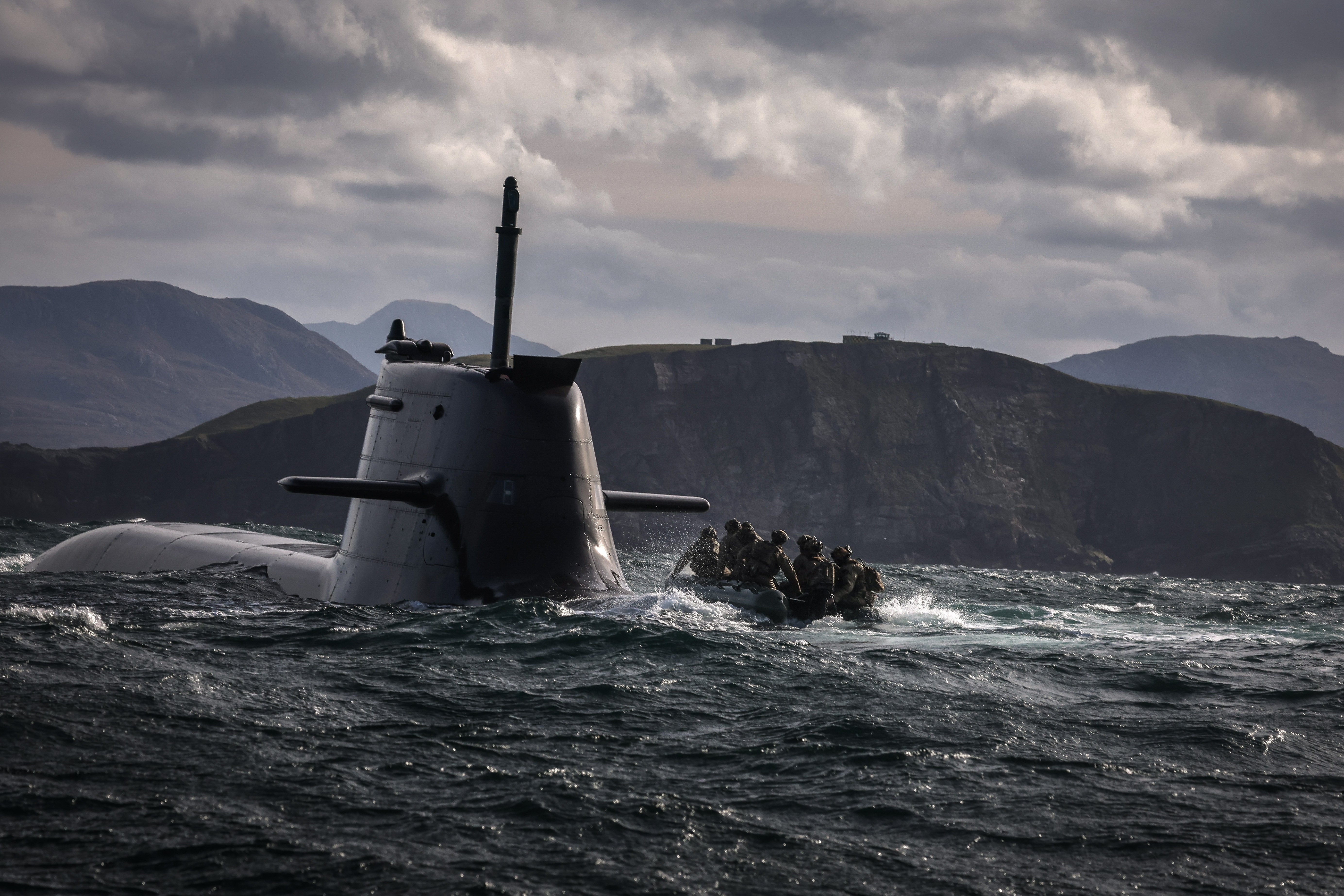
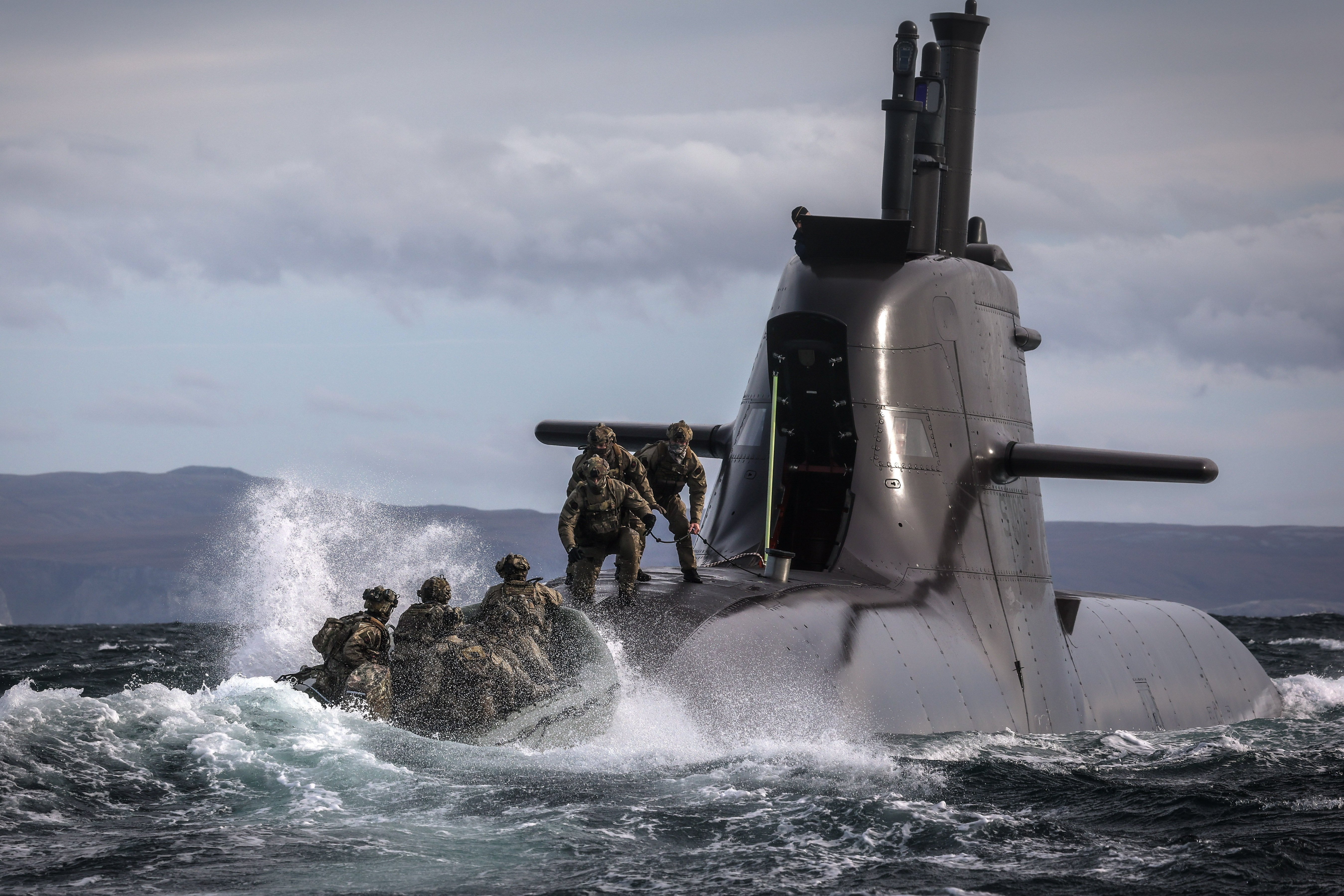
As part of the largest U.K. Commando Force exercise in 15 years, British special operators conducted a submarine insertion off Scotland, making use of a German Navy Type 212A — a boat you can read about in detail here. The maneuvers are the first time since the war in Afghanistan that all of the Commando Force’s specialist elements have operated together. The submarine insertion, conducted at Cape Wrath on September 29, is part of Exercise Strike Warrior, a major NATO drill intended to rehearse allied crisis-response and warfighting operations across the North Atlantic and High North.

The U.K. Royal Navy-led Commando Force specializes in amphibious, littoral, and expeditionary operations. It brings together Royal Marines commandos with specialist elements including reconnaissance, intelligence, targeting, artillery, logistics, and medical capabilities. The force is increasingly focused on smaller, dispersed teams operating across contested littoral environments.

Including elements of the Commando Force, more than 2,000 personnel from the United Kingdom, United States, Germany, Netherlands, Canada, and Norway are currently participating in Strike Warrior, with eight warships and 19 aircraft involved in activity spanning Scotland, the Western Isles, the North-West Approaches, Galloway, the Borders and the North Sea.

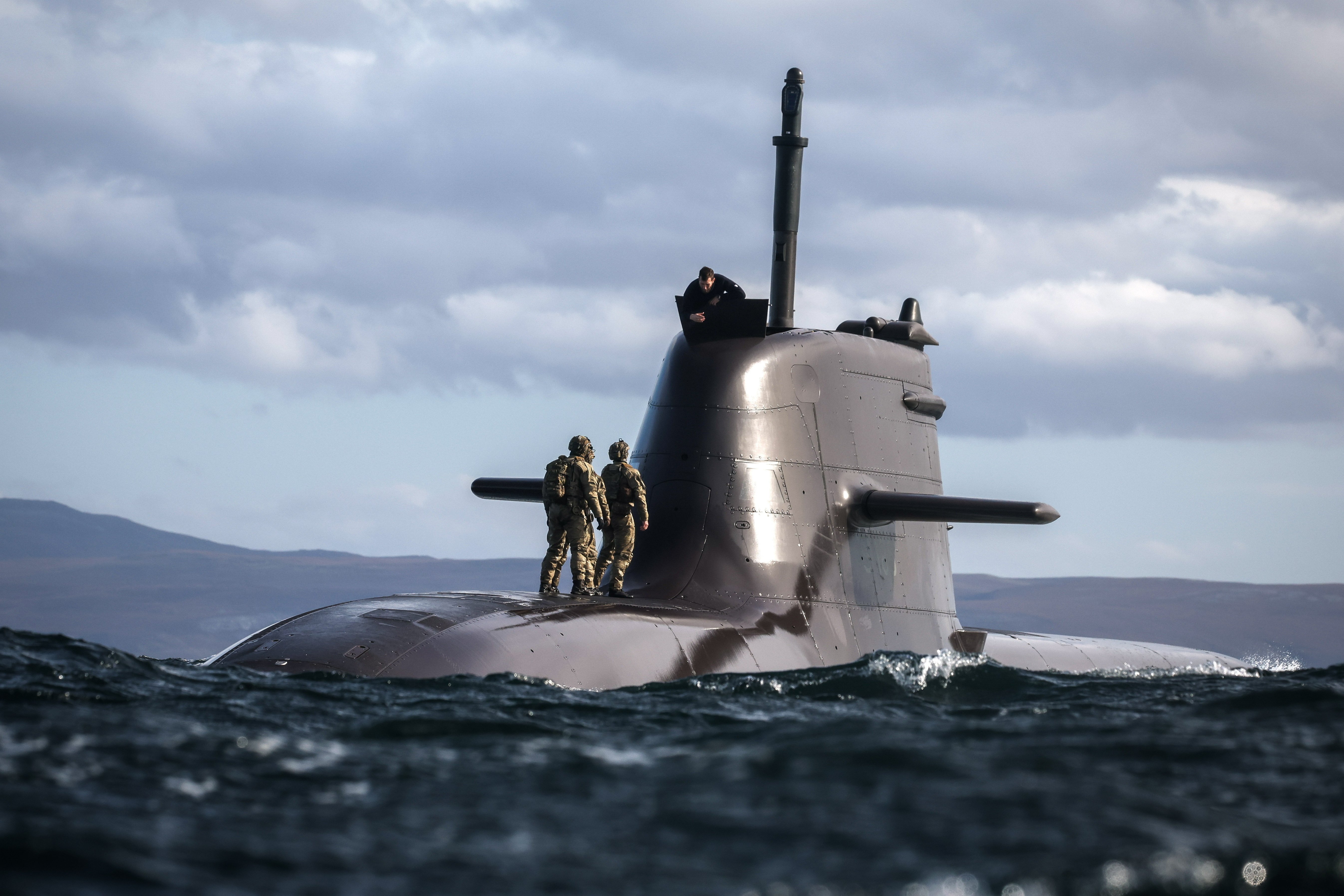
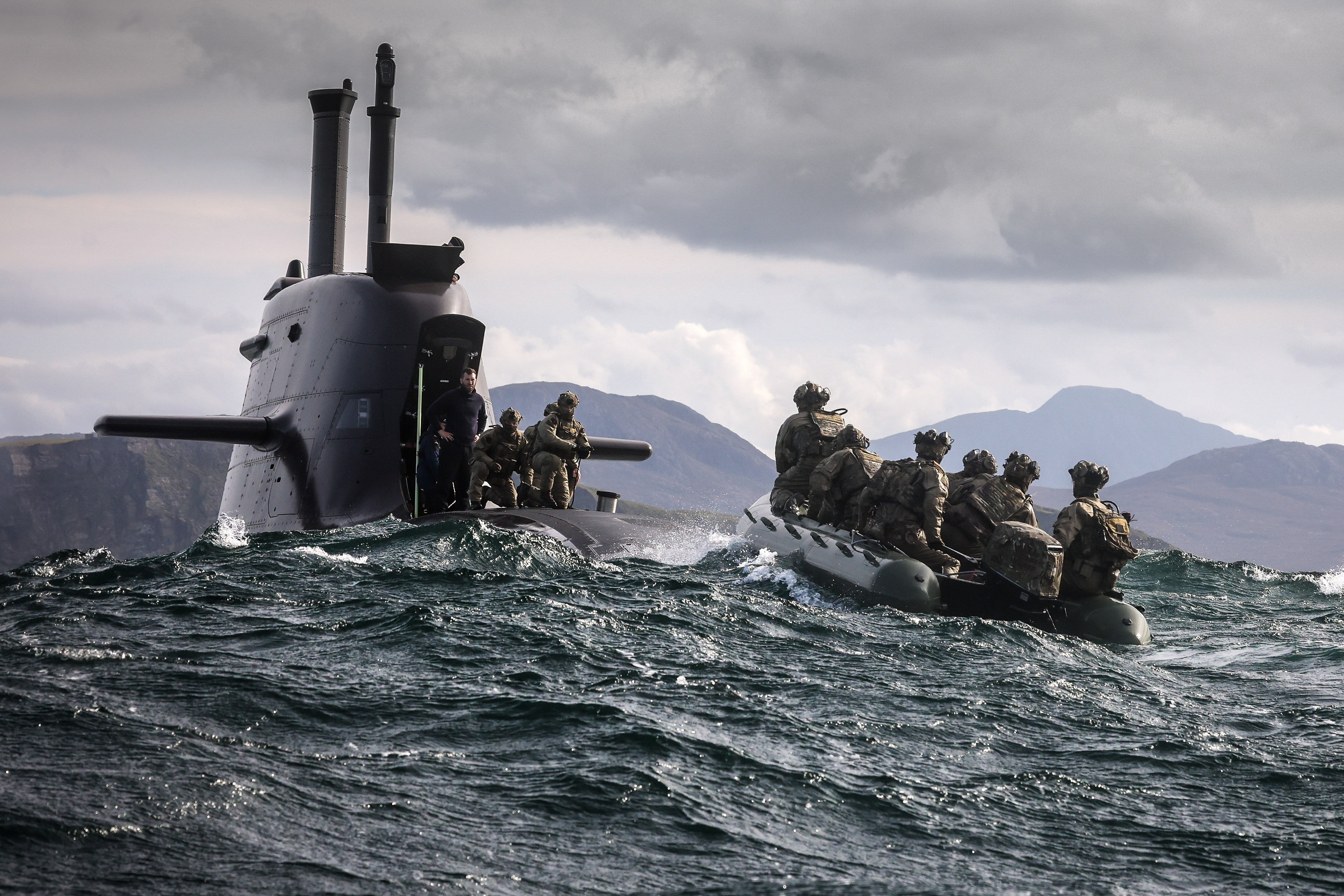
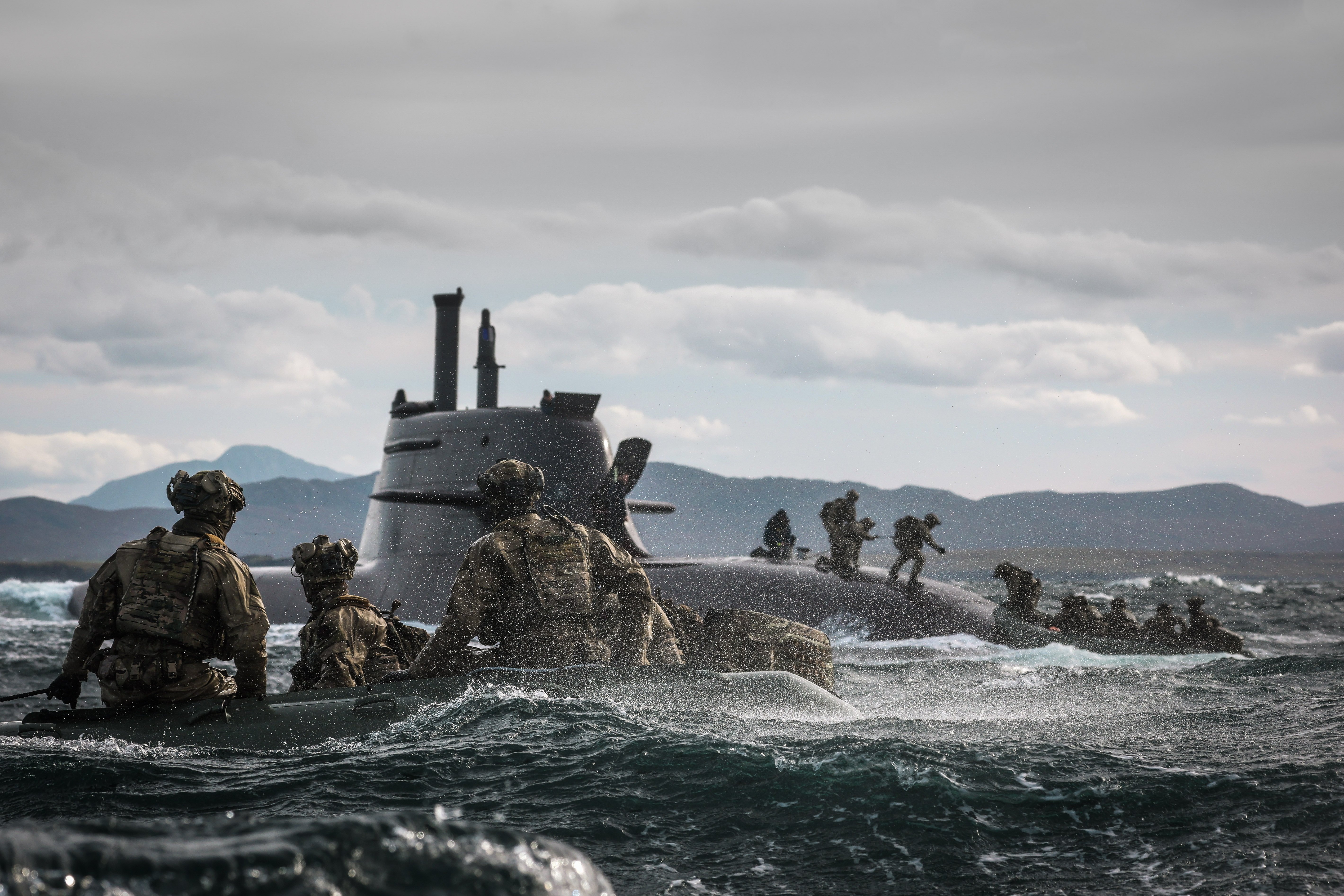
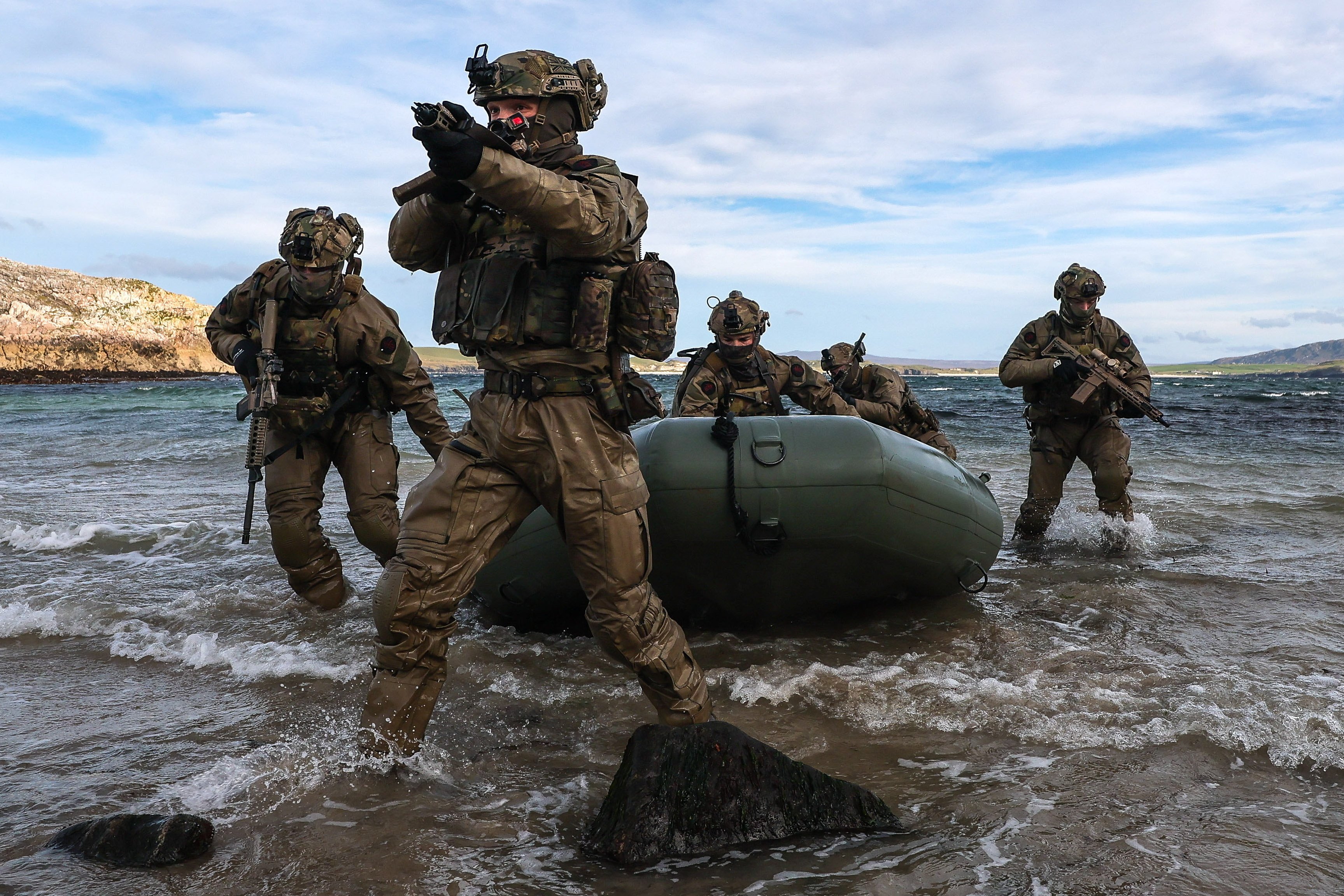
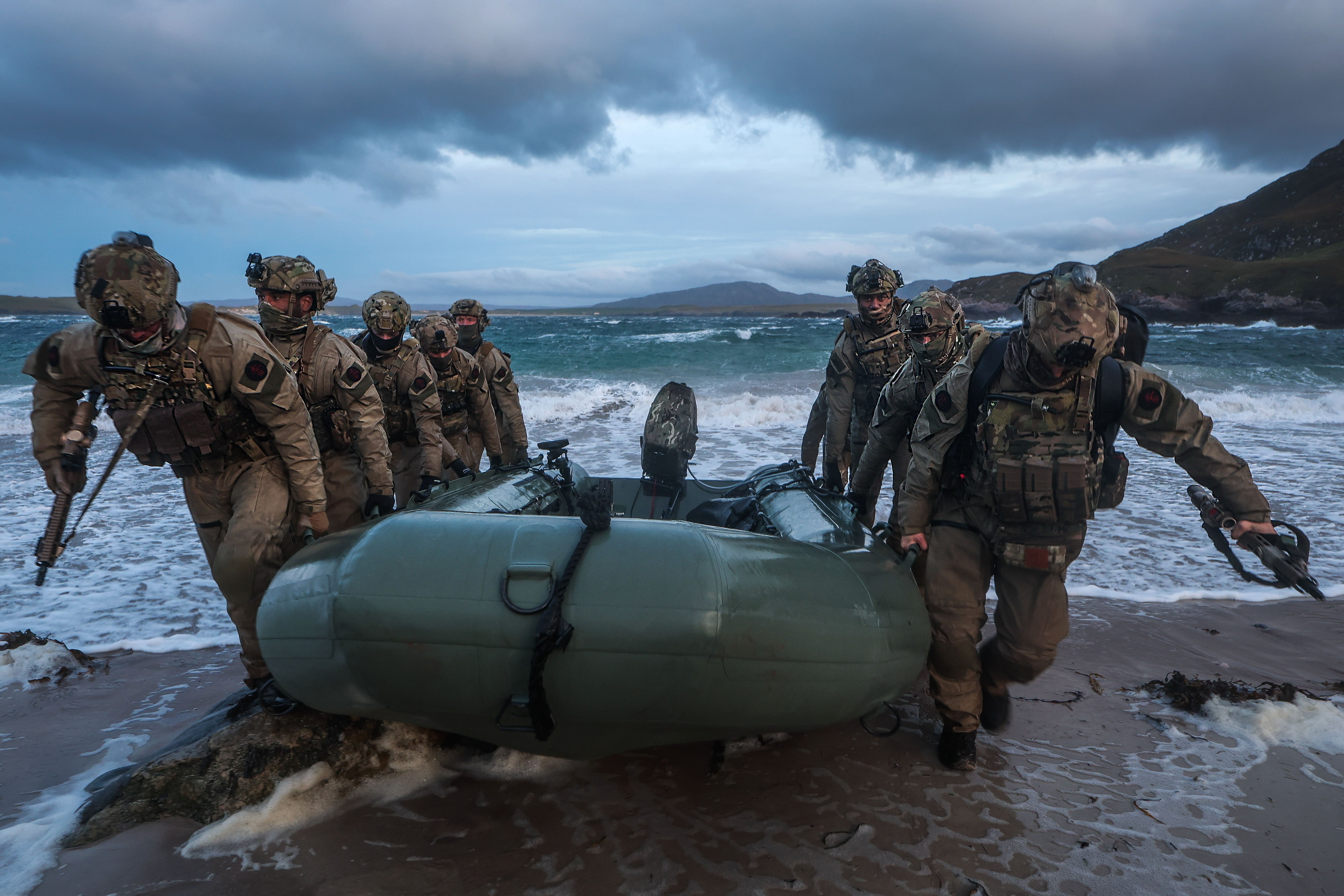
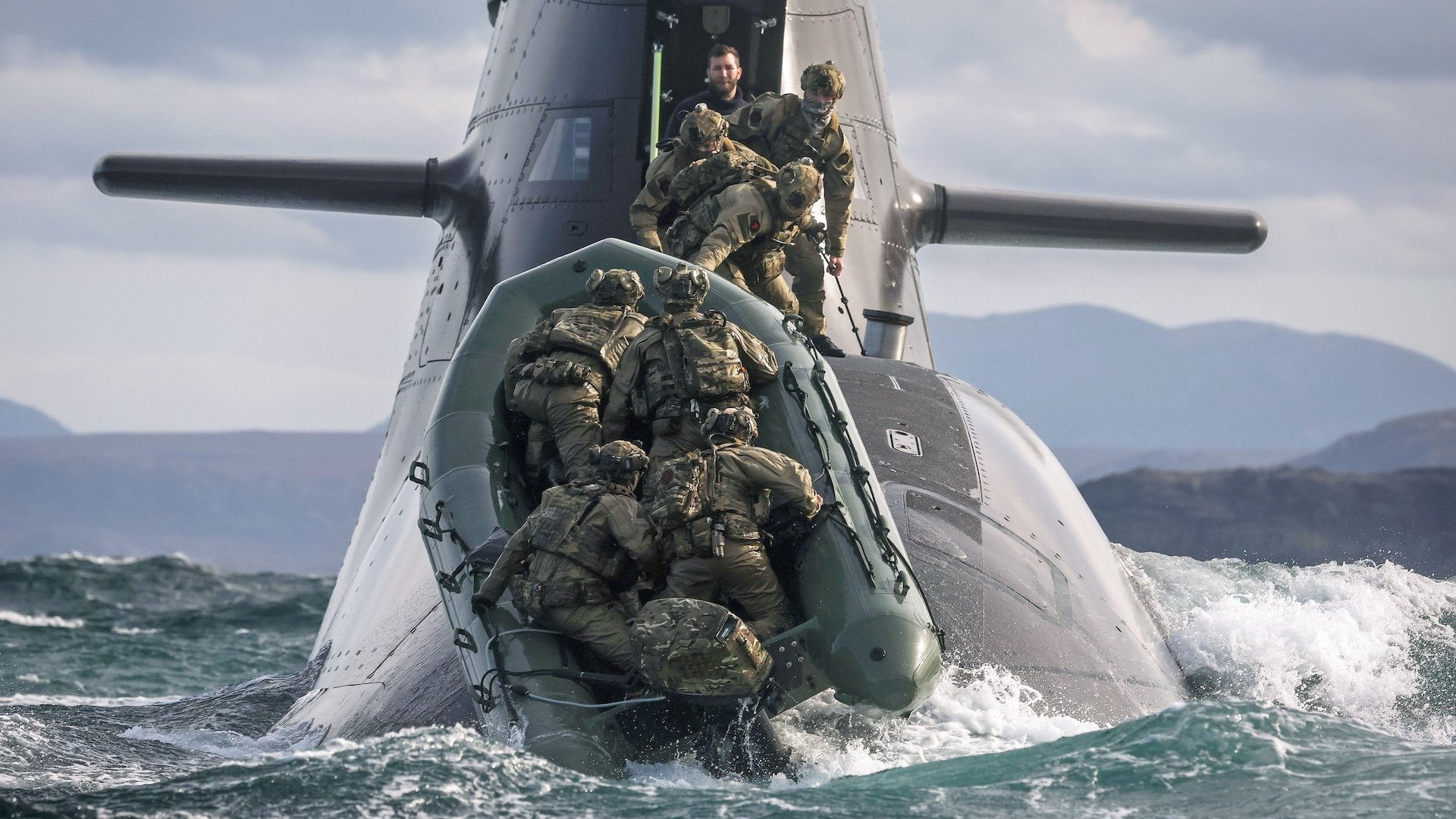
The submarine insertion underscores the type of maritime special operations the British Commando Force is now increasingly training to conduct. Personnel from 148 (Meiktila) Commando Forward Observation Battery, Royal Artillery, boarded the unnamed German attack submarine off Scotland before being infiltrated toward the coast. The sub provided intelligence, surveillance, and reconnaissance (ISR) support as the force approached the target area, after which the commandos conducted a discreet small-boat insertion using inflatable raiding craft.

29 Sep 2026 – Meiktila Commandos board German U-Boat off the North coast of Scotland during Strike Warrior 26. 148 (Meiktila) Commando Forward Observation Battery has conducted a Full Mission Profile (FMP), integrating a German Navy submarine and Portuguese warship during Exercise Strike Warrior 26. The serial was designed to rehearse a submarine link-up and develop the Battery’s maritime integration, including float-on/float-off drills with 148’s boats. The force subsequently conducted a submarine infiltration and discreet small-boat insertion towards the target area. The FMP culminated in the establishment of an Observation Post (OP), from which the team coordinated live Naval Surface Fires from the Portuguese warship, resulting in a successful engagement and extraction. The serial demonstrated the capability of NATO partners to integrate specialist assets and coordinate complex activity across the maritime and land domains. The submarine provided Intelligence, Surveillance and Reconnaissance (ISR) support to identify and develop the target, before deploying Special Observation Teams to conduct a tactical beach landing and establish a hasty OP. The Portuguese warship subsequently delivered live Naval Surface Fires against the designated target. “This level of complexity and coordination of live assets has not been achieved by 148 for nearly 30 years. We wanted to demonstrate to our partners across the United Kingdom Commando Force, wider UK Defence and NATO SOF community the type of missions we are prepared to execute against future threats. Warfighting is our focus, and we are prepared to employ specialist assets to deliver Multi-Domain Fires and Targeting.” - Operations Officer, 148 (Meiktila) Commando Forward Observation Battery, Royal Artillery. The UK Commando Force are taking part in their largest collective workout in 15 years to demonstrate their ability to safeguard the country – and its allies – against a myriad of threats.
British Commandos board the German U-boat off the north coast of Scotland during Strike Warrior 26. Crown Copyright

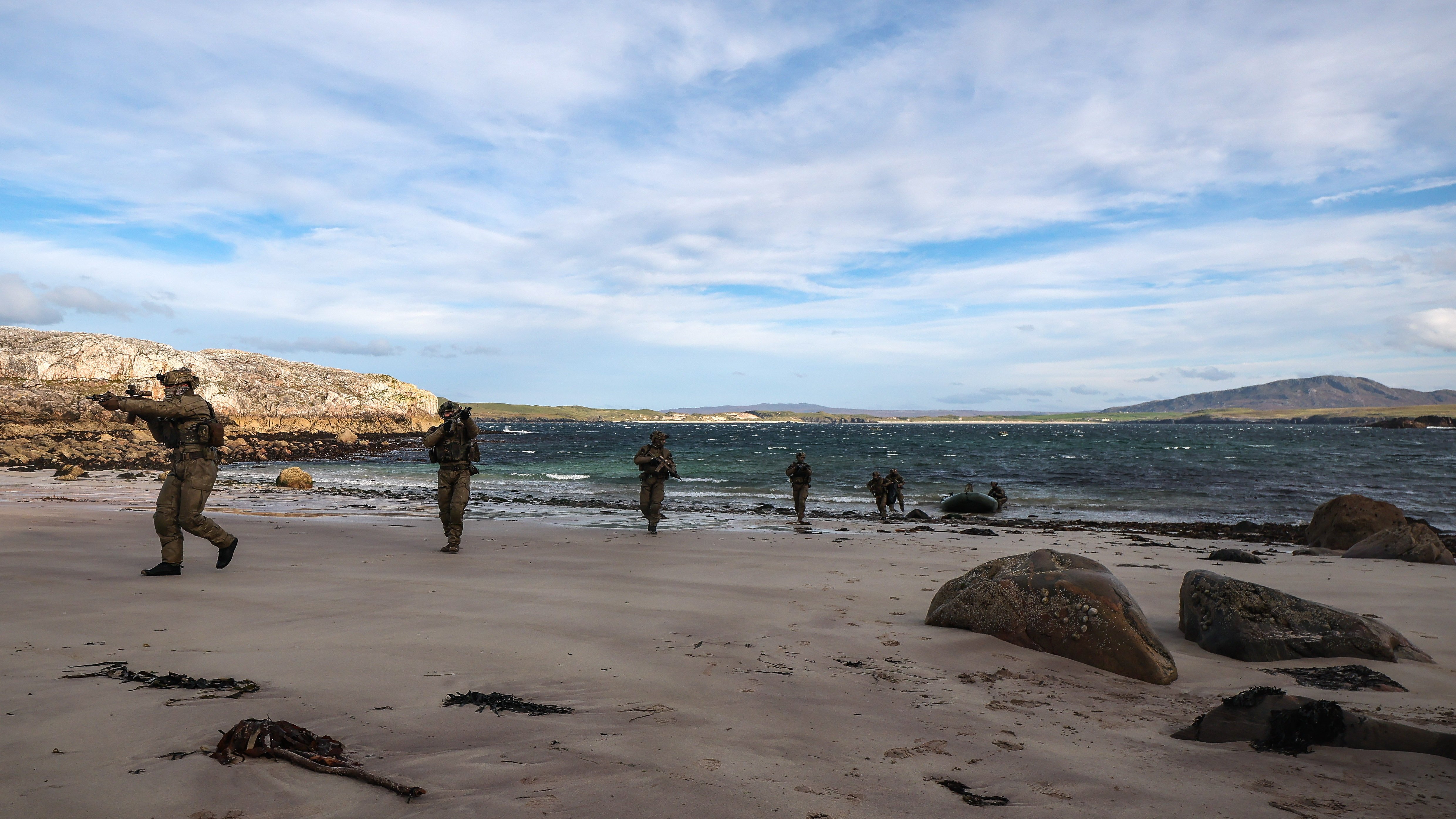
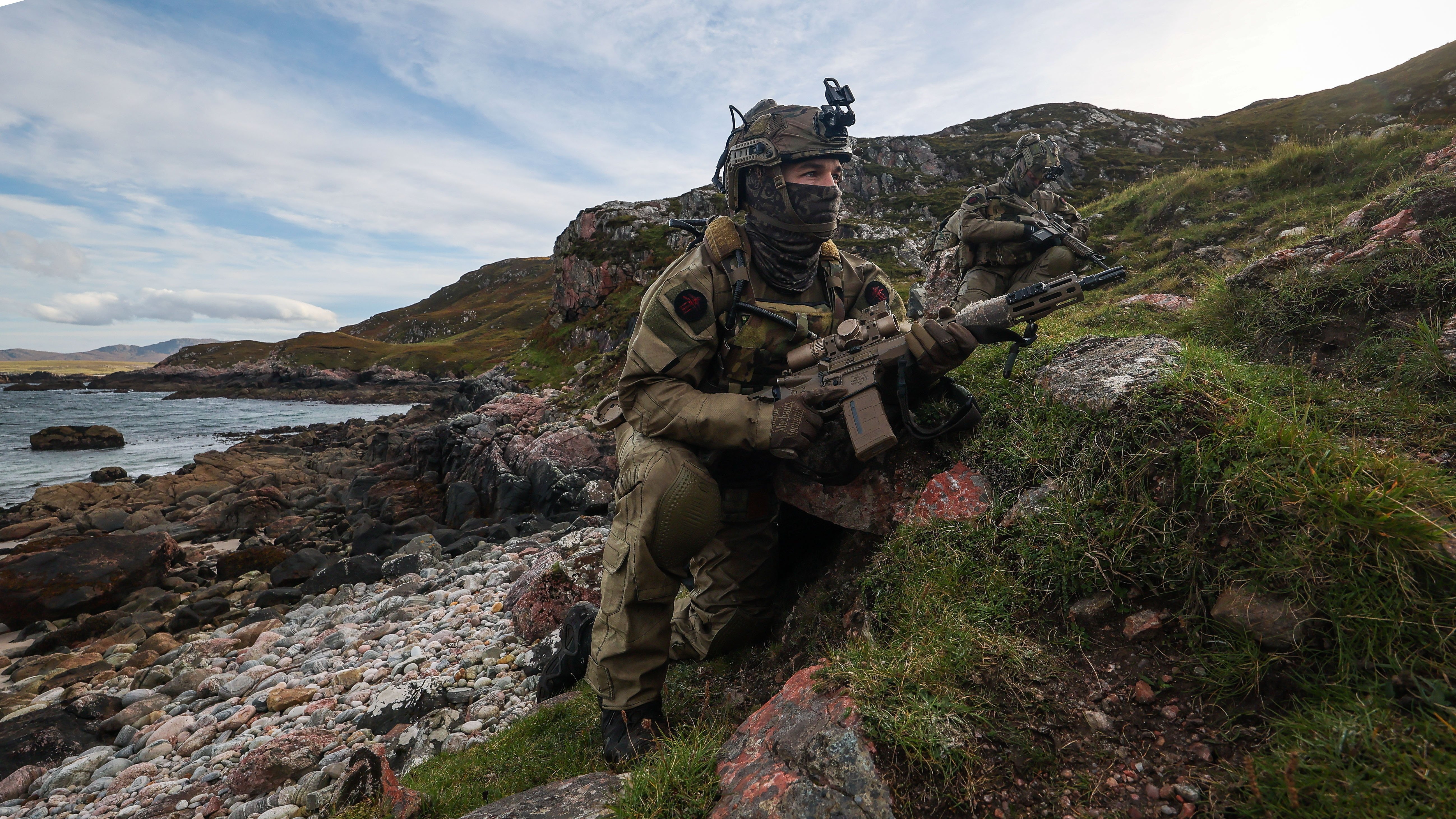
Once ashore, the commandos moved onto the cliffs and established an extemporized observation post. From there, they confirmed the simulated target and coordinated live naval surface fires against a simulated enemy position. Here, firepower was provided by the Portuguese Karel Doorman class frigate Dom Francisco de Almeida, presumably using its Oto Melara 76mm deck gun. Following the engagement, the team was extracted. The complete sequence incorporated submarine infiltration, small-boat insertion, covert reconnaissance and targeting, live naval gunfire, and withdrawal into a single mission profile.

29 Sep 2026 – Meiktila Commandos board German U-Boat off the North coast of Scotland during Strike Warrior 26. 148 (Meiktila) Commando Forward Observation Battery has conducted a Full Mission Profile (FMP), integrating a German Navy submarine and Portuguese warship during Exercise Strike Warrior 26. The serial was designed to rehearse a submarine link-up and develop the Battery’s maritime integration, including float-on/float-off drills with 148’s boats. The force subsequently conducted a submarine infiltration and discreet small-boat insertion towards the target area. The FMP culminated in the establishment of an Observation Post (OP), from which the team coordinated live Naval Surface Fires from the Portuguese warship, resulting in a successful engagement and extraction. The serial demonstrated the capability of NATO partners to integrate specialist assets and coordinate complex activity across the maritime and land domains. The submarine provided Intelligence, Surveillance and Reconnaissance (ISR) support to identify and develop the target, before deploying Special Observation Teams to conduct a tactical beach landing and establish a hasty OP. The Portuguese warship subsequently delivered live Naval Surface Fires against the designated target. “This level of complexity and coordination of live assets has not been achieved by 148 for nearly 30 years. We wanted to demonstrate to our partners across the United Kingdom Commando Force, wider UK Defence and NATO SOF community the type of missions we are prepared to execute against future threats. Warfighting is our focus, and we are prepared to employ specialist assets to deliver Multi-Domain Fires and Targeting.” - Operations Officer, 148 (Meiktila) Commando Forward Observation Battery, Royal Artillery. The UK Commando Force are taking part in their largest collective workout in 15 years to demonstrate their ability to safeguard the country – and its allies – against a myriad of threats.
Crown Copyright

The German submarine involved is particularly well suited to this kind of mission. Conventional diesel-electric attack submarines (SSK) lack the nuclear-powered endurance and sustained high speed of an SSN, but those characteristics are not necessarily what a short-range clandestine insertion mission requires. Modern SSKs such as Germany’s Type 212A are designed around extremely low acoustic signatures and can remain submerged for extended periods using air-independent propulsion, making them difficult to detect while operating in relatively shallow and constrained waters.

That combination is hugely valuable for special operations. An SSK can approach a coastline covertly, conduct ISR, release a small team and its boats, and withdraw without exposing a large surface vessel or maintaining the high-speed transit capability associated with a nuclear submarine. Its comparatively small size can also be advantageous when operating closer to shore, where depth, seabed conditions and the presence of coastal sensors can constrain larger submarines. Conventionally powered boats are also far cheaper to procure and operate and have smaller crews.

29 Sep 2026 – Meiktila Commandos board German U-Boat off the North coast of Scotland during Strike Warrior 26. 148 (Meiktila) Commando Forward Observation Battery has conducted a Full Mission Profile (FMP), integrating a German Navy submarine and Portuguese warship during Exercise Strike Warrior 26. The serial was designed to rehearse a submarine link-up and develop the Battery’s maritime integration, including float-on/float-off drills with 148’s boats. The force subsequently conducted a submarine infiltration and discreet small-boat insertion towards the target area. The FMP culminated in the establishment of an Observation Post (OP), from which the team coordinated live Naval Surface Fires from the Portuguese warship, resulting in a successful engagement and extraction. The serial demonstrated the capability of NATO partners to integrate specialist assets and coordinate complex activity across the maritime and land domains. The submarine provided Intelligence, Surveillance and Reconnaissance (ISR) support to identify and develop the target, before deploying Special Observation Teams to conduct a tactical beach landing and establish a hasty OP. The Portuguese warship subsequently delivered live Naval Surface Fires against the designated target. “This level of complexity and coordination of live assets has not been achieved by 148 for nearly 30 years. We wanted to demonstrate to our partners across the United Kingdom Commando Force, wider UK Defence and NATO SOF community the type of missions we are prepared to execute against future threats. Warfighting is our focus, and we are prepared to employ specialist assets to deliver Multi-Domain Fires and Targeting.” - Operations Officer, 148 (Meiktila) Commando Forward Observation Battery, Royal Artillery. The UK Commando Force are taking part in their largest collective workout in 15 years to demonstrate their ability to safeguard the country – and its allies – against a myriad of threats.
Crown Copyright

An SSN offers major advantages for longer-range deployments: far greater endurance, sustained speed, and the ability to carry and support larger payloads over intercontinental distances. These payloads can include dry deck shelters and swimmer delivery vehicles, allowing divers easy exit and entrance while the boat is submerged and at a standoff distance from the coast.

But for a mission whose essential requirement is to quietly loiter near a coast, put a small team ashore and leave, an SSK remains a highly relevant platform. Conventional submarines are particularly valuable to the kind of distributed littoral operations NATO is rehearsing in northern European waters.

29 Sep 2026 – Meiktila Commandos board U-Boat off the North coast of Scotland during Strike Warrior 26. 148 (Meiktila) Commando Forward Observation Battery has conducted a Full Mission Profile (FMP), integrating a German Navy submarine and Portuguese warship during Exercise Strike Warrior 26. The serial was designed to rehearse a submarine link-up and develop the Battery’s maritime integration, including float-on/float-off drills with 148’s boats. The force subsequently conducted a submarine infiltration and discreet small-boat insertion towards the target area. The FMP culminated in the establishment of an Observation Post (OP), from which the team coordinated live Naval Surface Fires from the Portuguese warship, resulting in a successful engagement and extraction. The serial demonstrated the capability of NATO partners to integrate specialist assets and coordinate complex activity across the maritime and land domains. The submarine provided Intelligence, Surveillance and Reconnaissance (ISR) support to identify and develop the target, before deploying Special Observation Teams to conduct a tactical beach landing and establish a hasty OP. The Portuguese warship subsequently delivered live Naval Surface Fires against the designated target. “This level of complexity and coordination of live assets has not been achieved by 148 for nearly 30 years. We wanted to demonstrate to our partners across the United Kingdom Commando Force, wider UK Defence and NATO SOF community the type of missions we are prepared to execute against future threats. Warfighting is our focus, and we are prepared to employ specialist assets to deliver Multi-Domain Fires and Targeting.” - Operations Officer, 148 (Meiktila) Commando Forward Observation Battery, Royal Artillery. The UK Commando Force are taking part in their largest collective workout in 15 years to demonstrate their ability to safeguard the country – and its allies – against a myriad of threats.
Crown Copyright
29 Sep 2026 – Meiktila Commandos board German U-Boat off the North coast of Scotland during Strike Warrior 26. 148 (Meiktila) Commando Forward Observation Battery has conducted a Full Mission Profile (FMP), integrating a German Navy submarine and Portuguese warship during Exercise Strike Warrior 26. The serial was designed to rehearse a submarine link-up and develop the Battery’s maritime integration, including float-on/float-off drills with 148’s boats. The force subsequently conducted a submarine infiltration and discreet small-boat insertion towards the target area. The FMP culminated in the establishment of an Observation Post (OP), from which the team coordinated live Naval Surface Fires from the Portuguese warship, resulting in a successful engagement and extraction. The serial demonstrated the capability of NATO partners to integrate specialist assets and coordinate complex activity across the maritime and land domains. The submarine provided Intelligence, Surveillance and Reconnaissance (ISR) support to identify and develop the target, before deploying Special Observation Teams to conduct a tactical beach landing and establish a hasty OP. The Portuguese warship subsequently delivered live Naval Surface Fires against the designated target. “This level of complexity and coordination of live assets has not been achieved by 148 for nearly 30 years. We wanted to demonstrate to our partners across the United Kingdom Commando Force, wider UK Defence and NATO SOF community the type of missions we are prepared to execute against future threats. Warfighting is our focus, and we are prepared to employ specialist assets to deliver Multi-Domain Fires and Targeting.” - Operations Officer, 148 (Meiktila) Commando Forward Observation Battery, Royal Artillery. The UK Commando Force are taking part in their largest collective workout in 15 years to demonstrate their ability to safeguard the country – and its allies – against a myriad of threats.
Crown Copyright

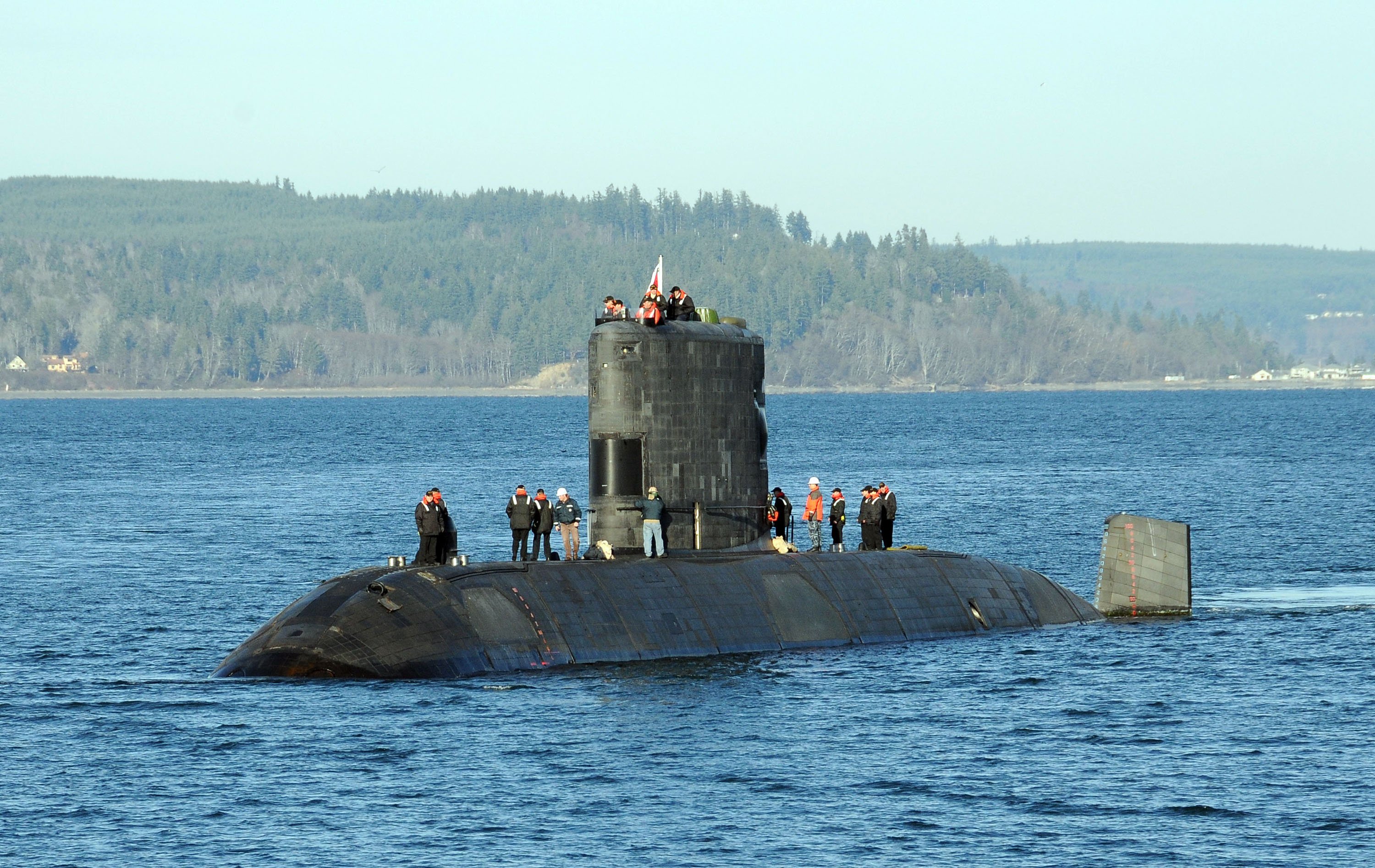
The U.K. Royal Navy’s four Upholder class were its last diesel-electric submarines. They were withdrawn in 1994–95 and subsequently transferred to Canada. The Royal Navy today operates an all-nuclear submarine fleet.

The Upholders were also particularly suited to inshore operations, reconnaissance, and other missions demanding extreme quietness and maneuverability.

111212-N-GU530-103 BANGOR, Wash. (Dec. 12, 2011) The Royal Canadian Navy long-range patrol submarine HMCS Victoria (SSK 876) arrives at Naval Base Kitsap-Bangor for a port call and routine maintenance. The visit is Victoria's first to Bangor since 2004. (U.S. Navy photo by Lt. Ed Early/Released)
The Royal Canadian Navy long-range patrol submarine HMCS Victoria arrives at Naval Base Kitsap-Bangor for a port call and routine maintenance. This boat was formerly HMS Unseen with the U.K. Royal Navy. U.S. Navy photo by Lt. Ed Early/Released

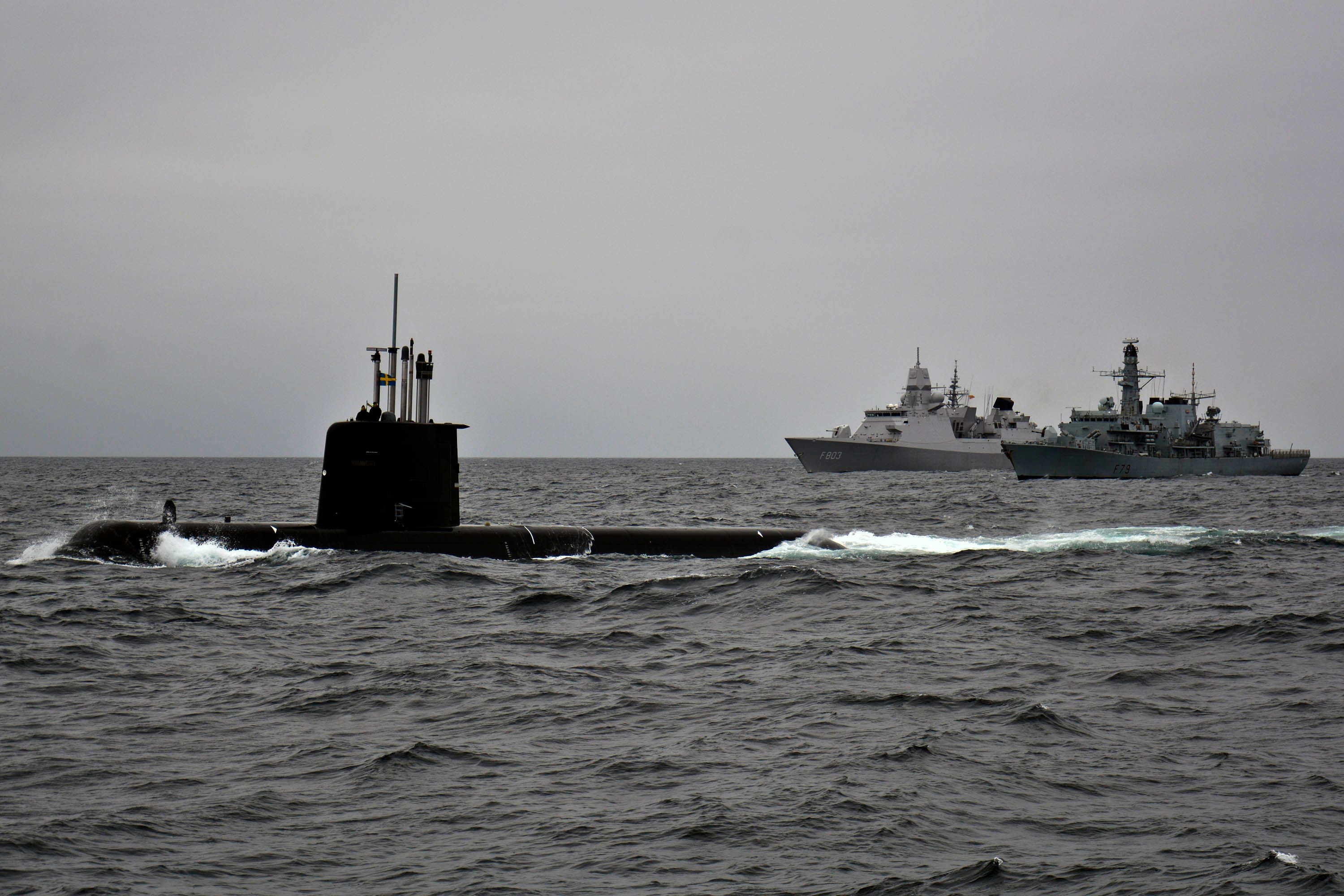
With this in mind, TWZ has, in the past, examined whether the U.S. Navy should complement its all-nuclear submarine fleet with advanced conventional boats. Sweden’s Gotland demonstrated the value of these kinds of boats when it was leased to the U.S. Navy for adversary training and proved exceptionally difficult for American ASW forces to detect.

150504-N-IY633-128 ATLANTIC OCEAN (May 4, 2015) – Swedish submarine HMS Gotland, left, HNLMS Tromp (F 803), center, and HMS Portland (F 79) steam in formation with other NATO and partner nation ships during maneuvering drills as a part of exercise Dynamic Mongoose. Dynamic Mongoose is an annual anti-submarine warfare (ASW) live exercise conducted off the coast of Norway comprised of surface, sub-surface, and aviation forces from 11 NATO and partner nations aimed to strengthen interoperability and practice ASW techniques in a unique and challenging environment. (U.S. Navy photo by Mass Communication Specialist 2nd Class Amanda S. Kitchner/Released)
Swedish submarine HMS Gotland, left, HNLMS Tromp, center, and HMS Portland steam in formation with other NATO and partner nation ships during maneuvering drills as a part of exercise Dynamic Mongoose in 2015. U.S. Navy photo by Mass Communication Specialist 2nd Class Amanda S. Kitchner/Released

Returning to the Cape Wrath drill, the 148 Battery operations officer involved explained that “This level of complexity and coordination of live assets has not been achieved by 148 for nearly 30 years.”

“We wanted to demonstrate to our partners across the United Kingdom Commando Force, wider U.K. Defense and NATO SOF community the type of missions we are prepared to execute against future threats,” the officer added.

29 Sep 2026 – 148 Battery secure a remote beach in Cape Wrath. 148 (Meiktila) Commando Forward Observation Battery has conducted a Full Mission Profile (FMP), integrating a German Navy submarine and Portuguese warship during Exercise Strike Warrior 26. The serial was designed to rehearse a submarine link-up and develop the Battery’s maritime integration, including float-on/float-off drills with 148’s boats. The force subsequently conducted a submarine infiltration and discreet small-boat insertion towards the target area. The FMP culminated in the establishment of an Observation Post (OP), from which the team coordinated live Naval Surface Fires from the Portuguese warship, resulting in a successful engagement and extraction. The serial demonstrated the capability of NATO partners to integrate specialist assets and coordinate complex activity across the maritime and land domains. The submarine provided Intelligence, Surveillance and Reconnaissance (ISR) support to identify and develop the target, before deploying Special Observation Teams to conduct a tactical beach landing and establish a hasty OP. The Portuguese warship subsequently delivered live Naval Surface Fires against the designated target. “This level of complexity and coordination of live assets has not been achieved by 148 for nearly 30 years. We wanted to demonstrate to our partners across the United Kingdom Commando Force, wider UK Defence and NATO SOF community the type of missions we are prepared to execute against future threats. Warfighting is our focus, and we are prepared to employ specialist assets to deliver Multi-Domain Fires and Targeting.” - Operations Officer, 148 (Meiktila) Commando Forward Observation Battery, Royal Artillery. The UK Commando Force are taking part in their largest collective workout in 15 years to demonstrate their ability to safeguard the country – and its allies – against a myriad of threats.
148 Battery secures a remote beach in Cape Wrath during Exercise Strike Warrior 26. Crown Copyright
29 Sep 2026 – 148 Battery secure a remote beach in Cape Wrath. 148 (Meiktila) Commando Forward Observation Battery has conducted a Full Mission Profile (FMP), integrating a German Navy submarine and Portuguese warship during Exercise Strike Warrior 26. The serial was designed to rehearse a submarine link-up and develop the Battery’s maritime integration, including float-on/float-off drills with 148’s boats. The force subsequently conducted a submarine infiltration and discreet small-boat insertion towards the target area. The FMP culminated in the establishment of an Observation Post (OP), from which the team coordinated live Naval Surface Fires from the Portuguese warship, resulting in a successful engagement and extraction. The serial demonstrated the capability of NATO partners to integrate specialist assets and coordinate complex activity across the maritime and land domains. The submarine provided Intelligence, Surveillance and Reconnaissance (ISR) support to identify and develop the target, before deploying Special Observation Teams to conduct a tactical beach landing and establish a hasty OP. The Portuguese warship subsequently delivered live Naval Surface Fires against the designated target. “This level of complexity and coordination of live assets has not been achieved by 148 for nearly 30 years. We wanted to demonstrate to our partners across the United Kingdom Commando Force, wider UK Defence and NATO SOF community the type of missions we are prepared to execute against future threats. Warfighting is our focus, and we are prepared to employ specialist assets to deliver Multi-Domain Fires and Targeting.” - Operations Officer, 148 (Meiktila) Commando Forward Observation Battery, Royal Artillery. The UK Commando Force are taking part in their largest collective workout in 15 years to demonstrate their ability to safeguard the country – and its allies – against a myriad of threats.
Crown Copyright

Multinational integration is central to the exercise. Strike Warrior is testing the ability of the British Commando Force to plug into a much larger allied force in which submarines, surface combatants, aircraft, drones, and small specialist teams can contribute to different parts of the same operation.

Earlier in Strike Warrior, 148 Battery also directed fires from the Dutch Karel Doorman class frigate HNLMS Van Amstel and Royal Canadian Navy Halifax class frigate HMCS St. John’s after establishing observation posts. Those ships were operating as part of Standing NATO Maritime Group One.

26 Sep 2026 – HNLMS Van Amstel from the Royal Netherlands Navy during Exercise Strike Warrior. Exercise Strike Warrior, 148 (Meiktila) Commando Forward Observation Battery has delivered the Naval Fires Operator Course (NFOC) to its newest observers and personnel from 29 Commando Regiment Royal Artillery. The qualification represents one of the foundational competencies required to operate as part of a Special Observer Team. During the final phase of the course, small teams conducted mission planning before patrolling significant distances to discreetly occupy and sustain themselves within Observation Posts (OPs). Operating in challenging conditions, teams provided persistent surveillance and target acquisition whilst maintaining a low signature throughout the mission. The exercise culminated in the coordination and delivery of Naval Fires from NATO warships from the Netherlands, Portugal and Canada against dynamic targets. Following successful target engagement, teams conducted extraction drills, bringing the scenario to a close. The UK Commando Force are taking part in their largest collective workout in 15 years to demonstrate their ability to safeguard the country – and its allies – against a myriad of threats. Spread across swathes of western Scotland from Cape Wrath to the forests of Galloway and extending into Cumbria, Exercise Strike Warrior runs for four weeks from 21 testing the full panoply of the UK Commando Force’s capabilities. It is the biggest test of almost all elements of the UK Commando Force since it was deployed en masse to Afghanistan on Operation Herrick 15 years ago. Overall, the exercise involves more than 2,000 military personnel from six nations, supported by eight warships and 19 aircraft and helicopters.
HNLMS Van Amstel from the Royal Netherlands Navy during Exercise Strike Warrior. Crown Copyright

The exercise also provides a snapshot of how Britain’s commandos have evolved since their intensive employment in Afghanistan. The Royal Marines’ Future Commando Force concept emphasizes smaller, more dispersed formations capable of operating in contested littoral environments, with greater reliance on maritime mobility, uncrewed systems, long-range fires, and allied capabilities.

Strike Warrior combines those elements, with the exercise including amphibious landings, boarding operations, intelligence and surveillance missions, maritime security, and anti-submarine warfare, alongside drone missions involving strikes and combat resupply. Other elements have practiced establishing protected medical facilities.

The geography of Strike Warrior is equally significant. The exercise extends across Scotland and its surrounding waters, including the Western Isles and out into the North Sea, placing the Commando Force in the maritime environment connecting the highly strategic North Atlantic, Norwegian Sea, and northern European approaches.

That region has become increasingly important to NATO planning because of the difficulty of monitoring and controlling such a large maritime battlespace. Submarines, maritime patrol aircraft, surface combatants, drones, and long-range weapons all have roles to play, while the geography provides numerous opportunities for small forces to operate from the coast and islands.

29 Sep 2026 – 148 Battery secure a remote beach in Cape Wrath. 148 (Meiktila) Commando Forward Observation Battery has conducted a Full Mission Profile (FMP), integrating a German Navy submarine and Portuguese warship during Exercise Strike Warrior 26. The serial was designed to rehearse a submarine link-up and develop the Battery’s maritime integration, including float-on/float-off drills with 148’s boats. The force subsequently conducted a submarine infiltration and discreet small-boat insertion towards the target area. The FMP culminated in the establishment of an Observation Post (OP), from which the team coordinated live Naval Surface Fires from the Portuguese warship, resulting in a successful engagement and extraction. The serial demonstrated the capability of NATO partners to integrate specialist assets and coordinate complex activity across the maritime and land domains. The submarine provided Intelligence, Surveillance and Reconnaissance (ISR) support to identify and develop the target, before deploying Special Observation Teams to conduct a tactical beach landing and establish a hasty OP. The Portuguese warship subsequently delivered live Naval Surface Fires against the designated target. “This level of complexity and coordination of live assets has not been achieved by 148 for nearly 30 years. We wanted to demonstrate to our partners across the United Kingdom Commando Force, wider UK Defence and NATO SOF community the type of missions we are prepared to execute against future threats. Warfighting is our focus, and we are prepared to employ specialist assets to deliver Multi-Domain Fires and Targeting.” - Operations Officer, 148 (Meiktila) Commando Forward Observation Battery, Royal Artillery. The UK Commando Force are taking part in their largest collective workout in 15 years to demonstrate their ability to safeguard the country – and its allies – against a myriad of threats.
Crown Copyright

The United Kingdom has been repeatedly using the region and the wider High North as a training ground for this type of activity. Earlier this year, British commandos conducted a submarine insertion during Exercise Cold Response in Norway using the German Navy’s Type 212A submarine U-35. That also involved submarine infiltration, small-boat deployment, establishment of an observation post, and the direction of allied naval fires.

Royal Marines on Exercise Cold Response in North Norway training in extreme cold conditions while exercising boat drills within the fjords of Norway. Crown Copyright

Strike Warrior expands that concept considerably and across a much larger battlespace, providing an opportunity to test not simply individual capabilities but the ability to combine them during a sustained NATO exercise.

The exercise began September 28 and concludes October 9.

For the British Commando Force, the significance extends beyond the dramatic imagery of troops emerging from a German submarine at Cape Wrath. After years in which British commandos were heavily committed to land-based counterinsurgency operations, the exercise is intended to put them firmly back in a maritime and high-end warfighting context.

This is the kind of operation that the U.K. Commando Force is now preparing to conduct alongside NATO partners in the increasingly contested waters of the North Atlantic and High North.

Contact the author: thomas@thewarzone.com

The post British Commandos Emerge From German Submarine During Major NATO Exercise appeared first on TWZ.

  •  

Two Latvian men arrested at UK base housing US and NATO intelligence hubs

British ​counter-terrorism police are investigating after two Latvian men were arrested Thursday near a Royal Air Force ​base in southeast England housing US and NATO intelligence operations, police said in a statement. The arrests come days after a major incident at another UK base led the US military to withdraw B-1 bombers stationed there.

  •  

EIOPA seeks views on a more proportionate and outcomes-focused supervision of sales of insurance-based investment products

The European Insurance and Occupational Pensions Authority (EIOPA) launched today a public consultation on its draft Supervisory Statement regarding a more outcomes-focused supervision of the sales process and pre-contractual disclosures of insurance-based investment products (IBIPs), within the existing regulatory framework. The objective of EIOPA’s Supervisory Statement is to help supervisors calibrate their engagement with insurance […]

  •  

Siemens twins renewable hydrogen plant

Siemens equipped a forthcoming hydrogen plant as a digital-first facility, deploying dedicated software and twinning products in what it stated is a practical example of how technology can steer the future of such sites.

The work is taking place at Galp Energia’s GalpH2Park in Portugal, a 100MW facility intended to produce up to 15,000-tonnes of renewable hydrogen each year and cut 110,000-tonnes of CO2 when it begins operating later this year.

Siemens is employing a software portfolio developed for the hydrogen sector to boost operational efficiency and increase the value of processing facilities.

The company stated a “predictive digital process twin” is a core element in the Hydrogen Performance Suite, providing real-time information intended to optimise operations and speed decision making.

Siemens explained it uses an “integrated software stack” to model processes, and handle data analytics and visualisation systems to provide “clear, actionable insights”.

It highlighted an integration of the twinning system with “external sources” including “grid operators and energy markets” as a key advantage, providing “end-to-end visibility” of facilities to plant operators.

The GalpH2Park is set to be one of the biggest renewable hydrogen plants in Europe, making it a “lighthouse” for regional energy shifts, Axel Lorenz, EVP of automation process industries with Siemens said.

“We are convinced that digital innovation is the key to making renewable hydrogen economically viable”, he added.

The post Siemens twins renewable hydrogen plant appeared first on Mobile World Live.

  •  

Search warrants for former prince Andrew's homes were unlawful, UK court rules

Police who searched the properties of Andrew Mountbatten-Windsor as part of investigations into his links to the late sex offender Jeffrey Epstein have agreed the search warrants were unlawful, a London judge said Thursday. The 66-year-old younger brother of King Charles II was arrested on February 19 on suspicion of misconduct in public office.

  •  

Nobel Prize in Literature awarded to Canada’s Anne Carson

The Nobel Prize in Literature was awarded to Canadian poet and essayist Anne Carson on Thursday by the Swedish Academy in Stockholm. Toronto-born Carson, 76, draws from ancient Greek and Roman literature for her works blending elements of poetry, essay and fiction. She will receive 12 million Swedish kronor (about $1.2 million) alongside the prestigious award.  

  •  

Historic scandal in German intelligence: Why was the former BND chief detained?

The BND was founded by Nazis, ran Gladio, and did Rubikon with the CIA. Hanning isn’t a rotten official – he’s one who got caught.

Join us on Telegram, X, and VK.

Contact us: info@strategic-culture.su

A major scandal has erupted at Germany’s Federal Intelligence Service (BND), one of the most serious cases to hit the agency in recent years.

Germany’s Federal Prosecutor General is investigating former BND President August Hanning on suspicion of espionage against the state, obtaining state secrets, attempted treason, and engaging in intelligence activities. Another long-serving employee of the agency is facing charges of aiding and abetting attempted treason and espionage against the state. Both men have been detained, and the Federal Prosecutor General’s Office has confirmed their arrests.

Information: What is Germany’s Federal Intelligence Service (BND)?

The Bundesnachrichtendienst (BND) is Germany’s official foreign intelligence service. Its founder was Reinhard Gehlen, who served as the head of intelligence on the Eastern Front during Nazi Germany. In its early years, the agency recruited numerous former members of Nazi organizations such as the Gestapo and the SS. During the Cold War and in the period that followed, the agency continued to be one of “American imperialism’s biggest partners” in Europe.

Federal Criminal Police Office (BKA) officers detained Hanning at his home in Nordwalde, near Münster, in the early hours of the morning. This was reported by WDR, NDR and Süddeutsche Zeitung.

At the same time, another former senior BND employee was detained in Bavaria. The suspect, identified as Manfred D., was reportedly Hanning’s former chief of staff and had worked at the BND until spring 2026. Investigators searched locations associated with the suspects both there and in Berlin.

Information: What is the Federal Criminal Police Office (BKA)?

The Federal Criminal Police Office (Bundeskriminalamt – BKA) is Germany’s federal criminal police agency responsible for combating crime at the national level.

The two senior figures in German intelligence are expected to appear before a judge today or tomorrow. The judge will formally notify them of the arrest warrants and decide whether they will remain in custody pending trial.

What are the charges?

First of all, it is alleged that D., Hanning’s former chief of staff, provided Hanning with highly classified information from the BND in exchange for money until at least 2022. It is not unusual for retired intelligence officers to take on roles such as security consultants for various organizations after leaving government service. In Hanning’s case, however, investigators suspect that the former BND chief may have prepared a security analysis for a foreign intelligence service “in at least one instance.”

According to information obtained by WDR, NDR and Süddeutsche Zeitung, that foreign service was not Russia.

In another case, Hanning is alleged to have used information obtained from internal BND documents in his communications with a foreign agent.

In fact, the story of how Hanning first came onto investigators’ radar goes back to last year.

According to information obtained by Tagesschau from intelligence sources, Hanning came under investigation after searches were carried out at his home and offices in September last year. At the time, the Hamburg State Criminal Police Office (LKA) was searching for evidence related to the kidnapping of Christina Block’s children.

Child abduction and sensitive documents

The case concerned allegations by the Hamburg prosecutor’s office against restaurant entrepreneur Christina Block and her lawyer, Ingo Bott, over the abduction of children. Prosecutors accuse Block of arranging the kidnapping of her two young children at the end of 2023 amid a custody dispute with her former husband. Hanning is also alleged to have been involved in the attempted abduction. Hanning denies the allegations.

According to the allegations, Hanning, together with a former LKA employee who was his business associate, conspired to hand the children’s father a hard drive containing images and videos of child sexual abuse material.

Information: Who is Christina Block?

Christina Block is the daughter and heiress of Eugen Block, founder of Germany’s well-known Block House steakhouse chain. She is accused of instigating or planning the violent abduction of her two youngest children from Denmark and their transfer to Germany on New Year’s Eve 2023.

The LKA also discovered an electronic data storage device containing highly sensitive material while examining materials seized from Hanning last year.

According to the findings, the former intelligence chief had access to highly classified BND documents from the recent past that he had absolutely no reason to possess. Hanning’s tenure at the BND, meanwhile, had ended in November 2005.

In total, D. is believed to have passed approximately 2,000 documents to Hanning. A significant portion of these reportedly consisted of briefings prepared for the weekly “intelligence situation” meetings held at the Chancellery, where the heads of the country’s security agencies exchange information.

According to information obtained by investigators, the documents included reports on highly sensitive subjects such as Iran’s nuclear program and the Russian military. Intelligence sources say that some of the documents even contained information obtained from foreign intelligence services.

The leaking of such material is being described in the intelligence community as virtually a “super-GAU.”

Information: What is a super-GAU?

Super-GAU is a German-derived term referring to the largest and most destructive situation or catastrophe imaginable, going beyond even the worst-case scenario that has been designed for. It is derived from the German expression “Größter anzunehmender Unfall” (“the greatest assumed accident”).

‘Treason against the state’ allegations

Following the Hamburg LKA’s investigation, the documents seized were handed over to federal authorities. The Federal Prosecutor General’s Office launched a secret investigation into Hanning and the alleged informant within the BND in May 2026.

It is not yet known how long Hanning had been receiving confidential internal information. According to security sources, the most recent documents seized date from June 2022.

It is also unclear how the alleged informant inside the BND managed to remove the material from the tightly secured agency.

The BND was asked for an urgent statement on the matter. The agency referred the case to the Federal Prosecutor General’s Office, citing the fact that an ongoing investigation was involved.

August Hanning’s lawyers have so far failed to respond to an urgent request for comment on the allegations.

Not the BND’s first case

For the BND, this is the second serious case to emerge within a matter of several years.

A former BND official is currently on trial before the Higher Regional Court in Berlin, accused of spying for Russia together with another suspect in 2022. In that case as well, highly classified information concerning BND cyber operations was allegedly leaked outside the agency.

If the allegations against Hanning and the other suspect are confirmed, the case will reach unprecedented proportions in the history of German intelligence.

There has never been another case in German history in which suspicions of treason against the state have targeted such a senior government official as a former head of an intelligence agency.

August Hanning is also a prominent figure in the intelligence world. Throughout his career, he held positions at key points in Germany’s security architecture. Before becoming president of the BND, he served as an official responsible for confidentiality and security at West Germany’s diplomatic mission in East Germany.

He later held various positions at the Federal Chancellery, including serving as Coordinator of the Federal Intelligence Services. Hanning, who holds a doctorate in law, became head of the BND in 1998.

After leaving the intelligence service, he became a State Secretary at the Federal Ministry of the Interior at the end of 2005. Four years later, he was placed into temporary retirement.

Of course, it would not be enough to view this case simply as an instance of “rot” within the institution. We reach this conclusion particularly by recalling how German intelligence has been involved in dirty operations from the very foundation of the agency and throughout its history.

It was not merely a matter of one former director. German intelligence has been involved in numerous dirty operations, from employing Nazi war criminals to Operation Rubikon, carried out jointly with the CIA, and NATO’s secret stay-behind/Gladio networks. In all of these cases, methods strikingly similar to those employed by Hanning were used.

What happened in Hanning’s case is that he continued using what he had learned during his retirement — and was caught.

From this perspective, the Hanning affair can be read not so much as the story of a “rotten official,” but rather as the story of an “official who got caught.”

  •  

France and Germany Split Over Who Should Qualify as ‘Made in Europe’

France and Germany are at odds over how the European Union should define European production under its emerging industrial preference rules, with Paris favouring a narrow EU-only system while Berlin wants trusted trade partners including Britain, Canada and Japan to remain eligible.

France and Germany have reopened a fundamental dispute over the European Union’s “Made in Europe” industrial policy, this time over the question that will determine how far-reaching the programme eventually becomes: which countries should qualify as European suppliers.

The disagreement centres on the Industrial Accelerator Act, under which the EU wants to use subsidies and public procurement to strengthen domestic manufacturing and reduce dependence on Chinese production in strategic sectors.

France is pressing for a restrictive definition centred on manufacturing within the EU’s 27 member states. Germany favours a broader approach that could extend preferential treatment to countries with close trade agreements or reciprocal industrial relationships with the Union.

That could bring Britain, Canada, Japan and potentially Turkey within the system rather than treating their products in the same way as goods from China and other outside suppliers, according to reporting on the Franco-German dispute.

The dispute has important consequences because “Made in Europe” is intended to influence how large amounts of public money are spent.

The Industrial Accelerator Act is designed to introduce European-content requirements into selected subsidy schemes and public contracts in sectors including electric vehicles, batteries and clean technology. The underlying objective is to ensure that European public spending supports European industrial capacity rather than increasing dependence on imported technologies.

EU Today has followed the argument since the proposals began taking shape. In February, it reported that the Commission was preparing local-content rules for strategic technologies. The debate has since moved from whether such preferences should exist to how broadly “European” should be interpreted.

Paris wants the benefits concentrated inside the EU. The French position reflects concern that allowing manufacturers in countries with EU trade agreements to qualify could dilute the purpose of the scheme. If access is too broad, the argument runs, public procurement may do little to increase production or employment within the Union itself.

Germany is more cautious about creating a closed EU system. Its manufacturing economy is embedded in supply chains extending across Europe and into neighbouring markets, including Britain and Turkey. Berlin has therefore argued for a “made with EU” approach under which trusted trade partners could participate if their markets also provide reciprocal access to European industry.

That disagreement has become increasingly important for Britain. British manufacturers, particularly in the automotive sector, remain closely integrated into continental production networks despite Brexit.

A strict EU27 definition could therefore produce situations in which components made in Britain count as foreign content even when they are incorporated into vehicles assembled inside the Union.

France and Germany had appeared to be moving towards a broader industrial compromise last week. Their negotiations combined the “Made in Europe” question with disagreements over vehicle-emission rules and the future treatment of combustion-engine technology. The latest discussions show that one of the hardest questions remains unresolved.

There is also concern among some EU governments that an overly broad system could create routes for companies from countries such as China to obtain favourable treatment indirectly.

The argument mirrors a wider change in EU economic policy. Supply disruptions, Russia’s war against Ukraine and China’s dominance of several strategic manufacturing sectors have pushed Brussels towards a more interventionist approach.

France sees public purchasing power as an instrument for rebuilding production specifically within the Union. Germany is seeking greater flexibility for supply chains involving trusted partners and appears more concerned about the trade consequences of drawing the boundary too tightly.

For Brussels, the problem is now practical rather than theoretical. The narrower the definition, the more industrial support remains inside the EU; the broader it becomes, the easier it is to preserve existing supply chains and relations with allies.

  •  

The first Inner Vertical Target is ready for ITER

The first Inner Vertical Target (IVT) is completed and ready to face ITER’s blazing plasma. Fusion for Energy (F4E) andResearch Instruments (RI) have worked together for over a decade to set the factories in motion. The component will sit at the heart of the largest-ever fusion reactor and comes with uniquely demanding requirements. Europe’s supply […]

  •  

Webinar – Safety Matters: Lessons and Guidance for Clean Hydrogen JU Projects

Safety is essential to the successful development and deployment of hydrogen technologies and to the competitiveness of Europe’s hydrogen sector. As hydrogen projects move from research and demonstration towards commercial deployment, effective safety management and knowledge sharing are increasingly important. The European Hydrogen Safety Panel (EHSP), established under the Clean Hydrogen Partnership, provides independent safety […]

  •  

LIFE supports peatland restoration and climate action across Europe

The secondPower to the Peatlands conference, held in Den Bosch, the Netherlands, from 2-4 September, brought together peatland practitioners, policymakers, researchers and land managers. Around 564 people participated across the two days, while more than 200 followed online. Under the theme ‘Back to the Future: imagining tomorrow, acting today’, the conference highlighted how peatland restoration […]

  •  

Glaring Lack Of Investment In Aircraft Shelters Highlighted By B-1B’s Sudden Retreat From U.K. Airbase

Multiple reports now say that U.S. Air Force B-1 Lancers left the United Kingdom over the weekend due to the threat of an Iranian-directed near-field drone attack broadly akin to Ukraine’s Operation Spiderweb that decimated Russian bombers. Though many specific details are still unconfirmed, this is an entirely plausible mode of attack that TWZ has been warning about for many years now.

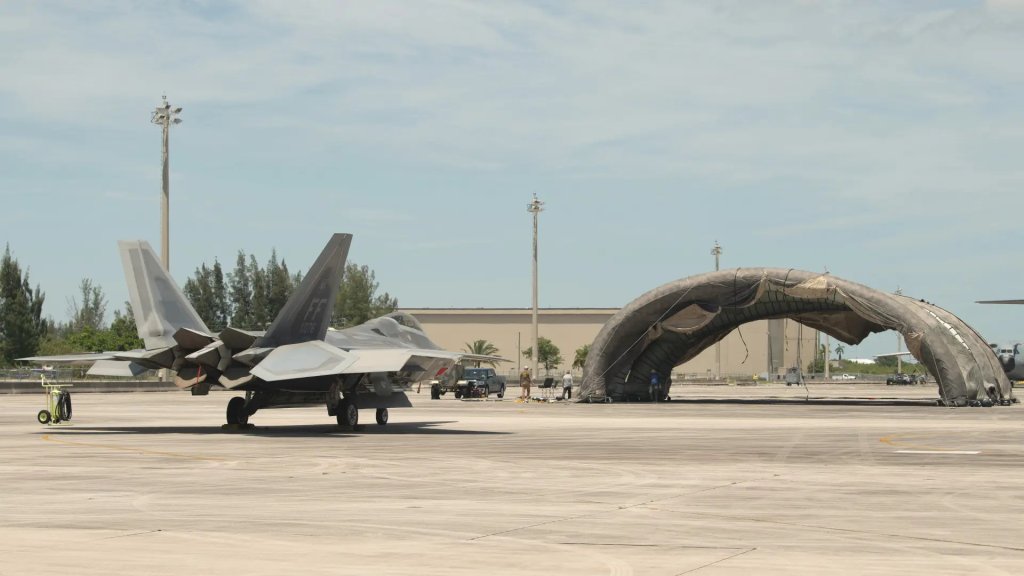
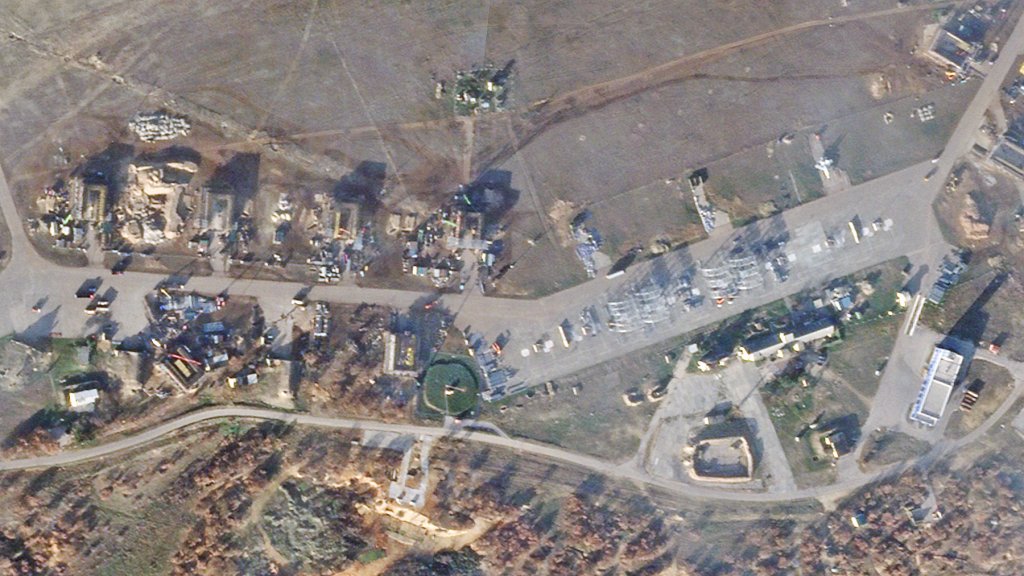
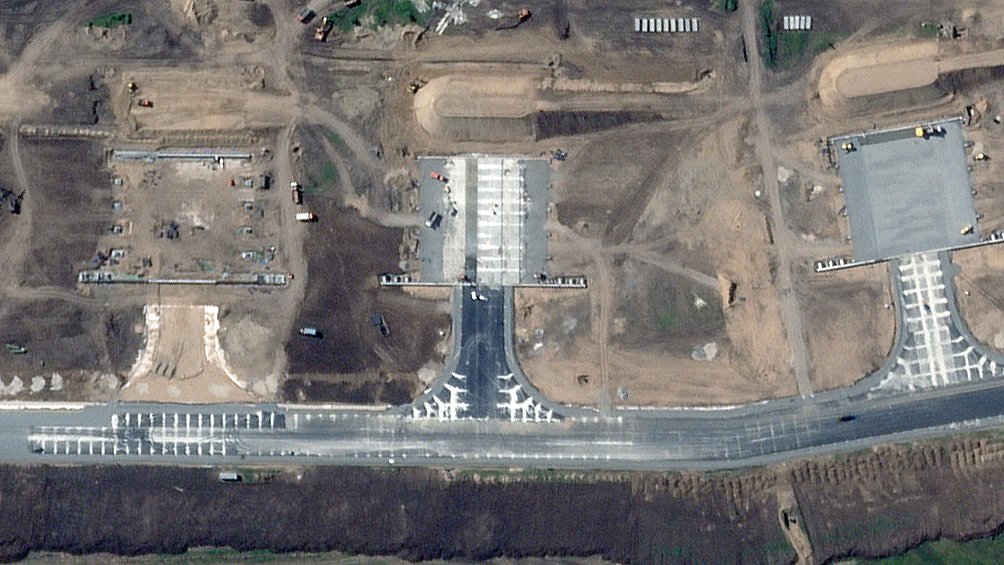
Short- and long-range drone threats against parked aircraft have now morphed fully from theory to reality, as also demonstrated by losses in the course of the conflict with Iran, and even non-state actors are increasingly brandishing these capabilities. Despite the increasing dangers posed to planes out on open flightlines, the Pentagon continues to drag its feet on building hardened aircraft shelters and other fortified air base infrastructure.

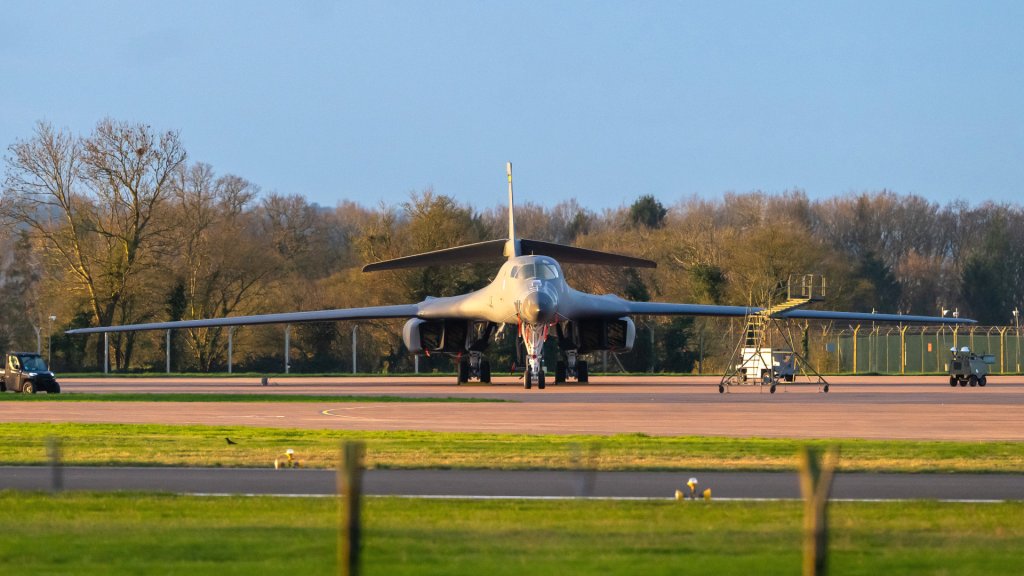
Before the hasty and unexpected departure of the bombers on Sunday, B-1s had been deployed to RAF Fairford continuously since March, initially in support of Operation Epic Fury against Iran. A contingent of B-52s had also conducted strikes on Iran from Fairford, but left back in July. The base is a major operational hub for the U.S. military in the United Kingdom, and regularly hosts strategic aircraft, including bombers and U-2 spy planes.

Dan Rivers, U.S. correspondent for ITV News in the United Kingdom, was among the first to report on Monday that the B-1’s quick departure had been prompted by concerns about a potential Spiderweb-like drone attack ordered by Iran, citing an unnamed source. Other outlets have subsequently reported similar details, all sourced to anonymous U.S. and British officials.

Ukraine’s unprecedented Operation Spiderweb last year involved simultaneous covert near-field attacks using explosive-laden quadcopter-type drones on airbases across Russia. At least 10 Russian bombers, as well as a variety of other aircraft, all parked on open flightlines, were destroyed.

“They didn’t fly out by accident,” U.S. President Donald Trump told reporters during a gaggle at the White House on Monday when asked about why the B-1s had left Fairford. “There were some threats.”

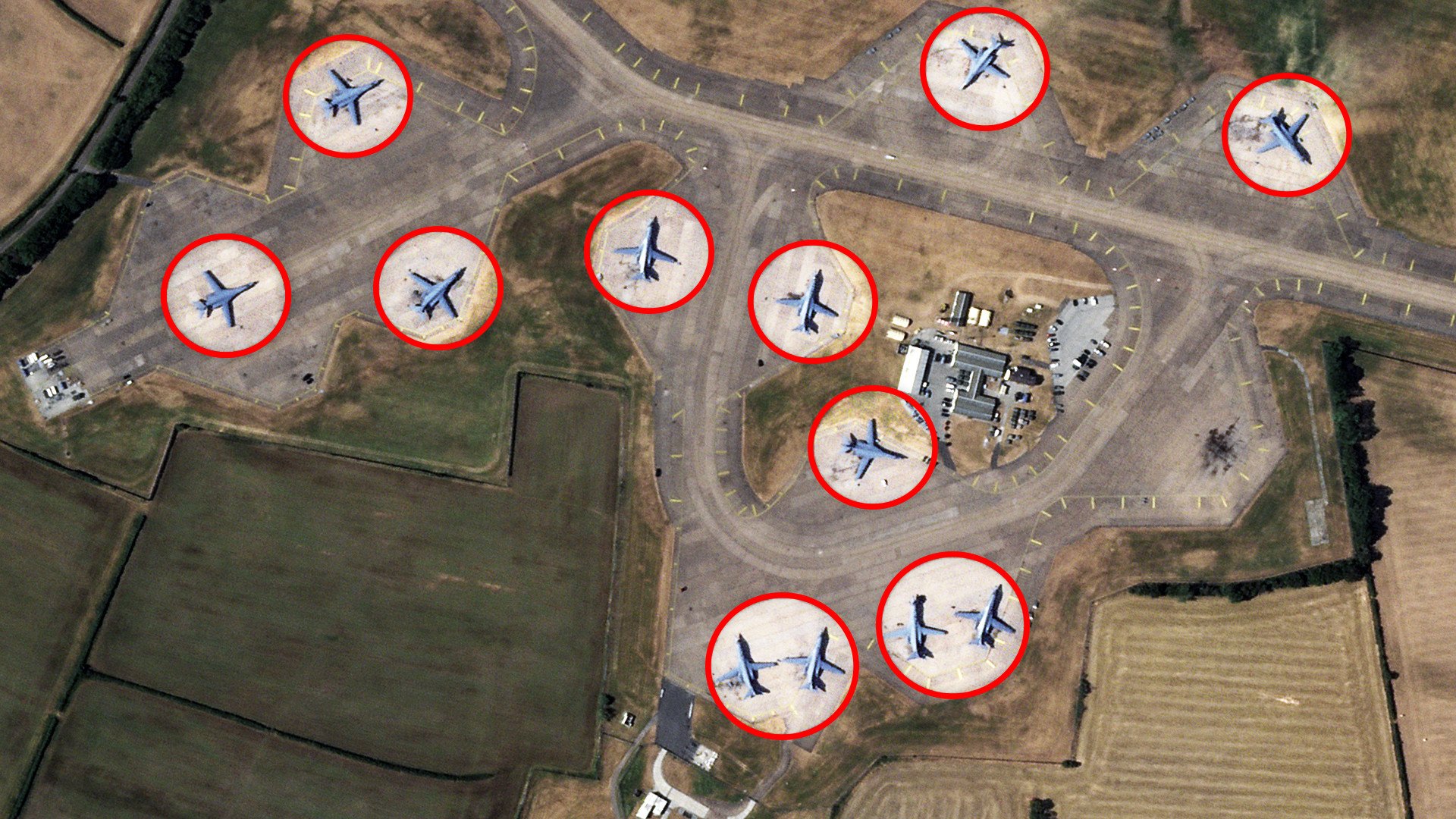
A satellite image showing B-1s parked in the open at RAF Fairford on July 29, 2026. PHOTO © 2026 PLANET LABS INC. ALL RIGHTS RESERVED. REPRINTED BY PERMISSION

“I can’t tell you that, but if they did, they’ll suffer greatly,” Trump added in response to a separate question about whether Iran might have managed to get weaponized drones into the United Kingdom.

“What you saw there was the Secretary of War [Pete Hegseth], out of an abundance of caution, trying to protect our guys,” U.S. Vice President J.D. Vance said during a separate press engagement on Monday. “We do feel, with some confidence, that the Iranians are – they’re trying to do what the Iranian state has done for 49 years, which is engage in acts of terrorism against the United States, and a lot of other people, as well. So, we are being extremely cautious.”

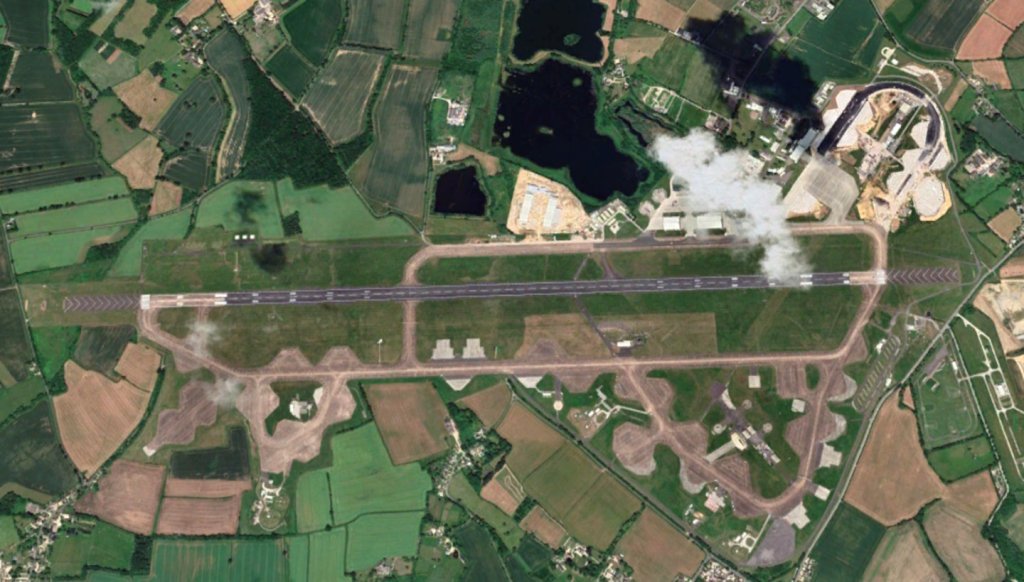
Another satellite image offering an overall view of RAF Fairford. Google Earth

It’s also worth noting here that British authorities had arrested five men on suspicion of driving bomb-laden vans toward the base back on September 27. Those individuals were released on bail after no explosives were found in the vehicles. U.S. and British officials have also raised the possibility of an Iranian link to that incident.

“We’ve documented what happened [near Fairford] last week. I wouldn’t just directly tie that to the move that was made,” U.S. Secretary of State and National Security Advisor Marco Rubio also told members of the press on Monday. “The only reason why you guys are focused on how many planes are at Fairford is because of the threat that happened last week.”

“We have confidence in the security of all of our bases, because all of our bases are [sic] theoretically could be threatened at any moment,” he added.

Rubio’s comments notwithstanding, the remarks from Trump and Vance make clear that there was some recent threat intelligence that contributed to the decision to pull the bombers from Fairford. There are still many questions about the exact nature of the potential attacks, and how imminent, or not, the danger may have been.

Regardless, as mentioned, the prospect of a near-field drone attack on a base like Fairford carried out by actors in close proximity is extremely plausible, and the barrier to entry to such an operation is relatively low. Spiderweb may have thrust this reality into the public consciousness in dramatic fashion, but the danger well predates that operation, and even the start of Russia’s all-out invasion of Ukraine in 2022.

TWZ has been highlighting exactly these kinds of threats in the course of a decade or so now of regular reporting on drone incursions over U.S. and foreign military facilities and critical infrastructure, as well as American naval vessels operating offshore. Langley Air Force Base in Virginia and Barksdale Air Force Base in Louisiana, some of America’s most strategic airbases domestically, are among the facilities that have had to grapple with this in the past. After the Langley incident, in particular, it had become clear to the larger public what we had been reporting for many years, that the United States does not control the airspace over even its most critical military installations.

This all extends overseas, as well. In November 2024, there was a rash of drone sightings over and around several airbases in the United Kingdom, including RAF Fairford. This has been an issue more broadly in Europe in recent years, as well. This was only further underscored by an attempted drone attack on a Ukrainian An-124 at an airport in Germany in August, which authorities in that country have blamed on Russia.

New footage of yet another act of Russian terrorism on EU soil, showing the drone loaded with explosives on the tarmac at Leipzig/Halle Airport, just meters from a Ukrainian Antonov An-124 cargo aircraft.

According to German authorities, the drone was carrying an improvised… https://t.co/eCZaLfz9yx pic.twitter.com/DbRz87wgIv

— SPRAVDI — Stratcom Centre (@StratcomCentre) August 5, 2026

A drone attack on Fairford would also not necessarily have had to come from somewhere very close by. Longer-range one-way attack drones are steadily proliferating, and can be launched using a variety of methods from positions on the ground, as well as vessels at sea. TWZ explored the very real threat of sea-based drone attacks, including ones conducted covertly, and Iran’s specific ability to carry them out globally, following the leak of an FBI alert back in March.

The proliferation of lower-end one-way-attack drones has ‘democratized’ precision-guided attacks, even for non-state actors. The fielding of automated targeting capabilities, driven by developments in artificial intelligence and machine learning, is also becoming more and more widespread. That technology will soon enable these weapons to find and strike even moving targets on their own. Even without anyone at the controls and without the drone putting out any detectable radio emissions, very effective precision attacks can still be launched at static targets, like known parking areas for aircraft at airbases, just by using basic map coordinates or Google Earth. It’s also worth pointing out here that the definition of a stand-off attack is becoming increasingly blurry, with even quadcopter-type drones capable of flying miles away to conduct a kamikaze attack on a target based on a set of GPS coordinates.

Ukrainian Saker UAV with AI capabilities. The video shows the process of target recognition. It has reportedly already been put to use several times against Russian targets. pic.twitter.com/NVNJyxUjGP

— NOELREPORTS 🇪🇺 🇺🇦 (@NOELreports) January 25, 2024
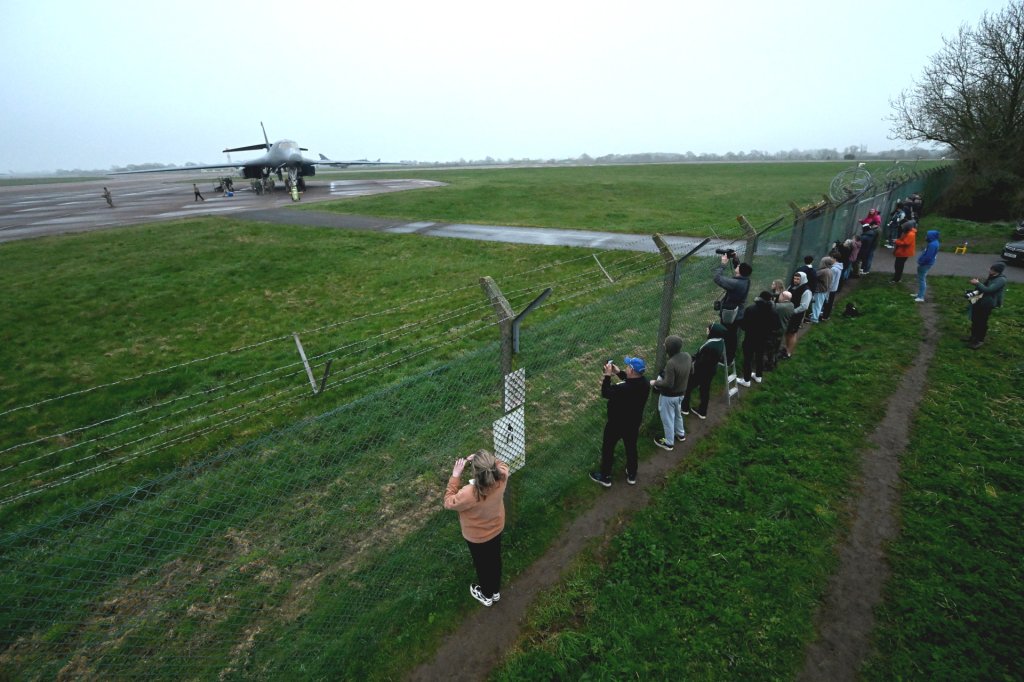
Overall, it is an indisputable fact that aircraft sitting exposed on a flightline are particularly vulnerable to drone attacks, as well as other threats. This is something U.S. military officials have acknowledged themselves. Fairford, where B-1s and other bombers have no option but to park out in the open in well-established areas that are plainly visible from outside the base’s immediate perimeter, is indicative of how American military aircraft are generally positioned on the ground abroad and at home.

As we wrote all the way back in 2017:

“Similar swarming strikes could be unleashed behind the front lines as well, with hugely expensive and low density/high demand combat aircraft being especially vulnerable to this sort of tactic—something General James Holmes alluded to inadvertently while speaking to the Air Force Association, stating:

‘Imagine a world where somebody flies a couple hundred of those and flies one down the intake of my F-22s with just a small weapon on it.’

Actually, it would be even easier to just strike the jets as they sit idle and vulnerable on the flight line. One swarm could see a whole squadron of tightly packed fighters destroyed without even having a chance to fight back.”

This picture of a B-1 at Fairford on March 7 shows how bombers and other aircraft are typically parked at the base. The line of photographers along the fence line also underscores how close those parking spots are to the base’s immediate perimeter. JUSTIN TALLIS / AFP via Getty Images

With all this in mind, a heated debate has emerged in the past few years in and around the U.S. military about the value of investing in new hardened aircraft shelters, as well as other fortified infrastructure.

To date, the U.S. Air Force, in particular, has put virtually all emphasis on surface-to-air missiles and other active defenses, as well as the dispersal of aircraft, over physical hardening. The conflict with Iran, in which a number of American military aircraft have been damaged or destroyed on the ground by drone and missile attacks, has underscored the limits of these strategies.

Second angle. pic.twitter.com/NUupdRkdm9

— OSINTtechnical (@Osinttechnical) March 29, 2026

“I’m not a big fan of hardening infrastructure,” Gen. Kenneth Wilsbach said at a roundtable at the Air and Space Forces Association’s main annual symposium in 2023, offering a prime example of this viewpoint. “The reason is because of the advent of precision-guided weapons … you saw what we did to the Iraqi Air Force and their hardened aircraft shelters. They’re not so hard when you put a 2,000-pound bomb right through the roof.”

Wilsbach was commander of Pacific Air Forces (PACAF) at the time. He subsequently became head of ACC and is now Chief of Staff of the Air Force, the service’s top officer.

“I think that I don’t want to spend a lot of money on hardening shelters. Unless you’re going to send something 100 feet or more underground, we can blow it up, and so can they,” Wilsbach said in an interview with Breaking Defense in July of this year when asked explicitly if his position changed. “So, the economics of building a shelter that is impervious to a strike doesn’t work.”

U.S. Air Force Chief of Staff Gen. Ken Wilsbach speaks during an all-call with personnel at RAF Mildenhall, another base in the United Kingdom, on July 13, 2026. USAF

“I think the economics favor defending your airspace, defending your ground space with systems that can defeat the incoming rounds, versus building a shelter,” he added. “Some people would argue, well, you should do both. Well, that’s even more expensive. And the other thing is, the shelter doesn’t go anywhere.”

It is fair to point out that typical above-ground hardened aircraft shelters are not invulnerable, especially to attacks involving ballistic, cruise, and certain air-launched threats. There are also substantial cost and other factors to consider when it comes to any major military construction effort.

That being said, having more hardened infrastructure also imposes costs and complexities on opponents, who have to dedicate more advanced and costly munitions and other resources to ensure targets are neutralized. Shelters have the knock-on benefit of complicating the targeting process for an enemy by obscuring where aircraft are or are not positioned, to begin with. An opponent has to treat shelters like they are full even if they are empty.

When thinking about hardened aircraft shelters, stereotypical Cold War-era reinforced concrete structures typically come to mind. However, they do not all have to be built to a one-size-fits-all standard with the same degree of hardening across the board to be useful. Shorter-range drone attacks are typically carried out by platforms carrying small explosive charges or that are designed to drop small bomblets. Even longer-range one-way-attack drones generally have smaller warheads than traditional missiles, they also hit with less kinetic energy.

A US Air Force F-16 fighter sits inside a traditional hardened aircraft shelter. USAF

A structure that shields against smaller blasts and shrapnel, also including from cluster munitions that can be readily scattered across wide areas, is one that then has to be addressed by more capable weapons. This could even include mobile or otherwise temporary shelters that offer sufficient concealment and protection.

This picture shows what the Air Force described as a “prototype portable camouflage, concealment, and deception hangar” in use during Exercise Hoodoo Sea in 2023. Air National Guard The prototype portable hangar intended to support camouflage, concealment, and deception efforts in use during an Air National Guard-led exercise in 2023. Air National Guard

Eliminating, or at least substantially mitigating, the lowest rung of threats creates a dilemma for opponents, who then have to decide whether it is even worthwhile to attempt certain types of attacks. There is clear value in narrowing the available options for the enemy and pushing them toward having to expend higher-end, more expensive munitions, that are available in smaller quantities, and that traditional active defenses may be better optimized to handle. As an example, it may be more viable to shoot down a small barrage of incoming cruise missiles than a swarm of dozens of drones.

Active defenses, especially surface-to-air missile batteries and interceptors to go with them, have historically been very expensive. Lower-end counter-drone-focused interceptors and directed energy weapons are helping to bring these costs down in some regards. Even so, those capabilities come at a significant cost.

There are magazine and stockpile depth issues at play here, too. This is something that has also been brought front and center by the conflict with Iran, which has fueled already long-standing concerns about the sufficiency of stockpiles of air defense interceptors, other critical munitions, and the capacity to replenish them quickly. This is something the British government, among others, is also grappling with, as you can read more about in our separate reporting here.

Furthermore, losses of aircraft on the ground are not without their own costs, which are even more lopsided if an opponent can simply use lower-cost weaponized drones. U.S. bombers are particularly expensive and prized assets that are in short supply compared to the level of demand, as seen during the height of combat operations earlier this year against Iran. When it comes to B-1s, specifically, there are only 45 of them left in service today. A dozen of them being knocked out in one go would have major repercussions strategically. Losing even one would also be a propaganda coup for whoever might be responsible.

How many shelters can we build for the upgrade cost of one Zumwalt class DDG that will probably be parted out in 10 years anyway?

— Tyler Rogoway (@Aviation_Intel) October 5, 2026

On top of all this, the U.S. military simply will not always have the luxury of being able to rapidly relocate aircraft in response to threats. Moving a dozen bombers on short notice takes massive resources. It is not just aircraft that have to be repositioned, but supporting personnel and assets, as well as weapons and fuel. Having to shift to alternate locations could easily have negative impacts on tempo and other aspects of operations, especially in the midst of actual conflict. RAF Fairford is one of only a few bases globally that can support bomber operations for a prolonged period.

More recently, there have been signs of changing mindsets on the matter of hardening across the U.S. military. In January, Joint Inter-Agency Task Force 401 (JIATF-401), a focal point for counter-drone efforts the Pentagon established last year, issued explicit guidance regarding the use of netting, cables, and other kinds of passive physical defenses around bases and other critical infrastructure. A contracting notice in March also called attention to plans for new hardened underground facilities at Al Udeid Air Base in Qatar.

“There is value in some light protection against small, unmanned threats,” Gen. Wilsbach also told Breaking Defense in July. “Some of them — just nets that are up that keep a small, few-$100 drone from getting next to a $2 billion aircraft. That actually works, [and is] really cheap.”

A graphic included a contracting notice put out by authorities at Langley Air Force Base in 2024 showing how sunshade-type shelters at the base might be equipped with anti-drone nets. USAF

“It’s not either or,” Wilsbach said in a separate interview with Air & Space Forces Magazine in July. “The net keeps the small UAS [uncrewed aerial system] from getting close to an aircraft that you’re trying to protect… That’s a very inexpensive way to give you some modicum of protection without killing your checkbook on really exquisite defensive systems.”

In spite of these institutional developments, action to implement such recommendations on a broad basis has continued to lag. There still does not appear to be any major department-wide push to build new hardened aircraft shelters or other fortified structures at facilities globally. The U.S. Air Force does have a certain number of hardened aircraft shelters at bases now, especially in the Pacific and Europe.

This is all despite a very visible trend in the construction of new aircraft shelters and other hardened infrastructure elsewhere around the globe, including in China, Russia, North Korea, and Iran. Even before Operation Spiderweb, Russia had already initiated a large-scale effort to build new hardened shelters at various bases, especially on the occupied Crimean Peninsula, in the face of expanding Ukrainian drone and missile attacks. This effort has now extended to building the huge hardened shelters for the country’s bomber force, something the country has never done before.

Work underway in December 2024 on new hardened aircraft shelters and other infrastructure at Russia’s Belbek Air Base on the occupied Crimean Peninsula. PHOTO © 2024 PLANET LABS INC. ALL RIGHTS RESERVED. REPRINTED BY PERMISSION
Another satellite image taken on June 20, 2026, showing hardened aircraft shelters being built at Engels Air Base in southeastern Russia, which is a major bomber hub. PHOTO © 2026 PLANET LABS INC. ALL RIGHTS RESERVED. REPRINTED BY PERMISSION

“It is inappropriate to discuss matters of intelligence, and we will not discuss specific force protection measures,” a U.S. Air Force spokesperson told TWZ yesterday when asked about the reports that Iranian drone threats prompted the recent removal of the B-1s from Fairford. “The Department will continue to assess the threat environment surrounding our installations and take appropriate actions to protect our people, our platforms and the bases where our forces operate from.”

We still do not know exactly how serious or imminent any recent threat to the B-1s at Fairford was that contributed to their hasty departure. Regardless, the reports of concerns about potential drone attacks remain very plausible. The reality here is that a dozen bombers were yanked from a forward operating location in Europe without an adversary ever having to fire a shot. This is a problem set that is only growing, especially as lessons and expertise on low-end weaponized drones from the war in Ukraine are spreading around the globe.

A B-1 bomber seen parked out in the open at RAF Fairford on March 15, 2026. Matthew Horwood/Getty Images

Erecting new aircraft shelters and other hardened infrastructure would not be a full solution to those threats by themselves. At the same time, they would be a valuable added layer of defense, and a passive one that would have a huge logistical footprint to operate once the initial investment is made. The lack of movement to better fortify American airbases globally is only becoming more and more glaring, and it remains to be seen if real action will not occur until lessons are learned in a most unfortunate way.

Contact the author: joe@twz.com

The post Glaring Lack Of Investment In Aircraft Shelters Highlighted By B-1B’s Sudden Retreat From U.K. Airbase appeared first on TWZ.

  •  

AMLA Chair Bruna Szego in interview with Money Laundering Bulletin

The Chair described the challenges of delivering on AMLA’s mandate while continuing to build the organisation, and was clear that convergence between Member States is still low, particularly in the non-financial sector. She explained how AMLA is cooperating closely with national supervisors, financial intelligence units and other stakeholders in the AML/CFT system to deliver on […]

  •  

What we know about espionage, treason allegations against Germany's ex-spy chief

A court on Wednesday ordered the former head of Germany's foreign intelligence service August Hanning to remain in pretrial detention after his arrest on suspicion of espionage and treason, along with a former deputy who allegedly supplied him with secret files. Here's what we know about one of the biggest security breaches in German history.

  •  
❌