❌

Reading view

Barack Obama Looks Left

This is an edition of The Atlantic Daily, a newsletter that guides you through the biggest stories of the day, helps you discover new ideas, and recommends the best in culture. Sign up for it here.

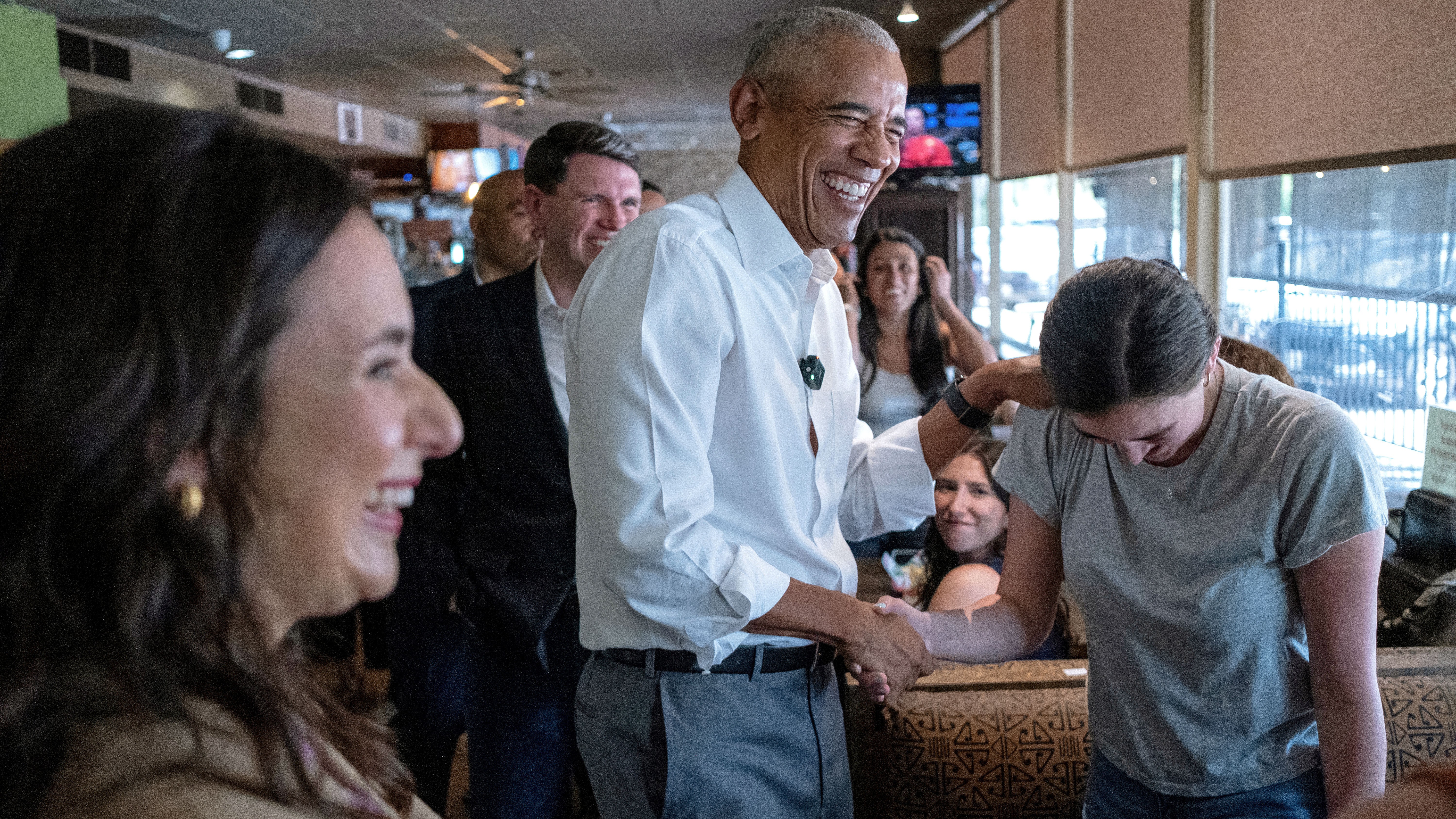
The Democratic Party needs Abdul El-Sayed, but it doesn’t necessarily love him. Although few top Democrats have expressed public misgivings about El-Sayed, the leftist candidate for U.S. Senate in Michigan who defeated an establishment candidate in an August primary, most of them aren’t overflowing with enthusiasm either. This hesitation is one reason yesterday’s news that former President Obama will campaign with El-Sayed and other Michigan Democrats later this month is notable.

Seeing why El-Sayed would want Obama’s imprimatur is easy: He’s by far the most popular politician in America, and he won Michigan in both of his presidential races—once by more than 16 percentage points and another by nearly 10, over a native Michigander. (More unexpected is El-Sayed’s welcome for Kamala Harris, who is unpopular with leftists, lost Michigan in 2024, and has gotten a stiff arm from some Democratic candidates this cycle.)

Obama’s incentives are more interesting. He is in an awkward phase of his career—no longer young enough to be cool but still too young to be an elder statesman. Nonetheless, with Bill Clinton and Joe Biden both aging and somewhat tarnished, no other figure can match Obama’s stature. He has become, as Politico put it today, the Democratic Party’s “closer-in-chief.” In that role, he’s been more willing to back left-wing candidates than other establishment figures have.

Last year, many high-profile Democrats were wary of the New York mayoral candidate Zohran Mamdani—either because they were skeptical of his policy stances or because of their long-standing ties to the family of his leading opponent, Andrew Cuomo. But Obama privately called him, praised his campaign, and offered to be a “sounding board” should Mamdani want advice. (Obama did not formally endorse Mamdani, though The New York Times, which first reported the call, noted that he prefers not to intervene in municipal races.) And in 2018, Obama endorsed Alexandria Ocasio-Cortez for U.S. House. He did so only after she’d won a primary in a safe district, so the outcome was a foregone conclusion, but given her anti-establishment campaign, he seemed to be sending a message—or placing a bet on future success. (Obama also privately called El-Sayed after his primary victory.)

Obama’s engagement with leftist candidates stands in contrast with most of his statements on leftist politics. Ideologically, Obama’s stances remain essentially center-left—even as the party overall has shifted leftward since he departed the White House—and he has at times appeared to scold or at least push back on the party’s left wing. Since leaving office, he has criticized cancel culture, slogans such as “Defund the police,” and what he views as a culture of ideological purity. Some critics on the left have been happy to return fire, labeling him a fake progressive who is too cozy with the powerful.

Notwithstanding his overall popularity, Obama has drawn grumbling from other parts of the party, too. Some critics complain that he spends too much time jetting around the globe, hobnobbing with NBA stars, and podcasting with Bruce Springsteen. Even his year-end playlists and reading lists feel a bit stale. (Obama bristled when the comedian Hasan Minhaj questioned whether he really made them.) In good times, this would be merely cringe; in a time of rising authoritarianism, some view him not being more actively involved in politics as a dereliction of duty.

Obama tends to lock in for campaign season, and he is a consummate party man; if the Democrats need to win the Michigan Senate seat, Obama will hit the stump for the nominee, whoever that might be. But Obama may have other reasons to embrace candidates such as El-Sayed and Mamdani. The politician who once described himself as a “skinny kid with a funny name” may see some of the same in them—or, in El-Sayed’s case, a swole kid. He is not a Muslim, as they are, but he was a target of Islamophobic attacks. And he is not a leftist, like them, but he was often tarred as a radical socialist.

Beyond the personal, Obama has signaled some impatience with more traditional elements of the Democratic Party during appearances in the past two years, echoing the boisterous left more than the buttoned-up establishment. He has criticized what he sees as faintheartedness from Democrats who he said last year were “cowed and intimidated and shrinking away from just asserting what they believe, or at least what they said they believe.” In sidestepping internecine battles, he has also suggested agnosticism about methods as long as the results are good. “There’s been, I gather, some argument between the left of the party and people who are promoting the quote-unquote abundance agenda. Listen, those things are not contradictory. You want to deliver for people and make their lives better? You got to figure out how to do it,” he said.

Obama will never have the same policy slate as Senator Bernie Sanders or Zohran Mamdani do, but his rhetoric and backing of leftist candidates suggest that he’s more attuned to shifts in the Democratic Party than his establishment peers are, and less rigid than his leftist critics contend. In 2008, Obama promised change; in 2026, he is still willing to give it a shot.

Related:


Here are three new stories from The Atlantic:


Today’s News

  1. Cornell’s faculty introduced a no-confidence resolution over the university’s handling of an alleged 2024 sexual assault at a fraternity house. The faculty senate is expected to consider the measure on October 14 amid calls for changes to how the university addresses sexual assault.
  2. Paramount completed its $81 billion takeover of Warner Bros. Discovery, creating a new media giant called Skydance. The combined company brings HBO, CNN, CBS, Paramount, and their major film and streaming franchises under one owner.
  3. Student-led protests in France over poor school conditions spread to more than 40 cities, drawing roughly 256,000 people, including teachers, parents, and unions. The government suspended classes for two days as the movement grew, and some protests ended in clashes with police.

Evening Read

A photo of hands clutching two religious books, one a copy of the New Testament.
Jeff Blake / The Washington Post / Getty

Churches Are Finally Making the Moral Case Against Sports Betting

By McKay Coppins

One of the puzzling things about the online sports-betting boom that has swept through American culture over the past decade is the relative slowness of religious leaders to articulate a moral case against the vice.

In the past, churches were among the leading voices warning against gambling. Jerry Falwell denounced it as a sinful habit that preyed on the poor and left “little children” to pay the price. In The Atlantic’s December 1907 issue, a Unitarian minister made the case against “speculation.” “The long and costly experience of mankind bears uniform testimony against gambling,” Charles F. Dole wrote. “It is a dangerous or unsocial form of excitement; it hurts character, demoralizes industry, breeds quarrels, tempts men to self-destruction.”

But in recent years, as state legislatures have raced to legalize sports betting and gambling ads have flooded the airwaves and millions of young men have begun walking around with a casino in their pocket, spiritual leaders have been relatively muted.

Read the full article.


More From The Atlantic


Culture Break

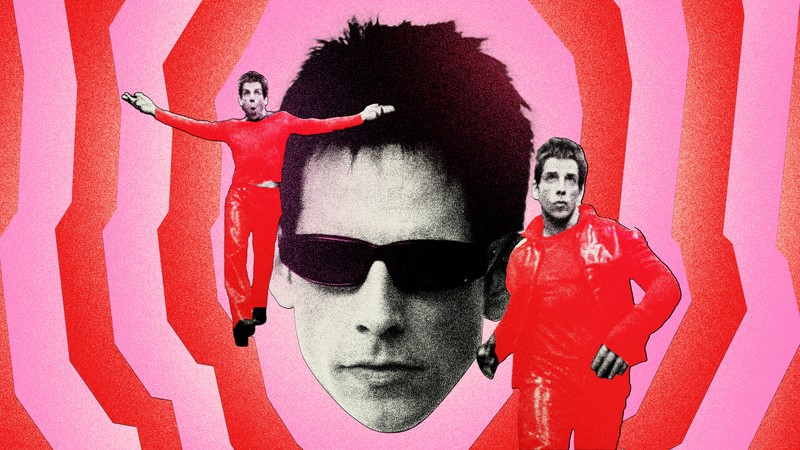
Collage of Derek Zoolander, played by Ben Stiller, in various poses on a red and pink background
Illustration by Alisa Gao / The Atlantic. Sources: CBS / Getty; Paramount Pictures / Getty.

Watch. Twenty-five years ago, Zoolander (streaming on Pluto TV and Paramount+) gave us a power poser for the ages—and an enduring argument about the limits of gender, Megan Garber writes.

Explore. Fishermen have always exaggerated the size of their catches. But AI has taken the practice to a different level, Tyler Austin Harper writes.

Play our daily crossword.


Rafaela Jinich contributed to this newsletter.

When you buy a book using a link in this newsletter, we receive a commission. Thank you for supporting The Atlantic.
© Joel Angel Juarez / Pool / Getty

  •  

The Curse of the Incumbent

This is an edition of The Atlantic Daily, a newsletter that guides you through the biggest stories of the day, helps you discover new ideas, and recommends the best in culture. Sign up for it here.

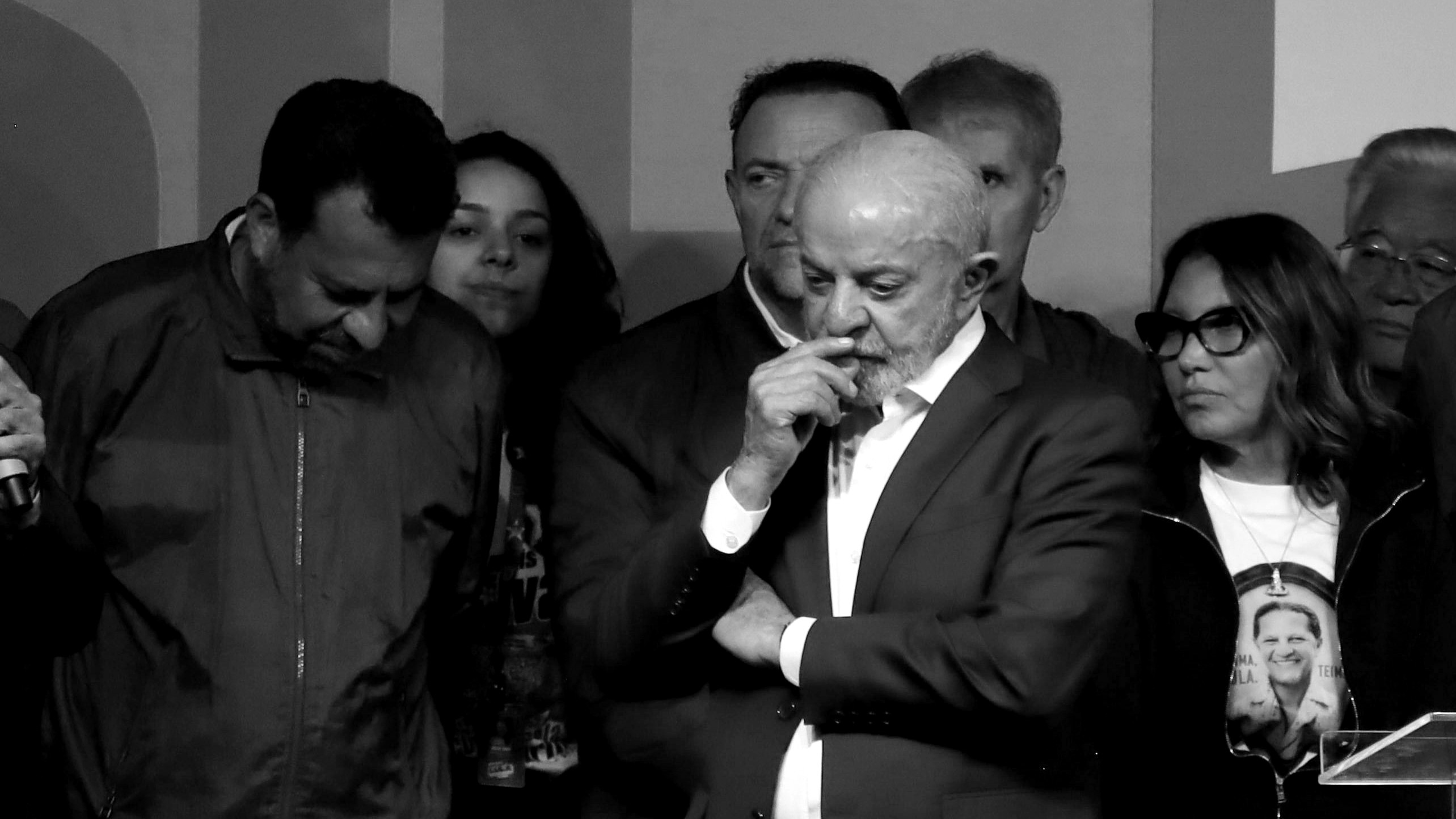
Heading into yesterday’s first round of presidential voting in Brazil, the incumbent, Luiz Inácio Lula da Silva, was thought to be a narrow favorite. When the results came in, though, Lula was behind his challenger, Flávio Bolsonaro, 45 percent to 47 percent. The two men will compete in an October 25 runoff to determine the winner.

Those surnames will likely be recognizable even to casual watchers of global elections: Lula, a leftist, has been the dominant force in Brazilian politics this century, and was president from 2003 to 2011. Bolsonaro’s father, Jair, was a right-wing president from 2019 to 2023 but was defeated by Lula in a comeback bid; Bolsonaro the elder then attempted a Trumpian autogolpe to stay in power but failed and was later convicted and sentenced to prison for it.

Now it’s Lula who’s struggling with voters. He was hurt by crime concerns as well as a corruption scandal, but he’s also a very familiar figure to Brazilians—perhaps too familiar. “Brazil wants change and I am very happy with the results,” Bolsonaro fils said last night. What kind of change, though?

When Donald Trump completed his own presidential comeback in the 2024 U.S. election, one common explanation was that a fundamental change had occurred in American politics, realigning demographics, parties, and policy for the long run. (As I have written recently, that claim looks shaky today.) A competing narrative, especially popular among comparative scholars, focused on a wave of anti-incumbent results in elections around the world. In this view, the results were more a rejection of Joe Biden’s administration and his vice president, Kamala Harris, than they were an embrace of Trump—and part of a broad trend of dissatisfaction among voters in many countries.

The specific motivations of the global anti-incumbent wave have never been entirely obvious. They include a post-COVID hangover but also deeper running dissatisfaction with democratic systems of government. Whatever the reasons, the trend is an important shift. Parties lose power from time to time in any country with free and fair elections, but political scientists have long observed that incumbents have an electoral advantage. In the modern United States, for example, Trump’s and Biden’s single presidential terms were outliers. If voters’ default stance is to throw the bums out after only one term or a few years, parties and leaders will struggle to create lasting policy changes. This creates instability and conflict, as politicians try more extreme tactics to achieve their goals.

Lula’s poor showing in the first round, at least, is a sign that the anti-incumbent wave has not receded since 2024. Indeed, politicians across the political spectrum have faced serious voter anger this year. In Hungary, a broad coalition emerged to eject the right-wing strongman Viktor Orbán, who, my colleague Isaac Stanley-Becker noted, had been viewed as un-oustable. In Denmark, the governing coalition lost seats, though Prime Minister Mette Frederiksen, a centrist, was eventually able to form a new, weaker government. In Germany, Chancellor Friedrich Merz is unpopular, and his future looks precarious, as parties on both the left and the right have gained in state elections, leaving his centrist government teetering. And today, the center-left Spanish prime minister, Pedro Sánchez, called for a November 29 snap election for Parliament, with polls showing his party trailing behind the center-right Popular Party.

The power of the anti-incumbent wave is demonstrated by the fact that it now threatens to wash out some of the same parties and politicians it previously carried in. Lula’s victory in Brazil’s 2022 election was in part a testament to voters rejecting the government of the incumbent, Jair Bolsonaro. Now the same dissatisfaction could swamp Lula and elect Bolsonaro’s son.

In the United Kingdom, anti-incumbent currents helped defeat a long-running Conservative government in 2024. The result was a landslide: Conservatives lost 251 seats while Labour picked up 211 and a huge majority. But Prime Minister Keir Starmer lasted just two years in office before sagging popularity led to his effective toppling by another Labour politician, Andy Burnham. In what may be a canny reading of the global mood, Burnham has rejected suggestions that he call an election before he is required to do so, in 2029.

Finally, there’s Trump, who benefited from anti-incumbent sentiments in 2024 but may be burned by them in November. Voters may not have liked Biden, but now that they’ve seen Trump back in the White House, they like him even less. Among other issues, the inflation that hurt Biden (and other global incumbents) in 2024 has persisted and sometimes worsened under Trump. Midterm elections in the U.S. are usually defeats for the sitting president’s party, but many analysts now forecast a larger-than-normal Democratic victory. Trump has begged voters to act as though he is on the ballot, but that may be imprudent.

Anti-incumbency is a global trend, but it can have big effects on domestic politics. In the United States, Trump treated his narrow 2024 win as a huge popular mandate. Although that was a political overreach, he has managed to radically reshape the federal government and foreign policy. In Brazil, a new Bolsonaro presidency would jerk the country back toward the right after a leftward lurch under Lula. As long as voters remain this dyspeptic, however, any new approach should be treated as fragile and fleeting.

Related:


Here are four new stories from The Atlantic:


Today’s News

  1. The Supreme Court opened its new term by hearing a case over whether Boulder, Colorado, can hold Exxon Mobil and Suncor Energy liable for local damages from climate change. The justices focused on whether federal law blocks such lawsuits and whether the Court has jurisdiction to hear the case; a ruling could potentially affect dozens of similar cases nationwide.
  2. A researcher at a Russian anti-plague institute died from a suspected case of pneumonic plague, and as many as 189 people are reportedly under medical observation. The World Health Organization said the cause has not been confirmed and that no contacts have shown symptoms so far.
  3. The U.S. military removed all of its bombers from a British air base used for strikes on Iran yesterday after a suspected terror plot targeted the base. Six people have been arrested and released on bail in the investigation.

Dispatches

Explore all of our newsletters here.


Evening Read

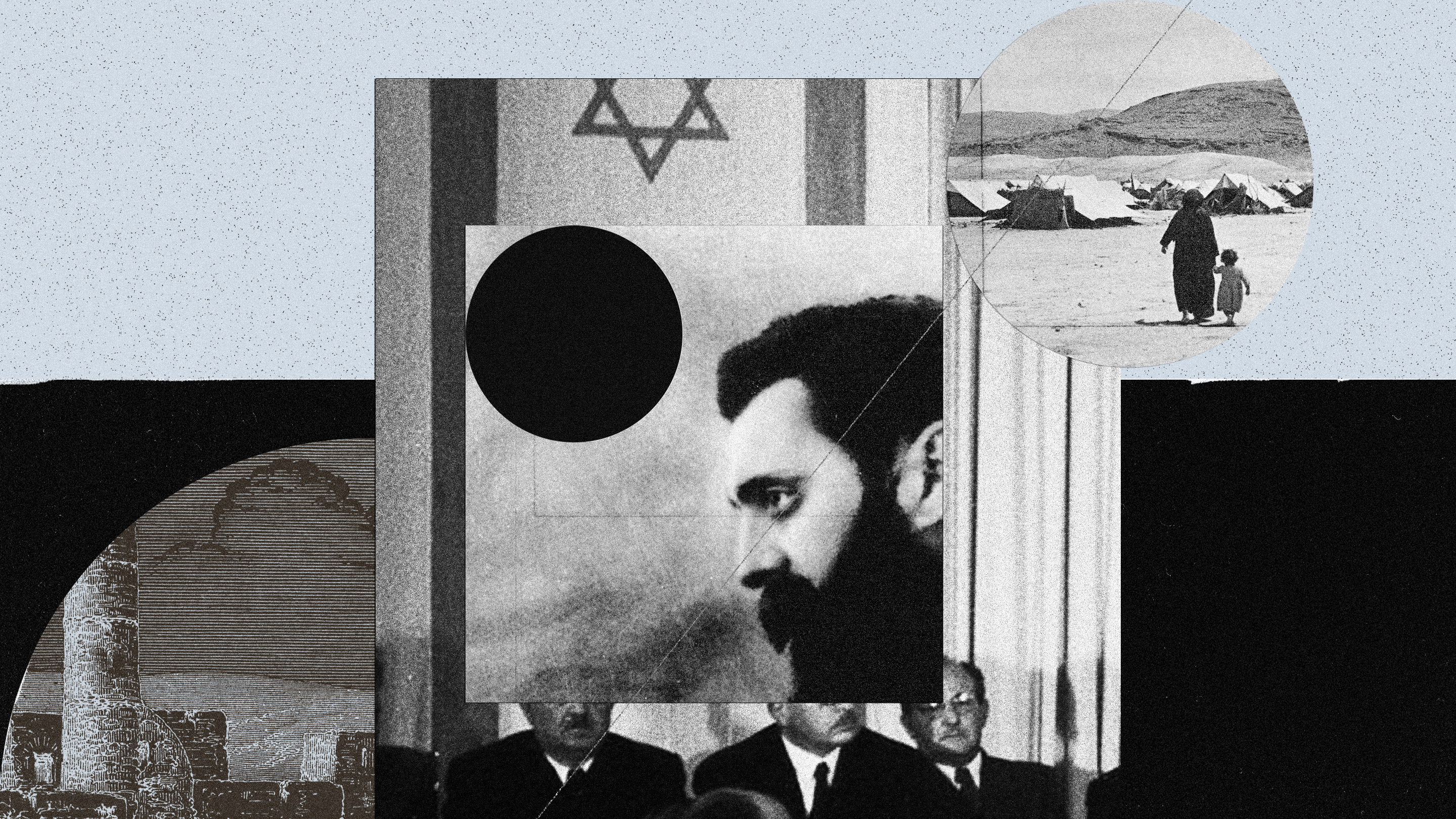
Collage featuring: Theodore Herzl, declaration of the establishment of the state of Israel, the Tower Of David in the 19th century, and Palestinian refugees in the Shuneh refugee camp.
Illustration by The Atlantic. Sources: GPO / Getty; Hulton-Deutsch Collection / Corbis / Getty; Universal History Archive / Universal Images Group / Getty.

What Is Zionism?

By Adam Kirsch

On October 7, 2023, Hamas fighters launched a surprise attack on Israel from the Gaza Strip, killing more than 1,200 people and taking 251 hostages. The attack was the worst disaster in the history of the Jewish state. Three years later, it’s clear that it was an even greater disaster for Palestinians. Determined to punish Hamas and prevent future attacks, Israel responded with a devastating invasion of Gaza that killed more than 70,000 people; it estimates at least 22,000 were combatants. Today, 2 million Palestinians, 80 percent of the population of Gaza, have been displaced from their homes.

But if Hamas was defeated militarily, it largely succeeded in its goal of swinging Western public opinion against Israel. The spectacle of Israeli powerlessness followed by the violent display of Israeli power profoundly changed the way the Jewish state is seen and discussed. Perhaps the best way to gauge that change is to look at the transformation of the word Zionist.

Read the full article.


More From The Atlantic


Culture Break

An old computer being repaired.
Illustration by Alisa Gao / The Atlantic

Explore. Alexandra Tremayne-Pengelly on the people who refuse to let their gadgets die.

Watch. A sketch in the most recent Saturday Night Live episode (streaming on Peacock) captured the disconnect that sometimes arises when people reveal their social-media feeds to one another, Valerie Trapp writes.

Play our daily crossword.


Rafaela Jinich contributed to this newsletter.

When you buy a book using a link in this newsletter, we receive a commission. Thank you for supporting The Atlantic.

© Julia Ju / Anadolu / Getty

  •  
❌