❌

Reading view

British Commandos Emerge From German Submarine During Major NATO Exercise

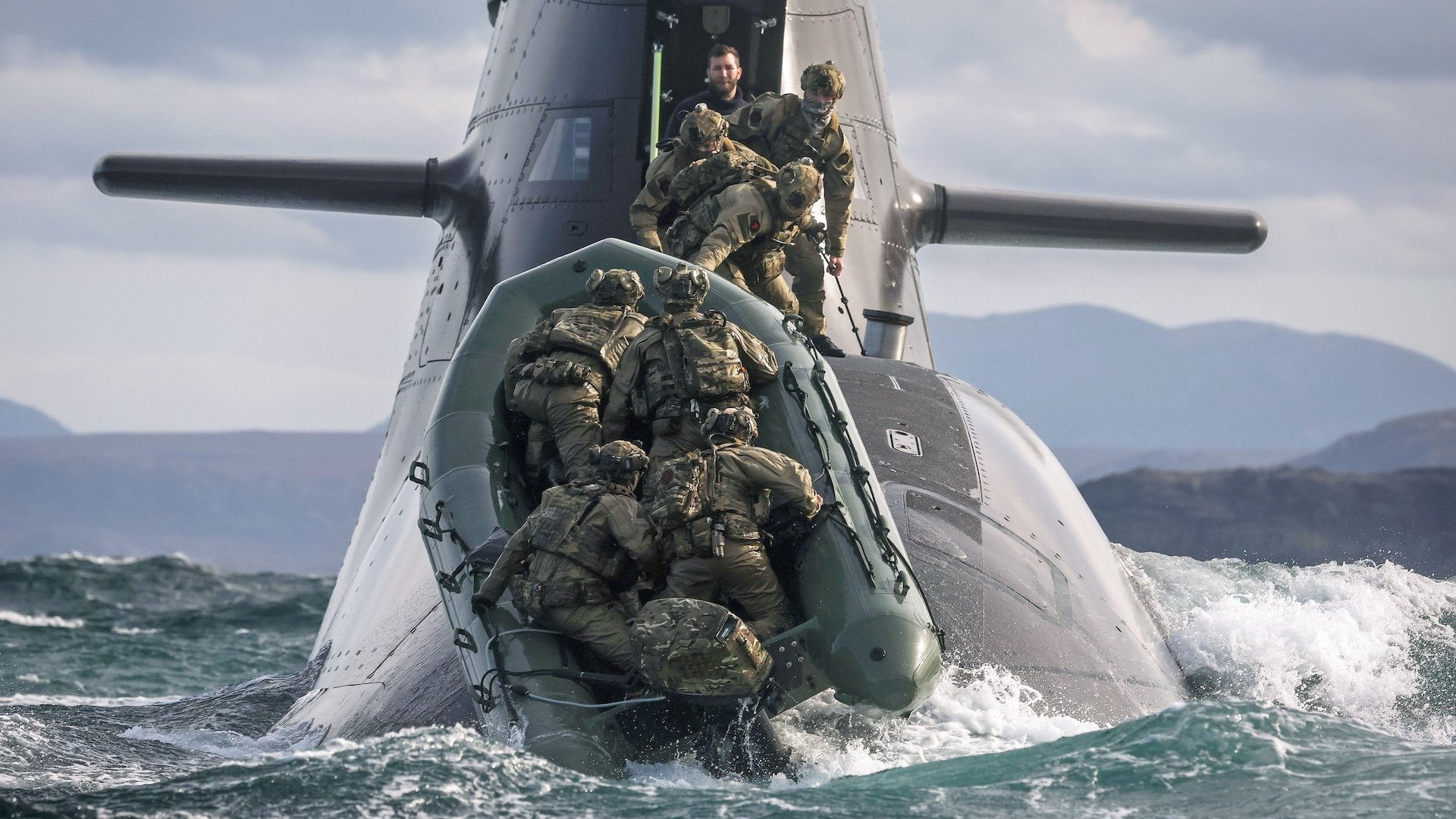
As part of the largest U.K. Commando Force exercise in 15 years, British special operators conducted a submarine insertion off Scotland, making use of a German Navy Type 212A — a boat you can read about in detail here. The maneuvers are the first time since the war in Afghanistan that all of the Commando Force’s specialist elements have operated together. The submarine insertion, conducted at Cape Wrath on September 29, is part of Exercise Strike Warrior, a major NATO drill intended to rehearse allied crisis-response and warfighting operations across the North Atlantic and High North.

The U.K. Royal Navy-led Commando Force specializes in amphibious, littoral, and expeditionary operations. It brings together Royal Marines commandos with specialist elements including reconnaissance, intelligence, targeting, artillery, logistics, and medical capabilities. The force is increasingly focused on smaller, dispersed teams operating across contested littoral environments.

Including elements of the Commando Force, more than 2,000 personnel from the United Kingdom, United States, Germany, Netherlands, Canada, and Norway are currently participating in Strike Warrior, with eight warships and 19 aircraft involved in activity spanning Scotland, the Western Isles, the North-West Approaches, Galloway, the Borders and the North Sea.

The submarine insertion underscores the type of maritime special operations the British Commando Force is now increasingly training to conduct. Personnel from 148 (Meiktila) Commando Forward Observation Battery, Royal Artillery, boarded the unnamed German attack submarine off Scotland before being infiltrated toward the coast. The sub provided intelligence, surveillance, and reconnaissance (ISR) support as the force approached the target area, after which the commandos conducted a discreet small-boat insertion using inflatable raiding craft.
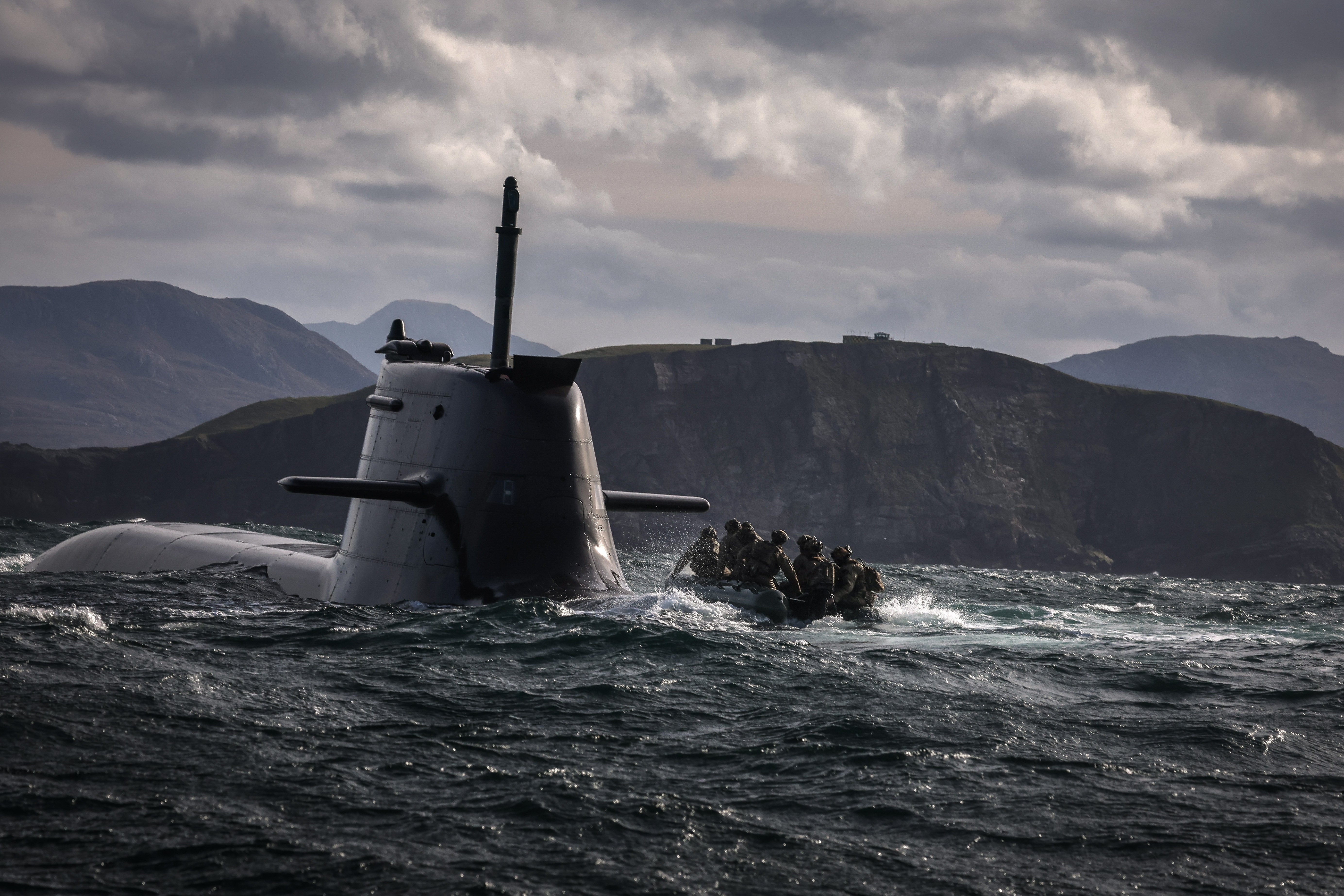
29 Sep 2026 – Meiktila Commandos board German U-Boat off the North coast of Scotland during Strike Warrior 26. 148 (Meiktila) Commando Forward Observation Battery has conducted a Full Mission Profile (FMP), integrating a German Navy submarine and Portuguese warship during Exercise Strike Warrior 26. The serial was designed to rehearse a submarine link-up and develop the Battery’s maritime integration, including float-on/float-off drills with 148’s boats. The force subsequently conducted a submarine infiltration and discreet small-boat insertion towards the target area. The FMP culminated in the establishment of an Observation Post (OP), from which the team coordinated live Naval Surface Fires from the Portuguese warship, resulting in a successful engagement and extraction. The serial demonstrated the capability of NATO partners to integrate specialist assets and coordinate complex activity across the maritime and land domains. The submarine provided Intelligence, Surveillance and Reconnaissance (ISR) support to identify and develop the target, before deploying Special Observation Teams to conduct a tactical beach landing and establish a hasty OP. The Portuguese warship subsequently delivered live Naval Surface Fires against the designated target. “This level of complexity and coordination of live assets has not been achieved by 148 for nearly 30 years. We wanted to demonstrate to our partners across the United Kingdom Commando Force, wider UK Defence and NATO SOF community the type of missions we are prepared to execute against future threats. Warfighting is our focus, and we are prepared to employ specialist assets to deliver Multi-Domain Fires and Targeting.” - Operations Officer, 148 (Meiktila) Commando Forward Observation Battery, Royal Artillery. The UK Commando Force are taking part in their largest collective workout in 15 years to demonstrate their ability to safeguard the country – and its allies – against a myriad of threats.
British Commandos board the German U-boat off the north coast of Scotland during Strike Warrior 26. Crown Copyright

Once ashore, the commandos moved onto the cliffs and established an extemporized observation post. From there, they confirmed the simulated target and coordinated live naval surface fires against a simulated enemy position. Here, firepower was provided by the Portuguese Karel Doorman class frigate Dom Francisco de Almeida, presumably using its Oto Melara 76mm deck gun. Following the engagement, the team was extracted. The complete sequence incorporated submarine infiltration, small-boat insertion, covert reconnaissance and targeting, live naval gunfire, and withdrawal into a single mission profile.
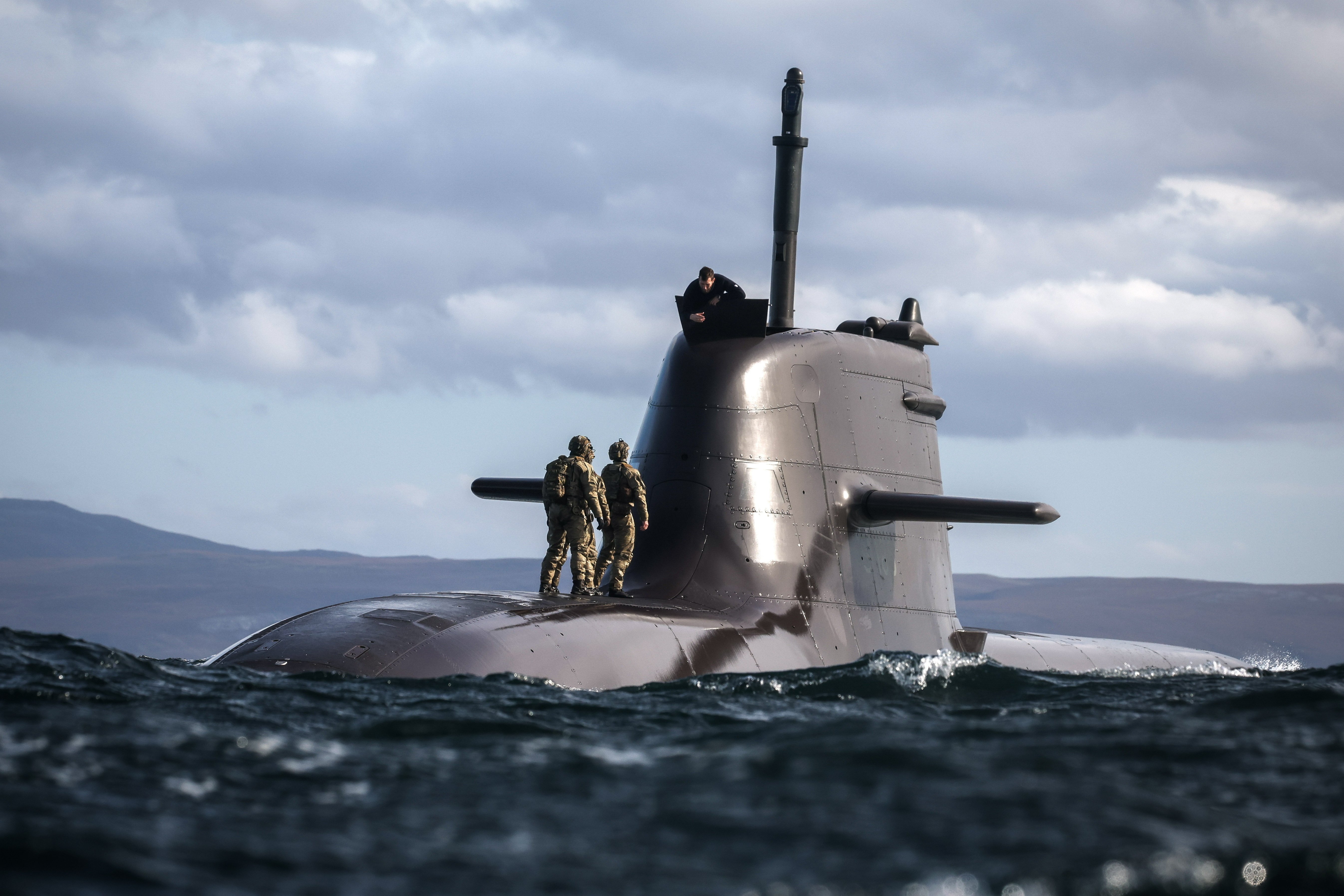
29 Sep 2026 – Meiktila Commandos board German U-Boat off the North coast of Scotland during Strike Warrior 26. 148 (Meiktila) Commando Forward Observation Battery has conducted a Full Mission Profile (FMP), integrating a German Navy submarine and Portuguese warship during Exercise Strike Warrior 26. The serial was designed to rehearse a submarine link-up and develop the Battery’s maritime integration, including float-on/float-off drills with 148’s boats. The force subsequently conducted a submarine infiltration and discreet small-boat insertion towards the target area. The FMP culminated in the establishment of an Observation Post (OP), from which the team coordinated live Naval Surface Fires from the Portuguese warship, resulting in a successful engagement and extraction. The serial demonstrated the capability of NATO partners to integrate specialist assets and coordinate complex activity across the maritime and land domains. The submarine provided Intelligence, Surveillance and Reconnaissance (ISR) support to identify and develop the target, before deploying Special Observation Teams to conduct a tactical beach landing and establish a hasty OP. The Portuguese warship subsequently delivered live Naval Surface Fires against the designated target. “This level of complexity and coordination of live assets has not been achieved by 148 for nearly 30 years. We wanted to demonstrate to our partners across the United Kingdom Commando Force, wider UK Defence and NATO SOF community the type of missions we are prepared to execute against future threats. Warfighting is our focus, and we are prepared to employ specialist assets to deliver Multi-Domain Fires and Targeting.” - Operations Officer, 148 (Meiktila) Commando Forward Observation Battery, Royal Artillery. The UK Commando Force are taking part in their largest collective workout in 15 years to demonstrate their ability to safeguard the country – and its allies – against a myriad of threats.
Crown Copyright

The German submarine involved is particularly well suited to this kind of mission. Conventional diesel-electric attack submarines (SSK) lack the nuclear-powered endurance and sustained high speed of an SSN, but those characteristics are not necessarily what a short-range clandestine insertion mission requires. Modern SSKs such as Germany’s Type 212A are designed around extremely low acoustic signatures and can remain submerged for extended periods using air-independent propulsion, making them difficult to detect while operating in relatively shallow and constrained waters.

That combination is hugely valuable for special operations. An SSK can approach a coastline covertly, conduct ISR, release a small team and its boats, and withdraw without exposing a large surface vessel or maintaining the high-speed transit capability associated with a nuclear submarine. Its comparatively small size can also be advantageous when operating closer to shore, where depth, seabed conditions and the presence of coastal sensors can constrain larger submarines. Conventionally powered boats are also far cheaper to procure and operate and have smaller crews.
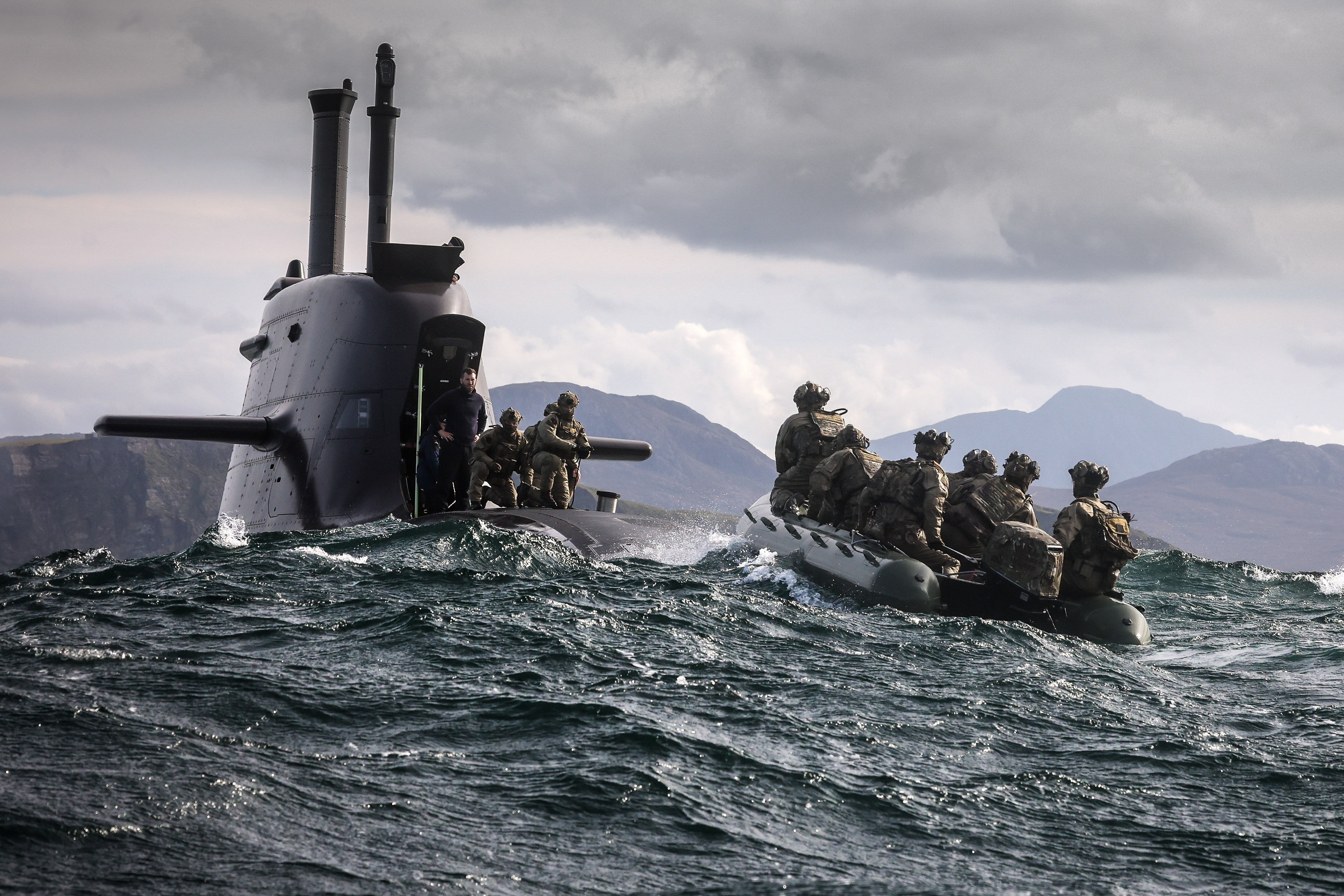
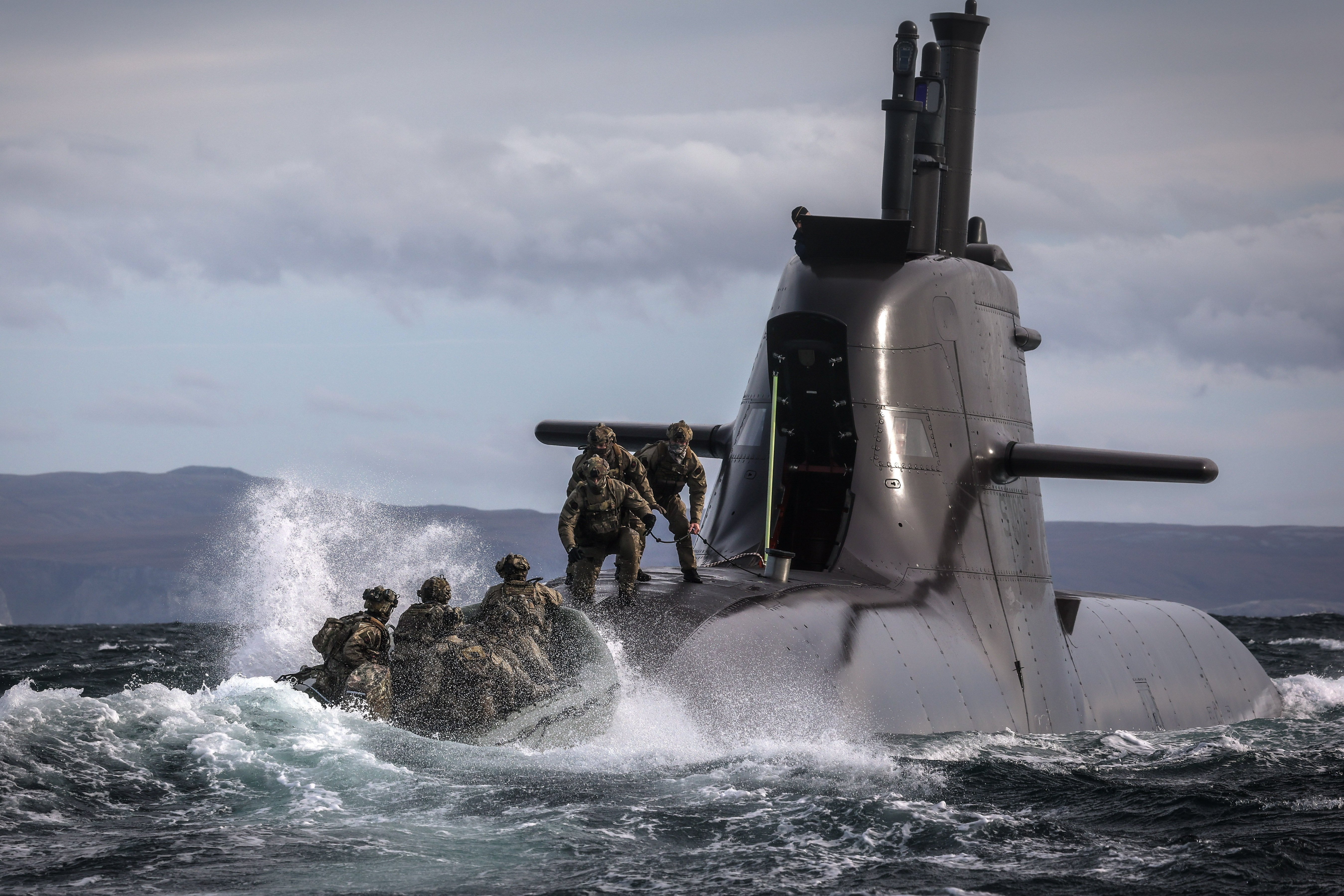
29 Sep 2026 – Meiktila Commandos board German U-Boat off the North coast of Scotland during Strike Warrior 26. 148 (Meiktila) Commando Forward Observation Battery has conducted a Full Mission Profile (FMP), integrating a German Navy submarine and Portuguese warship during Exercise Strike Warrior 26. The serial was designed to rehearse a submarine link-up and develop the Battery’s maritime integration, including float-on/float-off drills with 148’s boats. The force subsequently conducted a submarine infiltration and discreet small-boat insertion towards the target area. The FMP culminated in the establishment of an Observation Post (OP), from which the team coordinated live Naval Surface Fires from the Portuguese warship, resulting in a successful engagement and extraction. The serial demonstrated the capability of NATO partners to integrate specialist assets and coordinate complex activity across the maritime and land domains. The submarine provided Intelligence, Surveillance and Reconnaissance (ISR) support to identify and develop the target, before deploying Special Observation Teams to conduct a tactical beach landing and establish a hasty OP. The Portuguese warship subsequently delivered live Naval Surface Fires against the designated target. “This level of complexity and coordination of live assets has not been achieved by 148 for nearly 30 years. We wanted to demonstrate to our partners across the United Kingdom Commando Force, wider UK Defence and NATO SOF community the type of missions we are prepared to execute against future threats. Warfighting is our focus, and we are prepared to employ specialist assets to deliver Multi-Domain Fires and Targeting.” - Operations Officer, 148 (Meiktila) Commando Forward Observation Battery, Royal Artillery. The UK Commando Force are taking part in their largest collective workout in 15 years to demonstrate their ability to safeguard the country – and its allies – against a myriad of threats.
Crown Copyright

An SSN offers major advantages for longer-range deployments: far greater endurance, sustained speed, and the ability to carry and support larger payloads over intercontinental distances. These payloads can include dry deck shelters and swimmer delivery vehicles, allowing divers easy exit and entrance while the boat is submerged and at a standoff distance from the coast.

But for a mission whose essential requirement is to quietly loiter near a coast, put a small team ashore and leave, an SSK remains a highly relevant platform. Conventional submarines are particularly valuable to the kind of distributed littoral operations NATO is rehearsing in northern European waters.
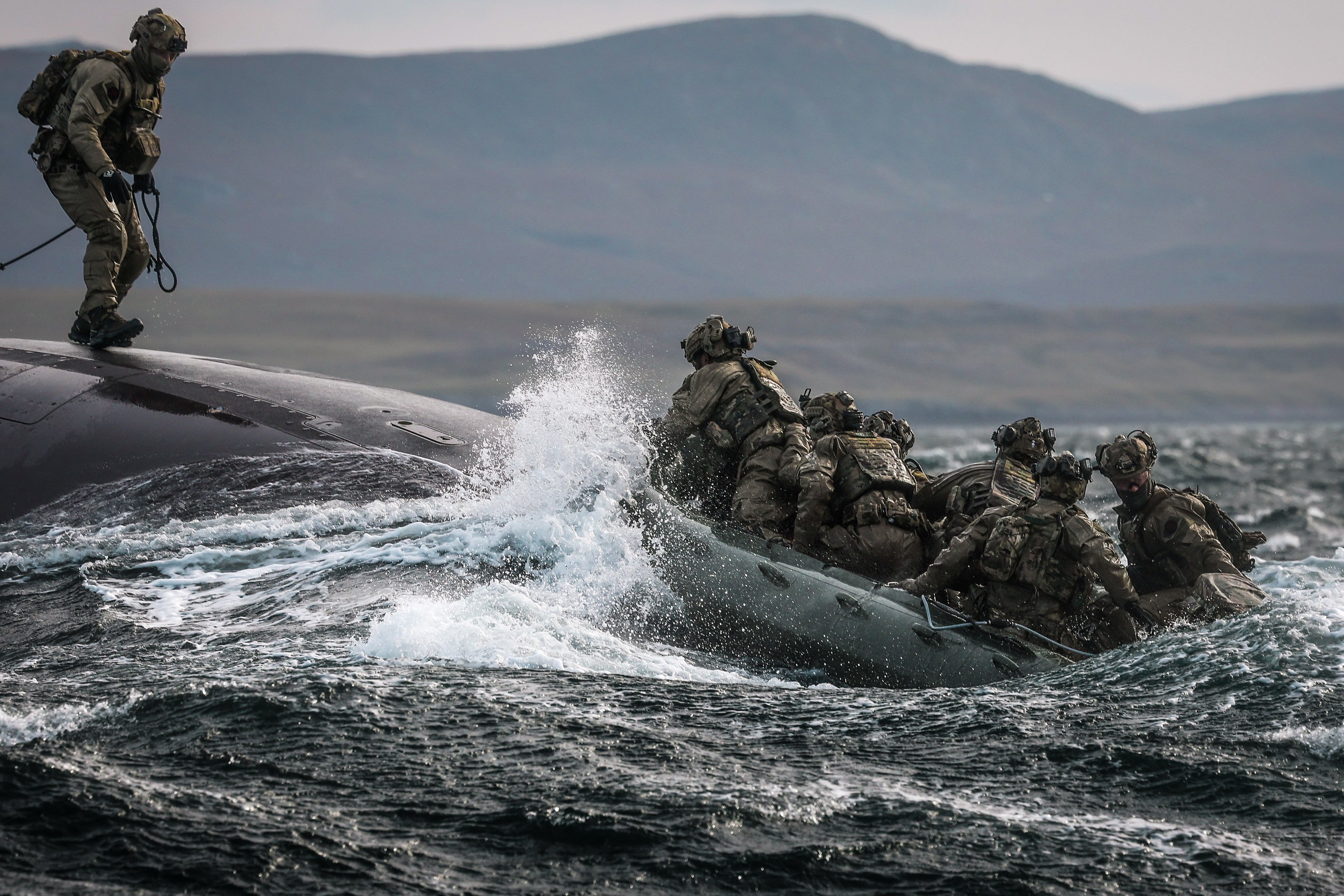
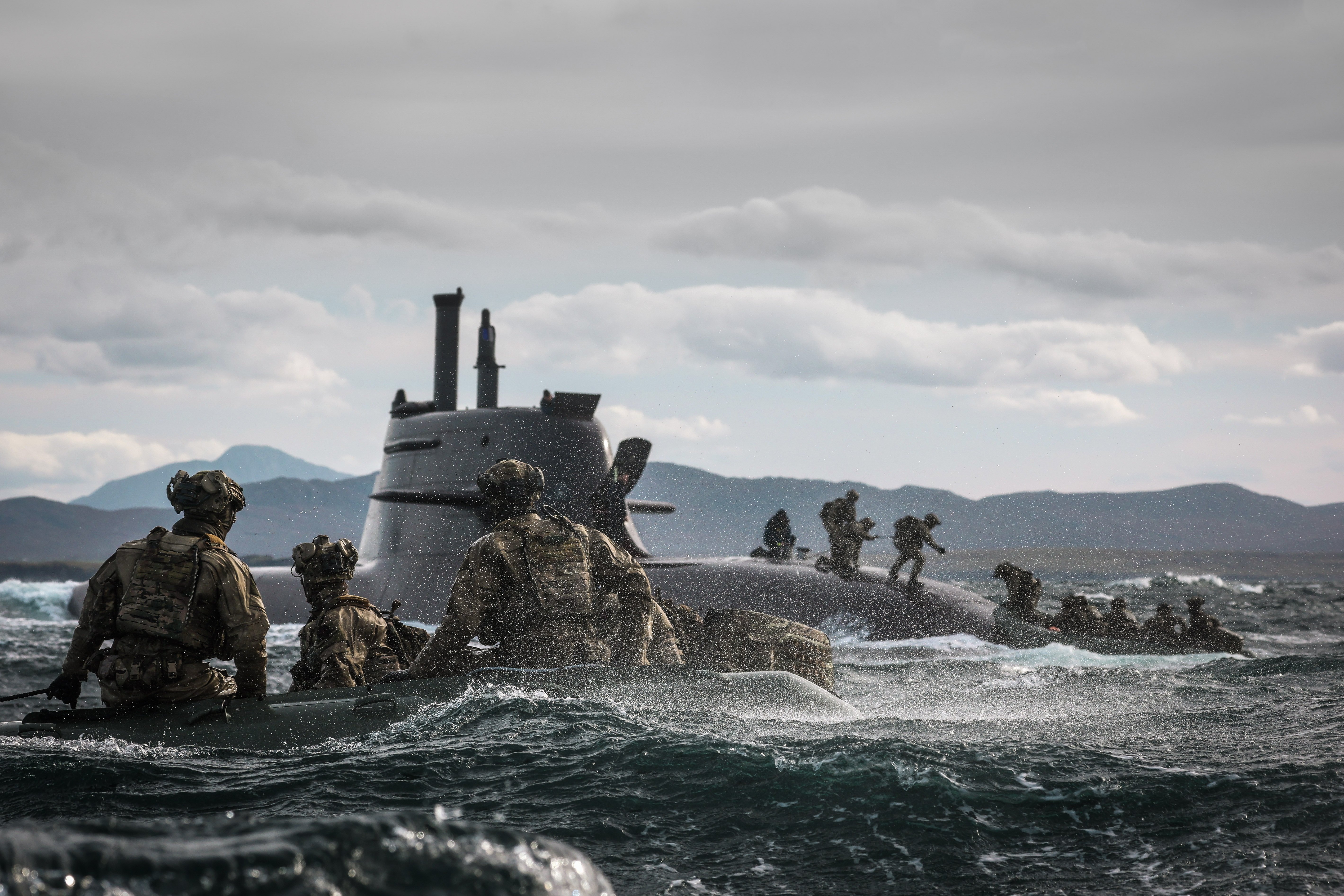
29 Sep 2026 – Meiktila Commandos board U-Boat off the North coast of Scotland during Strike Warrior 26. 148 (Meiktila) Commando Forward Observation Battery has conducted a Full Mission Profile (FMP), integrating a German Navy submarine and Portuguese warship during Exercise Strike Warrior 26. The serial was designed to rehearse a submarine link-up and develop the Battery’s maritime integration, including float-on/float-off drills with 148’s boats. The force subsequently conducted a submarine infiltration and discreet small-boat insertion towards the target area. The FMP culminated in the establishment of an Observation Post (OP), from which the team coordinated live Naval Surface Fires from the Portuguese warship, resulting in a successful engagement and extraction. The serial demonstrated the capability of NATO partners to integrate specialist assets and coordinate complex activity across the maritime and land domains. The submarine provided Intelligence, Surveillance and Reconnaissance (ISR) support to identify and develop the target, before deploying Special Observation Teams to conduct a tactical beach landing and establish a hasty OP. The Portuguese warship subsequently delivered live Naval Surface Fires against the designated target. “This level of complexity and coordination of live assets has not been achieved by 148 for nearly 30 years. We wanted to demonstrate to our partners across the United Kingdom Commando Force, wider UK Defence and NATO SOF community the type of missions we are prepared to execute against future threats. Warfighting is our focus, and we are prepared to employ specialist assets to deliver Multi-Domain Fires and Targeting.” - Operations Officer, 148 (Meiktila) Commando Forward Observation Battery, Royal Artillery. The UK Commando Force are taking part in their largest collective workout in 15 years to demonstrate their ability to safeguard the country – and its allies – against a myriad of threats.
Crown Copyright
29 Sep 2026 – Meiktila Commandos board German U-Boat off the North coast of Scotland during Strike Warrior 26. 148 (Meiktila) Commando Forward Observation Battery has conducted a Full Mission Profile (FMP), integrating a German Navy submarine and Portuguese warship during Exercise Strike Warrior 26. The serial was designed to rehearse a submarine link-up and develop the Battery’s maritime integration, including float-on/float-off drills with 148’s boats. The force subsequently conducted a submarine infiltration and discreet small-boat insertion towards the target area. The FMP culminated in the establishment of an Observation Post (OP), from which the team coordinated live Naval Surface Fires from the Portuguese warship, resulting in a successful engagement and extraction. The serial demonstrated the capability of NATO partners to integrate specialist assets and coordinate complex activity across the maritime and land domains. The submarine provided Intelligence, Surveillance and Reconnaissance (ISR) support to identify and develop the target, before deploying Special Observation Teams to conduct a tactical beach landing and establish a hasty OP. The Portuguese warship subsequently delivered live Naval Surface Fires against the designated target. “This level of complexity and coordination of live assets has not been achieved by 148 for nearly 30 years. We wanted to demonstrate to our partners across the United Kingdom Commando Force, wider UK Defence and NATO SOF community the type of missions we are prepared to execute against future threats. Warfighting is our focus, and we are prepared to employ specialist assets to deliver Multi-Domain Fires and Targeting.” - Operations Officer, 148 (Meiktila) Commando Forward Observation Battery, Royal Artillery. The UK Commando Force are taking part in their largest collective workout in 15 years to demonstrate their ability to safeguard the country – and its allies – against a myriad of threats.
Crown Copyright

The U.K. Royal Navy’s four Upholder class were its last diesel-electric submarines. They were withdrawn in 1994–95 and subsequently transferred to Canada. The Royal Navy today operates an all-nuclear submarine fleet.

The Upholders were also particularly suited to inshore operations, reconnaissance, and other missions demanding extreme quietness and maneuverability.
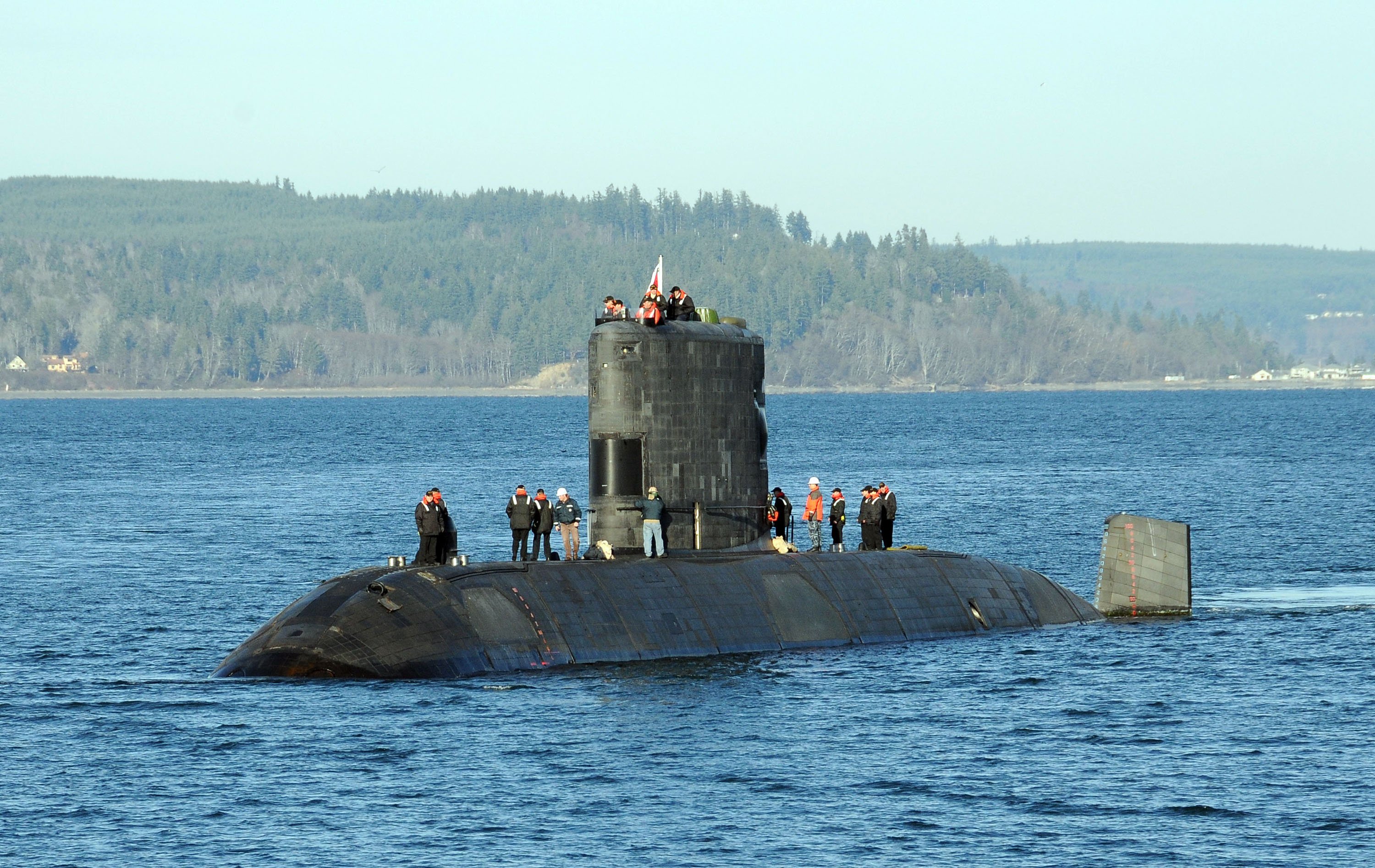
111212-N-GU530-103 BANGOR, Wash. (Dec. 12, 2011) The Royal Canadian Navy long-range patrol submarine HMCS Victoria (SSK 876) arrives at Naval Base Kitsap-Bangor for a port call and routine maintenance. The visit is Victoria's first to Bangor since 2004. (U.S. Navy photo by Lt. Ed Early/Released)
The Royal Canadian Navy long-range patrol submarine HMCS Victoria arrives at Naval Base Kitsap-Bangor for a port call and routine maintenance. This boat was formerly HMS Unseen with the U.K. Royal Navy. U.S. Navy photo by Lt. Ed Early/Released

With this in mind, TWZ has, in the past, examined whether the U.S. Navy should complement its all-nuclear submarine fleet with advanced conventional boats. Sweden’s Gotland demonstrated the value of these kinds of boats when it was leased to the U.S. Navy for adversary training and proved exceptionally difficult for American ASW forces to detect.
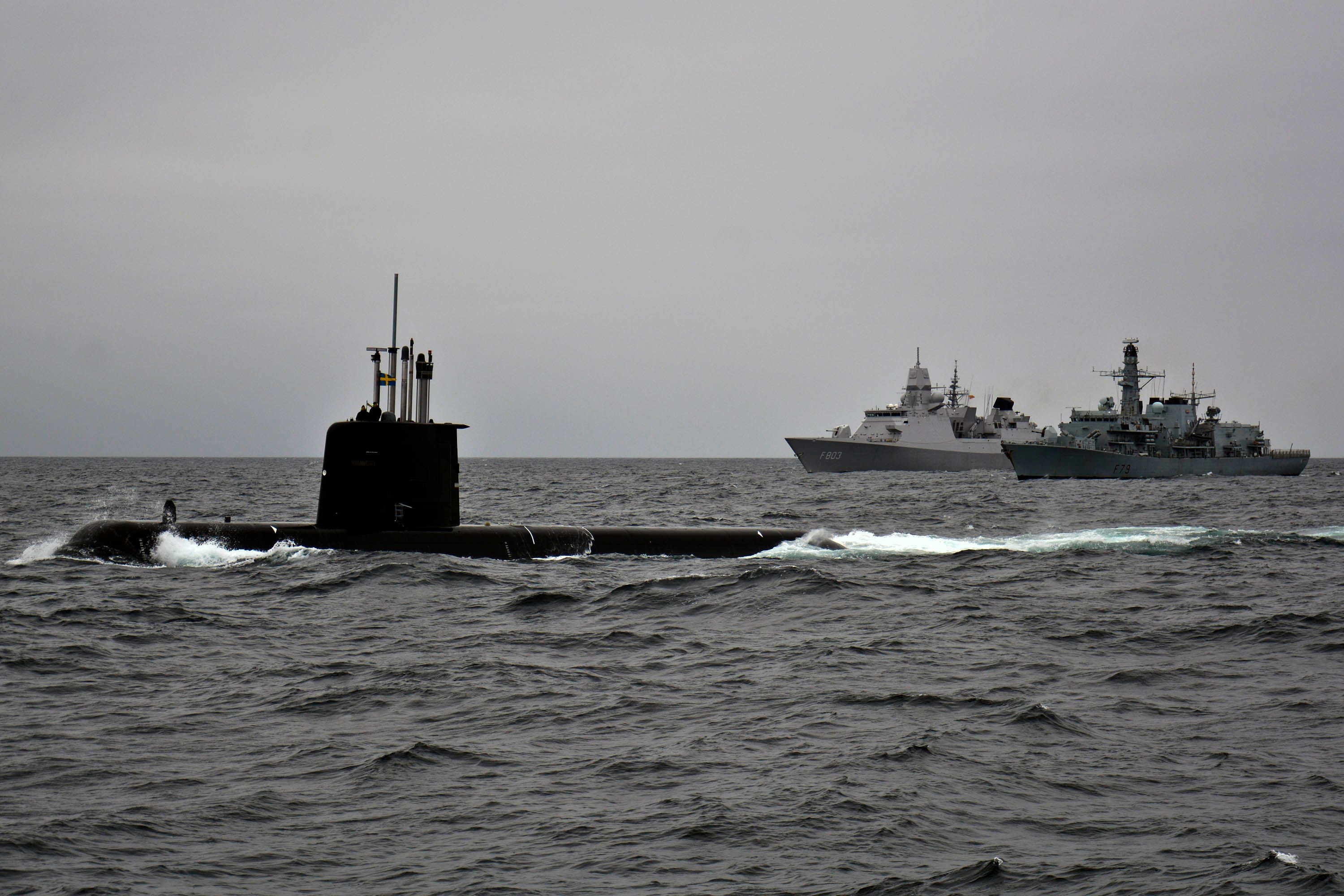
150504-N-IY633-128 ATLANTIC OCEAN (May 4, 2015) – Swedish submarine HMS Gotland, left, HNLMS Tromp (F 803), center, and HMS Portland (F 79) steam in formation with other NATO and partner nation ships during maneuvering drills as a part of exercise Dynamic Mongoose. Dynamic Mongoose is an annual anti-submarine warfare (ASW) live exercise conducted off the coast of Norway comprised of surface, sub-surface, and aviation forces from 11 NATO and partner nations aimed to strengthen interoperability and practice ASW techniques in a unique and challenging environment. (U.S. Navy photo by Mass Communication Specialist 2nd Class Amanda S. Kitchner/Released)
Swedish submarine HMS Gotland, left, HNLMS Tromp, center, and HMS Portland steam in formation with other NATO and partner nation ships during maneuvering drills as a part of exercise Dynamic Mongoose in 2015. U.S. Navy photo by Mass Communication Specialist 2nd Class Amanda S. Kitchner/Released

Returning to the Cape Wrath drill, the 148 Battery operations officer involved explained that “This level of complexity and coordination of live assets has not been achieved by 148 for nearly 30 years.”

“We wanted to demonstrate to our partners across the United Kingdom Commando Force, wider U.K. Defense and NATO SOF community the type of missions we are prepared to execute against future threats,” the officer added.
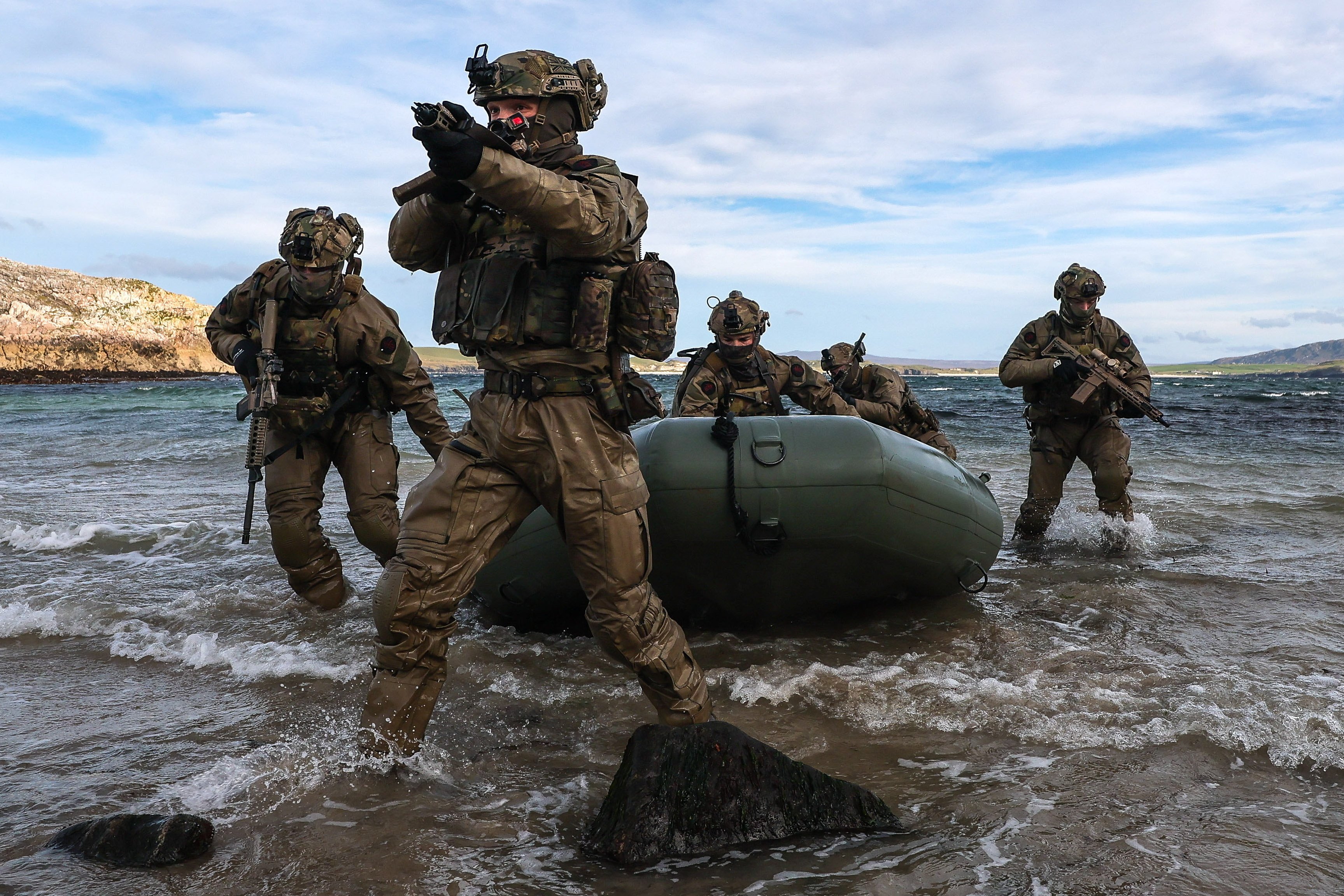
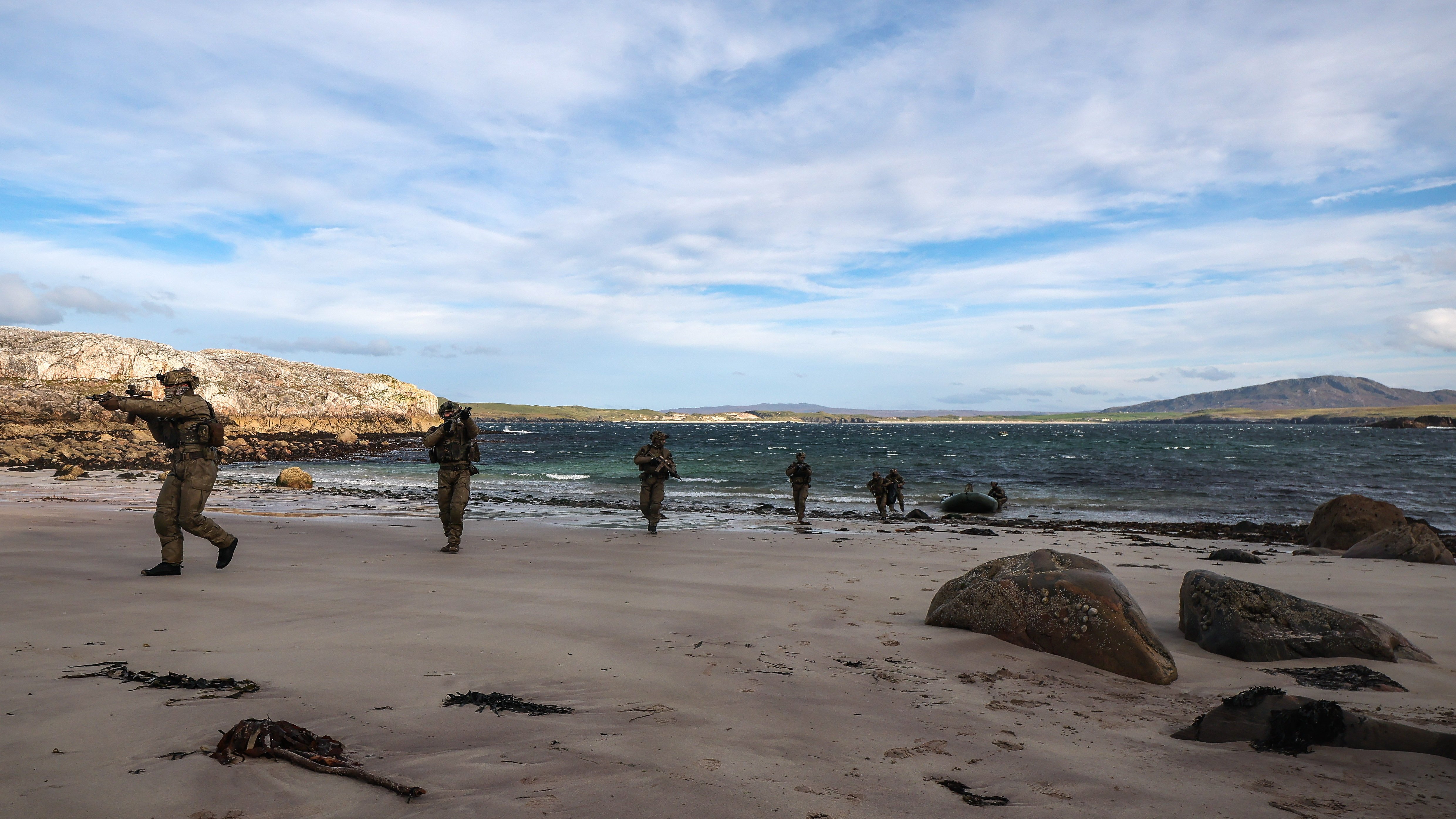
29 Sep 2026 – 148 Battery secure a remote beach in Cape Wrath. 148 (Meiktila) Commando Forward Observation Battery has conducted a Full Mission Profile (FMP), integrating a German Navy submarine and Portuguese warship during Exercise Strike Warrior 26. The serial was designed to rehearse a submarine link-up and develop the Battery’s maritime integration, including float-on/float-off drills with 148’s boats. The force subsequently conducted a submarine infiltration and discreet small-boat insertion towards the target area. The FMP culminated in the establishment of an Observation Post (OP), from which the team coordinated live Naval Surface Fires from the Portuguese warship, resulting in a successful engagement and extraction. The serial demonstrated the capability of NATO partners to integrate specialist assets and coordinate complex activity across the maritime and land domains. The submarine provided Intelligence, Surveillance and Reconnaissance (ISR) support to identify and develop the target, before deploying Special Observation Teams to conduct a tactical beach landing and establish a hasty OP. The Portuguese warship subsequently delivered live Naval Surface Fires against the designated target. “This level of complexity and coordination of live assets has not been achieved by 148 for nearly 30 years. We wanted to demonstrate to our partners across the United Kingdom Commando Force, wider UK Defence and NATO SOF community the type of missions we are prepared to execute against future threats. Warfighting is our focus, and we are prepared to employ specialist assets to deliver Multi-Domain Fires and Targeting.” - Operations Officer, 148 (Meiktila) Commando Forward Observation Battery, Royal Artillery. The UK Commando Force are taking part in their largest collective workout in 15 years to demonstrate their ability to safeguard the country – and its allies – against a myriad of threats.
148 Battery secures a remote beach in Cape Wrath during Exercise Strike Warrior 26. Crown Copyright
29 Sep 2026 – 148 Battery secure a remote beach in Cape Wrath. 148 (Meiktila) Commando Forward Observation Battery has conducted a Full Mission Profile (FMP), integrating a German Navy submarine and Portuguese warship during Exercise Strike Warrior 26. The serial was designed to rehearse a submarine link-up and develop the Battery’s maritime integration, including float-on/float-off drills with 148’s boats. The force subsequently conducted a submarine infiltration and discreet small-boat insertion towards the target area. The FMP culminated in the establishment of an Observation Post (OP), from which the team coordinated live Naval Surface Fires from the Portuguese warship, resulting in a successful engagement and extraction. The serial demonstrated the capability of NATO partners to integrate specialist assets and coordinate complex activity across the maritime and land domains. The submarine provided Intelligence, Surveillance and Reconnaissance (ISR) support to identify and develop the target, before deploying Special Observation Teams to conduct a tactical beach landing and establish a hasty OP. The Portuguese warship subsequently delivered live Naval Surface Fires against the designated target. “This level of complexity and coordination of live assets has not been achieved by 148 for nearly 30 years. We wanted to demonstrate to our partners across the United Kingdom Commando Force, wider UK Defence and NATO SOF community the type of missions we are prepared to execute against future threats. Warfighting is our focus, and we are prepared to employ specialist assets to deliver Multi-Domain Fires and Targeting.” - Operations Officer, 148 (Meiktila) Commando Forward Observation Battery, Royal Artillery. The UK Commando Force are taking part in their largest collective workout in 15 years to demonstrate their ability to safeguard the country – and its allies – against a myriad of threats.
Crown Copyright

Multinational integration is central to the exercise. Strike Warrior is testing the ability of the British Commando Force to plug into a much larger allied force in which submarines, surface combatants, aircraft, drones, and small specialist teams can contribute to different parts of the same operation.

Earlier in Strike Warrior, 148 Battery also directed fires from the Dutch Karel Doorman class frigate HNLMS Van Amstel and Royal Canadian Navy Halifax class frigate HMCS St. John’s after establishing observation posts. Those ships were operating as part of Standing NATO Maritime Group One.
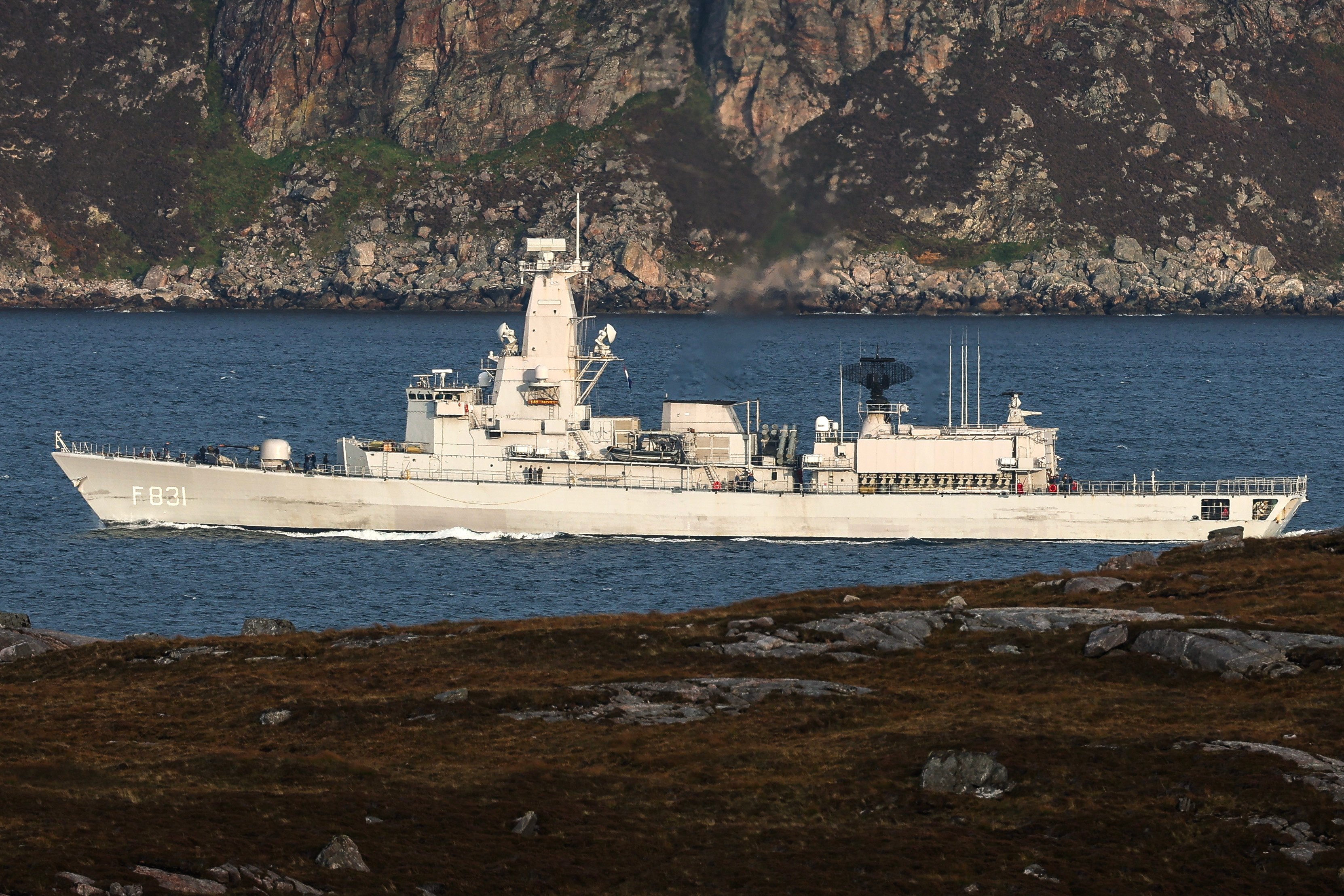
26 Sep 2026 – HNLMS Van Amstel from the Royal Netherlands Navy during Exercise Strike Warrior. Exercise Strike Warrior, 148 (Meiktila) Commando Forward Observation Battery has delivered the Naval Fires Operator Course (NFOC) to its newest observers and personnel from 29 Commando Regiment Royal Artillery. The qualification represents one of the foundational competencies required to operate as part of a Special Observer Team. During the final phase of the course, small teams conducted mission planning before patrolling significant distances to discreetly occupy and sustain themselves within Observation Posts (OPs). Operating in challenging conditions, teams provided persistent surveillance and target acquisition whilst maintaining a low signature throughout the mission. The exercise culminated in the coordination and delivery of Naval Fires from NATO warships from the Netherlands, Portugal and Canada against dynamic targets. Following successful target engagement, teams conducted extraction drills, bringing the scenario to a close. The UK Commando Force are taking part in their largest collective workout in 15 years to demonstrate their ability to safeguard the country – and its allies – against a myriad of threats. Spread across swathes of western Scotland from Cape Wrath to the forests of Galloway and extending into Cumbria, Exercise Strike Warrior runs for four weeks from 21 testing the full panoply of the UK Commando Force’s capabilities. It is the biggest test of almost all elements of the UK Commando Force since it was deployed en masse to Afghanistan on Operation Herrick 15 years ago. Overall, the exercise involves more than 2,000 military personnel from six nations, supported by eight warships and 19 aircraft and helicopters.
HNLMS Van Amstel from the Royal Netherlands Navy during Exercise Strike Warrior. Crown Copyright

The exercise also provides a snapshot of how Britain’s commandos have evolved since their intensive employment in Afghanistan. The Royal Marines’ Future Commando Force concept emphasizes smaller, more dispersed formations capable of operating in contested littoral environments, with greater reliance on maritime mobility, uncrewed systems, long-range fires, and allied capabilities.

Strike Warrior combines those elements, with the exercise including amphibious landings, boarding operations, intelligence and surveillance missions, maritime security, and anti-submarine warfare, alongside drone missions involving strikes and combat resupply. Other elements have practiced establishing protected medical facilities.

The geography of Strike Warrior is equally significant. The exercise extends across Scotland and its surrounding waters, including the Western Isles and out into the North Sea, placing the Commando Force in the maritime environment connecting the highly strategic North Atlantic, Norwegian Sea, and northern European approaches.

That region has become increasingly important to NATO planning because of the difficulty of monitoring and controlling such a large maritime battlespace. Submarines, maritime patrol aircraft, surface combatants, drones, and long-range weapons all have roles to play, while the geography provides numerous opportunities for small forces to operate from the coast and islands.
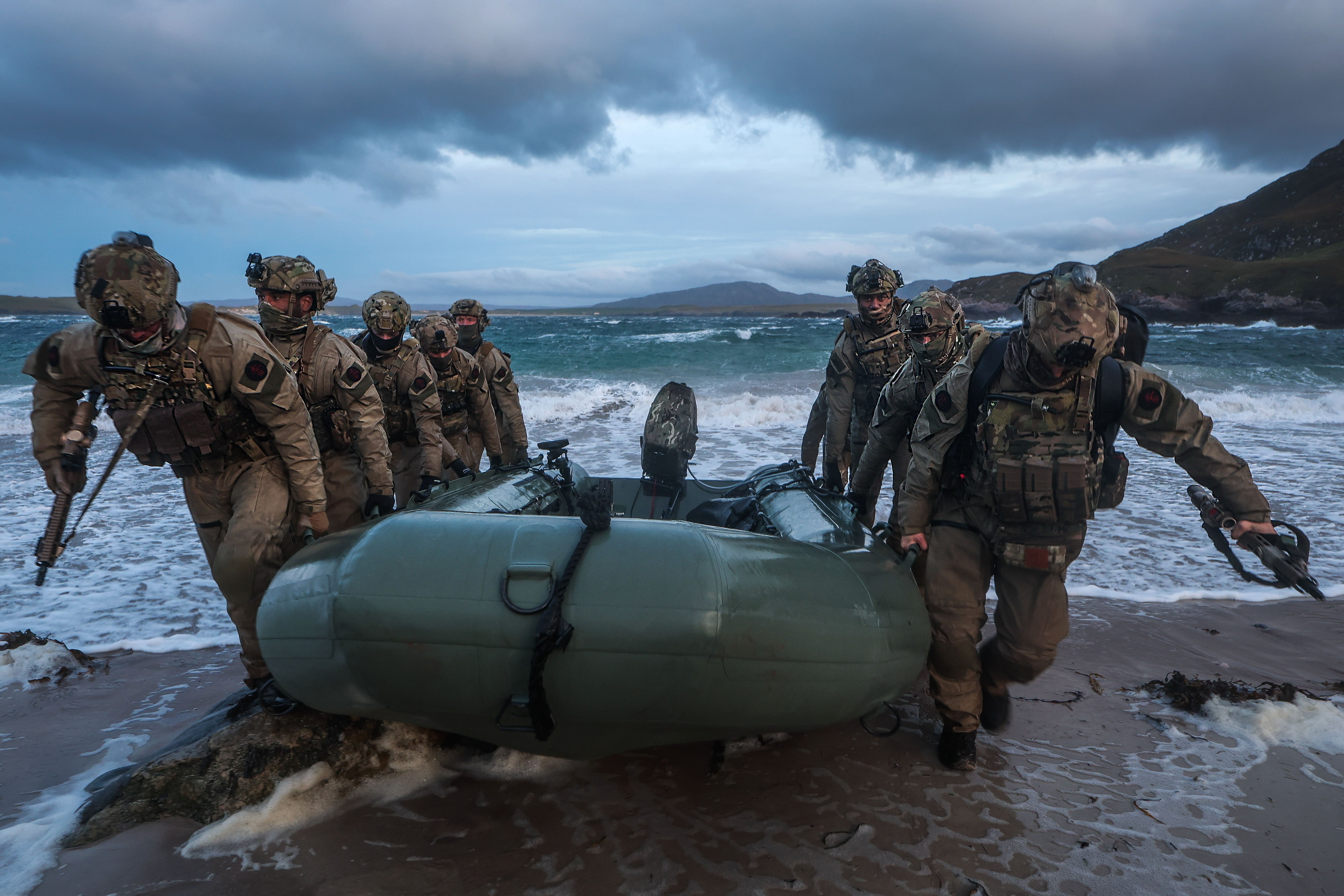
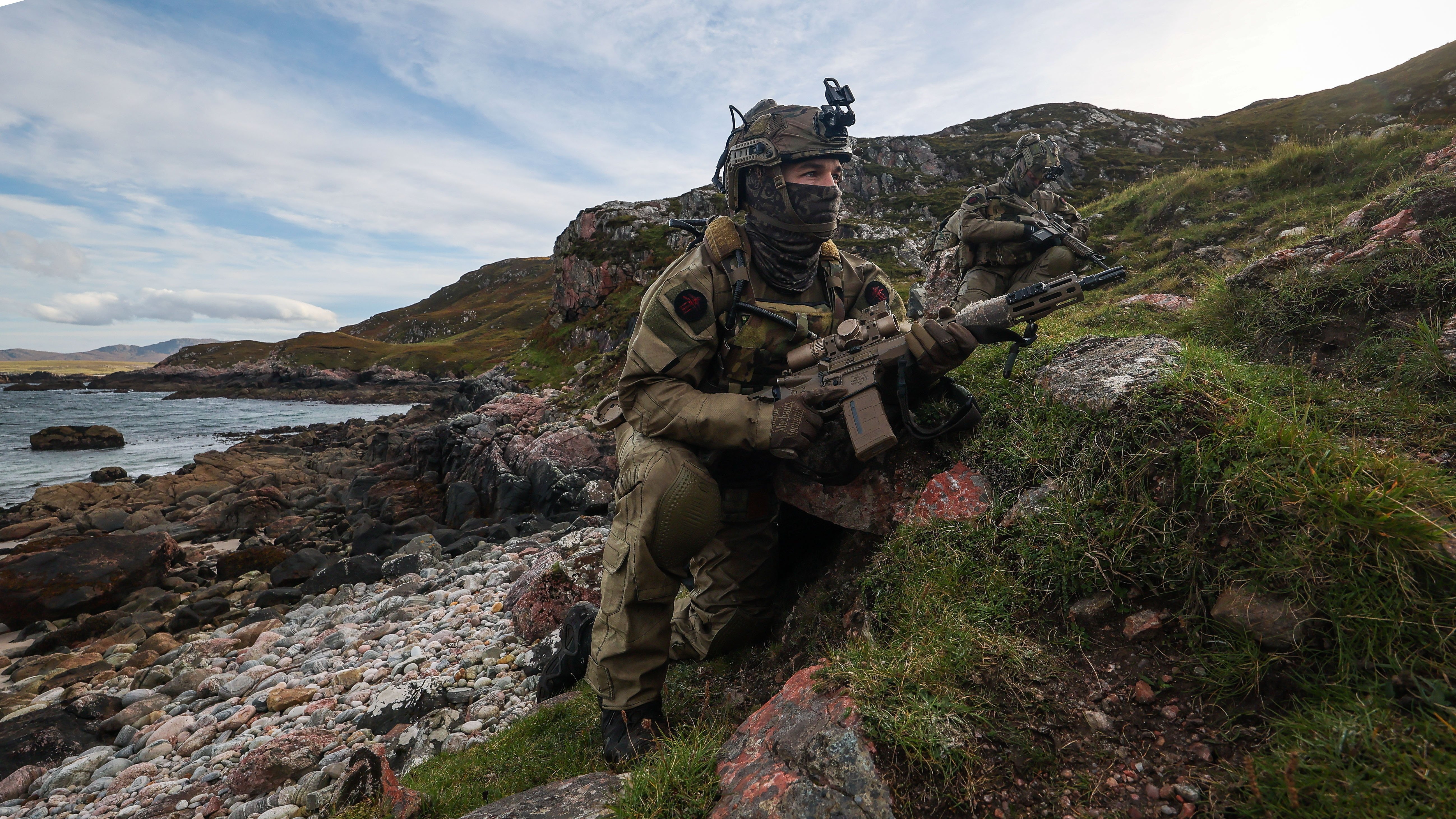
29 Sep 2026 – 148 Battery secure a remote beach in Cape Wrath. 148 (Meiktila) Commando Forward Observation Battery has conducted a Full Mission Profile (FMP), integrating a German Navy submarine and Portuguese warship during Exercise Strike Warrior 26. The serial was designed to rehearse a submarine link-up and develop the Battery’s maritime integration, including float-on/float-off drills with 148’s boats. The force subsequently conducted a submarine infiltration and discreet small-boat insertion towards the target area. The FMP culminated in the establishment of an Observation Post (OP), from which the team coordinated live Naval Surface Fires from the Portuguese warship, resulting in a successful engagement and extraction. The serial demonstrated the capability of NATO partners to integrate specialist assets and coordinate complex activity across the maritime and land domains. The submarine provided Intelligence, Surveillance and Reconnaissance (ISR) support to identify and develop the target, before deploying Special Observation Teams to conduct a tactical beach landing and establish a hasty OP. The Portuguese warship subsequently delivered live Naval Surface Fires against the designated target. “This level of complexity and coordination of live assets has not been achieved by 148 for nearly 30 years. We wanted to demonstrate to our partners across the United Kingdom Commando Force, wider UK Defence and NATO SOF community the type of missions we are prepared to execute against future threats. Warfighting is our focus, and we are prepared to employ specialist assets to deliver Multi-Domain Fires and Targeting.” - Operations Officer, 148 (Meiktila) Commando Forward Observation Battery, Royal Artillery. The UK Commando Force are taking part in their largest collective workout in 15 years to demonstrate their ability to safeguard the country – and its allies – against a myriad of threats.
Crown Copyright

The United Kingdom has been repeatedly using the region and the wider High North as a training ground for this type of activity. Earlier this year, British commandos conducted a submarine insertion during Exercise Cold Response in Norway using the German Navy’s Type 212A submarine U-35. That also involved submarine infiltration, small-boat deployment, establishment of an observation post, and the direction of allied naval fires.
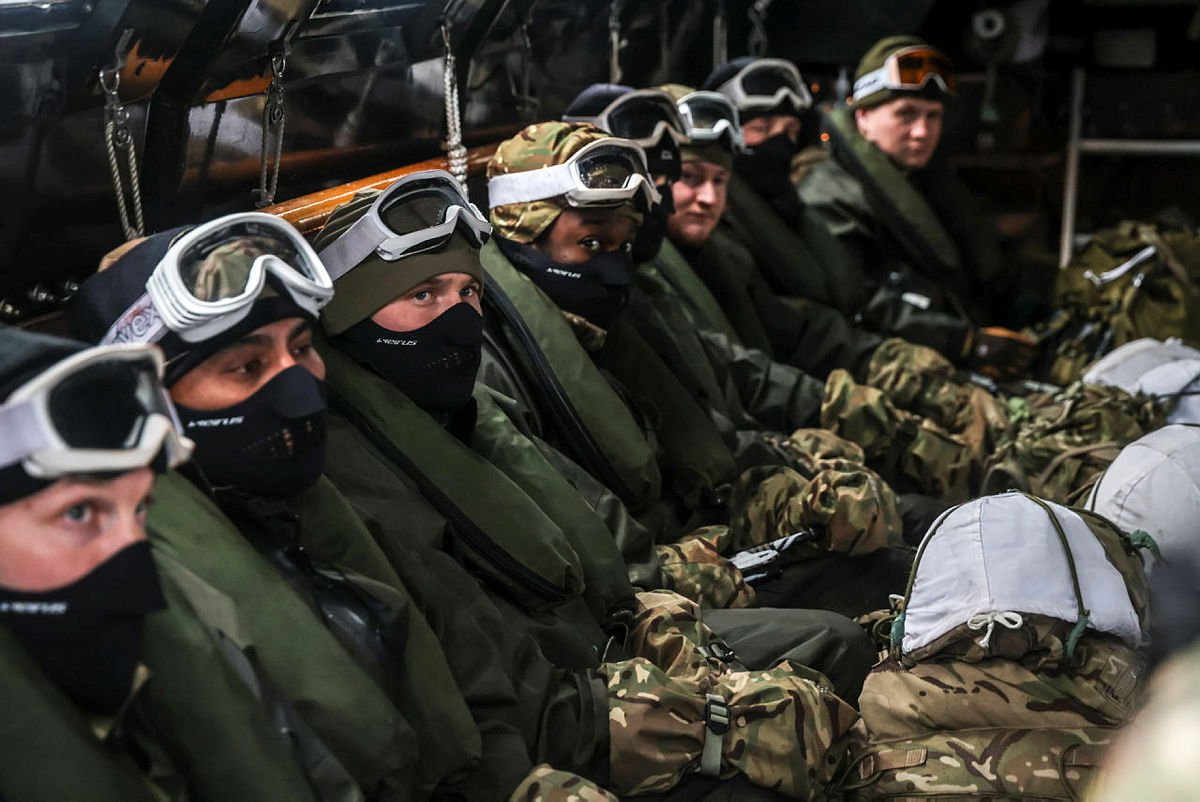
Royal Marines on Exercise Cold Response in North Norway training in extreme cold conditions while exercising boat drills within the fjords of Norway. Crown Copyright

Strike Warrior expands that concept considerably and across a much larger battlespace, providing an opportunity to test not simply individual capabilities but the ability to combine them during a sustained NATO exercise.

The exercise began September 28 and concludes October 9.

For the British Commando Force, the significance extends beyond the dramatic imagery of troops emerging from a German submarine at Cape Wrath. After years in which British commandos were heavily committed to land-based counterinsurgency operations, the exercise is intended to put them firmly back in a maritime and high-end warfighting context.

This is the kind of operation that the U.K. Commando Force is now preparing to conduct alongside NATO partners in the increasingly contested waters of the North Atlantic and High North.

Contact the author: thomas@thewarzone.com

The post British Commandos Emerge From German Submarine During Major NATO Exercise appeared first on TWZ.
  •  

Anduril Dives Into Submarine Construction With New Baltimore Plant

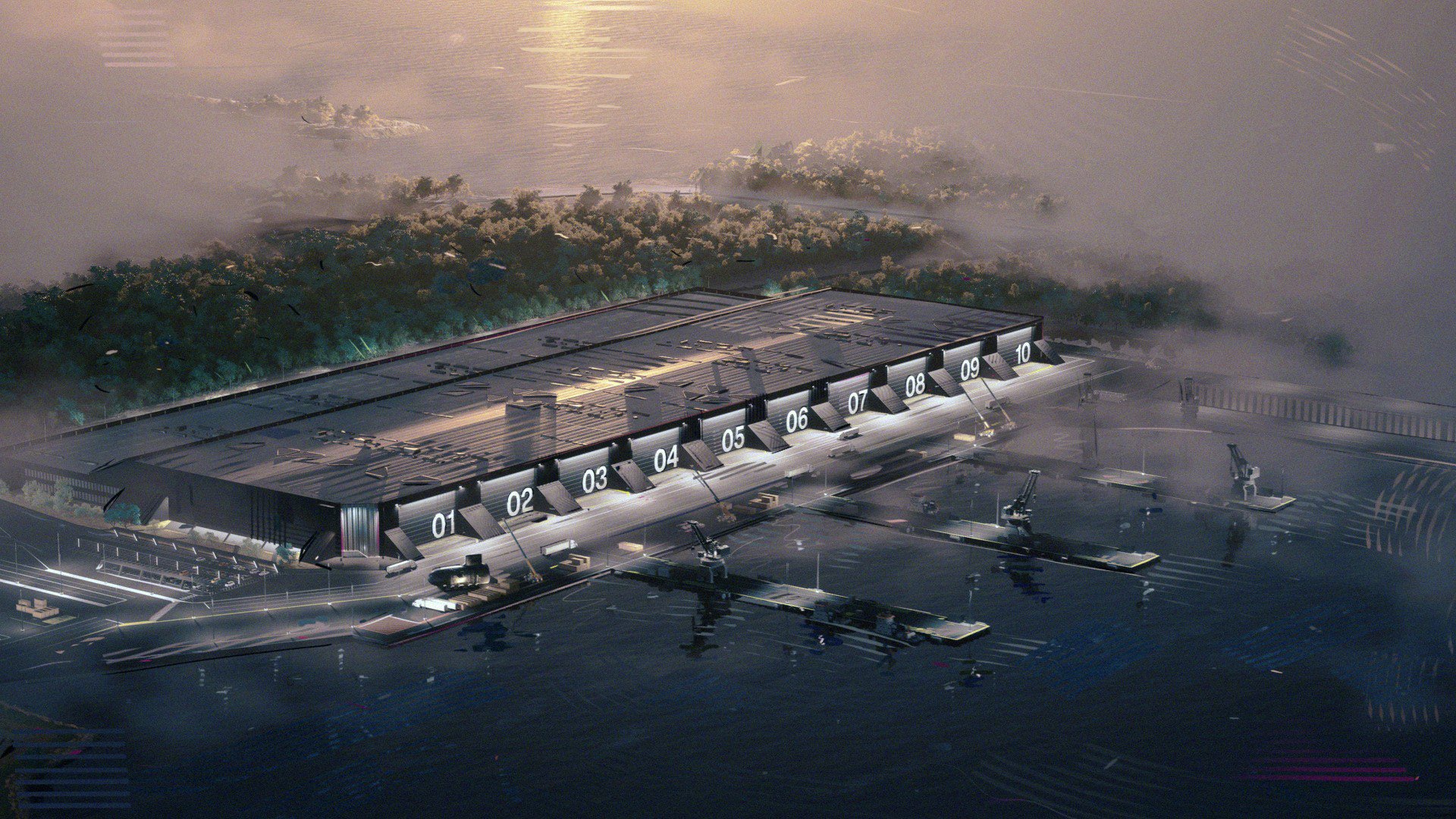
As part of its overall effort to boost America’s flagging shipbuilding capacity, the Trump administration on Tuesday announced that Anduril is building a new two-million-square-foot facility in Baltimore designed to help speed up the production of Virginia class nuclear-powered attack submarines. The plant, dubbed Arsenal-2, will eventually produce components like torpedo tubes and spherical air flasks, which will then be sent to the two shipyards that build nuclear submarines, General Dynamics Electric Boat and Huntington Ingalls Industries’ Newport News Shipbuilding. Anduril’s plan to build complex submarine components is a huge leap for a company with a shipbuilding portfolio consisting of a limited number of smaller craft.

The submarine component plant announcement was made as the Navy is struggling to keep up with its goal of producing two of these boats per year amid a wider issue of construction and delivery delays across the service. However, it will be years before the first Anduril-produced components are placed on a submarine, with no specific timelines for that effort yet established, an industry official told us. We will discuss that in greater detail later in this story.

Australia will buy up to five Virginia class submarines from the US.
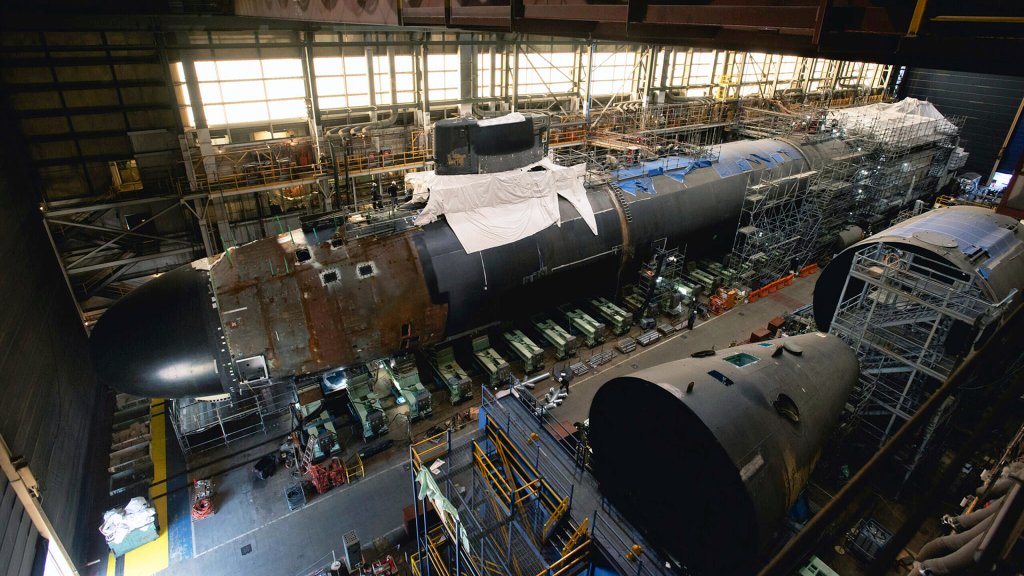
A Virginia class submarine under construction. (HII) HII

“Today’s $6.6 billion investment represents the president’s commitment to restoring American maritime dominance by constructing new vessels in communities like Baltimore and across the country,” White House spokesperson Anna Kelly told a group of reporters, including from TWZ, at a Tuesday morning press conference.

Those funds include a $3.7 billion investment from Anduril to build and staff the new facility, and a contract worth up to $2.9 billion awarded to Anduril by the Navy to produce the components.

“The Virginia class submarine program is one of the most critical warfighting capabilities that our nation has that guarantees deterrence every single day,” Anduril President and Chief Strategy Officer Chris Brose stated. “It is also a program that has been challenged in terms of the ability to meet the Navy’s requirements. So we’re, as a nation, not necessarily where we need to be, and that’s not because of our shipyard workers.”

The Navy currently has 26 Virginia class boats, with two more expected to be commissioned next spring, a senior administration official told reporters on Tuesday. Another 31 vessels are still needed to meet the Navy’s overall plan to have 59 Virginia class boats.

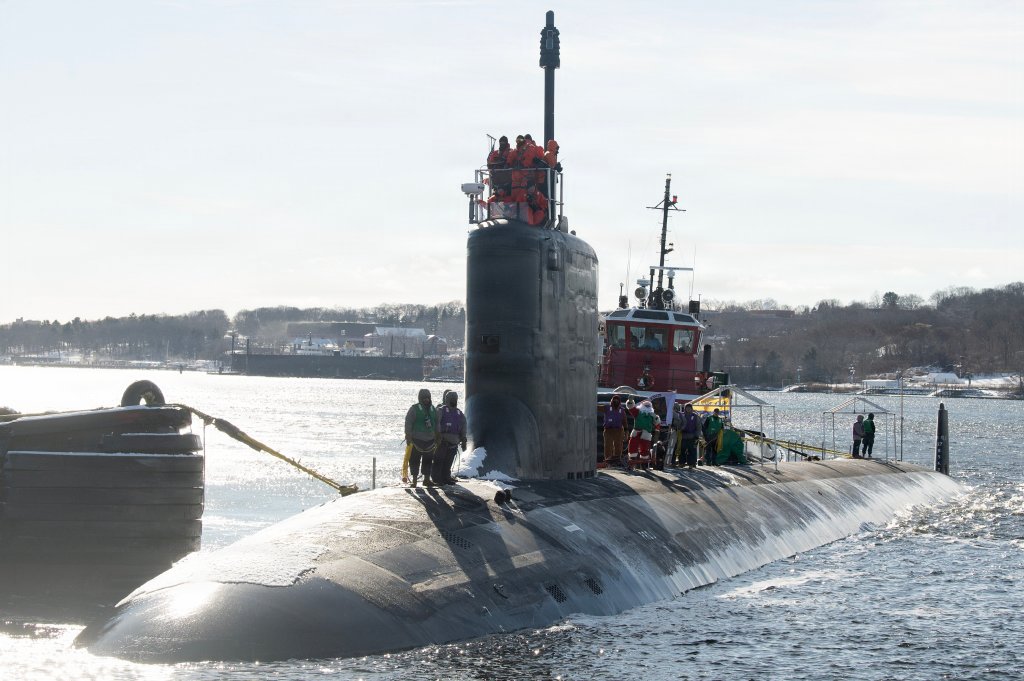
The future USS Idaho (SSN 799) pulls into Submarine Base New London in Groton, Conn. for the first time on Monday, December 15, 2025. The future USS Idaho was delivered to the Navy from General Dynamics Electric Boat shipbuilding facility down river after recently completing a series of at-sea testing. When commissioned in the spring, Idaho will be the 26th Virginia class attack submarine and fifth U.S. Navy ship to be named for the Gem State. (U.S. Navy Photo by John Narewski)
The USS Idaho (SSN 799) pulls into Submarine Base New London in Groton, Connecticut, for the first time on Monday, Dec. 15, 2025. When commissioned, it became the 26th Virginia class attack submarine and fifth U.S. Navy ship to be named for the Gem State. (U.S. Navy Photo by John Narewski) John Narewski

However, while the Navy has been buying them at a rate of two per year from Fiscal Year 2011 through Fiscal Year 2024, “the actual Virginia class production rate has never reached 2.0 boats per year, and since 2022 has been limited by shipyard and supplier firm workforce and supply chain challenges to about 1.1 to 1.2 boats per year, resulting in a growing backlog of boats procured but not yet built,” according to a Congressional Research Service (CRS) report published in January. “Key drivers of the drop in production include workforce challenges, first-time quality, material and supplier delays, and lead ship issues associated with the Virginia Payload Module [VPM] variant. The Navy is working closely with the shipbuilders to drive improvement throughout the Virginia enterprise.”

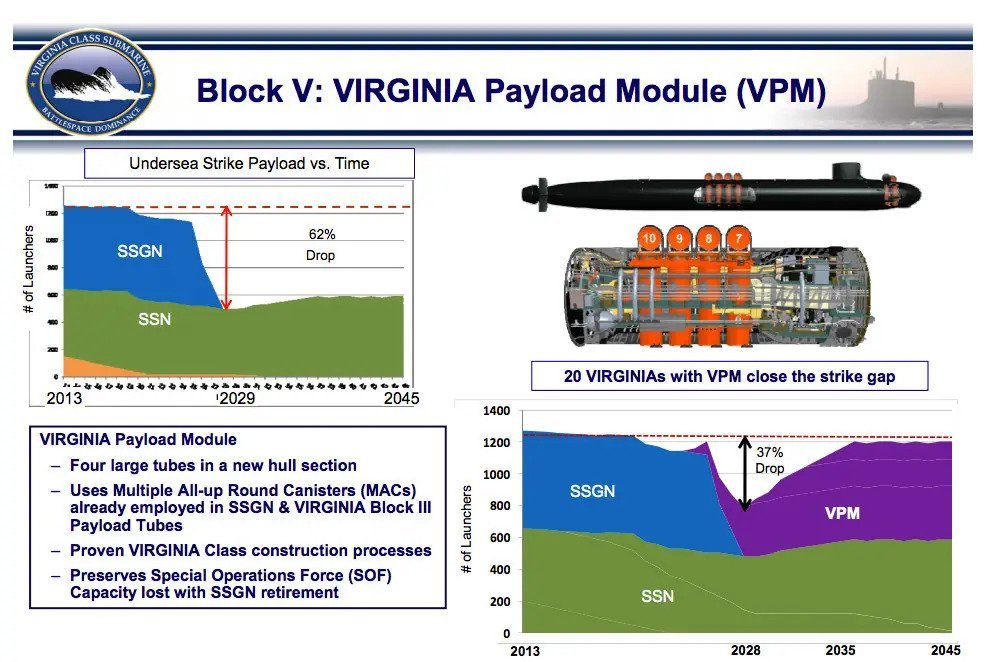
The VPM is an 84-foot hull extension that contains four additional large vertical tubes designed to launch Tomahawk land-attack cruise missiles, Intermediate-Range Conventional Prompt Strike (IRCPS) hypersonic missiles, and other payloads. You can read more about the Navy’s VPM plans in our story here.

A briefing slide with details about the Virginia Payload Module (VPM) that will be added to the Block V Virginia class submarines. USN

Adding to the strain on production and delivery, Australia is set to get one new-build Virginia class boat and two from the U.S. Navy’s fleet under the 2021 trilateral AUKUS nuclear submarine acquisition deal with the United States and the United Kingdom.

In May, Chief of Naval Operations Adm. Daryl Caudle told Congress that the service would meet its two-boat-a-year delivery rate by 2032.

During Tuesday’s press conference, officials laid out claims that the new Anduril plant will address several of the issues that have slowed down the construction and delivery of these submarines.

“If you look at this in terms of capacity, the potential based on the area and what Anduril plans to do is to add about 9 million hours of labor a year at this facility,” stated a senior administration official, who, like others on Tuesday spoke on condition of anonymity. “That would be the equivalent of about a 15% increase, and so that would be directly translatable to Virginia class submarine production. So having those torpedo tubes earlier would let us move production of current Virginia submarines under construction faster.”

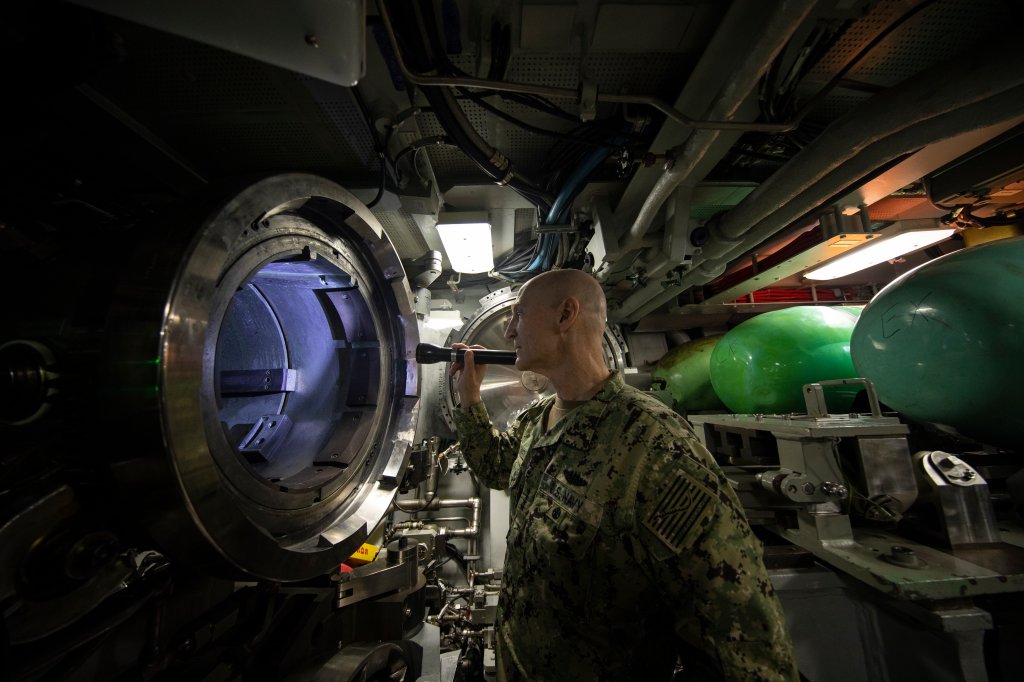
BEAUFORT SEA, Arctic Circle (March 6, 2022) – Adm. Frank Caldwell, Jr., director of the Naval Nuclear Propulsion Program, examines a torpedo tube aboard the Virginia-class fast attack submarine USS Illinois (SSN 786) during Ice Exercise (ICEX) 2022. ICEX 2022 is a three-week exercise that allows the Navy to assess its operational readiness in the Arctic, increase experience in the region, advance understanding of the Arctic environment, and continue to develop relationships with other services, allies, and partner organizations. (U.S. Navy photo by Mass Communication Specialist 1st Class Alfred Coffield/Released)
Adm. Frank Caldwell, Jr., director of the Naval Nuclear Propulsion Program, examines a torpedo tube aboard the Virginia class fast attack submarine USS Illinois (SSN 786) during Ice Exercise (ICEX) 2022. (U.S. Navy photo by Mass Communication Specialist 1st Class Alfred Coffield/Released) Petty Officer 1st Class Alfred Coffield

In addition, Anduril plans to draw on a huge potential workforce to staff the plant.

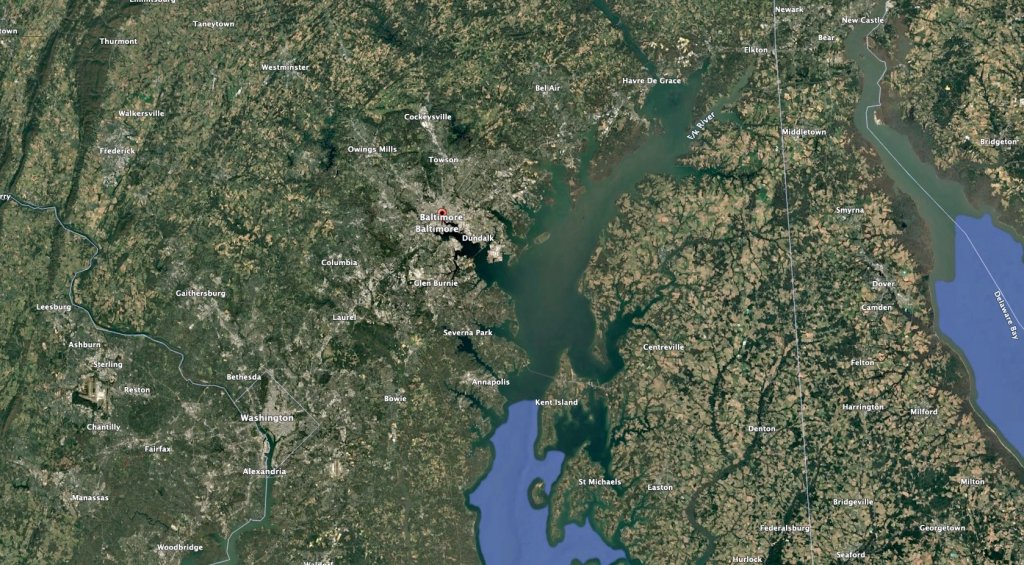
“If you basically draw like a one-hour radius around the Baltimore County area, there are millions and millions of people who could potentially contribute and work at this shipyard, and that is a huge selling point for us,” an industry official suggested.

The greater Baltimore area. (Google Earth)

Beyond producing components like torpedo tubes, Anduril aspires to eventually build “full ship sections, bows, sterns, etc.” at Arsenal-2, the industry official added.

Anduril said Arsenal-2 will be “purpose-built” for the “high-volume, high-precision production of undersea naval capabilities.”

“The shipyard’s layout is optimized for production,” the company stated in a media release. “Reduced distances between fabrication, assembly, testing, and integration areas eliminate the staging bottlenecks that slow conventional yards.”

“A functional 1,200-foot graving dock and multimodal road and rail access support large-scale component movement,” Anduril added. “High-bay assembly halls, adjacent fabrication areas, and reconfigurable production lines allow the yard to shift rapidly as Navy requirements evolve.”

ArsenalOS, Anduril’s industrial software platform, “will provide the digital backbone for the yard and its production systems,” the company further pointed out. “It will connect fabrication workflows, outfitting sequences, material movement, inspection protocols, and documentation requirements in a single system, giving workers and managers real-time visibility into the state of production. Digital work instructions, embedded quality controls, modern sensing, and automation will support the expertise of welders, pipefitters, electricians, shipfitters, inspectors, and other skilled trades.”

Anduril claims the project “will create 3,100 direct jobs and support more than 11,000 indirect jobs. The site will drive $2 billion in annual economic output, including an estimated $312 million in wages each year.”

Before Arsenal-2 is up and running, Anduril said it plans to “manufacture critical Virginia class submarine components at a new 160,000-square-foot facility in Orange County, California, purpose-built to support key submarine construction processes and SUBSAFE-qualified production qualification [efforts].”

The Orange County facility will give Anduril “a two-year operational head start to develop and validate manufacturing methods, production workflows, and quality systems before  Arsenal-2 comes online,” the company noted. “It will support prototyping and production of Virginia-class test assets and critical maritime components, including torpedo tubes, while allowing Anduril to recruit and train the early workforce on the systems and standards that will ultimately scale at Arsenal-2. Once Arsenal-2 comes online, the Orange County facility will continue supporting broader maritime manufacturing efforts across Anduril’s industrial network.”

As we noted earlier in this piece, it will be years before anything produced by Anduril winds up on a sub. In addition to recruiting and training a workforce to build the components and ensuring the production system can meet goals, the parts then have to be tested to ensure they are safe enough to place on boats.

The industry official told TWZ that there is no schedule yet for when that will happen.

“We are starting this work now,” the industry official said. “We’re going to be working quickly. There’s a lot we’re going to have to do to prove the ability to produce the initial components – the torpedo tubes. We’re going to have to work with our partners in industry and partners in government on the certification. So it’s really not possible to put a time stamp on it as much as I’d like to.”

“I think our goal, and I know this is shared by the administration, is to go as fast as possible while keeping the bar of safety as high as it needs to be, and try to get these systems certified so that they go into the production of boats… and solve the critical limiting factor currently in our supply chain, and help our industry partners produce more submarines.”

Arsenal-2 follows the development of Anduril’s Arsenal-1 plant in Ohio, first announced two years ago. That five-million-square-foot facility, once fully up and running, will be able to “produce tens of thousands of autonomous weapons systems addressing the urgent needs of the United States and our allies,” the company said at the time.

Anduril’s Arsenal-1 plant in Ohio. (Anduril)

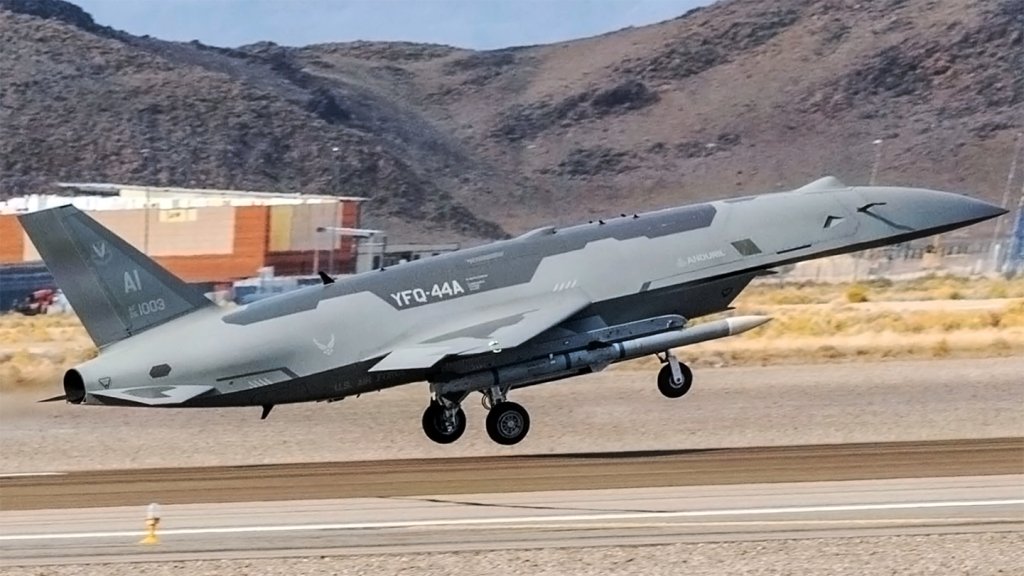
Arsenal-1, however, remains a work in progress, with more construction work yet to be done. Still, Anduril’s first product from that plant, the U.S. Air Force’s Collaborative Combat Aircraft (CCA) known as the YFQ-44A Fury, rolled off the assembly line there in July. That milestone met the company’s initial production schedule announced in January 2025, according to JobsOhio, the state’s business development arm.

A U.S. Air Force YFQ-44A Fury aircraft, assigned to the Collaborative Combat Aircraft Experimental Operation Unit, takes off for a mission flight during an Agile Combat Employment exercise at Creech Air Force Base, Nevada, July 21, 2026. The flight was part of a broader ACE exercise designed to test the resilience, adaptability, and combat effectiveness of the semi-autonomous fleet. (U.S. Air Force photo by Staff Sgt. Kristal Munguia)
A U.S. Air Force YFQ-44A Fury aircraft, assigned to the Collaborative Combat Aircraft Experimental Operation Unit, takes off for a mission flight during an Agile Combat Employment exercise at Creech Air Force Base, Nevada, July 21, 2026. (U.S. Air Force photo by Staff Sgt. Kristal Munguia) Staff Sgt. Kristal Munguia

Anduril, which also produces systems like the Ghost Shark extra-large autonomous undersea vehicle (in partnership with Australia), the Roadrunner reusable missile-like air vehicle, the Iris family of passive infrared sensors, and a wide range of other items, is playing a growing role in the Trump administration’s weapons development efforts.

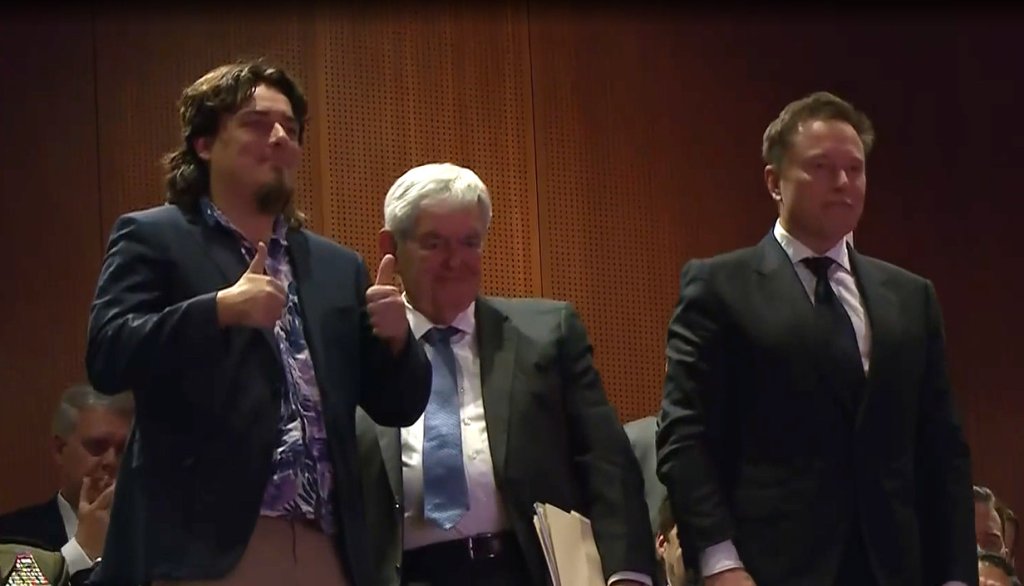
Last month, Defense Secretary Pete Hegseth announced that Anduril co-founder Palmer Luckey, who made a name for himself and his fortune in the virtual reality space with Meta, will help lead a new program dubbed Project Meridian. The goal, according to a Pentagon memo, is to “map the trajectory of future warfare, identify critical capability gaps, and propose actionable solutions in furtherance of the identified goals in the 2026 National Security Science and Technology Strategy.”

The Pentagon’s Chief Technology Officer, Emil Michael, has been directed to set up this project. SpaceX founder Elon Musk and Newt Gingrich are other key members.

A screen capture from last month’s livestream of Secretary Hegseth’s speech announcing new plans for autonomous warfare capabilities. From left to right, Palmer Luckey, Newt Gingrich, and Elon Musk. U.S. Military capture

From our story about Project Meridian and the Pentagon’s overall effort to boost its autonomous warfare capabilities:

“The inclusion of Musk and Luckey does raise ethical questions, as they both lead companies with major U.S. government contracts already, and which could be in line to see more opportunities based on Project Meridian’s findings. What guardrails might be put in place to prevent conflicts of interest is unclear.”

Regardless of any such concerns, today’s shipyard announcement is a clear indication that the Trump administration and the Pentagon see Anduril as a major player across its weapons manufacturing industrial base. It’s also a reminder of just how challenging it is to actually expand America’s ability to build fighting vessels.

Contact the author: howard@twz.com

The post Anduril Dives Into Submarine Construction With New Baltimore Plant appeared first on TWZ.

  •  

Heavily Damaged Submarine USS Connecticut Now Won’t Return To Service Until 2027

The U.S. Navy’s schedule for getting USS Connecticut, one of its prized Seawolf class nuclear attack submarines, back into service has slipped into next summer. The boat suffered severe damage, especially to its bow, in a collision with an underwater seamount in the South China Sea in 2021. The service had previously hoped that repairs would be finished before the end of this year, and planning is also now underway for the submarine’s retirement in 2031. This would mean it could serve for just four years before being pulled from service once and for all.

“USS Connecticut (SSN 22) is currently undergoing a complex Extended Docking Selected Restricted Availability (EDSRA) at Puget Sound Naval Shipyard & Intermediate Maintenance Facility. Current work consists of structural and systems restoration and required lifecycle maintenance,” a Navy official told TWZ today. “The Navy’s target completion date for the availability is the summer of 2027. PSNS & IMF is dedicated to executing this work with the highest standards of safety, technical accuracy, and craftsmanship to ensure the ship returns to the fleet ready to take its place at the tip of the spear in defense of our nation’s interests.”

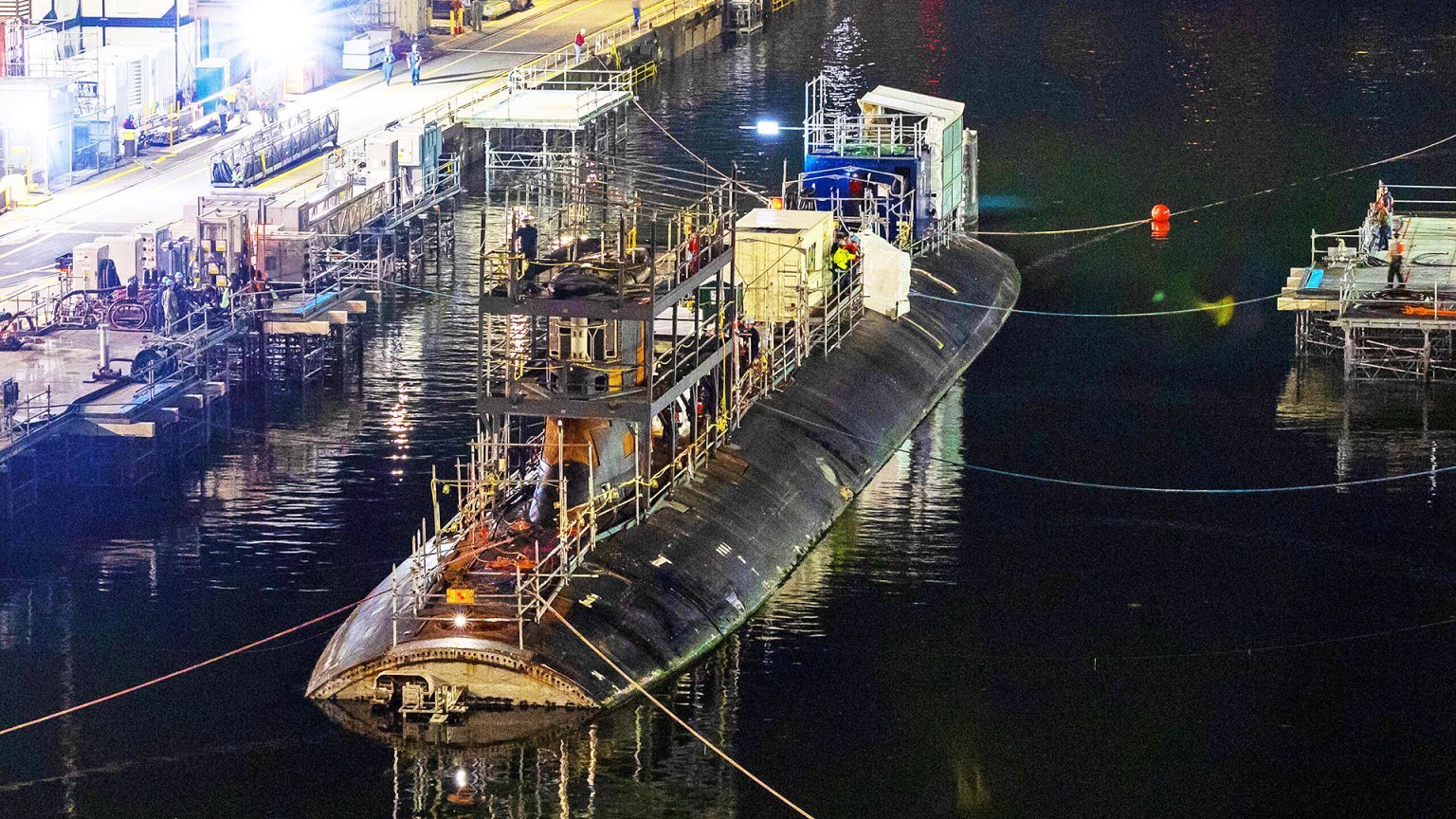
The USS Connecticut seen at the Puget Sound Naval Shipyard in 2023. USN

USS Connecticut is the second of just three Seawolf class submarines commissioned between 1997 and 2005, the others being USS Seawolf and USS Jimmy Carter. The Jimmy Carter, which came last, is a one-of-a-kind subvariant of the design that is optimized for underwater espionage missions. However, the Seawolf and Connecticut also feature advanced capabilities compared to other submarines in the Navy’s inventory today, and the service utilizes all three for a variety of specialized tasks, for which they are in very high demand.

After USS Connecticut hit the seamount in October 2021, the submarine first limped to Guam, and then made its way to San Diego in southern California. From there, it headed north to the Puget Sound area, where it has been ever since. The Navy’s investigation into the incident put heavy emphasis on how a weak command environment and lax attitudes toward the performance of key tasks had put the submarine on a path to the accident, as you can read more about in detail here.

The EDSRA formally began in February 2023. At that time, the Navy projected that the repairs would be completed in September 2025. By July 2023, the schedule had already shifted to early 2026, according to Naval News. In July 2025, the service confirmed to TWZ that the timeline had moved again to the right, to late 2026.

Another view of USS Connecticut at the Puget Sound Naval Shipyard in 2023. This picture offers a good sense of the extent of the damage to its bow. USN

The exact reasons for the delays are unclear. TWZ has stressed the particular complexities of major repairs to any of the Navy’s trio of Seawolf class submarines in our past reporting on Connecticut. As we wrote in 2023 around the start of the EDSRA:

“As for the USS Connecticut, as the images show, her state remains relatively the same, at least in terms of what is visible, compared to when she arrived over a year and a half ago. Her sonar dome is still missing and, clearly, the boat has been idle for some time, with huge sections of its anechoic coating missing from its sail.”

“Major repairs to the submarine’s bow, sonar, and other underside structure components will be challenging as the Seawolf class is long out of production. On top of that, just three boats were ever built, with one being a heavily modified sub-type in its own right, the highly secretive USS Jimmy Carter (SSN-23). In the past, similar damage has been fixed by leveraging spare parts and entire sections of decommissioned submarines of the same class. That simply is not an option in this case.”

The Navy’s 2025 Fiscal Year budget proposal highlighted exactly these broader issues in seeking funds for spare bow domes “for use in the event replacement is required,” separate from the incident with the USS Connecticut. The original sustainment strategy for the Seawolf class did not include these items, which have a “three plus year lead time” to produce.

With the EDRSA, the Navy is also taking the opportunity to conduct a deep overhaul of USS Connecticut, which could include the integration of various upgrades. The Navy’s budget documents have long highlighted efforts to modernize key systems on all three Seawolf class submarines, some of which were first designed in the 1970s.

USS Connecticut underway in 2009. USN

How much the repairs and accompanying overhaul will cost is also not clear. In 2021, Congress approved $40 million for “emergency repairs” for Connecticut and an additional $10 million for a new bow dome, but the full price tag is expected to be far steeper. The Seawolf class submarines were extremely expensive to procure in the first place, costing approximately $3.1 billion apiece in 1983, or some $10.6 billion in 2026 dollars. This was due in large part to the truncated order, from 29 down to three, as a result of post-Cold War drawdowns.

Depending on when repairs to the USS Connecticut are actually finished, the Navy could find itself for at least a time with just one Seawolf class submarine in active service. USS Seawolf is currently scheduled to start a routine maintenance availability next May, which will then run through February 2030, per Navy budget documents. As mentioned, the Navy is now also planning to inactivate USS Connecticut in 2031, making it the first Seawolf class submarine to be retired, per its most recent annual shipbuilding plan.

The service still has plans to acquire a new class of attack submarines, which has been discussed in the past as something closer to a true successor to the Seawolf class than the Virginia class boats being procured now. However, these new submarines, currently referred to as SSN(X), are not expected to arrive until the mid-2040s at the earliest. Between now and then, the Navy is set to acquire a one-of-a-kind seabed warfare version of the Virginia, which could well take over for the USS Jimmy Carter, as you can read more about here. In August, the service announced that stretched Block IV and V Virginia class submarines with Virginia Payload Modules (VPM) will now be categorized as guided-missile types (SSGN), as well.

When it comes to USS Connecticut, the Navy remains committed to getting the highly capable submarine back to the fleet after being sidelined for nearly five years now. At the same time, the boat has now already entered the twilight of its career, with just four years of active service life left if the current repair schedule holds.

Contact the author: joe@twz.com

The post Heavily Damaged Submarine USS Connecticut Now Won’t Return To Service Until 2027 appeared first on TWZ.

  •  

Chinese Next-Generation Submarine Developments Spotted In New Satellite Imagery

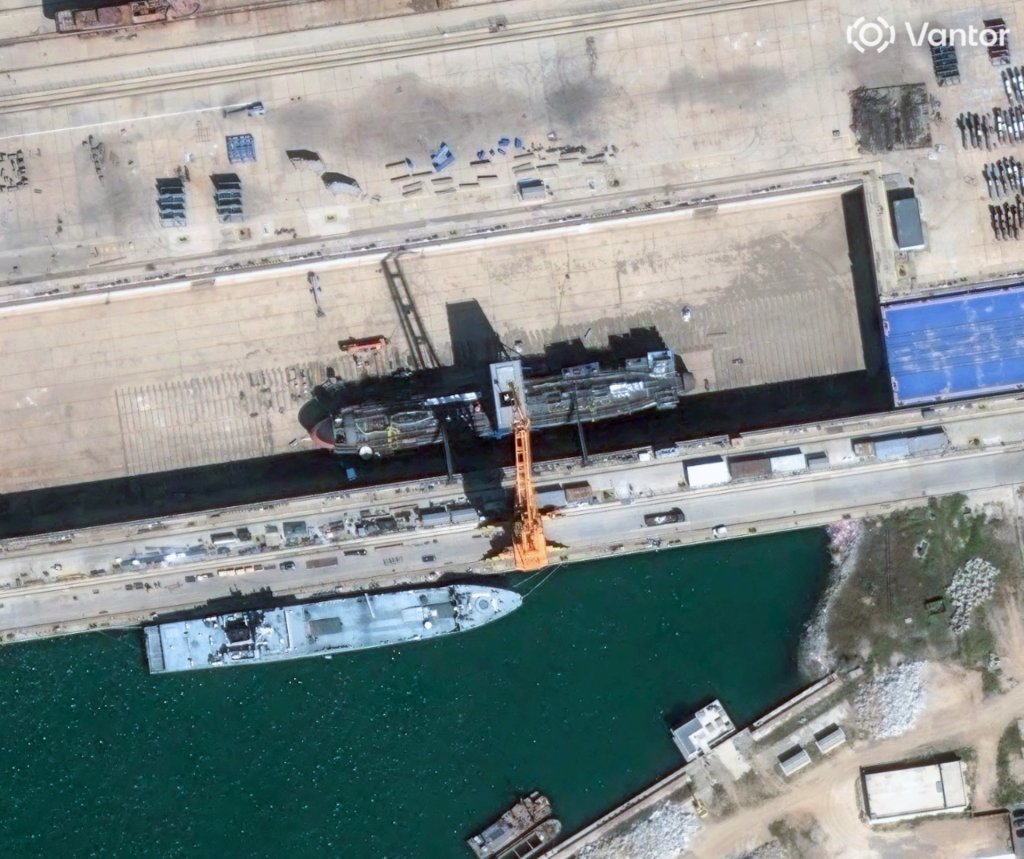
Recent satellite imagery of a shipyard in northeastern China offers interesting new insights into the country’s next-generation submarine developments. The images notably show a pumpjet propulsor and other features worth examining on an example of what is generally described as a new class of nuclear-powered attack submarine, or SSN.

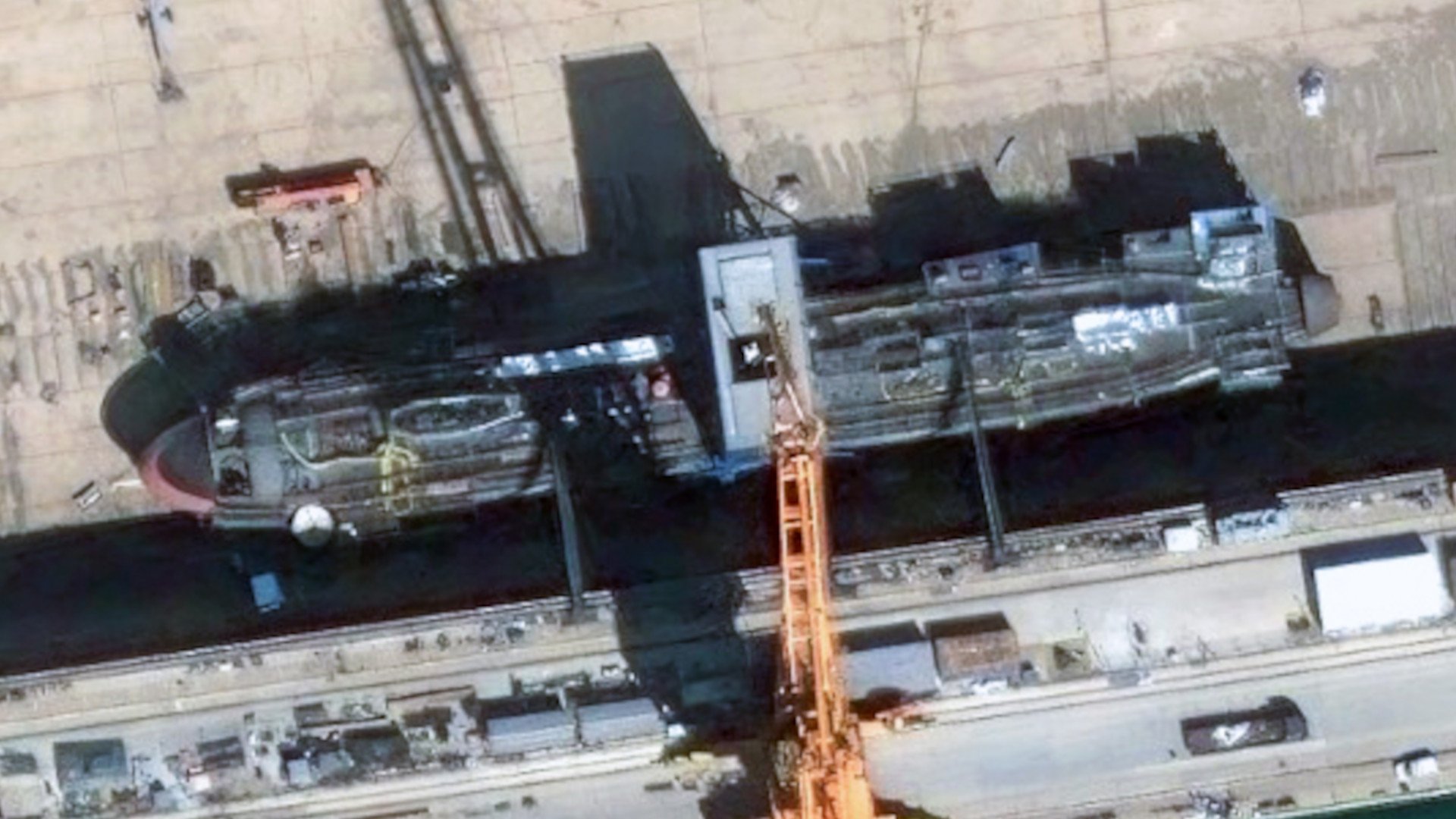
TWZ has obtained a new image taken on September 18 of the submarine in question, which is being built at the Bohai Shipyard in Huludao, from Vantor. Janes reported on this submarine earlier today, based on a separate Vantor image from September 1. The outlet also described the boat as a Type 095, a commonly used, but still unofficial designation. This is something we will come back to later on.

A wider view of the new Chinese submarine under construction at the Bohai Shipyard in Huludao on September 18, 2026. Satellite image ©2026 Vantor

As mentioned, the pumpjet propulsor immediately stands out in both images. This is also understood to be a feature on the Type 093B nuclear-powered attack submarine, a significantly improved variation on that earlier design, which first emerged in the early 2020s. Compared to traditional exposed propellers and more basic shrouded types, pumpjets offer benefits for quieter operation and efficiencies, especially at higher submerged speeds.

The recent imagery also highlights the submarine’s X-shaped stern plane arrangement. This is not found on the Type 093B, which is considered to be something of a bridge between that class and the next-generation design. Broadly speaking, an X-shaped configuration offers advantages when it comes to enhanced maneuverability, efficiency, and safety, which can be particularly useful in littoral environments. It can also provide benefits when it comes to acoustic signature reductions across significant parts of the submarine’s operating envelope compared to the cruciform stern planes.

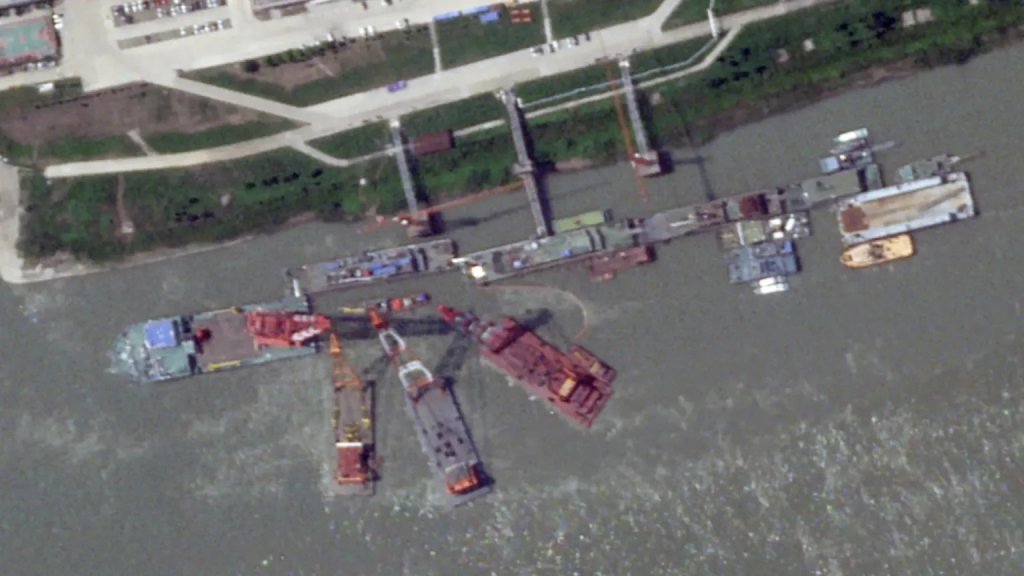
Another Chinese submarine design that emerged in 2024, currently referred to as the Type 041 or Zhou class, and that is understood to feature a hybrid nuclear/conventional propulsion system, also has an X-shaped stern configuration. The first known example of the Type 041 came to light after it appeared to have sunk in a shipyard.

Crane barges seen surrounding the first known Type 041 submarine after it apparently sank at China’s Wuchang Shipyard in 2024. PHOTO © 2024 PLANET LABS INC. ALL RIGHTS RESERVED. REPRINTED BY PERMISSION

An X-shaped stern arrangement also looks to be a feature on yet another new class of submarine that appeared at the JN (Jiangnan) Shipyard in Shanghai earlier this year. Initial reports also suggested that the design lacked a traditional sail. However, it has been confirmed that it has a sail, but that is very small proportionally to the overall size of the boat. Truncated sails can offer performance and other advantages, but there are trade-offs.

The image of the submarine that Janes obtained also notably shows an open rectangular-shaped section aft of the sail. The September 18 image that we received from Vantor shows a structure placed over that section of that submarine, obscuring ongoing work on that part of the boat. The Type 095 is widely expected to feature some type of vertical launch system (VLS) array able to accommodate a variety of anti-ship and land-attack cruise missiles, as well as potentially hypersonic types. The Type 095 is also sometimes referred to as a guided missile submarine, or SSGN, as a result. The open area seen in the September 1 shot could be where the VLS array is set to be fitted. It might also provide access to the reactor compartment or another area of the submarine.

The clearest photos we have on the Type 095 SSN!

As we can see, there is one confirmed chamber than could physically fit about 18-24 VLS Cells. There is a big chance that more than one VLS Chamber exists, with an estimate VLS count from 24-48+ VLS pic.twitter.com/0ZJ8gsl4su

— PLA Military Updates🇨🇳 (@PLA_MilitaryUpd) September 21, 2026
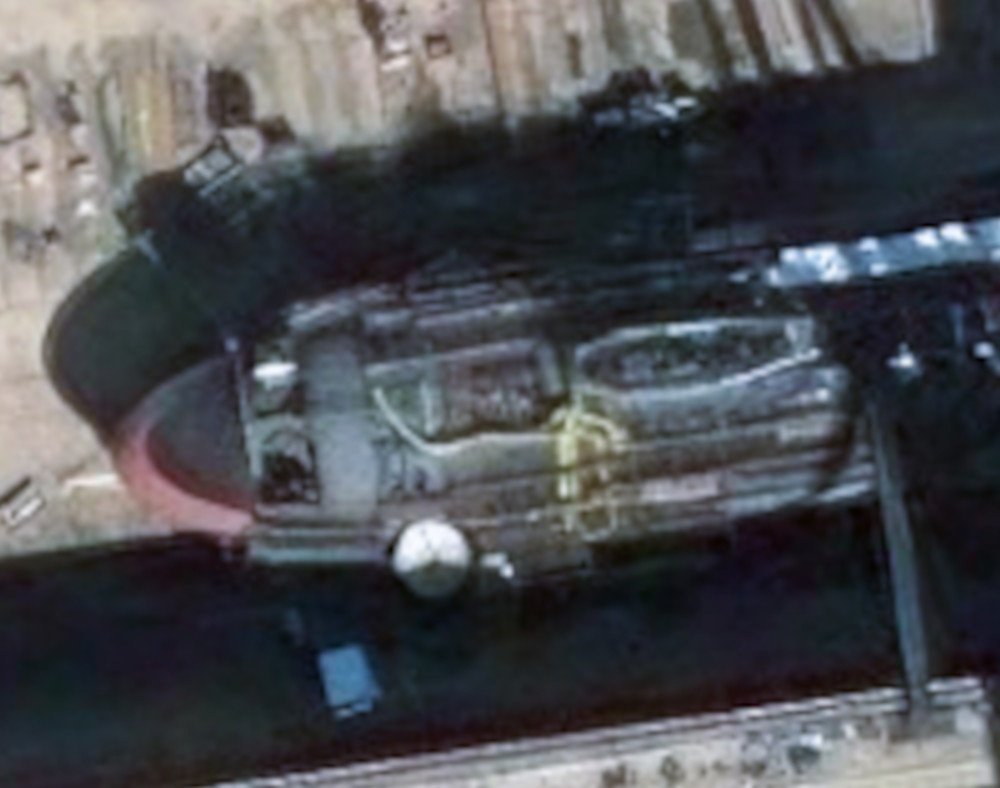
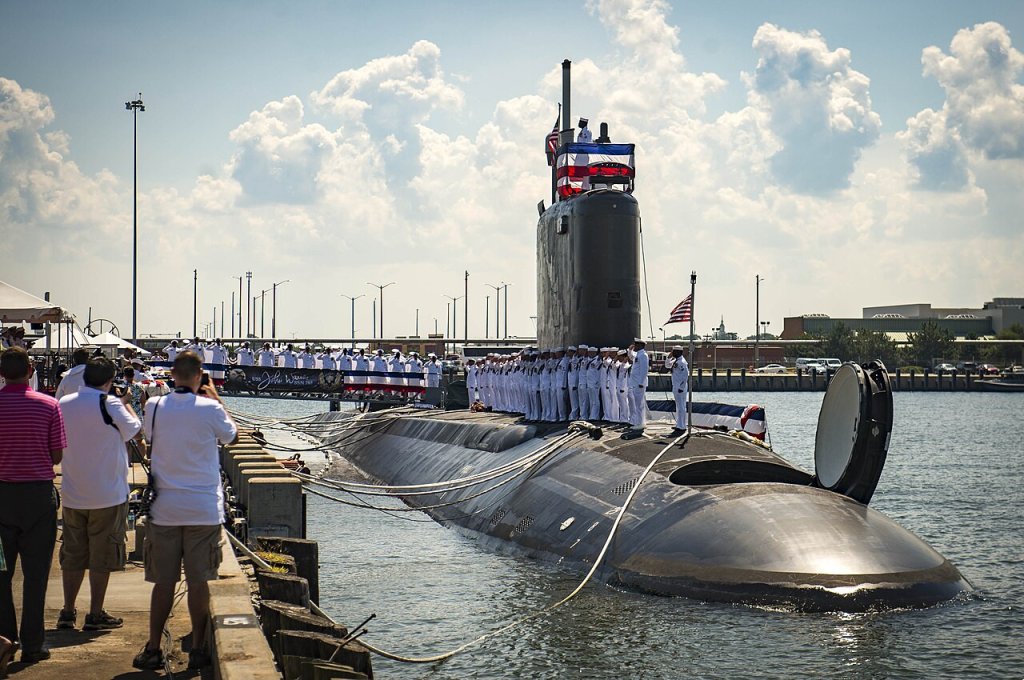
Interestingly, the September 18 image also shows what look to be at least two relatively large circular openings, side-by-side, at the bow end of the submarine in front of the sail, the purpose of which is not immediately clear. There is a possibility these could also be for vertically launching munitions or other payloads. As a point of comparison, U.S. Virginia class nuclear attack submarines, starting with the Block III version, have two large-diameter Virginia Payload Tubes (VPT), one in front of the other, in the bow in front of their sails. At the same time, the openings on the submarine in Huludao also appear to be in a position that is very close to where the submarine’s main sonar array would be installed, and they could be tied to that aspect of the design, too.

A close-up look at the bow end of the submarine under construction in Huludao as seen in the September 18, 2026, image. Satellite image ©2026 Vantor
The Block III Virginia class submarine USS John Warner seen at its commissioning ceremony with one of its two Virginia Payload Tubes open. USN

“I think it’s too early to be sure about the VLS configuration from publicly available imagery. I realize people assume the large rectangular space halfway behind the sail is the VLS, but I am not sure this is the case and I’d caution to jump to conclusions. The space could also be related to work on the reactor compartment,” Alex Luck, a naval analyst who closely tracks submarine and Chinese navy developments, told TWZ. “With Type 093B, the VLS after launch was initially covered with a tarp, and then the installed launchers were readily visible quite quickly during the fitting-out process. The work process may change with these newer boats, but the different appearance during launch and fitting out needs to be considered in that regard.”

“I do expect Type 095 to have a VLS of some sort, but I am not sure as of yet what the configuration would look like, or where exactly it is located,” he added.

The bigger outstanding question may be exactly what type of submarine is currently being built now at the Bohai Shipyard. Based on a review of additional imagery from Planet Labs’ archive, the boat appears to be around 394 feet (120 meters) long. When the first example of what was assessed to be a Type 095 emerged in Huludao in February, it was estimated to have a length of roughly 361 feet (110 meters). The ‘small sail’ design that broke cover earlier this year in Shanghai is also estimated to be some 394 feet/120 meters long based on available imagery, but also looks to be narrower than the boat presumed to be a Type 095 in February.

“One significant question is the nature and difference between the boat launched by Bohai in February, and the two newer hulls launched in late May/early June both by Bohai and at Jiangnan in Shanghai,” Luck, the naval analyst, also told TWZ. “Specifically, we do not quite know whether they are for different operational roles, or rather a two step development for one final configuration of a new SSN. I think the latter is at least plausible.”

“A related question then is what boat we are looking at now with the new imagery, i.e. the February boat or the newer hull Bohai had launched,” he continued. “Without exact and reliable measurements that question for now is unresolved in the public discourse. For now we need more, and more detailed imagery, including of the different boats together, to clarify these aspects.”

“This [September 1] image reinforces my impression that the boat launched in February may have been a one off not including the full spec featured on the notional 095A launched by Bohai and Jiangnan in late May. We’ve already seen both versions side by side in Bohai,” Luck also wrote on X after Janes‘ published its report.

This image reinforces my impression that the boat launched in February may have been a one off not including the full spec featured on the notional 095A launched by Bohai and Jiangnan in late May. We've already seen both versions side by side in Bohai. https://t.co/wBMkB1gmSQ

— Alex Luck (@AlexLuck9) September 21, 2026

Regardless, the emergence in recent years of so many new, more modern submarines, and across what appear to be several distinct classes, is significant. It is no secret that China’s People’s Liberation Army Navy (PLAN) is working to significantly expand the size and capabilities of its submarine force with a clear eye toward extending operations further and further out in the Pacific, at least. In the past, U.S. officials have publicly said the overall quality of newer Chinese submarines has been getting closer in parity to American designs.

“The PLA Navy is executing a significant strategic shift from diesel-electric to all-nuclear construction, representing a fundamental departure from historical construction patterns,” U.S. Navy Rear Adm. Mike Brookes, head of the Office of Naval Intelligence, wrote in prepared remarks ahead of a hearing before members of the U.S.-China Economic and Security Review Commission in March.

In particular, the Type 095, as well as the new Type 096 nuclear-powered ballistic missile submarine, “represent next-generation platforms expected to enter service during the late 2020s through 2030s,” Brookes also wrote at that time. “These submarines will incorporate substantial advancements in nuclear reactor design, sensor performance, weapons integration, and noise quieting technologies.”

Submarine modernization efforts are just one aspect of a larger effort by the PLAN to expand its capabilities above and below the waves. Chinese shipyards have also been producing ever-more capable aircraft carriers, amphibious assault ships, destroyers, frigates, and more in recent years, as well. The pace of China’s construction of new surface ships and submarines has also been growing, creating a particularly significant and still-widening disparity in this regard with the U.S. Navy. This is something that has become increasingly concerning, as TWZ routinely highlights.

Work in Huludao, as well as shipyards elsewhere in China, is certainly already revealing interesting new insights into China’s next-generation submarine efforts.

Contact the author: joe@twz.com

The post Chinese Next-Generation Submarine Developments Spotted In New Satellite Imagery appeared first on TWZ.

  •  

Japan Opens The Door To Acquiring Nuclear-Powered Submarines

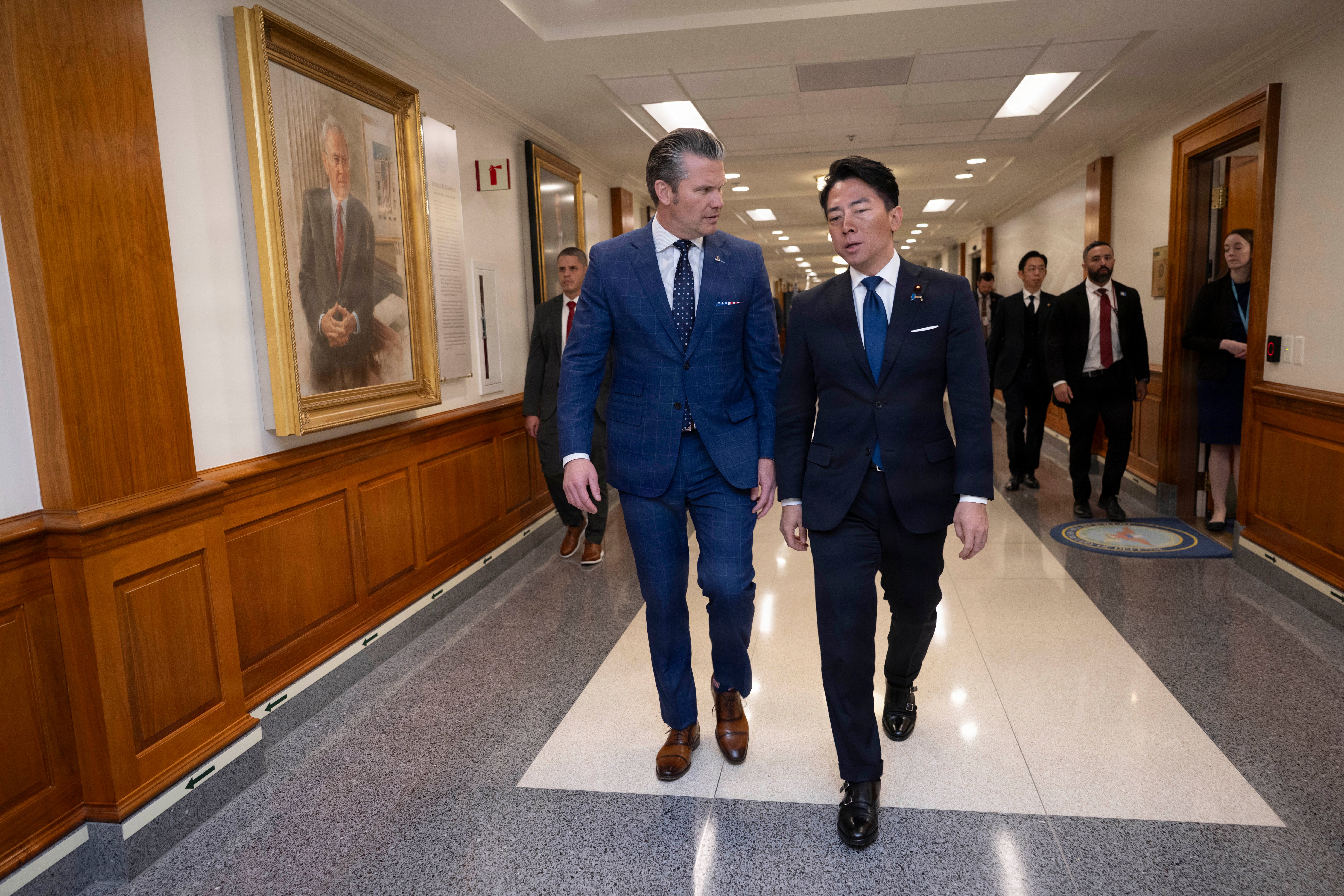
Japan has said it is keeping the door open to acquiring nuclear-powered submarines, a potentially major shift for a country whose submarine force has historically relied exclusively on conventional propulsion. Defense Minister Shinjiro Koizumi confirmed recently that Tokyo is not ruling out nuclear-powered submarines as it considers the future requirements of the Japan Maritime Self-Defense Force (JMSDF).

Should Japan ultimately pursue the capability, it would join an exclusive group of nations operating nuclear-powered submarines. China, France, India, Russia, the United Kingdom, and the United States are currently the only countries with nuclear-powered submarines in active service. Brazil is already working to join the club, while Australian and South Korean nuclear-powered submarine plans are somewhat longer-term.

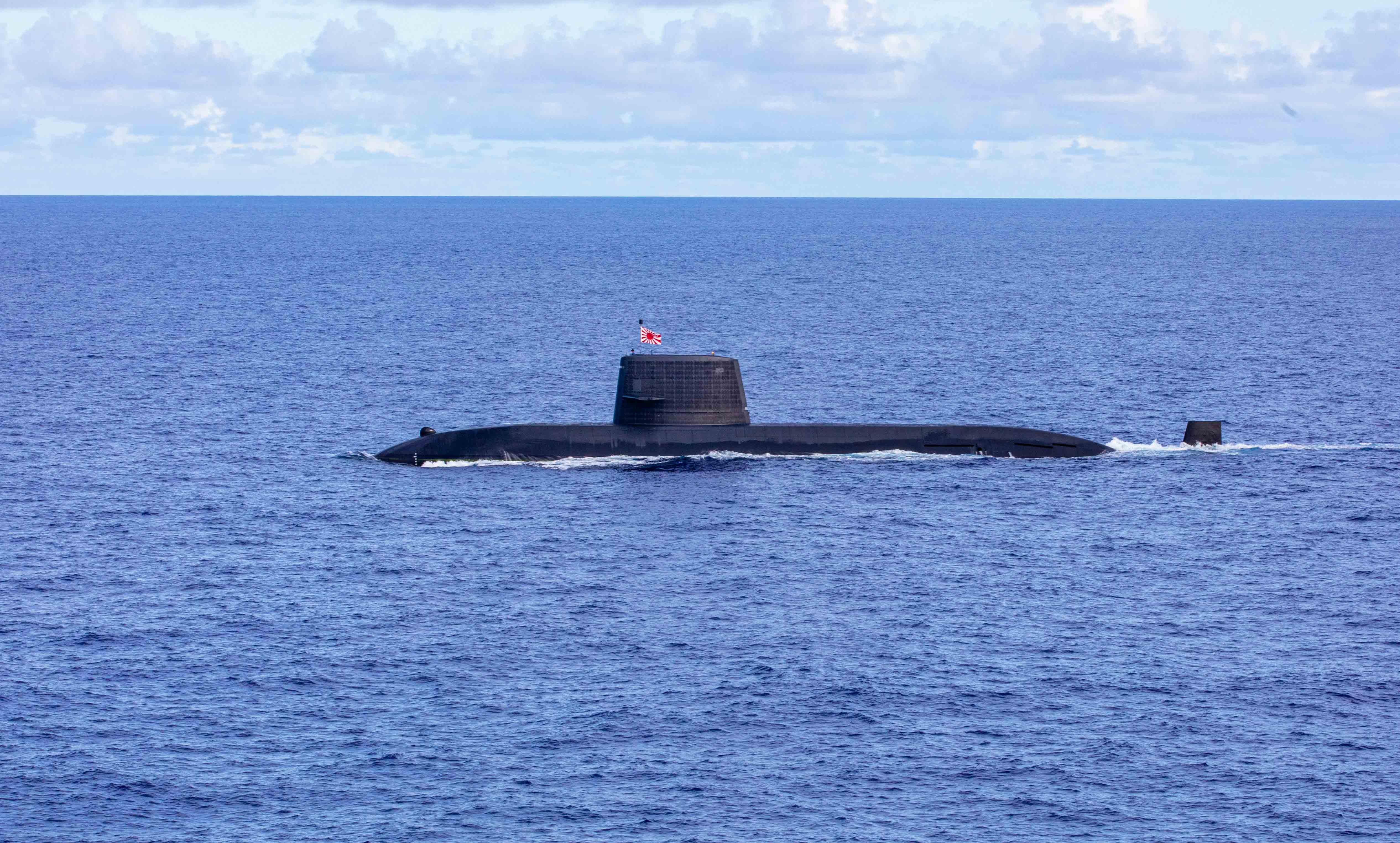
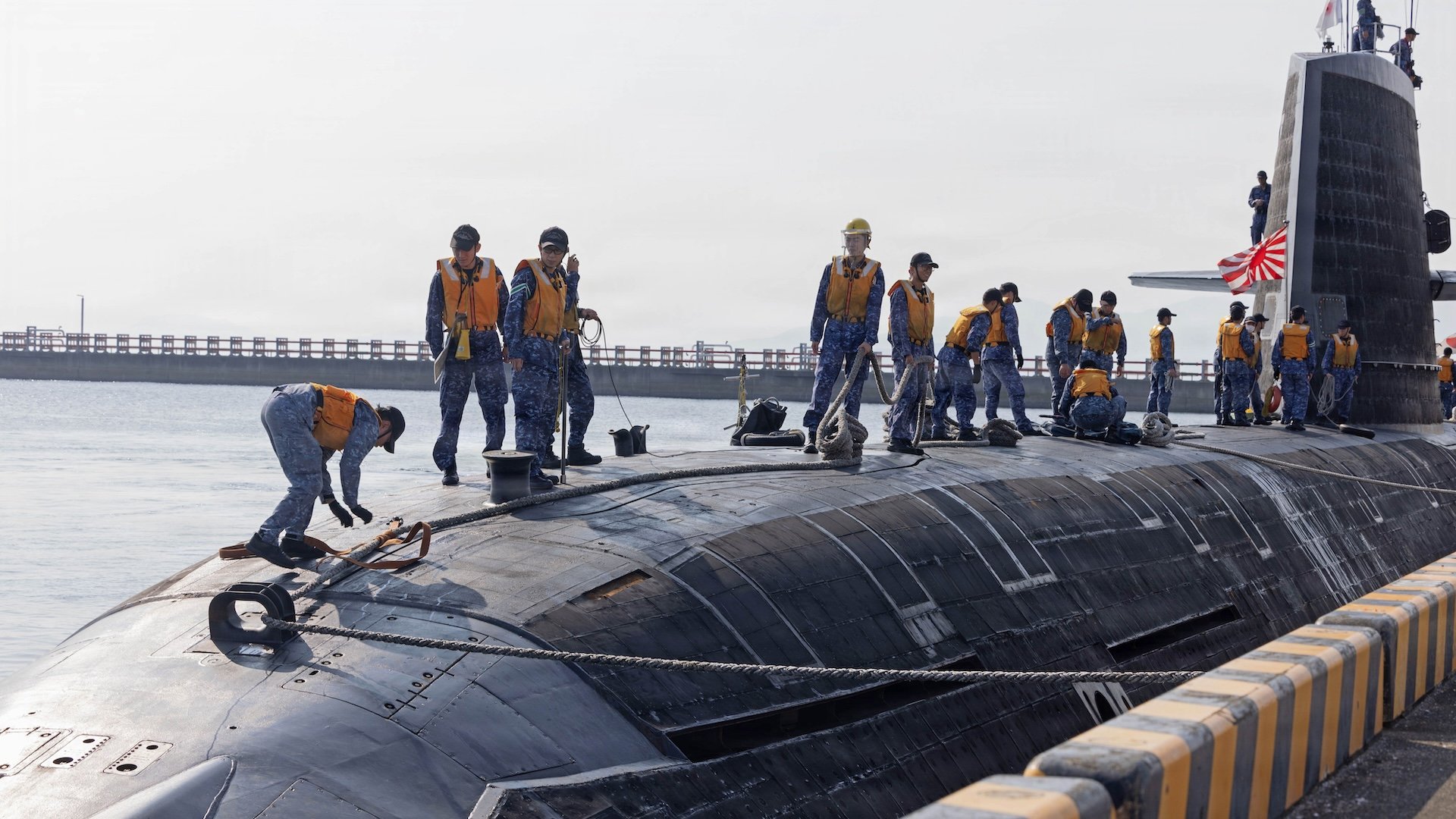
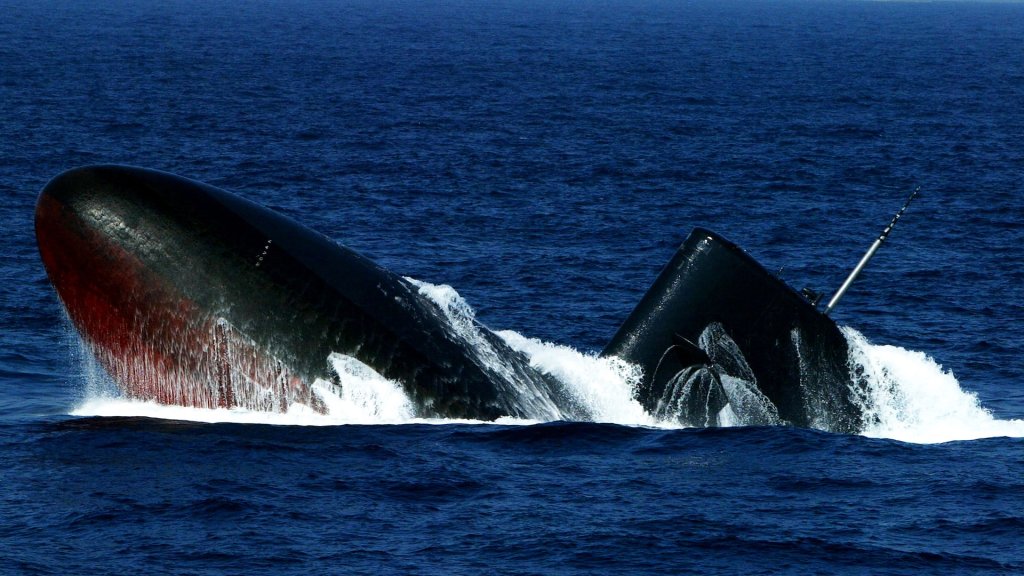
A submarine of the Japanese Maritime Defence Force surfaces during a naval review on October 26, 2003 off Sagami Bay, Japan. Prime Minister Koizumi reviewed the 52-strong fleet as well as 53 aircraft.
A submarine of the Japan Maritime Self-Defense Force surfaces during a naval review off Sagami Bay, Japan. Photo by Koichi Kamoshida/Getty Images

Japan’s submarine fleet is already regarded as among the most capable conventionally powered forces, and is very much at the forefront of advanced naval propulsion technologies. Even with that considerable expertise, however, developing and sustaining a nuclear propulsion capability would represent a huge challenge, requiring expertise and infrastructure far beyond those needed to build Japan’s existing conventionally powered submarines.

Koizumi’s comments do not represent a decision to acquire nuclear-powered submarines, nor do they indicate that Japan has begun a procurement program. They do, however, mark a significant evolution in the country’s public debate over submarine propulsion and point to a growing willingness within the Japanese defense establishment to consider capabilities that were previously largely outside the mainstream of defense planning.

Secretary of War Pete Hegseth hosts a bilateral meeting with Japanese Minister of Defense Shinjirō Koizumi at the Pentagon, Washington, D.C., Jan. 15, 2026. (DoW photo by U.S. Navy Petty Officer 1st Class Alexander Kubitza)

Currently, Japan operates one of the world’s most capable conventional submarine fleets, centered on increasingly sophisticated diesel-electric boats equipped with air-independent propulsion and advanced lithium-ion batteries. These submarines are well suited to operations around Japan and the country’s surrounding waters.

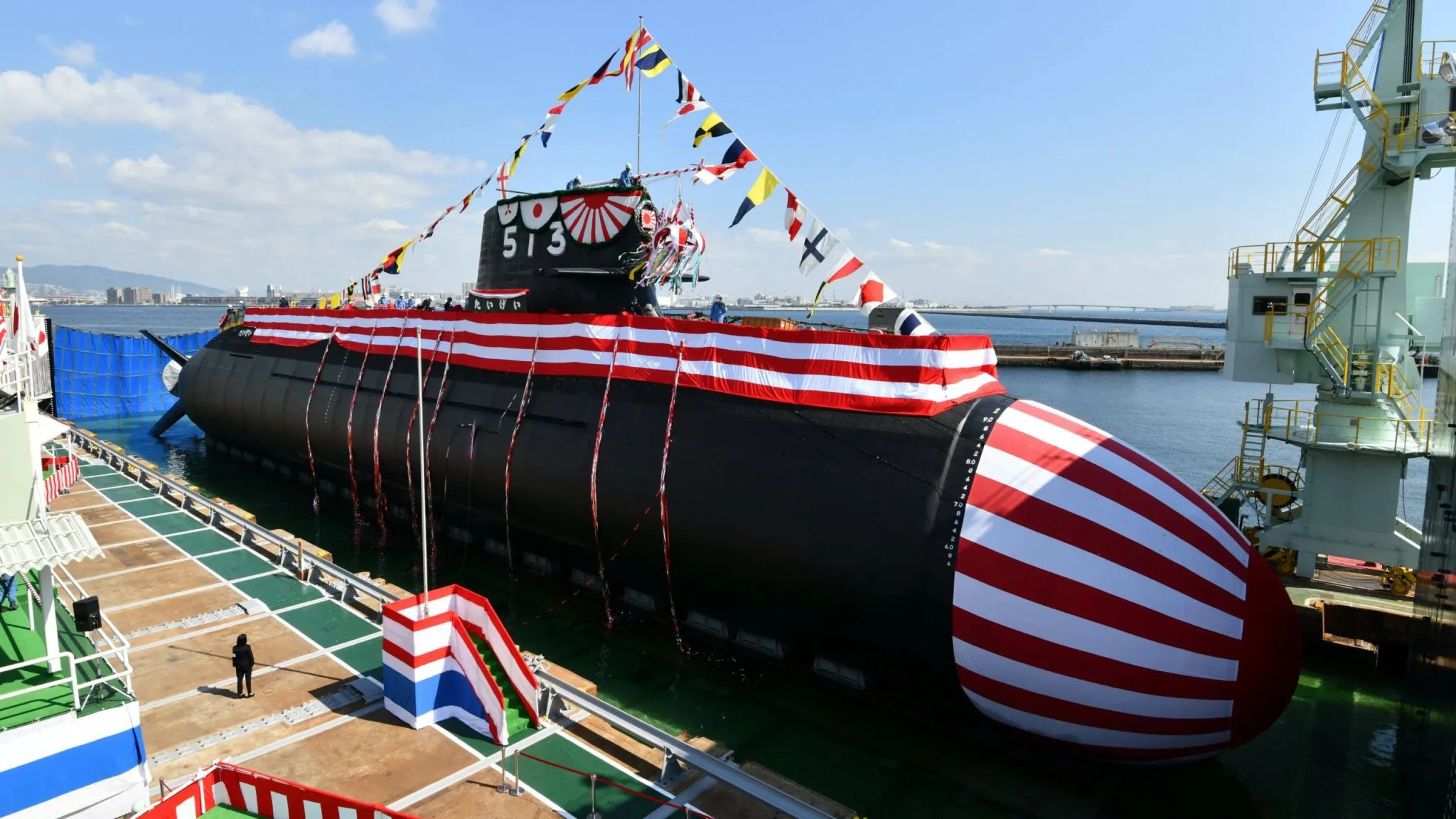
The JMSDF currently operates 22 conventionally powered submarines, maintaining the force structure established in the 2010s while progressively replacing older boats with the more capable Taigei class. Five Taigei class submarines are now in JMSDF service, with additional boats in the pipeline.

The first-of-class Taigei was launched on October 14, 2020, at the Mitsubishi Heavy Industries (MHI) shipyard in the city of Kobe, in the western prefecture of Hyogo. Japan Maritime Self-Defense Force

Nuclear propulsion, however, would offer substantially greater endurance and sustained underwater speed, allowing Japanese submarines to conduct longer-range operations across the broader Western Pacific with minimal support. This is a requirement that is becoming increasingly relevant as Tokyo’s strategic focus expands beyond its immediate maritime approaches.

China’s rapidly expanding naval force, including its growing submarine fleet and increasingly distant maritime operations, is forcing Tokyo to consider how it would monitor and potentially counter Chinese forces farther from the Japanese archipelago. A nuclear-powered attack submarine could remain submerged for extended periods without the endurance limitations imposed by conventional propulsion, making it particularly useful for long-range surveillance, tracking, and sea-denial missions.

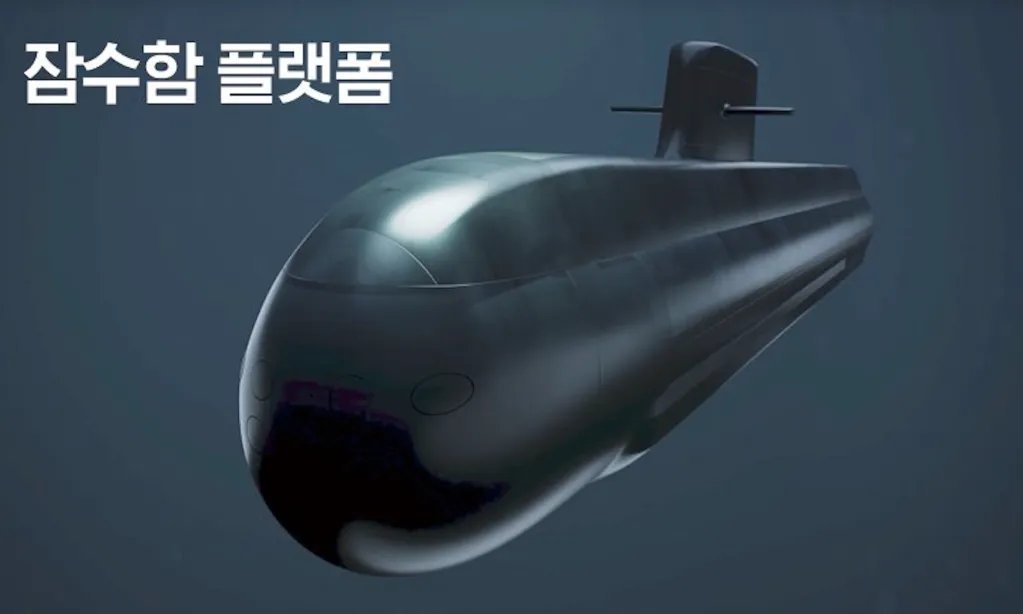
Japan’s debate is also unfolding alongside a significant development in neighboring South Korea. Seoul has confirmed plans to develop a new class of nuclear-powered submarines, a move that could add further momentum to an emerging undersea competition in Northeast Asia. South Korea’s decision is particularly relevant to Tokyo because it demonstrates that nuclear propulsion is no longer merely a theoretical capability for U.S. allies in the region. While the missions and strategic priorities of the Japanese and South Korean navies are different, both countries face the challenge of operating in waters increasingly contested by China and North Korea.

A South Korean Ministry of Defense rendering shows how the nuclear-powered Jang Bogo N Project boats may look. MND

The development could also create new opportunities for Japan to work more closely with Australia and the other AUKUS partners. Australia is in the process of acquiring its own conventionally armed, nuclear-powered submarine capability under AUKUS Pillar I, with U.S. and U.K. nuclear-powered submarines also scheduled to operate from Australia. Japan has separately been identified as a potential partner for AUKUS Pillar II, which covers advanced capabilities and technology cooperation.

A Japanese decision to pursue SSNs could eventually create a much deeper basis for cooperation with Australia, including submarine interoperability, undersea warfare, workforce and technical expertise, infrastructure, sustainment, and potentially aspects of the industrial base. Analysts have already examined how Japan could fit into the wider AUKUS submarine ecosystem as Australia’s nuclear-submarine program develops.

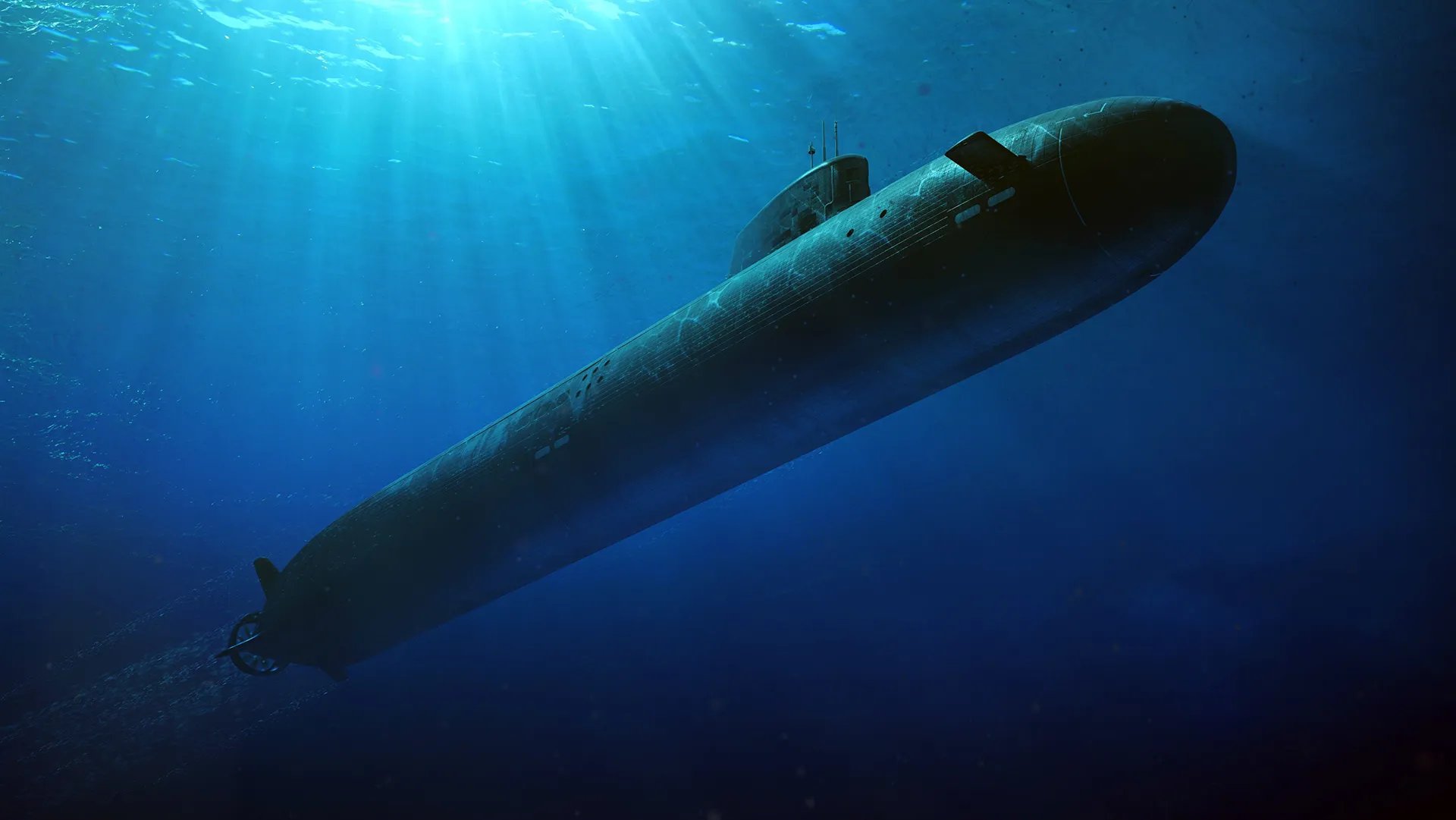
Concept art of the submerged SSN-AUKUS nuclear-powered attack submarine. U.K. Ministry of Defense illustration

A Japanese nuclear-powered submarine with a robust capacity to launch land attack cruise missiles would also be a powerful component in the country’s emerging “counterstrike” posture, which is increasingly centered on acquiring the ability to strike targets at longer ranges.

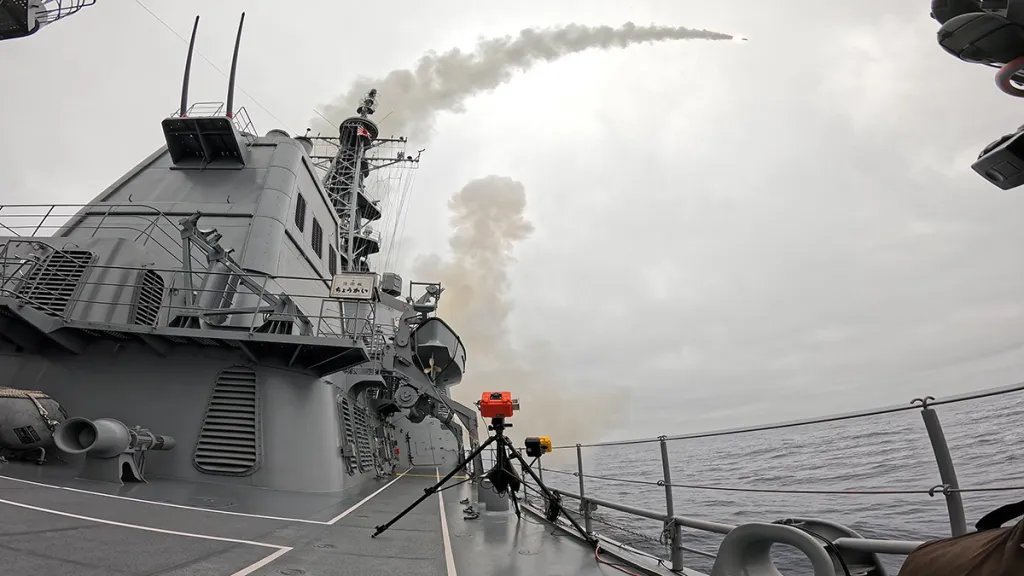
Japan has already begun deploying domestically developed long-range missile systems, including the Upgraded Type 12 surface-to-ship missile, while also acquiring the U.S.-made Tomahawk cruise missile.

Launch of the first Tomahawk missile from the Kongō class Aegis destroyer Chōkai at an undisclosed location in the Pacific. Japan Ministry of Defense

An SSN would potentially add a highly survivable, mobile platform to this emerging strike architecture, allowing Japan to position long-range weapons farther from its home territory and complicating an adversary’s efforts to locate and neutralize them. That could be particularly valuable in a conflict in which Japanese air bases, missile batteries, and other fixed infrastructure were under attack.

The potential SSN requirement also fits with Japan’s expanding expeditionary ambitions. As the JMSDF converts its Izumo class helicopter destroyers to operate F-35B fighters, giving Japan a more credible carrier aviation capability, nuclear-powered attack submarines could provide a valuable escort for these increasingly important surface groups. Their speed, endurance, and ability to remain submerged for extended periods makes SSNs particularly well suited to accompanying carrier forces on longer-range deployments and supporting contingencies farther from Japanese waters.

Looking at the bigger picture, it is highly significant that nuclear propulsion was effectively excluded from Japan’s conventional defense debate for decades. More recently, however, Japanese defense officials and policymakers have begun examining whether future submarines will require a different propulsion system. The issue is now one that can be discussed openly at the ministerial level.

Nevertheless, pursuing a nuclear-powered submarine program would come with huge challenges.

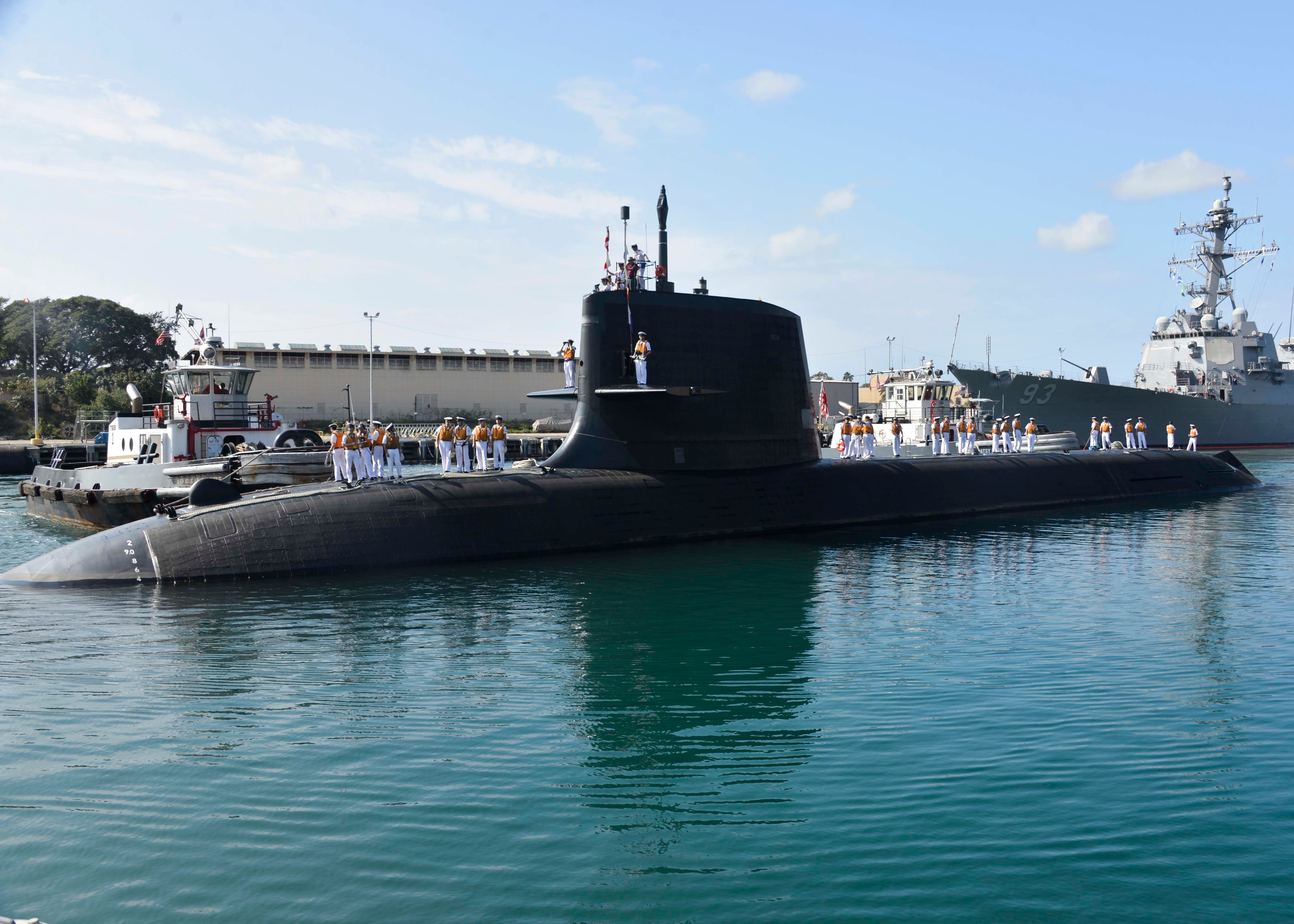
150227-N-DB801-126 - PEARL HARBOR, Hawaii - (Feb. 27, 2015) - The Japan Maritime Self-Defense Force (JMSDF) submarine JS Hakuryu (SS 503) arrives at the submarine piers of Joint Base Pearl Harbor-Hickam, Feb. 27. While in port, the submarine's crew will conduct various training evolutions, continue to build positive relationships with the United States and have the opportunity to enjoy the sights and culture of Hawaii. (U.S. Navy photo by Mass Communication Specialist 1st Class Steven Khor/Released)
The Japan Maritime Self-Defense Force Sōryū class submarine Hakuryū arrives at the submarine piers of Joint Base Pearl Harbor-Hickam. U.S. Navy photo by Mass Communication Specialist 1st Class Steven Khor/Released

Building and operating nuclear-powered submarines would require Japan to establish an entirely different industrial, regulatory, and training infrastructure. The vessels would also be considerably more expensive and complex to build and operate than Japan’s existing conventionally powered submarines. Tokyo would have to resolve questions involving nuclear regulation, reactor technology, maintenance facilities, crew training, and the handling of nuclear material.

There would also be a significant political dimension. Although naval nuclear propulsion is fundamentally different from possessing nuclear weapons, any move in that direction would inevitably receive scrutiny in a country whose postwar security policy has been shaped by its experience with nuclear weapons and its longstanding non-nuclear principles.

For those reasons, Koizumi’s statement should be viewed less as an announcement of a Japanese nuclear-submarine program than as evidence that the political barrier to discussing such a program is falling.

230704-N-NY362-1143 PHILIPPINE SEA (July 4, 2023) Japanese Oyashio-class submarine JDS Yaeshio (SS 598) transits the Philippine Sea during Pacific Vanguard 23, July 4. Pacific Vanguard is an opportunity for the four Indo-Pacific navies to strengthen their skills in maritime operations, anti-submarine warfare operations, air warfare operations, live-fire missile events, and advanced maneuvering scenarios in the Mariana Islands Range Complex (MIRC). The U.S. military routinely operates in designated land, air, and sea areas of the Mariana Islands to safely train military service members in equipment use, tactics, joint operations, and humanitarian aid missions. (U.S. Navy photo by Mass Communication Specialist 3rd Class Santiago Navarro).
The Japanese Oyashio class submarine Yaeshio transits the Philippine Sea during Exercise Pacific Vanguard 23. U.S. Navy photo by Mass Communication Specialist 3rd Class Santiago Navarro

The next question is whether the Japanese government will move from keeping the option open to actually studying a nuclear-powered submarine design, propulsion technology, and acquisition pathway in detail.

If it does, the consequences could extend well beyond Japan’s submarine fleet. A Japanese nuclear-powered submarine capability would represent a major enhancement of Tokyo’s ability to operate across the Western Pacific and could alter the undersea balance between Japan, China, and the United States’ other regional allies. At the very least, the idea is one that is now part of wider discussions at the highest levels.

Contact the author: thomas@thewarzone.com

The post Japan Opens The Door To Acquiring Nuclear-Powered Submarines appeared first on TWZ.

  •  
❌