Czech literature, artificial intelligence, audiobooks, long standing participation and freedom of expression shaped five days of international publishing business and public debate The Frankfurt Book Fair welcomed 236,000 visitors from 137 countries in 2026, sustaining its position as the international publishing industry’s principal meeting place. Across five days, the fair combined rights negotiations and professional […]
Short skirts, knee-high socks, white blouses: Girls' school uniform items are widely used as costumes in pornographic videos. As students experience harassment, a group wants to change that.
Can Xue is considered one of this year's favorites; Margaret Atwood and Salman Rushdie are other strong contenders. But what goes on behind the scenes in the selection of the Nobel Prize in literature?
TEHRAN, Oct. 11 (MNA) – The Shallow Miscalculations of Raw Western Researchers in Their Think Tanks Regarding the Ordinary, Empty-Handed, Yet Complex People in the Squares and Streets of Iran.
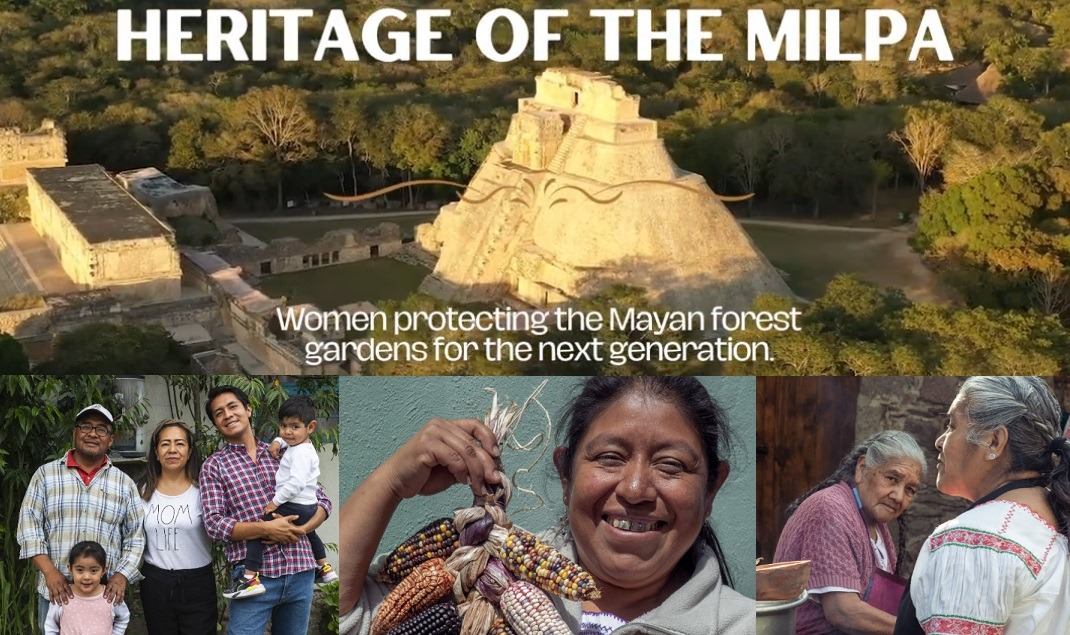
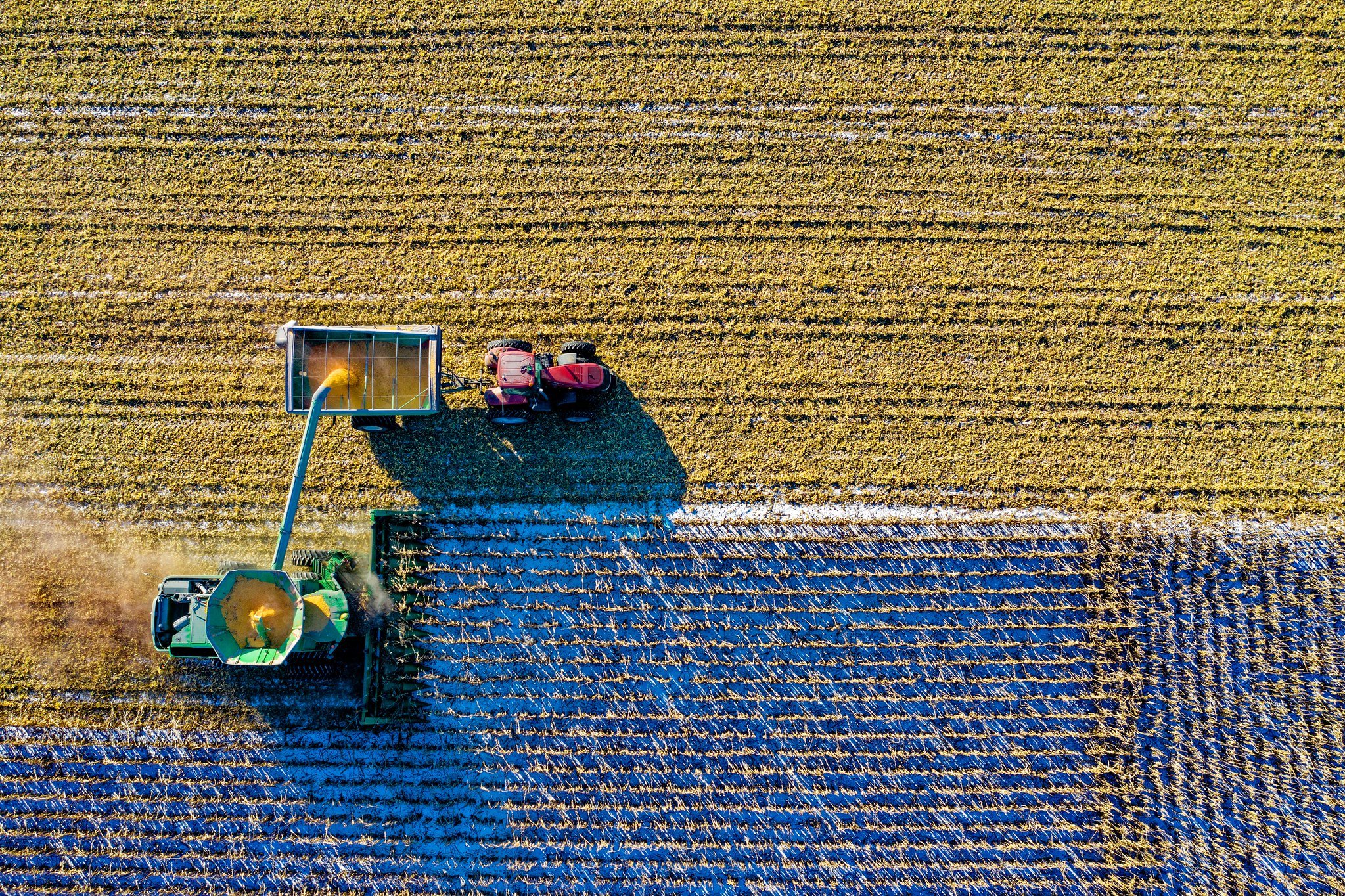
Traditional Mexican agriculture follows the ancient traditions of the “milpa”, which is a system of small-scale family agriculture that pre-dates the Spaniards arrival in Mexico, and even pre-dates the Aztec Empire.
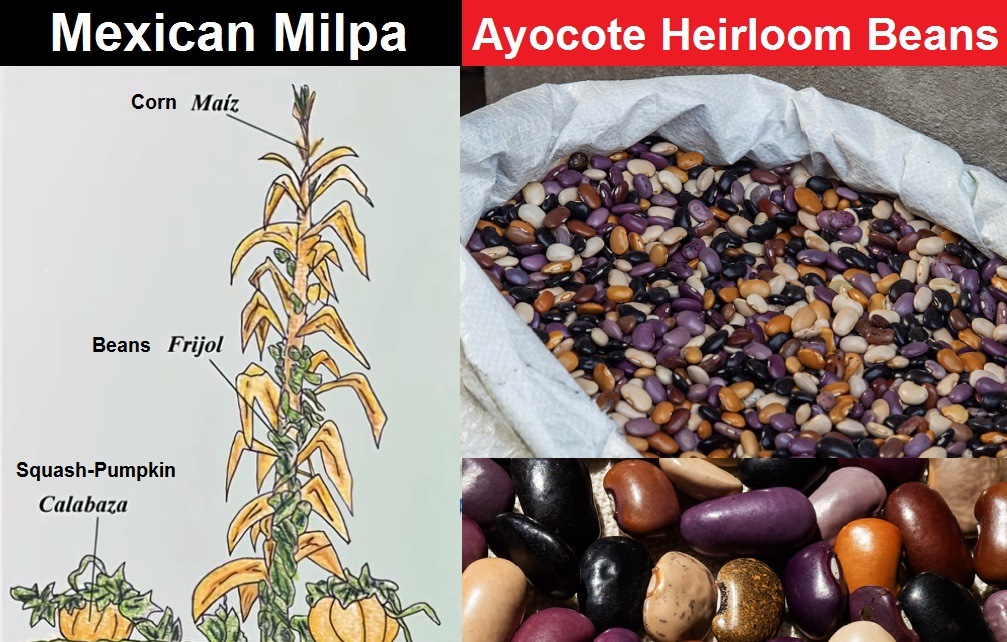
In this simple, time-honored method of small-scale family agriculture, the milpa consists of its main crop, corn (maiz), along with other native crops that co-exist and enhance the soil along with the corn, such as heritage beans and squash.
The beans grow on vines that wrap themselves around the corn stalks, while large leafy crops such as squash and pumpkins grow and spread along the bottom close to the soil, giving weeds and other undesirable plants no chance to grow, and require no chemicals whatsoever that need to be applied to the native, heirloom crops, or the soil that they grow upon.
After harvest, the corn stalks are burned down returning key nutrients to the soil through its ashes.
Here is a short video that describes the milpa system.
Here is another 5-minute documentary produced by the UN showing how Mexicans are reviving this ancient agricultural system, mainly with women. (Note: We do not support or fund the United Nations nor any of their agencies and programs, but this is a very well-produced short documentary that is very educational regarding the “milpa”.)
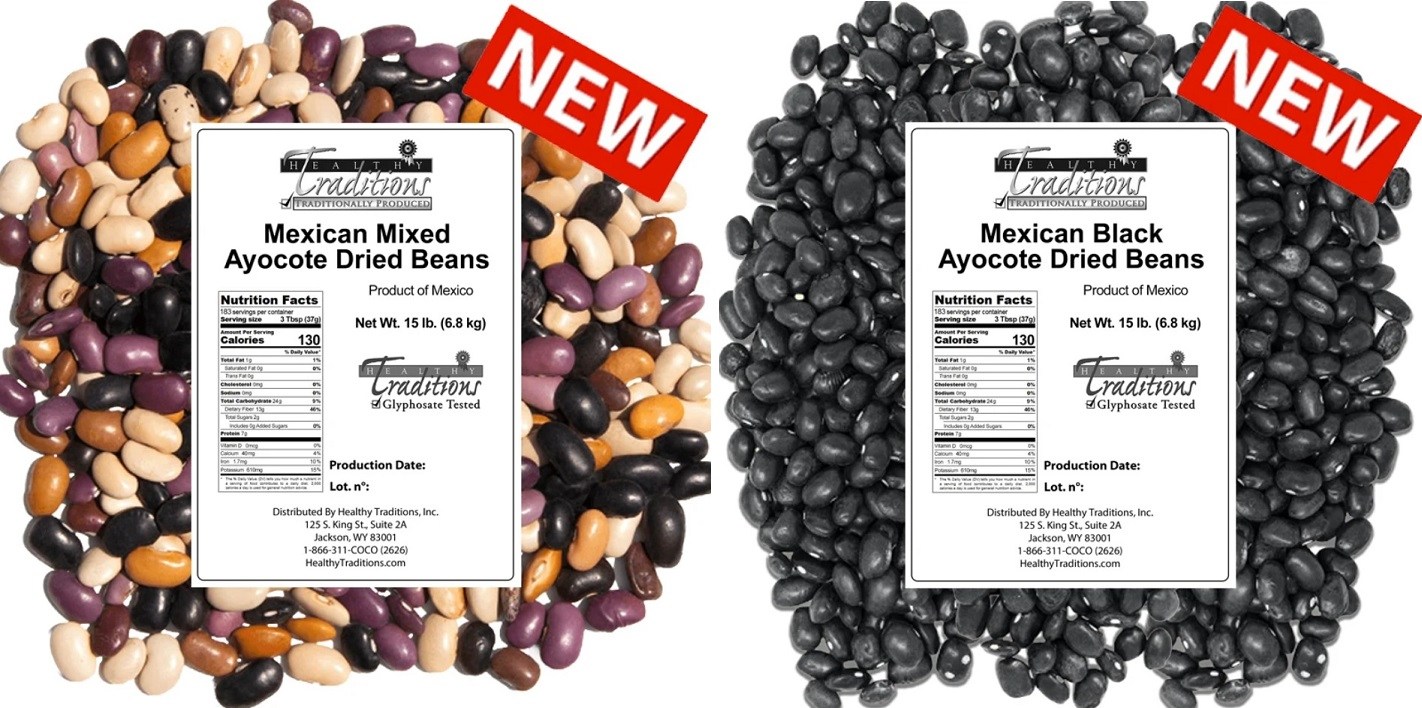
Today, we are announcing another ancient, heirloom product that is produced in these small-scale milpa agricultural systems, Ayocote beans!
These ancient “super beans” are heirloom beans that have been handed down from generation to generation through families living in Mesoamerica long before the Spaniards arrived, and even before the Aztec Empire, and date back to 6000 years!
Ayeócotl (Náhuatl)
Ayocote (Phaseolus coccineus leiosepalus), also known as ayeócotl in the native náhuatl language, is a climbing legume, with pre-Hispanic origins.
It is grown by all indigenous communities of the Mexican plateau, even at over 2,000 meters above sea level. Due to its widespread presence, even in very different climate conditions, Ayocotes have developed an ample genetic variety: Mexico’s genetic resource bank preserves over 800 different known varieties.
Ayocote beans have been highly valued since ancient times for their ability to endure extreme temperatures and various altitudes, as well as for the ease with which their seeds can be preserved for years, making them essential during food shortages. There are more than 150 species of beans worldwide, but only 31 are native to Mexico.
However, bean consumption in Mexico has been declining in recent years, and there is a movement now in Mexico to preserve these ancient bean varieties, as well as other heirloom seeds such as corn.
The Mexico Daily News published an article last year (2025), highlighting this move in Mexico to preserve their native agricultural heritage which is being threatened by Big Ag and mass production of agricultural products using GMO varieties and herbicides like glyphosate.
Taste of Mexico: Beans
by María Meléndez
It is often said that Mexican culture is built on corn, but beans were as important for the development of the pre-Columbian cultures of Mesoamerica.
Excerpts:
Beans have been highly valued since ancient times for their ability to endure extreme temperatures and various altitudes, as well as for the ease with which their seeds can be preserved for years, making them essential during food shortages.
Beans were a crucial component of the milpa, an agricultural system designed to provide the three staple ingredients of the Mesoamerican diet: corn, beans and squash. This system operated in perfect harmony: corn served as a structure for the beans to climb, beans enriched the soil with nitrogen, and squash helped retain moisture throughout the season.
Are we endangering our bean tradition?
Despite being essential to our ancestors, bean consumption in Mexico has declined significantly in recent decades. In the 1980s, the average Mexican ate 16 kilos of beans yearly, while average consumption in 2024 was only 7.7 kilos, according to a 2021 report by the Ministry of Agriculture (Sader).
Several factors contribute to this decline. Preparing beans requires more time, and our consumption of meat and processed foods has increased.
Culturally, beans are often viewed as food for the poor. I remember that whenever someone in my family faced economic challenges, my grandparents would dramatically say,
“Even if we can only afford to eat beans, we will remain honorable people.”
Today, various organizations and communities are working to preserve Mexico’s native beans through the milpa system.
Additionally, in late 2024, President Claudia Sheinbaum announced that the federal government would seek to increase bean and corn production by 30% and bring attention back to endemic varieties of corn and beans in order to achieve self-sufficiency in production.
I was recently able to purchase enough of these rare, heirloom super beans to offer them to the public through Healthy Traditions.
We now have available for ordering online, Mexican Heirloom Ayocote Mixed Beans, and Mexican Heirloom Ayocote Black Beans.
I bought up their entire remaining supply, so we only have enough to sell in 5 lb. and 15 lb. sizes while supplies last, as we will not have enough to sell in bulk 5-gallon pails until early 2027, when the next harvest comes in and where I have already put in my request to purchase as much as we can.
The ancient Mexican “milpa” traditional agricultural system is very similar to the ancient agricultural systems of the Philippines I observed firsthand while living on a farm in a rural community on Mt. Banahaw with my family in the late 1990s, and first couple of years of 2000.
When I told the poor, rural farmers living in that community, most of whom were trying to get out of their rural community and go to the big city in Manila or get visas to the Middle East or the U.S. where they thought life was better and they could earn more money, that they were in fact rich due to their native, natural agricultural system, they did not believe me.
So I had to show them that what I was saying was true, by marketing the coconut oil of the “poor people” that was made by hand in their kitchen from fresh coconuts, which we call today our “Gold Label Virgin Coconut Oil,” and kicked off the Coconut Oil revolution in the U.S. as I leveraged the emerging technology of the Internet back then, educating Americans on the truth about edible oils and saturated fats.
When you buy our Gold Label Virgin Coconut Oil today, you are supporting these poor, agricultural workers who still produce this coconut oil the same way by hand.
And the same is true when you purchase our Mexican products produced from community milpa agricultural small-scale producers, like our new Ayocote Super beans!
Products produced from these ancient agricultural small-scale producers are some of the most nutrient-dense products you can purchase on the planet, and we test them also to make sure there is no cross-contamination from GMO seeds and glyphosate-sprayed crops.
Technology and AI cannot replicate the human wisdom of these small-scale farmers! Faith in modern agriculture and their mass-production of contaminated crops is what could potentially produce starvation and malnutrition.
Sustainable and nutritious agricultural systems that require human labor are what is going to be able to provide food security and be able to feed people around the world going forward, and it requires a return to the past and agricultural systems that have nourished the earth’s populations for thousands of years, and NOT the false promises of the technologists and their false techno-prophecies of the future!
To Adam he said,
“Cursed is the ground because of you; through painful toil you will eat of it all the days of your life.
It will produce thorns and thistles for you, and you will eat the plants of the field.
By the sweat of your brow you will eat your food until you return to the ground, since from it you were taken; for dust you are and to dust you will return.”
(Genesis 3:17-19)
Do you really believe that the Technocrats can overcome the curse of God on the earth??
I don’t, and that’s why Healthy Traditions exists, to support HUMAN LABOR and ancient agricultural systems which are the ONLY hope for the future and food security.
This article was written by Human Superior Intelligence (HSI)
See Also:
Understand the Times We are Currently Living Through
Professor Roger Watson reviews The Trials of Maurice Brophy, the new novel by Marcus Bland about a Cambridge academic whose life spirals after he finds himself summarily cancelled over his research on Wagner.
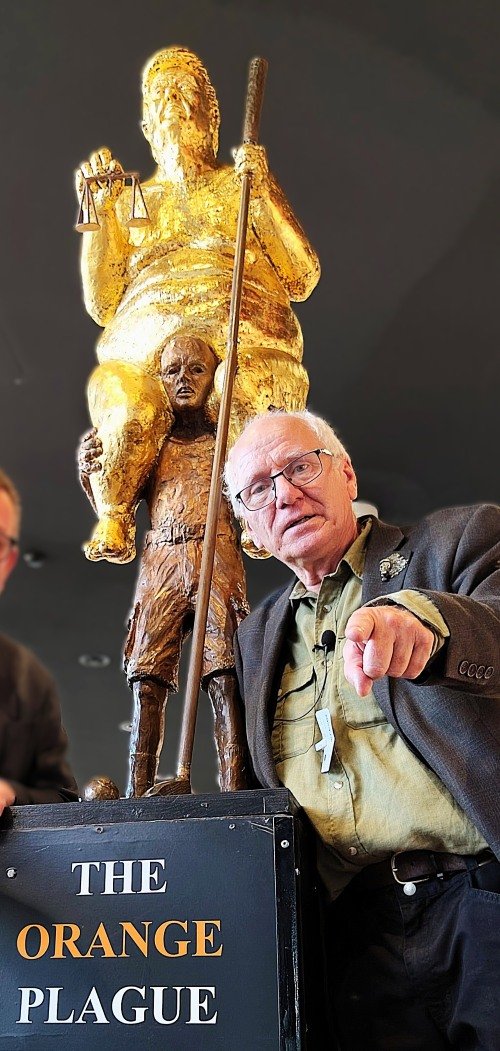
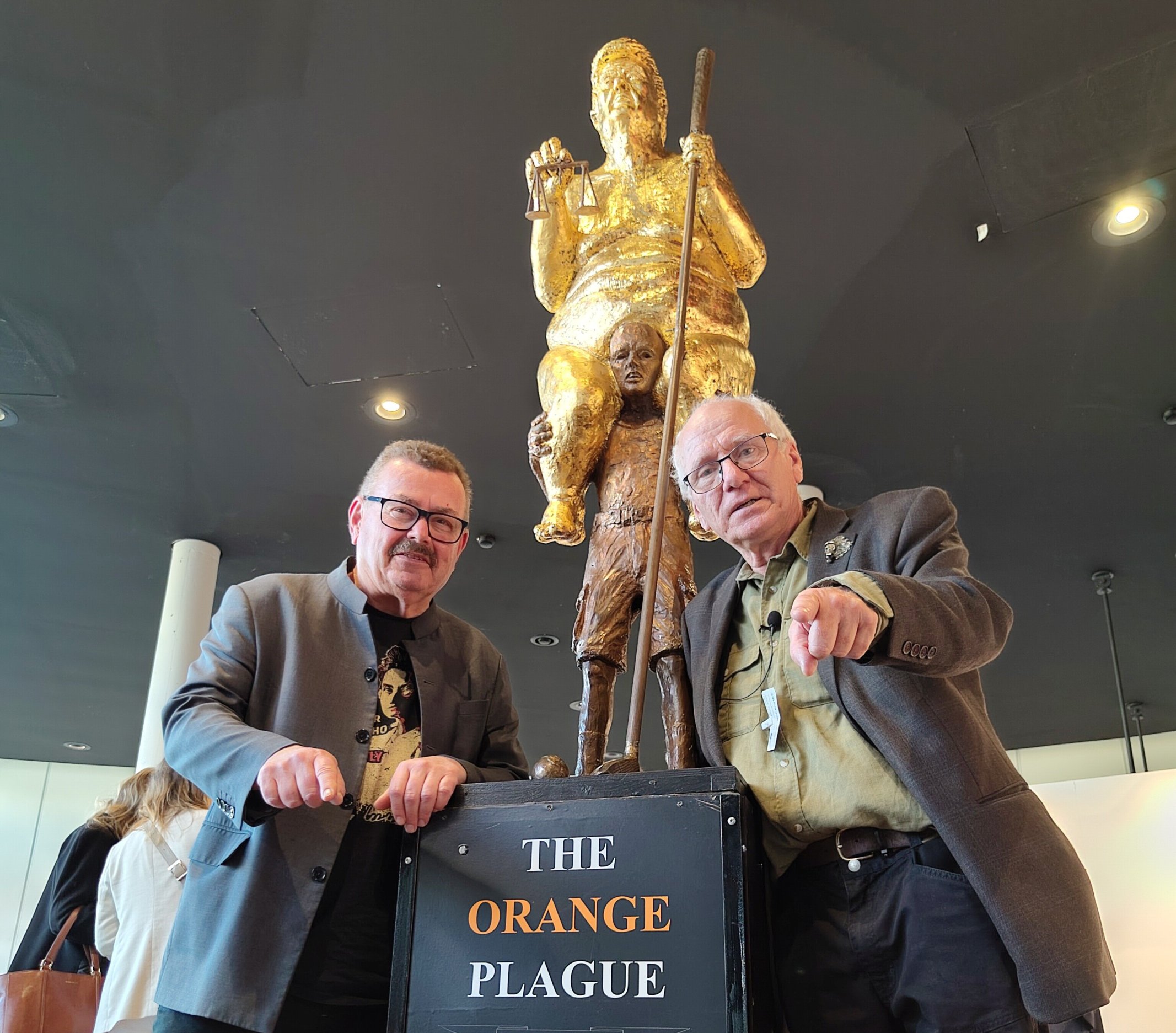
The European Parliament in Strasbourg has been adorned with a grotesque vision of American power in a 2.5-metre-high statue of a naked and obese US president Donald Trump covered in 23-carat gold.
While some MEPs describe it as an expression of freedom and courage in the face of Trump, Slovak prime minister Robert Fico has said the statue is a symbol of a declining European Union and called for its removal.
Fico said the statue reflects a profound misunderstanding of the times we live in, and reminded his X followers that he and Trump are close.
“At a time that calls for dialogue and mutual respect, insulting our partners on official premises demonstrates a profound failure to understand the times we live in,” he said on social media.
“It is sad that the leadership of the European Parliament, in its blindness, can no longer distinguish between the legitimate right to hold a different opinion and the actions of spiritually bankrupt individuals, adventurers and lunatics,” he added.
Jens Galschiøt is the artists behind the Orange Plague sculpture. The Danish artist says his installation served as a warning that Donald Trump is destroying democracy.
Why call it ‘Orange Plague‘?
“I depicted Donald Trump as an ‘orange plague’ because he is destroying everything I believe in. I believe in democracy and the rule of law. All this needs to be cared for, and Trump is destroying it, as well as the debate on the environment,” Galschiøt said.
The artist chose to portray the US president as a grotesque figure hoping that people would laugh at it. “When you laugh at a dictator, you take away his power,” he said.
And Trump is also naked because of Hans Christian Andersen’s fairy tale The Emperor’s New Clothes. In it, the emperor walks through the streets with no clothes, while people tell him how beautifully dressed he is, but no one dares tell him the truth. Only one small child cries out that the ruler is naked.
Galschiøt sees parallels the story and treatment of the US president.
“I think many of us laugh at Donald Trump, but he does not know it. He thinks he is a great leader. He thinks he is an intelligent person. He thinks he gives good speeches. But few people take him seriously. Even if you do take him seriously, it is because he is something like a gang leader, not because of what he says. Most of us actually think he is a ridiculous figure,” Galschiøt said.
Jens Galschiøt beside the Trump statue. Source: J. G. archive
His sculpture consists not only of a naked and obese Trump, but also of a slender figure.
“The little man carries the big man, and the big man tells him: ‘Oh, I really want to help you. I really love you, but I do not want to get off your back.’ It is also a story about hypocrisy and double standards, which I combined,” the artist said.
He covered the sculpture in gold because Trump is known to like the precious metal.
This article continues, but the full version is available only to EUobserver.com subscribers. Visit account.euobserver.com/membership
The Belarusian musician and civil rights activist Maria Kalesnikava held the keynote speech on the importance of art at the 2026 Beethovenfest in Bonn. She also visited DW.
Cricket made Sobers a Caribbean icon, but it cannot contain the region’s history. Through film, Horace Ové, Michelle Mohabeer, and Rupert Roopnaraine studied indentureship, exile, and colonial rule, portraying the struggles behind the postcard image.
Last week, EU member states reached a common position on the European Commission Omnibus X ‘Food and Feed’ proposal, in a bid to simplify regulation of pesticides. In reality, however, it will weaken protection against pesticides’ negative effects in Europe. The proposal pleases the chemical industry but goes against the wishes of a vast majority of citizens and many scientists who value people’s health, clean drinking water and biodiversity.
A hearing in the European Parliament on 3 September highlighted the real problem. Under the guise of a ‘discussion with experts’ in the field of health and environment, the parliament handed the megaphone to lobbyists representing a broken, toxic agricultural model.
Representatives of industrial agriculture – sugar beet, apple and cereal growers – parroted industry arguments, justifying their demands to stop banning pesticides that are toxic to public health, the environment and pollute our water resources.
Despite Europe witnessing massive droughts, extreme heatwaves leading to countless deaths, wildfires destroying biodiversity, and devastating crop losses, it seems that a significant share of MEPs are ready and willing to accelerate the degradation of European’s wellbeing and natural resources.
Listening to them raises a fundamental question: Do farmers truly want to rely on a cocktail of toxic chemicals to maximise yields at low market prices, destroying their own health and local ecosystems in the process? Or do they wish to make an honest living, producing quality food in balance with nature for a fair income?
CAP subsidies
To better grasp this contradiction, we must look at what is actually at stake here.
Agrochemical corporations seek their share of the Common Agriculture Policy (CAP) cake – a colossal €58bn budget, accounting for one third of the EU’s total budget.
Their own survival is reliant on keeping as many farmers as possible dependent on pesticides, fertilisers and industrial seeds. By diverting public CAP funds through farmers into the pockets of their shareholders, these companies ensure their long-term profitability.
Many farmers’ unions also represent agri-cooperatives that profit significantly from selling pesticides, which raises questions about whether they truly represent farmers’ long-term interests, or those of the pesticide industry.
Since the European Commission published its ‘simplification’ proposal in December 2025, proponents of pesticide-intensive farming have presented a series of flawed arguments that in fact reveal the dead-end to which intensive agriculture has led us.
Firstly, farmers’ organisations complain about a “lack of pesticide substances” on the market.
Currently around 450 different pesticide active substances are approved in the EU, from insecticides to fungicides, and herbicides. If 450 different options are insufficient, does this not signal an unhealthy addiction rather than a shortage?
Lobbyist groups, furthermore, claim that pest resistance to synthetic pesticides would inevitably lead to dramatic yield losses and hunger, arguing for even more pesticides with diverse modes of action.
And yet, according to scientific research, the multiple chemical strategy that has been applied for more than 40 years is the very cause of the appearance of resistance. This problem cannot be solved with the mindset that caused it. The only scientific solution is, therefore, not more chemistry but prevention, and the use of alternative methods.
Thousands of farmers across the EU and the rest of the world are already proving this by switching towards Integrated Pest Management (a strategy for low-pesticide-input pest management) or organic practices to reduce pesticide inputs.
Who bares the cost
The call to keep all pesticides on the market – and potentially even use some of the banned ones – serves only the short-term interests of the pesticide industry, not of the farmers.
Destroying soil life – the basis of soil fertility – with chemicals, and killing insect populations that naturally control pests and pollinate crops, jeopardises the very basis of farming and long-term food security.
The societal costs of this pesticide-dependent model are staggering. Citizens are the ones who bear the healthcare costs for chronic diseases such as cancer and Parkinson’s, which impact not only farmers but also residents of agricultural areas.
We face water pollution that has become nearly impossible to remediate. Fewer pollinators means fewer healthy fruit and vegetables. These ‘externalities’ far outweigh any short-term benefits.
This is the reason why the Paris and Munich water companies financially support farmers in protecting the groundwater, because doing so is up to 45 times cheaper than depollution.
In the meantime, the agrochemical industry enjoys huge profits from pesticide sales, largely supported by CAP subsidies, while society foots the bill for the damage. It is indeed a perfect business model…for them.
Lobbyist circus
The spectacle witnessed in the alleged House of European Democracy is testament to the state of our political world; one that is dominated by corporate interests over citizens and farmers’ wellbeing.
We witnessed the desperate battle of a toxic agricultural model that struggles to survive, and resists being replaced by sustainable farming methods.
The lobbyist speakers in the European Parliament hearing more or less gave the diagnosis to the current pesticide-intensive agricultural system: it is simply broken.
Citizens have repeatedly expressed their concern on the impact of pesticides on their health and biodiversity. They have also expressed the need that public support for agriculture serves the common good.
The pesticide Omnibus X proposal is merely an attempt to maintain a detrimental status quo that favours the pesticides industry.
What is needed now is a new blueprint for a system which financially supports farmers to implement practices that improve soil and plant health, favour beneficial insects, accelerate the availability of alternatives to pesticides such as biocontrol products, and rapidly phase out toxic synthetic pesticides to protect our health, water resources and biodiversity.
Only then can we ensure a sustainable future for European agriculture and our children. Only then, will a greater share of the CAP remain in the hands of farmers who feed us and protect our nature.
The 1990s are remembered for Brit-pop and provocative fashion, but beyond the nostalgia, it was a decade of cultural experimentation and social change. Tate Britain's new exhibition looks past the familiar icons.
The works of this year's Nobel Prize-winning poet and essayist Anne Carson can feel slightly daunting. Here are some keys to understanding her universe.
Questionable Argentine beef is reportedly flooding the U.S. market in an effort to lower beef prices which are soaring right now.
It is being reported that beef prices have hit record highs in the U.S. due to a cattle shortage that is worsening. (Source.)
Fortunately, Healthy Traditions customers and Health Impact News readers now have a wonderful opportunity to purchase a half cow cut into USDA certified premium cuts from our famous Galloway beef herd in western Wisconsin as we begin our Fall processing!
We only process our famous Galloway beef during a short window of time each year starting in October when the herd is still grazing on green grass. They are not only “grass fed” but also “grass finished” as we never finish them off in feedlots.
In order to secure as many head of Galloway cows this year as possible from our small-scale family farmers, for a limited time we are offering bulk half cows sent directly to you with FREE shipping.
This will allow you to store some of the finest grass-fed beef in your own freezer for a fraction of the cost it would take to place multiple orders throughout the year, and to have some food security to the rising beef prices in the U.S. due to the cattle shortages this year.
Grass-fed Traditions is one of the major product lines in my online store, Healthy Traditions, which was started almost two decades ago, working with small-scale family farmers in Western Wisconsin, most of whom are Amish.
One of the Amish families we started working with back then had an amazing herd of beef cattle that was 100% grass-fed and grass-finished, but they could only sell their beef as “organic”, which meant they got the same price per pound as beef cows raised in feedlots on “organic” grains.
One of the breeds they worked with that was available in that area of Wisconsin was the very rare Galloway breed of beef cattle.
Galloway cattle are an ancient breed that originated in the rugged hill country of southwestern Scotland. They are related to the Angus which was developed in northeastern Scotland.
While the Angus was selected for rapid growth on better feed in feedlots, the Galloway was selected for its ability to thrive on poor forage in a cold wet climate.
They are a very ancient and rare breed, numbering only about 26,000 worldwide, with most herds located in Europe. They were first imported to the United States in the 1850s and are very rare in the U.S., and we are one of the few (and possibly only) retailers offering them to the public.
The Galloway, unrivaled as a grazing breed, utilizes coarse grasses frequently shunned by other breeds. They have the ability to produce a high quality beef product directly from grass.
Results of a multi-breed research project conducted by a Canadian Government Experiment Station, reveal that the Galloway ranks second only to the Buffalo in hair density tests.
The robust, hardy nature of the Galloway is especially suited for northern harsh climates. This makes them a perfect fit for the cold, harsh winters of Western Wisconsin.
The claim that Galloway beef is juicy, tender, and flavorful is substantiated in USDA tests of Galloway crossbreds, when compared with eleven other breeds.
During the winter months they still eat only grass, but as hay, stacked in tall Amish hay stacks.
Here is a video we produced over 15 years ago, and we have practiced these same standards every year since then.
Half Cows Now Available to the Public for Bulk Purchases to Fight Rising Beef Costs!
We only process our famous Galloway beef during a short window of time each year starting in October when the herd is still grazing on green grass.
As we now approach our Fall butchering schedule, this is the ONLY TIME all year that you can purchase a half cow, by pre-ordering it before we start butchering to reserve your own portion.
This will allow you to store some of the finest grass-fed American beef in your own freezer for a fraction of the cost it would take to place multiple orders throughout the year, if supplies even last through the whole year (2027), which will depend upon consumer demand and beef supplies available throughout the U.S.
For each of these options you will need to plan to have approximately 4.5 cu. ft. of chest freezer or a 5.5 cu. ft. upright freezer space to store your beef.
Each of these options represents approximately a half a cow portion from one of our prime Galloway steers that are roughly 2 years of age. Your half will include 150 pounds of beef and will be delivered cut and packaged.
We are offering an amazing price of only $17.99 lb. DELIVERED to you with FREE Shipping!
When you buy a half cow, your price per lb. is the same for all of the cuts.
So a $60 per lb. retail price on a premium steak like a filet, for example, is the same price per lb. as your ground beef, which in this package is your delivered price including shipping.
All 4 options come with 3-4 day shipping included for most locations within the lower 48 states. Our shipping boxes are made from non-Styrofoam insulation and can be composted, or it will breakdown in the trash very quickly. We pack each box with a large amount of dry ice to ensure it will make it to your door without getting above a safe temperature.
Our first processing date will be before the end of October, and this is a first-come first-serve offer whiles supplies last, as our farmers have a limited amount of cattle to be processed. So to reserve your bulk purchase, please order right away while these half cows are available.
If there are more cows available in November, we might be able to offer more of these packages by the end of November.
DISCLAIMER: Brian Shilhavy is the Editor of Health Impact News, and the founder and CEO of Healthy Traditions. Everything published on the Health Impact News network is available to the public free of charge, with a Creative Commons license offered to all who wish to republish my articles, with attribution, free of charge, as I earn my income from Healthy Traditions.
Healthy Traditions, originally Tropical Traditions, has served customers in the U.S. for over 24 years. Learn more here about the obstacles we have overcome for over 2 decades:
A Russian missile attack on Kyiv overnight on 7 October destroyed warehouse premises in the Podil district and badly damaged a book warehouse of Ukrainian publishing house Knyholav, the publisher said. Tens of thousands of books were lost, but no staff were hurt. It was the second time this year that Russia has destroyed Knyholav's stock.
Russia has destroyed Ukrainian books since the start of its invasion, seizing them from libraries in occupied areas and burning them in boiler houses. Since spring, it has also been aiming missiles and drones at the industry that makes them—printing houses, publishers' warehouses, and bookshops—destroying books by the millions. Each strike takes out not only stock but the reprints, new titles, and textbooks Ukrainian readers were waiting for, at a time when publishing in Ukrainian is part of how the country holds onto its identity.
Tens of thousands of books lost
The publisher can't yet say how many books were destroyed or can no longer be saved, it said, but tens of thousands were lost. The final count will be possible only once staff get full access to the warehouse and check the state of every book.
Explore further
Russian aggression devastates 1,000 Ukrainian libraries and 200 million books
The losses include new titles Knyholav received over the past two months. They also include reprints of books Russia had destroyed in July at its previous warehouse. Knyholav had moved its rebuilt stock to this new warehouse after a Russian strike on 19 July destroyed its previous one outside Kyiv, along with about 250,000 books.
"This is a tangible blow for us. These are books we created, printed, and prepared for you," the publisher wrote. "But despite everything, we are holding on!"
The strike hit Kyiv's Podilskyi district, where a Russian attack caused a fire and the partial collapse of the floors of an office and warehouse building, Kyiv Mayor Vitali Klitschko said. The same overnight attack killed people in Pryluky, Kyiv, Kremenchuk, and Oleksandriia.
Millions of books burned
Russia's attacks destroyed more than 1.5 million books in July alone, Culture Minister Tetiana Berezhna said. On 1 August, a strike on the logistics center of publisher Ranok and the distribution center of the KnyhoLand bookshop chain in Kharkiv destroyed 8 million books, including 628,000 new school textbooks. Over three months, Russia burned about 13 million Ukrainian books, nearly a third of everything the country printed in 2025. In August, Russian missiles also hit Kyiv's largest book market.
Comedy clubs are begging for taxpayer bailouts, the BBC is censoring classic sketches and Muslim activists are trying to ban John Cleese. British comedy is becoming less funny by the day, says Steven Tucker.
Greek Prime Minister Kyriakos Mitsotakis has ruled out an agreement requiring Athens to recognise British Museum ownership of the Parthenon Sculptures, using a landmark exchange of cultural objects with Bulgaria to restate Greece’s position.
Greek Prime Minister Kyriakos Mitsotakis has said Greece will not “borrow” the Parthenon Sculptures under an arrangement requiring Athens to recognise British Museum ownership, as Greece and Bulgaria completed an exchange of historic remains and religious artefacts following decades of negotiations.
Mitsotakis made the remarks on Saturday, 3 October, during a ceremony at the Museum of Byzantine Culture in Thessaloniki attended by Bulgarian Prime Minister Rumen Radev.
Under the agreement, Greece transferred to Bulgaria human remains identified as those of medieval Bulgarian ruler Tsar Samuel, together with material recovered from four sarcophagi at the Basilica of Saint Achilleios in the Prespa region.
Bulgaria returned 48 ecclesiastical objects removed from northern Greece during the First World War.
The remains handed to Bulgaria were discovered during archaeological excavations at Saint Achilleios in the 1960s and later identified as belonging to Samuel, who ruled the First Bulgarian Empire between 997 and 1014.
The exchange concludes negotiations stretching back decades, although both governments have agreed to continue discussions about other objects of mutual historical interest.
Mitsotakis used the Thessaloniki ceremony to link the agreement to another, far more prominent dispute over cultural property: the Parthenon Sculptures held in London.
He said cultural diplomacy had demonstrated that disputes over objects removed during earlier periods of conflict could be addressed through negotiation, referring also to previous arrangements involving fragments of the Parthenon returned from Sicily.
The Greek government continues to seek the reunification in Athens of the surviving Parthenon Sculptures.
Greece disputes the legitimacy of their removal and argues that surviving elements of the monument should be reunited at the Acropolis Museum.
That difference has direct consequences for any proposal based on loans.
Under the British Museum trustees’ published position, the museum is prepared to consider lending objects from its collection, including the Parthenon Sculptures, but requires a borrowing institution to acknowledge the museum’s ownership.
Successive Greek governments have refused to meet that condition.
Mitsotakis reiterated that position on Saturday, arguing that Greece cannot borrow an object which it considers its own.
The dispute has continued despite negotiations between Athens and the British Museum.
The dispute subsequently produced an unusual diplomatic argument between two NATO allies, although discussions between Greek representatives and the British Museum continued.
The Greece-Bulgaria agreement concluded on Saturday differs substantially from the Parthenon case in both its legal history and the circumstances under which the objects were removed.
Athens nevertheless sees the exchange as evidence that governments can settle disputes over cultural property without abandoning their respective interpretations of history.
For Bulgaria, the return of Samuel’s remains has considerable national significance. For Greece, the recovery of the ecclesiastical objects resolves a century-old question concerning material removed during the First World War.
The Parthenon Sculptures remain considerably more complicated.
Talks continue, but the fundamental disagreement identified again by Mitsotakis in Thessaloniki has not changed: London considers the sculptures legally owned by the British Museum, while Athens considers them parts of a Greek monument which should be permanently reunited.
As long as that difference remains, a conventional loan arrangement offers no straightforward solution.
Santorini is much more than white houses, blue domes, and beautiful sunsets. The volcanic island holds treasures and stories known to few. One of these is a unique dwarf tomato that locals call “tomataki.” This is no ordinary vegetable; it is a true natural wonder. There is almost no fresh water on Santorini, and rainfall […]

 Login