❌

Reading view

Nuclear war and the malicious use of artificial intelligence rank among the threats to global health: ‘It would inflict an apocalypse’

If the Covid-19 pandemic and the war in Ukraine have demonstrated anything, it is that unexpected, entirely unforeseen and unpredictable events can drastically affect public health and even put humanity at risk. Danger can emerge at any time and from anywhere, but the scientific community has identified a handful of threats with particularly severe potential consequences for human survival.

Seguir leyendo

© Daniel Buuma (Getty Images)

Healthcare workers disinfect equipment used to treat an Ebola patient at a hospital in the Democratic Republic of Congo.
  •  

Mind games: AI behaves more like a brain than a database

When people think about what ChatGPT or other large language models are doing behind the scenes, it’s common to reach for the language of computing. You might assume there is a database, or a logical series of steps being executed, in order to provide a response to your query. Picturing AI responses as akin to […]

The post Mind games: AI behaves more like a brain than a database appeared first on Asia Times.

  •  

Eric Sadin: ‘AI reeks of death’

Éric Sadin gets up and paces around the living room of his Paris apartment when an argument excites him. His own voice urges him to do so. He has developed a critical body of thought, brimming with striking headlines and elegant analyses of the future, riding the philosophical and social thinking of the last century to arrive at a scathing conclusion across some 10 books: we have become idiots, and we are on our way to becoming even bigger idiots.

Seguir leyendo

© Manuel Braun (EL PAÍS)

Éric Sadin, photographed at his home in Paris on March 26.
  •  

From Mamdani’s veto to enthusiasm in Estonia: Schools around the world are grappling with the use of AI

Sandra Martinez Roe, a mother in Los Angeles, hopes that her son will never use artificial intelligence (AI) in school. “I’m not going to let my children be guinea pigs,” she tells EL PAÍS over the phone. The city’s school board granted her wish, at least temporarily, a couple of weeks ago: the Los Angeles Unified School District (LAUSD) has banned AI from public classrooms this school year.

Seguir leyendo

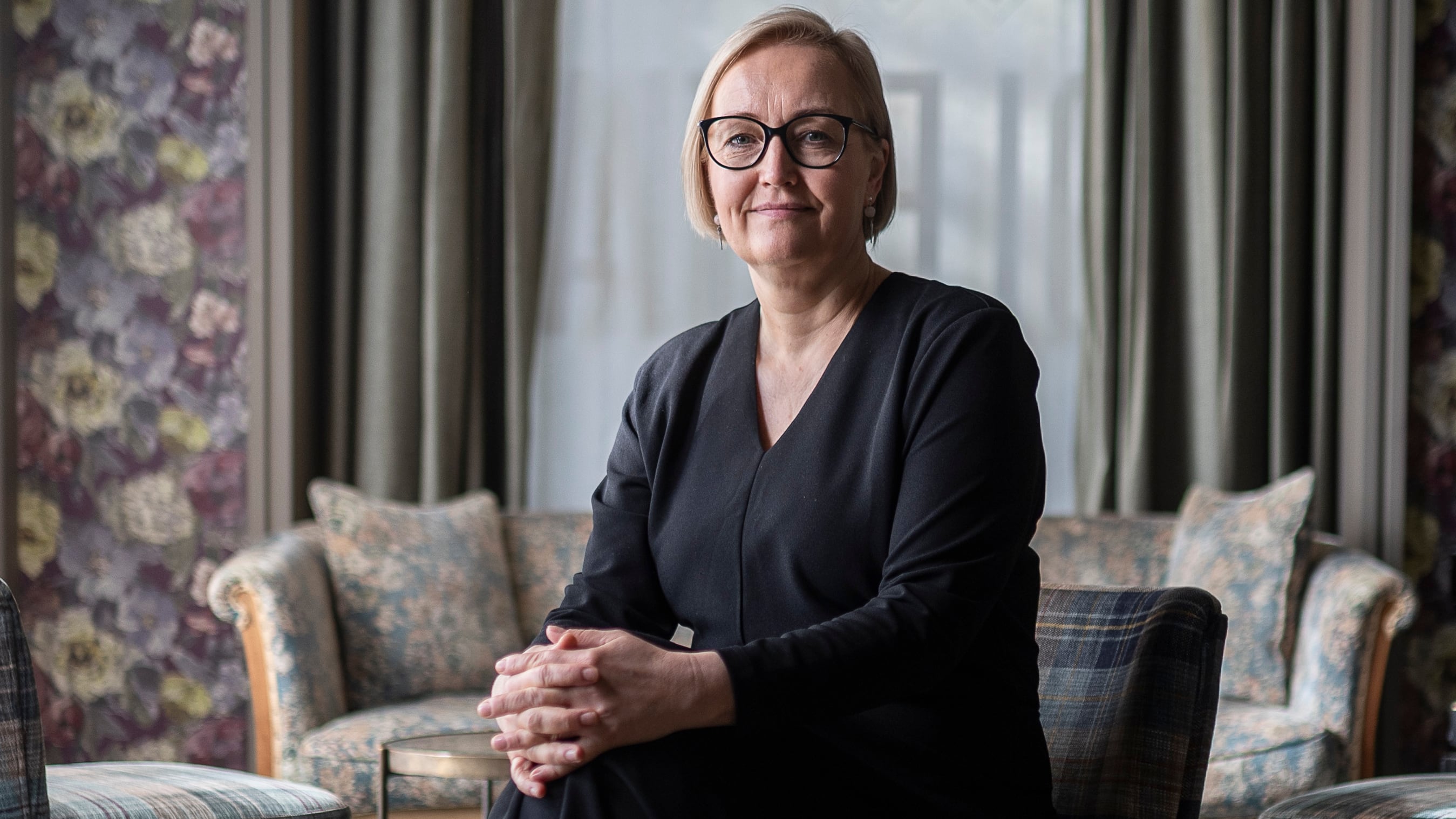
Kristina Kallas, Estonia’s minister of education, pictured at the Duquessa de Cardona hotel in Barcelona on April 10, 2026.

© MediaNews Group/Los Angeles Daily News via Getty Images (MediaNews Group via Getty Images)

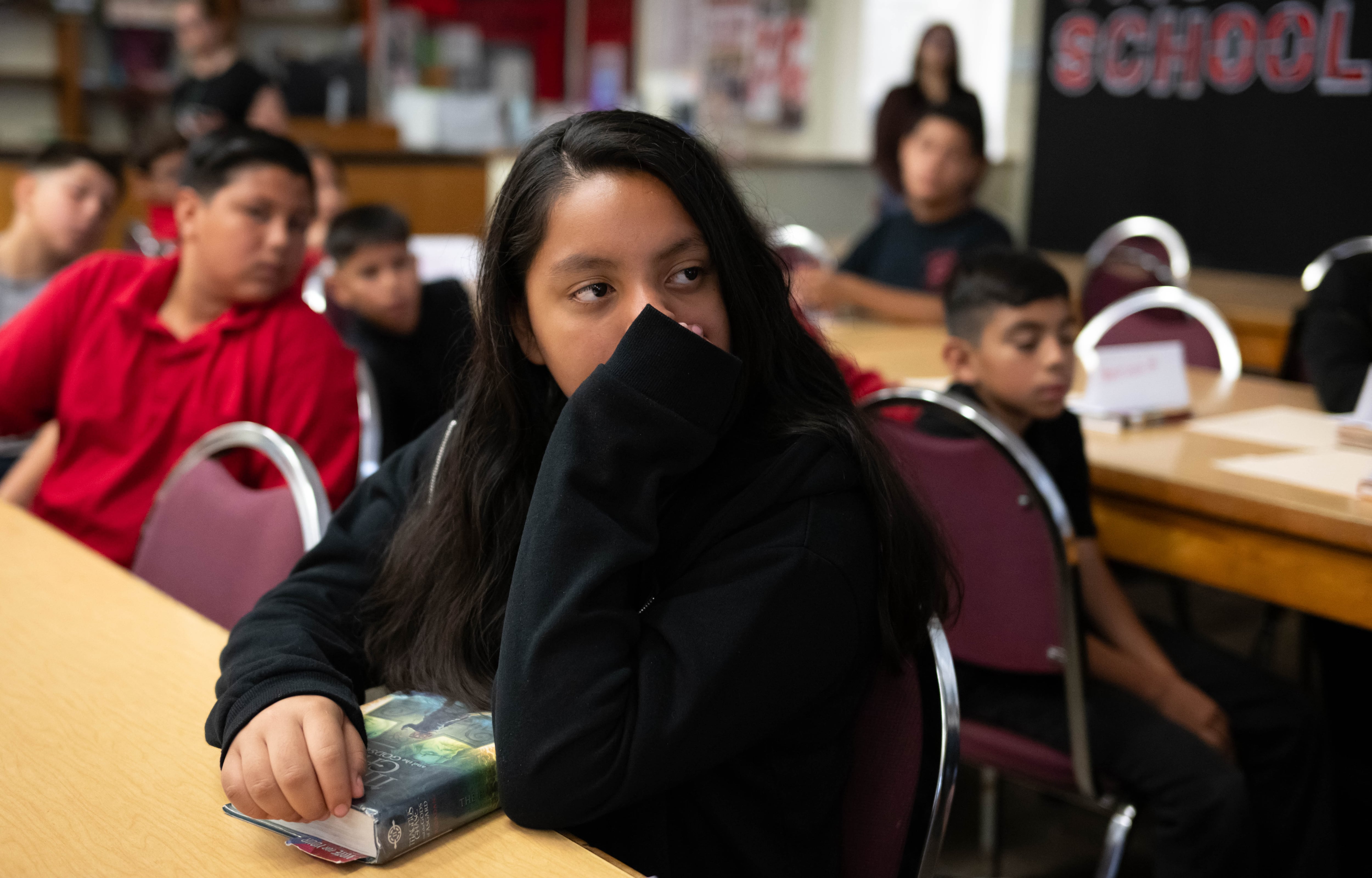
A sixth-grade student at Pacoima Middle School, in Los Angeles, California, on September 11, 2026.
  •  

Is there a 10% chance that AI will kill us all?

In 2024 I sketched a map to situate what experts and commentators expected from artificial intelligence. It had two axes: how much will it advance? and will it be beneficial or dangerous? People fell into every quadrant, even the inconsistent one —“it’s nothing special and it’s extremely dangerous.” I was clearly on the “wow” side of the power axis and moderately optimistic. Two years later, the consensus has shifted in one direction: more power and more fear.

Seguir leyendo

© Owen Humphreys (AP)

Bandada de estorninos en Gretna, Escocia.
  •  

Dogs also prefer consonants: how our language shapes their brain

Everything is contagious, even the way we listen and understand. For humans, consonants usually carry more information than vowels. This pattern appears in many languages: when a sentence is stripped down to its bones, those bones are more recognizable if consonants dominate. That is why Spanish has 23 consonants and five vowels, a ratio that holds in almost every language. It is also why people drop vowels when they want to save characters in a message. Our brains fill in the gaps more effectively.

Seguir leyendo

© Boglarka Morvai

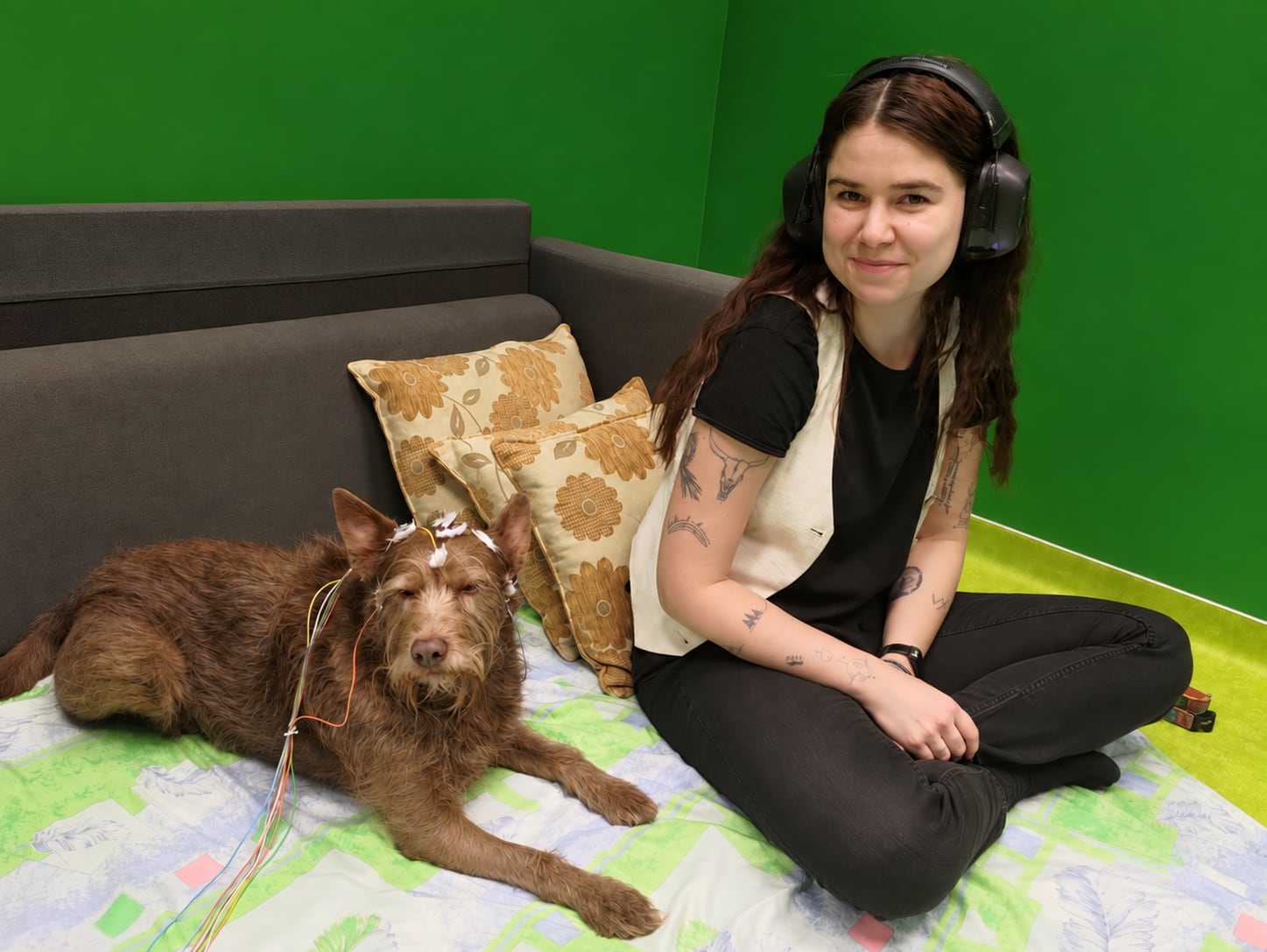
Participants in the study.
  •  

Paid Phones

The most recent winner of the National Magazine Award for feature writing describes his turn to payday lending apps when AI gobbled up his livelihood (aka penning promotional web content for business clients). Sharp and darkly funny, the essay chronicles yet another nail in the coffin of the American dream:

Albert founder Yinon Ravid has said that he chose his app’s name for its suggestion of the kind of “smart, unassuming friend” you might come to for financial advice, but today, when I hear the name Albert, I am far more likely to picture an overwhelming force bent on my total destruction, a figure you might spot while being burned alive in a dream—black-robed, pale, teeth bared. When I first joined the app, about eighteen months ago, Albert offered me $25.00. To acquire this loan, I was required to pay an additional fee: A $6.99 instant deposit charge plus the cost of a $19.99-per-month subscription to Albert’s Standard plan, due in one week’s time alongside the full loan repayment. (If I really wanted to make the most of my $25.00, I also had the option of Albert’s $39.99-per-month Genius plan, which, among a very small handful of other talents, can “find restaurants based on your location, or in a specific area.”) On its own, this might’ve been manageable, but, true to the CRL’s findings, Albert’s offerings alone couldn’t keep me afloat, and so I soon signed up for the rest of the payday apps, each one toting its share of instant deposit and subscription fees. (Gallingly, Dave—the only publicly traded company of the bunch, valued at $4.72 billion as of this writing—has the nerve to ask for a tip after each transaction, a move that I suspect even the flintiest strip mall grift artists would dismiss as gauche.)

  •  

ChatGPT, Reddit and Roblox become latest catch in EU’s regulatory net

Brussels is tightening its grip on some of the internet’s fastest-growing services, designating ChatGPT, Reddit and Roblox for heightened scrutiny under the European Union’s Digital Services Act (DSA), writes Catherine Feore.

The European Commission said all three services meet the 45 million average monthly users threshold in the EU, triggering the DSA rules reserved for digital players considered large enough to pose systemic risks to European society.

“These new designations mean that ChatGPT, Reddit and Roblox will now be held to a higher standard of scrutiny and accountability in the European Union,” said Henna Virkkunen (pictured), the Commission’s executive vice-president for tech sovereignty, security and democracy.

The move puts the companies firmly in Brussels’ regulatory crosshairs. They must assess and mitigate risks ranging from illegal content and harm to minors to threats to fundamental rights, elections, public security, and users’ physical and mental well-being. Importantly, the designation also gives the Commission investigative powers to scrutinise relevant features and systems underpinning the services.

ChatGPT has been designated a Very Large Online Search Engine (VLOSE), while Reddit and Roblox are now Very Large Online Platforms (VLOPs). They have until the end of January 2027 to comply with the DSA’s tougher obligations.

ChatGPT’s inclusion is particularly significant. The Commission considers the AI service a hybrid product that qualifies as an online search engine because it can search the web when answering users’ queries, bringing a major generative AI service into the DSA’s toughest tier of oversight for the first time.

The Commission will supervise compliance with the DSA, in cooperation with Coimisiún na Meán (Ireland’s media regulator) for ChatGPT and Reddit, and the Dutch Authority for Consumers and Markets (ACM) for Roblox.

With the latest additions, 28 platforms and search engines have now received the EU’s “very large” designation.

Photo credit: Commissioner Virkkunnen Photographer: Lukasz Kobus © European Union

  •  
❌