❌

Reading view

Fighting big money in politics: California’s Community News Act

California Gov. Gavin Newsom signs the Community NEWS Act on Sept. 30, 2026. Photo via Office of Gov. Gavin Newsom

This article originally appeared on Dean Baker’s Patreon. It is reprinted here with permission.

Virtually everyone who is not a billionaire, or owned by one, agrees that we have to limit the ability of the rich to buy elections. While the Republican Party has taken “policy for sale” politics to a new level, there are plenty of Democrats who have been happy to support obviously awful policy in exchange for contributions from the AI industry, the pharmaceutical industry, the crypto industry, and Wall Street more generally. It costs a lot of money to run a competitive campaign and it’s hard to raise that from small contributions, so there will always be a temptation to bend policy positions to get some serious money.

While most people favor limits on campaign contributions, the current Supreme Court has made this very difficult. They have ruled that campaign contributions are speech and therefore any effort to limit campaign contributions is an unconstitutional restriction on speech.

There are some promising alternative paths that focus on making small donors matter. Seattle has a system of “democracy vouchers” that give every voter in local elections a modest sum that they can contribute to a candidate(s) of their choice. To qualify to get the vouchers, candidates must agree to limits on spending and large contributions.

Super-matches are a comparable system. Under this system, small dollar contributions can be matched up to 8 to 1, which means that even a $50 contribution can make a difference to a campaign. New York City, along with several other cities, have gone this route.

While these paths for amplifying the voice of ordinary people are promising, it will take much more to match the power of the billionaires. It is important to realize they exercise their political power in ways other than campaign contributions, primarily through their ownership of the media.

The importance of billionaire ownership goes far beyond the constant stream of lies and right-wing propaganda from Fox News. Last year, the very Trumpy Ellison family took control of CBS and immediately began to shift its news to the right. They are now taking control of CNN through the merger of Paramount and Warner Brothers. They also got control over TikTok, after Trump wrestled it away from a Chinese company for them.

Trumper Mark Zuckerberg owns Facebook and Instagram and is not shy about banning political material he doesn’t like. And Elon Musk bought Twitter, explicitly to advance his right-wing agenda. The rest of the media landscape doesn’t look much better. The rich and very rich own the countries’ newspapers and broadcast outlets, and most of these people lean right, even if they have not yet joined the Trump Reich.  

And let’s just be clear. The idea that the campaign ads bought by the rich can influence votes, but not the material that people see between the ads, is beyond absurd. Even if we banned all political contributions from rich people and corporations, the rich could still control elections by showing us nothing but their propaganda on television, in newspapers, and on social media.

This is why the Community News Act that Governor Gavin Newsom just signed is so important. The measure provides $20,000 each for up to five journalists per news outlet covering local news. This subsidy can keep newspapers and news sites across the state in business and help to support new ones that might start up. It is similar to other programs that have been started in Illinois, New York, and New Mexico.

This might seem like small change in a world with multi-billion dollar media empires, but it is not realistic to imagine matching the super-rich dollar for dollar; the goal is to sustain reality-based reporting that people can rely upon. (Repealing Section 230 protection for the mega-platforms like Facebook and X would be a big step towards leveling the playing field.) And support for local news reporting is likely to also lead to better national and international reporting, both by training more reporters and also increasing the comfort level with public funding, perhaps opening the door for a national system.

To be clear, there are no political conditions attached to this funding. Conservative news outlets are as eligible for this subsidy as more liberal ones. The point is to support local journalism, not to favor a particular political perspective.

To my view, this system is not ideal. I prefer support coming through an individual refundable tax credit to support local news. This would allow people to have a more direct attachment to the news outlets being supported with public money. Ideally, this would give them a sense of ownership that many feel towards other community organizations.

But whether or not this is the best approach, there is no doubt that the California bill, along with the ones already passed in other states, are big steps forward. It will help to reverse the collapse of local news reporting, which is giving corruption free rein in many areas. We need to build on the positive and make it better, rather than reject a plan because it may not be ideal. Progressive opponents of California’s wealth tax initiative may want to give that point some thought.

  •  

He loved working in concrete. Now, he’s dying from the chemical exposure.

Photo of James “NDN” Gardner. Photo courtesy of James Quigg.
https://www.spreaker.com/show/2952221/episodes/feed

Because he was bullied in elementary school for being Native American, James Gardner’s friends lovingly call him “NDN.” His friends and family know NDN to be a fiercely loyal, loving person, and a fiercely hard worker. But as a third-generation concrete specialist, NDN was exposed to chemicals that have left him disabled, terminal, and facing foreclosure on his home. In this episode of Working People, we speak with James “NDN” Gardner and his best friend James Quigg.

Additional links/info:

Featured Music:

  • Jules Taylor, Working People Theme Song

Credits:

  • Audio Post-Production: Jules Taylor
Transcript

The following is a rushed transcript and may contain errors. It will be updated.

Maximillian Alvarez:

Alright. Welcome everyone to Working People, a podcast about the lives, jobs, dreams, and struggles of the working class today. My name is Maximillian Alvarez, and today we are in Fort Worth, Texas, and we’re talking about a fellow worker named James. As Maven Navarro recently reported in the Fort Worth Star Telegram, “After leaving Oklahoma, James Gardner built a life for himself in Fort Worth. Now he could lose it all. When Gardner walks into doctor’s offices to receive treatment for his terminal liver failure, he has to ask staff to remove all the air fresheners for his skin condition. Gardner has multiple chemical sensitivity, which he says was caused by his time as a concrete specialist working with two-part epoxy resin. The illness causes him to break out anytime he gets around chemicals, air fresheners, perfumes, cleaning supplies, and paint spark allergy flare-ups that can last for 10 days.

Concrete work is known to cause health problems. Cement plants can also cause respiratory or cardiovascular issues according to the Environmental Protection Agency. James Quigg first met Gardner in high school in Oklahoma where he was given the nickname NDN after enduring bullying for being Native American and kids calling him Indian. A few of Gardner’s friends started calling him NDN or Indian, and it stuck. Now, Quig started a GoFundMe to help prevent Gardner from losing his house. As he is unable to work and has faced challenges receiving disability, Gardner was denied disability the first two times he applied for it. It wasn’t until his third application that he was approved because of his internal organs shutting down.” So to talk about all of this, I am truly grateful to have James Indian Gardner himself and James Quigg, who they have given me permission to call them “NDN” and “Quigg,” friends since high school, both here on the show with us today.

Thank you guys so much for being here. It is really, really great to be connecting with y’all. And my God, I wish we were connecting under less horrifying circumstances and I’m so sorry that you’re going through all of this. And NDN, as much as you’re comfortable, I want us to make sure that we focus a good chunk of time today talking about what you’re going through now, where things stand now and what people listening can do to help. But we’ve got 50 minutes here and I really want listeners to get to know you and your lives more, your friendship and all the things that make you, you, not just these horrible people and jobs and systems that have done all this unforgivable damage to you. So NDN, start us off. Tell us the story of you and what brought you to Fort Worth. And then Quigq, hop in and tell us your story and how it intertwines with Indians.

James “NDN” Gardner:

I’ll start with a nickname “NDN” and then I’ll go from there. So as you were saying, back in school, kids were making fun of me and bullying me, and my principal called us into the office in my freshman year, said, “You guys can’t call him an Indian anymore. You’re being racist.” And one of my friends stood and said, “We’re not calling him Indian. We’re calling him letter N, letter D, letter N.” And he says, “Well, I can’t do anything about that.” And it just stuck and I’ve always enjoyed it. A lot of people are like, “He’s not just a Indian, he’s the Indian. There’s only one of them running around.” As far as career goes, I am third generation doing precast concrete with the passion. I’ve always enjoyed doing concrete. I’ve loved it. Being able to take the raw elements of earth and forging it into something that’s going to last and help the world is phenomenal to me.

I relocated down here to Fort Worth to actually do the McKinley Stadium, which is my third stadium to be a part of. Years ago, I was working for a company that dealt with a very strong epoxy resin and only 4% of the people that are exposed directly to it will develop an allergy to it. And with the company, it’s easier for them just to pay you off than it is to change their safety protocols, which shouldn’t be the way, but it’s cheaper for them that way. And over time, my symptoms and my condition got worse and worse and worse because it just doesn’t stop once you’re out of the environment of that specific thing. I remember one time they laid a new asphalt in front of my house here on the road and I broke out for a week because of the adhesive and the tar and the asphalt and I couldn’t avoid it because I was in my own home.

Maximillian Alvarez:

So I have so many questions about that specifically because I don’t know if you guys know about it, but on this show specifically, I’ve been doing a lot of interviews with working people who have been exposed to toxic chemicals from work, from industrial disasters near their homes, all this kind of stuff that poor and working people are being exposed to daily. I mean, I was just filming in South Baltimore last night where residents just like you guys, but here in Baltimore are fighting trash incinerators that are blasting toxic chemicals into the lungs of their children. So this is definitely something that we’ve talked a lot about on the show, but I do want to talk about what that looked like for you, Indian, on a day-to-day working level. But before we get there, I want to go deeper into some of the lore here. Take me back to where you guys were in high school where you first met.

Quigg, who was this guy in high school when you met? And NDN, same question about Quigg.

James Quigg:

So Indian is a grade above me. So I came in as a freshman. He was already an established sophomore. He had a cool car. It was painted. He had some lady. Did it have a female on the hood and it had the universe? I mean, you couldn’t miss this car.

Maximillian Alvarez:

You had a low rider?

James “NDN” Gardner:

No, actually, it was a 91 Chevy Cavalier and anytime I’d get bored, we would just re-spray paint it. It was all animal print once. Once it was all hippied out, make love, not war. Even at one point I gave all the kids an art paint pens and we just wrote quotes over the entire car. People would stand there and read it for hours. It was just something to do. So

James Quigg:

You’d see this car. I’d see the car around before I was even in high school. So then you see, oh, this is the cool guy with the cool car. And then he’s always hanging out in the courtyard and he’s always got this group of girls because he’s just very didn’t try very hard, I guess. And honestly, I don’t think we liked each other necessarily in the beginning. It was just he had this girls that I was trying to hang out with, talk to, and he just didn’t really like the new guy, the new skinny white dude that was hanging around.

Maximillian Alvarez:

You got to earn your keep, baby.

James Quigg:

It took a couple years.

James “NDN” Gardner:

He really had to. And most of these girls I’ve been friends with for years, so I was very protective of them because they were my friends. And here’s this scrawny kid coming in trying to ask them all different kinds of things and get involved. I’m like, “Hey, hey, you don’t need to be around here right now.” But eventually he warmed over to me and I warmed over to him.

James Quigg:

Yeah, I was saying hope I was best friends with his cousin for a couple years. Then probably what, sophomore, not sophomore, junior, senior year, we started maybe hanging out a little bit more. You invited me to your house.

James “NDN” Gardner:

I had a house that most people weren’t allowed to. I was very young and I lived on my own, so it was just me and this trailer house at 16 years old. So a lot of parents didn’t even allow their kids over to my place. And they spray painted up too in the walls.

Maximillian Alvarez:

Yeah. I mean, to be honest, I don’t think my parents wouldn’t allow that either, but that would be exactly the house we’d all want to go to. Exactly. Exactly. I mean, can I ask how you ended up having your own kind of place when you were 16?

James “NDN” Gardner:

My parents separated and it was a choice of either do I go live with my dad or do I go live with my mom? And I was already working full-time at the time, and I bought a trailer house on state auction and moved into it. And it was just simpler that way. My mother ended up moving back in with me a few years later, but it was just more convenient. So like I said, I already had the income coming in.

Maximillian Alvarez:

What were you doing back then for work?

James “NDN” Gardner:

Back then? Well, my first job was working for the Department of Wildlife through a program called ATEC, which was American Indian Education Training Association. They took Native Americans and put them at federal buildings and gave them summer jobs. So that got me experience. Pretty much I was doing property management, mowing the yard, stuff like that, but I got to do a lot of really cool stuff with them because I was, “Hey, let’s grab him and take him with us to go do this fish survey or let’s go explore the bat caves and do a survey out there.” And so it was very fun as a youth to have that. And then I went straight from that to Home Depot, working at Home Depot as a pro associate.

Maximillian Alvarez:

So paint a picture for me. When you guys were back there in Oklahoma, are we talking kind of small town Oklahoma, medium town, city? Yeah, paint a picture for me.

James “NDN” Gardner:

So Bethany, Oklahoma at that point was the very edge of Oklahoma City. So it’s pretty much small town. I knew all the police officers, they all knew me, not because I was in trouble, just because there wasn’t a lot of us running around. And of course it was the late ’90s, early 2000s, so we were always getting into some sort of trouble as we all did back in that time.

James Quigg:

Oklahoma is a pretty small, big town. I think less than a million people in the whole city, probably less than that now, but I mean it takes what, 10 minutes or less to get down into the heart of Bricktown, downtown Oklahoma City. I mean, it still is small town, but it’s trying to be bigger than it really is.

Maximillian Alvarez:

I mean, I come from Southern California, the land of endless lights and sprawl from the beach to the mountains. So everything feels small town to me to some extent. But to be honest, I kind of got a lot of love for the small and medium-sized towns in the country. I don’t think I gave them enough credit when I was younger, but the older I get and go visit more, the more fascinating they are. But I wanted to ask in that vein, we’re talking about Oklahoma. I guess we’re talking in the colonial project of the United States of America, so everything is ironic, but living in a state named Oklahoma and going to a school where you make fun of Native American kids feels so ironic and ridiculous that I don’t even know what to do with myself. But was that normal Indian? I mean, what was the kind of ratio?

Were there a lot of indigenous kids going to school there?

James “NDN” Gardner:

No. No, there wasn’t. In high school, there was maybe five of us altogether. I mean, there’s not a lot of us left. It’s sad to say. I was fortunate enough to run into… I mean, we just kind of all clicked together because, oh yeah, you’re native too. Cool. What tribe? What’s your family line? But the whole reason why we were in Oklahoma City is that my father was one of the Native Americans you hear about in the past being adopted off the res for a very low amount of money. And then he was adopted with four other siblings, all native from different tribes raised by a white man in the city. So yeah, there just wasn’t a lot that made it to the inner city area at that time. They all stayed out near the reservations, near the small towns like Carnegie and Adarko. So being inside the city, yeah, there wasn’t a lot of us.

Maximillian Alvarez:

And I take it from the origin story of your nickname that it wasn’t a very kind place to Native kids like you?

James “NDN” Gardner:

Oh, no, no, no. I remember once I was 14 walking down the street and the cops pulled me over because they had an APP put out on a Native American with long hair. I just happened to be a Native American with long hair. And they picked me up and took me down to the police station, which was just three blocks from my house. I wasn’t the person they were looking for. The person they were looking for had robbed a gas station and he was in his late 20s and I was 14. We stood out, so you either knew who we were or it’s just the way it was.

James Quigg:

It’s true. And what they only taught us in school about Native American culture is just an annual field trip we take to the Cowboy Hall of Fame and they’d show us the statues and talk about the Trail of Tears.

Speaker 4:

Yeah.

Maximillian Alvarez:

But there’s a lot to this story that I identify with in certain ways. I don’t know what that’s like Indian, but I know what it’s like to be a bald, scary looking Mexican dude in America. I’ll take looking like Quigg over looking like us on a normal day if I don’t want to get stopped by the cops. But that’s all the more reason why it just fills my heart when I hear stories of comradery and lifesaving solidarity, even among kids who are standing up for a friend. Tell me more about that, both of you, the stepping in to sort of reclaim the name and to say this is not how we’re going to do things. This guy’s our friend, not our enemy.

James “NDN” Gardner:

Oh yeah. I mean, Quig is my white guy. I always joke with people like, “I got my white guy. He’s right here. I’m safe. I don’t need a card. I got a whole person.” And I mean, he’s always had my back. Once we really connected and I realized that this is somebody that I needed to be part of my life and everything he’s done for me over the years, I can’t live up to. I try.

James Quigg:

I seriously doubt that, brother. I have computer smarts and I can do techie stuff, but this guy is the dude if you need any help. I mean, I’ll go back to last year, we had a leak in my daughter’s bathroom and it was coming down in the guest bathroom and I was like, “I don’t know what the hell to do, man. It’s just coming down.” And he just hopped in his car and he brought all his tools because he’s just that guy. And so he came and he helped me change the drywall. And as he’s doing this and helping me with all the stepping outside because I got to spray some kills on the wood, I mean, he’s getting hives, he’s getting blisters. I’m feeling incredibly guilty and he’s like, “Don’t worry about it. Don’t worry about it. Let’s just get it done.” But he’s just that kind of guy and it’s been like that anytime I’ve needed him.

He’s just always there. And it’s not just me, it’s everybody. He’s helped damn near everybody that we know, either with a place to stay, help fixing their car, mowing a yard. It doesn’t matter. He’s a helper, he’s a doer, and that’s just something I’ve always admired from him.

Maximillian Alvarez:

Well, and it’s genuinely beautiful to hear you guys say that, right? Because first and foremost, I’m thinking just as three men in the country today, we don’t say this enough to each other and we don’t allow ourselves to be that for each other. And so I just wanted to kind of honor the beautiful friendship that you guys have, having each other’s backs for this long is a marvelous thing. And I’ll be honest with all of you listening, Quig reached out to me about Indian’s story and told me about it, and that’s how it got on my radar. So these guys have been together for years and they’re still looking out for each other, and I think the world will be a better place if we all do a little more of that for each other. And Quig, even you telling that story reminds me that we’ve still got so much to talk about here, Indian, about your working life and the conditions and chemicals that you were exposed to that are now collapsing your health and your quality of life.

So that’s normally what we talk about on this show is I talk to workers and I say, “Tell me about your working life.What does it look like on the job?

For people who’ve never worked in this line of work, what does it entail?” Can you kind of take us a little bit on that journey and then tell us about the kind of work hazards that you were exposed to?

James “NDN” Gardner:

Yeah. The company where I was working for made burial vaults and the poncho that they used went on the liners of the burial vaults to seal it to the concrete so it maintain a watertight sealness for 50 to 100 years. That’s what they were concerned about. The people working in there that were alive being exposed to a hazardous chemical to keep somebody that’s going to go in the ground from being exposed to the elements of the ground was more important to them than the people actually doing the job because there was other things that could have been used that was more efficient but cost more money.

And after my initial exposure with this company, I was still passionate about concrete. I still wanted to do concrete, but I had to relearn what companies I could work for, where I could work at, and how I could do it because now I got to change everything. I can’t be around anything that has sold chemicals. I’ve got to be in open environments. And one of the things, I was also a journeyman iron worker because every now and then you get tired of staring at gray when you do concrete long enough. And back to the whole having lung and breathing respiratory issues, as a journeyman iron worker, I was working on the Devon Tower, which is the tallest building in Oklahoma City, and I was going from the ground up a thousand feet every day, and I had developed acute altitude sickness from just working on the outside of the building every day.

But a lot of that was contributed because they did a long biopsy on me to test me for silicosis, which is from concrete dust. And I did have some concrete dust built up in my lungs at the time. And that’s just because not wearing enough protection when you should wear protection because old school concrete guys just get the job done, which I got no problem getting a job done, but it should be done safely, effectively, and efficiently, not the other direction around, efficiently and safety being one of the last concerns. So after no longer working for the company that caused my initial, and I didn’t realize how bad I was going to get over the years, because initially it was just adhesives in general. Then it got where I couldn’t even put a bandaid on without breaking out from the adhesives as I am now.

I actually have to order special medical stuff when I do get a cut so I can seal myself and not have a reaction to it for a long period of time.

James Quigg:

He has to take his own adhesives to the ER when he’s got to go to the ER because of his terminal liver failure, otherwise he’ll break out from that.

James “NDN” Gardner:

Yeah. Even going in for a procedure, they put an EKG machine on me. I’m going to break out from every point where the EKG machine is.

Maximillian Alvarez:

Jesus, man.

James “NDN” Gardner:

Even the tape on my fingers or to monitor my heart rate and my breathing will make me break out. So I travel with my own medical stuff now. It

Maximillian Alvarez:

Sounds like hell.

James “NDN” Gardner:

It is. It made me a shut in for quite a while because going to Walmart, going to the grocery store, luckily there’s DoorDash and things like that now where I don’t have to get out and get exposed. But again, like I said, it made me change how I worked in concrete. I went to places that had super structures that worked outside, still making beautiful things with concrete, but eventually the skin allergy, the multiple chemical sensitivity just overtook everything. I did work for a trailer company for a little while working three days a week because they knew my skin issue, they knew my thing. So I would go there whenever they needed something welded or something wired that they couldn’t figure out. But again, now I’m going to this place to work on a trailer and that trailer might’ve had paint in it. It might’ve had construction debris.

I can’t even walk into a Home Depot or a Walmart or Lowe’s. Fast food restaurants get me pretty good too. And as much as I love old people, they’re a little heavy with that perfume.That’s

Maximillian Alvarez:

Putting it mildly, man. And yeah, I’m sure so many of us don’t even realize all the spaces that we walk into where those irritants are, but if you start breaking out in hives the second that you’re exposed to it, you start realizing that actually there are a lot of places you can’t go. And that is just something that I think so many of us don’t have to think about. But when you’re in your position and you have to think about it, it must be just genuinely overwhelming at times.

James “NDN” Gardner:

T-Mobile has their own scent of air freshener. So when you open a T-Mobile store door, it puts a little spray into the air for a sensory thing. I understand how that can be with marketing. Oh, this is what T-Mobile smells like. I’m getting a new phone. And I didn’t know that till they rolled out with that and I went into a T-Mobile and next thing I know I’m being sprayed and now I’m breaking out in hives and I’ve got a leak.

Maximillian Alvarez:

Jesus, man. So as we sort of get to the situation that you’re dealing with now, I’ve heard from you a number of things already. We’re talking silicosis, we’re talking exposure to epoxy resin generating a chronic skin sensitivity, right? I mean the altitude sickness that you developed on the job. I guess if you had to sort of sum it up, if you could, what conditions do you have now that came from working in this country, from being exposed to things or repetitive actions to things? I guess I wanted to try to collect all that for listeners and ask what is the kind of sum total of all the crap that you’re dealing with from all the jobs that you’ve worked?

James “NDN” Gardner:

If the MSDS is laid out and has its certain rules and regulations, if the company will abide by the MSDS correctly, I would’ve never been overexposed.

James Quigg:

What’s the MSDS?

James “NDN” Gardner:

Material safety data sheets. It tells you about the hazardous of the chemicals, what you’re supposed to be wearing and be doing to you’re not hurt by it and it doesn’t affect you. And most companies, yeah, we’ve got an MSDS. It’s in a book on the wall over there. You can go look at it if you want to. And then they tell you to go to work. And I was guilty of doing that to people too. I’m like, “Well, yeah, the MSDS is over there, but just put this little mask on.” In reality, they needed a respirator instead of just a dust mask and went on with the day to get the day done. Things have changed a lot now than how bad it used to be when me starting off in the industry of concrete and everything else, because again, it was you’d stand in a cloud of dust grinding and just put on some safety glasses and hold your breath.

Maximillian Alvarez:

Well, and let’s talk about when these health conditions started piling up and to the point that you needed disability checks and then had to navigate this Kafka-esque system that doesn’t work to try to get the aid that you need to live. Tell us more about the kind of crisis that you’re in now and all the people who are supposed to be helping you right now but aren’t.

James “NDN” Gardner:

Yeah. I mean, even going to the social security office to file for disability, I would sit there breaking out because I’m waiting for long periods of time in the line in a room full of people with chemicals on. So it became I have no choice. I have to go do this. I’ve got to go file this paperwork and I filed the paperwork and I wait and I wait and I wait. And then, “Well, we want to send you to this doctor.” Well, I call the doctor’s office. I’m like, “Listen, I can’t just go in there and they don’t abide by those rules.” They’re like, “No, you’ve got to come in, you’ve got to wait, you’ve got to go through this.” Even now, I’ve got some doctors that really help me with my situation and make sure the days that I’m scheduled, that nobody’s wearing perfume and that it’s going to be a nice, clean environment for me.

And then I have other doctors that could care less, but I’ve got to go through them because the social security’s telling me, “Well, you need to go to this guy and get tested for this.” I mean, they just did an allergy test on me, and part of the allergy test, the bonding agent in the allergy test is an adhesive. So I tested positive for everything, even though I told them I’m an adhesive and yeah, it just has to be on my skin for a few minutes to test me for allergies. Well, that’s still an adhesive on my skin for a few minutes. And I ended up having to get an epishot in the middle of the test, which now became an inclisive test.

James Quigg:

And I do want to clarify that Fort Worth Star Telegram’s article, I don’t believe he’s been approved for disability yet.

James “NDN” Gardner:

No. No, I haven’t been approved yet, but since we’ve gotten the articles, they’ve started reaching out to me more instead of me having to wait and call them. So now we’re actually communicating back and forth for the first time, but I’ve been denied twice.

Maximillian Alvarez:

So the situation, as I understand it, please correct me if I’m wrong, is that you now, because of what you’ve been exposed to over the course of your working life, are no longer able to work and you are disabled by those things you were exposed to, but you have received no money from the disability office. Your life is in limbo right now.

James “NDN” Gardner:

Yes, I am in limbo. And the first two times I was denied because they did not recognize multiple chemical sensitivity as a disability until the past five years. And I’ve been dealing with it for 10 years now. So it wasn’t recognized as a disability. Now they’re starting to, “Well, what do we have to do to prove that this is a disability?” And because of my skin always having to fight these battles and me being on experimental drugs, trying to overcome with it, and part of being native is that most drugs aren’t made for a 40-year-old Native American guy. They’re made for a 40-year-old white man who has years and years of antibodies built up in the systems where if I get a flu shot, I’m ending up with walking pneumonia, where if Quigley got a flu shot, he’s just fine the next day because it’s more developed.

So my body started shutting down because of it’s trying to fight all the time, always battling, always battling my skin, always fighting, led to me having internal organ failure. I go in for another surgery on Monday, which will be my 10th surgery this year alone because my body’s just shutting down.

But yeah, I’m just in limbo. But now, so I was able to refile for social security with the internal organ failure and the liver failure and the terminal diagnostics now. So it’s not even really taking the multiple chemical sensitivity into effect with my disability. That’s just added to it now.

Maximillian Alvarez:

Well, and I guarantee that there are going to be folks that I know who are going to listen to this and they’re going to reach out and they’re going to say, “You’re damn right it’s a disability. They have it. A lot of the residents I was talking about who have been exposed to these chemicals, now they are so hypersensitive to these chemicals and they bioaccumulate and they make them feel worse and their kids are getting sick or staying sick or they haven’t been not sick for years at this point. And it’s just this kind of hell that they’re living through. And I can’t help but think of all the other workers like you who are exposed to this stuff. I mean, in the year 2026, black lung is on the rise in this country. There are men our age dying from coal mining or other forms of silicosis because of the stuff they’re inhaling, the lack of PPE they’re getting, just this whole system of grinding people down to dust and subjecting our bodies to the most toxic conditions just to make a buck.

And it’s so systemic, but it impacts us in so many different ways. And I kind of wanted to just ask you guys about that.What does this all say about the daily realities that working people are going through in this country? And especially if you’re disabled or indigenous or both?

James Quigg:

Well, I’ll say that invisible disabilities are easily ignored. That is one thing that Andy and I both have in common. You look at both of us on a normal day, you don’t see a disability. You don’t see a multiple chemical sensitivity in him. You don’t see type one diabetes in me. So it’s easy, kind of out of sight, out of mind for a lot of people, except for the people that have to deal with it day in, day out when they wake up to when they go to bed.

James “NDN” Gardner:

I feel like in a way I was robbed because I always wanted to provide for my family. I always wanted to work hard and make a living. And because I was working hard and making a living and the companies that I worked for ignored safety protocols, I can no longer do what I want to do for my family and be there for my family the way I should have been allowed to. And a lot of working people, that’s all we want to do is make ends meet, survive and enjoy life and enjoy the little things. And to not be able to do that now because a company wanted to make more money isn’t justified.

James Quigg:

I mean, it’s true. America is built on the backs of people like Indian and a lot of people just use them as stepping stones to get to the future.

Speaker 4:

Yeah.

Maximillian Alvarez:

I think that was beautifully and powerfully and put and it’s so depressingly true. I mean, Jesus, we just passed the 25th anniversary of nine eleven and we’re learning about all the things that not just first responders, but people all over New York were exposed to and lied to about for years later. This is unacceptable at every single level and we can’t keep accepting it. We’ve got to do something about it and we got to start by taking care of each other. And I wanted to bring us there for the final turn here because I know I can’t keep you guys for much longer, but I wanted to ask where things currently stand. I mean, you guys already gave us an important update from the Fort Worth Star Telegram that apparently Indian still hasn’t received anything from the disability office and he was denied two times before that anyway until his organs started shutting down.

Then he got some movement, but where does that leave Indian now? Where does that leave your family now? And what are folks doing in response? What can folks listening do to help?

James “NDN” Gardner:

Right. I mean, to back it down, sage up, pray to whoever will listen.

James Quigg:

Yeah. We’re kind of waiting to see what disability says. Hopefully he gets an approval and he’ll get some sort of back money so that he can get caught up with his bills because the bills haven’t stopped. The mortgage hasn’t stopped. They’re still trying to foreclose as far as I know because he’s terminal. They’re trying to get at least the ability for him to stay in his home and not be evicted. But that doesn’t solve a problem. That just pushes it down the road and it leaves it for his kids when Indian’s no longer here to help. But as far as what’s keeping him afloat has been this GoFundMe the last month or so, just from the kindness of strangers. Indian spent his life helping anybody and everybody. That doesn’t mean that those people are in positions to be able to help financially or monetarily in any way.

Indian’s always been that person to support others.

It’s just there’s nobody there maybe outside of myself that’s able to help him in that sense. And so we were sitting around his cousin, my other best friend and his mother on his birthday, what, six weeks ago, something like that, sitting around the kitchen table trying to figure out how do we stop this foreclosure? What can we do? Can we get a loan? Can we try to refinance? Can we refinance his mom’s house? Can I afford to purchase the home on my own? And realistically, none of us, we couldn’t do any of that. So I went home frustrated that we had to do this on his birthday, kind of cried about it a little bit and said, “Fuck it, I’m going to do this. I’m going to make a GoFundMe. I’m going to tell my friend’s story the best that I can and see if people are willing to respond.” Just try to show the world the kind person and generous person he’s always been and hopefully karma will come back tenfold on him.

Maximillian Alvarez:

Well, Indian, I want to give you the last word here and it can really be anything that you want, but I guess if you could know that you’re speaking to fellow workers around the country who listen to this show, who work in industries like this and industries that unlike this, if you could talk to those folks who are working jobs like this now or folks out there who could help, what would you just want to leave them with?

James “NDN” Gardner:

My family’s got a motto. If someone needs help, you help. You don’t ever respect anything in return. Whether it’s an old lady crossing the street, somebody on the side of the road with a flat tire, any situation. Somebody needs you to help them push a car or you notice your neighbor’s grass is too tall and you know he hasn’t been feeling well the last few weeks. Nothing’s going to cost you but time. Time is all we have for each other and let’s enjoy it and spend it and help everybody together. We’re all in this together. This is one world, one life. We’re all part of this. We’re all part of this.

Maximillian Alvarez:

All right gang, that’s going to wrap things up for us today. I want to thank our guests, James Indian Gardner and James Quigg. You can get in touch with them and keep up to date with Indian story by using the links that we’ve included in the show notes for this episode. And of course, I want to thank you all for listening and I want to thank you for caring about this. We do this work for you, but we can’t do it without you. So thank you. Working People is brought to you in partnership with In These Times Magazine and the Real News Network. The show is produced by the great Jules Taylor and is a proud member of the Labor Radio Podcast Network. We’ll see y’all back here next time for another episode of Working People. And in the meantime, go explore all the great work that we’re doing at the Real News Network, where we do grassroots reporting that lifts up the voices and stories from the front lines of struggle across the US and around the world.

Subscribe to our YouTube channel and check out our other great podcasts like Under the Shadow and the Battle for Free Speech and connect with us on social media and get updates on our reporting there and help us do more work like this by going to therealnews.com/donate and becoming a supporter today. I promise you guys, it really makes a difference. I’m Maximillian Alvarez. Take care of yourselves. Take care of each other. Solidarity forever.

  •  

A tech glossary to thrive and survive in the AI era

Certain ideas define us. Some earned names of our own along the way. Others have run through nearly 240 pieces without ever being formally christened. Put together, they amount to a worldview. That worldview has been assembled one essay at a time since 2023. Many readers have walked in mid-conversation. Mention the hardware/software flip, super […]

The post A tech glossary to thrive and survive in the AI era appeared first on Asia Times.

  •  

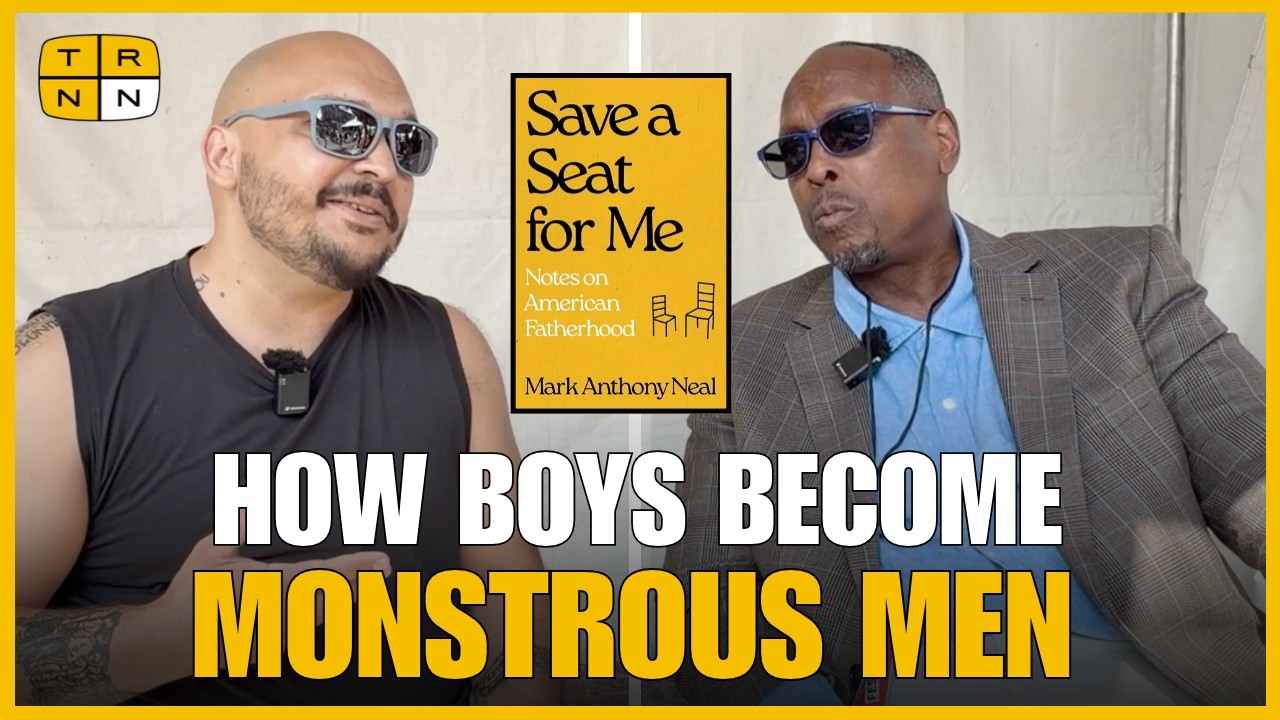
The real crisis for men is capitalism: A conversation with Dr. Mark Anthony Neal

From the heinous crimes of the Epstein class to the Cornell 7, from the toxic cultures of the “manosphere” to the increase of antisocial relationships with online pornography and AI bots, we need to talk about what is going on with men in our society. We speak with renowned scholar, author, and commentator Dr. Mark Anthony Neal about his new book Save a Seat for Me: Notes on American Fatherhood, and about the ways American capitalism damages everyone and trains boys to become monstrous men.

Credits:

  • Post-Production: Cameron Granadino
Transcript

The following is a rushed transcript and may contain errors. It will be updated.

Maximillian Alvarez:

I’m here at Red Emmas at the Baltimore Book Festival, and I’m sitting with Dr. Mark Anthony Neal. Brother Mark, it’s so great to have you back here in Baltimore, man. I know I only got you for a second, and we’re talking about your incredible new book, Save a Seat for Me, Notes on American Fatherhood. And I was thinking as another father in America in 2026, I wanted to ask you, it doesn’t take PhDs like we have to know that we’ve got a real fricking crisis in this country with men and masculinity and masculine culture and fatherhood, or we have a whole lot of crises that men are experiencing but aren’t dealing with well. So what do you make of all this? What do we do about it? And how can your book help us get there?

Dr. Mark Anthony Neal:

I think we have tried, America has tried to raise generations of warriors, if you will, to be on the front lines of American imperialism. And you can’t be human to do that. You can’t think, you can’t question, you can’t be vulnerable. So what we have done is raise two or three generations of men in America who don’t know how to be human, who don’t know how to lead into full range of who they are. We’ve been socialized to show up only certain kinds of ways, anger, rage, the ability to follow directions. Things like vulnerability are made fun of at the highest levels.

Maximillian Alvarez:

And those of us who are very vulnerable people have been made fun of.

Dr. Mark Anthony Neal:

Because of that.

Maximillian Alvarez:

Because of that.

Dr. Mark Anthony Neal:

We’ve been made to think that our responsibility in a capitalist system has literally been reduced to only making money, that our only value. And I think about this a lot as a Black father, my own father, that I’m sure he thought that his only value to me was making sure that I was fed and clothed and taken care of. And I get all of that, but I needed much more from him. As a father, I needed to be more than that for my daughters. And so I think when we look at young men who are clearly feeling so much with no outlet, their outlets become dangerous behaviors, self-directed violence,

Maximillian Alvarez:

Toxic online cultures,

Dr. Mark Anthony Neal:

All kinds of addictions, alcohol, Percocet, weed, porn. I mean, we can name all these things and understand it. And the fact that so many of the young men in the world today, their lives are what they can connect with on their handheld device. They don’t actually have relationships with people in the real world, don’t see a value in that. And I don’t know how we sustain that. I don’t know how we sustain our humanity in a situation where we don’t value human relationship anymore.

Maximillian Alvarez:

Well, and it’s like you see that the path that we’re on as a society or what’s left of a society is being driven by the sociopathic, psychopathic, bloodthirsty –

Dr. Mark Anthony Neal:

Or just plain evils.

Maximillian Alvarez:

Just plain evil maniacs who want a future where they get all the benefits of human society, but don’t have to deal with any of the humans in it. Whether they’re thinking of like, oh, AI is going to replace all their jobs and we’re going to get all the money. They’re not thinking about what the heck that’s going to mean for us. They’re just going to push us into slums and prisons and police us, hunt us, surveil us. That’s their big goddamn plan. And I think you put it so powerfully that it’s like so many men out there have the same human needs that we all have and we’re feeling them so acutely the more isolated we are, but we’re looking to find, we’re seeking inhuman avenues.

Dr. Mark Anthony Neal:

I mean, think about all the folks who are in relationships with chat bots. I mean, it’s surreal. I can’t have a relationship with an actual person. I don’t desire a relationship with an actual person. I need to have a relationship with some facsimile, some avatar that somehow that’s more meaningful to me than having a relationship with a person.

Maximillian Alvarez:

Yeah. And I think even as a editor in chief and co-ED of a media network, as a media star, we recognize there’s only so much you can do online. You got to get the hell offline and you got to meet each other back on that level of shared humanity and shared reality because that’s the only way we’re going to deal with anything, anything in this country.

Dr. Mark Anthony Neal:

And that’s why the Baltimore Book Festival is really important. First of all, not only just a reminder, someplace that’s celebrating the written word, obviously, but folks coming together in community. We have to get back to a culture where we share in community. We read together, we listen together, we debate together instead of these media silos. I’m going to have this debate over here on this network and you’re going to have this debate over there and never the twain shall meet.

Maximillian Alvarez:

Well, and final question, but it goes really to the heart of your book. Here in Baltimore, I see this every day. I feel it as a father, but right down the street from where I live in Mondamin, earlier this summer, there were six youth who were caught on camera just beating the hell out of an elderly member of the community, a former Black Panther. It was horrific. I’ve interviewed this man and the community that’s trying to help him, but clearly everyone who is showing up to help is seeing in that video the deficit of guidance, of fatherhood, of love.

Dr. Mark Anthony Neal:

Of respect. Basic respect.

Maximillian Alvarez:

So what can we do about that in our everyday lives at the person to person level?

Dr. Mark Anthony Neal:

We have to be willing not just to be witnesses to these experiences or commentators.

We have to intervene and feel comfortable enough to intervene. Whoever sat down with those young men, first of all, to explain, because the easy part is to say, no, this man was important to our movement in the past. The more difficult thing is like, no, this man is important because he’s another human being and you should value life and his humanity. But if they are young men who do not value their own humanity, don’t see their own humanity, they’re going to reproduce that behavior over and over again. And so we have to have the willingness because it’s real easy to go, I’m just going to build my life in this silo and protect my family and I get it. But to take that next step to say, okay, I might not be able to talk to all six of these brothers, try to talk to two of them.

Begin that process, that one-on-one conversation that can blossom into something that’s much more significant.

💾

“America has tried to raise generations of warriors to be on the front lines of American imperialism… So what we have done is raise two or three generations of men in America who don't know how to be human.”
  •  

Amazon is deploying AI to spy on its workers and bust unions before they form

A worker walks inside Amazon's LCY3 Fulfillment Centre in Dartford, east of London, on June 4, 2026, on the second day of company's 'Delivering the Future EMEA '26' event. Photo by JUSTIN TALLIS / AFP via Getty Images

This article was originally published by Truthout on Sept. 30, 2026. It is shared here under a  Creative Commons (CC BY-NC-ND 4.0) license.

The 18th-century notion of the panopticon — a circular prison design with a guard station in the middle, allowing a single officer to enforce discipline by keeping watch over all the prisoners — has become real in the 21st century through AI-driven surveillance against workers: It’s the Amazon warehouse.

It should be no surprise that the company that harnessed technology to create a vast, $2.7 trillion empire would employ the same sophistication to enforce workplace discipline and tamp down insurgent unionization efforts. A recent disclosure of Amazon’s internal “employee relations” documents reveals just how extreme Amazon’s methods of warehouse surveillance and control have become.

Amazon employs what it calls the “Atlas” model, inputting into a computerized model a staggering amount of information on workers, their thoughts and behaviors, the workplace environment, and myriad other factors — “hundreds of data points,” according to the company. Atlas produces not just a granular measurement of ongoing worker unrest, worksite by worksite around the world, but also a prediction model for future organizing. It’s like the “precrime” police in the film Minority Report who use psychic powers to identify and apprehend would-be criminals before they act — except in this case, it’s an AI-driven tool used by the billionaire owners of one of the richest companies in history to head off rebellion among its low-wage workforce. And this is not Tom Cruise play-acting; it’s very real.

Workers anywhere who have endured anti-union campaigns can relate to stories of overbearing surveillance by management; the Atlas model, however, takes the spying to an entirely new level.

Details of the Atlas model came to light recently as a result of a legal dispute between Amazon and Unifor, the Canadian private sector union. Last year, British Columbia’s Labour Relations Board awarded union certification to Unifor at Amazon’s YVR2 warehouse outside Vancouver, finding that the company had broadly interfered in the union drive. It was the second union certification at Amazon in North America — the other being the 2022 union win at JFK8 in Staten Island, New York. But in contrast to the U.S., where Amazon has managed to stall bargaining for four and a half years because of weak labor laws, the B.C. Labour Relations Board ordered Amazon to recognize the union and negotiate. Contract bargaining commenced last December.

Not surprisingly, Amazon has dragged its feet in negotiations, prompting the union to file unfair labor practice charges with the Labour Board. Following a series of hearings earlier this year, the Labour Board found that Amazon violated provincial law. In August it ordered a remarkable step — first-contract arbitration at YVR2. That fight remains in play, but as a result of the legal proceedings, Amazon was required to turn over documents to the Labour Board and Unifor. Unifor has shared them with Truthout, and they can be viewed here.

Atlas produces not just a granular measurement of ongoing worker unrest, worksite by worksite around the world, but also a prediction model for future organizing.

In addition to the Atlas model revelation (beginning on Page 19 of the document), the material includes more than 100 pages that reveal in great detail how Amazon trains its frontline managers in union-busting. My colleague at the Center for Work and Democracy, Ben Fong, has written about this other portion of the disclosed material.

“Amazon’s own documents pull back the curtain on what workers have been telling us for years,” said Justin Gniposky, Unifor’s organizing director. “Behind the friendly PR, Amazon sees workers as property and treats their fundamental right to unionize as a threat to be managed and then eliminated.”

Amazon did not respond to Truthout’s request for comment on the Atlas model.

The documents describe the Atlas model as “a labor risk framework to clarify how Amazon evaluates emerging workforce issues, labor union targets, and internal or external labor threats.” The Atlas model ingests hundreds of data points: employee trainings completed; health and safety incidents, from simple first-aid cases to serious injuries; feedback from workers on management; worker tenure and turnover; the proximity of a warehouse to another workplace experiencing union activity; local minimum wage rates and other area economic conditions; and even the temperatures inside and outside of the warehouse.

Amazon seems especially thorough about scraping data from worker communications channels to plug into the Atlas model — the company’s internal “Voice of the Associate” (VOA) electronic bulletin board, the answers to digital questions posed daily to workers, and externally, forums including Reddit — “to understand the tenor of the discussion at the site level,” according to the documents.

“Behind the friendly PR, Amazon sees workers as property and treats their fundamental right to unionize as a threat to be managed and then eliminated.”

Atlas uses AI to identify phrases and “common keywords” to allow managers to do a “deep dive into the worker population driving the discussion.” Atlas also looks at the upvotes or other responses — positive, negative, or neutral — that the comments elicit, and the volume of those worker reactions. All of these data points go into Atlas and let managers “look around corners to identify developing themes” so they can “tailor strategic responses for addressing emerging risk.”

Amazon also tracks and documents all organizing activities that managers detect, and records them under the category of “employee relations events.” Each activity is assigned a severity score. “High severity” events include employees signing union cards, delegations of workers approaching management with demands, protests, sickouts, and work stoppages.

Atlas uses mathematical modeling to create a point system for all these data points, assigning a “labor score” to each workplace. The scale is further broken down into tiers, with the Tier 5 designation applied to facilities with high scores, where there is “no immediate perceived risk,” and Tier 1 applied to facilities where “future activity is imminent.” Amazon’s union busters focus largely on Tier 1 and 2 facilities.

Atlas produces extensive spreadsheets ranking different facilities and looking not just at raw “labor scores” but also at monthly trends. In 2024, the year the documents date from, Amazon was most concerned about union activity at 16 warehouses it had ranked as Tier 1. For instance, at LDJ5, a Staten Island sortation center across the street from JFK8, Atlas noted that leading issues of worker concern were “bathroom breaks, equipment, rest breaks, leadership/management, temperature.” The spreadsheet noted that “internal activists” — workers — were organizing, and that by looking at month-over-month trends, LDJ5 was experiencing “Risk Increase,” with the phrase placed inside a bright red box. At four of these Tier 1 facilities, the spreadsheet noted, the threat of union activity was sufficiently high to justify deploying Amazon’s “rapid response” team: union busters who travel to hotspots of organizing throughout Amazon’s global network.

Union organizing at Amazon is not just a battle over economics; it’s also a fight for basic freedom and democracy.

But the main value of Atlas seems to be predictive. For the Tier 2 worksites (“future activity is highly probable”), the spreadsheet poses these questions: “Which sites are showing the most future risk that are not Tier 1 sites yet?” and “What is the risk in each business line and which has the most risk, is it increasing or decreasing? What is driving the risk?” Tier 2 spreadsheets in the document look at the number of investigations of workers that management has handled in the last month, whether that number is trending up or down, the number of worker appeals of those investigations, and — notably — the percentage of negative worker comments on internal bulletin boards.

Voice of the Associate and other internal bulletin boards are key focal points. Charts in the document track how often workers raise particular topics, like weather, time off, breakroom amenities, management treatment, and restroom cleanliness. They also analyze the “vector” of each issue: “What are the top drivers of negative Sentiment and change MoM [month over month]?” is one question posed in the document. “What Sites are spiking MoM in negative sentiment? What themes are driving the sentiment? What anecdotes can we pull?”

Atlas is not strictly a North American tool. One chart analyzes trends for warehouses globally, documenting “employee relations events” — worker organizing — and cataloguing the number of worker comments on Voice of the Associate and the percentage of those comments that were negative. Two warehouses in the English Midlands where workers have been organizing with the GMB union — both Tier 1 sites in Atlas’ taxonomy — showed high volumes of negative VOA posts. A warehouse in Melbourne, Australia, also showed mostly negative Voice of the Associate posts, while posts were mostly not negative in some of the warehouses in Poland, Germany, and Italy.

All this is surely a tiny sliver of Atlas’s output. The former head of Amazon’s HR platforms, Bud Cashatt, boasted on LinkedIn recently about how his department created “predictive site-risk ML touching every building in Amazon’s global network.” (“ML” stands for machine learning, where programmers train AI to learn patterns and build predictions based on analyzing vast quantities of data.)

Did Jeremy Bentham, the 18th-century British philosopher who dreamed up the panopticon, anticipate Atlas? Nearly 250 years ago, he imagined his panopticon as a useful tool for prisons, “madhouses,” and also “to the business of manufactories,” the industrialized manufacturing plants then just emerging in England. Speaking of his watchman in the center of the operation — the human Atlas of his time — Bentham wrote, “The concealment of his person will be of use.”

The documents uncovered at the B.C. Labour Board shine a light on Amazon’s concealed watchman. Atlas illustrates just how far Amazon will go to try to rule the warehouse floor. And its scope also underscores just how terrified Amazon’s masters are of their own workforce rising up and claiming their due.

Bentham theorized that the panopticon would facilitate social control: He imagined that incarcerated people would behave, not knowing at any moment whether they were being watched by the guard. It was, he wrote, “A new mode of obtaining power of mind over mind.”

But what happens when prisoners — or workers — resist such attempts at social control? There’s no level of AI sophistication that can erase the reality that Amazon’s workers move millions of packages every day, and without their labor, the Amazon supply chain collapses.

Peter B. Olney, the retired organizing director of the International Longshore and Warehouse Union, calls Atlas “a promethean tool for union busting and the thwarting of any employee organizing.”

To fight back against this “existential threat” to basic worker rights and unions, Olney says, “we have to get real about deploying massive resources towards organizing the workforce and finding their serious vulnerabilities and choke points.”

Today we see emerging fights everywhere against a billionaire class intent on harnessing AI and technology to undermine basic democracy and impose authoritarianism, both in the workplace and throughout society: in revolts against the algorithmically driven content we are force-fed on the internet; protests against and sabotage of the Flock cameras on neighborhood lampposts; and resistance against the replacement of workers with bots and computers. The Atlas model places Amazon workers at the center of this global fight against the AI billionaires. And it highlights that union organizing at Amazon is not just a battle over economics; it’s also a fight for basic freedom and democracy.

  •  

Cape Town’s ‘Apartheid wall’ met with protest

A proposed R114 million wall along Cape Town’s N2 has sparked protests, with residents and civil society groups accusing the city of investing in a barrier that could deepen the divide between poorer communities and surrounding suburbs.

Residents marched on September 25 to oppose the N2 Edge project, a planned 9-kilometer wall development that the city says is aimed at improving safety and security along the highway.

But protesters say that the wall risks reproducing the spatial divisions created under apartheid, saying public money should instead be spent on housing, public services and opportunities for communities that have been pushed to the margins.

Movement for CARE, which was among those involved in organizing the protests, had criticized the project, saying;

“Instead of investing in dignified housing, safe neighborhoods, quality public services, and opportunities for communities that have been pushed to the margins for generations, the city wants to invest millions in a barrier that deepens exclusion and reinforces the geography of apartheid.”

The organization said from the beginning when the news about the proposal was announced, that Cape Town does not need more walls but rather affordable housing close to work and economic opportunities, as well as greater investment in communities.

“We need investment in communities, not their isolation. We need a city that brings people together instead of driving them further apart,” it said.

The Movement for CARE described the proposed structure as an “Apartheid Wall,” arguing that the first step towards justice is refusing to normalize and hide existing inequalities.

City defends the R114 million project

The City of Cape Town has defended the project as a safety intervention. In January, Cape Town Mayor Geordin Hill-Lewis said the city’s adjustment budget had committed “R114m to the N2 Edge project.”

The investment “will make a positive difference to the safety of every motorist along that stretch, and reduce pedestrian fatalities,” Hill-Lewis said.

He said the project would repair safety barriers and introduce other safety improvements for communities along the N2.

Hill-Lewis also said that a small number of “criminal elements” were affecting the safety of hundreds of thousands of daily N2 users.

According to the mayor, the N2 Edge project would be accompanied by increased highway patrols, with more than 40 new Metro police officers deployed to the N2, supported by CCTV cameras, automatic number plate recognition and digital coordination for rapid response.

Despite the widespread backlash, the city maintains it will continue with the project.

Abahlali baseMjondolo backs the protest

Abahlali baseMjondolo also supported the protests, saying in a post that the project would deepen racial and economic divisions in the city.

“The City of Cape Town continues to entrench neo-apartheid laws in post-apartheid South Africa by building a wall that segregates and hides the poor from the rich along the N2,” the organization said.

Adding that the project shows that the Democratic Alliance-led City does not recognize the needs of poor communities, particularly Black communities.

Read more: “A declaration of war against the poor”: AbM leads resistance against South Africa’s anti-occupation bill

The organization said it supported the struggles of residents in Khayelitsha, Langa, Dunoon, Gugulethu and Mitchells Plain who continue to face what it described as segregation and racism.

The protests have raised questions over whether the R114 million allocated to the N2 Edge project represents the right priority for Cape Town. With the protesters arguing that public resources should instead be directed towards reducing inequality, improving services and providing better housing and opportunities for communities living along the N2, instead of separating communities and concealing poverty.

  •  

Want to save the world? Start by unionizing your workplace

TOPSHOT - People raise picket signs during the "Fight Starbucks' Union Busting" rally and march in Seattle, Washington on April 23, 2022. Photo by JASON REDMOND/AFP via Getty Images
https://www.spreaker.com/show/2952221/episodes/feed

“We are living in a pivotal moment in labor history,” Cole Rockarts writes in their new book Fired Up About Unions. “At a time when corporations have more power, profit, and political influence than ever before, workers are leading inspiring union organizing campaigns and taking on bosses to win big… Their struggles reveal that everyday people can unite, change their conditions, and build better workplaces and a better world.” In this episode of Working People, we speak with a panel of labor organizers across the USA and Canada about why labor unions are more important now than ever, and how workers organizing collectively can change their workplaces, their lives, and the world.

Panelists include: Hassan Husseini of the Public Service Alliance of Canada and Labor for Palestine – Canada; Tina Oh of SEIU Local 2 in Hallifax, Canada; Alex Raymond of Teamsters 322 in Virginia, USA, and Cole Rockarts, veteran labor educator and organizer and author of the new book Fired Up About Unions.

Additional links/info:

Featured Music:

  • Jules Taylor, Working People Theme Song

Credits:

  • Audio Post-Production: Jules Taylor
Transcript

The following is a rushed transcript and may contain errors. It will be updated.

Maximillian Alvarez:

All right. Welcome everyone to Working People, a podcast about the lives, jobs, dreams, and struggles of the working class today. My name is Maximillian Alvarez, and today we are talking about labor unions, why they are important, why they have always been important for working people, and why they are more important now than ever, and why you should be part of one. In their new book, Fired Up About Unions, veteran labor educator, organizer, and writer Cole Rockharts writes, “We are living in a pivotal moment in labor history. At a time when corporations have more power, profit, and political influence than ever before, workers are leading inspiring union organizing campaigns and taking on bosses to win big. These workers are fighting not just for themselves, but for their communities too. Their struggles reveal that everyday people can unite, change their conditions, and build better workplaces and a better world.” So this is what we’re going to be talking about today, and we’re really basing this conversation on Cole Rockhart’s great new book, which everyone should go read.

You can find it using the links in the show notes for this episode. And I’m really grateful to have Cole Rockarts themselves joining us on the show today. So Cole, welcome. Congratulations on this important book. Could you tell our listeners a little bit about the book and where it came from?

Cole Rockarts:

Absolutely. Thanks, Maximillian. It’s really exciting also to hear someone else read it because it’s just been in the ether for such a long time, so thanks for that. It’s very cool. So Fired Up About Unions, which again, you can get at BTL between the lines in Canada or AK Press in the US or your local library, give it an order there, really examines what unions are, demystifies the myths around unions, that we don’t need them, that they’re outdated, that young workers can’t be organized or different types of workers can’t be organized, and really lays the groundwork of why unions have become so weak in our respective countries in Canada and the US, and talks about why young people can be the antidote to all of the problems facing work and really unions themselves. Unions aren’t perfect, but if we take the view that unions are made up of people and we recognize that our coworkers are just regular people and we all ultimately want the same things, and that’s higher wages, protections at work, health and safety on the job, and better, that’s the great place where we can start to come together and change not only our individual situations, but as I say in the book, our communities and even beyond.

Maximillian Alvarez:

Hell yeah. And we’re going to be talking about how to do that, how to do better, get better, and fight better from the shop floor and beyond. And I’m so grateful with Cole’s help that we’ve pulled together an incredible panel of folks here, union organizers and members from across Canada and the US. And we’re going to dig into all this now, but first I wanted to ask if y’all could introduce yourselves to our listeners.

Hassan Husseini:

My name is Hassan Husseini. My day job is a national negotiator with the Public Service Alliance of Canada, which is the largest federal public sector union in Canada. As such, I’m also unionized member of Unifor Local 2025. Unifor is a merger of a couple of private sector unions in Canada, one of them being the Canadian Auto Workers that split from the American Auto Workers Union back in the 80s. And I am also a member of the National Steering Committee of Labor for Palestine Canada. I’ve been active in social justice and labor movement for 30 plus, maybe more years. Happy to be here. Thank you.

Tina Oh:

Hi folks. My name is Tina Oh. My pronouns are she/her. I’m joining in from Halifax, Nova Scotia here in Eastern Canada. My role is organizing coordinator with Service Employees International Union Local two. We’re the only national SEIU division in Canada, but I also have a role as vice president for Eastern Canada. So the region is all of Atlanta, Canada, Newfoundland, PI, New Brunswick, and Nova Scotia. Really happy to be here.

Alex Raymond:

Hey y’all, I’m Alex Raymond. I am a mental health worker out of Richmond, Virginia, United States, and I am just a regular worker organizer, very new to the labor space, but very fired up to be here.

Cole Rockarts:

My name is Cole Rocker. My pronouns are they/them, and I am a longtime union staffer, although the veteran brand doesn’t sit well when Hassan’s in the room. I’ve been working for labor unions for the past 10 years, and that’s been in Canada and the US. And I’m now a labor educator at a healthcare union in Los Angeles. And I am the author of the forthcoming book, Fired Up About Unions, which is about why young people can change the working world and the labor movement.

Maximillian Alvarez:

Oh yeah. So maybe we need an updated taxonomy. We got veterans here and then we got legends with Hassan. So we got the full spectrum here, baby. And I’m so grateful to have all of you on and to hear all of your perspectives on this important subject. So I want to dive right in and ask y’all, what have unions meant to you over your lifetime? What did you know or not know about unions before being part of one? And I’m asking that as someone who does a labor show now, but knew jack shit about unions for most of my life.

Alex Raymond:

I kind of want to just directly responding to that, that was sort of my experience, that labor organizing in mental health, that’s really not a thing. But over the years that I’ve been in this industry, almost 15 years coming up this November, we just see wages decrease the amount of patients or clients that we are responsible for increase expectations going up while benefits go down. And a lot of us just silently accept that. We get into this line of work because we care and it almost feels like a betrayal to the work that we’re so committed to, to even think that better is possible. But it had always been a discussion. And growing up, my dad, he was an organizer with SEIU in Boston during his residency, and he would always tell me this story when he was laid off for labor organizing, that it was just the proudest moment of his professional life when all of his coworkers came to his shitty Boston apartment and they essentially shut the hospital down.

There was a lot of anxiety about what that would do to patients, but there was a lot of camaraderie and that’s something that’s missing nowadays. We’re struggling to get by and we deserve better. And I think that sort of bubbled up over the last couple of years. And a group of us got together a couple years back and we started organizing from the ground up, literally Googling how to make union. And we came into contact with a lot of people that have a lot of expertise and thank God because we needed all the help we can get. And we went from zero union density to more than zero and growing each and every month. And we formed a union here in Richmond, Virginia with Teamsters Local 322. And now there are unions with United Automotive Workers within our industry as well as National Union of Healthcare Workers and United Food and Commercial Workers.

And we’ve had to learn what all those acronyms mean and what they can mean for people in our field. And it’s been a huge thing. But from my perspective growing up, I’d always thought that was such an important thing to do, but just never really knew how to go about doing it.

Hassan Husseini:

From my experience way back when I first became unionized, and I think it’s still with us today, the thinking about unions is that it’s only about money. It’s only going to put more money in your pocket by increasing your wages from what you had before you were unionized. And to me, the thing that struck me, and I think it’s still with me today and in the organizing campaigns that I was involved in, it is really important for us to recognize and talk to workers about the fact that it’s about increasing your power in the workplace. It is about working class empowerment, and it is about some of the things that Cole just rhymed off with respect to health and safety, with respect to being valued in the workplace, giving your voice on so many different committees, and taking away the power, the exclusive power that bosses have without a union.

So I didn’t know that at the beginning. I came in, I though, okay, my wage will go up a little bit, not knowing that it’s going to give me so much more empowerment both individually and as a collective within the workplace. And that is something that opened my eyes to huge possibilities for that particular workplace I was in, but for the working class generally. And that lesson is still with me up to this point. I think things are getting even worse in terms of capitalist bosses propaganda that we can give you a little bit of a bump in your wages. You don’t have to go to unions because they know that when you unionize, you have more power in the workplace and that’s what scares the shit out of them.

Tina Oh:

Hasan, I’m just going to piggyback off that because I think that last point you just mentioned about how non-union workers are still gaining and benefiting off the winds of union workers is so relevant and I think that’s how I want to answer this question. It’s going to take me a second to get there, but I’ll get there. So my family moved to Edmonton, Alberta when I was two years old. My sister was five and it was just my mom and my dad. There was no other kind of family support systems that my parents had in Canada nor in Edmonton. So that like many non-economic migrants, that meant working traditionally low wage service jobs.

My parents have never worked a union job in their working careers in this country. And one of my dad’s longest held jobs was as a housekeeper and a janitor at the Western Hotel, and that was a non-union job. But the reason why that’s relevant is that that job, even though it was non-union, it was the first job that my dad had that gave us health benefits. It was the job that ended up getting us permanent residency so that we could stay in the country. And the reason why, of course, that connects to unions is because the work of the private sector hotel unions that have raised the industry standards to the point that these non-union hotels cannot recruit workers without offering health benefits, without offering them a pathway to permanent residency. And so I think about that job, especially now that I work for a janitor’s union, SEIU Local two, half of our membership is janitors, private sector contracted out janitors.

And now that I’m in this role and I think back to my childhood and the horrors really that my parents had to face in their working careers, I know absolutely without a doubt in my mind that our lives would’ve been better had my dad had a union at that hotel or any union really. And at the same time, I also can see how our lives still greatly benefited from the wins of the working class that have progressed the labor movement to the point where non-union jobs are still offering health benefits and whatnot. So I just wanted to leave that there.

Cole Rockarts:

I think for me, it’s a bit of a combination of all these things. As my co-podcasters have just said, a union can be the difference between having healthcare or not, having benefits or not. When I was younger, I didn’t realize that my mom was unionized. She was a teacher for many years before she retired, and it wasn’t until I started getting involved in my student movement. And in Canada, the student union system is quite different than in the US, and I think the US should absolutely steal this idea from Canada. But many of our student organizations that fight for lower tuition fees or free tuition or more rights for international students or different campaigns of equity on campuses are unionized. So my first foray into having a union was starting to work at the student union and run all these campaigns as a student organizer.

And so it wasn’t until I started getting involved that I had this conversation with my mom about, “Oh, there’s this union.” And I was told to go to a meeting because there’s free pizza and I wanted free pizza. And she said, “Oh yeah, I’ve been involved in my union. I was a shop steward.” I was like, “What the hell is a shop steward? What does that even mean? And it’s essentially the person that represents the workplace while they’re actually working in there, and you can go to them with questions about your contract or different issues you’re having.” And I said, “What? You were a shop steward?” She was like, “Yeah, I used to carry the book and the book is the contract.” And I said, “I didn’t know that.” She said, “Yeah, I’ve been out on strike. I’ve been on the picket line.” And so it was years later that I realized like, “Oh my God, my parent has been a union member, has fought for these things, and it’s because of her that I have the life that I have.”

Maximillian Alvarez:

It’s always so fascinating to me to hear stories like yours and the stories that folks have shared with me on this show for the past nine seasons. I always tell folks that I am endlessly fascinated in the stories of our fellow workers who take that step to do something, to change their conditions, because I lived most of my life not knowing that that was an option. Like most people in this country, I’m talking about the US here, when I had crappy jobs, whether they were in service or factories, warehouses, retail, I thought I only had two options. If the job sucked, I could either just stay, grin and bear it, or leave and try to find something better. I didn’t know there was a secret third thing you could do and band together with your coworkers and fight back and stay and fight to improve things.

And so to me, anyone who takes that step, especially in a country where working people are so routinely reminded and conditioned to believe that we are powerless, anyone who says otherwise and does otherwise to me is a hero. And not just that, but the way it changes your perspective on things to take that step, to organize, to bring your boss to the bargaining table, that really changes a lot of the ways that you look at the world and yourself and the work that you do. And I wanted to turn that into a question for y’all. You talked about this a bit in the first round, but I wanted to ask if you could go a little deeper and say how it changes your life at work and beyond when you become part of a union or join a union drive. Did it change the way that you guys all look at your own work in life when you did that?

Tina Oh:

For me as a young person that started labor work, I think I was 21 at the time when I first got my union job. And of course, previous to that, I was part of the student union like Cole was. And we’re living in a time where obviously we can talk about all these crises that are happening, global crises to mention that, and union work really helped make the world make more sense, if that makes sense. And I think a lot of young people, and when I reflect back to what I was thinking through when I was 21, and I’m not saying obviously I’ve got it all figured out now, certainly don’t, but I think a lot of young people are probably really confused and puzzled by all these kind of disparate crises when obviously they’re all interconnected. And maybe we could even say that they are interconnected, but it wasn’t really until I really immersed myself and understood how power works and the history of the gains that workers have made to really push the needle to where we are today.

Things really just started to click. And now when a new crisis happens in the world, it’s just less confusing for me. And I think that’s relevant because that feeling of hopelessness I think really gets reined in when you are in a fighting union because that fighting union is then about solutions and it’s about optimism and it’s about hope. And it’s also about, yeah, we might lose, but we’re just going to get back up the next day and fight again. And so that clarity really became clear when I was part of a union drive and helping workers form unions at their workplace. And seeing the transformation happen to them was so transformative for me because I’m seeing it in real time, ordinary people coming together to do extraordinary things.

Alex Raymond:

Yeah. Tina, hearing you say that, especially that piece about hopelessness was something that was deeply more so than I think I’ve even been aware of in my personal experience of work and working up until the idea that there could be something better came up in my working with this organizing that we’ve done recently. Meeting people across the country that are fighting for change and are in the exact same position. We are inexperienced, we are outnumbered, we are dealing with a very effectively organized managerial group that wants nothing more than to see us lose. And then seeing people like Sean and Noah out in Massachusetts, workers out in California coming together, Jane and Colin out in Marilyn, all these different people that I would not have met had not been for this organizing work changed a lot of that hopelessness into a deep sense of optimism that’s going to be really, really hard to lose.

And that I think is the most important way my life has changed since participating in organizing. And I see it at home, at work. We have this current style of people coming in and out of care work and healthcare, and it’s hard on us. We’re job hopping a lot, but it’s really, really hard on the clients that we serve. We work predominantly for little kids and somebody comes in, they build a relationship with you, and then you can’t afford to work the job anymore, you get burned out. And that’s devastating for those young people, and we want to change that. And since we’ve started organizing, we’re seeing turnover rates decrease. These people believe that better is possible and that possibility is brought into existence through our collective action. We alone can’t formulate what a solution might look like, but collectively we’ve found answers and we’ve put them into practice, not just in one location, but in lots of other locations.

And we’re seeing people pick up the banner with us, and it’s just been one of the most inspiring, if not the most profound experiences of my life. And hearing you speak on that just reminds me why I’m part of this fight.

Hassan Husseini:

This is a really good segue because most of you have done the organizing part, which is the hard part to organize workers into unions. My role as a national negotiator is that I come in to work with these newly organized group of workers to get in place a first collective agreement, which is challenging in and of its own, but it’s during the negotiations for a collective agreement. Well, actually it is during the organizing drive that you see their power and a recognition of the power that they have really come into fruition. But it is also a different kind of a very, very rewarding process when you’re working collectively with workers, trying to get a new collective agreement and seeing the bosses push back to put language in collective agreements that gives them more rights, more powers, more protections, more provisions. This is where you see that they are solidifying their power in the workplace and there’s nothing like it because at times when we’re negotiating new terms, and I’ve negotiated terms in the new collective agreement in the university sector, in the gaming industry, right now I have a group of firefighters in an indigenous community in Southwestern Ontario that I just came back from starting negotiations with them.

And you’ll see that their questions is that, “What do you mean we can put language in the collective agreement that is better than the minimum standards?” It’s like, yes, you are organized in order to do that. Minimum standards, you’re protected by it anyway, but your collective agreement, it relies on your power in the workplace, your power in the community, and you’ll see the relationship with their coworkers, their relationship with the boss, their relationship within the community completely changes. It gives them the confidence, it gives them the power, it gives them the power that comes with the fact that when they’re sitting at the bargaining table, no matter what, they’re equals to that boss. And of course, when the boss goes back to the workplace, they try to play games, but you cannot put back, what is that expression, the genie in a bottle or something?

They’ve recognized their power and they’re willing to take that extra steps in order to keep building on it and to demonstrate it in the workplace and outside the workplace. And there’s nothing, nothing, absolutely nothing like it when work is recognized, I want to go Tina’s original point, recognize the power that they have in the workplace and in the community. And I’m privileged, I feel, that I get to work with workers to try to put together collective agreements that give them that extra power.

Cole Rockarts:

Yeah, I’ll just pick up on something Hassan said in his current negotiations about raising the minimum standards. And as organizers and workers, we talk about expectations a lot and great folks have written about raising expectations, so I won’t go into too much of that. But when people realize that not only can they raise the floor at their job, like Alex said, that he could change the mental healthcare industry and the ability for him to have consistency with his clients, with the kids that he’s trying to serve, that’s very mission-driven work. And we see all the time workers in organizing drives, particularly in healthcare, but lots of places, education where they say, “Well, I don’t know if I could do this because I would put the kids or the patients or whoever it is at risk.” But a lot of these campaigns are about connecting, “Well, this would actually make things way more sustainable for the work that I’m trying to do.

This would make me stay. This would help raise my wage so I can provide for my family.” All of these things go back to that question of power. And so when I think about how it changed the way I look at work and life, particularly now coming from Canada and the US, there is an entire industry that is dedicated to crushing workers’ ability to do this. And it has a lot of money behind it. It has a lot of politicians behind it. I mean, the US, we look at right to work states. We look at what is going on in Alberta, Canada right now and the attacks on trying to privatize our healthcare, which is a big no-no in Canada.

We workers, workers historically fought for all these things to get a public healthcare system to get funding. And so I think this’ll go to a little bit about the power that we’re up against, but we also talk about how we don’t have, and it’s because of people crushing unions, we don’t have a lot of money. We don’t have the ability to match dollar for dollar what our bosses are doing, but what we do have is people power. And so I think I was lucky enough to get into it at 20, but since moving here, even in the past few years, I’ve completely changed the way that I see power and what workers are up against as well.

Maximillian Alvarez:

Yeah, man. I mean, in the good old US of A, I mean, we have many rights on paper, but not in reality. And I’m constantly telling folks that you have a right to be a part of and form a union and collectively bargain in your workplace in this country. But in this country, that’s basically saying that Frodo Baggins has a right to go into Mordor, right? I mean, the opposition that you’re going to face, the pain that you’re going to be put through, the system that’s going to chew you up and spit you out just for exercising that right is going to take a lot from you and your coworkers, and you need to be prepared for that. And that’s what I wanted to talk about here in this round. Let’s talk about the hard stuff because we’ve seen over the past few years, over the course of me doing this show, I’ve heard it in the stories we’ve reported, this boom in energy around new labor organizing from the Starbucks workers to the Amazon workers, to the independent union movements, to the revivals within the established unions like the UAW, the Teamsters, some of the historic strikes that have happened in Canada in the past five years.

A lot is clearly happening, but at the same time, I think a lot of folks who got swept up in that energy over the past five years have also come to the hard kind of realities of unions aren’t perfect. Labor law is stacked against you. There’s going to be a whole lot of crap that you’re going to have to go through, but it is worth it. And so I want to talk about that with you guys and sort of address head on these real issues that folks have had or will face when trying to organize. So let’s talk about what people are really going to be up against when they try to unionize today in the US or Canada. And if someone’s listening to this, what do they do when their union sucks or union officials break their heart and screw them over?

Hassan Husseini:

You’re right. There are a lot of unions that, to put it in your words, can break your heart. But I always say having a union, even a shitty union is better than not having a union at all. Because even with a shitty union, there are mechanisms that you can do internally within your union in order to challenge those leaderships that are not willing to fight a good fight on your behalf, but collectively on behalf of all the workers and the community. So definitely I think we’re all on the same page or should be on the same page that unions are better than no unions whatsoever. But we also need to recognize that there are a lot of sellout unions or leaderships within unions that are no longer willing to fight a good fight. They’ve become part of the institutionalized capitalist system. They’ve lost the vision and they don’t advance anything more than protecting their careers.

And they have forgotten that unions are, after all, also political organizations of the working class. And they’ve lost that. And that’s where you see some unions or some leadership within unions making decisions that end up harming workers that they’re supposed to represent. But it’s not the end of the world because I always say that what you need to do as workers, the union is yourself. So you organize internally, you organize in order to bring democracy back into your union and your workplace. And you organize to take over, to take back those unions from those careerist elements within the union movement. Those who are willing to and understand and have class consciousness and they are fighting a class war to go back to the classics. This is the reality of it. And they’re not going to advance a lot of workers if they compromise with the employer on some fundamental issues.

And so our work is premised on the fact that we believe in the power of workers, but we also need to be very realistic about what kind of unions we’re dealing with. And also in my work in organizing in solidarity with the Palestinian liberation struggle and Palestinian workers, I’ve realized that the connection between those unions who are taking better positions in solidarity with international workers around the world is very much connected to how much they’re willing to fight for their own members and for the working class in Canada or the US. And those who have sold out when it comes to the class struggle in their own workplaces and communities and in Canada and the US, you find them that they’re not willing to actually be in solidarity internationally. They may pay lip service, but they don’t do anything concretely to honor that global picket line of the Palestinian people.

And as it was before, the people of South Africa that fought against apartheid. So they’re connected. Good fighting working class unions that have clarity of purpose are also clear on the local, on the national and on the international issues. And we have no choice but to continue to fight a good fight internally to make sure that they stay on the straight path or the left path rather.

Tina Oh:

I want to hear from you, Alex.

Alex Raymond:

Yeah, I’m itching to jump in on this one. So what you’re up against, you hear, especially when you’re new to this, “Hey, there’s the NLRB, you have these rights and the NLRB will adjudicate if there’s any unfair action taken against you by your employer.” But my boss, Lindsay Thompson straight up fired me in writing for labor organizing and that’s still in NLRB hell. And we’re expecting a ruling any decade now, probably 2035, 2045, my grandkids will get a decision passed down. So I mean that’s the reality of it. And I’ve got some comrades that have similarly experienced pretty nefarious dealings from their employer because who’s going to stop them? They fire you, you’re kind of done for. And then on the heels of that, my union internally was going through a little bit of drama precisely when I got fired. And that happened to create a really perfect storm that weakened our bargaining unit and set us up for a lot of trouble going into 2026.

But what is the solution? To quote the adage, don’t mourn, organize. And I remind myself that these things, these institutions that exist today were built by the literal blood of people that were massacred and organizing in significantly more difficult conditions today. I lost a job, I got a new job. I wasn’t brutalized in the ways that you encounter in the history book. So not discounting the struggles that people are facing today, it’s just that the solution remains the same, which is you organize. And my union, we organize internally, brought it up to the local president. They got it fixed. He’s out there on the line with us, every opportunity he’s got. And they’ve done an incredible amount to organize with us. And not just Brian Payton with Teamsters Local 322 and a huge chunk of amazing UPS workers, Jennifer Hancock, those folks coming out, making sure that we’re all right and that this group of workers gets represented fairly.

But the International Brotherhood of Electrical Workers, especially their caucus of rank and file electrical workers, it’s an internal caucus that has come together and shown up for workers in Richmond and across the country in really profound ways. If there’s a worker struggle in town, there’s going to be hard hats there. And I think it’s that kind of ethos that we need to really embrace. One worker’s struggle is my struggle and it’s been really hard. There was an understandable amount of almost desperation when we did everything right and the employer is just able to break every rule and get away with it. But I think it taught us a very valuable lesson, which is that you don’t just win a vote and then you’re all done. You organize not just to win a contract, but then to enforce it and then to be able to have the capacity to show up for other workers because there’s not just one fight and then you’re done.

This is a global fight. The cause of every member of the working class is our cause. So this is the fight of a lifetime, not just for a contract or a vote or some particular grievance. So I think it’s been hard, but we’ve learned a lot of lessons and we’re continuing to learn. And a lot of that is because of the very cool people that are on this panel today. So shout out to y’all.

Maximillian Alvarez:

Well, and obviously the fact that we have such an incredible panel of folks from Canada and the US, and Cole, you came from Canada to the US. I was wondering if you could also wrap into this question the differences of the situations and the things that folks are going to face in the US versus Canada while we’re answering this question.

Cole Rockarts:

Absolutely. I think I have two different parts to this answer. The first is that I think in Canada we have a different history when it comes to not only our labor movement, but our political parties. I think in the US, you folks are locked into the two party hell, that is the Democrats and the Republicans. Our system in Canada is multi-party and we had a labor movement that formed a political party that became the new Democratic Party, the NDP. And those were the folks I mentioned earlier that led to Medicare, healthcare being public in this country. And I say that not to give a knighthood to politicians because we know that everything that we’ve won in any country has come from workers pushing for that and pressuring that and always will be, always has been. And so I think that’s one of the big differences.

And obviously in the negotiation realm, when you don’t have to think about Medicare or healthcare being part of the contract and you can instead think about the things in Canada that haven’t gotten into that system like drug care, prescriptions, it changes the negotiation landscape for sure. I think the other big difference is the matter of density. And I mentioned the word density earlier, but that is how many workers percentage-wise are unionized within a given population. So in Canada, that is much, much higher. In the US, it’s brutal and it shows all of the things that have –

Maximillian Alvarez:

We’re below 10% now, I believe. That’s

Cole Rockarts:

Correct. And I’ll just say to your listeners, the Economic Policy Institute put out this amazing report about what would change if union density in the US was higher. And the reality is we would have healthcare. We would have about, give or take, 7,000 extra dollars a year in your pocket. And I don’t know about anyone else on this call, but I think people could use 7,000 plus dollars a year.

Maximillian Alvarez:

And that’s $7,000 a year that you would get in your contract versus the kind of fantastical fake $5,000 that President Trump is promising you if you just believe him and vote the way he wants in the midterms.

Cole Rockarts:

Exactly. And I’ll just say quickly on that, studies have shown that in countries where there are strong labor movements, there are more democracies. Even if we look at the US, we see that in right-to-work states, there are more attacks right now on the voting system than there are in states with higher union density. And so that’s kind of the first part of the answer to my question. But the second part is how is Canada and the US different? They’re not. Workers in Canada and workers in the US coming from both places, they’re not that different. They want the same things. They want higher wages, they want benefits, they want good jobs, and they want clean air and for the AI overlords to not ruin the planet and put a data center in their backyard. And so same as it ever was, workers, no matter the country, if they can get enough power, they can change things and make things better.

Tina Oh:

Everything yes, that Cole just said, a thousand percent. I just want to say genuinely, SEIU, it’s a giant of a union, one of the biggest in the US. And so when I look at my comrades in the US, not just in SEIU, but US unions in general, I really don’t have a problem in saying, I genuinely think it is harder to organize in the US than it is in Canada. And I don’t mean to say that as good or bad, as simple as that. But I think where in Canada workers have made gains like card check, which is a one-step unionization system. All you have to do is sign a union card. There’s no vote. Where there’s successor rights in the three biggest provinces of our country. So Quebec, Ontario, BC, the most populated provinces have successor rates. That means contracted workers when there’s contract flip that the new employer has to hire them on and keep their contract.

Those are two really sizable, genuinely… Those are huge wins, legislative wins that workers have made in this country. And it has, for maybe a less sophisticated word, I think it does actually produce some lazy organizing when I compare it to my comrades in the US who have to strike for recognition or right to work states where the dues aren’t guaranteed. And part of that lazy organizing is it can get dangerous, of course, because we know, just as Cole said, the bosses are the same. The power that they have will absolutely crush us. Our dollars can’t compete. Our legal can’t compete. And so when organizers on the ground, whether it’s a member organizer, worker organizer, staff organizer, is taking these shortcuts, we know we’re going to get hit by those shortcuts down the road because a fight is coming guys. A fight is always coming. And so I think it’s a really important, I think, moment for Canada-based organizers where even though we’ve made those gains like card check-in successor, that we do the right thing, which is to develop and recruit the best leaders we can in our organizations and keep it a fighting organization.

And that means yes, there might be shortcuts, but we’re actually going to do the really rigorous spade work that is required to build a fighting union.

Maximillian Alvarez:

Hell yeah. I thought that was all beautifully and powerfully put, y’all. And it bears mentioning that you could say the same thing about unions here just a little farther back in our history. I mean, the union density in this country at its height was around 30% or a little over. I mean, unions built the middle class, they gave us the weekends. We know all the talking points, but then that middle class gave up on the struggle. They cared more about their middle class existence, their specific contracts. They lost that sense of working class solidarity. And here we are 40, 30 years later with the results. Union density below 10%, wages have been stagnant or declining, cost of living has been going up, power has been shifting to the top away from the bottom. So I think the real takeaway message from Canada to the US to everywhere is don’t get complacent.

The struggle has to continue, and I could genuinely talk to you guys for hours about how to continue that struggle. And I’m so grateful for the conversation that we’ve had, but I know we have to wrap up here. And so I wanted to finish with a big picture question that y’all have touched on in this conversation, but for folks who are listening to this right now and saying, “Yeah, that all sounds great, but why should I care about unions now in the year of our Lord 2026 when the world is on fire and everything sucks and these oligarch nut jobs are taking over everything and destroying the planet?” So what would you say to folks in closing who are still in that head space?

Alex Raymond:

Yeah, what I would say is why you should care about a union now is because things have already gotten to a point where we’re feeling the everyday economic ramifications of those decisions. And whatever inertia is kind of keeping us moving in this direction, if we can overcome that, if we can come together, we can identify any solutions that need to be found and start putting them into practice so that we can build a future that we want to be part of. And I know that sounds like fanciful language, but every small step in the right direction is also a step we’re not taking in the wrong direction. And it feels difficult. It feels impossible. It feels exhausting when you think about it individual terms, but you’re not alone. People like me don’t know a ton. I’m sitting on a panel today with Hassan, Cole, Tina, and you, Max, and there’s a lot of expertise out there and you’re not alone.

So nothing weaker than the feeble strength of one. We got this together.

Hassan Husseini:

Very briefly, I think that for all the reasons that you spoke about Maximilian, it’s for all these reasons, because the world is run by not oligarchs, it’s for the reason that they’re destroying the planet, the reason that we have Trump in the White House and Mark Carney in Ottawa that are governing on behalf of banks and corporations and the super rich. It’s for all these reasons that we need unions if for nothing else to equalize things, to make sure that they fight for working people on the shop floor, but also they continue to fight for better society, for all the working class. And also they continue to make sure that international solidarity is not just a performative thing, but a real element of the work of unions. And without unions and without organizing and without that kind of mass democratic organizations that we value so much, that we will fall back even more.

And so from that perspective and because of that, unions are a lot more critical today than in my opinion, they were 50 years ago or 60 or 70 years ago. And we finish on the adage again that an injury to one is an injury to all. So this is not about individual protection, it’s about a collective work, a collective organizing and collective protection and collective empowerment.

Tina Oh:

I think a good union organizer knows how to answer any question with the answer being union. And so to me, it’s why should people care about unions? Well, it’s less about why people should care about unions, more about do you want a better life for you and your family and your loved ones? If so, the only answer is union. And I believe that. We just talked about the trickle down effects of increasing union density is that we live in a better society. There’s healthcare improvements, education improvements, life expectancy, I’m sure. And so I think that question that Cole talked about, workers in US, Canada, across any border, they want a better life for themselves and their families. I don’t know a single ordinary working person that doesn’t. And the answer to that question is going to be union.

Cole Rockarts:

Couldn’t agree more. I think the answer is unions. If we look at the world being on fire, what’s going to protect workers that are going out in increasingly record-breaking heat working outside if they’re postal worker, construction laborer, what is going to do that? Is the boss going to say, “Oh, I’m recognizing it’s a bit hot and unsafe out there. This doesn’t need to get built today. This work doesn’t need to get done.” No, bosses are going to continue to try and extract as much as they can. So that’s one example. If we look at this mass global movement in many countries, unionized dock workers have stopped the ports and refused to unload Israeli cargo.

The struggle of the anti-war movement, the struggle for basic protections of not dying on the job, and yes, the individual and materialistic thing of wanting more money in your bank account so you can pay your rent, so you can buy food, so you can get the basic necessities, all comes from having a strong resourced infrastructure. And the only thing that working people have in this country right now is a union. And so that would be my answer. Why should you care about unions now? It is literally the only thing that working people have on our side. And that’s not big you union, that’s you and your coworkers coming together to push for more and to fight the boss and to hopefully win.

Maximillian Alvarez:

All right, gang, that’s going to wrap things up for us today. I want to thank our guests, Hassan Husseini of the Public Service Alliance of Canada and Labor for Palestine Canada, Tina Oh of SEIU Local two in Halifax, Canada, Alex Raymond of Teamsters Local 322 in Virginia, and Cole Rockhart’s veteran labor educator and organizer and author of the excellent new book, Fired Up About Unions, which everyone should go read. And you can learn more about the book using the links that we provided in the show notes for this episode. And of course, I want to thank you all for listening, and I want to thank you for caring about this. We do this work for you, but we cannot do it without you. Working People is brought to you in partnership with In These Times Magazine and the Real News Network. This show is produced by the great Jules Taylor and is a proud member of the Labor Radio Podcast Network.

We’ll see y’all back here next time for another episode of Working People. And in the meantime, go explore all the great work that we’re doing weekly at the Real News Network, where we do grassroots reporting that lifts up the voices and stories of people on the front lines of struggle around the US and across the world. Subscribe to our YouTube channel. Check out our great podcasts like Under the Shadow and The Marc Steiner Show, and connect with us on social media and get updates on our reporting there and help us do more work like this by going to therealnews.com/donate and becoming a supporter today. It really, really makes a difference. I’m Maximillian Alvarez. Take care of yourselves. Take care of each other. Solidarity forever.

  •  

‘Mushroom cloud of smoke and flames’: Toledo residents’ lives upended by deadly Brent Industries explosions

First responders rush to put out a fire at the Brent Industries facility in Toledo, Ohio, after a series if deadly explosions on August 18, 2026. Photo credit: South Side Fire Photography.
https://www.spreaker.com/show/2952221/episodes/feed

On the morning of August 18, residents living near the Brent Industries facility in Toledo, Ohio, awoke to a series of massive explosions and a towering chemical fire in their backyards. Two Brent Industry workers who were on shift at the time of the explosion were killed. Members of the surrounding community say they are experiencing symptoms of chemical exposure, and that they are not getting the answers they need from Brent Industries or the Environmental Protection Agency.

In this episode of Working People, we speak with a panel of Toledo residents about the industrial disaster at Brent Industries and the harrowing aftermath. Panelists include:
Toledo Councilwoman Dr Brittany Jones; Mike Balonek, Toledo-based filmmaker and sacrifice zone advocate; Sarah Locker and Kris Ramsdell, who both live right next to the Brent Industries facility where the deadly explosion occurred.

Editor’s note: According to WTVG Toledo, “The coroner’s office identified those who died in the [Brent Industries] fire as Heladio G. Perez, 46, and Mary Allen, 64. An autopsy revealed they both died as a result of blunt force trauma.”

Additional links/info:

Featured Music:

  • Jules Taylor, Working People Theme Song

Credits:

  • Audio Post-Production: Jules Taylor
Transcript

The following is a rushed transcript and may contain errors. It will be updated.

News Clip 1:

A massive explosion and fire in South Toledo led to two people killed earlier today.

News Clip 2:

Firefighters rushed to the scene just before five this morning. The fire is still burning.

News Clip 3:

I was kind of about ready to get out of bed, oh, give or take about 4:45, 4:50. And all of a sudden I heard this huge explosion. I was scared to get out of bed to go see what it was. And then I heard a second one. It’s like this is like God of a movie. And then I stepped outside and then everyone was out in the street. I did see the fire and the flames were hundreds of feet up in the air.

News Clip 4:

People from all over Northwest Ohio could see this thick black smoke just pouring into the air and out of the rubble. Part of the building also collapsed. Two employees were killed, a man and a woman. We did hear from the family of Mary Allen. They say she was one of the victims and had worked at Brent Industries for 13 years, a dedicated worker, mother, and grandmother. And officials here say that there are still hazardous chemicals on the property, but the air here is considered safe.

News Clip 3:

OSHA teams are now involved in the investigation.

Sara Locker:

This is residents nearby ask more questions about what they have potentially been exposed to.

Maximillian Alvarez:

Welcome everyone to Working People, a podcast about the lives, jobs, dreams, and struggles of the working class today. My name is Maximillian Alvarez, and today we are in Toledo, Ohio. And we’re talking about the terrifying story behind the news clips that you just heard. As the Associated Press reported on the morning of August 18th, “Explosions rocked an Ohio industrial recycling business early Tuesday, killing two workers and sparking a large fire,” officials said. Flames and dark smoke poured from Brandt Industries in Toledo as fire engines surrounded the building TV news video showed. Cruz later discovered the bodies of two employees, a man and a woman. “Inside the smoldering building, “said Toledo Fire Chief Allison Armstrong. “Two or three other employees had minor injuries,” she said. “Two explosions occurred shortly before 5:00 AM during a shift change, “Armstrong said. Crews had to deal with hazardous materials, runoff and the threat of more explosions while first searching for victims and accounting for the other employees,” she said.

Aerial images showed that nearly all of the building’s roof was gone and that the blast blew out its walls. The Federal Occupational Safety and Health Administration, or OSHA, said it was investigating. “The agency has six months to conduct its investigation and it won’t release any more information until that’s completed,” officials said. Authorities encouraged people near the site who could see or smell smoke to keep windows and doors closed and avoid the area. Now the company, Brent Industries, based in Brent, Alabama, offers textile reconditioning and industrial recycling services aimed at reducing waste and saving money according to its website. It was founded in Alabama in 1977 and has operations in Brent and Toledo. The company’s Alabama location also had an explosion and fire in 2015 that killed one person. After that deadly explosion, OSHA determined that flammable vapor from mineral spirits, a petroleum solvent used for cleaning and other purposes, ignited in an industrial washing machine.

The company was cited for a half dozen violations and fined $27,000 according to OSHA records. Fire officials say tanks containing mineral spirits were at the Toledo plant. The company says on its website that it uses mineral spirits in the cleaning process for work gloves, wiping clothes and other textiles that contain hazardous substances. In 2004, OSHA cited Brent Industries for two serious violations at its Toledo plant, including failing to protect workers from death or serious harm when they were exposed to a 270 degree Fahrenheit or 97 degree Celsius steam release from a washing machine OSHA Records Show. So we got a lot to talk about here and to talk about all of this, I am really grateful to be joined today by a panel of guests who are all residents of Toledo, Ohio. Thank you all so much for joining me on the show today. I really appreciate it and I wish we were meeting under less horrifying circumstances.

And please, before we get rolling, introduce yourselves to our listeners.

Mike Balonek:

My name is Mike Balonek. I am a local filmmaker and advocate for Sacrifice Zones, have worked with Max in the past and worked on the East Palestine train derailment for the last three years.

Dr Brittany Jones:

Hi everyone. I am Dr. Brittany Jones, councilwoman at large, and I have basically been following a lot of these type of explosions and environmental hazards for quite some time. I would say that I’m very involved with trying to save our environment, but also with the health and the lives of our residents and just people in general surrounding these incidences is really what I want to focus on and try to provide more healthier living standards.

Sara Locker:

My name is Sara Locker. I live five doors down from the Brent Industries explosion. I’m here today to represent my fellow neighbors, my community, and the great city of Toledo, Ohio to make more people aware of it just doesn’t happen in East Palestine. It happens everywhere in a small little town like ours, in a small little neighborhood like ours, and our voices need to be heard and our questions need answers.

Kris Ramsdell:

And last but not least, I’m Kris Ramsdell. I live right around the corner from Brent Industries and I just want to call awareness so things like this don’t become the norm where a greedy business owner sacrifices not only his employees’ lives, but then also creates a disaster and a neighboring community in which their business operates in.

Maximillian Alvarez:

Well, again, thank you all so much for being here with us today, and I’m so, so incredibly sorry that you and your community are going through this. I really want listeners to hear directly from y’all what has been happening and what it was like to experience this firsthand. So can we please just start by going around the table and talk about the explosions at Brent Industries and the nightmarish 24 hours that followed? Walk us through what happened and how you experienced it all as it was unfolding.

Sara Locker:

Well, I had just gotten home from work early that morning, had just started to fall asleep. We have a train rail right behind us, so when the explosion happened, it was one of two things in my mind being ripped out of a deep sleep that either somebody hit a transformer or something happened in the train tracks behind us. It jolted our entire household awake. When the first explosion hit, it shook our house. It bowed our windows, it terrified our children. The second explosion hit almost immediately after, and that was when my husband flew out of bed and out the front doors and my 19-year-old followed behind and my 16-year-old and our nine-year-old little girl were absolutely terrified. They didn’t know what was going on. My husband ran down the street, phone in hand. I was trying to call 911. You couldn’t get through. 911, there was no 911 because of the flood of calls that was happening.

The mushroom cloud of smoke and flames that you could see, the smell, it was traumatizing. And then to realize what had happened and then finally see emergency crews showing up, the mounds of people that gathered in our front yard in tears crying. We actually had one lady that had reported to work that morning for her 5:00 AM shift, and she was absolutely horrified. My husband directed her to our house where she could park her car. She was crying. She had had a young lady in her car next to her, didn’t speak any English, and the look of terror on her face just broke my heart. I think we spent a better part of that day comforting neighbors and comforting people that were standing there wanting answers. They hadn’t heard from loved ones. They didn’t know if their family members were in that explosion. Unfortunately, two lives were lost innocently for no reason, no reason at all, and we have no answers, nothing.

Kris Ramsdell:

Yeah, and I’m just going to piggyback off of what Sara said. I was actually just getting up. First blast happened about, oh gosh, I want to say it was about 4:50, 4:55 AM. So I was just about to get ready to get out of bed, start my day. The first blast, it was so extreme. Well, they were both extreme, but the first blast was so extreme, I thought I must be kind of dreaming this. I didn’t really equate it to something that was actually happening. Well, then the second one happened a couple minutes later and it’s like, okay, this I’m not dreaming. This one actually, it shook my house and as I’ve described in the past, it felt like someone picked my house up and dropped it. Literally, it was that forceful.

At that point, I hate to admit this, but I was kind of scared to get out of bed because it’s like, well, did somebody run into my house? Did one half my house blow up? No. And I kind of stayed in my bedroom and I’m like, let me see if I smell anything. And thankfully I did. So I got out of my bedroom to see what was going on and seen everyone congregate down at the end of my street here. I should say, I do live two doors away from South Avenue. South Avenue is where Brun Industries is located. It’s about, I would say a block and a half away from my house. I knew it’s like if someone was even near that, I can’t imagine how anyone could have survived that. And so the first thing I thought of was, oh my God. God forbid, hopefully nobody was there.

Hopefully they only operate for second shift. I thought at one time they operated three shifts, but again, it was 4:00 AM, so my guess is the third shift was probably still on. So my first thing was hopefully no one got killed.

So within probably 15 minutes or so, this car comes speeding down the street and it was this girl, she was looking for her mother. And so similar to what Sarah had mentioned, my neighbor directed her to park in the driveway at the house next to me. It was vacant at the time and she’s like, “I need to go find my mother. My mother is there.” And I just put myself in her shoes going to find my own mother or going to find someone I love, not knowing, walking up to this building that has exploded, not knowing if your loved one was in there that may have perished in it. It’s got to be the worst thing to ever face in life and nobody should have to. Her car was parked there for several hours post the incident. I kept looking out my window every 20 minutes or so to see if I could see her, see if I could follow up with her.

I don’t know if she was one of the folks to which she lost someone in or not, but the car did end up leaving several hours later. So that’s my experience the day of the explosion.

Dr Brittany Jones:

Yeah. From my experience, I don’t live in the proximity of the actual incident, but I am on this side of town and I also have family on this side of town. And also a matter of fact, some of our staff from council, they actually live within the neighborhood. So when that happened, from what I can recall, as both Chris and Sarah had said, getting jolted out of the sleep, not because of the rumbling, but our electricity basically went out and came back on. And so when power comes back on, alarms and noises start happening and we were like, “What is going on?” So we’re just same as Sarah, probably somebody hit a transformer or something like that and didn’t think too much of it because the electricity was back on. So then my work phone started going off with text messages from our deputy mayor, also our safety director, and telling us about this explosion that just happened.

First and foremost, I definitely want to give thanks to fire and rescue and all of the first responders. There were about a hundred that were out there, if not more, and especially the residents around that was trying to do whatever they could to give comfort, give just any sort of support for that. And there’s not much you can do from an industry explosion, but that comfort is really what’s important. And just getting the reports, and especially afterwards, seeing all of the bad reviews, the citations of the actual company, that was something that was really concerning of me. Some of my colleagues, the next day they held a press conference and they came back and was saying that the smell, just the illness that they were feeling afterwards. And they were only out there for, I don’t know, maybe 20, 30 minutes, and they were already experiencing the symptoms of migraines and nausea and burning, chest burning.

And so it was very, very traumatic. And mind you, this was really coming off of the back-to-back incidences that we also had because we also had a fire at OmniSource, and then there was a tanker on the east side that had overturned that had hazardous materials. So there were three incidences within maybe three weeks of this caliber. And so that’s when a lot of questions started popping up like, “Well, what is the regulation and were they up to date with different things? And what more can we do, especially if people are experiencing these symptoms and having to go to the doctor if they can go to the doctor?” And it is just a lot of things that really bought to the forefront of what do we do as a city, as a neighborhood when it comes to these types of incidences moving forward really.

Mike Balonek:

So funny enough, I actually found out about this from some of my friends in East Palestine. They were messaging me, asking me if I was okay. Luckily, I don’t live in the immediate vicinity. However, just from some of the research that I’ve done on the weather patterns, how long this thing burned for, there’s a good part of the city that could have been affected by this. We don’t know because they’re not doing the kind of testing that’s necessary to find that out at this point. But for me, my initial reaction was, this looks serious. This looks like something that I’ve seen many times before. And as the day progressed, I kept following it. And within a few hours, the EPA came out and said that everything was safe, which I’ve heard this story before, and I know Max, you have as well over and over and over, unfortunately.

And so that was alarm bell number one, and I decided that I really need to start talking to some folks. Met Kris almost within the first 24 hours, I think, of all of this and just started talking about what was going on. Went down there myself for the press conference that Councilwoman Dr. Jones had mentioned, and I could taste it, I could feel it, all of the same things that I experienced in East Palestine. And so for me, immediately I knew this was something that was concerning. I wanted to do whatever I could to help because this is something that I’ve been doing for three years now, and anything that I can do to shine light on what residents are going through, I felt that it was something necessary for me to do.

Maximillian Alvarez:

I appreciate y’all so much laying this out, and I hate so much that this is a trauma that you have to relive because it’s a type of trauma that so many of us are getting a firsthand experience in, even if we though it might never happen to us. And I know what that feels like. Mike said we connected first in East Palestine, Ohio where that train derailed in 2023. And ever since then, I’ve had the same fear that I think so many have had who’s heard those stories is what if that happened in my hometown? What if that happened near my house or where my family lives? And then it happened to me in May of this year when I read the headlines, I wake up in the morning and I see GKN Aerospace facility experiencing a pressurized tank crisis. It could explode. 50,000 people have been evacuated.

Where? In Garden Grove, California, 10 minutes from where my family lives. And it was East Palestine residents, like you said, Mike, who were texting me about it, asking if my family was okay, asking if the EPA was giving everyone the same shtick and saying, “It’s all fine. Everyone go home. Whatever you’re breathing in is going to be okay.” And it was like seeing the same movie playing over again, but in my hometown. And I really can’t stress enough for people listening, if you think this shit can’t happen where you are, it can, and it may already be happening and you don’t even know about it. And again, we’re not equating all of these different catastrophes. Everyone is different. Every community is different, but the sort of larger increase in these types of explosions, derailments, toxic disasters, that doesn’t just come from nowhere. There is a larger kind of history here.

There’s a system here that is contributing to endangering frontline workers and fenceline communities all over the country, whether you’re in a city, rural area, if you think you’re in a “blue state” or red state, this crap is coming for all of us. So I’m going to get off my soapbox for a second, but just hearing y’all, I was just so overwhelmed with emotions that I had to say that, but I want to bring it back to what and who this is really about. And I wanted to ask if y’all could tell us what we know about the two workers who lost their lives in this explosion. What do we know about them and what is being done for their families?

Kris Ramsdell:

Well, I will just say this. The explosion happened on the 18th. We didn’t hear anything from the company in regards to their employees until the 27th, they released a public statement. And in the public statement, they said something to the effect of that they’ve been in contacts with the families that are affected. I don’t know if I believe that or not, but we’re talking several days that elapsed that these poor people that worked for this company, I can’t imagine they were paid more, a little bit maybe over minimum wage, probably were living paycheck to paycheck while this company is making millions of dollars off the back of these people and they don’t even have the decency to come out and make a statement saying that they’d mourn the loss of their employees. What is wrong with us? What’s wrong with our humanity? These people didn’t make their millions just from themselves.

They made it off the backs of these people. One of the victims, her name was Mary Allen, and then the other victim, I don’t know his first name, last name was Garcia Perez, I believe. And so Mary Allen, her family has been in the media and whatnot.

I regret I didn’t know her. She just sounded like an all around great person. And I don’t mean to sound mean or unprofessional, but it pisses me off to no end that her life got sacrificed because of someone’s greediness because that’s what this boils down to is corporate greed.

Sara Locker:

I have to agree with you, Kris. I’m actually upset at the fact that a woman that dedicated almost 14 years of her life to such a, I guess you can horrible company, horrible money hungry company and then not to speak out after so many days. What about Mr. Garcia? I haven’t heard anything about him. And what does that say? If people that have lived around here don’t know anything about the people that lost their lives so close to their homes, and with us being such a close-knit community and we’re worried about our neighbors, our community members, and for them to not even acknowledge the two lives lost and then to not even acknowledge the residents that live close by, to not say anything to anybody, they’re not compliant. My 16-year-old went to the city council meeting over Brent Industries and he came to us and said when I had to work and his dad had to work that he wanted to go to this city council meeting because as a child who’s 16 years old, people don’t take them very seriously because most of these kids run around and they don’t care about anything but what video game they’re playing or what friend’s house they’re going to.

But my son has been side by side with us and he likes Mike, he likes Sherry, he liked you. You are the few people that my son has felt comfortable enough to attend this city council meeting on behalf of kids his age to show the council members that we too are affected by this and he’s angry with Brent Industries. We live five doors down and it was like living in a sandstorm in the Sahara Desert for at least three days. The smell, the heartbreak that you feel for these families. We had to leave our home and go to a motel and people around here, we can’t afford that. Like you’ve said, we live paycheck to paycheck. And when we have to uproot the only place that these children call their safe place and it’s no longer safe, please explain to me how I explained that to my nine-year-old daughter who can’t sleep in her bedroom at night, who has migraines and stomach problems, who isn’t the same person.

She doesn’t like any loud noises anymore. My 19-year-old won’t come out of his room some days because his stomach hurts so bad. My 16-year-old has migraines and he’s puking every morning. He gets up.

The first week of school we thought, okay, the Brent Industries happened the 18th. They started school literally that next Monday and my daughter goes to Burroughs. What do you explain to these kids when she has questions and comes home about what happened? She came home and we thought she was back to school sniffles. No, she had a sore throat, itchy eyes, runny nose, congestion. It’s disgusting. And Brent Industries sits back and does absolutely nothing. We’re just going to continue to collect our money, but we owe the city of Toledo $20,000 in back taxes, a million dollar water bill. Where’s the accountability for them? They don’t have any. They feel like they’re untouchable and that’s not fair.

Kris Ramsdell:

And I will just kind of piggyback off Sara for a second. I’ve been kind of doing some digging on this company, looking at Ohio EPA records, and I think part of the cause might be a lack of regulation. We’ve had some conservative governors the past several years that have tried to make the state more business friendly, but I almost wonder if that’s kind of come to a cost of people’s lives. And I’ll cite to one example with one of the EPA inspections, I was kind of surprised to see where they were trying to schedule a time to go and inspect the facility. And of course you have to expect when you go and schedule an appointment to make sure a organization is in compliance with the law, you should expect that they’re going to put some kind of a show on. You’re not going to see the real deal as if you dropped in unexpectedly.

So I think that has not served us well. I’m all about providing opportunities for jobs and for folks to make a good living and whatnot, but at the same time, there’s got to be a decent handoff where we’re not exposing people to dangerous working conditions. And I kind of feel like the way our policies are written here in the state, we kind of enable this behavior, I guess might be a way to put it because we remain business friendly, but at what expense, at the expense of the two people who perished, I mean, absolutely not. Now all of us that live around here, I shouldn’t say all of us, but a lot of us are now experiencing the aftermaths of it. Meanwhile, this company, they’re living high on the hog, haven’t seen them. There’s no face in front to represent their company. We just get this little mediocre statement.

I mean, that’s nothing.

Maximillian Alvarez:

And I think so many people around the country are waking up to this reality because of all these goddamn data centers that are popping up everywhere. It’s like people are learning. They’re getting a crash course in how screwed up our regulatory apparatuses or lack of regulatory apparatus and all the ways that local regulatory control has been removed or legislated away in the dark years ago. And that has made communities increasingly more vulnerable to the predatory exploits of these companies. And we’re seeing it all over the country. We see it here in Baltimore all over the place. And so I wanted to kind of keep going in that direction and ask for folks who don’t live in Toledo, if y’all could keep help painting a picture for us about this area and the issues that Toledo has had with Brent Industries before and other industrial polluters in this area.

Mike Balonek:

I mean, just to paint a picture of Toledo for folks who aren’t familiar, Toledo’s a heavily industrial city. We’re the home of Jeep. We have a very long history of industry in Toledo with many similar kinds of disasters. There’s a lot of legacy chemicals and stuff that are already in the ground that have been affecting people’s health for probably the better part of a century at this point. And so this isn’t anything new for Toledo, but there’s a lot of history of this. However, this is becoming a pattern as Councilwoman Dr. Jones mentioned, within that same period of time, we had many incidences. In fact, the same day there were two incidences. There’s the Brent Industries and then there was another one. And so I mean, this is just a problem that is systemic. It’s a regulation issue. As you mentioned, Max, it’s not a red or blue issue necessarily because this happens everywhere.

This happened in your home state of California, which is about as blue as they get. And so I think that’s an important thing to recognize with people that this isn’t just one side that’s causing these problems. This is a long running issue. We can look back as far as Love Canal and Times Beach just in modern history, but it goes back further and a lot of this stuff has probably never been documented. So I mean, we as Toledoans, we’re very familiar with this. I feel very lucky that as a city, we do have leaders that are keen to this. I think that members of city council have been asking some really tough questions of city leadership of the EPA, hopefully that they can get answers to eventually. This is something that they don’t necessarily have in places like East Palestine. City leaders in East Palestine were mum the whole time, if not directly supportive of the narrative.

And so I think that’s a really good quality of Toledo. We are fighters here. We are people that aren’t afraid to stir the shit if we need to. And so I think this could be a moment for us as Nation to maybe stop and reflect and say, “Hey, we need to start looking into this.” I really hope that Toledo, even though it’s not going to be the last one, there’s already been other disasters after this, that we can be one of the last ones, that we can be the catalyst to start a national conversation to maybe fix this.

Dr Brittany Jones:

I really want to add to that because as Mike had said, we are heavily industrial, but we’re very dependent on industry as far as how we get our revenue, property taxes, income tax, majority of population is definitely working class, blue collar. I came from union family working at GM, and so that is literally our bread and butter. But now we’re moving into, we mentioned data centers, we’re talking about AI, we’re talking about automation. So that is adding an extra layer to this because if we’re having all of the technology, what does that regulation look like? Is it going to be even more dangerous? I mean, of course chemicals are very dangerous, but now we’re talking about more advanced technology. And what does that look like when it comes to disaster preparedness? Looking at and talking about this, we are very adamant as far as trying to get answers.

To this date, I don’t think we have even a list of who has been in the plant at that time. And at the committee meeting that Sarah had mentioned, we had talked with Chief Armstrong, we talked with police that were giving just the updates, talked with our environmental services as far as their monitoring, and they really haven’t heard anything from Brent as well. So this is a prime example of when you put profit over people instead of opposite. And that is really what we have to strive for as we’re moving forward as a city. We’re a legacy city. And so that’s just another term for post-industrial city. And as we’re coming into that redevelopment, kind of rebranding, this is what we have to keep in mind because our infrastructure is aging. Of course, that’s costing money, that’s going to have more regulation, that’s going to really have to have more accountability as we make this transition.

And hopefully, I say hopefully in quotes, there won’t be any shortchanging when it comes to these policies and regulation and things of that nature because it is seeming like that profit over people at this point. And I’m so glad, as Sarah had mentioned with her sons, and there was a couple of other young people there showing up and speaking out because they are the next generation. If they decide to stay in Toledo, this is what is going to be left of them. And I don’t want that. I have three little ones. I don’t know if they’re going to stay in Toledo, but if they do, I don’t want to leave it like this. I want it to be safe and I want everybody else’s future and legacy to be safe and secure as well. And so trying to get answers, and it’s really hard because they are a private industry, that is really going to take a lot of pushing, even from the mayor, even from our commissioners, Lucas County commissioners.

We have to have those questions. We have to get those answers, but they seem to be dodging. They had that statement as Chris had mentioned, but what does that mean? You’re not doing, you’re just issuing a public apology. There’s no disbursement of money to take care of medical needs. Houses may have been damaged, especially if they were right there. There was just nothing that was being offered and we’re still trying to get information. So it’s literally at this point, it’s trying to keep pushing and really keep asking those same questions and trying to figure out how do we take care of this with other industries that are within this city because Toledo is getting hot. If you’ve been reading the headlines, we’re most affordable. Everybody’s trying to move here. Since we’re talking about the environment, climate migration is real. People are coming to the Midwest.

So what does that look like? That’s more people. That means more services. That means more power that has to be used. If our systems are not up to date to take care of that capacity, we could have repeated incidences just like this. Then what? Now we’re going to have a population that’s sick because we don’t have the right processes and check-ins in place. We’re doing mediocre monitoring. I understand that our services, environmental services, EPA doing air monitoring, water pollution, they said that everything was fine. We were like, no. We need continued reporting. And their level of safe is probably just that little threshold to where you’re not dying. It’s not like you’re not sick, but you’re not dead. So I think that’s okay. And that’s how we should not be doing that right now. Actually ever. We should not ever do that because again, everything is connected.

If people are sick, people can’t go to work, they can’t provide for their family. Now you’re talking about you can’t provide housing, you can’t provide food. So now we’re talking about homelessness, starvation, it’s a domino effect. And that’s why we need to really hit hard with this and keep this going because it’s going to keep happening and they’re just going to keep doing it or keep coming to Toledo saying we’re offering you jobs, but it’s your safety that’s at risk. And whatever, if you get hurt or die, it doesn’t matter. We’re getting money anyway. That is not how Toledo needs to work. That is not how we should market ourselves and definitely should not be an acceptable reason for our residents just because to get a job. The safety protocols are just not in place right now. And this is clearly evident with all of the incidences that have been happening just around here and around the state as well.

Kris Ramsdell:

To piggyback off the councilwoman’s statement, I feel like sometimes in some cases, and I think we could apply this to this organization as well, that lives are disposable and they are absolutely not. And I ask myself this question, why doesn’t this type of thing happen in the wealthy neighborhoods? Why does it happen in neighborhoods like this? Are we lesser? Are the employees that provide that million dollar salary to the owners and shareholders and whatnot, is their life really disposable so they can make a quick buck? I think we really need to truly reevaluate our value system.

Sara Locker:

I a thousand percent agree with you, Kris and Councilwoman. I think you nailed everything that I’ve been feeling recently on the head. We have, not going to lie, have actually thought about leaving Toledo because it’s literally, that’s what we look at every day. That’s what we deal with every day. And being a born and raised Toledo, we’re a very proud city. We are very, very close. And I think we can all agree that Toledo hasn’t had the best rap lately. But when something like this happens, we come together as a community and we stand up for what we believe in. And for the EPA to come in and say, “Oh, it’s safe,” like Councilwoman said, to me it feels like Brent Industries is basically saying, “But did you die?” Well, two of your people did. And who’s to say six months from now, just like in East Palestine, just like in other places, that somebody doesn’t end up even sicker than what we are now.

I have blood clotting disorders. I have history of clots in my lungs. I’ve had two surgeries in the past. How do I know this isn’t going to cause a flare up and I end up with another clot? How do I know this isn’t going to result in my son’s asthma flaring up to the point where he can’t breathe? My 19-year-old was literally, I can’t breathe. I had to give him two back-to-back albuterol treatments just to bring him out of it.

And for Brent Industries to not be held accountable and for them to not stand up and say, “Hey, I apologize. This is what we’re willing to do to make you guys feel more comfortable about the situation.” I’m sorry. I don’t think they feel bad. I think they just feel like because this factory was in a lower class neighborhood, “Oh, well, we’ll let it die down till the dust settles. We’ll be forgotten about.” No, not today, sweetheart. No, ma’am.

Kris Ramsdell:

And I kind of worry too, and I had very extensive conversations with Mike when him and I connected about getting the word out. It’s like this is probably an annoyance to them, all of us speaking out and raising hell about this. And I sometimes wonder, these are well-connected folks. Am I going to be retaliated against? I think that’s a real thing too. All the way around, it’s unfortunate. And I must say too, it’s like the government we’re paying, and when I say government, I’m talking more state and federal, maybe not so much the state, but they too have a portion of this, especially the federal government. It’s like I am paying them taxes for an agency such as the EPA to work against me. It’s like they’re providing cover for this company and it’s like you’re supposed to be looking out for us, not looking out for this company.

And that’s what it feels like. I’ve asked if everything is kosher, my thing is show me the raw data. Tell me what you’re testing. Tell me what the limits are. If I have that and other scientists agree that it’s okay, experts and whatnot, then I will be quiet about this. But it’s the unknown, I think also that just is elevating this anxiety.

Maximillian Alvarez:

And it’s the goddamn gaslighting, right? I mean, because, again, everything that you guys are saying, like we were saying earlier in the conversation, it’s like I’m hearing the same script from different places. I found out that the EPA was telling my hometown community back in California during the GKN Aerospace facility crisis that they were using the same air monitors to test the safety levels of chemical exposure that they were using in East Palestine to tell people that it was fine when we know that it wasn’t, to tell people that they were safe when we know that they were being exposed to toxic chemicals that were bioaccumulating in their bodies and harming their health and continue to harm their health. Now we’re seeing the cancer rates spike. They tell everyone it’s fine in the beginning and then years later we all see that it wasn’t. And not only that, but we learned that they knew that they were lying to us in the first place.

And so you can’t just come out and say everyone’s lying to us all the time. We have to make concerted decisions about finding the truth and knowing what the heck is happening and not jumping to conclusions. But the very agencies that we expect to be there to help us do that are demonstrating that that’s not what they’re there to do, that they’re not there to serve us. They’re there to serve the companies, they’re there to serve the political interests. But this kind of thing, just the script happens, a new disaster happens and all the same crap kicks into gear. And that’s why it’s so reminiscent of the story of East Palestine, Ohio and the train derailment and chemical disaster that happened there in 2023, which brought Mike and me together. And we filmed a Izzy Award-winning documentary in East Palestine about that catastrophe. Did it fix the problem?

No, because people continue to get sicker and their lives continue to get harder. Property values are going down, costs of living are going up, hospital bills are going up.

East Palestine became a national example of a preventable catastrophe with disastrous consequences for the people and hardly any for the company that caused their pain. And industrial disasters like this one in Toledo and Brent Industries and like the fires and explosions at Smitty Supply in Louisiana or the BioLab facility in Conyers, Georgia, or that deadly paper mill tank rupture disaster in Longview, Washington that happened earlier this year and it killed 11 workers. These kinds of disasters always trigger a sort of traumatic response in our consciousness and certainly in mine, and I know everyone who listens to the show. And so I kind of wanted to finish by asking in what ways has the explosions at Brent Industries been similar and different from what happened in East Palestine?

Mike Balonek:

I will say right off the bat, this isn’t as bad. What happened in East Palestine was on a scale nearly unimaginable. People had called it the Chernobyl of chemical disasters, and I think that’s accurate. However, what happened here is still absolutely devastating. Brent Industries is basically straddled by two pretty sizable neighborhoods. Basically just doing a little on the back of a napkin kind of math. I figure there could be potentially 20,000 people that were affected by this just based on the direction that the plume went initially. And so I think that in and of itself is very, very concerning. One of the things that I absolutely appreciate from Councilwoman Dr. Jones was that she was pushing for symptom tracking. I think that’s absolutely critical at this stage in what’s happening and the development of this. If we don’t start following this stuff now, when the cancers start happening, when the thyroid issues start happening, when the heart issues start happening down the road a year, two, three, five years from now, we will have no record of this.

There will be no evidence. And basically Brent Industries will have gotten away with it. And at this point, we have a moment where we can actually take care of that. And I think that’s very, very important. And Dr. Jones, if you would like to speak on that a little further, I think that would be really helpful.

Dr Brittany Jones:

Yeah, thank you for bringing that up. That was actually the next step of what I’m trying to push for. I’ve already talked to the director of the health department because at our committee meeting, that question just kept coming in my mind. Who can people go to? Who can people call in order for them to report their symptoms? Even though they’re not experiencing them at that moment, we’re talking about down the line because it’s still there. If you could still smell it and taste it and still having those symptoms, obviously something is still there. And so we need to keep track of that. Unfortunately, the health department does not have something like that. You have to call a number or you have to go to your primary caregiver and they would report back to them and that’s how they usually do the tracking. I said we can’t do that mainly because, like I said, some people can’t afford a doctor.

Some people don’t go to the doctor. And how can you rely on the information from the medical providers? Not saying it’s fraudulent, but as far as transferring that information, and then also what do you do with the data? How can you visualize it? How can you plan for it? How can you do strategy from it? Because we still have to understand that data does tell a story and data is proactive when used the right way. So looking at that, I think it’s very important to start doing this, especially if these incidences keep happening and have been happening. As Mike had said, we don’t know what’s down the line. And thinking about the children, the schools that are within that proximity, that’s young and they are very sensitive to a lot of things and that can develop over time. So now we’re not talking about physical, but we’re talking about mental, we’re talking about learning capabilities, talking about behavior because all of that can affect as they get older.

It’s stored in your system. And so looking at that, we need to start doing this now, have to update our disaster planning. I’ve been talking to the Lucas County commissioners about that. There is some plan that’s in existence. It needs to be updated. So I’m trying to get that updated, but I don’t understand why people are not seeing the urgency in this. So that is what I’m working on and I need some help in terms of pushing that and trying to get that going, but that is in the works right now. So I’m very adamant about that and this needs to be a normalized system, not just something that you do temporarily because of this, a normalized system that is part of every incident because we need to start understanding what we could possibly be getting into as a result of these explosions.

Kris Ramsdell:

I do want to say that our health department, Councilman, you might be aware, they did read a webpage which gives information to contact Poison Control. I guess they’re the ones that are doing some of our symptom tracking right now if I read.

Dr Brittany Jones:

No, you’re correct. And that was because I reached out to the director and said that he needs to do that. Thank you. That’s what I was talking about. Yeah. So that’s why that’s happening.

Kris Ramsdell:

So Max, that might be one thing you want to put in your report. I can actually give you the link to the Lucas County Health Department. That’s our county that we live in, the webpage that they set up that gives information on this. It’s still not adequate though, by the way. I say that, Councilwoman, I know you are doing great and I appreciate it. I’m talking overall, but we’re just not equipped as a jurisdiction to handle these types of things as of right now.

Sara Locker:

I’m going to take a nice little walk down to what we call ground zero. And I will, Max, I can email you some pictures, some videos, whatever you may need. I can send you the videos that my husband has as well for context. Councilwoman, I commend you. You’re doing a fabulous job. We as residents appreciate everything you’re trying to do to make sure that our voices are heard. Mike, you guys have been phenomenal. We appreciate you. I know Chris does, I do, the kids do. I think as residents, we grow more concerned every day because there hasn’t been answers. There hasn’t been any updates. And I understand Councilwoman Jones and the rest of the council members are doing everything that they can on a city level. Unfortunately, Brent Industries is going to stand by, “Oh, you’re going to be okay. We’ll live through it.” You’re not going to sit here and tell me that a chemical textile plant exploded five doors down from me and we’re safe.

I’m not going to buy it until I see hard proof, like I’ve said from day one, until I see hard proof that proves that I’m not going to believe it. We as a community need to stick together. We need to stay close to each other. We need to stay in contact with each other. We need to check on each other. I think as far as our kids are concerned, I’m going to follow up with the appointments, especially for our youngest, get her into some therapy for PTSD because clearly she has it. And like Councilwoman said, it’s affecting them all differently. And who’s to say six months down the road that one of us, I don’t develop a blood clot or my husband doesn’t, God forbid, develop something or one of my children. And Max, I’ve seen your video on East Palestine. Actually, before this podcast, I didn’t know who you were, so I did my research and I sat and cried when I saw that from East Palestine, just to see the emotion in them people and to see the fact that three years later and these poor folks are still living the same horrors that I couldn’t even imagine knowing what we go through.

It’s gut wrenching and it’s disgusting. And I think we as a community, we deserve the answers. Whether Brent wants to give them or not, we’re not going to stop until we get them.

Kris Ramsdell:

And I will just back up everything that Sarah said. I wholeheartedly agree with her. I will say I’ve kind of rethink everything and the things I’ve taken for granted, such as breathing decent air at least. Today here in State of Ohio, it’s in the 70s, perfect day to have my windows open. I’m scared to have them open. I have this cough. I feel like I’m going to cough my esophagus up. In fact, I was worried about having these coughing fits on the call. I can’t shake it.

Sara Locker:

The kids haven’t shaken it either. They’re still sick.

Kris Ramsdell:

Yeah. It’s a dry cough. Thankfully I was having immediately after the explosion, I was having these headaches. Thankfully that has gone away for myself. I’m only speaking for myself, but this cough that I have, it’s terrible. It’s absolutely terrible. Like I said, I can’t shake it and I cannot tell you the last time I’ve been sick.

Sara Locker:

This is our new norm in this household.

Kris Ramsdell:

Yeah.

Sara Locker:

When a 16-year-old has to take two of these just to go to school and two of them just to go to bed because his headaches are so bad, when you have to buy a bottle this big to last because everybody’s experiencing some sort of symptom, there’s an issue.

Maximillian Alvarez:

And I guess for folks listening, Sarah’s holding up an industrial size bottle of ibuprofen.

Kris Ramsdell:

That’s what greed will do to a community when they value the dollar over the lives of human beings, and it’s sad.

Mike Balonek:

I just want to add one experience I had as well. So we invited Scott Smith, the independent scientist who’s been going around to various sacrifice zones, blowing the whistle on the contamination there. And we went out on Saturday, we did most of our testing, but then Sunday before he left, this was at the end of August, we went back down just so he could get a few pictures and stuff before he headed out of town. It was a foggy kind of rainy day that day, and I’ve heard a lot from East Palestine residents about them experiencing smells and other issues on days like that. And the smell at Ground Zero was atrocious. It was more intense than anything I have ever, ever smelled in any of the disasters that I’ve been to. I’ve been into contaminated homes in East Palestine and I’ve never experienced anything like this.

I got a huge headbuzz. I’ve gotten head buzzes off of going into the creek with you, Max, when we went and filmed our documentary. I got head buzzes from going into residents’ homes, but these were slight to moderate. This was extreme.

I felt like I was going to throw up at one point. I was just so dizzy and just out of it basically. And so just that experience alone led me to believe that there is definitely some significant contamination there. We’ve smelled the smells coming out of the creek. We’ve seen the sheen in the creek behind Brent Industries, and I can only imagine what people who are living in it have to experience. I get to leave the area. I live several miles away, not downwind of it luckily. And so most of what I experience here at home isn’t even close to what residents in the immediate area are experiencing. And so I think that’s an important thing to recognize. I was outside. I wasn’t in somebody’s house like I had been before, and this just hit me like a ton of bricks, and that’s really concerning to me.

Kris Ramsdell:

And Max, another thing too, I know we got to wrap up real quick, but even after the fire department, and by the way, the entire city of Toledo dispatched their fire department. We had to call in neighboring communities to cover for the department, the areas that have to respond to this fire over here. But something else that I think should be pointed out here is even days following the explosion, we had these issues with reignition and the fire department would have to come back again. I can’t tell you how many times, at least three times where the scenes, everything’s all locked, gated up, but these chemicals would start mixing and they’d have a reaction and they would start to inflate again. So I think that just adds also to the toxicity of what is over there on that property.

Maximillian Alvarez:

Alright, gang. Well, that’s going to wrap things up for us today. I sincerely want to thank all of our guests from Toledo, Ohio, Councilwoman Dr. Brittany Jones, Mike Balonek, local filmmaker and sacrifice zone advocate, and Sara Locker and Kris Ramsdell, who both live right next to the Brent Industries facility where the deadly explosions happened on August 18th. And of course, I want to thank you all for listening, and I want to thank you for caring about this. We do all of this work for you, but we cannot do it without you. Working People is brought to you in partnership within these Times Magazine and the Real News Network. This show is produced by the great Jules Taylor and is a proud member of the Labor Radio Podcast Network. We’ll see y’all back here next time for another episode of Working People. And in the meantime, please go explore all the great work that we’re doing at the Real News Network, where we do grassroots reporting that lifts up the voices and stories from the front lines of struggle around the US and across the world.

Subscribe to our YouTube channel, check out our great podcasts like Under the Shadow and the Battle for Free Speech, and connect with us on social media and get updates on our reporting there. And please help us do more work like this by going to therealnews.com/donate and becoming a supporter today. I promise you guys, it really makes a difference. I’m Maximillian Alvarez. Take care of yourselves. Take care of each other. Solidarity forever.

  •  

We’re already living through journalism’s dystopian future

Signage of an AI data center is displayed during the MWC (Mobile World Congress), the world's biggest mobile fair, in Barcelona on March 3, 2025. Photo by Josep LAGO / AFP via Getty Images

This article was originally published by Truthout on Sept. 15, 2026. It is shared here under a  Creative Commons (CC BY-NC-ND 4.0) license.

If you are in San Francisco trying to follow the goings-on in your neighborhood or within city hall, you may have come across The Dissent. The website brands itself as “an AI newsroom” with work “reported, edited, and produced by named agents.” Its founder and publisher Dakota Carrasco — a real person, and, incidentally, an analyst at the notorious investment firm BlackRock — published text on the site’s “about” page saying, “Local journalism has been quietly consolidated and hollowed out.” Carrasco’s statement did not note the role of Carrasco’s own industry in that decline, nor did it acknowledge the irony in choosing this name for a website based on a technology that steals and repackages the intellectual output of others.

The Dissent’s website, which currently appears to be down, even included a masthead with bios for its non-human “staff” (the AI agents whose names appear alongside articles). Neighborhood “reporter” Casey Wong (who is not a real person) has a bio that reads, “I notice the texture of a block — who’s been here 30 years, who’s just moved in.” Of course, there’s no mention of how an AI agent might glean that information, but (actual) news outlet Mission Local has noted that, to fill its pages, The Dissent relies heavily on summarizing the work published in other sites by real human journalists.

Once, The San Francisco Standard reported, The Dissent did appear to follow up on a tip in a Reddit thread to break a story about a business closing, but “the agent appears to have hallucinated the claim that it had reached out to the owner for comment.”

The development of an AI newsroom in San Francisco, which is home to many of the tech billionaires attempting to reshape society, is certainly concerning for those of us who care about journalism. But The Dissent is not the only news outlet to have tried using AI to crib the journalism of real human workers. These AI newsrooms get a decent share of attention, and their harms are critical to point out. But they are also part of a broader problem: the undermining of how we share and receive factual information.

Earlier this year, Google made an announcement that could further destabilize the already precarious journalism industry by using its infamous search feature to prioritize AI summaries from Google Gemini, rather than directing people toward external links to news outlets like ours.

You might not have noticed the deep scale of this change, but you probably have noticed what writer Cory Doctorow refers to as the “enshittification” of Google search — the preponderance of spam, the push toward sponsored results, and the overwhelming sense that the internet no longer works the way it once did.

On June 9, when we sounded the alarm about the increased AI implementation within Google’s search function and the suppression of journalism that would surely result, it was too early to know exactly how much these changes would impact Truthout. Google had announced the changes on May 19 and we were still collecting data.

Before the change, our traffic from Google was 27 percent of our overall traffic: Exactly 2,604,280 people visited Truthout via Google in 2025. Given our experience with Facebook traffic abruptly declining by 90 percent in 2018, following sudden changes in the social media platform’s algorithm (including for example, Facebook’s decision to no longer regularly show Truthout’s posts to the more than 800,000 people who had followed Truthout’s page out of a desire to see them), it seemed reasonable to worry about losing as much as half our Google traffic. In our June op-ed, we wrote, “If even half of that 27 percent disappears, it will have a devastating impact on our journalism.”

At the time, we were hopeful that it wouldn’t be that bad. After all, wasn’t Google’s motto, “Don’t be evil”?

We later learned, however, that Google has quietly stepped back from its infamous motto, even removing it from the opening lines of its Code of Conduct while its parent company, Alphabet, Inc., ignores it entirely.

We now have three full months of data since Google’s change, and the numbers are worse than we anticipated. Overall readership that comes to Truthout through Google is down 54 percent against last year. The number of new readers who discover Truthout via Google searches is down 49 percent, and returning users from Google are down 51 percent.

We lost 15 percent of our readership overnight. This was a readership we painstakingly built over decades, and it vanished because Google chose corporate greed over a healthy democracy.

At Truthout, we anticipate a loss of roughly $500,000 in online revenue as a result of this massive traffic plunge in the next year alone.

We know Truthout is not the only news organization taking a massive hit amid Google’s abrupt decision to prioritize showing internet users AI summaries instead of relevant news articles. Our peers in independent media and beyond — including among grassroots base-building organizations that depend on traffic — are struggling to stay above water.

As we wrote when Google’s AI changes were first announced, nobody wants this. People have overwhelmingly said they’d rather not get their news through an AI chatbot, and they recognize that there’s a pretty good chance the information they get from chatbots is not accurate. In fact, U.S. voters dislike AI as a whole, poll after poll has found. But Big Tech is increasingly treating its users as potential sites of profit and subjects to be managed, rather than people looking for the information they need to function as informed members of society. And they’re able to get away with it because, for so long, the importance of factual information and the people who ensure we have access to it have both been devalued by our political and economic systems.

A dystopian infringement on our access to information isn’t just some looming threat — we’re actively living through it.

The repercussions of this devaluation become more relevant by the day. As people try to find and share truthful, accurate information about the many crises that have been unleashed on us — foodborne disease outbreaks, vaccine science, disasters induced by the climate crisis, and immigration policing raids in their communities, for starters — they may be greeted with a torrent of loose facts or outright disinformation. Corporate news outlets and those owned by billionaires have repeatedly shown their willingness to capitulate to Donald Trump. Paywalls and subscriptions, which some outlets need in order to survive, mean that critical reporting is put behind a fence. A dystopian infringement on our access to information isn’t just some looming threat — we’re actively living through it.

Journalism has always been a crucial node of democratic practice; after all, how can we make decisions about what our society should look like if we don’t actually know the facts of what’s happening around us?

The AI-ification of news is making that increasingly clear. When AI “news outlets” and AI summaries are not busy plagiarizing real journalists, they are often instead regurgitating information from company press releases.

Is this the future of news that we imagine? Can we trust a website created by a BlackRock analyst to accurately report on the company that employs him? Can we trust Google’s AI search to accurately tell us about privacy controversies concerning Gmail, or about safety ratings for Google-owned Waymo self-driving cars? Limiting our avenues for finding accurate, factual information is a real threat to democracy.

Yet we are rapidly tunneling toward that future. Searches on Google for the term “Google Zero” have increased by 190 percent. The term, coined by tech journalist Nilay Patel in 2024, imagines a time when Google acts solely as a direct answer machine instead of an index of the web. Using Google’s own tools to analyze Truthout’s traffic, we can see that traffic from Google is currently at “Google 46,” meaning that we’re now seeing only 46 percent of our pre-AI Google traffic numbers.

We’ve seen the way tech companies’ devaluation of journalism has impacted our ecosystem in the past. Eight years ago, Facebook made up over 40 percent of Truthout’s traffic. Over the last decade we’ve seen that number decline to under 3 percent — not because the urgency or professionalism of our journalism decreased in any way, but because Facebook decided to stop showing our articles to the people who had expressly signed up to read them. We know from our experience with Facebook that once democracy and journalism are in the crosshairs of corporate greed, circumstances only get worse. We fully expect to be staring down Google Zero in the next couple of years.

Given these mounting, overlapping AI crises, how can we take action? We’re the first to admit that sometimes, this issue can seem so overwhelming and all-encompassing that one’s first reaction is an assumption of inevitability. That line of thought goes: AI (even in its most damaging forms) is here to stay, so we must simply get used to it. However, this mindset is exactly what tech companies are counting on to fuel the AI takeover. Rejecting it is the first step to pushing back.

When it comes to Google Search and Google’s default reliance on AI summaries for news and information, a full recognition of the inadequacy and danger of the problem is urgently necessary. An AI summary drawn from a few mainstream sources — plus Reddit, Wikipedia, and corporate press releases — will inevitably leave out crucial truths and perspectives, particularly those of marginalized and oppressed groups, resistance movements, independent and firsthand sources, and those critical of the tech companies responsible for AI’s harms. Similarly, relying on Meta-promoted posts for the latest on what’s going on in the world places a crucial lever of democracy — our ability to read, process, and discern current events — firmly in the hands of the algorithm (and, thus, mega-powerful corporations).

What might a broad and honest recognition of these realities lead to? We imagine it might lead to a different way of reading the news: one that won’t look entirely unfamiliar. What if, instead of relying on notifications and scrolling, we returned to bookmarking our favorite news sites and reading their homepages each morning?

What if we discerningly subscribed to trusted news sources, whether over email or in print, and read their publications as a first-line route to information? What if we took care to read whole articles (not just headlines or quick videos) and then shared them with friends, accompanied by our own thoughts?

If the journalistic sources for influencers’ facts disappear, thanks to lost traffic and revenue, what are we left with?

It wasn’t long ago that these were standard practices for many of us in left and progressive circles. A mass return to longer, slower, more reflective reading is possible, and we can each consider our capacity to take it on, individually and among our circles of friends and colleagues.

This might also require us to take a critical look at our engagement with, and reliance on, influencers — including on the left. According to the American Press Institute, “More than half of all American teenagers and adults (57 percent) now report getting news and information from influencers at least sometimes, and fully 81 percent of those ages 13-17 report getting news and information from influencers.”

We don’t need to renounce our dependence on the thoughts and analysis of leftist social media icons we trust, but we do need to recognize that their information comes from somewhere: They draw from journalism — which generally comes from independent publications and news organizations that are staffed and resourced — in order to provide their commentaries. If the journalistic sources for influencers’ facts disappear, thanks to lost traffic and revenue, what are we left with?

For individual readers, foundations, and concerned policy makers, the mandate in this department is clear: Supporting independent journalism is key to maintaining both day-to-day knowledge of the world and factual sources for research, both of which are essential to democracy.

There’s no magical shortcut, no silver-bullet strategy that will solve the dire threats to our society’s informational infrastructure. Material support for journalism outlets is necessary now, particularly as online readership tumbles off an AI-shaped cliff.

Of course, individual readers play a crucial role here. For institutional funders and potential major donors, we believe it’s worth assessing how journalism fits into your portfolios, and why liberal and progressive funding for this indispensable democratic puzzle piece has been consistently slashed, even as the right wing unabashedly bankrolls its own media.

If we all recognize that we have a stake in the looming threats to independent journalism’s very existence, it shouldn’t only affect our individual reading choices; it should also drive us toward collective action. Fortunately, the possibilities for mass movements abound, as people around the country rise up against Big Tech companies through diverse and creative channels.

Environmental justice activists, Indigenous rights organizers, rural communities, and even disgruntled former Trump supporters are banding together to oppose data centers, and in many places, they’re winning.

Child advocacy groups and impacted teens and caregivers drove the push that resulted in last month’s massive win against Meta, in which the company is instructed to make sweeping changes to its addiction-driving practices.

Rank-and-file workers are challenging AI from a labor vantage, and pushing their unions to act.

The more we can plug into these resistance efforts, the less inevitable an AI-dominated future becomes.

As a backlash against generative AI has spread across social media, even the most dominant platforms have acquiesced to a few changes. Corporate accountability activists are sounding the alarm on Big Tech’s runaway political spending, and are calling for renewed efforts to overturn Citizens United and implement state-level reforms. The more we can plug into these resistance efforts, the less inevitable an AI-dominated future becomes.

Finally, let’s allow ourselves to access our outrage at the injustice wrought by tech companies’ attacks on our rights, humanity, and any vestiges of remaining democracy. A recent study by Social Change Lab found that when it comes to AI, “the emotion most strongly associated with action was not fear or anxiety, but anger.”

Every week brings a new encroachment of AI into our lives. This is terrifying, but it should also be motivating: We all have a stake in this struggle. Don’t let AI take over our search results or our lives without a fight.

  •  

‘Actively malevolent’: Trump EPA to eviscerate rules on planet-heating pollution from power plants

Stacks from the Hugh L. Spurlock Generating Station are seen on June 12, 2025 in Maysville, Kentucky. Photo by Jeff Swensen/Getty Images
Common Dreams Logo

This story originally appeared in Common Dreams on Sep. 14, 2026. It is shared here under a Creative Commons (CC BY-NC-ND 3.0) license.

In what environmental advocates describe as “another gift to the fossil fuel industry,” the Trump administration plans to end rules limiting the release of planet-heating emissions from power plants that burn coal and gas.

Power plants are considered the largest industrial source of greenhouse gas emissions in the US and account for about a quarter of the nation’s climate pollution, according to the Environmental Protection Agency (EPA).

In 2024, the EPA under the Biden administration used the Clean Air Act to require that many new gas plants and existing coal plants reduce their carbon emissions by 90%, including by installing carbon capture technology, by 2032.

The EPA estimated that the rule would reduce the amount of CO2 emissions by about 1.38 billion metric tons over the next two decades, the equivalent of about a year of emissions from the entire US electric power sector.

Another gift to the fossil fuel industry!
The US will allow power plant polluters to dump unlimited planet-warming pollution that power plants pump into the air while burning coal and gas.@maxinejoselow https://t.co/ZeiSaFkEpC

— Safe Climate Campaign now @safe-climate.bsky.soc (@safe_climate) September 14, 2026

On Monday, Lee Zeldin, the EPA administrator under President Donald Trump, announced an end to this policy at a meeting of energy ministers at the Group of 20 conference in Houston.

Not only will this prevent the enactment of a policy that the EPA has estimated would prevent around 1,200 premature deaths and 360,000 asthma cases by 2035. But the administration is also rolling out a proposal seeking to prevent future administrations from regulating carbon emissions as a health risk.

It is an effort that runs parallel to the administration’s rescission of the 2009 “endangerment finding,” which allowed the EPA to regulate vehicle emissions under Section 202 of the Clean Air Act on the grounds that they are harmful to human health. That move is also being challenged in court.

Power plants are regulated under a different section of the Clean Air Act, Section 111, which allows the EPA to regulate facilities that “cause, or contribute significantly to” dangerous air pollution.

But whereas the courts have previously interpreted this statute to regulate the outputs of entire facilities, the Trump administration is asking courts to adopt a novel reading of the statute which says each individual chemical under scrutiny must “contribute significantly” to climate change.

As Meredith Hankins, legal director for climate and energy at the Natural Resources Defense Council, explained in a policy memo last week, it likely won’t be easy for the administration to prove that the CO2 emissions from US power plants aren’t a significant driver of climate change.

“Power sector emissions account for a quarter of total US emissions, so if they cannot be counted as significant, it’s hard to conceive of any emissions that would,” Hankins wrote. “In fact, if the US power sector were a nation, it would be the world’s fifth-largest emitter after China, the United States, India, and Russia. That’s a pretty ‘significant contribution’ to the problem.”

The effort to gut power plant regulations comes after the hottest meteorological summer recorded in US history and amid a year with one of the largest numbers of climate disasters on record, including widespread drought, destructive wildfires, and repeated flooding and tornado outbreaks.

As the planet has warmed over the last half-century, the US has seen a sharp, near-sevenfold increase in weather disasters costing over $1 billion, according to data from the National Oceanic and Atmospheric Administration.

“While wildfires rage, floods devastate communities, and families struggle to afford skyrocketing electricity bills and insurance premiums, the Trump administration is handing the fossil fuel industry a license to keep polluting,” said Holly Bender, chief program officer for the Sierra Club, following news of the EPA’s rollback of power plant rules. “This is full-throated climate denial while the climate crisis happens in real time and a shocking betrayal of the American public.”

She added that “the Sierra Club will fight back against this reckless and dangerous proposal with everything we have in the courts, in Congress, and in communities across the country.”

If successful, the reversal of the power plant rules would be one of the most significant steps in Zeldin’s push to eviscerate the EPA’s authority to combat climate change on behalf of the fossil fuel industry. Earlier this summer, during a meeting of the National Coal Council, he bragged that “many of the items” on the industry’s “wish list are now done.”

He has put the wheels in motion to roll back virtually every Biden-era regulation on the coal industry, including rules limiting pollution from mercury and toxic metals, controls on toxic wastewater from coal plants, and limits on coal ash.

And while seeking to undermine the legal basis to regulate greenhouse gases, Zeldin’s EPA has also taken a sledgehammer to its practical ability to do so, dismantling offices that collect climate data, erasing information about human-caused climate change from the agency’s websites, and filling research panels with scientists employed by the fossil fuel industry.

Former State Department energy official Alan Eyre noted that on the world stage, the US “has always been obstructionist” when it comes to climate policy. Under Trump, he said, “we’re actively malevolent.”

  •  

Why the stories working people tell ourselves about ourselves matter

TRNN Editor-in-Chief and Co-Executive Director Maximillian Alvarez speaks at the Reuther-Pollack Labor History Symposium in Wheeling, West Virginia, on Sept. 5, 2026. Photo Credit: TRNN.

Over the 2026 Labor Day weekend, I had the honor of speaking at the Reuther-Pollack Labor History Symposium in Wheeling, West Virginia, organized by the Wheeling Academy of Law & Science (WALS) Foundation. The symposium takes place in Wheeling every year and adopts a different theme each year; this year, the theme was “The Art of Labor.” I got to represent TRNN and speak alongside a truly incredible lineup of artists and working-class warriors, including: Tabitha Arnold, the great textile artist and tapestry maker; Erik Ruin, printmaker and shadow puppeteer; and Shaun Slifer, a multidisciplinary artist and the Creative Director for the West Virginia Mine Wars Museum. 

The text below is a transcript of the talk I gave at this year’s Symposium, which has been lightly edited for clarity and readability. You can also listen to the audio recording of my speech on The Real News Network podcast feed. 

https://www.spreaker.com/show/2952221/episodes/feed

Thank you. It is genuinely an honor to be here on these hallowed grounds with all of you in Wheeling, West Virginia. It really, really means a lot to me to be here with all of you.

I also have to say: I really appreciate it when Vince or anyone else tells me that that first-ever Working People interview I recorded with my dad, Jesus Alvarez, meant something to them—because it meant everything to me. It started everything. 

I didn’t start out to become a labor journalist or to do the kinds of interviews I do with working people. I didn’t set out to make a life reporting on working-class struggles from working-class areas around the country, on the front lines of a class war that is hitting all of us in similar and different ways. I didn’t start out to be or do any of that. I started because I didn’t want my dad, the greatest man I know, to go to his grave feeling like a failure after we had lost everything during the Recession, including the house I grew up in, just like millions of other families. And we have continued to struggle, just like millions and millions and billions of us around the world have continued to struggle. And so, to be here standing in front of all of you—having started the show back then as a ruse to get my dad to talk about something he was so deeply depressed about and wouldn’t talk about—it means a whole lot for me and my family.

I really do want to thank all of you for being here. And of course, I want to thank Seán P. Duffy, Vincent DeGeorge, and everyone at the WALS Foundation for bringing us all together here on this hallowed ground. 

I came here today from Baltimore to talk with you all about why stories matter to me, and why I believe they matter to us, or should matter more. 

I wouldn’t be here without the stories that made me. And the same is true for all of us and every one of us. 

And when I say “I wouldn’t be here,” to start, I mean it literally. I quite literally and very quantifiably would not be standing here right now, speaking in this room with you all, alongside all these amazing people—none of you would have ever had to hear my name or see my ugly face, if I wasn’t such a hopeless, relentless, lifelong lover of stories. 

(Also, I know y’all were hoping Kim Kelly would be here today. I apologize, I am no Kim Kelly. I am a fill-in for Kim Kelly, but I am one-third of the tattoos and one-third of the talent. So that’s what you’re getting today!)

I wouldn’t be doing the work that I do now as a journalist and Co-Executive Director of a news organization, I certainly wouldn’t be doing it the way I do it, I would not have pursued all those ill-advised degrees in literature before that, I would not have written or said or filmed all the things that I have and will, if I wasn’t an eternal believer in the awesome, human-making, history-making, and society-making power of stories. 

Whether I’m reading them, writing them, watching them, listening to them, studying them, teaching them, recording them, filming them, remembering them, dreaming about them, thinking about them, or thinking through them, I love stories, and I need stories to live. Always have, ever since I can remember remembering anything. 

Like any fool in love would do, I followed that need wherever it took me. I have madly chased it headfirst into the best and worst times of my life. It got me to the most beautiful, ivy covered college campuses I’ve ever seen, and it got me through the most body-crushing, mind-numbing, soul-rotting jobs I’ve ever had. It led me to my wife and fellow literature dweeb Meg, who’s sitting back there, and it opened up the path for me to make the purpose-filled life I have now, and to do the purpose-filled work I do now.

I have continued to chase that love and that need for stories headfirst into the best and worst places in the world, where the best and worst of humanity is on display. From picket lines to protest marches, from union halls to student encampments on college campuses, from the horror-filled halls of immigration courts where masked federal thugs are kidnapping and disappearing innocent people daily, to rural, urban, and suburban communities fighting data centers all over the country, from “deep red” Texas to “deep blue” Maryland, from Occupied Palestine to East Palestine, Ohio, from communities that have been devastated by poverty, industrial pollution, and organized abandonment and disinvestment to communities that have been devastated by plant closures and school shootings, from poisoned coal mining towns in West Virginia to poisoned neighborhoods in South Baltimore where that very same coal ends up, where that very same coal sits and moves through the giant coal terminal pier right next to people’s houses, and where that very same coal ends up in the poisoned lung tissue of the people who live there and have been inhaling that toxic coal dust for generations.

I have followed my need for stories and our people’s need to have our stories told and heard. I have followed that need to wherever I need to be, and I have followed it all the way here to Wheeling, West Virginia. (You wanna talk about stories? There are a few more storied places than this.)

And though it has caused me and my family more pain and grief and debt and disappointment along the way than I can ever possibly sum up to you, I have learned to check myself by asking myself: If the need that I have, if the love that I’ve followed, brought me to this beautiful place and gave me the chance to be here now with you beautiful people, then how can it be wrong? 

If that need and that love has led me to my life’s continuing work of lifting up the stories of our fellow workers around the US and around the world, of using every medium and platform and every tool and skill I have to offer to help people find confidence in their own voice and share their story in their own words—if it has guided me to the frontlines of the class war to report the news through the stories and voices and faces and lives and bodies and souls and firsthand realities of the people at the center of “the story”—if that absurd, magical, lifelong pursuit of stories has in any way helped me help other working people like me and my family believe that their stories are actually worth telling and hearing and remembering, that their lives truly do matter more than this world has led us to believe and that we all truly do deserve better than what this world has forced us to accept—and if it has helped me help others see that we can get better and make a better world the better we are to each other and the more we share our stories and listen to each other’s stories—if my love and my need for stories and my belief in stories has contributed anything at all to that, then how can it not be worth it? 

But when I say, “I wouldn’t be here without the stories that made me,” I also mean it in the sense that I wouldn’t be the “I” that I am. I am me because of the stories that made me, the stories that made me more me than who I was before I experienced them, the stories that continue to make me who I am now and who I will be in all those versions of me to come. 

I come from a family of storytellers. Being here in West Virginia, I got a sense you guys will know what I’m talking about. One of many things Mexicans and West Virginians have in common. I am the me that I am because of the people who raised me, the people who are and continue to be my life, the people who taught me how to live and be a person and become a self through their presences, their absences, and their stories. The stories they told and the stories they showed me and my siblings. Stories that hit back to the deepest end of my childhood beginnings of consciousness, stories that built my consciousness, stories that brought me out of human mud and helped shape me into human being. 

For the same reasons I can always remember it being such a natural feeling to look out car windows and be fascinated and dazzled by all the warm lights of being out there, all those other homes and other lives people-like-me-but-not-me are living—for the same reasons I’ve always wondered about those other homes and lives and people—for all the same reasons I have always projected myself outward onto them and thought about them out of genuine curiosity and interest and goodwill—and for all the same reasons I have grown as a person the more I consider selves and lives that are not mine, I have always been naturally drawn to stories as a lifesource. Stories my family told me, stories I heard on the radio or saw on the TV, stories I read, stories I created. 

Stories about human-beings-like-me-but-not-me, living in selves-and-bodies-like-mine-but-not-mine, living in times, places, circumstances, and worlds that are not the ones I live in and experience everyday. Stories that take my lifeworld and my perspective and open them up, open me up, to lives-like-mine-but-not-mine, to human perspectives other than the only perspective I can ever have and have ever had ever since I was born, ever since I’ve been me, Maximillian Lee Alvarez. All those stories now live on in me, and will continue to live on in me, so long as I live on as me.

Those stories live on through me in the impressions they have left on me. And they will continue to live on in me as formative parts of the person I became once those stories and my experiences of them became part of me. And they will continue to be a part of me and every version of me—all those selves I’ll ever become—so long as I am gifted to live on this earth as me. 

These stories live on in the words I say and in the stories I tell to others. Because they have shaped the “me” that I am and the ways I use language to communicate with others and with myself, and the ways I use language to communicate myself to others and to myself.

They live on in the ways I cope with pain and failure, and what I learn from them. 

Those stories live on in my thoughts and in the way I think. Now and for the rest of my life, they have their place in the vast, dazzling multiverse of mindstuff that my mind has to draw upon and remember from and think and dream and imagine with.  

Over my lifetime, the stories I’ve found, the stories I’ve made, and the stories I’ve been told have shaped, challenged, corrected, sharpened, and reinforced my internal sense of right and wrong, good and evil, beautiful and ugly, and what it means to be good, do good, and live a good life. 

And if you’re feeling lost about those things right now, I’m telling you: Go back to our stories! We are not the only ones to face hard times. Our ancestors who faced such times left us their stories so that we would know what to do now. Don’t let those stories go to waste! There is power in them. We have power in them. (More on that in a minute.)

All those stories live on in the ways I try and have tried and will try to live and act and see and be in the world, in the ways I try and have tried and will try to see and treat other people and other life. And again, what I’m saying is true for me is, I fully believe, true for each and every one of us. And that on its own—even if you just take the people here in this room—is a miracle of life and nature and god and a joyous wonder to behold, on par with gazing out at the stars in the sky!

And yet, we so disinterestedly take all this for granted every day. We don’t appreciate stories enough, including our own stories and the stories of others. And I don’t think we appreciate this enough about the stories that make us and the roles stories play in making us human (and the role storylessness plays in our loss of humanity). 

Just like we have been trained and trained ourselves to accept an unacceptable culture of violence and mass death that takes and destroys life everywhere with the kind of scale and self-serving abandon that would make the ancient gods of old blush, we have been trained and trained ourselves to lose touch with the magical, life-giving force of stories. And our life-sustaining love for stories has been beaten out of us by AI slop, by a shitty, commercialized culture industry, by living under capitalism and end-times fascism, etc. I get why we feel that way, and I feel it, too. But there’s something really, really wrong there.

Like our air and water and soil and atmosphere, I think we have been trained and trained ourselves to let stories be poisoned and polluted for so long that we will at worst cheer on their destruction or at best live monotonously without any urgent sense of duty or need to stop the destruction. Both paths inevitably lead to the same place: our own peril as a people, a society, and a species. 

That’s why I think we miss the magic of stories and the magic in stories that’s all around us, available to us in so many forms, living in our heads and shaping who we are every day. 

That’s why I think we tend to look at stories and the stories of others so mistrustfully or disinterestedly or scornfully or selfishly. We tend these days to not look for stories at all, let alone stories that challenge us and grow us. We don’t give them our time, and so many that are shoved in our faces aren’t worth our ime. And when we do look for them, we often look for the stories that we already know or stories that ultimately serve to stop us from growing and knowing more, stories that serve to stunt our being and reinforce the selves and prejudices we already have. What a waste of good magic! 

Of course, we all want stories like that to some extent, and we all need stories that function like that to some extent. We all watched The Office five times during Covid. That’s fine. But what I’m talking about goes much deeper. 

I’ll use myself as an example to try to explain. 

I grew up in Southern California, post-Cold War, in the ‘90s. We were a middle-class mixed-immigrant family. We were the American Dream. And that’s why my dad and my mom and my family were so depressed after the 2008 Crash and the Recession, because we had had and lost the American Dream, and that really does a number on you and your soul.

The era I grew up in before the Crash was an era of America in which a lot of the dreams that I was foolish enough to have for my life still felt possible. And over the last 25-30 years, I think a lot of us have come to the awakening that many of those dreams, our dreams, are not possible in America anymore. At least not for working people like us. And after doing this kind of work for nearly a decade now, I’ve gotten confirmation from working people all over this country that I’m not the only one who feels that way. 

It’s a real gift to contain all those different selves that I’ve been over my life, including the deep-red-conservative, Orange County dumbass who didn’t know much about life. I don’t despise or regret that version of myself, I accept him for all his faults. And I know I had a lot of right reasons for believing the wrong things back then. And I know that I still have so many good parts of me that were there in me when I was a conservative and that are here in me now as the lefty nut job you see before you. Because they’re just good things about being a good person. I don’t care who taught them to me, I’m just grateful they did. 

I don’t see people in rigid identity or ideology boxes, and I try not to see myself that way either. And I definitely don’t like to see stories that way. And it’s in part because of stories that I don’t see the world that way. And yet, in this country, that is the way that we have trained ourselves to see each other and ourselves and our stories.

I remember being that younger, more conservative-type person and going into a Barnes & Noble and saying, “I want to read good, classic literature.” And the employee I talked to was like, “Oh, do you want French literature? Spanish literature? Feminist literature? African-American literature?” And I remember saying, “No, no, no. I want literature. I don’t want any of those ‘special interests.’” 

That was a very juvenile way for me to think and feel about literature, but I think a lot of us can still relate to that feeling. I’m so grateful to literature especially, and to all the storytellers in my life and all the storytellers I’ve come across in my life, for teaching me over time, and for constantly reminding me, that that’s not what stories are there for. I’m grateful to them for teaching me how much it cheapens our relationship to stories—and the potential and beauty and magic we can derive from them—when we look at them and treat them this way. And stories themselves are the cure for this sickness. The more I read literature of all kinds, the less I thought about stories this way. The more I loved and connected with literature of all kinds, the more I grew and felt and thought and developed as a person with different kinds of me inside. 

And so, I learned a very valuable lesson early on in life: That literature about other people, and that stories about other people—from other people’s perspectives, about the ways that they are living as people in this world—are not a threat to who I am. They make me who I am. They grow who I am. 

And it’s for those reasons that it seems so clear and obvious when I say, “I wouldn’t be here without the stories that made me, and you wouldn’t be here without the stories that made you.” 

Think of all those stories that still live in your head today, that you still talk about with your friends and siblings, that you still have living somewhere in the recesses of your mind as warm memories of reading a good book, watching a good movie, or having a good conversation. 

For me, I think about sitting in my living room with my whole family back home, watching the movie Glory, the epic historical drama about the 54th Massachusetts, the first Black regiment to fight in the Civil War. Why did our whole family of Alvarezes connect with that movie? I could go on a whole dissertation about why we connected with that movie (but I won’t do it here, don’t worry). We bawled our eyes out watching it then, and I still bawl my eyes out when I watch it now. We saw so much of ourselves—the Americans we believed we were, the America we believed we lived in and believed we were a part of—in that movie. And we clearly weren’t the only ones. 

It doesn’t matter that I don’t know what it’s like to be a “freed” Black slave in the Antebellum South; and it doesn’t threaten my understanding or sense of being to watch a movie that storytellers, story-makers, and story-actors have produced to try to help me understand. It enhances my being. It gives me more access to beings- and selves- and lives-like-mine-but-not-mine, and they then become part of my experience and shape who I am and how I am in the world. 

That’s part of the magic I’m talking about, the magic that makes us who we are, which we all just take for granted. It’s like we put on glasses that removed the power of stories from our vision, made it invisible to us. But it’s there. It’s all around us. It’s there in us. 

It was there when I was listening to Tracy Chapman’s “Fast Car” while driving here to Wheeling. Truly, one of the most beautiful stories about love and working-class life ever told in our language. And no matter what stage of my life I was in, it didn’t matter to me that I didn’t know what it was like to live as a Black, working-class lesbian in the industrial Midwest around the ‘80s and ‘90s. I still knew enough to know that to live was to love, to seek love, to be loved, and to pursue happiness, and I still knew enough to know why it is a heartbreaking tragedy for someone to have their love and their lives and their happiness denied or taken from them.  

Who among us human beings hasn’t feared making the wrong choice immortalized in Chapman’s line, “We got to make a decision: leave tonight or live and die this way”? Who among us living people cannot relate to the pain and fear and drama and yearning in the stories of other people who spend their precious, short time on this earth living unfulfilled, unhappy lives full of unrequited love and unrealized dreams, even if they weren’t our dreams?

I could relate to that even as a kid. I relate to it so much more now as an adult, now that I am far more aware of the limited time we in general and I specifically have to live. And that gives me so much more capacity to feel empathy and solidarity with others whose lives and loves and happiness and flourishing are beaten, crushed, lost, or denied. How could I feel anything but the natural human solidarity my heart feels when listening to Chapman’s song? And how can I not remember that listening to the song as a kid helped me begin to imagine and explore the unknown emotional depths of my own human heart?

The specifics of the story and the selves involved do not describe the specific story and self I already know as my own, but they still embody dramatically heightened versions of what I have known and experienced in my own life, dramatically and beautifully heightened versions of our human experience of life and love and loss and yearning. 

None of the details that differentiate the story in “Fast Car” and its lovelorn protagonist from my own life story are reasons for me to say, “That’s not my story.” Those are reasons for me to connect with another person’s story—to get closer to them, and to become more myself, the more they and their story become part of me and mine.  

Here’s another story. My wife Megan Berkobien just co-translated this book I’m holding in my hand, Goodbye, Ramona by Montserrat Roig.  

It’s a beautiful, incredible book. Everyone should go read it. It’s a Catalan novel about Spanish Civil War times. I don’t know what the hell that’s like, but for the same reasons that my Mexican ass got two useless degrees in Russian literature, I don’t care. I don’t need anyone’s cultural permission to connect with my fellow human beings. Reading the stories of other people has only ever given me light and goodness. It’s never taken anything away from me or made me a worse person. 

Reading the first chapter of Goodbye, Ramona transports me to the mind of a trapped woman—a woman whose husband is a tyrant and makes her feel powerless—as she wanders like a ghost in the streets looking for him after he has suddenly gone missing in the wake of a bombing in Barcelona. In Roig’s beautiful, harrowing description—and in Meg and Cristina’s beautiful, harrowing translation—you see the damage of his tyranny on her psyche, and you feel the fear and anxiety in the way she describes what she’s doing and what she’s thinking. 

That’s the raw, human stuff that makes me feel as close as I can get to living and seeing through the head of another person. What a gift that is! And how necessary it is, especially in times like these when we live and exist so far away from each other, when we are so alienated from each other and isolated from each other, when we can be standing next to other people in the grocery store line or sitting next to each other in traffic but the spaces between us and our minds and hearts feels as vast as the distance between us and the moon. 

We have stories to bring us closer, and yet we continue to let capitalism, a broken society, and the wickedness of the powerful push us away from each other. But it doesn’t have to be this way. And I hope that the stories that I have helped to tell, all these stories I’ve recorded and published, will continue to remind people of that. I hope these stories remind people of who we really are and who our neighbors really are. I hope these stories by and for our fellow workers not only remind us that every life is precious, but that they remind us what life is all about. I hope that they remind us what a gift it is that we are all here, and what a cosmic tragedy it is that we allow life itself and our lives to be treated with such inhumane disregard.

That’s why I interviewed the family of a Kroger worker, Evan Seifried, who committed suicide just an hour north of here, in Milford, Ohio, in 2021. And that’s why Evan’s story has impacted me so much. 

For 19 years, with a virtually spotless record, Evan worked at a local Kroger grocery store in Milford, where he eventually became the dairy department manager. But from October 2020 to March 2021, Evan suffered a torturous campaign of bullying, harassment, and sabotage from two store managers, and his union abandoned him when he needed help. Evan took his own life, and his family will never be the same, and the world will never be as bright as it was with Evan in it. I thank god that I don’t know firsthand what it’s like to go through such a horrific tragedy, but because I heard them tell it, every other thing about me and my human being feels the Seyfried’s story and their pain and their fight for justice as my own. After learning about Evan’s story and after speaking with his loved ones about his story many times, I am forever changed by him and by them. 

So, of course, I thought of Evan and the Seyfrieds, and I thought of my own family, when I saw the soul-crushing news story this past week of Pierre Damas Bel, the poor 20-year old young man who committed suicide in Springfield and walked into traffic after our government slapped a criminal ankle bracelet on him and told him he was a worthless cockroach. I know what it feels like to have others in my own country, even my own government, see me this way. Everyone here has some way of trying to understand what that feels like, but we don’t try hard enough. Stories help us get better at trying. And we need to get better, we need to do better, we need to be better. For Evan, for Pierre, for all of us. 

I’m not the same person I was when I walked into that Barnes & Noble way back when looking for “just good literature.” I don’t look to stories or look for stories in that same one-way, transactional mode anymore; I don’t look to stories or look for stories that are just going to reflect me back to me. 

I don’t just gravitate to stories that I gravitate to because I see something of me reflected in them. I gravitate to stories because a light in them draws me in, and that light then reflects in me and stays with me after I connect with them. 

Every great human-made creation, construction, and operation embodies a whole that would not exist but for the sum of every worker and every ounce of human work that contributed to its existence. All those workers with all their lives and all their labor contributed to bringing all these magnificent things into existence, and all of us workers with all our lives and all our labor contribute to them, improve upon them, and keep them running. So, too, have all these stories contributed to bringing the me that I am into existence. And these stories will continue their work of shaping how I live and act and see and feel and think.

Stories have been and continue to be the most ever-present, ever-abundant, ever-beautiful reminder that I need other people to live, to be, to be me. 

And the ever-present, ever-abundant, ever-beautiful number and forms of human stories all around us—all the stories that have already been told, all the stories yet to be told, all the stories that live on in our books, our films, our songs, our campfire tales—each and every one of them is a reminder to us that we need each other, too. 

  •  

‘Treated worse than cattle’: 2,500 Tyson workers laid off, plant shutters overnight

Tyson workers were blindsided by the closure of their plant August 14. Photo: Caitlyn Clark
Labor Notes logo

This story originally appeared in Labor Notes on Sept. 01, 2026. It is shared here with permission.

Ouano Tante worked the afternoon shift at the Tyson beef plant in Joslin, Illinois, for five years. But when she and hundreds of her co-workers arrived at work on August 13, they found the plant closed.

They speculated that someone on the morning shift might have gotten injured. Then two mid-level supervisors came outside in tears. Plant supervisors told workers the plant was closing permanently, effective immediately.

Inside, the early-morning shift had just ended when the workers were informed it would be their last. The cafeteria erupted into chaos. Plant supervisors stood guard by the doors, workers said, while everyone received their closure paperwork.

“People were crying, shaking,” Tante said. “When we were leaving the parking lot, there were so many car accidents. People were so upset.”

“They gave no reason, nothing,” said Ahoro Asselissime. “People have no job. No money to pay our bills. For 11 years, I made money for them. And now they’re not doing anything for me.”

DISASTER FOR COMMUNITY

Joslin is home to just 56 residents. But 2,500 workers from Africa, Latin America, and Burma toiled at the meatpacking plant there, butchering cattle for Tyson, one of the world’s largest meatpacking companies. The workers were represented by Food and Commercial Workers (UFCW) Local 1546.

Most of the workers live in the Quad Cities, clustered around the Illinois-Iowa border 160 miles west of Chicago. Everyone there knows someone who works at Tyson, the area’s ninth-largest employer. The closure announcement sent the community into a tailspin.

Tante, originally from Togo, had the job of determining the age of cattle by checking the size of their teeth. An overhead conveyor would move carcasses, suspended by their ankles, along the chain. Tante checked the teeth, sprinted up a set of stairs to mark the cattle’s ankles with ink, then sprinted back down to catch the next carcass.

Simultaneously, other workers drained blood from the animal by slicing the neck with knives. If Tante didn’t work fast enough or was off-pace with the other workers, she said, she could get cut by their knives.

PALTRY SEVERANCE

The laid-off workers will be paid for 36 hours a week until October, but that’s far less than they had been making with overtime.

“I got $500 this week,” said Asselissime. “My rent is $925. I have to put gas in my car, buy food for my kids. Everything is so expensive now.” Prior to the closure, Asselissime could expect around $900 a week.

“I’ve been sounding the alarm about how Tyson treats their workers for years,” said Nana Ouro-Agoro, founder of Akwaaba, a nonprofit organization that provides support to the Quad Cities’ immigrant population.

Originally from Togo, Ouro-Agoro came to the Quad Cities after winning the immigration lottery in 2008. She learned that many of her neighbors worked at Tyson, where they were frequently injured on the job and afraid to speak out. Workers told her they were being treated “worse than the cattle.”

“It was hard for me to sleep at night, hearing my fellow immigrants were working hard, getting injured, and nothing was being done,” she said.

Akwaaba helped Tyson workers with translation services and resources to help them assert their rights, including when Tyson abruptly fired dozens of Togolese workers as alleged retaliation for reporting injuries and sexual harassment. Now, about 500 of their clients—roughly 1 in 4—are out of work.

And because so much of the local economy depends on income from Tyson workers, “we’re going to see a crisis in every sector,” Ouro-Agoro said.

ONE MONOPOLY AFTER ANOTHER

It’s been a profitable few years for Tyson. So why shutter the plant? Tyson cites the nationwide cattle shortage.

Cattle stock in the United States is at a 75-year low. The costs of raising cattle have gone up significantly for ranchers, in part due to drought and higher prices for fertilizer and diesel, exacerbated by the war on Iran.

But the crisis facing Tyson workers and cattle ranchers alike is driven by one major factor: corporate consolidation. The “Big Four”—Tyson, Cargill, JBS, and National Beef—own over 80 percent of the U.S. beef industry.

The Big Four have, according to multiple court decisions, colluded to fix prices for just about everything, from the price customers pay at the grocery store to the price cattle ranchers receive for their livestock.

Yet despite the strain placed on cattle herds, U.S. beef production in real terms has remained relatively steady, due to the heavier weight of today’s cattle compared to decades ago.

Tyson isn’t the only one closing plants. JBS, the world’s largest meatpacker, closed a facility in Memphis in June, laying off 200. JBS also announced plans to close a 1,500-worker processing plant in Souderton, Pennsylvania, but efforts from union and political leaders pushed JBS to convert the plant to a smaller facility, saving 400 jobs.

With nearly 4,000 meatpacking jobs cut just this summer, is the cattle shortage really to blame?

As of the most recent fiscal quarter, Tyson’s operating income is up 8 percent, or $547 million, over last year. Tyson attributes the increase to growth in its chicken and prepared foods segments.

Tyson CEO Donnie King took home nearly $35 million in total compensation last year, 781 times more than the median Tyson worker and double the average CEO-to-worker pay ratio among S&P 500 companies.

While cattle shortages could be cutting into beef profits (Tyson reported a third-quarter beef operating loss of $138 million), overall the company is making money hand over fist. And as the meatpackers squeeze cattle producers, the shortage itself is a problem of the Big Four’s own making.

But meatpacker consolidation is only one piece of the puzzle. The meatpackers may claim that they are also the victims of collusion—by the grocery giants.

Walmart, Amazon, Kroger, and Albertsons can collude to lower prices paid to meatpackers too. Estimates place Walmart at between 20 and 25 percent ownership of the grocery industry, while Amazon (thanks to its acquisition of Whole Foods) is now the second-largest grocery retailer in the U.S.

Grocers are pushing down prices paid to packers, while packers are slashing prices paid to ranchers. In 1980, cattle producers took home $0.63 of every consumer beef dollar and the packers and retailers took home a combined $0.37. As of 2021, that number is exactly flipped, according to More Perfect Union. All the while, workers and consumers get the shortest end of the stick; price collusion lines the pockets of meatpacking and grocery store executives, while depressing worker wages and inflating consumer prices.

UNION PENS AGREEMENT

After the Joslin plant closure, the union released the following statement: “UFCW Local 1546 has a long-standing and proud union partnership with Tyson Foods, and we were extremely disappointed in not receiving advance notice of this news. If given the opportunity, we could have sat down and found an economic solution to keep this plant operating, but sadly our voice was silenced.”

Four days after the company’s closure announcement, Local 1546 President Robert O’Toole signed an agreement with Tyson, which includes severance pay of one to four weeks, depending on years of service, on top of the two months of payments.

The UFCW agrees to “not to take any steps or action to… interfere in any way with the orderly closing of the Plant, and the Union agrees not to support any such steps or action by others.”

Many workers feel their union leadership has left them hung out to dry. “The union doesn’t care about us, Tyson doesn’t care about us,” said Asselissime. “A lot of immigrants work for this company, from Mexico, from Africa. That’s why they don’t care.”

Some workers were already mobilizing independently. The day after Tyson announced the closure, laid-off workers rallied outside the plant gates with community supporters and political groups. The workers demanded Tyson make a plan to keep the plant open; if that wasn’t possible, they wanted six months of severance pay, not two.

At various points in its history, the UFCW has taken up key fights against the packers. In 2007, it spearheaded a lawsuit against the Department of Homeland Security after ICE raids detained 12,000 workers at six meatpacking plants.And in 2008, after a 16-year battle, it organized the world’s largest pork processing plant, the Smithfield plant in Tar Heel, North Carolina.

But in recent years, the International union seems to have changed its tune, tying itself to the meat cartels in exchange for short-term, modest gains. Now Tyson workers say that labor-management “partnership” is swinging back at the members, with little response from union leadership.

“The union hasn’t said anything, aside from telling us to go apply for unemployment,” said Tante. “I thought the union should defend us, so I was surprised they didn’t do anything. The union could have fought for us to get more severance, but they didn’t.”

PROTESTS CONTINUE

Several hundred maintenance workers who remain in the plant are reportedly dismantling equipment and preparing the plant for demolition.

Meatpackers are notorious for refusing to sell plants to other packers, wanting to stifle competition. In 2018, for example, when Tyson closed a plant in Cherokee, Iowa, it refused to sell until the next owners agreed to limit the number of cattle they would slaughter there.

While some workers might move and get jobs at other plants, Tyson has not outlined formal transfer rights or relocation stipends (in previous plant closures, relocation bonuses have been up to $15,000). JBS has held mass hiring events in the Quad Cities for those willing to relocate to Nebraska or Utah.

Veronica Ceballos, originally from Mexico, worked at Tyson for 19 years, commuting on rural backroads through harsh Iowa winters. Even after she injured her back working on the line, she transferred to a different position and continued working. Since her children are now adults, she says, she has the flexibility to relocate if necessary. But she worries for co-workers who don’t have that option.

Several hundred Tyson workers and their families have continued organizing protests and rallies, calling on Illinois governor J.B. Pritzker to invoke eminent domain to bring the plant under state ownership and re-open its doors, and on Tyson to increase severance pay to six months. On September 3, workers and community supporters will caravan to Springfield to march on the state capitol building at noon.

“There are people who’ve worked at Tyson for 20 years, 30 years. People with health issues, people who are sick, people who can no longer work elsewhere,” Asselissime said in a speech at a rally of about 100 workers on August 27. “We need fair severance pay, so we can have a future.”

Caitlyn Clark is a national organizer at Essential Workers for Democracy (www.ew4d.org), an organization dedicated to rank and file member education and empowerment for workers in grocery, meatpacking, and retail.

Correction 09/10/2026: Workers were informed about the plant closure on August 13, not August 14 as previously stated.

  •  

We ask five musicians: Can anyone ‘make it’ in today’s music industry?

LONDON, ENGLAND - OCTOBER 15: (L-R) Josh Solomon, Chase Huna, Adam Balasco and Nate Bellon of The Empty Pockets perform at London Palladium on October 15, 2025 in London, England. Photo by Robin Little/Getty Images
https://rss.libsyn.com/shows/126614/destinations/757400.xml

The 20th-century days of vinyl records, tape decks, CDs, Tower Records, and MTV have given way to our 21st-century age of MP3s and music streaming, Spotify, Amazon, YouTube, TikTok, and Ticketmaster. While certain people and certain companies in the music industry are making more money than ever, working musicians are finding it increasingly impossible to pay the bills and make a living from their art. In this episode of Working People, we speak with all four members of veteran Chicago rock band The Empty Pockets about the work that goes into being a professional musician, and the realities of working and trying to make a living in the music industry today.

Additional links/info:

Featured Music:

  • Jules Taylor, Working People Theme Song

Credits:

  • Audio Post-Production: Jules Taylor
Transcript

The following is a rushed transcript and may contain errors. It will be updated.

Maximillian Alvarez:

Alright. Welcome everyone to Working People, a podcast about the lives, jobs, dreams, and struggles of the working class today. My name is Maximillian Alvarez.

Jules Taylor:

And I’m Jules Taylor.

Maximillian Alvarez:

So you guys all know Jules as the producer of this podcast, but let me tell you something about brother Jules here. Jules is a renaissance man. He is a podcaster himself, as many of you know. He’s a writer, a music producer, a poet, and a brilliant musician in his own right. And he does all the music for working people as well. And that’s why I really, really wanted us to host this episode together because today we’re actually going to be talking about the work that goes into being a professional musician and the realities of working and trying to make a living in the music industry today. And that industry looks a lot different than the music industry that we grew up with. Those 20th century days of vinyl records and tape decks and CDs and tower records and MTV, man, those have gone away and given way to this 21st century age of MP3s and music streaming, Spotify, Amazon, YouTube, TikTok, Ticketmaster, et cetera, et cetera.

You guys know what I’m talking about. And I love music just about every single kind, and I always have. And I need music to live. And life itself would be so much less, I don’t know, magical to me if I lived in a world without music. And my playlists and my mix tapes are, and have always been, I think of Frankenstein’s mix of just the cheesiest pop, the hardest hip hop and gangster rap, the most classic Motown, the rock and roll, indie, ’80s, ’90s, early aughts, Broadway soundtracks, movie soundtracks. Just like me, my playlists contain multitudes, baby, but I can’t read music for shit and I can’t play an instrument to save my life. So my understanding can really only go so far here, but I’ve always been and continue to be in just total awe of musical people. And Jules, you are a very musical person.

You live this, you breathe this. And we’re going to dig into this more with our guests today, but by way of, I guess, introducing the conversation, if you had two minutes, how would you sum up your entry into the world of music and the good, bad, and ugly parts of your life as a working musician today?

Jules Taylor:

So hey Max, glad to see you, buddy. Man, thank you so much for the invite to co-host this conversation I’m really excited to be a part of. And I guess the short and simple of why I decided to make Go Music is that I consider myself to be, to a certain extent, largely unemployable. And I sort of just dreaded the thought of having to maintain a consistent nine to five, but I knew music was something that I could wake up early if I needed to, but something I would wake up for anytime I could be a part of it. And so in some ways it’s the only thing that I can do, but in other ways it’s also led me to everything else that I do, whether that’s studio work or live sound and eventually things like photography and shooting music videos and podcasting, flying drones and everything that it all kind of just comes back to the central urge of wanting to figure out how to make a living out of taking a guitar on stage and just playing original and covers and seeing how to make a go of that.

Somewhere in there I decided to challenge myself, see if I could actually make a living out of it. And that’s ended up why I produced podcasts too. So many gigs come out of needing other gigs to support the music.

It’s something that benefits you to help support it in some ways. I mean, it’s like a dream, hope and a prayer, but somehow you’re like, “Hey, but I ended up with seven career paths.” So anyway, but that’s how I got into this stuff, man.

Maximillian Alvarez:

Well, let’s talk about this more, right? Because I know I have so many questions and I’m sure our listeners have so many questions. What is it actually like and what does it actually take to make a living as a working musician today? What does the music industry as it exists today take from musicians and take from the rest of us? And what are we getting in return? Is that bargain worth it anymore? And how do the working and living conditions of music makers and all these moneymaking schemes of the music industry, how do all those shape the actual music that we make and consume and listen to and dance to and think to and live to? How do they shape the ways that we relate to music itself? So this is what we’re going to be talking about today, and I am just beyond excited and really, really grateful to be talking with all four members of Veteran Chicago Rock Band, The Empty Pockets.

So they’re here with us now to dig into all this. And thank you all so much for joining us on the show today. And Jules, thank you so much for co-hosting this man. So let’s go around the table and have y’all introduce yourselves and your band to our listeners.

Josh Solomon:

Max, Jules, thank you so much for having us. That was so many insightful things you guys said already. I’m Josh. I’m the guitar player of the Empty Pockets and I started this band with Nate 20 years ago. Our singer and keyboard player, Erica, is my wife, and I have made a full-time living humbly, a humble full-time living in music and the arts for well over 20 years.

Adam Balasco:

Hi, I’m Adam. I play drums with the Empty Pockets, but also as a working band, I do a lot. We all do a lot of stuff that has nothing to do with music. So I do customer service and shipping and we do warehousing. We load our own gear. We do a lot of work outside of just our instruments somewhat, unfortunately. I think we’ll get into that at some point probably, but yes, drums.

Erika Brett:

Yes, we are all Renaissance people, as you said early in this broadcast. I’m Erika. I play keyboards, so Oregon, roads, piano. And yeah, I’ve been a full-time musician for almost 20 years, maybe longer than 20 years. And my big role with the band is graphic design, merchandise development, and social media promotions and marketing. We all have a lot of hats.

Nate Bellon:

Hey, I’m Nate. I play the bass. This is one of my hats. We have a lot of roles and one of my roles is physical maintenance. And so Josh and I actually built the studio room that we’re in, and we have built this room out over 15 years or 16 years quite physically. We literally have done all of the work or very close to all of the work. And it’s just one of the things that you end up doing to become and maintain your status as a professional musician.

Erika Brett:

You’re also the vehicle guy.

Nate Bellon:

Well, that’s true. Yeah. It’s

Josh Solomon:

A physical thing. Yeah,

Nate Bellon:

Physical

Josh Solomon:

Stuff. Nate’s very mechanical.

Maximillian Alvarez:

I mean, let’s not sell him short. We call that the getaway guy.

Erika Brett:

Nate’s perfect for that.

Jules Taylor:

Well, Josh, Erica, Nate and Adam, Matt, it’s so cool to be talking with y’all. And I think it’s funny how immediately in this conversation, there’s a sort of vibe of anything we have to do to keep doing what we’re doing. I mean, that’s kind of the credo around that I think of from time to time. But I guess I have a very broad question and in that broadness, I’d like to invite you to get as specific as you’d like, but said very plainly, how are y’all making this work today in today’s touring climate? So rarely do we get to speak to a band that has been together as long as y’all have. And so in this shared experience of performing, how are y’all contending with this changing landscape? Where have you had to pivot? Not just in rising gas prices and inflation and the evermore difficult task of convincing folks to put pants on and leave the house, but also in the merch game.

I mean, selling your music and physical media at shows has morphed into this sort of t-shirt and trinket hustle at times. So basically the odds of an independent band being successful in air quotes, however we define that, if I’m going to use the word successful in terms of carving out a meter existence, those odds are ever more stacked against us. And so what are you doing differently today compared to say maybe 2005 and where are y’all finding the most success?

Josh Solomon:

It’s Josh here and I’m 41, so 2005, 2006, I’m 20, 21 years old, totally delusional with no perspective on. How do I totally put it? Every time we go to a town, a fan says to me, “Oh, you got to come play in this place.” We’re in a 200 seat venue. Every time a fan is like, “You got to come play this little place in my town.” I look it up. That place he’s talking about every time is 2000 seats. People have zero concept. We’re like a 200 seat theater band. People have zero concept of the amount of things between us and the eras tour. And I think from my perspective, and I’d love to hear what you guys have to say too, to answer even just a part of that question is we’ve doubled down on physical media so hard and we talk to and collect, and this is working increasingly better, I think as a portion of the population feels more and more left out by the commoditization of music.

When you put music on a streaming platform and it’s the same every single song ever made on every streaming platform, which is different than movies and TV, that becomes a water tap and it’s just a price race to the bottom. So we basically, while we put our music on those services from our perspective, that’s like a token.

Erika Brett:

Yeah. We used to kind of be waiting for our prints to come, as some people say.

Josh Solomon:

Attracting an

Erika Brett:

A&R ride. Yeah. We had a song that some radio people were like, “This could be a hit.” And then you’re waiting for that to be the case. Now that wasn’t the case for us, but we were able to, over the course of the last 20 years, but really over the last kind of how you described 10 years, diversify our income streams. We went from playing whatever gig we could get to becoming a backing band for artists with large followings and then opening for those artists to gain awareness and gain more fans and also prioritizing an e-commerce strategy, which is what Josh was talking about, our physical products. And so we’ve moved away from streaming. Streaming is great and we also listen to music there, but for our business, we are directing people to physical products and shows.

Josh Solomon:

Jules, you had mentioned one of the reasons we all get into this is because I just don’t want to go to a nine to five every day. I want to do something different every day. So a couple of years ago, this studio needed repainted. And one of the ways you stay a full-time musician is you don’t hire a painter. You buy some paint and you paint the studio. So I found myself and Adam and Nate here. And Adam, do you remember what you said as we were painting it?

Adam Balasco:

Yeah. I always say I like any job, manual labor, whatever the hardest thing you’re imagining is weefing today, right now. I like that for one day, three days. I’m outside, I’m up on a roof, it’s cool.

A week. Turning anything into a career is so daunting. But yeah, that is how we save money and kind of stay afloat is like we painted that. You were talking about building this studio and then I was like, oh yeah. And then it’s white now because we painted. We painted it and stuff like that is how we’ve kind of taken. And we’re not waiting for that lottery ticket. We would love our song to go crazy on the radio or streaming or whatever. We’re not waiting for that lottery ticket. We’re acquiring fans one at a time and we’re doing all the work or we like to think we’re doing all the work ourselves and we’re desperate in a sense. And

Josh Solomon:

We’re doing it all. Jewels had the same attitude as us in terms of, I don’t want to be a painter for a living. I don’t want to look down the barrel of that. I’m impressed with somebody who can do that. I know some amazing house painters, but I’m not above painting. I’m not above doing some electric.

Erika Brett:

Well, and the thing with owning an arts business of any kind too is that you are going to inevitably become a Renaissance person. You’re going to have to learn about lighting so that you can make videos that resonate. You’re going to have to learn about editing. You’re going to have to learn all of these things about vehicle repair.

Josh Solomon:

The myth goes that when the Rolling Stones got to Chess Records here in Chicago, Muddy Waters was painting the wall. That’s the myth that when the Rolling Stones got to chess in the early ’60s that Muddy Waters was painting. So it’s not new at all.

Maximillian Alvarez:

It’s interesting to me too, because so much of what you guys are saying, even as a self-professed non-musical person or non-musician, so much of what you’re talking about resonates with my own experience as a creative and a creator in media spaces and just that need to kind of adapt to an ecosystem that’s always changing. And there’s always opportunity in that as well as a whole host of new threats and stressors to deal with. It’s wild, man. We’re talking on a podcast I made because I was like, people aren’t reading my articles anymore. And that kind of process has sort of led me to get into audio reporting and now video reporting and any and all of the above I love to do, but there also comes a price with being able to make a living doing what you love. And I wanted to kind of talk about that too, because I can’t speak from your guys’ and Jules’ vantage point.

That is your art. That is still different from the reporting that I do. The two very much intersect. I bring a lot of my artistic heart and spirit into the work that I do, but I know just by being privileged enough to get paid to do that for a living, that it really changes my relationship to the thing I’m doing, to the ways I feel about doing it. And the love when it becomes a job takes on all of that baggage from all the unloving parts of life. So how does that affect you guys as musicians and the music that you make?

Josh Solomon:

Man, what a great question. There’s so many pieces of that. One that comes right to mind to me, and I want Nate to speak on this and Adam as well, is they both had children and we’re on the road and our dreams are kind of coming true. We’re at the London Palladium, it’s sold out, but a month into a tour doing something you love too, there’s an element of, do I love this the same amount today? And I don’t know, Nate, what do you think about, you had to leave your son at home for the first time pretty recently.

Nate Bellon:

Yeah. So my kid had just been born and then we went on tour in the UK for a month and we were in Amsterdam and all over the UK. We took the Chunnel twice. So there was a bunch of stuff where I was like, this is cool. I should be ever present in this moment. And also it’s hard because I wasn’t seeing my newborn kid and my wife and you try and balance that emotionally and then you get to play shows. So I get that sweet juice that I need in order to make it through the next couple of days.

Josh Solomon:

Jules definitely knows this feeling too. When you’re on tour, there’s the same amount of time in every day when you’re at home, except the part that you’re leading towards is like an hour and a half and the rest of the day is leading towards that moment or coming away from that moment. And it is an exhilarating but strange experience.

Jules Taylor:

Yeah. And then you get to figure out that an hour is just a completely useless denomination of time. It’s just not enough to dig into anything. It’s not enough to really relax if you need to, but you have an hour before this one critical thing happens before you have another hour or something. But yeah, I totally understand that, man. Being away from home, it’s difficult to, especially with the sort of constraints that a lean and mean tour might have on its subjects, being away from home, being somewhat restricted in that sense, and being torn between these beautiful things you’re experiencing on tour while also having the regret of having to leave. I got a buddy of mine who plays guitar with Playboy Cardy. The guy is on tour with that guy playing arenas. And even he the other day texted me, he’s like, “My wife’s due in 12 weeks and I leave for tour in 13 weeks or something crazy like that.” But I wonder also, you guys also seem like you’re very chummy, right?

You’ve been together a long time, but I would say that touring and these moments also kind of create friction amongst band members and inevitably you end up with some comical story at some point. Do you guys have a singular story you could pick out of some sort of tense moment that resulted in something hilarious?

Maximillian Alvarez:

And remember, this is a worker and labor focused show. So we’re really talking about, give us a worker’s eye view into the labor of having to go on tour with each other and deal with everything you’re dealing with.

Adam Balasco:

Well, I don’t know. No funny stories immediately come to mind. I’m sure they exist, but being in a band is like doing a group project with your immediate family, which is horrible at times and also amazing. And it’s hard to communicate the band dynamic because it’s like I deeply love these people and we live in a van and sometimes an Airbnb or a hotel. So it’s like –

Josh Solomon:

There’s an interesting balance there too, and I think a lot of small businesses have this balance, like where to put your office, how nice of a neighborhood to put it in, that type of thing. For us, it’s like how much to spend on a hotel, how much to spend because there’s a balance between sustainability, vibe, morale. Man, we’ve cheaped out a couple times and checked into a hotel and you’re only there for 12 hours and it’s just crushing your spirit.

Erika Brett:

Bloody hand prints. Oh my God. Oh my God, you guys.

Maximillian Alvarez:

Jesus, what motels are you guys staying at?

Nate Bellon:

Was that the Bay Bries Inn?

Maximillian Alvarez:

Yeah, I was going to say the Bates Motel, man.

Josh Solomon:

Yeah.

Erika Brett:

We’ve got some horror stories for

Josh Solomon:

Sure. And in terms of from a worker perspective, there’s nothing reasonable or OSHA friendly about how a band operates at our level at all, right? It’s like in the band at 7:00 AM, maybe stop for a lunch. We have a tour manager who does most of our driving. Then before that, it must have been really unsafe.

Adam Balasco:

Definitely.

Josh Solomon:

It

Adam Balasco:

Was just us.

Josh Solomon:

It was just us. And you go to an interview, you load in. The days are 14 and 15 hours. I always call on tour a processing deficit. You can’t even go through what you did today before you get tomorrow. And we’ve learned a lot about how to plan better, about how to demand more. I like to say a gig is legitimate when they offer you a meal. Sometimes you go to a gig and you’re there from 4:00 PM to 1:0 AM and you’re like, “Is there anything to eat around here?” And they’re not like, “Not within two miles.” Who

Erika Brett:

Wants to help with that? Why?

Jules Taylor:

Yeah. Yeah. Or the green room plate of mac and cheese. Yeah. Yeah. It’s a testament every time I talk to musicians, you can tell who’s really giving it a go because they have all of the ingredients for the recipe. They have all the social media, all the marketing. They actually have the website, the domain, the EPK, the video, the bio written by a third party that you probably paid someone for. All of these different things, this elaborate recipe that just equates out to a starting point, right? Yeah. It’s

Josh Solomon:

So depressing. It’s a starting point.

Jules Taylor:

It’s all a starting point. Yeah. Tell me. You

Josh Solomon:

Were using it as a metaphor, but just to exemplify, we’re the empty pockets. We take that seriously. We write about labor issues. Our next album is called Dear Billionaires. And to that effect, especially when we open for someone on a tour, back them up, there’s an elaborate rider in that deli tray and chips, whatever, all this food, fruit. We have permanent coolers. We never leave a venue without as much food and ingredients. We have banned salt and pepper. We literally stop at a picnic table on the side of the road and unpack our coolers, and that’s mostly lunch. And we’ve really embraced that. And

Erika Brett:

We really have to be thrifty in every part of what we do. Not only have the margins gotten worse, like you were saying everywhere, in hotels, gas, food, all the things that make our engine run, but I was watching the Today Show this morning. It happened to be on, and they’re giving financial advice. And without a steady paycheck, none of those things work for us. We can’t go to a financial planner in the same way somebody with a 401k or just even a regular paycheck can. We really have to take saving money and spending it carefully very seriously.

Jules Taylor:

Yeah. It’s just a testament in so many ways whenever I talk to any musician who’s making this go and making it work is that you don’t really need the bosses because the workers can do anything under any conditions with any circumstances that come up on the road with unsure pay and just questionable sleeping conditions. It’s like where there is determination and this deep written desire to create music and to do this as a main vocation, as a focus, as a primary way of living your life. It’s just a testament to the incredible sort of willpower that comes from artists who will do anything to continue being able to create art. And so I’m not worried about a dictatorship of the proletariat at all because have you seen some of the musicians we talk to people?

Maximillian Alvarez:

Well, that’s what I wanted to ask about actually, is because music, as far as any of us, and I say us as musical and non-musical people, but living in America, having the culture industry that we have, music was as much a potential career path as being a famous actor or a famous athlete. I mean, there is a sort of level of super stardom that was selectively occupied by people like us, it seemed, growing up. And it was possible to play music that was so good that reached so many people that you could make not just a living, but a superstar’s living. And you could have all the security you could ever need and the fight from your humble beginnings and insecurities would all be worth it if you made it to that star echelon. I mean, same thing goes for the way I thought about being a professional basketball player with my brothers for many years growing up, or even people now who are in the media and see the media as the only path for success in journalism or in the media is the superstar path where you’re getting paid so much and you have such a far reach that you’re Joe Rogan and you can kind of have that echelon that none of us are ever going to ever reach.

But I say that all to say, obviously there’s always going to be a lot of folks who still look at these industries and vocations and arts and sports this way, but I think the veil’s been lifted for a lot of us and we’re like, “That ain’t happening. I ain’t making it and no one else is making it in today’s economy in that kind of direction.” And there is a lot to be mourned about that, but I think there’s also something that’s very liberating when we are not pursuing our passions out of a place of desperation or out of desires for lavish, luxurious, ridiculous wealth. And that struck me in something that I’d heard y’all, Josh and everyone with the empty pockets is not something that you’ve been aiming for, but you want to make a good middle class living. And so I wanted to kind of meditate on that.

Once we sort of recalibrate our visions, our imaginations and our hopes for what we want to do with this, what does that give you back that a career trying to make it in a Spotify age as a superstar would take from you otherwise?

Josh Solomon:

Yeah, totally agree, man. I like to think of it also, it’s like becoming an astronaut to say, “Oh, I’m going to go have John Mayer’s career or I’m going to go have Taylor Swift’s career.” It’s absurd. More than ever, and I think it’s good, the niche-ification of taste has made it so there are even fewer superstars than there used to be. There are very, very few superstars. Like I said, when I was in my 20s, I had these delusions and I let those go and I discovered about myself. And I think you guys would agree that more than the massive success, because for the most part there are exceptions, that comes with chains, with you were successful in this lane and now you have to deliver this thing. Brilliant people like that guy Larry, the cable guy, his persona, you’re stuck there. You have to deliver your thing.

What I want more than anything else, which we have a lot of, is freedom. We make enough money to get by, but we can do whatever we want. Our biggest constraint artistically is ourselves. That’s what keeps me going.

Nate Bellon:

Jules, you had mentioned it previously, the changing landscape of the music industry. And I think one of the things, because we started as a band in 2006, so the music industry was literally falling apart or had already fallen apart and some of the gatekeepers or higher ups hadn’t admitted it to themselves. The nature of the landscape was changing. And so we found that certain people that we would hire in positions, that’s their mindset. Let’s get you to superstardom level. And I feel like going through that cycle a couple of two, three times, we were able to not only learn, but then solidify both in our minds and then out wow later, here’s what we consider success.

Josh Solomon:

It’s such a good point.

Nate Bellon:

If we can just do that, we’re a success.

Josh Solomon:

And philosophically, when Eric and I met before we got married, one of our first dates, we went on and on to each other about scale. And Adam feels passionately about this as well. There are certain things in the world that need scale, right? We shouldn’t do small businesses to get to the moon. I get that. We need a certain amount of scale to make computer chips, but that doesn’t mean every burger joint and coffee shop and bookstore needs to be scaled. And there’s an element, okay, we have economies of scale on one side, but there’s an element of massive inefficiency. And what we found, and we keep finding in entertainment in general, is that the basic strategy to make someone a superstar is brutal Millions on raw awareness. Blanket,

Erika Brett:

Blanket marketing.

Josh Solomon:

That’s why people get annoyed about hit songs because they’re hearing a song over and over again that’s not even meant for them. Nobody wrote Espresso for me. There was, but why did I hear it a hundred times? I wasn’t interested. I gave zero indication of the choices I made in my life.

Erika Brett:

Sabrina, it’s for me. It’s for me.

Josh Solomon:

And we have the ability with technology to target so accurately now. So the major labels, including big movies, Marvel movies and stuff, they’re all still doing this super inefficient. And we’ve decided the opposite. We want to build our small business and keep building it, getting razor focused. We get new fans every day and we’re trying to maximize their fandom of us and their value to us, but without worrying about getting to 10 million people a year.

Erika Brett:

What I think you guys will appreciate is that we are a band and yes, we’re making music, but we took e-commerce strategies that are not based on music, that were based on books or smaller items. And we kind of did our own authentic application of that for our career. And that has allowed us to expand our audience and find our audience through advertising, targeted ads and word of mouth.

Josh Solomon:

Touring is about 40% of our revenue. It’s something like that. A lot of our revenue is physical music and a lot of that is shipped from here. I’m talking about vinyl, talking about CDs. Not as many for us. It’s a different type of band, not as many t-shirts for us. So I’d love to do more shirts. And that’s all about just using classic commerce, e-commerce and marketing logic to build a fan base in the same way that a book company or a razor company would build their fan base.

Jules Taylor:

I love that y’all brought up Sabrina Carpenter because she was not on my radar. And then this last album dropped and her marketing was all over the place. And I just slowly got initiated into the house tour track and the one where talks about maybe it’s slow or whatever, but now I know her lyrics. I know her visual signature. And it’s funny. Come on,

Maximillian Alvarez:

Man. Manchild is a bop. The

Jules Taylor:

Whole album is great.

Maximillian Alvarez:

Manchild is such a bop. It’s such a bop. Men today need to hear it. It is an anthem for the ages. That and Olivia Dean’s Man I Need are two of the most essential songs that every fucking man who is alive today needs to hear. And I don’t think it’s an accident that our zeitgeist is producing such desperate, beautiful please from women for men to fucking be better. And I think it’s through music where a lot of men learn that kind of thing. And I think that’s a good thing. I don’t mean to stand on a soapbox here, but I didn’t realize I was going to defend Sabrina Carpenter so virulently, but you guys stirred me up, baby.

Josh Solomon:

And this newer album is fantastic and there are all these, you’re right, that thread is all around music. Taylor Swift, Olivia Rodrigo has that same vibe. Maybe men will listen. I don’t know.

Maximillian Alvarez:

They will. And I think there’s honestly, and I’m just speaking personally here and then we’ll kind of bring things around the final turn here because I can’t keep you guys for too long, although I could talk to you for hours. I think I had reached a state of exhaustion recently and it felt like almost a decade long period of cultural exhaustion. And I don’t think I’m alone. I think a lot of us felt that and we receded into it, especially with COVID. We watched the same series that we already had seen, movies we already knew, songs we already had on our playlist. I know for myself as a lifelong lover of art and culture and new things, I really retreated. And I think part of it, not all of it, was fueled by the sort of feeling that it’s like nothing’s good anymore or the quality of everything is sucking just a little bit more each time and I’m not participating in it damn. I’m going to hang on to the things I know are good and just listen to those for the rest of my life. So that’s the kind of petulant place that I was in as a modern music listener. And again, I feel like I’ve talked to a lot of people who felt that same way. And I think that actually the Spotify algorithms and stuff sort of reinforce that sense of just playing the hits or trapping us in these silos, these cultural silos, instead of getting to explore and experience and find bands like yours that we would like but have no idea exist.

And I know that people are looking for that, they’re hungry for that. And I am so goddamn grateful when I hear it coming out of my speakers. And I guess to just tie a bow on the point, I’ve been hearing that of late with some songs that have given me some hope in pop culture of late. And I think a lot of it goes back to Olivia Dean, Rodrigo, Sabrina Carpenter and the somber. I think there’s a lot of necessary cultural discussion that is happening in and through those songs that needs to be had and isn’t happening in enough places. So I thank music for that. And I wanted to sort of bring us back around to that sort of beautiful, necessary part of what music is for all of us and what we look to music for. And I wanted to ask y’all, all of you, Jules, you’re included in this.

I’m roping you into our final round, but let’s start with what is your least favorite part about being a working musician and what is your favorite part that makes that and everything else worth it?

Adam Balasco:

I’ll start and say my least favorite part of being a working musician is that it made music work. And this was alluded to earlier, but I leave here a lot of times and I put a baseball game on or sports talk radio on or something like that because this saps a little bit of my musical energy. And so anyone who has a nine to five job and you get a pizza and some beer on a Friday night, you play music with your friends, know that I am so jealous of that. And the magic in that is a little bit lost, I will say. We’re

Josh Solomon:

Almost chasing that vibe.

Adam Balasco:

Yes. And paradoxically, and I love paradoxes, again, the strength, the weakness, the pro, the con. I always say we are band. We’re arts kids. We all committed to being artists. We’re artists. And the irony is we ran headfirst into running our own small business. And I was playing around with spreadsheets and exporting CSVs this morning as Ari was doing her design work as Nate is patching a hole in the- The

Erika Brett:

Asphalt.

Adam Balasco:

In the asphalt in the parking lot. And Josh literally has his hands on all of that stuff. And to me, it’s both. I like that. I like doing the spreadsheets, but also we do this, we do the drums and stuff so, so much less. It’s like a fraction of what we do is play music. Mostly we’re running a small business.

Josh Solomon:

What a great answer. I think my least favorite part or one of my least favorite parts is feeling like I’m getting in the way or looking down on or condescending in any way to the hobby musician. So it’s a similar thing to you and while not getting invited into the hobby musician world anymore, both the combinations. So it’s really similar to what you’re saying. You know what I mean? And when I do get invited to the dudes who didn’t great musicians who now do other stuff, maybe it’s just in my head, but I feel a little bit like I’m intruding. I don’t love to do. Erica is such a great singer and she doesn’t love to do karaoke and everybody goes crazy, but it feels like, am I intruding on this space? The paradox.

Nate Bellon:

Yeah. The least favorite part for me I think is early mornings, late nights while you’re chugging it out on tour. And sometimes those can become never ending based on the schedule. I don’t deal well with life without my, I don’t know, 10 hours of beauty sleep. You don’t get this good looking without a lot of sleep is what I’m saying. And so everybody out in audio land, I’m gorgeous.

Adam Balasco:

Very attractive mate’s very good.

Nate Bellon:

I’ve been compared to the Greek gods of old. And so the early mornings, late nights, it just kills you after a while. Every one of us, if we’re out for long enough, you get sick. And then you’re spreading sickness around the van because you’re all just sitting in a dumb van for hours. I don’t like that part, but it all pays off because while you’re on the road, you get the purest of the sweet juice, which is you’re playing music live and you all enter this flow state together and you’re creating art that may never exist again in this moment. Worth all of that early morning, late night stuff.

Adam Balasco:

And let me just cut off Erica really quick because we’ll get to Erica. Nate went there. So let me just say in case my wife listens to this, I miss my wife and children when I’m on a road. It’s the real answer. Sorry, Erica, go ahead.

Erika Brett:

Good job band. Good job. Mine is similar to dates whereas he was talking about late night, early mornings. What we do, the travel and the carrying of equipment and gear and bags that we do is hard on the body. And we went in age order in this wrap up and I’m the oldest. And as we get older, taking care of your body has become much bigger of a priority. And it turns out it serves the music part a lot. A lot, a lot, a lot. You need to be in good health. You need to be in good shape. That’s

Josh Solomon:

Such a labor issue across the board.

Erika Brett:

You

Josh Solomon:

Have to take care of your body to keep being whatever profession it is you are.

Erika Brett:

And I had to do a lot of doctoring personally. I have a lot of chronic health stuff, so it’s been a lot to navigate. You come home from tour and you’re rushing appointments in and you’re trying to do things that you can apply on the road. So it is really difficult. But that being said, it’s led me on a path to be stronger physically, mentally. And the best part is being on stage, connecting to my best friends up there, the new friends in the audience, and feeling this cosmic moment that we share and no one can take away from us no matter what happens. It’s a radical act of joy and in a time where there’s fascism coming our direction in many ways, what we can do is create and give and be with one another and love one another.

Maximillian Alvarez:

Well said.

Jules Taylor:

Excellent. Yeah.

Maximillian Alvarez:

Beautifully, beautifully put.

Jules Taylor:

Man, well, to follow all that up, man, I guess my least favorite thing about being a professional musician is that everyone sees the work as play and then. So one instance of this is that I think of myself somewhat like a carpenter in the sense that I have a truck and I have all of my tools in it. And I drive around and it’s a beat up vehicle that takes me from contract to contract where I unload my stuff and I plug in and I do what I do. Right. But if I get pulled over, I’m not a worker all of a sudden. I’m a long-haired guy that probably has some weed in the car and I ain’t out doing shit. I’m out playing is what I’m doing, not working. And the whole small business thing behind stuff, man, it gets rolled real fast being the envy of every married guy being like, “Oh, you have so much freedom and you just go play music.” And it’s like, “No, man, I have bills, dude.

This is work.” But not only that, it’s like, “You must have so much fun doing this.” I was like, “Oh, you think I have fun trying to write heartfelt poetry?” I take this work more seriously than anything else in my life to where this pen and paper has ruined me. Putting pen to paper to put down some sort of heartfelt poetry that can also be abide by attaching melody to where I can go out and project that into the world for that singular cosmic moment that I live for, that is work. And people somehow think I’m enjoying the process at times. So yeah, it’s a weird paradox, man, because it’s like you’ll always be a disappointment to your parents who wanted you to become a doctor, but somehow you have to hold the knowledge of a doctor and train yourself physically to get to this apex of performance and you’re 40 now.

And you do this and somehow there’s still people that look at you and they’re like, “I don’t really understand what this guy does.”

Josh Solomon:

So spot on, Jules.

Erika Brett:

Someone said that to me in a mall once. You’re still doing that?

Jules Taylor:

Yeah. But it goes like, “Oh, you’re still doing the photography thing?” “What do you mean I’m still doing the photography thing? “That’s a vocation. It’s a career path. It’s a form of art. Yeah, I don’t know, man. But when you do have a choice in this world of pouring over Excel sheets or breathing in toxic chemicals, it’s like I’d rather the Excel sheets be my Excel sheets. I’d rather all this stuff be for me and that’s where I’ll work 80 hours for myself so I don’t have to work 40 for somebody else. Yes.

Adam Balasco:

Give me some toxic chemicals with those excels.

Josh Solomon:

I want to do it for myself.

Erika Brett:

You could talk about the baseball card gum that he ate that was like 10 years old.

Josh Solomon:

Great point, Jules.

Maximillian Alvarez:

Amen. Sadly, if you listen to a lot of the interviews we do on this show now, you’ll realize that we’re all getting blasted with toxic chemicals, whether we ask for it or not, but we’re all going to be part of the fight to stop it. And we all got to be part of the, I think, solution to our own critiques of the culture industry and the music industry especially. And I would say the same is true for media and journalism. You are right to not like a lot of the things that are unlikable, but if you want the things you like to continue to exist and flourish and give you what you get out of them, you got to support them. I mean, that’s true whether you’re talking about this podcast, The Real News Network, Jewels’ musical work, The Empty Pockets is musical work, independent creators everywhere.

If we don’t have your guys’ support, there is a very real chance that we’ll go away or stop being able to do what we do, even though we love what we do and we love doing it for you and for anyone who will ever hear it, see it, learn from it, get something from it. We’re in it to win it, baby, but we need you guys to be part of it. We do it for you, but we can’t do it without you. And so ending on that note, I wanted to just say that for any journalists and media makers and people who are interested in making a career out of that, since it’s the one part of this discussion I can speak on, the advice I tend to give people is that don’t commit yourself to doing this for a living, commit yourself to doing it to fight for life and follow where that leads you.

And in fact, it may be right and good and better for you to have multiple sources of income so that you don’t have to make the object of your devotion and your skill serve all these other ends, which means you’re not going to be able to do it the way that you want to. The work is going to suffer, you are going to suffer, but there are still some pathways available to come join me at the table of the suffering and do this work professionally. But they are so few and far between and the ecosystem is changing so much. So I can’t in good conscience advise anyone or coach anyone on that. I can just tell you that I am what I did to get where I am, what I think we all need to do to do the work that needs to be done, but the future is never assured and we don’t know what the landscape is going to look like in the coming years.

So that would be my central advice is you got to make a living however you can. And if you’re committed to this, do it, but don’t make it all dependent on your ability to make a living from it because that may actually be more of a devil’s bargain than you’re looking for, and it may take the love of this from you. So just be very mindful of that. And now to all the musicians, the artists, the creators who have been listening to you brilliant people talk about your working lives for the past hour, I wanted to kind of give y’all the last word on that, like any sort of advice you would give to other working artists out there or other folks who want to make a living making art. And also please tell our good listeners where they can find more of you and your art.

Jules Taylor:

And the new album.

Josh Solomon:

We’re the empty pockets everywhere at theemptypockets on Instagram, theemptypockets.com. And we have a new album out on Friday, October 23rd called Dear Billionaires. It’s our musical letter to the 3,600 billionaires in the world. I would say to all musicians aspiring of any kind, I increasingly agree with you, Max, and I have met more musicians, younger people that are saying, “I’m going to commit my life to music, but not commit my financial earning to that.” And I think there’s a lot to be said there. And I think it’s worth saying from our perspective, we are a very middle class band and yet still, I can think of dozens of times where we were so lucky where I look back and I think, oh my God, that happened and that happened. And then we toured the UK three times or that one thing got us 200 gigs.

So you got to be there. You can make your own luck, but still nobody’s getting anywhere on their own. A ton of people have helped us and we’ve gotten very lucky.

Adam Balasco:

I would tell artists, anyone trying to make it have realistic expectations. And I think for a lot of people that means coming to grips with you’re going to make $20,000 or something like that. You’re going to have to live on that if you want to be an artist for a good amount of time. And the harsh reality is, well, I think it’s kind of, again, paradox is uplifting and it’s harsh. A lot of people, I would say your art is fine. There’s great art everywhere that you’ve never heard of or seen. There’s great artists everywhere. A lot of people, if you really want to make it work, if you’re committed, you need to kind of treat it like a small business or something and treat yourself as an artist like a small business. And we don’t want to do that. We hate pricing of our artwork out.

It’s hard, it’s tough. But that’s the reality is good art’s everywhere. If you really want to make it a business, make it a business. Good luck. Stuff.

Erika Brett:

Yeah. I would say to piggyback off that, that balance is really important. Commercialize what you can so that you can keep making art, but don’t lose the joy if you can’t.

Josh Solomon:

Or find the perfect balance.

Erika Brett:

Or find the perfect balance. And I also agree that artists need support and that could change the world.

Nate Bellon:

And let’s not forget, the album comes out October 23rd.

Erika Brett:

You can reorder it now.

Nate Bellon:

If you want to pre-order from us, you can go to our website, pre-order it there. I have also been telling people to go to their local record store that they like to go to and request the album, pre-order it through them. Keeps the local economy going. We love local record stores. We want to build relationships with them. And we also want you to spend your money at a local record store.

Josh Solomon:

And we can say exclusively here, we haven’t said this publicly at all, we are going to be releasing a special variant pricing. So I want to make it clear, the physical CD is exactly the same. It’s not signed, it’s not deluxe, but we’re going to sell it to billionaires. If you are a billionaire, you can get our album, which we’re selling for $20 for $285,000. So that’s going to be on our website next month, and I’m pretty sure some billionaires are going to want that. They know they’re superior, and so they know they need a superior version, which is actually the same, but costs $285,000.

Nate Bellon:

I would welcome billionaires of all stripes to go ahead and take advantage of that billionaire pricing. And we handle all the packages. So if we see any billionaires buying the regular, we’re going to see that and we’re billing you. I’m not sending that

Josh Solomon:

To you, Elon Musk.

Nate Bellon:

No way. Jamie Pritzker, come on, man. What are you doing? The right version. We have a billionaire version for a reason. And to all the musicians out there, I would say continue to practice your dream, go after it, but also diversify your skillset as much as you can because you never know, A, what skill is going to become handy at a gig, on the road, dealing with merchandise or recording people, dealing with people inside the business. Diversify your skillset as much as you can and get ready to make a lot of bean recipes for 10 or 15 years. You can live on a lot of beans. It’s going to be fine. You’re going to make it just beans.

Erika Brett:

Yeah, be a learner. Be a learner and eat your beans.

Nate Bellon:

Eat your beans.

Maximillian Alvarez:

All right, gang, that’s going to wrap things up for us today. I want to thank all of our guests from the great Chicago rock band, The Empty Pockets, Josh Solomon, Nate Bellin, Adam Belasco, and Erica Brett. You can go learn more about the Empty Pockets and you can check out more of their music. Just use the links that we provided in the show notes for this episode. And of course, I want to thank you all for listening, and I want to thank you guys for caring about this. We do this work for you, but we cannot do it without you. Working People is a proud member of the Labor Radio Podcast Network, and it’s brought to you in partnership with In These Times Magazine and The Real News Network. This show is produced by the one, the only, the great Jules Taylor. And man, Jules, thank you so much for doing this episode with me, brother.

I though that was awesome.

Jules Taylor:

Yeah. I always love talking to musicians in the sense that they have their ear to the ground for alternatives to wage slavery in this cursed system, man. And so however they can gain traction, however they can get ahead, however they can make things work, it’s not so much a picking of the brain of music theory or what music you’re listening to that happens within conversations with musicians. It’s more like, “How are you doing this? What are you doing? What’s working for you?” So it was really great to hear that from a band that 20 years, that’s a long time to be together. So definitely some cool advice in there and some really cool moments as well. I really appreciated being a part of this.

Maximillian Alvarez:

Oh yeah, man. It was great. We got to do more like this. And before we wrap this thing up, I wanted to ask where can people find more of your music?

Jules Taylor:

You can search my name on any of the streaming things or you just go to my website, which is julestaylormusic.com.

Maximillian Alvarez:

We’ll see y’all back here next time for another episode of Working People. And in the meantime, go explore all the great work that we’re doing at the Real News Network, where we do grassroots reporting that lifts up the voices and stories from the front lines of struggle. Check us out across our YouTube channel, our different podcast feeds, our website, and our social media pages, and help us do more work like this by going to therealnews.com/donate and becoming a supporter today. I promise you guys, it really does make a difference. I’m Maximillian Alvarez. Take care of yourselves. Take care of each other. Solidarity forever.

  •  

Out-of-touch Trump says communities that reject AI data centers will be ‘backwards and poor’

US President Donald Trump holds an image showing the size of Meta's new data center, during a cabinet meeting in the Cabinet Room of the White House in Washington, DC on August 26, 2025. Photo by MANDEL NGAN/AFP via Getty Images
Common Dreams Logo

This story originally appeared in Common Dreams on Aug. 31, 2026. It is shared here under a Creative Commons (CC BY-NC-ND 3.0) license.

President Donald Trump on Monday warned Americans that they risk becoming “backwards and poor” unless they allow Big Tech companies to build artificial intelligence data centers in their communities.

In a social media post, the president expressed indignation that any town or city wouldn’t welcome data centers, which have drawn nationwide opposition for generating pollution and jacking up utility bills.

“The only reason that communities throughout the USA should not want Data Centers is if they want to end up being backwards and poor,” Trump wrote. “If they want to be successful and rich, with far lower taxes and jobs all over the place, let Data Reign.”

In reality, AI data centers create very few jobs once they are completed, as most of their functions are fully automated.

Trump then said that Americans “will only have yourselves to blame” if they “kill the Golden Goose” that is AI data centers.

“China could not be happier with this anti Data Center movement,” Trump wrote. “Actually, they can’t believe it is happening!”

Building AI data centers has become massively unpopular throughout the US.

A poll conducted by Embold Research and published by Heatmap Pro earlier this month shows that 75% of Americans now oppose building AI data centers in their area, including 61% registering strong opposition.

While Republicans polled in the survey were more supportive of data centers than Democrats and independent voters, it nonetheless found that opposition among Republicans outweighed support by 43 points.

Polling analyst G. Elliott Morris marveled at how politically tone deaf the president sounds when it comes to data centers, commenting that “Donald Trump is actively trying to help as many Democratic senators as possible get elected.”

Longtime GOP operative Frank Luntz similarly noted data centers’ unpopularity, citing a recent Gallup poll showing 63% of Republican voters oppose having one of the facilities built in their communities.

“We’re about to see whether President Trump can sway those voters to support them, as he’s done on many issues before,” Luntz remarked.

Democratic US Senate hopeful Abdul El-Sayed wasted no time tying the president’s position on data centers to his opponent, Republican Mike Rogers.

“Make no mistake—this is Mike Rogers’ position on data centers,” wrote El-Sayed. “He’s got up to $2.6 million invested in companies cashing in on the data center boom, all while Michiganders watch their utility bills soar. You can’t trust a word out of Mike’s mouth because he’s only out for himself, for Donald Trump, and for Big Tech—not Michigan.”

Faiz Shakir, a longtime adviser to US Sen. Bernie Sanders (I-Vt.), observed that Trump is merely “sharing the perspective of Wall Street and Big Tech” and is showing “no interest… in grappling with the mass revolt across American communities, or to learn anything from them.”

Screenwriter David Simon, creator of the acclaimed television series The Wire, accused Trump of brazenly lying about data centers’ economic benefits.

“If data centers are a geographic benefit to communities, you can be sure they’d be siting and building them in affluent and politically connected environs,” wrote Simon. “Curiously, they’re dumped in poorer, less influential places. Go fucking figure.”

Republican Kentucky state Rep. Savannah Maddox took issue with the president disparaging communities opposed to data centers, which include many of the rural communities that voted for him in three presidential elections.

“Rural doesn’t mean ‘backwards and poor’ and development doesn’t always equate to being ‘successful and rich,’” wrote Maddox. “President Trump wouldn’t be president without the rural voters who inhabit America’s heartland. It is not wrong of us to question the sudden and wide-scale effort to convert arable land into data centers. We are not stupid for wanting to protect our rural way of life.”

  •  

David Sirota: How to get obscenely rich while losing to Donald Trump, the Democrats’ failures explained

US President Joe Biden and Vice President Kamala Harris attend the inauguration ceremony before Donald Trump is sworn in as the 47th US President in the US Capitol Rotunda in Washington, DC, on January 20, 2025. Photo by SAUL LOEB / POOL / AFP via Getty Images

David Sirota explains how consultants profit from massive television-ad purchases, how billionaire-funded super PACs influence the candidates and policies voters are offered, and how the language of “moderation” and “electability” is used to undermine progressive and populist challengers.

We examine the consequences of legalized political corruption: Washington’s silence on America’s healthcare crisis, the widening gulf between voters and their representatives, and the 50-year campaign to transform elections into auctions while concentrating power in the presidency.

David Sirota is the founder of the investigative news organization The Lever, a former speechwriter for Bernie Sanders, an Oscar-nominated co-creator of the story for the movie Don’t Look Up, and the producer of the podcast series Master Plan.

Additional links/info:

Credits:

  • Production: Stephen Janis, Taya Graham
  • Written by: Stephen Janis
  • Studio Production: Cameron Granadino
  • Post-Production: Stephen Janis, David Hebden
Transcript

The following is a rushed transcript and may contain errors. It will be updated as soon as possible.

Taya Graham:

Hello, my name is Taya Graham and welcome to the Inequality Watch Report, a show that examines government policy and action through the lens of extreme economic inequality, the existential issue of our time. Today, we’re going to discuss a topic that defines who holds power in America and how they keep it despite growing voter dissatisfaction amid a historic wealth imbalance. It’s a story of money, access, and self-enrichment that is at the root of the bad policies and broken institutions we all struggle with daily. And it’s an issue that transcends the nominal state of play in this country to ensure entrenched power never loses its grip on our wavering democracy. I am talking about, of course, the hoards of cash that have turned our political system into a pay-for-play utopia since the infamous Citizens United decision in 2010 when the Supreme Court ruled that corporations could make unlimited independent expenditures to influence elections, super PACs, and other vehicles have transformed our elections into a veritable auction to the highest bidder.

But there’s a lot more going on behind the scenes where all this money is going, how it’s warping our electoral system, and ultimately who is cashing the checks. To help us uncover the dark details of how the system constrains us, we will be speaking with journalist and filmmaker David Sirota. But first, I want to check in with my reporting partner and co-host, Steven Janis, to set the stage for our conversation. Steven, how are you?

Stephen Janis:

Very beleaguered. Very beleaguered by the cash system you were just talking about, the ATM and politics.

Taya Graham:

Have I already depressed you?

Stephen Janis:

Yes, quite a bit.

Taya Graham:

Stephen, there was a question I had for you. There was a weird mystery in democratic circles that was sort of a one-day story, but it speaks to a less talked about aspect of today’s topic. It’s a missing chapter from the so-called Democratic autopsy of the 2024 election. What was it about and why do you think it’s important to our discussion today?

Stephen Janis:

Well, the basic story was that the Democratic Party didn’t want to release an autopsy in their 2024 loss to Trump. So there was a lot of controversy about that. Eventually they released it, but then the New York Times broke a story about a missing chapter from that report. And the missing chapter was really interesting. The fact that they left this out was talked about the consultant class that works elections that literally had somehow through this entire process of running elections obtained generational wealth. Generational wealth. That’s a direct quote from the New York Times story. And so that just really got my attention. I know money in politics is ridiculous at this point in our historic run towards authoritarianism, but I had no idea that you could get generational wealth. And I do recall a tweet from our guest, David Sirota, talking about people after 2024, all these consultants going to beaches and living the luxurious life thanks to their consultant fees for these elections.

So that really, I think was something that just stunned me that you could become that wealthy losing.

Taya Graham:

I think I chose the wrong line of work apparently. Generational wealth. Exactly. Incredible. I think this explains why working people’s issues are always on the back burner. I mean, we both cover Capitol Hill and despite a recent poll showing that 91 million Americans say they could not afford quality healthcare if they needed it, we can go months without hearing even a peep about it. It’s just silence. But I’m sure our guest will have plenty to say about it. David Sarota is the founder of the investigative news organization, The Lever. He is a former speechwriter for senator and presidential candidate Bernie Sanders and was nominated for an Oscar for his work creating the story for the Netflix film Don’t Look Up. He’s also the producer of the podcast series, The Master Plan. I could go on, but we wouldn’t have time for the interview. So David, let me just say thank you so much for joining us.

David Sirota:

Thank you. Thanks for having me.

Taya Graham:

So first question, just to get a sense of this consultant class and how their role in politics and how much money they’re pocketing and the report, it actually cited generational wealth for these people. How on earth are political consultants soaking up this much money just working for a campaign?

David Sirota:

Well, it has to do with in many cases how their fee structure works. A lot of the way the consultant fee structure works is related to how many television ads are purchased. So they get in a lot of these deals a cut of the buy. So the larger a TV ad buy is, the more the consultant stands to make. Now obviously that creates, there’s sort of a conflict of interest problem there, which is if your main campaign strategist stands to benefit from a certain form of spending and will not benefit from other forms of spending, then the consultant is more likely and is really financially incentivized to suggest that the campaign spend in the way that it benefits the consultant rather than spending in different ways. So in practice, it’s not that TV ads aren’t important in elections. They certainly are, but a disproportionate amount of campaign budgets go into TV on campaigns where the consultant is paid as a percentage of the cut of the buy.

And in many cases, less money goes into mail, goes into organizing, goes into a field and ground game. It’s like there’s a baked in financial incentive. And we’re talking about in these major races, we’re talking about millions and millions of dollars that are at stake here. If you’re a consultant who’s getting a cut of a hundred million dollar ad buy, I mean you are making a ton of money.

Stephen Janis:

And David, what do you say to the idea this is generational wealth being generated for these consultants? Do you think the New York Times or the reporting from the autopsy was accurate in that, that these people are making that amount of money doing this?

David Sirota:

Yeah. I mean, it doesn’t surprise me. I guess it surprises me that this is mentioned in this conversation because this is a really taboo topic, but yes, we’re talking about just enormous sums of money. And to be clear, look, I’ve worked on a lot of campaigns before I was a journalist. I understand people on campaigns need to get paid. I mean, it’s real work, it’s hard work. But when we’re talking about the levels of money that we’re talking about here, I mean this is something that’s way beyond that.

Taya Graham:

You know what? I was curious, how much are these people, and they’re vested in what we would call the great moderation fallacy, which is that voters actually want a moderate or a centrist path. So basically how much are these folks responsible for sowing doubt in the party when a progressive candidate wins? The pundits are on the same page with the same talking points about how the Democrat socialists are somehow bad for the party. How are these people responsible for making progressives look to be the lesser choice even when voters seem to be supporting them?

David Sirota:

I think a lot of it has to do, as we’ve been discussing, it has to do with the money and the financial incentives. There’s huge money to be made, not just on campaigns, but there’s actually even bigger money to be made if you’re working for advising a consultant for super PACs. Super PACs are these supposedly outside entities that are spending huge money in elections. And obviously those PACs, the biggest of them are funded by billionaire donors, oligarch donors, corporate donors, donors who have a vested interest in the status quo, in the economic status quo. So if you’re a consultant who’s working at the nexus of campaigns and super PACs and you know your next job is going to be at a corporate or oligarch funded super PAC and you’re also working, you know that those Super PACs pick consultants from specific kinds of campaigns and candidates, well guess what?

There is a kind of nexus between what that consultant is going to advise and who their next client is. I mean that is really where this is at. The consultant class appropriates the agenda of the donor class and the consultant class is advising the candidates. And you mentioned the media. I mean look, billionaire and oligarch and corporate owned media has a viewpoint. It has a political agenda. It’s not to say that good journalism can’t be done inside of corporate media and the like, it certainly can, but there is a filter there.

Stephen Janis:

So I mean is this why we keep hearing this question come up again and again on CNN and other punditry saying, well, is win of democratic socialists bad for the party rather than inquiring or trying to understand why people would vote for democratic socialists? It’s like a mantra. They say it every time. All they talk about is why it’s bad. Is this coming kind of from that consultant industrial complex that you’re talking about, like the intersection of this wealth they’re making versus actually listening to the voters?

David Sirota:

Yeah. I mean, I think a lot of the conversation about electability, I put that in quotes, this idea that candidates can’t be too populist, too far left, the Democrats shouldn’t nominate them because they can’t win general elections. I mean, I’m old enough to remember when Hillary Clinton’s campaign and the media said that Barack Obama could not win a general election. I’m old enough to remember when the Democratic Party elites and the media sort of celebrated Donald Trump being nominated as the Republican presidential candidate because they

Stephen Janis:

Though

David Sirota:

He couldn’t win a general election. Electability is sort of this manufactured idea that anything that strays too far from the norm inside of where politics and democratic politics specifically is can’t actually end up winning a general election. And I think that that’s how this sort of frame is laundered into the conversation. So then it becomes that DSA candidates or economic populist candidates, they supposedly have an electability problem. Oh, it’s not necessarily that they may be wrong on specific issues. It’s that even if they are right, if democratic voters vote for them, those candidates can’t win general elections. And what I see happening is that the corporate democratic faction is sort of weaponizing this argument and also playing a role in sort of wish casting that idea into reality that you see in various races where when populist candidates win the nomination for a general election, that the corporate faction is still attacking and criticizing them in the general election, even though they are now the candidate going up against the MAGA Republicans.

And I think what that speaks to is that the corporate faction of the Democratic Party in specific here is willing to potentially lose general elections to MAGA and Republicans

If that is the cost of maintaining the corporate faction’s power inside the Democratic Party.

Taya Graham:

Incredible. Now just to touch on your podcast, which is the Master Plan for those who haven’t heard it yet, I know it gives a history of something we’re dealing with at the moment, which is the Unitary Executive Theory of Power and of course our current president, Donald Trump, but it also focuses on systemic corruption that you say affects all of our lives. So this isn’t just about one man, right?

David Sirota:

Absolutely. So the first season of Master Plan was about the 50 year plot to legalize corruption. And that story basically starts, and both seasons do, excuse me, in the early 1970s in the aftermath of Watergate. Watergate was the first real dark money scandal of the modern era. And what we trace is how conservatives, and they wrote this down in documents and we have all the evidence there, they really made a blueprint to deregulate the campaign finance system, equate corporations with people under the law and narrow the definition, the legal definition of bribery. And they did that because they understood that they became nervous that elections were causing the government to react to what the people wanted. And the Powell memo that we talk about in the, it was a memo written by future Supreme Court Justice Lewis Powell, talks about how at that time conservatives, oligarchs, corporations need to invest in politics because the government had become too responsive to what the people wanted.

So one way you deal with that if you’re an oligarch and you think that’s a problem, the one way you deal with that is to turn elections into auctions, is to turn your one person, one vote democracy into a $1, one vote oligarchy. So that was season one. This relates to season two in this way. So that’s the first pillar of how you, if you think democracy is a problem, you legalize corruption, you turn elections into auctions. The other thing you do is what we trace in season two. You try to concentrate as much power as possible in the hands of one person and strip it away from more small democratic institutions and all the ways power is dispersed across the country. You concentrate that power in the hands of one person and then make sure your person is that person. And that is what we are tracing in season two called the Kingmakers, which is about essentially the unitary executive theory, where this idea came from.

Because again, it started after Watergate where Watergate was seen as a crisis of an imperial presidency. Congress passes a bunch of laws to strip power from the executive branch and it catalyzes a conservative backlash that carries through the Reagan administration, obviously into the George W. Bush administration with the war on terror and into the Obama administration, I should say, with its use of drone warfare to say that the executive branch gets to make all of the decisions. And so the point is, you asked is what’s going on today, Donald Trump, the situation, is that all just one person? No, Donald Trump is in an office with a control panel of tools that were handed to him and a system of legalized bribery that was handed to him by 50 years of plots.

Taya Graham:

To your point about how these oligarchs are essentially controlling our conversation and controlling our national narrative, and Stephen and I are actually on Capitol Hill quite a bit, rarely do we ever hear anyone talk about healthcare despite what could be described as a literal crisis in the country. I looked at a recent report from Yale University and it estimated 27 million Americans don’t have healthcare. It’s top of the list in the polls in regard to priority concerns from Americans, and yet we’re hearing silence on Capitol Hill. Would you be willing to connect the dots with some of the reporting on your podcast about systemic corruption and our current healthcare crisis?

David Sirota:

Absolutely. I mean, I think this has a lot to do with how money doesn’t just buy legislative favors, money also buys silence. And sometimes not even a transaction has to occur in order for silence to nonetheless be purchased. And it works in a lot of ways in this way, that if you’re a senator, if you’re a congressperson, you know implicitly now that if you propose a bill to deal with the healthcare crisis that let’s say challenges the power of or threatens the profits of the private health insurance industry, you know that what you’re doing is potentially provoking that very powerful money interest to spend a lot of money to get you thrown out of Congress. So many legislators basically choose to not do anything or not say anything for fear of sticking their neck out and seeing their political career ended. Money doesn’t necessarily have to even be transacted for that situation to exist.

And so what I’m describing really is the norm, that there is an implicit threat that if anybody tries in a serious way to deal with the healthcare crisis, they will be targeted. We know this, by the way, from the Obama era where the first thing that the Obama administration said when it got into office and started pushing for some kind of healthcare reform was we are ruling single payer healthcare off the table. It was immediately the administration made an announcement that this is not part of the conversation. And this is only at that point, four years after Barack Obama, when he campaigned for the Senate, said he’s a supporter of Medicare for All. We just need to get a Democratic House, a Democratic Senate and a Democratic president. And four years later they had that and they immediately said, “We’re not even going to talk about this.” And I think that was because they saw the collective power of the healthcare industry and said, “If we do this, there will be a ton of spending to try to get every member of our party thrown out of office.” And they also ruled out the public option.

So my point in just mentioning this is that even though money doesn’t get transacted, money is overlaying and creating the political conditions at all times.

Stephen Janis:

One thing I really appreciate about the podcast is it goes back 50 years, which a lot of times reporters, we get caught up in the contemporary moment and don’t understand the roots of this. But I was thinking when I was listening to it that all of the sort of trends we’ve seen in economic inequality, and this show is about economic inequality, started about the time your podcast starts digging into this sort of systemic corruption. I mean, is inequality intertwined in this story in terms of how the process that you kind of illuminate sort of set the seeds for this almost traumatic wealth inequality and wealth imbalance now? Are they intertwined in that sense?

David Sirota:

So there’s an amazing website. People can Google it. I think if they put just the year 1971 into Google, you’ll find it where it traces how so many trends started in the year 1971. It’s kind of amazing, like de-unionization, inequality, et cetera, et cetera. I do not think it is an accident that so many of the trends started at roughly that time. This is the lead up to the Watergate era. This is a moment where the consumer movement and the broader left has sort of culminates a lot of its agenda, right? Medicare, Medicaid, the great society, all this is culminating. Ralph Nader is having huge success, regulatory success in Congress, but there is this backlash. A well oiled, moneyed, conservative machine is starting in earnest to build what ultimately ends up culminating in MAGA. And I think that that machine was based on preserving and expanding the wealth of the people who were funding that machine.

We’re talking about people like Joseph Kors to name somebody, like the Kochs. That machine started to be built then and it was a machine designed ultimately for wealth protection for that small group of people. And this sounds like a conspiracy theory, but it’s not a theory. It was a conspiracy. And look, they used the tools of the government, they used the laws of the land and the lobbying system and the campaign finance system to get what they wanted. And we are now here living through that reality. So when I think people look at the affordability crisis, when they look at gilded age levels of inequality, we have to understand that goes along with the corruption that we’re talking about. The original gilded age was also one of the most infamously corrupt ages in American history. These two things go together. The wealthy and the powerful are buying politicians, buying elections, buying policy outcomes that preserve and expand the wealth of the already wealthy at the expense of everyone else.

This is the oldest story in America.

Taya Graham:

You broke a story about a really troubling phenomenon inside the Democrat political machine, and it basically uses dark money to push or bolster so-called moderate candidates. The organizations you identified were called the Bench and Majority Democrats. Could you explain how these organizations work and what’s really behind them in terms of pushing this moderation fallacy we keep on coming upon?

David Sirota:

Right. So listen, we’ve seen iterations of this for most of the post New Deal era of politics. And I would pinpoint that to probably in the modern era starting in the 1980s. You had a movement among, they were called at one point so-called Atari Democrats. Then they became the Democratic Leadership Council. Now they exist as groups like Third Way. So this is not something new. And you’re right, they exist like a group like the Bench and Majority Democrat. They have different names and different faces, but it’s the same idea. And the idea is that the Democrats need to abandon their new deal roots in order to compete with Republicans and to do that, to compete with Republicans for business support, corporate support, oligarch support, and all of those entities’ money. This has been going on now for 40 plus years. And so I think this is the latest iteration of that.

You have shadowy billionaires funding this network of groups and think tanks, which are designed to support candidates who are, and I’m putting it in quotes here, like moderate. But what that really means is much more corporate and oligarch friendly. And again, they don’t come out and say that. They are cast as we are pushing this because these are the most electable candidates. They’re not acknowledging the actual mission of what’s going on. They’re shrouding it in the veneer of what seems like a rational and logical political argument. But what’s really underneath here, it’s not a coincidence that there is billionaire money and there’s big money that wants specific things from these politicians.

Stephen Janis:

Citizens United obviously is the core of this story in terms of things getting worse in the past decade, but there is a recent decision, NRSC versus Federal Election Commission, which also I guess loosens some of the restrictions on spending and coordinating. Can you talk a little bit about your concerns about that decision and how you think it’ll make this political campaign finance system even worse?

David Sirota:

So Citizens United mostly dealt with so-called outside Super PAC spending. The idea was that these Super PACs, which are backing specific candidates, because they are supposedly independent from the candidates, they can’t be regulated because they have free speech rights, they have First Amendment rights. That ruling, now I say all this understanding and implying that those Super PACs aren’t in practice really very independent from those candidates, right? It’s almost like a fallacy, but the Supreme Court’s argument was they’re independent, so they can’t be corrupting, and so their First Amendment rights suspend must be protected. What Citizens United left in place though was the government’s interest in preventing straight up quid pro quo corruption means that campaign contribution limits directly to candidates can still be maintained because you can’t argue that a donation directly to a candidate cannot be corrosive from a corruption standpoint, cannot be a vehicle of quid pro quo corruption.

So even in the post Citizens United era, campaign contribution limits directly to candidates have been maintained. Well, along comes this case and what this case sought to do, a case spearheaded by JD Vance, we call it Citizens United 2.0. It

Was designed to say that there was a law in place to preserve those campaigns contribution limits to say, listen, you can’t route your campaign contributions through a party to get around the campaign contribution limits to a candidate, right? You need to make sure that if a donor wants to give a candidate six figures worth of money way above the campaign contribution limit, they can’t just be able to give it to their party and know that their party’s going to coordinate as if they were the candidate with the candidate to spend the money. So the Republicans led by JD Vance went into court to say that law should be taken away. And so the Supreme Court agrees. And so now what we have, we have a much larger conduit through which big donors can now give much larger amounts of money to political parties and the political parties can spend in coordination with those candidates.

So what that does in practice, it means that the original campaign contribution limits that were designed to prevent corruption, they were just circumvented. They were just significantly weakened and widened. A much larger amount of money can now be funneled directly to candidates.

Taya Graham:

I was just wondering if you could make the public understand just one thing about corruption that normally our legal systems obscure or political systems obscure or the oligarchs are actively working to obscure, what would it be? What would you want voters to understand and know?

David Sirota:

I’d want voters to understand and know that there’s a direct connection between the policies that are harming them and the corruption that’s taking place. That when they’re paying a higher prices for a medicine, a medicine developed already at US taxpayer expense, most major medicines are originally developed, we’ve already paid for them as taxpayers. The average person should know that the reason that they are now, when they need that medicine for some illness or the like, the reason they’re paying the world’s highest prices for that medicine is because the pharmaceutical industry gave a lot of money to politicians to rescind the rule that said if a drug is developed at taxpayer expense, it has to be sold to taxpayers on the market at a fair price. That rule was removed because the pharmaceutical industry gave a lot of money to politicians to get them to remove it.

I could go on and on and on, but I guess what I’m getting at is that every policy that is responsible for the affordability crisis in the United States can be traced back to a policy written and bought by big money. That corruption is not some esoteric abstract issue. Corruption is why the working class and middle class of this country is being immiserated.

Stephen Janis:

David, before we let you go, I’ve been wanting to ask you this question. If Bernie Sanders wins in 2016 or in 2020, would we even be talking about Donald Trump? I mean, if the Democrats let Bernie Sanders win rightfully those primaries, do you think we’d ever even be having. Would he have beaten Donald Trump either way?

Taya Graham:

Ooh, that’s

David Sirota:

Interesting. It’s hard to run that counterfactual. I mean, I know one of Donald Trump’s pollsters said after 2016 they though Bernie Sanders might’ve beaten Donald Trump, would’ve been a stronger candidate against Donald Trump. It’s hard to know, but I take it back a little farther. I think the more interesting. The question that haunts me, and I think should haunt us all,

Is whether there would’ve been a Donald Trump phenomenon had Obama and the Democrats when they had a super majority or a near super majority, had they really genuinely delivered a new, new deal as was rhetorically promised in 2008. I think a lot about in 1938, FDR gave this speech, it was about democracy and he had said, and I’m paraphrasing here, “Democracy did not go away in other countries.” He’s looking out at Europe and the like. He said it did not go away in other countries because people there didn’t like freedom, didn’t like democracy. Democracy went away because people saw a dysfunctional government and they ultimately decided to vote to get something to eat. The idea being that the New Deal actually significantly delivering in a real way for the working class, FDR understood it to be an anti-fascist program, a way to prevent the rise of fascism in the United States.

The idea that if you raise people’s hopes and you don’t deliver for them, you will sow a level of disillusionment that will be channeled by the right. So I think a lot about those two years, certainly those first two years in the Obama administration, that

Had the administration used its political capital to serious Deliver for the working class rather than bailing out bankers who were foreclosing on 10 million people, rather than ruling out single payer healthcare and getting rid of the public option and instead passing a kind of heritage foundation version of healthcare reform. Granted, better than the healthcare system before it, but not a full delivery on the promise. Had the Obama administration used that political capital and the Democratic Party used its political capital to really deliver, would there have been a Donald Trump? Now that is a question I don’t know the answer to. Maybe there still would’ve been, but I do know this. 200 plus counties voted twice for Barack Obama and then voted for Donald Trump. So I think when you look at that, it’s hard to say, “Well, Trump only got elected because of racism.” I think you have to be honest and look deeper and say people were extremely disillusioned.

The Democrats, yes, they chose to put up in 2016 a nominee who seemed like an avatar of the kind of problems that people were disillusioned with. And people voted for the political version of the Joker. They voted for Donald Trump to just blow up the system. I’m not saying I think that was a good thing at all, obviously, but I think that is what happens. And what I worry about is looking ahead to the next set of elections. If a Democratic president is elected in 2028, making big, bold promises and does not deliver, do we relive that cycle again? And is the next Joker who gets elected at the end of that disillusioning cycle, is that somebody who’s smarter, shrewder, and even more dangerous than Donald

Stephen Janis:

Trump?

David Sirota:

That’s what haunts me.

Stephen Janis:

I mean, even now it doesn’t seem like the Democrats are making a great case for a new new deal that we can see on Capitol Hill.

David Sirota:

Not yet. I mean, listen, listen, I’m not apologizing for the Democrats.

Stephen Janis:

Understood.

David Sirota:

I think their argument in this election is put us into power so we can at least be a check on the last two years of Donald Trump. I think that’s actually a fair argument. I think what everyone should be watching for is in the 2028 Democratic presidential primaries, who is proposing what? Who looks like and who can we detect is really serious about delivering in a real way? Because if whoever gets the nomination and if they win the election, if they do not deliver, we are going to live through this cycle again and it will be even worse.

Taya Graham:

David, what you said was absolutely amazing and that’s what should be keeping the consultant class awake at night despite their generational wealth stuffed in their pillows and mattresses.

David Sirota:

Absolutely amazing. I mean, you’d hope. And look, to be clear, I’m heartened by some of the elections happening right now. We are finally at a point where it seems like Democratic voters are not only angry at what’s going on in the country, but disillusioned with their own party’s leadership. And I think that’s actually a moment of opportunity to actually fundamentally change that party, to fundamentally make it into a vehicle that actually is serious about delivering. But to be clear, the corporate faction of that party is not going to give up power without a big fight. So I don’t think there’s been some encouraging elections, but I don’t think it’s an inevitability that this all goes in a sort of positive constructive direction. There is a lot of power and money that is trying to stop that from happening.

Taya Graham:

Absolutely. David, we don’t want to keep you too long. We promise to respect your time, but I have to say this has been an incredible conversation. We are so lucky to have an investigative journalist like you watching the machinations of power and the threat that it poses to our democracy. We have to thank you so much for your time and we really hope that we’ll speak to you again in the future.

David Sirota:

Anytime. Thank you so much for having me.

Taya Graham:

We really appreciate you so much. Thank you. Okay, Steven, before I do my final rant or analysis, do you have any thoughts about ourdiscusion you

Stephen Janis:

Want

Taya Graham:

To share? Absolutely. I bet.

Stephen Janis:

Okay. Tell you, I was really struck by the idea that democracy has to deliver to survive. I mean, that’s a really important concept. We talked about this with Dr. Richard Wolf, who told us in terms of the Cold War, there was a concerted effort to make people’s lives better because otherwise democracy would not survive. And I think that is a critical takeaway from what we see covering Capitol Hill where there’s just no attention to the immediate needs. We watched while the Democrats were Republicans, and I don’t blame the Democrats for this, where the Republicans couldn’t even pass ACA subsidies so that people could keep their healthcare. If democracy is going to survive, then this political system has to freaking deliver like now, and people have to make promises and keep them. And it just really struck me that democracy in this age of inequality is not delivering for the people it’s supposed to serve.

And if it doesn’t, that’s why it’s going to collapse. Not because Donald Trump is an idiot or we hate him or whatever, not because of those things and not even because of MAGA, because overall the system doesn’t deliver. And I hope that who’s ever going to try to get elected in 2028 is listening to that important point. You got to deliver real benefits to the people who live in this country.

Taya Graham:

You know what’s crazy, Steven? What you just said actually almost sounds like a foreign concept that a politician makes a promise and is supposed to deliver on said promise. Right. I agree. That sounds groundbreaking for some reason.

Stephen Janis:

It really does. Sounds revolutionary.

Taya Graham:

So if there is one takeaway from David’s insight to how our political system works and doesn’t, it has to be the role of fear and making us believe change is simply impossible. I mean, the whole moderation fallacy he discussed with us is based upon the idea that fear is more important than any idea or change or simply transforming a system that does not serve us the people. Taking risks, believing something is possible and embracing change is just foolish, that new ideas, new candidates and new voters should be avoided all because a party establishment fears it will lose power. And that’s where I think the establishment Democrats and Trump intersect because in a sense, President Trump is the perfect foil for a party seeking to maintain the status quo. He’s the perfect instrument of fear. We are told the only way to rid ourselves of him is to stick with the establishment that lost to him twice.

Yes, that’s right. Remember, they actually already lost twice. That’s why when you turn on the mainstream media, you hear a chorus of highly paid anchors and apparently very rich pundits having the same circular conversation. It goes something like this. Will the success of democratic socialists hurt the party’s chances in November? Will the historic wins of popular candidates with new ideas keep the establishment dems from taking their rightful place in the chronicles of power come the midterms? But here is what you don’t hear. And Steven, please correct me if I’m wrong.

Stephen Janis:

I will.

Taya Graham:

What you don’t hear is a question and it’s a simple one. It’s actually just a one word question. Why? Why do you think voters want change? Why did so many young people show up at the polls when socialists are on the ballot? Why were their candidates funded by APAC and other Super PACs unpopular? And in many cases, they just outright lost. And what? I know this is really crazy. What do the voters actually want? Why have they rejected the status quo? Why have they set aside fear for something different? And why aren’t they buying the consultant class talking points that have been shoved down their throats for decades while wealth inequality flourishes and they just can’t get ahead? Why? It’s a much better question than trying to characterize every socialist Democrat as a burden. Maybe, just maybe legacy media. That’s the question you should be asking in your multimillion dollar studios with ultra rich consultants trading barbs as if there’s some sort of substantive difference between a high price democratic operative and an overpaid Republican pundit.

Perhaps you should try to understand what motivates people to support candidates your infrastructure of manufactured consent has rejected. You should ask, be curious, be interested in the people who’ve expressed dissatisfaction with the state of America today. They’re actually important. They’re just as important as the Trump voters you fetishized and chased down. Really, they’re not as irrational as you often characterize them. They’re not monolithic or unreasonable or even unreachable. Stephen and I spoke to them during Mondami’s campaign and they were more than happy to share their thoughts. Legacy media, please try listening, try understanding, try empathy. You might learn something. You might learn that while our concerns for our hyper expensive healthcare system tops poll after poll, you never talk about it. You might learn that while the earth is consumed by a historic rise in heat, you talk about wildfires, but not the policies and oil subsidies that fuel them.

Well, for those of you out there watching, I want you to know that here on our show, we’re going to try to do the opposite. We are going to listen and we’re going to learn and we promise to keep doing so in order to bring you the truth, not the truth of the pundits, not the truth of corporate media, but the only truth that matters. And that is the truth that belongs to and is spoken by we, the people. My name is Taya Graham, along with my reporting partner, Stephen Janis. Thank you so much for joining us on the Inequality Watch. And as always, we are reporting for you.

💾

David Sirota joins Taya Graham and Stephen Janis to expose the enormous financial incentives shaping Democratic politics and why political consultants can accumulate “generational wealth” even when their candidates lose.
  •  

‘The red states, we’re going to hit hard’: Canadian politicians vow to make MAGA pay for Trump’s trade war

Canadian Prime Minister Mark Carney speaks about the trade dispute with the United States at the Davie Shipyard in Levis, Quebec, Canada on August 24, 2026. Photo by ANDREJ IVANOV / AFP via Getty Images
Common Dreams Logo

This story originally appeared in Common Dreams on Aug. 24, 2026. It is shared here under a Creative Commons (CC BY-NC-ND 3.0) license.

Politicians from Canada’s two biggest political parties vowed on Monday to hit back hard against US President Donald Trump’s trade war against their country.

Trade negotiations between the two countries collapsed last week after Trump reportedly sought to restrict Canada from striking trade deals with other nations, while also pressuring the country to scrap requirements aimed at preserving the use of the French language.

Speaking to reporters on Monday, Canadian Prime Minister Mark Carney warned that Trump’s aggression would come back to hurt US workers.

“It’s not a surprise that the US would take some form of reprisal to our response to their unjustified tariffs,” said Carney, a member of the center-left Liberal Party. “But what message does that send to the workers in Michigan and Ohio and Kentucky and Alabama who rely on Canadian demand? We’re their largest customer for automobiles, more than the European Union, Japan, Korea.”

Mark Carney: "It's not a surprise that the US would take some form of reprisal to our response to their unjustified tariffs, which was on top of other unjustified tariffs. But what message does that send to the workers in Michigan and Ohio and Kentucky and Alabama who rely on… pic.twitter.com/2o5rbEmQAo

— Aaron Rupar (@atrupar) August 24, 2026

Carney also said there was an “attitude at the negotiating table” from US officials that “Canada is a subsidiary of the United States,” which is “not something we’re going to accept.”

Ontario Premier Doug Ford, a member of the rival center-right Progressive Conservative Party, delivered a more strident rebuke to Trump, vowing that Canada’s response would deliver a hit to the president’s voters.

“The red states, we’re going to hit hard,” said Ford.

The Ontario premier then outlined all the ways his country can make life more painful for US consumers so long as Trump keeps trying to undermine Canadian sovereignty.

“If it gets really, really bad, I say everything’s on the table,” Ford said. “We need everyone to be on Team Canada and throw everything and the kitchen sink at them, no matter if it’s electricity, if it’s fuel, again, if it’s potash, if it’s uranium. We need to have everything on the table… we can put massive pain on the US. President Trump underestimates us. And that’s the biggest mistake.”

Ontario Premier Doug Ford: "We need to throw everything and the kitchen sink that them — electricity, fuel, potash, uranium … we can put massive pain on the US. President Trump underestimates us. And that's a mistake." pic.twitter.com/IRIidj0iYS

— Aaron Rupar (@atrupar) August 24, 2026

Trump lashed out at both Carney and Ford in a Monday morning Truth Social post.

“The USA will always be far bigger, richer, and stronger than Canada,” Trump wrote. “Without the United States, Canada couldn’t survive—it’s where they get all of their money and, because of their current bad leadership, primarily Governor Carney, and his Flunky, Ford, they will not be allowed to keep taking advantage of the United States—their key to survival.”

  •  

‘Katrina 2.0’: Residents of Gary, Indiana fight to survive without power for 12 days (and counting)

Residents watch as workers from True Cut Tree Care of Farmington, Michigan remove a tree from the front of a home after it was toppled during a recent storm on August 20, 2026 in Gary, Indiana. Many residents in Gary have been without power for 12 days after the storm passed through the city downing trees and power lines. Photo by Scott OlsonGetty Images.

After a deadly “derecho” storm and flash floods slammed the midwest in early August, downing trees and power lines, tens of thousands of residents in and around Gary, Indiana have been surviving without power for 12 days and counting. According to the Associated Press, “Northern Indiana Public Service Co. said 68,000 customers were still without power as of Thursday morning, the majority of them in Lake County beside the Illinois border. The utility said it has restored power to 306,500 others since Aug. 11. But power is not expected to be fully restored until Tuesday [Aug. 25] in some places, including Gary.” In this urgent episode of Working People, we speak with a panel of residents and community leaders about the ongoing blackout in Gary and the conditions that led to this avoidable national tragedy. Panelists include: GlenEva Dunham, president of the Gary Teachers Union, AFT Local 4; Freida Graves, Project Director at the faith-based nonprofit Families Anchored in Total Harmony (FAITH) CDC; and Reverend John Jackson, Pastor of Trinity United Church of Christ.

Additional links/info: 

Featured Music: 

  • Jules Taylor, Working People Theme Song

Credits:

  • Audio Post-Production: Jules Taylor
Transcript

The following is a rushed transcript and may contain errors. It will be updated.

Maximillian Alvarez:

Alright. Welcome everyone to Working People, a podcast about the lives, jobs, dreams, and struggles of the working class today. My name is Maximillian Alvarez, and today we are in Gary, Indiana with an urgent update on the ongoing nightmare tens of thousands of residents are living through after having to survive 10 days without power as of this recording. And we’re recording on Saturday, August 22nd. So yesterday, the Associated Press reported this. “In Gary, Indiana, schools remain closed after the deadly August 11th storm down trees and power lines. Residents turned to social media to find open laundromats and working wifi while others sought food, diapers, and cleaning wipes for low income neighbors. Meanwhile, heavy rains in central Ohio brought flash flooding that covered roadways Thursday morning in Columbus, the state capitol, where emergency crews rescued motorists from stranded cars and saved a 12-year-old boy who was swept off a bridge.

Northern Indiana public service companies said that 68,000 customers were still without power as of Thursday morning, the majority of them in Lake County besides the Illinois border. The utility said it has restored power to 306,500 others since August 11th, but power is not expected to be fully restored until Tuesday in some places, including Gary. Like Baltimore, Gary is a majority Black town that has been through and is going through a lot. And it is frankly a national disgrace and a moral outrage that it isn’t a bigger news story and a national emergency that an entire chunk of the country and tens of thousands of our neighbors have just been living in darkness for 10 days and counting. And the stories that I’ve been seeing and hearing from working people in Gary are so strikingly and unbearably similar to the stories that I’ve been seeing and hearing from working people in Cuba who are being strangled by the oil blockade imposed by our own government.

It is all just devastating and horrifying and it’s unacceptable. And working people are being crushed and abandoned and they need help. And people in and around Gary, Indiana need help right now. And I’m really grateful to be joined today by three guests who are going to help us understand what is happening, what is and isn’t being done, and what you can do to help. Please introduce yourselves to our listeners and tell them what is happening, what you are seeing around you, what you and your community need, and what they can do to help.

Freida Graves:

Hi, good afternoon. My name is Freida Graves. I’m a lifelong resident of Gary, Indiana. I am director of Food as Medicine for Faith CDC and a member of Progressive Community Church. What I see going on and what I feel went on, this is unprecedented. We’ve never had this kind of damage from the derecho tornado that hit, the land-based tornado that hit. For my prospect, there are certainly things that could have been done to prepare ourselves for this kind of weather event that we felt was coming. For our part, our church is solar. So at our point, we knew that at some point, and we have a solar backup battery. We’ve been fearing that for 10 years because we knew at some point as the weather changed, the weather events were going to get worse and worse. And we’d been speaking about this for years, probably to deaf ears, but some people pay attention to the environmental people pay attention, but the people that need to pay attention and make some changes could have previously done so had they listened.

But right now, I’m not saying we’re the end all be all, but I am saying that there’s some things that we could have done to prepare ourselves a little bit better. Now, as for the second part with the trees down and the poles down, I definitely think NIPSCO could have did a better job over the years of maintaining some of that. Some of this could have been avoided with some maintenance and paying attention. Gary was named Tree City several times. So to let you know how many trees we have and how many old trees and how many trees that are native and not native. I do think that some of this could have been possibly avoided had NYPSCO over the years, maintained it and kept up with what was going on, cutting down the trees that need to be cut down and maintaining the wires and the base.

So I’m not going to say total blame is with NIPSCO because it’s a lot of things that Gary sometimes gets ignored on certain things. But I do think with my mindset, they could have absolutely done a better job and we probably would not be in a position. We might’ve had some outages, but not to the point we have now. My power’s not on after 11 or 12 days. And everybody can afford generators. And we have senior buildings where today our church for two days has been passing out water and household supplies and all these kind of things like that for people that are coming down. Yesterday we did over a thousand people. Today I sent $500 worth of stuff to senior buildings. That’s just one senior building that has no air conditioning, no power, and the people are suffering. So from my point, I think things could have been done better on NIPSCO.

And I think for the mayor and administration, yes, they’re trying to get out there and work, but he can’t do it alone. It has to be NIPSCO. It has to be downstate. It has to be all these things that are regulated and made to be better. So I’ve been trying to keep positive. That’s why we’re doing the giveaways. That’s why we’re doing everything we did. Yesterday was 12 hours today. I’ve been out here 10 hours doing giveaways and sending them to seniors apartments. So because all of us are coming together here, churches, faith-based organizations, people are coming together. That’s what’s made everything better. That’s why we kept maintaining our positive spirit because people are coming together and moving together and working together. Thank you pastor for letting me go. And thank you, Ms. GlenEva, for letting me go. I’m going to have to go back outside, but things definitely could have been done better if they had maintained these trees and poles and all these things.

And I thank you for that. Let me be on the show and everyone have a blessed

GlenEva Dunham:

Day. All right, I’m GlenEva Dunham, president of Gary Teachers Union, AFT Local Number four, also president of State Federation of AFT in Indiana. When the tornado or the storm came on the August 11th, we were in school. And so our whole focus was trying to get the children out safely, and we were successful in that, and that was great. All of our schools, we have 10 buildings. They have been down with power. Right now, six of our schools do have power. So we plan on going back into the buildings on Monday, but no students. Four of our buildings will go into our career center and they will just do some professional development and just getting ourselves together before we bring the students in. So what I’m finding about the whole situation, so School City has been feeding the children. We’ve been having drive through lunches every day since school has been out, and that’s been a great thing to make sure they’re fed.

The city opened up the YWCA where a lot of our children have been going, and that has been a 24-hour service. And a lot of our teachers have been to the YWCA and have found some of their students and able to give them work as well. And so that’s been the focal point. Mayor Melton, we’re good friends. We worked together when he was a senator, getting our schools back. Our schools were taken over by the state. And so he’s been working really, really hard. Social media has really been hard on him, but he’s really been working really, really hard. And so I’m proud of the administration. I’m proud of our city. I’ve been driving around. I’ve been here at Gary all my life. I’ve worked all over because I’ve worked in many schools. I’ve been teaching 48 years, and I’ve really seen the devastation. I’ve never seen anything like it.

As far as the comparison with the neighboring communities, are they getting their service sooner than us? It looks like they are, but I know that Gary has more square footage than any of our regional cities, East Chicago, Hammond. Matter of fact, I’m the state fair president. I have 27 locals and 10 of my locals are right here. Lake Station, Porter County, East Chicago, Hammond, Whiting, Griffin, all of those are my locals. So I’ve been in touch with all of them. And also, there was devastation on the south end of our state, which is not really included, but me being a State Fair president, they had a lot of flooding down there. So they didn’t get it like we got it, but they got it pretty bad. But I’m proud of the city. I’m proud of, like Frida said, people coming together. Now that the folks have got a word about it, people are coming from all over the country and helping us.

And so sometimes bad things happen, but in bad things, good things can come out of that. And that’s what I’m seeing, and that’s what I’m hoping. And I’m praying that we all get our power on. I mean, 10 days for us was hard. We did have a generator, but still when the lights came on, Reverend Jackson, I though I was in heaven. It was so bright. I was so happy. So I’m saying I’m a positive person. And so it’s been a lot of back and forth about on social media, should you be positive? Can you express your feelings? Can you say what you think about the administration or whatever? But at the end of the day, we’re going to get through this because I lean on big shoulders. I always go back to my ancestry. Our ancestors, they went through a lot of stuff. And so we have to go back and think about how did they get over?

And we also have to put God in the picture. We can’t just leave God out and think that he’s forgot all about Gary Indiana because I’ll never believe that. So I believe that we’re going to get through this. I’m praying that it won’t be Tuesday because if it’s Tuesday, a lot of people will lose all hope because that’s just too, too long. The mayor was kind of a positive this morning saying that he hope he got the message through on the front page of the Post Tribune, our daily paper. Bron, the governor was on the headlines pushing NIPSCO to do better. And so like I say, I’m seeing a lot of trucks, so I’m just hoping that we’ll get our power before Tuesday.

Rev. John Jackson:

I’m John Jackson and I pastor the Trinity UCC congregation in the great city of Gary, Indiana. I also write a column in the Gary Crusader spiritual column that connects spirituality. I try to show the merging of the secular and the sacred in those columns. And I’m framing this this way as kind of a Katrina 2.0. Gary and Northwest Indiana, from my vantage point, are experiencing a Katrina moment. And as we know, the hurricane that hit in 2005, it did massive destruction. But what it really did in addition to that was pull the covers off, as I think Gleneva was saying, pull the covers off of the lack of maintenance in New Orleans for the levees. As the levees broke, it showed that in the working people’s area of Black, brown and poor whites, what they had been dealing with all along. And so it pulled the covers off of the same thing I see happening here in Gary, Indiana and Northwest Indiana.

Bulgaria, Indiana in particular because it is an older city, if not the oldest city. And as Friday said, it’s a lot of space, a lot of area. And as Gleneba pointed out, there’s a lot of trees. And what it showed is that the maintenance on the trees really had not been done. And so NPSCO has not been faithful in doing the maintenance, which it would have lessened the effect of trees falling on wires and then power outages. And so that’s one issue. But then it opens up the other issue of the rate hike. NPSCO just got a rate hike. And so when you look at that, and now you’ll hear some of the executives talking about how much money it costs for this, how much money it costs for that, well, those things don’t line up together. Then you put in, and I’m staying on the area of rates right now, because there is this legislation called Construction Work in Progress.

And what that legislation allows NIPSCO to do is bill customers for work they plan to do in the future. So that’s part of our bill. And I don’t understand how you bill somebody for something that you’re not doing right now. I don’t understand how that goes. The other part is that if a tree falls on the wire and the wire connected to your house pulls your meter out, my understanding is that the resident has to hire an electrician to affix and get that meter back. Then NPSCO comes out, connects to power.

There’s some disconnect here, there’s some problem here. And with that, in this time, there are not all electricians, but there are some that see the opportunity to gouge people. So there’s a need for electrical engineers and electricians who are honest and who will take care of that. And in fact, it’s really NPSCO’s responsibility, in my humble opinion. I was in a meeting that Good Mayor Melton had called on Thursday with a couple of NIPSCO executives, the president of NIPSCO, and I think the vice president or something of night source. And so he had leaders in the community, political leaders, religious leaders, grassroots persons, civic organizations were in the room. And so one of the things that was said by the NIPSCO executives is that they’re not coming on your property to trim the tree. And my thought was, “Well, if I give you permission to do that, you should be doing that ahead of time.

But when the tree falls on the wire, you got to come in there anyway.” So these things have exacerbated this moment where you have people who have been sitting. My church is still without power. People have been sitting in hot homes and apartments for 11 days now. And when the first estimates of restoration came out, Gary wasn’t on the list. Now, this is in conjunction with a tornado that came through in June that did massive destruction and a lot of the same things were happening that we’re experiencing now. So there are people that have been recovering from that. And then you have this now and this extended delay in restoring power. I know that ComEd in Illinois has more people, but still, I don’t understand why Gary is always last on the list to get restored. So after the meeting Thursday that Mayor Melton had called with the executive, then they said that very night we’re going to put a new list of days and times for power to get back on.

Once again, Gary last on the list with the prospect of being restored on Tuesday. Why does Gary always have to take the backseat for other areas? And knowing that it’s an older city and the infrastructure needs restored, how come the infrastructure was not taken care of five years ago? Three years ago? How come they haven’t been working all day? These are questions that I’m just relating questions that persons in my own congregation are raising. And then again, people have lost food. And so we do a lot of food giveaways. So as best we can without power, we’ll get food and we have to give it away right away. But people without food and without just the ability to have decency and hygiene, everybody’s not able to have generators. And those that have generators has spent close to a fortune in getting gas for it in 11 days.

And so what compensation will NIPSCO offer? Here’s another question I’m getting from a congregation. So for 11 days, there’s been no power. Why do we got to pay a bill? Why isn’t a moratorium on paying a bill for the next month or two? Because the objective in a transaction is that if I pay my money, then I’m going to get the goods or the service in return. Now, if I pay my money and I don’t get those goods and services, then I’m expecting that there’s going to be some compensation that will help reduce the difficulty that I’ve been placed in because you don’t have the ability to provide what I’m paying for. So these are questions that I’m just fueling for my congregation with what happened in June and then now and this extended thing and all of the excuses that we have now. It was a massive storm.

It was unprecedented. But as I think GlenEva pointed out, we’ve known for years now that the tornado alley has been shifting because of climate change. That means I know the executive of NIPSCO have been apprised of that too. So therefore there is been opportunity to beef up the infrastructure that can help reduce the level of challenge that people are facing.

Maximillian Alvarez:

And I appreciate y’all so much for laying that out for me and our listeners, all of us. It’s really helpful information, even if it’s hard to hear. You’re right. It’s like the echoes of Katrina are just so loud and like Katrina and not just Katrina. I mean, I’ve been going around to places all over this country where working people are experiencing toxic explosions, constant pollution, or huge blackouts like this, or they’re being locked out of their jobs at poisonous facilities. I was just interviewing the BP workers over in Whiting who have been locked out of their jobs for five months. And for listeners, we’re talking about the same area that’s all right around the same area. And so I wanted to hook that into a question. Pastor Jackson, you were laying out the conditions that set Gary up for failure. The conditions that weren’t addressed by the company to mitigate the vulnerabilities that were there in case a major storm hit and certainly prepared for an emergency if this many people are without power.

How the hell are they going to get help? How are we going to reimburse them for the costs and how are we going to make this right? That’s a question that I think is on everyone’s mind right now. But I wanted to hook that into the conditions of Gary itself and life for working people in Gary as well. I wanted to ask if you guys could say, because Gleneva, you’re president of the teacher’s union, and we interview working people in education and all over the place, including BP oil workers in Whiting, Indiana, because we just talk to people about their lives, their jobs. And what we hear from folks is life’s getting harder. We’re working longer for less. Schools are more packed or they’re under-resourced. So that also makes our communities vulnerable to these kinds of catastrophes. I mean that also amplifies the burden that poor and working people have to bear in an economy that’s already asking them to bear too much.

And so I wanted to ask if you could just also help listeners understand what working people in and around Gary have been going through up until this as well. Are they making enough money? Is the air safe to breathe? How are people doing before a catastrophe like this hits?

GlenEva Dunham:

We have to remember, we go back about maybe about two months ago, NISCO was on strike. And I don’t know if you know that, Mr. Alvarez, that they were on strike. I was on the picket line with them and it was for working conditions. And I believe some years ago they did lay off 200 linemen. And so they’re working short-staffed. I sit on the board of the AFL CIO and one of my brothers, he just retired 35 years with NISCO. So he came on Facebook and did a diagram of how the process goes, how the trees and all of this. And then I want to say a couple of things about what Reverend Jackson said. So Mayor Milton did say that the governor, I did get a copy of his declaration because my whole thing was getting my teachers and my paraprofessionals paid. Although we didn’t work, we have in our contract, if it’s anything beyond our control, we get paid.

So that’s part of our working conditions. But there’s a $5,000 per household from the government if you can produce receipts, which is going to be hard because my husband’s been getting gas every night, but the gas stations haven’t had receipts. So that’s going to be hard from your food, if you have receipts from food that you threw away also. And we also have a foundation called the Legacy Foundation where they’re going to help with those monitors or meters that Reverend Jackson is talking about too. So I’m just trying to say there aren’t things working in our favor as far as things that’s not working in our favor. So working conditions, I mean schools, Gary schools were taking over for five years. We just got our schools back last year. This is the second year we’ve been out of state takeover. Then Mayor Melton was Senator Melton, and he was very instrumental in getting our school corporations back.

And it was all about money, but then that’s all about the state. I’m a State Federation president as well. The formula for funding, public education is like trash. Indiana has a, what, $4 billion surplus. And so always people talk about Indiana, I always just say, “Hey, Mike Pitce was our governor.” So it’s always about them being conservative, fiscal, so they can get on Trump’s bandwagon. Bron is, I call him baby Trump. So we’re not getting services. He just passed a law where his children won’t get fed next summer in summer programs, didn’t get fed this summer. When churches have their programs, they usually can rely on the government to bring in lunches. So all of that has been snatched away from us. So yeah, all of that. Big government, NPSCO, people talk about the monopoly. People have said we need another company. NPSCO has been around since I’ve been born, so I don’t even know how that works.

I know it’s all about big money, money talks. But working conditions, like I said, NPSCO was on the picket line. They went back in, their clericals stayed out because they didn’t get. But from my understanding, they really didn’t get what they were out there about, but they just came on back in. Well, BP Amico, theirs was much different. They’re trying to take insurance, everything. They’re trying to strip them and still, still trying to. So they had a bigger fight. So that’s a picture of economics and education. And Gary is always just, people look down on us. I thought Richard Hatcher was the greatest mayor ever, but if you listen to people talk, the detriment to our city started with him. But then it was about the black and white thing. We had the big convention here, the Black convention in West Side, and that’s when we gave the platform for Black America to go forth.

And a lot of people got elected after that. And so that’s on Gary. And then we had the great white flight. I was part of the integration movement. I lived in the projects, was bused to Glen Park, which is our white part of town back in the day where they thought that was better for us. So I mean, it’s a lot of history in Gary about why we are where we are. But I like to think about in the moment. In the moment, I sit on the Redevelopment Commission now appointed by the mayor. I finished one term. We have a lot going on. I hate this happened, but I just see it as a bigger picture. We have Glenn Robinson, one of our NBA players, he just donated $100,000. He did not cancel the Jackson weekend. So I’m sure they’re coming in town. I mean, we had the premier of that movie here.

So that second generation of Jacksons are friends with our mayor. So I can’t, being a union leader, I have to look at it on a positive because I deal with kids. I taught kindergarten for 31 years, so you have to be positive. And so that’s where I am. And I get it. I know the history of Gary. I know Hurricane Katrina. I saw all of that. But still where I sit, I have to think that better days are coming. We’re going to get through this because I’ve never seen what I’ve seen. I’ve never seen all these people coming together. A 18-wheeler truck out of Tree of Life. My husband just left from over there and people on Facebook saying what they got, Pampers and all that. I mean, lay people, a lot of my teachers who got little organizations, nonprofits, they’re meeting on corners, giving out supplies.

I just think it’s going to get better. I see in my own neighborhood, my husband is 80. I see the young man, they helped him pull his choke on his generator. They helped him get his generator fixed. So I’m seeing that in our communities and our communities have always come together in hard times. And I’ve seen it year after year after year. And so that’s what I’m relying on. Yeah, we got to get to the core of what happened. I believe Eddie, he reached across the aisles. He knows how to work with the people across the aisles. That’s how we got things that we’re getting now. That’s how we got all this money for demolition of the blight. Things are going down, things are coming up. So he’s a smart man. And so I put my money on him any day. No matter what anybody says, I know his heart, I know his spirit.

I know like attracts like people coming to our city because tomorrow Jamal Bryant will be here from Atlanta. My son is talking about the Keith B or whoever his name is. I don’t know him, but my son is 33 and that’s exciting. The young folks, the other young folks want to come and do stuff for us. And so I’m looking at it like that. I’m passionate about all of this, but I was out with power for 11 days too. And so I had no ideas. And I got senior citizens, I got retired teachers who I’m looking at. I’m like, how much more can they take? And so I’m glad Reverend Jackson was in on that meeting. I know my superintendent was there, and I know they put a word down in ISCO. And I’m just, like I said, 20 new trucks in our neighborhood. So I don’t know if I answered the question, but there you go.

Rev. John Jackson:

Yeah. GlenEva really set the stage when she went over the challenges Gary has had. Another framing point I tend to use is historically, Gary is similar to what happened in Haiti. When Haiti in 1804 was the first nation to liberate itself from oppression and servitude to France, it sent shock waves throughout the hemisphere. And after that, France, America, Britain has been punishing Haiti ever since, to the point of even forcing Haiti to pay restitution and reparations to have the unmitigated gall to declare that they’re human beings and would not be subjugated. But the people in Haiti are resilient people. They are a positive people. They are hopeful people, which is why they have been able to endure some horrific conditions that have been forced upon them. Like you mentioned And Cuba and how Cuba’s being strangled by this country as we speak. And so Gary has been under attack ever since.

It had the unmitigated gall to declare that Black folk know how to run stuff too and elected Mayor Richard Gordon Hatcher. And so that is when the vicious attack came from downstate in Indiana and then from after the Carter administration, then from the national government. And so the resilient and prideful and strong people of Gary have been enduring this for all of these years. So that’s part of the backdrop of it.

The federal dollars and all of the corporate dollars have not flowed in over the years. So people have had to use gum and duck and everything to put things together and have done a pretty admirable job. But the fact of the matter is we pay taxes and those taxes are supposed to go to making sure that working class people, poor people can have life with dignity. And so one of the other challenges that has been already lifted up is there has been not enough attention to Gary in this moment. This is an incredible moment in the sense that an unprecedented storm comes through and does massive damage and you don’t have national news. Now, Gleneva mentioned that Pastor Jamal Bryant is coming and then there are a lot of social media folk that are moving and using their resources. I’m getting calls from all over Chicago and whatnot because I work with an organization that’s a social justice organization, the Samuel DeWitt Proctor Conference.

And so there’s mobilization among people, grassroots organizations, everyday people, residents, helping their neighbors get through, cutting down trees so that they can get it off of people’s cars and help folk get the trees off their houses as much as possible, getting the streets clear as much as possible. Of course, folk do this in crisis because of their resiliency and their strength and their love for living and humanity. But the fact of the matter is we shouldn’t have to bear this burden like this. We shouldn’t have to bear the neglect that has happened. It’s not just NIPSCO. It is broader than that. And the line workers for NYPSCO, the people that are going out, getting on the poles and all of that, these people are working hard. They’re working. So it’s not about them. It’s about the institution itself. Because what we’re talking about is institutional.

You were talking about predatory capitalism, these things. So that’s why from this spiritual as a pastor vantage point, I see my faith and as a follower of Jesus Christ who also was a community organizer against the empire of Rome so that he could create an alternative community against the predatory nature of the Roman Empire, which had created society of oppression for people extracting from them profit and not caring about people. And so this is where the vantage point that I come from and therein is the hope because people are going to resist. People are going to build. People are going to help each other get together. But my focus is, okay, the lights are going to come back on. We can’t go back to business as usual. And a lot of people, all of us, you get happy when the light comes on. And again, that’s another metaphor for the light of our faith.

We get joy when the light comes back on, but the light also brings heat. And that heat then has to be applied so that we don’t get to this point again so that we can have a utility company that works better for the people. Now, I really hope that the executives have been listening and hearing the people so that they can take back the changes that need to be made. We’ll see. But we have to not allow the moment to just die down.

We got to keep pushing so that Gary can get the attention and the resources and the work that needs to be done so that again, there’s going to be another storm. It could be another storm in another few days. We are in this season of storms. Now, if things go the way they have been going, we’re going to do this again. And this is something we can’t do. It shows again, it covers all that there’s some stuff that needs to be done to strengthen. One of the executives, because the question was ask, well, how come the wires, the lines are not underground? There are places in Northwest Indiana where the lines are underground. They experience less outages than other places where the wires are on top of the ground. Well, the executive said it costs 10 times more to do that than to do what they’re doing right now.

I understand that, but NIPSCO is recording record profits. I’m going to leave it at that.

Maximillian Alvarez:

And I’m not because I’m like, they’re recording record profits and they’re saying it’s costing more to put the lines underground. And what they’re also saying is that that cost is less tolerable to us than the cost of tens of thousands of people going two weeks without power. That is what they’re saying is that costs, they could pay that cost, but they would rather working people, poor people, regular people bear that cost ourselves of their negligence. We are bearing the costs not just of their negligence, but of their profits. Those profits come in our expense. I don’t know if you could get a more clear cut example than this. Record profits for the same company while people that pay for their service are left without power for 10, 11 days and counting. So sorry, I’m just so fired up and frustrated about all of this. I was even going to say, well, we got to wrap up, but no way we can wrap up on that because I wanted to give y’all just one more chance to hop in because I appreciate you so much for your time.

I know I got to let you go, but I wanted to ask if you could just finish with any final messages you have for listeners about what they can do to help folks in Gary now and what advice you have to them about how they can put that lesson into practice Reverend Jackson spoke of, that there’s a lot of work that needs to be done to make sure that this kind of catastrophe doesn’t happen again or keep happening or keep getting worse every time the news cycle resets.

GlenEva Dunham:

I just want to say, if this is going to our Gary residents, first and foremost, we have to vote. We have to vote. Our voting record is dismal. So we have to get involved. We can’t just wait until crisis and things like that to want to come out. We have to get involved. We have to go to the meetings. We have activists like Carolyn McCrady herself who they have meetings all the time and they call the NPSCO execs to the meetings. And those meetings are not attended by the people who are in line right now. And I know sometimes it’s hard to get to meetings and stuff, but we have to become aware of what’s going on to us. So we just got to put our voice out there. That’s number one. Number two, I know the city has on their website, they have all kind of paid.

They have set up a fund. So there’s people because a lot of people are talking, a lot of people have platforms, and we are suffering. Some people are suffering and need help. And so if you can’t get to Gary, there are places where you can do donations and make sure that the donations get where they need to be. One of them is a legacy foundation that is a not-for-profit in our community.

Just continue to pray for us because I believe in the power of prayer. Tomorrow is Sunday. If you are gathering and worshiping, make sure Gary is spoken out loud, that you pray for us, that we get our power on, and that also we pray for folk like CEOs. We can’t forget them. We need to pray that their hearts are touched, that they would do a better job of the people who keep them living. Like Reverend Jackson said, we pay their salaries. And that’s where we fight all the time as a union leader. We have to tell the people we are taxpayers. These schools, that’s a whole nother thing, they belong to us. So we have to let people know that we are taxpayers and we do know how to protest. And Reverend Jackson again is good at that. His church is Afrocentric and they are a cornerstone in our community.

So we just want you to keep us in your prayers financially if you can, because it’s going to take a lot. I have a neighbor across the street who’s waiting, he has a tree in his yard, and he said that he’s in the queue. We have a 311 that you put your name in there, but I don’t think that they’re going to get his tree out his yard. I don’t think that he’s going to have to get somebody to do that. And I know financially he probably can’t. And so come to the community, get online, see some of the people who are talking, DM them, see what they need, the schools, all of us. So just offer us the assistance that you can.

Rev. John Jackson:

Frida and Gleniva, they are examples of ordinary people who just love God and who love our people and who love to be of service to people, just ordinary people who take on these roles because they want to help people’s lives be better. They are replicated by hundreds of thousands in Gary, Indiana. And so that just gives you an idea of the quality of people that we have. I forgot to mention when you asked about what has the residential Gary had to put up with. I work with a group called GUARD, Gary Advocates for Responsible Development. And just a couple of months ago, we had a town hall meeting dealing with the steel mill, US Steel that has been purchased by Nippon Steel, Japanese company. The town hall was about challenging Nippon Steel who pledged something like $4 billion when they purchased Gary as investments and challenging them to use funds to update the blast furnaces from the toxic furnaces they have to the clean steel.

Because that’s another issue in Gary because of the steel mill, because of a lot of factories and things like that, which there’s a high rate of health problems from breathing problems to cancer. It is a high rate because of this. So you’ve got this going on and now you got this going on. It is a heavyweight to carry. So one of the things that going forward, there is no Citizens Action Coalition for Gary, CAC, which help monitor to help put some accountability to NPSCO. So that’s one thing that needs to happen, that the Citizen Action Coalition would get established. And as Gleneba pointed out, prayer is always necessary because that’s the engine that drives us, that’s the connection that gives us strength because we are a believing people. But also going forward, the right attention and not always trying to find a negative and magnifying it.

Every community has negatives in it, but there has been campaigns to try to magnify a few negatives and not look at the great work and the great citizens of this great city. And so we need more persons like yourself, Brother Alvarez and others and the national attention to point out what actually is missing here. What is not being provided in this city of 60,000 plus people and the needs that they have from the schools to. And we can, as Laniba said, these are other areas that we could have a whole show on. Because again, it comes down to we are taxpayers and our taxes should be used to make sure that life is better. It should not be profit over people. It should not be price over principle. It should not be money over meeting. It should not be those things. And so from the federal government to corporations on down, we need more of the attention to point out that people are enduring and they’ve got joy, but they shouldn’t have to bear the burden alone.

That’s why we pay taxes. And voting, yes, voting is connected to these things. Voting is connected and we have to exercise. It’s one tool in the toolbox, but like a good carpenter, you use all the tools in the toolbox. So voting is important.

Maximillian Alvarez:

All right, gang, that’s going to wrap things up for us today. I want to thank all of our guests from Gary, Indiana. GlenEva Dunham, president of the Gary Teachers Union, Freida Graves, Project Director at Faith Farms, and Reverend John Jackson, Pastor of Trinity United Church of Christ. And of course, I want to thank you all for listening, and I want to thank you for caring about this. We do this work for you and we cannot do it without you. Working People is brought to you in partnership with In These Times Magazine and The Real News Network. This show is produced by the great Jules Taylor and is a proud member of the Labor Radio Podcast Network. We’ll see y’all back here next time for another episode of Working People. And in the meantime, go explore all the great work that we’re doing at the Real News Network because we do grassroots reporting that lifts up the voices and stories from the front lines of working people’s struggles around the US and across the world.

Subscribe to our YouTube channel. Check out our great podcasts like Under the Shadow and the Marc Steiner Show, and connect with us on social media and get updates on our reporting there. And please help us do more work like this by going to therealnews.com/donate and becoming a supporter now. It really, really does make a difference. I’m Maximillian Alvarez. Take care of yourselves. Take care of each other. Solidarity forever.

  •  

“A manufactured conspiracy”: Minnesota’s labor movement denounces federal surveillance operation

Demonstrators march during the nationwide "Stop ICE Terror" rally through downtown Minneapolis, Minnesota, on January 20, 2026 in protest against US President Donald Trump's policies. Photo by ROBERTO SCHMIDT / AFP via Getty Images
Workday Magazine Logo

This story originally appeared in Workday Magazine on Aug. 21, 2026. It is shared here with permission.

On Tuesday morning, a coalition of leaders and members from labor, community, and faith organizations in Minnesota denounced Operation Puppet Master, an alleged campaign by the Department of Homeland Security (DHS) to spy on Minnesotans during Operation Metro Surge earlier this year. In a press conference held outside of Target’s headquarters in downtown Minneapolis, the coalition urged Minnesotans to continue standing in solidarity with one another, and demanded companies headquartered in the state sign the business for democracy pledge.

The call comes after the New York Times published a report on August 13 about the campaign by DHS. Details were made public in a motion for discovery filed by Kevin Riach, an attorney for healthcare worker Isaac Sant. According to the motion, federal agents “surreptitiously recorded dozens of conversations with ordinary people who were simply exercising their First Amendment right to protest ICE’s lawless rampage in our state. The agents gathered information about Minnesotans from law enforcement databases and internet searches, and created dossiers that are apparently now available agency-wide.” 

The documents describe surveillance and infiltration of union and community meetings during and before Operation Metro Surge. Eighteen organizations, including labor unions, were listed in a chart connecting them to Direct Action Minnesota (DAMN), a group of individuals who resisted what coalition members call a “terror campaign” by Immigration and Customs Enforcement (ICE) during Operation Metro Surge. Sant is one of 15 individuals who were indicted and charged by the federal government for conspiracy in what organizers have called an act of political repression and retaliation. More than half of the 15 are rank-and-file union members, and now the federal government is claiming labor organizations to be part of the alleged conspiracy. The motion continues: “With no evidence, the government alleged to the grand jury that this conspiracy in this case extends far beyond the defendants to include the AFL-CIO, the Minneapolis Federation of Educators, the Minnesota Association of Professional Employees, Monarca, Veterans for Peace, and the Grease Pit bicycle repair shop, among others.”

In addition to the AFL-CIO, Minneapolis Federation of Educators (MFE) Local 59, and Minnesota Association of Professional Employees (MAPE), SEIU Local 26 is also named by DHS along with the Workers Solidarity Circle and Black Cat Workers Collective. The motion also states that Homeland Security Investigations subpoenaed financial records for several labor unions, including SEIU locals in Minnesota and the Communication Workers of America (CWA). 

Alec Stewart is a MAPE union member and one of the Minnesota 15. “The revelation of Operation Puppet Master exposes that while the government was targeting immigrant communities, tearing families apart, abducting children and murdering folks in the street, they were also attempting to disrupt and dismantle one of the facets of Minnesota that makes us so unique, and that is our strong and unified labor movement,” he said at the press conference.

Treasure Thoreson is a teacher, executive board member at MFE Local 59, and one of the Minnesota 15. Thoreson spoke at the press conference about the food drives, fundraisers, grocery deliveries, and support that educators gave to their community all while continuing to show up to schools to educate students. “The government feels so threatened by our ability to come together and use our protected First Amendment rights, our legal rights as unionists that they feel they must surveil and disrupt. However, that to me is a signal that what we are doing is effective, impactful, and powerful,” she said. According to Thoreson, a GoFundMe that she donated to was flagged by DHS as evidence that she is part of a conspiracy.

Gabriel Van de Water is a community organizer and artist who is one of the Minnesota 15. Van de Water referred to a report by Human Rights Watch detailing the human rights abuses that happened under Operation Metro Surge. “Human Rights Watch referred to the occupation as a manufactured crisis. This administration has chosen to follow up that crisis with a manufactured conspiracy,” said Van de Water. “The Minnesota 15 case and others like it must be understood as an attempt to criminalize dissent, to make an example out of some of us so that all of us hesitate to exercise our rights to protect one another. We will not allow this to happen.”

Kieran Knutson is president of CWA Local 7250, which was also named in the document. “We are more determined than ever to stand up to our repressive government. We are more determined than ever to stand in solidarity with working class people,” he said. “The Minnesota 15 are some of the finest people I know. These are our people, we have their backs. We know that this prosecution against them is a bogus attack on the entire movement.”

Emilia Gonzalez Avalos, the executive director of Unidos MN, a grassroots social justice organization, spoke about the surveillance and infiltration enacted by the federal government on community members and noted the silence of corporations like Target. “They sat in our libraries, in training rooms, and wrote down what we thought about the Constitution. They took down license plates outside a church in Roseville, and built files of the families inside, their addresses, children, and where they work. Federal agents walked into a Target store in Richfield and detained two citizens who were at work,” said Gonzalez Avalos. “To this day, Target has said nothing about it. We came here today because that silence still has answers available.”

Target has been the center of national boycott campaigns for rolling back its diversity, equity, and inclusion commitments, and now this Minnesota coalition is demanding that the corporation meet with coalition members before early voting begins on September 15. Best Buy, 3M, and Cargill were also named by the coalition as corporations that are being urged to sign the pledge.

There is also a labor-endorsed call to boycott Target during the back-to-school season. President of MFE Local 59 Marcia Howard highlighted this call by the American Federation of Teachers that was supported by the national AFL-CIO, which passed a resolution supporting the boycott at its constitutional convention held in Minneapolis in June. 

“Educators spend eight billion dollars on back to school supplies,” said Howard. “Between AFT calling for a boycott and AFL-CIO extending that boycott, the only thing that this corporation needs to do is make good. Make good for Alex Pretti, for Renee Good. For all of us who have been in the streets, for our students, for each other.”

Target made $5.1 billion in profits in 2025, and its chair and former CEO Brian Cornell pulled in over $21 million. 

Minnesota AFL-CIO president Bernie Burnham speaks in front of Target’s headquarters in downtown Minneapolis. The AFL-CIO was one of the organizations listed by DHS. Photo by Amie Stager.

Bernie Burnham, the president of the Minnesota AFL-CIO, which represents 1000 local unions and hundreds of thousands of workers in the state, said at the press conference that “attacks on labor are not new. Those with power always push back when they face the kind of solidarity we saw in Minnesota last winter.” Burnham continued, “Instead of holding federal agents accountable for shooting and killing Renee Good and our [American Federation of Government Employees] union brother Alex Pretti, or addressing the dangerous and deadly conditions within immigration and detention facilities, the Trump administration continues to weaponize our federal government to intimidate our unions, our communities, and anyone who peacefully opposes their radically authoritarian agenda.”

Coalition members say they remain unintimidated. “Countless Minnesotans rose to the occasion and stood strong in the face of what the Trump administration tried to do to our communities and the whole nation owes those Minnesotans a debt of gratitude,” said Phillip Cryan, the executive vice president of SEIU Healthcare Minnesota & Iowa. “We keep us safe. If they come after any of us, 15 of us, or 1500 of us, the hundreds of thousands of us who did what we needed to do this winter to protect our communities, will be there to support them.”

  •  

Trump says better industry propaganda needed to make Americans embrace widely unpopular data centers

US President Donald Trump holds an image showing the size of Meta's new data center, during a cabinet meeting in the Cabinet Room of the White House in Washington, DC on August 26, 2025. Photo by MANDEL NGAN/AFP via Getty Images
Common Dreams Logo

This story originally appeared in Common Dreams on Aug. 20, 2026. It is shared here under a Creative Commons (CC BY-NC-ND 3.0) license.

President Donald Trump on Wednesday insisted that Americans should welcome artificial intelligence data centers in their communities, despite polls showing widespread opposition to their construction across the US, as well as mounting evidence of their negative impacts on the environment, public health, and Americans’ utility bills.

During a White House event with cryptocurrency and technology leaders, Trump was asked what he would say to working-class voters who backed him in the 2024 election but are skeptical about the benefits of AI.

Trump said he saw no reason why there should be opposition to building data centers, which have drawn criticism for producing pollution and forcing major spikes in utility bills thanks to their massive energy needs.

“If I were the mayor of a town or the governor of a state, and I had a chance to get a big plant in, an AI plant, or a data center, I would absolutely want it,” Trump explained. “The jobs are enormous and the money paid, the taxes paid, are enormous. And if you don’t take it, you’re going to be left behind because there are plenty of places that want it.”

The president then suggested that the only reason data centers aren’t popular is due to lack of effective propaganda from the tech industry.

“Maybe it could use a little public relations help,” he said.

Trump: "If I were the mayor of a town or the governor or a state, and I had a chance to get a big data center, I would absolutely want it" pic.twitter.com/9caqZ8L76b

— Aaron Rupar (@atrupar) August 19, 2026

An internal memo written by the National Republican Senatorial Committee that leaked to Axios on Wednesday warned Silicon Valley that data centers were massively unpopular throughout the country and were putting GOP candidates at risk.

In particular, the memo singled out the US Senate race in Ohio, where former Democratic Sen. Sherrod Brown has used incumbent Republican Sen. Jon Husted’s support for data centers as a cudgel.

“If voters’ perceptions of data centers are not fixed quickly,” the memo cautioned, “the campaign against them will expand far beyond Ohio.”

The New York Times reported on Thursday that the backlash to data centers has gotten so strong that it has inspired recall campaigns against officials who approved their construction in states including Missouri, Oklahoma, and Michigan.

Sen. Bernie Sanders (I-Vt.), who has proposed a nationwide moratorium on AI data center construction, told the Times that opposition to Big Tech should be a basic litmus test for any ambitious politician.

“People are standing up and saying, ‘Sorry, we don’t want these data centers in our communities for a number of reasons,’” Sanders said. “If you can’t have the guts to stand up to some large corporation, you should not continue serving in office.”

  •  

Neoliberal policy hollowed out universities. now they are collapsing.

University of Montana Missoula summer campus scene showing University Hall and a sculpture of the UniversityÍs grizzly bear mascot, The University of Montana has about 11, 000 students and is in the city of Missoula. Photo by: Don and Melinda Crawford/UCG/Universal Images Group via Getty Images

This article was originally published by Truthout on Aug. 17, 2026. It is shared here under a  Creative Commons (CC BY-NC-ND 4.0) license.

If education is indeed the great vehicle of social and economic mobility, then higher education is no longer delivering the promise of the “American dream.” In fact, this “dream” has become a fiscal nightmare. Colleges and universities saw 9,000 job cuts and buyouts in 2025, and several college closures, mergers, and looming budget crises have already been announced in 2026. Portland State University is one of the most recent casualties, with a projected deficit of $35 million.

How did we get here?

Universities have been operating like corporations for quite some time now. Business terminologies — like return on investment (ROI), efficiency, strategic alignment, move the needle, transparency, buy-in, revenue generating, burnout, bottom line, deliverable, best practices, and others — have been normalized in strategic plans and administrative reports.

The boards of trustees and presidents running these academic corporations/factories have been boldly claiming that education is business. And just as businesses fail due to strategic missteps, poor financial decisions, and various forms of mismanagement, this “business” called higher ed is on the brink of a great collapse. This collapse has not happened overnight. It certainly did not start with the COVID-19 pandemic. It certainly did not start with blocking international students from attending U.S. universities. It certainly did not start with Donald Trump and the resurgence of McCarthyism, although the various draconian attacks on higher ed under his presidency have exacerbated the collapse.

Decades of mismanagement, fiduciary irresponsibility, a lack of shared governance and accountability, and divestment are responsible for a plethora of failures. Irrespective of these failures, university presidents and boards have been transparent about their singular mindset (at least in their visible actions). To them, growth is essential, but such growth can only take place by cutting various services and programs that are no longer deemed “essential.” Faculty and staff at many institutions have raised warning flags, insisting that universities cannot cut their way to growth. Such illusory growth will weaken programs and prevent students from truly being educated. Such short-term growth will ultimately threaten the long-term foundation of higher ed and lead to the collapse of one of the biggest arenas of 21st-century thought: the university.

There are also other reasons for this collapse. For decades, universities have overspent on real estate, building fancy residence halls, offering attractive dining services, and raising tuition for students. All of this “added value” has been accompanied by cuts to essential student services (particularly those serving the most marginalized students) and insufficient compensation for overworked faculty and staff. Recent reports by the American Association of University Professors have found that faculty salaries still have not recovered from the decreases they saw during the early COVID-19 pandemic.

While faculty salaries have declined, large investments in athletics, online courses with low completion rates, and other designer programs have drained operational costs and endowments. Decades of reduced investment in the well-being of faculty have led to widespread burnout, watered down the system of tenure and shared governance, and led to the rise of the most exploited class in higher ed: the gig hustlers called “adjuncts.” This system, which Adrianna Kezar calls The Gig Academy, has created serious inequity and contributed long-term damage to faculty morale.

The infrastructure of higher ed has been further damaged by administrative bloat, with institutions hiring consultants — like enrollment management companies — that demand hefty price tags, all while cutting essential staff and overworking the ones that remain. In 2023, Forbes reported on this “skyrocketing” bloat and warned that such exponential growth in non-instructional staff in higher ed will drive up the cost of tuition and push vulnerable institutions to the brink of financial crisis. Meanwhile, due to staff cuts, overworked and underpaid faculty and staff are being asked to meet the demands of students who are increasingly coming to them underprepared and with various issues of mental health, food insecurity, homelessness, and learning styles and disabilities requiring multiple accommodations.

But unlike corporations, there is no government backing to bail universities out of their millions of dollars in structural deficits. They are simply closing or merging, destroying the lives of faculty and staff at various ranks and causing serious educational derailments for their students. The age of “the great resignation” that we witnessed during the pandemic has been replaced by “the age of massive layoffs” in higher ed. In my own state of Oregon, sweeping academic restructuring is underway, with 36 faculty layoffs and the closure of the award-winning and nationally recognized University Studies, a general education interdisciplinary program.

Let’s face it: The greatest danger facing higher education is not the “demographic cliff” but the loss of its fundamental mission to educate students. This shift has been accompanied by the loss of public trust in higher ed to serve the public good. The greatest danger facing higher education is not in its ability or inability to provide students with “job-related skills and training,” but the increasing and crushing debt, akin to a mortgage, that students and their families will be struggling to pay for decades.

No university education should cost over $60,000 per year to deliver just an undergraduate degree, which only a handful can truly afford. And these days, some universities are charging over $90,000 per year. There is no justifiable ROI for this kind of exorbitant cost. Yet, most of us who have been in higher ed for a while now know well that the millions of dollars of structural deficits that almost every university is currently facing did not just accumulate overnight. They are a result of shifting priorities.

Universities are no longer mission-driven to create critical, thoughtful, responsible, and well-rounded citizenry to participate in democracy and serve the public good. Instead, higher ed has traded its long-term intellectual benefits for short-term market and profit-driven (sometimes predatory) programs, with the sole and narrow purpose of training a generation of students for the workforce. This focus on job training, under the umbrella of “professionalism,” may or may not even succeed given the volatility of job markets in the age of artificial intelligence. Yet the disciplines that will be necessary to combat AI, like the humanities, are routinely being devalued.

While university administrators are speculating like gamblers to gauge which revenue-generating “programs” will ultimately survive, they are reducing, cutting, or hamstringing the disciplines in the arts, humanities, and sciences that have a long and storied tradition of cultivating “critical thinking.” Yet this strategy conflicts with studies that show the liberal arts, particularly the humanities, are valuable in terms of long-term employment prospects. According to the Mellon Foundation report “Humanities Graduates Can Find a Great Job. It’s Time to Make This Fact Known”:

The American Academy of Arts and Sciences reports that, at latest count, 96.3 percent of terminal humanities bachelor’s degree holders between the ages of 23 and 32 were fully employed, a share that is on par with that for degree holders in the same age range across all fields. Further, the earnings of terminal bachelor’s degree holders in the humanities are comparable to those of their counterparts in the behavioral/social sciences and the life sciences, while the job satisfaction levels among humanities graduates are in line with those of degree holders in all fields.

This and other reports emphasize that students need to learn and practice deep critical thinking, problem-solving, and ethical reasoning as basic skills to enter and succeed in the job market.

In response to the closure of Hampshire College, Ken Burns, one of the school’s most celebrated alumni, hit the nail on its head: “The greatest danger that faces higher education,” Burns said, “is this transactional tendency that everything is about an exchange that ultimately is economic.” What is lost in this game is the mission that education should be “transformational.”

As bell hooks wrote in Teaching to Transgress: Education as the Practice of Freedom, “The classroom remains the most radical space of possibility in the academy.” These days, in the age of fascism and corporatization, any radical space is a threat, and every effort is being made to destroy those threats. Federal policies target disciplines that challenge the status quo or question power structures, like sociology, pushing for them to be eliminated from the curriculum altogether.

This transformation was underway long before the current right-wing attacks on higher education, as universities slowly eroded critical programs through the use of the terminology of “academic prioritization.” Recently, “academic prioritization” has been replaced by new terminologies of “long-term sustainability,” “strategic growth potential,” “indoctrination,” and “demand programs.”

Irrespective of these terms, the end goal is to reduce and eliminate programs, mostly in the humanities, that have created transformational spaces for generations of students, particularly those from marginalized backgrounds, those who are economically disadvantaged, and first-generation students. Colleges and universities around the country have eliminated humanities majors in art, music, theater, philosophy, history, religious studies, global languages, gender and sexuality studies, and ethnic studies, citing decreased enrollments.

In April, the University of Montana eliminated its master’s degree program in English, focused on Literature and Ecocriticism, raising serious concerns about the university’s identity. “English is such a fundamental core subject within the humanities, and it’s almost like the heart of the humanities is being cut out,” said English Department Chair Louise Economides.

The University of Montana is not the only university where the “heart of the humanities” is being cut out with little to no conversation. The attack has been relentless nationally. Eric Hayot and Matt Seybold have described this crisis as “a crisis of civil society writ large.” They write:

There is no condition in which the humanities are under attack in which the whole university is not under attack. There is no condition in which the university is under attack that the whole of educational infrastructure, public and private, from pre-K up, is not under attack. And there is no condition in which education is under attack in which civil society can remain unimperiled.

Yet none of this is a surprise. While the right-wing attacks on these disciplines and departments have been relentless in recent years, faculty have been witnessing this slow collapse of the arts, humanities, and sciences for quite some time now. The market-driven model that encourages packing students into classrooms like sardines to maximize profits is not conducive to the personal attention that students need in disciplines like the arts and humanities. Many of these departments, slated to be reduced or cut, have been deliberately hamstrung by their administrations (citing low enrollment numbers), resulting in their inability to offer a robust curriculum. The overemphasis on the number of majors these disciplines have is a deliberate strategy to discredit these disciplines. If these programs are retained, they are treated as second-class departments simply serving as the “general education requirements” for the more profitable “revenue-generating” programs.

Higher ed is on the verge of collapsing because it has lost its soul. Can this soul be restored? Perhaps. But this would require a nationwide movement to restore public trust and reclaim higher education, building an academy that is not solely transactional or profit-driven but is deeply invested in serving and collaborating with its broader communities and society writ large. If we cannot do this, then we are one step closer to witnessing the weakening of our civil society and the end of our democracy.

  •  
❌