❌

Reading view

Ukraine’s swimming robot can tow 10 tons, its maker says. Hook up a gun, and the shells ride aboard

UNEX UGV ground robotic system.

Ukraine’s amphibious ground robot UNEX UGV can tow artillery guns, its project lead said in a video interview, Militarnyi reported on 13 October. The electric platform from ABRIS Design Group (ABRIS DG) also swims, climbs, and hauls cargo on its own deck.

The Defense Ministry’s robot tally, kept in its DELTA system, counts supply and evacuation runs. It logged 25,143 of them in August, a monthly figure that has climbed all year. In April, then-Defense Minister Mykhailo Fedorov said the goal was for robots to handle all frontline logistics. A robot that brings a gun and its shells to a position adds artillery moves to that workload.

A gun behind, shells aboard

The robot can pull a gun or another wheeled vehicle of up to 10 metric tons (about 22,000 lb), the project lead said. Ammunition can ride aboard, so the gun and its rounds reach the position together. No crew has to go with them, he said, and the team has already demonstrated the setup. On its own deck, ABRIS DG says, the robot carries up to 1.7 tons (3,750 lb) on land and 1.25 tons (2,760 lb) on water.

UNEX UGV ground robotic system.
UNEX UGV ground robotic system. Screenshot: Militarnyi

ABRIS DG said US Army testers ran UNEX through scenarios that included towing Joint Light Tactical Vehicles (JLTVs), which are armored US military trucks. The trials took place at the Army’s XTech competition in Vilseck, Germany, in March 2026. UNEX was picked as one of five winners, the company said.

Swims, climbs, backtracks

The robot can float for more than an hour. The team has already crossed the Desna River and narrow stretches of the Dnipro with it, the project lead said. Ultra-low-pressure tires spread its weight over soft ground and swamps. ABRIS DG says it climbs obstacles up to one meter (3.3 ft) high and drives out of water onto ice.
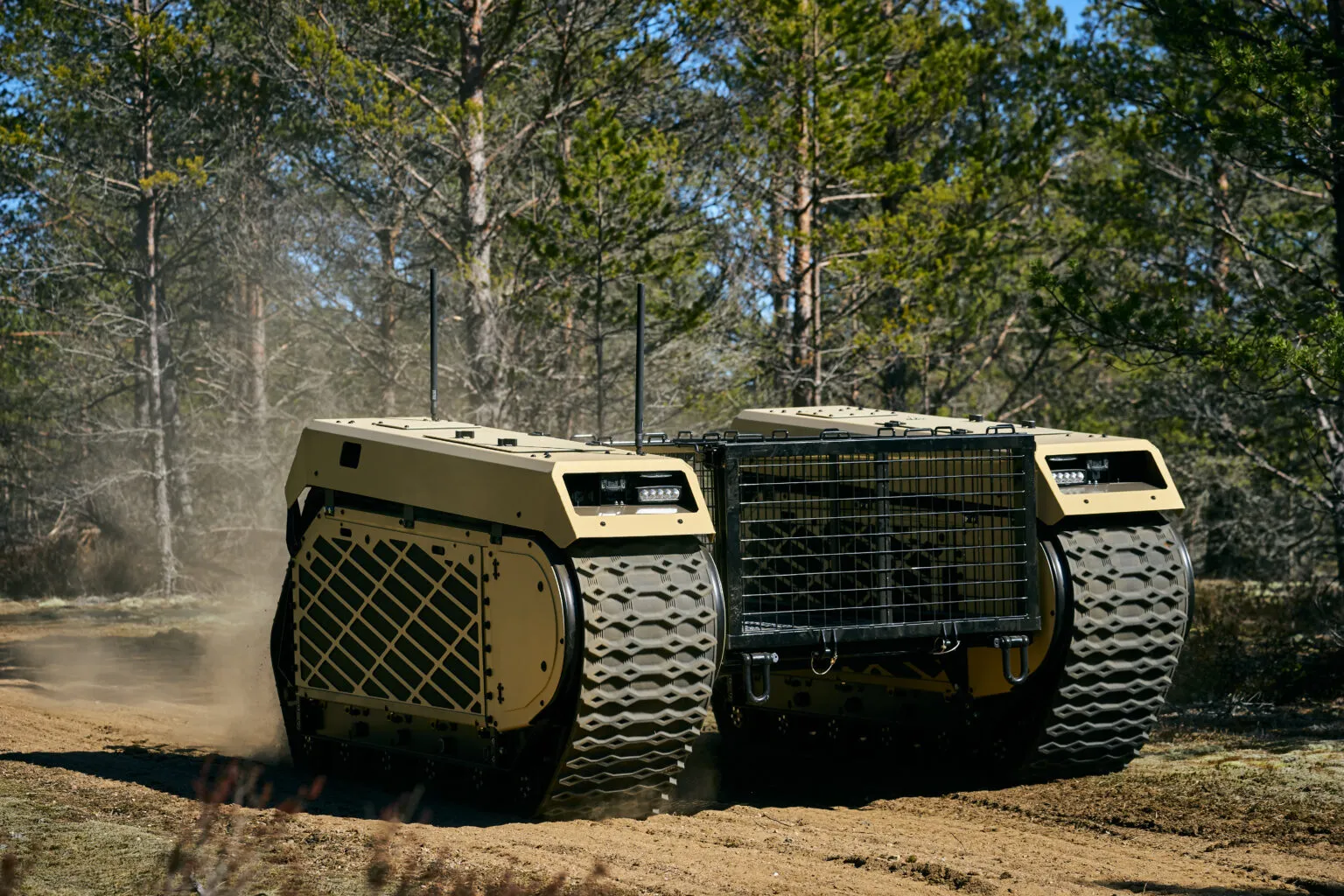
ukraine turned ground robots frontline workhorse its first competitive tender reward cheap copies over proven machines officer warns · post fifth-generation themis unmanned vehicle developed milrem robotics themis_5th_generation_ugv-1536x1024jpg news ukrainian
Explore further

Ukraine turned ground robots into a frontline workhorse. Its first competitive tender may reward cheap copies over proven machines, an officer warns

Operators steer it via Starlink or radio. An escort drone can add an overhead view to the robot’s own cameras. If the link drops, the robot retraces its route to where the signal last held.

It runs on a Ukrainian-made 78 kWh battery. The project lead puts its work time at up to six hours and its range at up to 120 km (75 miles), with a top speed of 20 km/h (12 mph). Load and terrain cut into those figures, he added. With a generator now in development, a mission should stretch to about 12–14 hours, he said.

The robot is not built for the zero line, the project lead said. It works 20–30 km behind the front, at night, where armor would add little. Developers also plan demining and air defense versions. Ukraine’s Defense Ministry codified the robot and cleared it for use in its forces in April 2025.

  •  

Russia’s supply base in occupied Luhansk Oblast burned overnight—NASA’s fire map caught it

russia’s old staging base occupied luhansk oblast burned overnight—nasa’s fire caught · post area khrustalnyi ukraine overnight 12 2026 exilenova news ukrainian reports

Ukrainian strikes hit a site housing Russian troops in Khrustalnyi, a city in Russian-occupied Luhansk Oblast, overnight on 12 October, according to local reports. Satellite fire data recorded blazes at a former motor depot there, in an area Russia once used as a logistics base for its offensive in the region.

Russia keeps attacking in Ukraine’s Donetsk Oblast and strikes Ukrainian cities and power plants every day. Its offensive depends on troops, ammunition, and fuel moved through occupied Ukraine, so strikes there reach the supply chain behind the front.

Fires at a former motor depot in occupied Khrustalnyi

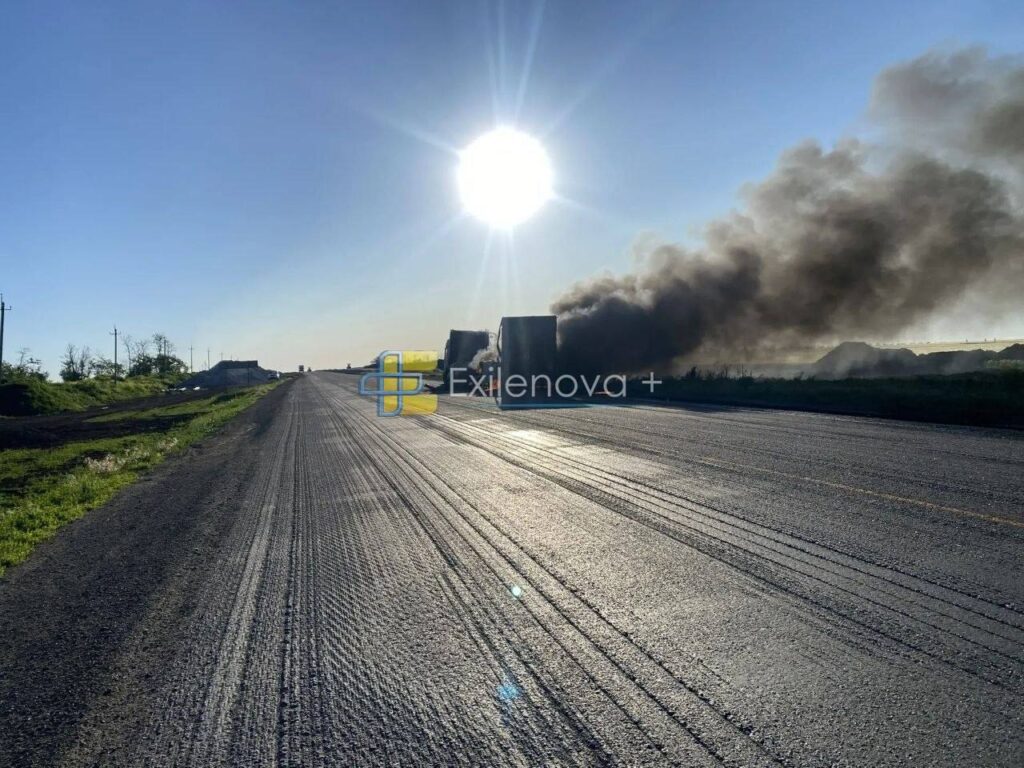
Ukrainian forces launched heavy strikes around Khrustalnyi in eastern Ukraine overnight, the Ukrainian monitoring channel Exilenova+ reported. It counted three separate fires and one large blaze, and said local residents reported a hit on a site where Russian troops were based. Ukraine’s military had not officially commented on the strike by the publication time of this article on 12 October.

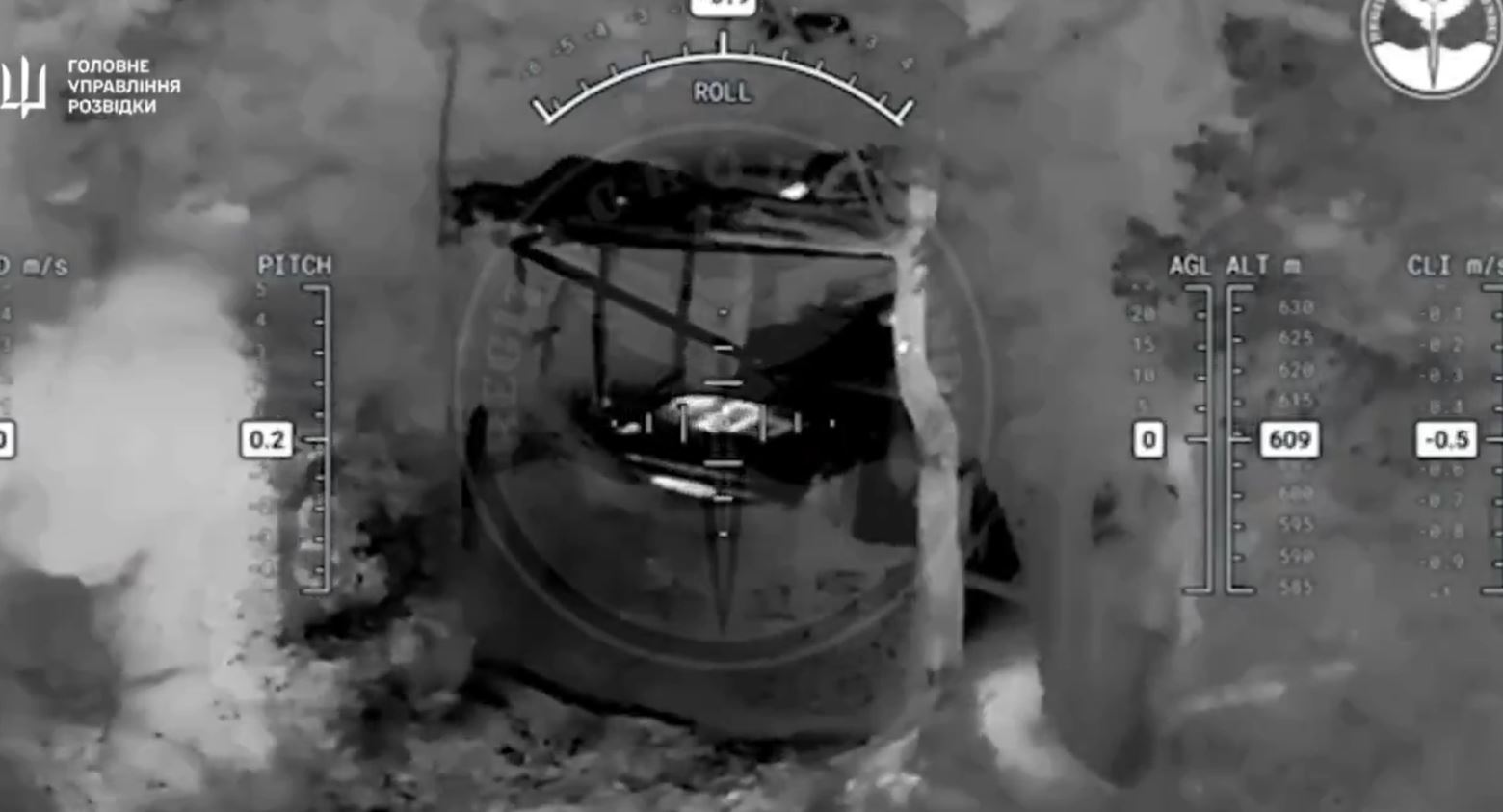
Ukraine’s Defense Forces are carrying out massive strikes in the area of occupied Khrustalnyi in Luhansk Oblast. Three separate fire hotspots and a large-scale blaze have been reported.

According to local residents, a site housing Russian troops was hit. pic.twitter.com/A8RHtuKY5i

— Exilenova+ (@Exilenova_plus) October 12, 2026

NASA’s Fire Information for Resource Management System (FIRMS), which tracks active fires by satellite, shows blazes at a former motor transport enterprise and an industrial zone in Khrustalnyi, Ukrainian military outlet Militarnyi reported. Three fire hotspots appeared there at 01:10 and spread by 02:07, the outlet said.

NASA FIRMS satellite map showing fire hotspots in Khrustalnyi, occupied Luhansk Oblast, Ukraine, on 12 October 2026
Fire hotspots recorded by NASA’s FIRMS system near a former motor transport enterprise in occupied Khrustalnyi, Luhansk Oblast, Ukraine, 12 October 2026. Map: NASA FIRMS/Militarnyi

Ukraine also hit the site on 16 June 2022, striking an ammunition depot there, and local residents then heard secondary detonations, Militarnyi said. The site served as an important logistics base for Russia’s 2nd Army Corps in its offensive on Sievierodonetsk and Lysychansk, two cities in Luhansk Oblast, the outlet added.

Map of Russian-occupied southern and eastern Ukraine with Khrustalnyi in Luhansk Oblast marked by a fire symbol
Khrustalnyi in Russian-occupied Luhansk Oblast, Ukraine, where local reports said Ukrainian strikes hit a Russian troop site on 12 October 2026. Map: Euromaidan Press/DeepStateMap

Explosions at a Crimean airfield Russia used to launch drones overnight

Drones attacked occupied Crimea from the evening of 11 October into the night, and Russian air defenses, including mobile fire groups, fired across the peninsula, Krym.Realii, Radio Liberty’s Crimea service, reported. Explosions sounded in Simferopol, Feodosiia, and Yevpatoriia, among other places, the Crimean monitoring Telegram channel Crimean Wind said, according to the outlet.

Subscribers told the channel about a series of explosions and a glow at Russia’s Hvardiiske military airfield in Simferopol district as air defenses fired. Krym.Realii said neither Ukraine’s nor Russia’s military had commented and that it could not verify the reports independently.

ukraine says struck bastion crimea launcher russia pairs zircon oniks missiles · post equipment under camouflage netting ukrainian drone's crosshairs occupied 2026 possibly covered nets news reports
Explore further

Ukraine says it struck a Bastion in Crimea, the launcher Russia pairs Zircon and Oniks missiles on

Overnight, Russia also launched attack drones at Ukraine from several directions, including Hvardiiske in occupied Crimea, Ukraine’s Air Force reported.

Ukraine’s General Staff said in August that a 3 August strike on the Hvardiiske airfield destroyed nine aviation fuel tanks and damaged two aircraft hangars.

Ukraine keeps hitting Russian rear areas in occupied territory

On 10 and 11 October alone, the General Staff reported hitting a Russian repair base and supply depots in occupied Luhansk Oblast, along with Russian troop concentrations near Lysychansk and two other towns there.

Ukraine has also kept up its campaign of so-called middle strikes, drone attacks on Russian supply lines in occupied territory beyond the front. French mapper Clément Molin counted 770 confirmed drone hits on Russian trucks in September, up from 630 in August, with the strikes concentrated on supply routes running through occupied southern Ukraine into Crimea.

Strikes on troop sites and airfields far behind the front leave Russia fewer safe places in occupied territory to house troops and launch drones, adding to the battlefield losses Ukraine’s drones already inflict.

  •  

“Supplying Crimea is turning into a nightmare”: Ukrainian drones hit Russian trucks 770 times in September, and winter will make it worse, analyst says

russian radar occupied crimea didn't see ukrainian drones coming became 28th air-defense asset wrecked · post supply trucks burning mariupol-melitopol highway main road russia's land corridor 29 2026 exilenova+ -

  • Ukraine's "middle strikes" on Russian logistics haven't let up
  • Ukrainian drones hit Russian trucks 770 times in September
  • A shift to protected convoys hasn't reduced the truck losses

Ukraine's campaign of so-called "middle strikes" targeting Russian supply lines isn't generating the same headlines it did back in the spring, when the campaign was intensifying.

But that doesn't mean Ukrainian units aren't launching thousands of drones a month and blowing up a lot of Russian trucks. Indeed, the pace of Ukrainian strikes, concentrated along the main supply routes threading through occupied southern Ukraine into occupied Crimea, has leveled off without ever really decreasing since an early summer surge.

It's evident Ukraine's middle-strike campaign "didn't stop and wasn't slowed down," noted French mapper Clément Molin, one of the most important observers of the counterlogistics campaign.

For September, Molin tallied 770 confirmed drone strikes on Russian trucks in the logistical zone 10 km beyond the line of contact. That's up from 630 strikes in August, 656 in July, and 586 in June, the month the campaign really got underway. There were just 214 strikes in May and at most a few dozen in each of the previous three months.

Whether Ukrainian troops can take advantage of the Russians' weakening logistics anytime soon is less evident.

Since June, the Ukrainians have hit around 700 Russian trucks a month that analysts can confirm with video and photographic evidence. There are undoubtedly many more damaged and destroyed trucks that left no digital evidence.

In southern Ukraine 🇺🇦 mid-range drone strikes continue to relentlessly target Russian 🇷🇺 road logistics

In total, more than 3 000 trucks and vehicles have been hit on key roads since May 2026, while the R-280 road remains at the heart of the attacks.

🧵THREAD🧵1/13 ⬇ pic.twitter.com/u9hixSvLAV

— Clément Molin (@clement_molin) October 7, 2026

There are thousands of Russian trucks on the road in Ukraine every day, so hitting 700 of them in a month won't immediately strangle Russian logistics. But that accumulating destruction does strain Russian logistics—and terrify the truck drivers who are in the drone crosshairs. "Russian drivers post videos on a daily basis, showing how dangerous a ride in southern Ukraine is getting," Molin wrote.

What's remarkable is that the counterlogistics campaign hasn't faltered even as the Russians have adapted. Early on, Russian trucks mostly traveled alone and without protection, making them fairly easy picking for a bevy of Ukrainian middle-strike drone types including the Hornet, the B-2, the RAM 2X, the Chaklun, and various high-endurance first-person-view quadcopters.

The drones ride along Ukraine's overlapping command and control systems, which include Starlink satellite terminals (some dangling from balloons) as well as mesh radio networks. Many of the drones have built-in AI for autonomously detecting and homing in on trucks in the final seconds of flight.

The moment the Hornet UAV struck a logistics vehicle in the occupied Kherson region. pic.twitter.com/Hc0DCcTnef

— Exilenova+ (@Exilenova_plus) October 7, 2026

Convoy operations

Reeling from the truck strikes, the Russians adapted this spring. Commanders began requiring all trucks to travel in convoys including mobile fire support groups, analysis group Tochnyi reported in May, citing Dmytro Putiata, a retired command post battle captain from the Ukrainian Unmanned Systems Forces 20th Brigade "K2."

Today the Russian convoys have a standard structure, according to Molin. "Convoys usually gather three to five trucks and two to three air-defense trucks." Combined with radio jamming gear that's increasingly common on both the supply trucks and the gun trucks, that's seemingly a lot of protection.

But the drones target the gun trucks, too, peeling back the protection in order to expose the supply trucks to follow-on attacks. In that way, the Ukrainians have sustained their attacks on the supply trucks despite the increase in mobile air defense activity along the most important supply routes.

Ukrainian drones hit 770 Russian military trucks in September 2026
Map: Euromaidan Press

And it's going to get worse for the Russians as fall wears into winter. "Supplying Crimea is turning into a nightmare and the arrival of winter and more difficult conditions will not help," Molin wrote.

There will be less foliage on the trees lining the roads, and thus less cover from Ukrainian surveillance. Moreover, Molin pointed out, "it will be more difficult to go off-road" and avoid the big paved roads that are the main drone kill zones.

Russian logistics are under pressure, and that pressure is only increasing. Ultimately, the Ukrainians aim to starve Russian forces in Crimea. Strikes on cargo ships plying the Black Sea prevent the Russians from simply shifting the logistics off the coast. Meanwhile, strikes on overland logistics "may lead to substantial softening of front-line positions," Tochnyi noted in May.

Softening those front-line positions to the point of melting away could facilitate what Tochnyi described as "eventual breakthrough operations" in occupied southern Ukraine.

It's not inconceivable. Ukraine's 3rd Army Corps recently proved, by way of its successful Operation Vivaldi, that local Ukrainian counteroffensives are possible.

But that doesn't mean they're easy. To win, the 3rd Army Corps had to carefully husband its forces and meticulously prepare the battlefield under conditions of strict secrecy before attacking. That same kind of preparation is underway along the supply lines into Crimea, but it's unclear whether local Ukrainian forces have enough combat power in reserve to shift from defense to offense and exploit Russia's deepening supply woes.

At least not yet.

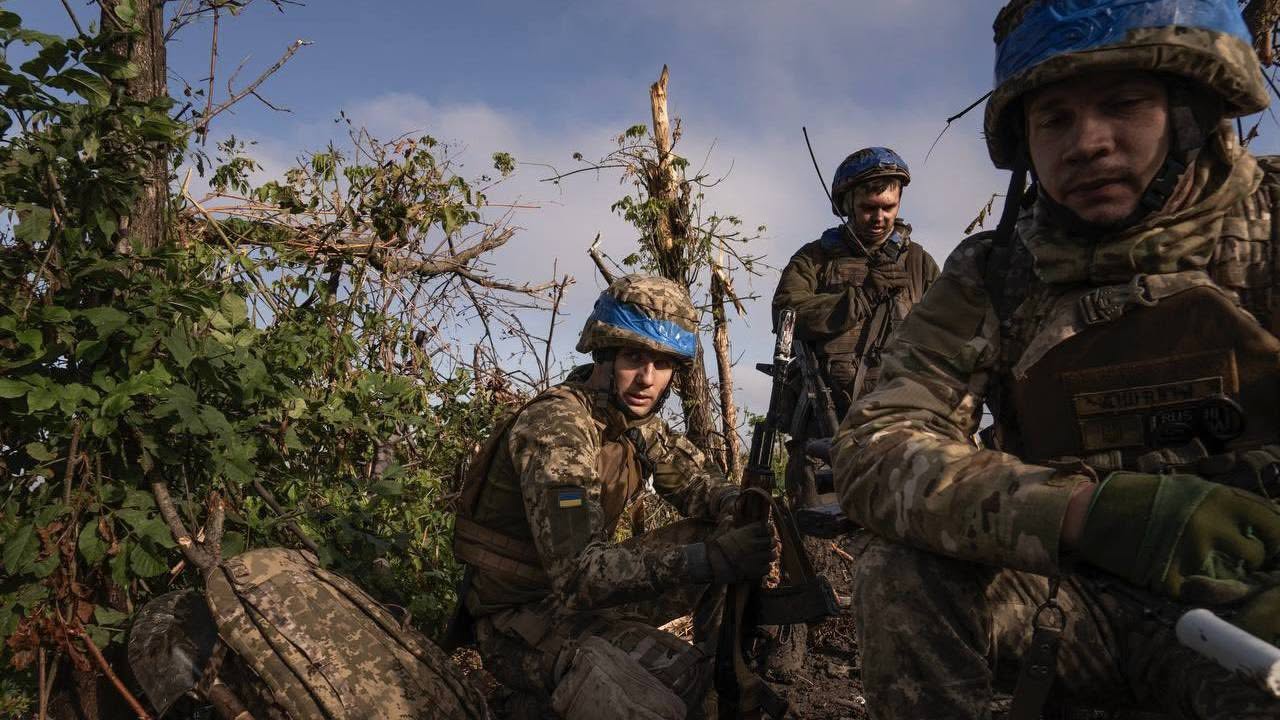
3rd Army Corps troops.
Explore further

Ukraine retook 240 square km north of Lyman and nobody reported it for three months

  •  
❌