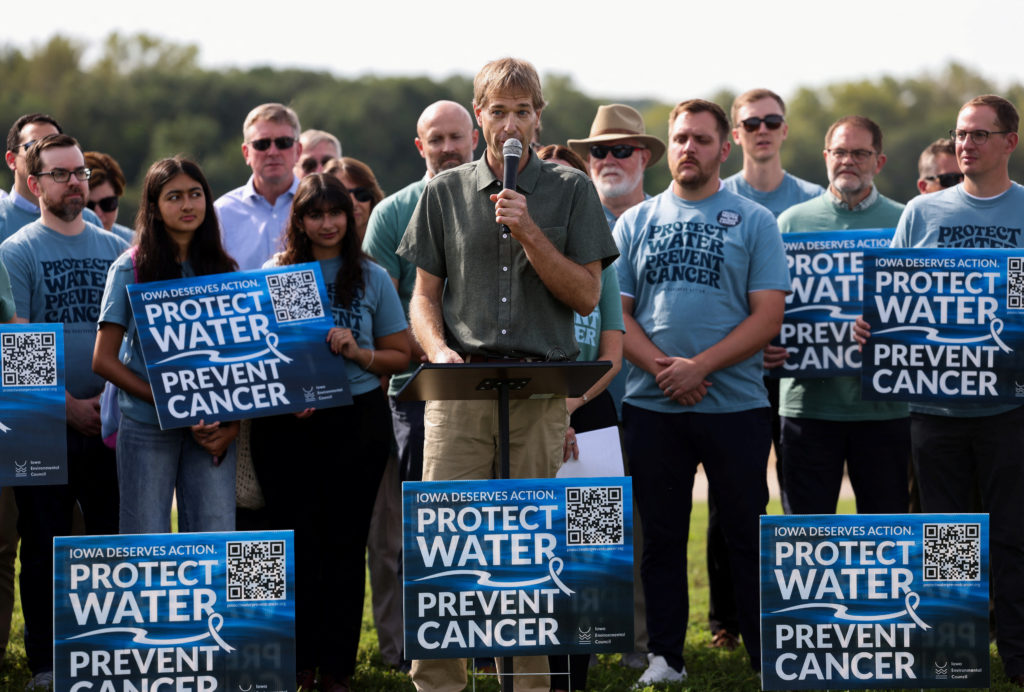
Chemical fertilizers and animal waste contain nitrates and phosphorus that can get washed with rain or snowmelt into the state's rivers. That affects Iowa's more liberal urban centers which rely on rivers and lakes for drinking water.
As the Council of Europe debates a controversial Additional Protocol on involuntary psychiatric treatment, two of its supporters face an uncomfortable question: why do countries with some of Europe’s highest rates of compulsory psychiatric admission believe that the problem lies primarily elsewhere? Germany and Switzerland are among the countries supporting a revised draft Additional Protocol […]
Health minister says government ‘did not authorize’ Danish-led hepatitis B trial in babies backed by RFK Jr
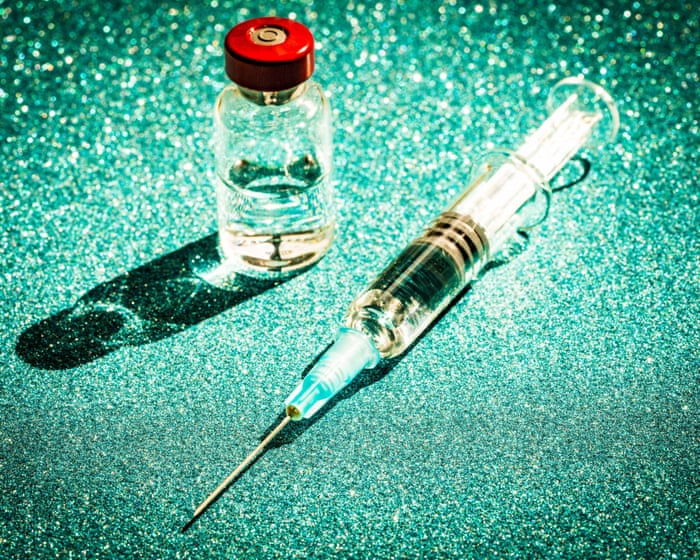
Guinea-Bissau has not approved the controversial hepatitis B study in newborns that would be funded by the US government and private partners, the African country’s minister of health said on Tuesday.
The study, which would not investigate the safety or effectiveness of vaccines but would instead track “nonspecific” health outcomes like overall mortality or neurodevelopmental conditions, has been championed by Robert F Kennedy Jr, secretary of the US Department of Health and Human Services (HHS) and a longtime anti-vaccine activist.
The Vatican says Pope Leo has lung cancer and that doctors removed the lower lobe of his right lung in a surgery that lasted roughly 90 minutes. In a statement, the Vatican called the operation "successful" and said there were "no complications." For more on the Pope's prognosis, Geoff Bennett spoke with Dr. Omer Awan, a physician and senior public health contributor at Forbes.
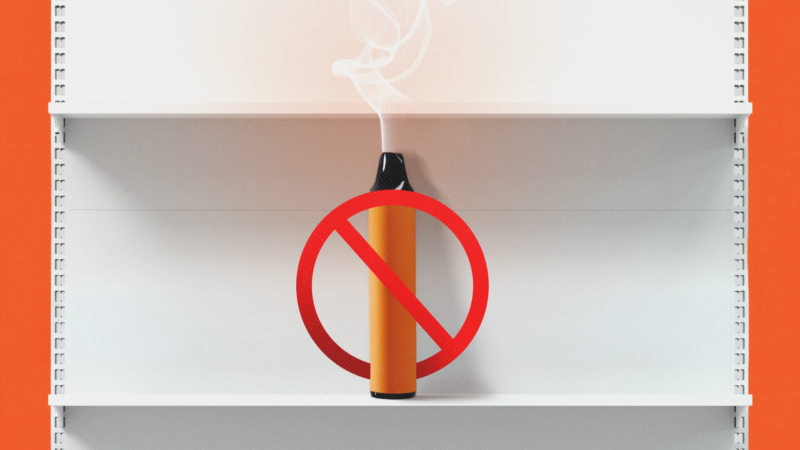
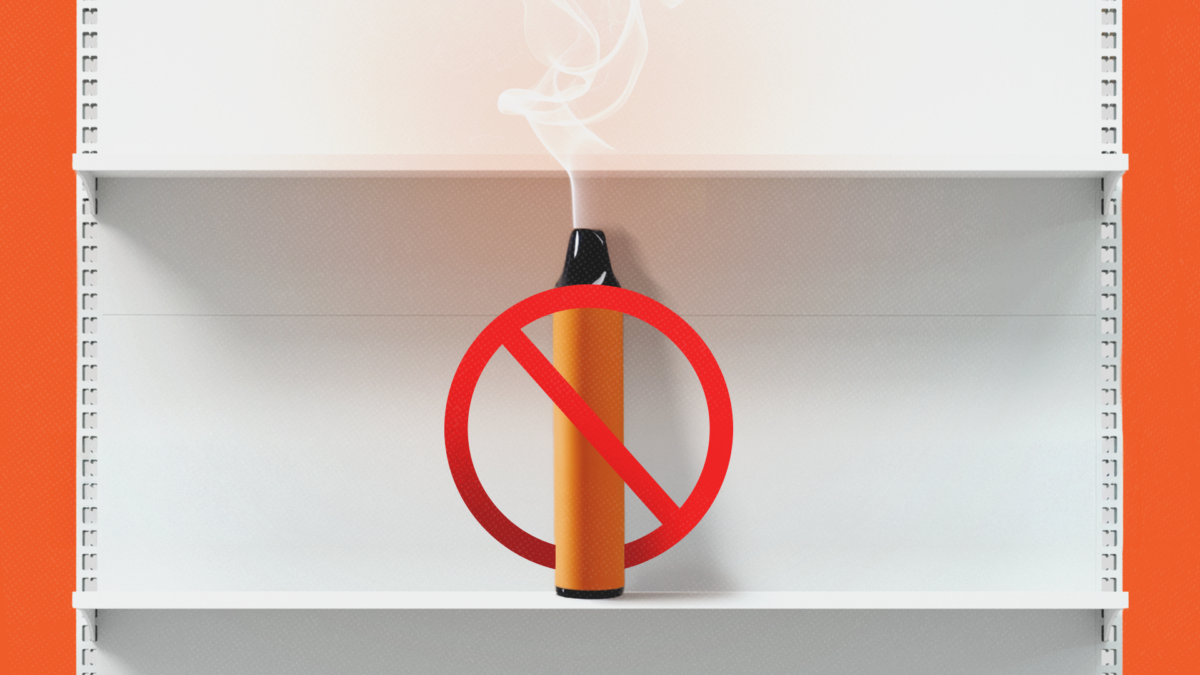
Starting next week, Pennsylvania will begin enforcing a law prohibiting the sale of e-cigarettes that have not been explicitly approved by the state. Supporters argue that it will protect public health, but it seems likely to do the opposite by preventing many former smokers from accessing the products that helped them quit.
Under the law, known as ACT 57, there are currently just six manufacturers of electronic nicotine delivery systems on the approved list that can be sold in the Keystone State, meaning many popular vaping products will be forcibly removed from shelves on October 19. Retailers who violate this law will face fines of $500 for each unapproved product. A second violation within a year will result in a civil penalty of between $750 and $1,000 per day per product, and a suspension of the dealer's license for at least 14 days. A shop's third violation within a year would result in a civil penalty of $1,000 to $1,500 per day per product, and the revocation of its license.
Politicians are touting this law as the latest way to protect the public, and of course, they claim it will especially protect children. "This law is about keeping harmful products out of the hands of both children and adults who may not realize what they are consuming," said Pennsylvania Attorney General Dave Sunday.
"I applaud the legislature for their bipartisan support of Act 57 to provide this important public health safety measure to the Commonwealth."
However, not all Pennsylvania residents are enthusiastic about the law's enforcement.
"This will be largely catastrophic," Chris Hughes, the former owner of Fat Cat Vapor Shop in Williamsport, Pennsylvania, tells Reason. Hughes predicts that the restrictions will encourage consumers to purchase vaping products across state lines, creating an illicit market. "Some people that are enterprising will drive across the border to Ohio [or] West Virginia, and bring a lot of products back and sell them to other people," he says.
Hughes is right to assume that the law will create an illicit market for vaping. In June, JAMA Network Openpublished a report on Alabama, Oklahoma, and Louisiana—three other states with constraints similar to Pennsylvania—finding that the restrictions were not associated with lasting reductions in e-cigarette nicotine sales. By the end of April 2025, products not listed in the states' approved directories accounted for 92.1 percent of measured e-cigarette nicotine sales in Alabama, 53.6 percent in Oklahoma, and 52.3 percent in Louisiana.
For people living further from the border, Hughes says that "a lot of them will return to smoking." "Half of those people will die prematurely from smoking.…It's a tragedy, really."
Indeed, evidence shows vaping to be one of the most effective tools to quit smoking. A 2024 study published by the Centers for Disease Control and Prevention found that in 2021–2022 alone, approximately 1.2 million American adults used e-cigarettes to help them quit smoking for at least six months, representing slightly more than 40 percent of all adults who successfully quit during that period. Meanwhile, a 2026 review from Cochrane, a global health nonprofit, found that smokers are more likely to quit when using e-cigarettes than with nicotine replacement therapy: 8 percent to 10 percent of smokers using e-cigarettes may successfully quit, compared with just 6 percent using nicotine-replacement therapy.
The impending restrictions have Pennsylvania vapers stockpiling products. Hughes says he has delayed paying his property taxes to make sure he has "two to three years' worth of e-liquid and coils while this shakes out." He also spoke to an employee at a vape shop recently who told him about a customer spending $500 on e-liquid after learning about the impending ban.
For vape shop owners across Pennsylvania, the new law will make business even more difficult. Hughes was forced to close down Fat Cat Vapor Shop in Williamsport after Pennsylvania introduced a 40 percent wholesale tax on vaping products in 2016. "The whole goal of my opening the business was to help get adult smokers off of cigarettes and transition them to something that I knew for a fact was much less harmful," he says. Hughes estimates that his shop helped approximately 8,000 adults quit smoking during its three years in business.
Now, he fears other independent vape shops will suffer the same fate as his own. "Most, if not all of them, will be bankrupted," Hughes warns. "It almost takes my breath away. I'm not even sure what to say."
Pennsylvania lawmakers may intend to protect public health, but their new law risks pushing adults away from healthier lifestyle choices. As is often the case, the government restricting the choices adults are allowed to make for themselves is likely to have deadly consequences.
Scientists have used CRISPR gene-editing technology to create the first dogs lacking a key protein that triggers allergic reactions in humans, the Associated Press reported two months ago. The study, published in *The CRISPR Journal*, describes how specialists from the US company Kindred Companion Sciences created two female Beagles—Bailey and Alfie. They “switched off” the […]
Britain risks harming a generation of children by over-diagnosing ADHD and autism, a major review has warned, with autism diagnosis rates soaring by up to 40-fold despite no evidence of a genuine increase in prevalence.
Recommended dose of hepatitis B vaccine will be withheld from thousands of newborns by Danish researchers
A controversial research trial that will withhold hepatitis B vaccines from some African newborns was given approval to move forward this week.
It is a central part of the vaccine vision for Robert F Kennedy Jr, the secretary of the US Department of Health and Human Services (HHS) and a longtime vaccine opponent.
This article was amended on 13 October 2026. A previous version said CIDRAP first reported news that the research trial was approved by the Denmark ethics committee. Rolling Stone had actually reported the news first.
Environmental NGOs have threatened to sue the owner of Tefal, a leading French kitchenware company, over failing to phase out forever chemicals from their products, at a high price for consumer health.
The organisations allege that Groupe SEB, the parent company of known brands, such as Tefal cookware, Calor irons, and Moulinex kitchen appliances, fails to curtail harmful chemicals in its products.
And the environmentalist groups have threatened to file a lawsuit if the firm fails to makes a change to its policy within three months.
Companies have a duty to identify and address the impact of their work and products under the French law, for instance the pollution they cause or human rights they might violate.
Environmental NGOs ClientEarth, Générations Futures and Notre Affaire à Tous say Groupe SEB should swap harmful chemicals in its products to existing alternatives, such as ceramic coating or cast iron, to limit harm to human health and the environment.
The company uses teflon for non-stick, high-temperature suited coatings of their products.
The substance is one of the ‘PFAS’ polymers, often dubbed forever chemicals, because they break down very slowly, remaining in the environment and human body for a long time.
PFAS are widely used for food pots, clothes, packaging, and waterproof products.
But since they take so long to decompose, they are often found in soil and groundwater. Many of the substances cause cancer, others are harmful to babies in the womb.
Teflon is allegedly “not absorbed by the human body” and is approved by the World Health Organisation (WHO) for contact with food, the company’s website says.
However, a recent risk assessment by the EU’s Chemical Agency’s (ECHA), quoted by the NGOs, points out that when overheated or scratched, teflon releases PFAS particles.
It also releases substances harmful to the environment during the manufacturing process, ECHA’s research found in March.
And a new European law on the issue will provide a “more consistent basis for corporate due diligence litigation,” Hélène Duguy, ClientEarth’s lawyer in the case, told EUobserver.
An EU Corporate Sustainability Due Diligence directive, inspired by French legislation, will oblige all companies based in the EU to address the impact of their operations on the environment and human rights.
Member states must implement national laws fulfilling the obligation by summer 2028.
SEB can show stopping PFAS use is “necessary and feasible,” setting a precedent for others, Duguy said.
Is it any wonder there’s a mental health crisis when the state of the country is so depressing, asks Arthur Ellis, whose own 'mental health walks' around the dystopian streets of London only made things worse.
Unsavoury news comes from Russia often these days. But the latest unexpected development is the spread of a deadly disease.
Behind the mysterious death of a young woman in Siberia in early October was reportedly pneumonic plague – a disease so contagious it is considered as bad as anthrax, smallpox, and Ebola.
Local authorities in Russia have denied the plague as cause of death, but despite this, they have implemented anti-epidemic measures.
Eva Hrncirova, a spokesperson for the European Commission, said on Thursday (8 October): “Russia should make information about the plague available as soon as possible. This is what we need”.
“We had a meeting with the member states yesterday within the [EU Commission’s] Health Security Committee, and with the WHO [World Health Organization], who are in contact with our delegation in Moscow,” she said.
Russia was asked by the WHO to share “timely, precise, and exact information” about the possible plague in Siberia, she also said.
“We don’t have enough information to assess the epidemiological situation,” she added.
Nothing to see here, says Russia
Pneumonic plague disease can be treated with antibiotics if detected early, but officials beyond Russia’s borders are left with worrying questions.
Did an Irkutsk Anti-Plague Institute lab technician in Shelekhov (Siberia) really die of plague?
If so, was it a natural version of the disease, or a more dangerous bacterium modified in military labs?
And what is the risk of the Middle Ages-era disease spreading?
Pneumonic plague is caused by the bacterium Yersinia pestis — the same one that once brought devastating plague epidemics known as the Black Death.
The pneumonic form of plague, a disease that killed up to half of Europe’s population in the 14th century, spreads through droplets by coughing or sneezing.
It manifests as severe, rapidly developing pneumonia that almost always ends in death if left untreated. But if antibiotics are administered in time (ideally within 24 hours of the onset of symptoms), the disease is treatable.
Independent Russian-language media say that Darya Shipilova, a 28-year-old laboratory technician at the research and hygiene institute in question, accidentally broke a test tube containing plague bacteria in late September, became infected and died in hospital several days later, on 2 October.
Authorities have not confirmed the cause of the woman’s death, letting on only that she died of pneumonia and claiming that no microorganisms connected with her work had been found in her body.
Some 200 of her contacts were subsequently put into quarantine with medical supervision.
Authorities also ordered a three-week quarantine at several hospitals in the wider area, and facemasks for the wider population – even for schoolchildren.
Russia’s neighbours, Mongolia, Kazakhstan, Kyrgyzstan and Uzbekistan, have all introduced border controls.
Russia said the epidemic situation in the area was stable, that none of the deceased woman’s contacts had shown signs of infection, and that there was no cause for concern.
However, the head of Russia’s public health authority reportedly travelled to Irkutsk to attend a meeting with local officials, while residents of Shelekhov report that people in protective suits are moving around the town.
And epidemiologists say it is simply not possible that Russia’s public health service would resort to such dramatic measures, including closing hospitals, over a single case of ‘pneumonia of unknown origin’ .
The institute where the laboratory technician worked is said to be a civilian facility that, among other things, researches and monitors the incidence of plague.
In Siberia, especially near the borders with China and Mongolia, the bacteria in question still circulate among animals and occasionally infect humans, as they do in some parts of Africa, where the disease is most common.
This article continues, but the full version is available only to EUobserver.com subscribers. Visit account.euobserver.com/membership
Other candidates for the WHO head position who have been announced include Dr. Hanan Mohammed Al-Kuwari of Qatar, Dr. Hanan Balkhy of Saudi Arabia and Dr. Hans Kluge of Belgium.
Other candidates for the WHO head position who have been announced include Dr. Hanan Mohammed Al-Kuwari of Qatar, Dr. Hanan Balkhy of Saudi Arabia and Dr. Hans Kluge of Belgium.
The horrific story of Jane Doe and the Cornell Seven has spurred nationwide outrage and revived contentious debates around prevention and education. But one question is going unasked: Who really pays after a sexual assault? In terms of actual dollars and cents? The answer, Cosmopolitan finds, isn’t good:
Leah received an email from the first hospital. It was a bill for $3,338, including $663 for lab work and a pregnancy test she hadn’t asked for. She hadn’t been charged for the rape kit, but the price of just checking into the ER was $2,241. After her parents’ insurance was applied, she owed $451.06.
“I was so unbelievably angry,” she says. “I lost it. I was like, ‘You mean it cost me $450 to get raped?!’”
Most people don’t realize this care might not be covered, says Vega, who has worked as an emergency room nurse, emergency room director, and a SANE. But that’s actually common: KFF analyzed a sample of insurance claim data from 2016 to 2018 (the most up-to-date data KFF has) and found that 83 percent of women who received a sexual violence diagnosis were billed for treatment. Another analysis of emergency room department data from 2019 found that the average bill for sexual assault survivors was $3,551, according to the New England Journal of Medicine.
Russia reports no confirmed infection, but unanswered questions prevent a full international risk assessment The World Health Organization has asked Russia for laboratory results and fuller information after an employee of an anti-plague institute in Siberia died from severe pneumonia of unknown cause. Pneumonic plague has not been confirmed, while European health authorities say there […]
EMS arrival times have ballooned since Scotland Co. cut a Wagram unit. The choices made once they arrived have also angered one family.
A family’s loss triggers NC probe of Scotland EMS is a story from Carolina Public Press, an award-winning independent newsroom. Our breakthrough journalism shines a light on the critical overlooked and under-reported issues facing North Carolina’s more than 11 million residents. Please consider making a contribution to support our journalism.

 Login