❌

Reading view

Germany Protects Deutsche Börse as EU Ministers Agree Reduced Financial Supervision Reform

EU finance ministers have approved a compromise that would expand the European Securities and Markets Authority’s powers while exempting some major trading venues from centralised oversight. The agreement reflects continuing resistance to transferring financial supervision from national authorities to Brussels.

European Union finance ministers have reached an agreement to expand centralised supervision of financial markets, but Germany has secured provisions allowing important parts of Deutsche Börse to remain under national oversight, substantially narrowing the European Commission’s original reform proposals.

The compromise, agreed at a meeting in Luxembourg on 9 October, would transfer responsibility for supervising selected trading venues, clearing houses and securities settlement institutions to the European Securities and Markets Authority (ESMA).

However, the agreement introduces exemptions and thresholds that reduce the number of institutions automatically subject to direct European supervision.

The result is a significant political compromise between governments seeking deeper financial integration and those reluctant to surrender oversight of nationally important market operators.

Berlin secures its exemption

The most contentious element of the negotiations concerned Deutsche Börse, the German financial-market group that operates the Frankfurt stock exchange and provides trading, clearing and other financial infrastructure services.

Germany opposed arrangements that would place all major market operators under direct ESMA supervision, arguing that institutions with predominantly domestic activities should continue to be regulated nationally.

The agreed compromise refines the criteria for determining which trading venues qualify for centralised oversight.

These conditions allow certain Deutsche Börse operations to remain outside the new supervisory regime.

The exemption had already become a point of contention during negotiations among European governments.

As EU Today reported in June, Berlin had sought to protect Deutsche Börse from mandatory European supervision despite Germany’s broader support for integrating EU capital markets.

The October agreement formalises a narrower approach within the Council’s negotiating position, although the legislation remains subject to approval by the European Parliament.

Europe’s fragmented financial markets

The European Commission has repeatedly argued that fragmented national supervision weakens the EU’s ability to compete with financial markets in the United States.

Although the Union operates a single market, many financial institutions continue to face differing regulatory interpretations, procedures and supervisory relationships across member states.

These differences can increase operating costs and discourage financial businesses from expanding across borders.

The Market Integration and Supervision Package is intended to simplify those arrangements and strengthen common oversight of financial infrastructure with significant cross-border activity.

Under the Council’s position, ESMA would assume direct supervision of selected trading platforms and institutions involved in clearing and securities settlement.

Such institutions perform essential functions in financial markets, including managing transactions, transferring securities and controlling risks between counterparties.

Differences in supervisory arrangements can complicate the operation of financial services that increasingly function across national borders.

The Commission argues that greater consistency would allow European capital to move more efficiently between member states and provide businesses with improved access to investment.

Compromise reduces original ambitions

The Commission’s original approach envisaged broader centralisation of supervisory responsibilities.

The Council agreement of 9 October introduces more restrictive criteria governing the institutions that would fall under ESMA’s direct authority.

In addition to the treatment of trading venues, ministers agreed that direct supervision of crypto-asset service providers should initially concentrate on businesses with the most significant cross-border operations.

The Council also supported changes to ESMA’s governance arrangements, including the creation of a full-time executive board.

The proposed board would strengthen the authority’s ability to make supervisory decisions independently of individual national regulators, while preserving mechanisms for cooperation with those authorities.

The compromise also introduces arrangements allowing national supervisors collectively to challenge certain decisions.

These provisions reflect concerns about concentrating regulatory powers within an institution that must oversee financial businesses operating under different national legal systems.

Why capital markets matter for European investment

The supervision reforms form part of the EU’s broader Savings and Investments Union initiative.

European policymakers want to increase the availability of private capital for companies investing in technology, defence, infrastructure and industrial development.

The Union has substantial household savings, but much of that money remains in bank deposits or is invested outside the European economy.

Companies seeking capital for expansion may consequently face higher financing costs or more limited investment opportunities than comparable businesses operating in larger and more integrated markets.

The Commission’s Savings and Investments Union programme seeks to improve access to finance and make cross-border investment more attractive.

Financial-market supervision represents only one element of that programme.

Differences in taxation, insolvency law, national investment products and corporate governance requirements also influence where investors allocate their money.

Nevertheless, regulators regard consistent supervision as an important condition for reducing fragmentation.

Parliament faces a political decision

The agreement reached by finance ministers does not conclude the legislative process.

The European Parliament must adopt its position before negotiations can determine the final provisions.

Parliamentary discussions could revisit the exemptions secured by Germany and the criteria determining which institutions fall under direct ESMA supervision.

The debate will expose differences over whether European financial integration should proceed through incremental reforms or a more substantial transfer of regulatory authority.

Governments supporting national exemptions argue that supervision should reflect the actual geographic scope of a company’s activities.

Supporters of broader European oversight contend that major trading businesses can influence financial markets beyond their home jurisdictions even when individual operations appear predominantly domestic.

The Deutsche Börse exemption has become a prominent example of the conflict between those positions.

Europe’s largest economies broadly support the objective of deeper capital markets, but remain divided over the institutional powers needed to achieve it.

The final legislation will determine whether the expanded responsibilities granted to ESMA are sufficient to reduce fragmentation or leave important parts of Europe’s financial infrastructure operating under substantially different national supervisory systems.

  •  

Banished Celebrity Traitors Star Accuses Show of “Racial Bias”

Myha’la Herrold, the Celebrity Traitors star banished on the show last week, has accused the reality TV programme of having "unconscious racial and cultural bias" in its format.

The post Banished Celebrity Traitors Star Accuses Show of “Racial Bias” appeared first on The Daily Sceptic.

  •  

AI is changing Russia’s drone war on Ukrainian cities, deputy air defense commander says

geran-5

Russian forces appear to use AI to plan air attacks and recognize targets amid raids on Ukrainian cities. This may include recent air attacks on Odesa that have come in waves with short gaps, Deputy Air Force Commander for Air Defense Colonel Yurii Cherevashenko says, Ukrinform reports.

Russia has already equipped its jet-powered Geran-4 drones with machine vision, allowing them to recognize and track targets on their own in the final seconds of flight. Recently, a single jet drone hit a locomotive in Odesa Oblast in late September and killed two railway workers.

The scale of Russia's AI use is hard to measure, Cherevashenko continues, but Ukrainian specialists already see its elements in how attacks are organized. The long, wave-by-wave strikes on Odesa would be far harder to plan and coordinate without it, he believes.

"Russian forces use AI to lay out attack routes and to recognize targets," Cherevashenko says, framing it as his own assessment rather than a confirmed fact.

The sea is harder to defend than land

Odesa Oblast is home to the biggest port in Ukraine, "Southern". Protecting it is a challenging task as guarding the airspace over water is tougher than over land, Cherevashenko says. Some air defense assets do not perform as well at sea, and in some cases, crews can intercept a target only as it approaches.

Weather adds to the problem, with storms and fog, while the open sea gives Russia more freedom to choose drone routes and launch points. To protect ports and the coast, Ukraine uses drone motherships, platforms that carry other drones aloft to extend their flight time and keep watch over set areas.

Ukraine answers AI with AI

Ukraine is also building its own AI for air defense. Automated turrets using machine vision now help counter Russian drones. According to Army Media, the Air Force says such turrets have scored their first shoot-downs, including of Geran-5 jet drones, with one soldier saying 50 rounds were enough to bring down a Geran.

Ukraine's Defense Ministry is going further. In late September, it unveiled an AI system called SPECTR, built by its A1 Artificial Intelligence Center and already in testing with several combat units, to analyze battlefield data, predict Russian moves, and suggest options to commanders.

  •  

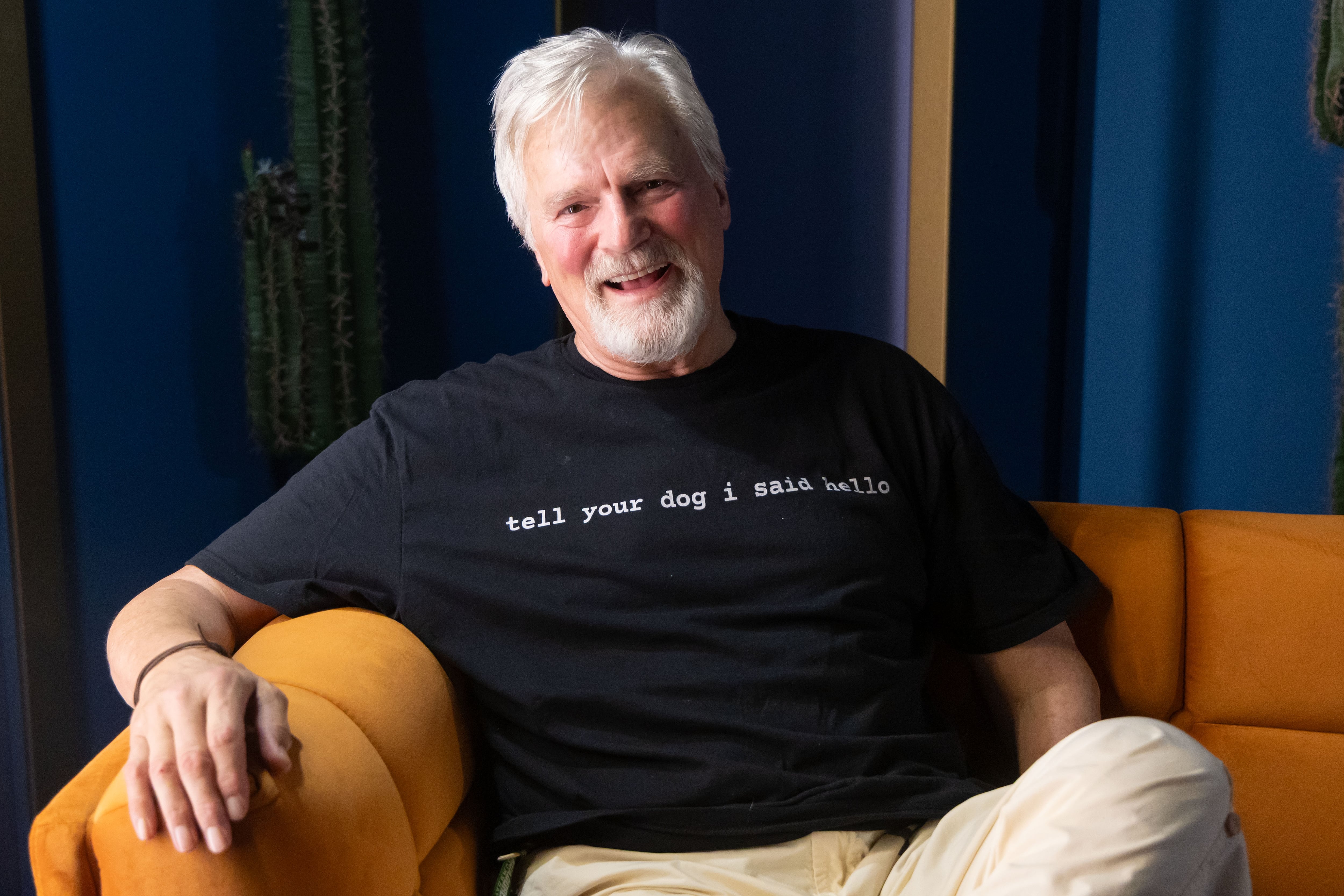
Richard Dean Anderson, the iconic MacGyver: ‘He was different, a TV hero who didn’t use guns. He would think, look and solve the problem’

He had a solution for everything. There was no problem he couldn’t tackle. Whether it was forcing open a lock by melting ice, building a defibrillator out of two candlesticks and a microphone cable, making a bomb with a stick of chewing gum or defusing one with a paper clip. He could even stop a sulfuric acid leak with milk chocolate bars. As a popular Spanish saying inspired by the character goes: “You’re more dangerous than MacGyver in a hardware store.”

Seguir leyendo

© Alvaro Cabrera

Richard Dean Anderson, the famous MacGyver, at the San Diego Comic Con in Málaga.
  •  

Brett Goldstein, the comedian who ran a strip club in Marbella before finding fame with 'Ted Lasso'

“He’s here, he’s there, he’s every fucking where: Roy Kent, Roy Kent!” chants the loyal Richmond crowd in tribute to the captain of the struggling English football club at the heart of the TV series Ted Lasso. It seemed almost prophetic of what awaited Brett Goldstein, the 46-year-old actor who plays the gruff Kent. Since joining the hit Apple TV comedy’s main cast, having originally been hired only as a writer, he has gone from being virtually unknown outside the United Kingdom to starring in a romantic comedy with Jennifer Lopez, appearing alongside Harrison Ford in a television series, and becoming Marvel’s new Hercules.

Seguir leyendo

© Axelle/Bauer-Griffin (FilmMagic)

Brett Goldstein at the Los Angeles premiere of 'Office Romance,' May 26, 2026.
  •  

María Elvira Salazar and her broken promise to half a million Cubans: ‘She presented herself as our advocate, but she manipulated us’

María Elvira Salazar wore a dark blouse and a striking pearl necklace when she arrived at journalist Juan Manuel Cao’s studio in Miami. She took a seat, tucked her hair behind her ears, made sure she had good lighting and found the best camera angle. She’s well trained in the ways of television.

Seguir leyendo

© Elizabeth Frantz (REUTERS)

María Elvira Salazar demands a formal indictment of Raúl Castro at the U.S. Capitol in Washington, D.C., on May 20, 2026. 
  •  

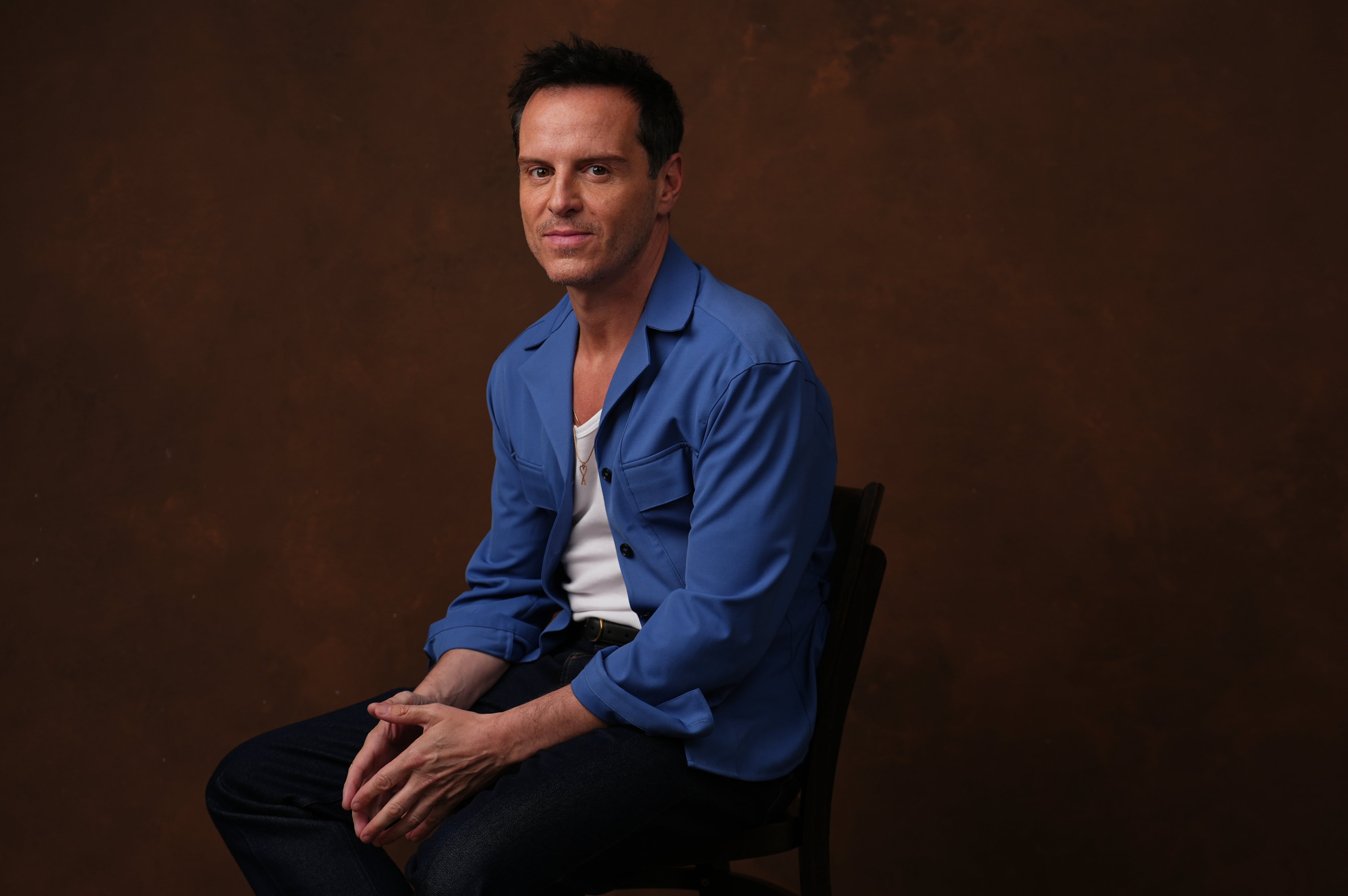
Andrew Scott, the expert in tortured characters: ‘I join projects because of the script’

Consciously, in what he himself calls “a healthily obsessive way,” Dublin-born Andrew Scott has built a career across film, television and theater by gravitating toward complex characters. In his hands, no role is ever banal or simple.

Seguir leyendo

Andrew Scott, in a scene from the TV series 'Ripley.'

💾

©

Andrew Scott, en la promoción de 'Tiempo de victoria' en Los Ángeles.
  •  

Pakistan to sign long-delayed refinery deals unlocking more than $6 billion in planned upgrades

ISLAMABAD: Pakistan is set to sign long-delayed agreements with five oil refineries, unlocking more than $6 billion in planned upgrades to modernize aging plants and cut reliance on fuel imports, officials said. But industry warnings that changes to the financial framework could derail the projects overshadowed the announcement. The agreements with Pak-Arab Refinery Ltd., Pakistan ... Read more

The post Pakistan to sign long-delayed refinery deals unlocking more than $6 billion in planned upgrades appeared first on BOL News.

  •  

Pakistan returns to spot LNG market with fresh tender as power generation takes a hit

KARACHI: State-run Pakistan LNG Limited (PLL) has issued a fresh tender to procure one spot cargo of liquefied natural gas for delivery between September 4 and 8, as global supply disruptions stemming from the Middle East war continue to strain the country’s gas-fired power generation. PLL invited bids from international suppliers for a single cargo ... Read more

The post Pakistan returns to spot LNG market with fresh tender as power generation takes a hit appeared first on BOL News.

  •  

What Would It Mean to See a New Color?

Ready to test your knowledge of hue, value, and saturation? Rivka Galchen’s latest for The New Yorker is a trove of fascinating details about our understanding of color. Galchen opens with the buzziest tidbit: an experiment conducted by a vision scientist who used a laser to stimulate a selection of his own cone cells and glimpse a color unknown outside of his laboratory. From there, she roams—through philosophy and art history, from studios to pigment shops—complicating our understanding of perception with each new turn of her titular question.

In the children’s novel “The Midnight Fox,” by Betsy Byars, the main character daydreams about digging in his back yard and coming across a “brand-new color.” A friend of mine remembers being captivated by this scene, and trying to picture the color. “I felt like I could conceive of it, but I couldn’t see it,” she said. The eighteenth-century Scottish philosopher David Hume considered at length whether a person who had seen every shade of blue except for one would be able to picture that one un-experienced shade; he concluded that the answer was yes. In my youth, I spent an afternoon wondering if I would have been able to imagine the fluorescent yellow of highlighter markers if I’d never seen it.

  •  

Johnny Knoxville, America’s God of Mischief

What moves the star of Jackass to risk his life for our entertainment? This “very serious investigation” involves interviews with friends and family, a surf trip to Malibu, a gag with a fake raccoon, and a stop at In-N-Out:

He nosed the car into the drive-through line, drawing stares as he nosed—some for the vehicle, some for the driver. Mostly male stares. A teen-age boy stepped up to the passenger window and leaned in to take his order.

“One hamburger with tomato, lettuce, and mustard,” Knoxville said. “Fries, please. And a cup of water.”

“Onion?”

“No, sir.”

The teen-ager squinted. “You look familiar. Are you famous, by any chance?”

“Actually, completely by chance!” Knoxville improvised.

  •  
❌