❌

Reading view

Cuba Backs Writer María Elena Llana’s Candidacy for the 2026 Cervantes Prize
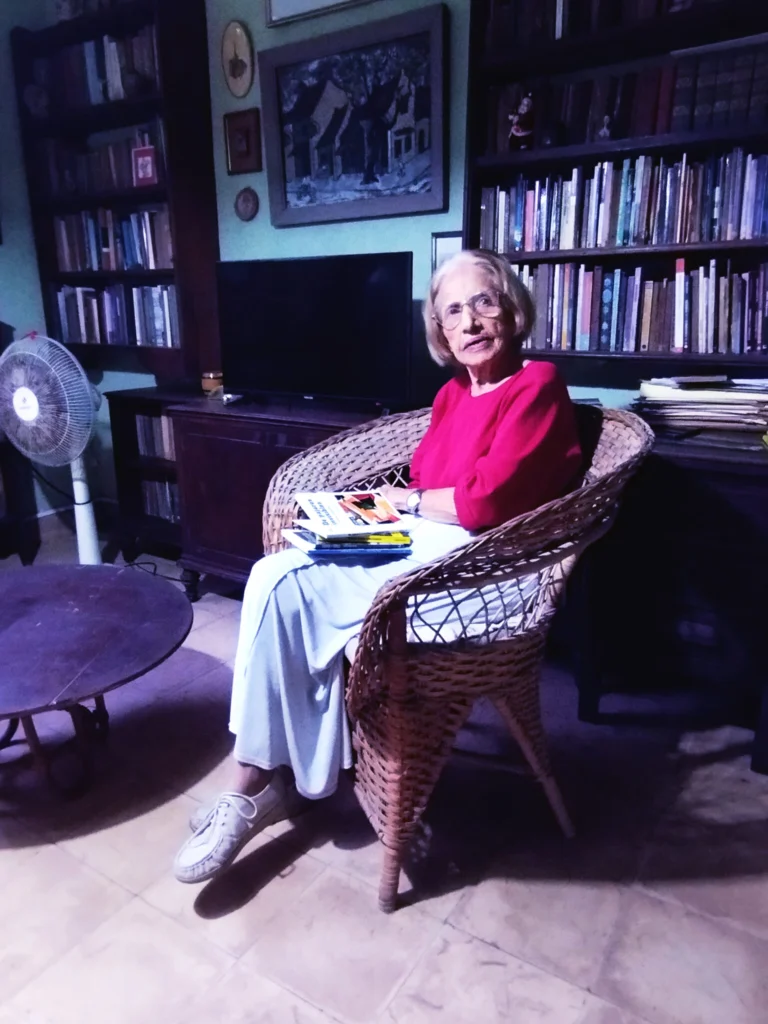
The Cuban Book Institute (ICL) has formally endorsed the candidacy of Cuban writer María Elena Llana Castro for the 2026 Miguel de Cervantes Prize for Literature in the Spanish Language, through a letter sent to the competition’s jury. The institution highlighted her career spanning more than six decades and her contribution to contemporary Cuban narrative.

RELATED:

Swedish Academy Awards Nobel Prize in Literature to Canadian Poet Anne Carson

In the letter, the ICL—the governing body for the publishing, marketing, and promotion of books and serial publications, which operates under Cuba’s Ministry of Culture—described Llana Castro as one of the country’s most significant narrative writers. It noted that she received the 2023 National Literature Prize in recognition of her originality, stylistic skill, keen observation of the social environment in Havana, and her use of irony and humor.

The document underscored the author’s standing within the realm of Cuban fantastic literature and cited more than 15 published books. Among these, it highlighted La reja (Ediciones Revolución, 1965) and Casas del Vedado (Letras Cubanas, 1983)—a work that, according to the ICL, explored the fantastic dimension of the remnants of the former Cuban bourgeoisie.

The ICL also highlighted her work for younger audiences, including titles such as Sueños, sustos y sorpresas (Gente Nueva, 2011), Desde Marte hasta el parque (Gente Nueva, 2014), and Cuentos de viejos (Ediciones Aldabón, 2024).

La escritora María Elena Llana ha sido propuesta al Premio Cervantes 2026. Con esta nominación, se une Fina García Marruz,Dulce María Loynaz quien lo obtuvo en 1992 las únicas cubanas en ser postuladas al galardón constituye una conquista para la cultura cubana y su literatura. pic.twitter.com/Bk6WZNXiFA

— Roberto Jimenez (@Roberto196801) October 11, 2026

The text reads, “The writer María Elena Llana has been nominated for the 2026 Cervantes Prize. With this nomination, she joins Fina García Marruz and Dulce María Loynaz—the latter of whom won the award in 1992—as one of the few Cuban women to be put forward for the honor; this represents a significant achievement for Cuban culture and literature.”

The ICL noted that Llana Castro’s short stories have been included in international anthologies and translated into other languages. Furthermore, it pointed out that her body of work has been the subject of academic study in Cuba, Spain, the United States, and Mexico.

Between 1959 and 1992, the candidate carried out extensive work across newspapers, magazines, radio, television, and the news agency Prensa Latina. According to the letter, this experience enabled her to develop a meticulous command of language—a quality evident in her body of work, which is rooted in philosophical, anthropological, and cultural themes.

The institute also highlighted her contributions to national radio, where she adapted works of world literature for the radio medium. Llana Castro has served as a professor of journalism and the Spanish language in Vietnam, Angola, Mexico, Cuba, and the United States; she is also a founding member of both the Union of Journalists of Cuba and the Union of Writers and Artists of Cuba.

The ICL asserted that the 2026 Cervantes Prize would be a fitting tribute to her more than six decades of literary work, and urged that the significance of her legacy be taken into account.

#Literature | Canadian poet Anne Carson wins the 2026 Nobel Prize in Literature, recognized for her inventive approach to poetry, fiction and classical storytelling.#AnneCarson #NobelPrize2026 #teleSUREnglish pic.twitter.com/lFTqCRomaA

— teleSUR English (@telesurenglish) October 9, 2026

  •  

Faust review – FW Murnau’s silent masterpiece is a devilishly dazzling vision

The 1926 film of Goethe’s tragic tale of a man who sells his soul to the devil remains a spectacular feat of German expressionism

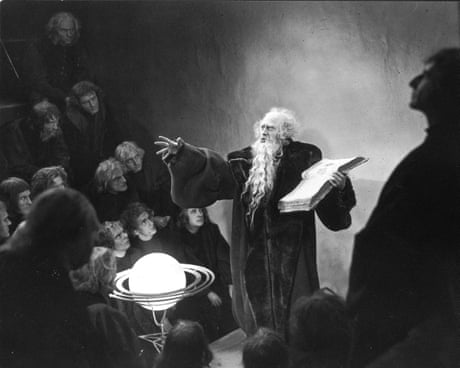
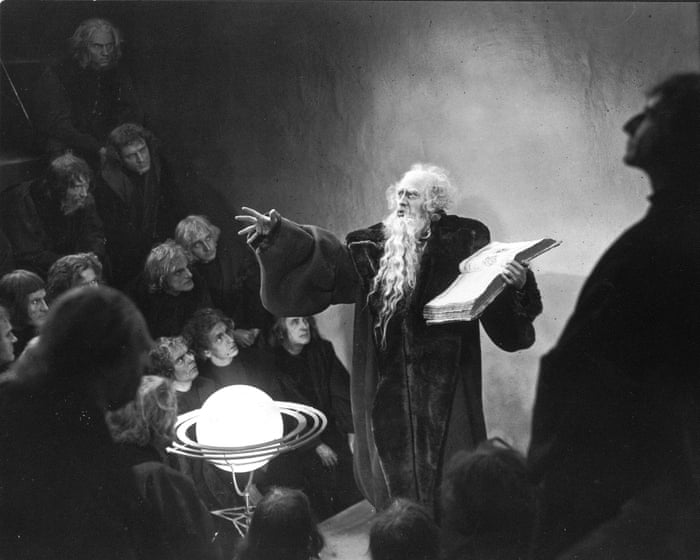
The centenary of FW Murnau’s silent fantasy-melodrama from 1926 is the occasion to ponder this mysterious film, taken from Goethe’s 19th-century depiction of the alchemist and natural philosopher who sells his soul to the devil but, in a very high-minded climax of German romanticism, is redeemed by love. (Not love of God precisely, but love of a good woman; the word “Liebe” finally appears at the centre of Murnau’s radiating vision of concentric circles conjured by the heavens, which annul his debt to the Evil One.) It is therefore very different from Christopher Marlowe’s scarier and more unforgiving account of Doctor Faustus.

Murnau’s Faust is (obviously) concerned with and animated by evil, and there are echoes of his Nosferatu, made four years previously. In this film, Faust, having struck his bargain on a provisional 24-hour basis with Mephisto, finds that he is scared of a crucifix, like a vampire. It is also very much a film of Weimar Germany with its mad energy and streaks of garish satire and black comedy; the book-burning scene in which Faust immolates all his necromancy volumes, along with the Bible, is one which resonated with later events. (Perhaps it indirectly inspired Klaus Mann’s novel Mephisto, later to be filmed by István Szabó.)

Continue reading...

© Photograph: Courtesy of Mubi

© Photograph: Courtesy of Mubi

© Photograph: Courtesy of Mubi

  •  

Her royal heilness: Berlin show revisits the artist who turned the Queen into a Nazi

The late Christoph Schlingensief was one of German art’s great provocateurs. Can his B-Movie horror aesthetics still shock us into thinking anew about media power, colonialism, and the far right?

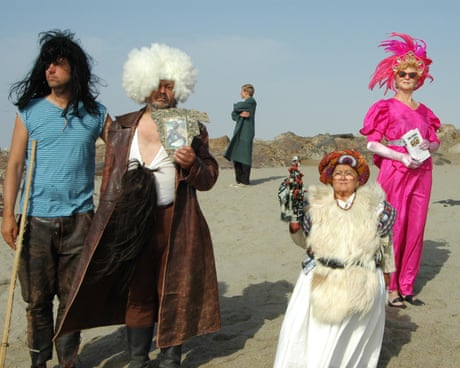
Christoph Schlingensief certainly knew how to provoke. “Fury at German play that shows Queen as a Nazi,” read the Sunday Express’s headline after Kaprow City first premiered at Berlin’s Volksbühne theatre in 2006. Drawing on the happenings of US performance artist Allan Kaprow, the play turned its attention to Diana, Princess of Wales’s death. In one scene, the then queen performs a Hitler salute. Another re-enacts the paparazzi chase that led to Diana’s fatal crash. Diana appears in bed beside two men with Down’s syndrome; and Camilla is pelted with animal blood. Schlingensief insisted the work was not meant as provocation but as an investigation into how Diana turned into a modern icon. But his art thrived on outrage, exposing the absurdity of societies that glorify their idols while consuming their lives as entertainment.

Kaprow City is at the heart of a new Berlin show – It’s Not My Problem Anymore, Deal With Your Own Shit – that revisits the artist’s legacy. In the Gropius Bau’s grand neo-Renaissance atrium, visitors encounter remnants of the carousel-like rotating stage he called the “animatograph”. Looking at this installation today feels like a glimpse into Schlingensief’s mind: a messy collage of childhood memories, violent fantasies and royal glamour.

Continue reading...

© Photograph: © Estate of Christoph Schlingensief

© Photograph: © Estate of Christoph Schlingensief

© Photograph: © Estate of Christoph Schlingensief

  •  

Verse from the waste land: Rotterdam’s poetic bin lorries granted cultural status

Lyrical lines printed on side of city’s fleet of rubbish trucks now recognised as one of Netherlands’ proud traditions

It is best known for its rich migration history and striking modern architecture. But now the Dutch city of Rotterdam is seeking recognition for a rather different characteristic: its tradition of printing poetry on bin trucks.

Since a poetry festival first came up with the idea in 1988, lines of verse have been printed on all of the city’s waste vehicles. The practice was this week elevated to the status of intangible cultural heritage, with formal recognition from a Dutch body that guards the nation’s traditions.

Continue reading...

© Photograph: Irene Hoekstra

© Photograph: Irene Hoekstra

© Photograph: Irene Hoekstra

  •  

Why Chinese culture lands so fluently and freely in Vietnam

A recent ISEAS Fulcrum commentary by Hoang Thi Ha and Pham Thi Phuong Thao offers a useful mapping of how Chinese culture and economic opportunity are drawing in young Vietnamese. The authors are right that this bottom-up attraction is unfolding alongside renewed official promotion of people-to-people ties, and that long-standing sensitivities about China have not […]

The post Why Chinese culture lands so fluently and freely in Vietnam appeared first on Asia Times.

  •  

A 1571 Letter Undercuts the Hoax Theory Around the “Other Voynich Manuscript” and Reveals a Terrified Scribe

Some medieval books can’t be read by anyone, and one of them has become almost a trademark of the genre: the Voynich manuscript, kept at Yale University and dated to the 15th century. It has inspired novels and theories of every kind. Specialists often place another volume right behind it on the list of enigmas, […]

  •  

Iowa's water quality and cancer rates forced into forefront of state politics

Chemical fertilizers and animal waste contain nitrates and phosphorus that can get washed with rain or snowmelt into the state's rivers. That affects Iowa's more liberal urban centers which rely on rivers and lakes for drinking water.

  •  

Metropolitan Police May Have Unfairly Arrested Linehan Over Gender Critical Views, Says Watchdog

Graham Linehan, the Father Ted creator, may have been unfairly arrested by the Metropolitan Police because of his gender-critical views, the police watchdog has said.

The post Metropolitan Police May Have Unfairly Arrested Linehan Over Gender Critical Views, Says Watchdog appeared first on The Daily Sceptic.

  •  

MEPs pause vote on EU pesticides bill, as UN experts join scientists in opposition to Big Pharma

A backlash is building against an EU ‘omnibus’ bill that seeks to make it easier to authorise and use pesticides across the bloc. 

MEPs are still yet to set a date to vote on the European Commission’s proposal to extend how long pesticide active substances can stay approved in the EU, amid a series of protest letters from scientists, UN health experts, and divisions among member states. 

EI parliament’s environment and agriculture committees were originally expected to hold a joint vote on a compromise text on 5 October, but shelved that date without proposing another as this article went to publication. 

Sustained criticism has come from the scientific community. 

Last month, a group of more than 500 scientists signed an open letter to the commission on 16 September demanding a pause on the file pending “an independent assessment, whether carried out by parliament’s own research service or by an equivalent independent body.” 

And last week, a group of five UN health experts penned their own letter to the EU executive.

They warned that the commission’s plan to extend grace periods for products withdrawn on safety grounds, widen derogations for hazardous substances, and restrict the use of the latest independent scientific evidence “seem difficult to reconcile with the precautionary principle and with obligations to respect, protect and fulfil human rights, including the rights of peasants and other people working in rural areas”. 

This article continues, but the full version is available only to EUobserver.com subscribers. Visit account.euobserver.com/membership

  •  

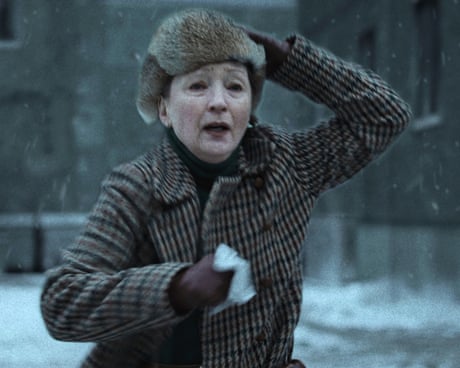
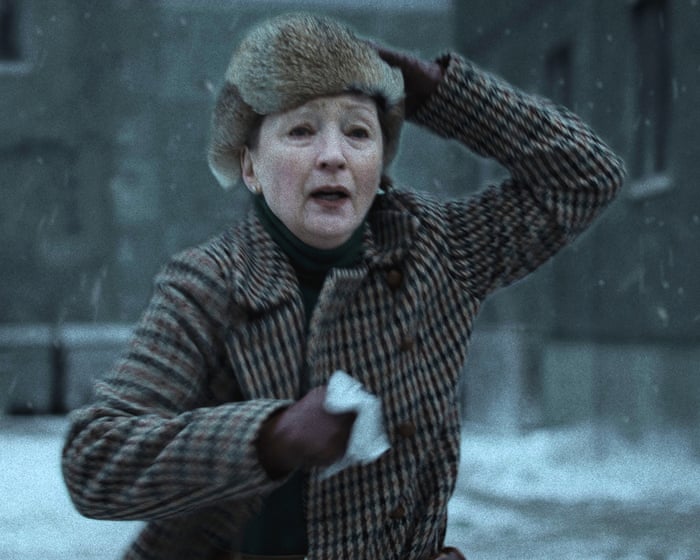
Winter of the Crow review – Lesley Manville magnificently on edge in intriguing cold war thriller

Manville’s academic psychologist finds herself trapped in a tower block wasteland in 1980s Warsaw. Bizarre and surreal details add to the sinister vibe

Part cold war thriller, part Kafkaesque reverie, this movie takes us back to the sinister drear of Poland in 1981, when General Jaruzelski has just introduced martial law in reaction to the dangerous new mood of freedom occasioned by the Solidarity trade unions. The director is Kasia Adamik, daughter of The Green Border’s Agnieszka Holland; the film is adapted from a story by Olga Tokarczuk, called Professor Andrews Goes to Warsaw.

Lesley Manville plays Professor Andrews, an academic clinical psychologist (like Tokarczuk) from Britain with testy, peremptory mannerisms; her indulgence is a fondness for taking Polaroid photos. She has attained a certain level of celebrity for a book on dreams, despite claiming that she never dreams herself. Andrews has been invited to give a lecture in Warsaw, during which she begins to outline views on mental illness not unlike those of Laing or Foucault; but her speech is chaotically disrupted by students shouting that Poland itself is an oppressive asylum.

Continue reading...

© Photograph: Danny James/Courtesy of Signature Entertainment

© Photograph: Danny James/Courtesy of Signature Entertainment

© Photograph: Danny James/Courtesy of Signature Entertainment

  •  

The Shane Gillis SNL Backlash Is Really Stupid

Shane Gillis on SNL | SNL/Youtube

Shane Gillis is an actor and comedian. He first came to my attention in September 2019, when he was hired to be a new cast member on Saturday Night Live—and then abruptly fired after it was revealed that he had (gasp) told offensive jokes. (SNL creator Lorne Michaels subsequently said that the network forced him to fire Gillis, and he thought the whole controversy was stupid.)

Since then, Gillis's career has really taken off, to the extent that he has repeatedly returned to SNL as a guest host. He did so again on October 10, delivering a monologue in which he made the following observation: "I haven't been to the gym in so long, I didn't know women just dress like whores now."

Shane Gillis' monologue! pic.twitter.com/ky6fVtWBx9

— Saturday Night Live (@nbcsnl) October 11, 2026

Some people are really mad about that joke, including the actor Dan Levy, who called Gillis a misogynist and implied that this sort of joke was emboldening men to treat women as objects—and to sexually assault them.

"It's complacency that has created the environment in which women are sexually assaulted," said Levy.

He was not the only one to make this claim. On The View, Sara Haines echoed Levy's criticism and said that such language—the word whore in particular—was demeaning.

"I'm not saying a joke makes an assault, but it makes it much easier to look at another human as an object," she said.

This is unpersuasive.

I might understand why people would take offense if Gillis consistently singled out women for unrelenting abuse. When it comes to humor, context is everything, and a harmless joke can come off as mean-spirited if it seems targeted.

But in that very same monologue, Gillis denigrates men, gay men, his sisters, and himself—repeatedly. He admits that he's fat and ugly. That's the basis of the humor. It does not suggest that he has some problem with women or enjoys laughing at their expense and solely their expense. He's doing observational comedy, and no one is spared, not even Gillis. He even makes a joke about how he might unintentionally come off as threatening to women, because he's a big ugly guy.

It would be weird if women wearing skin-tight clothing at the gym was for some reason an off-limits subject for comedians. Why? It's OK to insult men's appearance, but not women's? Is that really the standard? Of course not.

Indeed, it is trivially easy to find examples of liberal-coded comedians (Gillis is one of those right-coded, anti–political correctness, Joe Rogan types), mocking the appearances of specific women. Jimmy Kimmel's recent monologue went after Katie Zacharia, the Trump administration's new press secretary, for her looks. Kimmel insinuated that she's a dumb blonde who was picked just because she's attractive. He even showed a photo of her at the gym, dressed semi-provocatively!

You know how the left is trying to cancel Shane Gillis for his SNL remarks about women at the gym, well, Jimmy Kimmel puts up a picture of Katie Zacharia at the gym, "Oh, wait, just kidding. This is the new press secretary, former Newsmax commentator Katie Zacharia, seen here,… pic.twitter.com/ANYeqhfVev

— Alex Christy (@alexchristy17) October 13, 2026

Was Kimmel inviting sexual violence against Zacharia? Of course not. It would be ludicrous to pretend that this joke was somehow out of bounds.

The same goes for Gillis, though.

The Hollywood Reporter writes that Gillis's brand of humor just isn't a good fit for SNL, which has become a show by liberals, for liberals, and aimed at skewering the Trump administration. That's fair enough: Personally, I didn't think the Gillis monologue was particularly funny, though I am well-accustomed to consuming SNL in stone-faced silence. I find about 99 percent of the skits are cringe and humorless. It's not for me.

But I do object to the assertion that a one-off joke about the way women dress is out of bounds. I thought we all agreed that Woke 1 was crazy?

The post The Shane Gillis <i>SNL</i> Backlash Is Really Stupid appeared first on Reason Magazine.

  •  
❌