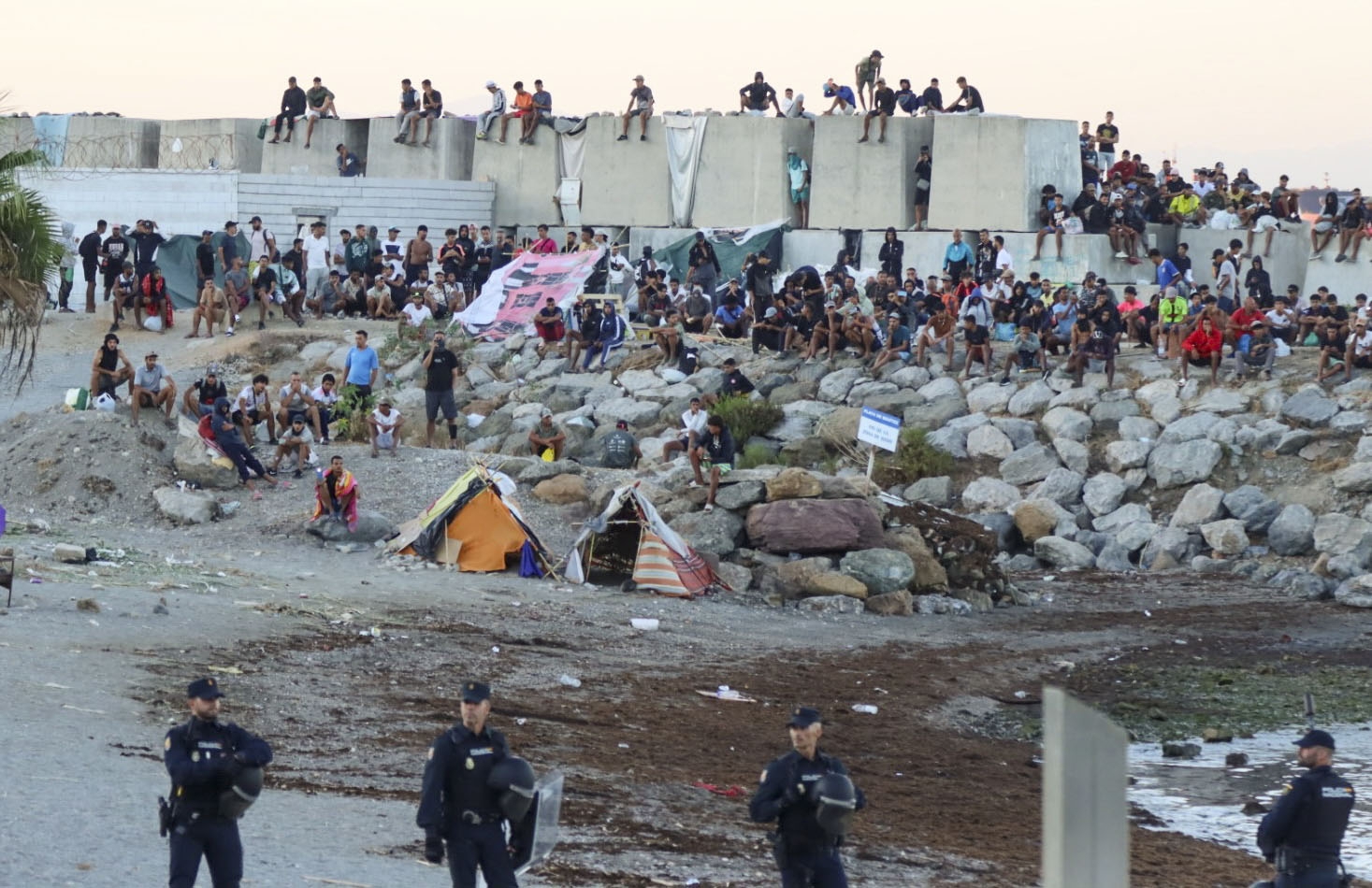
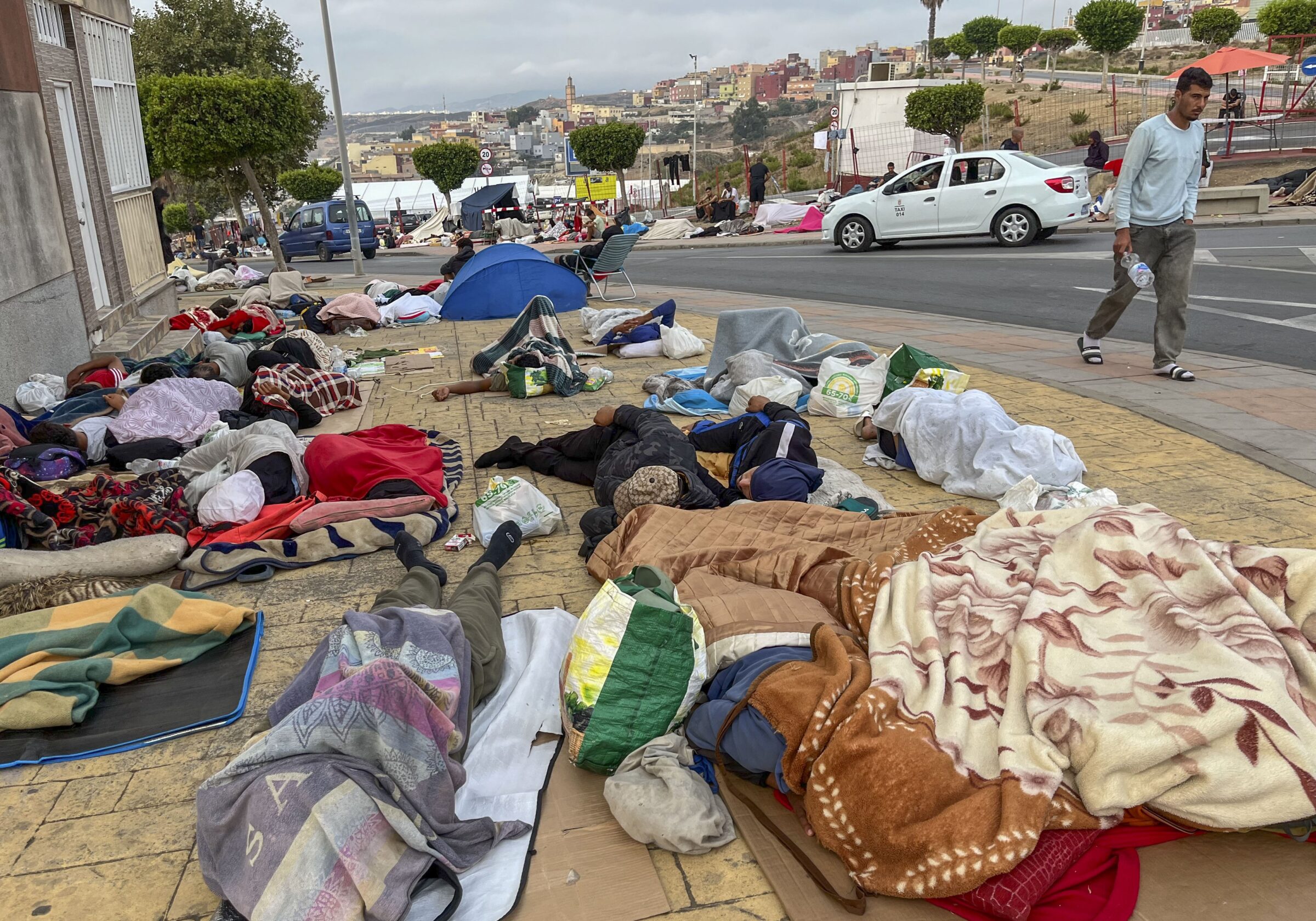
As EU leaders gather in Brussels on Thursday and Friday (15-16 October) to discuss, among other things, the issue of Europe’s southern border, countless Moroccan families cling to the hope they may see their children again after they entered the Spanish enclave of Ceuta in north Africa in July.
“Ayoub left on 30 July at 2PM. Since that day, I haven’t heard anything from him, apart from the fact that he went to Ceuta,” his brother said.
Ayoub Elkhamlichi was 27 when he left the north of Morocco for the nearby border with Ceuta, a half-hour drive from his home.
In the commotion that accompanied the rush of an estimated 72,000 mostly Moroccans into the enclave over 30 and 31 July 2026, 141 people were reported to have lost their lives while attempting the crossing.
Those that have not been heard of since that deadly July remain innumerable.
Among them is Ayoub, who had been working in a local konafa shop before leaving.
His brother Mohamed Ali laments that he’d forgotten his ID card, which will reduce the chances he’ll be identified if he’s ever found.
“The border with Ceuta was opened, so everyone left Morocco, because the city of Tetouan offers few job opportunities,” Mohamed Ali told EUobserver, from his home in one of Morocco’s closest cities to the Spanish border.
“Ayoub managed to find a job, but the pay was low. So he went to Ceuta,” he said. His family, meanwhile, “are in a state of anxiety and fear.”
It has been 11 weeks since Khaled’s dad Said has also seen his son, 26, who left for Ceuta from Tidass, a small Moroccan town, which Said said “has its problems.”
This article continues, but the full version is available only to EUobserver.com subscribers. Visit account.euobserver.com/membership
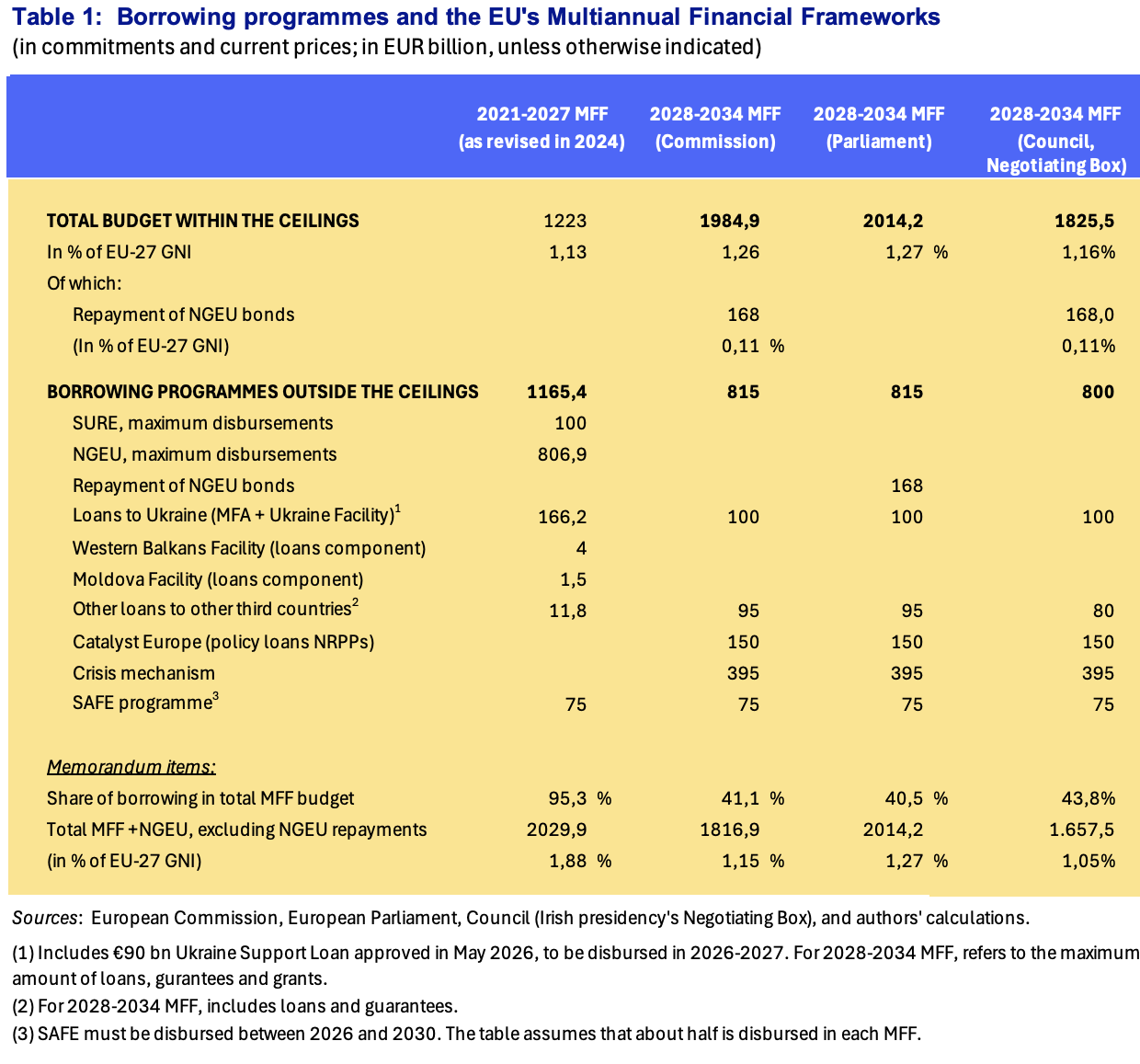
The Irish text, known in Brussels as the negobox, keeps all three of the commission’s borrowing programmes that sit outside the budget’s normal limits: Catalyst Europe, a €150bn lending facility; a crisis mechanism of up to €395bn for major unforeseen shocks; and support for Ukraine of up to €100bn.
Add loans for defence and lending to other non-EU countries and, by our estimates, joint borrowing could still equal around 44 per cent of the new budget, about €800bn at current prices, up from 41 per cent under the Commission’s proposal. The budget shrinks, but the borrowing hardly changes.
Ireland’s proposed budget is too small for Europe’s mounting common challenges, and its borrowing approach is too ad hoc and risky.
Excluding the distorting effects of NextGenerationEU (NGEU), the Covid recovery fund, the Commission’s budget proposal is already far smaller than the headline figures suggest, and Ireland’s proposal would make it smaller still.
That matters because, as the Draghi report argued, Europe’s shared challenges such as Ukraine, rearmament and competitiveness require European public goods because no single member state captures their full benefits.
A budget worth just over one percent of the EU’s gross national income (GNI) is a poor match for that responsibility.
By comparison, total government expenditure across EU countries comes to close to half of their combined GNI. Keeping most fiscal capacity at national level, while expecting such a modest EU budget to finance increasingly vital continental priorities, is a bad use of public resources.
A stronger common budget needs more of its own revenue, at least what the Commission proposes in its Own Resources Decision, which Parliament broadly supports and which would raise nearly €60bn extra a year.
The Irish plan’s acceptance of five new resources is encouraging. But it has to survive the negotiations, and the details of the final reform will decide whether it means anything.
The Council’s approach to common borrowing remains haphazard, lacking a permanent framework and relying on crisis-driven compromises. Governments may not like it, but a more European approach is coming, and the €800bn is likely to grow.
And a successor to SAFE, the EU’s defence loan scheme, is widely expected, since €150bn has proved far from enough for Europe’s rearmament.
France has just shown what it costs to borrow alone. Its yields recently hit a 24-year high, and the state now pays more to borrow than some major French companies. Sharing the effort through the common budget, including prudent joint borrowing, would help spread that risk.
Yet Europe has no clear, sustainable plan for borrowing. To date, EU governments have reluctantly signed up to each new borrowing instrument and called it an exception.
European borrowing capacity has been assembled one crisis at a time, starting with the euro area crisis and accelerating since the pandemic.
NGEU was accepted by fiscally cautious states as a one-off decision to deal with the Covid-19 emergency. Then the war in Ukraine and the need to fund rearmament produced new exceptions.
This year, EU governments used enhanced cooperation, a procedure that lets a subset of member states go ahead without the rest, to approve the €90bn Ukraine Support Loan, the EU’s largest foreign loan ever.
For defence, they reached for Article 122, the treaties’ emergency clause, to set up SAFE. Parliament, which felt sidelined, decided to sue the Council before the European Court of Justice.
There is a catch though.
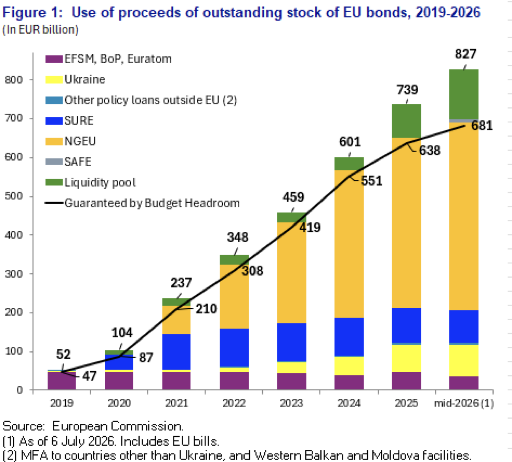
These exceptional programmes are guaranteed by the so-called budget headroom, the margin between the EU’s revenue ceiling and the spending limits in the seven-year budget, rather than by money set aside in advance.
In barely five years, headroom-backed exposure has climbed to €681bn (see Figure 1), 82 percent of all EU debt.
The European Court of Auditors has warned that if a Ukraine loan guaranteed this way goes bad, future EU budgets, and the national contributions that fund them, would have to cover the loss.
Frugals vs Friends of Cohesion
EU capitals remain divided over the new budget and over joint borrowing. Net contributors, sometimes referred to as the Frugal Six, want deep cuts in the commission’s proposal, argue that new common borrowing is not the solution and have misgivings about the creation of new own resources.
By contrast, a group of sixteen southern and eastern countries, that call themselves the “Friends of Cohesion”, are much more open to joint borrowing and back an approach closer to the Commission and Parliament on the budget and own resources.
Ireland’s plan largely reflects the influence of the frugal countries, yet one diplomat has already dismissed it as “not even close to a landing zone.”
Europe needs an ambitious budget, backed by at least the Commission’s proposed new own resources, so it relies less on national contributions based on GNI. Joint borrowing should become a permanent, predictable part of it, with safeguards.
First, it should fund loans, not grants, as the Commission suggests. Second, riskier exposures, especially to non-EU countries, should be at least partly backed by money set aside in advance, as the Court of Auditors recommends.
Where it makes sense, the headroom guarantee could be topped up with national guarantees in proportion to each country’s size, as under SURE, and like-minded partners outside the EU could sometimes take part.
Stronger capital at institutions such as the EIB, or at any future defence-financing vehicle, would also let Europe borrow more together without putting its creditworthiness at risk.
Governments should also consider deferring repayment of the NGEU bonds, as the Draghi report suggested, especially if the own-resources reform falls short. It would protect priority spending when it is needed most.
Sustained joint borrowing brings a bonus: more common safe assets in euros, which strengthens the euro’s international role. The demand is already there.
Wobbles in US bond markets, which partly reflect doubts about America’s fiscal health, its reliability as a partner and the dollar’s safe-haven status, give the euro an opening.
But it can only take it if EU governments put their own fiscal houses in order.
Ongoing tensions in the French bond market provide a clear warning. Putting France’s finances on a sustainable path would do more than reassure markets about the euro. It would restore French debt as a safe euro asset.
EU leaders meet on Thursday and Friday in Brussels. Whatever they discuss (and later decide) on the budget, Europe should keep borrowing together, and in large amounts.
The task now is to give that borrowing a coherent plan: a permanent framework, money set aside in advance and safeguards that cautious capitals can accept.
The European Commission is promising more support to Egypt, even as Egyptian warplanes reportedly bomb in Sudan and authorities carry out a campaign of violence against the refugees it hosts.
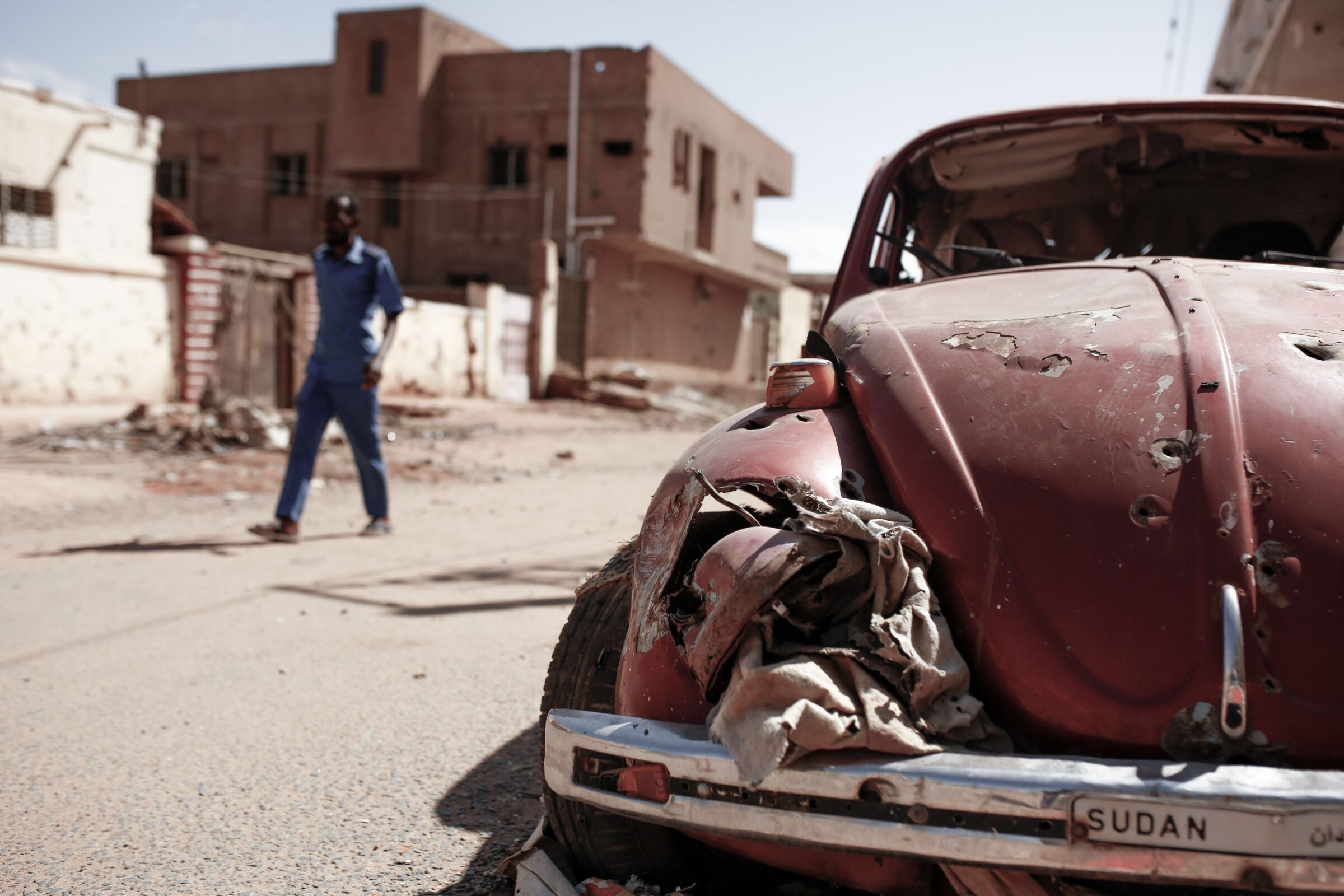
The civil war in Sudan includes reports of genocide, chemical-weapons use, mass rape, and starvation, forcing some 1.2 million Sudanese people into Egypt, which was described as a priority migration-busting partner by commission president Ursula von der Leyen on Tuesday (13 October), who also promised continuing support for Cairo.
In a letter sent to the 27 heads of state and government ahead of an EU summit on Thursday in Brussels, she spoke of “offering protection and durable solutions in … host countries”, as well as further aid for Sudanese people who had returned to parts of the country, now deemed relatively safe.
But her warm words stand in sharp contrast to internal EU documents on Sudan, released by the London-based group Statewatch earlier this month, and which speak of an Egyptian-led campaign of violence against the Sudanese it is tasked to help.
“The Egyptian authorities have continued arbitrary arrests, detention and deportation campaign against migrants, asylum seekers and refugees, with a sharp escalation of forced deportations being observed since January 2026,” said the Irish EU presidency, in an internal document written in September.
Estimates suggest Egypt hosts over nine million migrants and refugees.
Some 80 percent are Sudanese, Syrian, Yemeni, and Libyan nationals. Of those, just over 1 million are officially registered as refugees. Most come from Sudan.
And Egypt’s crackdown also comes amid a massive 74 percent funding cut for the UN’s refugee agency in the country, even as the EU’s financial support to Cairo increases, already totalling €5bn.
This article continues, but the full version is available only to EUobserver.com subscribers. Visit account.euobserver.com/membership
EU leaders meeting next week in Brussels for the usual post-summer European Council are rehashing conclusions on migration, echoing almost word-for-word statements since at least 2015.
“The European Council has developed a strategy aimed at stemming the unprecedented migratory flows Europe is facing,” they announced in December 2015, following a summit.
“It is indispensable to regain control over the external borders,” they also said, noting the perceived threat to the EU’s internal border-free Schengen zone.
And they voiced fear over the low number of deportations, insisting on “concrete measures to ensure the actual return and readmission of people not authorised to stay.”
Eeleven years later and the 15 October summit in Brussels next week is now asking almost the same thing, including to what extent previous conclusions on migration have been implemented.
Although draft conclusions can change, and likely will, the current wording essentially repeats the same demands spanning over 50 EU summits since at least 2015, when over a million Syrians entered Europe to seek protection.
Out of the 52 published conclusions since 2015, over half dealt with migration in some shape or form. The latest draft dated 5 October and seen by EUobserver is among those.
This article continues, but the full version is available only to EUobserver.com subscribers. Visit account.euobserver.com/membership

 Login