❌

Reading view

Russia is back at Dobropillia a year after it failed there. Now it’s the southern jaw of a pincer on Donbas’s last big free cities

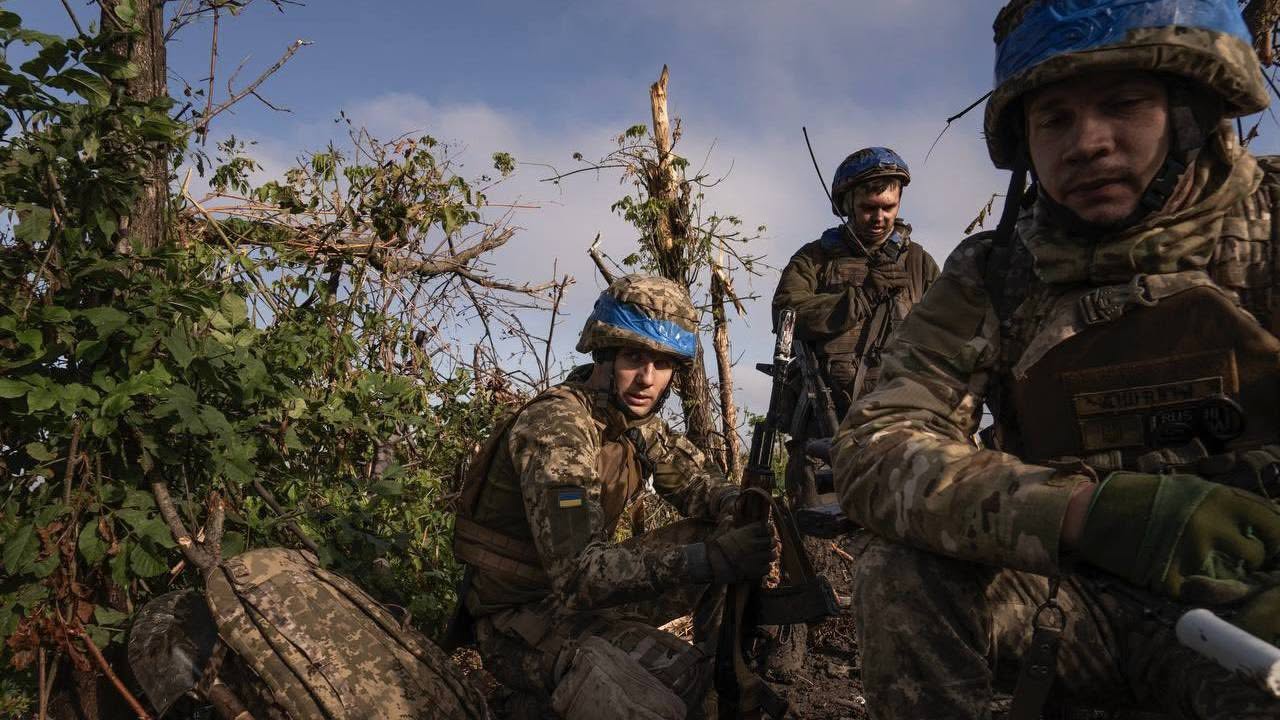
1st Azov Corps in training.

  • Russian reinforcements are surging toward Dobropillia in eastern Ukraine's Donetsk Oblast
  • The Russians have a plan: take Dobropillia and close the southern jaw of a pincer around Kramatorsk and Sloviansk
  • Ukrainian forces aren't powerless to resist, but many of their own best troops are busy attacking elsewhere

The Russians are pouring troops into a key sector just southeast of the town of Dobropillia in eastern Ukraine's Donetsk Oblast, threatening to overwhelm Ukrainian defenses and march one settlement closer to Kramatorsk and Sloviansk, the last two big free cities in Donetsk.

But the Russians' push toward Dobropillia isn't without cost. Russian losses in this sector are "colossal," according to the mapper Playfra. And every soldier the Kremlin deploys along the Dobropillia axis is a soldier it can't deploy elsewhere.

And that may help explain why the Russians are falling back in two other key sectors, in northern Donetsk Oblast and in neighboring Dnipropetrovsk Oblast. The Dobropillia axis is the Russians' clear priority. For the Ukrainians, that's an opportunity to attack elsewhere.

Dobropillia 🇷🇺 ORBAT - Summer 2026

Similar to last year, Russia has significantly reinforced the Dobropillia direction, seeking to capture the town itself while simultaneously developing the southeastern approach toward Druzhkivka and Kramatorsk.

To that end, the “Center”… pic.twitter.com/pDhRRlfbGW

— Unit Observer (@WarUnitObserver) September 10, 2026

Dobropillia, a former mining town with a pre-war population of around 28,000, is now a fortress. It anchors Ukrainian positions along the highway that threads northeast to Kramatorsk.

Russia has attacked here before. In August 2025, Russian troops pushed a salient toward the Dobropillia–Kramatorsk highway, and Ukrainian counterattacks cut it apart. By October that year, President Volodymyr Zelensky put Russian losses on the Dobropillia front at about 13,000.

Ukrainian military analyst Kostiantyn Mashovets describes the push on Dobropillia as the southern flank of a Russian operation to envelop the whole Sloviansk–Kramatorsk urban area. The other approaches are harder going. From the southeast, the Russians are blocked by stubborn Ukrainian forces still clinging to positions in the ruins of Kostiantynivka. From the north, starting this spring, the Ukrainian 3rd Army Corps rolled back 18 months of Russian gains.

For an army that's been struggling to complete its conquest of Donetsk, to say nothing of breaking through in other front-line oblasts, Dobropillia has become the priority.

And that's why the Russians are channeling fresh forces into the Dobropillia sector. Part of the 41st Combined Arms Army and units of its 90th Guards Tank Division are now fighting there, Mashovets wrote on 9 October, and the Russian command keeps feeding fresh assault infantry into the sector through the village of Nove Shakhove despite heavy losses. The open-source account Unit Observer tracked the buildup as early as September.

Potentially tens of thousands of troops from those formations join the main forces of the 2nd and 51st Combined Arms Armies, according to Mashovets, as well as elements of the Russian naval infantry, facing the Ukrainian 1st Azov Corps and 19th Army Corps around Dobropillia.

The reinforcements give Russian commanders more options. Mashovets expects the 51st CAA to push south and southwest of Dobropillia and the 2nd CAA toward Raksha and Sviatohorivka, enveloping the town and cutting its supply routes from Bilozerske before any direct assault. The neighboring 8th CAA is fighting around Kostiantynivka. The Russians' immediate goal is "to maintain this offensive pressure from summer into the fall," Unit Observer wrote, setting conditions for a possible siege of Kramatorsk next year.

The outlook for the Ukrainian defenders of Dobropillia is "worsening," Playfra warned on 13 October:

The Russians have a seemingly infinite manpower pool here and a clear numerical advantage, which allows them to significantly increase the flow of infiltrators and, as such, the chance of some passing through Ukrainian defenses.

This leads to especially deep Russian infiltrations, which in turn slowly but surely destabilize the situation for the Ukrainians, which are progressively forced to abandon their most advanced positions.

The Ukrainians aren't without options, Playfra explained. They should double down on their current strategy of saturating the fields around Dobropillia with drones in a ring at least 2 to 3 km deep, forestalling large-scale Russian movements until the winter strips the leaves off the trees, depriving the Russians of their best cover from overhead surveillance. This could buy Dobropillia "much more time," Playfra predicted.

Mashovets puts a date on how long Dobropillia has to hold. If it and Druzhkivka, the town just south of Kramatorsk, hold until mid-to-late December, he wrote, the whole Russian plan for Sloviansk and Kramatorsk would collapse and have to be rewritten almost from scratch.
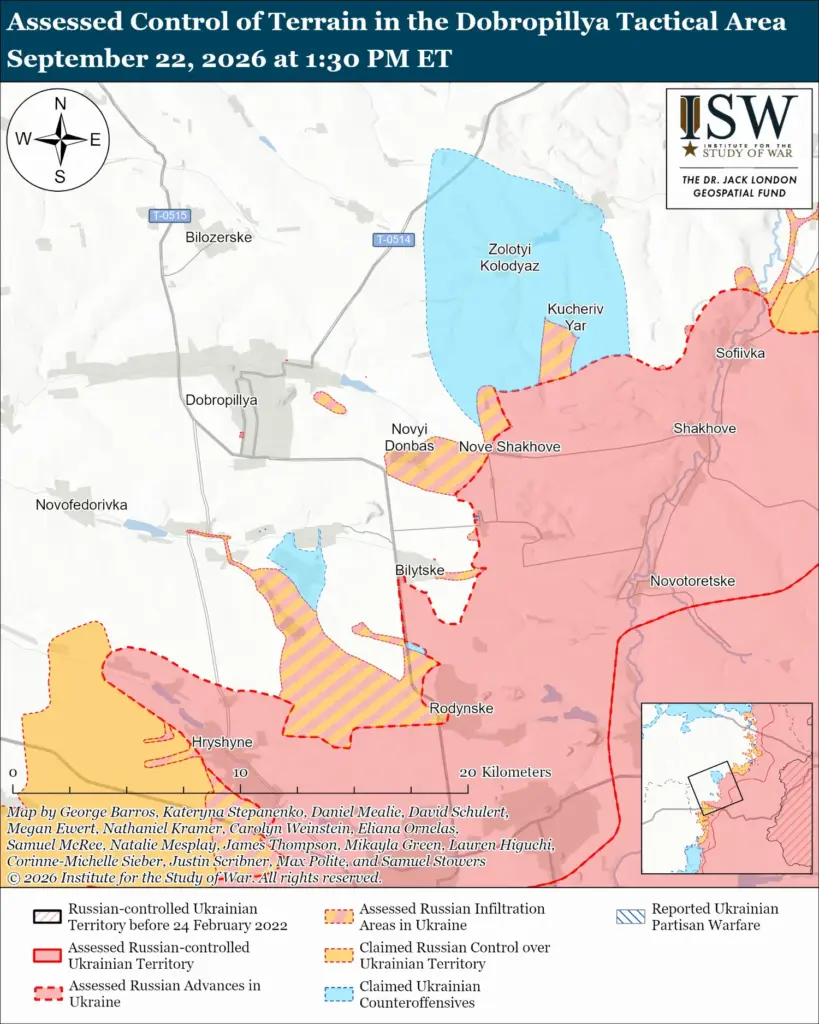
Map of Dobropillia and nearby towns, with Russian-controlled territory shaded pink mainly to the east and south, striped areas marking Russian infiltration, and blue areas marking claimed Ukrainian counteroffensives.
ISW’s map of the Dobropillia area on 22 September 2026 shows Russian-controlled and infiltration areas near the city. Source: Institute for the Study of War.

Help isn't coming

Just don't expect a lot of Ukrainian reinforcements along the Dobropillia axis. Many of Ukraine's best troops are busy attacking.

Taking advantage of the surge of Russian manpower in the direction of Dobropillia, Ukrainian forces have counterattacked where the Russians are weakest: in northern Donetsk Oblast and also in Dnipropetrovsk Oblast, just south of Donetsk.

Russian forces advance on Dobropillia
Map: Euromaidan Press

In months of carefully planned assaults supported by ground robots and intensive drone strikes, Ukrainian forces have liberated hundreds of square kilometers in northern Donetsk and Dnipropetrovsk. The Ukrainian 3rd Army Corps' Operation Vivaldi in northern Donetsk largely removed the immediate northern threat to Sloviansk and neighboring Kramatorsk.

But it didn't do anything to help in the direction of Dobropillia, where the Russians have many more troops, much more firepower, and—equally importantly—a singular focus: closing the southern jaw around the last big free cities in Donetsk.
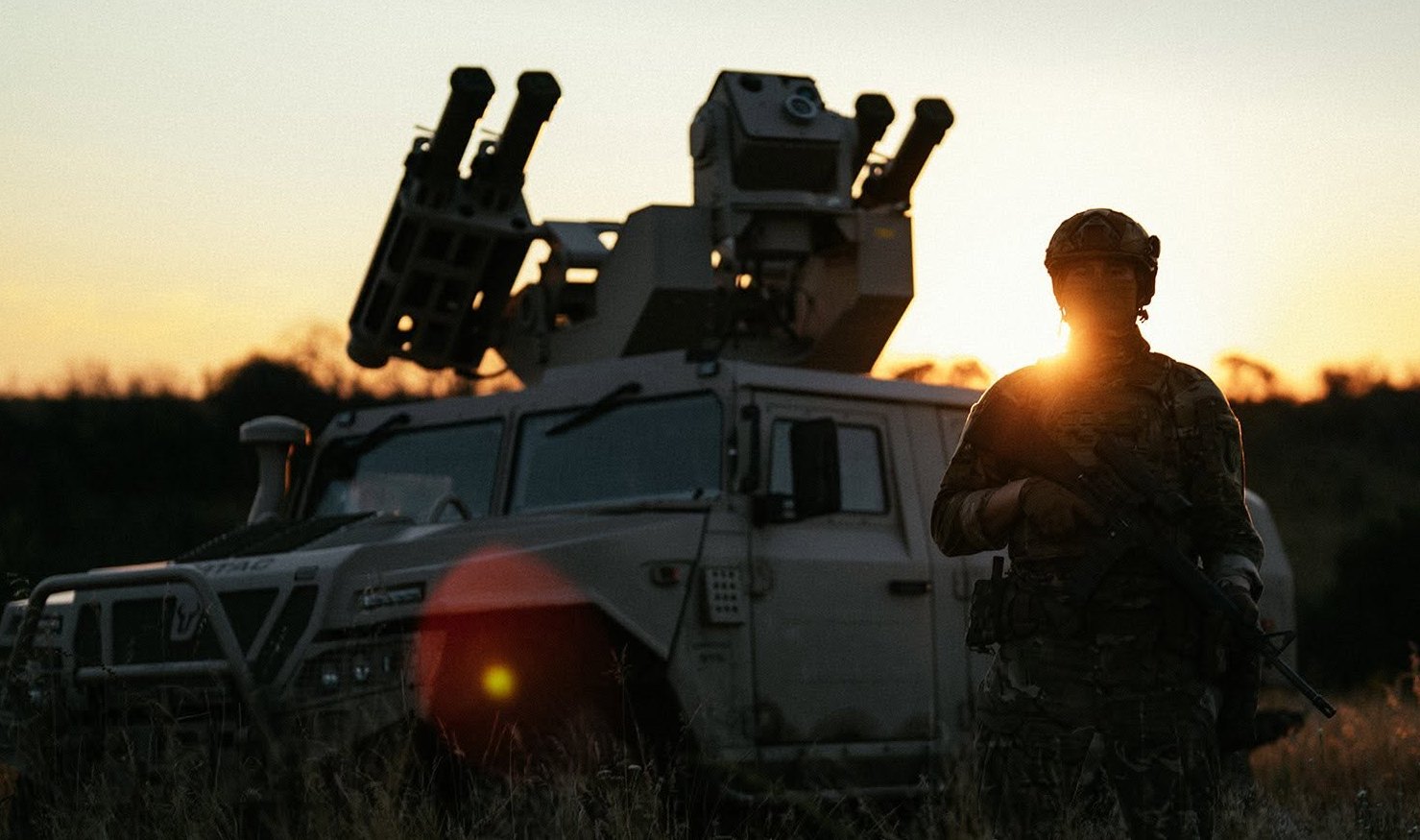
3rd Army Corps.
Explore further

Ukraine’s 3rd Army Corps took the lessons of the failed 2023 counteroffensive into Operation Vivaldi. It fought small, and won.

  •  

Ukraine sent a spiked tank and a Bradley into Russian drone fire. The spikes held, and Ukraine’s own drones got them home

A 475th Assault Regiment hedgehog tank.

  • A Ukrainian assault regiment continues to deploy mixed formations of drones and up-armored vehicles
  • The vehicles do the shooting; the drones fly close top cover
  • These mixed formations could rescue old-fashioned armored vehicles from obsolescence by helping protect the vehicles from drone attack

For the second time in two weeks, Ukraine's 475th Assault Regiment has demonstrated how armored vehicles can fight and survive on a battlefield buzzing with enemy drones.

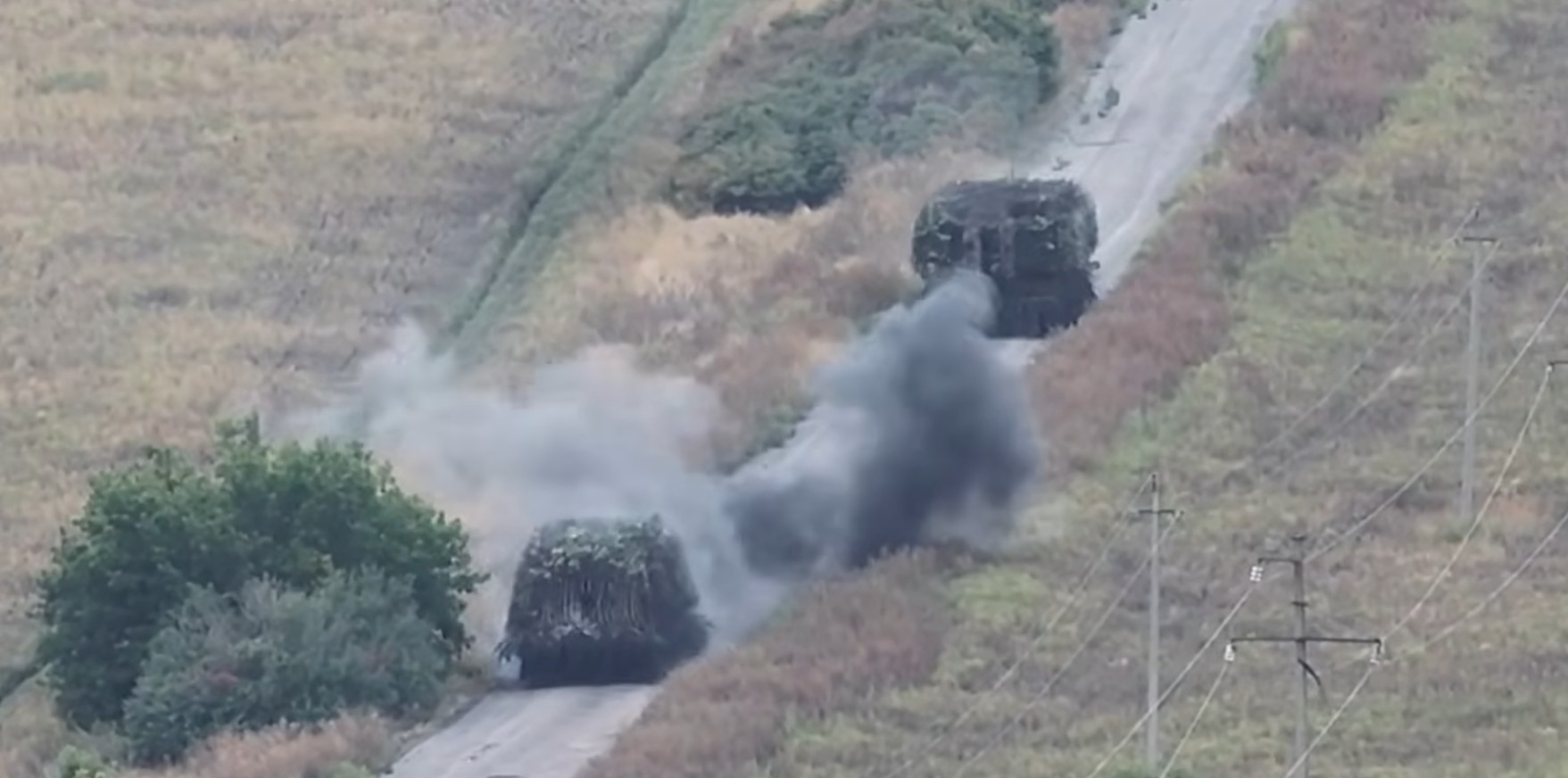
The regiment encased a tank and an American-made M-2 Bradley infantry fighting vehicle in metal frames and welded hundreds of metal spines onto those frames, transforming them into "hedgehog" vehicles. The cage makes the tank impossible to identify from the footage, and the regiment hasn't said what model it is. The frames support the spines, which trigger incoming drones' warheads a safe distance from the vehicles' hulls.

But that's not all. To shepherd the two-vehicle formation across the disputed gray zone for a close engagement with a Russian position, presumably somewhere in northeastern Ukraine's Kharkiv Oblast, the 475th Assault Regiment deployed drones: both single-use first-person-view models and grenade-dropping, reusable Vampire models.

❗The 🇺🇦Code 9.2 Regiment once again used the element of surprise, bringing a tank and a Bradley onto the battlefield—transformed into steel hedgehogs and covered by drones from the air. With a combined strike, the assault troops drove the enemy from several positions in… pic.twitter.com/Uq3mlWTsJq

— 🪖MilitaryNewsUA🇺🇦 (@front_ukrainian) October 11, 2026

The vehicles and their crews didn't fight alone. They fought in mixed ground-air "combined arms" formations. The tank and fighting vehicle provided the firepower. The escorting drones provided the aerial protection. Vampire drones drop grenades to suppress Russian positions and clear mines and loitering Russian drones. FPV drones dive down to intercept the Russians' own FPV drones as they zoom in to strike the vehicles.

The 475th Assault Regiment cut together a video montage of the most recent assault. The video depicts the tank and the Bradley rolling along a well-traveled route as at least one friendly FPV and at least one friendly Vampire drone flew overhead and an additional drone watched from a short distance away.

The vehicles repeatedly came under attack from Russian FPVs and heavier loitering munitions. An escorting Ukrainian FPV moved to intercept, with unclear results. A couple of Russian drones managed to score hits on the vehicles, but their hedgehog armor held—and both vehicles appear to have survived the there-and-back daytime trip into battle.

475th Assault Regiment tanks under drone escort.
Explore further

Ukraine is now sending its tanks into battle with drone escorts: they can drive into a Russian kill zone and come back alive

A way forward for vehicles

It's at least the second time the 475th Assault Regiment has deployed vehicle-drone teams. The Ukrainian 3rd Army Corps used a related approach in its months-long counteroffensive in northern Donetsk Oblast, which began this spring: it sent in ground robots first, suppressing Russian strongpoints, fraying Russian supply lines, and clearing routes for manned vehicles to follow.

The unmanned aerial escorts lend the 475th Assault Regiment's hedgehog vehicles situational awareness they might not have on their own. It's well known that hedgehog armor can obscure a vehicle crew's view of the surrounding terrain. But friendly drones flying directly overhead can act as eyes in the sky for the crews on the ground.

The drones also help the vehicle crews compensate for a lack of mobility. The metal cages that support the metal spines that make up hedgehog armor tend to prevent a vehicle's turret from fully rotating. In order to aim its gun, a hedgehog vehicle has to meticulously point its whole self—turret and hull—at the enemy.

Ukrainian Abrams tank fitted with modular cage-style protection designed to counter FPV drone strikes on the front line, as crews adapt Western armor to modern battlefield threats. Photo: Ukraine’s 160th Separate Mechanized Brigade
Explore further

Ukraine’s newest Abrams brigade just built the “dumbest” tank cage of the war. In 2026, that barely matters.

That takes trial and error, and time. The longer it takes, the more vulnerable a vehicle is to enemy drones. Friendly drones, running interference for the vehicles, can reduce that exposure long enough for the vehicle to fire a few shots.

The 475th Assault Regiment and 3rd Army Corps, among other units in Russia's wider war on Ukraine, are pointing the way forward for traditional armored vehicles in this new drone age. Yes, vehicles are more vulnerable to aerial attack than they were just a few years ago.

But no, armored vehicles aren't obsolete or useless. They just need a little help—or a lot of it—from the same kinds of drones that also make their existence so perilous.

  •  

Ukraine’s 3rd Army Corps took the lessons of the failed 2023 counteroffensive into Operation Vivaldi. It fought small, and won.

3rd Army Corps.

  • Ukraine's Operation Vivaldi has succeeded because ground commanders thought small instead of big
  • Rather than hoping for a major breakthrough, they fought incrementally and with heavy support from the air
  • Contrast Operation Vivaldi's small but successful thinking with the big thinking of Ukraine's failed 2023 counteroffensive

Five months after launching Operation Vivaldi, a local counteroffensive in northern Donetsk Oblast, the Ukrainian 3rd Army Corps has eliminated the Russian bridgehead on its most important long-term objective: the Zherebets River, which flows south through eastern Ukraine and forms a natural defensive barrier east of the last big free cities in Donetsk: Sloviansk and Kramatorsk.

Attacking methodically under strict secrecy, the 3rd Army Corps has pushed back the Russian 20th and 25th Combined Arms Armies and returned 176 sq km of northern Donetsk to Ukrainian control as of 30 September, according to Ukraine's presidential office. The figure could not be independently verified. Operation Vivaldi netted the Ukrainians hundreds of Russian prisoners and erased 18 months of Russian advances toward Sloviansk.

"Ukrainian forces have defeated the 2026 Russian campaign to seize Donetsk Oblast," the Institute for the Study of War in Washington concluded.

It's a remarkable feat for the overall outgunned and outmanned Ukrainian forces. Equally remarkably, the Ukrainians deftly dodged several potentially fatal traps as they flanked the 20th and 25th CAAs. They didn't get stuck in the Russians' dense minefields. They didn't expose themselves to devastating air attack. Perhaps most importantly, they didn't set their sights on distant objectives. They thought small instead of big, stacking small gains on top of small gains until those wins amounted to a big victory.

3rd Army Corps troops disembark from an armored vehicle.
Explore further

Armored assaults aren’t dead. Robots got the credit, but it was Ukrainian infantry in armored trucks that reversed a year of Russian gains near Lyman

A trio of US Army officers—Col. Timothy Price, Capt. Patrick Visser, and Capt. Andrew Carter—described this achievement in academic terms. The corps' defeat of the Russian bridgehead on the Zherebets "had little to do with maneuver warfare," the officers wrote for the Modern War Institute at the US Military Academy in West Point, New York.

In military parlance, "maneuver" generally involves heavy ground forces supported by air strikes and artillery decisively breaking through enemy lines and then rushing vehicles and troops into the panicking enemy's unguarded rear area to quickly inflict maximal destruction and achieve maximal territorial gains.

That's not what the 3rd Army Corps did in its five-month—and ongoing—counteroffensive. No, the Ukrainians "won through systematic, geometric interdiction and positional pressure," Price, Visser, and Carter wrote. Put plainly, the corps carefully probed for tree-covered assault lanes toward key settlements, deployed unmanned ground vehicles to clear mines and explode the most important nearby Russian strongpoints, and then rushed in armored vehicles carrying infantry.

Map of settlements Ukraine's 3rd Army Corps says it liberated north of Lyman, as of 28 September 2026.
Settlements Ukraine's 3rd Army Corps says it liberated during Operation Vivaldi north of Lyman, Donetsk Oblast, Ukraine, as of 28 September 2026. Map: ISW

They marched step by step, incrementally liberating a kilometer at a time instead of running a marathon toward a major objective tens of kilometers away. In that way, Operation Vivaldi is the very opposite of Ukraine's failed 2023 summer counteroffensive, which massed tanks for what commanders hoped would be a decisive breakthrough around the village of Mala Tokmachka in southern Ukraine's Zaporizhzhia Oblast.

The objective at that time was to break into the Russian rear and speed tanks 80 km to the occupied city of Melitopol near the Sea of Azov. That never happened. The Ukrainians got mired in minefields around Mala Tokmachka, suffered badly from Russian air attacks, and, after a grueling season of costly attacks, lost momentum just 10 km south of Mala Tokmachka. Later Russian counterattacks erased even those modest Ukrainian gains.

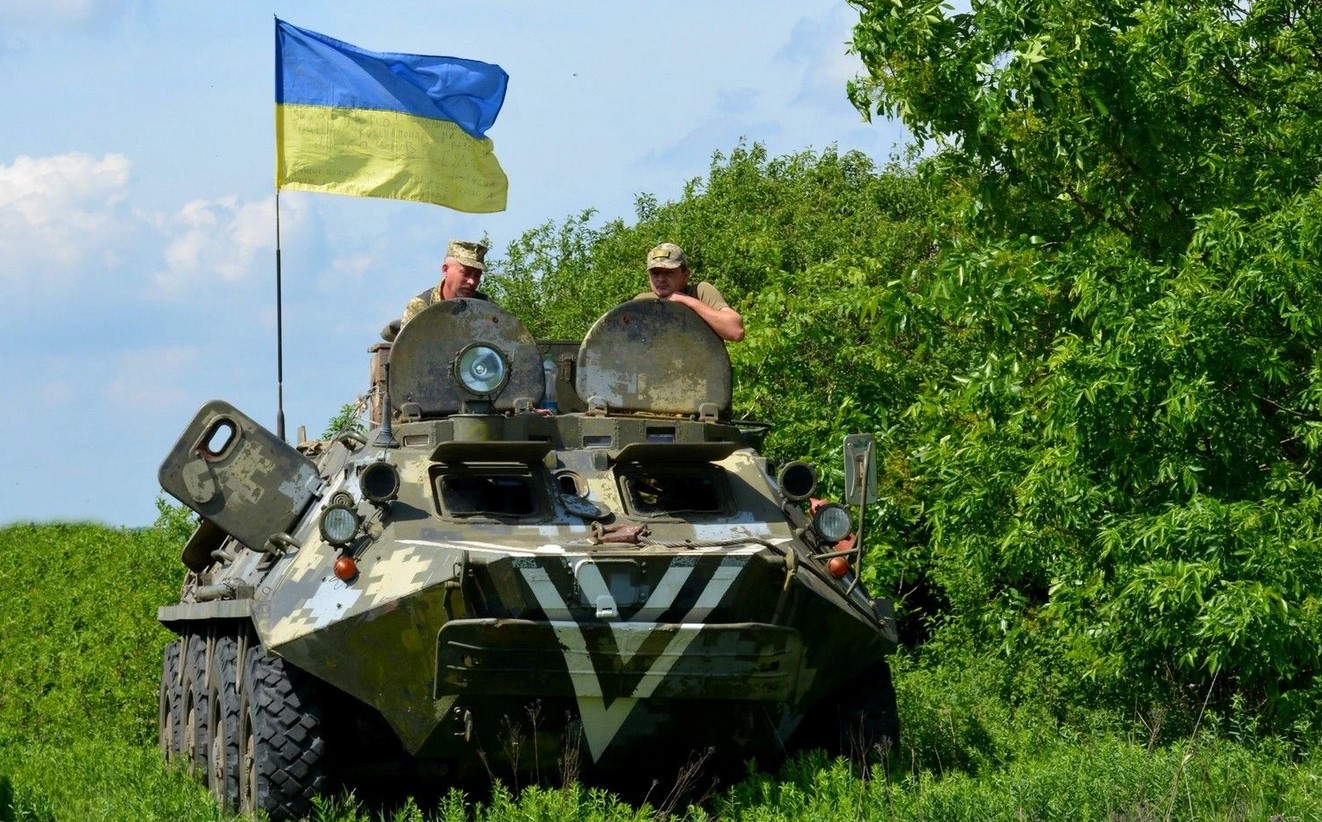
A BTR-60B. Source: Ukraine's Ministry of Defense.
Explore further

In Ukraine’s Vivaldi offensive, nobody rides in the BTR-60s. Bulgaria’s old troop carriers go into Russian bunkers packed with mines

Old thinking versus new

The planners of the failed 2023 counteroffensive were stuck in an old way of thinking about maneuver warfare. The planners of the successful 2026 counteroffensive shrugged off obsolete ideas. They thought smaller—and, ironically, achieved much more as a result.

The 3rd Army Corps couldn't, and didn't, do it alone. Indeed, the corps depended on the Ukrainian Unmanned Systems Forces to fray the Russians' supply lines, electronic warfare teams to jam Russian drones, and the Ukrainian air force to bomb Russian drone operators the EW teams couldn't suppress. By contrast, the Ukrainian forces attacking south from Mala Tokmachka in 2023 did so without much aerial support.

The aerial and electronic preparation was a prerequisite for each of the 3rd Army Corps' incremental advances this spring and summer. The lesson, the officers argue, is that "higher headquarters must degrade key enemy capabilities" before a smaller ground formation can expect to gain ground and keep it. If the support falters, the ground forces won't be able to hold.

Think small. Prepare hard. Now that the Ukrainians know this is how to win on the ground, can they repeat Operation Vivaldi's success?

There's some evidence they're already doing so in the southeast, where a clutch of Ukrainian air assault brigades has been pushing back the Russian 29th Combined Arms Army.

  •  

“Supplying Crimea is turning into a nightmare”: Ukrainian drones hit Russian trucks 770 times in September, and winter will make it worse, analyst says

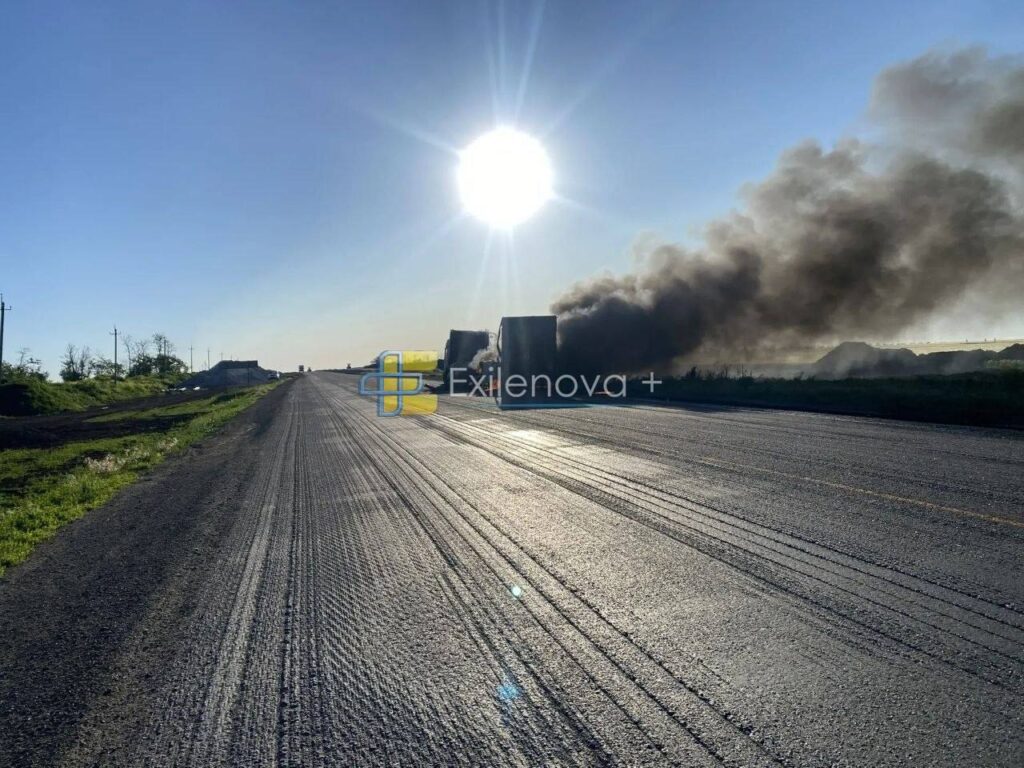
russian radar occupied crimea didn't see ukrainian drones coming became 28th air-defense asset wrecked · post supply trucks burning mariupol-melitopol highway main road russia's land corridor 29 2026 exilenova+ -

  • Ukraine's "middle strikes" on Russian logistics haven't let up
  • Ukrainian drones hit Russian trucks 770 times in September
  • A shift to protected convoys hasn't reduced the truck losses

Ukraine's campaign of so-called "middle strikes" targeting Russian supply lines isn't generating the same headlines it did back in the spring, when the campaign was intensifying.

But that doesn't mean Ukrainian units aren't launching thousands of drones a month and blowing up a lot of Russian trucks. Indeed, the pace of Ukrainian strikes, concentrated along the main supply routes threading through occupied southern Ukraine into occupied Crimea, has leveled off without ever really decreasing since an early summer surge.

It's evident Ukraine's middle-strike campaign "didn't stop and wasn't slowed down," noted French mapper Clément Molin, one of the most important observers of the counterlogistics campaign.

For September, Molin tallied 770 confirmed drone strikes on Russian trucks in the logistical zone 10 km beyond the line of contact. That's up from 630 strikes in August, 656 in July, and 586 in June, the month the campaign really got underway. There were just 214 strikes in May and at most a few dozen in each of the previous three months.

Whether Ukrainian troops can take advantage of the Russians' weakening logistics anytime soon is less evident.

Since June, the Ukrainians have hit around 700 Russian trucks a month that analysts can confirm with video and photographic evidence. There are undoubtedly many more damaged and destroyed trucks that left no digital evidence.

In southern Ukraine 🇺🇦 mid-range drone strikes continue to relentlessly target Russian 🇷🇺 road logistics

In total, more than 3 000 trucks and vehicles have been hit on key roads since May 2026, while the R-280 road remains at the heart of the attacks.

🧵THREAD🧵1/13 ⬇ pic.twitter.com/u9hixSvLAV

— Clément Molin (@clement_molin) October 7, 2026

There are thousands of Russian trucks on the road in Ukraine every day, so hitting 700 of them in a month won't immediately strangle Russian logistics. But that accumulating destruction does strain Russian logistics—and terrify the truck drivers who are in the drone crosshairs. "Russian drivers post videos on a daily basis, showing how dangerous a ride in southern Ukraine is getting," Molin wrote.

What's remarkable is that the counterlogistics campaign hasn't faltered even as the Russians have adapted. Early on, Russian trucks mostly traveled alone and without protection, making them fairly easy picking for a bevy of Ukrainian middle-strike drone types including the Hornet, the B-2, the RAM 2X, the Chaklun, and various high-endurance first-person-view quadcopters.

The drones ride along Ukraine's overlapping command and control systems, which include Starlink satellite terminals (some dangling from balloons) as well as mesh radio networks. Many of the drones have built-in AI for autonomously detecting and homing in on trucks in the final seconds of flight.

The moment the Hornet UAV struck a logistics vehicle in the occupied Kherson region. pic.twitter.com/Hc0DCcTnef

— Exilenova+ (@Exilenova_plus) October 7, 2026

Convoy operations

Reeling from the truck strikes, the Russians adapted this spring. Commanders began requiring all trucks to travel in convoys including mobile fire support groups, analysis group Tochnyi reported in May, citing Dmytro Putiata, a retired command post battle captain from the Ukrainian Unmanned Systems Forces 20th Brigade "K2."

Today the Russian convoys have a standard structure, according to Molin. "Convoys usually gather three to five trucks and two to three air-defense trucks." Combined with radio jamming gear that's increasingly common on both the supply trucks and the gun trucks, that's seemingly a lot of protection.

But the drones target the gun trucks, too, peeling back the protection in order to expose the supply trucks to follow-on attacks. In that way, the Ukrainians have sustained their attacks on the supply trucks despite the increase in mobile air defense activity along the most important supply routes.

Ukrainian drones hit 770 Russian military trucks in September 2026
Map: Euromaidan Press

And it's going to get worse for the Russians as fall wears into winter. "Supplying Crimea is turning into a nightmare and the arrival of winter and more difficult conditions will not help," Molin wrote.

There will be less foliage on the trees lining the roads, and thus less cover from Ukrainian surveillance. Moreover, Molin pointed out, "it will be more difficult to go off-road" and avoid the big paved roads that are the main drone kill zones.

Russian logistics are under pressure, and that pressure is only increasing. Ultimately, the Ukrainians aim to starve Russian forces in Crimea. Strikes on cargo ships plying the Black Sea prevent the Russians from simply shifting the logistics off the coast. Meanwhile, strikes on overland logistics "may lead to substantial softening of front-line positions," Tochnyi noted in May.

Softening those front-line positions to the point of melting away could facilitate what Tochnyi described as "eventual breakthrough operations" in occupied southern Ukraine.

It's not inconceivable. Ukraine's 3rd Army Corps recently proved, by way of its successful Operation Vivaldi, that local Ukrainian counteroffensives are possible.

But that doesn't mean they're easy. To win, the 3rd Army Corps had to carefully husband its forces and meticulously prepare the battlefield under conditions of strict secrecy before attacking. That same kind of preparation is underway along the supply lines into Crimea, but it's unclear whether local Ukrainian forces have enough combat power in reserve to shift from defense to offense and exploit Russia's deepening supply woes.

At least not yet.

3rd Army Corps troops.
Explore further

Ukraine retook 240 square km north of Lyman and nobody reported it for three months

  •  

Armored assaults aren’t dead. Robots got the credit, but it was Ukrainian infantry in armored trucks that reversed a year of Russian gains near Lyman

3rd Army Corps troops disembark from an armored vehicle.

  • Defying the trend toward footborne infantry assaults, the Ukrainian 3rd Army Corps deployed armored vehicles for Operation Vivaldi
  • The operation was a reminder that vehicles are still useful despite the ever-present danger from drones
  • But vehicles need a lot of support to give them a fighting chance

Armored vehicles aren't dead in Ukraine—they just need a lot of help. That's one of the biggest lessons from the Ukrainian 3rd Army Corps' Operation Vivaldi, its recent successful counteroffensive just north of the town of Lyman in eastern Ukraine's Donetsk Oblast.

Russia spent 18 months building its salient toward Sloviansk; Ukraine took much of it back in three. By 30 September, three of four planned phases in, the operation had returned 176 sq km to Ukrainian control, taken 250 Russian prisoners, and cost Russia more than 5,000 killed and wounded, Ukraine's presidential office said. It also foiled a Russian plan to break into the rear of the Sloviansk-Kramatorsk urban area, the office said.

Defying critics who insisted vehicles couldn't possibly survive in the drone-patrolled gray zone, the 3rd Army Corps repeatedly deployed mechanized forces as it counterattacked across a roughly 100 sq km salient the Russian 20th and 25th Combined Arms Armies had extended toward Sloviansk, one of the last two big free cities in Donetsk Oblast.

Maneuvering for months under a veil of secrecy, the 3rd Army Corps found and exploited gaps along the flanks of the 20th and 25th CAAs, ultimately breaking into the Russian armies' rears and forcing them to pull back across the Zherebets River in order to avoid encirclement.

Armored vehicles were key to the Ukrainian effort. They sped assault troops into battle, dropped them off under fire, and then supported them as they clashed with the Russians. "Maneuver warfare isn't going anywhere," stated Ryan O'Leary, a US Army veteran who once commanded volunteers in Ukraine.

475th Assault Regiment tanks under drone escort.
Explore further

Ukraine is now sending its tanks into battle with drone escorts: they can drive into a Russian kill zone and come back alive

3rd Army Corps commanders knew they were taking a risk deploying armored vehicles in a Russian-controlled salient patrolled by first-person-view drones from Russia's elite Rubicon Center drone unit. But they clearly believed that, with adequate support, the vehicles could accomplish their missions—and survive.

They were right. A dramatic video shot by 3rd Army Corps troopers depicts the troopers disembarking from their armored trucks and rushing into the fight while small arms fire clatters all around them.

Given the intensity of the Russian fire, a mechanized assault "was the only real way to push positions in an effective manner to keep losses low as well as gain and hold momentum and aggression," O'Leary wrote. Walking into battle under the cover of trees might help the infantry avoid the attention of overhead drones, but it takes too long to sustain an aggressive assault, and it can be difficult to mass enough footborne infantry to overcome stiff enemy defenses.

"This is something that hasn't changed even with the advent of drone warfare coming of age," O'Leary added. "Suppression tactics and such have changed and now there is more than just indirect fires and counterassaults that you must be able to suppress and plan for."

But the concept of the infantry-carrying armored vehicle "isn't going anywhere," O'Leary stressed. "Especially when it takes a drone tens of minutes to get to target area, acquire target and hit the target. Right now, the front is extremely susceptible to maneuvering forces on assaults if it is planned right and executed properly."

The 3rd Army Corps' Operation Vivaldi is an excellent example of an operation that was planned right and executed properly—in ways that helped the corps' mechanized forces fight and survive.

New footage shows Ukrainian forces storming and clearing Russian positions during the "Vivaldi" counteroffensive in the Lyman direction. The assault was captured firsthand by Ukrainian soldiers using GoPro cameras. pic.twitter.com/qxyNHl0n3A

— Vijesti (@Vijesti11111) October 6, 2026

Careful preparation

The corps explained that it deployed footborne scouts to find the best paths for follow-on vehicular assaults—and subsequent medical evacuations. Scouts "conducted recon of the front lines, ensured the breakthrough of equipment and led adjacent units along secret paths while evacuating the wounded," the 3rd Army Corps stated.

Ukraine liberates area above Lyman in Operation Vivaldi. Map: Euromaidan Press

Before the armored vehicles rolled into action along the pre-scouted paths, the 3rd Army Corps deployed robotic engineering vehicles to clear Russian mines. After that, the corps sent in old BTR-60 wheeled armored vehicles modified for remote control and packed with anti-tank mines. These "robotic kamikaze complexes ... were used to demolish the enemy's strongest fortifications," the corps said.

Only after the assault routes were scouted and cleared of mines and Russian strongpoints did the manned vehicles and their precious infantry cargo roll out. We don't know how many losses the 3rd Army Corps' mechanized infantry suffered on the attack, but we do know they ultimately prevailed—when the battered Russian 20th and 25th CAAs retreated.

A BTR-60B. Source: Ukraine's Ministry of Defense.
Explore further

In Ukraine’s Vivaldi offensive, nobody rides in the BTR-60s. Bulgaria’s old troop carriers go into Russian bunkers packed with mines

"Recent Ukrainian operations demonstrate that maneuver is not dead," stressed Mick Ryan, a retired Australian army general. "Despite the difficulty in ground operations maneuver observed in eastern Ukraine over the past few years, offensive operations are still possible in modern war. But they need the intellectual effort to develop new techniques to make them viable and repeatable at scale."

In addition to the reconnaissance and robots-first engineering and suppression tactics the 3rd Army Corps employed, Ryan recommended commanders deploy more drone-grounding electronic warfare and use AI tools to help plan attacks.

But ages-old human elements are still essential, Ryan wrote. "Developing viable methods for offensive tactical and operational maneuver in the 21st century also demands the inclusion of older ideas about the employment of mass, logistic support and casualty evacuation [and the] maintenance of morale and leader's provision of purpose to their people."

Even when the assault route is clear, it's understandably terrifying to ride in an armored vehicle across drone-patrolled terrain. But a good leader can motivate their troops to try.

  •  
❌