❌

Reading view

De La Espriella’s Cultural Counterrevolution In Colombia Kicks Off

The National Museum Removes Progressive Artworks Calling Them ‘Political Indoctrination.’

On Friday, Colombian Culture Minister Paola Holguin defended the removal of more than 30 artworks related to feminist, LGTBI+ or peace themes from the National Museum in Bogota, arguing that those works are an instrument of political indoctrination.

RELATED:

UN Warns Colombia Protest Decree May Widen Police Use of Force

“The National Museum is one of the most important cultural centers in the country. It is the first institution of its kind in Colombia and one of the oldest in the Americas, whose purpose is to reflect the soul of the Nation.

The National Museum, as part of the State, has the purpose of conserving, restoring, protecting and socializing our culture. Its institutional vocation is not to serve as an instrument of political indoctrination, a focus for the dissemination of biased versions of our history, much less a multiplying medium for the government agenda,” stated the official of the far-right government presided over by Aberlardo de la Espriella.

“The National Museum CANNOT be a space for apologizing for crime or revictimization; it must observe the rights of victims to truth, justice, reparation and non-repetition. The National Museum is a space for all Colombians, which must ensure, among other things, the fundamental rights of children, which are prevalent according to Article 44 of the Constitution, and, therefore, must protect them from access to sensitive material.”

“The museology and curatorship of the different spaces under the Ministry are being evaluated and redesigned to fulfill the mission of safeguarding, researching, conserving and disseminating the cultural, historical and artistic heritage of the Nation, serving as spaces for memory, identity and social transformation,” Holguin concluded.

Las personas LGBTIQ+ no son una ideología que un Gobierno pueda sacar de una pared. Son parte de Colombia, de su historia y de sus luchas por la igualdad.

Retirar piezas del Museo Nacional que cuentan la historia del movimiento LGBTIQ+, del feminismo y de las luchas por la paz… pic.twitter.com/VB0LtEIsWS

— Mafe Carrascal Rojas (@MafeCarrascal) October 16, 2026

Legislator Mafe Carrascal Rojas’ text reads: “LGBTIQ+ people are not an ideology that a government can simply strip from a wall. They are an integral part of Colombia, its history, and its struggles for equality. Removing items from the National Museum that chronicle the history of the LGBTIQ+ movement, feminism, and the pursuit of peace is not a matter to be taken lightly.

Given that the president has announced a “cultural counter-revolution” against what he terms “wokeism,” we have reason to ask whether this is an attempt to render social struggles—and the rights won over decades—invisible. We cannot allow diversity to once again be treated as something that must be hidden.

The history of Colombia does not belong to any single president or ideological movement; it belongs to a diverse, pluralistic nation—a nation where LGBTIQ+ individuals have the right to exist, to live free from discrimination, and to have their histories and memories recognized.

The Culture Ministry and the National Museum must provide an explanation regarding the removal of these items, the criteria applied, and the measures in place to ensure this history is preserved. They will not succeed in erasing LGBTIQ+ people from the history of Colombia. Their lives matter, their struggles matter, and their rights are not up for negotiation.”

On Thursday, digital outlet La Silla Vacia reported that De la Espriella removed posters, photographs and objects from three rooms of the National Museum, related to the history of feminist and LGBTI movements, victims of political violence and the 2016 peace agreement signed between the State and the Revolutionary Armed Forces of Colombia (FARC).

Among the pieces removed were a gay pride flag belonging to activist Elizabeth Castillo, a poster from the presidential campaign of Bernardo Jaramillo Ossa, a Patriotic Union candidate assassinated in 1990, and the ‘Baligrafo,’ a pen made from a bullet with which the peace agreement was signed.

The removal of these works is part of the “Cultural Counterrevolution” announced by President De la Espriella, who ordered Holguin to remove from public spaces representations that he considers “apology for terrorism.”

Among such references are works alluding to Carlos Pizarro, former commander of the M-19 guerrilla and peace signatory assassinated in 1990 during that year’s presidential campaign.

During the administration of Gustavo Petro (2022-2026), Pizarro’s hat was declared Cultural Heritage of the Nation, but this recognition was recently suspended by a judicial decision.

La Silla Vacia noted that the order to remove the pieces came directly from the Culture Ministry and that officials participated in the selection of the elements taken down.

teleSUR/ JF

Source: EFE

  •  

‘Tough to watch, impossible to ignore’: reviewers on NAZA documentary

Film interviewing military insiders about mass killing of civilians in Gaza wins widespread praise around the world

Critics around the world have hailed the award-winning documentary NAZA as a “brilliant and harrowing” film that is “impossible to ignore”.

NAZA, which is produced by the Guardian and details Israel’s mass killing of civilians in Gaza, was released in UK cinemas this week and will be shown in more than 50 countries. As well as its global cinema releases, NAZA will be available free on the Guardian’s website from late November.

Continue reading...

© Photograph: NAZA/The Guardian

© Photograph: NAZA/The Guardian

© Photograph: NAZA/The Guardian

  •  

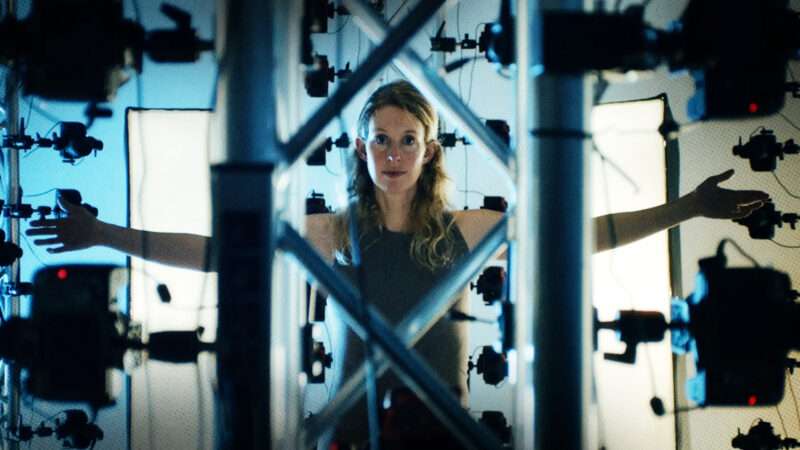
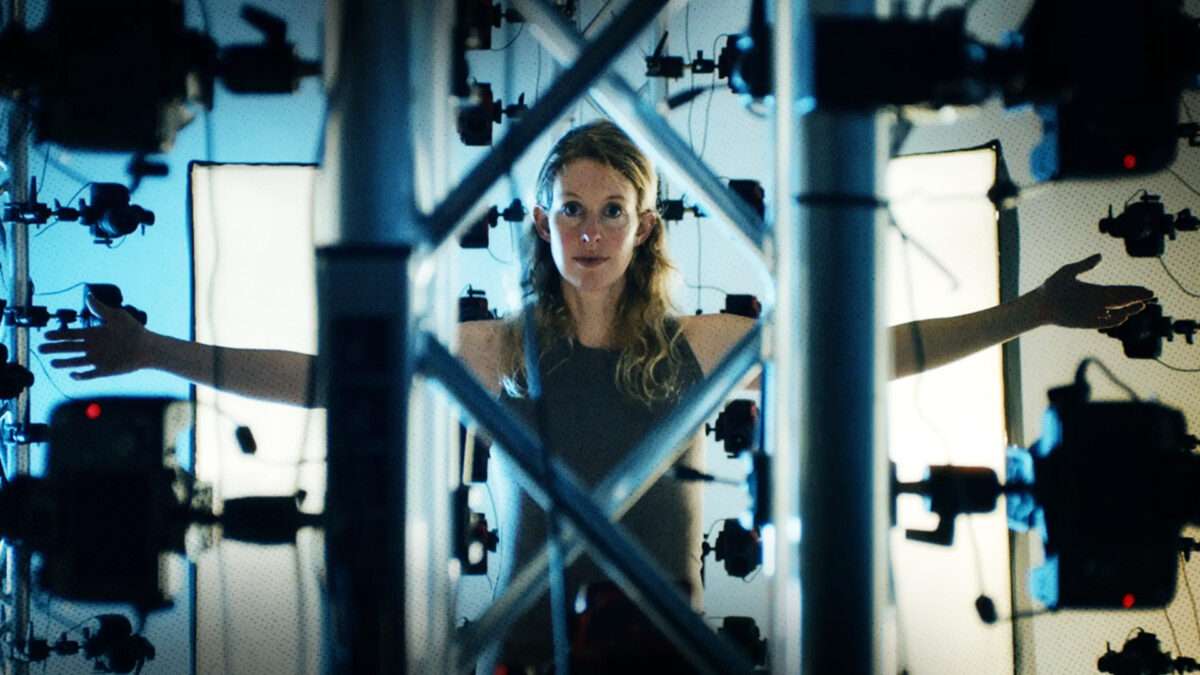
The Elizabeth Holmes Documentary You Can See Everything Is an Act of Radical Empathy

Elizabeth Holmes in "You Can See Everything" | A24/You Can See Everything

We all know Elizabeth Holmes is a villain. 

She promised a radical new technology—bloodwork performed in a countertop-sized machine from a single droplet taken from your finger. She was young, photogenic, and self-possessed; she dressed like Steve Jobs. Her invention would disrupt the $60 billion bloodwork industry, bringing cheap, frictionless health monitoring to the masses. Or it would have, if it worked. Holmes was convicted of defrauding investors of nearly $500 million; she's currently serving an 11-year prison sentence. Holmes has been written about extensively, and her story was turned into an Emmy-winning Hulu series starring Amanda Seyfried. She is an avatar of Big Tech mendacity, a cautionary tale as much as a person.

Everyone knows the story. You would think there is nothing left to say. But you'd be wrong. 

Just before she entered prison, Holmes invited documentarians Nathan Fielder and Lance Oppenheim to live with her, her boyfriend Billy Evans, and their two young children in their beachfront San Diego rental unit, promising them full access, complete transparency. The result is this year's most entrancing documentary, You Can See Everything. When the camera captures Billy in the shower, the movie delivers on its titular promise; you, uh, really can see everything. 

Yet what you cannot see is who Holmes really is. The mystery of the era's most famous fraudster is the movie's central riddle: Is she cynical, calculating, a stone-cold liar and psychopath? Or is she something stranger—a damaged and delicate person who genuinely believes her lies, or at the very least, genuinely believes the stories she tells herself to justify those lies after the fact?

Fielder and Holmes seem uncertain themselves; the movie is, in part, their own attempt to wrestle with their own ambivalence, their own inability to come to a conclusion. It's a hall of mirrors about the infinite unknowability of a person, even given unfettered access. 

The documentarians do not absolve her of her villainy; the movie is not an attempt to excuse her fraud or build a case for her innocence. But they offer something exceptionally rare in this era of simplistic hero and villain narratives: genuine and deeply felt empathy for someone on whom the culture (not to mention the legal system) has cast final judgment. In the process, they have given us one of the strangest, most unsettling, and most poignant films of the year. You Can See Everything is a small miracle of a movie. 

It's sometimes said that the most compelling villains don't believe themselves to be villains. They have an internally coherent story to tell that excuses their actions, makes them the heroes in their own minds. Fielder and Oppenheim have given Holmes, and viewers, the gift of allowing Holmes a measure of psychological complexity. You don't see into her mind, because that's impossible. But you see that the story she tells herself is different from the story the world tells us about her. It's surprisingly kind and generous; it's also tricky as hell—to the point where you, the viewer, might wonder if you're the one being tricked. 

Halfway through, the movie takes a meta-turn that I won't spoil, entering into high-concept territory in an attempt to more deeply explore what art and images can reveal about a human psyche. It's formally audacious, often funny, and actually justifies the three-hour running time. I've never seen anything quite like it.  

The exercise left me just as unsettled as the documentarians seem to be themselves; uncertain about Holmes and her motives, and nearly as uncertain about Fielder and Oppenheim, two talented filmmakers who appear to be questioning not only the nature of their chosen form, but of reality, especially psychological reality, themselves. There are times when You Can See Everything borders on magical realism, except the magic comes from the complexity of human nature and storytelling, as if Gabriel García Márquez had written a story about a man with a camera that could see into souls. It's dizzying, dazzling, a sort of postmodern Rashomon of perspective shifting.

As I left the theater, in something of a daze, I found myself thinking of a line from the great Saul Bellow novel The Adventures of Augie March, "Nobody should be a mystery intentionally. Unintentionally is mysterious enough." In the case of Holmes, it's impossible to tell which it is. All we can say is this supposedly one-note Big Tech villain, like perhaps everyone, is better understood as some kind of mystery, even to herself. 

The post The Elizabeth Holmes Documentary <i>You Can See Everything</i> Is an Act of Radical Empathy appeared first on Reason Magazine.

  •  

‘Opening the lid of a horrible secret’: Jamaicans confront enslavement with taboo-busting stories on screen

As violent spirits are unleashed in Sky’s Possession, observers see confident creatives reclaiming the island’s narratives in a form of ‘cultural reparation’

A woman opens a 300‑year‑old box, unleashing a violent spirit – it is the spirit of colonialism and oppression roaring back to life. It is a pivotal scene in Sky’s supernatural series Possession and symbolises a wider shift in Jamaica’s film industry, where directors are increasingly using the landscape to tell Jamaican stories – including those that confront enslavement, trauma and historical memory.

The series is about a biracial British lawyer who travels to Jamaica to investigate a multimillion-pound inheritance dispute, only to uncover a dark, vengeful spirit tied to the plantation’s brutal colonial past.

Continue reading...

© Photograph: Des Willie

© Photograph: Des Willie

© Photograph: Des Willie

  •  

Dogmatic Nordic liberals v eastern family values: culture-clash drama Fjord touches nerves in Norway and Romania

Cristian Mungiu’s Cannes winner echoes the news story of a Romanian couple whose children were taken by the Norwegian government. As it heads to London film festival, two writers explain how the film exposes real hypocrisies

When Cristian Mungiu’s Fjord was shown in Romania as a one-day preview this June, the reception was extraordinary. Across 53 towns and 96 cinemas, the film reportedly pulled in over 40,000 viewers in a single night, a number arthouse cinema rarely sees in Romania. But the response here had little to do with cinema. It felt instead like a reopening of a familiar fault line about the clash of values within the EU itself.

Continue reading...

© Photograph: ©Tudor Panduru

© Photograph: ©Tudor Panduru

© Photograph: ©Tudor Panduru

  •  

How Scientology actually works, according to a former Scientologist

Jenna Miscavige is the niece of David Miscavige, the leader of the Church of Scientology. She was raised as a Scientologist and left when she was 22 years old.

Founded by science-fiction writer L. Ron Hubbard in 1954, Scientology developed into a global religious movement, reportedly reaching over 100,000 members at its peak in the 1990s. Even as its ranks have contracted, Scientology has retained an outsize place in popular culture due in no small part to high-profile members such as Tom Cruise and John Travolta.

Jenna Miscavige speaks to Business Insider about Scientology's secretive reputation, recruitment tactics, finances, allegations of abuse, and celebrity connections.

She is the author of "Beyond Belief: My Secret Life Inside Scientology and My Harrowing Escape." Jenna also uses social media to speak out against Scientology and inform the public.

The Church of Scientology disputes Jenna Miscavige's depiction of the organization, saying in an emailed statement: "What [Jenna] is selling is not a new revelation. It is discredited allegations repackaged for profit. Her bid for notoriety begins and ends with a prominent family name she is desperate to trade on."

For more from Jenna:
https://www.youtube.com/@JennaMiscavige
https://www.instagram.com/therealjennamiscavige
https://www.tiktok.com/@jennamiscavige

Read the original article on Business Insider

  •  

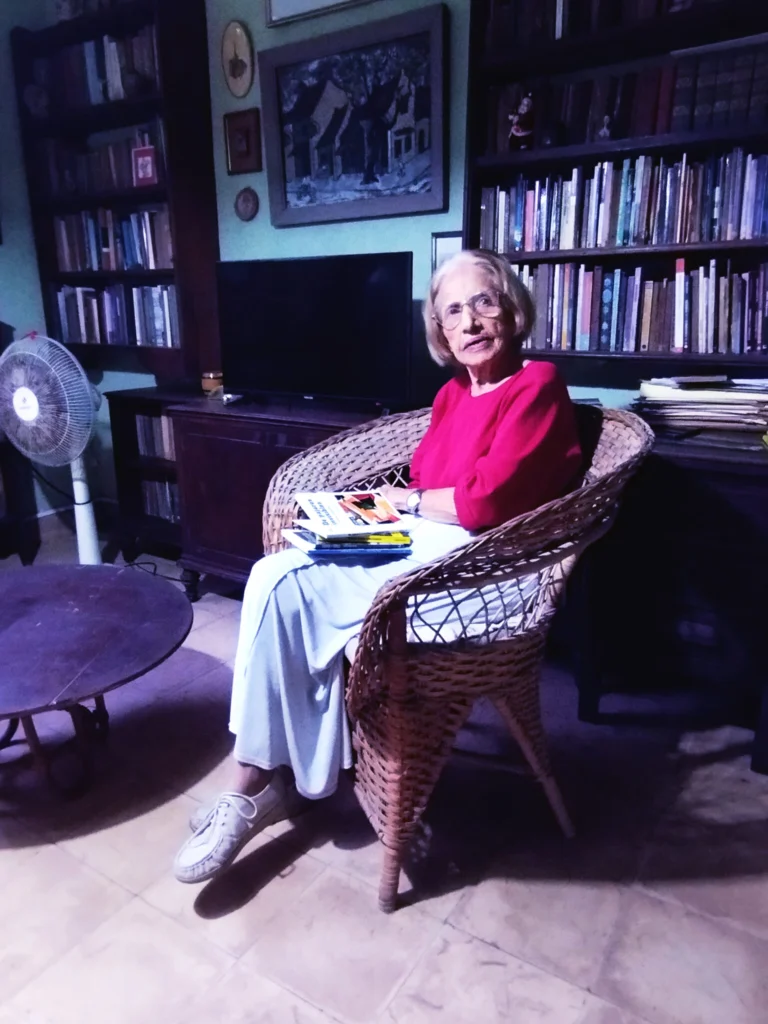
Cuba Backs Writer María Elena Llana’s Candidacy for the 2026 Cervantes Prize

The Cuban Book Institute (ICL) has formally endorsed the candidacy of Cuban writer María Elena Llana Castro for the 2026 Miguel de Cervantes Prize for Literature in the Spanish Language, through a letter sent to the competition’s jury. The institution highlighted her career spanning more than six decades and her contribution to contemporary Cuban narrative.

RELATED:

Swedish Academy Awards Nobel Prize in Literature to Canadian Poet Anne Carson

In the letter, the ICL—the governing body for the publishing, marketing, and promotion of books and serial publications, which operates under Cuba’s Ministry of Culture—described Llana Castro as one of the country’s most significant narrative writers. It noted that she received the 2023 National Literature Prize in recognition of her originality, stylistic skill, keen observation of the social environment in Havana, and her use of irony and humor.

The document underscored the author’s standing within the realm of Cuban fantastic literature and cited more than 15 published books. Among these, it highlighted La reja (Ediciones Revolución, 1965) and Casas del Vedado (Letras Cubanas, 1983)—a work that, according to the ICL, explored the fantastic dimension of the remnants of the former Cuban bourgeoisie.

The ICL also highlighted her work for younger audiences, including titles such as Sueños, sustos y sorpresas (Gente Nueva, 2011), Desde Marte hasta el parque (Gente Nueva, 2014), and Cuentos de viejos (Ediciones Aldabón, 2024).

La escritora María Elena Llana ha sido propuesta al Premio Cervantes 2026. Con esta nominación, se une Fina García Marruz,Dulce María Loynaz quien lo obtuvo en 1992 las únicas cubanas en ser postuladas al galardón constituye una conquista para la cultura cubana y su literatura. pic.twitter.com/Bk6WZNXiFA

— Roberto Jimenez (@Roberto196801) October 11, 2026

The text reads, “The writer María Elena Llana has been nominated for the 2026 Cervantes Prize. With this nomination, she joins Fina García Marruz and Dulce María Loynaz—the latter of whom won the award in 1992—as one of the few Cuban women to be put forward for the honor; this represents a significant achievement for Cuban culture and literature.”

The ICL noted that Llana Castro’s short stories have been included in international anthologies and translated into other languages. Furthermore, it pointed out that her body of work has been the subject of academic study in Cuba, Spain, the United States, and Mexico.

Between 1959 and 1992, the candidate carried out extensive work across newspapers, magazines, radio, television, and the news agency Prensa Latina. According to the letter, this experience enabled her to develop a meticulous command of language—a quality evident in her body of work, which is rooted in philosophical, anthropological, and cultural themes.

The institute also highlighted her contributions to national radio, where she adapted works of world literature for the radio medium. Llana Castro has served as a professor of journalism and the Spanish language in Vietnam, Angola, Mexico, Cuba, and the United States; she is also a founding member of both the Union of Journalists of Cuba and the Union of Writers and Artists of Cuba.

The ICL asserted that the 2026 Cervantes Prize would be a fitting tribute to her more than six decades of literary work, and urged that the significance of her legacy be taken into account.

#Literature | Canadian poet Anne Carson wins the 2026 Nobel Prize in Literature, recognized for her inventive approach to poetry, fiction and classical storytelling.#AnneCarson #NobelPrize2026 #teleSUREnglish pic.twitter.com/lFTqCRomaA

— teleSUR English (@telesurenglish) October 9, 2026

  •  

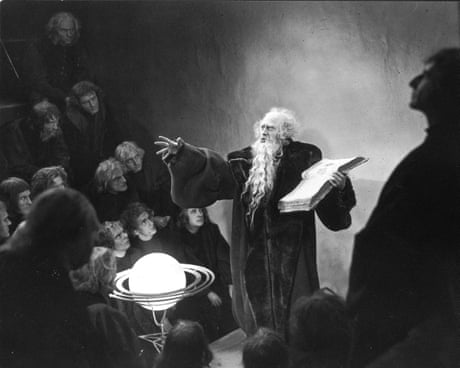
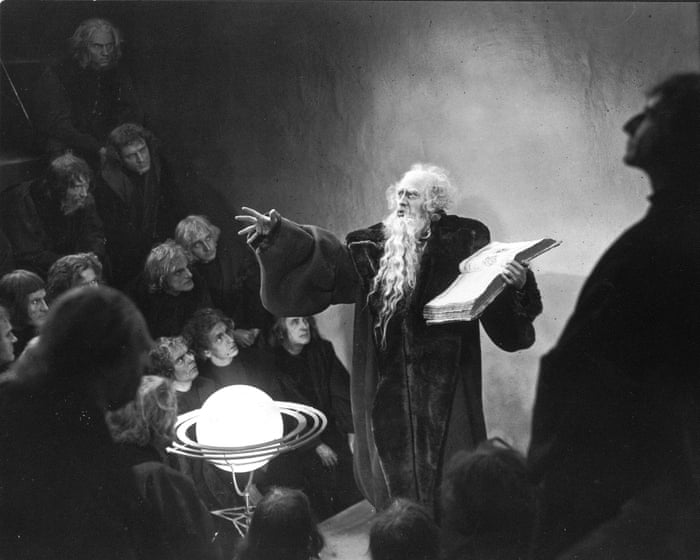
Faust review – FW Murnau’s silent masterpiece is a devilishly dazzling vision

The 1926 film of Goethe’s tragic tale of a man who sells his soul to the devil remains a spectacular feat of German expressionism

The centenary of FW Murnau’s silent fantasy-melodrama from 1926 is the occasion to ponder this mysterious film, taken from Goethe’s 19th-century depiction of the alchemist and natural philosopher who sells his soul to the devil but, in a very high-minded climax of German romanticism, is redeemed by love. (Not love of God precisely, but love of a good woman; the word “Liebe” finally appears at the centre of Murnau’s radiating vision of concentric circles conjured by the heavens, which annul his debt to the Evil One.) It is therefore very different from Christopher Marlowe’s scarier and more unforgiving account of Doctor Faustus.

Murnau’s Faust is (obviously) concerned with and animated by evil, and there are echoes of his Nosferatu, made four years previously. In this film, Faust, having struck his bargain on a provisional 24-hour basis with Mephisto, finds that he is scared of a crucifix, like a vampire. It is also very much a film of Weimar Germany with its mad energy and streaks of garish satire and black comedy; the book-burning scene in which Faust immolates all his necromancy volumes, along with the Bible, is one which resonated with later events. (Perhaps it indirectly inspired Klaus Mann’s novel Mephisto, later to be filmed by István Szabó.)

Continue reading...

© Photograph: Courtesy of Mubi

© Photograph: Courtesy of Mubi

© Photograph: Courtesy of Mubi

  •  

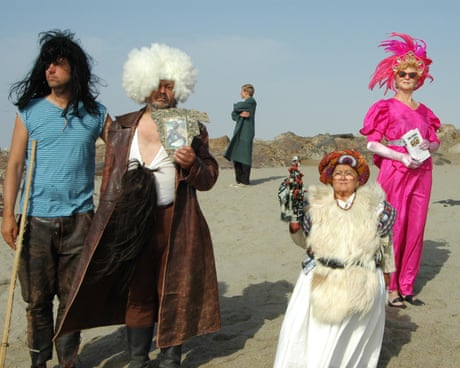
Her royal heilness: Berlin show revisits the artist who turned the Queen into a Nazi

The late Christoph Schlingensief was one of German art’s great provocateurs. Can his B-Movie horror aesthetics still shock us into thinking anew about media power, colonialism, and the far right?

Christoph Schlingensief certainly knew how to provoke. “Fury at German play that shows Queen as a Nazi,” read the Sunday Express’s headline after Kaprow City first premiered at Berlin’s Volksbühne theatre in 2006. Drawing on the happenings of US performance artist Allan Kaprow, the play turned its attention to Diana, Princess of Wales’s death. In one scene, the then queen performs a Hitler salute. Another re-enacts the paparazzi chase that led to Diana’s fatal crash. Diana appears in bed beside two men with Down’s syndrome; and Camilla is pelted with animal blood. Schlingensief insisted the work was not meant as provocation but as an investigation into how Diana turned into a modern icon. But his art thrived on outrage, exposing the absurdity of societies that glorify their idols while consuming their lives as entertainment.

Kaprow City is at the heart of a new Berlin show – It’s Not My Problem Anymore, Deal With Your Own Shit – that revisits the artist’s legacy. In the Gropius Bau’s grand neo-Renaissance atrium, visitors encounter remnants of the carousel-like rotating stage he called the “animatograph”. Looking at this installation today feels like a glimpse into Schlingensief’s mind: a messy collage of childhood memories, violent fantasies and royal glamour.

Continue reading...

© Photograph: © Estate of Christoph Schlingensief

© Photograph: © Estate of Christoph Schlingensief

© Photograph: © Estate of Christoph Schlingensief

  •  

Verse from the waste land: Rotterdam’s poetic bin lorries granted cultural status

Lyrical lines printed on side of city’s fleet of rubbish trucks now recognised as one of Netherlands’ proud traditions

It is best known for its rich migration history and striking modern architecture. But now the Dutch city of Rotterdam is seeking recognition for a rather different characteristic: its tradition of printing poetry on bin trucks.

Since a poetry festival first came up with the idea in 1988, lines of verse have been printed on all of the city’s waste vehicles. The practice was this week elevated to the status of intangible cultural heritage, with formal recognition from a Dutch body that guards the nation’s traditions.

Continue reading...

© Photograph: Irene Hoekstra

© Photograph: Irene Hoekstra

© Photograph: Irene Hoekstra

  •  
❌