No doubt Ed Davey lovingly cares for his disabled son, says Joanna Gray. But he's not his "carer"; he's his father. It's a distinction Britain is fast losing sight of, to the detriment of us all.
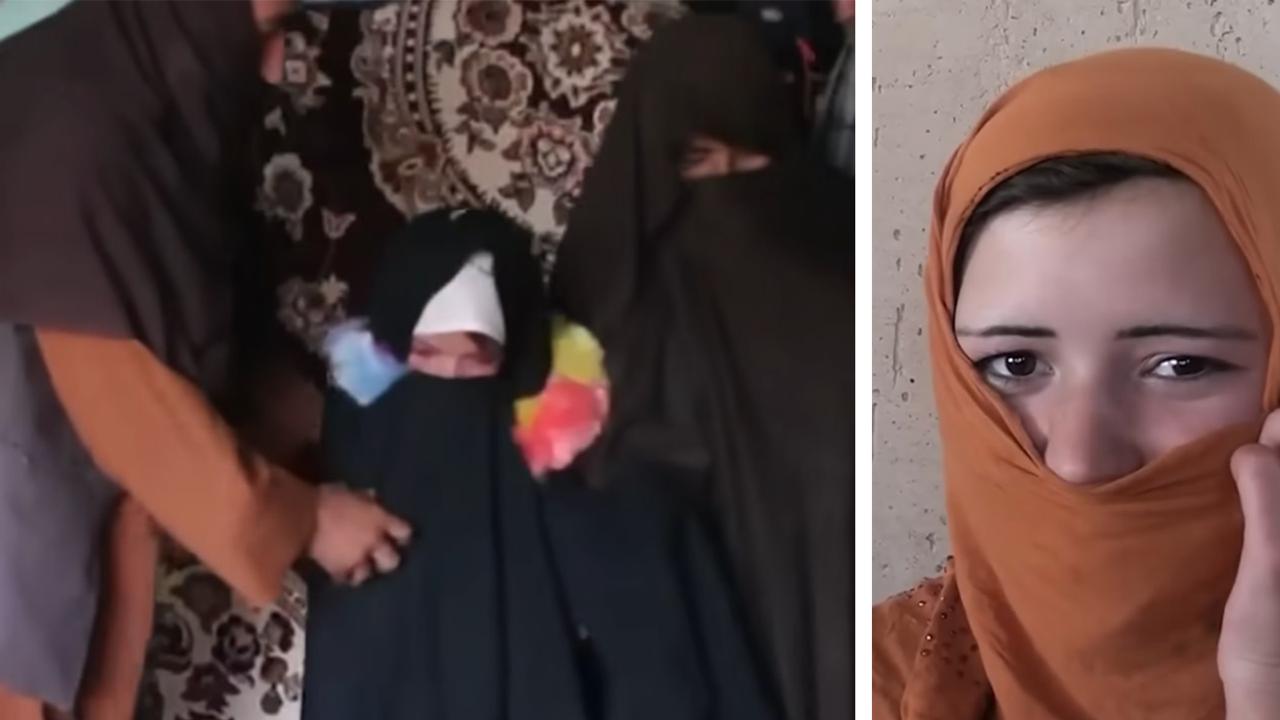
A parliamentary inquiry by Alternative for Germany (AfD) lawmakers in the German state of Baden-Württemberg has brought to light official data showing that authorities have recorded 358 so-called child marriages since April 2012, with courts formally annulling only eight of them between 2018 and 2024.
The figures, released in early October 2026 in response to questions from state parliament members Nikolaos Boutakoglou and Emely Knorr, have drawn sharp attention to the prevalence of underage marriages — overwhelmingly involving people from migrant backgrounds — and the limited number of legal interventions.
Among the annulled cases was the 2020 marriage of an 11-year-old Iraqi girl to a 17-year-old Iraqi boy. In 2018, authorities annulled the marriage of a 14-year-old Afghan girl to a 30-year-old Afghan man. Two further annulments occurred in 2024: one involving a 16-year-old German girl and a 25-year-old Pakistani man, and another between a 16-year-old Syrian girl and a 27-year-old Syrian man, according to Welt newspaper.
The other annulled marriages involved individuals from Afghanistan, Romania, Moldova, Croatia, Serbia, and elsewhere. The state Interior Ministry stated that no court proceedings for annulment were pending at the time of its reply.
The remaining approximately 350 cases, documented by the government of Tübingen were closed under the category of “other resolutions.” Possible reasons cited by the government include the death of a partner, a decision to forgo annulment, or a subsequent marriage abroad.
These files still include striking examples of very young brides. In 2020, a 12-year-old Afghan girl was recorded as married to an 18-year-old man. In 2022, a 12-year-old Syrian girl was married to a 28-year-old Syrian man, and in 2023 a 12-year-old Afghan girl to a 21-year-old Afghan man. Multiple cases involving 13- and 14-year-old girls also appear in the data, and some reports note nine marriages in which the girl was under the age of 14 at the time of the union.
The demographic pattern is pronounced. Men from Syria accounted for 132 of the recorded cases, nearly 40 percent, followed by nationals of Bulgaria, Turkey, Afghanistan, and Iraq.
Child marriages between two German citizens made up only about 0.3 percent of the total. It is also unclear if these German citizens have a migration background, but given the pattern seen among foreigners, it is very probable.
Most of the 358 cases date from 2015 onward when the migration crisis truly began to grow in Germany. Boutakoglou highlighted the figures on social media, stating: “Almost without exception, every child marriage in Baden-Württemberg since 2017 can be traced back to mass migration! Nearly 40% of the child marriages were contracted between Syrians, while child marriages between two Germans account for only 0.3%.”
Fast ausnahmslos jede Kinderehe in Baden-Württemberg seit 2017 ist auf die Massenmigration zurückzuführen!
Das ergab meine Kleine Anfrage an die Landesregierung.
Fast 40 % der Kinderehen wurden zwischen Syrern geschlossen, Kinderehen unter zwei Deutschen machen nur 0,3 % aus! https://t.co/BeJ4wS3CJL
Emely Knorr, co-author of the government inquiry, wrote: “Child marriages are incompatible with our values. Children have a right to safety, education, and a self-determined future. That is why we need effective protection, early intervention, and decisive action against forced marriages.”
Germany raised the minimum marriage age to 18 in 2017 and generally does not recognize foreign marriages involving minors under certain conditions. The Tübingen authority deals exclusively with marriages contracted abroad that come to the attention of German registry offices.
The AfD inquiry was prompted in part by a Terre des Femmes leaflet warning of the risk of forced marriage during school holidays, but the state government said it had no financial involvement in the leaflet.
As Remix News has reported in the past, the issue is not just child marriages. Mass migration has brought new backward cultural norms to Europe that are completely incompatible with European human rights. For example, already in 2020, the German government admitted that there were at least 68,000 female genital mutilation victims in the country, rising 44 percent since 2017.
According to then German Minister for Family Affairs Franziska Giffey, mainly migration is to blame for the massive increase as many migrants coming to Germany commonly practice FGM in their own home countries. The practice, which is a human rights violation, involves the ritual cutting off some or all of the external female genitalia.
Germany is far from the only country dealing with this trend. Remix News reported this year that a female genital mutilation crisis had hit Paris, with over 140,000 such cases seen across the country.
This story moves chronologically through a marriage that begins to unravel—with fatal consequences. The victim is Dan Markel, the ex-husband of Wendi Adelson, but it’s the involvement of Wendi’s domineering mother, Donna, and her brother, Charlie, that leads to his tragic end. Katherine Laidlaw shows how there were far more than two people in this marriage—and far more than two lives destroyed when it fell apart.
Harvey was nominally the breadwinner, but Donna ruled the family. She had strict ideas about how her children should live, pushing them to earn advanced degrees and build prestigious careers. Rob became a doctor, and Charlie became a periodontist, eventually buying his father’s dental practice. Donna obsessed, too, about her children’s love lives, scrolling through online dating profiles and sending them lists of promising candidates. When Rob started seeing a woman who wasn’t Jewish, Donna interfered so aggressively that he eventually broke it off and briefly married someone else. (He has since married his original non-Jewish girlfriend.) At first, Donna was thrilled that her daughter was seeing Dan, then a lawyer at a boutique firm. She was less thrilled when he left to pursue academia, a path that she felt paid poorly and lacked cachet.
I used to be in a friend group chat called “Tinder Spinsters,” a group of girls offering support as we navigated the tumultuous dating world. Faith Hill’s chat is named “Lonely Hearts Club,” but are these groups becoming a thing of the past? Are people even still trying? In a 2025 YouGov poll, 69 percent of single respondents said they “rarely” or “never” go on dates. Nowadays, it’s complicated. On the positive side, a relationship is no longer seen as essential for a happy life—women’s interest in men, in particular, has dimmed as their financial independence has grown. But many people would still love to find a partner; they are just finding that modern romance requires a toll “paid in energy, in sanity, in cash, in hours—and not everyone can afford it.”
The hug was the last round, though, and then real life resumed. We mingled, but the intimacy had disappeared. One man told me that he had high emotional intelligence and could tell that I did too—then he suggested that we travel together someday, handed me his business card, and walked away. I gave a few people my phone number, including one man who sent me a picture of his face the very next morning and another who texted me so much (even after a polite rebuff) that I had to block him. One date with another guy resulted, but I wasn’t interested in a second. The perception of abundance had, once again, evaporated into nothing.
Next to rubble and pictures of the deceased, people in Gaza are still getting married. Athar Abu Samra reports on why couples are refusing to delay their nuptials. With so much already lost, and so much still under threat, families in Gaza are seizing moments of joy wherever they can. Marriage ceremonies are no longer what they once were—nor do they express hope in quite the same way—but they have become powerful testaments to resilience.
As I worked on this story, I came to understand that the war has not only transformed weddings in Gaza. It has transformed people’s relationship with time itself. Before the war, marriage followed a familiar sequence. People finished their education, found work, built or rented a home, saved enough money and only then began planning a wedding. Families often postponed marriages until those expectations had been met. But now no one has that luxury — the luxury of time.
I spoke with one mother who had lost several of her children during the war, yet hurried to arrange the marriage of her youngest son. She told me she had always dreamed, like any mother, of watching all of her children grow up, get married, and fill her home with grandchildren. The war had taken much of that dream away, but she was determined not to lose what remained.
 Login