They're a common feature at US shopping malls: skincare kiosks staffed by charming Israeli salespeople. Some customers were hit with thousands of dollars in charges they never authorized and products they didn't want and can't return. Many victims were elderly, disabled or otherwise vulnerable
She promised a radical new technology—bloodwork performed in a countertop-sized machine from a single droplet taken from your finger. She was young, photogenic, and self-possessed; she dressed like Steve Jobs. Her invention would disrupt the $60 billion bloodwork industry, bringing cheap, frictionless health monitoring to the masses. Or it would have, if it worked. Holmes was convicted of defrauding investors of nearly $500 million; she's currently serving an 11-year prison sentence. Holmes has been written about extensively, and her story was turned into an Emmy-winning Hulu series starring Amanda Seyfried. She is an avatar of Big Tech mendacity, a cautionary tale as much as a person.
Everyone knows the story. You would think there is nothing left to say. But you'd be wrong.
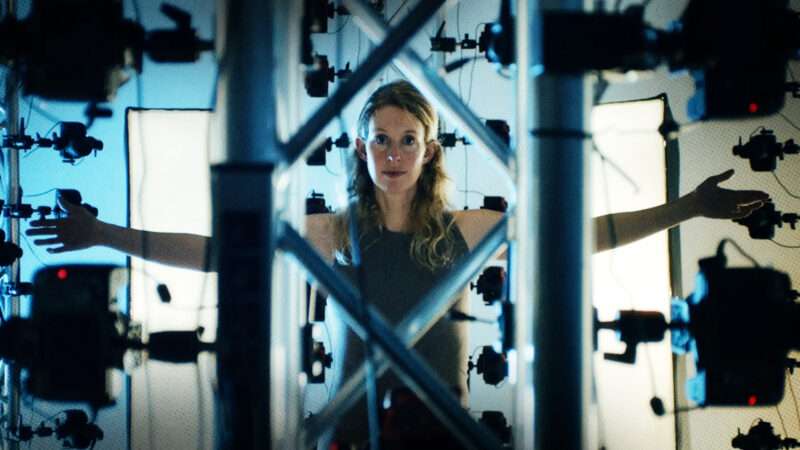
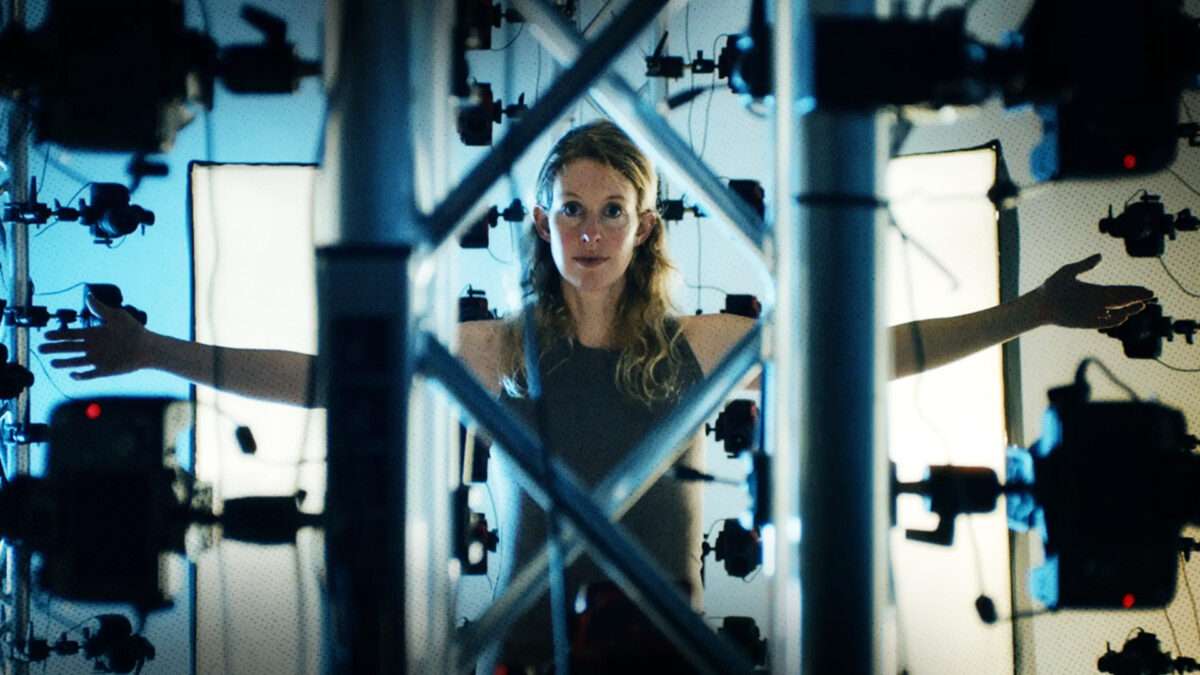
Just before she entered prison, Holmes invited documentarians Nathan Fielder and Lance Oppenheim to live with her, her boyfriend Billy Evans, and their two young children in their beachfront San Diego rental unit, promising them full access, complete transparency. The result is this year's most entrancing documentary, You Can See Everything. When the camera captures Billy in the shower, the movie delivers on its titular promise; you, uh, really can see everything.
Yet what you cannot see is who Holmes really is. The mystery of the era's most famous fraudster is the movie's central riddle: Is she cynical, calculating, a stone-cold liar and psychopath? Or is she something stranger—a damaged and delicate person who genuinely believes her lies, or at the very least, genuinely believes the stories she tells herself to justify those lies after the fact?
Fielder and Holmes seem uncertain themselves; the movie is, in part, their own attempt to wrestle with their own ambivalence, their own inability to come to a conclusion. It's a hall of mirrors about the infinite unknowability of a person, even given unfettered access.
The documentarians do not absolve her of her villainy; the movie is not an attempt to excuse her fraud or build a case for her innocence. But they offer something exceptionally rare in this era of simplistic hero and villain narratives: genuine and deeply felt empathy for someone on whom the culture (not to mention the legal system) has cast final judgment. In the process, they have given us one of the strangest, most unsettling, and most poignant films of the year. You Can See Everything is a small miracle of a movie.
It's sometimes said that the most compelling villains don't believe themselves to be villains. They have an internally coherent story to tell that excuses their actions, makes them the heroes in their own minds. Fielder and Oppenheim have given Holmes, and viewers, the gift of allowing Holmes a measure of psychological complexity. You don't see into her mind, because that's impossible. But you see that the story she tells herself is different from the story the world tells us about her. It's surprisingly kind and generous; it's also tricky as hell—to the point where you, the viewer, might wonder if you're the one being tricked.
Halfway through, the movie takes a meta-turn that I won't spoil, entering into high-concept territory in an attempt to more deeply explore what art and images can reveal about a human psyche. It's formally audacious, often funny, and actually justifies the three-hour running time. I've never seen anything quite like it.
The exercise left me just as unsettled as the documentarians seem to be themselves; uncertain about Holmes and her motives, and nearly as uncertain about Fielder and Oppenheim, two talented filmmakers who appear to be questioning not only the nature of their chosen form, but of reality, especially psychological reality, themselves. There are times when You Can See Everything borders on magical realism, except the magic comes from the complexity of human nature and storytelling, as if Gabriel García Márquez had written a story about a man with a camera that could see into souls. It's dizzying, dazzling, a sort of postmodern Rashomon of perspective shifting.
As I left the theater, in something of a daze, I found myself thinking of a line from the great Saul Bellow novel The Adventures of Augie March, "Nobody should be a mystery intentionally. Unintentionally is mysterious enough." In the case of Holmes, it's impossible to tell which it is. All we can say is this supposedly one-note Big Tech villain, like perhaps everyone, is better understood as some kind of mystery, even to herself.
Portuguese police have searched the headquarters of two banks as part of a major investigation into an alleged property tax fraud scheme believed to have cost the State more than
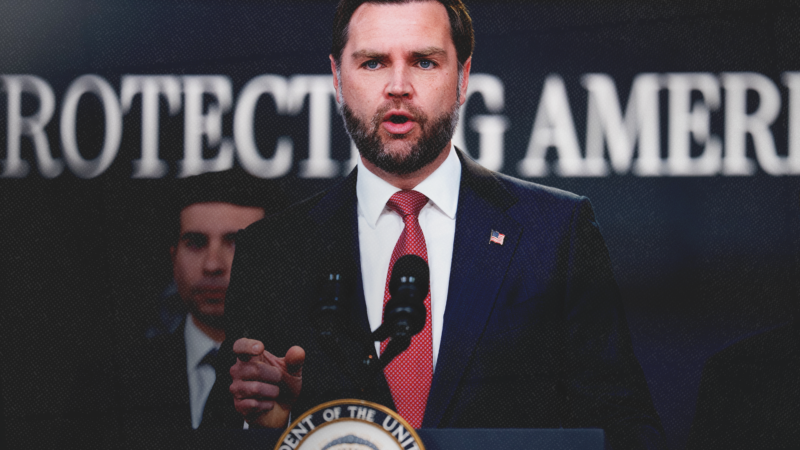
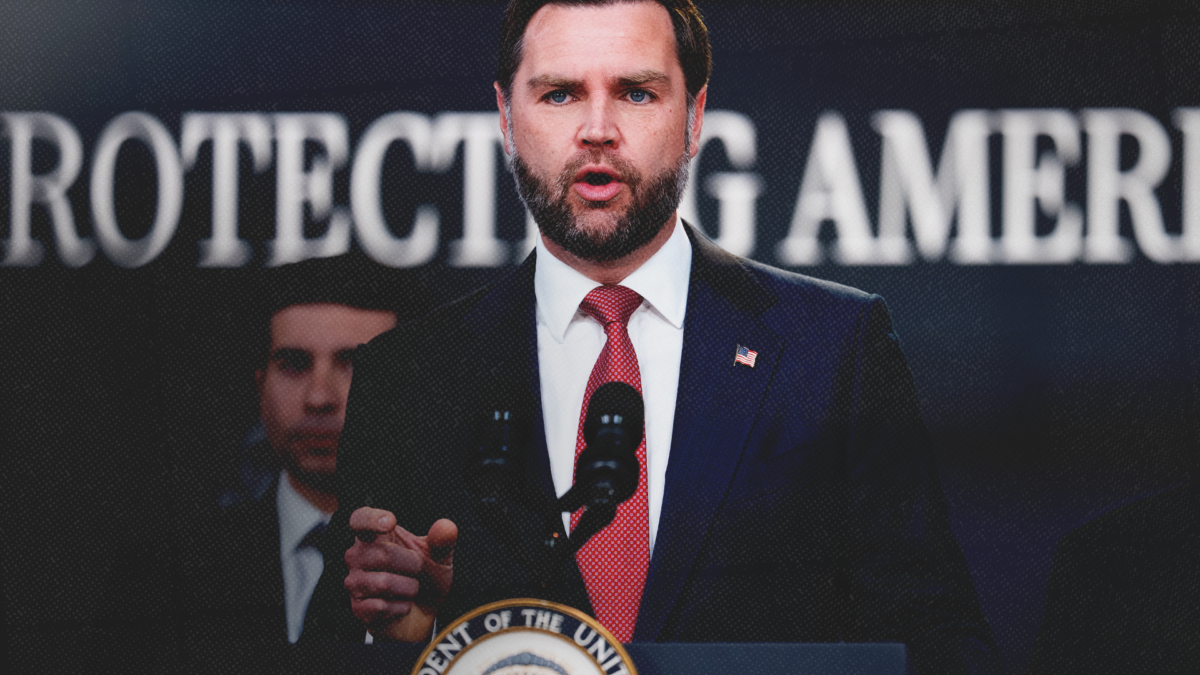
Vice President J.D. Vance—who is heading the Trump administration's efforts to eradicate fraud—has set his sights on another alleged form of wasteful spending.
Last week, Vance announced a probe into nine universities over alleged J-1 visa fraud as part of the Trump administration's broader crackdown on foreign worker programs. Vance's central complaint is that the named universities—which include Harvard, Stanford, and the Massachusetts Institute of Technology—are "employing J-1 visas for federally funded grants at a rate of about 61 percent" compared to the "national average of just 38 percent."
"Something weird is going on at these universities," Vance added. "They're using these visas way too much. They're using them to undercut the wages of American grad students and American researchers, and it simply has to stop." Naturally, he figured that this warranted a fraud investigation.
Labor Department Inspector General Anthony D'Esposito, who is leading the investigation, had some harsh words for universities. "Improperly used J-1 visa classifications to avoid employment obligations, exploit taxpayer-funded programs, and undermine American workers will not be tolerated." He said, "I don't care how prestigious a university thinks it is. Break the law and screw the American people, and I will personally cuff you in the university square." He also raised concerns that universities were exposing American research to foreign adversaries, specifically China.
The press conference sounded more like an indictment of the J-1 program than of fraud. Unlike the H-1B visa—which allows employers to sponsor high-skilled foreign workers—the J-1 is more like an exchange program than a dedicated work visa; it doesn't require employers to pay the prevailing wage or visa holders to pay Social Security or Medicaid taxes within the first two years. Universities using the program to hire cheaper foreign labor is simply a feature of the program.
The real picture is much muddier than Vance cited figures suggest. The inspector general'sannouncement states that "approximately 61 percent of postdoctoral workers and researchers supported by federal grants at the nine universities are foreign nationals, compared to 38 percent at other universities." Foreign nationals could include H-1B holders and other visa categories, not just J-1s as Vance claimed. Additionally, the 38 percent figure comes from unspecified "other universities," rather than the national average.
D'Esposito had a fiery tone, but neither he nor Vance pointed to a single instance of a university breaking the rules. Their evidence is merely a statistic showing these schools, which are elite research institutions, hire a lot of foreign researchers. Vance's primary objection isn't that these universities have broken the law; it's that they are hiring foreigners instead of Americans, undermining his protectionist agenda.
Opposition to visa programs is, unfortunately, found on both the left and the right. In his first term, President Donald Trump enacted a slew of restrictions that complicated the H-1B visa application process and increased denial rates to 24 percent in FY 2018 (up from 6 percent in FY 2015). In 2020, the administration was forced to rescind key policies behind those rising denials after a federal judge ruled they hadn't followed the required rulemaking process. In September last year, Trump imposed a $100,000 fee on H-1B petitions. A federal judge struck it down in June, saying it exceeds the president's authority and violates the separation of powers.
Other presidents have used federal power as leverage against higher education. But Trump's war on universities—including the freezing of federal funds for universities like Columbia and Harvard for alleged instances of antisemitism—is mostly unprecedented. These actions are indicative of a more enduring problem: Federal dollars come with federal influence, and as long as universities depend on federal funding, they will remain at Washington's mercy. If universities want lasting independence, the answer isn't to reduce their use of the J-1 visa. It's to get off the federal teat altogether.
This is an escalation in a criminal investigation of US Rep. Ilhan Omar, in the final weeks of her reelection bid. She is a frequent target of Israel partisans and the Trump Administration over her opposition to Israel's human rights violations and the Israel lobby's destructive influence in the US
Yesterday’s mega police operation throughout Portugal concluded with the arrest of 39 people in Portugal , accused of defrauding the State of more than €150 million in an alleged VAT
Around 700 inspectors of the PJ judicial police are this morning carrying out searches across the country. At issue is a scheme that is believed to have defrauded the State
by Cassie B., Natural News: Germany’s governing coalition is pushing to explore banning the right-wing AfD party by year’s end AfD now leads national polls at 29.5 percent, more than double the vote share of its leading challenger Chancellor Friedrich Merz is skeptical of a ban, but a top official in his own party backs […]
For a brief time, Sacha Jafri was both the creator of the world’s largest painting and one of the world’s most expensive living artists, after his 17,000‑square‑foot work The Journey of Humanity was theatrically “sold” for $62 million at a Dubai charity auction. The buyer, French “crypto billionaire” André Abdoune, never paid a cent and, given his history as a serial fraudster, almost certainly never will—meaning no money ever reached the charities that were promised the proceeds. So what was the real story: a giant painting, or a giant scam?
Many of Jafri’s other claims do not stand up to scrutiny. He is often touted as an artist whose work sells in the millions, but publicly available commercial auction records are more modest. His most expensive painting before The Journey Of Humanity was a piece called Dance of the Midnight Samurai, which sold in 2019 for approximately $70,000. The previous year, another work, Dreamscape II, went unsold at two auctions, before eventually being acquired for $893. Newspaper articles document purchases by Kevin Spacey and Guy Ritchie, but there are no reports of sales to Bill Gates, Leonardo DiCaprio, Barack Obama or Bill Clinton. No pictures exist of their red-printed hands.
The FBI isn’t the only interested party searching for Mary Carole McDonnell, the 74-year-old producer behind TV series like I Married a Murderer. There are the former employees who allege millions in unpaid wages, and the two sons who claim their mother forged their signatures on bank documents. There’s an entrepreneur in the United Arab Emirates who accuses her of “mind games,” and the former bank vice-president turned true-crime podcaster who’d like to make a documentary about McDonnell. Cheyenne Roundtree goes deep on the woman who, nearly a decade ago, walked into a California bank with a pecan pie and left with a $15 million loan before vanishing.
The story has all the makings of a viral documentary replete with breathless details, similar to the ones McDonnell’s company produced. Her backstory is littered with half-truths and deceptions, including a lie that her mentally disabled younger sister was murdered after being kidnapped. Questions remain on how she was able to pull off such a brazen heist. And it has sparked an ongoinghunt among the FBI, banking institutions, a true-crime podcaster, and television producers to see who can unravel McDonnell’s tangled history, track her down in a foreign land, recoup the financial losses she caused, and perhaps bring the unbelievable tale to screens.
Before a pivotal election that could potentially result in a state government ruled exclusively by the Alternative for Germany (AfD) in the German state of Saxony-Anhalt, a case of potential postal vote fraud is raising concerns.
A 74-year-old nephew of a 95-year-old resident with severe dementia has filed a criminal complaint after discovering that postal voting documents were requested and a ballot cast in her name at a Dessau retirement home – despite staff first telling him the papers had been destroyed. The case is now being reported in Welt, one of Germany’s largest newspapers.
The case involves the Marthahaus senior residence and centers on whether postal votes from residents who cannot meaningfully participate are being handled properly. The nephew, who acts as his aunt’s legal representative, said he routinely receives every letter and document sent to her, including advertising. When the postal voting materials for the Saxony-Anhalt state election never arrived, he asked the home’s director where these documents were located.
Last Thursday, the director directed him to a female staff member who was not on duty until the next day. On Friday, that employee stated she had collected the election documents sent to residents “and shredded” them, without consulting relatives or authorized representatives.
That account did not hold up. When the nephew inquired at the municipal election office, officials confirmed that postal voting documents had been requested on Aug. 10 using his aunt’s date of birth and that a vote had already been recorded. Staff showed him the application bearing his aunt’s “scribbled” signature. Data-protection rules prevented them from disclosing which party was marked.
The nephew described the home’s alleged actions as a “scandal.” He and his wife first noticed problems during the February 2025 federal election; during the current state-election campaign they again encountered “inconsistencies” and this time pursued them. The complaint against persons unknown has been obtained by reporters.
The Marthahaus did not answer written questions from the Ostdeutsche Allgemeine Zeitung and declined to comment when reached by telephone. City officials confirmed they were aware of the incident but provided no further details.
A second, still-unreported case has surfaced in Naumburg, according to German newspaper Junge Freiheit. A woman there said she “did not see any election documents for my mother.”
Her mother is “unable to give her own name.” She asked: “Who will vote for her and according to what criteria?”
The allegations come days before voters in Saxony-Anhalt go to the polls and add to the existing debate over how postal ballots are processed in care facilities, where many residents have limited capacity to express a political preference independently. Investigations will determine whether the documented vote was cast with proper authorization or constituted an unauthorized exercise of another person’s vote.
AfD would ban postal voting
One of the parties most opposed to postal voting is the AfD, which has argued that it is prone to fraud, especially in retirement homes. AfD co-leader Tino Chrupalla has previously called for an end to mail-in ballots. He discussed his concerns about this form of voting during a conference with top AfD officials in 2024.
“It is also the task of the opposition to always doubt what a government is doing or what happened in an election. That is also a legitimate right and that is a good thing. And I just really want to point out, and we will also question this, for example, the entire security for the legal storage of ballot boxes, some of which are not stored in a legally secure manner, where in some cases only one person or two have access to these ballot boxes,” he said.
JUST IN: "I would ban postal voting."
Germany's AfD party is calling for an end to mass mail-in ballots for elections.
He went on to say that postal voting has been a concern in other elections and that these issues keep coming up. However, he also pointed to a problem plaguing other countries like the United States, which instituted mass mail-in ballots in the wake of the Covid-19 crisis, which has involved activists entering retirement homes and potentially manipulating vulnerable elderly voters.
In the case of Germany, Chrupalla stated, “We have also seen this in old and other election campaigns, such as the current campaigning in retirement and nursing homes, especially when the CDU and SPD campaign in these old people’s homes, which are run by Diakonie or Caritas, or go in and out there, and the AfD does not even get access to present their programs to the elderly. These are also things of influence that are not democratic in my opinion.”
Notably, both Diakonie and Caritas are run by the Protestant and Catholic churches, both of which have come out against the AfD, including expelling members of the party from the Church and calling for Germans to vote against them.
Chrupalla is calling for an end to postal voting, saying: “Personally, I would ban postal voting again. It has only been introduced as an exception or initiated in the Federal Republic of Germany. It is not the rule, it should not become the rule and it is not regulated by law in such a way that it is made the rule.”

 Login





 JUST IN: "I would ban postal voting."