Other reader questions Weissmann addressed this week:
Would it be possible when congressional committees subpoena a witness under oath, like Jack Smith, some thinking to catch him in perjury, that the questioners also be under oath too? If they willingly make false statements, shouldn’t they be subject to perjury?— Ronald O., South Bend, Indiana
I would like to know how the courts can keep the Jack Smith report on the Mar-a-Lago documents case hidden? My tax dollars paid for this investigation, and a case against three co-conspirators has been closed. I don’t understand why the information gathered by the special prosecutor is not available to the U.S. citizenship or available under the Freedom of Information Act.— Alan S., New Canaan, Connecticut
If as Abelson suggests, the law is not what is written, but what is enforced, how can we change our system to guarantee the rule of law (i.e., the enforcement of what Congress legislates)?— Lynn B., Claremont, California
White House officials said they would not reimburse Americans for the $20 million taxpayer-funded pro-Trump ad campaigns, despite a federal judge ordering the administration to stop. Is there any legal recourse American taxpayers can take to confront the administration’s irresponsible spending on things that aren’t quite legal?
Become an MS NOW Member to watch all of Weissmann’s answers, get the chance to submit your own questions and explore full episodes of all the MS NOW Membership exclusive series.
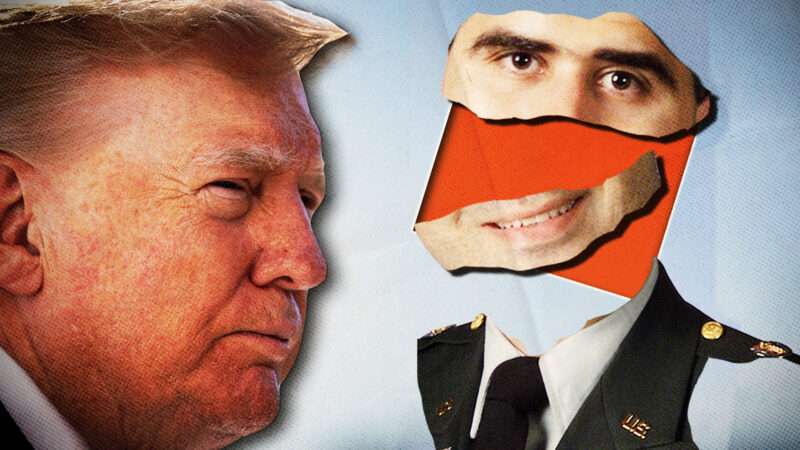
President Donald Trump on Thursday called off plans to livestream the December 3 military execution of Nidal Hasan after the announcement generated widespread disgust.
Defense Secretary Pete Hegseth announced last week that the U.S. government would livestream the firing-squad execution of Hasan, a former Army major who shot and killed 13 people at the Fort Hood Army base in 2009. A court-martial jury sentenced Hasan to death in 2013.
It would have been the first public execution in the United States since a hanging in Missouri in 1937, though the last well-known public execution occurred a year earlier in Kentucky. Rainey Bethea, a black man, was hanged before a crowd of roughly 20,000 people in Owensboro. Kentucky became the last state to outlaw public executions two years later.
The plan to livestream Hasan's execution drew comparisons to the Taliban. The U.S. Conference of Catholic Bishops called it "a barbaric promotion of a culture of death." Writing at The Lamp, an orthodox Catholic journal, Matthew Walther noted that it would be the "first ever government-sanctioned snuff film in American history."
However, Trump and Hegseth didn't trip over just liberal and religious pieties, but a deep-rooted American aversion to bloody displays of state power that goes back to the colonial era.
Lynn Novick, the director of Ken Burns' upcoming PBS documentary series Crime and Punishment in America, tells Reason that public executions "haven't been a regular part of American life since the Colonial time in the early years of the Republic, and there's really good reasons for that."
One of American colonists' many complaints about oppressive British rule was England's expansive criminal code, known derisively as the "bloody code" because it contained more than 200 capital crimes.
"In Colonial America, [an execution] was an everyday occurrence," Novick says. "There were executions all the time, and one of our scholars told us that most people would have seen someone executed in their lifetime."
Excessive capital punishment also ran contrary to emerging theories by leading Enlightenment thinkers that punishment should be proportional to the crime and not driven by revenge or bloodlust.
Perhaps more importantly, public executions were disorderly affairs that, rather than reinforce the power of the state, inflamed the passions of the mob to a dangerous degree. "In many cases, crowds would become very boisterous, riotous, angry, excited," Novick says. "There were sometimes violent outbursts at these events."
As a result, many of the Founding Fathers saw frequent public executions as disruptive to the fragile social order. The early American republic's move away from sanguinary spectacle was driven by a desire to create a stable, virtuous citizenry and sever itself from the European continent's tradition of public torture and execution.
As Reason described in a recent cover story, the result of this was the invention of the American penitentiary in the early 1800s, which was sold as a humane and rehabilitative replacement for the whipping post and gallows.
States transitioned from public to private hangings behind their newly built prison walls in the late 19th and early 20th centuries, before switching to the use of the electric chair. This was not done out of entirely humanitarian concerns, especially in the South, where public executions often became quasi-religious ceremonies, with the condemned declaring their ultimate victory over death (and the state) through Jesus Christ.
"Executions had contested meanings," Michael Ayers Trotti wrote in The End of Public Execution. "They were moments of justice, of state power; but they were also moments of religion, exceptional moments that transcended normal life."
The main reason that public executions disappeared over the long term, though, is obvious to anyone who's not a sociopath: It's weird and dehumanizing to gather in a crowd to watch someone else be killed, to participate in the government's promotion of its power to take a human life.
Rachel Abbott, who witnessed Bethea's 1936 hanging when she was 5 years old, told WKU Public Radio in 2016 that she had nightmares about it years later.
"I remember it well, but I didn't want to," she said. "I tried to get away from it because it was hurting me so bad. I started having me nightmares after I was older. It's like his spirit was just hanging all around me. The first thing you'd know I'd start crying because I felt he wanted me to help him get buried, get sent back to his gravesite by his father. I still have tears running when I think of it."
A couple of months ago, Donald Trump appeared on a conservative radio show and said that “a lot of people” wanted to see the president pardon himself in his first term.
“I had the absolute right to do it,” he said. “Instead, I fought it through the courts and won.”
While that wasn’t an entirely accurate summary of recent history — Trump, who was convicted of several felonies in New York, only “won” when the federal criminal cases against him ended upon his return to the White House, not because they were adjudicated in his favor — the president’s rhetoric about his “absolute right” to pardon himself stood out.
This week, he returned to the issue during an interview with Newsmax’s Rob Finnerty.
Trump suggests he is going to pardon everyone, including himself: "I'm allowed to do a self-pardon … I don't want to see people that work for me go through years of nonsense"
Asked specifically whether he’s “seriously considering a self-pardon” before he leaves office, the president initially hedged, saying he’s done “nothing wrong,” before adding, “I’m allowed to do a self-pardon. I’m allowed to pardon. … The pardon is very powerful. I know that. They say it’s the most powerful thing a president has, the power of pardon.”
As my MS NOW colleague Jordan Rubin explained in detail just last week, whether presidents can actually pardon themselves is a matter of some controversy. Ahead of Richard Nixon’s resignation in 1974, the Justice Department’s Office of Legal Counsel prepared a memo concluding that presidents can’t pardon themselves, though OLC opinions are not binding on the courts, and the matter has never been tested — at least not yet.
But also of interest was the other point Trump made as part of the same exchange.
On the topic of pardons, the Republican went on to say, “I can tell you this, I don’t want to see my people go through — because these people are lunatics on the, on the left — I don’t want to see people that work for me go through years of nonsense, hire lawyers and everything else, all for nothing.”
This came a few weeks after Trump also told Time magazine that he’s prepared to issue pardons to members of his administration.
Time will tell whether he follows through, and just as notably, just how many members of his team are considered for presidential clemency. But that Trump keeps making comments like these might very have a real impact in the White House and throughout the executive branch: The president is effectively letting a small army of political appointees know that, no matter what they do as part of their duties, he’s inclined to hand them a pardon, whether or not they deserve one.
Systemic government corruption is already a problem in the Trump era. The signal he’s sending to his team is likely to make matters worse.
A federal judge referred Philadelphia District Attorney Larry Krasner and one of his deputies to the Department of Justice for potential prosecution for alleged misconduct. In response, Krasner's office filed a motion seeking to force the Judge--Paul Diamond--from a case involving his office.
Yesterday, Judge Diamond rejected the Philly DA's motion with a terse and forcefully worded order.
Here, from the order, is some background:
In the last two years, the Third Circuit, this Court, and the Philadelphia Common Pleas Court have condemned as dishonest repeated post-trial concessions of relief made by the Philadelphia District Attorney's Office. . . . The Pennsylvania Supreme Court was so concerned that it took the remarkable step of ordering all Philadelphia Common Pleas Judges to seek the Pennsylvania Office of Attorney General's intervention whenever the DAO made a post-trial concession, so that the Attorney General could confirm the concession's honesty. . . .
The DAO's present post-trial concession is also remarkable: Here, four DAO supervisors credibly testified that the District Attorney himself and his lieutenant, Assistant District Attorney Matthew Stiegler, urged them to make false representations to this Court to "protect the office." According to "the Four," the District Attorney threatened them with "consequences" if they did not. Because these and related accusations, if true, could amount to criminal misconduct, I disqualified the District Attorney and Stiegler from participating further in this case and referred the matter to the Department of Justice for investigation. In the DAO's newly-filed Motions and the District Attorney's unsworn "Declaration"—all of which generate more heat than light—the DAO seeks my recusal from all matters in which the Office appears and asks me to reconsider my rulings in this case. I decline to do either.
And on the merits of the recusal request, here is what Judge Diamond had to say:
During the three-day hearing before me, the DAO failed to object to virtually all the rulings and actions it now challenges. That the Office chose to object only after the Court issued a decision unfavorable to the District Attorney and his lieutenant confirms that the DAO merely disagrees with those rulings. . . .
The Office challenges my noting that the District Attorney neither testified nor offered an affidavit in response to the Four's testimony—on which I based my disqualification order and DOJ referral. I do not credit the District Attorney's absurd suggestion that he did not know he could testify—especially after I twice asked DAO counsel if he wished to call any witnesses. Nor has the District Attorney explained why he did not offer a responsive affidavit, which would have required the declarant to tell the truth (under penalty of false swearing). The Office thus cannot truthfully dispute that the District Attorney chose not to give his version of events in Court under oath. The DAO's apparent belief that this tactical choice was reasonable hardly warrants recusal.
Finally, the DAO believes that I should have been leerier of Mason's testimony—the various corroborative documents notwithstanding—and more responsive to the uncorroborated, dubious testimony of Stiegler. Again, disagreement with my credibility determination is not a basis for recusal. Liteky, 510 U.S. at 555 ("[O]pinions formed by the judge on the basis of facts introduced or events occurring in the course of the current proceedings . . . do not constitute a basis for a bias or partiality motion unless they display a deep-seated favoritism or antagonism that would make fair judgment impossible."); Wecht, 484 F.3d at 220–21 (recusal not warranted despite the court's "skewed and unfair reading of the record"). The other arguments the DAO raises do not warrant discussion. Accordingly, I will deny as frivolous the Motion for Recusal.
And on the question of reconsideration:
The DAO does not discuss or even mention the burden and criteria a party seeking reconsideration must meet. Rather, as it did in seeking my recusal, the Office urges me to revisit my rulings because it disagrees with them. Once again, that disagreement does not warrant reconsideration. . . .
I will not discuss here every protest the Office makes to virtually all my rulings, my credibility determinations, and (once again) my reference to the District Attorney's silence in the face of damning testimony from his own employees and former employee. In his belated, unsworn "Declaration" the District Attorney attacks three of these witnesses as unworthy of belief. This after-the-fact attempt to cram "evidence" into a closed record seems intended to persuade the media, not the Court. In any event, the evidence is unpersuasive and does not warrant reconsideration. . . .
Accordingly, I will again deny the DAO's frivolous Motion.
Judge Diamond's order concludes:
Four of the District Attorney's supervisors offered powerful, unrebutted testimony that their boss and Stiegler urged them to misrepresent to this Court. When the Four told the District Attorney that he had thus created a conflict compelling them to inform the Court and withdraw from this case, he threatened them with "consequences." There are few attorney transgressions more serious than lying to the Court, urging others to do so, or threatening them should they tell the Court the truth. . . . If this in fact occurred, it is all the more serious because it occurred after four Courts condemned the DAO's conduct in circumstances like those presented here. Disqualifying the District Attorney and Stiegler and referring them for investigation is thus reasonable and warranted. That the District Attorney chose not to testify but sought to "make his case" with an unsworn declaration—the credibility of which I am unable to assess—makes that investigation even more necessary. Although Mr. Krasner may yet have the opportunity to testify under oath in another forum, his intemperate filings provide no basis for recusal or reconsideration of my rulings.
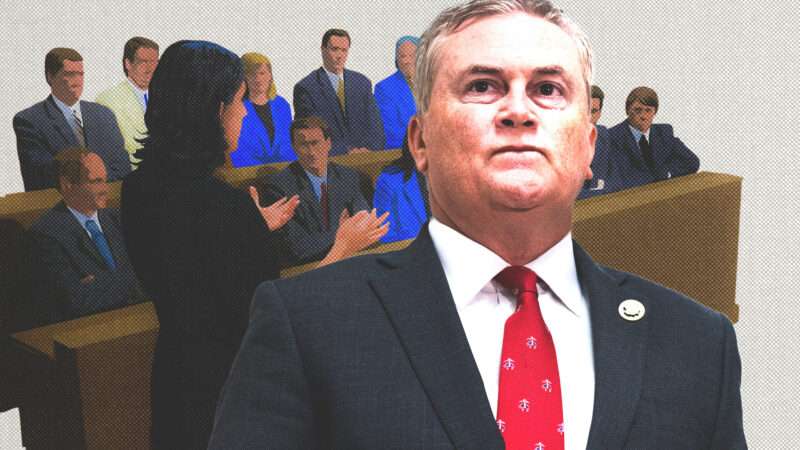
According to The Washington Post, "The chairman of the Republican-led House Oversight Committee is investigating two D.C.-based activist groups over hosting what he called 'jury nullification training sessions,' claiming that their instructions given to potential jurors were an illegal attempt to subvert federal prosecutors."
The committee chair in question, Rep. James Comer (R–Ky.), has set his sights on the groups known as Free DC and Harriet's Wildest Dreams because they, in Comer's words, believe "that potential jurors should not make decisions impartially based on applying the law as instructed to the facts presented before them in the case, but based on their subjective, personal beliefs and activist agendas."
I hate to break it to Comer, but many prominent members of America's Founding generation would have agreed with those D.C. activists.
The debate over jury nullification asks whether there is a proper place in our legal system for a jury to acquit, not because of any lack of evidence of a defendant's guilt, but because the jury believes the underlying law that was supposedly broken, or the prosecutor's particular enforcement of that law, to be unconstitutional.
In 1791, the influential Founding Father James Wilson, who was a signer of both the Declaration of Independence and the U.S. Constitution, delivered a widely discussed lecture on law at the College of Philadelphia. "Whoever would be obliged to obey a constitutional law, is justified in refusing to obey an unconstitutional act of the legislature," Wilson said. "When a question, even of this delicate nature, occurs, every one who is called to act, has a right to judge." Needless to say, jurors are among those "called to act" in this very manner. Jurors therefore have their own "right to judge" the constitutionality of the law (and prosecution) before them.
Thomas Jefferson made a similar point in a 1789 letter to Thomas Paine. "The trial by jury," Jefferson wrote, is "the only anchor ever yet imagined by man, by which a government can be held to the principles of its constitution." How else may a jury hold the government accountable to the principles of the Constitution than by judging for itself the constitutionality of the government's actions, including the actions of the police and prosecution?
According to Comer, the job of a juror is mechanically "applying the law as instructed to the facts presented before them in the case."
But that's not what Founding Fathers such as Wilson and Jefferson thought. They argued that the job of the juror was to apply the text of the Constitution to the actions of the government and to acquit the defendant if either the law or its enforcement came up short. As Alexis de Tocqueville put it in his great book, Democracy in America, the jury "places the real direction of society in the hands of the governed, or a portion of the governed, and not in that of the government."
In Other Legal News
The U.S. Supreme Court heard oral arguments this week in two cases that are worth keeping track of.
On Tuesday, the justices weighed the matter of Beaird v. United States, which asks how much judicial deference is owed to the U.S. Sentencing Commission's commentary on the federal sentencing guidelines when a judge is applying those guidelines during a federal criminal defendant's sentencing. You can read this newsletter's past coverage of that case here.
On Wednesday, the justices took on the matter of Salazar v. Paramount Global, which asks whether the website 247Sports violated the Video Privacy Protection Act of 1988 when it shared a user's private information, including what videos he watched, with Facebook. Past Injustice System coverage of that case is available here.
Thanks to a 2005 DUI conviction in Pennsylvania, Edward Williams permanently lost the constitutional right to keep and bear arms. But he did not realize that until a decade later, and his confusion on that point is understandable.
The federal law that stripped Williams of his Second Amendment rights is commonly described as applying to "felons," and Williams' offense was a misdemeanor. But although his sentence did not include any time behind bars, his crime theoretically could have sent him to prison for up to five years. That was enough to trigger 18 USC 922(g)(1), which covers anyone convicted of "a crime punishable by imprisonment for a term exceeding one year."
When a lawyer alerted Williams to that wrinkle, which made his continued ownership of firearms a federal felony, he got rid of his guns. But he did not think that requirement was fair, reasonable, or constitutional, and this week a federal appeals court agreed. The U.S. Court of Appeals for the 3rd Circuit recognized a historical tradition of disarming "physically dangerous individuals" whose possession of firearms would pose a threat to public safety. But it said Williams plainly does not fit into that category.
"The federal government spent nearly a decade trying to permanently disarm a peaceable man over a nonviolent misdemeanor—and it lost bigly," says Brandon Combs, president of the Firearms Policy Coalition, which supported Williams' lawsuit. "The government does not get to turn a nonviolent conviction into a lifetime ban on exercising a constitutionally protected right."
The 3rd Circuit's en banc decision in Williams v. Attorney General affirms a 2023 ruling by a federal judge who likewise concluded that disarming Williams was unconstitutional. It elaborates on the logic of Range v. Attorney General, a 2023 decision that restored the gun rights of a Pennsylvania man who had been convicted of food stamp fraud. In both cases, the 3rd Circuit held that applying Section 922(g)(1) to the plaintiffs was not "consistent with this Nation's historical tradition of firearm regulation"—the Second Amendment test established by the Supreme Court's 2022 decision in New York State Rifle & Pistol Association v. Bruen.
Writing for the majority in Williams' case, 3rd Circuit Judge Paul Matey acknowledges that the Supreme Court has described "longstanding prohibitions on the possession of firearms by felons" as "presumptively lawful." But "those longstanding customs restricted the violently dangerous (within which some felons would be included), not felons writ large," he says. "Felons were restricted because they posed a physical danger, rather than for their offense of conviction."
Matey argues that "focusing on physical dangerousness corrects the erroneous argument" that "only law-abiding and responsible citizens can exercise the rights protected by the Second Amendment"—a claim that the Supreme Court rejected in the 2024 case United States v. Rahimi. "We find no history that supports disarming irresponsible people, where 'responsible' is defined by the whim of the sovereign or the will of the majority," he says, alluding to the danger of allowing legislators to whittle away at the Second Amendment by criminalizing an ever-widening range of conduct.
Matey emphasizes "the novelty of forever restricting all felons from possessing firearms for lawful purposes." The original restriction, which Congress approved in 1938 as part of the Federal Firearms Act, applied only to violent crimes such as murder, manslaughter, rape, kidnapping, robbery, and assault with a deadly weapon. In 1961, Congress expanded the ban to cover nonviolent crimes punishable by more than a year in prison.
Williams' 2005 DUI conviction qualified for two reasons. He had a prior DUI conviction, stemming from a 2000 arrest in State College. And when he was arrested again in Philadelphia four years later, his blood alcohol concentration was a whopping 0.223 percent. That made his second offense a first-degree misdemeanor, which carries a maximum prison sentence of five years.
Since then, Williams has stayed out of trouble. "He has done nothing violent, let alone dangerous, for over twenty years, and has held steady employment at the same job for over three decades," Matey notes. Williams drinks only occasionally, and a psychological evaluation found he "has a normal personality, without psychopathology and without addiction or violent tendencies."
The Justice Department nevertheless argued that Williams' continuing disarmament is consistent with the Bruen test, which requires historical analogs that are "relevantly similar" in motivation and scope. In making that case, the government relied mainly on early laws aimed at "habitual drunkards"—the same analogy that the Supreme Court unanimously rejected last June in United States v. Hemani, which involved the federal ban on gun possession by "unlawful" drug users.
Although the Justice Department "acknowledges it may proscribe Williams's possession of firearms only if he 'presently poses a physical danger if armed,'" Matey says, it "offers no evidence to establish this as the aim of the habitual drunkard laws." Those laws, the Supreme Court noted in Hemani, "did not seek to protect the public from violence so much as to protect habitual drunkards from themselves and their families from financial devastation."
Nor did the habitual drunkard laws permanently disarm people, as Section 922(g)(1) does. "Most statutes capped the commitment of habitual drunkards to the state inebriate asylum, prison, or hard labor to a few months or years," Matey notes. "Others provided for an indefinite period of incarceration, but had no indication that upon release individuals continued to forfeit their arms. Rather, once someone was 'safe' to 'go at large,' they were restored to the status of a full rights-bearing citizen."
Contrary to the considerations that the Supreme Court deemed relevant in Hemani, Matey says, the Justice Department "fails to show that Williams threatens to 'misuse[] a gun while intoxicated,' or that he 'poses a danger to himself or others as a result' of
alcohol abuse. In fact, much like those nineteenth-century drunkards released from custody and restored their rights, the record shows that Williams poses no present physical danger from the use of a firearm, or anything else."
The 3rd Circuit is one of three federal appeals courts that have allowed people with nonviolent felony records to argue that Section 922(g)(1) is unconstitutional as applied to them. But such challenges have been blocked in six circuits, notwithstanding compelling historical evidence that the law reaches much farther than the Second Amendment allows. So far, the Supreme Court has declined to accept any of the many petitions asking it to resolve that circuit split.
Louisiana recently started executing death-row prisoners after more than 20 years of not doing so (save a “voluntary” execution in 2010, when a prisoner waived his right to appeal and said he wanted to die). John Corley, an award-winning writer who is incarcerated at Louisiana’s Angola prison, reflects on how MAGA politics have re-invigorated the practice of state killing in Louisiana and elsewhere, and what it means for the tenor of life in institutions like Angola:
Dalton Prejean Jr, who is serving time for manslaughter, found Hoffman’s execution particularly painful. When he was ten years old, in 1990, his father died in the penitentiary’s electric chair. “The day it all went down, it was almost like reliving the moments leading up to my father’s execution,” Prejean told me. “At ten o’clock the news reporter announced that Hoffman was dead. My heart skipped. I couldn’t believe they had actually killed somebody. Was what he did so bad that he just couldn’t be allowed to go on living? Wasn’t there anything about him that was redeemable?”
Twice a week, the inmate counsel substitute Gary Boudreaux makes rounds on the five death row tiers. He knows each of the surviving men housed there. “There was no tension on the row because the guys believed the execution wouldn’t happen,” Boudreaux said. “It had been so long, and they have good lawyers. They just didn’t think executions would come back.”
A week after the execution, Boudreaux returned to the row. The atmosphere was “totally different.” The men now knew that Governor Landry “is serious about executing people, and the state will execute people. There’s no doubt in their minds about that any more.”

 Login