❌

Reading view

Art and Homeland: Cuban Writers and Artists Call for a National Cultural Event

The Union of Writers and Artists of Cuba (UNEAC) will celebrate Cuban Culture Day, (October 20) with a national event titled “Art and Homeland” (in spanish Arte y Patria), scheduled to take place from Monday, October 19, to Friday, October 30. The program includes panel discussions, concerts, exhibitions, exchange forums, and activities centered on artistic creation, history, and the defense of national identity.

RELATED:

Cuba Backs Writer María Elena Llana’s Candidacy for the 2026 Cervantes Prize

The event draws inspiration from the National Anthem, composed by Pedro “Perucho” Figueredo—a piece whose notes accompanied a decisive moment in Cuban history and remain a symbol of independence and emancipation.

“What better way to celebrate our national identity—that deep-rooted sense of ‘Cubanness’—than through art and music?” stated Magda Resik Aguirre, First Vice President of UNEAC, in remarks to the organization’s communications team.

Representatives from the UNEAC presidency and leadership will participate in the *Fiesta de la Cubanía* (Festival of Cuban Identity) in Bayamo—a city intrinsically linked to the birth and establishment of the national anthem as a patriotic symbol. The gathering will also commemorate the 65th anniversary of the writers’ and artists’ organization.

“Art and Homeland” is part of the Faithful Art (Arte Fiel) campaign, which honors the centenary of Commander-in-Chief Fidel Castro Ruz and the 65th anniversary of UNEAC. It also incorporates celebrations for the 40th anniversary of the Hermanos Saíz Association (AHS), an institution dedicated to promoting Cuban culture, social engagement, and artistic excellence.

🎼🥁El espacio Detras de la Portada que mensualmente organizan la Sección de Musicología y la Asociación de Músicos de la Uneac, dedicará su próxima edición al DVD La Familia, de Los Muñequitos de Matanzas.#ArteFiel #65Uneac#MuñequitosDeMatanzas pic.twitter.com/cO5sGAiilb

— UNEAC (@UNEAC_online) October 17, 2026

The text reads, “The “Behind the Cover” (Detrás de la Portada) event, organized monthly by the Musicology Section and the Musicians’ Association of UNEAC, will dedicate its next edition to the DVD La Familia by Los Muñequitos de Matanzas.”

The program includes discussions on the fight against racism and racial discrimination. The panel “Fidel and the Cuban Color: Racism and Discrimination 140 Years After the Abolition of Slavery” will be organized by UNEAC’s José Antonio Aponte Commission. Additionally, there will be a panel dedicated to the novel Paradiso by José Lezama Lima, marking six decades since its first publication.

The program will begin on October 19 at Sala Villena with a panel dedicated to Paradiso and the presentation of the DVD La Familia—produced by BisMusic from a concert by Los Muñequitos de Matanzas at the 2023 Jazz Plaza Festival. The group will subsequently give a special performance in the gardens of UNEAC.

On October 21, the printmaking exhibition Roots (in spanish Raíces) will open, followed by a gathering of *trova* musicians celebrating Cuban culture. The following day will feature the presentation of the Domingo Ravenet Curatorial Award and the opening of the exhibition Cartographies of Destiny (in spanish Cartografías del destino) by Santiago Rodríguez Olazábal.

From October 26 to 30, juries will convene to evaluate the admission of new members to UNEAC, both through its various associations and provincial committees. This process is part of the “Fidel Castro Ruz Centenary Special Growth” initiative and will include young creators from the AHS (Hermanos Saíz Association) who have established a solid body of excellent work.

The closing event on October 30 will include a segment titled “Chamber Music in Cuba” and a performance by Ernán López-Nussa alongside the ensemble Raptus, as part of the 15th Chamber Music Festival.

Resik noted that the organization will adjust schedules and venues to maintain its connection with the public and local communities, “We are fulfilling a duty we have as creators—to dedicate ourselves to the people, to our audience, and to the Cuban public”,explaining.

#Cuba | Havana says talks with Washington remain stalled as US oil restrictions worsen fuel shortages and disrupt essential services, including healthcare.
Cuba continues to call for dialogue ahead of the October 29 UN vote on the blockade.#OilBlockade #teleSUREnglish pic.twitter.com/fycySzWm5T

— teleSUR English (@telesurenglish) October 16, 2026
  •  

Selma Blair ‘did not intend to harm anyone’ during airplane incident, representatives say

Actor experienced a ‘medical emergency’ on flight during which she allegedly injured crew members, statement says

Actor Selma Blair did not mean to hurt anyone during the recent flight which led to her arrest on allegations that she assaulted a pair of cabin crew members, a police officer and a nurse, her representatives said on Friday in a statement that characterized the episode as a medical emergency.

The lengthy statement also dismissed prior media coverage of Blair’s arrest after a Delta Air Lines flight from Los Angeles to New York as unsympathetic and inaccurate, singling out reporting from several outlets alleging that she tried to open the door of the airplane that she and her fellow passengers were on.

Continue reading...

© Photograph: Ryan Murphy/AP

© Photograph: Ryan Murphy/AP

© Photograph: Ryan Murphy/AP

  •  

Isabel Allende wins €1m Spanish literary prize under pseudonym

Chilean-American author awarded Premio Planeta for sequel to her 1982 debut novel, The House of the Spirits

The Chilean-American author Isabel Allende has won Spain’s €1m (£843,000) Premio Planeta, one of the world’s most lucrative literary prizes, under a pseudonym, with a sequel to her celebrated debut novel, The House of the Spirits.

Allende, 84, won the 75th edition of the award on Thursday with La hora antes del alba, which returns to the characters of her 1982 novel, a multigenerational family saga set against political upheaval in a country inspired by Chile.

Continue reading...

© Photograph: Pau de la Calle/GTRES/Shutterstock

© Photograph: Pau de la Calle/GTRES/Shutterstock

© Photograph: Pau de la Calle/GTRES/Shutterstock

  •  

Why a ‘Girls’ reboot feels so risky in Trump’s America

The last, melancholy episode of Lena Dunham’s infamous HBO hit “Girls” aired in April 2017, closing a unique chapter in millennial history.

On Tuesday, showrunner Dunham broke the news (and broke the “Girls” section of the internet) that the show is coming back for a five-episode sequel, set in the current day. Before it relaunches in 2027, the series’ devoted and delirious fans will have many questions.

Will Hannah Horvath’s son, Grover, who should be about 10 years old now, spend his winters in the Hudson Valley (where Hannah’s college teaching gig took her in the final season)? Is the boy, like his mom, a master of back talk and lacerating asides? Has Hannah’s best friend, Marnie (Allison Williams), resumed her fledgling music career, or has she become a real estate agent (or maybe a tradwife)? Is Shoshanna (Zosia Mamet) still married to that Byron guy, and has she honored her vow to rid herself of Hannah, Marnie and Jessa forevermore? As for Jessa (Jemima Kirke), has she found any joy in her life outside of those moments when she is actively trying to destroy it?

My biggest concern won’t be how these women will engage with each other, but how they’ll engage with the show’s male characters.

But when the “Girls” reboot actually airs, my biggest concern won’t be how these women will engage with each other, but how they’ll engage with the show’s male characters. The show ran from 2012-2017, the entirety of former President Barack Obama’s second term and the first seconds of MAGA’s interminable dominion. In that giddy period of hope and change, Dunham and her writing partner, Jenni Konner, could freely splay the messiness of female erotic desire across cable television screens. That messiness made “Girls” a wildly controversial show, as did its insistence on drawing attention to the blurriness of sexual consent.

How will that messiness and bluriness be rendered in 2027, an era of radically reconfigured sexual and gender politics?

Months after the final episode of “Girls” aired, the #MeToo movement burst onto the scene, drawing global attention to workplace harassment and sexual assault. In 2022, Roe v. Wade was overturned. In 2024, buoyed, in part, by the rise of the manosphere, President Donald Trump came back for his endless Act II. Presently, an alleged gang rape at Cornell University has reopened a national discussion about consent and systemic gender-based violence.

Many millennial, zillennial and Generation Z women are experiencing not only a shrinking pool of desirable or even eligible male partners, but a palpable erosion of their civil rights. Accompanying their feelings of heteropessimism is a heightened sense of fear. After all, a man can sexually abuse a woman, subsequently defame her, and still become our president.

All of which is to say, Ms. Dunham will be writing her characters into a very different cultural moment.

The original “Girls” charted the professional and personal escapades of four overeducated, underemployed, 20-something-year-old millennial women. As befits fictional heroines in the optimistic Obama years, they fully owned their sexual exploits. Hannah, Marnie, Jessa and Shosh rather joyfully flirted, experimented, dated and hooked up (sometimes with one another’s ex-boyfriends).

With a candor that continues to astonish,“Girls” serially portrayed women making problematic romantic and erotic decisions. In “One Man’s Trash,” Hannah spends a weekend with a total stranger. In other episodes, Jessa works through her emotional difficulties by sexing up randos in the bathroom of the local bar. Marnie meets an impossibly pretentious artist named Booth Jonathan (Jorma Taccone), who verbally demeans her and repeatedly calls her by the wrong name. None of this prevents her from accepting an invitation to his studio, where he proceeds to lock her in a box as part of an art project.

The heart wants what the heart wants and all that, but scenes such as these are going to strain credulity in 2027 (a Gen Z student of mine expressed disbelief that these women entered male lairs without sharing their location with 400 girlfriends). Then again, it’s not as if Dunham didn’t see the #MeToo movement coming. The sixth season’s “American Bitch” (you can read my analysis of it here) chronicles Hannah’s afternoon in the home of a recently canceled novelist. Writer Chuck Palmer has been accused of sleeping with fawning coeds on his campus visits. Hannah has used her blog to call him out. What makes the episode so unsettling is Hannah’s own arousal during the visit — at least prior to the moment Chuck exposes himself to her.

The straight men of “Girls” were mostly a mix of narcissists, artistic posers, finance bros, pervs, pill poppers, smack addicts and profoundly unserious fellows.

The straight men of “Girls” were mostly a mix of narcissists, artistic posers, finance bros, pervs, pill poppers, smack addicts and profoundly unserious fellows. Interestingly, the male heartthrob at the center of the series, Adam (Adam Driver), is not slated to return in 2027. Whether that is due to his fame, his reported tussles with Dunham on set or something else is not clear. Narratively, that’s too bad, because Adam is one of the few gents on “Girls” who I could imagine: 1) converting to Orthodoxy, and/or 2) joining the manosphere in a plot twist. Brooding, hot, moody and at points unusually emotionally vulnerable, Adam is also given to violent outbursts. One graphic scene led many to believe that he had likely raped his girlfriend, Natalia.

The women of “Girls” are nearing 40 now. They will inhabit a culture whose sexual norms are rapidly changing. Will they be pursued by younger men, a trend breathlessly chronicled by outlets like The New York Times? Or will they strike up romances with artificial intelligence chatbots?

Knowing Dunham, it will likely all go very wrong for her characters; in her narratives, our ideals and aspirations are always wont to be mangled (by ourselves). As Hannah once fretted about her newborn: “What if I raise him perfectly and he does everything right and then he rapes like a jazillion people?”

The post Why a ‘Girls’ reboot feels so risky in Trump’s America appeared first on MS NOW.

  •  

What’s missing at No Kings? The Republicans who say they’re fed up with Trump.

It’s another No Kings weekend in the United States of America. Demonstrations against Donald Trump’s imperial presidency are taking place across the country, trying to raise awareness for the midterm elections that are just over two weeks away, while registering a collective complaint against arguably the most un-American administration in our country’s history.

And yet, I can’t help but feel underwhelmed. This is not to throw cynical shade at the resistance-coded No Kings movement. Many people are struggling (even more than usual) thanks to Trump’s mishandling of the economy, and not everyone has the time to take to the streets and demand accountability for a uniquely corrupt, lawless and bigoted president. Furthermore, anyone who does make the effort to dissent in a time of naked authoritarianism deserves commendation, not eye-rolls.

No, what underwhelms me is a certain subset of Americans who are not attending these protests. This cohort (according to recent polls) apparently exists but appears to lack the courage to stand up and be counted in public: right-of-center voters that are more loyal to the Constitution than to Trump.

There ought to be nonstop protests across the U.S. against an illegal war that’s crippling millions of Americans’ budgets, making the world less safe and failing at every one of its constantly-shifting stated objectives.

A Fox News poll conducted between Oct. 9-12 found that among self-identified MAGA Republicans, Trump’s approval rating is 95% — a figure that would make most dictators blush. Meanwhile, among Republicans who don’t self-identify with the cult of Trump, the president is underwater: 47% approve, while 52% disapprove. Among independents, 22% approve and 78% disapprove.

Hey, non-MAGA Republicans and independents who live in objective reality, now’s a good time to show your faces in public!

It’s one thing to be a career GOP politician, terrified of crossing Trump for fear of losing their position of power. It’s spineless and opportunistic, of course, but at least it’s a reason. What’s the excuse for the rest of you?

Surely Trump’s relentless disrespect of American values and constitutional rights — like freedom of speech and religion; due process; birthright citizenship; prohibitions on bribes from foreign governments and warrantless searches; the freedom to walk outside without proof of citizenship — ought to have you mad as hell and taking to the streets. If you call yourself a libertarian or a conservative, then obviously you should see Trump as a greater threat to the rule of law and civil liberties than annoying woke college undergrads. If you’re a right-leaning independent, then Trump and his family gorging on ill-gotten countless billions must have you willing to let bygones be bygones and ready to march in the streets side by side with your liberal neighbors.

There ought to be nonstop protests across the U.S. against an illegal war that’s crippling millions of Americans’ budgets, making the world less safe and failing at every one of its constantly-shifting stated objectives. There should be investigations by the party that controls both houses of Congress into his and his family’s exploitation of our government to make themselves as rich as the petroleum kleptocrats they partner with in business. The only appropriate “American” reaction to the administration’s overt bigotry toward Muslims, immigrants and any number of other people is bipartisan revulsion.

And the politicization of our military — infused with an illiberal and intolerant ideology known as Christian nationalism — ought to curl the spine of any constitutional conservative. For Americans still bitter about “Woke 1” speech-policing and temporary Covid-19 vaccine requirements, the administration’s efforts to brand its political opponents as “domestic terrorists” and its use of a secret police force to shoot and detain Americans without due process or accountability should have them firmly in the “anyone but MAGA” camp.

But I’m confident few, if any, of these folks will attend No Kings rallies this weekend. Whether because of apathy or fear of catching cooties from anything associated with Democrats or the left, the result is the same: they’ll be sitting on the sidelines as Trump gobbles up more American yardage for himself.

Hey, non-MAGA Republicans and independents who live in objective reality, now’s a good time to show your faces in public!

It’s possible that the polls predicting a “blue wave” election are correct. But a midterm “wipeout” isn’t enough for America to recover. Impeachments, investigations and public shaming ought to be the order of the day if Democrats win back one or both houses of Congress, but even that won’t do. For America to achieve some semblance of a shared national identity, there must be a near-universal call for a return to decency and respect for plurality. But that can only happen when roughly half the country demands the end of an unprecedented American personality cult that they’ve voted for in three consecutive elections.

I’m glad No Kings is drawing people to the streets and encouraging people to vote. It’s just not nearly enough. Not until the non-left — composed of non-MAGA Republicans, conservatives, libertarians and anti-woke centrists — confronts its own complicity and forges its own No Kings movement.

The post What’s missing at No Kings? The Republicans who say they’re fed up with Trump. appeared first on MS NOW.

  •  

UK–EU relations are being reset. British musicians touring Europe must be part of the deal

The UK government has returned to an issue musicians have been discussing since Brexit: how to make working in Europe easier again.

Its new music strategy, Turn It Up: Our Plan for Music, refers to the first high-level meeting on culture between the UK and the European Commission, held back in March, and promises continued work to reduce the barriers faced by British artists touring the EU.

The timing is significant. The UK is preparing to rejoin Erasmus+ in 2027, while London and Brussels are pursuing a broader reset of post-Brexit relations.

Music offers an interesting test of that reset. The UK has left the European Union, but its musicians have not become any less European.

British performers still tour the continent, while European musicians continue to work in British orchestras. The musical ecosystem survived Brexit. Navigating it became considerably more difficult.

A UK government study estimates that additional barriers to EU touring between 2022 and 2024 cost Britain £208m in lost economic output and the equivalent of 2,490 full-time jobs.

A Musicians’ Union survey found that, among musicians who had previously worked in the EU, 75 percent reported fewer bookings and 72 percent lower EU income.

More than half said EU touring was no longer financially viable.

But music reveals something more interesting than another item on the list of Brexit consequences. Brexit drew a political border through a professional community that had operated internationally for centuries.

Musicians were ‘European’ before EU

European musical mobility did not begin with freedom of movement. In the early 19th century, theatre companies crossed linguistic and political borders. Imperial Russia accommodated French and German theatrical companies alongside Russian performers, while Italian opera was embedded in its musical life.

Individual musicians were equally mobile. John Field, the Irish pianist and composer at the centre of my own research, trained in London before spending most of his adult career in the Russian Empire. The German pianist Adolf Henselt settled there and became deeply involved in Russian musical education.

These were not exceptions: musical life itself was international. The EU did not invent that circulation. European integration merely made it administratively easier. 

Brexit did not make British musicians unwelcome in Europe, or European musicians unwelcome in Britain. It changed the cost of maintaining those relationships.

For an international star with professional support, another permit can be an inconvenience. For a young ensemble deciding whether four European concerts are financially viable, it can determine whether the tour happens at all.

The border appears before the first tour

The consequences begin before professional life. A conservatoire is not simply somewhere a musician obtains a qualification. It is where professional relationships form. A student may meet a future ensemble partner, while an exchange can produce an opportunity years later.

The post-Brexit figures are striking. The number of new EU students entering UK higher education fell from 66,685 in 2020–21 to 28,375 in 2023–24 — a decline of around 57 percent, according to figures based on HESA data.

Britain’s Turing Scheme supported outward mobility, but did not reproduce Erasmus+’s reciprocal structure.

The UK’s return to Erasmus+ in 2027 therefore matters beyond universities. In music, today’s exchange student can become tomorrow’s professional collaborator.

Meanwhile, Brussels is actively spending money to encourage cultural mobility. Creative Europe has a €2.44bn budget for 2021–27. Its Pan-European Cultural Entities programme specifically supports orchestras working across borders to develop young musicians: around €11m was allocated to five projects in 2024, expected to involve more than 1,000 young musicians from at least 20 participating countries. The policy assumption is revealing: movement itself creates value.

Put musicians into the reset

At the 2025 UK-EU summit, London and Brussels explicitly recognised “the value of travel and cultural and artistic exchanges, including the activities of touring artists.”

The new high-level cultural dialogue provides a forum to turn that promise into policy. Cultural mobility should become a permanent part of the UK-EU reset.

London and Brussels should use the dialogue to identify touring requirements that can realistically be simplified and work with member states towards greater consistency for short-term cultural engagements.

Emerging artists should also be explicitly considered in the proposed Youth Experience Scheme. The commission’s original proposal envisaged a time-limited route for people aged 18 to 30 to live on the other side of the English Channel. Paid cultural work should be clearly accommodated in whatever agreement emerges.

A 24-year-old violinist should not discover that a programme intended to restore opportunities for young Europeans works perfectly until somebody pays her to perform.

None of this means recreating freedom of movement through the orchestra pit. Britain chose to leave the EU and cannot expect every privilege of membership.

The argument is more practical. British and European cultural industries remain intertwined, and unnecessary friction is most expensive for those least able to absorb it. Major institutions employ administrators. International stars have managers. A young quartet may have four instruments and a group chat.

Two centuries ago, Field travelled from Ireland through London and built a career in Russia. Henselt left Germany and became part of Russian musical education. They did so long before Eurostar, Erasmus+ or Creative Europe.

Two hundred years later, crossing the continent is faster. Building a European career need not become harder. The UK has left the EU. Its musicians have not left European musical life.

As London and Brussels shape their new relationship, cultural mobility should be treated as part of its infrastructure. Musicians will continue to cross the Channel. The question is how costly we choose to make it.

  •  

I model my day off pro athletes. Here's what that means for my schedule, my team's, and my approach to 996 culture.

Hardik Jagda is wearing a light blue suit and standing inside a stadium.
Jagda told Business Insider '996 culture' misses the point.

Courtesy of Proximity Works

  • Hardik Jagda wants to function like an Olympian, and waking up at 3 a.m. helps him do that.
  • He commits long hours to his AI-based company, but says he doesn't enforce 996 hours on his team.
  • For Jagda, 996 misses the point. Here's how he structures his day instead.

This as-told-to essay is based on a conversation with Hardik Jagda, 35, the CEO of Proximity Works, who lives in San Francisco. The following has been edited for length and clarity.

In 2017, I wanted to build my own company, but I couldn't jump into it full-time because of my financial obligations at home.

Instead, I'd spend the mornings and evenings outside my full-time job working on my side projects. That time was foundational for building my company, Proxmity Works, which I launched in 2019. My aim was to help broadcasters scale their live sports streaming platforms worldwide. In 2020, we started building AI infrastructure for live sports.

Those years made me aware of how my body clock works. I read a lot of autobiographies from entrepreneurs and athletes to understand what allowed them to build what they achieved. I noticed athletes would talk about starting their day early to train and work, in time for rest and recovery throughout the day. I started modeling my days after this, waking up early so I could have four to five hours to build my company before work started. I still stick to this lifestyle now that I'm a full-time founder and CEO.

I want to structure my day to function like an Olympian

In the early stages of Proximity, I performed pretty much every role in the company. Today, I have a team of roughly 45 people, five in the US and the rest spread out globally. My cofounder is based in India.

After 7 a.m., my time isn't mine anymore because I have requests coming in from employees in different time zones.

I like to start the day early, so I'm protecting the first three hours as time for myself. I usually wake up between 3 a.m. and 5 a.m. Between 3 and 6 a.m., I don't touch my emails or look at messages.

I use these early hours to focus on strategic decisions. There was one point, roughly two years ago, when we had to interview a lot of engineers quickly for a new project. I sat down with my talent acquisition team and found a way to redesign our recruitment workflow to take place within 72 hours. That wouldn't have been possible if I didn't give myself the three-hour morning block.

Hardik Jagda is standing inside a sports stadium wearing a dark navy suit.
Jagda tries to protect the first 3 hours of his day.

Courtesy of Hardik Jagda.

In the mornings, I work out and write my goals down. These are usually measurable and trackable goals for my company, as well as goals for myself and my fitness.

Most of my team calls don't start before 7:30 or 8 a.m. I usually take my first couple of meetings at home before driving to the office. During the day, I try to minimize Zoom calls and take meetings as audio calls so I can move around during them. I try to wrap up my meetings by 2:30 p.m., work out at 3 p.m., and then focus on more creative tasks, like speech-writing, after that. I spend my evenings with loved ones before going to bed around 9 p.m. and trying to get seven hours of sleep.

It's not like I start my day at 4 a.m. and just work through the next 12 hours. I build in slots for "recovery" throughout the day. On my calendar, I put in 15-minute slots before important meetings, where I remind myself of my goal for the call.

For the most part, I work six days a week, spending my Saturdays focusing on a key skill I want to develop, like public speaking.

'996' misses the point. I don't run my team with this schedule in mind.

For the most part, I work six days a week.

I work more than 40 hours a week, but I don't keep track of the time. I listen to my body.

We don't keep track of how many hours the team works. It's more about a culture of ownership, where people really care about the problem they're working on.

Even though I've become a morning person, we're fine with engineers who are more productive at night, as long as they maintain a five-to-six-hour overlap with the other engineers.

"996 culture," working six days a week from 9 a.m. to 9 p.m., has gained traction in Silicon Valley. I think it misses the point. It's more about volume than it is about structure. You want to structure your day towards putting in your best work by thinking about when you'll spend time training, recovering, and learning new skills. I'd rather focus on the right structures than on volume.

Do you have a story to share about working in a 996 culture? Contact this reporter at ccheong@businessinsider.com

Read the original article on Business Insider

  •  

Renaissance Masterpiece Reunited in Italy After Nearly 200 Years

A 500-year-old religious triptych by Andrea Previtali has been brought together for the first time in almost two centuries. The reunion forms the centrepiece of a new exhibition examining the painter’s place in the Venetian Renaissance.

Three panels of a Renaissance altarpiece, separated for almost 200 years, have been reunited in Italy for an exhibition opening on Saturday, 17th October, offering visitors a rare opportunity to see a work by Andrea Previtali in its original arrangement.

The painting, created around 1515 for the Church of the Annunciation in Serina, near Bergamo, has been reconstructed through cooperation between the Diocese of Bergamo and the Museo Villa Bassi Rathgeb in Abano Terme, close to Padua. One panel, depicting a bishop saint, belongs to the museum’s permanent collection, while the remaining two have been brought together for the exhibition.

The reunion was confirmed on 16 October by Italy’s Ministry of Culture heritage authority. It forms the central attraction of Andrea Previtali: Disciple of Giovanni Bellini, which runs until 7th February 2027 and examines the career of a painter who worked between two important artistic centres of Renaissance Italy.

Reconstructing a Renaissance Altarpiece

The three panels originally formed a triptych, a type of religious painting consisting of a central image flanked by two wings. Such works were commissioned for churches and private chapels, where they served as devotional objects and demonstrations of the artistic ambitions of their patrons.

Over succeeding centuries, many Renaissance altarpieces were dismantled, removed from their original settings or dispersed among private collections and museums. Their individual panels could subsequently be displayed as independent works, losing much of the relationship between the images originally intended by the artist.

The Previtali triptych provides an example of how those connections can be recovered.

The Museo Villa Bassi Rathgeb holds the panel depicting a bishop saint as part of the collection assembled by Roberto Bassi Rathgeb, an art historian and collector who contributed to renewed scholarly interest in Previtali.

His collection, donated to the municipality of Abano Terme between 1972 and 1980, contains important examples of painting from the Bergamo and Brescia schools.

The collaboration with the Diocese of Bergamo has now made it possible to display the bishop saint alongside the two surviving companion panels from the original altarpiece. Their reunion allows the work to be studied as a complete composition rather than as three separate paintings.

It also offers an opportunity to reassess Previtali’s decisions concerning the relationship between figures, religious symbolism and the architectural arrangement of devotional paintings.

A Pupil of Giovanni Bellini

Andrea Previtali was born around 1480 in Valle Imagna, in the territory of Bergamo, before moving to Venice, where he entered the workshop of Giovanni Bellini.

Bellini was among the most influential painters of the Venetian Renaissance, known for his treatment of colour, light and religious subjects. His workshop trained artists who would help establish the distinctive visual language of sixteenth-century Venetian painting.

Previtali’s connection to his master is documented in an inscription on his 1502 painting Madonna and Child with Donor, now held by the Musei Civici di Padova.

The artist described himself as a pupil of Giovanni Bellini, a declaration that has become an important piece of evidence for reconstructing his early career.

The new exhibition explores that relationship by displaying works by Previtali alongside paintings associated with the artistic environment in which he trained.

Among the loans is Bellini’s Saint Justina, from the Museo Bagatti Valsecchi in Milan. Although painted before Previtali’s mature career, it demonstrates the treatment of sacred figures, colour and composition that influenced succeeding generations.

The exhibition also includes works connected with Francesco Bissolo, Girolamo da Santacroce, Palma il Vecchio and Giovanni Busi, known as Cariani.

Together, they illustrate the movement of artistic ideas between Venice, Bergamo and Brescia during a period in which painters increasingly travelled between workshops, cities and patrons.

Venice, Bergamo and the Changing Renaissance

Previtali’s career developed at a time when the artistic traditions of northern Italy were undergoing considerable change.

The Venetian school placed particular emphasis on colour and atmosphere, while painters working in Lombardy drew on different approaches to portraiture, religious narrative and landscape.

Previtali’s paintings reflect both traditions. His subjects included Madonnas, religious gatherings, portraits and landscapes, often combining carefully observed human figures with detailed natural backgrounds.

After returning to Bergamo, he encountered the work of Lorenzo Lotto, whose approach to portraiture and religious painting introduced further stylistic developments.

The exhibition therefore examines Previtali not simply as a follower of Bellini, but as an artist whose work developed through exchanges between different regional schools.

It also includes Renaissance portraits, among them a painting on loan from the Accademia dei Concordi in Rovigo.

A separate section examines the practical techniques employed in Renaissance workshops, using physical and digital displays to explain how artists prepared, constructed and completed their paintings.

Such research has become increasingly important in the study and preservation of Europe’s Old Master paintings, allowing historians to reconstruct relationships between works that have survived in different institutions.

The restoration and presentation of historic collections also forms part of the wider debate about protecting Europe’s cultural heritage.

The Previtali exhibition has been organised by the municipality of Abano Terme in cooperation with the University of Padua and the Italian heritage authorities. It is curated by Raffaele Campion and Barbara Maria Savy.

Visitors will be able to see the reunited triptych at the Museo Villa Bassi Rathgeb from 17th October until 7th February 2027. The exhibition provides a rare chance to examine the three panels together and to understand how a religious commission created more than five centuries ago fitted into the artistic culture of Renaissance northern Italy.

  •  

X-Ray Research Reveals Hidden Figures Beneath Belgian Surrealist Paul Delvaux’s Painting

A new exhibition in Belgium brings together a 1956 painting by Paul Delvaux and its original preparatory drawing, revealing how the artist transformed his composition and concealed elements beneath the finished work.

Scientific examination of a painting by Belgian surrealist Paul Delvaux has revealed significant changes to its original composition, including figures and other details concealed beneath layers of paint. The findings are being presented in a new exhibition opening on 16 October at Musée L in Louvain-la-Neuve.

The exhibition, La Ville lunaire II: The Hidden Side of Paul Delvaux’s Painting, examines a work completed in 1956 and held in the museum’s permanent collection. Through X-ray imaging, infrared reflectography and ultraviolet examination, researchers have been able to investigate the artist’s working methods and compare the finished painting with an original preparatory drawing.

The exhibition, which runs until 7 February 2027, follows the acquisition of the drawing by the King Baudouin Foundation in 2024. Its subsequent deposit at Musée L has made it possible to examine the two works together and reconstruct the development of a composition that underwent substantial alterations.

A Painting Concealing Its Own History

Completed in June 1956, La Ville lunaire II depicts a mysterious nocturnal landscape, with a long avenue, buildings, streetlamps and figures arranged within an unsettling architectural setting.

The painting measures approximately 89 by 139 centimetres and was executed in oil on a fibreboard panel. It entered the museum’s collection in 1990 through a bequest from Dr Charles Delsemme.

Its carefully constructed perspective and unusual treatment of space reflect Delvaux’s interest in creating scenes that appear familiar while remaining detached from ordinary reality.

The museum’s collection records describe the work as a strange nocturnal landscape, with wooden barriers and a sequence of streetlamps establishing its distinctive spatial arrangement.

Yet the painting visible today differs considerably from the composition Delvaux originally envisaged.

Earlier technical examinations had already established that important details were covered during the painting process. The new exhibition brings those findings into direct comparison with the preparatory drawing, enabling visitors to see how the artist’s intentions changed.

An auction catalogue published in 2024 identified several elements present in the drawing and concealed in the painting, including a moon in the right-hand sky, a seated figure on the right and two figures wearing robes near the centre.

These changes are significant because they suggest that Delvaux did more than adjust minor details. He altered the population and lighting of the scene, potentially changing how the composition would be experienced by the viewer.

The reasons for those decisions remain uncertain.

How Scientific Technology Reveals Hidden Paintings

Modern conservation techniques allow researchers to examine works of art without removing the paint that covers earlier stages of their creation.

Infrared reflectography can reveal underdrawings and certain changes concealed beneath surface paint, depending on the materials used by the artist. X-ray imaging can detect differences in the composition of pigments and structures below the visible surface.

Ultraviolet examination provides further information about surface materials and alterations, including some later interventions.

When combined with documentary evidence, these methods help researchers distinguish between an artist’s initial design, revisions made during painting and changes introduced after completion.

The Musée L exhibition uses these techniques to investigate what art historians call pentimenti — visible or detectable alterations that record an artist changing their mind during the creative process.

The preparatory drawing, measuring approximately 28 by 45 centimetres, provides an additional reference point. Executed in ink and pencil, it contains elements that were subsequently revised or painted over in the final composition.

Displayed alongside the finished work, it allows visitors to follow the artist’s decisions from the preliminary design to the version that eventually entered the museum’s collection.

The technical findings also demonstrate the importance of preserving preparatory studies, which can contain information absent from completed paintings.

Paul Delvaux and the Belgian Surrealist Tradition

Born in Antheit in 1897, Paul Delvaux became one of Belgium’s best-known twentieth-century painters, developing a distinctive artistic language associated with surrealism.

His paintings frequently depict classical buildings, railway stations, deserted streets and solitary figures, often arranged in environments where architectural precision contrasts with an atmosphere of uncertainty.

He was influenced by the Italian painter Giorgio de Chirico, whose deserted urban spaces and dramatic perspectives helped establish the visual language of metaphysical painting.

Delvaux’s relationship with de Chirico has been examined extensively by art historians, including Joël Roucloux, whose study of La Ville lunaire II analysed its architectural perspective, shadows and the psychological effect of its composition.

The painting’s apparently moonlit setting is particularly interesting in light of the concealed moon identified by technical examination.

The absence of that celestial body from the final visible composition changes the relationship between the painting’s title and its visual content, leaving the viewer to interpret the source of its unusual illumination.

This approach distinguishes Delvaux from other Belgian surrealists, including René Magritte, whose work frequently relied on recognisable objects placed in logically contradictory situations.

For Delvaux, architecture, perspective and the arrangement of human figures were equally important in constructing a world that appears coherent but resists conventional interpretation.

A New Examination of a Familiar Work

The exhibition forms part of Musée L’s programme devoted to research into its permanent collections, rather than a conventional retrospective of the artist’s career.

Its central purpose is to explain how a single painting developed, from its first drawn composition through successive revisions to its completed form.

The research has been supported by the Jacqueline Delcourt-Nonkels Fund, managed by the King Baudouin Foundation.

For visitors, the opportunity is to examine not only a painting by one of Belgium’s leading surrealists, but also the evidence of the artistic decisions that shaped it.

The exhibition is open at Musée L in Louvain-la-Neuve from 16 October 2026 to 7 February 2027. By presenting the original drawing, technical images and finished painting together, the museum offers a detailed examination of Delvaux’s methods and the changes he made to one of his most carefully constructed nocturnal scenes.

  •  

MDLBEAST Presents to bring 2 electronic music nights to Jeddah

JEDDAH: MDLBEAST Presents is set to return to Jeddah’s ONYX Arena with two nights of electronic music on Oct. 29 and 30. The lineup will bring together international and regional DJs with an 11-artist lineup featuring BLOND, Boris Brejcha and Jimi Jules on the opening night, alongside Saudi DJs Baloo and Vinyl Mode. The second night will feature Argy, Loco Dice, Steve Angello and Dennis Cruz, alongside regional artists Blacky and HiFi. The program brings together different styles of electronic m

  •  

Archaeologists Uncover Lost 1,600-Year-Old Cathedral Near Venice

Excavations at the ancient Roman city of Altinum have revealed the probable remains of an early Christian cathedral and bishop’s palace, offering new evidence about the origins of Venice and the transformation of its lagoon settlements.

Archaeologists working near Venice have identified what they believe to be the remains of a 1,600-year-old cathedral and an adjoining episcopal palace, resolving a longstanding question about the location of one of the region’s earliest Christian centres.

The discovery was announced on 15 October by Ca’ Foscari University of Venice, following excavations at Altinum, an important Roman settlement on the mainland near the Venetian lagoon. The foundations of a substantial religious complex have emerged from an area where ancient written accounts had long indicated the existence of a cathedral, although its precise location had remained unknown.

The findings suggest that the church was constructed between the late fourth and early fifth centuries AD, making it the earliest Christian church so far identified archaeologically in the Venetian territory. The researchers believe the complex provides physical evidence of the period when Christianity was becoming an important political and administrative force in the declining Roman Empire.

A Cathedral Hidden Beneath a Roman City

The newly identified church was a rectangular structure approximately 30 metres long and 20 metres wide, without an apse and orientated towards the east. Its layout differs from the surrounding Roman street grid, reflecting the religious requirements of the early Christian community.

The architectural arrangement resembles early churches in the northern Adriatic region, particularly those associated with Aquileia, which was an important centre of Christianity during late antiquity.

An adjoining building, distinguished by its substantial foundations and a complex arrangement of internal rooms, has been provisionally identified as the bishop’s palace. Archaeologists believe it may have stood two storeys high, with residential accommodation for senior clergy above rooms potentially associated with privileged burials.

Among the most revealing discoveries is the extensive reuse of stone paving blocks taken from the Roman streets. These materials were incorporated into the foundations of the ecclesiastical buildings, providing evidence of how the city was being physically reorganised during the transition from Roman to Christian administration.

The university’s researchers suggest that the removal of public paving materials may also indicate the authority exercised by the bishop over urban infrastructure. This interpretation would place the emerging Church at the centre of the city’s political transformation.

Ancient Written Accounts Supported by Archaeology

The existence of an early Christian cathedral at Altinum had been documented in letters written by Saint Jerome, one of the most influential Christian scholars of the late Roman period.

Writing in AD 396, Jerome referred to the religious activities of Nepotian, a priest associated with Heliodorus, the first bishop of Altinum. His descriptions included the maintenance of church furnishings, walls, floors and sacred vessels, suggesting an established and relatively prosperous Christian institution.

Until now, however, archaeologists had struggled to connect those accounts to a particular building.

The latest excavations, combining evidence collected during the 2025 and 2026 campaigns, have provided what researchers consider a convincing identification of the ecclesiastical complex.

The excavation is directed by Diego Calaon of Ca’ Foscari University and co-directed by Elisa Possenti of the University of Trento. Their work has brought together earlier archaeological records and newly examined foundations, including sections exposed during investigations in previous decades.

Researchers have also identified a burial area dating from the sixth and seventh centuries. Many graves were disturbed when construction materials were removed from the abandoned complex, but surviving human remains offer opportunities for further scientific investigation.

Radiocarbon dating, anthropological examinations and additional geophysical surveys are planned to establish a more detailed chronology and search for other elements of the religious complex, including its baptistery.

What the Discovery Reveals About Venice’s Origins

The historical importance of Altinum extends beyond the cathedral itself.

The ancient settlement was an important Roman commercial centre with connections to the waterways of the northern Adriatic. As political, environmental and demographic conditions changed during late antiquity, its population and institutions gradually shifted towards settlements within the lagoon.

One of the most important destinations was Torcello, which later became an early centre of Venetian civilisation.

Traditional accounts have often portrayed the creation of lagoon settlements as a response to barbarian invasions, with mainland inhabitants fleeing to isolated islands for protection.

The latest archaeological findings support a more complicated process.

Research at Altinum and Torcello indicates that the movement of people, religious institutions and construction materials was gradual and organised rather than the consequence of a single catastrophic event.

The cathedral appears to have been systematically dismantled during the first half of the seventh century, with substantial quantities of its stone and brick transferred to developing lagoon communities.

A surviving inscription records the establishment of Torcello’s cathedral in AD 639, providing an important chronological reference for the movement of ecclesiastical authority.

The findings add to the wider study of Europe’s surviving archaeological and architectural heritage, particularly the transformation of Roman settlements into medieval urban centres.

They also demonstrate how archaeological evidence can challenge historical narratives constructed centuries after the events they describe.

Much of the late-antique landscape at Altinum disappeared because of centuries of agricultural activity and the systematic removal of reusable building materials. In many cases, the excavators are studying trenches left by the extraction of foundations rather than surviving walls.

Further investigations may determine the complete extent of the episcopal complex and clarify the chronology of its abandonment.

For the first time, however, researchers can locate the religious buildings associated with Altinum’s earliest Christian bishops and trace their connection to the communities from which medieval Venice eventually emerged.

  •  

Archaeologists Discover 130-Metre Mining Tunnel Beneath German Forest

Excavations in Germany’s Ruhr region have uncovered evidence of a substantial underground mining operation that predates the area’s industrial expansion. The discovery is providing new clues to the origins of European coal mining.

Archaeologists have identified a previously unknown coal-mining tunnel stretching at least 130 metres beneath woodland near Sprockhövel in western Germany. The remains provide evidence of coordinated underground construction at a time when the Ruhr’s mining industry was still developing, long before the region became synonymous with heavy industry.

The discovery was announced on 15 October by the Westphalia-Lippe Regional Association (LWL), whose archaeologists are working alongside the German Mining Museum in Bochum and GeoPark Ruhrgebiet. The team says its findings shed light on tunnelling techniques used before the eighteenth century, although the newly identified passage has not yet been given a precise scientific date.

At Haßlinghausen, a forest floor conceals old shafts, spoil heaps and depressions left by abandoned mining operations. Researchers did not enter an intact underground gallery. Instead, they identified the location of a collapsed passage by excavating at two former shaft sites and drilling into the surrounding spoil. Subsidence created by the collapse left a recognisable trace above ground.

How Early Miners Organised Underground Work

The evidence suggests a more complex operation than miners simply following exposed seams into the earth. Construction shafts were sunk at intervals along the proposed tunnel. Workers descended through them and excavated separate stretches underground, later joining those sections into a continuous passage.

This method allowed several groups to work simultaneously rather than advancing from a single entrance. It also demanded planning and considerable labour. The filled-in shafts and disturbed soil are still visible in the excavated sections, enabling specialists to reconstruct the miners’ methods even though much of the original tunnel has collapsed.

Till Kasielke of GeoPark Ruhrgebiet explained that the construction shafts were located beside the underground route and then filled after the gallery was completed. Jennifer Garner, an archaeologist at the German Mining Museum, said the excavations would provide material for scientific dating and a better understanding of the effort required to build the structures.

The latest work follows a 2025 investigation of a separate, approximately 70-metre tunnel nearby. That earlier feature reached a coal seam some ten metres below ground. Researchers suspected it might predate the seventeenth century because it appeared to have been overlooked during later mining activity. The newly identified 130-metre passage is a distinct discovery.

The chronology matters because horizontal tunnels changed the possibilities of coal extraction. Early miners could reach seams by digging pits or inclined shafts, but groundwater increasingly obstructed work at depth. Drainage galleries allowed water to escape, making deeper workings more practical and potentially extending the life of individual mining sites.

An Industrial Region’s Earlier History

The Ruhr is usually associated with the vast collieries, factories and transport infrastructure that drove Germany’s expansion in the nineteenth and twentieth centuries. Yet coal was extracted locally during the Middle Ages. The transition from small workings to organised subterranean networks remains poorly documented, partly because written records from the earliest periods are scarce.

The archaeological research programme, which began with related investigations in 2024, is intended to address that gap. The team has excavated soil layers associated with old shafts, and the recovered material may help establish when specific construction techniques were introduced. For now, it would be premature to assign the new passage a medieval date.

At Essen, the UNESCO-listed Zollverein Coal Mine Industrial Complex preserves the architecture and machinery of the Ruhr’s later industrial era. The remains at Sprockhövel represent a different historical record: temporary shafts, collapsed passages and waste deposits left by miners whose operations preceded industrial-scale coal production.

Across Europe, such landscapes have become an important part of cultural heritage. EU Today has previously reported on the preservation of Belgium’s Bois du Cazier colliery, where 262 people died in the 1956 mining disaster. In Sprockhövel, the focus is on a much earlier workforce, whose organisation and technical knowledge must be reconstructed from the ground itself.

Further dating and analysis will determine whether the newly identified tunnel pushes back the known chronology of organised drainage and gallery construction in the Ruhr. The excavations have already established that a substantial underground project once operated beneath a forest whose surface retains remarkably little indication of the work carried out there.

Image credit: LWL-Archäologie für Westfalen / Manuel Zeiler
  •  

Théâtre: Pauline Bayle adapte la monumentale épopée indienne «Mahabharata» au féminin

C'est l'un des plus anciens récits de l'humanité : une histoire de famille, de pouvoir et de violence. Le Mahabharata, monumentale épopée indienne de 250 000 vers, répartis en 19 livres, issue d'une tradition orale et fixée par écrit, en sanskrit, au 5ᵉ siècle avant J.-C., raconte une guerre fratricide entre deux clans de la famille royale des Bharata qui se disputent le trône. Un texte fleuve auquel s'attaque aujourd'hui la metteuse en scène française Pauline Bayle, au Théâtre public de Montreuil. Mahabharata, une histoire de la violence, est à voir jusqu'au 24 octobre au Théâtre public de Montreuil.

  •  

De La Espriella’s Cultural Counterrevolution In Colombia Kicks Off

The National Museum Removes Progressive Artworks Calling Them ‘Political Indoctrination.’

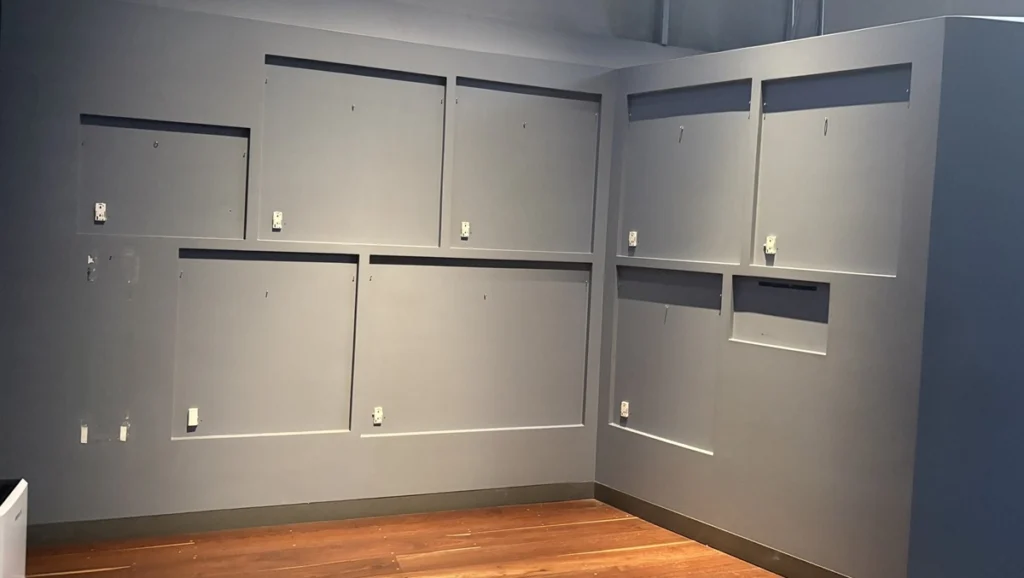
On Friday, Colombian Culture Minister Paola Holguin defended the removal of more than 30 artworks related to feminist, LGTBI+ or peace themes from the National Museum in Bogota, arguing that those works are an instrument of political indoctrination.

RELATED:

UN Warns Colombia Protest Decree May Widen Police Use of Force

“The National Museum is one of the most important cultural centers in the country. It is the first institution of its kind in Colombia and one of the oldest in the Americas, whose purpose is to reflect the soul of the Nation.

The National Museum, as part of the State, has the purpose of conserving, restoring, protecting and socializing our culture. Its institutional vocation is not to serve as an instrument of political indoctrination, a focus for the dissemination of biased versions of our history, much less a multiplying medium for the government agenda,” stated the official of the far-right government presided over by Aberlardo de la Espriella.

“The National Museum CANNOT be a space for apologizing for crime or revictimization; it must observe the rights of victims to truth, justice, reparation and non-repetition. The National Museum is a space for all Colombians, which must ensure, among other things, the fundamental rights of children, which are prevalent according to Article 44 of the Constitution, and, therefore, must protect them from access to sensitive material.”

“The museology and curatorship of the different spaces under the Ministry are being evaluated and redesigned to fulfill the mission of safeguarding, researching, conserving and disseminating the cultural, historical and artistic heritage of the Nation, serving as spaces for memory, identity and social transformation,” Holguin concluded.

Las personas LGBTIQ+ no son una ideología que un Gobierno pueda sacar de una pared. Son parte de Colombia, de su historia y de sus luchas por la igualdad.

Retirar piezas del Museo Nacional que cuentan la historia del movimiento LGBTIQ+, del feminismo y de las luchas por la paz… pic.twitter.com/VB0LtEIsWS

— Mafe Carrascal Rojas (@MafeCarrascal) October 16, 2026

Legislator Mafe Carrascal Rojas’ text reads: “LGBTIQ+ people are not an ideology that a government can simply strip from a wall. They are an integral part of Colombia, its history, and its struggles for equality. Removing items from the National Museum that chronicle the history of the LGBTIQ+ movement, feminism, and the pursuit of peace is not a matter to be taken lightly.

Given that the president has announced a “cultural counter-revolution” against what he terms “wokeism,” we have reason to ask whether this is an attempt to render social struggles—and the rights won over decades—invisible. We cannot allow diversity to once again be treated as something that must be hidden.

The history of Colombia does not belong to any single president or ideological movement; it belongs to a diverse, pluralistic nation—a nation where LGBTIQ+ individuals have the right to exist, to live free from discrimination, and to have their histories and memories recognized.

The Culture Ministry and the National Museum must provide an explanation regarding the removal of these items, the criteria applied, and the measures in place to ensure this history is preserved. They will not succeed in erasing LGBTIQ+ people from the history of Colombia. Their lives matter, their struggles matter, and their rights are not up for negotiation.”

On Thursday, digital outlet La Silla Vacia reported that De la Espriella removed posters, photographs and objects from three rooms of the National Museum, related to the history of feminist and LGBTI movements, victims of political violence and the 2016 peace agreement signed between the State and the Revolutionary Armed Forces of Colombia (FARC).

Among the pieces removed were a gay pride flag belonging to activist Elizabeth Castillo, a poster from the presidential campaign of Bernardo Jaramillo Ossa, a Patriotic Union candidate assassinated in 1990, and the ‘Baligrafo,’ a pen made from a bullet with which the peace agreement was signed.

The removal of these works is part of the “Cultural Counterrevolution” announced by President De la Espriella, who ordered Holguin to remove from public spaces representations that he considers “apology for terrorism.”

Among such references are works alluding to Carlos Pizarro, former commander of the M-19 guerrilla and peace signatory assassinated in 1990 during that year’s presidential campaign.

During the administration of Gustavo Petro (2022-2026), Pizarro’s hat was declared Cultural Heritage of the Nation, but this recognition was recently suspended by a judicial decision.

La Silla Vacia noted that the order to remove the pieces came directly from the Culture Ministry and that officials participated in the selection of the elements taken down.

teleSUR/ JF

Source: EFE

  •  

‘Tough to watch, impossible to ignore’: reviewers on NAZA documentary

Film interviewing military insiders about mass killing of civilians in Gaza wins widespread praise around the world

Critics around the world have hailed the award-winning documentary NAZA as a “brilliant and harrowing” film that is “impossible to ignore”.

NAZA, which is produced by the Guardian and details Israel’s mass killing of civilians in Gaza, was released in UK cinemas this week and will be shown in more than 50 countries. As well as its global cinema releases, NAZA will be available free on the Guardian’s website from late November.

Continue reading...

© Photograph: NAZA/The Guardian

© Photograph: NAZA/The Guardian

© Photograph: NAZA/The Guardian

  •  

The Elizabeth Holmes Documentary You Can See Everything Is an Act of Radical Empathy

Elizabeth Holmes in "You Can See Everything" | A24/You Can See Everything

We all know Elizabeth Holmes is a villain. 

She promised a radical new technology—bloodwork performed in a countertop-sized machine from a single droplet taken from your finger. She was young, photogenic, and self-possessed; she dressed like Steve Jobs. Her invention would disrupt the $60 billion bloodwork industry, bringing cheap, frictionless health monitoring to the masses. Or it would have, if it worked. Holmes was convicted of defrauding investors of nearly $500 million; she's currently serving an 11-year prison sentence. Holmes has been written about extensively, and her story was turned into an Emmy-winning Hulu series starring Amanda Seyfried. She is an avatar of Big Tech mendacity, a cautionary tale as much as a person.

Everyone knows the story. You would think there is nothing left to say. But you'd be wrong. 

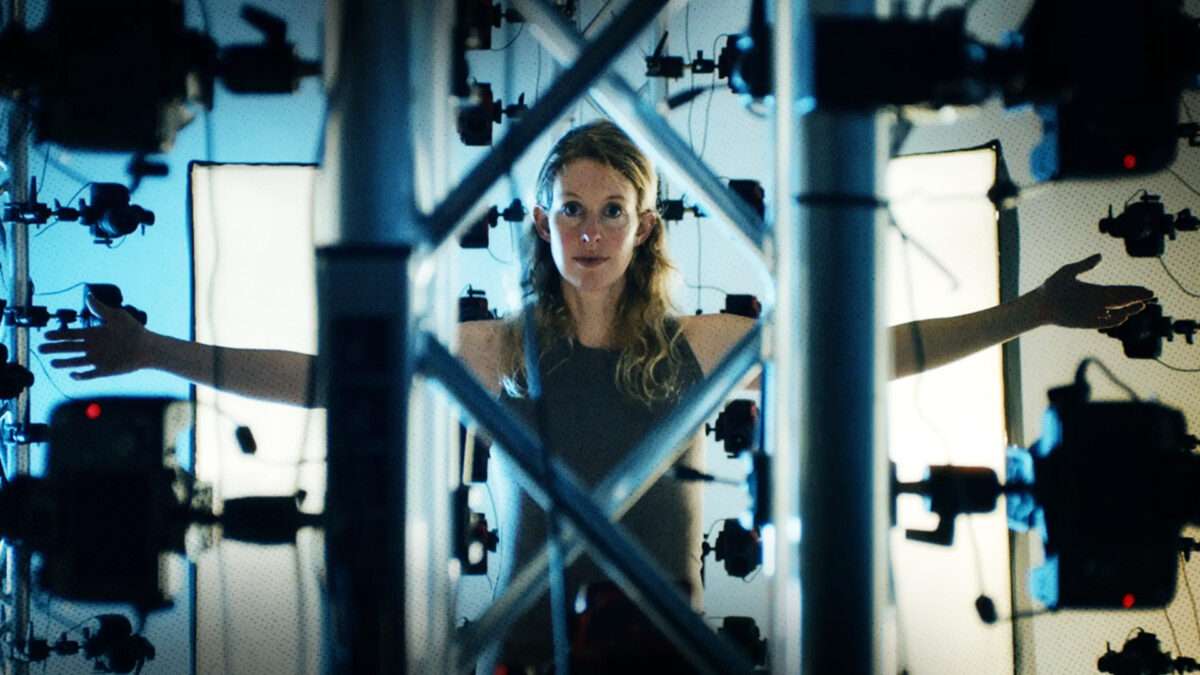
Just before she entered prison, Holmes invited documentarians Nathan Fielder and Lance Oppenheim to live with her, her boyfriend Billy Evans, and their two young children in their beachfront San Diego rental unit, promising them full access, complete transparency. The result is this year's most entrancing documentary, You Can See Everything. When the camera captures Billy in the shower, the movie delivers on its titular promise; you, uh, really can see everything. 

Yet what you cannot see is who Holmes really is. The mystery of the era's most famous fraudster is the movie's central riddle: Is she cynical, calculating, a stone-cold liar and psychopath? Or is she something stranger—a damaged and delicate person who genuinely believes her lies, or at the very least, genuinely believes the stories she tells herself to justify those lies after the fact?

Fielder and Holmes seem uncertain themselves; the movie is, in part, their own attempt to wrestle with their own ambivalence, their own inability to come to a conclusion. It's a hall of mirrors about the infinite unknowability of a person, even given unfettered access. 

The documentarians do not absolve her of her villainy; the movie is not an attempt to excuse her fraud or build a case for her innocence. But they offer something exceptionally rare in this era of simplistic hero and villain narratives: genuine and deeply felt empathy for someone on whom the culture (not to mention the legal system) has cast final judgment. In the process, they have given us one of the strangest, most unsettling, and most poignant films of the year. You Can See Everything is a small miracle of a movie. 

It's sometimes said that the most compelling villains don't believe themselves to be villains. They have an internally coherent story to tell that excuses their actions, makes them the heroes in their own minds. Fielder and Oppenheim have given Holmes, and viewers, the gift of allowing Holmes a measure of psychological complexity. You don't see into her mind, because that's impossible. But you see that the story she tells herself is different from the story the world tells us about her. It's surprisingly kind and generous; it's also tricky as hell—to the point where you, the viewer, might wonder if you're the one being tricked. 

Halfway through, the movie takes a meta-turn that I won't spoil, entering into high-concept territory in an attempt to more deeply explore what art and images can reveal about a human psyche. It's formally audacious, often funny, and actually justifies the three-hour running time. I've never seen anything quite like it.  

The exercise left me just as unsettled as the documentarians seem to be themselves; uncertain about Holmes and her motives, and nearly as uncertain about Fielder and Oppenheim, two talented filmmakers who appear to be questioning not only the nature of their chosen form, but of reality, especially psychological reality, themselves. There are times when You Can See Everything borders on magical realism, except the magic comes from the complexity of human nature and storytelling, as if Gabriel García Márquez had written a story about a man with a camera that could see into souls. It's dizzying, dazzling, a sort of postmodern Rashomon of perspective shifting.

As I left the theater, in something of a daze, I found myself thinking of a line from the great Saul Bellow novel The Adventures of Augie March, "Nobody should be a mystery intentionally. Unintentionally is mysterious enough." In the case of Holmes, it's impossible to tell which it is. All we can say is this supposedly one-note Big Tech villain, like perhaps everyone, is better understood as some kind of mystery, even to herself. 

The post The Elizabeth Holmes Documentary <i>You Can See Everything</i> Is an Act of Radical Empathy appeared first on Reason Magazine.

  •  
❌