❌

Reading view

Russia is losing the Black Sea grain war it started. Its answer is to sink civilian ships off Romania and Bulgaria

Bulk carrier "Royad Mammadov" under the flag of Saint Kitts, partially sunk after an attack by Russian sea and air drones on October 5, 2026, 20 nautical miles off the coast of Romania. Photo: Romanian Interior Ministry

  • Russian drones have hit two more ships in the western Black Sea
  • Rival Russian and Ukrainian countershipping campaigns have throttled grain exports since this summer
  • Diplomatic efforts to restore a grain shipping ceasefire haven't yet moved Moscow

On or just before Wednesday, 14 October, Russian Geran-4 one-way attack drones struck two more cargo ships—one in the Buh River Estuary near Mykolaiv and another in Chornomorsk, 20 km south of Odesa.

They're the latest strikes in competing Russian and Ukrainian countershipping campaigns that have, since this summer, throttled Black Sea grain exports.

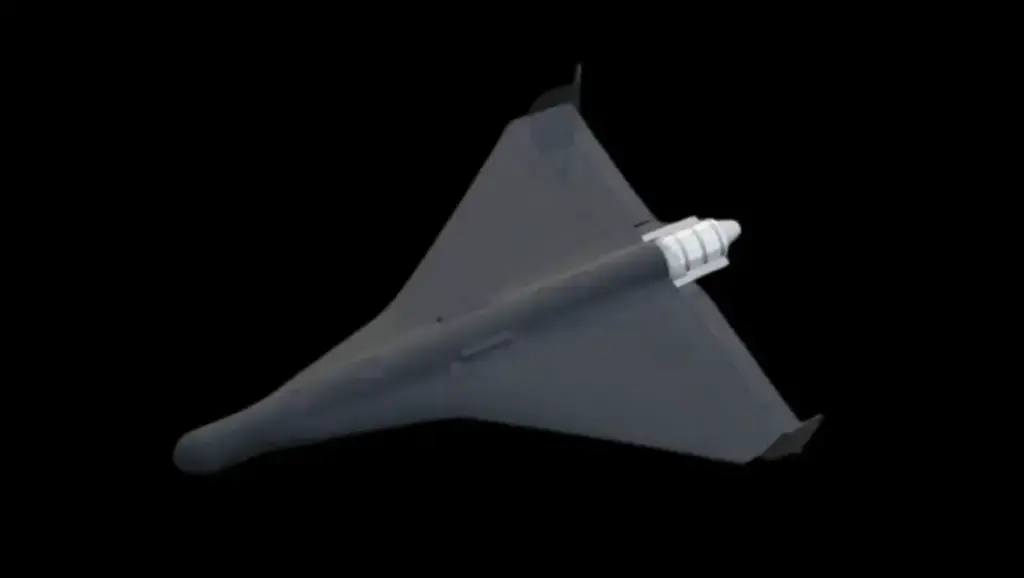
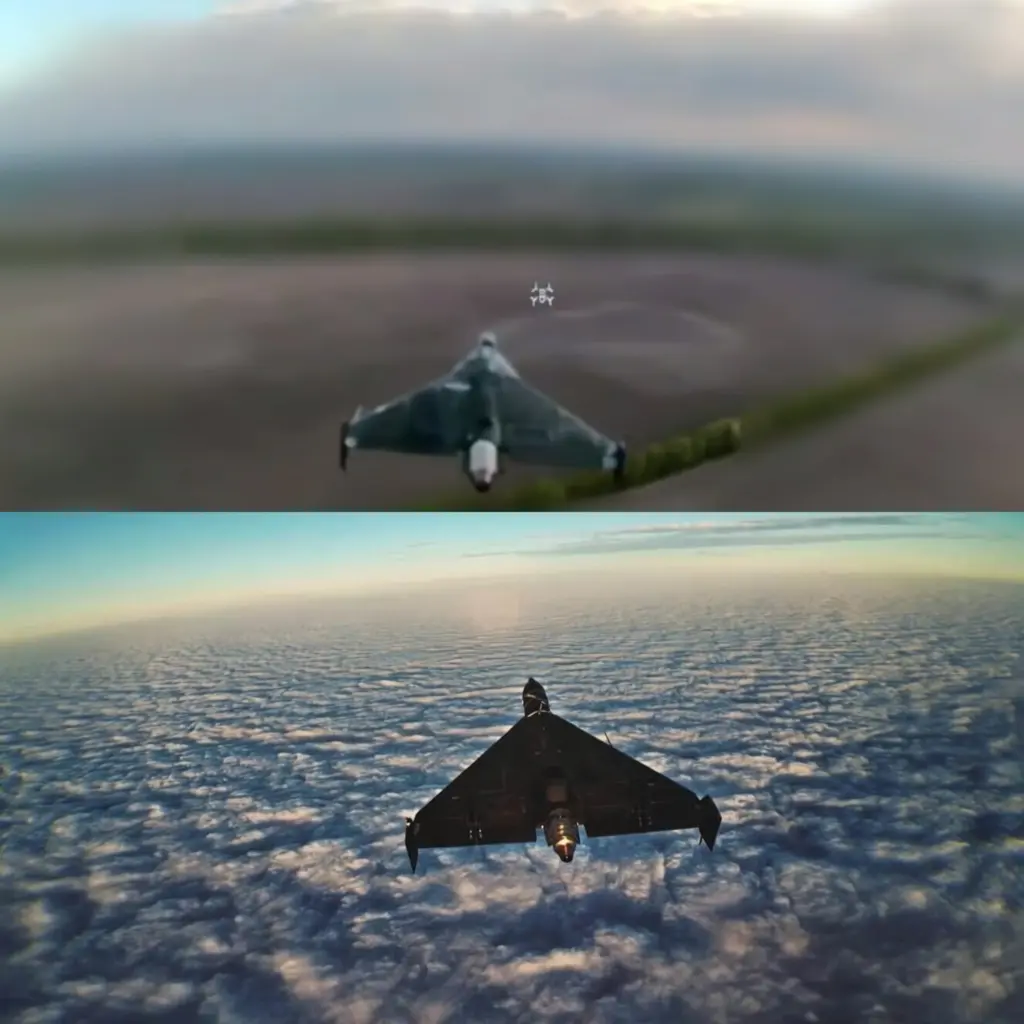
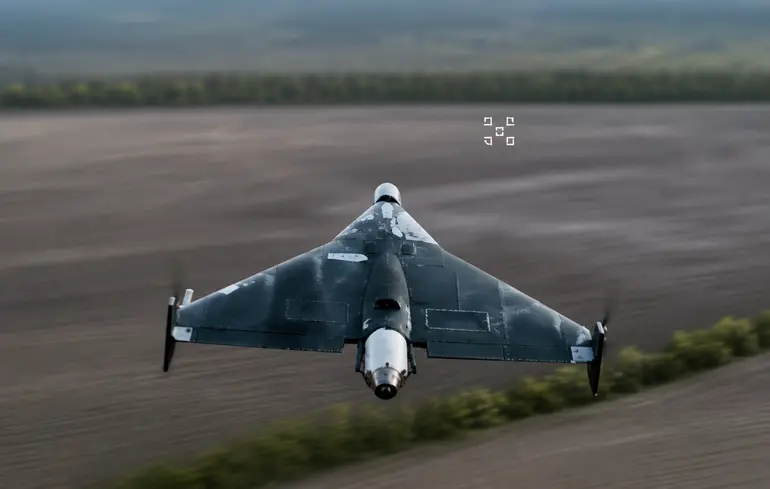
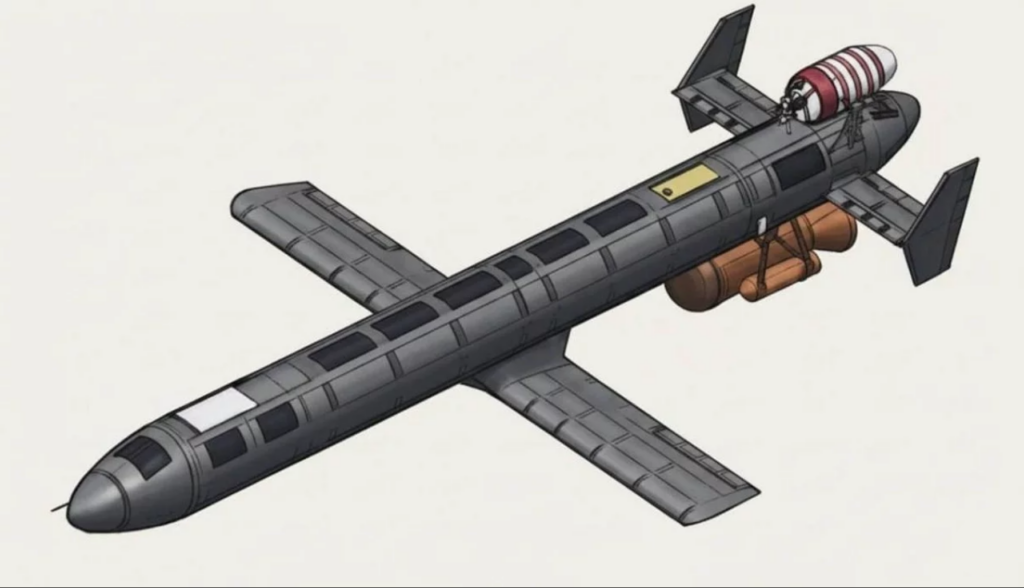
The jet-propelled Geran-4s are Russia's weapons of choice for these ship strikes. The drones haul warheads of up to 90 kg at up to 500 km/h and can fly more than 700 km. They already had AI-assisted targeting, and the Russians recently added terrain-matching navigation to make them less reliant on satellites and harder to jam with signal-scrambling electronic warfare.

For months, the Geran-4s and other Russian munitions have pummeled Ukrainian ports and the ships hauling grain from them. But Ukrainian forces were actually the first to escalate the shipping fight in an effort to squeeze Russian logistics.

Russian Geran-4 jet-drones struck two more cargo ships, in the Buh River Estuary and at Chornomorsk Port in Odesa Oblast. pic.twitter.com/wOXcJFAj5O

— AMK Mapping 🇳🇿 (@AMK_Mapping_) October 14, 2026

As recently as early this summer, hundreds of Russian tankers and dry cargo ships plied the Black Sea and adjacent Sea of Azov, hauling fuel and bulk supplies between ports in Russia and Russian-occupied ports in southern Ukraine.

Most of the Russian vessels were unregistered and sailed without transponders, making them a kind of regional adjunct of Moscow’s “shadow fleet” that ships Russian oil and other goods to the global market in defiance of international sanctions.

Black Sea grain war between Ukraine and Russia escalates
Map: Euromaidan Press

Ukrainian drones had already hit ships hauling stolen Ukrainian grain out of occupied ports in June.

On 6 July, Ukraine’s deep strike drone force finally started hunting the rest of the Russian ships. By day eight of the countershipping effort, the Ukrainians had hit 105 vessels. By day 12, drones including AI-assisted Fire Point FP-1/2s had struck 159, even a few tugboats sent to assist the damaged tankers.

Just a few days after Ukraine launched its countershipping campaign, Russia launched a retaliatory campaign targeting Ukraine’s Black Sea grain ports as well as the ships, many of them foreign-flagged, that haul grain through Türkiye’s Bosporus Strait out to the Mediterranean Sea and onward to foreign ports.

Soon, the Russian shadow fleet’s hundreds of ships were either drifting, disabled, or sheltering in Russian ports. On the other side of the Black Sea, Ukraine’s lucrative grain trade was in a state of collapse. Ports were under constant attack. International shippers were increasingly reluctant to send their vessels into the Black Sea.

Grain pours from a combine harvester into a trailer during harvest in Ukraine.
Ukrainian grain. Photo: Ukrainian World Congress

Trade freefall

Grain shipment figures on both sides tell a stark tale. According to the Russian Grain Union, in September approximately 1.36 million tons of wheat shipped from Russian ports, including ports on the Black Sea and Sea of Azov, compared to 5.4 million tons in September 2025—a 75% reduction.

Meanwhile, Ukraine exported 1.094 million tons of wheat in September, down from 2.051 million tons in September 2025—a 47% reduction. The only thing preventing further throttling of Ukrainian grain exports was Izmail, Renia, and Kilia—the country’s three small ports on the Danube River, which forms Ukraine’s southern border with Romania and flows into the western Black Sea a relatively short 435 km from the Bosporus Strait.

But the Russians were beginning to target the Danube ports and the grain ships heading to and from them, too. In October, Russian drones sank the Saint Kitts-flagged M/V Royad Mammadov, bound from Izmail to Ravenna, Italy, with Ukrainian grain, and the Togo-flagged M/V Alfa Watan, and damaged the Palau-flagged M/V Able, killing at least two seafarers.

“The Black Sea grain standoff, in which both Russia and Ukraine continue to suffer losses, persists,” Polish open-source intelligence analyst Thorkill wrote.

With global food prices rising partially as a result of the bottleneck in grain exports through the Bosporus, the United Nations and Türkiye have been trying to arrange talks between Russia and Ukraine regarding a possible Black Sea ceasefire.

A previous grain deal, brokered by Türkiye and the UN in 2022, collapsed a year later. Ukraine kept ships moving through its own corridor until Russian strikes shut it down this summer.

Update, 16 October: Drones hit at least four more merchant ships off Bulgaria and Romania between 13 and 15 October, sinking the HS Dignity off Krapets. At least 17 seafarers are missing. Romanian President Nicușor Dan called the attacks “attempts by Russia” to destabilize Romania and Bulgaria and said NATO’s North Atlantic Council would discuss them.
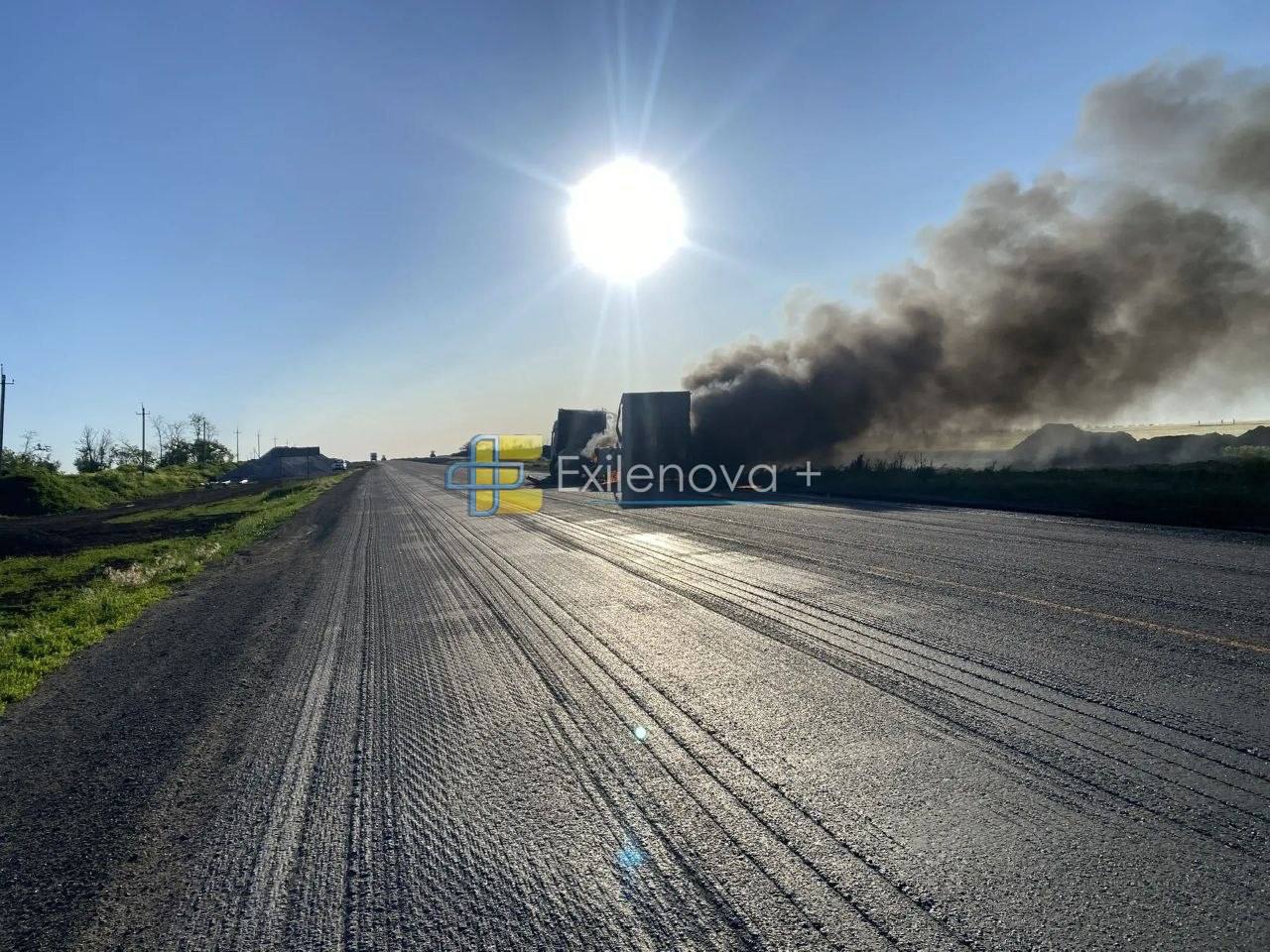
russian radar occupied crimea didn't see ukrainian drones coming became 28th air-defense asset wrecked · post supply trucks burning mariupol-melitopol highway main road russia's land corridor 29 2026 exilenova+ -
Explore further

“Supplying Crimea is turning into a nightmare”: Ukrainian drones hit Russian trucks 770 times in September, and winter will make it worse, analyst says

  •  

AI is changing Russia’s drone war on Ukrainian cities, deputy air defense commander says

geran-5

Russian forces appear to use AI to plan air attacks and recognize targets amid raids on Ukrainian cities. This may include recent air attacks on Odesa that have come in waves with short gaps, Deputy Air Force Commander for Air Defense Colonel Yurii Cherevashenko says, Ukrinform reports.

Russia has already equipped its jet-powered Geran-4 drones with machine vision, allowing them to recognize and track targets on their own in the final seconds of flight. Recently, a single jet drone hit a locomotive in Odesa Oblast in late September and killed two railway workers.

The scale of Russia's AI use is hard to measure, Cherevashenko continues, but Ukrainian specialists already see its elements in how attacks are organized. The long, wave-by-wave strikes on Odesa would be far harder to plan and coordinate without it, he believes.

"Russian forces use AI to lay out attack routes and to recognize targets," Cherevashenko says, framing it as his own assessment rather than a confirmed fact.

The sea is harder to defend than land

Odesa Oblast is home to the biggest port in Ukraine, "Southern". Protecting it is a challenging task as guarding the airspace over water is tougher than over land, Cherevashenko says. Some air defense assets do not perform as well at sea, and in some cases, crews can intercept a target only as it approaches.

Weather adds to the problem, with storms and fog, while the open sea gives Russia more freedom to choose drone routes and launch points. To protect ports and the coast, Ukraine uses drone motherships, platforms that carry other drones aloft to extend their flight time and keep watch over set areas.

Ukraine answers AI with AI

Ukraine is also building its own AI for air defense. Automated turrets using machine vision now help counter Russian drones. According to Army Media, the Air Force says such turrets have scored their first shoot-downs, including of Geran-5 jet drones, with one soldier saying 50 rounds were enough to bring down a Geran.

Ukraine's Defense Ministry is going further. In late September, it unveiled an AI system called SPECTR, built by its A1 Artificial Intelligence Center and already in testing with several combat units, to analyze battlefield data, predict Russian moves, and suggest options to commanders.

  •  

Ukraine finds US-made navigation sensor inside Russia’s new jet-powered drone

A 3D rendering of Russia's jet-powered Geran-4 strike drone.

Ukraine has found the US component in a Russian jet-powered drone targeting civilians, supermarkets, medical warehouses, and bridges. According to its Defense Intelligence, the new weapon contains a PNI5GA magneto-inductive sensor made by the US company PNI Sensor.

The US-made navigation component adds to evidence that Western technology continues to appear in Russia's strike drones. HUR had already identified US-made chips in the Geran-4 in May, but the newly reported PNI5GA is a navigation sensor in a modified version of the drone that Institute for the Study of War (ISW) says Russia may seek to field ahead of winter.

A Russian engine replaces the Chinese one

Russia has also replaced the drone's Chinese-made Telefly turbojet engine with a Russian-made equivalent produced in Alabuga. Russia is using the Alabuga zone to bring more of its drone production home rather than importing Iranian or Chinese parts, according to the ISW.

"The remaining electronic units and components are unchanged and identical to those used in previous Geran UAVs," HUR said.

What the warhead is built to cut

The modified drone also carries a specialized KRSN warhead designed to cut through bridge structures and power-line supports. Presidential adviser Serhii Beskrestnov described the warhead on 30 September, saying it consists of a 40-kilogram main charge and four strike modules. Its warhead is meant to destroy hardened targets made of steel and concrete and to damage cable-stayed bridges.

Russia has stepped up strikes on Kyiv's Northern and Southern bridges across the Dnipro in recent days with such drones.

However, Russia may try to field more resilient and more dangerous versions of its strike drones before Ukraine has effective countermeasures in place. Russia could use them to degrade Ukraine's energy infrastructure and logistics ahead of a winter strike campaign that it said will very likely be brutal.

  •  

Ukraine’s war leadership sets new electronic warfare tasks as Russia’s jet-powered drones slip past nearly half of its air defenses

Geran-4" is an evolution of the earlier "Geran-3" model

Russia keeps upgrading its jet-powered drones, and Ukraine's electronic warfare is racing to keep up. Kyiv has set extra tasks for its military and manufacturers to scale up the most effective electronic warfare approaches, President Volodymyr Zelenskyy said after a meeting of the Supreme Commander-in-Chief's Staff on electronic warfare and infrastructure protection.

Russia keeps modifying its jet-powered Shaheds to beat each new Ukrainian defense, and Ukraine's answers have to keep pace. The race is tight: from 1 to 26 September, air defenses downed only 55 percent of the 2,730 new jet-powered drones, against 90% of the slower ones.

Hidden relays blunt Kyiv's jammers

Jamming has to improve because Russia keeps finding new ways around it. On 3 October, presidential adviser Serhii "Flash" Beskrestnov said someone had installed Russian MESH radio repeaters in Kyiv, a short control channel that guides Shahed drones onto their targets. As long as they are there, he said, closing the city with electronic warfare will not be effective.

"As long as online control of drones exists, not only the bridges but the air defense assets will be under threat," Flash stressed.

Sanctions aim at the supply chain

Beyond the jamming task, the Staff turned to where Russia gets the parts for those drones. Defense Intelligence reported on Russia's technological priorities for this year and next, and on supplies of critical components and equipment for its weapons production, Zelenskyy said.

New sanctions packages will follow, with Defense Intelligence due to send proposals to the Ukrainian government and the National Security and Defense Council, and Ukraine is working to align its sanctions with partners' jurisdictions.

The Staff also set the main tasks for supplying Ukrainian forces with long-range drones next year.

"The main criterion is that we must be able to respond in kind to Russian strikes," Zelenskyy emphasized.

Those parts, and the drones built from them, keep changing

In August, Intelligence Deputy Chief Vadym Skibitskyi said Russia remained fully dependent on Chinese turbojets for the Geran-4 and Geran-5, each costing about $35,000 to $40,000.

However, two months later, Ukraine reported the Geran-4 had received a locally built engine and a new optical navigation system. Kyiv has to stay attuned to changes to keep pace with the technology race, and so far, it is still trying to catch up rather than get ahead.

  •  

At ruined Donetsk’s airport, three Russians snap selfies and ready jet-powered Geran-4. Ukrainian drone slips in unseen and rams their launcher

russia steers its long-range drones ground towers—kyiv says hit one occupied crimea · post russia’s new “geran-4 seeker” shahed variant uses machine-vision ai targeting geran 4 ukraine news ukrainian reports

Russian troops were taking selfies beside a jet-powered Shahed launcher when a Ukrainian drone hit them. A Ukrainian drone attacked a pickup truck converted to launch Russian Shahed drones in the Donetsk airport area while its crew prepared to fire a jet-powered Geran-4, according to video from the Cursed Empire drone unit of the 100th Separate Mechanized Brigade that volunteer Serhii Sternenko published on 6 October.

Three Russian soldiers struck a pose by their drone launcher near Donetsk airport

It was their last selfie. Ukrainian drones hit the crew moments later as they prepared to fire a jet-powered Geran-4
🎥 Serhii Sternenko pic.twitter.com/ri9bNztW5y

— Euromaidan Press (@EuromaidanPress) October 6, 2026

Russia launches Shahed drones, including jet-powered ones, from pickup trucks and fixed launchers, and the ruined Donetsk airport, about 50 kilometers from the front line, is one of its drone bases. In September, Oboronka outlet counted that in general, Russia has at least 63 launchers at its drone bases, which are built to survive strikes.

The video shows three carefree Russian soldiers next to a pickup fitted with a launch frame.

"That was their last photo shoot," Sternenko noted, commenting on the hit on the soldiers.

The primary target

Earlier, an officer of the 1st Separate Center of the Unmanned Systems Forces, call sign “Falco,” explained that the primary goal of strikes on drone bases is to disrupt Russia's ability to launch drones.

This is done by destroying launchers and storage facilities, as well as creating an aerial threat over the drone base. Such attacks can delay drone launches indefinitely, while the destruction of infrastructure can reduce the overall number of drones launched.

But the "jewel" of anti-drone port operations is the military staff

Although these facilities are important targets, the Unmanned Systems Forces have another priority: drone operators.

“The most difficult and, at the same time, the most valuable target is the operator. They don’t stay near the launchers for long,” Falco said.

By taking out drone operators, Ukraine inflicts losses on a scarce resource. There are already relatively few of them, and Russia will have to spend additional money and time training new crews.

  •  
❌