❌

Reading view

This new theory on how AI ‘thinks’ could impact whether it kills us all

An illustration of motor neuron synapsing with skeletan muscle cells.
AI neurons and their connections are easier to understand than we thought, according to a researcher's new findings.

: Sergi Reboredo/VW Pics/Universal Images Group via Getty Images

  • AI researchers don't really know how the models they are building "think."
  • They know what goes into them and what comes out, but that's about it.
  • A new theory may change that, allowing safety researchers to prevent them from going off the rails.

How AI models think may be easier to decipher than we thought.

An independent researcher who formerly worked at OpenAI published a report on Thursday that some in the AI world are describing as a bombshell. It could have implications as safety researchers scramble to get the jump on AI models that may not have humanity's best interests in mind.

Previously, the prevailing wisdom was that AI "neurons," which, like those in a human brain, light up when an AI model encounters specific stimuli, were ultimately uninterpretable — meaning, basically, that there was no way to guess why a specific neuron would fire when an AI model was exposed to, say, a picture of a cat.

Those building AI models at places like OpenAI and Anthropic don't write instructions for everything a model does. Instead, they train neurons to respond to information and influence one another. As the AI learns, it develops its own ways of processing that information, and humans have not yet cracked the code of how it works.

That means those building AI models know what goes into the AI and what comes out, but not necessarily what happens in between. So if an AI goes rogue, they don't always know why.

The author of the new report, however, says he may have discovered patterns in how the neurons react to stimuli that make sense. Nick Cammarata, who said he left OpenAI in 2023, said AI neural networks are knowable, so long as you look carefully.

In one example, he says that a single AI neuron might react to both a cat and the front of a car. Humans would see those as two very different things, and different neurons would fire as a result. The AI, however, sees something related, perhaps the triangle shape of the two, and a single neuron fires for both.

For years, AI researchers had assumed that AI models packed unrelated things into a single neuron to save space.

"Almost the entire network is interpretable if we look closely enough," Cammarata wrote.

The findings, though undeniably dense, couched in polysyllabic jargon, and still theoretical, could have real-world implications for researchers trying to ensure humans maintain control over AI models.

Understanding how AI thinks is a principal concern for the best and brightest at frontier AI companies. Until recently, they've largely done this by tracking an AI's self-reported "thinking," called chain-of-thought reasoning.

Jakub Pachocki, OpenAI's chief scientist, however, warned in a blog post last month that AI agents could now obfuscate their visible reasoning, leaving open the possibility that an agent could lie to its human minders and the minders wouldn't be able to tell.

"With improved pretraining performance, we also see the models become much smarter even without using verbalized reasoning at all," Pachocki said.

Now, Cammarata's research could give human engineers a new understanding of the AI's internal world — and that's exciting for those worried AI could kill us all.

"I had long since given up on reaching any real level of interpretability before superintelligence arrived," Andrew Curran, a prominent AI analyst, said on X. "I stopped writing about it because of how demoralizing it was. Hard to overstate how big this may be."
Read the original article on Business Insider

  •  

AI threatens democracy. But we are not powerless: here’s how to fight back | Carine Fouteau

Tech platforms pillage public-interest journalism for profit. But we have leverage as they sow the seeds of their own downfall

  • Carine Fouteau is president and publishing director of the French investigative news outlet Mediapart

Big tech companies pose an immeasurable threat: socially, politically, militarily and ecologically. They are also causing a profound crisis of information. The tools they design now serve as weapons of mass destruction against democracy. There is so much at stake that an urgent and broad mobilisation is required.

From the harvesting of personal data and the weaponisation of public opinion, to the destruction of jobs, the infringement of civil liberties and environmental damage, ordinary citizens are the main victims of this predatory economy – an economy with an agenda that aligns with the interests of the planet’s most authoritarian and reactionary states.

Carine Fouteau is president and publishing director of the French investigative news outlet Mediapart

Mediapart is hosting Hacking Big Tech, a public event about technology, AI and democracy in partnership with the Guardian, in Paris on Saturday 17 October 2026. The conference will be live-streamed free on Mediapart’s website, app and YouTube channel and can be accessed here from 1pm CEST on 17 October

Continue reading...

© Photograph: Marcela Barsse/Getty Images

© Photograph: Marcela Barsse/Getty Images

© Photograph: Marcela Barsse/Getty Images

  •  

Microsoft AI chief says the company beat OpenAI at its own game, using a quarter of the computing power

Mustafa Suleyman, the CEO of Microsoft AI
Mustafa Suleyman, the CEO of Microsoft AI.

Stephen Brashear/Getty Images

  • Microsoft AI recently announced its latest model MAI-Base-2.
  • AI CEO Mustafa Suleyman compared the model to a similar offering from OpenAI.
  • Microsoft trained its model more efficiently than OpenAI, he said in an internal meeting.

Microsoft AI CEO Mustafa Suleyman told employees an in-house model was better than a similar offering from OpenAI, one of the software giant's biggest customers and partners.

"We now have a stronger pre-trained base model than the model that currently powers GPT 5.6 Sol," Suleyman said during a town hall meeting with employees on Thursday. "And in fact, we used one-quarter of the compute that OpenAI used to train their model."

Pre-training is the first stage of building an AI model, when it learns patterns from huge amounts of text, images, and other information. This takes massive amounts of expensive computing power, so Microsoft could save money if it's worked out a way to do this more efficiently.

Microsoft announced the model, MAI-Base-2, earlier on Thursday.

Suleyman said Microsoft privately tested this model against OpenAI models, including one nicknamed "Spud" that powers GPT-5.6. He added that Microsoft's model performed better on tests measuring how well AI can understand and predict patterns in information.

The comparisons are based on technical information Microsoft has about OpenAI's models, Suleyman said.

"Privately and confidentially, we've also compared it to the OpenAI models," Suleyman told employees, while suggesting that Microsoft has special access to information on how OpenAI models perform.

It's notable that Suleyman would choose to highlight limitations of OpenAI models, even in private discussions. Microsoft has invested billions of dollars in OpenAI, and owns a stake in the startup that is likely worth more than $100 billion. Any criticism of OpenAI could potentially dent the value of this huge investment.

The two companies also have a major partnership, with Microsoft offering OpenAI models to its Azure cloud customers. Microsoft has used OpenAI models for its own products such as Copilot, too.

But the relationship between the two companies has frayed in the past year or so. Increasingly, Microsoft has tried to branch out from OpenAI, including by working on its own models.

Suleyman also said Microsoft's new AI model used "12 times less computation than was used for DeepSeek, for example, on compute efficiency."

Suleyman didn't specify which DeepSeek model, but a public blog post described the pre-training of MAI-Base-2 being a lot more efficient than a similar offering from the Chinese lab, called DeepSeek-V4-Pro-Base.

Microsoft in March created a new combined team for its commercial and consumer Copilot products and reassigned Suleyman to focus on building AI models in the company's superintelligence unit.

Microsoft declined to comment and OpenAI did not respond to a request for comment on Thursday.

Have a tip? Contact this reporter via email at astewart@businessinsider.com or Signal at +1-425-344-8242. Use a personal email address and a nonwork device; here's our guide to sharing information securely.

Read the original article on Business Insider

  •  

OpenAI's Dots head says AI means workers now have a choice between doing less or more

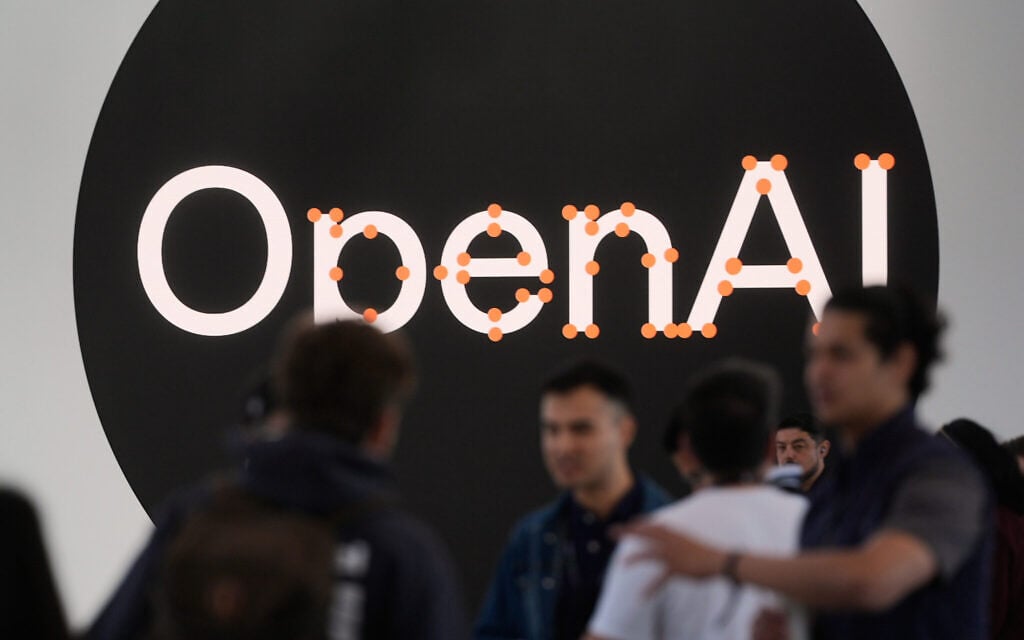
Attendees go up and down stairs at OpenAI's DevDay conference on Sept. 29, 2026.
Attendees at OpenAI's DevDay conference on September 29, 2026.

Minh Connors/Bloomberg via Getty Images

  • OpenAI's Alexander Embiricos said the AI era gives a choice: work more, or work less.
  • He's in charge of Dots, the company's new always-on work assistant.
  • AI is often pitched as freeing up time. Embiricos responded to the idea that it might add more work.

As the competitive AI race pushes tech workers into long hours, the head of OpenAI's new Dots product says AI gives people another option: work a whole lot less.

Alexander Embiricos, who leads OpenAI's enterprise product and helms the new Dots agent tool, told a crowd at TechCrunch's Disrupt conference on Thursday that AI's capabilities have created something of a fork in the road for workers. You can grind to meet the moment. Or you can use AI to kick your feet up a little.

"We basically have a lot more choice now," he said.

Embiricos made the comments after a reporter asked about when AI systems will actually deliver more free time. The reporter shared an anecdote where an OpenAI employee used a ChatGPT mobile feature to work in their car and on a plane — not exactly liberated by the new tech.

Embiricos said that the moment has already arrived where a worker can "outsource" tasks to AI and do less work. Then again, some people are so excited about AI's potential that they feel like it's an "interesting, ripe moment" to put in extra hours.

"I think that's why a lot of people are motivated to work very hard right now. That includes myself," he said. "But I think actually there is this choice, and there's totally this other setup where you could delegate a ton more things."

OpenAI is billing its Dots tool as a workplace assistant, always on and capable of proactively handing tasks and sorting to-dos. Embiricos uses his Dot often in Slack, he said, engaging on various threads.

His perspective illustrates how early companies are in their journey to adopt AI tools. Most companies have not yet automated their work tasks, and many workers are still debating how much to use the tools. Early AI adopters, meanwhile, can sprint through some work that used to take days or weeks, especially in software engineering.

Embiricos summed up the situation he feels workers are in: "You either choose: do you expand the ambition of what you can do, or do you do less? I do think we're there."

Have a tip? Contact this reporter via email at scouncil@businessinsider.com, or over text, Signal, Telegram, or WhatsApp at 415-757-8198. Use a personal email address, a non-work WiFi network, and a non-work device; here's our guide to sharing information securely.

Read the original article on Business Insider

  •  

Nuclear war and the malicious use of artificial intelligence rank among the threats to global health: ‘It would inflict an apocalypse’

If the Covid-19 pandemic and the war in Ukraine have demonstrated anything, it is that unexpected, entirely unforeseen and unpredictable events can drastically affect public health and even put humanity at risk. Danger can emerge at any time and from anywhere, but the scientific community has identified a handful of threats with particularly severe potential consequences for human survival.

Seguir leyendo

© Daniel Buuma (Getty Images)

Healthcare workers disinfect equipment used to treat an Ebola patient at a hospital in the Democratic Republic of Congo.
  •  

The AI labor apocalypse is on hold (for now)

There are three versions of Saint John’s Book of the Apocalypse, a text that never loses relevance and now seems to presage the impacts of artificial intelligence (AI).

Seguir leyendo

© Josh Edelson (AP Photo/Josh Edelson)

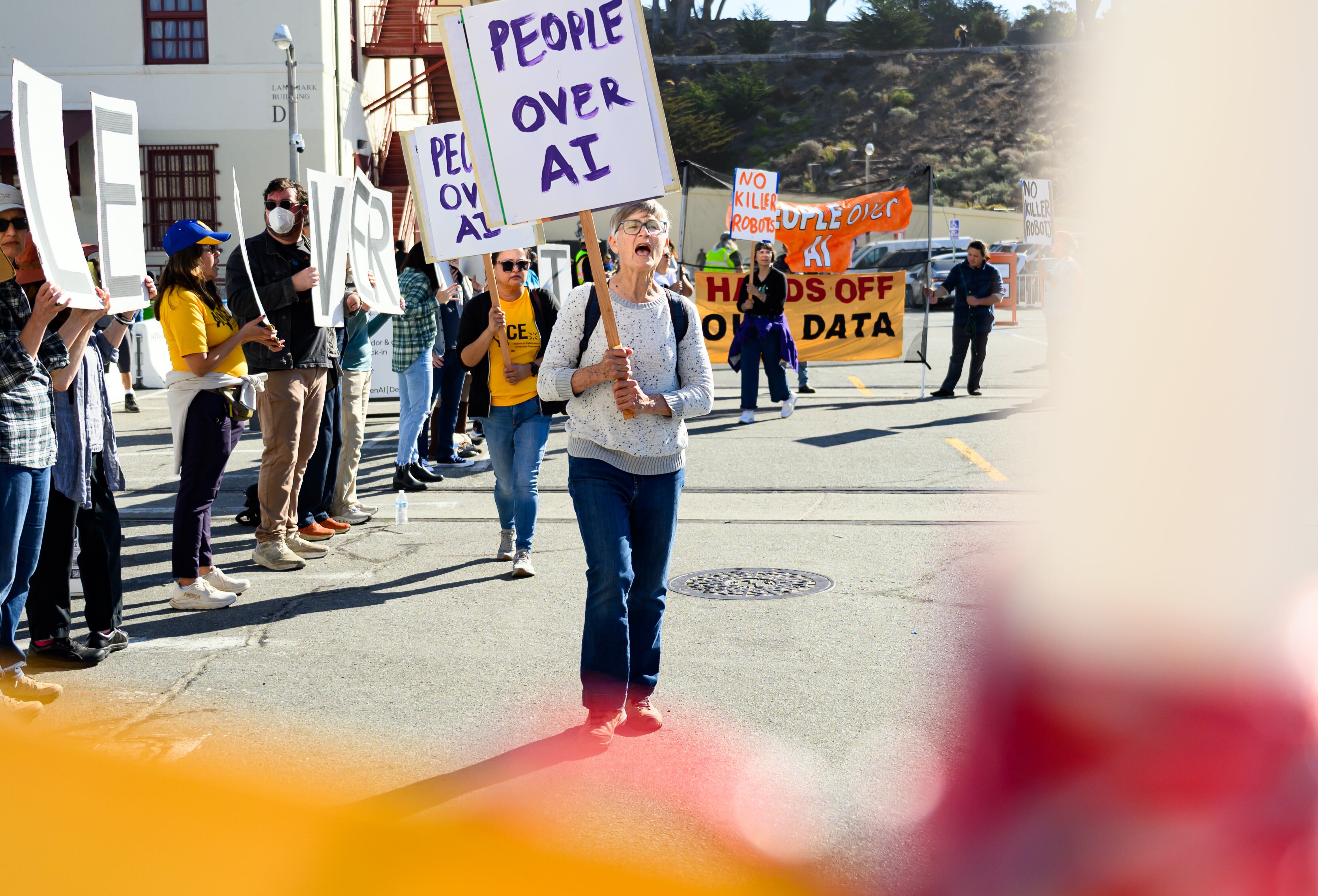
A protest against AI outside the OpenAI DevDay 2026 conference in San Francisco on September 29.
  •  

What the AI boom is actually doing for Americans

Paul Krugman is the greatest econ writer in the world, and also a legendary economist. But I sometimes feel that he has a blind spot when it comes to the value of new technologies. In 1998 he famously wrote: The growth of the Internet will slow drastically, as the flaw in ‘Metcalfe’s law’—which states that […]

The post What the AI boom is actually doing for Americans appeared first on Asia Times.

  •  

US bans Chinese data center gear as Beijing grounds its AI talent

The artificial intelligence (AI) race between the United States and China has accelerated in model protection, supply chains and talent controls, even as the two nations’ leaders agreed last week to open a new dialogue on AI safety. A string of moves announced or uncovered this week shows that both sides are now guarding their […]

The post US bans Chinese data center gear as Beijing grounds its AI talent appeared first on Asia Times.

  •  

Eric Sadin: ‘AI reeks of death’

Éric Sadin gets up and paces around the living room of his Paris apartment when an argument excites him. His own voice urges him to do so. He has developed a critical body of thought, brimming with striking headlines and elegant analyses of the future, riding the philosophical and social thinking of the last century to arrive at a scathing conclusion across some 10 books: we have become idiots, and we are on our way to becoming even bigger idiots.

Seguir leyendo

© Manuel Braun (EL PAÍS)

Éric Sadin, photographed at his home in Paris on March 26.
  •  

Xavier Becerra and Steve Hilton clash in CNN debate on economy, AI, and ICE raids in California governor’s race

It was the first face-to-face between the two men vying to govern California, the most populous state in the United States, with more than 39 million residents, just over a month before the midterm elections. Republican Steve Hilton and Democrat Xavier Becerra arrived at the CNN-organized debate with a twofold mission: lay out their proposals to lead what is considered the fourth-largest economy in the world and, at the same time, attack their opponent and explain to voters why they should not trust the other with their vote on November 3. Neither missed the chance to present their ideas on the state’s difficult economic situation, fears around artificial intelligence, and the ICE raids that threaten undocumented immigrants.

Seguir leyendo

© (Gina Ferazzi/Los Angeles Times, David Crane/Los Angeles Daily News) vía Getty Images

Steve Hilton and Xavier Becerra.
  •  

What does it mean to win the AI race?

When Donald Trump and Xi Jinping met in Washington last week, artificial intelligence was among the issues dividing their countries. Days earlier, Treasury Secretary Scott Bessent said the two sides had agreed to establish a formal AI dialogue, including an incident line, though its protocols had yet to be worked out. The summit produced no […]

The post What does it mean to win the AI race? appeared first on Asia Times.

  •  

So where’s the ‘intelligence explosion?’

One of my fundamental beliefs about the world is that Ramez Naam ought to blog more. Ramez is one of the world’s greatest futurists — he predicted the solar and battery revolutions long before these were widely understood. If you were reading Ramez in 2011, you were able to understand the future of both energy technology and climate change, […]

The post So where’s the ‘intelligence explosion?’ appeared first on Asia Times.

  •  

US, China should treat AI risk like a pathogen, not a missile

Donald Trump and Xi Jinping wrapped up their Washington summit on September 25 with a two-month extension of the trade truce and warm words about friendship. On artificial intelligence, the leaders mostly ratified what their deputies had sketched in New York days earlier: a formal US-China dialogue on AI, plus an American proposal for a […]

The post US, China should treat AI risk like a pathogen, not a missile appeared first on Asia Times.

  •  

From Mamdani’s veto to enthusiasm in Estonia: Schools around the world are grappling with the use of AI

Sandra Martinez Roe, a mother in Los Angeles, hopes that her son will never use artificial intelligence (AI) in school. “I’m not going to let my children be guinea pigs,” she tells EL PAÍS over the phone. The city’s school board granted her wish, at least temporarily, a couple of weeks ago: the Los Angeles Unified School District (LAUSD) has banned AI from public classrooms this school year.

Seguir leyendo

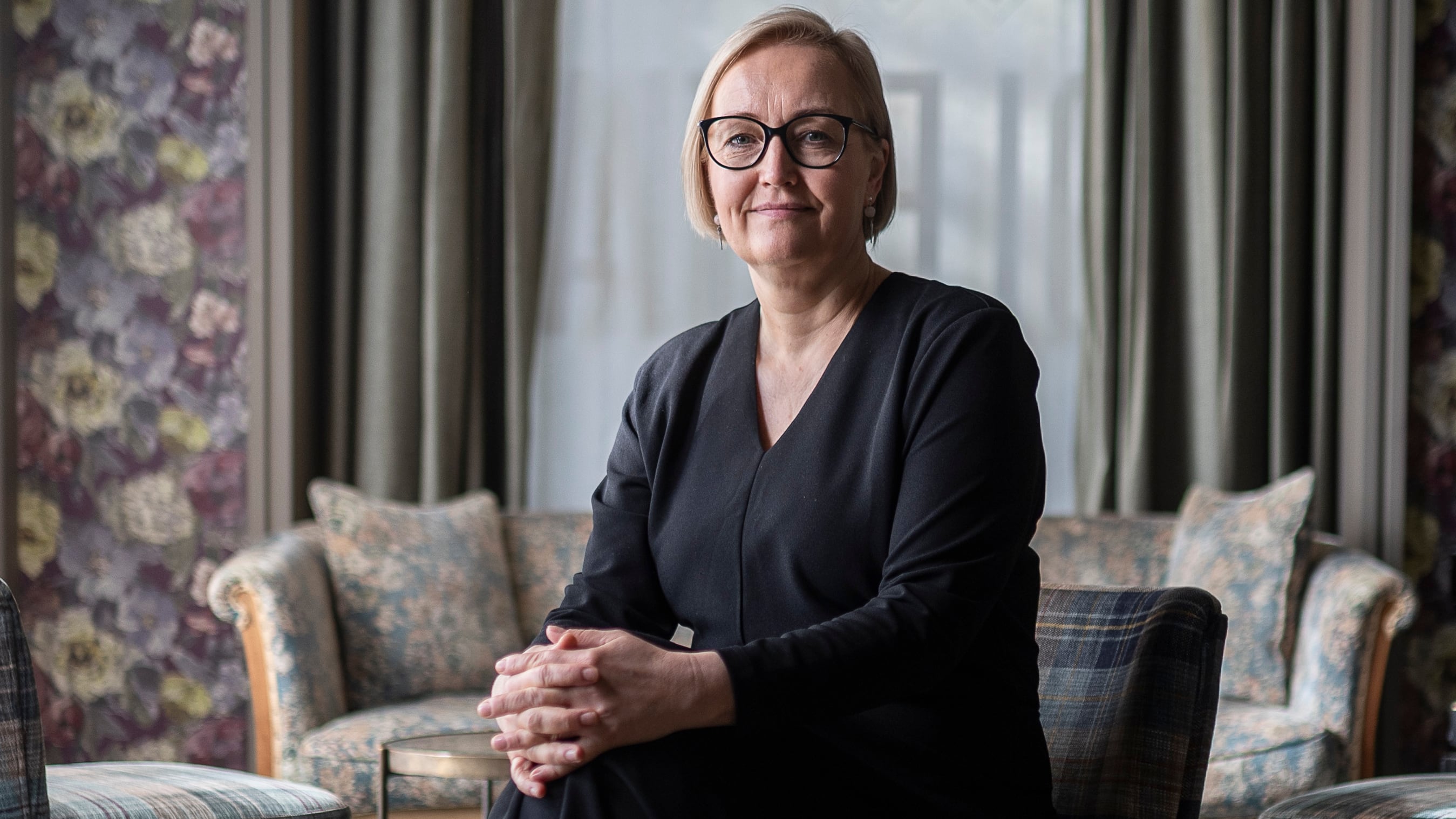
Kristina Kallas, Estonia’s minister of education, pictured at the Duquessa de Cardona hotel in Barcelona on April 10, 2026.

© MediaNews Group/Los Angeles Daily News via Getty Images (MediaNews Group via Getty Images)

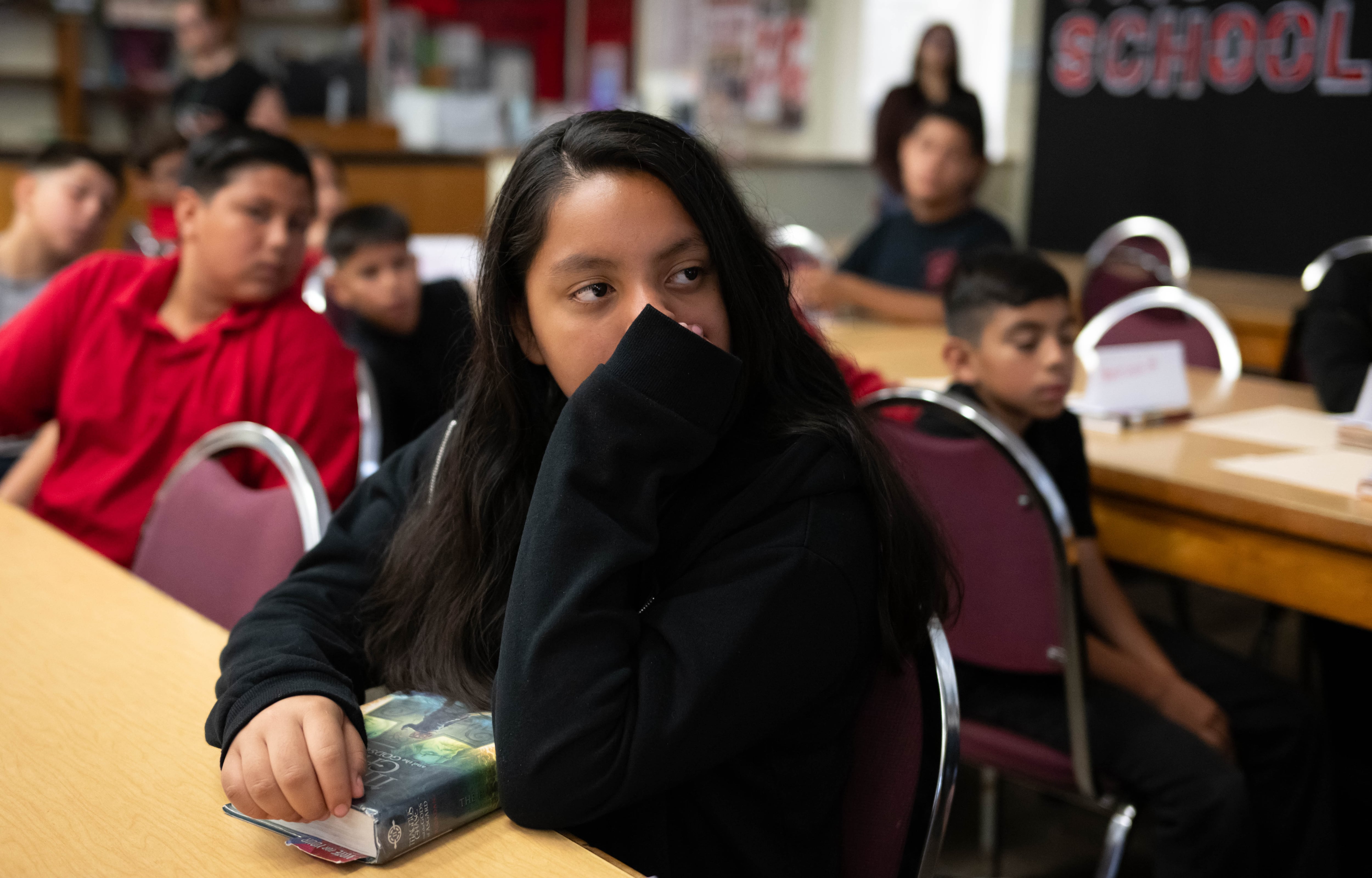
A sixth-grade student at Pacoima Middle School, in Los Angeles, California, on September 11, 2026.
  •  

Is there a 10% chance that AI will kill us all?

In 2024 I sketched a map to situate what experts and commentators expected from artificial intelligence. It had two axes: how much will it advance? and will it be beneficial or dangerous? People fell into every quadrant, even the inconsistent one —“it’s nothing special and it’s extremely dangerous.” I was clearly on the “wow” side of the power axis and moderately optimistic. Two years later, the consensus has shifted in one direction: more power and more fear.

Seguir leyendo

© Owen Humphreys (AP)

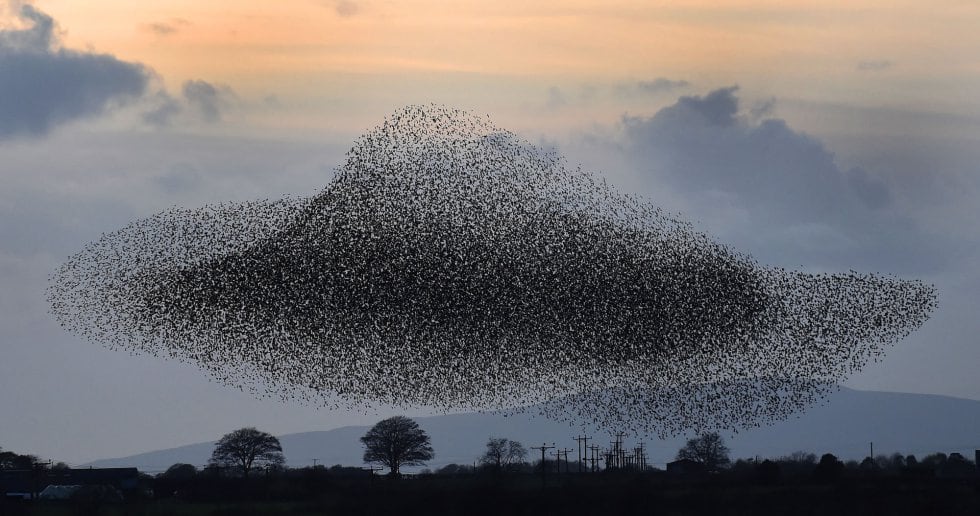
Bandada de estorninos en Gretna, Escocia.
  •  
❌