Netanyahu's supporters, especially among Orthodox Jews, believe he's protecting a country they love as central to their identity. Many liberal and younger Jewish Americans believe his policies have harmed Israel's global standing.
Some hope a change of government in Israel could help stem the tide of rising anti-Israel sentiment in the US, but most fear it would have very little effect on surging antisemitism
CLEVELAND — Every morning, Dwight Bullard pulls into the station selling the cheapest gas he can find and puts exactly $100 worth into the rented box truck he uses to haul tires around Northeast Ohio.
On the August morning MS NOW was riding with him, regular was $3.92 a gallon.
“There goes my $100,” he said, watching the pump click off. It didn’t even fill the tank. Six months earlier, the same day’s driving had cost him $60 or $70.
He did the math in the truck: Add in the $600 for the rental truck, and the weekly cost of doing what he describes as the best job he’s had is $1,100. Do that every week for a year, and it’s way more than what he is trying to save to buy a truck of his own.
Ask him who he blames for the high price of gas, and he doesn’t hesitate.
“Trump! I blame Trump, man,” he said. Then, a beat later: “Well, that’s what I hear. I ain’t really into politics, but I know it’s got something to do with the shit he’s doing over there.”
Dwight Bullard (right) delivering tires in Northeast Ohio in August 2026.
MS NOW walked him through the data: the war with Iran, the Strait of Hormuz, a fifth of the world’s oil, a global market that sets the price at a gas pump in Cleveland, his hometown.
Dwight is 34, with two daughters under 10. He drives the tire route until about 4 p.m., goes home to shower and on some days works a second job running food at a Mexican restaurant until 11 or midnight. And then he’s up at 5:30 in the morning to do it again.
One thing he has not done is connect his situation to the folks in elected office in his state or Washington, D.C. He’s also pretty sure he has only voted once in his life: in 2012, for Barack Obama. He did not vote in 2024.
“Most of the people I know, we ain’t really voting,” he said. “My homeboys, we just making shit happen. Living day to day.”
Does he regret sitting out the last presidential election? “Considering where we are now, hell yeah.”
MS NOW went to Cleveland to get some time with a group of voters whom both parties talk about constantly, but who almost nobody is spending a lot of time or money talking to: young Black men who have stopped voting, or never started.
One of the races that could decide control of the Senate is happening in Ohio, where Democratic former Sen. Sherrod Brown is trying to win back his old seat from Republican Jon Husted. The polling has shown the race consistently within a few points, and the math on who could decide it is not that complicated.
A voter-file analysis by HIT Strategies, a public opinion research firm, found more than 100,000 registered Black voters in Ohio who sat out the last three federal elections. The firm also found, through focus groups, that these voters were more open to being mobilized this year, pushed by the cost of living and souring views of President Donald Trump.
In June, the Ohio Legislative Black Caucus Foundation released a study with a finding that should stop Democrats cold: In the 2022 midterms, 603,000 eligible Black voters in Ohio didn’t cast a ballot. That is more than twice the margin by which JD Vance won his Senate seat that year.
Shayla L. Davis, who runs the foundation, said she was “heartbroken” when she got the findings back.
Shayla L. Davis, President and CEO of the Ohio Legislative Black Caucus Foundation.MS NOW
Sitting in the UnBar Cafe, a Black-owned coffee shop, she noted that in 2023, the Republican-controlled state passed one of the most restrictive voter ID laws in the country. Essentially, it’s a “use it or lose it” rule that strips people from the voter rolls for not voting. That, combined with the apathy she is seeing especially with young Black men, helps explain to Davis why what was once a swing state has so far failed to regain that status.
“My own son, he’s 28 years old. He stopped voting,” said Davis, formerly a state representative and city councilwoman in the Cleveland suburb of Garfield Heights. “He’s cynical. He doesn’t believe that anyone is standing up for what he believes. He believes that all the rhetoric is performative and that everyone is all the same. And that breaks my heart, but I can understand exactly where he’s coming from.”
Her son grew up in a house where his mother’s name was constantly on the ballot. She remembers the election night party she threw in 2008 and him running out of his bedroom, a kid full of joy that Obama had won. That’s the moment she keeps trying to get him to remember.
There’s been a lot of ink spilled about the gender divide in the Black community. Black women are more consistent voters, and more consistently punching their cards for Democrats. Those numbers aren’t actually that stark though: 92% of Black women voted for Harris in 2024 compared with 78% of Black men.
It’s the generational divide that is more worrying for people like Davis. Younger Black voters are just hitting the ballot box less compared with the generations before them.
Her concern is that there is just a lack of connective tissue to the days when Black people didn’t have the right to vote. Pair that with the lack of movement on issues young Black voters care about, and it’s a recipe for apathy.
“Older Black voters are going to show up and vote,” Davis said. “It’s a generational gap of what they actually experienced. My son never experienced any of [the Civil Rights Movement]. He only hears the stories and he’s hearing the stories third-party. He’s hearing it from me, who didn’t experience that either.”
There are groups trying to change that, like Cleveland VOTES, a nonpartisan civic organization that three years ago started a seasonal, part-time canvassing team it calls The Squad. There are just five of them, but last year they logged more than 114,000 contacts.
MS NOW walked with them on a Wednesday afternoon on the East Side, in a stretch of the city where co-founder Erika Anthony says turnout is lowest. They weren’t asking people who they were voting for. They were handing out flyers for “Carnivote,” an event with free food, backpacks for kids and a round of “Democracy Jeopardy.”
Erika Anthony, co-founder of Cleveland VOTES.MS NOW
Jerry Pena, who manages the group and is its only man, explained the strategy.
“You go to people’s doors, you quickly approach them with voting, the conversation shuts down,” he said. “It’s over because they’ve seen what their vote does, right? It’s disappointed them over and over again.
“The conversation needs to change more to ‘What do you want to see in the future in this neighborhood? How can we get there?’ But if you start with voting, done deal.”
Jerry Pena, a member of Cleveland VOTES, in August 2026.MS NOW
At 2 p.m. on a weekday, when door-knockers might expect to find retirees — older Black voters who may not need a ton of convincing — they kept running into young Black men.
Outside a convenience store, a 29-year-old who gave only his first name, Robert, said he hasn’t voted for anyone in years. “I just didn’t feel like nobody deserved it,” he said.
He added that nobody, not a Democrat or a Republican, knocked on his door in 2024. Then, unprompted, he started talking about policy. He’d recently been in jail, where “they treat you like animals,” and he couldn’t understand why people were still locked up on weed charges in a state where recreational possession was legal.
He had strong, specific views about the carceral system. He knew exactly what would make it better. Robert had just never connected those ideas to the people who decide what the laws actually look like.
When MS NOW described Robert to Anthony afterward, she said that is exactly why Cleveland VOTES started: She and her co-founder were working with people coming home from prison and kept hearing the same disconnect.
“We would say things like ‘Do you want to have the ability to influence who sits on the [judicial] bench?’” she said. “When we started painting the picture for folks, they’re like, ‘Oh, I have the ability to do that.’”
The biggest takeaway isn’t that these voters are tapped out — it’s that almost no one has even tried to tap them in. Every single Black man MS NOW met that day said some version of “No one has tried to convince me to vote.” Nobody is paying these men any attention.
“We as a country have gotten way too hyperfocused on the electoral cycle versus thinking about the holistic nature of community building,” Anthony said. “There are policy decisions being made every day, locally, countywide, statewide and at the federal level. And if we’re only talking to folks two weeks, three weeks before an election and just expecting them to magically open their eyes and see why this is valuable to them. [By] then, we’ve already missed the boat.”
Which raises the question of who exactly is asking. Davis said that since her foundation’s report came out on Juneteenth, one federal official’s office has reached out. Neither Senate campaign had called.
“They don’t have to call me,” Davis said. ”Just pick the report up and do something about it.”
Brown’s campaign says it is doing that. According to a campaign aide, Brown started his outreach earlier than any of his other campaigns ever had. He has met with Black faith leaders in Ohio cities since last fall, held roundtables with Black men, hosted “pledge to vote” events with Divine Nine organizations and spent $250,000 on ads airing on radio stations with predominantly Black audiences.
Husted’s campaign initially agreed to meet with MS NOW for this story, then canceled due to a scheduling conflict and did not immediately respond to emailed questions about what efforts his team has made to reach out to Black voters.
MS NOW sat down with Dwight, the tire and restaurant hustler, and his mother, Kari Jones, who is the kind of voter campaigns dream about. She passed out flyers for a city council candidate at 10 years old. Her neighbors call her for political advice. Her mother and daughter call her from the voting booth to ask who they should pick.
She has made sure that Dwight has stayed registered for years. She has not been able to persuade him to do anything with that registration since 2012.
Kari Jones and Dwight Bullard in August 2026.MS NOW
What changed for Dwight between 2012, when he said casting a ballot for Obama “felt like I did something,” and now?
“I guess I never really saw a change,” he said. “I never really seen what it did firsthand to people, so I just never really cared to vote. Like, it is what it is. They’re going to do what they’re going to do.”
Thinking on it, he realized he and his friends do actually talk about politics. All the time. “We sit [in the barbershop] and talk about the rent, the streets, that big-ass pothole on Dunham. We talk about that but we don’t talk about the source of the problem.”
Something had clearly shifted. After that morning truck run, Dwight went back to the shop and a co-worker asked what the MS NOW cameras were there for. He explained, then asked whether his friend voted. Not really, the co-worker said, but he did vote in local elections.
“I’m like, ‘Damn, he’s my age,’” Dwight said, adding: “When it comes to anything else, talking Marvel movies, music, we can relate. So when I heard him say that, I’m like — makes sense.”
Jones had been waiting for this. For her son to make these connections.
There’s a tree in her yard that Dwight spent a year telling her to get the city to cut down, afraid it would fall on her house, or her car or one of his kids. The city finally came to do it that morning.
“Who did you think was going to do it?” she asked.
“The city.”
“And who’s the city?”
The light bulb went off. Dwight was realizing that who is in office can actually make differences big or small to his and his family’s life. Not voting, he said, was “like a video game where you [are] not using the power-ups.”
She asked him if this had really changed his mind and if he would vote in November. “Yes, with you. And I’ll get the sticker,” he said.
I asked Jones what she would say to a politician who sat across from her and claimed they couldn’t figure out why young Black men in her state didn’t vote.
“Find out what’s important to them. Find out what’s affecting them. Find out what their knowledge is about politics. Because that’s the problem. They really just don’t know,” she said.
It’s just one potential voter, but it took less than a day. Nobody in politics had to do anything expensive to move Dwight Bullard.
It took a guy at work who likes the same movies, a tree in his mother’s yard and a reporter explaining how a strait on the other side of the world affected the price of gas in Ohio.
In a state where 603,000 Black voters stayed home last midterm, hardly anyone has been knocking on the door.
CORRECTION (Oct. 17, 2026, 10:30 a.m. ET): A previous version of this article listed the wrong city in which Shayla Davis served as a councilwoman. It was Garfield Heights, not Cleveland.
Ahead of election, former central bank deputy governor Zvi Eckstein says outgoing government's decisions have impacted country's growth, with economy at risk unless changes are made
Far-right minister's conduct draws condemnation abroad but appears to be winning votes at home, with polls showing him gaining support where Netanyahu and Smotrich are losing it
As part of a tough re-election campaign in Maine, incumbent Republican Sen. Susan Collins has emphasized on countless occasions that she’s willing to defy President Donald Trump and other GOP leaders. But while there’s some truth to that, the senator’s critics have long emphasized the asterisk that comes with that record.
The New York Times took a closer look at her voting record, which shows that Collins has broken with her party more than any other Republican senator. That said, the same record “reveals that her defections … have rarely thwarted the president during his second term.”
In other words, the longtime GOP senator has demonstrated a willingness to break ranks, except when her vote might actually affect the outcome. Or, as the Times’ report put it, “one of the most dominant and long-running lines of attack against her” is that Collins “only defies the president when it doesn’t matter.”
On Thursday night, in her fourth and final debate against Democratic nominee Troy Jackson, the Maine Republican was presented with a clear opportunity to prove her critics wrong. It did not go well.
A moderator asked Collins, “Can you name a time when you voted against your party and President Trump where it actually changed the outcome significantly?”
The senator began by saying there were “several examples,” though she specifically pointed to one: Early last year, Collins said, she helped organize an effort to defeat Pete Hegseth’s defense secretary nomination, though her effort ultimately didn’t work and the unqualified former Fox News host was confirmed.
“So that didn’t change the outcome,” the moderator replied.
Remember, Collins has faced one specific criticism throughout her re-election bid, and it was highlighted by The New York Times in a front-page article published this week. The senator and her team had plenty of time to come up with examples (any example!) to prove her critics wrong.
But she couldn’t. Then, presented with the opportunity and platform, Collins flubbed it, effectively proving the underlying point.
Whether Jackson and his party turn the debate exchange into a new campaign ad remains to be seen.
During a town hall event on CNN this week, Democratic Senate hopeful James Talarico voiced a sentiment that was well received by attendees: “We have an affordability crisis because we have a corruption crisis.”
The message has become increasingly common as the midterm election cycle has unfolded. Indeed, Democratic Sen. Jon Ossoff of Georgia, in particular, has built much of his 2026 candidacy on the proposition that corruption isn’t only a major national issue, it’s also the principal cause for the problems plaguing regular Americans in their everyday lives. “You aren’t the problem. Neither are your fellow Americans,” Ossoff routinely tells Georgians. “Corruption is why things don’t work for ordinary people.”
There’s fresh evidence that the argument is resonating with the public.
A Gallup poll released last month found that 89% of American adults believe that government corruption in the United States is widespread — up 10 points from a year ago, and 30 points from a Gallup survey conducted in 2006. Earlier this week, The Associated Press released the results of its latest national poll, which similarly found that most Americans believe that Donald Trump “is profiting off the presidency in unethical or illegal ways and is focused more on his wealth than helping people like them.”
President Donald Trump’s ouster of Kimberly Guilfoyle as ambassador to Greece this week reflected a belated recognition by the White House political team that corruption is a galvanizing issue in the midterms.
A Fox News poll released Wednesday indicates that corruption has become voters’ top concern, edging out inflation and gas prices. Six in 10 respondents said they’re “extremely concerned” about corruption. … The Fox News finding isn’t an outlier. An Economist-YouGov poll last month showed that most registered voters think Trump is corrupt. A Reuters poll in August revealed that almost 7 in 10 Americans — including about half of Republicans — believe Trump’s private business interests influence his presidential decisions.
These public attitudes are based on a lot more than just cynical assumptions. On a nearly daily basis, Americans are confronted with a fresh round of allegations surrounding the president and his team. “The cesspit of corruption that is Donald Trump’s presidency is finally getting the attention it deserves,” economist Paul Krugman recently observed. “It’s about time. … The level of corruption that Trump has engaged in and enabled in others is completely unprecedented — self-dealing that, as Trump would say, is like nothing anybody has ever seen before.”
This week, MS NOW host Catherine Rampell wrote a column for The Bulwark in which she added, “Donald Trump is robbing Americans blind.” The headline on her piece read, “Just. So. Much. Corruption.”
Voters’ attitudes on this should send a signal to policymakers about their post-election priorities. We’ll learn in a few weeks whether Democrats can win a majority in either (or both) of Congress’ chambers; but if they do, some will no doubt make the case that the party should focus almost entirely on kitchen-table issues.
And while such a strategy would make sense, the midterms are making clear that there’s a direct link between corruption and affordability — and there’s a real public appetite for accountability and reform.
In the months leading up to Texas’ Republican U.S. Senate primary, the party was divided into a couple of camps. On one side was incumbent Sen. John Cornyn, who enjoyed the enthusiastic backing of most GOP leaders and their aligned super PAC, and who was generally seen as a safe choice who would fare well in a general election.
On the other side was the senator’s intraparty challenger, state Attorney General Ken Paxton, who enjoyed support from the party’s MAGA base, despite being the most scandal-plagued candidate of his generation, and who was generally seen as an enormous risk.
There were reports that Donald Trump was tempted to play it safe, before he ultimately endorsed Paxton, who cruised to an easy primary victory. The results haven’t exactly gone the way the president likely hoped.
Over the past several weeks, a variety of high-quality polls have been conducted in the Lone Star State, and not one of them has shown Paxton leading Democratic state Rep. James Talarico. This has generated a fair amount of panic in GOP circles, where the idea of losing a Senate seat in Texas had been largely unthinkable as the year got underway.
With this in mind, Trump is now taking a predictable step: He’s trying to avoid blame for a possible electoral disaster. Indeed, the president published a lengthy tirade to his social media platform on Thursday afternoon in which he tried to pre-blame Republicans he doesn’t like for a defeat that hasn’t happened yet. From the online rant:
Sadly, and very stupidly, John Cornyn, and his Liddle’ Buddy, Super RINO, Karl Rove, are doing everything possible to make it hard for Ken Paxton, the Greatest Attorney General in the History of Texas, and one of the Best in the United States, to win the upcoming Midterm Election. … They are hurting Texas and, more importantly, hurting the United States of America!
If Ken Paxton loses, it will be because of WEAK and INEFFECTIVE Political Hacks like John Cornyn and Karl Rove, who have ineffectively opposed me for my entire political career.
As a factual matter, it’s true that Cornyn has done effectively nothing to help Paxton since their primary, but the suggestion that the senator is actively undermining his party’s nominee is difficult to take seriously (leaving aside the obvious contradiction of blaming a Paxton loss on “ineffective” opponents). The state attorney general’s troubles are his own fault, not Cornyn’s.
But these details are less striking than the implication that if Trump genuinely believed Paxton was well positioned to win, the president wouldn’t be looking to shift the blame for this race away from himself.
This is not to say that Talarico definitely will win — we should find out in 19 days — and with far-right megadonors throwing an enormous amount of money at Texas, it’s still possible that Elon Musk and company will successfully buy the seat for Paxton.
But Trump’s angry missive does not speak well of Paxton’s chances.
Yashar party chief calls on Israelis who want Netanyahu out to 'ignore the spin,' says he's working to secure 'more than 61 Zionist seats for change' in October 27 election
With several parties at risk of falling short, small shifts make a huge difference. Plus, Israel's electorate is difficult to survey and methodology is often opaque. But even so, analysts say, polls are still worthwhile
Dalton, Ga. — President Donald Trump is hitting the campaign trail in Georgia, which has long been the focus of his election fraud claims, both over his 2020 election loss and now as the state’s GOP-led election board questions its voting systems.
With early voting underway, Trump is hoping his Dalton rally, in the state’s northwest corner, will energize voters to flip a seat to the Republicans as the party fights to maintain control of the Senate.
Democrat Jon Ossoff holds a firm lead over Republican challenger Rep. Mike Collins, according to polling averages from MS NOW/FiftyPlusOne. In the governor’s race to replace outgoing GOP Gov. Brian Kemp polling indicates a tight race, with Rick Jackson maintaining just a two-percentage-point edge over former Atlanta Mayor Keisha Lance Bottoms, a Democrat.
Early voting in the state started Tuesday, and Georgians cast more than 190,000 ballots on the first day, an increase of more than 53,000 votes from the 2022 midterm elections, breaking the state’s early voting record for an off-year election.
Last month, the Georgia State Election Board wrote a letter to the Department of Justice and the Department of Homeland Security urging intervention in the state’s voting machinery. The board, comprising a majority of Trump-aligned allies, has repeatedly called into question the veracity of Georgia’s past elections.
In a statement, the state’s Republican Secretary of State Brad Raffensperger highlighted those record-breaking early voting totals as evidence voters “have confidence in the integrity of our elections.”
“It’s a testament to our strong election system overseen by 159 of the best county election officials in the country,” Raffensperger said.
It is not the first time Georgia’s elections have been called into question without merit.
Earlier this year, the FBI seized 2020 election ballots from the state’s most populous county as part of an inquiry into alleged fraud. After that seizure, the president claimed, without offering evidence, that the ballots were “crooked.” He continued, “Let’s see what happens, and the Democrats are fighting like hell. They don’t want anyone to see those ballots. Did you see that? Let’s see what happens. It’s a disgrace but what are you going to do? We’re cleaning it up.”
The DOJ has not filed any indictments related to its investigation of voter fraud in Fulton County.
The federal and state scrutiny of Georgia’s midterm proceedings comes with two staunch Trump allies leading the GOP’s tickets in the state — Rep. Collins, its Senate nominee who has suggested he supports compensation for defendants found guilty in the Jan. 6 attack on the Capitol, and gubernatorial candidate Jackson, who compared Raffensperger to Judas for his actions defending Georgia’s 2020 results.
Amid all the attention and allegations on the state’s election systems, the president is headed to Georgia with Republicans facing significant headwinds with elevated inflation and voters’ concerns about the cost of living. Trump has told supporters his rallies are helping to turn the tide for Republicans, despite polling and national sentiment that suggest Democrats may be poised for electoral gains.
One of the key voting blocs the president is trying to retain for Republicans are Latinos who make up a large proportion of the population in Dalton, the site of his rally. With a population of 35,322, nearly 55% in the city identify as Hispanic or Latino, according to 2025 census data. It is in a county that is part of the deep-red stronghold in the state, where Trump won by a 44% margin in 2024.
While Trump won record support from Latino voters in 2024, he has seen an erosion in some of that support, according to recent polls. That marks a shift Democrats are hoping to seize on this year.
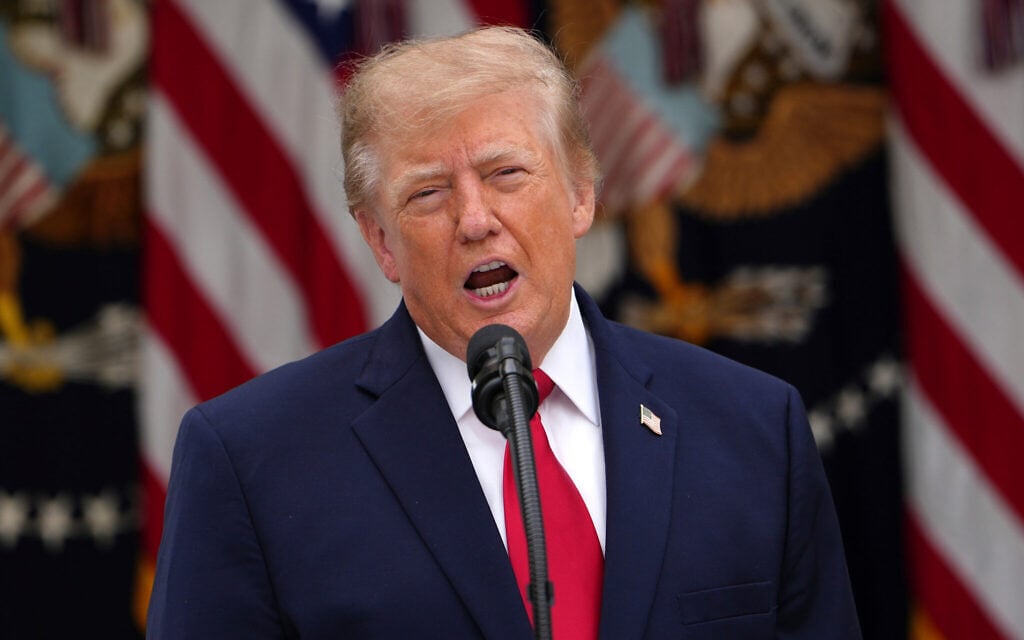
US president says Israeli officials want him him to be involved in Netanyahu's reelection campaign; says US won’t nuke Iran as he considers dropping ‘Mother of All Bombs’
Tel Aviv Stock Exchange research shows stocks typically sag before votes that end in stalemate, unlike those that result in stable governments, but it all evens out within months anyway
Mordechai David and other provocateurs disrupt screening of film encouraging conscientious objection to military service; police don't show up until after they leave
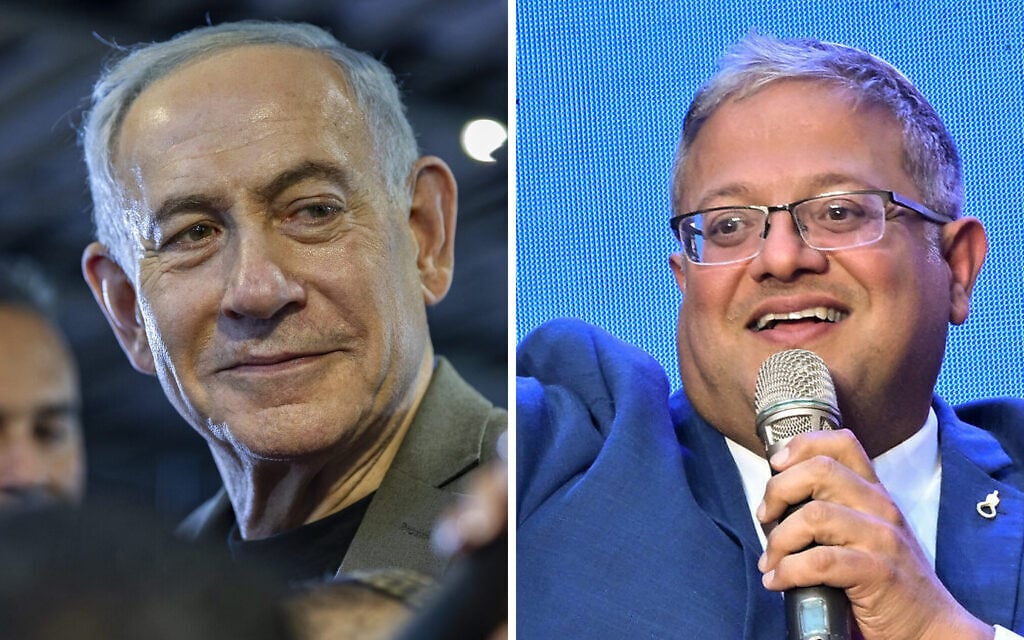
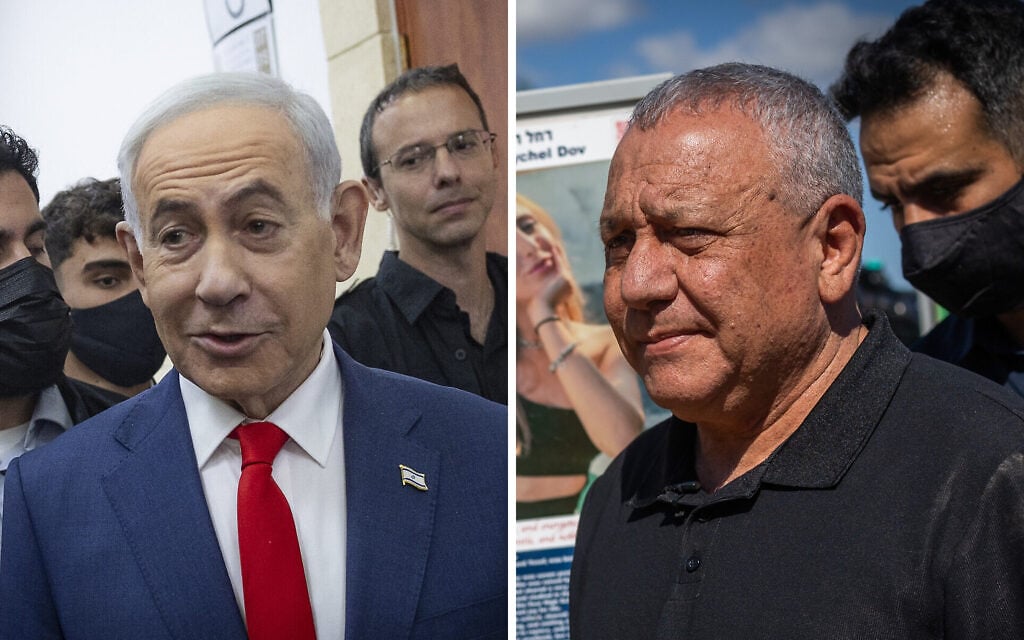
Netanyahu says portfolios sought by far-right politician must stay with Likud; Ben Gvir says premier planning a coalition with Eisenkot: 'The cat's out of the bag'
The series continues as we report on developments following April’s historic election and on the steps taken since then by the Tisza government. This week, we cover the following topics:
Another blow for Hungary’s richest man;
New chief prosecutor nominee, plus a former chief prosecutor ready to testify on political pressure;
Parliament has adopted the new child-protection law;
A state secretary has unexpectedly left the government;
Orbán to keep quiet on one of Hungary’s most important national holidays;
Ukraine adopts the minority education law;
More EU funds and money from the Norway Grants have become available.
Another blow for Lőrinc Mészáros
Last Friday (9 October), prime minister Péter Magyar and Dávid Vitézy, minister for transport and investments, announced that the state was suspending implementation of one of Hungary’s largest rail projects – the Budapest southern circular railway, and will launch a new public procurement procedure.
The works had been carried out by V-Híd, the most profitable company of Lőrinc Mészáros, who became Hungary’s richest man during Viktor Orbán’s premiership.
However, the European Court of Auditors uncovered serious public-procurement irregularities: V-Híd may have colluded with the company that drafted the project plans and thus already possessed information at the time of the tender that its competitors did not have. Because of this, the European Court of Auditors would withdraw EU funding from the project.
The Hungarian government does not want to forfeit the EU money and make Hungarian taxpayers foot the bill for the costs of the project, which is why it is terminating the contract with Mészáros’s company and launching a new tender.
The Hungarian state had already taken away from Mészáros the right to operate a motorway section, and later also terminated the 35-year motorway concession.
Previously, one of his food-industry companies had EU funding already granted to it withdrawn, while his energy company was excluded from a call for proposals financed from the repatriated RRF funds.
New chief prosecutor nominee, plus former chief prosecutor ready to testify
On Monday (12 October), president András Baka nominated a former chief prosecutor, Péter Fejes, for the post of chief prosecutor. His first nominee, Zoltán Szathmáry, was not voted through by the Tisza group in parliament after it emerged that his brother was implicated in the so-called gold convoy case, in which a Ukrainian cash shipment was stopped and confiscated by the Hungarian authorities.
Fejes was dismissed in 2012 from his position as chief prosecutor of Vas county by Péter Polt, the chief prosecutor serving the Orbán system, citing loss of confidence. Since then he has continued to work within the prosecution service and as a university lecturer, and he has no party affiliation. For the time being neither prime minister Magyar nor the Tisza group has stated whether they support Fejes’s nomination.
Since the change of government, another former chief prosecutor, Pál Fürcht, has frequently spoken to the media. Among other things, he has claimed that the gold convoy case was created for political purposes, and that the authorities raided the Ukrainian cash couriers on Orbán’s orders.
On Sunday (11 October), Magyar sharply criticised Fürcht in a Facebook post, reproaching him for having been a servant of the system himself. According to Magyar, Fürcht constructed a criminal case, on political orders, out of the notorious nightclub altercation for which the prime minister is currently under investigation on charges of theft.
It was likewise Fürcht who left former propaganda minister Antal Rogán out of the corruption case known as the Völner–Schadl affair.
In response to Magyar’s criticism, Fürcht said he was ready to make an official statement before any authority. In parliament on Monday, the prime minister was already referring to the former chief prosecutor as a future witness.
Parliament has adopted the new child-protection law
Child protection was one of the most important topics of the campaign and played a major role in Orbán’s downfall. Magyar kept the issue on the agenda even after his government took office; most recently, last Thursday, the prime minister and the state secretary responsible for the field, Szilvia Gyurkó, presented the report on the children’s home in Bicske.
This home had been run by a director who was decorated by Orbán and later convicted of paedophile crimes, together with his deputy, who helped cover up the abuses. The presidential pardon granted to the deputy shook the Orbán government and helped lead to its collapse.
On Tuesday (13 October), parliament adopted an amendment to the child-protection law, which takes a tougher stance against media content accessible to minors that propagates sexual violence, manipulation and exploitation, and would speed up the placement of babies abandoned in hospital.
The amendment removed those homophobic passages that the Orbán government forced into law in 2021, and which the Court of Justice of the European Union also ruled to be contrary to EU law.
Fidesz, the Christian Democratic People’s Party (KDNP) and the far-right Mi Hazánk did not vote for the amendment; Magyar called this a disgrace.
A state secretary unexpectedly leaves the government
On Tuesday, András Tótth, state secretary for energy at the Ministry of Economic Affairs and Energy and minister István Kapitány’s most important aide, unexpectedly resigned.
This article continues, but the full version is available only to EUobserver.com subscribers. Visit account.euobserver.com/membership
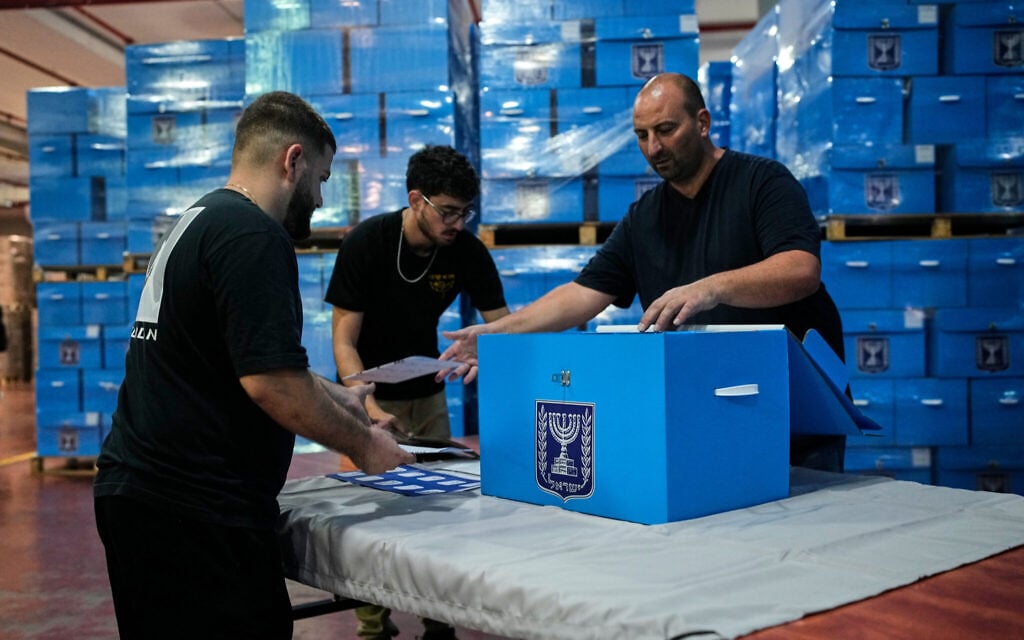
Joint List chief decries 'racist campaign' after PM's party and Religious Zionism cite unsubstantiated fraud claims; Eisenkot vows to end Hamas rule in Gaza in 18 months if elected

 Login