❌

Reading view

Plover, not a fighter: protected bird 12th man on Tasmanian cricket ground as staff mow around nest

While masked lapwings have a reputation for swooping during nesting season, Windsor Park oval’s resident plover just wants a good innings

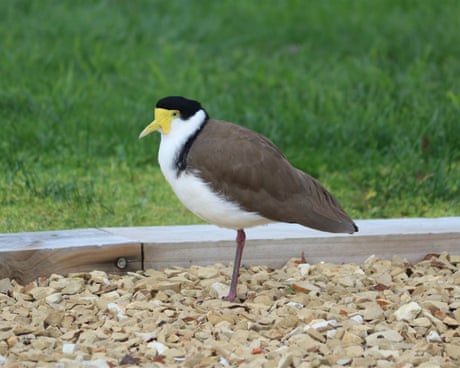
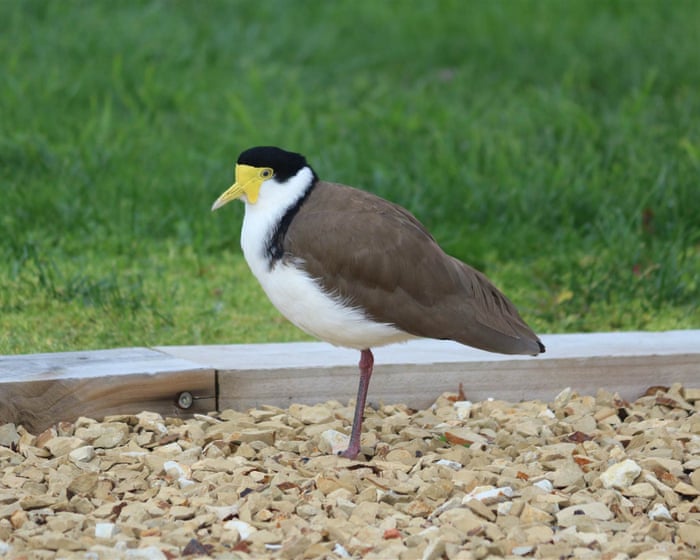
At Windsor Park in Riverside, just outside Launceston in northern Tasmania, a masked lapwing has claimed prime real estate in the middle of a community sports ground, showing complete indifference to the weekend cricket matches taking place around it.

Warming a nest of eggs, the bird has been affectionately dubbed “Faf Swoop Plessis” by locals – a play on former South African cricket captain Faf du Plessis.

Continue reading...
© Photograph: Tahlia Franklin/Department of Natural Resources and Environment Tasmania (NRE Tas).
© Photograph: Tahlia Franklin/Department of Natural Resources and Environment Tasmania (NRE Tas).
© Photograph: Tahlia Franklin/Department of Natural Resources and Environment Tasmania (NRE Tas).


  •  

From little acorns … to his 1,000th article for the Guardian country diary

As Mark Cocker approaches a landmark for the world’s oldest column in an English-language newspaper, he is still inspired by powerful encounters with nature

In the autumn of 1987, Mark Cocker sat in a field near Norwich and watched a jay burying acorns for the long winter ahead. He described the scene in his first country diary for the Guardian. Thirty-nine years on, some of those jay-planted acorns will be mature oaks now, and Cocker is completing his 1,000th diary for the world’s oldest column in an English-language newspaper.

In his next diary, he will reflect on the changing birdlife around Flint Clough, in the Peak District, where he first marvelled at rare birds aged 12 after devouring bird books in his bedroom. As a boy, he would find cuckoo, golden plover, ring ouzel and twite, a once-common bird which is now virtually extinct in England.

Continue reading...

© Photograph: Fabio de Paola/The Guardian

© Photograph: Fabio de Paola/The Guardian

© Photograph: Fabio de Paola/The Guardian

  •  

A rare family of barn owls moved into Manhattan's Upper West Side, captivating New Yorkers

This is the first documented instance of barn owls nesting in Manhattan in modern history, according to one expert, and the owls have attracted nightly crowds of people in the street eager to get a glimpse of the elusive birds.

  •  

The Incredible Journey of a Migratory Shorebird

I had never heard of the delightfully named Hudsonian godwit before this piece—yet, given their achievements, they deserve global fame. These slight, mudflat-loving shorebirds hold the record for the longest nonstop flight, clocking journeys of seven thousand miles or more that one scientist deems “technically impossible.” Rivka Galchen follows researchers from Patagonian mudflats to Alaskan bogs as they try to understand the biology behind these incredible flights. Along the way, she even gets to hold one of our little celebrities, an “otherworldly and wondrous” experience.

Migratory shorebirds are usually not a person’s first bird crush. They lack the supernatural aura of the resplendent quetzal, and they don’t go in for outlandish mating displays like that of the prairie chicken. As the Princeton University biology professor and shorebird-lover David Wilcove put it, migratory shorebirds can give an impression of being “little brown guys, buzzing around in the mud, not too big and not too small, and, whether one is a stint or a phalarope or a knot or a godwit, they’re just kind of there.” And yet, Wilcove told me, they are a birder’s kind of bird. Once people get to know them, they tend to fall in love.

  •  

Why Did Only Some Birds Survive the Asteroid That Killed the Dinosaurs? The Answer May Be Hiding in a Feather Found in T. Rex’s Poop

In 2016, paleontologist David DeMar Jr. was crawling across a rocky outcrop in northeastern Montana, hunting for fish fossils, when he spotted a dark, reddish-brown nodule about half the size of a golf ball. He picked it up and looked at it through his hand lens. On its surface was something he didn’t expect: a […]

  •  

The Saqqara Bird, an Egyptian object from 200 BC that looks like a miniature airplane

It is very common to find images of birds in the art of Ancient Egypt. We see them in paintings and sculptures with species of all kinds, from the ducks hunted on the Nile to the ibis that lent its head to the god Thoth, to the vulture that topped the white crown of Upper […]

  •  
❌