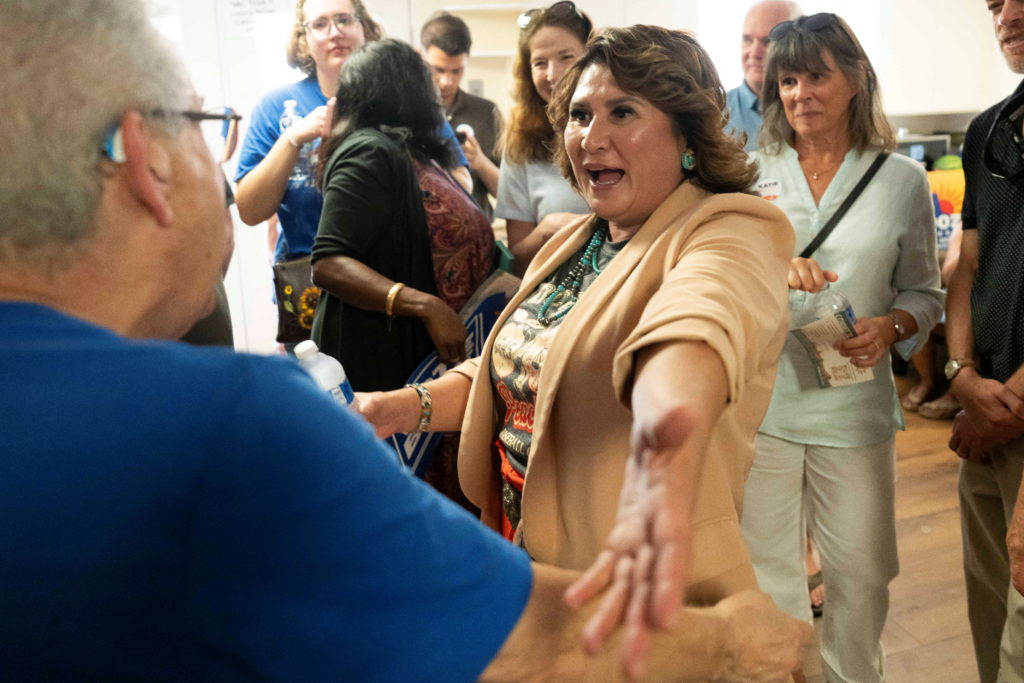
The path to a U.S. House majority runs through heavily Latino districts in states such as Arizona, Colorado and Texas, where Democrats are counting on disaffected Trump supporters to swing back their way.
California Gov. Gavin Newsom (D) campaigned with Democrats in New Hampshire only a few weeks out from the midterms. “Great to be back in New Hampshire. The energy across the Granite State is UNDENIABLE. Fired-up crowds, incredible volunteers, and so much enthusiasm heading into November 3,” Newsom wrote on social media Sunday. “Grateful to join…
Vice President Vance claimed Saturday that in “some ways” the United States has “decisively won” its war against Iran. “I would say in some ways, we have won decisively, but they’re — the Iranians, the enemy gets a vote here, and they have responded in certain ways. And so, to step back a little bit,…
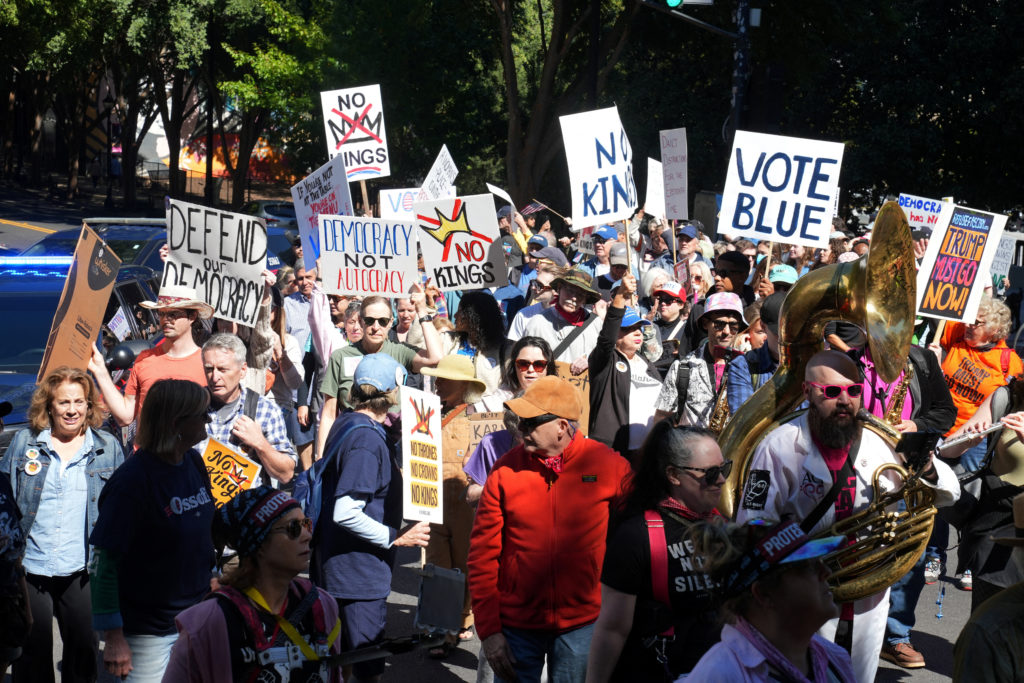
Demonstrators hold signs during a "No Kings" protest at the South Carolina Statehouse.
Sean Rayford/Getty Images
Meta says its system detected intense bursts of activity by a Claude tool.
That triggered an automatic shutdown and locked admins out of the account.
It happened during a day of rallies promoting early voting in the midterms.
Meta said Sunday that its systems suspended the No Kings movement's Instagram account during its day of action because it detected "intense" activity by a Claude tool.
The account was locked and administrators were denied access for "several hours" during nationwide rallies on Saturday to mobilize early voting in the midterms, the group said.
Meta initially said that an automatic trigger was responsible for shutting down the account "in error," but offered a fuller explanation a day later.
"Our engineering team discovered that the spike that triggered the incorrect enforcement was primarily in the account's 'reading' behavior," spokesperson Andy Stone said in an X post.
"Specifically, our network security systems detected the use of a Claude tool reading profiles, posts, and hashtags, the rate of which sharply increased (~4x volume) in intense bursts on October 17. "
Stone said the activity resembled bot traffic, prompting the system to take the account offline.
"An automated re-review of the removal action an hour later recognized that shouldn't have happened and restored the account. It unfortunately took additional time for us to straighten out the situation with admin access to the IG account.
"We want to reiterate our sincere apology for the error," he wrote.
The No Kings network, which bills itself as nonpartisan but arose last year in response to President Donald Trump's actions, said it held nearly 3,000 rallies across the country to encourage voters to cast their ballots early as a hedge against any effort to undermine turnout.
"Restricting communications about voting in the middle of an election is unacceptable," it said.
"Meta must answer for this suspension and take immediate steps to ensure it never happens again — to any account, but especially those working to inform voters and encourage participation in our democracy."
Democratic Sen. Chris Murphy of Connecticut called for an investigation into the shutdown, saying on Sunday evening that even if it was made in error, the incident was a "total indictment of Meta's outsized influence on our culture and politics."
"If it wasn't malevolence, it was likely a natural consequence of a company that is desperate to get as close to Trump as possible (and thus has a disincentive to do the basic, proactive work to be ready to support users on No Kings Day)," he wrote in a post on X.
The senator, who has advocated for stricter regulation and anti-monopoly laws against Big Tech, said Meta's significant share of the political discourse market comes with a responsibility for it to be ready for "major moments of political action."
October 18, 2026: This story was updated with public comment from Sen. Chris Murphy.
The candidates' retreat suggests that, even as reproductive rights fade from the national spotlight and polls show voters are far more likely to prioritize cost-of-living concerns, the political ramifications of pushing for new abortion restrictions remain substantial.
The hundreds of planned events were being billed as nonpartisan, though they sought to build on nearly two years' worth of No Kings marches and demonstrations by people upset with Trump's presidency.
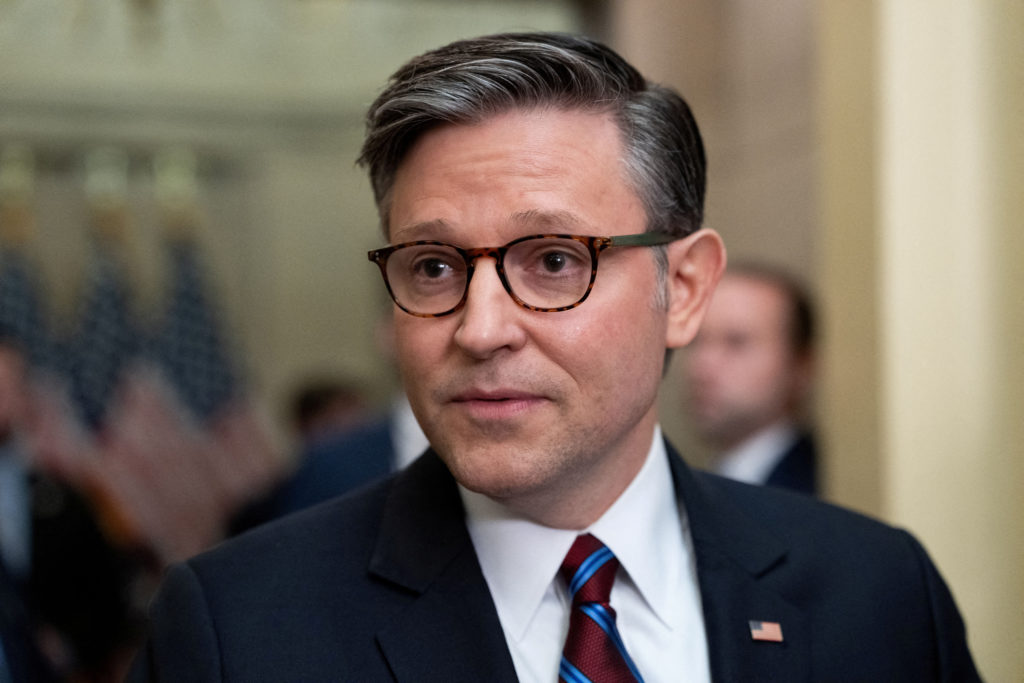
Ever the optimist, Speaker Mike Johnson said he believes Republicans will hold on to their U.S. House majority, defying a surge of Democratic momentum in the final stretch of the midterm elections that will determine control of Congress.
Justice Department actions against state election laws highlight growing national conflict over voter registration lists and mail-in voting security.
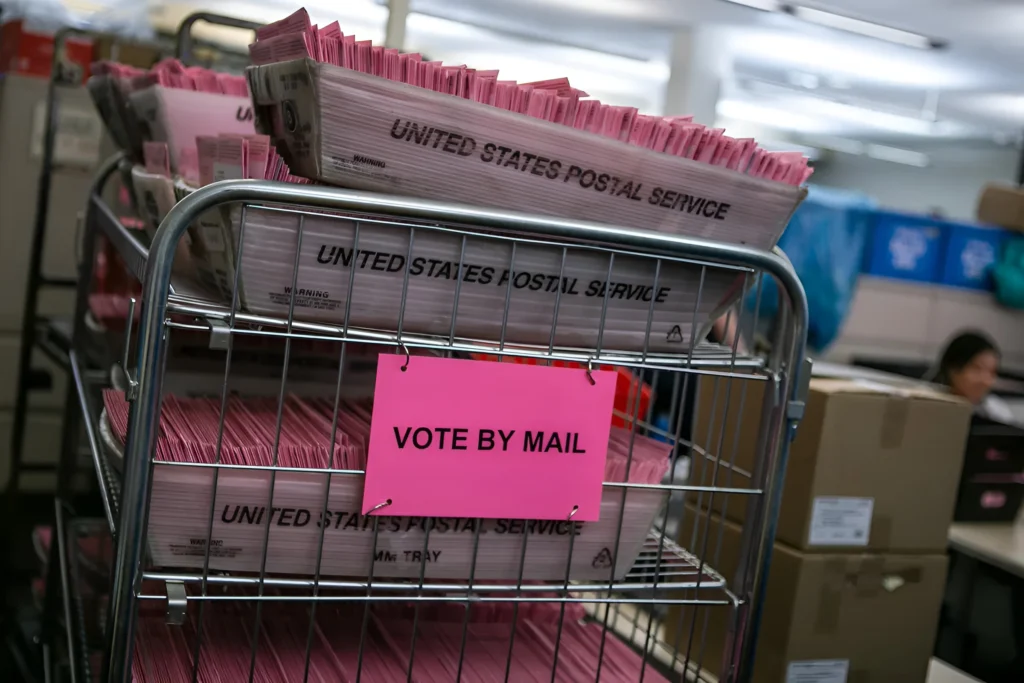
Mail-in voting is an established mechanism in the United States election system. It lets eligible citizens cast their votes by mail instead of going to the polling place on Election Day.
Over the past decades, state governments have modified vote-by-mail laws to lower administrative costs, increase turnout, and provide alternative access for citizens who face logistical challenges on election days.
In this in-depth article, we will explore the history of mail-in voting, its characteristics, and why the current Trump administration has sought to alter this voting system.
History and the Rationale for Mail-In Voting
Remote voting in the United States dates back to the American Civil War (1861 – 1865). During this war, Union and Confederate soldiers who were away from their districts were permitted to submit written absentee ballots so that deployment would not disenfranchise them.
Throughout the 20th century, the mailing vote expanded beyond military personnel. State governments initially granted absentee ballots to civilians who were ill, physically disabled, or traveling for business on Election Day. Later, lawmakers introduced no-excuse absentee voting, which allowed registered voters to request a mail ballot without providing a specific reason.
In November 1998, Oregon became the first state to conduct all primary elections entirely by mail. By 2000, Oregon conducted the first mail-in presidential election in the U.S., achieving a registered voter participation of over 80 percent. Following Oregon’s model, other states, including Washington, Colorado, Utah, and Hawaii, transitioned to universal vote-by-mail systems after 2020.
Several practical factors explain the implementation of mail-in voting. For voters, it eliminates common obstacles associated with in-person voting, such as work, child care responsibilities, and long lines at precinct polling sites.
For the U.S. administration, state-wide vote-by-mail reduces the need for temporary poll workers, lowers equipment purchases for physical polling locations, and decreases operational expenses on election days.
A US judge declined to block President Trump's executive order tightening rules on mail-in voting, but left the door open for the Democratic Party to challenge it again after the administration takes further steps to implement the measure https://t.co/VDZv3TJZdIpic.twitter.com/cGujpkjY4o
Mail-in voting operates through structured legal protocols designed to maintain ballot security and track individual submissions. State election offices verify registered voter addresses and signatures, using databases before mailing official ballot materials.
After a voter completes their ballot, they can return it by U.S. Postal Service or place it in a designated local election drop box. Upon receipt, election workers process the ballot through signature verification procedures.
Empirical research shows that voter fraud in mail-in systems is extremely rare. Academic studies and data compiled by the Brennan Center for Justice indicate that the total rate of mail voting fraud over general elections averages 0.000043 percent, or roughly four cases for every 10 million mail ballots cast.
U.S. State election officials rely on barcoded envelopes, secure chain-of-custody procedures, and signature checks to prevent duplicate submissions and preserve election integrity.
Nearly 1,400 North Carolina voters are getting letters questioning their citizenship, all because the Trump administration's SAVE system flagged them.
The state elections board’s vague letter asks these voters to prove they’re citizens, even as the board acknowledges the system… pic.twitter.com/UJPyeLn0VM
Institutional Mechanics and the 2020 Pandemic Pivot
Mail-in voting requires precise administrative coordination between state election agencies, postal services, and voters. When the U.S. implements universal mail-in voting or no-excuse absentee voting, election authorities cross-reference voter registration databases to ensure accurate residential addresses.
Once ballots are printed, they are mailed to registered voters with instructions, a secrecy sleeve, and a pre-paid or postage-guaranteed return envelope.
Security throughout this process relies on multi-step verification systems. When a voter completes their ballot, they place it inside the secrecy sleeve, seal it within the signature-required return envelope, and sign a legal affirmation printed on the exterior.
Election offices process these returned envelopes by running them through automated sorting machines and optical scanners that capture the voter’s signature. Bipartisan teams of election workers compare the signature against official registration records, such as state driver’s license files or original voter registration cards.
The COVID-19 pandemic in 2020 triggered a transformation in U.S. elections. To prevent viral transmission at crowded indoor polling places, numerous states rapidly expanded mail-in voting options, allowing millions of citizens to vote remotely.
According to reports from the MIT Election Data and Science Lab, the voters by mail grew to 46 percent nationwide in 2020, more than doubling the fraction recorded in 2016. Conversely, the share of voters casting ballots in person on Election Day dropped from 60 percent to 28 percent.
Following the pandemic emergency, several states, including California, Washington, Oregon, Colorado, Utah, Nevada, and Vermont, permanently codified universal vote-by-mail systems into law, establishing remote ballot delivery as a permanent fixture of their electoral infrastructure.
A US federal judge has blocked restrictions on mail-in voting backed by US President Donald Trump.
Judge Emmet Sullivan ruled the measures would likely violate a 2021 settlement requiring expedited handling of mail ballots by the US Postal Service.
Partisan Realignment, Demographic Realities, and the Red Mirage
The widespread adoption of mail-in voting reshaped traditional patterns of voter participation and introduced complex dynamics in how election results are reported.
Despite assumptions that mail-in voting consistently favors a single political party, demographic and class analyses demonstrate that vote-by-mail systems benefit diverse working-class populations across the political spectrum.
Low-wage workers, hourly wage earners, agricultural laborers, and caretakers often lack the schedule flexibility required to stand in long lines during restricted polling hours.
Universal mail-in voting removes these temporal and economic barriers, facilitating participation for working families in both urban centers and rural conservative districts, such as in Utah and Montana, where mail-in voting has enjoyed long-standing bipartisan acceptance.
The differing timelines required to process mail-in ballots also created a phenomenon known as the “red mirage.” Because mail-in ballots require time-intensive signature verification, flattening, and manual extraction before they can be counted, many states process in-person votes first on election night.
This operational sequence frequently caused early vote counts to show a temporary lead for candidates who performed strongly among in-person voters, while subsequent processing of mail-in ballots altered vote totals over the following days.
This structural delay in reporting complete totals became a central focal point in post-election legal disputes and public debates over election administration.
🚨 JUST IN: Trump hints he could declare a national emergency for the midterms pic.twitter.com/YLdHlqyktS
— Republicans against Trump (@RpsAgainstTrump) August 11, 2026
Donald Trump’s Stance and Legal Action Against California
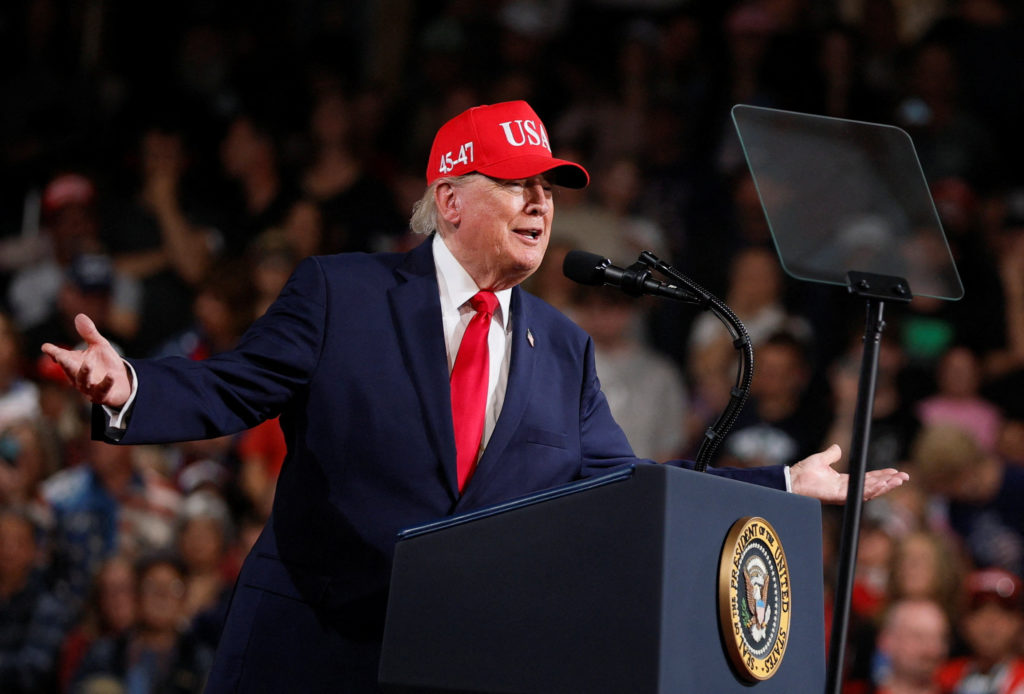
President Donald Trump has maintained a vocal opposition to mail-in voting. In public addresses, Trump has repeatedly alleged that universal mail-in voting systems lead to widespread election fraud and unfair outcomes.
Despite using absentee mail-in voting himself in past state elections, Trump argued throughout his campaigns and current presidency that expanding mail-in voting undermines public trust in election administration.
The Trump administration has taken direct executive actions aimed at curtailing mail ballot access. Policy changes and administrative decisions have altered operational procedures at the U.S. Postal Service, including adjustments to sorting equipment and delivery guidelines.
The Department of Justice filed a federal lawsuit targeting California’s election procedures. California established a universal mail-in voting model by enacting legislation requiring county election officials to send a mail ballot to every active registered voter in the state.
The lawsuit by the federal government argued that California’s system creates risks of unlawful voting and challenged state oversight of its official voter registration lists.
Specifically, the federal complaint alleged that California had failed to conduct proper voter roll maintenance, citing federal lists regarding individuals flagged as noncitizens who were sent mail ballots.
The lawsuit sought a court order to block state election officials from counting certain mail-in ballots ahead of the elections. In response, California state officials, including the Attorney General and Secretary of State, defended the legal validity of universal mail-in voting.
State leaders noted that California law relies on signature matching, secure drop-box monitoring, and continuous voter file updates to verify voter identity and maintain system integrity, while arguing that federal interventions violate laws restricting voter roll changes close to an election. Courts continue to review these challenges regarding federal authority over state-administered election laws.
.@SenatorSlotkin (D-MI) warns of President Trump using a national emergency "ruse" to gain American trust: "If you hear in the next 34 days that there is a new security threat… that somehow requires federal law enforcement or the military… an alarm bell should go off." pic.twitter.com/fFPyLjjJs6
Mail-in voting remains an essential tool in modern American election administration. From its origins, mail-in voting has provided voters with a flexible, low-cost option to participate in national and local elections.
While the expansion of vote-by-mail systems during the 2020 pandemic increased overall voter turnout, it also intensified political debate over election administration and security measures.
Although empirical data show that voter fraud in mail-in systems remains extremely rare, legal and political challenges, such as federal lawsuits targeting state mail-in procedures, continue to shape the discussion surrounding electoral access.
The ongoing debates over vote-by-mail illustrate a continuing effort to balance security with public access in the U.S. election system. As states enact laws to regulate, expand, or limit mail ballot procedures, the future of mail-in voting will remain a central topic in discussions about democratic participation and legal policy.
Many of the Democrats' ads accuse Republican opponents of siding with the president over voters, particularly on issues like tariffs and the Iran war, which they blame for jacking up costs.
Democratic strategist James Carville said Thursday that Republicans are “highly likely” to lose House control next month, despite a significant financial advantage and several successful redistricting measures. Carville, in an appearance on NewsNation’s “Cuomo,” doubled down on his analysis giving Democrats the leg up with the midterm elections just more than two weeks away. He…
Cook Political Report, a nonpartisan election handicapper, shifted 11 more House seats toward Democrats this week, many in red states as the midterms inch closer. Cook has moved dozens of House seats away from Republicans in recent weeks as the political environment improves for Democrats, driven by President Trump’s unpopularity in the polls and growing…
High gas prices are harming many Americans, forcing them to cut back or reduce their savings.
On Thursday, the U.S. Commerce Department release data showing that retail sales rose 0.8 percent in September to US$745 billion, largely driven by higher gasoline prices that boosted consumer spending at gas stations.
Excluding sales at gas stations, retail sales increased just 0.2 percent during the month, suggesting underlying consumer demand remained subdued.
While rising retail sales are generally seen as a sign of economic resilience, analysts said the September increase offered a less encouraging picture of consumer spending, as higher fuel costs accounted for much of the growth.
“Retail sales definitely looked weak in September,” said Dean Baker, a macroeconomist and co-founder of the Center for Economic and Policy Research. Experts also noted that high gas prices are harming many Americans, forcing them to cut back or reduce their savings.
Mike Johnson:
“Everybody's frustrated about fuel prices, but that's not related to policies. It's not related to the Republicans. This is related to the Strait of Hormuz.”
It is absolutely related to policy and Trump’s war on Iran, which Republicans wholly support. He is a…
Gary Hufbauer, a nonresident senior fellow at the Peterson Institute for International Economics, said: “About 50 percent of households are living paycheck to paycheck, and if they are squeezed by gasoline prices, they have to cut back elsewhere. But the other 50 percent just reduce their savings to pay for higher gasoline prices.”
High energy prices could create a new wave of inflation. “The longer energy stays elevated, the more likely it generates a new wave of inflation. Another six months would run this risk,” Hufbauer said.
The data were released just weeks before November’s midterm elections, at a time when underlying prices are already high and gasoline prices threaten to make matters even worse. Republicans could take a beating at the polls over voters’ displeasure with high prices that show no sign of coming down.
However, even if Democrats take control of Congress, the party will have its work cut out after the dust settles, as pushing down gas prices means finding a solution to the war in Iran, which seems improbable at the moment.
At the same time, underlying inflation continues unabated. Experts said getting back to pre-COVID price levels requires the Fed to step in and raise interest rates. However, the central bank has shown no desire to hike rates to the 5 percent level, or higher, that economists say is needed to tame inflation.
Some experts noted that the GOP is caught between a rock and a hard place. Brookings Institution Senior Fellow Darrell West said, “Republicans are caught between fighting inflation and a slowing economy, which is a big problem for them in November.”
“Gas prices should drop when the Iran War ends, but it is not clear how (Donald) Trump brings that conflict to a reasonable conclusion,” West said.
YouTuber Jake Paul joined President Trump for an Ohio rally ahead of the midterm elections.
Aaron Schwartz/Stringer/Getty; BI
The battle for voters in the 2026 midterm elections is playing out on the TikTok For You Page.
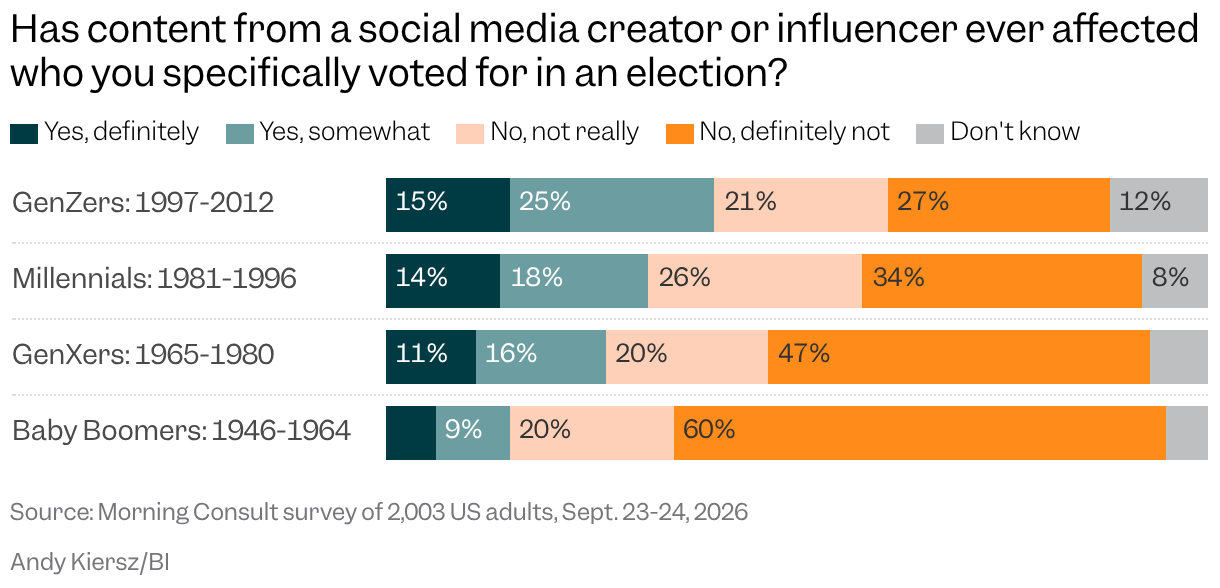
One in four Americans say creator content has influenced who they voted for.
Political candidates are scrambling to connect with more creators in order to reach voters.
Content creators are influencing much more than our coffee orders and skincare routines.
About one in four Americans (26%) say influencer content has affected who they've voted for, according to a survey of around 2,000 US adults conducted by Morning Consult in September, commissioned by Business Insider.
Creator content is an "underestimated avenue" for political campaigns, said Nicole Dunger, a founding partner at the marketing firm People First, which works with candidates and advocacy groups on their creator strategies. "It is a real player and a big player in this space now."
If 2024 was the podcast election, 2026 is shaping up to be the influencer one. Instagram and TikTok creators have joined Fox News hosts and personalities like Joe Rogan as go-to sources of information for voters.
Influencers like Jake Paul and Hasan Piker have emerged as main characters in politics this year.
Paul recently joined President Donald Trump in Ohio for a midterm rally, posting TikTok clips of his Air Force One flight. Piker, meanwhile, has become a campaign ally for progressives like Michigan's Abdul El-Sayed and a negative talking point for Fox News commentators.
As online attention has become a key asset in politics, influencers are helping candidates break through the noise.
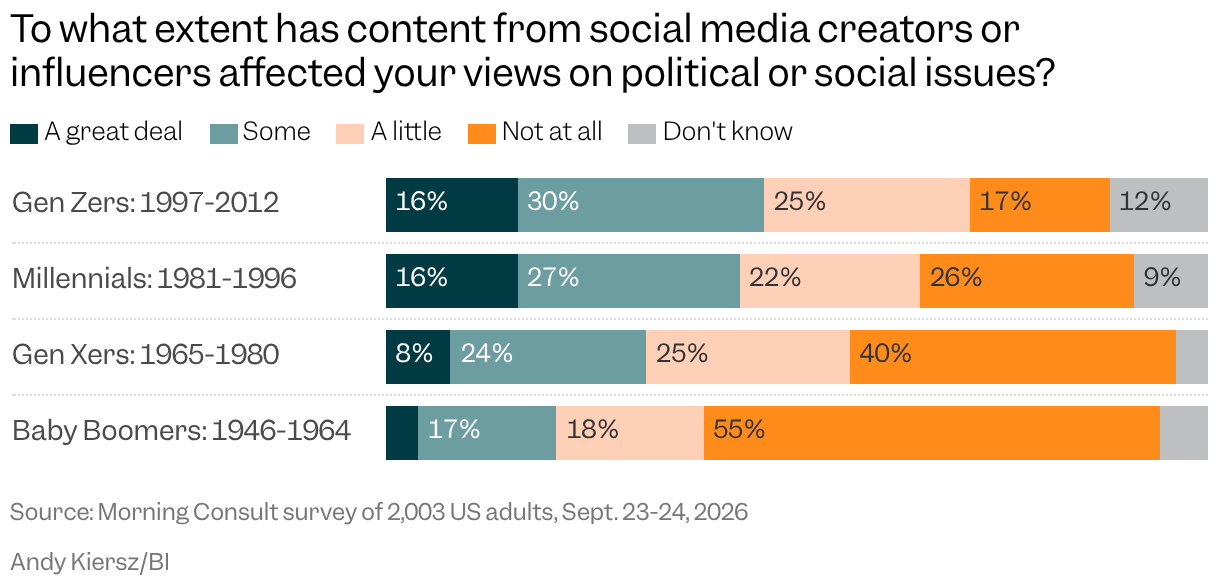
A little over half of US adults (56%) told Morning Consult that creator content had affected their views on political or social issues to some degree. That figure jumped among Gen Z respondents, where close to three in four respondents said their views had been swayed by influencer posts.
For campaigns, the challenge is identifying the right creators to work with, particularly when many influencers don't regularly talk about politics.
"You have to have your base of people, your core supporters, and then you have to have a broader cultural space of people who don't always talk about politics," said Parker Butler, a managing partner at the digital strategy firm Luminary Strategies, which works on social strategy with Democratic candidates like James Talarico. "It's worth having different pockets of creators for different purposes."
Reaching creators with smaller followings than Piker (about 3 million Twitch followers), or Paul (around 21 million YouTube subscribers) is a focus in 2026, Butler said.
He said the goal is to shift the creator outreach strategy from "this person has a million followers" to identifying influencers who work in a particular niche a campaign is trying to reach.
Political chatter is moving from TV to YouTube
More and more, political discussions are playing out on digital platforms, whether that's podcasts, YouTube videos, or Twitch streams.
YouTube was the top source for political and election news among US adults in September, narrowly beating out TV, print, and X (formerly Twitter), according to a survey from Syracuse University.
About one in five Democrats and Republicans said podcast appearances could make them "more likely to support a candidate," according to a July through August survey of likely midterm voters from the podcast industry group Sounds Profitable. A smaller share of Independents (11%) said podcasts could make them more likely to back a candidate.
While campaigns see attention moving online, they're still spending the bulk of their ad budgets on TV.
Part of that may be because they're accustomed to buying TV spots. They're also reckoning with the fact that influencer marketing is harder to predict and measure, particularly as social-media feeds become more personalized and algorithmically driven.
"It can be very challenging, but you see the results in the end," Dunger said. "It's the same with door knocking. We know door knocking somehow works and has worked for so long, but it's not like we have those direct measurements."
On a recent episode of the Bulwark podcast, journalist Ron Brownstein described the election as a contest between “the wave versus the wall.” The wave being voter anger and President Donald Trump’s plummeting popularity. The wall being structural impediments to voters’ voices, such as gerrymanders and the Republican Party’s stark spending advantage. Now we know […]
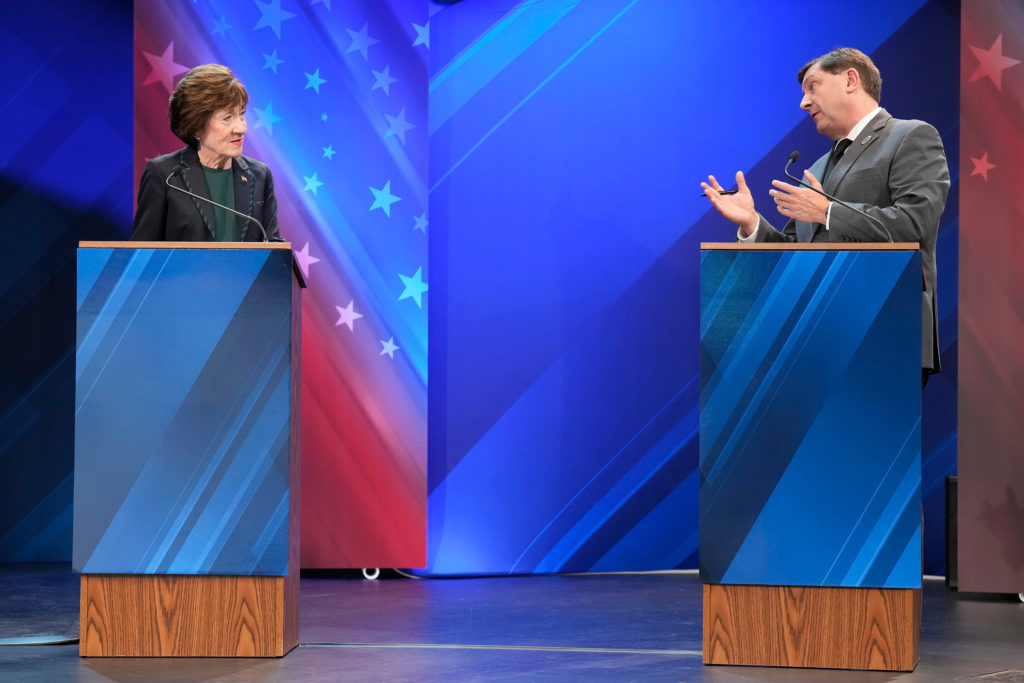
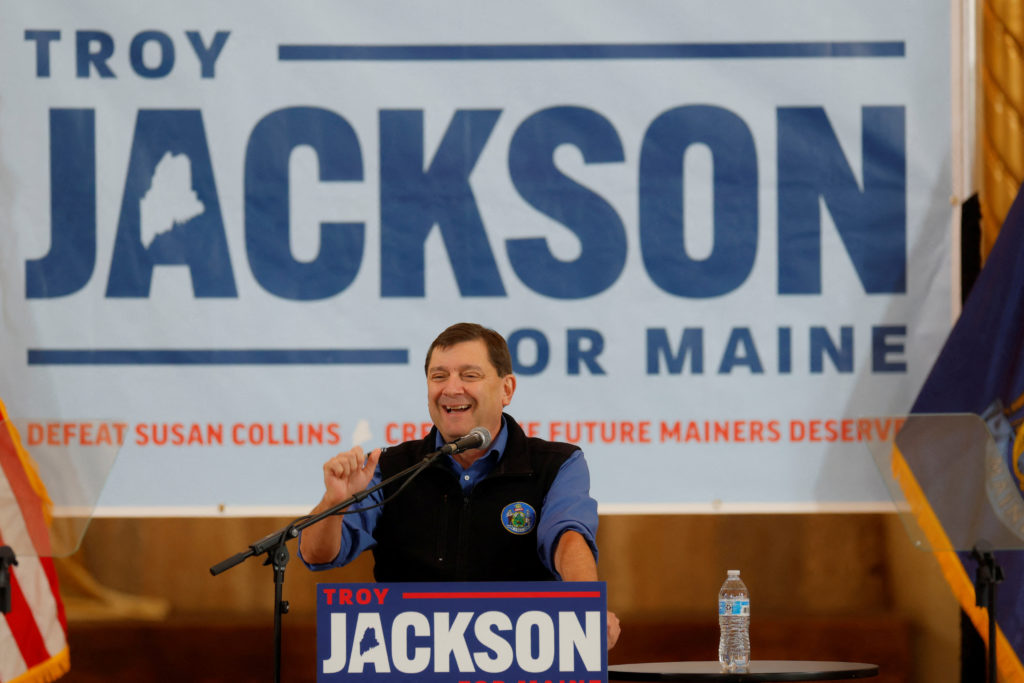
Sen. Susan Collins, R-Maine, and Democratic challenger Troy Jackson will meet on the debate stage Thursday in one of the nation's most closely watched races during this midterm election cycle.
Fox News’s Brit Hume on Wednesday said Republicans may face rough results in the upcoming midterms. “Republicans have to worry that something like that may happen to them in this race, where not only do they lose the close ones, but they lose a lot that weren’t even thought to be close, and you’ve got…

 Login