❌

Reading view

Obama condemns comments by ‘border czar’ that Ilhan Omar could ‘of course’ be denaturalized

Ex-president urges Americans to defend congresswoman, saying ‘there’s no reason to believe it will stop with her’

Former US president Barack Obama condemned comments by Donald Trump’s “border czar” that the Republican presidential administration could “of course” strip Democratic congresswoman Ilhan Omar of her citizenship and deport her.

Obama wrote Sunday morning, on X, that “the full weight of the federal government is being brought down on a law-abiding elected official because she has dared to criticize the president.”

Continue reading...

© Photograph: J Scott Applewhite/AP

© Photograph: J Scott Applewhite/AP

© Photograph: J Scott Applewhite/AP

  •  
  •  

BBC Bitesize Accused of ‘Brainwashing’ Schoolchildren with Left-Wing Views on Migration and Net Zero

The BBC has been accused of using its Bitesize website to push open borders, Net Zero and woke ideology on children as young as 11, teaching them that more immigration is great and anyone who disagrees is likely a bigot.

The post BBC Bitesize Accused of ‘Brainwashing’ Schoolchildren with Left-Wing Views on Migration and Net Zero appeared first on The Daily Sceptic.

  •  
  •  

‘How do we welcome the stranger, with humanity or anger?’ The forgotten Germans who found refuge in Ireland

A new play revisits the story of Ireland’s 18th-century German refugees, whose experience of prejudice and exclusion resonates with today’s debates over immigration

In the early 18th century, a few thousand Germans fled religious persecution and near starvation in their homeland and ended up in remote rural Irish villages. The Irish Palatines, as they were known, were poor, conservative homesteaders who couldn’t speak the language and were the object of suspicion and violence – precursors to the displaced Syrians or Afghans of the past decade.

Their story is told in Refuge, a co-production between Staatstheater Mainz and the Irish company Fishamble. Part love story, part social commentary, it is performed by a mixed cast, mainly in English but with some German interludes.

Continue reading...

© Photograph: Andreas Etter

© Photograph: Andreas Etter

© Photograph: Andreas Etter

  •  

ICE agent who crashed into man in Texas was targeting suspect who died years ago, family says

Federal officer slammed vehicle into a construction worker while pursuing a man who died in similar circumstances

A federal officer slammed a vehicle into a Houston construction worker and broke his leg, believing him to be a man who apparently died years ago, the dead man’s family said on Friday, further calling into question the account given by US Immigration and Customs Enforcement (ICE).

The worker, 48-year-old Miguel Parra Hernandez of Mexico, remains hospitalized with multiple leg fractures and needs reconstructive ankle surgery, according to FIEL, a Houston-based immigration advocacy group. At a news conference on Friday, the group said the alleged suspect’s family had shared documentation proving his death.

Continue reading...

© Photograph: Raquel Natalicchio/Houston Chronicle/AP

© Photograph: Raquel Natalicchio/Houston Chronicle/AP

© Photograph: Raquel Natalicchio/Houston Chronicle/AP

  •  

Italy and Spain Move Towards Ending Schengen Border Controls After Meloni–Sánchez Talks

Italy has extended checks on travellers from Spain for another week, but talks between Giorgia Meloni and Pedro Sánchez have opened the way for an end to reciprocal restrictions imposed after the migration crisis in Ceuta.

Italy and Spain have agreed to work towards ending their reciprocal Schengen border controls following discussions between Prime Ministers Giorgia Meloni and Pedro Sánchez at the European Council summit in Brussels. Rome nevertheless extended its restrictions for another seven days on Friday, 16 October, as the two governments consider how to bring their respective measures to an end.

The decision marks a possible turning point in a dispute that has disrupted travel between two of the European Union’s largest countries since the summer. According to the notifications recorded by the European Commission, the restrictions concern air and sea connections between Italy and Spain, which do not share a land border.

The two governments have instructed their interior ministers to consider alternative arrangements over the coming week. Although neither side has formally withdrawn its measures, the agreement to coordinate their removal suggests that both capitals are seeking a way out of an increasingly uncomfortable confrontation over migration and internal European security.

How the Ceuta crisis reached Schengen

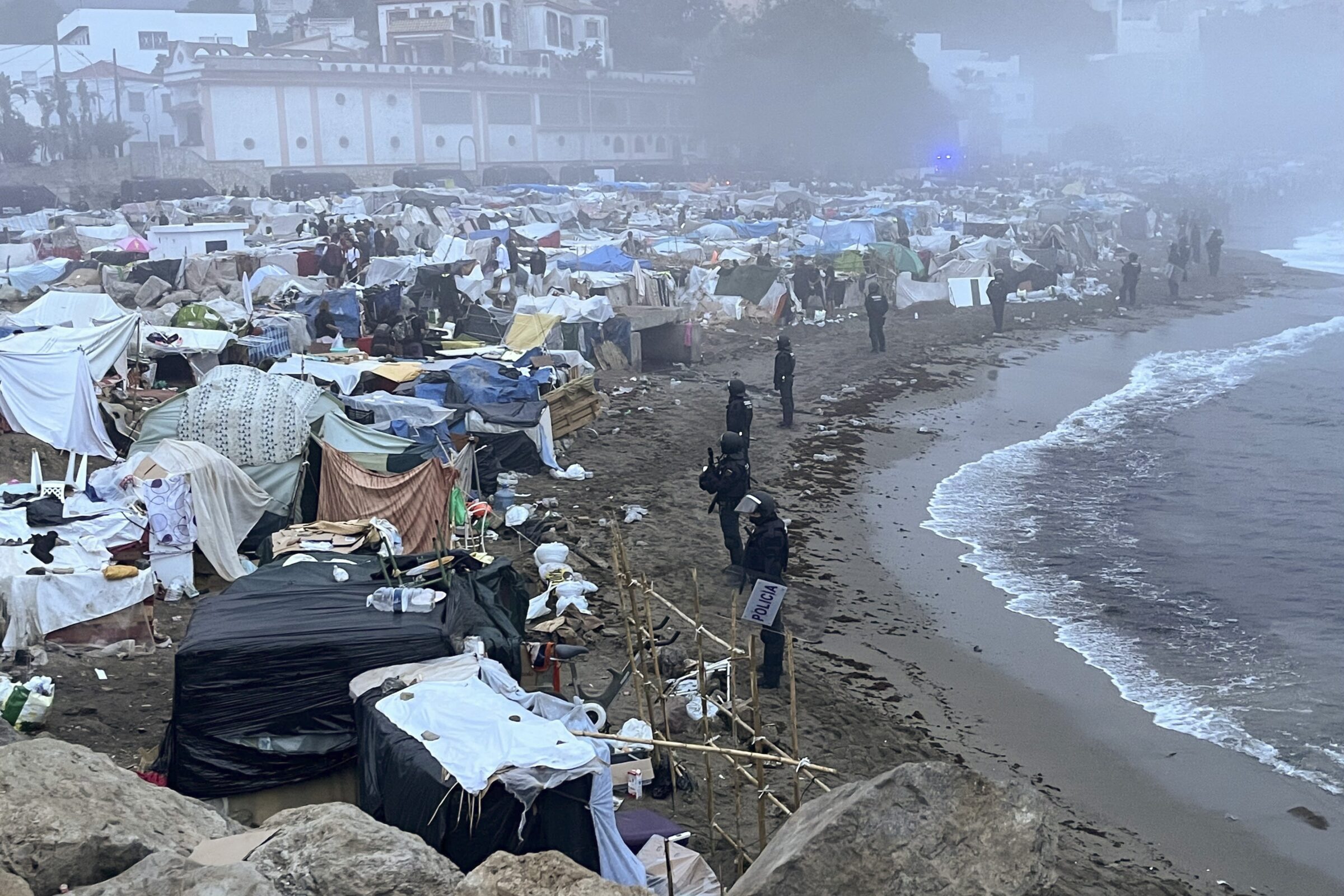
The dispute began after an extraordinary influx of migrants from Morocco into Spain’s North African enclave of Ceuta in late July. More than 72,000 people crossed the border, prompting serious questions about the management of the EU’s external borders and the possibility of onward movements into other member states.

Italy responded by introducing checks on passengers arriving from Spain, arguing that the situation created risks for public order and internal security. Rome also raised concerns about the possible movement of individuals presenting security threats, although the extent of any such movement remained disputed.

Madrid rejected the justification and introduced reciprocal measures. What began as an emergency response to events on an external border consequently developed into a disagreement about whether one Schengen member could impose restrictions on another on the basis of anticipated migration movements.

EU Today examined the original Spanish retaliation in August, when the dispute first threatened to turn temporary border controls into an instrument of political pressure.

The wider consequences of the Ceuta incident have raised questions about the vulnerabilities exposed at the EU’s external border and the effectiveness of common European migration and crisis-response policy.

The limits of temporary border controls

Schengen is built on the principle that people can travel between participating countries without routine internal border checks. Member states nevertheless retain the right to reintroduce temporary controls in response to serious threats to public policy or internal security, subject to the requirements of EU law.

The difficulty lies in determining when those exceptional powers are justified. Italy has maintained that the Ceuta crisis warranted precautionary action. Spain has argued that controls imposed specifically on travellers from its territory were unjustified and discriminatory.

These opposing positions matter beyond the two countries. If concerns over irregular arrivals in one member state become sufficient grounds for another to introduce sustained checks, the distinction between Europe’s external borders and its internal travel area becomes increasingly difficult to maintain.

The operational results have also entered the political argument. Italian figures cited during the dispute indicate that nearly half a million passengers were checked during the first month, with 31 refused entry. Those numbers demonstrate that the measures were substantial, but do not by themselves establish whether the original security concerns were proportionate to the restrictions imposed.

Madrid, meanwhile, has maintained that migrants involved in the Ceuta influx had not moved onwards to mainland Spain in the manner suggested by Italian concerns.

Meloni and Sánchez seek a practical compromise

The latest discussions offer both governments a route towards de-escalation without formally conceding their underlying positions. Meloni can present the additional week of controls as a continuation of Italy’s security precautions, while Sánchez can point to an agreement to prepare their coordinated removal.

The two prime ministers remain politically divided on migration. Meloni has consistently argued for stronger border enforcement and deterrence, while Sánchez has defended an approach incorporating legalisation and labour-market integration for migrants already living in Spain.

Those disagreements were also visible during the Brussels summit, where European leaders returned to the question of migration management and the consequences of national decisions for the wider Union.

For Brussels, the immediate concern is whether the two governments can replace competing national restrictions with arrangements that address security concerns without unnecessarily interrupting movement between Schengen countries.

A coordinated end to the controls would not resolve the underlying problems exposed by Ceuta. It would, however, remove one of the more unusual internal consequences of that crisis and demonstrate that political negotiations can still prevent emergency border measures from becoming semi-permanent.

The decisive period is now the coming week. Whether the controls expire as planned will depend on the discussions between the Italian and Spanish interior ministries and their ability to agree practical alternatives.

  •  

Ilhan Omar’s Sister’s Phone Was Seized Before Search of Lawmaker’s Home

A criminal investigation into the lawmaker’s immigration process advanced after federal investigators reviewed family text messages from a seized phone.

© J. Scott Applewhite/Associated Press

A Homeland Security officer carries a box from the Washington residence of Rep. Ilhan Omar, during a search on Monday.
  •  

Trump Loses Yet Another Sanctuary City Case—This Time Against New York City

NA

Yesterday, in United States v. City of New York, yet another federal court ruled against the Trump administration in a sanctuary city case. "Sanctuary" jurisdictions are state and local governments that restrict their law enforcement agencies and other employees from assisting federal immigration enforcement and deportation efforts in various ways. In this case,  Judge Reyes of the US District Court for the Eastern District of New York upheld New York City laws restricting local law enforcement information-sharing and other assistance to federal immigration enforcers.

The court ruled that federal law does not preempt these policies, and that if if it did, there would be a violation of the anti-commandeering requirements of the Tenth Amendment:

Even were the Court to find that the United States has standing and the challenged provisions are preempted—both answered in the negative above—United States' claims would still fail because the anticommandeering doctrine of the Tenth Amendment to the Constitution of the United States precludes relief.

"The powers not delegated to the United States by the Constitution, nor prohibited by it to the States, are reserved to the States respectively, or to the people." U.S. Const. amend. X….

The United States argues it is "not seeking to compel participation in immigration enforcement … but rather to remove Defendants' express and implicit obstacles to the Executive's duty to carry out its immigration enforcement duties…." New York City replies "if accepted, [the United States' claims] would require the City to affirmatively assist the federal government in enforcing immigration laws in violation of the Tenth Amendment's anticommandeering doctrine…." New York City is correct, at least partially.

The United States seeks injunctive and declaratory relief to preempt the challenged provisions… If the challenged provisions were struck, while New York City would not be obligated to carry out federal immigration enforcement, they would be barred from prohibiting their agencies and employees from engaging in federal immigration enforcement by expending personnel, property, and other resources to (1) detain individuals and (2) implement inter-agency information-sharing, including disclosing personally identifiable information, all potentially in violation of state law. And of course, there is nothing within federal law that obligates states to participate in federal immigration enforcement or compels states to comply therewith.

The United States' preemption arguments amount to nothing more than a backdoor around the Tenth Amendment and rest on a false distinction between (a) compelling local governments' participation in federal immigration enforcement and (b) prohibiting local governments from dictating how their personnel and other resources may be utilized towards federal immigration enforcement….. "

The basic principle—that Congress cannot issue direct orders to state legislatures—applies" to commands for "affirmative action" and the imposition of "prohibitions." Murphy [v. NCAA], 584 U.S. at 455 (citation modified). If states cannot remain free to control their agencies and employees to resist federal immigration enforcement, which is within states' constitutional prerogatives, the Tenth Amendment anticommandeering doctrine means nothing.

This reasoning is correct. And it is notable that this ruling - like many others protecting sanctuary cities - relies heavily on the Supreme Court's 2018 anti-commandeering decision in Murphy v. NCAA, written by Justice Samuel Alito (probably the Court's most conservative justice), and joined by all the other conservatives then on the Court. In that case, the Court emphasized that the anti-commandeering doctrine bars Congress from dictating the actions of state and local legislatures, regardless of whether the dictation takes the form of an affirmative mandate, or a prohibition against legalizing or barring something under state law.

Judge Reyes also rejects the administration's argument under the "intergovernmental immunity" doctrine, which bars states and localities from directly regulating federal agencies or "discriminating" against them. Like the court in the recent case of United States v. New Jersey, he correctly emphasizes that there can be no discrimination when there is no other comparable activity that gets more favorable treatment under the sanctuary jurisdiction's policies:

"Differential treatment is critical to a discrimination-based intergovernmental immunity claim." New York, 814 F. Supp. 3d at 282….; "[A] comparator is necessary." New York, 810 F. Supp. 3d at 353. The United States discrimination claim fails for lack of a comparator.

The United States does not and cannot identify a similarly situated entity. State and local agencies and their officers do not enforce immigration law, nor do members of the public…  As the United States concedes, the Federal Government holds the "exclusive charge of enforcing immigration law…."  Not only are other federal law enforcement agencies with different charges differently situated, "[f]or a state law to unconstitutionally discriminate against the federal government, it must treat comparable classes of federal and non-federal employees differently, not different classes of federal employees." Illinois, 796 F. Supp. 3d at 534

I would add that, as I explained in a recent post, the entire antidiscrimination element of the intergovernmental immunity doctrine is dubious, and should probably be overturned by the Supreme Court:

[T]he whole doctrine of intergovernmental immunity strikes me as bogus, judge-made law. There is no provision in the Constitution requiring it. And the federal government is not some historically oppressed minority group protected by the antidiscrimination provisions Fourteenth Amendment. Where state and local governments are otherwise free to refuse to help the feds, that autonomy should not be forfeited merely because they choose to support potentially similar activities by state or local governments, or by the private sector. Obviously, a district court cannot refuse to obey Supreme Court precedent in this field. But I hope the Supreme Court might someday reevaluate that precedent.

This is just the most recent of a long line of defeats for Trump in sanctuary city cases, in both his first and second administration. Judge Reyes cites close to a dozen such cases over the last year alone.  I summarized this jurisprudence more fully in a post covering three other recent sanctuary cases, last month:

In cases where the administration has tried to directly coerce states and localities into cooperating, courts have rightly ruled this violates the Supreme Court's "anti-commandeering" precedents, a series of decisions reached primarily by conservative justices, which hold that the federal government may not force state and local governments to help enforce federal law or carry out under federal purposes. In cases where Trump has sought to withhold federal funds from sanctuary jurisdictions, courts have (also rightly) ruled that the executive cannot impose conditions on federal grants that were not authorized by Congress and (in some cases) that the Trump conditions are unconstitutionally coercive. For my analyses of Trump II court decisions on these issues, see here, here, and here.

My 2019 Texas Law Review article surveying and assessing litigation arising from Trump's first-term attacks on sanctuary jurisdictions. There and in other writings, I also explain why immigration sanctuaries (and conservative gun sanctuaries) are beneficial, and help protect our constitutional system. See also my February 2026 Dispatch article, "In Defense of Sanctuary Cities," which provides an overview of these issues, and defends sanctuary jurisdictions on both constitutional and policy grounds.

Yesterday's ruling may be appealed. But if so, it is unlikely to be overturned.

Trump has posted a few rare wins in sanctuary cases with unusual facts, such as in the Contracts Clause case I analyzed in the September post. But, such cases are highly exceptional. And, as explained in the September post, the Contracts Clause decision has various flaws, and would not greatly impede sanctuary jurisdictions even if it survives on appeal.

Overall, Trump has been losing these kinds of cases so much that he might even get tired of losing.

The post Trump Loses Yet Another Sanctuary City Case—This Time Against New York City appeared first on Reason Magazine.

  •  

Denmark lashes out again at Sánchez over Spain’s migration regularisation, but EU summit avoids linking migration to crime

Danish prime minister Mette Frederiksen attacked Spanish leader Pedro Sánchez on migration during a summit debate in Brussels on Friday (16 October). 

Frederiksen, who despite leading a centre-left party has taken an increasingly hard line on migration, criticised Sánchez for granting renewable one-year legal residence permits to undocumented migrants.

“I have asked the commission to look into whether one country is doing almost everything in the opposite direction of what the others are doing. In other words, you come to a country illegally, and suddenly you’re allowed to be there legally,” Frederiksen said before arriving at the second day of the Brussels summit.

In response, Sánchez told reporters after the meeting with EU leaders that Spain’s regularisation scheme “does not go against the grain” – since there are many countries with similar measures.

In April, Spain approved plans to grant legal status to around 500,000 undocumented migrants and asylum seekers. These so-called regularisations are a common labour-migration policy that other countries have also used, including Italy, which has authorised nearly 500,000 non-EU work visas through 2028.

But at the EU leaders’ summit in Brussels in June, several European leaders used the meeting to criticise Spain’s regularisation.

The criticism resurfaced during this October summit, after the summer’s migrant crisis in the Spanish enclave of Ceuta, which some EU governments then weaponised against Spain.

Push for stronger wording

Following a breakfast on Friday (16 October), attended by 16 EU countries backing stricter migration restrictions, Denmark, Poland and Italy had also attempted to link migration to crime in draft EU summit conclusions.

They tried to amend the summit conclusions to call on the commission for extra efforts to monitor national migration measures that can affect other member states, highlight the impact of migration on welfare and public services, as well as avoid “measures that could create incentives for illegal migration”.

However, France and Luxembourg criticised the position of the 16, and leaders had a strategic exchange and agreed to return to the topic at a later date.

According to experts from the Migration Policy Centre, it is hard to conclude whether Spain’s regularisation plans encouraged more migration to the EU.

So-called ‘pull factors’ are difficult to consider in isolation, as migration depends on work opportunities, social networks abroad and other factors, but policies can also play a role. 

Regularisation could pave the way to legal work, generating  “positive employment and fiscal outcomes over time,” the scholars also said.

Denmark itself is not bound by EU laws (due to an opt-out) on border control, immigration, civil and criminal law, or police cooperation, and therefore cannot vote on them in the Council.

Rhetoric versus facts

It is not the first clash between the two socialist leaders on migration, but the timing matters. 

Sánchez faces elections in November, and France heads into presidential elections next spring, where it is feared anti-migrant rhetoric could roll out the red carpet for the far right.

In response to a barrage of criticism from the likes of Austria, Czech Republic and, Sánchez said that the numbers on illegal migration returns speak for themselves. 

“See what is happening in Spain – some politicians are willing to replace the population only so they can be … in government,” said Czech prime minister Andrej Babiš ahead of the meeting on Friday. “I am convinced that for some countries, it is too late – and that some day we will have to defend our borders so that migrants don’t come to us from Western countries if it continues like this. And we, of course, are preparing for this.”

“It’s a road to hell,” added Babiš, who belongs to the far-right Patriots for Europe group.

His comments, Sánchez said, resembled the rhetoric of the far-right political party Vox in Spain, now polling close to 20 percent. “One thing is the rhetoric, the blablabla, and another thing is the facts,” he said.

Ceuta crisis

The situation in Ceuta escalated at the end of July 2026, when tens of thousands of people simultaneously attempted to cross over from Morocco to the autonomous enclave.

The Spanish have since deployed additional security measures to regain control over the territory. 

A majority of newly arrived migrants were eventually returned to Morocco, but thousands remained in the city of 80,000 people – many of whom are unaccompanied children and teenagers.

The crisis has exposed tensions between Spain, Morocco and the EU on border control and asylum and put into question who is responsible for migrants. 

French president Emmanuel Macro previously said: “Spain was the target of an attack. Call it a hybrid attack if you like, but it was an information attack. Traffickers, and probably people seeking to destabilise Spain, led many people living in poverty to believe there was an opportunity, using false information and creating an information bubble.”

Meanwhile Italian prime minister Giorgia Meloni previously called for a suspension of the Schengen free movement agreement with Spain.

The whole situation triggered tit-for-tat border closures between Spain and Italy. 

On Thursday (15 October), Italy decided not to renew the security checks with Spain, paving the way for a week of negotiations between Madrid and Rome to reach a final agreement. 

  •  

ICE officers ‘did not identify themselves’ ahead of Bronx shooting: Lawyers

Lawyers for the man shot by Immigration and Customs Enforcement (ICE) in New York City say the officers involved “did not identify themselves” before they opened fire on him, according to recent court filings.  On Oct. 8, Oscar Belgal was picking up his 5-year-old son before he was stopped by ICE officers who did not…

  •  

Canadá: un «Estado de malestar» encubierto en fachada de primer mundo

Hoy Canadá es un Estado rumbo al totalitarismo, desde la pantalla de una democracia liberal, es un patrocinador del nazismo, paga asistencia en eutanasia a los pobres y, además, no deja que los ciudadanos se expresen sin fuertes retaliaciones.

Únete a nosotros en Telegram , X y VK .

Escríbenos: info@strategic-culture.su

Continuar dependiendo de la asistencia induce a una desintegración espiritual y moral fundamentalmente destructiva para la fibra nacional. Dar asistencia de esta manera es administrar un narcótico, un sutil destructor del espíritu humano.

Franklin D. Roosevelt

El trabajo es la condición inevitable de la vida humana, la verdadera fuente del bienestar humano. Ahora comprendo que mi bienestar solo es posible si reconozco mi unidad con todos los pueblos del mundo sin excepción.

Leo Tolstói

El Estado de malestar

Como excolonia británica, y miembro de la Commonwealth de manera ‘voluntaria’ dicen, Canadá se jacta de su orden y políticas migratorias claras y atractivas, así como de tener un país con un sólido Estado de Bienestar, yo diría, de malestar. Muy en la línea de la frase de Roosevelt con la que inicio este artículo.

Creer en algún tipo de bienestar puede ser cierto para los migrantes en su mayoría latinos, que son recluidos en zonas distantes de los centros urbanos y asimilados durante cinco años de arduo trabajo llamado permiso de trabajo cerrado (employer-specific – closed work permit) Permiso de trabajo restringido/específico para empleadores. Estos trabajadores ‘agradecen’ ser explotados, consideran que es mejor la promesa de la vida ‘civilizada y marginal’ a la de sus países -colonias éstos de empresas canadienses- y asumen formas de vasallaje y esclavitud.

Al respecto, tras más de cinco años de uso intensivo y varias décadas de existencia del programa de empleo se llegó a unos acuerdos entre defensores de derechos de migrantes y Amnistía Internacional, de lo cual extraigo parte del informe del relator especial de la ONU sobre formas contemporáneas de esclavitud, titulado ‘Canada has destroyed me’: Labour exploitation of migrant workers in Canada, (Canadá me ha destruido»: Explotación laboral de trabajadores migrantes en Canadá), publicado el 30 de enero de 2025:

El sistema genera una relación de poder extremadamente desigual.

El empleador no solo controla el trabajo, sino también el estatus migratorio del trabajador.

Perder el empleo puede significar perder el derecho a trabajar y, potencialmente, enfrentar la salida del país. Eso crea un miedo constante que dificulta mucho:

Denunciar abusos (horas excesivas, salarios por debajo de lo prometido, condiciones inseguras, acoso, vivienda precaria, etc.).

Negociar mejores condiciones.

Dejar un trabajo tóxico sin arriesgar todo.

Amnistía Internacional y el relator de la ONU han llegado a describir el estado de bajos salarios del TFWP como un “caldo de cultivo” o “breeding ground” [Centro de reproducción] de formas contemporáneas de esclavitud.

No es una exageración retórica: hay múltiples reportes documentados de explotación sistemática, especialmente en agricultura, cuidado, procesamiento de alimentos, construcción y hostelería.

Por otro lado, el suicidio implica una de las situaciones de salud pública más graves del país norteamericano. Aproximadamente 4500 a 4750 suicidios al año que equivalen a unos 12-13 suicidios diarios. Es la segunda causa de muerte en personas entre los 15 y los 34 años. Los hombres cometen el acto de quitarse la vida 3 veces por cada mujer y son los del rango de edad entre 45 y 64 años quienes más lo culminan.

Pero Canadá tenía una solución. Han ‘avanzado’ en la ‘misericordia’ de la eutanasia para pobres. Así como se oye.

Esto está documentado por Associated Press: (El comité que revisa la eutanasia en Canadá concluye que algunas muertes están motivadas por el temor a quedarse sin hogar y por el aislamiento.); The Global and Mail: (Las tasas de asistencia médica para morir por enfermedades no terminales en Ontario son más altas en los barrios más pobres, según informes.), The conversation: (La asistencia médica para morir y las personas marginadas: informes del forense arrojan luz sobre la muerte asistida en Ontario) y el Comité de Revisión de Muertes del Forense, Jefe de Ontario (2024), son los que detallan casos específicos, como la mujer con sensibilidad química múltiple que no encontraba vivienda adecuada, o personas con aislamiento y pobreza.

Aunque se insistiera en señalar que son casos aislados, lo cierto es que no se trata sólo de una política sanitaria mal enfocada. Casos documentados como los señalados permiten ver algo que debería ser impensable en un auto denominado país del primer mundo: facilitar la muerte a alguien por su condición de precariedad económica y material es la clara expresión del FRACASO de su Estado de bienestar.

Es clave y doloroso cuando “afirmó el Dr. Trouton (en artículo de Associated Press): Es trágico que la calidad de vida de las personas sea tan deficiente que deseen explorar la MAID [asistencia médica para morir]”

En la publicación oficial Maytree se aprecia que:

En 2025, el 98 % de los hogares de ejemplo en asistencia social vivían por debajo de la línea oficial de pobreza, y el 71-72 % en “pobreza profunda” (menos del 75 % de esa línea). Los ingresos reales cayeron para muchos por inflación y la eliminación de rebates del carbon tax [reembolsos del impuesto al carbono]. Los beneficios de vivienda (shelter) son extremadamente bajos y no cubren costos reales; las personas sin hogar reciben menos apoyo.

A lo anterior se suma la crisis de vivienda, semejante a la de Estados Unidos, en donde al menos hace veinte años no se construye vivienda de interés social, lo que mantiene elevados los precios de renta y de compra; y, además se favorecen los desmanes de los que toman en arriendo propiedades. Ni siquiera en la política de inclusión a las comunidades indígenas maltratadas y esterilizadas para evitar su procreación, les cumplen con el tema habitacional. El tema de los ‘sintecho’ tiende a acrecentarse.


Hay otras formas de atentar contra sus propios ciudadanos, por ejemplo, a los propietarios les obligan a pagar multas y demandas inverosímiles si un inquilino hace ruido a los vecinos o daños, el que rentó de buena fe debe pagar. A ello se suma que para pedir el inmueble es necesario una suma de piruetas legales y justificar, no que rentará a alguien más, sino que se irá a vivir a su propio inmueble.

Alrededor de 6,5 millones de canadienses se encuentran sin médico de familia, o sea el 16% de su población total, 41,8 millones. Además, los tiempos de espera en horas en urgencias, es elevado; a menudo 8-16 horas o más, pues manejan la anticuada y tercermundista medida del Triage, inventado para las prioridades de tiempos de emergencia en la Primera Guerra Mundial.

Los ciudadanos deben esperar semanas y hasta meses para tener consultas con especialistas y hay estimaciones documentadas de decenas de miles de muertes anuales mientras esperan cirugía o diagnósticos. En cuanto a médicos y enfermeras, se encuentra Canadá por debajo del promedio de la OCDE, con retrasos en licenciar profesionales.

En cuanto a políticas para protección de la infancia, las tarifas de apoyo económico para quienes consiguen plaza bajaron, pero se generaron listas de espera masivas y en algunos lugares se triplicaron. Se tiene así una brecha de inequidad en donde algunas familias pagan muy poco y otras a veces de bajos ingresos, quedan fuera o pagan mucho más, mientras financian el sistema con impuestos. Tampoco se crearon suficientes espacios ni se atendió la falta de profesores.

Esto parece una historia del mundo subdesarrollado, haitiana, colombiana o etíope, pero pasa en Canadá. Ya no les basta con explotar a los países periféricos, sus propios ciudadanos financian a los ricos de su país cada vez de manera más próxima a la letalidad.

En cuanto a reducción de la pobreza y seguridad alimentaria, Canadá cayó al puesto 27.º luego de ocupar el 5° puesto entre países OCDE en protección del derecho a la alimentación, ubicándose en la categorización de ‘inseguridad alimentaria moderada/severa’.

Además, hay un creciente uso de bancos de alimentos, lo que se traduce en una política paliativa para contener lo que no logra una política integral de impuestos a ricos y de creación de puestos de empleo, espacio en donde, por el contrario, se ha agudizado el trabajo precario y, por ende, asumir el costo de vida.

En este tema de empleo – ingresos para la subsistencia, Canadá tiene un programa de renta básica, que lamentablemente es insuficiente. Evelyn L. Forget es una economista de renombre en Canadá, estudia la economía detrás de la propuesta de ingreso básico. Se recomienda su estudio, Basic Income for Canadians. From the Covid-19 Emergency to Financial Security for All. Toronto, (Ingreso básico para los canadienses. De la emergencia de la Covid-19 a la seguridad financiera para todos. Toronto) Libro de James Lorimer & Company Ltd., Publishers, 2020.

Sólo para dejar la curiosidad de los lectores, Forget dice, citando a otros autores:

«El empleo precario representa una proporción cada vez mayor del empleo total en Canadá y está fuertemente asociado a un peor estado de salud de los trabajadores».

Existe una «relación estrecha entre los ingresos y los resultados de salud. Las disparidades son profundas: unos ingresos más bajos se asocian a una menor esperanza de vida, así como a tasas más elevadas de autolesiones y de enfermedades crónicas».

«El estrés crónico se ha vinculado a diversos cambios hormonales y neurológicos que repercuten negativamente en la salud. Deteriora la memoria, aumenta el riesgo de depresión, reduce la respuesta inmunitaria y eleva la presión arterial y el riesgo de enfermedades cardiovasculares».

Se encuentra además la creciente crisis de opioides, con una cantidad alarmante de más de 38.000 a 50.000 muertes desde 2016. Esto ha llevado al desarrollo de algunos debates sobre el fracaso o efectos secundarios de “safe supply” (suministro seguro) y la criminalización en algunas provincias, cuando de un Estado primermundista se esperaría una percepción correcta no criminalizando a los consumidores sino comprendiéndolos en un contexto de atención de la salud pública e integral.


Así, todas las crisis de vivienda y demás bienes y servicios que mencioné con anterioridad, reciben más presión ante los altos niveles de inmigración temporal y de refugiados.

Los asuntos internacionales como problema nacional

El Estado de Bienestar es en mi concepto la expresión más clara del escenario de la lucha ideológica de la posguerra mundial; justo en ese momento en que Inglaterra, Estados Unidos y toda Europa decidió que el ‘aliado soviético’ era un loco comunista, dejando atrás las alabanzas a aquel pueblo ruso trabajador plasmadas en discursos, caricaturas y cine.

El comunismo como una fiebre que acabaría con la libertad, aniquilador de la posibilidad de ser y de tener dentro del inmenso ‘arsenal de mercancías’ restringido a la finitud de cada bolsillo, en el capitalismo, debía ser contestado. Ya no eran Hitler ni Mussolini ni Franco, -aunque éste fue un fascista solitario- los enemigos del ‘mundo libre’, lo era el Estado socialista soviético y sus aliados.

Pero el terreno más claro de la disputa se daba allí donde se gana la atención de las masas: en los derechos adquiridos, en la capacidad de sentirse orgulloso de ser un ciudadano de su país por esas mismas ganancias que le daba su Estado de Bienestar, como decía J. Habermas. Es en efecto lo que busca todo migrante además de todo ciudadano: hacerse a una ciudadanía que le dé garantías en consecuencia a su trabajo.

De esta forma, tanto Europa como EE.UU. se vieron obligados a otorgar a sus ciudadanos garantías similares a las conquistadas por la Revolución rusa de 1917, también de manera vanguardista para mujeres e infancia. El Plan Marshal de reconstrucción europea no es otra cosa que atemperar los ánimos de los ciudadanos dolidos por la guerra y volcarlos al boom de la procreación bajo el amparo de un sólido Estado de Bienestar capitalista que les impidiera mirar hacia el régimen socialista soviético y universal. Éste se explica en la frase de Tolstói con la que inicio este artículo, inherente a una concepción universal del hacer para todos, anterior a las guerras del siglo XX.

Se acabó el sistema soviético hace treinta y seis años, pero los nazis sólo dormitaban. Inició la guerra en Ucrania en 2022 y los parlamentos europeos y occidentales comenzaron a recibir a los nazis, esos mismos que fueron enemigos en apariencia. Canadá los recibió y los homenajeó (Yaroslav Hunka a sus 92 años era buscado por asesinatos en Polonia).

Canadá los apoya y ya con un pálido Estado de Bienestar que es más de malestar, apoya a los mismos sujetos del Batallón Azov y a todos quienes asesinan el bienestar cada día en Ucrania mediante: reclutamiento forzoso (busificación), incluso a personas con discapacidad o ancianos, maltrato a las mujeres, alistamiento y entrenamiento de jóvenes colegiales en el campo militar, corrupción que niega salud, empleo y vivienda,  -todo excusado en la guerra-, venta de tierras fértiles a poderosos extranjeros y nacionales etc.; pues aunque dicen que es prohibido, BlackRock ya compró tierras fértiles.

Canadá es la expresión de un régimen totalitario que en cualquier momento puede ascender a fascista, en tanto lleva nazis al parlamento y los premia, envía armas y partes de drones a Ucrania, les da dinero y desarrolla actividades anti rusas, entre ellas intentar robar reservas de dinero.

También privilegia a la población ucraniana en suelo canadiense – Ley CUAET, donde se otorga un régimen de emergencia humanitario de entrada fácil, permisos de trabajo abiertos, extensiones, pausa de deportaciones, aunque éstas pueden reactivarse si Zelensky solicita deportaciones para su busificación. Todas estas garantías no se las dan a los propios canadienses, ni a rusos ni ruso-canadienses.

No le basta con ello. Desarrolló una ley de Prohibición de “dealings” -operaciones- y suministro de servicios (SEMA) donde no permite negociar, prestar servicios o recibir pagos de entidades listadas en: Special Economic Measures Act (artículo 8 sobre penas) dicho artículo señala que:

Toda persona que infrinja o incumpla deliberadamente una orden o un reglamento dictado en virtud de la sección 4: (a) comete una infracción punible mediante procedimiento sumario y está sujeta a una multa no superior a veinticinco mil dólares o a una pena de prisión no superior a un año, o a ambas penas; o (b) comete un delito grave (*indictable offence*) y está sujeta a una pena de prisión no superior a cinco años.

Sección 3 – Transacciones y actividades prohibidas: Se prohíbe a toda persona en Canadá y a todo canadiense fuera de Canadá: (a) realizar operaciones con cualquier bien, independientemente de dónde se encuentre, que sea propiedad de, esté en posesión de o esté controlado por —o en nombre de— una persona cuyo nombre figure en el Anexo 1; (b) celebrar o facilitar, directa o indirectamente, cualquier transacción relacionada con una operación mencionada en el apartado (a); (c) prestar servicios financieros o de otra índole conexos en relación con una operación mencionada en el apartado (a); (d) poner bienes a disposición de una persona que figure en el Anexo 1 o de una persona que actúe en su nombre, independientemente de dónde se encuentren dichos bienes;…

Esta ley está dirigida en contra de la libertad de expresión al poner a las entidades que desee incluir el acta, también las norcoreanas, iraníes o cubanas y principalmente las rusas para la cual fue creada la ley. Esto evita que se hable de los desaciertos de sus políticas, la mala gestión de su política de bienestar y el desastre de su libertad de expresión, mientras critican a Corea del Norte o Irán como regímenes totalitarios, pero Canadá lo es más porque dice regirse por una concepción moderna y liberal, pero hace todo lo contrario.

Ellos lucharon contra los nazis cuando ya los soviéticos avanzaban hacia Berlín. Pero siempre mantuvieron simpatías con el nazismo. Una vez acabó la URSS y los motivos por los cuales disputar con un Estado de Bienestar lleno de derechos, volvieron a la privatización y la mala calidad de la gestión pública, poco a poco durante 36 años.

Hoy Canadá es un Estado rumbo al totalitarismo, desde la pantalla de una democracia liberal, es un patrocinador del nazismo, paga asistencia en eutanasia a los pobres y, además, no deja que los ciudadanos se expresen sin fuertes retaliaciones. En síntesis, como todo occidente, es una fachada primermundista, -que señalé en artículo titulado: André Gunder Frank: «El subdesarrollo del desarrollo» avanza en Occidente– con entrañas fascistas y un tercermundismo ciudadano que hoy sale a protestar a las calles en Europa.

Es lamentable que las personas quieran ir a un país así, en donde son desechables en tanto pobres, explotados como mano de obra barata y marginados sin derecho a expresarse. Canadá es la fachada que encubre la miseria y el totalitarismo.

* Todas las imágenes de la ciudad de Toronto.

  •  

17 EU states confirmed on board for plan to let countries close borders and freeze asylum

The European Commission’s likely anti-asylum proposal to tackle sudden large arrivals may come before the end of the year, after warm endorsements by some 17 EU states during a breakfast on Friday (16 October) ahead of the second-day of the EU summit in Brussels.

Beyond the warm words, the discussions exposed a clear ambition among the 17 to give member states the power to close EU borders and temporarily and selectively suspend asylum applications, according to an EU diplomat.

Speaking on the condition of anonymity, the diplomat said there had been a lot of support for the so-called European emergency response framework, proposed by EU commission president Ursula von der Leyen during her State of the Union address last month.

Speculation on what exactly such a framework entails remains unclear, amid alarm among human rights defenders that the EU is seeking legal tools to curb asylum rights – echoing Polish temporary emergency measures that have suspended asylum registration along the Belarus border since March 2025.

This article continues, but the full version is available only to EUobserver.com subscribers. Visit account.euobserver.com/membership

  •  

Microsoft president warns Trump's immigration crackdown could drive top AI talent abroad

Microsoft's president, Brad Smith, at the International AI Summit in Dublin on October 14, 2026
Brad Smith, the president of Microsoft, defended the company's use of visas and green cards.

Paulo Nunes dos Santos/Bloomberg via Getty Images

  • Microsoft President Brad Smith warned that US immigration policies could drive AI talent overseas.
  • "Let's not put that at risk," Smith said.
  • The Trump administration recently suspended Microsoft and other tech firms from a green card program.

If America wants to win the AI race, sending the world's brightest engineers packing might not be a winning strategy.

That's the warning from Microsoft President Brad Smith, who said the Trump administration's immigration crackdown risks driving the next generation of AI talent away from the United States.

"I think we should all be worried about sending intentionally or inadvertently or otherwise, signals that send the most talented next wave of AI software engineers to other countries rather than the United States," Smith said in an episode of Politico's "The Decoded Podcast" that aired on Thursday.

His comments come after the Trump administration announced last week that it was suspending Microsoft, Adobe, and several other technology companies from a federal program that sponsors foreign workers for permanent residency.

Vice President JD Vance accused Microsoft of abusing the Permanent Labor Certification, or PERM, program by laying off American employees while hiring lower-paid foreign workers.

Smith, who Business Insider reported was recently put in charge of Microsoft's communications, pushed back against those allegations, saying the administration had presented a misleading picture of Microsoft's hiring practices.

US Vice President JD Vance speaks during a midterm campaign rally at the LevelUp Training Complex
US Vice President JD Vance has criticized Microsoft's use of visa programs.

Daniel Heuer-Pool/Getty Images

"What was presented as Microsoft replacing 6,000 people who lost their jobs with 9,000 foreigners was frankly completely off base," he said.

Smith said most of the company's visa and green card applications concerned existing employees rather than new hires, adding that Microsoft had hired 9,200 American workers in its last fiscal year.

"That was left out of the narrative," he said.

He also rejected suggestions that Microsoft pays foreign workers less than their American counterparts, saying employees are compensated under the same system regardless of immigration status.

The American dream, on hold

The dispute comes amid growing uncertainty for skilled foreign workers in the US.

As part of our ongoing H-1B Fallout series, Business Insider previously reported that the Trump administration's shifting immigration policies have prompted some international workers to explore opportunities abroad, including in countries like the UK, Germany, and Canada.

An analysis of federal data by Business Insider found that certified H-1B applications fell 10% in the first nine months of fiscal year 2026 compared with the same period a year earlier. Applications for data scientists, however, rose 22.5%, highlighting continued demand for specialized AI talent.

On the Politico podcast, Smith cited immigrants' economic contributions as evidence of what America stands to lose.

He said that five of the six technology and science medal recipients recently honored by President Donald Trump had immigrated to the United States.

U.S. President Donald Trump (2nd-R) applauds as (L-R) CEO of Microsoft Satya Nadella, CEO of Dell Technologies Michael Dell, President and CEO of Advanced Micro Devices Lisa Su, Tesla and SpaceX CEO Elon Musk, Nvidia CEO Jensen Huang and Co-founder of Google and former President of Alphabet Sergey Brin pose for photos after being awarded National medals during the Golden Age of American Innovation Summit at the Institute of Peace on October 08, 2026 in Washington, DC.
President Donald Trump awards tech execs and founders some of the country's highest scientific honors.

Win McNamee/Getty Images

According to Smith, the companies associated with those five individuals collectively represent more than a quarter of the S&P 500's market value.

Their contributions, he said, benefit not just technology employees but ordinary Americans whose retirement savings and pension funds are invested in those businesses.

"Think about what those five individuals have done for the well being, even the wealth and standard of living, of Americans across the country," Smith said.

"Let's not put that at risk."

Read the original article on Business Insider

  •  

ICE Sets Daily Deportation Record Under Trump Administration

Tom Homan at ICE Air Operations in Alexandria, Louisiana, amid record deportations under the Trump administration.

Tom Homan says ICE also carried out more removals last month than in any previous month.


U.S. Immigration and Customs Enforcement (ICE) recorded its highest number of deportations in a single day since President Donald Trump returned to office, border official Tom Homan said, as the administration pushes to expand removals.

RELATED: U.S. Justice Department Sues California Over Mail-In Ballots

Homan announced the record in a social media post, saying ICE had also carried out more removals last month than in any other month. Figures for fiscal year 2026 are still being finalized, he added.

He also said monthly ICE arrest totals and voluntary departures recorded by the Department of Homeland Security (DHS) had been higher since June than in any previous months.

This morning I was on the ground with the ICE Air Operations team in Alexandria, LA to observe and assess removal operations. First up, a plane load of Haitians being sent back home—including those with criminal records for aggravated assault, sex assault, kidnapping, battery,… pic.twitter.com/Ajb9mgd2EA

— Thomas D. Homan (@RealTomHoman) October 15, 2026

The announcement followed Homan’s visit to ICE Air Operations in Alexandria, Louisiana, where he said he had observed and assessed deportation operations. He described a flight carrying Haitian nationals back to Haiti, including people he said had criminal records for aggravated assault, sexual assault, kidnapping, battery and other offenses.

The administration has urged people whose Temporary Protected Status (TPS) has expired, as well as those without legal immigration status, to use its voluntary departure program to return to their countries of origin.

“This Administration has made it clear that temporary means TEMPORARY,” Homan wrote, warning that those who remain in the country without legal status would face arrest and deportation.

If you are here illegally, we will find you, arrest you, and DEPORT you.

Yesterday, the men and women of ICE REMOVED these criminals from our communities:

— U.S. Immigration and Customs Enforcement (@ICEgov) September 1, 2026

Homan said the administration was expanding its enforcement capacity to increase removals beyond current record levels and fulfill Trump’s pledge to carry out mass deportations. He described the effort as part of a broader campaign to restore law and order, protect communities and promote economic prosperity.

ICE’s enforcement practices have drawn both support and opposition among members of the public and political figures.

The federal government tried to turn our public servants into deportation agents and force New York City to carry out ICE’s cruel agenda.

Today, a federal court rejected that effort and upheld our laws.

Every New Yorker deserves to seek help from their city without fear of…

— Mayor Zohran Kwame Mamdani (@NYCMayor) October 16, 2026

The final fiscal-year figures remain pending, while the administration continues to pursue expanded deportation operations.

  •  

At High-Powered Dinner, Lots of Love for Tisch, Less for Mayor

Police Commissioner Jessica Tisch received a standing ovation at the Alfred E. Smith dinner and joked about calls for Mayor Zohran Mamdani to fire her.

© Bing Guan/Reuters

Police Commissioner Jessica Tisch was welcomed by Archbishop Ronald Hicks at the 81st annual Alfred E. Smith Memorial Foundation dinner.
  •  

ICE Agents Who Rammed a Worker in Houston Were Chasing a Dead Man, Family Says

ICE agents rammed a man during a pursuit in Houston, leaving him with a shattered leg. But a bulletin of the target shows a man who died in 2017, his daughter said.

© Brandon Bell/Getty Images

Federal immigration agents struck and injured a Mexican man in Houston on Saturday while conducting an operation.
  •  
❌