❌

Reading view

‘The joke is on us’

THE post began with an apology. The writer Amitava Kumar explained that Facebook had blocked his Substack link in India, so he was sharing his essay as plain text instead. I read that line twice. Then I laughed, because I recognised it.

In Pakistan, we know this routine well. The link that won’t open. The site that loads everywhere except here. The workaround that everyone shares and no one in authority admits is needed.

Kumar was writing about the young Indians who call themselves cockroaches. Their movement began as satire, a joke party mocking the government over a leaked medical entrance exam. Then it became the Cockroach Janta Party. For over a month, young people camped at Jantar Mantar – Delhi’s iconic protest site.

Now their anger has turned on a revision of the voter rolls that has, reportedly, stripped millions of their right to vote. Last week, the state responded with brute force: thousands of protesters and journalists were detained; CJP leaders were picked up on arrival in Delhi, and mobile and internet services were jammed in most parts of the capital. India’s mainstream television channels looked the other way.

Seen from here, none of this looks new. We have lived through nationwide internet suspensions. We spent more than a year with X blocked. We have watched names vanish from television screens, speeches go unaired, and protests barricaded before they began. We have seen leaders detained on their way to rallies and journalists told, politely or otherwise, what not to cover. If the government across the border has a playbook, some of its chapters were written here.

But the cockroaches have a playbook too, and it is one we also know. They named themselves after the creature everyone wants to crush but can never eradicate. It is a brilliant choice. An insult became a badge. A threat became a punchline. Their posters are irreverent, often profane and frequently very funny, in a culture where young people are raised to be respectful towards their elders. Reporters at the protests have described crowds fanning each other in the heat, laughing into the police’s eyeglasses with facial recognition.

Humour is what people use when the usual channels close.

Humour is what people use when the usual channels close. It is harder to arrest and cheaper than a lawyer. Pakistanis understand this instinctively. Under Ziaul Haq, satire went underground and survived. In recent years, when television fell silent on certain subjects, the jokes simply moved online. A meme can say what a news anchor cannot, and a whole generation has learned to read between the punchlines.

When the media looks away, someone else fills the gap. In India, young reporters and small digital outlets have covered the protests that big channels ignored. One protest site even had a wall honouring the journalists who showed up. That, too, is familiar.

In Pakistan, some of the most important reporting of the past few years has come from people working with a phone, a YouTube channel — and very little protection.

Kumar wrote in the same post about another writer urging his fellow guests to “celebrate the cockroach”. Young Indians, he said, had given the country its most hopeful moment in a long time.

The sentiment is understandable. There is something moving about young people who refuse to be solemn, who meet barricades with jokes and detentions with more jokes. But hope is not the same as change, and the state has a long memory and a large budget. Laughter can sustain a movement. It cannot, on its own, win one.

It is tempting, from this side of the border, to watch In­­dia’s troubles with a certain satisfaction. I would resist that. The tools bei­ng used against India’s young protesters are not foreign to us. Neither is the courage of those using humour to fight back. What is happening in Delhi is less a story about India than a story about the region, about governments that have learned to switch off the internet faster than they can create jobs, and young people who have learned to make jokes faster than governments can ban them.

There is one difference, and it is worth naming. India has long called itself the world’s largest democracy. That claim is what makes the barricades at Jantar Mantar so jarring to watch.

We have never made such grand claims about ourselves. Perhaps that is honesty. Perhaps it is simply lowered expectations. Either way, when I look at Delhi and see a reflection of the state of affairs at home, I am not sure who should be more embarrassed.

The cockroaches are laughing. The state is cutting the internet. And from across the border, it all looks very familiar.

The joke is on us.

The writer is a journalist and conducts writing workshops in Karachi.

X:@LedeingLady

Published in Dawn, October 18th, 2026

  •  

SMOKERS’ CORNER: IN CASE OF EMERGENCY

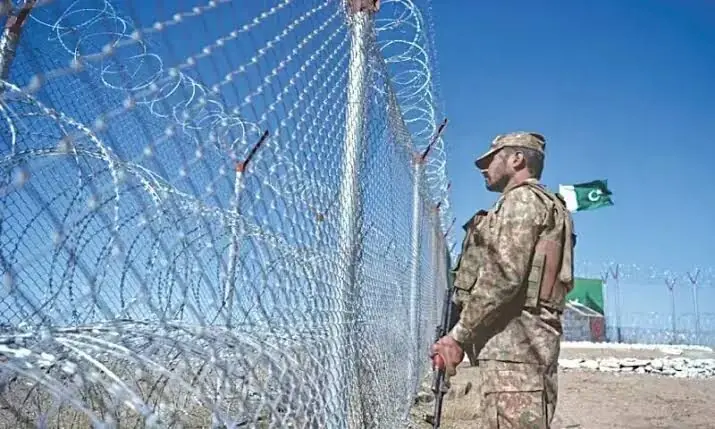
Last week, the government of Pakistan imposed emergency rule and governor’s rule in Khyber Pakhtunkhwa (KP). The Pashtun-majority province, which shares a long border with Afghanistan, has been deeply shaped by events across the frontier.

KP’s instability escalated during the 1980s, when Gen Ziaul Haq’s dictatorship, backed by American and Saudi funding, transformed Pakistan into a launching pad for anti-Soviet Afghan Islamist insurgents. After the Soviet withdrawal in 1988, Pakistan aligned with the Afghan Taliban (TTA), who took power in Kabul in 1996. Even after the US forces ousted the TTA in 2001, Pakistan provided TTA fighters sanctuary to counter the new regime in Kabul installed by the US.

In 2007, the Tehreek-i-Taliban Pakistan (TTP) emerged. While the TTA maintained ties with Pakistan’s security establishment, they also cultivated ideological links with the TTP. However, the TTA remained passive as the TTP carried out brutal attacks inside Pakistan.

Despite a major Pakistani military offensive (2015–2017) that displaced the TTP, Pakistan maintained the belief that the TTA were ‘good Taliban’ who would remain allies once in power. TTP became the ‘bad Taliban.’ The strategy was as juvenile as it sounds. Under the Pakistan Tehreek-i-Insaf (PTI), the government began resettling TTP fighters who had escaped to Afghanistan. There was no serious bar on them retaining their weapons and regrouping. This was yet another juvenile move by the state and its then-favourite government.

Decades of contradictory policies towards the Afghan and Pakistani Taliban have left Khyber Pakhtunkhwa mired in insecurity. As the state imposes emergency rule in KP, the question is whether extraordinary powers can help correct the state’s longstanding strategic failures

Understandably, during the TTA’s return to power in 2021 in Afghanistan and Imran Khan’s ouster in 2022, the TTP launched a fresh wave of violent attacks, primarily in KP. The TTP had sensed that, after Khan’s fall, the policy of the new military establishment might shift. And it did.

Today, the federal government and military establishment accuse KP’s PTI-led provincial administration of shielding TTP elements. Meanwhile, the ‘good versus bad Taliban’ strategy has crumbled as the TTA regime in Kabul refuses to stop TTP attacks and has begun cultivating ties with India. According to the Pakistani government and the military establishment, the emergency in KP will sideline the PTI-led provincial administration, paving the way for a decisive military operation against the TTP that will be able to counter proxies backed by the TTA and India more effectively.

Emergencies are often viewed as dents in a democratic system. Indeed, but here I would explore it from another angle. There are political scientists, legal scholars and economists who have long observed that structural emergencies frequently act as catalysts for institutional growth. By fracturing rigid bureaucracies, overriding legislative inertia, regulating politicised security institutions and mobilising state capacity, there is a history of emergency conditions that have spurred economic advancement and curbed security threats.

In The Political Economy of States of Emergency, legal scholar Balakrishnan Rajagopal demonstrates that economic and national security emergencies historically drive states to centralise financial governance, rationalise labour markets and establish resilient public safety nets. Complementing this, the American sociologist Mancur Olson argued that emergencies dismantle entrenched interest groups. These groups slow down economic growth and facilitate agitation.

A clear historical example of this occurred during India’s 21-month emergency (1975–1977), declared by prime minister Indira Gandhi. Prior to the declaration, India was experiencing severe economic stagflation, spiralling inflation driven by global oil shocks, constant industrial strikes and political violence. As documented by the American legal historian Granville Austin, the centralisation of executive power through the emergency enabled the enforcement of a 20-point programme, clamping down on hoarding and strikes, which rapidly reduced inflation, increased industrial production and elevated tax compliance through stringent enforcement. Violence against the state and government too decreased significantly.

 Illustration by Abro
Illustration by Abro

In South Korea, the state of emergency following the Korean War in the 1950s allowed state planners to initiate rapid, export-led industrialisation that transformed a devastated nation into a global economic power. In his book Constitutional Dictatorship, American political scientist Clinton Rossiter argued that temporary emergency powers are necessary mechanisms designed precisely to preserve constitutional order during existential threats. According to Rossiter, far from destroying the legal framework, well-regulated emergency powers allow democracies to deploy decisive force to restore order without permanent constitutional erosion.

In Singapore, early post-independence security emergencies led to the establishment of streamlined administrative and judicial frameworks that laid the foundation for one of the world’s most stable, low-crime and commercially reliable legal environments. According to Austin, in India, periods of national emergency eventually led the judiciary to refine constitutional protections, such as establishing the “basic structure doctrine” to balance executive emergency authority with civil liberties. This structural tightening creates a durable framework that lowers everyday crime rates and clarifies rule-of-law standards after the crisis subsides.

Emergencies also provide governments with the operational flexibility required to dismantle sophisticated clandestine networks, disrupt their financial channels and re-establish state sovereignty over ungoverned spaces. In Inside Terrorism, American political scientist Bruce Hoffman highlights that anti-terror operations require agility that standard peacetime administrative frameworks rarely afford. Emergencies enable real-time inter-agency intelligence-sharing and rapid response deployments, severely restricting the operational space of militant groups.

The contemporary application of this dynamic can be seen in Pakistan’s emergency declaration in KP under Articles 232, 234 and 235. Counter-militancy efforts in KP faced institutional paralysis due to political misalignment between the federal government in Islamabad and PTI’s provincial administration over kinetic military offensives.

The Pakistani scholar Hasan Askari Rizvi notes that emergency interventions serve as critical mechanisms for the state to reassert control over volatile territories. By placing executive authority under federal direction, emergency rule allows the federal government to streamline intelligence sharing between military assets and local police, eliminate political opposition to targeted offensives against militant groups and redirect provincial budgetary resources directly into border security and counter-militancy infrastructure.

A classic empirical parallel is Peru’s invocation of emergency measures in the early 1990s, which gave law enforcement the extraordinary legal tools necessary to capture the notorious militant leader Abimael Guzmán and effectively neutralise his violent ‘Shining Path’ insurgency.

Similarly, France’s 2015 emergency created integrated counter-terrorism intelligence databases and administrative search powers that permanently improved the state’s capacity to disrupt terror plots, while the UK’s security provisions during the conflict between Irish militants and the state in the 1970s and 1980s were eventually codified into permanent frameworks, such as the Terrorism Act 2000.

Knee-jerk reactions to emergency/governor rule in KP are expected. New conditions should be tracked and monitored instead of being outrightly rejected through typical social media outrage. For the state and government, it is important to learn from examples in which emergencies not only helped streamline economies and curb violence but also contributed in strengthening democracy in the long run.

Published in Dawn, EOS, October 18th, 2026

  •  

Safe spaces for women

THE Protection Against Harassment of Women at the Workplace Act, 2010, was an important response to problems that directly affect women. It enabled the ombudsman to hear cases, many of which were resolved in women’s favour. A recent judgement has now eliminated an avenue that many women used to report harassment. The Federal Constitutional Court’s ruling, which narrows the interpretation of harassment, is a setback for women’s space in public life.

Unfortunately, it appears to show that a major state institution is prepared to restrict rather than expand women’s safety at work. From birth to death, women and girls in Pakistan face limits on where they can go freely, where they may go only under certain conditions, and where they cannot go at all. Visitors to Pakistan often notice their limited visibility as one of the first features of public life. This absence should not be dismissed as cultural; it largely reflects structural factors.

Restrictions on mobility — driven mainly by concerns about safety — help explain poor educational outcomes for girls, physical inactivity during adolescence, and their alarmingly low participation in the labour force as adults. The lack of safety outside the home is among the most frequently cited reasons for not sending girls to school, alongside poverty and families’ inability to afford schooling. The problem is intensified by the limited availability of girls’ schools in many parts of Pakistan.

Undoubtedly, the shortage of schools and female teachers, together with poor learning quality, creates major barriers. Millions of girls live in districts where the nearest public school is more than an hour away and therefore out of practical reach. These supply-side failures prevent many girls from even imagining that they could enter a classroom. Perceived danger reinforces the barrier at home: some girls never enrol, while others drop out at puberty. At the very least, girls who are fortunate enough to live near a school should not be excluded because the journey is unsafe.

Women’s limited ability to work outside the home is probably the most affected by structural factors.

A Population Council and Unicef study, Adolescent Girls’ Voices on Enhancing Their Own Productivity, found that parents were reluctant to send girls to school because of fear of harassment on the way. This fear has been exacerbated by an incredible surge in social media-related harassment and cyberbullying, thanks to the proliferation of mobile phones and other digital devices. Requiring a chaperone or private transport immediately increases the costs of sending girls to school. Not surprisingly, an estimated 8.3 million girls aged 10 to 19 lack official status — they are neither in school, at work, nor married. This large cohort of girls depicts a decade of lost productivity, learning, and, above all, self-esteem.

The state’s role is clear: protect the rights of all its citizens from harassment and unsafe spaces. It must remove these hurdles by providing structural solutions that enable girls to attend and complete school. Harassment laws that create safe routes and workplaces must be seen as educational policy requirements, not peripheral issues.

Women’s limited ability to work outside the home is probably the most affected by structural factors. It is also the most costly in terms of losses to the economy and society. Female labour force participation rates have remained stagnant at around 22 per cent for the last 15 years. When women earn, they tend to spend more proactively, with direct payoffs for children’s education, health, and general welfare. But this will not happen if women feel unprotected at the workplace.

Although women are generally accepted as schoolteachers and in some health professions, attacks on doctors and Lady Health Workers threaten even these spaces — many work mostly out of economic desperation. Employers are reluctant to give women jobs with longer, more secure contracts because of perceived hazards and domestic duties. At the other end of the spectrum, highly educated and affluent women participate in the labour force, cushioned by family support and private transport. The result is some improvement in women’s participation at the top end for highly educated, privileged women and, at the other end, for the truly desperate who must leave home to buy food and ensure their families’ survival, ie, domestic help, cleaners, and informal sector workers who do the most menial work.

Women’s representation in Pakistan’s parliament is the only positive achievement in the SDGs’ gender indicators. Most elected women come from privileged families, but not all, as the pool expands. The trend began with the mandatory party quota for women. Otherwise, trends of an even more male-dominated parliament would have continued. The handful of women lawmakers have made headway in legislating, or at least highlighting, issues important to women and human rights.

Comparable action is required in laws and public policy to expand women’s participation in every public sphere, especially formal employment. Increasing the number of women in decision-making and other critical positions — particularly in the police and judiciary — would make a tangible difference. A 30pc recruitment quota in the formal sector is essential. Greater representation in formal paid work will generate positive spillover effects in other sectors.

It is especially imperative to address the extremely high unemployment rate (24pc) among young women who have completed more than a secondary education. Despite completing higher levels of education, this group is denied opportunities for secure employment. A quota system and positive supportive legislation will directly and positively affect the current generation whom we repeatedly say we care about the most.

Women and girls must have safe passage and be guarded with assurances that harassment is a punishable offence. Recent measures to improve women’s mobility are encouraging, such as pink buses and scooter loans, but they remain too few and too far apart. Above all, there is a need to change mindsets; a public campaign against harassment of women and girls in public spaces must become a priority.

Society must review its standards and morals and move forward, not backwards, in legislation, run bold campaigns, and do whatever it takes to correct this pernicious course of restricting, rather than expanding, the power of women and girls.

The writer is country adviser to the Population Council.

Published in Dawn, October 18th, 2026

  •  

Closing the Afghan file

THE civil-military relationship in Pakistan has never been ideal. Despite recent conciliatory efforts and the policy of accommodation adopted by the coalition government, concerns within security-focused circles persist about the handling of several government affairs.

For now, though, there is little chance of an escalation in civil-military tensions involving the federal and provincial governments; the last hitch was the PTI government, which was ousted through governor’s rule and emergency. The major allegation against the PTI government has been that it was hesitant to take a clear position against the terrorists, enabling them to expand their influence in parts of the province, especially in the southern districts.

The establishment is sensitive about the narrative, and considers it subversion and part of hybrid warfare; it looks upon any political or ideological support for it as support to the enemy. Terminology describing Taliban-aligned terrorists as ‘Fitna al-Khwarij’ and Baloch insurgents as ‘Fitna al-Hindustan’ reflects the same approach. Everyone is expected to follow this approach; the PTI government’s disagreement on several security-related policies is, therefore, interpreted as an act of subversion. Meanwhile, it is clear how much civilian governments actually contribute to security-related affairs.

The security domain has often caused friction between the establishment and civilian governments; over the decades, the political leadership has learned not to voice disagreement on security-related affairs. ‘Memogate’ was the last such lesson for the PPP; and ‘Dawn leaks’ for Mian Nawaz Sharif; the removal of Imran Khan’s PTI from its provincial seat of power in KP appears to have followed the same pattern. The story is not simply about subversion or disagreement over security policy. There are other relevant aspects that some commentators have pointed out: among them is the fiscal issue which also triggered the call for new provinces and the reversal of the 18th Amendment. Yet another dimension is linked to closing the Afghan file.

Bhutto’s policy was just the lever. It was Zia who turned it into an ideology.

The Afghan policy has shaped Pakistan’s politics for half a century; but now there is a general acceptance, even within security circles, that it has not worked. It is evident that the state is distancing itself from past approaches. In this regard, some intellectuals and commentators have painted militancy as a cultural expression of Pakhtuns, which the local dynamics of the larger Pakhtun society has aggravated. There is no need to deconstruct such a perception, which would be stigmatisation. In effect, applying a sociocultural lens to the issue takes away focus from the main architects of the security and Afghan policy. The previous Afghan policy worked well but had lost its utility in geopolitical contexts. This was the policy crafted by the military dictator Gen Ziaul Haq and his team, and it was more or less functional until the Taliban captured power in Afghanistan in August 2021. Though the Zia file saw a few changes and amendments, the overall framework for dealing with these affairs did not change much.

The Zia file had a few critical components that even allies including Washington, Beijing, Riyadh, and Ankara had concerns about — particularly the reliance on non-state actors. Mian Nawaz Sharif had drawn attention to it but faced the consequences. Many analysts believe that this flawed policy was responsible for spawning the TTP and generating terrorism in KP but official narratives do not link the state of affairs to the policy choices made earlier.

Establishment circles appear to want a new Afghan policy that best suits their geopolitical and internal security objectives. A complete detachment from the Taliban is part of the new approach, and the Sohail Afridi government was reluctant to adopt it because it would mean a large-scale military operation, displacement, and increased security-related resource allocation — which would also have political consequences. After the removal of his government, the hurdles preventing a new policy have been eliminated; the new set-up now has to deliver, as was expected of the Afridi government. There will be no opportunity any longer to shift the onus of blame onto a political government, despite official narratives distancing the security state from political change in KP.

However, the dimensions of the new Afghan policy remain unclear. For instance, how will the state proceed if the Afghan Taliban agree to detach themselves from the terrorist networks operating against Pakistan from Afghan soil? Still, another argument being promoted is that Zulfikar Ali Bhutto, not Gen Ziaul Haq, was the real architect of Pakistan’s Afghan policy. There is some truth to that. After Sardar Daud’s 1973 coup in Kabul and his revival of the Pakhtunistan issue, the Bhutto government began hosting and training Afghan Islamists, among them men who would later become the commanders of the anti-Soviet jihad. The FC and a small circle of officials ran this as a pressure tool against Kabul. Notably, the province’s first governor after 1973, appointed in 1975, following the ban on the National Awami Party, reflected the same anxieties about Pakhtun nationalism and Afghanistan.

But Bhutto’s policy was just the lever. It was Zia who turned it into an ideology. After the Soviet invasion of 1979, the Afghan question became the organising principle of the state: the jihad, the refugee economy, the madressah network, the doctrine of strategic depth, and an intelligence apparatus that grew more powerful than the elected institutions meant to oversee it. That legacy matters, and it is Zia’s.

Now it is up to the supporters of the PPP how they take the argument, and whether they are ready to carry the entire burden of history on their shoulders; they also face criticism that Benazir Bhutto continued Bhutto’s legacy and allowed Gen Naseerullah Babar to nurture the Taliban in 1994-96, the same general who had crafted the Afghan files for her father. The Taliban generations have caused huge losses to the PPP, including the assassination of Benazir Bhutto herself.

The writer is a security analyst.

Published in Dawn, October 18th, 2026
  •  

State of denial

AS reports continue to do the rounds of possible Russian mediation to resolve the differences between Pakistan and Taliban-ruled Afghanistan, the Foreign Office has underscored that successful dialogue requires commitment from Kabul to end cross-border terrorism.

This demand is neither new nor unreasonable; it highlights the point that talks and support for anti-Pakistan terrorist groups cannot go hand in hand. On Friday, the FO said that while it was not aware of any formal Russian mediation initiative, Pakistan was open to engagement that produced tangible results. Representatives of Pakistan and the Taliban regime were both in Russia earlier this month as part of the Moscow Format regional consultations. A joint communique could not be issued at the conclave due to frosty Islamabad-Kabul ties, specifically because the Taliban objected to including any references to terrorism in Afghanistan. Russia had offered its good offices to resolve the impasse, if both sides required its help.

The official Taliban position amounts to a state of denial: it is hardly a secret that some of the world’s most dangerous terrorist groups find shelter in Afghanistan. Therefore, the Kabul regime’s denials hold no water. Many other third parties — Qatar, Turkiye, Saudi Arabia, and China — have tried to mediate between Pakistan and Afghanistan, with varying degrees of success. Russia is the only state that recognises the Taliban regime. Perhaps Moscow can be engaged by Pakistan and Afghanistan to try and give the peace process another chance.

Pakistan and Afghanistan share borders and linguistic and cultural links. Good relations are essential, even though bilateral relations have remained largely strained over the past several decades. However, the biggest obstacle to long-term peace is the Taliban’s sheltering of terrorist groups. Pakistan desires peace, but for talks to succeed, Kabul must offer visible CBMs, such as an end to cross-border terrorism. As the FO has said, a “verifiable mechanism” that ensures an end to anti-Pakistan terrorism emanating from Afghanistan can lead the way to peace. Kabul’s claims that it is not hosting violent groups are of little value.

Action against such groups is required, not hollow refutations. Moreover, regional states must realise that today it is Pakistan that is battling terrorist groups in Afghanistan. Tomorrow, similar violent actors based in that country can destabilise other regional states. Russia itself has been targeted by IS-K terrorism. The group finds a home in Afghanistan, even though it is at daggers drawn with the Taliban. If the Taliban regime commits to preventing groups based on its soil from attacking neighbouring states, the process of normalisation and regional integration of Afghanistan can begin.

Published in Dawn, October 18th, 2026
  •  

Sharifs invoke security fears to defend KP move

• PM Shehbaz insists govt was ‘compelled’ to impose emergency and governor’s rule
• Says Centre exhausted dialogue before taking measures
• Nawaz Sharif stresses decision should have been taken earlier
• Accuses PTI of using provincial resources for confrontation

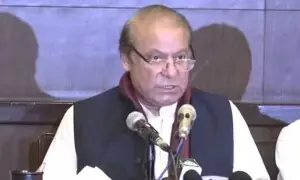
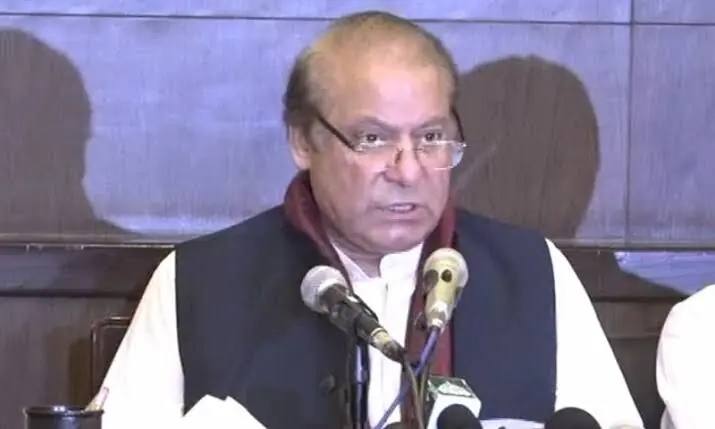
LAHORE: Prime Minister Shehbaz Sha­rif and PML-N President Nawaz Sharif on Saturday defended the imposition of emergency and governor’s rule in Khyber Pakhtunkhwa, with the premier saying the federal government had been “compel­led” to take the step over security conce­rns and the elder Sharif arguing that the intervention should have come much earlier.

The Centre imposed emergency and governor’s rule in KP on Oct 11, citing the provincial government’s “deliberate disengagement” from the fight against terrorism. The measures were endorsed by parliament this week amid opposition protests.

On Saturday, Shehbaz Sharif visited the residence of Rashid Bashir Virk in Gujranwala to offer condolences over the death of his father, former MNA Mahmood Bashir Virk.

After recalling the late PML-N lawmaker’s services, the prime minister said the Centre had made a “last attempt” to avoid imposing emergency, referring to rounds of talks held by a joint government-PPP delegation with the opposition.

The second round of talks, held on Oct 3, lasted several hours but ended without a breakthrough.

“They had talks with them (PTI) day and night, for 48 hours, and sat with the intention to settle matters from every aspect,” PM Shehbaz said, adding that a draft agreement had been prepared under which the PTI was to call off its protest march.

The prime minister said he had held multiple meetings with Sohail Afridi, the KP chief minister whose role now stands non-functional, as well as with his predecessor Ali Amin Gandapur.

“In every meeting, I tried my best to convey to him from the depths of my heart and with seriousness that KP is an extremely beautiful province and has very brave and honourable people, […] and I am always present in every way for their development and prosperity,” the premier said.

PM Shehbaz said he had assured the KP government of the Centre’s support in jointly fighting terrorism and addressing security challenges in the province.

He added that he had assured the chief minister that decisions regarding administration, resources and requirements would be made in consultation with the provincial government.

“But, unfortunately, despite all these efforts, thousands of our law enforcement personnel, soldiers and officers of the armed forces were sacrificing their lives to defend the homeland,” he said.

The prime minister said the federal government had made repeated efforts to address the situation but had instead faced “threats and long marches every other day”.

The Oct 11 measures followed weeks of political tensions between the Centre and PTI, as well as negotiations aimed at bridging differences after the party announced a long march towards Islamabad to demand the release of its jailed founder, Imran Khan.

Nawaz backs governor’s rule

Meanwhile, PML-N President Nawaz Sharif on Saturday fully backed the imposition of emergency and governor’s rule in KP, saying the measures should have been taken much earlier as the law and order situation deteriorated.

Speaking to journalists at his residence in London, Mr Sharif said the situation in KP had become increasingly alarming under the PTI government and that the federal authorities should have intervened before matters worsened further.

“This intervention was necessary to restore peace, improve governance and protect the interests of the people,” the former prime minister was quoted as saying by journalist Azhar Javed, who was present in the media talk.

Mr Sharif also accused the PTI of using provincial government resources for political confrontation with the federation.

“Which country allows a chief minister to use official resources to attack the federal capital?” he asked, questioning the use of provincial resources for political purposes.

He accused PTI of damaging the province during its 13 years in power, alleging that successive PTI governments had failed to provide effective governance and neglected the interests of ordinary citizens.

Mr Sharif said the people of KP were patriotic Pakistanis who deserved better governance and leadership.

Zulqernain Tahir also contributed to this report

Published in Dawn, October 18th, 2026

  •  
❌