ISLAMABAD – Maldivian President Dr Mohamed Muizzu will undertake a three-day state visit to Pakistan from October 20 to 22 at the invitation of Prime Minister Shehbaz Sharif, the Foreign Office (FO) announced on Sunday.
President Muizzu will be accompanied by First Lady Sajidha Mohamed and a high-level delegation comprising cabinet ministers and senior officials, according to an FO statement.
During his visit, the Maldivian president will meet President Asif Ali Zardari, who will host a state banquet in his honour. Muizzu will also hold restricted and delegation-level talks with Prime Minister Shehbaz Sharif.
The discussions will focus on reviewing the full range of bilateral relations and exploring opportunities to expand cooperation in key sectors, including trade, investment, health, education, tourism, agriculture, defence, maritime security, climate change and people-to-people exchanges.
The two leaders will also exchange views on regional and international developments of mutual interest.
As part of the visit, a Pakistan-Maldives Business Forum will be organised to strengthen engagement between the business communities of the two countries and identify new opportunities for trade and investment.
The Foreign Office said several agreements and memorandums of understanding covering different areas of bilateral cooperation are expected to be signed during the visit.
First Visit by a Maldivian President in 11 Years
According to the Foreign Office, Muizzu’s visit will be the first by a Maldivian president to Pakistan in 11 years. It also coincides with the 60th anniversary of diplomatic relations between the two countries, established in 1966.
Pakistan and the Maldives maintain friendly relations based on shared religious and cultural ties, mutual respect and longstanding goodwill. Both countries also cooperate at regional and international forums.
The Foreign Office said the upcoming visit reflected the shared commitment of Pakistan and the Maldives to strengthening their bilateral partnership and opening new avenues for mutually beneficial cooperation.
The visit is expected to provide an opportunity to deepen diplomatic engagement, expand economic ties and strengthen collaboration across a range of sectors.
KARACHI – The Association of Electronic Media Editors and News Directors (AEMEND) has elected Azhar Abbas as its president and Tariq Mahmood as general secretary, according to a statement issued by the association.
Muhammad Usman and Mian Tahir were elected vice presidents, Rehan Ahmed and Nadeem Jamal joint secretaries, and Shahab Mahmood finance secretary.
The association’s general council elected the remaining executive committee members during meetings in Karachi, Lahore and Islamabad.
The members include Zahid Mazhar, Masoom Rizvi, Mohsin Raza, Mubarak Ali, Kamran Lashari, Humayun Saleem, Muhammad Noshad Ali Khan, Khawaja Hasnain and Razaq Sarohi.
The council also expressed serious concern over what it described as the deteriorating state of press freedom in Pakistan and the growing use of government powers and state institutions to restrict independent journalism.
It voiced concern over the alleged misuse of the Prevention of Electronic Crimes Act (Peca) and the actions of the National Cyber Crime Investigation Agency (NCCIA).
The council criticised the conduct of certain YouTubers who, it said, appeared to pursue personal or political agendas under the guise of journalism. However, it stressed that the actions of a few individuals could not justify restrictions on the media as a whole.
The council resolved that the newly elected executive committee would hold detailed discussions on the country’s media situation before issuing a comprehensive statement outlining the association’s position.
KARACHI – Pakistan Peoples Party (PPP) Chairman Bilawal Bhutto-Zardari said on Sunday that the governor’s rule and emergency imposed in Khyber Pakhtunkhwa (KP) could be lifted if the opposition agreed to work with the government on a joint strategy to combat terrorism.
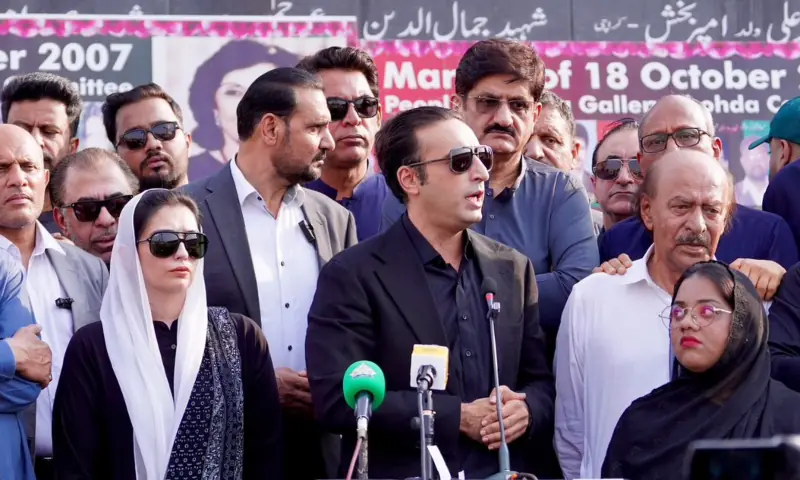
Speaking to the media during a visit to the Karsaz Monument on the 19th anniversary of the Karsaz bombing, Bilawal called for political unity and consensus to address the country’s worsening security challenges.
“If the opposition is ready to fight terrorism and we agree on a plan, then the emergency and governor’s rule in KP can come to an end,” he said, urging opposition parties to engage with the federal government and other political stakeholders to develop a unified counterterrorism policy.
His remarks came a week after the federal government imposed governor’s rule and an emergency in KP, citing what it described as the provincial government’s deliberate disengagement from counterterrorism efforts. The decision followed a mobilisation campaign and protest march by Pakistan Tehreek-e-Insaf (PTI), which governs KP and is in opposition at the federal level, demanding the release of its jailed founder, Imran Khan.
Call for a united front against terrorism
Bilawal warned that Pakistan was facing security challenges across multiple regions, saying terrorist attacks were taking place from Khyber to Khuzdar.
Referring to developments following the change of government in Afghanistan in 2021, he criticised the then Pakistani government’s policy of allowing members of the banned Tehreek-e-Taliban Pakistan (TTP) to return from Afghanistan and resettle in areas including Swat, Malakand and the former tribal districts.
He also claimed that TTP members who had been imprisoned in Pakistan were released during that period.
“Today, Pakistan is suffering the losses from these wrong decisions,” Bilawal said, arguing that the consequences of those policies had contributed to the current security challenges.
He added that the country was once again facing threats to its stability, with security personnel, law enforcement officials and civilians being targeted in terrorist attacks.
The PPP chairman criticised the KP government’s response to terrorism, claiming that the province was experiencing the highest number of terrorist incidents while its chief minister, Sohail Afridi, had indicated that he would not confront the militants.
“If the Khyber Pakhtunkhwa chief minister was not ready to defend his homeland and fight those terrorists, then the PPP is ready to fight them,” Bilawal said, defending his party’s support for the federal government’s decision to impose governor’s rule in the province.
He maintained that the PPP was prepared to work with all political forces to combat terrorism and stressed that the fight required collective national commitment rather than the efforts of a single party or institution.
Calls for a new National Action Plan
Bilawal said Pakistan’s experience had demonstrated that counterterrorism efforts were most effective when the government, political parties, security institutions and the public worked together.
He recalled that when the PPP was in government in 2008, it had sought to build public support for counterterrorism operations and pursue institutional reforms to address the threat.
He said national unity remained essential to defeating militant groups and warned that the country would struggle to achieve lasting success without a common strategy.
Referring to his recent address to the National Assembly, Bilawal said he had called for a new National Action Plan and a broader political consensus on combating terrorism. He also invited opposition parties to participate in consultations aimed at developing a joint policy.
“If we can create such an environment, we will be in a better position to fight terrorists,” he said.
Opposition urged to participate in electoral reforms
The PPP chairman also discussed efforts to strengthen the democratic system through electoral reforms. He said the federal government had decided to establish an electoral reforms committee and that the opposition had been invited to participate.
“If they say that democracy is weak in this country, then they should help us to strengthen it,” Bilawal said, urging opposition parties to engage constructively with the government on institutional and democratic reforms.
He reiterated that political engagement and consensus were necessary not only to improve democratic institutions but also to develop a coordinated response to terrorism.
Bilawal said the PPP had yet to achieve the Pakistan envisioned by former prime minister Benazir Bhutto, but the party continued to work towards that goal.
PPP’s position on the creation of new provinces
Responding to a question about the creation of new provinces or administrative units, Bilawal said Interior Minister Mohsin Naqvi was aware of the positions held by the PPP and President Asif Ali Zardari on the matter.
He clarified that the issue was not one to be decided solely by the president, stressing that any new province should be created in accordance with the Constitution and the law and with the agreement of the relevant provincial assembly.
Bilawal said the PPP supported the creation of new provinces where there was genuine consensus and the proposal was not being used for political purposes.
Citing Gilgit-Baltistan as an example, he referred to the consensus within its legislative assembly on the demand for constitutional rights.
“If we really want this to be implemented, it must only be implemented where the provinces want this,” he said, emphasising that constitutional procedures and the wishes of the relevant regions should guide any such decision.
ISLAMABAD – Deputy Prime Minister and Foreign Minister Ishaq Dar held a telephone conversation with Iranian Foreign Minister Abbas Araghchi to discuss the prevailing situation in the region and matters of mutual interest.
According to Express News, the two leaders exchanged views on regional developments and the upcoming meeting of the Council of Foreign Ministers of the Organisation of Islamic Cooperation (OIC).
During the conversation, Ishaq Dar emphasised the importance of dialogue and diplomatic engagement in resolving regional issues. He underscored the need to address challenges through negotiations and peaceful means.
The two leaders also agreed to remain in contact and continue consultations on regional matters.
The telephone conversation reflects ongoing diplomatic engagement between Pakistan and Iran as both countries discuss regional developments and issues of mutual concern.
Vayamos directamente al meollo de la cuestión: tras examinar minuciosamente el tablero de ajedrez, los dirigentes políticos y militares de Teherán ya han llegado a la conclusión de que un ataque conjunto de EE. UU. e Israel —cuya planificación avanza a un ritmo frenético— es inevitable.
Por eso se han posicionado ahora como una cobra enroscada, lista para atacar e inyectar su veneno mortal ante el primer indicio de una amenaza inminente del Sindicato de Epstein, incluso sin esperar a que se produzca un ataque real.
La ofensiva preventiva, ya delineada, será devastadora, se extenderá más allá de las bases estadounidenses en Asia Occidental a otros objetivos regionales e incluirá potencialmente la infraestructura energética del Golfo y los cables submarinos (en este caso, afectando principalmente al Golfo y a la India, mucho más que a EE. UU. y Europa).
Nos encontramos en territorio de peligro claro y presente: una maniobra militar estadounidense-israelí destinada a ejercer presión se interpretará sin duda en Teherán como el inicio de un ataque.
Así pues, la presión a favor de la guerra por parte del culto a la muerte y de Trump se encuentra ahora con un umbral iraní peligrosamente bajo. Las opciones de ataque del Pentágono abarcan desde las instalaciones nucleares iraníes hasta la infraestructura energética.
Huelga decir que el «sociópata en jefe» —que ya está en pánico ante la inminente debacle de las elecciones de mitad de mandato— es una presa fácil para el poderoso lobby sionista y los donantes a favor de la guerra. El peligro estratégico supremo es, pues, que esta presión incesante pueda generar una señal que Teherán interprete como un ataque inminente, incluso mientras Washington mantiene públicamente que no se producirá ningún ataque antes de las elecciones de mitad de mandato.
Yemen está llevando todo esto al siguiente nivel
Paralelamente, fuentes privilegiadas en Islamabad confirman el éxito de una prueba de misil paquistaní a Mach 7, con un alcance de varios miles de kilómetros. Esta nueva capacidad tiene todo lo necesario para alterar sustancialmente el equilibrio de poder en Asia Occidental, reforzando el alcance disuasorio de Pakistán y su capacidad para influir en todos los cálculos de seguridad regional, además de contribuir a la creciente interconexión de Pakistán con China, Irán y las petro-monarquías del Golfo.
Y ahora, otra exclusiva: personal de la inteligencia militar israelí, incluido un general de división, ha abandonado Riad después de que MbS, en un supuesto momento de lucidez, dijera «no» a la oferta de «asistencia» del culto a la muerte. Y, sin embargo, siguen allí más de 100 miembros del CENTCOM.
Es posible que la decisión de MbS le haya sido impuesta por Turquía y Pakistán —los otros dos signatarios de la Alianza de Defensa de La Meca—, que de repente se encontraron en la misma sala de guerra en Riad, codo con codo con agentes del culto a la muerte.
Ahora bien, aunque su partida puede haber eliminado un riesgo de escalada, los agentes estadounidenses siguen expuestos: cualquier ataque, venga de donde venga, que provoque bajas estadounidenses arrastrará inmediatamente a Washington a la guerra entre Arabia Saudí y Ansarallah.
La guerra entre Arabia Saudí y Ansarallah, de hecho, está alcanzando el siguiente nivel: la volatilidad. La mezcla tóxica de la interceptación de un misil de crucero sobre la provincia de Medina; las interceptaciones de drones en otras partes de Arabia Saudí; y los ataques con misiles de las Fuerzas Armadas yemeníes contra el complejo presidencial del gobierno títere de Adén es solo el principio.
Lo que ocurrió después de que Ansarallah atacara Najran —una de las provincias del sur de Arabia Saudí arrebatadas a Yemen en 1934 por los británicos— es algo que realmente llama la atención.
Un portavoz saudí acusó a Ansarallah de lanzar un misil de crucero contra Medina. La respuesta del emblemático portavoz de las Fuerzas Armadas yemeníes, el general Yahya Saree, fue contundente: «Hoy no hemos llevado a cabo ninguna operación militar dirigida contra territorio saudí. Por lo tanto, la afirmación del enemigo saudí de que Medina fue atacada es una invención absoluta y una grave falsedad».
Traducción: Yemen ataca una de sus antiguas provincias; los saudíes recurren a noticias totalmente falsas, inventándose un ataque contra una de las dos mezquitas sagradas —sin duda como preparación para una operación de bandera falsa—; luego, Yemen niega de inmediato haber atacado ningún (cursiva mía) territorio saudí.
Esto significa que Saná está declarando sutilmente, para que todo el mundo lo entienda, que ya no lleva a cabo operaciones en el extranjero (cursiva mía) en las tres provincias: Jizan, Najran y Asir. Ya están —psicológica y operativamente— preparando el terreno para recuperar su territorio robado.
Todo ello se plasma en este conciso análisis desde Yemen sobre la deconstrucción de la ostentosa Casa de Saud:
«Yemen está destrozando los pilares extremadamente frágiles de la economía no petrolera en la que los piratas del desierto depositaron todas sus esperanzas: imagen, inversiones (IED), escapismo e impunidad e invulnerabilidad frente al terrorismo en el extranjero».
Cómo Pakistán e Irán eluden al FMI
Ahora prestad atención a algo bastante sorprendente que ocurrió a mediados de semana en Bangkok, durante la reunión anual del FMI y el Banco Mundial —dignamente recibida por protestas callejeras tailandesas—.
El presidente del Banco Central de Irán, Abdolnaser Hemmati, se reunió con el presidente del Banco Central de Pakistán, Jameel Ahmad, al margen del principal ritual anual en alabanza del dólar estadounidense.
Pakistán se encuentra bajo las feroces garras del ajuste estructural del FMI y el Banco Mundial —y, además, amenazado con sanciones estadounidenses por comerciar con Irán—.
Así pues, que Pakistán e Irán estén discutiendo de facto la desdolarización justo en la guarida del león —el templo del dólar estadounidense— no tiene precio.
La infraestructura está en marcha desde 2023, a través de un acuerdo de intercambio de divisas que utiliza el rial y la rupia en lugar del dólar estadounidense. El trueque lo gestionan ambos bancos centrales, y los canales bancarios pasan por el Banco Melli en Irán y el Banco Mellat en Pakistán. Sus mercados fronterizos —al menos seis de ellos— están en pleno auge: rutas comerciales físicas que eluden por completo al dólar estadounidense.
Lo que se debatió en Bangkok a principios de esta semana es cómo ampliar todo este sistema: les importan un comino las sanciones secundarias de EE. UU. Sobre todo porque Teherán ofrece a Islamabad lo que el sistema estadounidense simplemente no puede ofrecer: soberanía, sin cambio de régimen, sin austeridad, sin sermones y, sobre todo, sin ajuste estructural.
Por no mencionar que Pakistán necesita urgentemente el gas iraní —y las rutas comerciales de la Nueva Ruta de la Seda impulsadas por China—.
Irán ha construido toda una economía que elude por completo al FMI —y capaz de sobrevivir a un tsunami de sanciones, a un bloqueo y a la guerra—.
Ahora, Irán y Pakistán están inmersos en la construcción de un orden financiero posestadounidense en la encrucijada entre Asia Occidental y Asia Meridional —con intercambios de divisas, comercio de trueque, mercados fronterizos en auge y canales bancarios adecuados—, lo que convierte las sanciones secundarias en una burla.
Por cierto, esto está ocurriendo justo cuando un inmenso tren iraní, cargado de petróleo crudo —y el primero de muchos— está listo para partir hacia… China a través de Asia Central, por la línea ferroviaria de la Nueva Ruta de la Seda construida por China.
La cobra enroscada puede estar lista para atacar. Pero a la cobra, desde tiempos inmemoriales, también le encanta hacer negocios.
PPP Chairperson Bilawal Bhutto-Zardari said on Sunday that if the opposition was willing to fight against terrorism and engage with the Centre on a plan, governor’s rule and emergency imposed in Khyber Pakhtunkhwa could end.
He made these remarks while speaking to the media in Karachi, where he was visiting the Karsaz Monument on the 19th anniversary of the Karsaz bombing.
His statement comes a week after the Centre imposed governor’s rule and emergency in KP, citing the provincial government’s “deliberate disengagement” from the fight against terrorism. The move also followed a mobilisation drive and protest march by the PTI, which was in power in KP and in opposition in the Centre, to demand the release of its jailed founder, Imran Khan.
“If they really want to fight terrorists, and if they want that emergency and governor’s rule in KP to end, they should engage with the federal government and politicians and discuss a united policy regarding the fight against terrorism,” Bilawal said on Sunday, referring to the PTI-led opposition.
He added that if the opposition was ready to fight terrorism and “we agree on a plan” to do so, the emergency and governor’s rule in KP could end.
“If the Khyber Pakhtunkhwa chief minister (Sohail Afridi) is a coward, if he is not ready to defend his homeland, if he is not ready to fight those terrorists, then the PPP is ready to fight them,” Bilawal said.
“That is why we supported the government’s decision to impose governor’s rule in KP.”
He stressed that the party would “join forces with everyone to fight these terrorists”.
In his media talk, the Bhutto scion said the country had reached a point where “terrorist attacks are taking place from Khyber to Khuzdar”.
He regretted that when the Taliban came to power in Kabul in 2021, the Pakistani government at that time “also decided to invite the terrorists who were in Afghanistan to come back and live in our Swat, our Malakand, our former tribal areas”. He was seemingly referring to then-prime minister Imran’s plans to resettle members of the Tehreek-i-Taliban Pakistan in the country.
Bilawal went on to say that terrorists who were in jail in Pakistan were also freed. “Today, Pakistan is suffering the losses from these wrong decisions,” he lamented.
He added that the country had now once again reached the point where “some forces want to take down Pakistan’s flag in Swat” and there was a fight against terrorism ongoing across the entire country, while security forces, law enforcers and the public were being targeted.
However, he claimed, in the province where the highest number of terrorist incidents were taking place — KP — its chief minister had pledged that he would not face the terrorists.
In response to a question about the Karsaz bombing, the PPP chairman remarked that the greatest loss was caused when terrorist incidents were not taken seriously.
He said that the PPP had “prepared entire society” to fight terrorism by creating an environment for counterterrorism operations in 2008, when the party was in power. After that, he said, when the National Action Plan was introduced, the PPP adopted a holistic approach towards bringing changes in institutions to assist with combatting terrorism.
He emphasised that success was achieved when “every citizen” of Pakistan joined the fight against terrorism, saying, “Today as well, we will make efforts to create an environment where we are all united, and will fight the terrorists together.”
Answering further questions, he said Pakistan was facing a “historic economic crisis”.
“It appears that the situation will worsen. Our priority is to address this economic crisis, and to do that, we will have to fight terrorism as well,” he added.
He said efforts should also be made to improve the democratic and electoral system in Pakistan.
For this reason, he said, the PPP had highlighted the need for a new NAP and consensus on the fight against terrorism, while also extending an invitation to the opposition to play a part in this.
He said the PPP also made an effort to improve the democratic system by pushing for electoral reforms. To this end, the federal government had decided to establish an electoral reforms committee in the National Assembly, adding that he had invited the opposition to play their part in that committee as well.
“If they say that democracy is weak in this country, they should help us to strengthen it,” the PPP chairman said.
He added, “If we can create such an environment, we will be in a better position to fight terrorists.”
Bilawal also said KP Governor Faisal Karim Kundi had been nominated by the PPP for the office of governor, but “constitutionally, he is now a representative of the federal government”.
He said Kundi reported to the federal government, but “I will keep talking to him and keep advising him; in principle, though, he is now working together with the federal government”.
Responding to a question regarding a potential “compromise” with the opposition, Bilawal said, “You say ‘compromise’ like it’s a bad word […] Compromise and politics go hand in hand.”
He stressed that ex-PM Benazir had always strived for compromises during her political career, adding that she knew that one could reach “extremes” if they remained a revolutionary or an activist who only protested rather than working for their cause.
“We had to solve our issues and lift the public and our workers out of difficulty,” Bilawal said about the PPP’s past tenures in government. He asserted that it was the result of the PPP’s “compromises” that led to the end of Gen Pervez Musharraf’s dictatorship, as well as the passage of the 1973 Constitution and the 18th Amendment.
“We (the PPP) are not in the federal government. Nor do we have a majority in Parliament,” he said. “But [we have to see] how we can conduct politics in the space we have.”
New provinces
Answering a question regarding the creation of new provinces, Bilawal stated that Interior Minister Mohsin Naqvi knew “clearly” what the PPP and President Asif Ali Zardari’s policy was regarding new provinces or administrative units, and that this was “not possible without the president’s signature”.
Naqvi’s July remarks calling for new provinces and reforms in the current governance system had ignited an animated debate across the country. The PPP, which rules Sindh, has strongly opposed any possible division of the province.
Bilawal stressed that the PPP’s position was clear: that they could be created in accordance with the Constitution and law if the provincial assembly agreed. The Sindh Assembly, amid a boycott by the opposition, adopted a resolution last month rejecting all attempts to divide the province or create new administrative units.
“Where there is consensus and it is not a political stunt, if there is no other purpose behind it … why aren’t provinces being made there?” the PPP chairman said, giving the example of Gilgit-Baltistan.
“If we really want this to be implemented, it must only be implemented where the provinces want this,” he stressed, noting that the entire GB Legislative Assembly had passed a resolution with consensus for the region’s constitutional rights.
Bilawal requested politicians, whether on the treasury or opposition benches, not to politicise the issue of terrorism or create controversy out of steps taken to combat it, but rather to play their role in fighting it.
Bilawal also spoke about Jamiat Ulema-i-Islam (JUI-F) chief Maulana Fazlur Rehman, saying he had the right to criticise the government’s policies, and that there should certainly be room for difference of opinion in the country.
He said the PPP had always imposed emergency through constitutional and legal means.
“In fact, during the 2008–2013 government, when emergency rule was imposed in Balochistan, it was also because of the terrorism situation, and governor’s rule was imposed there against the PPP’s own government.
“If the PPP thought only of itself, how would it have removed its own government?“
He said Fazl’s party has also been affected by terrorist attacks, so he hoped the JUI-F chief would criticise the PPP politically as much as he wished, but also condemn the terrorists.
Bilawal added that if Fazl made an effort, harmony between the government and the opposition could be achieved.
This piece was originally published on June 1, 2022.
Over the last few decades, there is a severe burden of ‘resilience’ that has been thrust upon the inhabitants of some large cities in Pakistan, whether it is in the form of persistent rates of crime, diseased public utilities, unbreathable air, floundering healthcare or dismal transportation infrastructure.
This oft-romanticised resilience is once more being demanded by the state as citizens of cities like Karachi, Quetta and Peshawar are again being pushed into an unhappy reunion with an affliction that has reared its ugly head after a relative lull — accelerating terror attacks at home.
Deadly incidents of this nature are cause for serious emotional instability among residents of these cities. But by now, many locals have whittled down emotional survival to a fairly simple and linear process:
Internal security event → temporary panic and lament of said event → desensitisation → next internal security event → repeat.
It may seem somewhat callous to reduce this to such a mechanical progression, but the defence mechanisms adopted by those who live in the midst of frequent terrorism are not really up for judgment. If sanity is to be preserved, some form of detachment is necessary. And as someone who has personally employed this process many times in the past, I can say that it works, and works well at that.
Until your father is present at the site of a bombing. Then the process comes crashing down.
When calamity hits home
Karachi, 18th October 2007: Celebrations of Benazir Bhutto’s return to Pakistan were met with two bombs ripping through Karsaz in quick succession, killing nearly 200 people and injuring 500 others. Jammers were activated, emergency was declared, and public healthcare facilities were put on high alert. My father was drowning somewhere in this sea of deadly chaos.
The rest of us were home when the news found us. On hearing it, my mother lost all sensation in her legs and collapsed. We began dialling my father’s mobile phone number but couldn’t get through because of the jammers. There was no way of knowing if he was safe, or injured, or even alive.
The only information we could get was coming from our television set — all I remember of it now is a crimson BREAKING NEWS template designed to incite fear and a casualty count that was escalating with horrifying frequency. We kept dialling my father’s number desperately in the hope that we could break through the infrastructural blockade imposed by the state. The minutes kept passing and panic kept mounting.
At this point, there is no formula or process in the world that can help you.
You’d think crying would come naturally at this time but it doesn’t; you are too gripped by fear to respond as you normally would. Your heart throbs and you lose basic bodily control. You are gasping for air and trembling all over, and it is a Herculean task to collect yourself enough to focus on dialling a number, over and over again.
As soon as they could, my father’s brothers and cousins set off to find him — I vaguely remember one of them rushing into the car without his shoes on. They didn’t think about what would happen if another bomb went off in a city that appeared to be under the control of terrorists. Frankly, I don’t think they cared. The meaning of family truly comes through in times of crisis, and if there’s one thing to be grateful for in a society where relationships are unravelling constantly, it is to have the support of loved ones who prioritise those bonds above all else. But that’s a subject for another time.
Hurt is good
Soon after they left, we received a phone call from my mother’s sister in Hyderabad. She had somehow miraculously gotten through to him. “He’s hurt,” she told us.
How hurt, she could not say — she had only spoken to him for a few seconds. In the days that passed, we would come to learn that shrapnel from the bomb had pierced through his torso and legs, lodging pieces of metal deep inside his body and permanently damaging a large part of his intestinal tract.
But at that time, ‘he’s hurt’ was good to hear. We were happy with hurt because hurt meant alive, and alive meant hope. My father had found his way to an ambulance that was taking him to the Jinnah Postgraduate Medical Centre — a designated hospital for injuries and casualties — but he eventually ended up at (what is now known as) the Dr Ruth Pfau Civil Hospital Karachi.
The cosmic irony of the situation is still astounding — at the time, my father was employed at the Civil Hospital as Professor of Surgery. Had any patient in his condition come to the hospital that night, they would have been surgically operated on by my father and his team. And yet here he was, bleeding profusely out of his abdomen, playing the role of patient instead of surgeon.
As word spread through the hospital that one of their own was injured, a team of healthcare workers began stabilising him for surgery. He was operated on at around dawn, some hours after hell exploded in Karsaz. My father lost half his intestines that morning in a procedure known as a hemicolectomy. He was in intensive care for the weeks that followed. Metal still remains lodged in his body, buried deep in his bones. But he is with us today. Words cannot express how grateful we are for this, and all of us pray constantly for his sustained health.
The scars that never heal
Words can, however, attempt to convey the depth of trauma we were exposed to as a family that night, and the lasting impact it has had. Nearly 15 years later, I have still not been able to talk about it. I can only write about the horror of October 18th, protected by the façade of screens and the comfort of one-way communication. If the bombing comes up in conversation, I change the topic; when I fail at that, I leave the room. That period of my life haunts me completely and is triggered every time there is a terror attack in Pakistan, especially in my hometown Karachi.
As one can imagine, it has been particularly difficult to deal with the spate of IED bombings in Karachi these past few months. Nights have been spent with tears, terror, and trauma as memories of 2007 find their way into bedtime thoughts and nightmares.
There is little hope for stability that can be offered by a leadership that is forever dancing with these forces of terror, sometimes in negotiation and at other times in battle with them. Loss of innocent life remains an unrelenting theme in Pakistan. The mental health impact of living with terrorism day in and day out remains an invisible cost that goes unfactored and uncared for. We are mentally breaking down inside. But so long as we appear functional on the surface, who really cares about what’s going on internally?
Some among us are still able to deal with terrorism using the standard emotional survival process mentioned at the beginning of this piece. My own emotional response, unfortunately, has changed. It now goes:
Internal security event → terror → incapacitation → next internal security event → repeat.
ISLAMABAD – TTP-linked and Afghan-based media accounts are circulating old videos with misleading captions to portray past incidents as current developments in Khyber Pakhtunkhwa (KP), raising concerns about the spread of misinformation and attempts to create fear and confusion among the public.
The circulation of recycled footage comes amid reports of a decline in terrorist activity across KP over the past week. The new administration has signalled renewed resolve to combat terrorist networks, creating a more conducive environment for counterterrorism efforts. Against this backdrop, the resurfacing of old videos appears aimed at portraying a misleading picture of the current security situation.
Claims circulating on social media that Pakistani soldiers are surrendering in groups have been described as baseless. Reposting old footage alongside sensational captions does not establish that the alleged incidents are taking place at present. The date, location and original context of such videos must be verified before they can be treated as evidence of current events.
Meanwhile, TTP-linked, PTI-associated and Afghan-based accounts have been accused of amplifying these narratives through the repeated circulation of old or misleading footage. Critics argue that such content can distort public understanding, undermine confidence in security institutions and create an exaggerated impression of instability.
The issue highlights the importance of verifying videos through reliable sources before sharing them, particularly during sensitive security developments. Establishing the original date and location of footage is essential to distinguishing genuine reporting from recycled material intended to influence public perception.
As counterterrorism efforts continue in KP, claims circulating online should be assessed against independently verified information rather than sensational captions or unsubstantiated allegations.
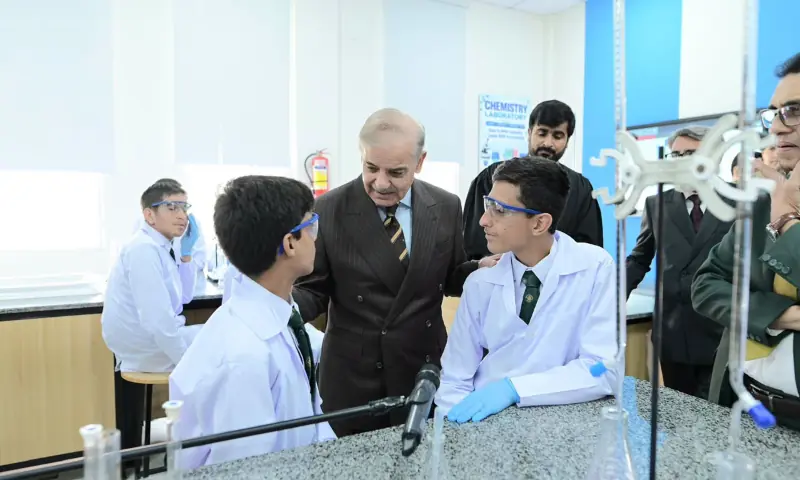
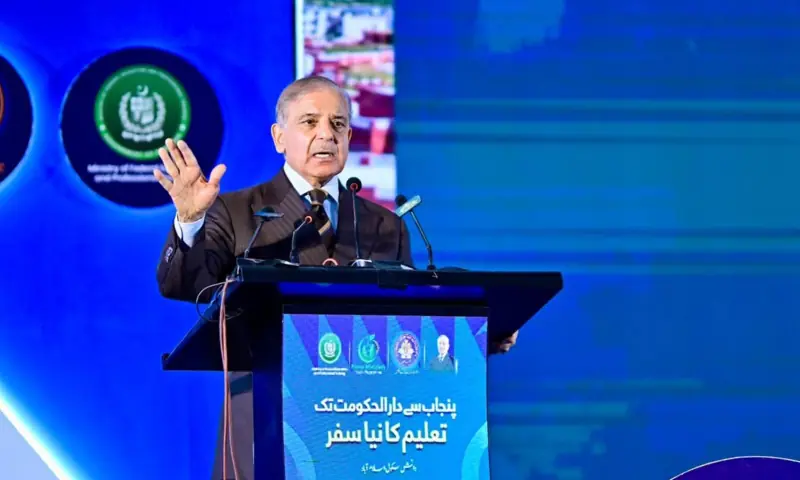
Prime Minister Shehbaz Sharif on Sunday inaugurated a Daanish School in Islamabad, saying the initiative aimed to provide quality education to talented students from underprivileged backgrounds and give them opportunities equal to those available to children from affluent families.
Daanish schools, originally introduced by the Punjab government, aim to provide quality education to marginalised and talented students. It is said to be the largest network of boarding schools for girls and boys in the country.
Speaking at the inauguration ceremony today in the capital today, the premier highlighted stories of Daanish School graduates, including a girl from Khyber Pakhtunkhwa who overcame challenges and a woman from Bahawalpur who went on to become a doctor after losing her father in childhood.
“Ladies and gentlemen, this was a vision we had seen in Punjab when I was its servant. How come the sons of rich people enter the iron steel gates of Aitchison College; sons of prime ministers, governors, bureaucrats, judges, civil servants, military servants, landlords, mill owners, regardless of their acumen and their level of intelligence,” PM Shehbaz said.
“And those millions of boys and girls, [who are] extremely intelligent, but come from the poorest of backgrounds in the four corners of Pakistan, Azad Kashmir and Gilgit-Baltistan, cannot even imagine opening the gates of Aitchison College, let alone having the opportunity to receive a decent education,” he noted.
According to the premier, this vision led his team to establish Danish Schools back in 2010.
“[The] concept was introduced in Punjab, not only to match the quality and level of Aitchison College and other grammar schools all over Punjab and other parts of Pakistan, but to excel,” he asserted.
PM Shehbaz stressed that every child deserved equal opportunities, whether they were the son or daughter of the richest man in Pakistan, the prime minister or anyone from the elite class, or a child who had lost both parents.
“If these children are left to waste their time in the muddy streets of their villages and cities, then this is not the Pakistan of Quaid-i-Azam Muhammad Ali Jinnah. This is certainly not his Pakistan,” he remarked.
The premier noted that the richest people in the country, regardless of how they earned their wealth, had the opportunity to send their children to the best schools in Pakistan and even to North America and the south of France.
“Imagine the plight of children like this daughter from Bahawalpur, this daughter from KP, and this boy sitting before you, who also became a doctor.”
A post by the Prime Minister’s Office (PMO) said, “A new dawn of education and excellence is about to rise in the capital!”
PM Shehbaz also interacted with multiple students at the campus. Education Minister Khalid Maqbool Siddiqui also spoke on the occasion.
The foundation of the school in the federal capital was laid in 2024, with 10 acres of land allocated by the Capital Development Authority.
In March, thousands of students across Pakistan sought admission to the school, which received over 7,000 applications against just 210 seats.
The school’s board of governors had also approved a budget of Rs3.8 billion for the year 2026-27 earlier this year.
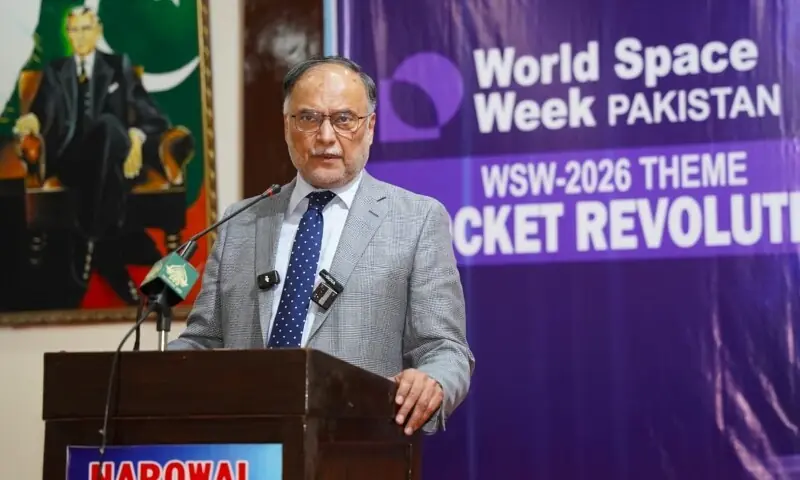
Pakistan’s first astronaut will undertake a space mission from a Chinese space centre on November 25, Planning Minister Ahsan Iqbal said on Sunday.
The minister made the announcement while addressing the concluding ceremony of World Space Week in Narowal, held in collaboration with the Pakistan Space and Upper Atmosphere Research Commission (Suparco), the planning ministry said in a statement.
According to the handout, the planning minister also said the country was aiming to achieve a lunar landing by 2035, expressing hope that Pakistan’s cooperation with China would help it “reach new heights in space exploration”.
In his address at the ceremony, the planning minister highlighted the importance of space technology in agriculture, communications, climate monitoring, education and national security.
Iqbal stressed that scientific research and space exploration were essential for technological advancement, the ministry’s statement said.
He further noted that Muslim scholars had once made significant contributions to astronomy and scientific discovery, calling for renewed efforts to restore Pakistan’s leadership in knowledge and research.
The astronaut will be one of the two — pilots Zeeshan Ali and Khurram Daud— China selected in April this year as candidates for its manned space programme and who have been undergoing intensive training in Beijing.
China has not said which of the two will fly or when, but speaking to Reuters last month, Amer Gilani, who oversees human spaceflight cooperation at Suparco, said a final astronaut selection decision was expected in mid-to-late October.
According to another Suparco official quoted by Reuters, once in space, the chosen pilot will carry the title of “payload specialist”, which is astronaut-speak for someone whose job in orbit is running Pakistan’s science experiments rather than flying the ship.
The astronaut will fly aboard a Chinese-built spacecraft, launched from a Chinese site, trained by Chinese instructors and communicating in Mandarin in orbit.
KHUZDAR – Another armed attack reported at marble factory in Balochistan’s Khuzdar where gunmen stormed the facility, abducted 18 workers and escaped with two vehicles and a loader. One worker was shot and wounded during the incident.
The attack took place in the remote Nal area near Besar Mountain, around 35 to 40 kilometres from Khuzdar city, at a marble factory owned by former National Party provincial minister Sardar Aslam Bizenjo and his son, Shah Mir Bizenjo.
According to the police official, dozens of armed men arrived at the factory late Saturday night in vehicles and on motorcycles before forcibly taking away 18 workers present at the site. One worker tried to flee but was shot by the attackers, sustaining a bullet wound to his leg. The injured worker was identified as Rashid, whose condition was reported to be out of danger by medical sources.
Initial information suggests that the abducted workers belong to different areas of Khuzdar district. The assailants reportedly took two vehicles and a loader from the factory before fleeing the scene. No armed group had claimed responsibility for the attack at the time of reporting.
The mass abduction raised fresh concerns about the security of workers and industrial facilities in the province, where a separate incident involving the abduction of police personnel was reported just a day earlier.
Unidentified armed men abducted 20 police personnel belonging to the Rakhshan Division from a passenger van in Mastung district, according to the report. The two incidents intensified concerns over the deteriorating law and order situation in Balochistan, with multiple abductions in quick succession putting renewed focus on security in the province.
Security forces have launched a search operation in the area to trace the abducted workers, while police have registered a case and initiated an investigation into the attack.
ISLAMABAD – Prime Minister Shehbaz Sharif announced plans to expand Danish Schools network across Pakistan, promising equal access to quality education for underprivileged and talented children regardless of their provincial, ethnic or socioeconomic backgrounds.
Addressing inauguration ceremony of a Danish School in Islamabad, the premier declared that no child should be deprived of quality education simply because their parents cannot afford it. He emphasized that the state must fulfil its responsibility as a mother by ensuring justice, equal rights and educational opportunities for every citizen.
The announcement comes as 27 Danish Schools are reportedly under construction across the country, marking a significant step towards expanding an education model originally introduced by the Punjab government in 2010.
Sharif said that whether a child is Punjabi, Sindhi, Baloch, Kashmiri or Pashtun, every child deserves an equal opportunity to succeed. The prime minister expressed deep concern over Pakistan’s longstanding educational divide, questioning why children from wealthy and influential families can access prestigious institutions such as Aitchison College while millions of disadvantaged children struggle to obtain even basic education.
He argued that a child’s future should be determined by talent, hard work and ability, not by the financial circumstances of their family.
Highlighting the plight of underprivileged families, the prime minister pointed to millions of talented boys and girls who remain unable to fulfil their potential because of financial hardship.
Sharif also recalled the example of a young girl from Khyber Pakhtunkhwa whose determination and love of education could not overcome the financial barriers standing in her way. His remarks underscored a central challenge facing Pakistan: ensuring that poverty does not become a permanent obstacle to educational achievement.
The prime minister questioned the disparity between children of the privileged class and those from low-income households, pointing out that the children of powerful political figures, senior officials, judges and wealthy landlords can access elite educational institutions with relative ease. Meanwhile, millions of children from Pakistan’s four provinces, Azad Jammu and Kashmir, and Gilgit-Baltistan continue to face barriers to quality schooling.
Recalling the vision behind the establishment of Danish Schools in Punjab in 2010, Shehbaz Sharif said the objective was to create an institution capable of providing education comparable to, or better than, that offered by elite institutions such as Aitchison College.
He also cited the example of an orphaned female doctor from Bahawalpur to highlight how access to educational opportunities can transform lives and help disadvantaged children overcome difficult circumstances.
PM Sharif’s announcement placed educational equality back at the centre of the national debate. The proposed expansion offers the prospect of opening new pathways for disadvantaged children who might otherwise remain excluded from quality education. However, the initiative’s ultimate success will depend on how quickly new schools become operational, how fairly deserving students are selected, and whether the institutions maintain consistent educational standards across provinces and regions.
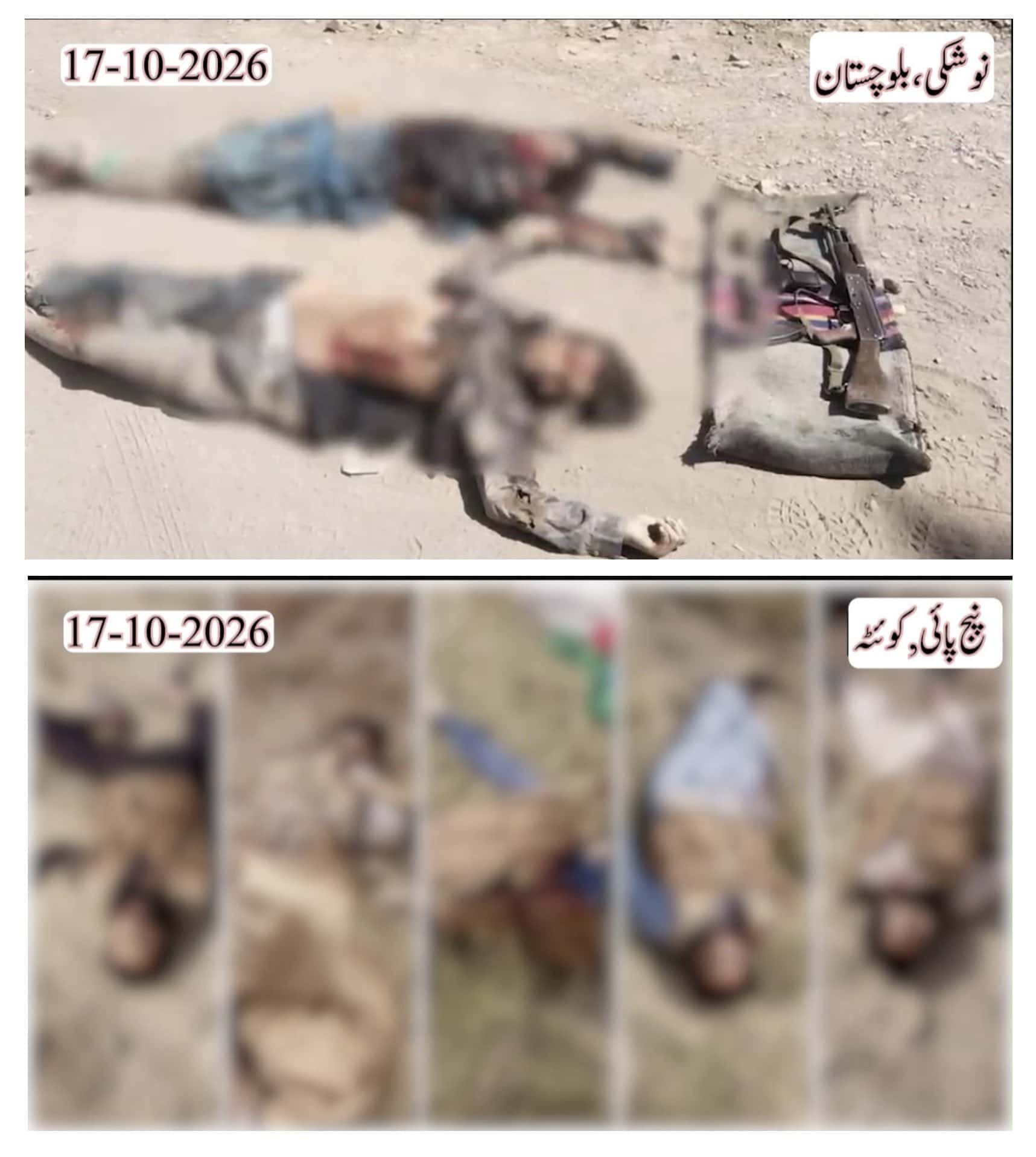
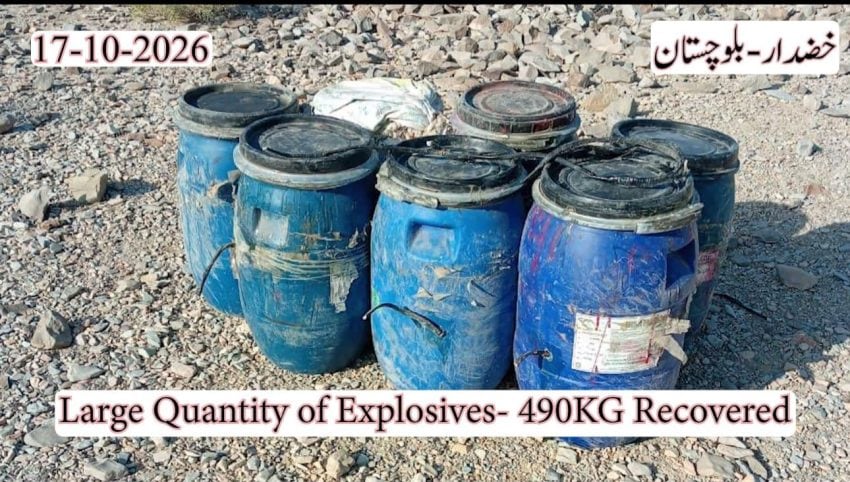
QUETTA — Pakistani security forces dealt blow to suspected terrorist networks in Balochistan, killing eight militants in three intelligence-based operations across Quetta, Nushki and Khuzdar districts, while recovering a massive cache of explosives weighing 490 kilograms.
The coordinated operations targeted suspected hideouts and militant activity in the province, with security personnel moving swiftly to neutralise threats and prevent potential disruptions to public movement.
In Panjpai area of Quetta, security forces thwarted an attempt by militants to establish a roadblock aimed at disrupting local traffic. The ensuing action resulted in the killing of five terrorists, preventing the reported plan from proceeding.
In Nushki district, security forces tracked down a suspected terrorist hideout, triggering an intense exchange of fire. Two militants were killed during the engagement, while weapons and ammunition were recovered from the site.
Security forces launched a swift offensive against a suspected militant hideout, killing one terrorist. The operation also yielded approximately 490 kilograms of explosives, a significant recovery amid ongoing efforts to disrupt militant capabilities.
Security forces launched further sanitisation operations in the affected areas to search for any remaining militants and eliminate potential threats.
The latest actions form part of Pakistan’s ongoing counterterrorism campaign under Azm-e-Istehkam, an initiative approved by the Federal Apex Committee under the National Action Plan. Security forces and law enforcement agencies remain committed to disrupting foreign-backed militant networks and combating terrorism across the country.
BALOCHISTAN – Thousands of containers sit stranded, and hundreds of trucks remain stuck, and traders face mounting uncertainty after Pakistan abruptly suspended cross-border trade with Iran.
The sudden suspension of cross-border trade with Iran triggered major disruption for businesses, leaving trail of containers stranded at Gabd-Rimdan crossing and raising fears of losses worth billions of rupees, as a wave of kidnappings intensifies security concerns in Balochistan.
The closure of the Taftan and 250 commercial border crossings between Iran and Pakistan has reportedly left thousands of trucks carrying fresh fruit and onions stranded on both sides of the border, causing significant financial losses for traders in both countries
1/ https://t.co/YYBcWv6FDV
— Lal Wazir journalist in PAK -AFG (@LalWazir19) October 18, 2026
Businesses say lack of advance notice compounded the crisis, with shipments delayed and payments already transferred to Iranian counterparts. Authorities called the shutdown a temporary security measure, but the absence of a confirmed reopening date has left the trading community facing mounting uncertainty.
Quetta Chamber of Commerce and Industry members raised questions over carrying goods stranded at Gabd-Rimdan alone. He warned that suspension could inflict losses worth billions of rupees on traders and businesses dependent on cross-border commerce.
A customs clearing agent at Gabd-Rimdan, speaking on condition of anonymity, reported that around 65 containers cleared through his services remained stranded. He also raised concerns over incoming trucks carrying fresh food supplies from Sindh and Punjab, warning that additional shipments could become trapped if the restrictions continued.
The financial consequences could extend beyond transportation delays. According to the agent, Pakistani traders had already paid their Iranian counterparts for goods, exposing businesses to further losses as deliveries remain on hold.
Counterterrorism
The suspension was confirmed by Chagai Deputy Commissioner Bakhtiar Ismail in a post on social media platform X. He said the decision was taken for security reasons and was intended to improve border management in support of counterterrorism operations.
Balochistan government has also defended the move, citing the need to strengthen border controls, prevent smuggling and improve administrative arrangements.
Shahid Rind, the provincial government’s spokesperson and an aide to the chief minister, said the temporary closure was necessary to address security concerns on both sides of the frontier.
The trade suspension comes amid a series of serious security incidents in the province.
On Friday, at least 20 police constables were abducted by unidentified armed men in Mastung district. According to a senior provincial official who spoke to Arab News, the personnel were returning from a police recruitment centre in Kalat when armed men intercepted their passenger van in a mountainous area of Mastung.
In a separate incident a day earlier, Asad Ullah Kakar, commissioner of Balochistan’s Rakhshan Division, was abducted while travelling from Quetta through Kharan district.
Security forces have killed eight “India-sponsored” terrorists during three intelligence-based operations conducted in the Quetta, Nushki and Khuzdar districts of Balochistan, Inter-Services Public Relations (ISPR) said on Sunday.
The IBOs took place on Oct 17 (Saturday) on the “reported presence of terrorists belonging to Indian proxy Fitna al Hindustan”, the military’s media affairs wing said in its press release.
The state has designated Balochistan-based groups as Fitna al Hindustan to highlight India’s role in terrorism and destabilisation across Pakistan.
In the Panjpai area of Quetta district, terrorists’ attempt to establish a roadblock to disrupt local traffic was “intercepted by security forces, resulting in [the] killing of five India-sponsored terrorists”.
Separately, during a sanitisation operation in Nushki district, security forces busted a terrorist hideout and “after an intense fire exchange, two India-sponsored terrorists were sent to hell”. Weapons and ammunition were also recovered, ISPR added.
In another IBO in Khuzdar, a terrorist hideout was “engaged by security forces through prompt offensive action”, killing one terrorist. ISPR said a large quantity of explosives (490 kilogrammes) was also recovered.
Sanitisation operations were being conducted to eliminate any other terrorist found in the area, according to the statement.
ISPR reaffirmed that the “relentless counterterrorism campaign under Vision ‘Azm-i-Istehkam’ (as approved by the Federal Apex Committee on the National Action Plan) by security forces and law enforcement agencies of Pakistan will continue at full pace to wipe out the menace of foreign-sponsored and supported terrorism from the country”.
President Asif Ali Zardari, in a statement, paid tribute to the security forces for eliminating eight terrorists.
He also commended their professional capabilities for thwarting the attempt to disrupt traffic in Quetta, as well as their actions in Nushki and Khuzdar.
“Conspiracies of the terrorists’ foreign patrons and their local facilitators will be foiled,” President Zardari declared.
Prime Minister Shehbaz Sharif also commended the security forces, state-run Associated Press of Pakistan reported.
He said the forces were achieving significant successes in the fight against terrorism under the vision of ‘Azm-i-Istehkam’ and reiterated the government’s resolve to completely eradicate all forms of terrorism from the country.
In his statement, Balochistan Chief Minister Sarfraz Bugti said operations will continue until terrorism is completely eradicated from the province and peace is established.
“There will be no compromise on Pakistan’s integrity, peace, and the protection of its people,” he affirmed.
Intensified operations
Balochistan has witnessed an increase in terrorist activities in recent years, prompting security forces to intensify counterterrorism operations.
On the night of Oct 12/13, security forces busted a terrorist hideout and killed five terrorists during an IBO in Washuk, ISPR said.
Days later, Balochistan government officials said that six terrorists affiliated with the banned Tehreek-i-Taliban Pakistan (TTP), two would-be female suicide bombers, and two commanders of a banned organisation had been arrested during IBOs across the province.
They said around 90 arrested terrorists were being held at a centre where investigations and legal proceedings were under way.
Earlier this month, five terrorists were eliminated in Balochistan’s Mastung district, state media reported.
The number of terrorist attacks in the province increased by seven per cent from 83 in July to 89 in August, according to data compiled by the Pakistan Institute for Conflict and Security Studies (PICSS). As per the report, Balochistan was declared the province “most affected” by terrorism.
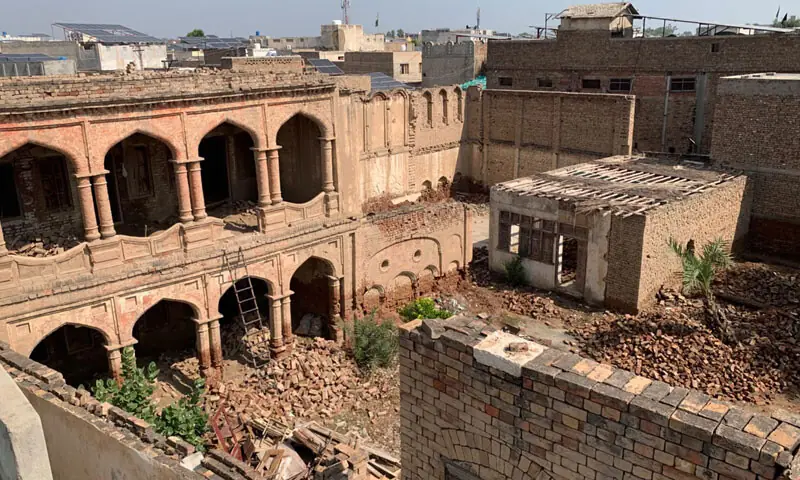
DERA ISMAIL KHAN: The authorities here on Saturday locked and sealed the historic Ram Leela Temple in Rahim Bazaar days after civil society activists intervened to stop the demolition of the heritage building for the construction of a commercial plaza at the site.
The building had earlier been sealed by Assistant Commissioner Hamid Siddiq following public protests and work at the site was stopped, said local sources.
The latest development came as civil society representatives and members of the Hindu community held a joint meeting to discuss the reported move to demolish the temple.
The participants condemned the proposed construction and called on elected representatives to raise the issue in the National Assembly.
The meeting, held at the office of civil society president Sohail Ahmed Azmi, was attended by former MPA and Hindu community representative Kishore Kumar, social worker Muhammad Nauman and others.
The participants said the Ram Leela Temple was among around 400 buildings in Dera Ismail Khan identified as cultural heritage properties by the Evacuee Trust Property Board.
They expressed concern over any move to demolish the temple and said civil society, the business community, writers and heritage advocates would resist any action that could damage the city’s historical heritage.
The participants also alleged that the relevant authorities had allowed construction of a commercial plaza at the site despite questions over their legal authority to do so.
They called for an inquiry into the matter and said complaints would be submitted to the district administration, the NA speaker, the archaeology department and other relevant authorities.
SAHIWAL: On the direction of DPO Usman Tipu, Yousafwala Police have registered a case against Rustam Ali Bhatti, ASI of Fatah Sher Police Station, and Bashir Ahmed Bhatti, custodian of the shrine of Hazrat Diwan Baba Haji Sher, in village 55/5-L, tehsil Sahiwal, for showering currency notes over dancers during the annual shrine festival on Friday night.
The police officer himself was seen showering currency notes on the dancers. After a video went viral on social media, the DPO ordered a case under Section 294 of the Pakistan Penal Code and Section 155C of the Police Order on the complaint of Zulfikar Ali, ASI of Yousafwala Police Station.
ASI Rustam Ali Bhatti was arrested and confined to lockup, while police teams are conducting raids to arrest the shrine custodian.
CJ: Chief Justice Lahore High Court Aalia Neelum arrived in Pakpattan on Saturday where she paid respects at the shrine of Hazrat Baba Fariduddin Ganj Shakar.
Later, the chief justice inaugurated the newly-built Judicial Complex and formally launched the installation of solar panels within the court premises.
ISLAMABAD – Government-backed Apna Ghar housing schemeoffers an easy way to get your own residence, but rising interest rates in the second decade could nearly double the total repayment cost.
Apna Ghar Scheme is being viewed as opportunity for those looking to get their houses through long-term financing. However, a closer look at the repayment structure suggests that a house worth Rs1 crore today could cost borrowers nearly Rs2 crore over the next 20 years, depending on how interest rates evolve.
Borrowers get a 20-year loan, with an interest rate of 5% for the first 10 years. For the remaining decade, the rate is linked to the prevailing KIBOR, plus an additional 2% or 3%, depending on the bank.
First 10 Years equals nearly Rs8Million
Consider a property valued at Rs1 crore (10million). Based on the estimates, the borrower’s monthly installment during the first decade would be approximately Rs66,000. Over 10 years, total payments would reach around Rs79 Lac, including interest.
Despite making these payments for a decade, the borrower would still owe the bank approximately Rs62 Lac. This remaining balance becomes crucial when the financing enters its second phase, where repayments could rise significantly if market interest rates increase.
The Second Decade
In second phase, the interest rate would depend on KIBOR and the bank’s applicable margin. For example, consider a scenario in which the prevailing rate is 10%, with an additional 3% margin, bringing the effective interest rate to 13%. If the rate rises further to 14%, the borrower could face a higher monthly installment.
A 14% interest rate would push the monthly payment to approximately Rs96,000. Over the next 10 years, total payments could reach around Rs1.1 crore.
When this amount is added to around Rs79 lakh paid during the first decade, the total repayment comes to roughly Rs1.9 crore. A house worth Rs1 crore today could require nearly Rs2 crore in loan repayments over 20 years under this scenario.
The financial picture, however, is not limited to the cost of borrowing. If the property’s value increases in line with inflation, a house worth Rs1 crore today could theoretically be valued between Rs6-7 crore after 2 decades.
That projection could make the scheme attractive to people seeking long-term homeownership, particularly if their primary objective is to secure a place to live while building property wealth over time.
However, this future valuation is estimate, not a actual return. Actual property prices depend on location, demand, economic conditions, taxes, maintenance costs and other market factors. Inflation-linked appreciation is not assured.
The scheme presents opportunity for families who want to own a home but cannot afford to purchase one outright. The initial 5% financing rate offers a degree of predictability during the first decade, while the second phase introduces uncertainty through its link to market rates.
Those looking to apply should therefore assess not only the initial installment but also whether they can afford significantly higher payments in the future. They should also account for any required down payment, bank fees, insurance or takaful, taxes and other charges, which may increase the overall cost of homeownership.
DISCLAIMER: The figures above are estimates, not a verified official repayment schedule. Actual installments and total costs will depend on the scheme’s applicable terms, the financed amount, repayment method and the interest-rate reset mechanism.
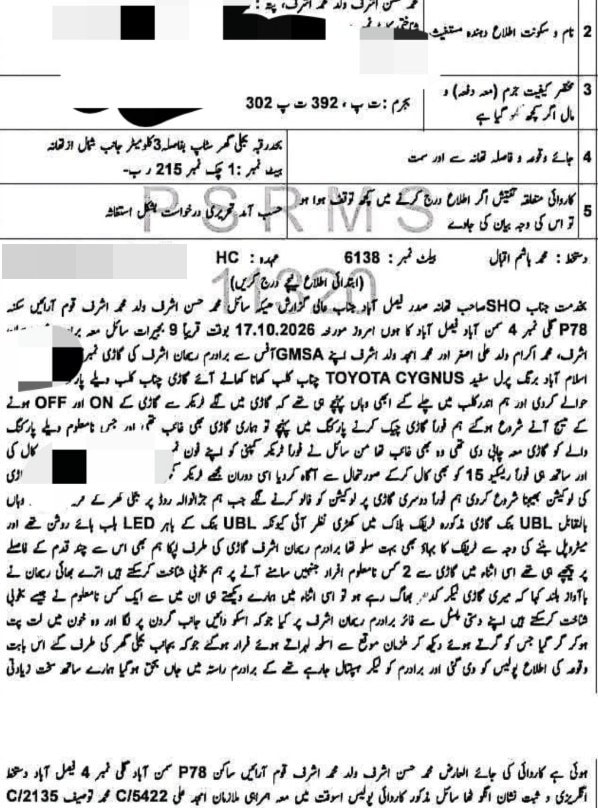
FAISALABAD – A car theft incident turns deadly for Rehan Ashraf, owner of the GMSA company, after he was allegedly shot dead while attempting to recover his stolen Toyota Cygnus SUV.
The incident occured on October 17, during a routine dinner outing at the city’s Chenab Club. According to the First Information Report (FIR), Rehan Ashraf arrived at Chenab Club around 9:00 pm with his brother Muhammad Hassan Ashraf and other friends. The group visited the eatery in a white Toyota Cygnus registered in Islamabad.
After handing over the vehicle and its keys to valet parking attendant, the group entered club for dinner. However, before they could begin their meal, alerts from the vehicle’s tracking device reportedly started indicating that the car was being switched on and off. What followed was desperate attempt to recover the stolen vehicle, but it ended in the businessman’s death.
According to the complaint submitted by Muhammad Hassan Ashraf, the group immediately rushed back to the parking area after receiving the tracker alerts. They were shocked to discover that the Toyota Cygnus was not there. The valet attendant who had been entrusted with the vehicle and its keys took the SUV.
The complainant said he promptly contacted the vehicle tracking company and called Police Emergency 15 to report the incident. The tracking company began sharing the vehicle’s location, enabling Rehan and his companions to pursue it in another car.
The live tracking information led them towards Jaranwala Road, near Bijli Ghar Stop, where the stolen vehicle was reportedly found trapped in slow-moving traffic opposite a UBL Bank branch.
Traffic in the area was moving slowly amid construction work associated with the Metro project, providing the group with an opportunity to catch up with the vehicle.
Rehan Ashraf got out of the vehicle and rushed towards his stolen Toyota Cygnus. His companions followed just a few steps behind. As he approached the vehicle, Rehan allegedly shouted at the man to know why he was taking his car. Two unidentified men got out of the vehicle during the confrontation. One of them allegedly pulled out a handgun and fired at Rehan.
The bullet struck him on the right side of his neck, causing him to collapse. The suspects allegedly fled the scene while brandishing their weapons, heading towards Bijli Ghar and leaving the stolen vehicle behind or escaping its immediate vicinity.
Rehan was rushed towards a hospital but succumbed to his injuries. This also raised questions about whether the vehicle’s theft involved a breach of trust, prior planning or the possible involvement of additional individuals.
Faisalabad Police registered a case on the complaint of Rehan Ashraf’s brother, Muhammad Hassan Ashraf. FIR mentions Sections 392 and 302 of the Pakistan Penal Code, relating to robbery and murder, respectively.
The complaint identifies two unidentified individuals as the alleged perpetrators of the shooting and states that the complainant and other eyewitnesses would be able to identify them if they were brought before them.
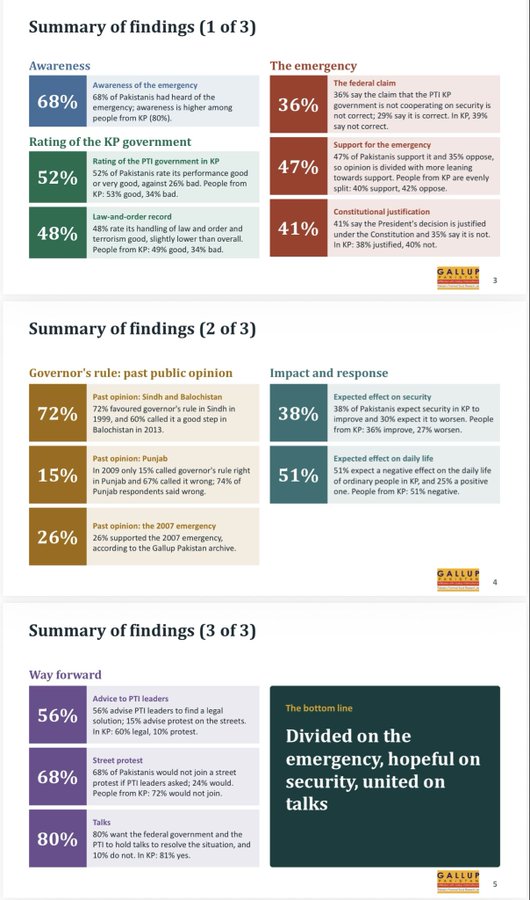
ISLAMABAD – Pakistanis remain divided over the emergency in Khyber Pakhtunkhwa, but there is little clarity as majority of people support dialogue, not street confrontation.
Gallup Pakistan survey found that 47% of respondents support the emergency, compared with 35% who oppose it. In KP, however, the balance shifts, with 42% opposing the measure and 40% backing it.
The findings reveal contrast between public opinion on the emergency itself and the preferred way forward. While political positions remain contested, 80% of Pakistanis want the federal government and Pakistan Tehreek-e-Insaf (PTI) to hold talks, and 68% say they would not join a street protest if the party’s leadership called for one.
Public backs KP government
The findings suggest that the PTI-led provincial government retains a favourable public image. Nationwide, 52% of respondents rate its overall performance as good or very good, while 26% give it a negative assessment. In KP, 53% approve of the government’s performance, compared with 34% who disapprove.
Its record on law and order and counterterrorism receives mixed but relatively positive assessment. 48% of Pakistanis rate the government’s handling of these issues positively. In the province itself, 49% give it a favourable rating, while 34% rate it negatively.
The survey examined the federal government’s allegation that the PTI administration in KP was not cooperating on security matters. Nationwide, 36% reject the claim, while 29% consider it correct. In KP, 39% say the allegation is incorrect.
The results show that the security dispute has not translated into a clear public consensus against the provincial government.
Emergency divides masses
Despite greater nationwide support than opposition, the emergency remains contentious issue. Nearly one in three respondents did not fall into either of the two reported support and opposition categories, underscoring the importance of the remaining responses in the survey.
In KP, opposition narrowly exceeds support, with 42% against the emergency and 40% in favour. Nationwide, 41% believe President’s decision is justified under the Constitution, while 35% disagree. Among KP respondents, 40% consider the decision unjustified, compared with 38% who regard it as constitutionally valid.
With neither side commanding an overwhelming majority, the figures point to a politically sensitive situation in which public opinion remains far from settled.
The public is divided over whether the emergency will improve security in KP. Nationally, 38% expect conditions to improve, while 30% believe security could deteriorate. Within KP, 36% anticipate an improvement and 27% expect a worsening situation. Yet the outlook becomes more troubling when respondents consider the potential consequences for everyday life.
A majority of 51% nationwide expect the emergency to have a negative impact on ordinary people in KP. Only 25% anticipate a positive effect. The proportion expecting negative consequences is also 51% among respondents from KP.
The clearest result in the survey concerns the political response to the crisis. Four out of five Pakistanis, 80%. want the federal government and PTI to sit down for talks. Only 10% oppose negotiations. In KP, support for dialogue rises to 81%.
The public also appears far more inclined towards legal remedies than street mobilisation. Some 56% advise PTI leaders to seek a legal solution, while just 15% recommend taking their demands to the streets. Among respondents in KP, 60% favour legal action and only 10% support protests.
Asked whether they would personally participate in a street demonstration if PTI leadership issued a call, 68% nationwide say they would stay away. Just 24% say they would join. In KP, reluctance is even higher, with 72% saying they would not participate.

 Login