Le Français Félix Lebrun, N.2 mondial, a été sacré champion d'Europe de tennis de table dimanche 18 octobre en Slovénie, après sa victoire à la belle sur le Suédois Anton Kallberg (4-3 : 7-11, 11-9, 13-11, 8-11, 9-11, 11-6, 11-1), après un ultime set génial. Une victoire sous forme de doublé, après son titre en double acquis samedi, qui couronne une belle semaine française.
French police battled protesters and looters for a second day on Sunday as the country reeled from the violent chaos left by a day of cost-of-living demonstrations in which around 2,000 people were arrested nationwide.
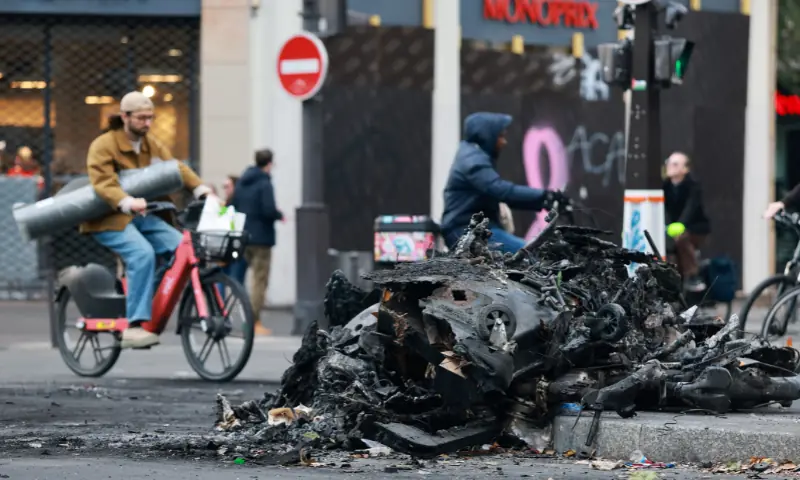
Paris city workers had not finished clearing up the torched cars, smashed shopfronts and burnt debris from Saturday’s unrest when the new troubles started and political recriminations erupted.
AFP journalists said several hundred people gathered in the Republique square in the capital following social media calls for a gathering that authorities said had not been approved.
Television footage showed the looting of a clothing store and bikes were also set alight nearby.
The Paris police prefecture said security forces moved in when “faced with the initial signs of tension”.
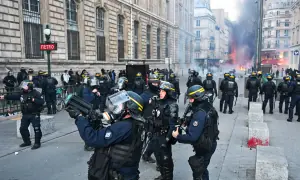
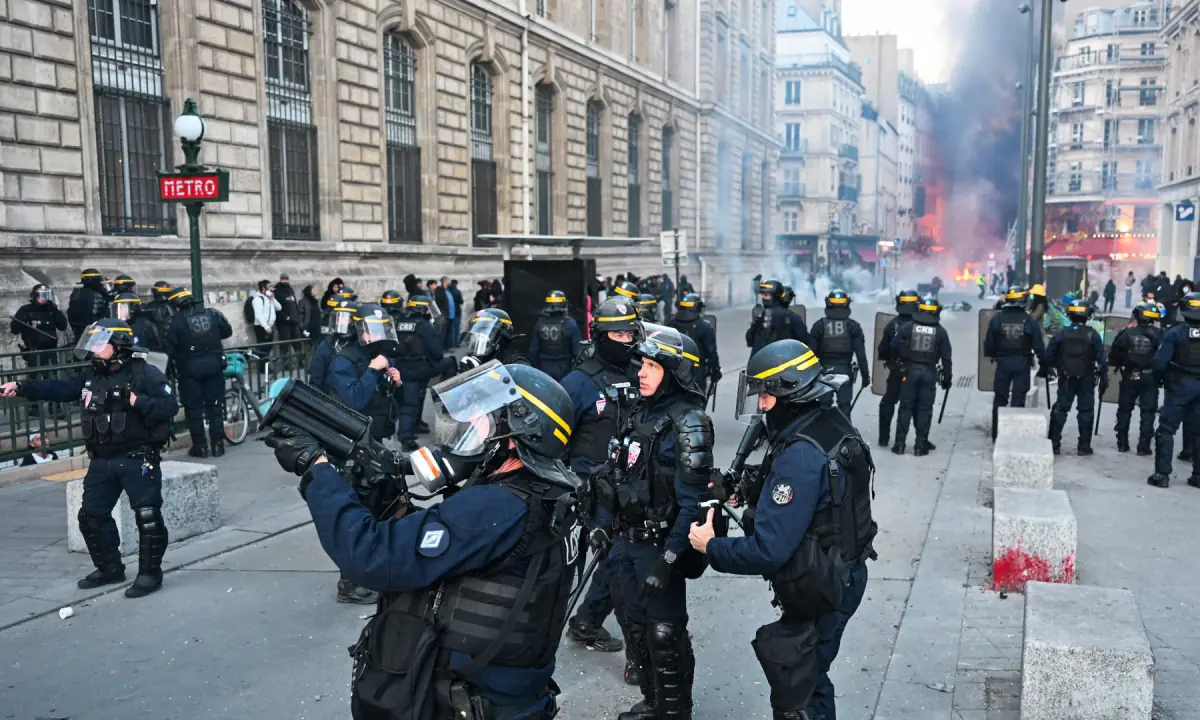
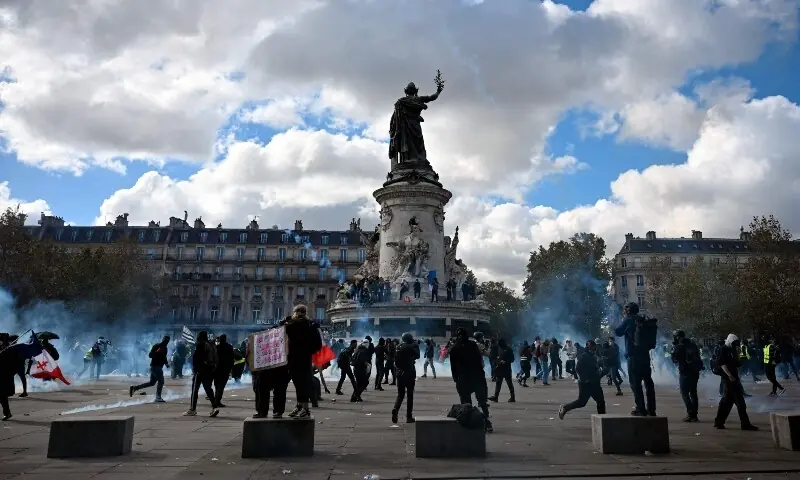
AFP journalists saw police firing tear gas and stun grenades at hundreds of people gathered in the square. Bottles and rocks were hurled at police who made several arrests.
Some 550 people out of 855 arrested in Paris remained in detention from Saturday’s troubles and police stations were struggling to cope, according to the Legal Team Paris group of lawyers.
Government under pressure
Six months from a presidential election, the government faced opposition attacks over preparations for the nationwide day of action that followed weeks of mounting student protests over conditions in schools.
President Emmanuel Macron, who on Saturday vowed that anyone who engaged in vandalism or looting would be prosecuted, was to address the nation on Sunday evening at 1800 GMT.
Marine Le Pen, the far-right presidential candidate for the National Rally party, said the troubles showed that Macron’s administration was “running on fumes, exhausted and disoriented”.
“We are experiencing a profound crisis of trust and authority, which poses a threat to democracy,” said Le Pen, who leads opinion polls ahead of the election.
Le Pen has blamed ultra-left groups, while Jean-Luc Melenchon head of the far-left France Unbowed party accused authorities of inflaming tensions.
With images of French town halls burning and shops being looted grabbing headlines around the world, US President Donald Trump waded into the debate, blaming immigration for the unrest.
“France is burning! The immigration of people from an entirely different world, people with hatred in their hearts, has shattered that once great country,” Trump said in a social media post.
Looting rampages were reported on Saturday in Paris and other cities, including Marseille, Bordeaux, Nice and Strasbourg, on the margins of protests over the cost of living.
Around 1,500 businesses were damaged with losses estimated at hundreds of millions of dollars, according to the Retail and Trade Federation. One person died during the main march in Paris, but officials said the case was health-related.
“It’s like we had a war,” a 78-year-old Paris resident Mehmet Ozeden told AFP amid burnt street barricades from the protests.
‘Animals’
Another resident, Anita Gras, said she saw young men loot a sports shoe retailer.
“It’s appalling, terrifying — groups of young people came here yesterday, looting, smashing everything, with total impunity,” said 57-year-old Cecile Rogue surveying a pile of charred bicycles.
The city of Limoges lost its 19th-century town hall to a fire that local prefect, Maurice Barate, told news channel LCI had been deliberately set by “a wild horde”.
About 7,000 people staged a march in the central city on Sunday to show their anger at the devastation.
In Lyon, a store owner, Jean-Christian, said those behind the violence were “animals”.
“We saw them looting, men high on adrenaline.”
A tourist office in the city centre was set ablaze during the protests amid multiple clashes and looting.
On Sunday, a clothing store was also looted in Lyon.
Tourists stunned
In Paris, startled tourists were seen on Saturday running with suitcases along streets filled with tear gas and protesters.
A Danish tourist, Soren Petersen, said it was “sad” to see damage to Paris buildings. “It is not a protest, it’s far beyond a normal protest,” he told AFP.
Around 500 police, firefighters and paramedics were hurt in the protests, Interior Minister Laurent Nunez said.
The violence took place on the sidelines of nationwide protests that the interior ministry said drew 550,000 people. The CGT union said 800,000 people participated.
A 17-year-old boy had his right hand blown off by a crowd-control grenade in the southern city of Saint-Etienne. In Mulhouse a 17-year-old girl lost an eye, according to prosecutors.
France’s Yellow Vest movement, which staged street protests eight years ago against Macron’s government over planned fuel-tax hikes, had called Saturday’s “yellow and youth” demonstrations.
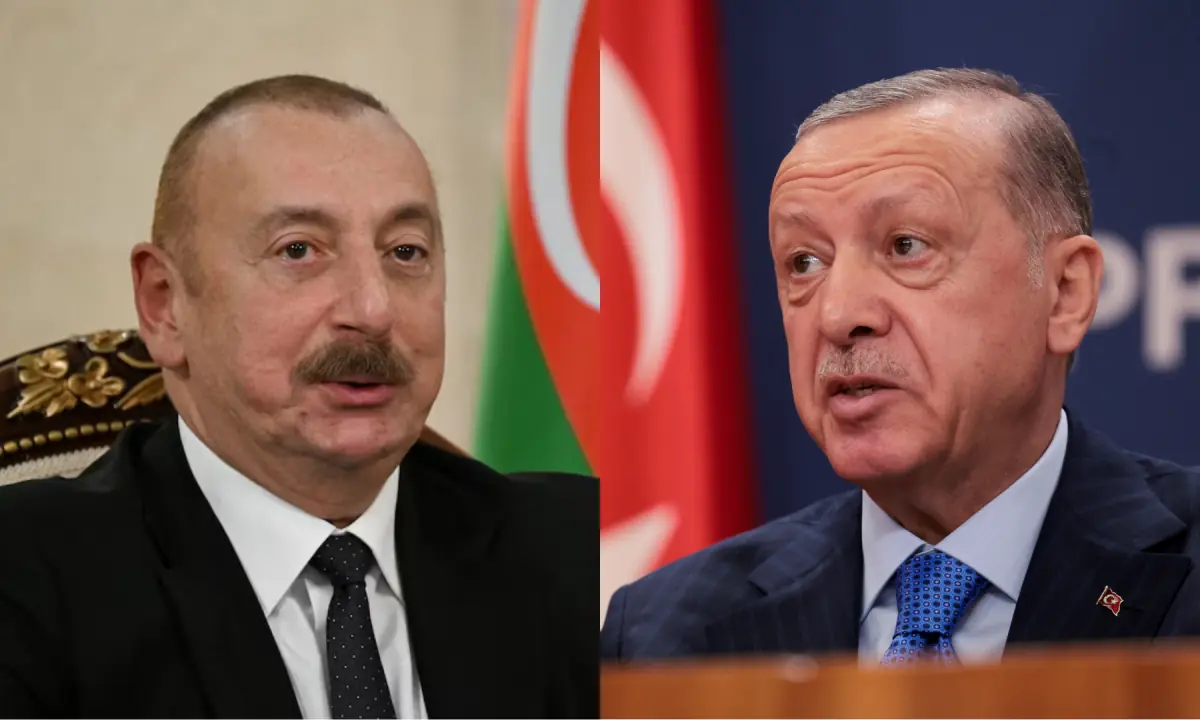
The normally close ties between Turkiye and Azerbaijan have come under strain, fuelled by a dispute over Baku’s restrictions on headscarves in schools and disagreements over Israel.
Public tensions have become evident in what has traditionally been a very close relationship between two nations which share a common language and whose bond is characterised by the slogan: One nation, two states.
Although the rhetoric has remained restrained at the top, senior officials have been more outspoken in their reactions.
On Monday, Oktay Saral, chief adviser to President Recep Tayyip Erdogan, shed his normal diplomatic reserve to denounce as “unacceptable” Azerbaijan’s move to change school uniform regulations, banning anything that conflicts with the normal uniform or the secular principles of education.
“The headscarf is not an obstacle; it is a requirement of faith! The right to education cannot be sacrificed to any ideological imposition!” he wrote on X.
“We expect Azerbaijan to reverse this mistake as soon as possible.”
The following day, the ruling Yeni Azerbaijan Party (YAP) hit back with a sharply worded statement denouncing Saral and MPs from Erdogan’s AKP for their “populist and irresponsible statements”.
“The recent disinformation campaign targeting Azerbaijan has become increasingly aggressive, systematic, and openly slanderous,” it said.
The confrontation reflected sharp differences between Azerbaijan — one of the most secular states in the Muslim world — and the leadership in Ankara.
But it also highlighted tensions over the growing rapprochement between Azerbaijan and Israel since Baku’s 2020 Karabakh war with arch-foe Armenia, when the Israelis supplied them with drones and other weaponry.
Turkiye’s ties with Israel, by contrast, could hardly be worse, with Erdogan accusing Israel of genocide in Gaza and Ankara regularly releasing images of top-level talks with the leaders of Hamas, whose October 2023 attacks on Israel sparked the latter’s onslaught on Gaza.
Baku more ‘pragmatic’
Turkiye’s pro-government media has held little back, with the Yeni Safak daily denouncing the headscarf regulations as a gesture towards Israel.
“We firmly reject attempts to deliberately distort Azerbaijani-Israeli relations, portray these ties as supposedly exceptional, and use this as a basis for making political accusations against Azerbaijan,” the country’s ruling party said.
The sharp response underscores Azerbaijan’s emergence as a regional middle power.
It is more willing to push back against Turkiye as Ankara seeks to project influence from the Black Sea, increasingly ensnared by the Russia-Ukraine war, and an ever-more volatile Middle East.
“The changing geopolitical order in the greater Eurasia has enabled Azerbaijan to pursue a more pragmatic foreign policy,” said Fuad Shahbazov, an independent political analyst, indicating that meant Baku now “categorically resists the attempts of external actors, even its ally Turkiye”.
But on Friday, Kursad Zorlu, deputy head of Erdogan’s AKP, said the two sides knew how to tackle problems “within the family” in what appeared to be a tacit call for online restraint.
At a regional summit in Baku on Thursday, Turkish Foreign Minister Hakan Fidan hailed “the unshakable bond … between our leaders” despite being tested “in very difficult times”.
Too much to lose
Observers agree the two nations share too much to risk a rupture.
“The sometimes-tense relations with Moscow and the Iran war happening next door mean that Baku cannot afford to alienate an otherwise good partner,” Ivan Klyszcz of the Estonia-based International Centre for Defence and Security (ICDS) told AFP.
“Moreover, energy cooperation, ongoing well before the current spat, is too important for both parties,” he stressed.
“For Turkiye, Azerbaijan is an essential gate for Central Asia, a region … seen by Ankara as strategic.”
Paradoxically, Baku seems to hold the cards, despite the fact that its population is ten times smaller than that of its ally.
“The litmus test of the Baku-Ankara axis will depend on the latter’s further attitude and commitment to quickly get back on diplomatic tracks to handle this crisis,” Shahbazov told AFP.
“Azerbaijan possesses energy leverage and access to the Central Asian region, giving it leverage over Turkiye,” he said.
And this is a crucial asset, given Ankara’s ambition to maintain its role as a transit hub between Europe and Asia.
Even so, points of friction remain.
On Friday, Baku said it had issued an “international arrest warrant” for a Turkish journalist working for the Sanliurfa Olay daily. According to prosecutors, Celal Ciftci called for a “coup d’tat” in Azerbaijan and promoted “religious extremism”.
Cientos de personas protestaron el sábado frente al Museo Nacional de Colombia, en Bogotá, contra el retiro de algunas obras relacionadas con la comunidad LGBTIQ+, el feminismo y el proceso de paz por orden del Gobierno de Abelardo de la Espriella. La policía antidisturbios dispersó por la noche la concentración, que había transcurrido pacíficamente, mientras seis museos del país exigieron respeto a su autonomía.
With a sports car that somersaults through the air, Elon Musk is back in the headlines for technological daring — but his plunge into politics and his return to US President Donald Trump’s side mean the world’s richest man no longer enjoys the unqualified praise of years past.
“All the things that we were promised since the 1950s, of space travel and flying cars… he’s doing all of those things,” said Andrew Selepak, a social media professor at the University of Florida.
“And yet we’re not giving it the attention, we’re not giving it the awe that it probably truly deserves,” he added.
In recent weeks, Musk has seemed to be everywhere at once.
On Sept 28, SpaceX’s Starship megarocket reached orbit for the first time and deployed 26 Starlink satellites before splashing down in the Pacific — a milestone for the rocket central to Musk’s Mars ambitions.
Musk’s central role in geopolitics has also been on display, with Ukraine complaining of disruptions to the Starshield satellite communications system its military relies on.
Even the platform formerly known as Twitter is enjoying something of a renaissance, with Musk’s X now the go-to social media app for Silicon Valley insiders and the main marketplace for talk about artificial intelligence.
But despite his continued success, Musk’s unrelenting commitment to right-wing politics has taken a toll.
No image captured that shift more than Musk brandishing a chainsaw on stage in February 2025 — a gift from Argentine President Javier Milei — as a symbol of his drive to slash the US government as head of the Department of Government Efficiency (DOGE) in the early months of Trump’s second term.
Through DOGE, Musk’s allies fanned out across federal agencies, driving cuts that effectively dismantled the US Agency for International Development (USAID) and contributed to a net loss of hundreds of thousands of jobs.
‘National treasure’
That combative imagery has been matched by Musk’s posts on X, where hardline anti-immigration views and right-wing conspiracy theories sit alongside posts about rocket launches and Tesla robotaxis.
Now Musk is back in Trump’s good graces, after a spectacular falling-out that followed his exit from DOGE in May 2025.
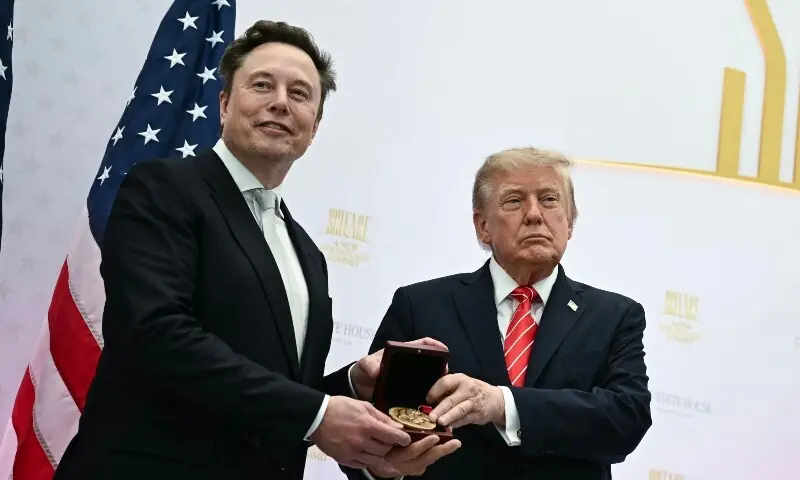
Last week, Trump presented Musk with the nation’s top science medal, calling him a “national treasure” and “our modern-day Thomas Edison”.
The renewed relationship comes as Musk has spent at least $276 million on Republican political campaigns ahead of next month’s midterm elections, in which the president’s party is expected to struggle.
Of that, $158m is funding a massive advertising campaign in Texas, Musk’s home state, where the Republican candidate is trailing in the polls.
US President Donald Trump presents the National Medal of Science to Elon Musk during the “Golden Age of American Innovation Summit” at the Institute of Peace in Washington, DC, on Oct 8, 2026. —AFP/File
For left-leaning pundits, Musk is now increasingly seen as an agent of Trump and the tech billionaires rather than a technology savant working for the good of humanity.
That opposition plays out in ‘Musk’, a four-hour documentary by Oscar-winning filmmaker Alex Gibney now in US theatres, which traces the life and career of the South Africa-born billionaire.
“I once described him as somebody who can jump off the edge of a cliff and invent a parachute on the way down. I think he thrives on chaos,” Musk’s first wife Justine Musk, who features prominently in the film, told podcaster Kara Swisher.
Yet, she added, “I always assume that there’s a method to his madness,” and many of his loudest actions may in fact be deflections and “sleight of hand”. The same may be true of Musk’s dealings with Washington.
Few entrepreneurs depend as heavily on the federal government as Musk does.
SpaceX — which went public in June in the largest initial public offering in history — earns billions of dollars a year from Nasa and Pentagon contracts, while Tesla’s bet on robotaxis hinges on how quickly regulators allow driverless cars onto US roads.
Seen in that light, Musk’s millions for Republicans may be less a political conversion than an investment.
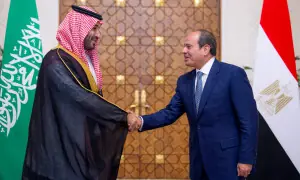
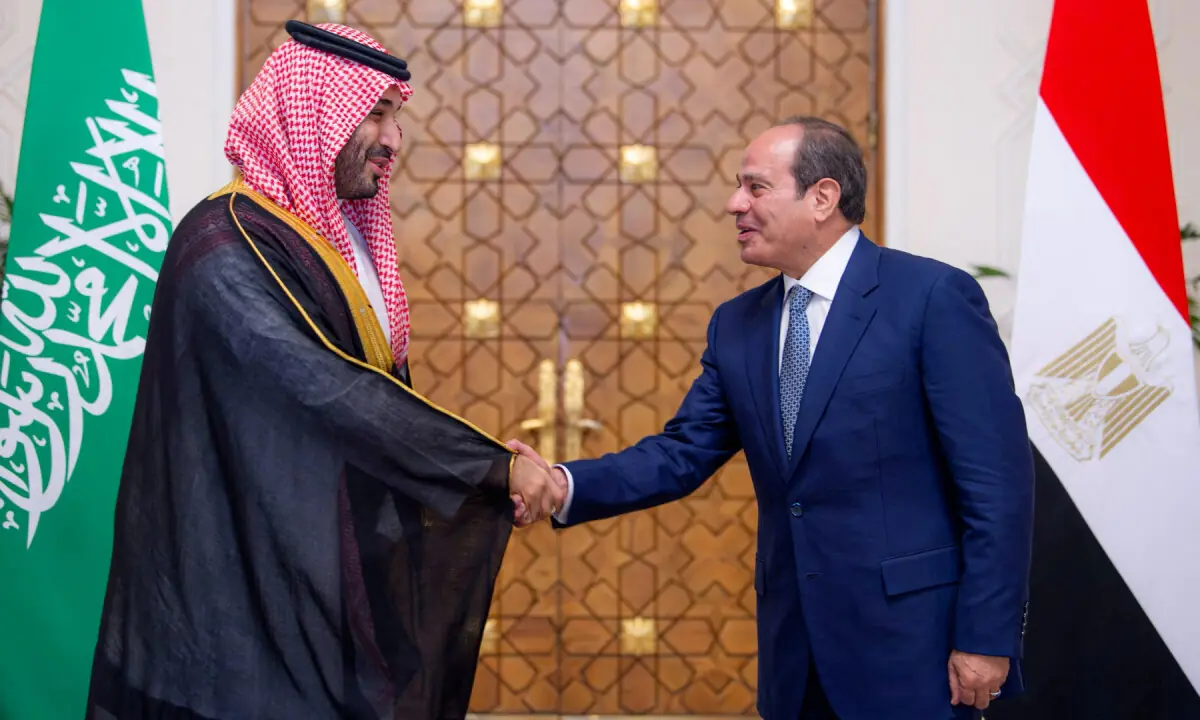
Egypt is ready to provide Saudi Arabia with the support it needs to defend its security and stability, the presidency said on Sunday.
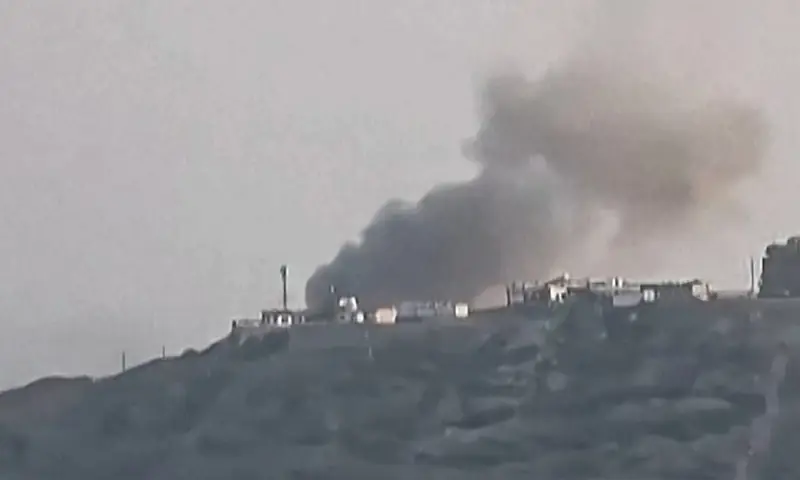
Earlier in the day, the Saudi-led coalition fighting the Houthis said two officers were killed when their helicopter crashed near the Yemen border, after the rebel group claimed it shot the aircraft down.
The coalition blamed a “technical malfunction” for the helicopter crash, which inflicted its first military fatalities since the long-running conflict with the Houthis reignited in July.
The incident comes a week after strikes by the Houthis killed 13 people at Riyadh’s international airport, the deadliest attack in Saudi Arabia in more than a decade.
An AH-6i reconnaissance helicopter belonging to the Saudi Ministry of National Guard crashed “inside Saudi territory in Najran Region due to a technical malfunction”, coalition spokesman Turki al-Malki said, according to the official Saudi Press Agency.
“The accident resulted in the martyrdom of its aircrew, consisting of two officers.”
Late on Saturday, Houthi spokesman Yahya Saree claimed the group had “downed an Apache helicopter belonging to the Saudi enemy” in the same area.
Egypt ready to give ‘all necessary and possible forms of support’
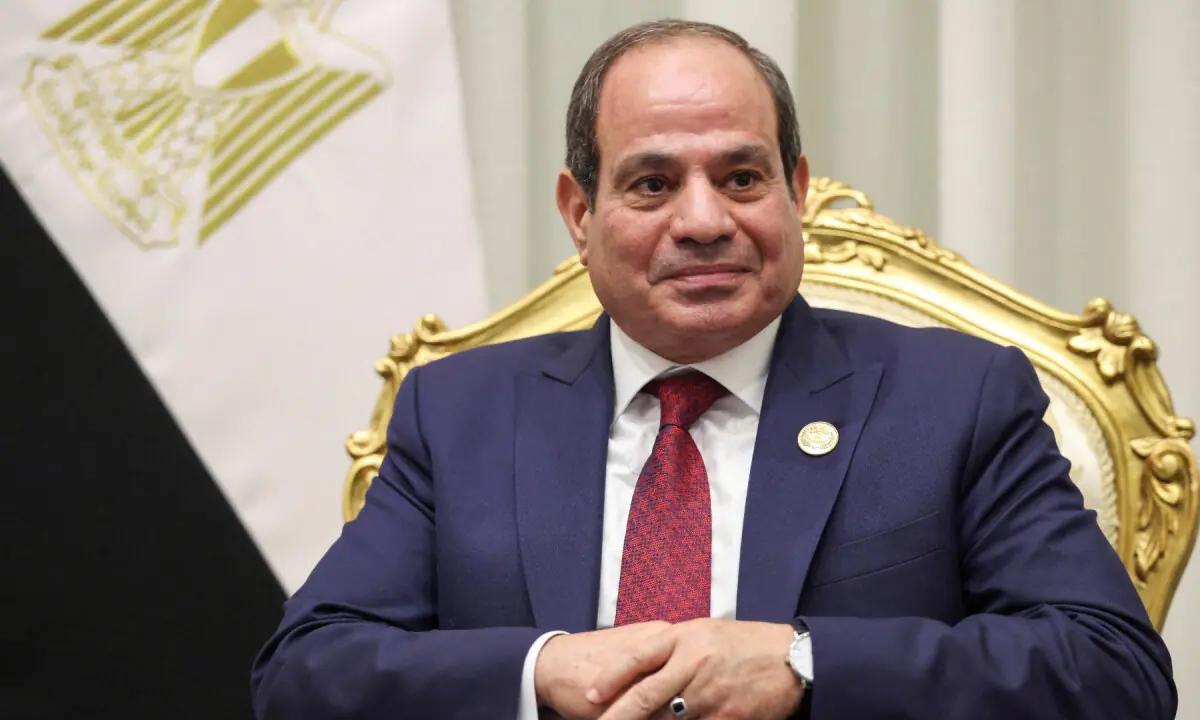
Egyptian President Abdel Fattah al-Sisi had requested an urgent parliament session to authorise the military, one of the region’s largest and most powerful, to help defend Saudi Arabia if the kingdom requested its support.
“Egypt will provide Saudi Arabia with all necessary and possible forms of support to defend its security and stability, protect its resources, territorial integrity and Islamic holy sites,” the Egyptian presidency said in a statement on Sunday.
It followed a meeting of Egypt’s National Defence Council chaired by Sisi and attended by the parliamentary speaker, the prime minister and the army chief.
A parliamentary vote had been expected on authorising the request for military support on Sunday, but discussions were due to continue on Monday, two lawmakers and local media reports said.
Sisi said in a speech on Saturday that Egypt would act in accordance with guidance from Saudi King Salman and Crown Prince Mohammed bin Salman, who visited Sisi on Sept 15, after fighting in Yemen reignited.
Dar, Egypt FM condemn Houthi attacks
On the diplomatic front, Deputy Prime Minister and Foreign Minister Ishaq Dar held a telephone conversation with Egypt’s FM Dr Badr Abdelatty, the Foreign Office (FO) said.
“The two leaders exchanged views on recent regional developments and strongly condemned the Houthi attacks against the Kingdom of Saudi Arabia, reaffirming their full solidarity with the Kingdom and support for its sovereignty, territorial integrity and security.”
They also discussed cooperation under the R-4 (Pakistan, Egypt, Türkiye and Saudi Arabia) framework and looked forward to the next meeting of the R-4 soon to further strengthen mutual ties and to coordinate on the regional issues, the statement added.
The foreign ministers of the four countries last met on Sept 21 in New York, where they had reaffirmed their support for Riyadh’s sovereignty and supported its right to self-defence.
Pakistan, which has signed two defence agreements with Riyadh, has repeatedly expressed solidarity with Saudi Arabia.
The first one, the Strategic Mutual Defence Agreement (SMDA), was signed in Sept 2025, under which the two countries pledged that any attack on either nation would be treated as an act of aggression against both.
The two countries are also parties to the Makkah Defence Alliance, which also includes Turkiye. The pact was signed on August 7 and provides that an attack on one member state would be treated as an attack on all.
Yemen fighting
After an uneasy, four-year truce, Yemen’s conflict has surged back to life, with the Houthis declaring a maritime blockade on Saudi Arabia in July.
The conflict intensified when Houthis captured territory around the Bab al-Mandeb strait, the Red Sea chokepoint and vital export route for Saudi oil since Iran blockaded the Gulf’s Strait of Hormuz.
On the other hand, the Saudi-led coalition backing the internationally recognised government has launched repeated air raids on Houthi territory.
The coalition said overnight that it intercepted two drones in the Riyadh area and a third over the oil-rich Eastern Province. Saudi authorities had earlier issued a threat alert in the capital.
Two ballistic missiles “launched by the terrorist Houthi militia towards Khamis Mushait” were intercepted in the kingdom’s south, the coalition added.
On Saturday, the Houthis reported that Saudi strikes killed 12 people in Yemen, including three children.
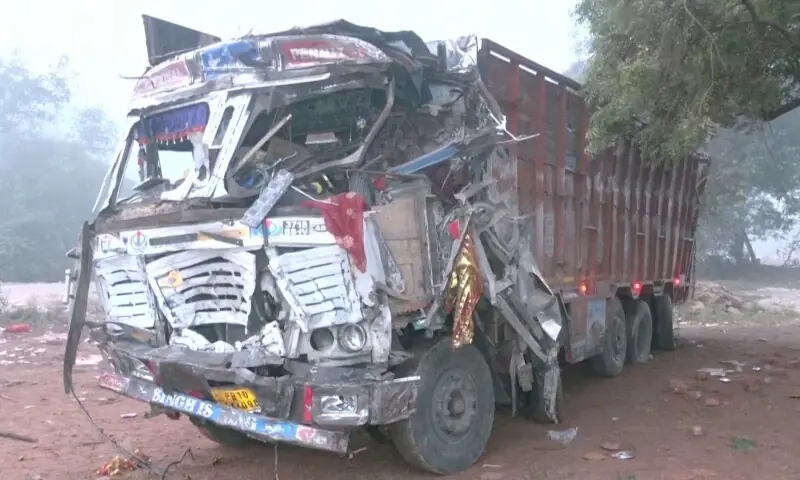
A speeding truck in India killed 13 people when it ploughed into a crowd at a Hindu festival, officials said on Sunday, with President Droupadi Murmu describing the deaths as “heartbreaking”.
The heavily loaded truck reportedly lost control in the early hours of Sunday and hit devotees gathered at a temple in Gwalior, in the central state of Madhya Pradesh.
The Press Trust of India (PTI) news agency cited hospital officials as saying 13 people had died.
“I express my deepest condolences to the bereaved families and pray for the swift recovery of those injured,” Murmu said on social media.
The Indian Vice President C.P. Radhakrishnan expressed sorrow at the loss of life.
“Deeply saddened by the tragic loss of lives in the accident involving devotees in Gwalior, Madhya Pradesh. My heartfelt condolences to the bereaved families. I wish a speedy recovery to all those injured,” he wrote in a post on X.
The incident comes a day after at least 17 people were killed and two dozen more injured on Saturday in eastern India after a stampede that was likely caused by sudden rainfall during a Hindu religious gathering, officials said.
India, with 1.4 billion people, recorded more than 183,000 road traffic deaths in 2025, or over 500 a day, according to the roads ministry.
Many are linked to inadequate road infrastructure, ill-maintained vehicles and exhausted drivers, according to official data.
« Un incident grave » ayant provoqué un incendie sur la base militaire de Wainwright dans l'ouest du Canada a fait « des morts et des blessés », a annoncé, samedi 17 octobre au soir, le gouvernement canadien. Le Premier ministre, Mark Carney, a annoncé dimanche que l'incendie a fait au moins quatre morts parmi les soldats. Des dizaines sont également gravement blessés.
US Secretary of State Marco Rubio said on Saturday that President Donald Trump’s waiver of sweeping sanctions and tariffs on Russia would be a 60-day pause to “analyse” their impact on the global economy.
“The president wants to take the 60-day period of time to sort of analyse what imposing both sanctions and tariffs will mean to the global economy and even to the US economy,” Rubio said, noting that the economic restrictions involved a number of countries, not just Russia.
He said various conflicts were impacting global energy prices, including the US war on Iran and attacks on Saudi Arabia by Yemen’s Houthis.
“These conflicts around the world are starting to crash into each other, and they’re having an impact not just on global oil and diesel prices” but on economies as well, Rubio said.
Trump said late on Saturday his decision would benefit the US, though it was unclear if he had actually made up his mind on the matter.
“We’ll figure it out, and you’ll figure it out,” he said. “It’s a very good decision, and it’s going to be a decision that’s good for the country, and I think good for the world.”
US lawmakers on both sides of the political aisle have sharply criticised Trump after he signed an executive order Friday that waived sweeping sanctions and tariffs targeting Russia — measures adopted by Congress last month.
The law passed in September, and signed by Trump, included sanctions targeting Russian officials, oligarchs and financial institutions, and provided Trump with the authority to impose sanctions on major buyers of Russian oil and gas.
The idea was to cut off sources of funding to supporters of Russian President Vladimir Putin, as well as his war on Ukraine.
But late Friday, two days before the law was due to take effect, Trump exempted Russia from those economic restrictions.
“Beyond irresponsible,” Republican Senator Thom Tillis, a frequent Trump critic who will leave office in January, said in a post on X.
“If the President wants to actually bring down energy prices, he can do it by solving the Iran problem, not by doing a solid for Vladimir Putin.” Ted Cruz, a senior Republican senator from Texas, called the move “a mistake” in comments aired on Fox News.
Trump’s executive order came after he struck a deal with Kremlin leader Vladimir Putin to allow exports of Russian diesel in exchange for the easing of sanctions.
The impact of steep diesel price hikes due to the Iran war are beginning to filter into the US economy, and cost of living worries are top of mind for voters ahead of key midterm elections next month.
Polls show Trump’s Republicans are likely to receive a drubbing at the polls.
“The diesel that Putin was going to sell, they were (going to) make it available to the global market one way or the other. The only difference is how much of it the United States was going to get,” Rubio said, underscoring the importance of the vital fuel powering US road hauling, agriculture and construction.
Ukraine’s President Volodymyr Zelensky said he feared the United States would lift more sanctions on Russia and that Trump’s action “rewards” Putin.
Japanese scientists are preparing a mission to Mars’s moons to retrieve samples that could help unlock the origins of the solar system and life on Earth, in what aims to be the first round trip to the Martian region.
The unmanned Martian Moons eXploration (MMX) probe, a collaboration with US and European space agencies as well as numerous universities and tech companies, could also help lay the groundwork for eventual human exploration.
The flagship H3 rocket carrying the MMX is set to blast off from the Tanegashima Space Centre on Tuesday at 4:41 am (12:41am PKT), according to the Japan Aerospace Exploration Agency (JAXA).
The spacecraft will arrive near Mars one year later, where it will orbit its moon Phobos for up to three years before landing and collecting at least 10 grams (0.35 ounces) of material from the surface.
A rover dubbed IDEFIX — the French name for the comic hero Asterix’s dog — will first conduct surface observations aimed at ensuring a safe landing.
“The sampling (from) Phobos is of course the world’s first, but it means… this is the first round trip to the Martian system,” MMX’s project manager Yasuhiro Kawakatsu told AFP.
JAXA said the mission will also explore the possibility of using Phobos as a “natural space station” by establishing the requirements for a round trip to Mars — something “essential for crewed Mars exploration”.
It will also observe the Red Planet’s moon Deimos, although it will not land on it, before returning to Earth.
Impact or capture
JAXA hopes the mission will reveal how Mars and its two moons formed, a key piece of knowledge in working out how the Solar System was born.
One theory for the origin of the Martian moons — the “giant impact” hypothesis — is that they formed after a celestial body collided with Mars.
The “capture” hypothesis, meanwhile, postulates that the moons are asteroids captured by Mars’s gravity.
Determining which is right will help reveal “how a habitable environment for life might have arisen on the terrestrial planets”, JAXA said, referring to the four rocky worlds closest to the Sun — Mercury, Venus, Earth and Mars.
“MMX will shed light on the transport mechanisms that delivered water, volatiles, and organic compounds from the outer solar system to the inner rocky planet region — processes that may have played a key role in making these worlds habitable,” said Patrick Michel, a French astrophysicist working on IDEFIX.
“If Phobos and Deimos are indeed remnants of these early delivery systems, they may hold clues to the origins of life itself, or, to be more correct, to the transport of the materials that were key to the emergence of life on rocky planets,” he told AFP.
Deep in the ‘gravity well’
MMX is a collaboration with France’s National Centre for Space Studies (CNES), the German Aerospace Centre (DLR), Nasa, the European Space Agency (ESA), and about 20 universities and tech companies.
The development of the spacecraft’s landing legs was particularly difficult, as gravity on Phobos is extremely weak, JAXA scientists say.
Japan’s unmanned Smart Lander for Investigating Moon (SLIM) — the “Moon Sniper” — tipped over after touching down on Earth’s Moon in 2024, but still transmitted data and survived several two-week lunar nights.
Japan also has experience in bringing back samples from space, including JAXA’s unmanned Hayabusa-2, which returned 5.4 grams of rock and dust collected from an asteroid several hundred million kilometres from Earth in 2020.
One of the differences between JAXA’s past asteroid probes and the MMX mission is that this time “we have to travel very close to Mars and return”, which means escaping the planet’s heavy gravity, Kawakatsu told reporters.
Phobos orbits about 6,000 kilometres above the Martian surface.
“Going deep into what we call the ‘gravity well’ is difficult,” Kawakatsu said.
China’s mission
US and Chinese space agencies have been racing to be the first to return rock samples from Mars’s surface back to Earth.
Nasa’s Perseverance rover, which has been roaming the Red Planet since 2021, has already collected samples.
The mission, however, was effectively cancelled by the administration of President Donald Trump following a vote by the US Congress in January.
China, meanwhile, has announced its Tianwen-3 spacecraft is scheduled for launch around 2028 and hopes to return Mars samples to Earth as early as 2031 — potentially before the MMX’s return.
JAXA scientists say sand and rocks from Phobos may offer a wider variety of samples than those on the planet itself, especially if it was formed by a collision between a celestial body and Mars.
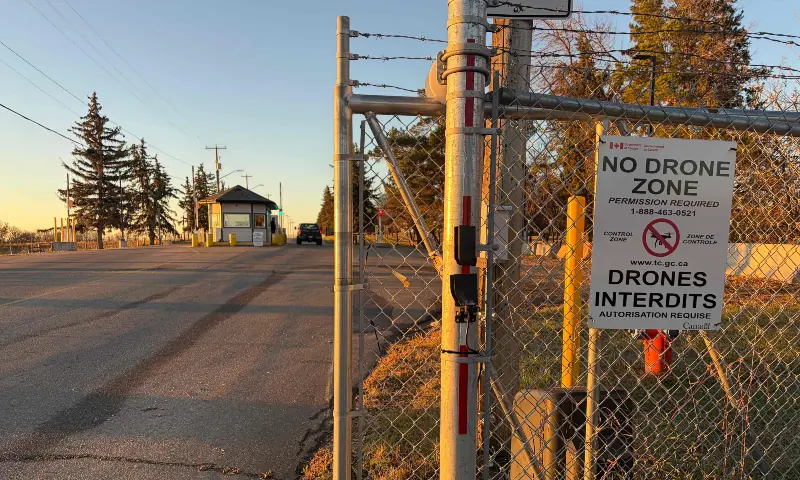
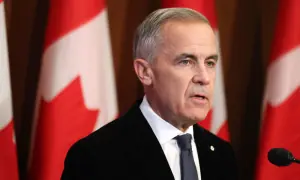
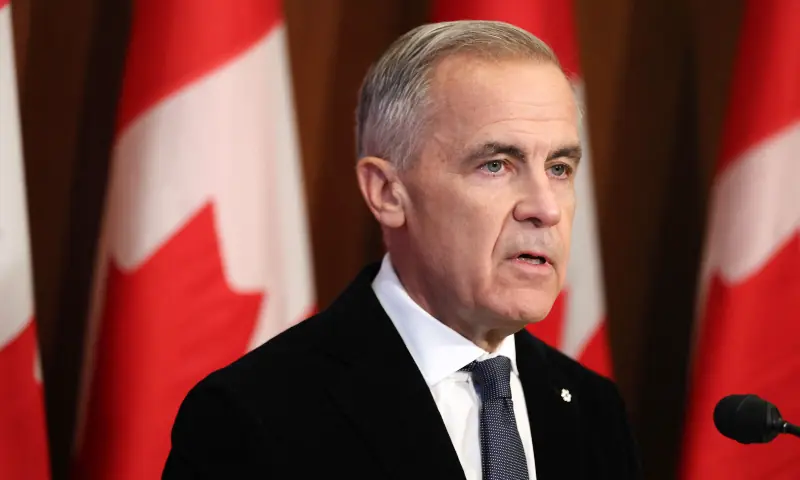
Four soldiers were killed and dozens injured in a fire at a military base in Alberta province, one of the worst peacetime tragedies to hit Canada’s armed forces on home soil, Prime Minister Mark Carney said on Sunday.
Carney made the solemn announcement without providing details on what caused the fire at Canadian Forces Base Wainwright on Saturday.
“It is with deep sadness that I can confirm, at this time, that four service members have lost their lives and that their loved ones have been notified,” Carney said in the capital Ottawa, adding that “dozens of others have been seriously injured”.
“This is one of the worst tragedies the Canadian Armed Forces have experienced on Canadian soil in peacetime,” he said.
Canadian Defence Minister David McGuinty said late on Saturday there were “fatalities and injuries” following an incident at a military base in western Canada.
“I’m saddened to share that there have been both fatalities and injuries as a result of an incident on the base,” McGuinty said.
Prime Minister Mark Carney had posted to X earlier on Saturday that “a serious incident creating a major fire” had occurred at the base.
Neither offered details on the number of casualties or the nature of the incident at CFB Wainwright, located about 200 kilometres southeast of Edmonton.
“We will have more to say in the coming hours and days,” McGuinty said.
A doctor at a hospital in the city of Edmonton, about 200 km northwest of the base, told public broadcaster CBC that Wainwright’s health-care facilities were “completely overwhelmed” by the number of patients requiring care.
“It is more patients than any of us want to count right now,” Warren Thirsk said. “It’s a disaster. It’s a one in every 15 to 25-year disaster.”
According to the Department of National Defence, the fire broke out around 4pm local time on Saturday (3am PKT on Sunday) in the base’s training area.
The Municipal District of Wainwright posted on social media that the fire had “spread rapidly due to high winds”.
It said later on Saturday that the blaze was “being held at this time”, though firefighting crews would continue to monitor the area.
“Military and civilian crews fought this fire throughout the night in some of the worst conditions imaginable, risking their lives to protect their fellow Canadians,” Carney said.
The Wainwright base is one of the largest bases operated by the Canadian Armed Forces and it regularly hosts training exercises involving military personnel from Nato countries.
“We will care for the injured through every step of their recovery,” Carney said.
“And we will stand by the women and men of our armed forces as they bear the weight of this loss, they will not carry it alone because in Canada we take care of one another.”
The fire disrupted advance voting ahead of Monday’s vote on whether to begin the process toward a future referendum on Alberta’s independence from Canada.
Alberta’s office responsible for overseeing provincial elections said the advance voting station in Wainwright had closed.
United States Secretary of State Marco Rubio is set to visit India for the second time this year, as Washington seeks to bolster ties with a strategic partner despite months of friction over a trade deal.
Rubio will meet senior Indian officials, but will bypass the Indian capital during the trip in the coming week.
Instead he will focus on investment and energy during visits to financial hub Mumbai and India’s oil hub of Jamnagar, which is home to billionaire Mukesh Ambani’s refining complex, the world’s largest.
The elephant in the room will be the inability by both countries to seal their long-awaited trade deal, experts say.
Several factors, including US President Donald Trump’s tariff blitz, friction over energy imports and Washington’s warmer ties with India’s arch-rival Pakistan have made it harder for negotiators to clinch an agreement.
Rubio will start his six-day overseas trip on Saturday with a visit first to Uzbekistan before arriving in India, according to the US State Department.
Here are some of the challenges the trade pact has faced and the road ahead.
Why has the deal been delayed?
India and the United States agreed in February on the framework for an interim deal under which Washington would lower reciprocal tariffs from 25 per cent to 18pc and India would reduce duties on a range of industrial and agricultural goods.
Despite months of negotiations, the agreement has not yet been finalised and signed.
One reason is the legal uncertainty surrounding Trump’s tariff plans after court challenges undermined the reciprocal tariffs that formed their basis.
“The February framework had offered to reduce India’s reciprocal tariff… in return for substantial Indian concessions. Once that tariff regime was struck down, the value of the US offer became unclear,” trade expert Ajay Srivastava said in a note.
India is also wary of new trade measures by Washington that could impact it, including an investigation into alleged unfair practices in several countries and a new law that allows for up to 100pc tariffs on nations that purchase Russian oil.
Trump on Friday signed an executive order that waived those threatened sanctions.
Where do negotiations stand?
Progress appears to have hit several hurdles.
For the better part of this year, both governments spoke optimistically about the possibility of finalising the interim deal.
US ambassador to India Sergio Gor in June said negotiators were working on the “last one per cent” of the pact.
More recently, the tone has turned markedly cautious.
India’s Finance Minister Nirmala Sitharaman said last week that talks had hit a “plateau”, with little room for further concessions.
Her remarks came days after US Trade Representative Jamieson Greer said an announcement was not “imminent”.
What have been the main sticking points?
Agriculture remains a sensitive area for India, which is reluctant to expose farmers to greater foreign competition.
Washington, meanwhile, wants India to buy more US energy supplies.
New Delhi has also insisted that its final tariff rate should be competitive with those received by other regional manufacturing rivals such as Vietnam.
Indian trade minister Piyush Goyal said this week that the first tranche of the deal was in its final stages, but added that it would not be operational until India secured an edge over its competitors.
“It’s going through the final contours, the legal drafting, and we hope to be able to finalise that soon and operationalise that once we get competitive advantage over our peer countries,” he said.
How has trade been holding up?
Goods exports to the US jumped 21pc in August to $8.3 billion compared to the same month a year earlier, when India faced 50pc tariffs.
The surge in exports has been a bright spot for the Indian economy, which has been roiled by high energy prices due to war in the Middle East.
If higher tariffs were to return, economists say it would cast a shadow on India’s growth outlook, hurt market sentiment and heap pressure on an already-weak rupee.
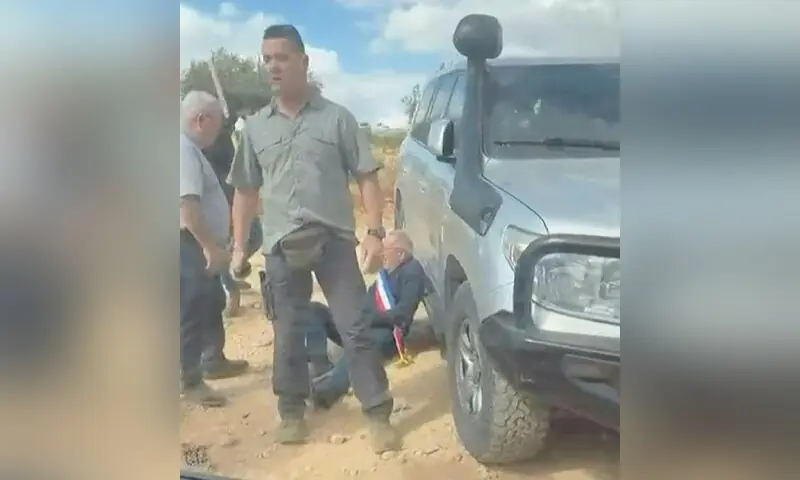
JERUSALEM: Israeli settlers on Saturday attacked a convoy of European diplomats and beat up a visiting French mayor, in a new escalation of violence during the Palestinian olive harvest, witnesses and diplomats said.
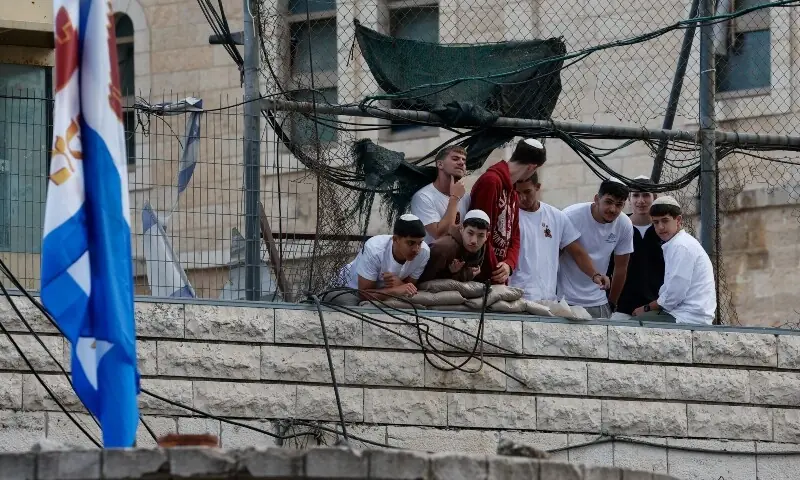
The 78-year-old mayor said masked settlers yelled defamatory comments about France, kicked him and hit him with iron bars as he joined Palestinian olive farmers in the occupied West Bank alongside the top French and Belgian representatives in Jerusalem and Polish diplomats.
“I think that if settlers are behaving like this, there is a tolerance on the part of the Israeli government,” Bernard Baudoux, mayor of the northern French town of Aulnoye-Aymeries, said after he was attacked.
“The whole world needs to know what’s happening,” he said. “For me, I’ll go back to my country and everything will be fine. Those who continue to suffer the most are those who are here.” Baudoux, who was wearing a sash with the French tricolour, was seen collapsed on the side of the car after the attack but he did not need hospital care.
The mayor, wearing a blue, white and red sash, leans against a vehicle as masked men intercept and surround a car at a village in the occupied West Bank. —AFP
The attack came just one day after settlers beat an American photographer for The Washington Post, who was in moderate condition with broken vertebrae on Saturday. Israel’s foreign ministry condemned the attack on the diplomats and Israeli police promised to open an investigation.
But Prime Minister Benjamin Netanyahu, days away from an election in which he is seeking to shore up support from the far-right, instead alleged a “smear” campaign against settlers. Netanyahu said the diplomats should have coordinated their movements with the Israeli military and pointed out that Baudoux is a communist known for supporting the Palestinian cause.
“We urge caution before drawing conclusions” about the attacks, Netanyahu’s office said in a statement.
His main rival in the Oct 27 elections, former military chief Gadi Eisenkot, strongly criticised Netanyahu over the violence, saying it was “burning away the little legitimacy the State of Israel still possesses”.
The attacks are “Jewish terrorism, under the auspices of the Israeli government”, Eisenkot said. Belgium called for an end to “impunity for violent settlers” after the latest attack.
Attacks on cultural symbol
Baudoux, the mayor, said he had come to the town of Taybeh, a Christian stronghold, along with his local pastor from France to sign a goodwill agreement. He was attacked just as he joined the harvest as a symbolic gesture with the Palestinians, for whom olives are an important cultural symbol.
Extremist Israelis have issued calls to stop the Palestinians’ harvest after months of growing attacks in which settlers have stolen land and property. There has also been violence against Israelis, with a Palestinian shooting dead a settler last month.
Bashar Fawadleh, a priest in Taybeh, said settlers had already attacked the harvest and snatched olives before beating the mayor. “One person was hit in the head and needed stitches. They also beat up an older lady in her 70s after insulting her with very bad words,” the pastor said.
The West Bank violence has shocked much of the world, with Britain leading economic sanctions that in turn caused Netanyahu to voice outrage. Netanyahu had also sought to throw doubt on the circumstances behind the beating of the photographer, Heidi Levine, alleging that Palestinians and “far-left” activists caused trouble.
At least 17 people were killed and two dozen more injured on Saturday in eastern India after a stampede that was likely caused by sudden rainfall during a Hindu religious gathering, officials said.
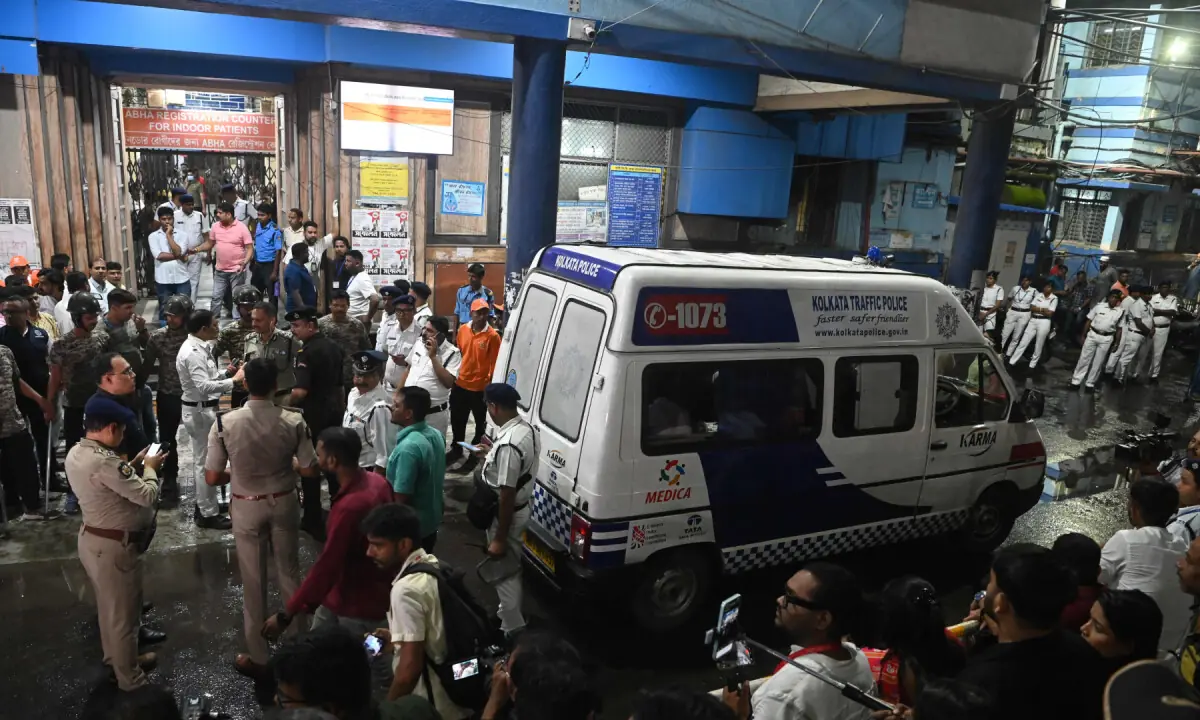
West Bengal’s Chief Minister Suvendhu Adhikari told reporters the fatalities included a seven-year-old girl, adding that 25 others were injured outside a pavilion “in a stampede” at the Hindu festival of Durga Puja in the city of Kolkata.
“Six bodies have so far been identified,” Adhikari said.
A senior police official at the scene told AFP an announcement caused “commotion” after it started raining at night and the “crowd waiting outside the pandal (pavilion) was pushing, pulling and rushing forward and fell on the ground, leading to the stampede”.
Deadly crowd incidents are a frequent occurrence at Indian mass events, such as religious festivals, due to poor management and safety lapses.
In August, a stampede at a Hindu temple in Bihar killed at least seven people and injured 19 others.
Last year, a stampede at India’s Kumbh Mela religious fair killed 30 people and injured several others, and 11 fans were crushed to death in Bengaluru during celebrations for the local cricket team’s first Indian Premier League title.
The same year, 36 people were killed after a stampede broke out at a campaign rally of a popular actor-turned-politician in southern Tamil Nadu state.
In 2024, 121 people were killed in northern Uttar Pradesh state during a Hindu religious gathering.
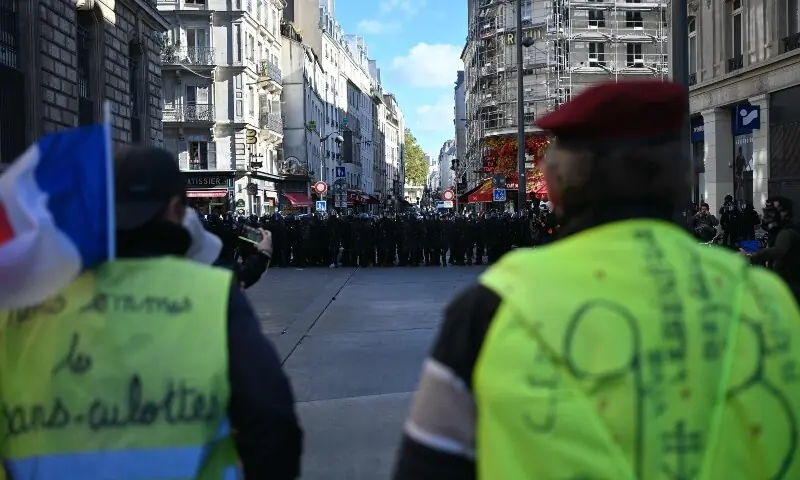
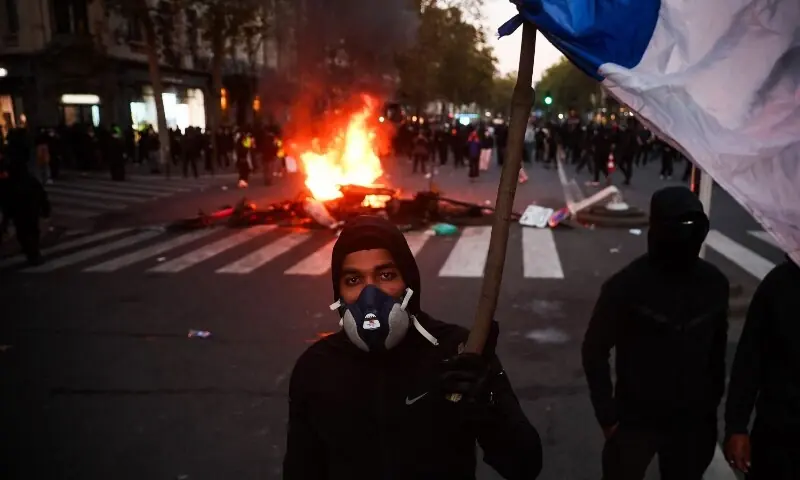
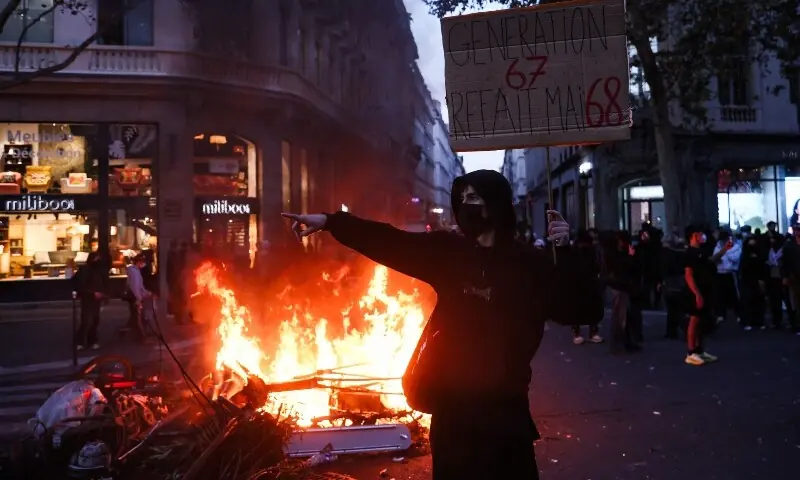
Police and protesters clashed violently in Paris and other French cities on Saturday on the sidelines of nationwide marches against soaring inflation, with one demonstrator’s hand blown off, multiple blazes set, and looters breaking into dozens of stores to strip them bare.
With just months to go before the two-round elections in April and May to choose Macron’s successor, the demonstrations follow weeks of high-school student blockades demanding better learning conditions.
Macron and his government were criticised by many of the demonstrators, who numbered 500,000 across the country, according to the CGT union. Authorities did not immediately give their estimate of the numbers.
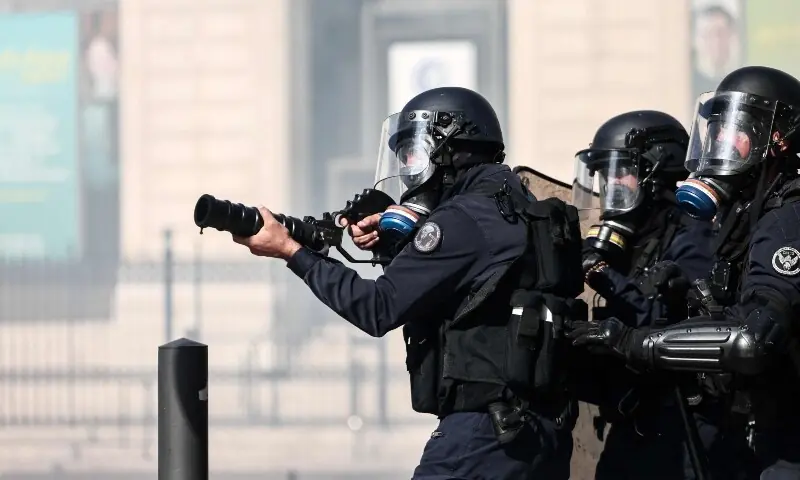
Police used tear gas and water cannon against masked protesters in Paris and other cities who were throwing projectiles and aiming fireworks. Several parked cars were torched in the capital, and more than 130 arrests were made.
In the southern city of Saint-Etienne, a male protester had his hand blown off by a police crowd-control grenade, a police source told AFP. His maiming came after a 15-year-old lost his hand on October 5 to a police stun grenade during another protest in the city of Lens.
Protesters stand amid tear gas smoke as clashes erupt ahead of a demonstration to protest against the “high cost of living”, at Place de la Republique in Paris, France on October 17, 2026. — AFP
The protests geared up with a handful of gatherings nationwide on Saturday morning, AFP reporters said.
In Lyon, protesters set ablaze a tourist office in the city centre, and smashed their way into town halls in the cities of Marseille and Lille, where they vandalised the premises before leaving.
Dozens of shops were looted, including many in Marseille, among them a Hermes boutique, an Apple store in Lille, several shops in Nice and at least one mobile phone outlet in Paris, AFP journalists saw.
A crowd of more than 300 protesters tried to move up Paris’s Champs-Elysees, home to flagship luxury stores. As police firing tear gas blocked their way, they yelled, “All cops are bastards”.
In the western city of Rennes, around 20 people set up a barricade using trash bins and large pallets on the outskirts of a shopping mall.
Christophe, a 47-year-old carpenter and former Yellow Vest protester who did not give his surname, said he was indignant after seeing what he viewed as police brutality against teenagers in recent weeks.
“We’ve reached the point where the repression is targeting our own children,” he told AFP.
A French national police officer fires tear gas during clashes prior to the start of a demonstration to protest against the “high cost of living”, in Marseille, southern France on October 17, 2026. — AFP
‘Macron, resign’
The looting and confrontations with police were being carried out by masked youths on the sidelines of marches that were largely peaceful and which attracted people of all ages, including families with children.
Paris mayor Emmanuel Gregoire stressed that “the overwhelming majority of demonstrators” wanted to “march calmly”, but “acts of vandalism” were tarnishing their protest.
In Paris, tens of thousands marched across the east and north of the city in one major march, some shouting “Everyone hates the police” and “Macron, resign”.
Protesters wearing yellow vests face police as clashes erupt ahead of a demonstration to protest against the “high cost of living”, at Place de la Republique in Paris, France on October 17, 2026. — AFP
One demonstrator, Jules Petrichor, 47, who had brought his son, said: “There was a good atmosphere and then suddenly they (the police) started gassing us, even though nothing was happening. Naturally that worsened things and the hot-heads got hot-headed.”
Another protester who gave his first name as Louis, 19, complained that police were trigger-happy any time there was a demonstration.
“We can’t protest any more, it’s frightening,” he said.
The country’s Yellow Vest movement, which eight years ago staged street protests against Macron’s government over planned fuel tax hikes, has called Saturday’s “yellow and youth” demonstrations. It has appealed to teachers and students, workers, pensioners and farmers to take part in the protests on the first day of half-term holidays.
The principal grievance was the cost of living — pushed up in part by the war in the Middle East — that has helped send inflation soaring in Europe as elsewhere. But there were other issues too.
A protestor with a gas mask holds a French flag in front of a fire at the Boulevard des Capucines during a demonstration to protest against the “high cost of living”, in Paris, France on October 17, 2026. — AFP
High school student Kamil Alahyan, 18, said he was protesting “for so many reasons — the elections coming up in 2027, politicians who lie, the ultra-rich who’ve been taking more and more wealth over the past 10 years”.
“For years we’ve had climate, economy and equality problems but the government is not doing anything about it,” said Agnes, a 50-year-old actor who did not give her second name.
Anae, a 24-year-old student who did not give her surname, said she was protesting because she did not have a “sustainable future”.
“Our planet’s burning. And we’ve got a government that doesn’t give a toss,” she said.
Le Pen blames ‘rioters’
Opposition politicians vying to succeed Macron have seized upon the protests.
Far-right presidential candidate Marine Le Pen, who has sided with the police, said on X: “Looting, pillaging, attacking police — rioters have once again sullied the October 17 demonstrations over the cost of living.” She claimed that the protesters’ demands had been “hijacked by the far left”.
Her far-left rival Jean-Luc Melenchon, insisted early Saturday that “everything is passing off peacefully”, while accusing television news of “flooding us with images of violence in dozens of cities”.
Several protesters sought to draw parallels with the French Revolution of 1789.
“It’s the Revolution — we’re taking the Bastille!” some shouted in Marseille during the forced entry of the mayor’s offices.
In the western city of La Rochelle, marchers streamed behind a placard reading: “Revolution or death.” And in the southern city of Montpellier, a giant blue sign reading “The people will win” was unfurled above a central square.
“The government is trembling and it’s right to tremble because when the French people are angry, they never let up,” Ryad Rani, the head of the LSU high school student representative body, told journalists in Paris.
Des colons israéliens ont attaqué, samedi 17 octobre, un convoi de diplomates européens qui effectuaient une visite en Cisjordanie occupée, rouant de coups un maire français, ont indiqué à l'AFP un témoin et deux sources diplomatiques. Sur une vidéo consultée par l'AFP, Bernard Baudoux, maire communiste de la ville d'Aulnoye-Aymeries (nord), apparaît affalé au sol contre une voiture. Vendredi, c'est une photojournaliste du Washington Post qui était rouée des coups par des colons.
Iranian Foreign Minister Abbas Araghchi said on Saturday that Tehran supports a “political process” to resolve the conflict between Saudi Arabia and Yemen’s Houthi rebels.
The Houthis have repeatedly attacked Saudi targets, including energy facilities and Riyadh’s international airport, where 13 people were killed in a major attack last week.
“We support an inclusive and comprehensive political process as the only practical and sustainable way to resolve the issue,” Araghchi said in a speech at the Organisation of Islamic Cooperation in Baghdad.
Araghchi repeated Iran’s offer to mediate between the two sides. Deputy Foreign Minister Saeed Khatibzadeh previously said Riyadh has not responded to Iran’s overture.
On Friday, Iran denied having anything to do with the Houthi attacks, after Saudi Arabia accused Tehran of encouraging the group’s escalation.
In his speech, Araghchi also said “either we build security together, or we will endure insecurity together,” adding that Tehran was willing “to cooperate with all its brothers and neighbours to achieve the first option”.
The Houthis have repeatedly attacked Saudi airports, oil facilities and tankers after a truce in their long-running war with Yemen’s coalition government unravelled in July.
On Wednesday, Yemen’s Houthi rebels said they had targeted facilities belonging to Saudi Aramco, after Saudi officials reported a strike on a building in Riyadh housing the energy giant’s operations centre.
Powerful explosions also rattled the Saudi capital, as the coalition fighting the Houthis said it had intercepted a missile fired by the group towards Riyadh.
On Tuesday, Saudi Arabia launched strikes on Houthi-controlled areas of Yemen, targeting fuel and energy facilities it said were being used to support missile and drone attacks, as the Yemeni group threatened a “harsh and painful” response against Saudi airports, refineries and oil installations.
Hours later, Saudi authorities issued warnings of potential hostile aerial threats in the kingdom’s eastern province and Riyadh.
Loud explosions were heard near Saudi Aramco’s headquarters in Dhahran, according to witnesses. Later, a Saudi energy ministry official confirmed the attack. Saudi Arabia’s civil defence agency said that four people — two women, a man and a child — were wounded by debris from two intercepted Houthi cruise missiles in the capital and that 15 homes were damaged.
Uma mensagem mandava-o “ir para o inferno”. Outras diziam que merecia ser preso. Choveram ameaças de morte. Asiáticos com o mesmo nome de um dos homens acusados de violar uma estudante universitária nos EUA têm sido alvo de uma enxurrada de insultos online. A alegada violação em grupo de uma estudante da Universidade de Cornell em 2024, descrita numa ação judicial recente, provocou uma onda de indignação contra os sete acusados. O caso pôs “detetives da internet “a vasculhar rastos digitais à procura de pistas para os encontrar. Um dos acusados é um coreano identificado pela imprensa norte-americana como Winston
India’s Cockroach Janata Party (CJP) founder Abhijeet Dipke was released from detention on Saturday, a day after he was detained during a police crackdown on protests against the election authority.
Dipke, 31, was detained on Friday in New Delhi as he headed to join a rally that the CJP protest movement had called in the capital’s central Connaught Place district. He was arrested to prevent a breach of the peace, broadcasters NDTV and India Today reported.
He walked out of a police station on Saturday afternoon, waving to the media and giving a thumbs up as he was driven away, an AFP photographer saw.
“Abhijeet Dipke released,” CJP legal affairs chief Ratna Singh said on social media.
Opposition parties and CJP activists have defied a security crackdown, rallying to demand the resignation of India’s Chief Election Commissioner Gyanesh Kumar after accusing the poll body of manipulating voter rolls to benefit Prime Minister Narendra Modi’s ruling party.
More than 130 million voters were deleted during the revision. The Election Commission has denied favouring any party and said wrongly deleted voters can re-enrol. The BJP has accused rivals of trying to undermine democracy by wrongly questioning legitimate electoral processes.
Student activist Neha Bora, a prominent face of the protests, who was also detained on Friday as she tried to reach central Delhi with dozens of supporters, was released earlier on Saturday as well.
“Please, spare the people of India. Impeach Gyanesh Kumar and halt SIR (special intensive revision), so that the ordinary citizens of this country can breathe a sigh of relief, feel at ease, and have their voting rights ensured,” Bora told ANI news agency after she was released.
Two other senior CJP leaders, Ashutosh Ranka and Saurav Das, were arrested on Oct 14 after entering Jantar Mantar, a decades-old protest site that police have declared off-limits for demonstrations. They remain in custody.
Members of Modi’s Hindu nationalist Bharatiya Janata Party have long alleged that large numbers of undocumented Muslim migrants from neighbouring Bangladesh have fraudulently entered India’s electoral rolls.
Rights groups and critics, however, say Modi’s government has eroded democratic freedoms during more than a decade in power, citing pressure on journalists, civil society groups and political opponents — allegations the government rejects.
A weeks-long sit-in by supporters of the movement earlier this year forced then-education minister Dharmendra Pradhan’s resignation over exam paper leaks.
Le président américain Donald Trump a annoncé, vendredi 16 octobre 2026, la levée de plusieurs sanctions, restrictions et droits de douane visant la Russie, prévus dans le cadre d'une loi promulguée le mois dernier, avant même leur entrée en vigueur.

 Login