Scottish university’s annual tradition once involved giving out raisins but fancy dress and shaving cream now in vogue
Nobody at the University of St Andrews in Scotland seems to remember how Raisin Monday became a giant foam fight. For 600 years, first-year students have taken part in the ritual of thanking older students for mentoring them through their first few weeks of university life.
Traditionally, freshers would give their elders a pound of raisins – hence the name. This Monday however, hundreds wore fancy dress as they streamed on to St Salvator’s lower college lawn at 11am armed with cans of shaving foam, covering one another in soapy clouds as they have for the past few decades. Groups of students dress as Smurfs, mice, bananas, grandmas, sunflowers and chefs to participate in the annual rite of passage.
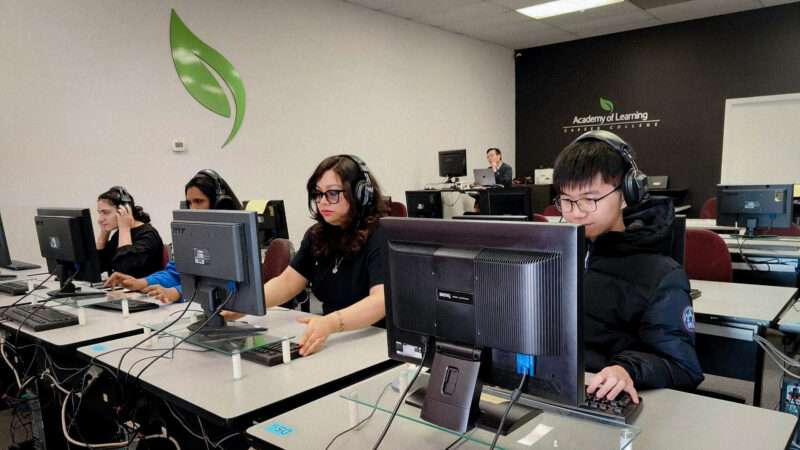
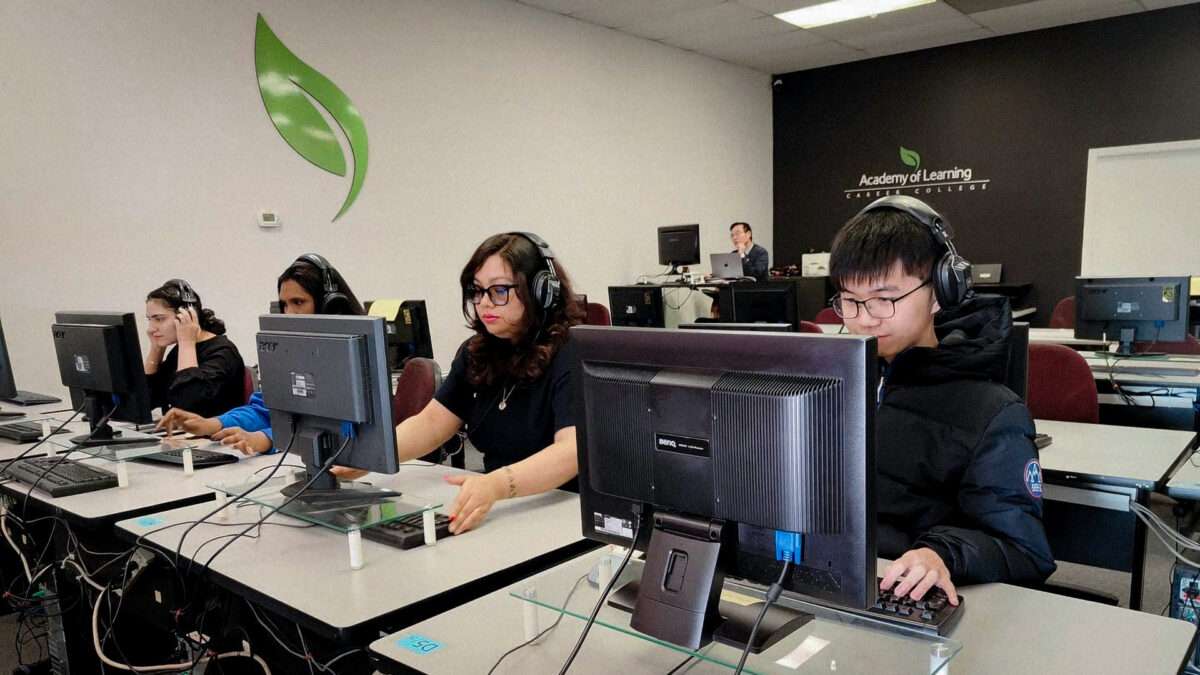
Ontario government inspectors checked several career colleges that had experienced "concerning" growth in applications for the Ontario Student Assistance Program (OSAP), a government financial aid program that helps eligible students pay for post-secondary education. The investigators found problems that raised "serious concerns" at three Academy of Learning institutions, like signs that other people might have been doing students' schoolwork for them—for example, some students finished whole courses in a single day, or even just minutes. A few students could not even name their school or program of study. The inspectors also found shared computer logins from many different locations and said the schools could not prove that OSAP-funded students were really taking the classes they claimed to be enrolled in. These three locations took in more than $219 million in student aid money for about 14,800 students in one year, so the province decided to stop letting new students use that aid at the schools. The colleges deny most of the claims and are fighting the decision in court.
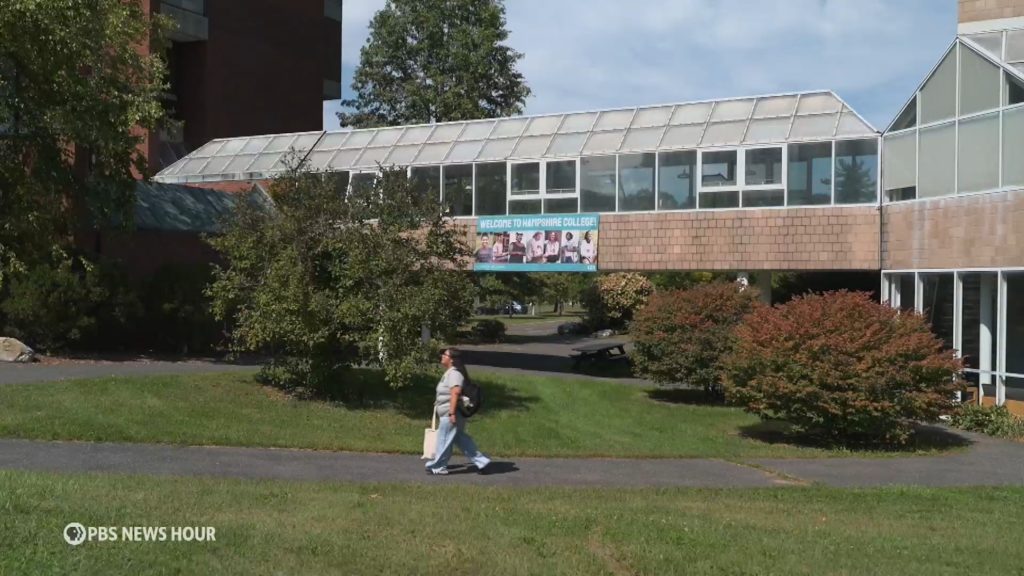
Across the nation, scores of small private colleges and universities are either closing or under threat. As each school shutters, students, faculty, and the surrounding community struggle to find a way forward. Paul Solman reports on one such school and the effects of its demise. It's part of our higher education series, Rethinking College, and produced in collaboration with the Hechinger Report.
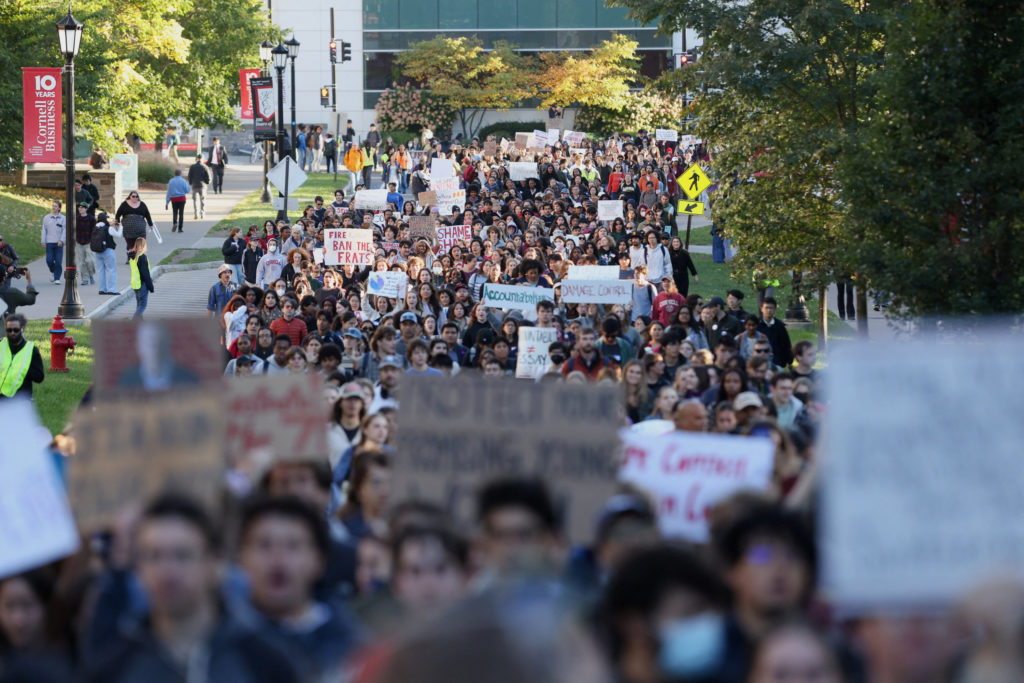
High school and university students in France continued their protests on Tuesday, October 13, demanding government investment in public education. Approximately 480,000 protesters took to the streets in the latest iteration of the mobilization, with families, teachers, and trade unions backing students’ demands.
The mobilization remains marked by widespread police violence. Police used tear gas and dispersal grenades on crowds, including at Tuesday’s central march in Paris. Hundreds of students were injured and thousands arrested in these incidents, prompting reactions from human rights organizations.
In response, the public joined students as they blocked high schools and organized marches to physically shield them from potential harm. Trade union members, notably from the education sector, were highly represented in these support lines.
“The CGT reaffirms the urgent need to address the demands of those who are the country’s future ,” the General Confederation of Labor (CGT) asserted. “The CGT salutes their fighting spirit. It welcomes the strong anti-fascist tone of the demonstrations, which shows that there is no inevitability to the continued flourishing of fascist ideas or to the far right’s rise to power.”
Students demand access to higher education
Since the beginning of the month, French students have organized three massive demonstrations to warn against the state of education under austerity. “For several weeks, high school and university students have been mobilizing to denounce the deterioration of their study conditions, the Parcoursup system, staff and resource shortages, policies that are dismantling public services, and – more broadly – the future this society holds in store for them,” the trade union federation Solidaires recognized in their statements.
Trade unions continued their support for student mobilizations. The banner reads: “Electricity and gas workers stand with the youth. Our rage is nuclear.” Source: CGT/Facebook
Equal access to higher education has been high on the protesters’ demand list since the beginning. This refers in good part to how students are currently recruited into university courses – the Parcoursup admission platform. Introduced in 2018 under Macronist ministers to replace a previous system that randomized selection for oversubscribed courses, Parcoursup was supposed to “rationalize” admissions.
In practice, however, critics and applicants emphasize the platform allows institutions to apply unclear selection criteria and even discriminate against students from working-class areas.
In September 2026, the left party La France Insoumise warned that 126,652 students were not able to access a course as a result of the system – up from 77,000 in 2023. “This selection process is the product of austerity-driven political choices deliberately implemented by successive Macron-era governments,” the party warned.
“Parcoursup is a social sorting machine,” Solidaires echoed. “The platform organizes competition among young people for places that the State deliberately refuses to create. It transforms the right to study into a privilege, scarcity into selection, and austerity into supposed individual failure.”
Commodification of education
Jean-Luc Mélenchon, the left’s presidential candidate, pointed out that these choices are part of a broader political agenda: “the commodification of education and knowledge.”
Trade union briefs on the subject back this interpretation. At the beginning of this school year, Solidaires warned that thousands of those left without higher education placings are being sacrificed in the name of austerity.
“But not everyone experiences this violence in the same way,” they wrote. “The wealthiest families can afford private schooling, fund housing on the other side of the country, or sustain a year without studying. Young people from working-class backgrounds, however, have no way out. A lack of options means either being forced into the job market or military service – abandoning their plans for good – or facing precariousness, isolation, and debt at a private institution.”
“We have shifted from an egalitarian system to a discriminatory one: pay for your own future,” Mélenchon concluded in a recent interview.
The left leader anticipated that student demands will be an important topic during the upcoming election campaign, where the left is contrasting a program of rupture with neoliberal policies to the far right’s intention to build a debt brake not unlike Germany’s. In practice, this would translate into years of sustained attacks on social security and public services.
Trade unions and progressive organizations announced their support for the youth mobilizations will continue as they build campaigns to resist the government’s intention to impose billions in cuts to pensions and social security while spending record amounts on rearmament.
For their part, student unions invited their members to remain active and join a general mobilization against the cost of living crisis this Saturday, October 17.
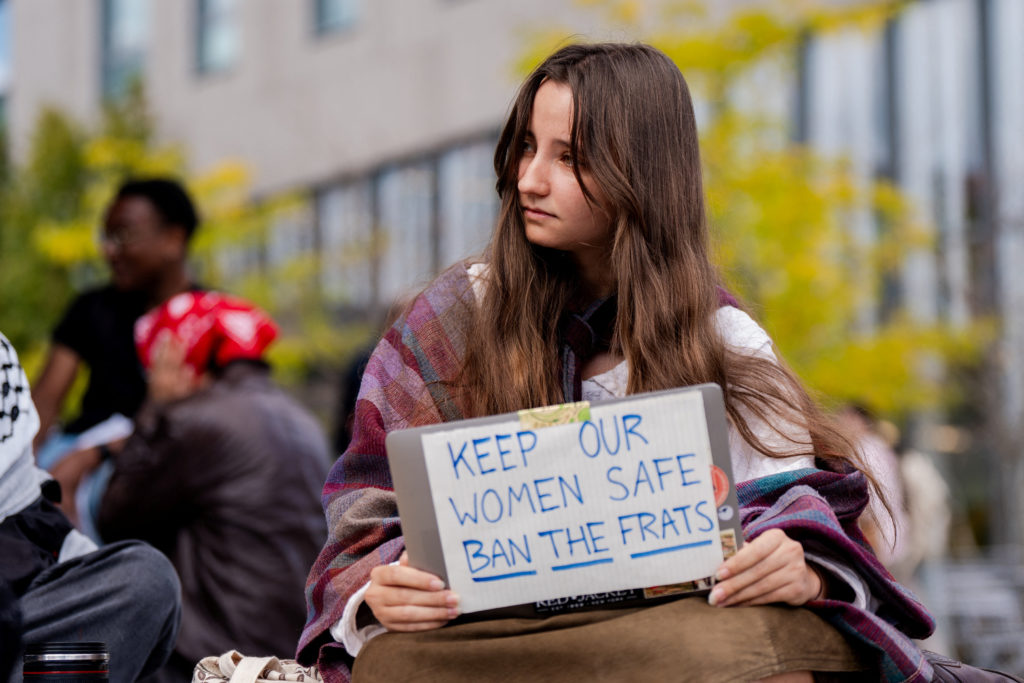
Cornell University's handling of an alleged fraternity house gang rape is raising questions about how a decades-old federal civil rights law shapes colleges' treatment of campus sexual assault.
Cornell University President Michael Kotlikoff knew in 2024 that a student had reported being gang raped at a fraternity house, but never followed up to learn what had happened to her or whether any of the accused students had been punished.
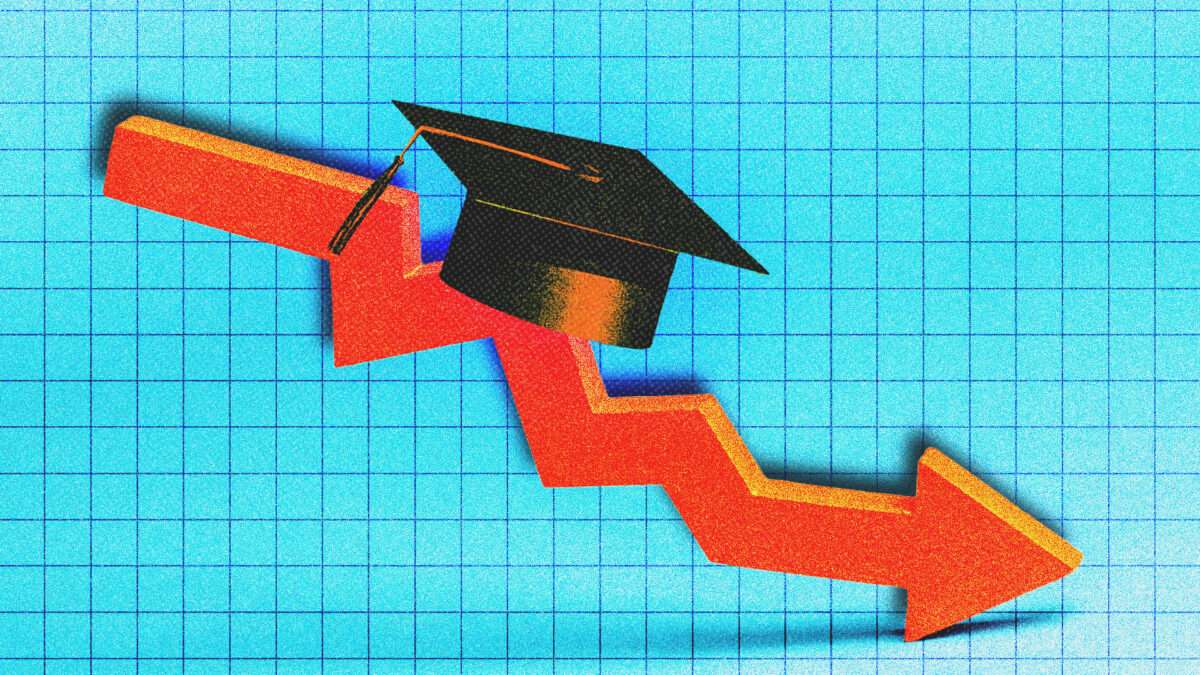
Is a college educations worth the hassle and expense? Amid concerns over soaring tuition costs and campus political intolerance, a growing share of Americans aren't convinced that higher education is worthwhile. Academics themselves—the honest ones, anyway—acknowledge that they've squandered a lot of goodwill over the years. Fortunately, it's still possible to get an education that justifies the time and money—though the path doesn't necessarily go through college.
High Costs and Political Bias Sour Americans on College
"Three in 10 Americans (31%) think a college education is 'very important,' four percentage points below last year's reading, the previous low among the seven times Gallup has asked this question since 1978," the polling firm reported earlier this month. "As recently as 2013, more than twice as many U.S. adults (70%) said college was very important." Gallup adds that "the percentage of U.S. adults who say a college education is 'not too important' has risen from 6% in 2013 to 29% today, while the percentage saying it is 'fairly important' has increased from 23% to 39%."
Higher education plummeted in public esteem for more than one reason. For years, Americans have voiced concern about rising costs and politicalintolerance on campuses. Last year, even as a Vanderbilt University poll found a slight rebound in favorability toward colleges and universities, the authors noted that "Americans across the political spectrum still are deeply concerned about the affordability of higher education" and "many Americans see political bias in higher education as a serious problem."
The problem was underlined this year when some colleges broke the $100,000 mark in annual costs. "Today, a bachelor's degree at some of America's top schools can cost upward of nearly half a million dollars over four years," reportedBusiness Insider. "And the trend doesn't seem to be slowing down."
Almost at the same time, Vanderbilt released a report warning "there are several worrying tendencies in contemporary academic scholarship in the humanities and social sciences, all of which reflect, to varying degrees, a distinctive form of politicization in which the scholarly enterprise is taken to be subordinate to, or in the service of, political (social or moral) goals beyond the advancement of knowledge and understanding." The goals of this politicization, the study added, "are generally though not exclusively associated with the progressive left."
Unsurprisingly, many Americans balk at paying through the nose so they (or their kids) can spend four years at woke camp. That trepidation undoubtedly contributes to declining college applications at a time when the applicant pool is already shrinking. Many students who do apply to college are applying very modern filters to the schools they'll consider.
"The median student is willing to pay up to $2,617 (12.5%) more to attend a college where the share of students with opposing political views is 10 percentage points lower, suggesting that political identity plays a meaningful role in the college choice process," found a 2025 study from the Annenberg Institute at Brown University which documented "a steady increase in political sorting across American colleges."
This month, a survey from Art & Science Group, a higher education consultancy, found that among college applicants, "the share ruling out colleges solely because of politics in a state rose from 24% in 2023 to 31% in winter 2026 and 34% in summer 2026."
College Still Offers Value for Those Who Choose Wisely
Higher education can still be worthwhile for students who apply due diligence to their selection of schools and fields of study. College offers a good return on the investment of time and money for those who choose wisely.
According to the Education Data Initiative, "an average bachelor's degree has a 560.53% lifetime return on investment with a median lifetime return up to 1,040.14%." But not all degrees are equal. "The most cost-efficient bachelor's degree is in management information systems and statistics, with a lifetime ROI of 1,758.59%," while "a Bachelor of Psychology offers the lowest lifetime ROI at -122.78%, representing a $54,188 loss in degree-based earnings (compared to median earnings with a high school diploma)."
The 10 bachelor's degrees with the highest lifetime earnings are an assortment of engineering disciplines, management information systems and statistics, accounting, finance, economics, mathematics, and the like. But return on investment also depends heavily on the cost of the degree; it's more difficult to get your money's worth when you pay top dollar.
Importantly, science, technology, engineering, and mathematics fields are also the academic disciplines with the least lopsided political balance among professors.
Trade Schools Rise as Employer Demand for College Degrees Falls
But college is not the only choice for young Americans planning their futures. According to a 2025 Harris survey for the American Staffing Association, more Americans now recommend that graduating high school seniors go to trade school (33 percent) than recommend college (28 percent).
Trade schools cost a fraction of what four-year colleges cost. And they satisfy a growing demand for skilled workers.
"Of the 124 skilled trades occupations, 86 are projected to grow or hold steady, and more than 600,000 net new positions are projected through 2035," the Alliance for Skilled Trades, a coalition of companies that depend on trades people, notes in a recent report. "Employers will need to fill about 1.7 million openings each year."
And employers increasingly value experience and in-house training over college degrees of dubious value. Last year, a quarter of employers reported that they were eliminating requirements for bachelor's degrees among new hires.
Higher education still has a role to play. But "education" doesn't have to mean four years of high tuition. It can be a certification program or trade school that launches graduates into a productive life.
After decades of being the default path for many Americans, colleges and universities have alienated people with high prices and intolerant ideological environments. They still have a lot to offer, but now they have to compete with alternatives for the time and money of a skeptical public.

 Login