Matt Gaetz resigned from the U.S. House of Representatives in November 2024, shortly before the House Ethics Committee released a report accusing him of having sex with a 17-year-old girl in 2017, when he was 35, and "regularly pa[ying] women for engaging in sexual activity with him." The probe was widely discussed as a sex trafficking probe, but the ethics committee "did not find sufficient evidence to conclude that Representative Gaetz violated the federal sex trafficking statute," per its report.
Now two women have filed a civil lawsuit accusing Gaetz of sex trafficking.
The suit, filed in the U.S. District Court for the Middle District of Florida, says that Gaetz and two other men (Joel Micah Greenberg and Christopher Dorworth) broke federal anti-trafficking laws by using "their public office, power, and wealth to prey on the economic vulnerability" of Jane Doe 1 and Jane Doe 2.
Gaetz, who now hosts The Matt Gaetz Show on One America News Network, said many of the suit's allegations against him are false. "The lawsuit relies almost exclusively on a Congressional Committee report that didn't allow me to confront my accusers," he said. "Now I will finally have that chance."
On X, Gaetz posted an image of three women in bikinis seated next to bottles of beer and looking at the ocean and wrote "Jane Doe Strikes Again! Two adult women sued me today alleging they were sex trafficked to the Bahamas. I'm shocked nobody responded to their repeated cries for help, posted to instagram."
Jane Doe Strikes Again! Two adult women sued me today alleging they were sex trafficked to the Bahamas. I'm shocked nobody responded to their repeated cries for help, posted to instagram. https://t.co/HPvX2xypzs
This does not seem like especially helpful behavior from a public relations perspective, to say nothing of whether it's legally wise to for Gaetz to be posting to social media about the suit against him.
But Gaetz's point isn't entirely off base. The actions described in the suit against him are hardly what most people would consider sex trafficking.
Jane Doe 1 and Jane Doe 2 were adult women willingly advertising on Seeking Arrangement, a site aimed at connecting young women with rich men for mutually beneficial relationships. And by their own account, that is what went down. They were taken on trips and paid thousands of dollars while hanging out, partying, and having sex with Gaetz and his friends.
Needless to say, advertising on a sugar baby website does not make you fair game for forced prostitution or sexual assault. But nowhere in the lawsuit are forced prostitution or sexual assault alleged.
Instead, we get sentences like this: Gaetz and the other defendents "led [Jane Doe 1] to believe they could solve her financial problems as long as she kept performing sexual acts for them and their associates," states the suit. But "the money never came as a single payment that would have solved Jane Doe 1's financial issues."
So…it's sex trafficking because he didn't pay her enough at one time? I don't think that's how the law works.
Overall, it's a stretch to say that Gaetz's actions as described in this suit fall under the scope of the federal Trafficking Victims Protection Reauthorization Act. Under federal law, sex trafficking must involve an element of force, fraud, or coercion, and/or must involve commercial sex involving someone who is under age 18.
In this case, both alleged victims were in their 20s at the time of the alleged trafficking. No element of force or fraud is claimed. And the type of "coercion" alleged seems more appropriate for a college debate than a courtroom.
There was no suggestion that harm would come to the women or their families, that a job or housing would be lost, or that failure to engage in sexual activity with Gaetz and his friends would result in some sort of other (physical, reputational, legal, etc.) harm befalling them. There was nothing on Gaetz's end that would seem to arise to "coercion" under federal trafficking statute, which defines it as involving "threats of serious harm to or physical restraint against any person," a scheme to make someone believe that serious harm will befall them if they don't comply, or abuse or threatened abuse of the legal process.
The suit contains a lot about Greenberg—a former tax collector who is in prison after pleading guilty to charges that include sex trafficking—and comparatively little about Gaetz. It seemingly attempts to make up for the lack of direct allegations against him by noting findings from the Ethics Committee, even though that committee specifically said it could not find evidence of sex trafficking.
Gaetz is accused of having sex with Jane Doe 1 at a party while Jane Done 1 was on MDMA. But the suit does not accuse Gaetz of foisting drugs on her, simply saying "controlled substances circulated at the party, and Jane Doe 1 took MDMA during the evening." Nor does it say that anyone forced Jane Doe 1 to be at the party or to have sex with Gaetz.
Gaetz is also accused of paying Jane Doe thousands of dollars—never directly after sex or as a direct quid pro quo, but during the same time period during which he was having sex with her. The payments were labeled things like "Being my friend," "Being awesome," "Here," and "Just because," the suit says.
And Gaetz is accused, along with the other defendants, of paying to fly Jane Doe 1 and Jane Doe 2—whom Greenberg met through the sugar baby website and introduced to Gaetz—"to Venice Beach, Miami, Las Vegas, the Florida Keys, the Bahamas, and New York City" and paying for their hotel rooms. The suit does not say that they were forced or coerced on these trips, merely that the trips exposed them to "men they would never otherwise have met, and every part of that access, from the flights to the hotel rooms, was paid for by men, including the Defendants, who expected sex in return."
The women's lawyer told the Associated Press that there was "an exploitative power imbalance," because on one side you had a congressman and some other powerful men and on the other "young financially vulnerable women in their early twenties."
Morally speaking, that might be relevant. And for a congressman, it may have been grounds for sanction. But the fact that these women were younger and less financially successful does not make a relationship between them and Gaetz de facto "coercive" or illegal.
Age gaps in relationships—even substantial ones—are not outlawed. And relationships in which an older man is attractive precisely because he has more money and power than the younger female involved, and offers to spend it lavishly, are not uncommon. The idea that this violates federal criminal law simply showcases how distorted our ideas of sex trafficking have become.
In the News
Children have a fundamental right to access the internet, says India's Supreme Court. The Free PressJournalreports:
"The safety of our children and their freedom are not at odds with each other. Our children are entitled to both," the court observed.
The bench explicitly recognised the right to access and use the internet as a fundamental right under Article 21, which protects life and personal liberty, read with Article 19(1)(a), which guarantees freedom of speech and expression.
Meanwhile, in the U.S.: "A federal appeals court panel has ruled that Florida's 2024 law restricting access to social media for teens is likely constitutional and can continued to be enforced while the legal challenge continues," notes the Florida Phoenix.
We were promised REPEATEDLY that age-verification law was narrow, and would ONLY apply to porn. But— as we warned —it was always a ruse.Since conservatives got their ruling in FSC v Paxton, they've pushed to age-gate anything and everything. It's not going to stop with social media or chatbots.
'Appropriate safeguards.' A small change in the language of the Apple App Store's app review guidelines could portend big changes. Via9to5Mac:
Under Section 1.2, which covers user-generated content, the guidelines now read (changes in bold):
Apps that enable users to create, generate, upload, share, or otherwise contribute content present particular challenges, including intellectual property infringement, nonconsensual intimate imagery, and anonymous bullying.
Apple's new terms add that "Developers who fail to implement appropriate safeguards or fail to remediate identified violations after notice may be considered in violation of the Developer Code of Conduct."
The change is being reported as a crackdown on "nudification" apps, and that certainly seems to be part of it. But the language about going after "developers who fail to implement appropriate safeguards"—combined with the broad warning about user-generated content—could signal a broader intent to crack down on social media platforms and other types of apps that don't implement ID verification or engage in more intense content moderation.
On Substack
Don't sacrifice due process to outrage. We can't let anger over allegations of gang rape at Cornell convince us to re-implement old Title IV policies that disregard due process, writes Robert Shipley of the Foundation for Individual Rights and Expression:
There's a groundswell of demand to "do something" in the wake of the sexual assault claims at Cornell. But amid the outrage and concern over the incident, it's critical to remember that one attempted remedy we actually know will not work is to return to a campus justice system in which the burden of proof is on the accused and basic civil liberties are cast aside. That social experiment has already been run. It failed.
Title IX, the law against sex discrimination in federally funded education programs, was passed in 1972. Debates at the time focused on how it would affect single-sex colleges and college athletics. Explicitly aimed at sex discrimination, the text of the law itself mentions neither sexual assault nor sexual harassment. Those became matters for Title IX gradually over the next couple of decades, as courts determined that sexual assault and sexual harassment were both forms of sex discrimination, and therefore covered under Title IX.
The Jane Doe lawsuit against Cornell and the accused students (as well as a fraternity, a sorority, and a local bar) hit national news at nearly the same time that the Trump administration officially removed the Biden-era regulations from the Federal Register. While almost certainly not related, some have connected the two, citing the Cornell incident to argue that regulations surrounding Title IX need to be changed again to reduce due process protections for the accused.
Not to pick on Sam here, but this is a useful point to highlight some of the impossibility of trust & safety work. Meta actually used to have a program *exactly* like this, BUT it became a central feature of Frances Haugen's Facebook Files as an example of Meta being evil.I'll explain…
• A new pair of high-tech sunglasses from Meta "can read your mail, describe the person in front of you, tell you what is on a restaurant menu, and help you find your way home," writesReason's Reem Ibrahim. "For the approximately 700,000 Americans who are blind, it is potentially life-changing."
• "The Supreme Court of Canada has upheld a decision ordering new trials for two people facing human trafficking and sexual services offences, after concluding they should have been able to cross-examine a complainant about the commercial aspect of her prior sex work," reportsThe Canadian Press. "The case looked at the application of section 276 of the Criminal Code, known as the rape shield law, which limits use of evidence about a complainant's sexual history in court proceedings."
• Markets in everything:
This website lets you attend the wedding of complete strangers
Couples list their weddings and users can buy a ticket to attend https://t.co/8b7EawyFod
• The People First Transportation Alliance has been campaigning against robot taxis in D.C. "But just who is behind the group remains unclear, even as it has sought to sway the outcome of a contentious issue with vast sums of money and thousands of jobs at stake across the country," reportsThe Washington Post.
The family of a 60-year-old man who was murdered in a violent attack at his home in Donegal last year has said they believe his kind and caring nature led to his death.
A jury at the Central Criminal Court in Limerick has heard that 89-year-old Josephine 'Josie' Ray, who died in August 2024, was smothered and strangled to death while in bed at her home.
Two men charged in connection with a traffic pursuit in which a stolen car allegedly drove on the wrong side of the M50 in Dublin yesterday evening have been denied bail.
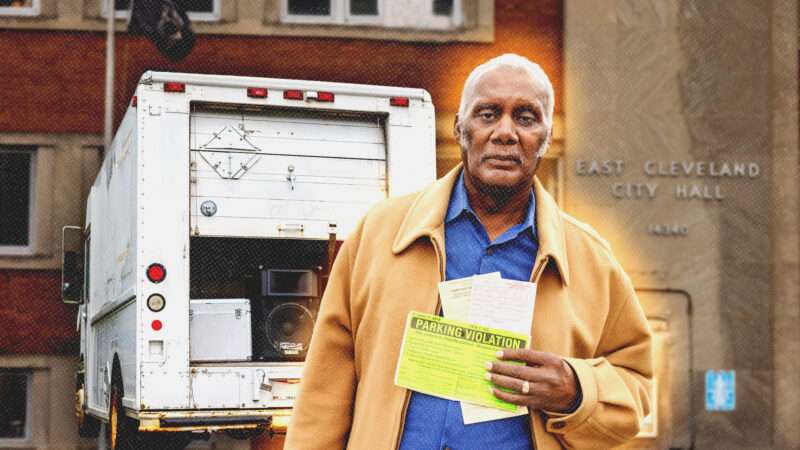
Walking through East Cleveland, Ohio, feels a touch like you've wandered onto the set of a postapocalyptic film noir. Grand, gilded homes announce themselves on neighborhood streets, some crowned with turrets, many with windows punched out like missing teeth. Often, no one is home, because no one lives there. It is safer than 1 percent of U.S. cities.
That question is not really a legal one, at least not in the most technical sense. But it is the driving force behind a thorny case a federal court recently resuscitated: Fambrough v. City of East Cleveland, a saga concerning a man whose vehicle became an obsessive target of the East Cleveland Police Department (ECPD) after he used it to campaign for a mayoral challenger.
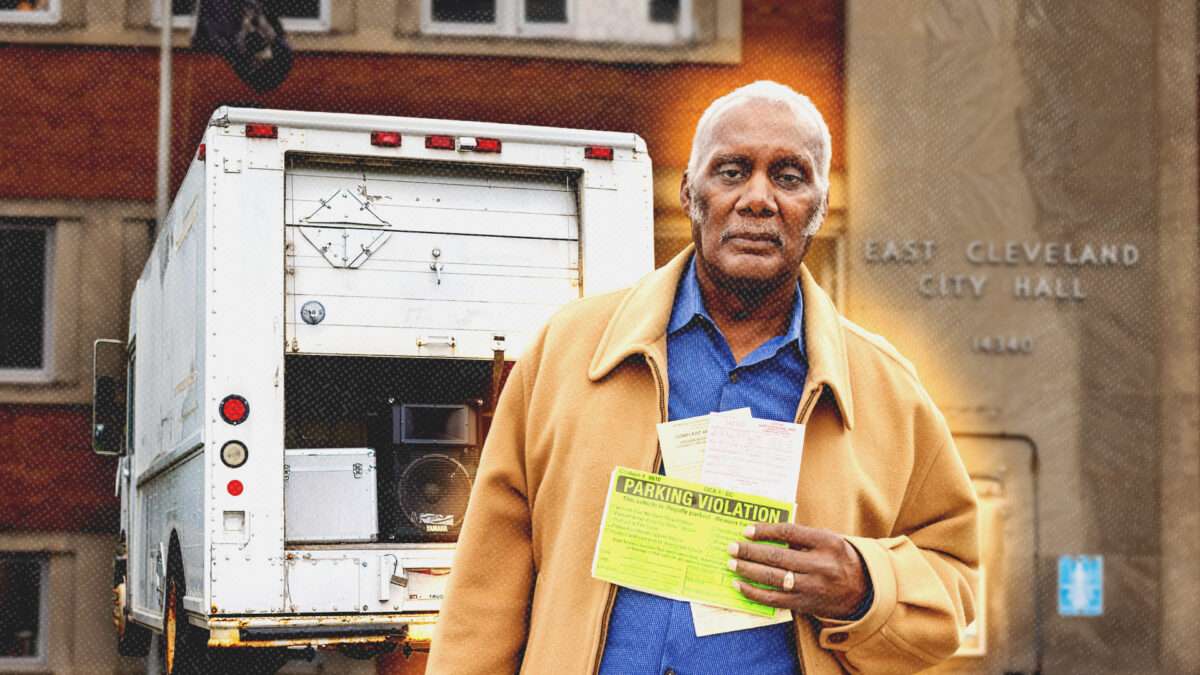
Some of the facts are in dispute. But the basic gist is as follows: William Fambrough, long a politically engaged East Clevelander, campaigned for Juanita Gowdy—a challenger to then-Mayor Brandon King—by broadcasting messages around the city with his sound truck. That ultimately came to an end after law enforcement impounded the car, cited him for parking and noise violations, and prosecuted him for the latter.
Fambrough sued, alleging the complex legal odyssey set into motion over his step van amounted to First Amendment retaliation, an unreasonable seizure under the Fourth Amendment, and a violation of the 14th Amendment's proscription against selective enforcement. The U.S. Court of Appeals for the 6th Circuit rejected some of those claims. But it resurrected claims against King and his chief of staff, Michael Smedley—depriving them of qualified immunity, the legal doctrine that inoculates state and local government officials from facing lawsuits if their alleged misconduct was not "clearly established" as illegal in prior case law. It also revived Fambrough's retaliation claim against the city.
As the 6th Circuit summarizes: King "says he received a phone call from a resident who complained about Fambrough's sound truck and someone else's box truck being parked in a residential area," so he told someone to take care of it. Scott Gardner, then the city's chief of police, "was concerned about selectively enforcing" the parking ordinance—which prohibits parking a truck in front of residential property, except for loading or unloading—because it is indeed almost never enforced. This was the beginning of a long pursuit, which ultimately saw a swarm of officers dispatched to Fambrough's house in August 2021 to confiscate the vehicle, allegedly resulting in $6,000 in damage. Fambrough also had to pay $528 in fees to get the damaged truck back.
"All the attention City officials gave Fambrough struck Gardner as unusual," the 6th Circuit notes. "The mayor's office wasn't this attentive even in homicide cases. And considering that the City had around only 50 police officers at the time and had 'serious crime problems,' Gardner thought it was odd to devote this much attention to permitting and parking issues." Based on available data, East Cleveland's violent crime rate is 1,409 per 100,000 residents, about four times higher than the national average.
Yet Gardner ultimately got on board. Smedley phoned him on August 9 "extremely upset," according to Gardner, and told the police chief he was "incompetent" for failing to "take care of" Fambrough's sound truck. Smedley wanted the "utmost enforcement as possible." So Gardner sent an email. "Please, find this vehicle and tow it," he wrote to all of ECPD. "Cite the operator with disturbing the peace and loud music. Please contact me as soon as this is complete to claim a surprise." A surprise!
Police succeeded. "On its face, the email told officers to tow Fambrough's truck regardless of whether it was parked illegally," writes the 6th Circuit. "And the Noise Ordinance authorizes seizure only of 'the sound device used,' and only upon conviction. So Gardner's instruction to tow the truck wasn't authorized by municipal law." The court still held that the seizure did not violate the Fourth Amendment. It also gave Gardner qualified immunity, ruling it is not clearly established that someone who acts as a conduit for someone else's alleged retaliation—which here came from the mayor's office—is a "responsible party."
Heather McCollough, the city's assistant law director, subsequently prosecuted Fambrough for allegedly violating the noise ordinance. According to a sworn declaration from Fambrough's attorney, McCollough outlined some of Fambrough's offenses on a call: that he "made complaints about the police department" and filed "public records requests," among other issues. Notably, it is legal to do those things. McCollough was typically willing to resolve minor noise complaints, she added, but not so much in this case, because Fambrough needed to "stand down." (He ultimately pleaded no contest to disorderly conduct, a reduced charge.)
Institute for Justice
"Only after [Fambrough] began supporting Gowdy's election was the weight of the law thrown against him," the 6th Circuit writes in its analysis of potential municipal wrongdoing. "And the City's police officers didn't uncover Fambrough's violations of their own accord. Instead, City decisionmakers sent them to Fambrough's home each time to enforce the Parking Ordinance. So the timing of the parking-related enforcement actions supports an inference that Fambrough's political speech was the motivating factor—as does the fact that the City rarely enforced the Parking Ordinance against anyone else despite having plenty of opportunities to do so." Incredibly, a photo of another truck can be seen down the street on the same day law enforcement came to fetch Fambrough's vehicle. (The law also includes pickup trucks, so the city arguably has a lot of enforcement to do if it sincerely believes this law matters.)
King allegedly set the chain of events into motion while Smedley took the driver's seat. "Smedley's pattern of incessantly calling and berating Gardner," the 6th Circuit adds, "clashes with the idea that Smedley was chiefly concerned with minor permitting, noise, or parking issues." After all, if that were true, why would the problem appear to begin and end with one person?
Over five years have passed since the ordeal. Although Fambrough is now potentially closer to getting in front of a jury, he has yet to actually state his case, still burdened by the onerous process government actors invoke to kill such suits before the community can assess the merits. King, meanwhile, won that election. He left office in May 2025, however, after he was found guilty of one count of theft in office, four counts of having an unlawful interest in a public contract, three counts of representation by public official or employee, one count of filing a false disclosure statement, and one count of soliciting improper compensation.
An activist who painted Churchill red was cleared of criminal damage and juries have deadlocked over alleged support for Hamas. What’s to be done when jurors reject the moral premises of the law, asks Anna Stanley.
School choice in Ohio has taken a big hit. On Thursday, a panel of the state's 10th District Court of Appeals unanimously ruled the state's Educational Choice Scholarship, or EdChoice, program unconstitutional.
Vouchers Hurt Ohio (VHO), a coalition of public school districts, banded together in 2022 to sue the state over the EdChoice program, which uses public funds to finance scholarships for K-12 students to attend private schools. Under EdChoice's "Traditional Plan," which has been around since 2005, students can receive annual scholarships as high as $6,166 for elementary and middle school and $8,408 for high school. The scholarship's "Expansion Program," which state lawmakers created in 2013, awards maximum scholarship amounts identical to the Traditional Plan, "but scale based on a family's income," according to EdChoice, an educational freedom nonprofit. The organization says the scholarship program supports more than 100,000 Ohio families.
The VHO argues that the EdChoice scholarship program drains funding from the public school system, depriving Ohio students of much-needed resources.Its website states "private school vouchers create a system of state-funded discrimination" and that school choice is a "myth." Interestingly, the Court of Appeals of Ohio's 10th Appellate District largely concurred.
The court's ruling came down to Article VI, Section 2 of the Ohio Constitution, which says that the state must secure a "thorough and efficient system of common schools."
The panel held that the EdChoice voucher program violates this mandate by funding a "competing system of uncommon schools." Writing for the court, Judge David Leland took the argument further, contending that EdChoice schools "actually end up depriving families of choice." He cited private schools' selective admissions process and urban concentration, calling the defendants' appeals to choice "a fundamental misnomer," because the choice to admit students rests with the schools, not the families.
Keith Neely, an attorney at the Institute for Justice who represents families using EdChoice in the case, argues that the program funds families rather than a competing school system.
He also challenges the court's rationale that the state's obligation to fund public schools implicitly prohibits them from funding other forms of education. "I think that's just fundamentally wrong as a matter of constitutional interpretation and also just as a matter of public understanding," he tells Reason.
The court "seemed to take the view that any dollar spent on other educational programs like scholarships is a dollar that could be spent on public schools instead, but that's not how budgeting works," he says.
Neely says that public education funding is separate from the scholarship program and that every funding decision has tradeoffs. If the court finds that EdChoice's school voucher program violates the state's obligation to fund public schools, what stops it from reaching the same conclusion for other programs, like the Jon Peterson Special Needs Scholarshipor the Cleveland Scholarship program, which provides private school tuition scholarships for K-12 students living in the Cleveland Municipal School District?
Neely also points toSimmons-Harris v. Goff(1999), where the Ohio Supreme Court partially reversed a lower court's ruling and found that school choice was constitutional under the same public-education clause. The court invalidated the Cleveland scholarship program in question, finding that it was "improperly enacted by the legislature," according to the Institute for Justice. However, the Ohio Legislature later reenacted the program.
The families using the EdChoice scholarship program—as well as the state's attorney general—plan to appeal to the Ohio Supreme Court, and Neely is optimistic that history will repeat itself in this case. He tells Reason, "When you look at what the Constitution says, and you look at what the court said in Simmons-Harris, I think the only conclusion that the Ohio Supreme Court can walk away with is that programs like the Educational Choice Scholarship program are constitutional." Families will be able to keep their scholarships while the litigation is pending.
This case is just one battle in anationwide war on school choice. A recent report from Reason Foundation, the nonprofit that publishes Reason,found that 80 percent of public-school students live in states with "weak or ineffective open enrollment laws." These laws "allo[w] students to transfer to public schools other than their residentially assigned one, provided space is available," writes Jude Schwalbach, senior policy analyst at Reason Foundation. Several states are also holding out against theEducation Freedom Tax Credit, a new federal tax credit that offers a dollar-for-dollar tax refund for donating to K-12 scholarship programs.
The court's decision reflects the broader rationale fueling that opposition: that education dollars going to anything other than public schools are taken from ordinary students. For decades, policymakers have invested in that premise, yetstudent outcomes have little to show for it. The real myth isn't school choice; it's that giving families more options means betraying students' education.
A man has entered a plea of guilty to murder, in association with a criminal organisation, of a young man who was shot twice at close range and buried in a shallow grave in Limerick in 2010.
 Login