More than 90 percent of Texas voters believe the Iran conflict is raising oil and gas prices, according to a new survey. In the CBS News/YouGov poll, 91 percent of respondents said the war against Iran is making oil and gas prices in the U.S. “a lot higher” or “a little higher.” Only 7 percent…
More than 90 percent of Texas voters believe the Iran conflict is raising oil and gas prices, according to a new survey. In the CBS News/YouGov poll, 91 percent of respondents said the war against Iran is making oil and gas prices in the U.S. “a lot higher” or “a little higher.” Only 7 percent…
Democrats and aligned advocacy groups are hitting the airwaves with a flood of campaign ads on the Iran war as they seek to win back in the House and Senate.
President Donald Trump is heading to Kansas on Monday and Iowa later in the week, the latest in a series of stops where he's trying to energize his base in the final weeks before the midterm elections. The economic strain is becoming a growing political concern for Republicans in states they have long dominated.
A majority of Americans in a new survey believe the U.S. is on the “wrong track” as the midterms approach, marking a record high during President Trump’s second term. The NBC News Decision Desk poll, using data from SurveyMonkey, found that 71 percent of respondents said the country is heading down the “wrong track.” The…
Matthew McConaughey is sharing a pre-midterm elections message, saying that voting for independent candidates could bring lawmakers “back to the middle, where most American values live.” In a video posted on the social platform X on Sunday, the “Interstellar” star said, “This is about the upcoming ballot, and I am not here today to endorse…
President Trump’s approval rating hit a record low in a new survey, with just more than two weeks until voters decide which party will control Congress next year. The Washington Post-ABC News-Ipsos poll, released Sunday, shows Trump sitting at 33 percent approval. The rating is 4 points lower than a poll conducted in July, 8…
Josh Shapiro is the highest-paid governor in the US.
Bloomberg/Getty Images
The annual salaries of state governors vary, with the lowest being $70,000 in Maine.
Josh Shapiro, Kathy Hochul, and Spencer Cox are among the highest-paid US governors.
The average annual salary for a state governor is $174,479 in 2026.
In some states, being the governor doesn't automatically make you a top earner.
With voters in 36 states heading to the polls to elect governors in November's midterm elections, the annual salaries attached to the job vary dramatically across the country — from $70,000 in Maine to over $250,000 in Pennsylvania.
Across all 50 states, governors earn an average official annual salary of $174,479 and are subject to federal and state income taxes — except in states without income tax, such as Florida and Texas.
By comparison, the top 1% of US earners each make at least $731,492 a year, placing the average governor below the ultrarich but also well above the average US wage of $69,846 in 2024, according to the Social Security Administration.
While governors across all 50 states are generally allowed to earn income beyond their state salaries through investments, book deals, and other sources, the income they may take in is closely regulated, and rules vary by state.
Some, like Florida's Ron DeSantis, have brought in yearly incomes of over $1 million thanks to book royalties, while others, like Illinois' JB Pritzker, earn eight figures due to investment gains and even gambling wins.
As such, some governors, like Pritzker and Connecticut's Ned Lamont, who are independently wealthy, have chosen to forgo their six-figure state salaries.
See how much your governor makes each year, based on the most recent available state records, salary commissions, legislation, and public payroll data.
50. Maine
Staff photo by Carl D. Walsh/Portland Press Herald via Getty Images
Governor: Janet Mills (Democrat)
Salary: $70,000
With a salary of $70,000, Maine Governor Janet Mills is the lowest-paid governor in the US.
The salary for Maine's next governor is set to rise to $125,000 in 2027 under new legislation, marking the first raise in the governor's salary in the state since 1987.
After two terms, Mills is now term-limited. Democrat Hannah Pingree and Republican Bobby Charles are facing off to become the state's next governor in the November midterm election.
49. Arizona
Rebecca Noble/Getty Images
Governor: Katie Hobbs (Democrat)
Salary: $95,000
The Arizona governor, who has the second-lowest salary among US governors, will be eligible to receive a salary of $165,000 starting in 2027, per the state legislature.
Democrat Katie Hobbs is running for a second term in the November midterm election.
48. Oregon
Mathieu Lewis-Rolland/Getty Images
Governor: Tina Kotek (Democrat)
Salary: $98,600
Oregon law sets the governor's annual salary at $98,600 and provides a separate $1,000 monthly expense payment. The salary is one of the lowest for any governor in the US.
Democrat Tina Kotek is up for reelection during the November midterms, seeking a second term.
47. Nebraska
JIM WATSON/AFP via Getty Images
Governor: Jim Pillen (Republican)
Salary: $105,000
Nebraska Governor Jim Pillen, who earned $105,000 a year in 2025, per the state legislature, is the fourth-lowest-paid governor in the US.
Republican Jim Pillen is up for reelection, seeking a second term in the November midterm elections.
46. South Carolina
Tracy Glantz/The State/Tribune News Service via Getty Images
Governor: Henry McMaster (Republican)
Salary: $106,078
With a salary of $106,078 in 2025, per state records, the South Carolina governor is the fifth-lowest-paid governor in the US.
After two full terms, McMaster is now term-limited. Republican Alan Wilson and Democrat Jermaine Johnson are facing off in the race to become the state's next governor in the midterm election.
45. New Mexico
Kevin Dietsch/Getty Images
Governor: Michelle Lujan Grisham (Democrat)
Salary: $110,000
New Mexico Governor Michelle Lujan Grisham is the sixth-lowest-paid governor in the US. New Mexico's next governor will receive a salary of $169,714 starting with the next gubernatorial term in 2027.
Lujan Grisham is term-limited after serving two terms. Democrat Deb Haaland and Republican Gregg Hull are competing to succeed her in the November midterm election.
43. (tie) Louisiana
Jabin Botsford/The Washington Post via Getty Images
Governor: Jeff Landry (Republican)
Salary: $130,000
Louisiana law set the governor's salary at $130,000 in 2026. The salary has remained unchanged since January 2008.
43. (tie) Iowa
Tom Williams/CQ-Roll Call, Inc via Getty Images
Governor: Kim Reynolds (Republican)
Salary: $130,000
Iowa Gov. Kim Reynolds earns an annual salary of $130,000, according to the state's official employee salary records.
Reynolds is not running for reelection, leaving Democrat Rob Sand and Republican Zach Lahn competing for the open governor seat in the November midterms.
42. Colorado
CHET STRANGE/AFP via Getty Images
Governor: Jared Polis (Democrat)
Salary: $134,632
The Colorado governor, previously one of the lowest-paid governors in the nation, has received a $134,632 salary since 2023, as outlined by state law.
After nearly eight years in office, Polis is now term-limited.
Democrat Phil Weiser and Republican Victor Marx are competing to become Colorado's next governor in the November midterm.
41. Alabama
Stew Milne/Getty Images
Governor: Kay Ivey (Republican)
Salary: $134,780
In fiscal year 2026, Alabama Governor Kay Ivey had a salary of $134,780, per the state's Department of Finance.
After two full terms in office, Ivey is now term-limited. Republican Tommy Tuberville and Democrat Doug Jones are facing off to become the state's next governor in the upcoming midterm election.
40. Wyoming
Tom Williams/CQ-Roll Call, Inc via Getty Images
Governor: Mark Gordon (Republican)
Salary: $140,000
Wyoming law sets the governor's salary at $140,000 in 2026.
Mark Gordon is term-limited after two terms, leaving Republican Eric Barlow and Democrat Kenneth Casner competing for governor in the November midterm election.
DeSantis is term-limited after two terms in office. Republican Byron Donalds and Democrat David Jolly are competing for governor in the November midterms.
38. Montana
Michael Ciaglo/Getty Images
Governor: Greg Gianforte (Republican)
Salary: $141,517
Gianforte, who made his fortune in tech, donates his salary to Montana nonprofits. In 2025, his office said he had donated his entire gubernatorial salary to organizations supporting Montanans in need.
37. Missouri
Emily Curiel/The Kansas City Star/Tribune News Service via Getty Images
Governor: Mike Kehoe (Republican)
Salary: $145,095
Missouri law sets the governor's salary at $145,095 as of 2026.
36. Oklahoma
SAUL LOEB/AFP via Getty Images
Governor: Kevin Stitt (Republican)
Salary: $147,000
While the current Oklahoma governor, Kevin Stitt, has a salary of $147,000 in 2026, his successor will see a raise to $185,000, per Oklahoma's Journal Record.
After nearly eight years in office, Stitt is now term-limited. Republican Mike Mazzei and Democrat Cyndi Munson are facing off to become the state's next governor in the midterm election.
35. South Dakota
South Dakota Gov. Larry Rhoden makes $146,472 a year in 2025.
Toby Brusseau/AP
Governor: Larry Rhoden (Republican)
Salary: $148,522
South Dakota Governor Larry Rhoden earns $148,522 a year in 2026, per the state's pay transparency website.
Republican Larry Rhoden, who took office last year following Kristi Noem's resignation, is up for election in November, seeking a full term.
34. Idaho
Darin Oswald/The Idaho Statesman/Tribune News Service via Getty Images
Governor: Brad Little (Republican)
Salary: $151,400
Idaho Governor Brad Little makes $151,400 in 2026, per state records.
Little is seeking a third term in the midterm elections this November.
33. Texas
Jason Fochtman/Houston Chronicle via Getty Images
Governor: Greg Abbott (Republican)
Salary: $153,750
As of 2026, Texas Governor Greg Abbott makes $153,750 a year, per state records.
Abbott is seeking a fourth term in the midterm election this November.
32. Michigan
Tom Williams/CQ-Roll Call, Inc via Getty Images
Governor: Gretchen Whitmer (Democrat)
Salary: $159,300
Michigan law sets the governor's salary at $159,300. Governor Gretchen Whitmer also receives a $54,000 annual expense allowance, according to the State Officers Compensation Commission.
After nearly eight years in office, Whitmer is now term-limited.
Democrat Jocelyn Benson and Republican John James are facing off to become Michigan's next governor in the November midterm election.
31. Mississippi
Brandon Bell/Getty Images
Governor: Tate Reeves (Republican)
Salary: $160,000
Mississippi Governor Tate Reeves earns a salary of $160,000 in 2026, according to the state's personnel board.
30. Rhode Island
David L. Ryan/The Boston Globe via Getty Images
Governor: Daniel McKee (Democrat)
Salary: $163,295
Rhode Island's governor, Daniel McKee, earns a salary of $163,295, according to the state's pay transparency portal.
After losing the Democratic primary, incumbent Dan McKee will not be on the ballot. Democrat Helena Foulkes and Republican Aaron Guckian are facing off to become the state's next governor in the midterm election.
Republican Kelly Ayotte is up for reelection this November, seeking a second two-year term in the midterm election.
28. Wisconsin
Daniel Boczarski/Getty Images for Democratic Party of Wisconsin
Governor: Tony Evers (Democrat)
Salary: $165,568
Wisconsin law bans salary changes for a governor during their term in office. Gov. Tony Evers has received an annual salary of $165,568 since beginning his second term in January 2023, up from $152,756 during his first term.
Evers is not seeking reelection. The state's next governor is slated to receive an annual salary of $184,684 when they take office in January 2027, according to Wisconsin's official compensation plan.
Democrat David Crowley and Republican Tom Tiffany are facing off in the November midterm election.
27. North Dakota
Tom Williams/CQ-Roll Call, Inc via Getty Images
Governor: Kelly Armstrong (Republican)
Salary: $168,000
North Dakota's governor's salary is $168,000 following a July raise, per state legislation.
26. Nevada
Benjamin Hager/Las Vegas Review-Journal/Tribune News Service via Getty Images
Governor: Joe Lombardo (Republican)
Salary: $170,062
The Reno Gazette Journal reported in May that Nevada Governor Joe Lombardo makes $170,062 a year.
Lombardo is up for reelection in the November midterm elections, seeking a second term.
25. Arkansas
Leon Neal/Getty Images
Governor: Sarah Huckabee Sanders (Republican)
Salary: $171,808
In October, an independent commission in Arkansas voted to raise Governor Sarah Huckabee Sanders' salary to $171,808 annually.
Sanders is running for a second term in the November midterm election.
24. Kansas
Michael B. Thomas/Getty Images
Governor: Laura Kelly (Democrat)
Salary: $174,000
In 2023, Kansas raised the governor's annual salary starting January 1, 2025, tying the office's pay to the salary of a non-leadership member of Congress, according to state legislation.
Kelly is term-limited after two terms, leaving Democrat Cindy Holscher and Republican Ty Masterson competing for the governor's seat in the November midterm elections.
23. Virginia
Mike Kropf/Getty Images
Governor: Abigail Spanberger (Democrat)
Salary: $175,000
Virginia law sets the governor's salary at $175,000 in 2026.
22. Ohio
Jason Mowry/Getty Images
Governor: Mike DeWine (Republican)
Salary: $180,203
Ohio set the governor's salary in a 2018 law that established yearly pay increases for statewide elected officials through 2028, per state law. After the 2026 increase, Gov. Mike DeWine's salary is about $180,203.
DeWine is term-limited after two terms. Democrat Amy Acton and Republican Vivek Ramaswamy are competing for the governor's seat in the midterm elections.
After two terms in the governor's seat, Dunleavy is now term-limited.
Democrat Jonathan Kreiss-Tomkins and Republicans David Bronson, Treg Taylor, and Bernadette Wilson are facing off to become the state's next governor in the November midterm election.
20. Georgia
Alex Wroblewski for the Washington Post
Governor: Brian Kemp (Republican)
Salary: $185,000
In fiscal year 2025, Georgia Gov. Brian Kemp earned a salary of $185,000 and also received over $56,506 in travel reimbursements during the year, according to the Georgia Department of Audits and Accounts' financial transparency portal.
After two terms in office, Kemp is term-limited. Democrat Keisha Lance Bottoms and Republican Rick Jackson are running to be the state's next governor in the midterm election.
19. Delaware
Meg Oliphant/Getty Images
Governor: Matt Meyer (Democrat)
Salary: $185,096
From July 2025 until 2029, the salary for the governor of Delaware is $185,096, per the state legislature.
Since 2025, the West Virginia governor's salary has been set to match the US Office of Personnel Management's locality pay area for the rest of the US, per the state legislature. That puts current governor Patrick Morrisey's salary at $190,424.
16. Maryland
Kevin Richardson/Baltimore Sun/Tribune News Service via Getty Images
Governor: Wes Moore (Democrat)
Salary: $192,000
As of his third year as Maryland governor, per the state legislature, Wes Moore's salary was $192,000 in 2025. The governor's salary will increase during the next term, starting at $195,000 in 2027 and reaching $210,000 by the fourth year, according to Maryland's Governor's Salary Commission.
Moore is running for a second term in the November midterm elections.
15. Minnesota
DOMINIC GWINN/Middle East Images/AFP via Getty Images
Governor: Tim Walz (Democrat)
Salary: $200,000
The Minnesota governor's official salary is $200,000 after a July raise, per the Minnesota Legislature. Tim Walz previously declined salary raises while in office and accepted only a $127,629 salary. But during his last six months in office, he accepted his full salary, as reported by Minnesota Public Radio.
After two terms as governor, Walz is not running for reelection.
Democrat Amy Klobuchar and Republican Lisa Demuth will face off in November in a race to become the state's next governor.
14. Illinois
Scott Olson/Getty Images
Governor: Jay Robert "JB" Pritzker (Democrat)
Salary: $205,700 (foregone)
Illinois Governor JB Pritzker, a member of the Pritzker family that founded the Hyatt Hotels Corporation, has chosen to forgo his salary. The state has set the governor's salary at $205,700 as of 2023, per the Illinois General Assembly.
Pritzker is up for reelection this November, seeking a third term in the midterm elections.
Green is running for a second term in the midterm elections
9. Connecticut
Aaron Flaum/Hartford Courant/Tribune News Service via Getty Images
Governor: Ned Lamont (Democrat)
Salary: $226,711 (forgone)
Although the State of Connecticut sets the governor's salary at $226,711, the independently wealthy Ned Lamont has chosen to forgo the salary while in office.
Lamont made his money in telecommunications and investments. He's also the great-grandson of Thomas W. Lamont, a former chair of J. P. Morgan & Co. who built substantial wealth in banking.
Lamont is up for reelection this November, seeking a third term in the midterm elections.
8. Washington
Alexi Rosenfeld/Getty Images
Governor: Bob Ferguson (Democrat)
Salary: $234,275
Washington's governor earns $234,275 following a July raise, making Bob Ferguson the eighth-highest paid governor in the US.
7. Massachusetts
Craig F. Walker/The Boston Globe via Getty Images
Governor: Maura Healey (Democrat)
Salary: $243,493
Massachusetts Governor Maura Healey received a salary of $243,493 in 2025, per the Office of the Comptroller of the Commonwealth of Massachusetts, making hers the seventh-highest governor's salary in the US.
Healey is seeking a second term in the November midterm elections.
6. Vermont
John Lazenby/UCG/Universal Images Group via Getty Images
Governor: Phil Scott (Republican)
Salary: $243,520
Vermont law lists the governor's salary at $243,520 following a July raise, making the office the sixth-highest paid in the country.
Gov. Phil Scott is running for a sixth term in the midterm elections.
5. California
Justin Sullivan/Getty Images
Governor: Gavin Newsom (Democrat)
Salary: $245,929
As of May 2026, the California Department of Human Resources listed the governor's salary as $245,929, making Gavin Newsom the fifth-highest-paid governor in the US.
After two terms, Newsom is now term-limited. Democrat Xavier Becerra and Republican Steve Hilton are facing off in a race to become the state's next governor in the midterm election.
4. Tennessee
Tom Williams/CQ-Roll Call, Inc via Getty Images
Governor: Bill Lee (Republican)
Salary: $246,108
Tennessee Gov. Bill Lee earns $246,108 annually as of August, based on a monthly salary of $20,509 listed in the state's public payroll database.
After two terms in office, Lee is term-limited. Republican Marsha Blackburn and Democrat Jerri Green are running for the governor's seat in the midterm election this November.
3. Utah
George Frey/Getty Images
Governor: Spencer Cox (Republican)
Salary: $249,250
In March 2026, the Utah Legislature passed a bill setting the governor's salary equal to that of the chief justice of the state supreme court, which is $249,250.
The raise made Spencer Cox the third-highest-paid governor in the US.
2. New York
Barry Williams/New York Daily News/Tribune News Service via Getty Images
Governor: Kathy Hochul (Democrat)
Salary: $250,000
With a salary of $250,000 established by New York law, Kathy Hochul is the second-highest-paid governor in the US.
Hochul is seeking a second full term in the midterm elections.
1. Pennsylvania
Jason Ardan/The Citizens' Voice via Getty Images
Governor: Josh Shapiro (Democrat)
Salary: $253,870
Shapiro's salary rose from $245,760 in 2025 to $253,870 in 2026 after a 3.3% cost-of-living increase, according to the Pennsylvania Office of the Budget. The raise made him the highest-paid governor in the US.
Shapiro is up for reelection in the midterm elections this November, seeking a second term.
The path to a U.S. House majority runs through heavily Latino districts in states such as Arizona, Colorado and Texas, where Democrats are counting on disaffected Trump supporters to swing back their way.
California Gov. Gavin Newsom (D) campaigned with Democrats in New Hampshire only a few weeks out from the midterms. “Great to be back in New Hampshire. The energy across the Granite State is UNDENIABLE. Fired-up crowds, incredible volunteers, and so much enthusiasm heading into November 3,” Newsom wrote on social media Sunday. “Grateful to join…
Vice President Vance claimed Saturday that in “some ways” the United States has “decisively won” its war against Iran. “I would say in some ways, we have won decisively, but they’re — the Iranians, the enemy gets a vote here, and they have responded in certain ways. And so, to step back a little bit,…
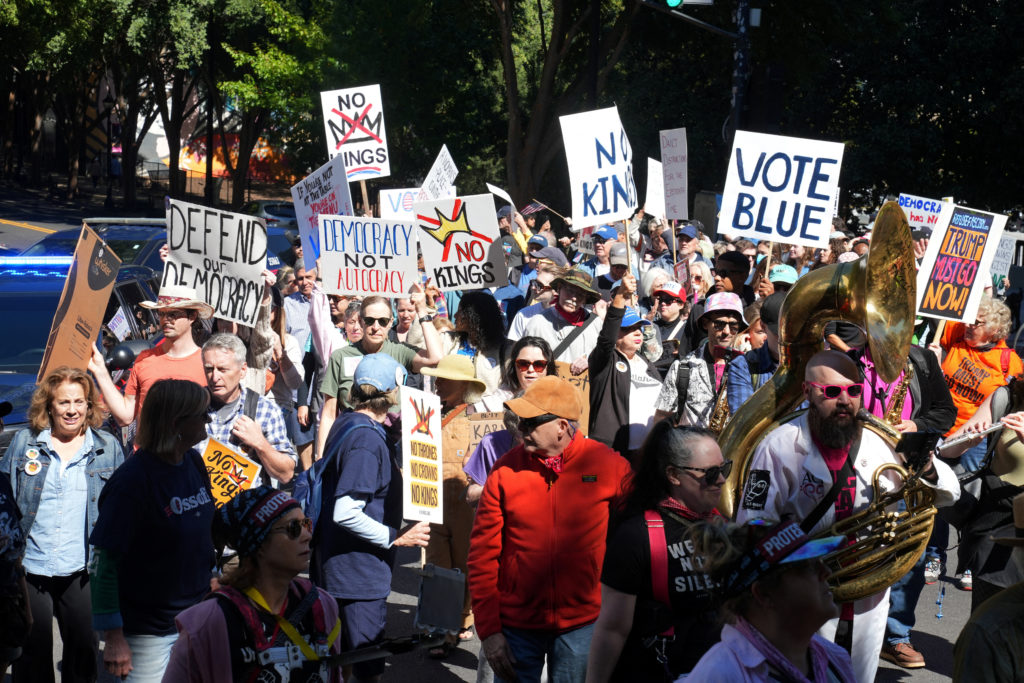
Demonstrators hold signs during a "No Kings" protest at the South Carolina Statehouse.
Sean Rayford/Getty Images
Meta says its system detected intense bursts of activity by a Claude tool.
That triggered an automatic shutdown and locked admins out of the account.
It happened during a day of rallies promoting early voting in the midterms.
Meta said Sunday that its systems suspended the No Kings movement's Instagram account during its day of action because it detected "intense" activity by a Claude tool.
The account was locked and administrators were denied access for "several hours" during nationwide rallies on Saturday to mobilize early voting in the midterms, the group said.
Meta initially said that an automatic trigger was responsible for shutting down the account "in error," but offered a fuller explanation a day later.
"Our engineering team discovered that the spike that triggered the incorrect enforcement was primarily in the account's 'reading' behavior," spokesperson Andy Stone said in an X post.
"Specifically, our network security systems detected the use of a Claude tool reading profiles, posts, and hashtags, the rate of which sharply increased (~4x volume) in intense bursts on October 17. "
Stone said the activity resembled bot traffic, prompting the system to take the account offline.
"An automated re-review of the removal action an hour later recognized that shouldn't have happened and restored the account. It unfortunately took additional time for us to straighten out the situation with admin access to the IG account.
"We want to reiterate our sincere apology for the error," he wrote.
The No Kings network, which bills itself as nonpartisan but arose last year in response to President Donald Trump's actions, said it held nearly 3,000 rallies across the country to encourage voters to cast their ballots early as a hedge against any effort to undermine turnout.
"Restricting communications about voting in the middle of an election is unacceptable," it said.
"Meta must answer for this suspension and take immediate steps to ensure it never happens again — to any account, but especially those working to inform voters and encourage participation in our democracy."
Democratic Sen. Chris Murphy of Connecticut called for an investigation into the shutdown, saying on Sunday evening that even if it was made in error, the incident was a "total indictment of Meta's outsized influence on our culture and politics."
"If it wasn't malevolence, it was likely a natural consequence of a company that is desperate to get as close to Trump as possible (and thus has a disincentive to do the basic, proactive work to be ready to support users on No Kings Day)," he wrote in a post on X.
The senator, who has advocated for stricter regulation and anti-monopoly laws against Big Tech, said Meta's significant share of the political discourse market comes with a responsibility for it to be ready for "major moments of political action."
October 18, 2026: This story was updated with public comment from Sen. Chris Murphy.
The candidates' retreat suggests that, even as reproductive rights fade from the national spotlight and polls show voters are far more likely to prioritize cost-of-living concerns, the political ramifications of pushing for new abortion restrictions remain substantial.
The hundreds of planned events were being billed as nonpartisan, though they sought to build on nearly two years' worth of No Kings marches and demonstrations by people upset with Trump's presidency.
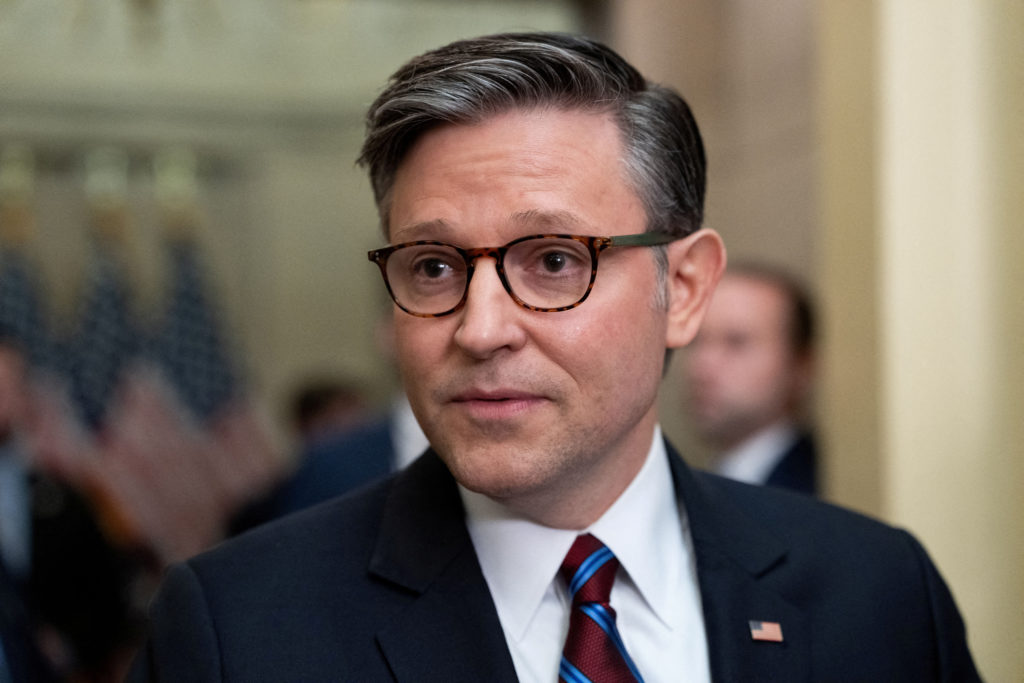
Ever the optimist, Speaker Mike Johnson said he believes Republicans will hold on to their U.S. House majority, defying a surge of Democratic momentum in the final stretch of the midterm elections that will determine control of Congress.
Justice Department actions against state election laws highlight growing national conflict over voter registration lists and mail-in voting security.
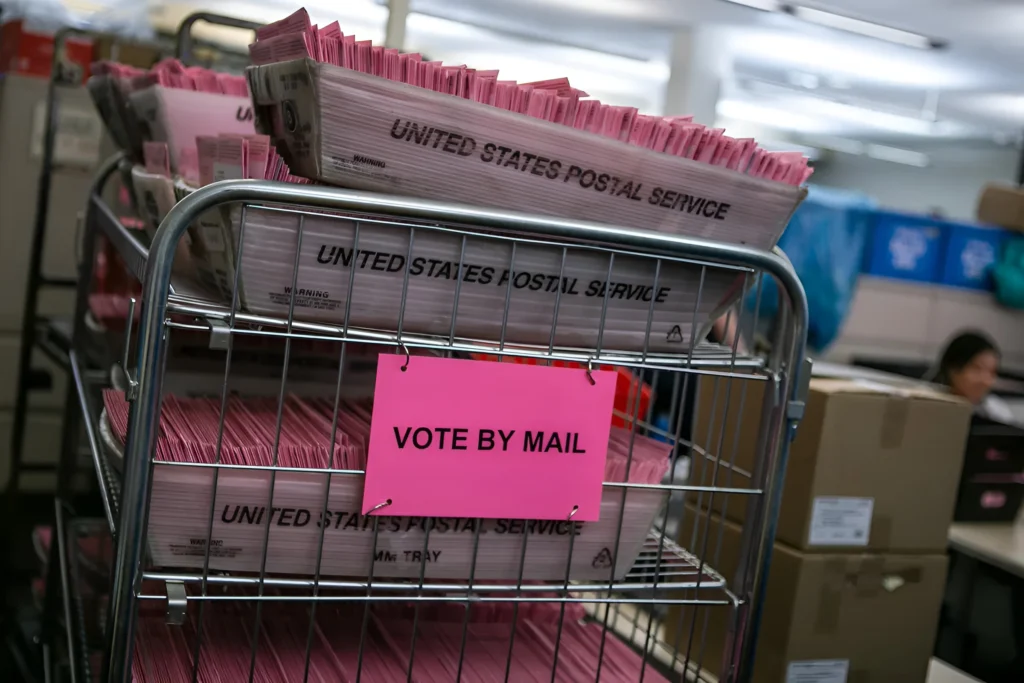
Mail-in voting is an established mechanism in the United States election system. It lets eligible citizens cast their votes by mail instead of going to the polling place on Election Day.
Over the past decades, state governments have modified vote-by-mail laws to lower administrative costs, increase turnout, and provide alternative access for citizens who face logistical challenges on election days.
In this in-depth article, we will explore the history of mail-in voting, its characteristics, and why the current Trump administration has sought to alter this voting system.
History and the Rationale for Mail-In Voting
Remote voting in the United States dates back to the American Civil War (1861 – 1865). During this war, Union and Confederate soldiers who were away from their districts were permitted to submit written absentee ballots so that deployment would not disenfranchise them.
Throughout the 20th century, the mailing vote expanded beyond military personnel. State governments initially granted absentee ballots to civilians who were ill, physically disabled, or traveling for business on Election Day. Later, lawmakers introduced no-excuse absentee voting, which allowed registered voters to request a mail ballot without providing a specific reason.
In November 1998, Oregon became the first state to conduct all primary elections entirely by mail. By 2000, Oregon conducted the first mail-in presidential election in the U.S., achieving a registered voter participation of over 80 percent. Following Oregon’s model, other states, including Washington, Colorado, Utah, and Hawaii, transitioned to universal vote-by-mail systems after 2020.
Several practical factors explain the implementation of mail-in voting. For voters, it eliminates common obstacles associated with in-person voting, such as work, child care responsibilities, and long lines at precinct polling sites.
For the U.S. administration, state-wide vote-by-mail reduces the need for temporary poll workers, lowers equipment purchases for physical polling locations, and decreases operational expenses on election days.
A US judge declined to block President Trump's executive order tightening rules on mail-in voting, but left the door open for the Democratic Party to challenge it again after the administration takes further steps to implement the measure https://t.co/VDZv3TJZdIpic.twitter.com/cGujpkjY4o
Mail-in voting operates through structured legal protocols designed to maintain ballot security and track individual submissions. State election offices verify registered voter addresses and signatures, using databases before mailing official ballot materials.
After a voter completes their ballot, they can return it by U.S. Postal Service or place it in a designated local election drop box. Upon receipt, election workers process the ballot through signature verification procedures.
Empirical research shows that voter fraud in mail-in systems is extremely rare. Academic studies and data compiled by the Brennan Center for Justice indicate that the total rate of mail voting fraud over general elections averages 0.000043 percent, or roughly four cases for every 10 million mail ballots cast.
U.S. State election officials rely on barcoded envelopes, secure chain-of-custody procedures, and signature checks to prevent duplicate submissions and preserve election integrity.
Nearly 1,400 North Carolina voters are getting letters questioning their citizenship, all because the Trump administration's SAVE system flagged them.
The state elections board’s vague letter asks these voters to prove they’re citizens, even as the board acknowledges the system… pic.twitter.com/UJPyeLn0VM
Institutional Mechanics and the 2020 Pandemic Pivot
Mail-in voting requires precise administrative coordination between state election agencies, postal services, and voters. When the U.S. implements universal mail-in voting or no-excuse absentee voting, election authorities cross-reference voter registration databases to ensure accurate residential addresses.
Once ballots are printed, they are mailed to registered voters with instructions, a secrecy sleeve, and a pre-paid or postage-guaranteed return envelope.
Security throughout this process relies on multi-step verification systems. When a voter completes their ballot, they place it inside the secrecy sleeve, seal it within the signature-required return envelope, and sign a legal affirmation printed on the exterior.
Election offices process these returned envelopes by running them through automated sorting machines and optical scanners that capture the voter’s signature. Bipartisan teams of election workers compare the signature against official registration records, such as state driver’s license files or original voter registration cards.
The COVID-19 pandemic in 2020 triggered a transformation in U.S. elections. To prevent viral transmission at crowded indoor polling places, numerous states rapidly expanded mail-in voting options, allowing millions of citizens to vote remotely.
According to reports from the MIT Election Data and Science Lab, the voters by mail grew to 46 percent nationwide in 2020, more than doubling the fraction recorded in 2016. Conversely, the share of voters casting ballots in person on Election Day dropped from 60 percent to 28 percent.
Following the pandemic emergency, several states, including California, Washington, Oregon, Colorado, Utah, Nevada, and Vermont, permanently codified universal vote-by-mail systems into law, establishing remote ballot delivery as a permanent fixture of their electoral infrastructure.
A US federal judge has blocked restrictions on mail-in voting backed by US President Donald Trump.
Judge Emmet Sullivan ruled the measures would likely violate a 2021 settlement requiring expedited handling of mail ballots by the US Postal Service.
Partisan Realignment, Demographic Realities, and the Red Mirage
The widespread adoption of mail-in voting reshaped traditional patterns of voter participation and introduced complex dynamics in how election results are reported.
Despite assumptions that mail-in voting consistently favors a single political party, demographic and class analyses demonstrate that vote-by-mail systems benefit diverse working-class populations across the political spectrum.
Low-wage workers, hourly wage earners, agricultural laborers, and caretakers often lack the schedule flexibility required to stand in long lines during restricted polling hours.
Universal mail-in voting removes these temporal and economic barriers, facilitating participation for working families in both urban centers and rural conservative districts, such as in Utah and Montana, where mail-in voting has enjoyed long-standing bipartisan acceptance.
The differing timelines required to process mail-in ballots also created a phenomenon known as the “red mirage.” Because mail-in ballots require time-intensive signature verification, flattening, and manual extraction before they can be counted, many states process in-person votes first on election night.
This operational sequence frequently caused early vote counts to show a temporary lead for candidates who performed strongly among in-person voters, while subsequent processing of mail-in ballots altered vote totals over the following days.
This structural delay in reporting complete totals became a central focal point in post-election legal disputes and public debates over election administration.
🚨 JUST IN: Trump hints he could declare a national emergency for the midterms pic.twitter.com/YLdHlqyktS
— Republicans against Trump (@RpsAgainstTrump) August 11, 2026
Donald Trump’s Stance and Legal Action Against California
President Donald Trump has maintained a vocal opposition to mail-in voting. In public addresses, Trump has repeatedly alleged that universal mail-in voting systems lead to widespread election fraud and unfair outcomes.
Despite using absentee mail-in voting himself in past state elections, Trump argued throughout his campaigns and current presidency that expanding mail-in voting undermines public trust in election administration.
The Trump administration has taken direct executive actions aimed at curtailing mail ballot access. Policy changes and administrative decisions have altered operational procedures at the U.S. Postal Service, including adjustments to sorting equipment and delivery guidelines.
The Department of Justice filed a federal lawsuit targeting California’s election procedures. California established a universal mail-in voting model by enacting legislation requiring county election officials to send a mail ballot to every active registered voter in the state.
The lawsuit by the federal government argued that California’s system creates risks of unlawful voting and challenged state oversight of its official voter registration lists.
Specifically, the federal complaint alleged that California had failed to conduct proper voter roll maintenance, citing federal lists regarding individuals flagged as noncitizens who were sent mail ballots.
The lawsuit sought a court order to block state election officials from counting certain mail-in ballots ahead of the elections. In response, California state officials, including the Attorney General and Secretary of State, defended the legal validity of universal mail-in voting.
State leaders noted that California law relies on signature matching, secure drop-box monitoring, and continuous voter file updates to verify voter identity and maintain system integrity, while arguing that federal interventions violate laws restricting voter roll changes close to an election. Courts continue to review these challenges regarding federal authority over state-administered election laws.
.@SenatorSlotkin (D-MI) warns of President Trump using a national emergency "ruse" to gain American trust: "If you hear in the next 34 days that there is a new security threat… that somehow requires federal law enforcement or the military… an alarm bell should go off." pic.twitter.com/fFPyLjjJs6
Mail-in voting remains an essential tool in modern American election administration. From its origins, mail-in voting has provided voters with a flexible, low-cost option to participate in national and local elections.
While the expansion of vote-by-mail systems during the 2020 pandemic increased overall voter turnout, it also intensified political debate over election administration and security measures.
Although empirical data show that voter fraud in mail-in systems remains extremely rare, legal and political challenges, such as federal lawsuits targeting state mail-in procedures, continue to shape the discussion surrounding electoral access.
The ongoing debates over vote-by-mail illustrate a continuing effort to balance security with public access in the U.S. election system. As states enact laws to regulate, expand, or limit mail ballot procedures, the future of mail-in voting will remain a central topic in discussions about democratic participation and legal policy.
Many of the Democrats' ads accuse Republican opponents of siding with the president over voters, particularly on issues like tariffs and the Iran war, which they blame for jacking up costs.
 Login