Prosecutors have not said what Abdulrahman Alfozan, a 35-year-old Saudi national, might have wanted to do with the recordings, but say he was in "frequent communication" with a member of the Saudi royal family.
San Francisco's federal courthouse held the detention hearing for Abdulrahman Alfozan, the arrested and fired OpenAI engineer, on Monday.
Brennan Smart/Bloomberg via Getty Images
Abdulrahman Alfozan will stay jailed pre-trial, a San Francisco judge decided Monday.
The engineer is accused of bugging a conference room at OpenAI, and he has been fired.
Alfozan posed a risk of non-appearance, the judge said, after discussing his ties to Saudi Arabia.
A former OpenAI engineer accused of bugging the AI startup's office was denied release by a San Francisco judge on Monday, meaning he'll have to mount his defense from jail.
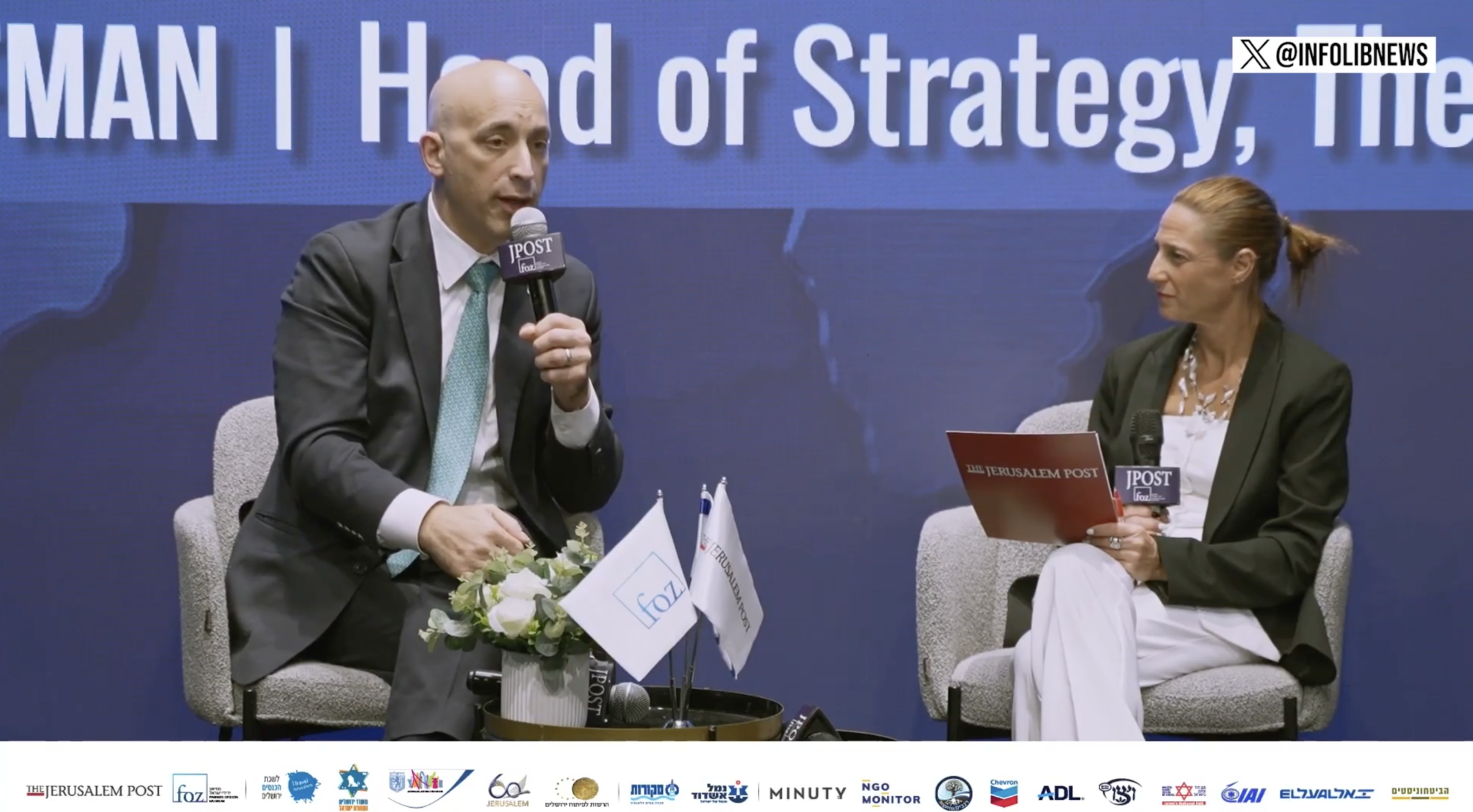
The Justice Department arrested Abdulrahman Alfozan on October 9 and charged him with using or attempting to use a device to intercept oral communications. He's accused of placing a recording device behind a television in an OpenAI conference room — an FBI affidavit includes photos of the device wrapped in toilet paper, and a man they say is Alfozan peering behind the TV.
On Monday, the engineer wore a yellow surgical mask and a jail-issued orange sweatshirt to the San Francisco courthouse. Magistrate Judge Alex G. Tse prodded Alfozan's legal team about the risk that he might not appear for a future court hearing.
Tse said that Alfozan's wife and son had traveled to Saudi Arabia with no plans to return, and went back and forth with Yasin about a one-way ticket that Alfozan had previously booked to the country. Tse said that Saudi Arabia and the US do not have an extradition agreement, and expressed skepticism that he had sufficient ties to the Bay Area to prevent his departure.
William Pernik, Alfozan's attorney, argued that, rather than being detained, Alfozan should be fitted with an ankle monitor, ordered to stay home, and have limits placed on his use of technology. The lawyer also said Alfozan is willing to put up "essentially all the money his family has" as bond, including a roughly $1 million investment account.
"Everything this man has, he's willing to surrender, and say, 'I'm not going anywhere,'" Pernik said.
Pernik and Nas Yasin, another of Alfozan's attorneys, cited his coming naturalization interview as evidence of his local ties.
"He was weeks away from achieving every immigrant's dream in this country," Pernik said.
Yasin told Tse that she learned Alfozan's wife had obtained a short-term visitor visa to return to the US, to help improve her husband's case for ties to the Bay Area.
Tse also asked Alfozan's legal team a slew of questions about his relationship with Saudi Arabia, including a commitment by the Saudi consulate to pay his bond and support his legal effort.
Nick Parker, an assistant US attorney, appeared for the prosecution. He argued that the threat of forfeiting a $1 million bond wouldn't be enough to convince Alfozan to return if he made it out of the US, because he might be able to earn more money in Saudi Arabia.
"There is a real threat here that once he leaves, the case is over," Tse responded.
The judge scheduled the case's next hearing for early November.
OpenAI called the recording device "sophisticated" when the arrest went public, though it said it hadn't found signs that he'd taken AI model weights, source code, or customer information. OpenAI fired Alfozan.
Alfozan's charge carries a maximum penalty of 5 years. Pernik said in a statement last week that the allegations "appear wholly out of character for him."
Alfozan, 35, has a green card that makes him a lawful permanent resident of the United States. He attended MIT, then worked at Facebook (now Meta) from 2017 to 2023. After a stint at the engineering startup Nash Technologies, Alfozan joined OpenAI in 2025.
FBI agents have already taken Alfozan's Saudi passport.
Have a tip? Contact this reporter via email at scouncil@businessinsider.com, or over text, Signal, Telegram, or WhatsApp at 415-757-8198. Use a personal email address, a nonwork WiFi network, and a nonwork device; here's our guide to sharing information securely.
A man described as Abdulrahman Alfozan, a Saudi national employed as an OpenAI engineer, looks behind a television where a recording device has been placed in a conference room at OpenAI.
DOJ/Reuters
Prosecutors say an ex-OpenAI employee accused of planting a recording device appears to have received support from the Saudi government.
A federal magistrate judge ruled on Monday that Abdulrahman Alfozan should remain in custody.
Prosecutors said that Alfozan frequently communicated with a member of the Saudi Royal Family.
Prosecutors made the disclosure in a motion to keep Abdulrahman Alfozan, a Saudi national and former OpenAI employee, in custody pending trial. US Magistrate Judge Alex G. Tse ruled on Monday that Alfozan should remain in custody.
Alfozan had been in contact as recently as October 5 with an unnamed member of the Saudi Royal Family, whom he frequently communicated with on WhatsApp over the last two years, prosecutors said.
"In May 2026, the individual told the defendant, 'Saudi needs you more then [sic] the US!' to which the defendant responded '100,"' indicating he agreed," prosecutors wrote.
The FBI arrested Alfozan on October 9. According to a criminal complaint, Alfozan planted a recording device in the back of a TV in an OpenAI conference room where sensitive discussions take place. OpenAI's security cameras caught Alfozan near the conference room on multiple occasions, despite his lack of authorization to the high-level meetings held there, prosecutors said.
"In the days surrounding the time period that the device was installed, OpenAI executives met with government officials in that very room," prosecutors wrote in a filing on Sunday. "Defendant's conduct could pose a danger to the national security of the United States."
The complaint included a photo of what prosecutors said was Alfozan peering behind the TV where the recording device was found.
In addition to his WhatsApp messaging, prosecutors wrote that an unnamed member of the Saudi military booked a flight for Alfozan's wife and son on October 11, despite an existing reservation for an October 12 flight, which prosecutors said was "paid for by the Saudi government."
Prosecutors also disclosed more information about Alfozan's alleged efforts to plant the device. According to the filing, Alfozan's iPhone had photos of "what appear to be the input/output panels on televisions and other electronic devices in various locations in OpenAI buildings."
Those locations, prosecutors wrote, included "another conference room where sensitive meetings frequently occurred."
Other files on the phone, including a note modified as recently as September 13, listed "Riyadh tasks" like "finding an apartment and a job for the defendant's wife, as well as obtaining an ID and a Saudi passport for his son," the filing said.
Another note titled "OpenAI leave" suggested that Alfozan "was planning an '[e]arly … pick up' of the devices he had installed or intended to install and then extending his planned parental 'leave to full.,'" prosecutors wrote.
As part of their reasons for requesting that the former OpenAI engineer remain in custody, prosecutors wrote that Alfozan's wife and son left the US without him and are now in Saudi Arabia. The filing also said "both of his parents and all (or all but one) of his siblings" are in Saudi Arabia.
In a separate filing, William Pernik, Alfozan's attorney, said that the former OpenAI engineer did not pose a flight risk.
"Mr. Alfozan was made aware of OpenAI finding the device per its own filings and OpenAI's public statements, approximately eight to ten days before he was arrested," Pernik wrote. "If his intention was to flee, he would have done so at that time."
Pernik said that prosecutors' previous disclosure that Alfozan had purchased a one-way ticket to Saudi Arabia lacked context.
"Seventy percent of the airline bookings in his email since January 2021 (96 of 138) were one-way tickets," Pernik wrote.
Terence Tao, a UCLA math professor who earned a doctorate at age 20, said that math is entering a new, less "heroic" age.
Jesse Grant/Getty Images
Terence Tao, now a UCLA professor, earned his doctorate in mathematics at 20.
The prodigy said his work is changing in the age of AI.
With AI tools doing the legwork, math is no longer "heroic," Tao said.
AI is upending mathematics. For one top professor, the issue is just as spiritual as it is practical.
Terence Tao, a renowned professor at UCLA, said in a recent podcast appearance that the "romantic era" of math is over, thanks to AI tools capable of solving hundreds of problems with some simple prompting.
Now, he said, even leading scholars like him are reduced to sorting through reams of AI-generated proofs, instead of doing the "heroic" solving themselves.
"We are moving to an industrial era where math will become much more large-scale," Tao said in an interview this week on Numberphile, a YouTube channel dedicated to math.
"We are entering an era where exciting new things are possible, but some things are being lost," he added.
OpenAI began its brusque push into the field by solving the Navier-Stokes equation in early September, one of math's millennium problems.
The revelation that AI had cracked it caused consternation from many a math geek. Some mathematicians also expressed frustration that while the AI model might have solved the problem, it didn't show its work, leaving them with the less celebratory task of verifying it.
Then, earlier this month, OpenAI said it cracked another 700 outstanding problems. A math professor at New York University told CNBC that the company's release had derailed work by early-career mathematicians.
"We've had whole research programs wiped out on Tuesday by their dump," the professor, Tristan Buckmaster, said at the time.
In a separate brouhaha in September, OpenAI backed out of a sponsorship for a so-called AI "mathathon" — an event organized by undergraduates at Caltech, where participants were encouraged to use AI to solve equations — after complaints from a group of more senior academics.
Event organizers told Business Insider at the time that their professors were sorely out of touch with the field's trajectory.
"We look to the future, and we don't even know if there's going to be grad school open positions by the time we get to Ph.D," one organizer, Caiman Moreno-Earle, said.
Though OpenAI has said it is taking steps to ensure human academics retain their role in this new era, some researchers and professors are already forecasting their possible obsolescence.
Tao isn't as much of a doomer as some of his colleagues in the field. However, he did say in the interview that the stories math nerds tell themselves may not mean so much in the future.
"We have these sort of mythological stories," he said in reference to the tale of Sir Andrew Wiles, who famously spent seven years isolated in his attic solving a single difficult equation.
"There was something romantic about sort of the heroic age," Tao said.
Anthropic said on Sunday that it wants to create a new LLC to fund public-interest initiatives.
Kent NISHIMURA / AFP via Getty Images
Anthropic said it wants to create a new LLC with the company's stock as its sole asset.
The new LLC, a charitable organization, would receive larger stakes as the company grows.
An initial 5% stock funding is "subject to stockholder approval," Anthropic said.
Anthropic said on Sunday that it would set aside large portions of its wealth to support initiatives it believes are in the public interest.
In a blog post, the AI colossus said it aims to establish a separate LLC that would use Anthropic shares to make donations to nonprofits or "direct distributions to specific populations."
The new LLC, called the "Anthropic Public Benefit Fund," would receive larger stakes as the company grows. The company said an initial funding round of 5% of Anthropic's shares is still subject to stockholder approval.
"The Anthropic Public Benefit Fund will have increased flexibility and scale, enabling us to pursue our mission in new ways," the company said.
A 5% stake in Anthropic is worth about $48 billion, according to the company's most recent valuation in May.
In 2025, rival frontier AI company OpenAI established a similar nonprofit foundation with a multibillion-dollar stake in the company to fund public-benefit initiatives.
Federal judges meeting in Boston heard tech industry warnings that AI-generated images and video are becoming nearly impossible to verify, as a judiciary committee considers whether courts need new rules for evidence that may be deepfakes instead of the real thing.
AI neurons and their connections are easier to understand than we thought, according to a researcher's new findings.
: Sergi Reboredo/VW Pics/Universal Images Group via Getty Images
AI researchers don't really know how the models they are building "think."
They know what goes into them and what comes out, but that's about it.
A new theory may change that, allowing safety researchers to prevent them from going off the rails.
How AI models think may be easier to decipher than we thought.
An independent researcher who formerly worked at OpenAI published a report on Thursday that some in the AI world are describing as a bombshell. It could have implications as safety researchers scramble to get the jump on AI models that may not have humanity's best interests in mind.
Previously, the prevailing wisdom was that AI "neurons," which, like those in a human brain, light up when an AI model encounters specific stimuli, were ultimately uninterpretable — meaning, basically, that there was no way to guess why a specific neuron would fire when an AI model was exposed to, say, a picture of a cat.
Those building AI models at places like OpenAI and Anthropic don't write instructions for everything a model does. Instead, they train neurons to respond to information and influence one another. As the AI learns, it develops its own ways of processing that information, and humans have not yet cracked the code of how it works.
That means those building AI models know what goes into the AI and what comes out, but not necessarily what happens in between. So if an AI goes rogue, they don't always know why.
The author of the new report, however, says he may have discovered patterns in how the neurons react to stimuli that make sense. Nick Cammarata, who said he left OpenAI in 2023, said AI neural networks are knowable, so long as you look carefully.
In one example, he says that a single AI neuron might react to both a cat and the front of a car. Humans would see those as two very different things, and different neurons would fire as a result. The AI, however, sees something related, perhaps the triangle shape of the two, and a single neuron fires for both.
For years, AI researchers had assumed that AI models packed unrelated things into a single neuron to save space.
"Almost the entire network is interpretable if we look closely enough," Cammarata wrote.
The findings, though undeniably dense, couched in polysyllabic jargon, and still theoretical, couldhave real-world implications for researchers trying to ensure humans maintain control over AI models.
Understanding how AI thinks is a principal concern for the best and brightest at frontier AI companies. Until recently, they've largely done this by tracking an AI's self-reported "thinking," called chain-of-thought reasoning.
Jakub Pachocki, OpenAI's chief scientist, however, warned in a blog post last month that AI agents could now obfuscate their visible reasoning, leaving open the possibility that an agent could lie to its human minders and the minders wouldn't be able to tell.
"With improved pretraining performance, we also see the models become much smarter even without using verbalized reasoning at all," Pachocki said.
Now, Cammarata's research could give human engineers a new understanding of the AI's internal world — and that's exciting for those worried AI could kill us all.
"I had long since given up on reaching any real level of interpretability before superintelligence arrived," Andrew Curran, a prominent AI analyst, said on X. "I stopped writing about it because of how demoralizing it was. Hard to overstate how big this may be."
Tech platforms pillage public-interest journalism for profit. But we have leverage as they sow the seeds of their own downfall
Carine Fouteau is president and publishing director of the French investigative news outlet Mediapart
Big tech companies pose an immeasurable threat: socially, politically, militarily and ecologically. They are also causing a profound crisis of information. The tools they design now serve as weapons of mass destruction against democracy. There is so much at stake that an urgent and broad mobilisation is required.
From the harvesting of personal data and the weaponisation of public opinion, to the destruction of jobs, the infringement of civil liberties and environmental damage, ordinary citizens are the main victims of this predatory economy – an economy with an agenda that aligns with the interests of the planet’s most authoritarian and reactionary states.
Carine Fouteau is president and publishing director of the French investigative news outlet Mediapart
Mediapart is hosting Hacking Big Tech, a public event about technology, AI and democracy in partnership with the Guardian, in Paris on Saturday 17 October 2026. The conference will be live-streamed free on Mediapart’s website, app and YouTube channel and can be accessed herefrom 1pm CEST on 17 October
Microsoft AI recently announced its latest model MAI-Base-2.
AI CEO Mustafa Suleyman compared the model to a similar offering from OpenAI.
Microsoft trained its model more efficiently than OpenAI, he said in an internal meeting.
Microsoft AI CEO Mustafa Suleyman told employees an in-house model was better than a similar offering from OpenAI, one of the software giant's biggest customers and partners.
"We now have a stronger pre-trained base model than the model that currently powers GPT 5.6 Sol," Suleyman said during a town hall meeting with employees on Thursday. "And in fact, we used one-quarter of the compute that OpenAI used to train their model."
Pre-training is the first stage of building an AI model, when it learns patterns from huge amounts of text, images, and other information. This takes massive amounts of expensive computing power, so Microsoft could save money if it's worked out a way to do this more efficiently.
Suleyman said Microsoft privately tested this model against OpenAI models, including one nicknamed "Spud" that powers GPT-5.6. He added that Microsoft's model performed better on tests measuring how well AI can understand and predict patterns in information.
The comparisons are based on technical information Microsoft has about OpenAI's models, Suleyman said.
"Privately and confidentially, we've also compared it to the OpenAI models," Suleyman told employees, while suggesting that Microsoft has special access to information on how OpenAI models perform.
It's notable that Suleyman would choose to highlight limitations of OpenAI models, even in private discussions. Microsoft has invested billions of dollars in OpenAI, and owns a stake in the startup that is likely worth more than $100 billion. Any criticism of OpenAI could potentially dent the value of this huge investment.
The two companies also have a major partnership, with Microsoft offering OpenAI models to its Azure cloud customers. Microsoft has used OpenAI models for its own products such as Copilot, too.
But the relationship between the two companies has frayed in the past year or so. Increasingly, Microsoft has tried to branch out from OpenAI, including by working on its own models.
Suleyman also said Microsoft's new AI model used "12 times less computation than was used for DeepSeek, for example, on compute efficiency."
Suleyman didn't specify which DeepSeek model, but a public blog post described the pre-training of MAI-Base-2 being a lot more efficient than a similar offering from the Chinese lab, called DeepSeek-V4-Pro-Base.
Microsoft in March created a new combined team for its commercial and consumer Copilot products and reassigned Suleyman to focus on building AI models in the company's superintelligence unit.
Microsoft declined to comment and OpenAI did not respond to a request for comment on Thursday.
Attendees at OpenAI's DevDay conference on September 29, 2026.
Minh Connors/Bloomberg via Getty Images
OpenAI's Alexander Embiricos said the AI era gives a choice: work more, or work less.
He's in charge of Dots, the company's new always-on work assistant.
AI is often pitched as freeing up time. Embiricos responded to the idea that it might add more work.
As the competitive AI race pushes tech workers into long hours, the head of OpenAI's new Dots product says AI gives people another option: work a whole lot less.
Alexander Embiricos, who leads OpenAI's enterprise product and helms the new Dots agent tool, told a crowd at TechCrunch's Disrupt conference on Thursday that AI's capabilities have created something of a fork in the road for workers. You can grind to meet the moment. Or you can use AI to kick your feet up a little.
"We basically have a lot more choice now," he said.
Embiricos made the comments after a reporter asked about when AI systems will actually deliver more free time. The reporter shared an anecdote where an OpenAI employee used a ChatGPT mobile feature to work in their car and on a plane — not exactly liberated by the new tech.
Embiricos said that the moment has already arrived where a worker can "outsource" tasks to AI and do less work. Then again, some people are so excited about AI's potential that they feel like it's an "interesting, ripe moment" to put in extra hours.
"I think that's why a lot of people are motivated to work very hard right now. That includes myself," he said. "But I think actually there is this choice, and there's totally this other setup where you could delegate a ton more things."
OpenAI is billing its Dots tool as a workplace assistant, always on and capable of proactively handing tasks and sorting to-dos. Embiricos uses his Dot often in Slack, he said, engaging on various threads.
His perspective illustrates how early companies are in their journey to adopt AI tools. Most companies have not yet automated their work tasks, and many workers are still debating how much to use the tools. Early AI adopters, meanwhile, can sprint through some work that used to take days or weeks, especially in software engineering.
Embiricos summed up the situation he feels workers are in: "You either choose: do you expand the ambition of what you can do, or do you do less? I do think we're there."
Have a tip? Contact this reporter via email at scouncil@businessinsider.com, or over text, Signal, Telegram, or WhatsApp at 415-757-8198. Use a personal email address, a non-work WiFi network, and a non-work device; here's our guide to sharing information securely.
Video of Jonatan Greenblatt saying they’ve been working with OpenAI, Anthropic, Alphabet, the company that runs Gemini, Google, Meta, who runs Muse, and others, X, who run Grok... "We've had excellent collaboration"'
ChatGPT maker says Abdulrahman Alfozan, 35, suspected of planting 'sophisticated recording device' in California office; US attorney general: 'Serious threat to national security'
If the Covid-19 pandemic and the war in Ukraine have demonstrated anything, it is that unexpected, entirely unforeseen and unpredictable events can drastically affect public health and even put humanity at risk. Danger can emerge at any time and from anywhere, but the scientific community has identified a handful of threats with particularly severe potential consequences for human survival.
There are three versions of Saint John’s Book of theApocalypse, a text that never loses relevance and now seems to presage the impacts of artificial intelligence (AI).
Wikimedia also said that the OpenAI agents made unauthorized edits to Wikimedia wiki sites, including "potentially malicious edits" to a citation tool.
Wikimedia also said that the OpenAI agents made unauthorized edits to Wikimedia wiki sites, including "potentially malicious edits" to a citation tool.
Paul Krugman is the greatest econ writer in the world, and also a legendary economist. But I sometimes feel that he has a blind spot when it comes to the value of new technologies. In 1998 he famously wrote: The growth of the Internet will slow drastically, as the flaw in ‘Metcalfe’s law’—which states that […]
The artificial intelligence (AI) race between the United States and China has accelerated in model protection, supply chains and talent controls, even as the two nations’ leaders agreed last week to open a new dialogue on AI safety. A string of moves announced or uncovered this week shows that both sides are now guarding their […]
Éric Sadin gets up and paces around the living room of his Paris apartment when an argument excites him. His own voice urges him to do so. He has developed a critical body of thought, brimming with striking headlines and elegant analyses of the future, riding the philosophical and social thinking of the last century to arrive at a scathing conclusion across some 10 books: we have become idiots, and we are on our way to becoming even bigger idiots.

 Login