Forest clearance at smallest total since records began in 1988 in success for Lula ahead of presidential run-off
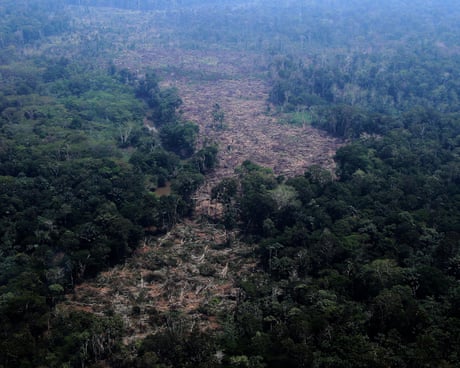
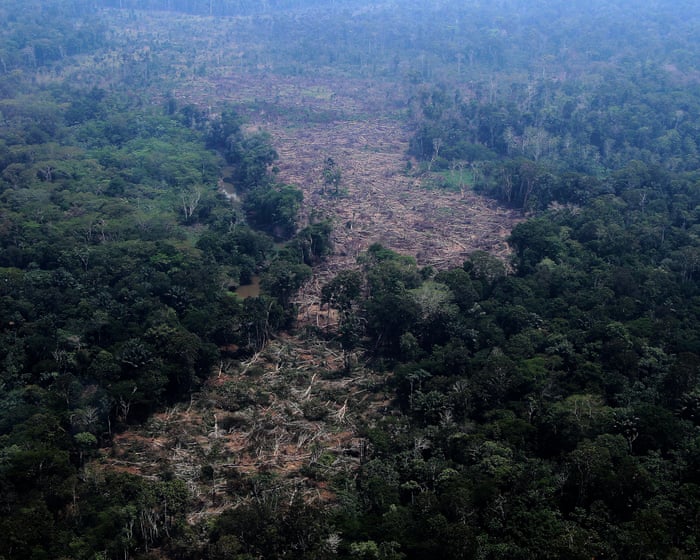
Deforestation in the Brazilian Amazon has fallen to its lowest level since records began, new government data shows.
But whether this globally important success is maintained or reversed is on a knife edge ahead of a presidential election run-off on 25 October between two candidates with sharply different visions for the future of the rainforest and how that affects relations with the US under Donald Trump.
Mines in supply chains of western carmakers linked to widespread deforestation of primary rainforest in nickel-rich lands inhabited by Tolaki people in Indonesia
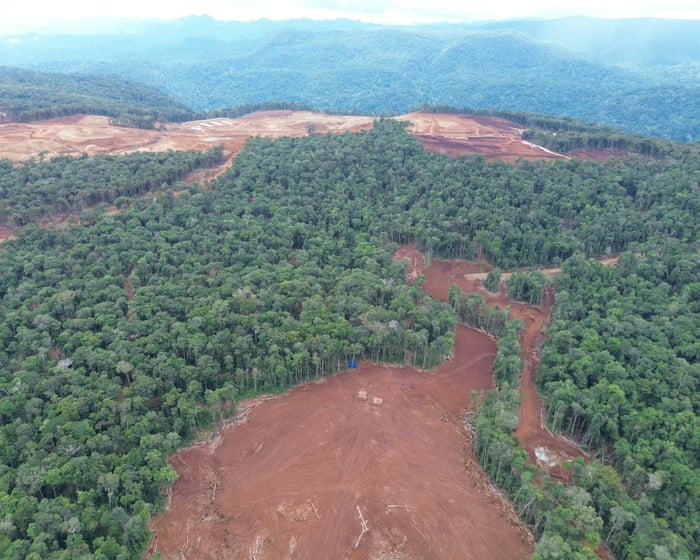
Volkswagen, Ford and Tesla are among the electric carmakers whose batteries may contain nickel mined in indigenous woodlands plagued by deforestation, an analysis has found, highlighting the struggle to make vehicles that are free from environmental destruction.
Corporate disclosures and trade flows from the last two years show mines in the battery supply chains of automotive giants are linked to the loss of trees in Sulawesi, a wildlife hotspot in Indonesia that houses the world’s largest nickel deposits. The metal is widely used in cathodes in car batteries because it boosts energy density and increases range.
Official guidance says ammonia in animal urine should be watered down to stop it corroding bark
A neighbourhood in Vienna has introduced guidelines for dog walking, including the use of bottled tap water to rinse away urine and protect vulnerable trees.
Neubau, an up-and-coming, densely populated district dotted with cafes and galleries, rolled out the Schönes Gassi (nice dog walk) campaign this week.
Forest fires and Antarctica are hard to picture together. Today the continent lies under a thick sheet of ice, and the cold preserves almost everything that falls on it. Around 90 million years ago, in the Cretaceous (the last period of the age of dinosaurs), the scene was very different. The planet was going through […]
BANGKOK — Over the course of 2025, the Mekong countries of Cambodia, Laos, Myanmar, Thailand and Vietnam lost a combined 746,168 hectares (1.8 million acres) of tree cover, an area roughly equivalent to the size of the Bangkok Metropolitan Area, according to Mongabay’s analysis*. Data published by the Global Land Analysis and Discovery (GLAD) laboratory at the University of Maryland, in partnership with Global Nature Watch (GNW) — formerly Global Forest Watch — shows that of the total 746,168 hectares of tree cover lost, more than 154,000 hectares (380,000 acres) was primary forest. Mongabay’s analysis found that just shy of 200,000 hectares (494,000 acres) of the total were lost from the region’s protected areas. While these numbers may paint a bleak picture for the Mekong’s forests, the rate of regional deforestation has dropped by almost 25% from that recorded by GNW in 2024, continuing a decline that, according to the data, began in 2023. Fewer wildfires, higher rainfall, stricter law enforcement and lower market rates for commodities could all factor into a drop in the Mekong’s deforestation rate for 2025 when compared to 2024. However, experts warn that short-term drops do not always represent a broader trend in deforestation. Every country in the Mekong saw a fall in deforestation rates from 2024 to 2025, but each still grapples with a range of challenges to protecting the region’s remaining forests. Data from 2025 shows a drop in deforestation recorded across Mekong nations, but much of the tree cover lost last year was lost inside…This article was originally published on Mongabay
The map of absolute destruction: 42% of the forests in Attica burned in the last 10 years. From 2017 until yesterday, August 3, 2026, a total of 15 major fires have burned more than 800,000 stremma* or 80,000 hectares and approximately 197,684.3 acres acres. The data resulting from the updated analysis of the burned areas […]

 Login