
❌

Reading view

Meta Is Gifting AI Glasses to Blind Veterans: 'I Got My Independence Back'
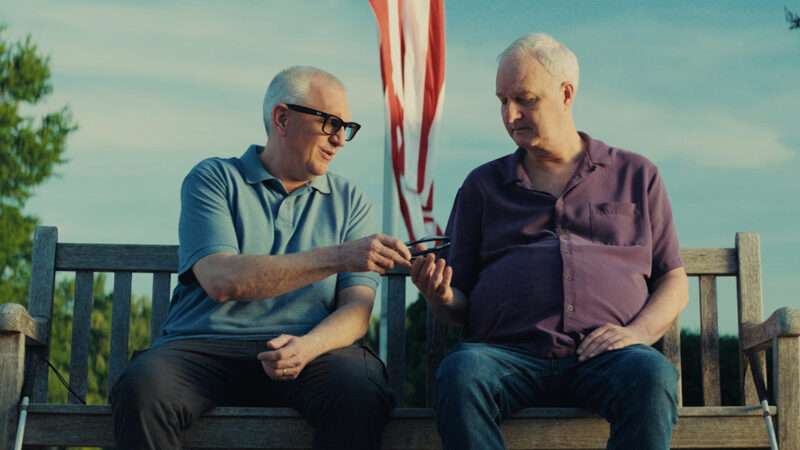
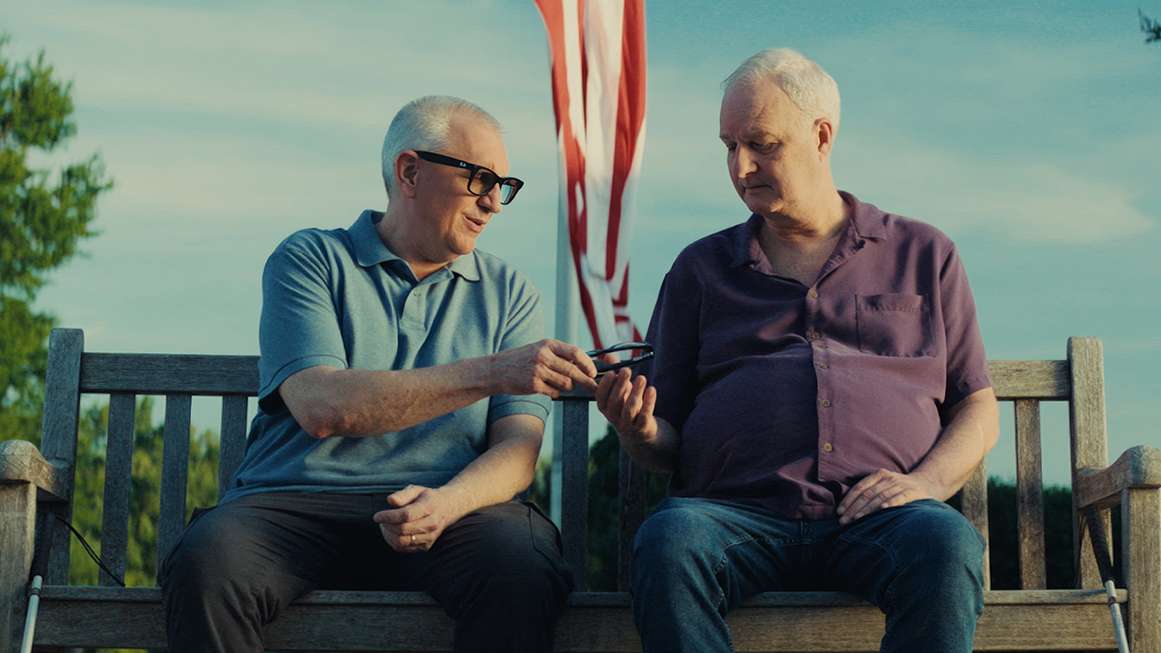
Two men sitting on a bench with one of them wearing Meta glasses | Photo: Meta

Two hundred years ago, the invention of Braille allowed blind people to read and write. By the 1930s, recorded sound made "talking books" possible. Developments in text-to-speech technology in the 1980s made reading more accessible and widespread. Then came personal computers, screen readers, smartphones, cameras, GPS, voice assistants, and myriad other technological advancements that gave blind people more independence.

Now a pair of sunglasses can read your mail, describe the person in front of you, tell you what is on a restaurant menu, and help you find your way home. Meta, the parent company of Facebook, is using artificial intelligence to turn glasses into a hands-free companion. For any person, this technology is impressive. For the approximately 700,000 Americans who are blind, it is potentially life-changing.

In June, Meta announced that every single blind veteran in the United States could receive its AI glasses free of charge. According to the Department of Veterans Affairs (V.A.), approximately 130,000 American veterans are legally blind, and over 1 million veterans have vision impairment that makes performing daily activities difficult. Don Overton, a blind veteran and former executive director of the Blinded Veterans Association, told Meta that he had "lost [his] independence" after losing his eyesight in a bunker explosion. "The moment I put on my Ray-Ban Meta glasses," he said, "I got my independence back."

The V.A. has a history of failing to fully support blind veterans. In 2022, the V.A.'s Office of Inspector General found that claims processors were instructed to contact visually impaired veterans by telephone, but 87 percent of claims showed no evidence of these calls ever happening. A 2022 investigation by the Senate's Special Committee on Aging found that "roughly 90 percent" of V.A. websites were not compliant with federal accessibility requirements. "We feel we've been abandoned by the agency that is tasked with providing our care and services for us," Overton told The Washington Post in 2022.

Meta's AI glasses have come under fire due to their privacy risks. The company was sued in March after Swedish publications Svenska Dagbladet and Göteborgs-Posten reportedly found that Meta's contractors in Kenya were accessing videos by users of their AI glasses. "We see everything, from living rooms to naked bodies," one worker noted.

Users should be aware of those risks. Still, for blind veterans, companies such as Meta have stepped up to fill a gap that the government has failed to address.

The post Meta Is Gifting AI Glasses to Blind Veterans: 'I Got My Independence Back' appeared first on Reason Magazine.

  •  

Elon Musk says he'll give every child in America a share in SpaceX

Elon Musk stands in a suit and tie amid a blurred outdoor crowd.
Elon Musk announced on X that he intends to give every child in America a SpaceX share.

Finn Gomez/Getty Images

  • Elon Musk says he'll give a SpaceX share to every child in the US next year.
  • That would be a $10.5 billion gift based on SpaceX's stock price and roughly 72 million recipients.
  • Musk said this would be the "first of many" SpaceX share giveaways but didn't offer further details.

Elon Musk says he'll give every child in the US a piece of his space company, a gift worth around $10.5 billion today.

"Next year, I will give one of my SpaceX shares to every kid in America," Musk wrote in an early Monday post on X. "This will be the first of many."

Next year, I will give one of my SpaceX shares to every kid in America. This will be the first of many.

— Elon Musk (@elonmusk) October 19, 2026

There are roughly 72 million children in the US based on 2025 census data, and SpaceX stock closed at $146 on Friday. If Musk donated 72 million shares right now they would be worth around $10.5 billion.

Musk didn't provide any further details on how the giveaway would work, such as eligibility criteria or specific timing, or whether the shares will be transferred to Trump Accounts.

The Tesla and SpaceX CEO is the world's richest person, with an estimated net worth of $904 billion as of Friday's close, per the Bloomberg Billionaires Index.

SpaceX — the company behind Falcon rockets, Starship launch vehicles, Starlink satellites, the AI chatbot Grok, and X — went public this summer and has a market capitalization of about $2 trillion.

Excluding restricted shares and options, Musk owns 4.77 billion SpaceX shares for about a 36% stake, worth just under $700 billion at Friday's close. The rest of his fortune largely comprises his stakes in his other companies, including Tesla, Neuralink, and The Boring Company.

Donating 72 million shares would reduce Musk's number of SpaceX shares by 1.5%. If, as indicated in his X post, he follows that up with further giveaways, his stake could shrink significantly.

Musk's pledge is part of a broader trend of gifting shares to America's children, aimed at ensuring they all own a piece of the stock market and reap its gains over time, and benefit from a lifetime of compounding wealth.

The Trump administration launched Trump Accounts — tax-advantaged investment accounts — for eligible children this summer, with those born between 2025 and 2028 receiving a $1,000 federal seed deposit. Numerous companies have agreed to contribute to them as well.

Michael and Susan Dell contributed $250 to 25 million American children's Trump Accounts earlier this month, a gift totaling $6.25 billion that was allocated first to those in the lowest-income ZIP codes.

SpaceX President Gwynne Shotwell and her husband pledged in July to give shares of SpaceX to more than 2 million children.

Musk shared his SpaceX gift idea after Anthropic pledged to commit 5% of its shares to a public benefit fund.

"I recommend giving shares directly to the public," he replied on X. "This is what I will be doing."

Another X user described Anthropic and Musk's pledges as "the beginning of universal basic income." Musk corrected him, writing *universal high income."

Musk has predicted that advances in AI, robotics, and other technologies will usher in an age of abundance in which everyone can have "whatever stuff they want."

He's recommended people stop saving for retirement in 10 or 20 years as their nest eggs will be "irrelevant," and has proposed government checks for all as the best response to job losses from AI.

Correction: October 19, 2026 — An earlier version of this story incorrectly described SpaceX as a private company. It went public in June 2026.

Read the original article on Business Insider

  •  

What smart people are saying about Anthropic's 5% 'public benefit' pledge

Anthropic CEO Dario Amodei smiles while walking with suited security personnel outside a city building.
Anthropic CEO Dario Amodei.

Finn Gomez/Getty Images

  • Anthropic is pledging billions worth of shares to a "public benefit fund."
  • That sounds great — but not everyone is a fan.
  • Elon Musk is among those who say the money should go directly to Americans.

Anthropic's announcement that it will commit at least 5% of its shares to a "public benefit fund" is drawing a mix of enthusiasm and skepticism. Many questions about how the fund would work remain unanswered, but the company said it would create a separate corporation with the shares to make donations.

Here's what people are saying.

Elon Musk, CEO of SpaceXAI
Elon Musk sits in a formal setting wearing a dark suit and light tie, with attendees blurred behind him.
Elon Musk says he plans to give money directly to the public.

Win McNamee/Getty Images

Musk, whose SpaceXAI is a competitor of Anthropic, made some news about his own plans in an X post reacting to Anthropic's statement.

"I recommend giving the shares directly to the public," he wrote. "This is what I will be doing."

Palmer Luckey, Anduril cofounder
Close-up portrait of Palmer Luckey
Palmer Luckey

Ann Wang/Reuters

The Anduril Industries cofounder expressed concern about what Anthropic might fund.

"The problem is that their definition of 'public good' is helping everyone else, not the American public," he wrote on X.

"If they would commit to helping America and Americans, that would be one thing, but this reeks of USAID 2.0, just another way to funnel billions out of our own economy."

Andrew Curran, AI analyst

The prominent AI analyst zeroed in on a line in Anthropic's statement in which it said it might explore "direct distributions to specific populations." Curran wrote on X.

"It sounds to me like they are planning their own form of self-directed global UBI," he wrote referring to universal basic income, which some have said will be necessary if AI drastically reduces employment.

"About half of Anth employees are also donating shares into this fund," Curran added. "They foresee a transformative future."

Brad Gerstner, CEO of Altimeter Capital
Brad Gerstner in a dark suit and tie stands in focus beside another suited person indoors.
Brad Gerstner

Bloomberg/Getty Images

Gerstner praised Anthropic for what he called its "philanthropic commitments," calling it "an extraordinary gift" — but he also sounded a note of caution about "foundation wealth concentration."

Like Musk, he wrote, "I hope a meaningful portion of AI's wealth is a direct dividend."

Sam Hogan Heutmaker, CEO of Inference

The CEO drew a comparison between Anthropic's plan to create a charity and OpenAI, which began as a nonprofit before going commercial.

"This will come to be known as 'the reverse OpenAI'" he wrote on X. "start as C corp, raise lots of money > once successful, start 'independent' non profit > start concentrating value into this new entity, which you and your homies control."

"It's genius," he added.

Gary Marcus, professor at NYU
A suited speaker wearing a headset microphone gestures during a panel against a blue conference backdrop.
Gary Marcus, emeritus professor of Psychology and Neural Science at New York University, during the Bloomberg New Economy Forum in New Delhi, India, on Thursday, Oct. 15, 2026. The New Economy Forum is being organized by Bloomberg Media Group, a division of Bloomberg LP, the parent company of Bloomberg News. Photographer: Prakash Singh/Bloomberg via Getty Images

Bloomberg/Getty Images

Marcus cast the announcement as a PR gambit.

"Anthropic is playing games here," he wrote on X. "Trying to curry public favor while still holding control and resisting disclosure is annoying. And reeks of desperation."

Patrick Moorhead, CEO of Moor Insights and Strategy
Seated speaker in a dark blazer and jeans smiles on a blue-lit conference stage.
Patrick Moorhead at the Featured Session: Business, Life, and the Magic of Austin: A Conversation with Michael Dell as part of SXSW 2024 Conference and Festivals held at Austin Convention Center on March 14, 2024 in Austin, Texas. (Photo by Errich Petersen/SXSW Conference & Festivals via Getty Images)

Errich Petersen/SXSW Conference & Festivals via Getty Images

Moorhead was among those raising questions about whether Anthropic would have too much control over where the funds go.

"If it's dedicated entirely the 'public benefit' why don't they just give it to the public and citizens where they can directly benefit? Seems like the public would know what to do with the money better than bureaucratic institutions," he wrote on X.

David Sacks
David Sacks
David Sacks, former White House AI czar, expressed some skepticism over Anthropic's mythos warnings.

Matt McClain/The Washington Post/Getty Images

Venture capitalist and the Trump administration's former AI czar, David Sacks, responded to a post from Anthropic cofounder Jack Clark, who said the public benefit pledge would mean around 20% of Anthropic's equity would be "dedicated to the public good."

"You've put 20% of your equity in an LLC. Whether it serves the public good remains to be seen," wrote Sacks on X.

Sacks has previously been a fierce critic of Anthropic, attacking the company's proposal that the world's top AI labs should implement a global pause on the technology and accusing Anthropic of attempting to "kneecap" open-source rivals.

Travis Kalanick
Atoms CEO and Uber cofounder Travis Kalanick is pictured

Theo Wargo/WireImage

"Behold, the EA infinite money glitch…" Uber cofounder Travis Kalanick wrote, quote-tweeting Anthropic's blog post.

EA refers to effective altruism, a philosophy popular in some corners of Silicon Valley (and unpopular in others) that holds that people should use their money and careers to maximize long-term benefit to humanity.

Several of Anthropic's cofounders and early investors have ties to effective altruism, although the company and its top executives, Dario and Daniela Amodei, have distanced themselves from the movement.

Kevin Roose
Kevin Roose
SAN FRANCISCO, CALIFORNIA - MARCH 24: Kevin Roose speaks onstage during the Common Sense Summit on Kids and Families 2025 on March 24, 2025 in San Francisco, California. (Photo by Kimberly White/Getty Images for Common Sense Media)

Kimberly White/Getty Images for Common Sense Media

Kevin Roose, a former New York Times tech columnist and the author of "The AGI Chronicles," wrote on X that Anthropic's pledge could be the "largest commitment of philanthropic capital ever made."

Roose estimated that the share pledge could be worth $200 billion if Anthropic goes public at a $1 trillion valuation.

"By my count, if Anthropic and OpenAI each go public at $1 trillion (again, probably conservative), that's roughly $460 billion, or 5 Gates Foundations, earmarked for philanthropy-shaped things," he said.

Read the original article on Business Insider

  •  

AI’s apparent danger is its best selling point

Just weeks before its scheduled November IPO, Anthropic is facing growing attention over the potential dangers of its technology. The resignation of former Anthropic researcher Jacob Coxon on September 8, who wrote on X that AI could “kill us all by the end of the decade,” preceded the company’s threat report on September 10. According […]

The post AI’s apparent danger is its best selling point appeared first on Asia Times.

  •  

Indonesia should have a seat at new forest firefighting fund

Two American charities recently announced a new fund to fight forest fires. They want to raise US$100 million to help countries find fires faster and put them out sooner. But the fund, announced at the UN General Assembly, is limited to South America, home to the Amazon rainforest. Southeast Asia is left out, and so […]

The post Indonesia should have a seat at new forest firefighting fund appeared first on Asia Times.

  •  
❌