Determining which meats are safe for domestic cats often leads to confusion among pet owners, with pork and mutton frequently cited as dangerous. However, the actual risk is rarely tied to the species of the animal, but rather to the specific cut of meat and how it is prepared.
The Role of Fat and Caloric Density
The primary concern regarding pork and mutton is their high fat content. Excessive fat intake increases overall caloric density, which, if sustained, leads to obesity-a significant risk factor for various metabolic diseases. It is important to distinguish between the animal's species and the specific part of the carcass; lean pork loin may be comparable in fat content to some types of poultry, whereas lard, smoked meats, and sausages are unsuitable for feline consumption.
While small amounts of boiled, lean meat without salt or spices generally do not harm a healthy cat, high-fat products should be excluded from the diet to prevent weight gain and associated health complications.
Researchers from Stockholm University and Brooklyn College have recently proposed a sobering metric for canine cognition: they argue that dogs forget events after just two minutes, with an average short-term memory span of merely 27 seconds across studied species. This statistical snapshot has fueled debate among owners who wonder if their pet's affectionate moments evaporate as quickly as a spilled drop of water. Yet, when examining the behavior of high-performing animals, a different picture emerges. One does not need to discard the data to question its applicability to the bond between a dog and its owner; rather, one must look at what actually drives the animal's attention at the moment of encoding.
The Role of Value in Retention
The discrepancy between laboratory figures and lived experience often lies in the variable of motivation. John Pilley, a clinical psychology professor at Wofoford College and trainer of the renowned border collie Chaser, notes that short-term memory in dogs is not a fixed container but a flexible resource. If an object or task lacks significance to the animal, the information is discarded rapidly. Conversely, when a stimulus aligns with the dog's intrinsic interests, retention time increases significantly. This suggests that low scores in controlled studies may reflect a lack of naturalistic engagement rather than a cognitive ceiling.
Pilley observes that when animals are engaged with tasks that hold personal meaning, they demonstrate far more durable memory. The laboratory environment often strips away these contextual cues, leaving the dog to process neutral stimuli. In the wild, or in a home where the animal is motivated, the brain prioritizes information that serves immediate goals or desires. Thus, the "27-second" average is less a statement of capacity and more a measure of disinterest.
For centuries, the Siberian landscape functioned as the world's primary reservoir of "mammoth ivory." By the 17th century, the export of these ancient tusks had evolved into a significant revenue stream for Russia, providing a direct strategic competitor to the British monopoly on African and Asian ivory. The scale of extraction remained substantial well into the late 19th century, with annual exports ranging from 8 to 25 tons, and commercial harvesting continuing into the 1930s.
The concentration of these remains is not the result of a single catastrophic event, but rather a reflection of the long-term stability of the mammoth steppe. For hundreds of thousands of years, this high-productivity ecosystem supported tens of thousands of giants across vast grassy plains, offering a caloric density comparable to modern African savannas. While woolly mammoth remains are found globally, from Alaska to Mexico, Siberia's specific geological and climatic history allowed for the accumulation of multiple generations of animals in one region.
The Mechanics of Preservation
The scientific value of Siberian finds lies in the state of the organic material. Paleontologists frequently recover not just skeletal structures, but soft tissues, hair, and stomach contents. This preservation is the result of two physical constraints: the constant sub-zero temperatures of the permafrost, which inhibit bacterial decay, and the anaerobic conditions of boggy soils, which isolate carcasses from scavengers and oxygen.
An Arctic tern leaves its breeding grounds in the high north and begins a journey that will eventually lead it to the coast of Antarctica. In a single year, this bird may cover between 70,000 and 90,000 kilometers, effectively chasing a perpetual summer by oscillating between the Earth's poles. This extreme distance is not a random wander, but a calculated biological necessity.
The Geography of Survival
The common phrase "flying to warmer climates" suggests a generic tropical resort, but for birds, the destination is a precise genetic coordinate. The distance traveled is dictated primarily by the availability of food rather than a desire for comfort. For insectivores, such as swallows and cuckoos, the disappearance of prey in northern latitudes necessitates intercontinental voyages. Swallows from European regions often migrate to South Africa, while cuckoos cross the Sahara Desert in a single, grueling stretch to reach the tropical forests of the Congo Basin.
Other species operate on a shorter leash. European starlings typically migrate to France, Italy, or Spain, occasionally reaching North Africa. Waterfowl, including various ducks and geese, often settle in non-freezing coastal areas of Western Europe or along the shores of the Black and Caspian Seas. White storks from Eastern Europe follow a more arduous path, traversing Turkey and the Middle East along the Nile Valley to reach South Africa, covering distances exceeding 10,000 kilometers.
Many cat owners wake up at 4:00 or 5:00 a. m. to find a feline companion sitting on their chest, tapping their face with a paw, or vocalizing loudly. When this happens, the human response is often to interpret the behavior as a calculated attempt at "revenge," a display of stubbornness, or a deliberate effort to be "naughty." However, these interpretations project human social motives onto a biological drive.
The observed action-early morning activity-is rooted in the cat's nature as a crepuscular predator. Biologically, cats experience peaks of energy during dawn and dusk, the optimal windows for hunting in the wild. In a domestic setting, this predatory instinct manifests as a demand for food or engagement. The animal is not seeking to punish the owner, but is reacting to a circadian rhythm that tells it the world is waking up.
The Reward Loop
The persistence of this behavior is rarely about the cat's "willpower" and more about the owner's reinforcement. If an owner rises to fill a bowl or even shouts at the cat to stop, the cat receives a reward: attention. From the cat's perspective, the sequence is logical: a specific vocalization or action results in a human response. Even a negative reaction serves as a form of social engagement, which reinforces the habit.
From late May through July, beekeepers and garden owners often witness the phenomenon of swarming-the process where a honeybee colony departs its original hive in search of a new home. While the industry offers expensive commercial equipment to capture these drifting swarms, a simpler method persists among experienced practitioners: the use of recycled plastic sour cream containers.
The Mechanics of Attraction
To a human observer, a plastic cup is mere refuse. To a honeybee scout, however, the object is a potential vessel for a new colony, provided it carries the correct olfactory cues. The 200-300 ml capacity of these containers is sufficient to hold lures without being so large that they become unstable or impractical to hang.
The process relies on the behavior of scout bees. These individuals act as the colony's surveyors, scanning the environment for a site that smells like a secure, established hive. The plastic cup serves as a localized scent marker. When scout bees identify a favorable aromatic profile, they communicate the location to the rest of the swarm, leading the queen and thousands of workers to the site.
Recent reports from Tyumen, Yekaterinburg, and the Leningrad region indicate an increase in wolf activity near residential areas, where predators are increasingly targeting dogs and livestock. In the Moscow region, more than ten sightings have been recorded since the onset of autumn, prompting an examination of the physical drivers behind these incursions into human settlements.
The Fragmentation of Habitat
The movement of wolves toward urban fringes is not a matter of sudden aggression, but a consequence of disappearing geography. Zoologist Ilya Gomyranov notes that the construction of highways, the expansion of tourist zones, and the growth of new residential districts are systematically erasing the dense forests required for pack survival. As these secluded environments are replaced by infrastructure, the animals lose their traditional hunting grounds and the cover necessary to avoid human contact.
"Wolves are extremely cautious animals; they strive to avoid direct contact with humans. To live, they need thick, dense forests, which have practically vanished in the immediate vicinity of the Moscow region," Gomyranov stated, according to reports by the publication Podmoskovye Segodnya.
The migration of the Siberian crane (white crane) from the Yakutian tundra to the wintering grounds of China is not a seamless journey, but a series of high-stakes stops. One of these critical nodes is the Momoge Nature Reserve in the Zhenlai County of Jilin Province. For the birds, Momoge is a necessary waypoint for rest and refueling before they proceed to the Poyang Lake and the Yellow River Delta. For researchers, however, this stop had historically functioned as an information blackout for Russian scientists.
Until recently, the tracking of cranes within this specific Chinese corridor was fragmented. While the birds moved physically across borders, the data generated by Chinese transmitters remained restricted to local researchers. This disconnect created a gap in the understanding of the cranes' movement, where the Russian side lost visibility of the population once they exited the Federation's borders.
Bridging the Data Gap through Infrastructure
To resolve this, a delegation from the Lenskiye Stolby National Park-including Director Arkady Semenov, Deputy Science Director Dyulustan Dyakonov, and ornithologist Sergei Sleptsov-initiated a technical partnership with the administration of the Momoge Nature Reserve. The objective was to move beyond diplomatic memorandums toward a functional, shared monitoring infrastructure.
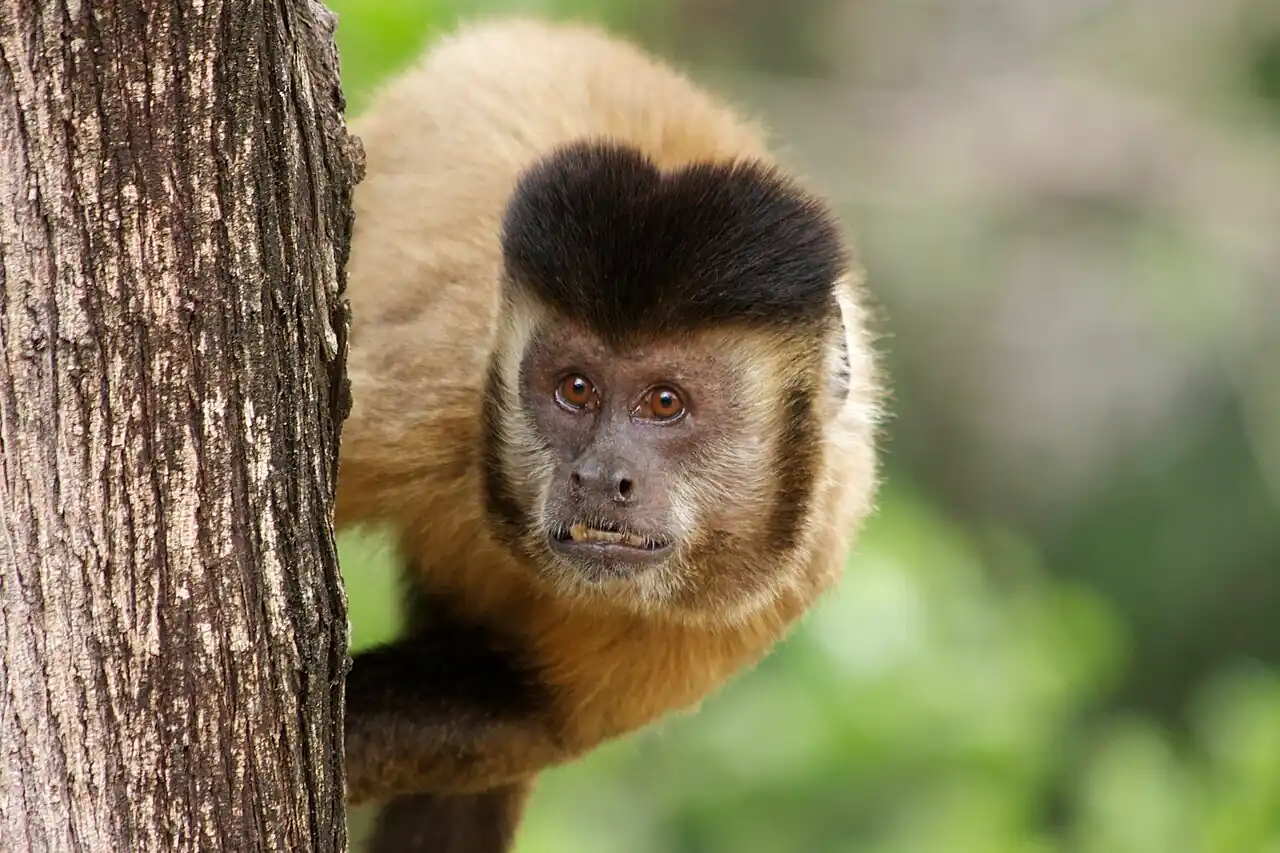
La escasez estacional de frutos y vegetales empuja a los monos capuchinos barbudos a incrementar de manera notable la caza de pequeños vertebrados, un comportamiento que los investigadores vinculan directamente con las estrategias de supervivencia que pudieron emplear los ancestros de los seres humanos durante periodos de inestabilidad climática. Esta es la conclusión principal de […]
A Junta de Freguesia de Almancil esteve presente, na passada sexta-feira, dia 31 de julho, representada pela Secretária do Executivo, Célia Fragoso, na entrega dos novos leitores de identificação eletrónica de animais.
A iniciativa, promovida pela Câmara Municipal de Loulé, reuniu as freguesias do concelho neste esforço conjunto pela causa animal.
Com este novo recurso, a freguesia passa a dispor de um meio mais prático para atuar em situações de animais perdidos ou desorientados.
A leitura do microchip permite identificar rapidamente os responsáveis pelo animal, facilitando o seu regresso a casa.
A Junta de Freguesia mantém-se disponível para continuar a contribuir para o bem-estar animal.
Four turtles rescued from a fire-stricken area in northern Greece were found to have been abused by human thugs who painted their shells with orange oil paint.The discovery prompted the intervention of the Prosecutor’s Office in Thessaloniki on Tuesday. The unprecedented incident was revealed when members of the Wild Animal Rescue & Reintegration Team arrived […]

 Login