A proposed "wealth tax" on California's billionaires could backfire and cost the state tens of billions of dollars in the long run.
If the proposed tax drives wealthier residents out of the state, California could end up losing between $1 billion and $3.5 billion annually in income taxes, according to a working paper published this week. A pair of researchers at Stanford University warn that the state could end up losing an estimated $39 billion because of the consequences of the wealth tax.
"These findings suggest that the Billionaire Tax Act will not fulfill the primary functions for which it was designed," write researchers Benjamin Jaros and Joshua Rauh.
Voters in California will decide next month whether to impose the one-time, 5 percent tax when they vote on Proposition 40. The ballot measure is dividing Democrats—Gov. Gavin Newsom opposes it, while progressive Rep. Ro Khanna (D–Calif.) claims it is the "most important ballot initiative in America and a fight for the soul of our party."
And it's already spurring some billionaires to flee the state—including venture capitalist Peter Thiel and Google co-founder Larry Page. Including those two, the seven billionaires who have publicly said they are leaving the state represent more than $539 billion of the nearly $1.9 trillion aggregate net worth of California's billionaires, the researchers note.
With other departures likely happening more quietly, the new study estimates that the tax will generate about $30 billion, a far cry from the $100 billion that the tax's supporters expect. The "behavioral response" from billionaires in California "has eroded most of the projected tax base," write Jaros and Rauh.
That's still a pretty big pot of revenue. In the long run, however, the state is likely to lose out.
After running 100,000 simulations using different assumptions, the two researchers report that "85 percent of plausible outcomes produce a negative" result in state revenue.
Capital is always mobile, despite the best efforts of politicians. And if you were a billionaire living in California, why would you stick around?
Polls show voters are narrowly divided over Proposition 40. A Politicopoll published earlier this month showed 46 percent of voters plan to vote for the measure, while 43 percent oppose it. Voters were similarly divided when asked if they expected it to pass or not.
Happy Tuesday, and welcome to another edition of Rent Free. This week, we're going to jump right into it with a philosophical question: What is an accessory dwelling unit anyway?
It's a question that officials in Somerville, Massachusetts, are realizing they didn't know the answer to after learning that a state law allowing ADUs in single-family neighborhoods could also require them to approve three-story backyard mini-apartments.
As the Boston Globereported on Sunday, Somerville's "deep ethos in favor of new housing" is being tested by the extent of the state law. Elected officials are describing the potential for three-story ADUs as a "joke," and the area's state lawmakers, including one who voted for the state law, are demanding reforms to stop them.
The law in question was a statewide accessory dwelling unit (ADU) legalization tucked inside a major housing package of mostly new spending programs that passed in 2024.
The bill required municipalities to allow ADUs of either 900 square feet or half the size of the primary dwelling (whichever is smaller) anywhere single-family homes are allowed. A subsequent rule issued by state regulators also forbade localities from imposing height and bulk limits on ADUs that are stricter than the limits imposed on primary dwellings.
That latter rule is what's causing Somerville's freakout.
Because the town allows triple-decker apartments (a three-story triplex common in New England) in all its single-family zones, the state rule means that it must also allow ADUs to be three stories tall.
The Globe story notes that the mini-triple-deckers could still only be 900 square feet, meaning each floor of a mini-triple-decker would have to be pretty small. Thus far, no one has proposed building an ADU tower in Somerville.
Even so, the town is worried that someone will eventually propose one of these "out-of-scale" units that it'll have to approve. Its officials are now agitating for changes to the state law to prevent this.
On the one hand, one can perhaps understand why Somerville officials feel blindsided.
The text of the 2024 ADU law allows localities to set "reasonable" height and bulk limits on accessory units. It was state regulators who decided after the law's passage that requiring ADUs to be shorter than the primary unit was "unreasonable."
On the other hand, allowing a second home on a lot to be as tall as the first house sounds "reasonable" enough. Can one complain about out-of-scale development when the new unit is the same height as an existing home and a little bit smaller?
Somerville is not the first city where people's own colloquial definition of an accessory unit as "a tiny home that doesn't bother anyone" has clashed with official regulatory definitions that allow ADUs to be a fair bit bigger.
San Diego's ADU Bonus program once allowed a technically unlimited number of ADUs to be built on single-family parcels near transit stops. (Height and bulk regulations imposed practical limits on how many units could fit on a site.)
That enabled developers to build what were, in effect, ADU apartment complexes on large single-family lots throughout the city. This year, the city imposed new restrictions to stop these "monster" ADU developments, including a per-lot accessory unit cap.
The latest dust-up in Somerville, like the San Diego controversy before it, provides several lessons about the realities of housing reform.
The first is that the definition of "accessory dwelling unit" is completely arbitrary.
In Massachusetts, an ADU is a 900-square-foot home that can be one story or three stories, depending on the town and zoning district it's being built in.
In Montana, it's a 1,000-square-foot unit. In California, state law can require localities to allow ADUs as large as 1,200 square feet. Under certain conditions, these ADUs can even be sold separately from the main house.
At a certain point, an accessory dwelling unit is just a dwelling unit. A house is a house.
The second lesson is that any ADU reform that is actually intended to produce new housing units is going to cause controversy.
State and local laws allowing ADUs have been one of the more common forms of housing reforms to pass.
Supply-boosters see them as a way to get a modest number of new units. Supply skeptics don't see much to object to about allowing someone to install a kitchenette and bathroom in their garage.
If the ADU regulations don't allow much more than the garage conversion, supply-boosters will be disappointed and push for expansions of the law. California passed dozens of ADU laws before they started enabling actual units to be built.
If an ADU law actually allows more homes, the ADUs will look like homes, and the supply skeptics will be mad.
No amount of branding or planning will resolve the inherent conflict of some people wanting more development while others oppose it in their neighborhoods.
Thus far, Massachusetts' ADU law has been modestly productive. The state's ADU survey reports that 2,048 ADU permits have been issued since the state law went into effect in January 2025. About half of those units are attached ADUs (think the garage with the kitchenette).
That's a little under 10 percent of Massachusetts total housing production during that time, per the Census Bureau's building permit survey.
At 50 units permitted, Somerville has actually approved the second most ADUs of any jurisdiction in the state. (Boston has only approved 49.)
But now that it's facing the prospect of allowing ADUs that look like actual homes, it's starting to get cold feet about the new law.
While Spain is tightening its tenant protections and rent controls in the face of housing protests, Portugal is trying to remove regulations on its rental housing industry. Either way, housing protesters are clashing with police.
The Urban Institute has a new white paper on whether data center development is coming at the expense of housing development.
A new report on home construction in Chicago finds that the practice of aldermanic privilege (where individual aldermen can veto projects in their district) is strangling development.
No dia em que se assinalou o centenário da publicação de Winnie-the-Pooh um urso-negro entrou numa biblioteca e "atacou" o lanche dos funcionários: manteiga de amendoim, bolachas, um pote de mel.
Josef Bopp diretor da biblioteca apelou aos visitantes, “lembramos a quem frequenta — e talvez ainda mais importante, aos nossos ursos — que os lanches não fazem parte da coleção em circulação.”
United Airlines CEO Scott Kirby backed national wealth and inheritance taxes in an interview published Sunday, arguing they would help level the playing field for Americans. Kirby told The New York Times that wealth inequality “has become a danger to our society,” adding the federal government must “address” it. “We should have a national wealth…
The Donald Trump administration dubbed it Operation Protect the Vote and on Monday focused its efforts on trying to substantiate the conspiracy theories promoted by the president and members of his administration: that large numbers of undocumented immigrants in California vote illegally for Democrats and that the state’s voter rolls still contain deceased individuals and people who have moved to other states. The charges announced, however, do not prove those claims.
Rep. Robert Garcia (D-Calif.) said that Immigration and Customs Enforcement (ICE) officers broke an American citizen’s arm over the weekend. “ICE agents brutally attacked and broke the arm of a North Long Beach resident and U.S. citizen. The videos are horrific and should concern not just our community but the country,” Garcia said in a…
The Department of Justice (DOJ) targeted and charged 28 California voters who are allegedly not U.S. citizens, the department said in a press release Monday. The DOJ said in the press release that on Monday, federal authorities in California arrested 11 non-Americans residing in the country “who are among 28 total charged in criminal complaints…
Last week, the Justice Department sued the state and later warned that local election workers who knowingly process or tabulate ballots submitted by noncitizen voters are at risk of potential prosecution.
The dire projections come from the state’s Climate Change Assessment, which analyzes the impacts of changing weather patterns on the nation’s most-populous state.
The report finds that without major intervention, as much as three-quarters of California’s beaches could disappear — either seasonally or permanently — by 2100 because of coastal erosion.
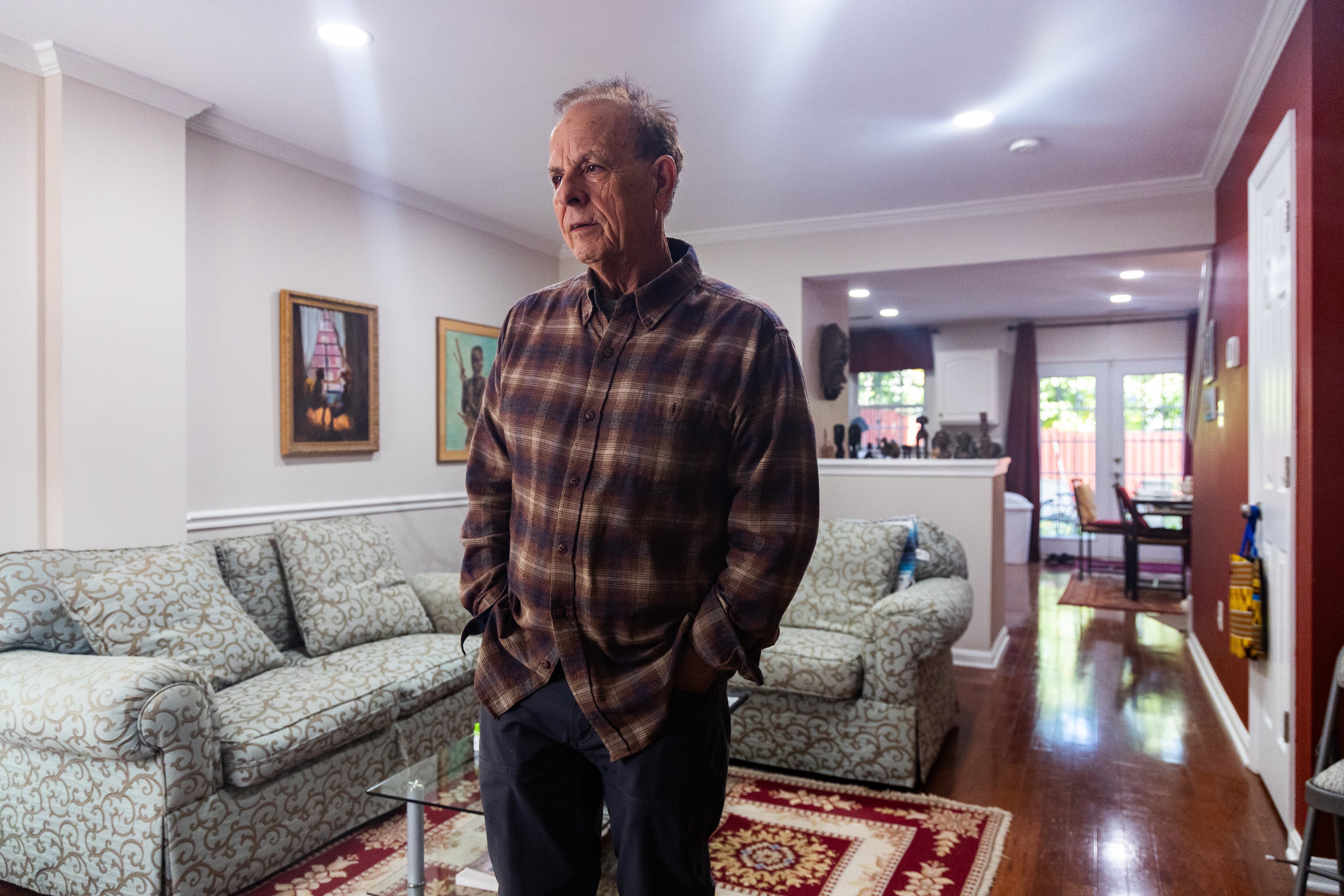
One of the factors that led Greg Pirio to buy his house in Loudoun County, in northern Virginia, 14 years ago, was the nature surrounding it. A historian specializing in Africa, he loved to take long walks with his dog and listen to the birds. Three years ago, a large data center was installed just a hundred meters from his door. Since it began operating a year and a half ago, the birdsong has been replaced by a constant buzzing together with fumes that cause headaches, conjunctivitis and respiratory problems.
Shalini Karnani Bonjour in her California backyard.
Courtesy of Shalini Karnani Bonjour
Shalini Bonjour is building a 1,100-square-foot ADU in her backyard so her mother can age in place.
The project is taking longer than she expected and is going over budget.
Bonjour shared the five biggest lessons she's learned during the process with Business Insider.
After her father died in 2024, real estate agent Shalini Karnani Bonjour moved her mother from Michigan to California to be closer to her and her family.
"My husband and I didn't feel comfortable having her so far away, especially when it came to her day-to-day needs," Bonjour, 50, told Business Insider.
Later that year, the family bought a home with a backyard large enough to build an accessory dwelling unit for her mother. In 2025, they broke ground on a 1,100-square-foot ADU. But what was expected to be a six-week project has dragged on for months and cost the family thousands more than expected.
"The whole process has been difficult because there are so many things to manage," Bonjour said. "You're trying to keep the project affordable, keep your neighbors happy, and stay on track. I can only imagine how overwhelming this would feel for someone without any insight into the process, because it is a huge undertaking."
Here are five hard lessons Bonjour has learned from the project, from choosing the right contractor to budgeting enough money for unexpected challenges.
A bad contractor can make or break a project
The ADU during the early stages of its construction.
Courtesy of Shalini Karnani Bonjour
At first, Bonjour thought she had found the right architect for the project. They designed the ADU and even promised to guide her through the permitting and construction process. But they didn't follow through.
Bonjour said hiring the wrong person was one of the "biggest mistakes" she's made during the project.
Although she found someone to take over the project after interviewing about 10 builders, mistakes made by the original architect have made construction more difficult.
"Watching my builder try to translate that original designer's plans is like trying to fit a square peg into a round hole," she said. "It's basically like he was working off somebody else's recipe."
Understanding local permitting and construction rules is essential
In her part of the Coachella Valley, Bonjour had to secure permits for the roof, electrical work, plumbing, HVAC, and solar panel installation.
"The city was pretty tough on solar," Bonjour said. "The first two electrical inspections were fine, and then on the third inspection, they determined we needed solar panels. Getting solar here in the desert is its own job. Researching the proper solar companies and their packages was another."
Building a home can test relationships
Shalini Karnani Bonjour in her California backyard.
Courtesy of Shalini Karnani Bonjour
While the family waits for the ADU to be finished, Bonjour, her husband, their son, and her mother are all living in the main house. It's been difficult sharing space, especially the kitchen.
"My mom loves to cook, so having her own kitchen will be really important to her," she said. "She was making a recipe and said, "It'll be different when I have my own stuff." I think the whole thing is bittersweet, but once she sees her finished kitchen, she'll feel different."
Construction has caused headaches for the cul-de-sac, too. Because the neighborhood's electrical transformer is outdated and overloaded, the local utility needs to upgrade it before the ADU can be connected. The work has involved digging up Bonjour's driveway and those of two neighbors.
"Our neighbors had to deal with the inconvenience of their driveways being out for a week and a half," she said. "My contractor and I are trying to be as considerate as we can and get the best people to do the work as quickly as possible. Thankfully, the neighbors have been gracious and nice along the way."
You have to be careful with your budget
Wood for home construction.
ArtMarie/Getty Images
Bonjour's family budgeted $480,000 for the construction of the ADU. Of that total, they set aside $100,000 as a contingency fund.
"As a realtor, and as someone who's always telling people to ask all the questions, I also hate to be caught by surprise," Bonjour said. "With the contingency budget, you build in extra money that you hope you won't need. It's something everyone should consider, whether they're building a million-dollar home or a small casita in the backyard."
Unfortunately, unexpected costs, like hiring replacement contractors and installing a new electrical panel and solar panels, have exhausted the reserve. Bonjour said the extra expenses have trickled into the family's day-to-day life, making it harder to justify things like family trips and upgrading the main home.
"I wish I had allocated it differently, but again, I think that planning with the right people at the onset would have saved so much headache and time," she said. "We'll have to wait on upgrading the home. That's kind of annoying, but that's where we're at. Lesson learned on that one."
Give yourself grace; it's all a learning process
Karnani Bonjour.
Courtesy of Shalini Karnani Bonjour
If she had to do it all over again, Bonjour says she would make different decisions.
"I'm a professional, so I hold myself to a higher standard of asking questions and being informed," she said. "I like to have good relationships with the builders, contractors, and vendors. In some ways, I feel like I should have known or seen what was going wrong, and that becomes really hard to kind of wrestle with."
She still tries to give herself grace. For all its challenges, she believes building the ADU has been the right decision.
"We know that having Mom in proximity is right for our family," she added. "We've learned some lessons along the way as homeowners, as a realtor, as a child, as a mom who's growing old herself."
The Trump administration is escalating its fight with California ahead of next month's midterm election, warning that local officials who process and tabulate ballots submitted by suspected noncitizen voters are putting themselves at risk of criminal investigation and potential prosecution.
The program's early termination is the latest setback for Los Angeles communities in the middle of recovery and awaiting billions of additional federal dollars.
Un incendio forestal denominado "Bryson Fire" en el famoso balneario de Malibú ha provocado órdenes de evacuación inmediata y el cierre de vías. Se movilizaron recursos aéreos y terrestres para su contención
Justice Department actions against state election laws highlight growing national conflict over voter registration lists and mail-in voting security.
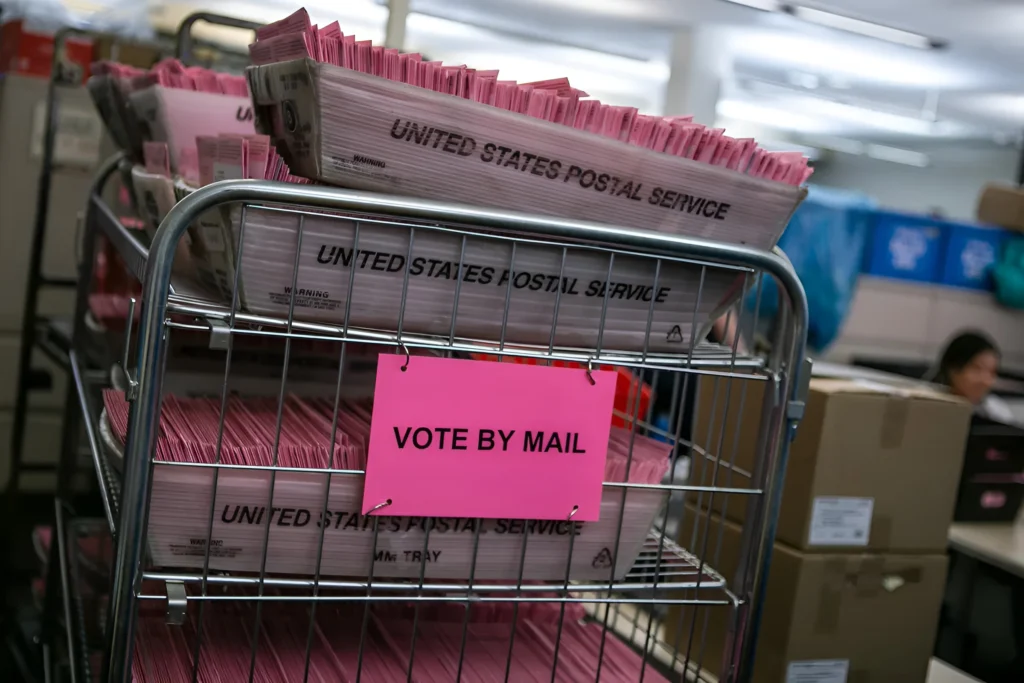
Mail-in voting is an established mechanism in the United States election system. It lets eligible citizens cast their votes by mail instead of going to the polling place on Election Day.
Over the past decades, state governments have modified vote-by-mail laws to lower administrative costs, increase turnout, and provide alternative access for citizens who face logistical challenges on election days.
In this in-depth article, we will explore the history of mail-in voting, its characteristics, and why the current Trump administration has sought to alter this voting system.
History and the Rationale for Mail-In Voting
Remote voting in the United States dates back to the American Civil War (1861 – 1865). During this war, Union and Confederate soldiers who were away from their districts were permitted to submit written absentee ballots so that deployment would not disenfranchise them.
Throughout the 20th century, the mailing vote expanded beyond military personnel. State governments initially granted absentee ballots to civilians who were ill, physically disabled, or traveling for business on Election Day. Later, lawmakers introduced no-excuse absentee voting, which allowed registered voters to request a mail ballot without providing a specific reason.
In November 1998, Oregon became the first state to conduct all primary elections entirely by mail. By 2000, Oregon conducted the first mail-in presidential election in the U.S., achieving a registered voter participation of over 80 percent. Following Oregon’s model, other states, including Washington, Colorado, Utah, and Hawaii, transitioned to universal vote-by-mail systems after 2020.
Several practical factors explain the implementation of mail-in voting. For voters, it eliminates common obstacles associated with in-person voting, such as work, child care responsibilities, and long lines at precinct polling sites.
For the U.S. administration, state-wide vote-by-mail reduces the need for temporary poll workers, lowers equipment purchases for physical polling locations, and decreases operational expenses on election days.
A US judge declined to block President Trump's executive order tightening rules on mail-in voting, but left the door open for the Democratic Party to challenge it again after the administration takes further steps to implement the measure https://t.co/VDZv3TJZdIpic.twitter.com/cGujpkjY4o
Mail-in voting operates through structured legal protocols designed to maintain ballot security and track individual submissions. State election offices verify registered voter addresses and signatures, using databases before mailing official ballot materials.
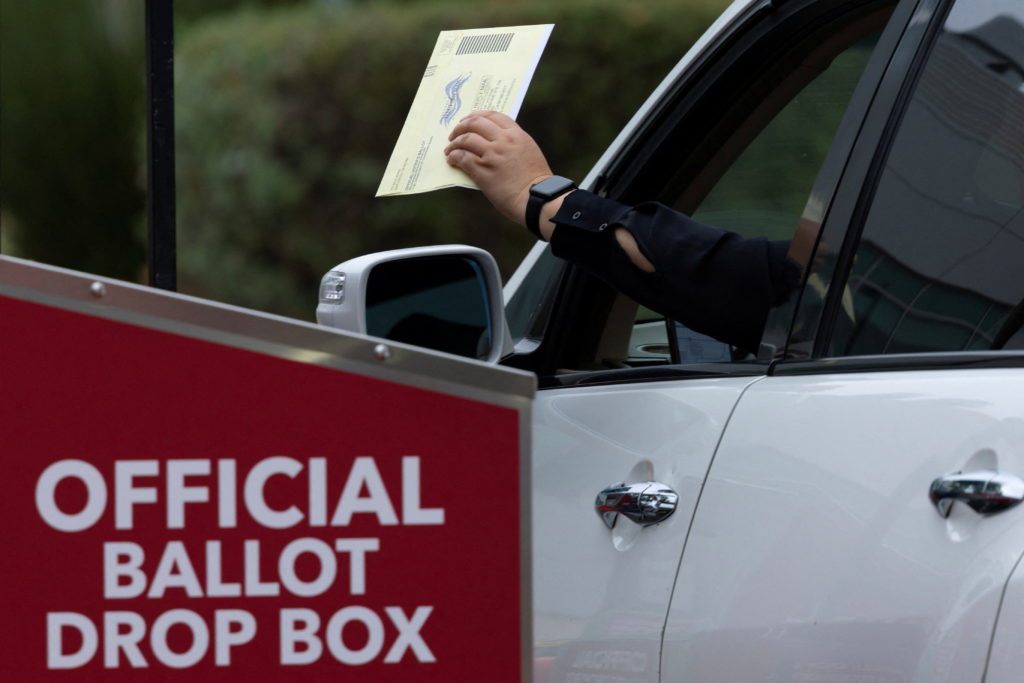
After a voter completes their ballot, they can return it by U.S. Postal Service or place it in a designated local election drop box. Upon receipt, election workers process the ballot through signature verification procedures.
Empirical research shows that voter fraud in mail-in systems is extremely rare. Academic studies and data compiled by the Brennan Center for Justice indicate that the total rate of mail voting fraud over general elections averages 0.000043 percent, or roughly four cases for every 10 million mail ballots cast.
U.S. State election officials rely on barcoded envelopes, secure chain-of-custody procedures, and signature checks to prevent duplicate submissions and preserve election integrity.
Nearly 1,400 North Carolina voters are getting letters questioning their citizenship, all because the Trump administration's SAVE system flagged them.
The state elections board’s vague letter asks these voters to prove they’re citizens, even as the board acknowledges the system… pic.twitter.com/UJPyeLn0VM
Institutional Mechanics and the 2020 Pandemic Pivot
Mail-in voting requires precise administrative coordination between state election agencies, postal services, and voters. When the U.S. implements universal mail-in voting or no-excuse absentee voting, election authorities cross-reference voter registration databases to ensure accurate residential addresses.
Once ballots are printed, they are mailed to registered voters with instructions, a secrecy sleeve, and a pre-paid or postage-guaranteed return envelope.
Security throughout this process relies on multi-step verification systems. When a voter completes their ballot, they place it inside the secrecy sleeve, seal it within the signature-required return envelope, and sign a legal affirmation printed on the exterior.
Election offices process these returned envelopes by running them through automated sorting machines and optical scanners that capture the voter’s signature. Bipartisan teams of election workers compare the signature against official registration records, such as state driver’s license files or original voter registration cards.
The COVID-19 pandemic in 2020 triggered a transformation in U.S. elections. To prevent viral transmission at crowded indoor polling places, numerous states rapidly expanded mail-in voting options, allowing millions of citizens to vote remotely.
According to reports from the MIT Election Data and Science Lab, the voters by mail grew to 46 percent nationwide in 2020, more than doubling the fraction recorded in 2016. Conversely, the share of voters casting ballots in person on Election Day dropped from 60 percent to 28 percent.
Following the pandemic emergency, several states, including California, Washington, Oregon, Colorado, Utah, Nevada, and Vermont, permanently codified universal vote-by-mail systems into law, establishing remote ballot delivery as a permanent fixture of their electoral infrastructure.
A US federal judge has blocked restrictions on mail-in voting backed by US President Donald Trump.
Judge Emmet Sullivan ruled the measures would likely violate a 2021 settlement requiring expedited handling of mail ballots by the US Postal Service.
Partisan Realignment, Demographic Realities, and the Red Mirage
The widespread adoption of mail-in voting reshaped traditional patterns of voter participation and introduced complex dynamics in how election results are reported.
Despite assumptions that mail-in voting consistently favors a single political party, demographic and class analyses demonstrate that vote-by-mail systems benefit diverse working-class populations across the political spectrum.
Low-wage workers, hourly wage earners, agricultural laborers, and caretakers often lack the schedule flexibility required to stand in long lines during restricted polling hours.
Universal mail-in voting removes these temporal and economic barriers, facilitating participation for working families in both urban centers and rural conservative districts, such as in Utah and Montana, where mail-in voting has enjoyed long-standing bipartisan acceptance.
The differing timelines required to process mail-in ballots also created a phenomenon known as the “red mirage.” Because mail-in ballots require time-intensive signature verification, flattening, and manual extraction before they can be counted, many states process in-person votes first on election night.
This operational sequence frequently caused early vote counts to show a temporary lead for candidates who performed strongly among in-person voters, while subsequent processing of mail-in ballots altered vote totals over the following days.
This structural delay in reporting complete totals became a central focal point in post-election legal disputes and public debates over election administration.
🚨 JUST IN: Trump hints he could declare a national emergency for the midterms pic.twitter.com/YLdHlqyktS
— Republicans against Trump (@RpsAgainstTrump) August 11, 2026
Donald Trump’s Stance and Legal Action Against California
President Donald Trump has maintained a vocal opposition to mail-in voting. In public addresses, Trump has repeatedly alleged that universal mail-in voting systems lead to widespread election fraud and unfair outcomes.
Despite using absentee mail-in voting himself in past state elections, Trump argued throughout his campaigns and current presidency that expanding mail-in voting undermines public trust in election administration.
The Trump administration has taken direct executive actions aimed at curtailing mail ballot access. Policy changes and administrative decisions have altered operational procedures at the U.S. Postal Service, including adjustments to sorting equipment and delivery guidelines.
The Department of Justice filed a federal lawsuit targeting California’s election procedures. California established a universal mail-in voting model by enacting legislation requiring county election officials to send a mail ballot to every active registered voter in the state.
The lawsuit by the federal government argued that California’s system creates risks of unlawful voting and challenged state oversight of its official voter registration lists.
Specifically, the federal complaint alleged that California had failed to conduct proper voter roll maintenance, citing federal lists regarding individuals flagged as noncitizens who were sent mail ballots.
The lawsuit sought a court order to block state election officials from counting certain mail-in ballots ahead of the elections. In response, California state officials, including the Attorney General and Secretary of State, defended the legal validity of universal mail-in voting.
State leaders noted that California law relies on signature matching, secure drop-box monitoring, and continuous voter file updates to verify voter identity and maintain system integrity, while arguing that federal interventions violate laws restricting voter roll changes close to an election. Courts continue to review these challenges regarding federal authority over state-administered election laws.
.@SenatorSlotkin (D-MI) warns of President Trump using a national emergency "ruse" to gain American trust: "If you hear in the next 34 days that there is a new security threat… that somehow requires federal law enforcement or the military… an alarm bell should go off." pic.twitter.com/fFPyLjjJs6
Mail-in voting remains an essential tool in modern American election administration. From its origins, mail-in voting has provided voters with a flexible, low-cost option to participate in national and local elections.
While the expansion of vote-by-mail systems during the 2020 pandemic increased overall voter turnout, it also intensified political debate over election administration and security measures.
Although empirical data show that voter fraud in mail-in systems remains extremely rare, legal and political challenges, such as federal lawsuits targeting state mail-in procedures, continue to shape the discussion surrounding electoral access.
The ongoing debates over vote-by-mail illustrate a continuing effort to balance security with public access in the U.S. election system. As states enact laws to regulate, expand, or limit mail ballot procedures, the future of mail-in voting will remain a central topic in discussions about democratic participation and legal policy.

 Login