DES MOINES, Iowa — House Republicans are pinning hopes of keeping their majority on a state that President Donald Trump won by roughly 13 points in November 2024.
And while Iowa has leaned red in recent years, Republicans are now finding themselves defending three of its four congressional districts as polls give Democrats more hope by the day that the key to a blue wave runs through the Midwest.
But Republicans are dismissing public perception surveys as a political cudgel used by the media and the left to discourage GOP voters, while insisting the results will come down to one thing.
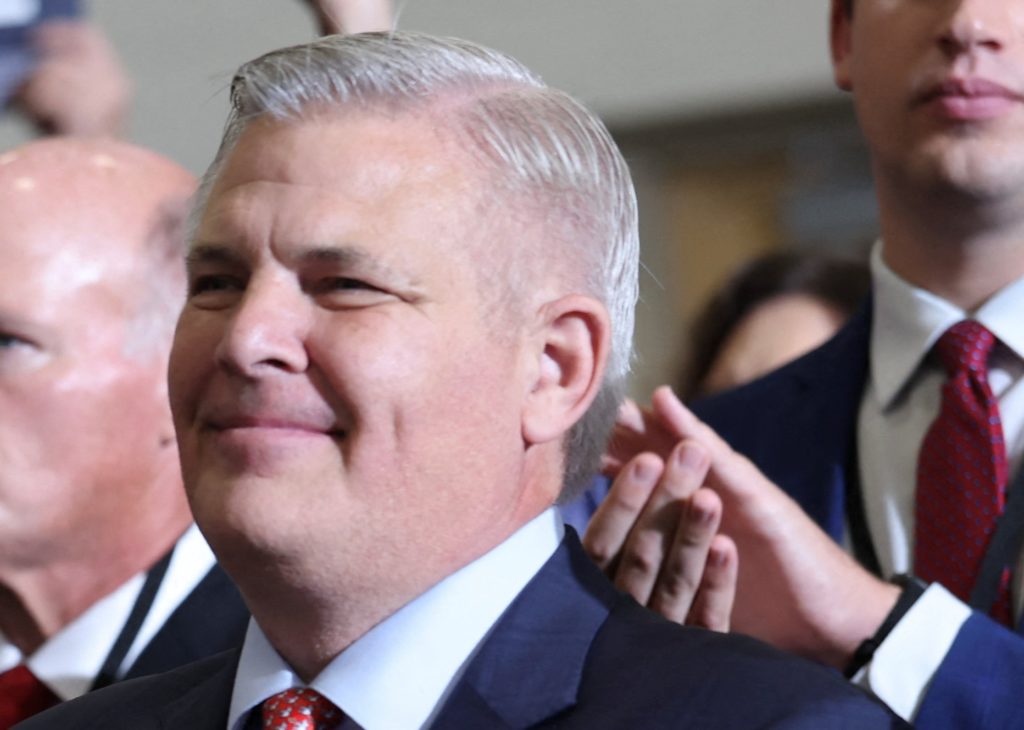
"Nobody knows what's going to happen on November 3. But I'm here to tell you, if our people show up, we win. If our people don't show up … then we're going to be scratching and clawing to hang on to every inch that we've got," House Majority Whip Tom Emmer, R-Minn., told a room of GOP supporters in Dubuque, Iowa, on Thursday.
Fox News Digital joined Emmer and several other House Republicans on a two-district swing in Iowa late last week. The No. 3 House GOP leader spent his afternoon at an event for congressional candidate Joe Mitchell in Iowa’s 2nd Congressional District, followed by a fundraiser for Rep. Zach Nunn, R-Iowa, in Des Moines in the evening.
At both events, he argued that polling showing Democrats with a growing advantage was incorrect, but he and others are still warning that getting Republicans out to vote will be key to the party’s success.
"Republicans do not like to participate in surveys," Emmer told people Thursday evening in Des Moines. "We are very suspicious of the people who are giving the information to and the databases they’re putting us in. By the way, there are Republicans who answer these surveys who may tell exactly the opposite of what they actually stand on, because again, we don’t trust them."
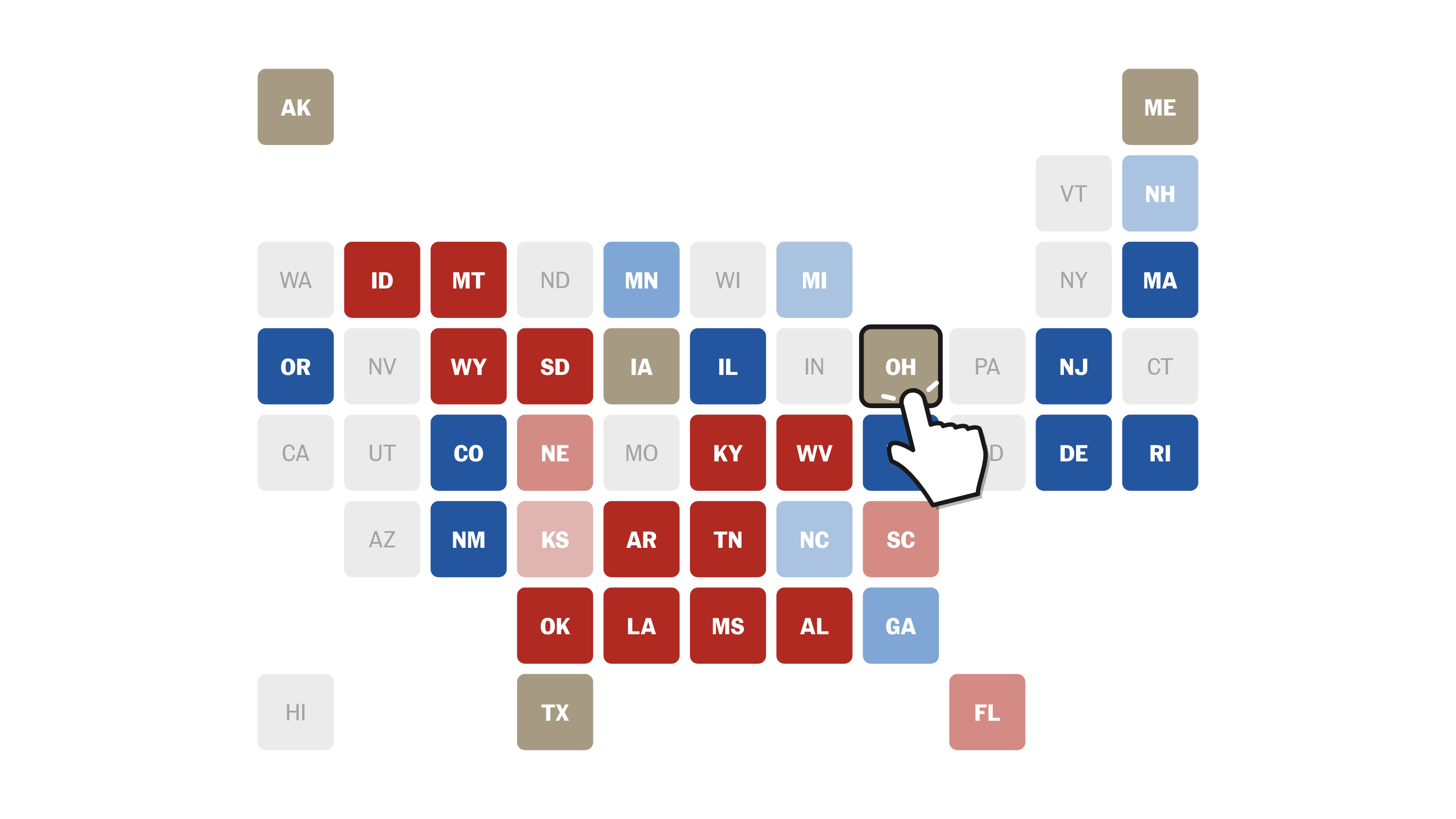
Fox News Power Rankings show all but one of Iowa’s four congressional districts are in play. Nunn’s district and the one represented by Rep. Mariannette Miller-Meeks, R-Iowa, both "lean Democrat." The seat Mitchell is vying to take over from retiring Rep. Ashley Hinson, R-Iowa, is ranked a "toss-up."
Republicans across the country are privately worrying that Trump’s low approval numbers coupled with some of his more unpopular policies could drag down the GOP. Add in the overall high cost of living and gas prices, some on the right are bracing for a 2018-style blue wave.
Two of the policies that could sandbag Republican candidates in Iowa in particular are Trump’s tariffs and his decision to import foreign beef. The agriculture-heavy state has been hit particularly hard so far, with tariffs making farm equipment and other materials more expensive, while Trump's trade war with China has hit American farmers hard with Beijing's retaliation.
Trump has sought to mitigate the impact of his steel tariffs in particular, announcing plans last month for a $15 billion steel plant in Lee County, Iowa.
But both Nunn and Mitchell are confident in the races they are running.
"We feel very confident about the race. And that's because we've talked to every voter we can, asked for their vote on November 3, and we've been traveling the district for the last 13 months — all 22 counties, rural and suburban and urban, telling people, this is an election of common sense versus crazy," Mitchell told Fox News Digital. "We have the hardest workers on the ballot."
Nunn told attendees at his event, "Not only is Iowa at the front line of the entire country when it comes to making sure we've got three competitive House seats, Des Moines, Iowa, the third district, our proud district, is now one of the most competitive in the country."
"So not only are we on the front line, we get to be at the tip of the spear," Nunn said, weeks after he led a bipartisan bill aimed at curbing Trump's imports of foreign beef.
And despite the national-level outlook on Trump, turning out the president’s supporters could be the difference between narrowly keeping the GOP majority and losing control of the House.
Trump, for his part, is doing what he can to motivate the base.
Nunn kicked off his Thursday evening event shortly after a phone call with Trump, during which the president said he "is committed to making sure we remain here in Iowa," the congressman said.
Trump is also set to descend on the state later this week for a rally in Sioux City, though it’s taking place in the only safe district for Republicans in the state.
"I'm always competing. I don't care if it's Iowa, I don't care if it's Pennsylvania, Ohio, Nevada, Texas, Florida, they're all important to this midterm," Emmer told Fox News Digital. "This midterm, to me, will come down to about 10 seats. Everybody talks about 20-plus. No. It's going to be a very narrow end, and for Republicans, Iowa is a great example. If the Republicans come out to vote, we're going to be just fine."
If the fate of the House majority did come down to the results of just 10 seats, that would mean Iowa would be responsible for roughly one-third of that success.
And while not all Republicans are as confident in the GOP’s chances in Iowa, they do agree that the final results will come down to turnout.
"This goes one of two ways — and both aren’t great for Republicans. Mariannette Miller-Meeks, Joe Mitchell, and Zach Nunn either win by the skin of their teeth or it’s complete and total obliteration on November 3," a GOP operative familiar with campaigns in Iowa told Fox News Digital. "There is no in-between. If Republican voters turn out to the polls, there’s hope. If not, it’s going to be bad."
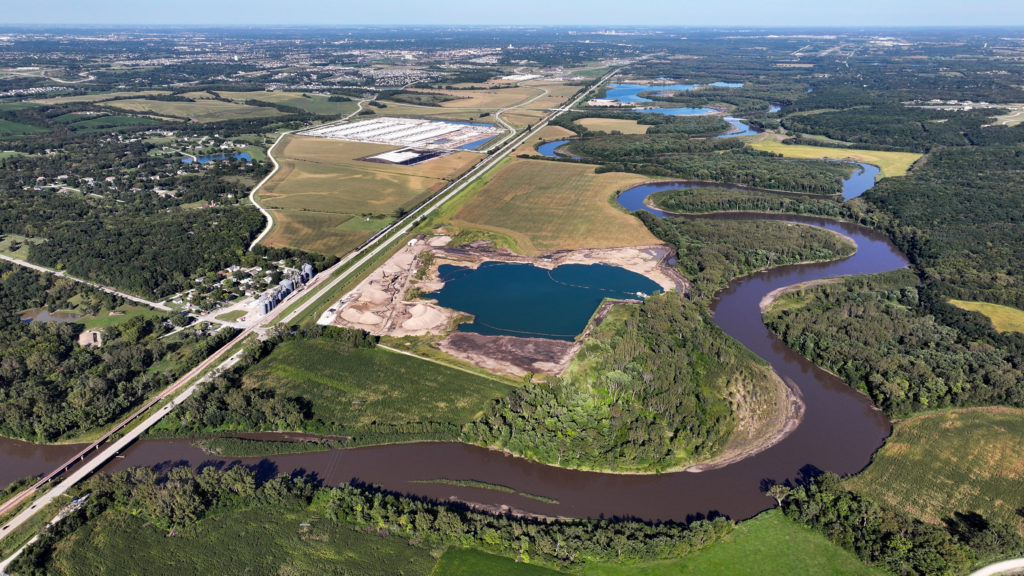
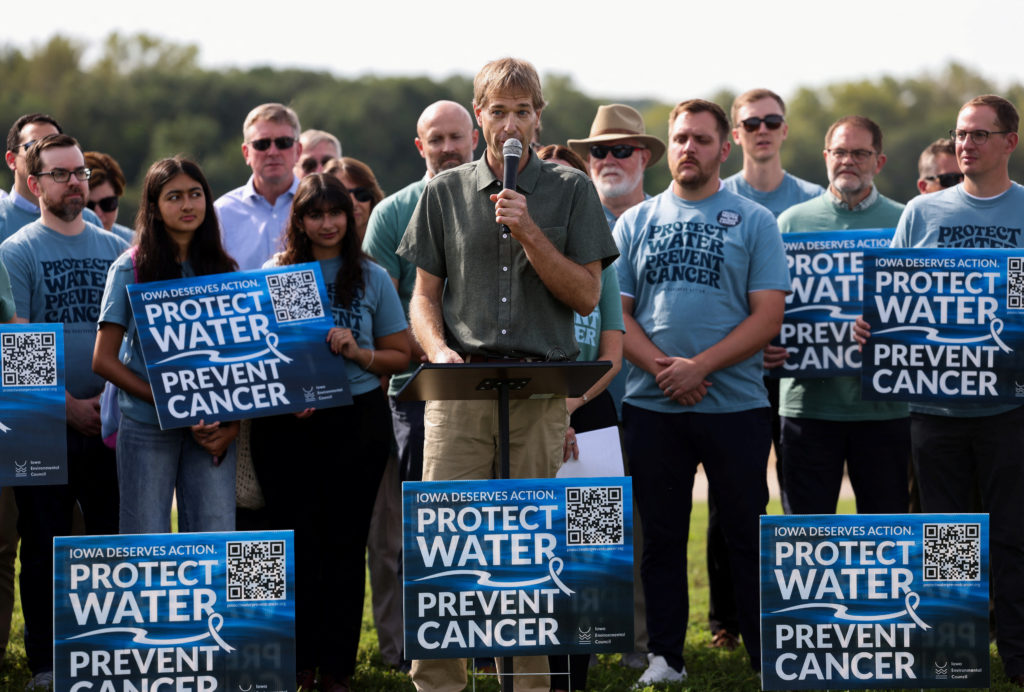
There is a growing concern in Iowa that the increasing cancer rate (10% over the national average, including rates of prostate, breast, colorectal, melanoma and lung cancer) at a time when cancer onset is decreasing in all but three states, could be associated in part with toxins in the environment.
Iowa is a big producer of corn and soybeans and also raises hogs. Corn and soy production leads to nitrogen runoff, which can end up in river water used for drinking. The EPA doesn’t yet list nitrates, which come from chemical fertilizers and animal waste, as carcinogens, but they can be converted inside the human body via nitrosation into probable carcinogens. At the same time, there is concern about the use of pesticides and "forever chemicals."
The Make America Healthy Again movement, led by HHS Secretary RFK Jr., has put its big thumb on the scale in favor of decreasing exposure to these chemicals. Candidates on both sides of the political aisle are jumping on board.
MAHA Action President Tony Lyons told me that the need to decrease chemical exposure is crucial and that not all politicians in Iowa are as sincerely committed to change. He said that numerous studies have linked contaminated water, loaded with nitrates from fertilizer and manure, to cancer. Studies have also linked chemicals in many pesticides "to higher risk of colorectal, bladder, non-Hodgkin lymphoma, and other cancers."
As Republican gubernatorial candidate Zach Lahn has said, "Any discussion that does not include water quality and the nitrate load when we’re talking about cancer isn’t a serious discussion. It doesn’t matter if you’re left or right, you’re drinking the water."
Keep in mind that state-funded research at the University of Iowa still shows that most — but not all — of Iowa's above-normal rates for several cancers can be explained by demographic and behavioral factors, such as smoking and binge drinking.
At the same time, the University of Iowa has also ramped up its cancer research because of the focus on the increasing cancer rate. Linda Jacobs, age 64, is a direct recipient of a medical miracle resulting from this research. She, along with her medical angel, Mohammed Milhem, MBBS, could easily have stepped right off the pages of my new book, "The Angels Among Us."
A decade ago, she had recurrent breast cancer necessitating a bilateral mastectomy and radiation therapy. Unfortunately, she developed an extremely aggressive and unresponsive angiosarcoma. Milhem injected her tumor with a genetically altered herpes virus he has been studying, and it rendered her cancer-free.
Of course, it would be better not to develop cancer in the first place. This is why the focus not just on lifestyle change but also on detoxifying the environment is so important.
Democrats and aligned advocacy groups are hitting the airwaves with a flood of campaign ads on the Iran war as they seek to win back in the House and Senate.
Economic concerns such as tariffs and rising gas prices may give Democrats an opening in November's midterms. But rural voters remain skeptical of large-scale support for Democrats.
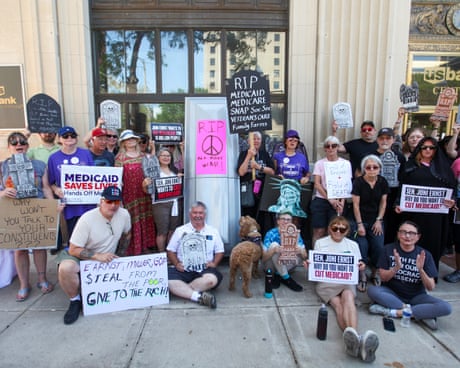
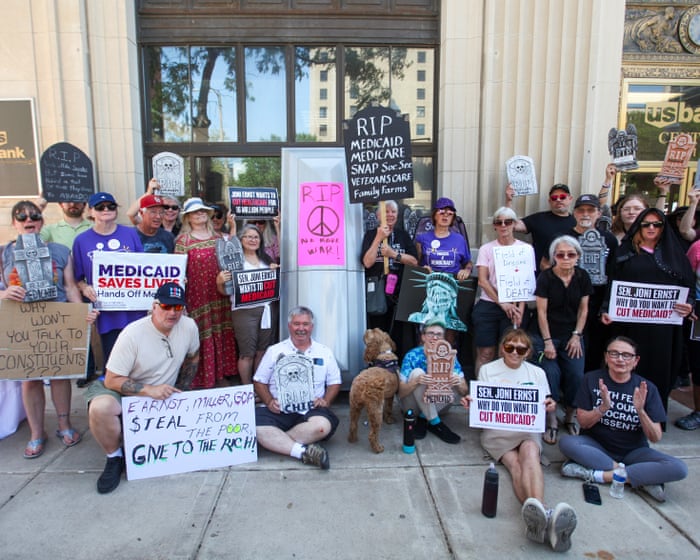
States like Missouri and Iowa are choosing to not take up exemption designed to help low-income people keep coverage during hardship
Some conservative states that have rejected hardship exemptions for the new Medicaid requirements may be choosing not to due to political reasons, experts say.
New federal work requirements for Medicaid, slated to come into effect on 1 January, mean that adults enrolled through the Affordable Care Act (ACA) Medicaid expansion will have to work, attend school, volunteer, or take part in another qualifying activity at least 80 hours a month to maintain their coverage.
The battle for the Senate in the midterm elections will determine how much room Donald Trump has to maneuver during the second half of his term: no legislation reaches the White House without first passing through the upper chamber.
Statehouses make health-care policy, guide education, and may redraw congressional districts ahead of 2028. With the stakes high, more than 6,100 legislators will be elected Nov. 3.
“We came here four decades ago chasing a dream, but we lost hope,” whispers Tanya Jo, dark circles etched beneath her eyes as she holds a pumpkin-shaped decoration. Halloween is only a few weeks away, and she is getting her house ready in Fort Madison, a small town in Lee County, in southeastern Iowa. The state, known for its vast cornfields, is one of the battlegrounds in this year’s fiercely contested midterm elections, which will be held on the first Tuesday of November.
Jeff Kaufmann, chair of the Iowa Republican Party, said Thursday that President Trump will campaign in the Hawkeye State twice before Election Day. “I just got off the phone with President Trump. He told me that he will be in Iowa on October 22 and November 1. He is anxious for Iowans to hear his…
Republican candidate Chris McGowan and Democratic candidate Dave Dawson will meet face-to-face for a debate Wednesday as they seek the U.S. House seat in Iowa's 4th Congressional District.
Chemical fertilizers and animal waste contain nitrates and phosphorus that can get washed with rain or snowmelt into the state's rivers. That affects Iowa's more liberal urban centers which rely on rivers and lakes for drinking water.
There is less than a month left until the midterm elections on November 3. The outcome will determine which party controls both houses of Congress and begin shaping the post-Donald Trump era.
At first she told no one. Not her twin sister. Not her mother. Not even her father the scientist.
Six-year-old Jenna Smith knew better than to pee when she was in the bath. But on that night in 1992, in her family’s home in Iowa City, the water felt so comfortable against her skin that she didn’t want to get out of the tub. It seemed like such a small thing. Who would know?
Seconds later the water around her waist turned reddish pink. Blood? It had to be. Jenna wondered if she’d hurt herself. “I was six years old sitting in a bathtub, watching a few seconds of my world stop making sense,” she would recall years later.
The Atavist, our sister publication, publishes one deeply reported, elegantly designed story each month. Support The Atavist by becoming a member.
She kept the blood a secret because she didn’t want to admit that she’d peed in the bath. But when it was still in her urine the next time she used the toilet, she went to her mother. Concerned, her mom called her dad, Richard Smith, and he took Jenna to the emergency room.
Richard was an ear, nose, and throat doctor in the University of Iowa’s school of medicine, a researcher who would become one of the world’s authorities on the genetics of hearing loss. His wife, Lynne Lanning, had worked as both a lawyer and a nurse. They had four young children: twins Jenna and Jessica, who were identical, and two boys, Luke and Rion.
At the ER, doctors ran tests on Jenna, but they couldn’t identify the cause of the blood. In the days that followed the bleeding intensified. At her parents’ urging, Jenna collected samples of her urine in Dixie cups for further testing. The doctors remained stumped, however, and after a while Jenna found the whole thing more annoying than worrisome.
The uncertainty was much harder on her parents. It wasn’t that doctors were misdiagnosing their daughter; they were unable to diagnose her at all. “It was horrible,” Richard said. “Imagine seeing your child and you know something is wrong, and you know the doctors treating her have no clue what to do.” Richard called a pediatric nephrologist he knew in Houston, where the family had lived previously. The nephrologist listed several conditions that could be causing the bleeding and said that, to determine which was to blame, Jenna’s parents should take her to Cincinnati Children’s Hospital Medical Center.
In July 1992, Richard, Lynne, and Jenna drove nearly 500 miles to get answers. Doctors in Cincinnati diagnosed Jenna with dense deposit disease, a condition in which proteins clog and damage the kidneys, leading to renal failure in many patients. There was no cure.
The hospital couldn’t tell the family much else—no one could. The disease was exceedingly rare, afflicting between one and three people in a million. Back home, Richard and Lynne spent hours inside the University of Iowa’s quiet medical library, poring over papers in search of information about their daughter’s illness. They could find no evidence that anyone was actively studying the condition.
Although many Americans—roughly one in ten—suffer from a rare disease, the experience can be lonely. Friends and relatives don’t understand the unique miseries such illnesses impose on daily life. Few doctors are likely to have encountered them before. And because there aren’t many patients, drug companies usually don’t invest in research for treatments.
Richard and Lynne feared that their daughter’s life might be tragically brief. Sometimes the mention of weddings would sink Lynne into melancholy; she couldn’t bring herself to watch the movie Father of the Bride. Richard agonized over what to do. His training compelled him to seek answers, but he wanted to be Jenna’s father, not the scientist charged with curing her. He kept his research focused on hearing loss. At first, anyway.
Stories of scientific discovery almost always celebrate individual researchers, consigning the contributions of loved ones, communities, and colleagues to footnotes. There are exceptions―the teams that built the first atomic bomb and deciphered the human genome, for instance. Science also has its share of famous families. Marie and Pierre Curie, along with their daughter Irène and her husband, Frédéric, won five Nobel Prizes between them for discoveries related to radioactivity. For the most part, however, the history of scientific progress has been mythologized as a succession of brilliant, driven individuals—often men—who chose the lab over the dinner table and competition over collaboration.
Some scientists have embraced the role of maverick. “You have to worry about your own work and ignore what everyone else is doing,” the physicist and Nobel laureate Richard Feynman is said to have told a colleague. The decades-long pursuit of a treatment for Jenna’s disease followed a very different path. There was no single hero, no lone scientist seeking glory. The biomedical quest required the efforts of a family and their neighbors in Iowa City, and the work of scientists around the globe. Together they changed an obscure area of medicine.
Richard and Lynne met in 1977, when both were working at Memorial Hermann-Texas Medical Center in Houston—she as a nurse, he as a medical intern. He noticed a run in her nylons and was smitten by her smile. She liked his down-to-earth manner and intelligence, his humor and kindness. They were working in the hospital’s burn unit when he asked her out.
The couple married in 1981, and except for two years in England, they remained in Houston until 1990. That December they moved to Iowa City, where Richard had a job waiting for him leading the pediatric otolaryngology division and running a research lab at the University of Iowa’s medical school. They had been there only a year when Jenna got sick.
Richard and Lynne learned that their daughter’s disease was caused by a malfunction in her complement system. Believed to have evolved long before other parts of our immune infrastructure, the complement system sends proteins to battle foreign invaders. Unlike antibodies, these proteins are not tailored to fight a specific virus or bacteria, but they kick into gear faster when a threat is detected. In people with Jenna’s condition, the complement system is like a runaway train: Proteins become overstimulated and then accumulate in the glomeruli, tiny filters the kidneys use to clear waste from blood.
Blood in the urine is one symptom of the disease. Others include swelling, high blood pressure, inflammation, and fatigue. When Jenna was in the first grade, her body struggled to make growth hormones. Her production of red blood cells slowed, and she grew increasingly tired. During rehearsals for The Nutcracker ballet around Christmas 1993, she’d finish her part and then lie down backstage, completely spent.
Doctors put her on a heavy dose of the steroid prednisone and on blood-pressure medication. The prednisone caused her body to retain water. She woke up each morning with her eyes swollen shut, then waited in bed until the swelling receded. She couldn’t fit into her clothes or shoes. She wore flip-flops and roomy jumpers Lynne sewed for her.
As twins, Jenna and Jessica had always been close. They played together, made up songs and dance moves, explored the woods near their home, and enjoyed pranking friends and family members. “She made a lot of things feel not so heavy,” Jenna said of her sister. Still, she sometimes thought that Jessica “got off scot-free” by not having dense deposit disease. Neither girl liked feeling different from the other. (Years later, Jessica would be diagnosed with type-1 diabetes; Jenna would not.)
The changes to Jenna’s appearance meant the girls were no longer identical. Once, according to Lynne, when a boy at school said that Jenna couldn’t be a twin anymore because of how she looked, Jessica slugged him. Lynne recalled sitting in the principal’s office, politely listening to a lecture—this is not the way we resolve things!—but understanding why Jessica had lashed out. Nothing was so frightening to her daughters as the idea that they’d stop being twins.
About half of those afflicted with Jenna’s disease progressed to kidney failure within a decade of diagnosis; it took her less than a year. She made it through the last day of first grade. Then, as other children departed for summer camp, she went to a clinic. While her classmates practiced archery and did arts and crafts, she learned about the catheter doctors would surgically insert in her body. Through that tube, a machine would pump fluid into her abdomen, where her peritoneum—her abdominal lining—would take over the filtering function kidneys usually perform.
She would take the peritoneal dialysis machine home with her and use it every day for the foreseeable future, possibly for the rest of her life. When a nurse tried to take Lynne aside to show her how to operate it, Jenna stopped her. “I’m the patient,” the seven-year-old insisted. “I’m learning how to run the machine.”
In such moments, Lynne was surprised at the strength she drew from her daughter. She needed it. Her grief could leave her feeling drained. One day she found herself crying into the soil as she gardened.
But Lynne and Richard were determined that sadness would not define their lives. For a long time, they didn’t have a TV in their house—they wanted the family to talk when they were together, and for the children to build forts, learn to sew, be creative. They had painting nights, creating portraits of one another. There were cooking contests, too. Richard and Lynne made sure to spend one-on-one time with each kid. Richard traveled with Luke to Japan, with Rion to the Grand Canyon, with Jessica to Italy, and with Jenna to England. Lynne took trips with the children to Brazil, England, and Guatemala. There were themed birthday celebrations: a James Bond party for Richard, where everyone was armed with Nerf guns, and one for Lynne where Richard dressed as the artist Bob Ross and the guests painted “happy little clouds.” Richard coached the kids’ hockey and soccer teams. He built harps and lyres from scratch, and Lynne played them.
Every day, Richard left for work at 5 a.m., while the children were still in bed. He returned around six at night. The family joked that they could hear him coming from half a mile away in his rust-bucket Isuzu Trooper with the bad muffler and a hole in the passenger footwell. When he wasn’t seeing patients or in surgery, Richard was in the lab. On Saturdays, Luke would go there with him. Sometimes the other kids joined. They liked to refill the communal candy jars and visit the mice used in experiments.
It seemed a wonder to the lab’s staff that Richard squeezed so much into a day. When they began using email to communicate, they received messages from him time-stamped three or four in the morning. “Why don’t you sleep sometime?” a colleague replied once. Indeed, Richard slept little. At night his mind kept running through the mysteries of his daughter’s disease.
Richard had read that it took 10,000 hours—the equivalent of working full-time for about five years—to achieve expertise in a subject. He believed it. In 1995, he began flying to conferences about kidney disease, where he talked to the few doctors who cared for patients like Jenna. Medicine was getting no closer to finding a treatment.
That year the owner of a ranch where Richard and Lynne’s children took riding lessons offered to host a fundraiser for kidney disease research. The family organized Dressage in the Heartland, which featured riding events, fiddle music, and bowls of chili. After raising upwards of $10,000 for the National Kidney Foundation, they held the event again the following year. There are hundreds of kidney ailments, however, and the foundation didn’t allow the money the family raised to be earmarked for the research of dense deposit disease. (The foundation said it now allows monetary gifts to be dedicated to specific conditions.)
Richard and Lynne ran into more disappointment during a visit to the University of Minnesota in early 1997. A specialist they consulted was blunt. “Nobody is looking at this disease,” he told them. “And barring something unforeseen, nothing will be done in the next twenty years.”
It was a four-and-a-half-hour drive back to Iowa City. In the car, Lynne brought up what the doctor had said. Maybe they would have to be that unforeseen something.
President Donald Trump told reporters this week he would embark on a 32-day campaign tour to try to save Republican races ahead of the midterm elections. Texas, along with other traditionally Republican states such as Iowa, is on his must-stop list. But the state attorney general and the party’s Senate candidate, Ken Paxton, does not appear convinced the visit will help.
The mountains of Grand Teton could become the backdrop for a Major League Baseball game. The proposal is only on the table for now, but it has already drawn opposition from local officials and environmental groups because bringing baseball there would require building — even if only temporarily — a field inside one of the most important national parks in the United States.

 Login