Newcomer Mia Tharia, Natasha Lyonne and Steve Buscemi also star in this adaptation of the Kazuo Ishiguro novel about the unique qualities of being human that cannot be replicated.
Clark Backo and Noah Reid also star in Kat Sandler's adaptation of her own play, a reimagining of the Baba Yaga myth centered around the search for a missing college student.
In popular rendering, international politics since 1945 has been shaped by the so-called "liberal order." Led by the United States, a bundle of international institutions, rules, and norms intended to limit interstate competition and facilitate cooperation were widely embraced, contributing (per this narrative) to a peaceful and prosperous world. Today, that system seems to be breaking down, leaving policymakers, pundits, and scholars grappling with what a future order should entail and how this system should be orchestrated.
Rivers of ink have already flowed in service of this foundational question. To the mix we can now add Charles Kupchan's Bringing Order to Anarchy. Kupchan, a professor of government at Georgetown University and a senior fellow with the Council on Foreign Relations, is interested in both how the present crisis of order arrived and what should be done about it—as he puts it, "How did we get here?" and "What do we do now?" In his telling, we arrived at this moment because of the diffusion of power abroad, combined with shifts in domestic priorities among key members of the post-1945 order (especially the United States). The post-1945 order, he concludes, is thus irredeemably broken.
Going forward in what he sees as an increasingly multipolar world, Kupchan advocates a "global system of concerts" modeled on the Concert of Europe—the international order established after the Napoleonic wars. His proposed system would prioritize relations among the great powers, creating "informal and flexible steering groups" that would emphasize "building consensus, establishing lateral lines of authority across power centers, and providing top down governance." In practice, influence and authority would devolve to different regions, within which local great powers would play leading roles in shaping regional affairs. Meanwhile, the great powers would meet as part of a global concert, sitting atop regional orders as a kind of deconfliction and organizing body.
The most welcome contribution here is Kupchan's call to accept the end of the post-1945 order and to work within the constraints of a new distribution of power. For all that policymakers and analysts recognize that change is needed, the debate over the future of international order tends to focus on preserving whatever elements of the existing order we can. It also tends to attribute the need for change to shifts in U.S. domestic politics. Kupchan, on the other hand, helpfully reminds us that order depends first and foremost on the distribution of power. States, after all, are the building blocks of any international system, just as relative power affects both what they want and their options for pursuing their interests. The creation and maintenance of an order therefore hinges on whether it broadly reflects the distribution of power, allowing states to get some of what they want, through means most can accept.
It follows that pronounced shifts in the distribution of power require adjustments in the larger system. The greater the shift, the greater the change. And since the power shift underway today is foundational—with China emerging as a peer competitor to the United States, American power in relative decline, and power diffusing away from the West (broadly conceived)—it would be extremely foolhardy to try to preserve an order created at a very different historical moment. With a new distribution of power, Kupchan recognizes, a new system is required. Hard stop.
Still, Kupchan's call for creating a concert to replace the extant order is not entirely convincing. Two problems stand out.
First, the very same power shifts that require change to the current system leave the efficacy of the concert approach open to question. If great powers are to play the leading role in a concert system, it matters both which states constitute the great powers and how their relative power compares to one another. But amid a power shift, these are the very issues that are likely to be intensely contested, if not fundamentally uncertain. It's inauspicious for the envisioned concert, for instance, that scholars of international politics cannot agree whether the world today is unipolar, multipolar, bipolar, or something else altogether. Absent some baseline understanding of the distribution of power, it is difficult to see how a concert would form, gain buy-in, and operate successfully.
Kupchan's invocation of the Concert of Europe itself alludes to the problem. It is no accident that the Concert formed only after 25 years of warfare clarified the European distribution of power, and waned as power shifted (due heavily to the emergence of Germany). Nevertheless, Kupchan doesn't seriously engage with this core requirement for a concert model when he makes the case for a concert today. The result is a tension between the book's underlying logic and its top-line policy prescription.
Second, and relatedly, it is not completely clear what the concert's remit would actually entail. On one hand, Kupchan argues that the "Global Concert would be a consultative body, not a decision-making one"; it would "tee up decisions that could be taken and implemented" by other ordering bodies. Yet Kupchan also notes that a key virtue of concerts writ large is their ability to "lower the bar to reaching and abiding by agreements"; similarly, he calls for concert diplomacy that would set up "bespoke steering groups to tackle specific challenges," particularly in security affairs. This suggests something grander than a consultative body. "Reaching and abiding by agreements" and setting up ad hoc fora to tackle specific challenges are decisions. Indeed, even "teeing up" ideas and decisions that could be tackled by subordinate international institutions and structures is a kind of decision.
One gets the sense that Kupchan is not totally comfortable with the implications of his own reasoning. If new great powers are emerging and are poised to dominate international politics, and if these states are to coordinate with one another in small group settings, it seems likely that the concert would be a decision-making body. Alternatively, if the concert is to truly function as a consultative body, it is unclear why new great powers eager to assert influence over the international agenda would sign up and give credence to this exercise.
Beyond the logic of the concert system itself, no review of Bringing Order to Anarchy would be complete without some reflection on the volume's discussion of U.S. politics. The book contains a lengthy list of proposed domestic changes, including calls to encourage civility, forge bipartisan consensus, put the U.S. fiscal house in order, and avoid ideological excesses at home. No doubt many readers would agree with these recommendations. Still, it is not really clear what these proposals do to advance Kupchan's core arguments. Rather than directly affecting the creation or operation of a concert order, the domestic challenges he wants to remedy act as constraints on U.S. power: They impede the translation of U.S. material capabilities into international influence. Accordingly, a concert system could operate even with a domestically dazed and confused United States—the U.S. would simply be a less effective participant. Changing the domestic status quo may be a good thing, but it is not central to the mission of explaining what a future international order entails. The book's domestic discussion ends up being an odd discursion.
Still, this is an important book. In calling for casting the former order aside, Kupchan brings needed clarity to a meandering discussion. By the same token, it is very useful to bring insights from the Concert of Europe into the policy conversation. Whatever gaps there might be in its ideas about the logic and operation of a concert system—or the relationship of domestic politics to a concert—the book raises a new set of options, and that in itself is a valuable contribution to the discussion.
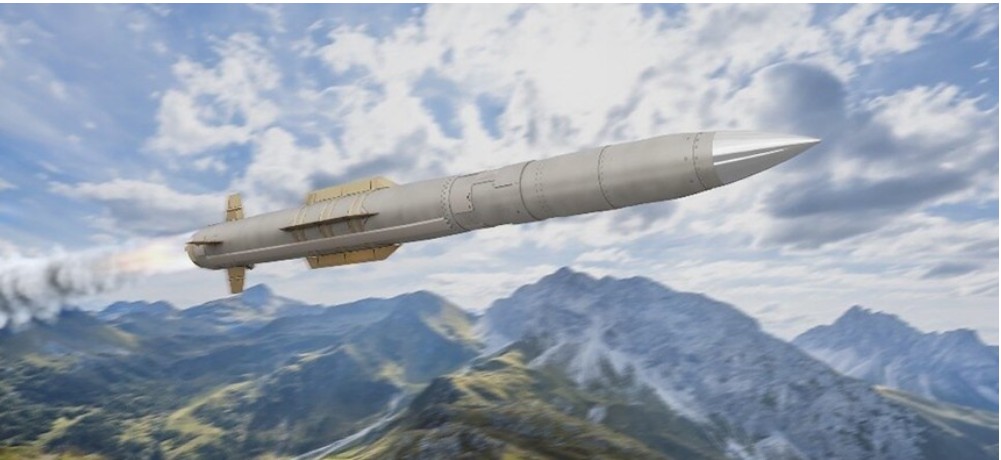
Amid global demand for Patriot interceptors, Lockheed Martin recently unveiled its most advanced interceptor, the PAC-3 Edge, which could offer improved performance against ballistic missiles and hypersonic threats.
EurAsian Times takes a deep dive into the evolution of Patriot Air Defense Systems, but before that, let’s start with the news.
PAC-3 EDGE
The new interceptor missile builds on the combat-proven PAC-3 MSE technology, which has proven its worth in multiple conflicts, including Ukraine and the Middle East.
The new PAC-3 Edge incorporates a new seeker, an upgraded control system, and a more advanced solid rocket motor developed with Northrop Grumman.
These new features will improve the missile interceptor’s range, altitude, speed, and precision.
It is part of the US Army’s Future Interceptor program, which is currently in competition.
“The Army’s decision to progress Lockheed Martin into the next stage of development affirms its confidence in Lockheed Martin’s proven Integrated Air and Missile Defense (IAMD) experience and the company’s ability to deliver an advanced, layered defense,” the company said in a statement.
Lockheed Martin will advance development and begin testing PAC-3 Edge in 2027 to prepare for rapid deployment by 2031, it added.
Patriot PAC-3 ACE. Credits Lockheed Martin.
“Lockheed Martin’s PAC-3 Edge interceptor leverages the combat-proven PAC-3 MSE, delivering even greater maneuverability, power and velocity to ensure the Army’s layered defensive architecture remains the most advanced in the world,” said Tim Cahill, Lockheed Martin Missiles and Fire Control president.
PAC-3 interceptors come in three variants: the lower-cost PAC-3 ACE, legacy PAC-3 CRI, and the prestigious PAC-3 MSE.
The company said it invested US$250 million in the Strigo Product Center to fund new, industry-leading seeker technology that increases precision and maneuverability against evolving threats.
PAC-3 Edge is designed to be integrated with existing and future Integrated Air and Missile Defense (IAMD) capabilities, including the Integrated Battle Command System (IBCS), the M903 launcher, containerized launchers, and HIMARS Flex.
The US Army’s selection of Lockheed Martin’s PAC-3 Edge program highlights the service’s efforts to improve its existing layered air defense systems to address evolving aerial threats.
While the company did not provide technical details of the new seeker technology, analysts believe that it could be a dual-mode or multimode configuration that integrates multiple sensors to better detect, track, and intercept evolving threats such as hypersonic cruise missiles, hypersonic glide vehicles (HGVs), maneuvering ballistic missiles, and the ability to distinguish real threats from decoys.
In the war in Ukraine, while the PAC-3 MSE interceptors have proved highly effective in countering ballistic missiles and aircraft, they have struggled to intercept Russia’s hypersonic missiles, such as Oreshnik, Zircon, and Kinzhal.
Furthermore, while PAC-3 MSE interceptors were highly effective against ballistic threats in the initial phase, their performance gradually declined as Russia adapted its missiles to perform increasingly complex terminal maneuvers.
According to a Financial Times report based on Ukrainian Air Force data compiled by the Center for Information Resilience, Patriot interceptors’ ballistic interception rate reached 37% in August 2025 but fell to a low of 6% in September.
This decline was linked to Russian tactical improvements, such as missiles changing trajectory and missiles capable of performing terminal maneuvers.
However, despite this drop in interception rates, Patriot batteries remain Ukraine’s only defense against Russian ballistic threats.
The new PAC-3 Edge interceptors will provide increased protection against such maneuvering missile threats and hypersonic missiles.
Notably, the unveiling of new PAC-3 Edge interceptors comes as global demand for PAC-3 interceptors has increased, and Lockheed Martin is establishing new facilities to raise its interceptor production rate.
Lockheed produced nearly 620 interceptors in 2025; however, it plans to triple Patriot interceptor production to 2000 by 2030.
Patriot PAC-3 interceptors are also included in the Pentagon’s Munitions Acceleration Council (MAC), which is targeting 12 legacy and two “emerging” munitions as part of its ambitious plan to ramp up production and ink a series of agreements with key vendors to ensure cost efficiency while maintaining production stability, according to fiscal 2027 budget documents.
Rising global demand for PAC-3 interceptors, requests from multiple countries to establish Patriot interceptor production facilities, and the unveiling of the advanced PAC-3 Edge interceptors underscore the Patriot air and missile defense system’s continued relevance more than four decades after it first became operational.
The Evolution Of Patriot Air Defense Systems
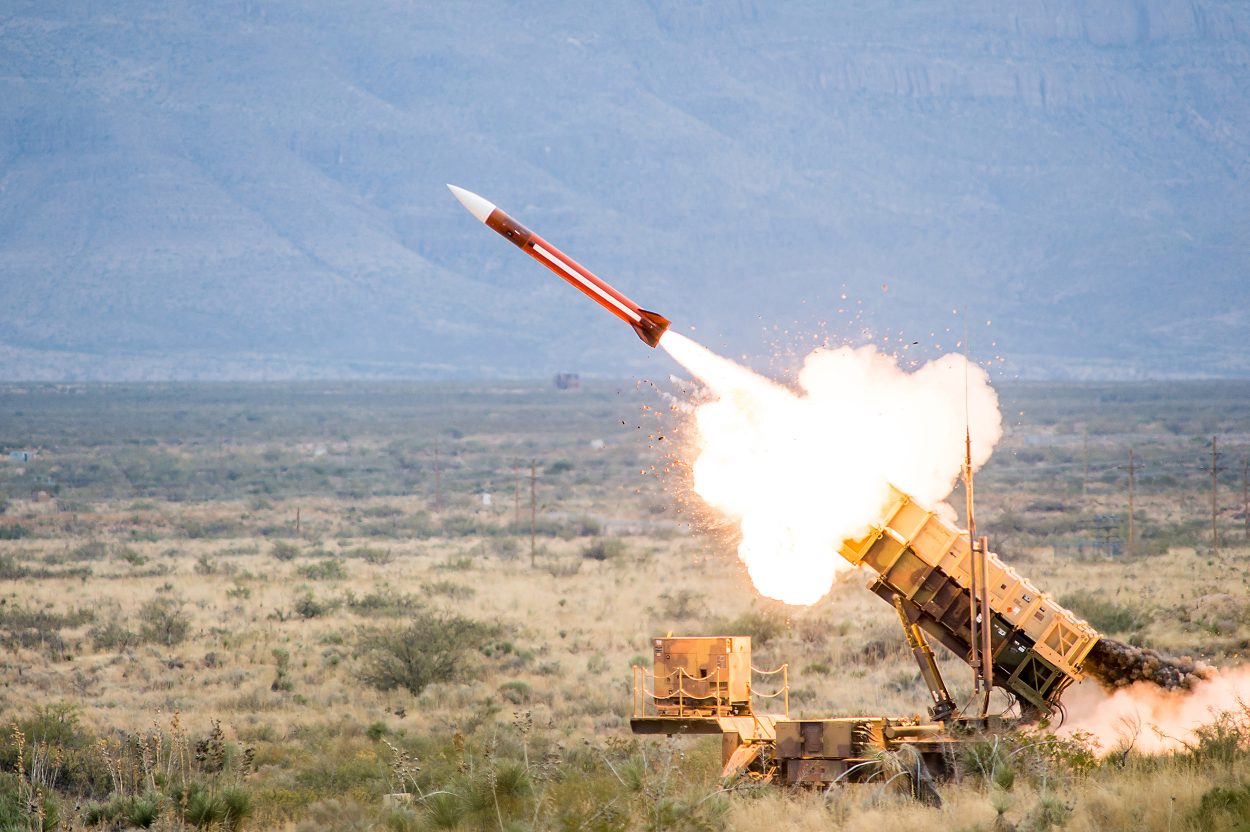
The MIM-104 Patriot is the US Army’s primary air-and-missile defense system.
Although it was initially designed as an anti-aircraft system, newer Patriot variants can engage ballistic and cruise missiles, drones, loitering munitions, and aircraft.
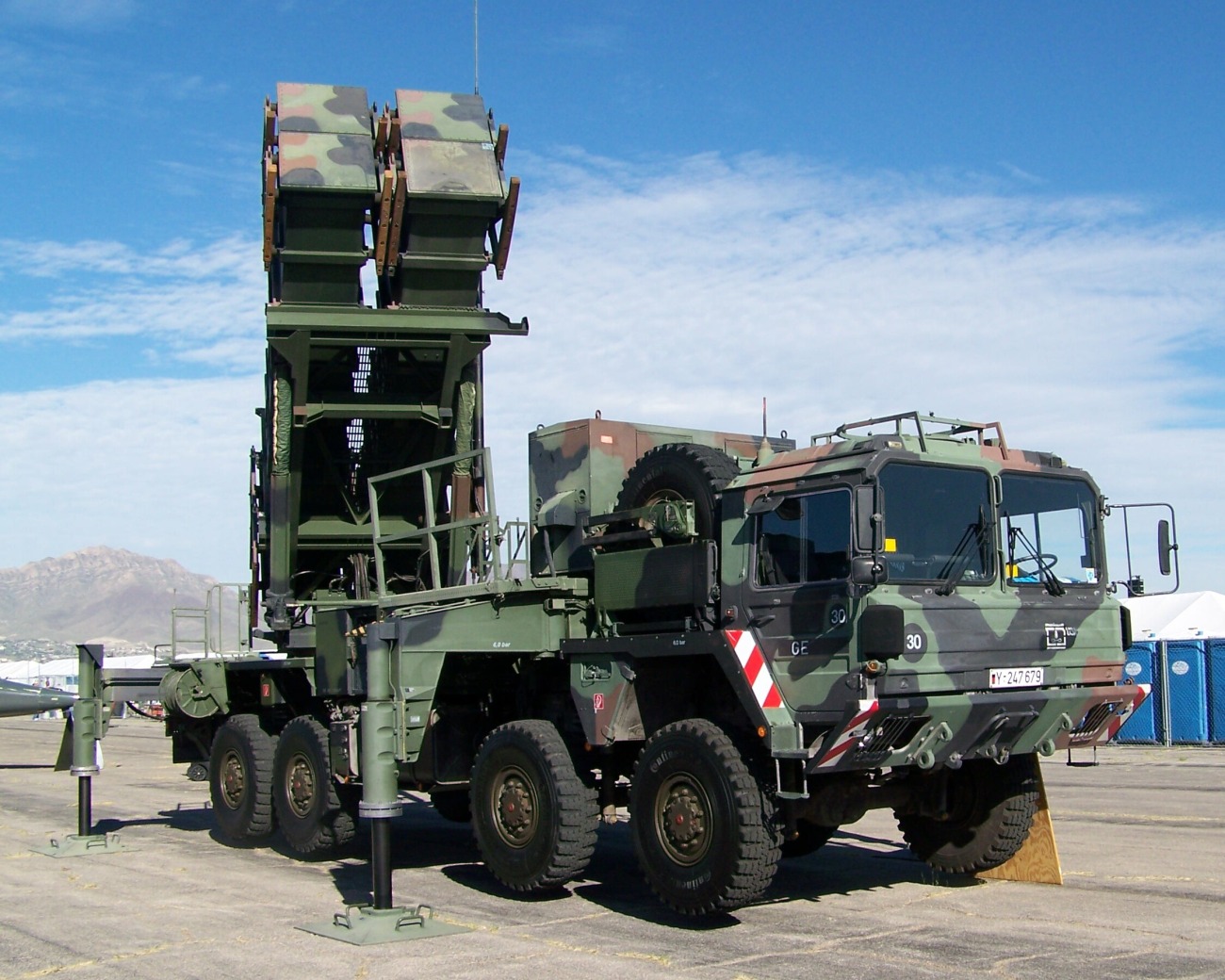
A typical Patriot battery includes a radar set, an engagement control station, power generation, other support vehicles, and several launch stations.
The US Army Missile Command first developed the Patriot concept in 1961 as the Army Air Defense System for the 1970s (AADS-70s).
The AD system was meant to be mobile and replace the static HAWK and Nike Hercules emplacements.
In 1964, the US Army renamed it Surface-to-Air Missile, Development (SAM-D).
Three years later, in 1967, the Department of Defense selected Raytheon as the prime contractor. SAM-D’s first flight test took place in November 1969.
Although Raytheon won the prime SAM-D contract in 1967, it did not build everything alone. Martin Marietta joined early as a major subcontractor to handle missile assembly, launcher vehicles, and canister production.
In 1974, the Department of Defense reoriented the SAM-D program to support a Track-Via-Missile (TVM) guidance system and a simplified concept of operations.
Patriot AD System.
The revised and re-engineered system was renamed PATRIOT (Phased Array Tracking Radar to Intercept On Target) in 1976.
Patriot entered full-rate production in September 1980, and the US Army activated its first Patriot missile battalion in May 1982.
The Army added significant upgrades to the Patriot system throughout the 1980s and 1990s.
In 1985, the Department of Defense (DoD) started efforts to add a ballistic missile defense capability to the system.
In 1986, the Army upgraded Patriot to the Patriot Advanced Capability-1 (PAC-1) standard, which included software changes that allowed it to engage tactical ballistic missiles.
The PAC-1 was deployed by 1988.
Soon, the US Army began efforts towards the PAC-2 standard, which involved modifications to the missile fuze, warhead, and guidance to engage more capable ballistic missiles like the Soviet OTR-23.
The Patriot system first saw combat service during the 1991 Gulf War, defending critical assets in Saudi Arabia, Kuwait, and Israel. The PAC-2 missiles were used to intercept Iraq’s Scud missiles.
Martin Marietta built the PAC-2 interceptors.
In 1993, the US Army added remote launch capability to Patriot systems, allowing missile launchers to be deployed over 10 km from the radar. This also more than tripled the system’s defended area.
Later, the US Army also developed the PAC-3 standard.
The most significant PAC-3 upgrade was a new interceptor with hit-to-kill technology, developed by Lockheed, which defeats targets by striking them directly rather than using a blast-fragmentation warhead.
Lockheed achieved the first-ever hit-to-kill intercept in 1984 with the Homing Overlay Experiment, using impact force alone to destroy a mock warhead outside Earth’s atmosphere. Further development and testing produced today’s PAC-3 missile, which won a 1993 competition to become the US government’s first hit-to-kill interceptor.
In 1995, Lockheed Corp merged with Martin Marietta to create one of the US’s largest defense aerospace companies, combining two key components of the Patriot program: Martin Marietta’s established Patriot infrastructure and production facilities and Lockheed’s cutting-edge hit-to-kill technology.
This newly formed mega-contractor rolled out the PAC-3 missile interceptor.
The PAC-3 standard itself included three distinct configurations, Configuration 1, 2, and 3, which improved its radar, seeker, and range.
The US declared PAC-3 Configuration 3 combat-ready in August 2002.
PAC-3 Configuration 3 had its first combat test in 2003 during Operation Iraqi Freedom.
In 2010, the US Army successfully tested an upgraded PAC-3 interceptor, the PAC-3 Missile Segment Enhancement (MSE).
According to CSIS’s Missile Threat, the PAC-3 MSE features an enlarged motor and other enhancements to nearly double the PAC-3’s range. It achieved initial operational capability in late 2016.
Patriot is a long-range, high-altitude, all-weather missile tested more than 2,500 times with U.S. Army oversight. (Image: Raytheon)
The PAC-3 also features an active Ka-band radar seeker for endgame guidance. With its lighter weight and newer propulsion system, the PAC-3 can reportedly defend an area seven times greater than the PAC-2.
Patriot currently employs a single AN/MPQ-53, AN/MPQ-65, or AN/MPQ-65A radar set to detect and engage targets. Unlike other air defense systems, the Patriot radar combines surveillance, tracking, and engagement in a single unit.
The AN/MPQ-53 was the world’s first phased-array air defense radar and was employed with legacy PAC-2 systems.
The AN/MPQ-65A is the most advanced Patriot radar; however, the US Army is currently transitioning to use the new Lower Tier Air and Missile Defense Sensor (LTAMDS) radar, which offers 360-degree coverage and significantly greater detection range.
Furthermore, while the AN/MPQ-53 and -65-series radars are passively scanned arrays, LTAMDS is an active electronically scanned array (AESA) that uses gallium nitride (GaN) power amplifiers, offering greater jamming resistance, beam agility, and power efficiency than previous systems.
360-degree coverage is essential to counter Russia’s evolving “wolf-pack tactics,” which involve launching dozens of aerial targets simultaneously, including drones and ballistic and cruise missiles, that approach from different directions and strike at once.
Only the US and Poland are procuring the LTAMDS at present. In September, the US awarded a US$1.7 billion contract to produce nine radars for the two users.
Currently, 18 countries operate the Patriot AD system. These include the Netherlands, Germany, Japan, Israel, Saudi Arabia, Kuwait, Taiwan, Greece, Spain, South Korea, the UAE, Ukraine, Qatar, Romania, Sweden, Poland, and Bahrain.
In 2023, the US allowed countries to transfer Patriot batteries to Ukraine, where they have repeatedly intercepted Russian ballistic and hypersonic missiles.
For instance, on May 16, 2023, the Ukrainian Air Force claimed it used Patriot to intercept a salvo of six Kinzhal missiles over Kyiv.
However, rising global demand for PAC-3 MSE interceptors and Russia’s adaptive missile technology, which involves terminal-phase maneuvers, have necessitated a two-pronged strategy: boosting PAC-3 interceptor production and developing more advanced interceptors.
The PAC-3 Edge will keep the Patriot AD system relevant amid evolving aerial threats.
Sumit Ahlawat has over a decade of experience in news media. He has worked with Press Trust of India, Times Now, Zee News, Economic Times, and Microsoft News. He holds a Master’s Degree in International Media and Modern History from the University of Sheffield, UK.
He can be reached at ahlawat.sumit85 (at) gmail.com
There is now a growing debate over what constitutes war and whether it should include strikes on data centers. They represent a new front in warfare, in which facilities powering the technology behind many critical industries have become targets.
As it is, the definition of a military attack seems to be changing over time.
Conventionally, it was understood to occur when tanks or fighter planes crossed a border. Then it was expanded to include the use of missiles that were fired without crossing the border but hitting a city and causing physical destruction of “vital infrastructure and death”.
Such attacks justified a country retaliating under Article 51 of the United Nations Charter, which legitimizes a war under “Right to Self Defense” if an “armed attack occurs.”
Now there is a growing school of thought that “vital infrastructure” must include any disruptive attack on data centers, whether kinetic or non-kinetic, amounting to significant loss of function. It should be treated as a use of force and trigger the affected country’s right to self-defense under Article 51, the argument goes.
Apparently, vulnerabilities in modern digital infrastructure have turned data centers into primary targets in contemporary warfare. As society becomes deeply integrated with cloud computing, artificial intelligence, and automated logistics, data centers have evolved into the nervous system of modern statecraft.
Attacks on digital infrastructure are no longer limited to cyberattacks (non-kinetic) that cause banking collapses and disrupt vital systems like power grids and hospitals by cutting off Internet access; they now include kinetic strikes on data hubs that affect nations’ military capabilities and expose financial vulnerabilities.
After all, modern defense systems rely heavily on cloud-based logistics. Data centers process satellite imagery, coordinate drone operations, run predictive maintenance algorithms for fighter jets, and host classified communication networks. Thus, taking down these nodes effectively blinds an adversary’s command structure.
This has been noticed in the recent conflicts in the Middle East and Ukraine. For instance, on September 23, Russian Geran-5 jet drones hit the Inkom Business Center in Kyiv, housing Datagroup’s data center. Four people died, and internet service for 100,000 households was down for hours.
On September 27, Kyivstar — Ukraine’s central mobile operator — and Vodafone Ukraine’s data centers were hit. Russia’s Defense Ministry justified this by saying that “Data centers were being used for the benefit of the Ukrainian military.”
Two weeks later, Ukraine returned the favor. It launched highly targeted long-range drone strikes hitting major data hubs across Russia, inflicting significant disruption on the country’s digital economy.
Between October 8 and October 14, 2026, Ukrainian forces carried out a series of “symmetrical responses” to counter earlier Russian attacks on Ukrainian internet and telecommunications assets. The strikes specifically crippled infrastructure belonging to Yandex (often called “Russia’s Google”) and Sberbank, Russia’s largest banking and technology conglomerate.
A police car is parked in front of a burning oil terminal following an air attack in Saint Petersburg on October 18, 2026, amid the ongoing Russian-Ukrainian conflict. Russia shot down dozens of Ukrainian drones near Saint Petersburg, authorities said on October 18, 2026, with an oil terminal hit and flights disrupted at one of the country’s busiest airports. (Photo by AFP)
Similarly, in February-March 2026, during US-Israeli strikes on Iran, the latter hit back not only at oil but at data centers — Google, Microsoft, and Oracle cloud infrastructure in the Gulf, particularly those located in Bahrain, Qatar, Saudi Arabia, and the UAE.
Apparently, when Amazon Web Services’ Bahrain facility suffered “physical damage to cooling infrastructure from debris”, it became the first known case of an AWS data center damaged in an interstate war.
Iranian missiles near Al Udeid Air Base damaged an Oracle Cloud data center in Doha. Microsoft also confirmed “connectivity issues” in the Qatar Central region.
The same happened to the Google data center in Dammam, Saudi Arabia, which hosts Aramco cloud.
G42 [UAE AI company backed by Microsoft] data center in Abu Dhabi was also affected, forcing it into blackout mode.
In other words, from Kyiv to Bahrain, a pattern is clearly apparent — belligerents no longer distinguish between cloud and command. Data centers that host banks and brigades are treated as brigades. They have officially transitioned from commercial tech infrastructures to critical national security assets.
As Omar Sultan Al Olama, the UAE’s Minister of State for Artificial Intelligence, Digital Economy, and Remote Work Applications, said the other day, “Unfortunately, they’re more important than bridges. They’re more important than roads. They’re more important than tunnels because our whole lives are on these devices that we’re using”.
Incidentally, the UAE is revising plans for a 5-gigawatt AI data center project following the Iranian strikes. The original plan envisioned a 10-square-mile campus in Abu Dhabi, to be built in partnership with American tech companies like Oracle, Nvidia, and Cisco. Now the data centers will likely be spread out across the UAE. Sultan Al Olama said, “ The UAE will change its data centre rules and stop promoting where they are”.
According to Kirk Cameron, founding director of the Institute for Advanced Computing at Virginia Tech, “Data centers are now on the critical path for modern digital infrastructure. The loss of key data centers could collapse economies, disrupt public and private transportation with loss of GPS, and affect government essential services for health, emergency dispatch, and power grids.”
Many agree with him when he argues that “Data centers are competitive advantages in warfare. Knocking out capabilities means potentially crippling combat operations for an adversary. It’s also a form of economic warfare and could lead to longer-term competitive challenges for the target.”
All this brings the question of whether bombing a data center constitutes an act of war. Does the definition of war need to change?
The main challenge to this question lies in what is called the “Gray Zone” of conflict, particularly in non-kinetic attacks. Unlike a missile launch, which leaves clear radar signatures and identifiable points of origin, cyber operations offer plausible deniability.
Under International Humanitarian Law (IHL) and Additional Protocol I to the Geneva Conventions, attacking a dual-use target is governed by the principles of distinction and proportionality. Here, attacking a dual-use target is legal only if the military advantage gained outweighs the civilian collateral damage.
If an attack on a data center shuts down military communications but also disables the life-support monitoring systems of dozens of regional hospitals, the strike violates proportionality. Such an operation can be classified as a war crime, reinforcing the argument that major cyber infrastructure operations carry the same legal weight and consequences as traditional warfare.
But any clear distinction in such cases is neither easy nor free from contention. For instance, when Russia attacked data centers in Ukraine, it claimed that these were being used by Ukrainian intelligence and military. However, Ukraine denied the charge.
As Kasia Klonowska, an authority on international law, says, “Due to a lack of a definition of the treaty- terms weapons, means or methods of warfare, it is unclear whether non-weaponized AI decision-support systems should be subjected to a legal review prescribed by Article 36 of the Additional Protocol I. It remains a challenge to determine exactly what should be subjected to review beyond weapons.
“You have very limited situations in which they would actually qualify as lawful targets when they’re used by the military, and even then, it’s very difficult for the attacker to know whether that’s happening or not. If they are purely processing military data, they could be legitimate targets. But many, if not most, are dual-use.”
To address the legal ambiguity surrounding digital warfare, Prof. Ben Hines has proposed what he calls a “Substantive Necessity” framework, reinterpreting international law under Article 51 of the UN Charter.
Under this framework, a non-kinetic cyber attack amounts to an armed attack when the victim state, based on clear and convincing evidence, apprehends a hostile act that has fundamentally compromised, or is imminently poised to compromise, the functioning or security of infrastructure crucial to the state’s ability to function.
The framework argues that traditional international legal thresholds for “force” and “gravity” do not inherently require physical destruction or kinetic weaponry. Under this test, taking down a country’s primary data center cluster that hosts banking, health, emergency dispatch, GPS — even without an explosion — is an armed attack. Because effects equal or exceed kinetic.
Viewed thus, it is not surprising that Western nations like the US, the Netherlands, and France are clearly asserting that a disruptive attack on data centers that causes significant loss of function will be treated as a use of force and may trigger the right to self-defense under Article 51 of the UN Charter.
In sum, as the line between the physical and digital worlds disappears, international law is adapting to treat high-consequence infrastructure attacks as equivalent to an armed attack.
Data centers are now firmly on the front lines of global conflict, where a single breach can serve as the definitive catalyst for war. The lines between civilian infrastructure and military assets are dangerously blurring.
Author and veteran journalist Prakash Nanda is Chairman of the Editorial Board of the EurAsian Times and has been commenting onpolitics, foreign policy, and strategic affairs for nearly three decades. He is a former National Fellow of the Indian Council for Historical Research and a recipient of the Seoul Peace Prize Scholarship.
China’s Global Times, a mouthpiece of the Chinese Communist Party, has once again published a propaganda editorial against India titled “India’s ‘Victory Narrative’ Will Only Hit a Wall on China-India Border.” The article was published on October 14, 2026.
One notable characteristic of Chinese commentaries and diplomats is that they use polite language in their statements but then, within the same text, suddenly shift to intimidating language and issue warnings.
They act like a “big brother,” offering suggestions, dictating terms, and adopting a dominant attitude toward other countries, which stems from their “Middle Kingdom syndrome”—a mindset rooted in a historical Sinocentric worldview that exhibits king-subject thinking and demands homage and subservience.
This pattern is also reflected in what is commonly described as “wolf warrior diplomacy,” in which Chinese diplomats adopt a more confrontational tone when their country’s interests or positions are challenged.
Similarly, Chinese diplomats may appear cool and calm at first, then abruptly use fierce language to assert dominance and make strong statements.
Beijing’s Revisionist Map Games
This article targets India because New Delhi has recently stepped up its “counter-cartography” policy, formally assigning standardized names to key locations along the India-China border.
This includes the Home Ministry’s October 2026 announcement standardizing 28 strategic features in Ladakh—specifically covering crucial Line of Actual Control (LAC) friction points like Gogra and Hot Springs, alongside peaks, passes, and glaciers.
It also follows India’s August 2026 mapping of 27 critical sites in Arunachal Pradesh, including historic flashpoints like Longju and Thag La. The Global Times article claims that by assigning these names, India “creates the self-delusion that its border claims have been settled.”
The text further asserts that “first comes an administrative announcement, followed by the names being entered on official maps, and then repeated amplification through the media.” It thus criticizes India’s approach; however, China does exactly the same through its own lawfare.
Beijing has repeatedly used map manipulation as a geopolitical tool to assert its claims—such as by releasing multiple rounds of standardized Mandarin names for locations in Arunachal Pradesh (which it calls Zangnan).
This is a typical Chinese way of doing things; China historically used these exact cartographic and administrative assertions before annexing Tibet in 1950, and it continues to use maps as an aggressive tool to project its territorial claims today.
It says that “India is playing games,” but this is exactly what China does in its dealings with India by failing to honor its agreements, including those reached in 1993 (Maintenance of Peace and Tranquility), 1996 (Confidence-Building Measures), and 2003/2005 (Political Parameters and Modalities).
If peace and tranquility have prevailed along the India-China border or LAC for an extended period, it is because India has unilaterally honored and abided by these agreements.
For instance, before 1962, China signed the Panchsheel Agreement (Five Principles of Peaceful Coexistence), under which Beijing promoted the narrative of mutual interests, mutual benefits, and peaceful relations through the slogan “Hindi-Chini Bhai-Bhai,” but then suddenly attacked India.
Similarly, in 2020, sensing India’s vulnerability when the country was battling one of its worst COVID-19 crises, China tried to grab more Indian land and attacked Indian soldiers in Galwan through deception, killing 20 Indian soldiers.
Indian and Chinese army greet each other along the Line of Actual Control (LAC) near Karakoram pass in Ladakh on October 31, 2024, on the occasion of Diwali. Chinese troops greeted Indian soldiers and exchanged sweets on October 31 at two points along their contested border to mark a major Indian festival, army sources said, a week after leaders of the Asian rivals held their first bilateral meeting in five years. (Photo by Indian Army / AFP)
Cartographic Fraud
Then it says that, in 2019, “India unilaterally amended its domestic laws, revoked relevant constitutional provisions, and announced the creation of the so-called ‘Union Territory of Ladakh,’ deliberately incorporating Chinese territory in the western sector of the China-India border into its own administrative jurisdiction.”
However, when India revoked Article 370 of its Constitution and reorganized Jammu and Kashmir, it was an internal decision of India’s sovereignty, over which no foreign country has any say. India has historical claims to this region, and it has been an integral part of India for centuries.
China cannot dictate to India when it changes names, reorganizes its territories, or makes administrative changes. China has actually occupied Aksai Chin since the 1950s, consolidating its control during the 1962 war. It has also occupied the Shaksgam Valley, which it continues to hold illegally.
It then says the China-India border has historically belonged to China and that “China possesses sovereignty over the relevant areas, including the Aksai Chin region in Northwest China’s Xinjiang Uygur Autonomous Region, and has ample historical and legal grounds for its claims.” How can China claim historical ownership when it has no historical claim to these territories? This is a complete distortion of history.
In reality, China’s administrative footprint never historically extended south of the Kunlun Mountains, and its own official records contradict its claims.
For instance, the Postal Atlas of China—officially published by the Chinese government between 1917 and 1933—as well as the 1925 Peking University Atlas, explicitly marked the international boundary along the Kunlun range, placing the entire Aksai Chin plateau completely outside of China and within India.
Furthermore, India’s legitimate administrative and historical rights were formally established under the 1842 Treaty of Chushul, signed between the Dogra Kingdom of Jammu & Kashmir and Tibet/the Qing Empire, which solidified Ladakh’s traditional frontiers.
The 1865 Johnson Line precisely mapped this boundary, and the Maharaja of Kashmir even built a military fort at Shahidulla (Xaidulla) to safeguard trade routes.
China established a presence in Aksai Chin only in the 1950s by covertly building the Xinjiang-Tibet Highway (G219) across Indian territory while New Delhi focused on peaceful diplomacy, and it eventually occupied it by force during the 1962 war.
Using Multilateral Forums as Geopolitical Tools
It then says that when Prime Minister Narendra Modi met Xi Jinping, they discussed improving ties. It then gives a warning to India, a typical Chinese way of behaving: first bullying and then giving advice.
It says that “India should exercise greater restraint on border issues of this kind rather than provoke tensions.” It further says that “some Indian politicians are now keen to stage political shows over the border issue to divert attention from domestic problems and pander to nationalist sentiment.”
It thus links India’s renaming of places with an attempt to divert attention from domestic issues. However, this description fits China’s all-weather ally, Pakistan, which always seeks to externalize its internal threats toward its neighbors, particularly India and Afghanistan.
In stark contrast, India has robust political stability under a strong parliamentary mandate, a functioning electoral democracy, and the title of the world’s fastest-growing major economy, with resilient GDP growth of around 6.5% to 7% despite global slowdowns. It faces no major internal crisis that would force it to externalize its problems.
It then says that “China and India are important neighbors, major developing countries,” and that their relationship extends beyond bilateral ties to global forums, where they must cooperate through platforms such as BRICS and the United Nations to address global challenges and uphold international fairness and justice.
It says this as if India is the irritant preventing China from cooperating with it. However, China uses these forums to its advantage and sometimes directly against India. In these global forums, Beijing consistently blocks India’s rightful interests and actively seeks to constrain India’s rise.
For instance, at the UNSC, China repeatedly uses its veto to block India’s permanent seat and places technical holds to shield Pakistan-based terrorists from global sanctions. Furthermore, Beijing single-handedly blocks India’s entry into the Nuclear Suppliers Group (NSG) while using BRICS to push its own geoeconomic agendas that violate Indian sovereignty.
Then, in typical Chinese style, it concludes with another warning: “We urge India to act in the broader interests of bilateral relations, exercise prudence in both words and actions on the boundary issue, and follow the important understandings reached by the two countries’ leaders.”
Ultimately, this Global Times article stands as a textbook example of Chinese doublespeak and strategic hypocrisy. It attempts to lecture India on restraint and respect for agreements while China itself has a long, documented history of violating bilateral treaties, executing covert land-grabs, and aggressively weaponizing cartography against its neighbors.
By trying to portray India’s sovereign, internal administrative decisions as “political shows” or “provocations,” Beijing is merely projecting its own anxieties onto New Delhi. India’s robust economy, stable democracy, and firm counter-cartography policy prove that it will no longer remain passive in the face of China’s “salami-slicing” tactics and lawfare.
If China truly wants “peace and tranquility” on the border, it must shed its outdated Middle Kingdom syndrome, look at India as an equal, and stop using global forums and state media to launch malicious propaganda against Indian sovereignty,
THIS IS AN OPINION ARTICLE. VIEWS PERSONAL OF THE AUTHOR
Imran Khurshid is an Associate Research Fellow at the International Center for Peace Studies (ICPS), New Delhi. He specializes in India-US relations, Indo-Pacific studies, and South Asian security issues.
Connect with the author at: khurshidimran (at) gmail.com
The Surface Laptop Ultra is a true MacBook Pro competitor for Windows, and Microsoft has never been so close to dethroning Apple—if only it weren't for the lack of battery life.
A top performer in both dark rooms and in bright sunshine, the AWOL Vision Aetherion Max RGB Laser UST Projector gives movie theaters a run for their money.
If you loved the cowboy machismo of Yellowstone, you'll love its continuation, Paramount's Dutton Ranch. The show follows fan-favorite Yellowstone characters Beth Dutton and Rip Wheeler, a married couple who leave Montana behind for what they hope will be a quiet ranch in Texas. What they find is anything but quiet.
The pair encounter the Jacksons, the most powerful family in Rio Paloma, and watch as family matriarch Beulah Jackson uses her clan's money to cultivate political influence by financing campaigns for local officials. In one episode, Jackson reminds the newly elected Sheriff Handy Wade what she expects in return for her donation. "The election contribution I gave you was not" a "small thing," she says. In another episode, one of the Jacksons sits in the sheriff's chair, and when asked to leave, responds, "Don't forget who paid for it."
Dutton Ranch reminds us that corporatism happens not just in Washington, but in every layer of government—county buildings, zoning boards, mayors' offices, and, of course, sheriff's departments.

 Login