❌

Reading view

Hadjipantela’s EU budget plans passed by EU parliament

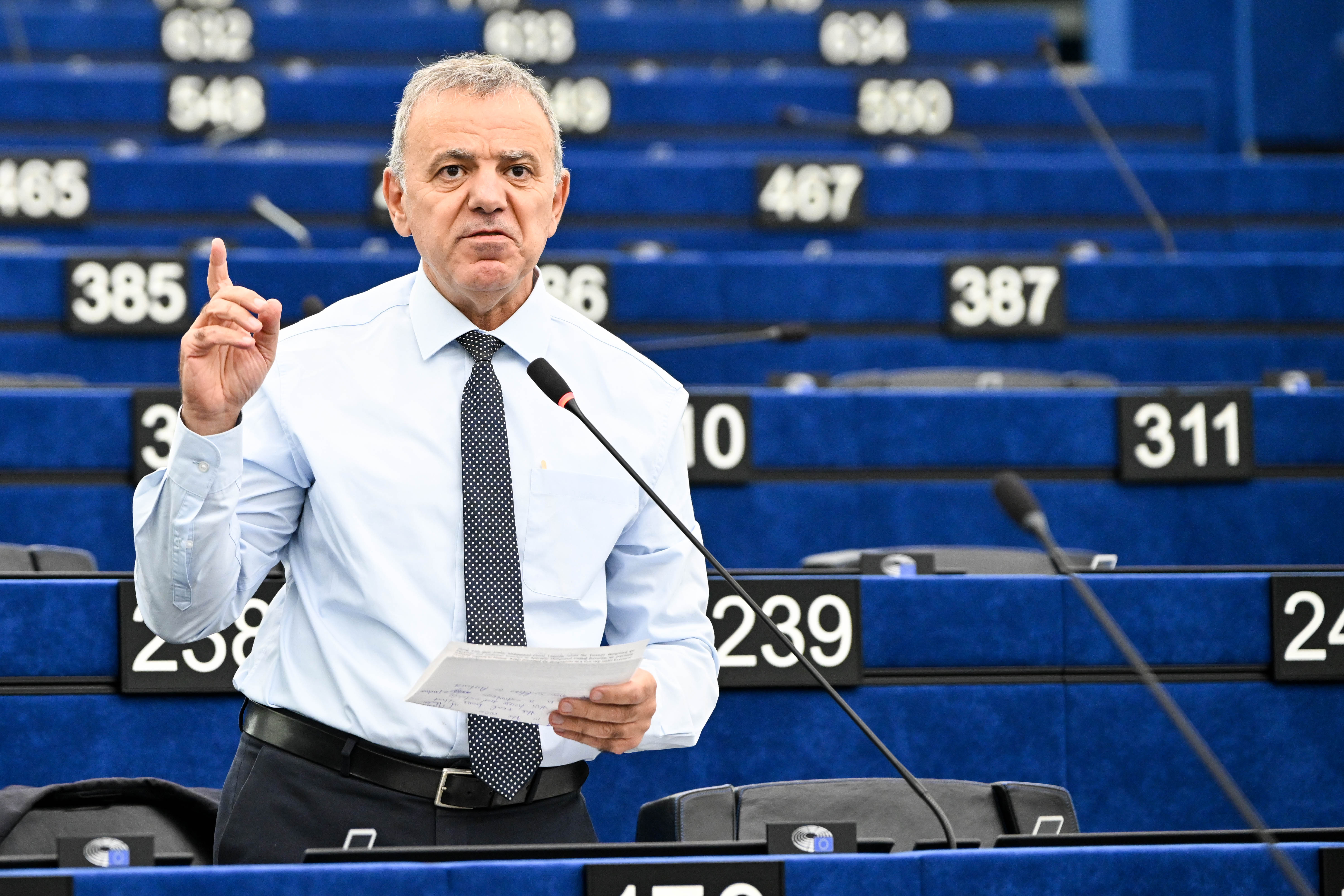
The European Parliament on Wednesday voted to approve the proposal for the European Union’s budget for next year put forward by Cypriot MEP Michalis Hadjipantela, of Disy, and his Latvian co-rapporteur Nils Usakovs.

Their joint proposal passed by 400 votes to 189, with 84 abstentions. Of the Cypriots, Hadjipantela voted in favour of his own proposal, as did fellow Disy MEP Loucas Fourlas, Diko’s Costas Mavrides, and Direct Democracy Cyprus leader Fidias Panayiotou.

Akel’s Giorgos Georgiou voted against the proposal, while Elam’s Geadis Geadi abstained.

The proposed budget foresees that the EU will make €194 billion worth of commitments and €203.3bn worth of actual payments over the course of the year, with Hadjipantela and Usakovs having reversed all the cuts which had been made to it by the Council of the EU when it agreed its own position in July.

Additionally, the committee’s position includes more spending not only than the Council’s, but also than the European Commission’s position, which had been published in June, and from which the Council had made its cuts.

This is because the committee had voted to approve €1.17bn of extra spending next year compared to the commission’s position, including €260.5 million for the Connecting Europe facility, the EU’s funding instrument for infrastructure investment, and the instrument through which the EU offered grants for the Great Sea Interconnector.

Other increases include an extra €85m for the European agriculture guarantee fund, through which the EU pays farmers directly, and a €20m increase for support for young farmers.

Additionally, increases in funding amounting to €140m have been granted for the EU’s neighbourhood policy, through which the EU offers funding and partnerships for countries in eastern Europe and north Africa.

‘Efficiency cannot simply mean making cuts’

Hadjipantela on Tuesday said of his plans that “at a time when the European Union faces growing security challenges, we must ensure that our institutions possess the necessary means to carry out their mission effectively and independently.”

“Let me be clear: budgetary discipline is non-negotiable. European taxpayers expect us to manage public funds responsibly and to remain efficient, while avoiding unnecessary expenditure,” he said.

On this front, he said that “all institutions must identify opportunities for savings and improve the way they operate”, and that the European Parliament itself “is called upon to continue improving how it manages and spends its budget”.

However, he stressed, “efficiency cannot simply mean making cuts without regard for the responsibilities which our institutions are required to fulfil.”

“We must avoid a situation where cuts create operational problems or, worse still, lead to higher costs in the future. The goal is to strike the right balance,” he said.

He later said that the EU’s various institutions “have already made significant efforts to improve their efficiency and save resources”, and that “these efforts must continue, and should be accompanied by a realistic assessment of the tasks and obligations incumbent upon each institution.”

With the parliament now having approved Hadjipantela and Usakovs’ proposal, the “conciliation committee” of the parliament and the Council will convene on November 3 with the aim of reaching a compromise between the two institutions by November 16.

Should a provisional agreement be reached by that date, the joint text will then be voted on both at the Council and at the parliament for final approval.

  •  

Cypriots stress energy as MEPs discuss Mediterranean pact

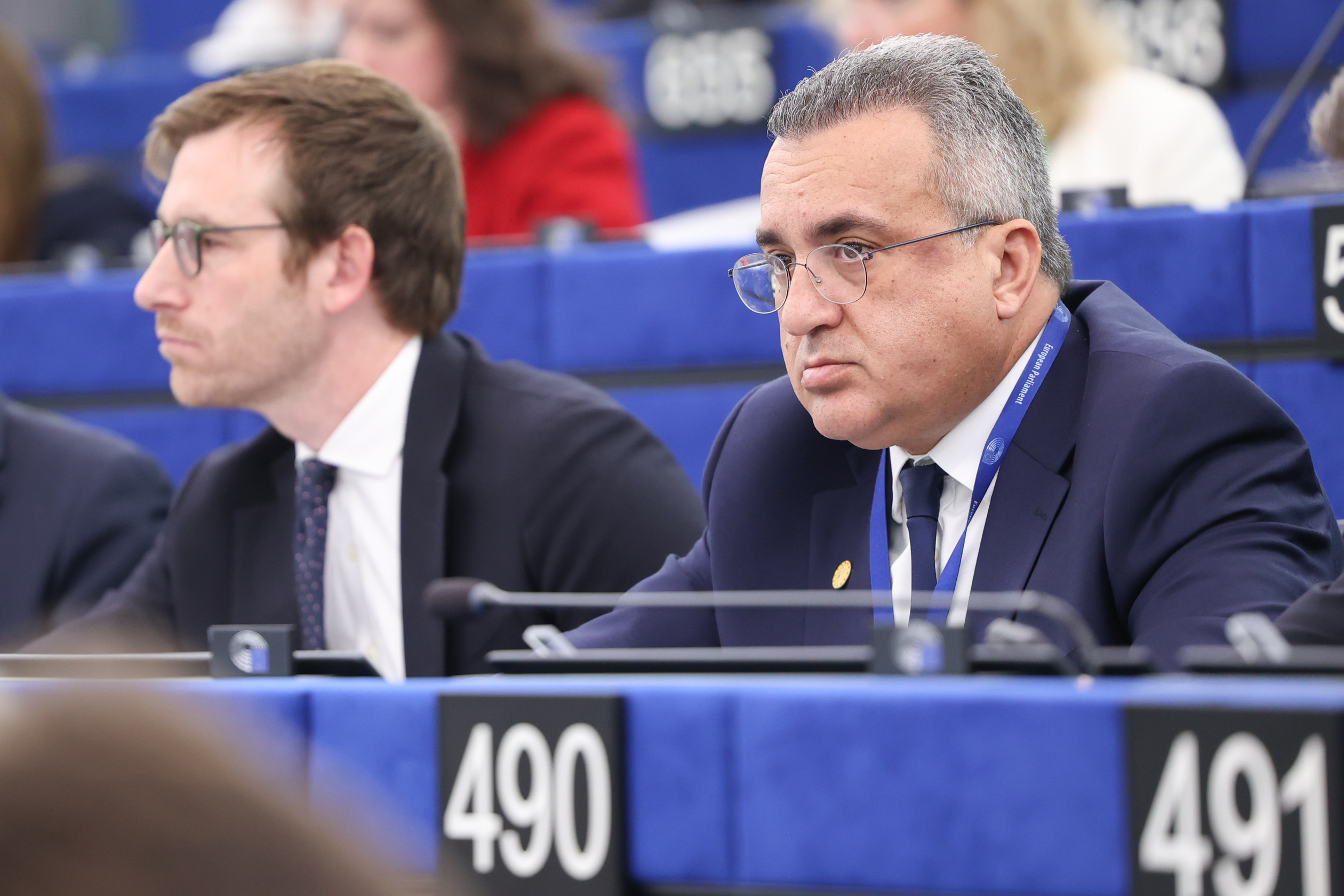
Cypriot members of the European Parliament on Tuesday evening stressed the importance of building up the Mediterranean region’s energy sector as the Strasbourg plenary session discussed the parliament’s latest motion regarding the European Union’s pact for the Mediterranean.

The resolution, which will be voted upon on Wednesday, sets out the European Parliament’s position on the pact and relations between the EU and the Mediterranean region, and Diko’s Costas Mavrides was keen to stress that the EU “has the potential” to “lead the entire Mediterranean toward stability and prosperity” through its energy sector.

“The common rules for the Mediterranean are, naturally, those of international law, specifically including UN conventions regarding the law of the sea. Institutions and infrastructure already exist … such as the EastMed gas forum, the European project of common interest the Great Sea Interconnector, and the EastMed gas pipeline,” he said.

On this front, he said that the Republic of Cyprus has “consistently been playing a leading role”, but that “the neo-Ottoman regime in Turkey remains the transgressor and the expansionist”.

As such, he sarcastically asked European foreign policy chief Kaja Kallas, who was present for proceedings, whether she is “rewarding this transgressor and expansionist”, or whether she is “bestowing gifts upon it”.

Geadi highlights resolution’s GSI amendment

Elam’s Geadis Geadi, meanwhile, called for a new pact which “must serve as an essential tool for cooperation, focusing on energy security, electrical interconnections, addressing illegal migration and human smuggling, and combating terrorism and hybrid threats”.

“However, cooperation in the Mediterranean must be grounded in international law, rather than in unilateral claims or provocations,” he said.

At this point, he offered his thanks to “colleagues from across the political spectrum” who supported an amendment to the motion which, he said, “underscores the importance of European projects of common interest, such as the Great Sea Interconnector and the EastMed pipeline”.

He added that the amendment also “simultaneously condemned Turkish provocations which hinder their implementation”.

Then, he, too, offered a shot at Kallas, saying that “the Mediterranean cannot be allowed to fall victim to Turkish blackmail directed against European interests, and Ms Kallas, it is your responsibility to move from words to action”.

Two amendments on Cyprus to be tabled on Wednesday

The amendment to which he was referring is his own, which was co-signed by fellow Cypriot MEP Fidias Panayiotou, as well as high-profile right-wing Greek MEP Afroditi Latinopoulou, among others.

It states that the parliament “underlines the importance of EU projects of common interest, including the Great Sea Interconnector and the EastMed pipeline, for the EU’s energy security and autonomy and the diversification of its energy supplies”.

Additionally, it states that it “condemns Turkey’s interference in energy infrastructure projects in the eastern Mediterranean and calls for these projects to be able to proceed without obstruction”.

The amendment was one of two to be tabled which mention Cyprus, with Latinopoulou having tabled her own amendment, which was co-signed by Geadi.

It states that “Turkey’s ongoing provocations against Greece and Cyprus, including repeated violations of their sovereign rights in the Aegean and the eastern Mediterranean, its continued threat of a casus belli against Greece, the so-called Blue Homeland doctrine, and the continued occupation of part of the territory of an EU member state, fundamentally undermine regional stability and any credible Euro-Mediterranean cooperation”.

Georgiou calls for ‘different approach’ to Mediterranean

Akel’s Giorgos Georgiou, meanwhile, took a different angle in Tuesday’s debate, saying that “the Mediterranean is a region of immense potential, yet one marked by profound contradictions, wars, inequalities, the plight of refugees, and environmental threats”.

“A pact for the Mediterranean could represent a genuine opportunity for peace, cooperation, and shared prosperity, but not if it is treated merely as a tool to expand the European Union’s geopolitical influence, nor if security, militarisation, and the control of migration are prioritised over the needs of people,” he said.

He said that the European Parliament’s “The Left” grouping, on whose behalf he was speaking, has “advocated for a different approach … one centred on people, social justice, labour rights, and environmental approach”.

This approach, he said, “ensures the meaningful participation of societies, is backed by adequate funding, and respects both state sovereignty and international law”, before he pivoted to the matter of international politics.

“We cannot invoke international law while simultaneously accepting that it be selectively applied, as is the case regarding Cyprus and Palestine. The Mediterranean does not need new geopolitical rivalries, it needs solidarity, cooperation, dialogue, and peace. This is the Mediterranean we must strive to build,” he said.

  •  
❌