The United States has imposed a new round of sanctions targeting a law firm, shipping agents and nine vessels accused of helping Iran move oil and other commodities through international...
By Julian Lee (Bloomberg) — Oil shipments from the Middle East are showing little sign of buckling in the face of Iran’s more frequent and damaging attacks on merchant ships in the...
The cost of shipping crude oil from the Middle East Gulf to Asia has surged to more than $37 per barrel, over five times prewar levels, as an increasingly complex...
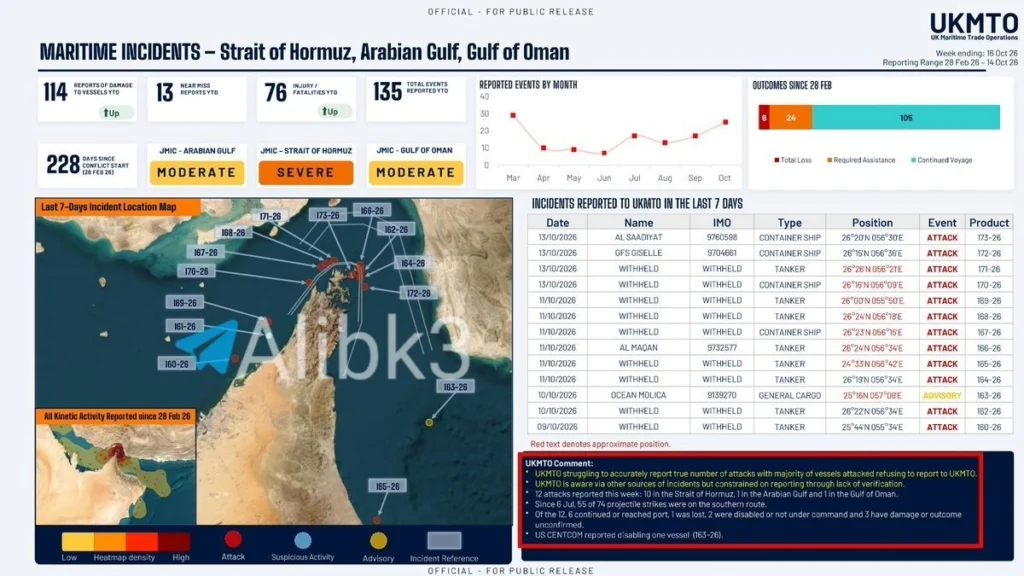
Two more tankers have been struck by unidentified projectiles in separate incidents near the Strait of Hormuz and in the northern Persian Gulf, adding to a growing series of attacks...
President Trump’s approval ratings have hit new lows shortly before this year’s midterms, according to fresh polls from The New York Times/Siena University and CNN. In the Times/Siena poll, 36 percent of respondents said they either “strongly approve” or “somewhat approve” of Trump’s job performance, while another 59 percent said they either “somewhat disapprove” or…
President Trump’s approval ratings have hit new lows shortly before this year’s midterms, according to fresh polls from The New York Times/Siena University and CNN. In the Times/Siena poll, 36 percent of respondents said they either “strongly approve” or “somewhat approve” of Trump’s job performance, while another 59 percent said they either “somewhat disapprove” or…
Diplomatic correspondent Lazar Berman on the prime minister's failure to clamp down on extremist settler violence in the West Bank and the dangers of indecisive military operations
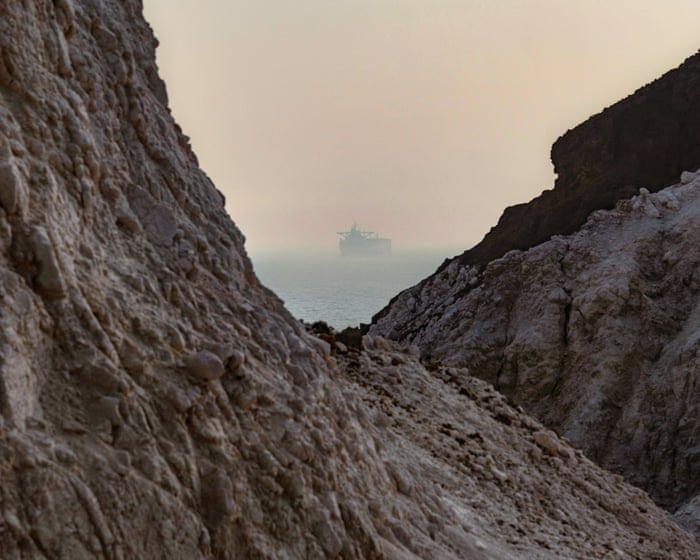
Despite US-Israeli airstrikes and Tehran’s attacks on shipping, the waterway still has to provide a lifeline for those that live and work there
Capt Farouq turns the wheel as he watches the ferry terminal of Bandar Abbas grow smaller, its bright lights flickering in the distance.
In front of him, the navigation radar beeps periodically, its green and pink lights glowing in the darkness. The ferry, today at about half capacity with roughly 100 passengers, turns and heads into the darkness of the strait of Hormuz.
President Donald Trump said Tuesday that the United States must decide whether to secure victory over Iran the “nice way or the not nice way,” as his administration weighs further military action to prevent Tehran from rebuilding its nuclear weapons capabilities.
Secretary of State Marco Rubio accused Iran of employing “Nazi U-boat tactics” against commercial shipping in the Strait of Hormuz, warning that reaching an agreement with Tehran remains difficult because its leadership is controlled by “radical Shia clerics.”
PM claims ending 'terrorist' Islamic Republic will bring peace with Lebanon; Tehran rules out talks with Washington until its demands met; Israeli fighter jets said to fly toward Iran in drill
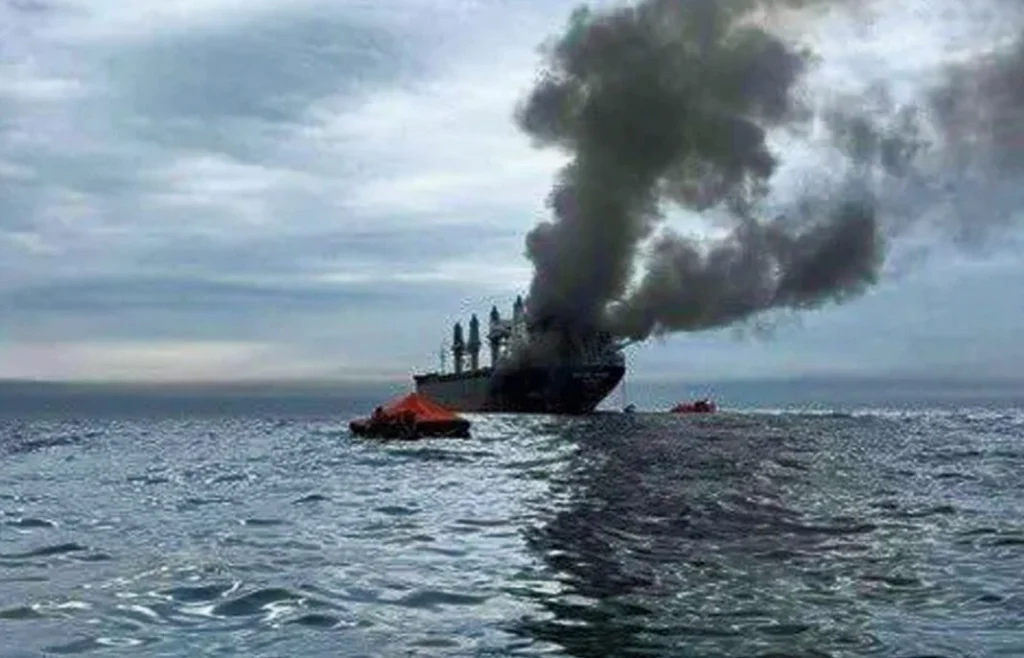
Iran’s Revolutionary Guards claimed Tuesday that a supertanker caught fire after striking a naval mine south of the Strait of Hormuz, adding to a series of similar claims that have...
Iranian attacks in the Persian Gulf are striking more ships and causing more severe damage than earlier in the conflict, bringing fresh risks to energy flows from the region.
Talks also hampered by deep distrust between the two nations as threat of renewed attacks looms; 2 tankers said to go up in flames after hitting mines in Hormuz
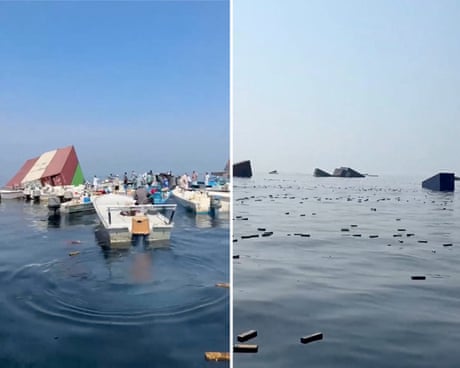
At least 15 vessels struck in waterway in past 10 days, with rumours that they were carrying valuable goods
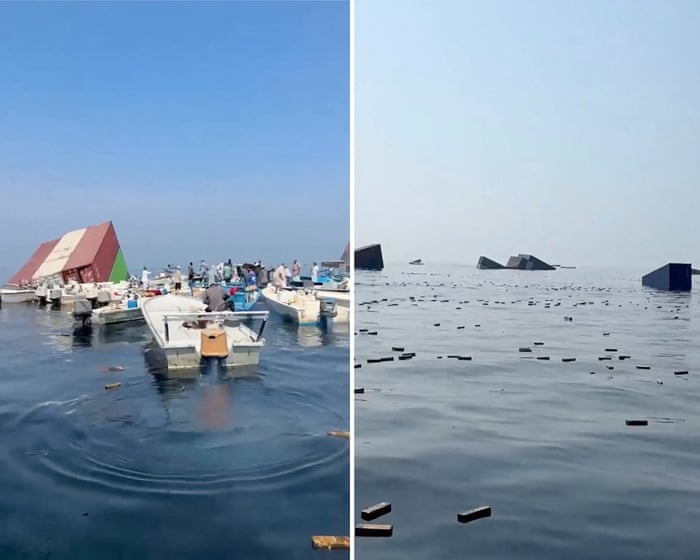
People have been scouring the strait of Hormuz for spilt cargo after Iran attacked at least 15 container ships passing through the crucial waterway in the past 10 days.
Some ships have been hit by drones, others by mines. On Sunday, a ship was struck by a rocket-propelled grenade launched from a small boat 75 miles (120km) north-east of the Saudi port of Jubail.
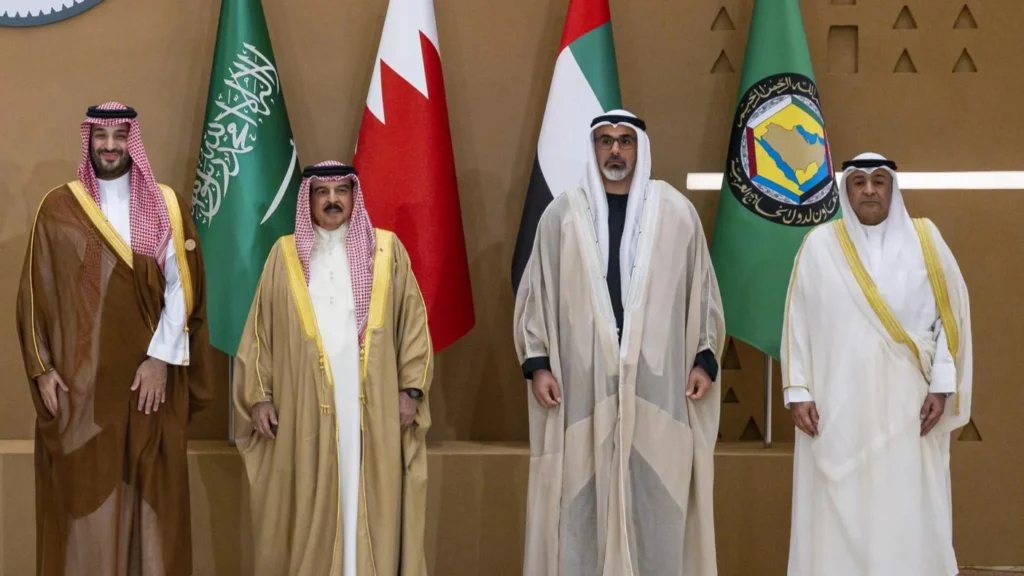
The Gulf Cooperation Council (GCC) urged the United States and Iran on Monday to resume dialogue to overcome their bilateral crisis and called for restoring security and freedom of navigation in the Strait of Hormuz, during its 168th Ministerial Council session in Manama, Bahrain.
The foreign ministers also demanded that GCC member states participate in any negotiation or agreement that could affect their security and interests.
According to the final resolution, the ministers highlighted the need to address pending issues related to Iran’s nuclear program, missiles, drones and Tehran’s support for allied groups, while calling for respect for state sovereignty and non-interference in internal affairs.
The statement comes amid the confrontation between Washington and Tehran that began on February 28, and the stagnation of diplomatic efforts due to differences over Iran’s nuclear program, U.S. sanctions and maritime traffic through the Strait of Hormuz. In that context, Iranian Foreign Minister Abbas Araqchi reiterated Iran’s willingness to reopen the maritime route within a week, provided Washington accepts Tehran’s conditions, including lifting the blockade on Iranian ports and sanctions on its oil exports.
BREAKING: Iran announces an oil tanker has hit a naval mine while exiting the Strait of Hormuz through the US-backed southern Omani corridor, with a massive fire in the engine room. pic.twitter.com/kzMnoJr4Q0
On navigation, the GCC ministers called for the situation in Hormuz to return to the conditions existing before February 28, in accordance with international law, the sovereignty of coastal states and the rights of affected countries. They stressed the importance of guaranteeing maritime transit through the Strait of Hormuz, Bab el-Mandeb and the Red Sea, and warned against closing those routes, obstructing traffic, attacking merchant ships and crews, laying mines and imposing illegal fees or restrictions on passage. They also rejected making navigation subject to prior authorizations or imposed routes in contradiction with the 1982 UN Convention on the Law of the Sea and customary international law.
Marco Rubio on Iran:
They chose to take the straits hostage. They would have done it anyway.
Imagine if Iran had a nuclear weapon.
At that point, they could say, "And by the way, we own the Strait of Hormuz, and you guys can't do anything about it because we won't just hit… pic.twitter.com/OUgeE88qon
The meeting was chaired by Bahrain’s Foreign Minister Abdullatif Al-Zayani, with the attendance of his counterparts from member countries and the organization’s secretary-general.
As Netanyahu and Trump threaten Tehran, analysts say that an escalation is inevitable without a diplomatic settlement, possibly even before imminent Israeli and US elections
DUBAI, Oct 18 (Reuters) – Iran’s offer to the United States to reopen the Strait of Hormuz within seven days is still on the table, Foreign Minister Abbas Araqchi told Iranian media...
On Saturday, Iranian Revolutionary Guard Corps Navy reported another supertanker caught fire in the Strait of Hormuz after striking a naval mine. The announcement came hours after authorities reported a similar incident in this strategic maritime passage.
“This morning, a second supertanker, which was navigating in an irregular manner, caught fire violently after colliding with a naval mine,” the military force stated in a release circulated by the Tasnim news agency.
According to Iranian authorities, the vessel was carrying more than two million barrels of crude oil; a powerful explosion occurred in the engine room following the collision, leaving the ship immobilized. The Revolutionary Guard did not identify the tanker’s flag.
The organization claimed that the ship attempted to traverse an unauthorized route after the U.S. military, through deception, induced it to turn off its positioning and radar systems. There is no response from Washington included in the available information regarding these claims.
Earlier in the day, Iran had reported a fire on another crude-laden supertanker—also following a collision with a naval mine—while it was navigating with its navigation systems switched off. With this latest incident, Iranian authorities have reported at least six collisions involving vessels and naval mines in and around the Strait of Hormuz over the past week.
The Revolutionary Guard reiterated that the Strait of Hormuz is closed, warning that vessels failing to comply with its navigation rules risk striking naval mines and catching fire. This statement comes as the United States attempts to re-establish maritime transit along a route near Oman.
The Strait of Hormuz is one of the world’s most important energy chokepoints, and any disruption to traffic there can ripple through global oil markets.
A fresh wave of drone attacks on commercial vessels in the Black Sea, an alternative shipping route to the disrupted Strait of Hormuz, is deepening insecurity along the EU’s eastern flank and compounding pressure on a stretched global shipping network.https://t.co/uE3eUcAjWf

 Login