 Login

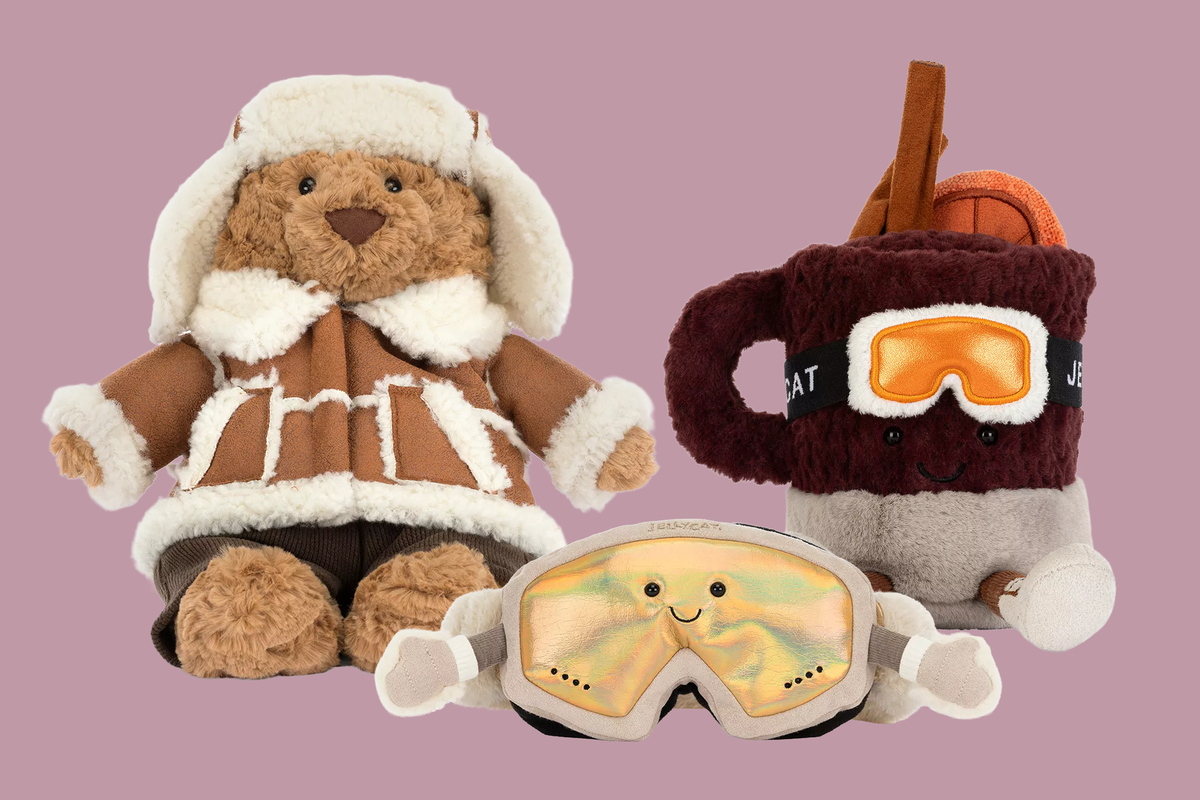
Jellycat’s Christmas collection features a mulled wine wearing ski goggles
There’s also a pinecone wreath, ski goggles and festive animals
© The Independent

There’s also a pinecone wreath, ski goggles and festive animals
© The Independent
StockPlanets/Getty Images
As soon as children learn to follow instructions, we start teaching them obedience. I know that's what I did with my kids.
I asked them to share their things, take turns, and compromise even when they're not always ready to do so willingly. I pushed them to cooperate not only because I felt it was the right thing to do, but because I wanted to keep the peace and be seen as a good parent.
Sadly, it seems society only sees agreeable, generous children as good ones, so parents raise them with a give-in mindset. I followed that path until I realized just how my actions were shaping my children's personalities.
Now I am strongly focused on improving myself while developing a parenting approach tailored to what works best for my children.
At some point, I realized that constantly pushing my children to say yes to everything, acting like good children are meant to, is affecting their personal boundaries.
When my children were not allowed to say no, I noticed they felt uncomfortable, frustrated, and even angry. My older son had no interest in his weekend archery class, yet I kept forcing him to attend. Every Saturday morning became a struggle, as I spent a lot of time convincing him to go. Within a few weeks, I realized that instead of building discipline or a skill, it was creating unnecessary stress for both of us. So I let him opt out.
Since then, I make it a point to ask my children before enrolling them in extracurricular activities, so they spend their time doing things they genuinely enjoy rather than ticking boxes for me.
I also noticed that my children were happy to share snacks from their cabinet with visiting friends, but became upset when someone opened it without asking. I taught them that there is nothing wrong with saying no when someone crosses a boundary or takes something that belongs to them without their permission.
Courtesy of Ariba Mobin.
Setting physical boundaries was another challenge. When relatives and friends would lovingly ask my children for a hug or a kiss on the cheek, I could see them becoming uncomfortable. I could see that they felt obliged to agree, not wanting to be impolite. Without questioning anyone's good intentions, I now let my children decline physical affection when they are uncomfortable. I simply remind them that they can respond with a high-five, a wave, or a smile instead. It helps them respect others' kindness without feeling they have to give up their own boundaries.
I have been told I am spoiling my kids by letting them have their say. But because my children know their voice matters, I have watched them handle peer pressure with remarkable maturity.
Recently, when my son's friends urged him to climb a high wall and jump off it to retrieve a lost ball, he confidently refused. They began teasing him, but he later told me he stayed calm and simply replied that he wasn't going to risk a fracture for a ball. Standing up to peer pressure is hard, but because he knew he could set a boundary, it made things easier.
This practice starts at home, even with me. I now allow my children to respectfully say no to low-stakes matters involving personal preferences. Like it's fine if they choose to stay behind with their grandmother rather than attending an outing they won't enjoy. As their parent, I want to teach them that respectful disagreement is acceptable.
Whenever one of my children respectfully says no to something, I make it a point to validate them, reinforcing that their boundaries matter.
Of course, setting boundaries isn't a free pass for entitlement. It doesn't mean being extra picky about eating or saying no to their assigned homework and household chores. They know that while they are developing these healthy boundaries, I still expect them to demonstrate basic manners.
I want them to be confident individuals who show genuine kindness, but no one should be allowed to exploit it. They should be able to resist unhealthy pressure and hold firm even when saying no feels uncomfortable. I hope that this helps them live a life built with courage, clarity, and true self-worth.
FatCamera/Getty Images
Whenever I schedule an appointment during the school day, I feel guilty.
I ask for their latest available appointment. If that doesn't work, I pull up the school calendar. Then I start doing the ridiculous parent math: How long is the drive? What class will my child miss? Can I get them back before the final bell? Is there some magical way to make a 10:30 appointment happen without blowing up half the school day? Usually, there isn't. So I take the appointment.
I'm a mother in rural North Carolina. Healthcare providers aren't always five minutes down the road, and appointments that fit perfectly between school dismissal and dinner aren't exactly falling from the sky. Sometimes the appointment you need is at 10:30 a.m. on a Tuesday. And sometimes you take it. I still feel guilty about it almost every time.
I want my child in school. Of course I do. I know how quickly one missed class can turn into a missing assignment, which then becomes another assignment they don't understand because they missed the first one. But I also have to take care of my child. Sometimes those two responsibilities bump right into each other. And that's probably why perfect-attendance awards have always bothered me.
I understand why schools care about attendance. Kids need to be in classrooms. They need instruction, routine, relationships with teachers and classmates, and all the little pieces of school that are hard to recreate at home. When a child is missing a lot of school, I absolutely think families should be supported in figuring out why and helping that child get back into a routine.
But perfect attendance is something different. An unbroken attendance record isn't necessarily a measure of how hard a child tried. Kids don't choose when they get the flu. They don't control when the specialist finally has an opening. They can't give their parents paid time off, fix the car when it won't start, make the school bus come down a road it doesn't serve, or move a doctor's office 45 minutes closer to home.
The certificate may have a child's name printed on it, but there's a whole lot of family circumstance behind that streak. I work for myself, which gives me more flexibility than many parents have. I can move things around when an appointment pops up. That doesn't mean the lost work hours don't matter, but I can usually make it happen.
A parent working an hourly job may be making a completely different calculation. Can I afford to lose three hours of pay? Will my boss be irritated? How many times have I already had to leave early this year?
And that's before we even get into transportation, housing instability, access to healthcare, chronic illness, or any of the other things families may be dealing with that nobody sees when the certificates get handed out. Those circumstances matter. They just aren't evidence that one child tried harder than another.
As parents, we already have to make enough judgment calls when our kids are sick. Is this a stay-home sick or a send-them-and-see sick? Are they actually exhausted or just really, really not interested in going to math?
We're told attendance matters. And it does. We're also told to keep our kids home when they're contagious because sending them to school sick exposes others to illness. Both things can be true.
Then we turn around and give an award for never missing a day. That's where I get stuck. One fever in October can knock a child out of the running for an award handed out in June.
I don't want to hesitate before keeping my sick child home because some part of my brain is thinking about an attendance record. And I definitely don't want my child learning that dragging yourself through school when you feel awful is proof that you're more dedicated.
Sometimes staying home is the responsible choice. Sometimes missing school for an appointment is the responsible choice. And sometimes the impressive part isn't never missing school at all, it's coming back.
I'm not suggesting schools stop caring whether kids come to school. Chronic absenteeism is a real problem, and families dealing with it may need more support, not less. But perfection doesn't have to be the prize.
Recognize the kid whose attendance improved from one grading period to the next. Celebrate shorter milestones. Acknowledge the student who had a rough stretch and worked their way back into a routine.
Despite my views, I know I'll keep doing the school-day appointment math. I'll keep asking for the latest opening. I'll keep checking the calendar. I'll keep trying to minimize what my child misses and help them catch up when missing school can't be avoided. And I'll probably still feel a little guilty every time.
My child may never earn a perfect-attendance award. I'm fine with that. I'd much rather they learn that taking care of themselves is responsible, staying home when they're contagious is considerate, and showing up again after a hard stretch is something worth being proud of.
Nelson Diaz, NylaGray Photography
Over years of evaluating children for learning disorders, Dr. Katie S. Davis noticed an interesting phenomenon: Some parents seemed visibly disappointed when she told them their kids didn't meet the criteria for ADHD or autism.
"I found that those conversations can be more difficult to have than with a parent whose kid is really disabled and whose needs are very high," Davis, a clinical neuropsychologist and author of "Actually, You're Fine," told Business Insider.
Though she would try to reassure those parents that their concerns about their children's behavior were valid and worth addressing even without a formal diagnosis, "it's not as tangible or concrete as parents want, and they often leave the conversation feeling dissatisfied."
Parent-reported diagnoses of several childhood developmental and learning conditions have increased in recent years. For example, the estimated share of US children ages 3 to 17 with a current ADHD diagnosis rose from 8.6% in 2016 to 10.5% in 2023. Separately, a study of children ages 6 to 17 found parent-reported lifetime learning-disability diagnoses rose 16.4% over the same period.
While some argue that greater awareness of learning disabilities and disorders accounts for the increase, Davis doesn't feel that explains the full story. From what she's observed, ever-growing expectations for kids — and parents desperate for explanations for why their child is lagging behind — also play a role.
She said rushing to a diagnosis can have negative long-term implications for everyone.
"People don't think that ADHD means anything, people don't think dyslexia means anything," Davis said. "Then those people who are truly disabled by those conditions have enough battle to justify their need for accommodations and services."
FatCamera/Getty Images
In order to qualify for a diagnosis such as ADHD, symptoms must be present in at least two major settings, such as both at home and at school. For autism, they must be persistent across multiple contexts.
But some parents focus on how their child behaves in the classroom, in part due to ever-increasing expectations around academic success, Davis said.
"Doing well in school is no longer good — you have to be at the top of the pack," Davis said, noting that similar patterns have arisen in higher education settings with parents arguing for their teenagers' grades to be inflated. "Parents want excellence, and if it's not excellent, it's bad."
When worrying about their child's behavior, some parents zero in on their child's behavior in class while overlooking how their child compares to others, Davis said.
"If you're in a kindergarten classroom, probably all of the kids to some degree are going to have trouble sitting on the rug for 30 minutes at circle time," Davis said. Most will cluster in the middle of the bell curve, while some will get antsier earlier or later. The kids who consistently stand out compared to their peers are the ones who should probably be evaluated, Davis said.
Otherwise, "for nine kids out of 10, that sounds like a kid in an elementary school."
StockPlanets/Getty Images
Whether they're diagnosed with ADHD or not, a child being hyperactive in class isn't a parent's fault. Still, parents can feel like they're personally responsible.
"There is an eagerness to medicalize the feelings of insecurity, because if it's due to a diagnosis, then it's not a knock on your decisions," Davis said.
Whether or not their child is formally diagnosed, Davis warned against treating it as a catch-all explanation for everything your child does.
"Despite our best intentions, if we put a label on the kid and the kid is aware of that label, they are given the message 'there is something wrong with how you are developing,'" she said. Even positive spins, like "ADHD is a superpower," can send a message to the kid that their life will be forever defined by struggle, she said.
It can also imply that symptoms like difficulty focusing or reading can't meaningfully improve with the right interventions.
"We all want to develop resilience in our children, to make them feel like they have agency and control and they're in charge of their own destinies," Davis said. "Especially when kids are very young and don't understand the fluidity of these labels, we could potentially be working against them."
pixdeluxe/Getty Images
Davis wants to be clear: Diagnoses such as autism and ADHD are real. There are children who are unambiguously and significantly impaired by them in every setting, who need clear support academically and socially. "There are evidence-based interventions at our disposal that are enormously helpful," she said.
However, for parents who believe their child falls into some gray areas, Davis recommended trying a few things before booking an evaluation appointment. She compared it to a young child with a mild fever: A responsible pediatrician would guide parents through modest steps, such as taking a temperature and offering plenty of fluids, before rushing to the ER.
Instead of assuming your child might have autism if they struggle to make friends or always hang out alone at recess, Davis suggested first making other plans with their parents to set up playdates. You can also sign up your child for a karate class or call the school's teacher to see if they can intervene and help the kids play together more.
Balance
Alternatively, she said, if you immediately seek out a diagnosis and place your child into therapy and social skills groups, you could be taking away from more enriching social activities.
If a child continues to struggle, Davis recommended getting a neuropsychological assessment — a form of standardized test that is broader than getting an autism or ADHD evaluation.
While not perfect, she said neuropsychological assessments can measure a child's motor skills, sensory processing, attention, cognitive efficiency, language, memory, and social functioning. Their scores are typically compared with norms for peers of the same age.
More importantly, it helps parents know which interventions are the best. "If your kid perceives life to be very stressful or upsetting, they're not making it up. Let's talk about what we can do to support them better in that environment," Davis said. "But we don't need a diagnosis to do that."
For Boston Magazine, Kara Baskin explores a growing subculture of tweens and teens who don’t feel entirely human. Some identify as one animal, like a cat or a dog; others identify with multiple animals. One kid Baskin speaks to, Sol, says she “doesn’t summon the animals, but rather they come and go on their own schedule.” These young people call themselves therians (distinct from furries, who are fans of anthropomorphic animal characters). Baskin provides a fascinating glimpse into a world where adolescents can express themselves and explore their identities.
Bafflement is the baseline condition of raising kids right now. The adolescent quest for self-discovery is timeless—but today’s parents experimented in ways that were analog: new hairstyles, inscrutable music, beer snuck in the woods. Their own parents might not have liked it, but they could at least relate.
Now the landscape of adolescent discovery is literally foreign, thanks to social media, which has turbocharged once-obscure subcultures like the furry fandom—and, at its rarer edge, therianthropy—and redefined what “fringe” even means. Even if a kid is the only therian at school, she can find 400 more people just like her online. That’s one of the biggest challenges for parents in the algorithm age: The world your kid actually lives in is one you can’t enter. It touches the fear in every parent, therian kid or not: What happens when our kids inhabit a world we don’t understand, with idols we don’t recognize?
During one of his son’s hockey games, Nick Paumgarten watches as his eight-year-old is hit from behind, only to rise to his feet and use his stick to hit the side of his opponent’s head. Alongside his concern for his son’s head and neck, Paumgarten, who has written about his own hockey-related concussions, rapidly processes the outcomes of the exchange: a game-deciding penalty, his own reflexive rationalization, and the evaluation of other parents who “held me in some way responsible, as both father and coach, for the violence and loss of self-control.” Paumgarten’s essay is rich with such moments of parent-coach double-consciousness, and sensitive to the numerous ways, some of them awful, in which those two identities intrude upon each other.
That Sunday, it wasn’t yet 8 A.M. when a Rye player shoved James from behind into the boards. James went down awkwardly and stayed prone a moment, then leaped up and, with an implausible ferocity, cross-checked the other kid in the ear. The Rye boy collapsed to the ice, and the other kids poured in and began grappling with one another, while parents shouted and pointed. Soon there was a pile of mites, with the two referees pulling players off and flinging them aside like puppies. Through the windows, you could see that the sun had risen over the Long Island Sound. I thought of my son’s fellow second graders back in the city, likely still asleep or watching cartoons in their pajamas or getting dressed for church or whatever the unrinked got up to on weekend mornings, but here at Playland my boy had instigated a munchkin brawl.
